
The best powered speakers put amplification inside the speaker cabinet, so a source can connect without a separate receiver or amplifier. That simple design makes active speakers a strong fit for a desk, a compact vinyl corner, a TV upgrade, or a music system where fewer boxes are welcome.
Our team compared the verified specifications, connection options, ratings, and buyer feedback for 10 current models. The list spans compact computer powered speakers, vinyl-friendly bookshelf pairs, WiFi systems, and a single-cabinet streaming speaker, so the right choice depends more on your room and source gear than on a single headline specification.
Start with the connection you will use most. USB and balanced TRS suit a computer desk, a phono input suits a turntable without its own preamp, optical and HDMI ARC suit TV listening, and WiFi adds app-based streaming and multi-room possibilities; readers considering that last route can also see our wireless powered speakers guide.
Table of Contents
The Top 3 Picks Cover Most Powered-Speaker Setups in 2026
These three selections separate the most common jobs: accurate near-field listening, a turntable-ready bookshelf system, and compact WiFi hi-fi. All three include their own amplification, but their inputs and physical scale are meaningfully different.
These 10 Powered Speakers Make Up the 2026 Shortlist
This overview is a fast way to narrow the field before reading the detailed sections. It favors verified functional differences over vague claims, including output, driver size, signal path, and connections.
| Product | Specifications | Action |
|---|---|---|
 Edifier MR3 Edifier MR3 |
|
View on Amazon |
 Klipsch R-51PM Klipsch R-51PM |
|
View on Amazon |
 Edifier R1700BTs Edifier R1700BTs |
|
View on Amazon |
 Edifier M60 Edifier M60 |
|
View on Amazon |
 Kanto YU2 Kanto YU2 |
|
View on Amazon |
 Kanto YU4 Kanto YU4 |
|
View on Amazon |
 Audioengine HD6 Audioengine HD6 |
|
View on Amazon |
 Klipsch R-50PM Klipsch R-50PM |
|
View on Amazon |
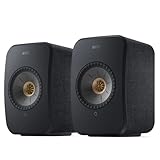 KEF LSX II KEF LSX II |
|
View on Amazon |
 Bowers & Wilkins Zeppelin Pro Bowers & Wilkins Zeppelin Pro |
|
View on Amazon |
1. Edifier MR3 Is the Best Budget Pick for a Computer Desk
Edifier MR3 Powered Studio Monitor, Speaker Hi-Res Active Bluetooth Speaker
Hi-Res
18W x 2 RMS
TRS RCA AUX Bluetooth 5.4
Pros
- Hi-Res certified
- Balanced TRS input
- Three sound modes
- Headphone output
Cons
- Needs a subwoofer for bass-heavy playback
The Edifier MR3 is the practical answer when your desk needs a compact pair that can handle both work and casual music. Its 3.5-inch mid-low drivers and 1-inch tweeters are paired with a claimed flat 52Hz to 40kHz response, 18W per channel RMS, and a 92.5dB peak SPL.
What separates it from basic computer speakers is the input set: balanced TRS, RCA, AUX, and Bluetooth 5.4 with multi-point connection. A headphone output adds day-to-day desk convenience, while the MDF cabinet is intended to reduce cabinet-related distortion.
The MR3 Works Best When the Listener Sits Close
Place the two cabinets at ear height and form an equal-sided triangle with your chair. That near-field layout puts the small drivers to work where they make most sense and avoids asking them to fill a large living room.
The Music, Monitor, and Custom modes make the MR3 more flexible than a one-setting desktop pair. The ConneX app supports EQ adjustment, which is helpful when a desk, wall, or monitor stand makes the low end seem uneven.
The MR3 Needs a Separate Bass Solution for Full-Range Impact
A compact 3.5-inch driver has physical limits, so listeners who want heavy electronic bass or movie effects should plan for a subwoofer elsewhere in the system. That limitation is not unusual at this size, but it should shape expectations.
For a laptop, interface, or desktop computer, the balanced input and controlled monitor mode matter more than room-shaking output. Its 4.7 rating from 660 reviews also gives this compact monitor the strongest user score in this group.
2. Klipsch R-51PM Is a Direct Turntable-Friendly Bookshelf Pair
Klipsch R-51PM Powered Bluetooth Speaker,Black
120W peak
5.25 inch woofer
Phono USB Bluetooth
Pros
- Phono input
- USB digital input
- Remote included
- 5.25 inch woofer
Cons
- No WiFi streaming
- Peak power is not RMS power
The Klipsch R-51PM is designed for a component-light stereo system rather than a narrow desktop role. Its 5.25-inch woofer, 1-inch tweeter, and 120W peak rating give it more physical presence than the smaller Edifier and Kanto models here.
The phono/line input has a switch and ground-screw terminal, so a turntable can connect directly when it needs a phono stage. USB digital input, a 3.5mm analog jack, Bluetooth, and the included remote make the pair useful across old and new sources.
The R-51PM Makes Turntable Setup Straightforward
Set the analog input to phono only for a turntable that lacks its own phono preamp, then attach its ground wire to the terminal. If your turntable already has a preamp, use the line setting instead; using two phono stages at once can overload the signal.
This is why the R-51PM remains a sensible powered-speaker direction for vinyl listeners who do not want separate electronics. The practical tradeoff is a more fixed system path than a passive speaker and separate amplifier arrangement.
The R-51PM Suits a Small Room More Than a Tiny Desk
At 13 inches high, these cabinets need more breathing room than miniature desktop speakers. A pair of sturdy stands or a wide shelf lets the woofer project cleanly and helps keep a turntable away from speaker vibration.
Bluetooth is available for quick playback, but there is no listed WiFi platform or multi-room system. Buyers who put streaming first should look toward the KEF LSX II or Bowers & Wilkins Zeppelin Pro Edition instead.
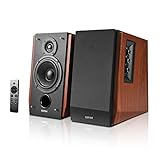
3. Edifier R1700BTs Is the Best Flexible Entry Bookshelf Pair
Edifier R1700BTs Active Bluetooth Bookshelf Speakers – 2.0 Wireless Near Field Studio Monitor Speaker – 66w RMS with Subwoofer Line Out
66W RMS
4 inch woofer
aptX HD
Subwoofer output
Pros
- Subwoofer output
- aptX HD Bluetooth
- Dual RCA inputs
- Side EQ controls
Cons
- No WiFi streaming
- Brown finish will not suit every room
The Edifier R1700BTs is the flexible choice for someone who wants a conventional bookshelf look but is not ready for a receiver. It provides 66W of continuous output through 4-inch woofers and 19mm silk-dome tweeters in wood enclosures.
Bluetooth 5.0 with Qualcomm aptX HD handles wireless music, while dual RCA inputs accommodate two wired sources. The dedicated subwoofer output has a built-in crossover, so bass can be expanded later without abandoning the speakers.
The R1700BTs Gives a Small System Room to Grow
The subwoofer output is the detail to notice here. It gives apartment or desktop listeners a way to start with a simple 2.0 system and add lower-frequency support later if their room and neighbors allow it.
Side-panel EQ controls and the Soundfield Spatializer button supply direct adjustment without opening an app. Those controls are useful when the speakers must sit near a wall, though placement still matters more than dramatic EQ changes.
The R1700BTs Is Best for Bluetooth and Wired Sources, Not WiFi
Forum discussions repeatedly point to missing WiFi as a common issue with otherwise capable affordable active speakers. This model has aptX HD Bluetooth, but it does not list AirPlay, Chromecast, or network streaming.
That makes it a good choice for a computer, phone, TV source with analog output, or a turntable that already has a line-level preamp. It is less suitable for a listener who wants app-based multi-room playback.
4. Edifier M60 Is the Compact Hi-Res Wireless Desktop Choice
Edifier M60 Multimedia Speaker, 66W RMS Computer Speaker, Black
66W RMS
LDAC Bluetooth
USB-C AUX
3 inch drivers
Pros
- Compact footprint
- LDAC wireless
- USB-C input
- Stands included
Cons
- Small drivers limit deep bass
The Edifier M60 targets the modern desk with a small 3.93-by-6.61-by-5.78-inch cabinet, USB-C input, AUX, and Bluetooth 5.3. It is Hi-Res Audio certified for both wired and wireless use, and LDAC support reaches a listed 990kbps.
Its 66W RMS total is divided between the mid-low and treble sections, with 3-inch long-throw aluminum diaphragm drivers and 1-inch silk-dome tweeters. Included aluminum stands help point the speakers upward instead of firing into your desktop.
The M60 Fits a Desk That Cannot Spare Much Surface Area
This pair is one of the smallest physical options in the roundup, which makes it easier to position on either side of a display. Use the included stands and aim the tweeters toward ear level for a clearer center image during calls, games, and music.
The cap-sensitive touch panel and automatic backlight are thoughtful desktop touches. App support adds another route for control and adjustment when you would rather leave the speakers in place.
The M60 Prioritizes Detail Over Large-Room Bass
A 3-inch mid-bass driver cannot move as much air as a 5.25-inch unit. The M60 is therefore a better match for close listening than for a large lounge where bass weight is the priority.
For gaming, run a wired USB-C or AUX connection rather than Bluetooth when timing is important. That choice bypasses Bluetooth delay and keeps dialogue, on-screen action, and sound effects more closely aligned.
5. Kanto YU2 Is the Simplest USB-DAC Desktop Speaker Pair
Kanto YU2 Powered Desktop Computer Speakers | 3″ Drivers 3/4″ Silk Dome Tweeter | 50 W RMS | Built-in USB DAC & AUX Input | Sub Out | Pair | Matte Cream
USB DAC
3 inch woofers
Silk tweeters
Sub out
Pros
- Built-in USB DAC
- Very compact
- Subwoofer output
- Accessible volume knob
Cons
- Lower output than larger models
- Rear bass ports need wall space
The Kanto YU2 keeps the computer-audio formula simple: a built-in USB DAC, AUX input, and a physical volume knob that also acts as the power switch. Its 3-inch composite woofers and 3/4-inch silk-dome tweeters fit into cabinets only 5.9 inches high.
The YU2 is not a Bluetooth model in the supplied specifications, which may be a benefit for a dedicated wired workstation. The USB DAC gives a direct digital path from a laptop or desktop without relying on a headphone jack.
The YU2 Is Best When USB Is the Main Connection
Connect the computer by USB and select the YU2 as the audio output in the operating system. This setup gives the speakers their digital signal directly and leaves the AUX jack available for another analog source.
The front volume control is convenient when a keyboard, monitor arm, and cables have already crowded the desk. Its compact size also suits narrow shelves where a larger powered bookshelf pair would feel intrusive.
The YU2 Needs Clearance Behind Its Rear Ports
The rear bass-port design needs open space to work predictably. Avoid pushing the cabinets hard against a wall, and adjust their distance gradually if the upper bass becomes too thick.
A sub-out port is the sensible expansion path for listeners who outgrow the small composite woofers. The 50W RMS rating is appropriate for close listening, not for trying to cover a wide open room.
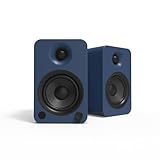
6. Kanto YU4 Is the Most Complete Compact Turntable System
Kanto YU4 Powered Speakers with Bluetooth and Built-in Phono Preamp | 140W Peak Power | 1″ Silk Dome Tweeter and 4″ Kevlar Driver | Auto Standby and Startup | Remote Included | Pair | Matte Blue
70W RMS
Phono preamp
aptX Bluetooth
4 inch Kevlar drivers
Pros
- Integrated phono preamp
- aptX Bluetooth
- Remote tone controls
- Auto standby
Cons
- No WiFi streaming
- Not weather resistant
The Kanto YU4 is a strong all-in-one answer for a turntable, TV source, and phone because its 4-inch Kevlar drivers are paired with an integrated phono preamp. It supplies 70W total RMS, 140W peak output, 1-inch silk-dome tweeters, and a reported 60Hz to 20kHz frequency response.
Optical, RCA, 3.5mm AUX, and Bluetooth with Qualcomm aptX cover the common connection paths. The included remote can control volume, input, tone, and balance, which makes it more approachable in a living room than a pair that needs constant physical adjustment.
The YU4 Is Ready for a Turntable Without a Separate Phono Box
Its integrated phono preamp is the major purchasing reason to choose this pair. Connect a turntable that outputs phono level to the appropriate input, then use the grounded connection instructions supplied with the turntable and speaker.
This simplicity addresses a recurring vinyl-listener pain point: choosing an amplifier, a preamp, and speakers that work together. With the YU4, the core signal chain can be just turntable, speakers, and a source cable.
The YU4 Also Handles TV and Everyday Streaming
Optical is the tidy choice for a television with an optical output, while Bluetooth suits casual music from a phone. For games or screen viewing, a wired connection is preferable because Bluetooth transmission can add latency.
The rear-ported MDF cabinet benefits from a little wall clearance, and the 4-inch drivers suit a small or medium listening space. Auto-standby and power-up modes reduce the amount of daily interaction required.
7. Audioengine HD6 Is the Full-Size Premium Bookshelf Option
Audioengine HD6 Powered Bookshelf Speakers – Bluetooth Speakers
150W peak
24-bit DAC
5.5 inch woofers
aptX HD
Pros
- Built-in 24-bit DAC
- Large 5.5 inch woofers
- Optical input
- Three-year warranty
Cons
- Heavy cabinets
- No built-in phono preamp listed
The Audioengine HD6 is for listeners who want the scale of a traditional bookshelf speaker while keeping the amplifier internal. Its custom 5.5-inch woofers, 1-inch silk-dome tweeters, 150W peak output, and listed 50Hz response give it a larger foundation than desktop-focused models.
A built-in 24-bit DAC, optical input, RCA, 3.5mm input, and Bluetooth aptX HD provide a useful mix of digital and analog routes. The stated Bluetooth range reaches 100 feet, although walls and interference can reduce real-world range.
The HD6 Rewards Proper Stands and Listening Distance
Each cabinet weighs 17.5 pounds and measures 11.75 inches high, so this is not a casual corner-of-a-desk speaker. Put the tweeters near seated ear height, keep the pair reasonably symmetrical, and leave room around the cabinets.
That arrangement lets the larger woofer handle the lower registers without furniture reflections doing all the work. The real wood cabinet finish also makes this model more at home in a main room than beside a small monitor.
The HD6 Has Digital Flexibility but Needs a Phono Stage for Some Turntables
The listed inputs include optical, RCA, and 3.5mm, but no built-in phono preamp is specified. A turntable without its own preamp needs an external phono stage before it reaches the HD6’s line-level input.
For TV audio, use optical when the television supports it. For a PC, the internal DAC and optical input give a cleaner route than relying solely on analog output from the computer.
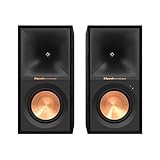
8. Klipsch R-50PM Is the Lively Plug-and-Play Music Pair
Klipsch R-50PM Powered Speakers with 5.25″ Woofers, Black
100W peak
5.25 inch woofers
Tractrix horns
Bass Boost
Pros
- No receiver needed
- Wide Tractrix horns
- Aluminum tweeter
- Bass Boost
Cons
- No WiFi streaming listed
- Not weather resistant
The Klipsch R-50PM uses 5.25-inch copper-spun TCP woofers, a 1-inch LTS aluminum tweeter, and edge-to-edge Tractrix horns. Its 100W peak rating and Bass Boost feature make it a substantial music-first alternative to smaller active bookshelf speakers.
Klipsch presents this pair as plug and play, meaning no AVR is needed. Bluetooth is listed for wireless playback, while the remote gives it a familiar living-room control approach.
The R-50PM Is Built for a Wider Listening Area
The horn design is intended to broaden the soundstage, which is useful when listeners are not locked to a single desk chair. A 14-inch-tall cabinet also puts this model in a better position for a shelf or stand than for a crowded workstation.
Use the Bass Boost feature carefully and let room placement come first. Moving speakers closer to a wall already adds bass energy, so combining both changes at once can make it hard to know what caused the result.
The R-50PM Is a Straightforward Music System Rather Than a Network Hub
This pair has Bluetooth in the verified listing, but no WiFi, AirPlay, Chromecast, HDMI ARC, or integrated phono stage is specified there. Confirm the needed input path before choosing it for a TV or turntable system.
That does not weaken its core purpose: a powered stereo pair with larger drivers and a horn-forward design. It fits a listener who wants immediate music playback without a separate receiver.
9. KEF LSX II Is the Premium Compact WiFi and TV Choice
KEF LSX II Wireless Bookshelf Speakers (Pair, Carbon Black) – Active Powered HiFi Speaker System with HDMI ARC, AirPlay 2 & Wi-Fi Streaming
24-bit 384kHz
WiFi streaming
HDMI ARC
USB-C
Pros
- HDMI ARC
- WiFi multi-room
- High-resolution streaming
- Compact cabinet
Cons
- Bluetooth range listed at 10 meters
- Not weather resistant
The KEF LSX II is the most connected stereo pair in this list. It supports streaming up to 24-bit/384kHz, adds WiFi and Bluetooth, and includes HDMI ARC and USB-C for a television or laptop.
Its 4.5-inch driver specification and 54Hz listed frequency response make the compact enclosure more capable than its dimensions suggest, but it is still a small speaker. The system also supports multi-room audio through AirPlay 2, Chromecast, and Roon.
The LSX II Is the Cleanest Two-Speaker TV Connection Here
HDMI ARC allows the television and speakers to share a direct audio connection and lets compatible TV controls manage volume. That is generally easier than switching a separate receiver on and off for casual viewing.
The USB-C input is equally useful for a laptop-based desk or creative workstation. For gaming or film, these wired options avoid the timing delay that can occur with Bluetooth.
The LSX II Is for Streaming-First Listeners Who Want a Small Pair
Built-in access to Spotify, Tidal, Amazon Music, and Qobuz, plus app control, makes this a self-contained network music system. It is a stronger fit than Bluetooth-only models for households that already use streaming services daily.
KEF lists Bluetooth range at 10 meters, so WiFi is the better connection for a fixed home setup. The compact cabinet can suit a shelf, desk, or TV console, but larger rooms may benefit from a subwoofer or a larger speaker system.
10. Bowers & Wilkins Zeppelin Pro Is the One-Box Streaming Statement
Bowers & Wilkins Zeppelin Pro Edition Wireless Speaker, Solar Gold
2.1 system
240W peak
6 inch subwoofer
AirPlay 2
Pros
- Built-in 2.1 system
- 6 inch subwoofer
- AirPlay 2 and Spotify Connect
- Multi-room app support
Cons
- Not a stereo pair
- Heavy at 10.3 kilograms
The Bowers & Wilkins Zeppelin Pro Edition takes a different approach: one 25.59-inch-wide cabinet instead of separate left and right speakers. Inside is a 2.1-channel system with a 6-inch subwoofer, Titanium Dome tweeter technology, and 240W peak output.
It supports AirPlay 2, Spotify Connect, Bluetooth, built-in streaming services, and multi-room playback through the Bowers & Wilkins Music app. That makes it a tidy choice for someone who wants strong sound from one piece of furniture.
The Zeppelin Pro Is Best When One Cabinet Is the Point
A single cabinet removes the need to place two speakers symmetrically, which can be helpful on a credenza, shelf, or open counter. The tradeoff is that it cannot create the left-right separation of a correctly placed stereo pair.
At 10.3 kilograms, it is not a portable grab-and-go device despite its all-in-one form. Choose its position before installation and give its 6-inch subwoofer room to produce bass without being boxed into a tight enclosure.
The Zeppelin Pro Favors Streaming and Room-Filling Playback
AirPlay 2 and Spotify Connect make this speaker a natural match for phone and network playback, while Bluetooth gives guests a quick connection. Its listed 20-meter Bluetooth range is broader than the KEF’s listed 10 meters.
This is not the right product for a turntable that needs direct phono support or for a listener focused on stereo imaging. It is the standout pick for a single, visually distinctive wireless speaker with a real 2.1 layout.
The Right Powered Speakers Depend on Your Source, Room, and Listening Distance
Powered and active speakers are often used interchangeably in shopping listings because both contain amplification. In the strict technical sense, an active speaker may also divide frequencies before amplification with an electronic crossover, while a powered speaker simply has amplification built in; product listings do not always make that distinction clear.
A Turntable Needs a Phono Input or an External Phono Preamp
A turntable produces a low phono-level signal unless it has its own preamp. The Klipsch R-51PM and Kanto YU4 list integrated phono capability, while a line-level turntable can connect to RCA inputs on models such as the Edifier R1700BTs or Audioengine HD6.
Do not feed a turntable with a built-in preamp into a speaker’s phono input. Use a line input in that case, or the signal may be amplified twice and sound distorted.
A TV Works Best Through HDMI ARC or Optical
HDMI ARC on the KEF LSX II is the most direct option in this group for a modern TV. Optical is also a useful digital path on the Kanto YU4 and Audioengine HD6 when your set provides it.
Bluetooth is convenient, but it can introduce delay that makes lips and dialogue look out of sync. A cable is the safer route for film, live sports, and gaming.
A Desktop Setup Needs Near-Field Placement Before More Power
For a desk, position each speaker roughly the same distance from your head as from the other speaker, then angle them inward. The Edifier MR3, Edifier M60, and Kanto YU2 make the most sense when this triangle is around a seated workstation.
Keep rear-ported speakers away from the wall where possible, and raise tweeters toward ear level with stands or isolation pads. This small adjustment can do more for clarity than simply turning the volume higher.
More Wattage Does Not Mean Twice the Loudness
The published power figures in this group are not directly comparable because some are RMS and others are peak values. Driver sensitivity, amplifier design, distortion limits, and room size all affect usable loudness.
The so-called 83% rule is not an industry-wide speaker standard identified in the supplied research. Treat it as informal headroom advice rather than a fixed formula: avoid running any speaker at audible distortion, and select a model sized for the room instead of expecting a small desktop pair to cover a large space.
Active Speakers Trade Upgrade Freedom for a Shorter Signal Chain
Powered speakers simplify matching because the amplifier is already paired with the drivers. They reduce boxes, cabling, and setup decisions, which is why they work well in apartments, offices, and first vinyl systems.
Passive speakers separate the amplifier from the cabinets, so either part can be changed later. That flexibility is attractive to system builders, while a self-powered design is better for listeners who want a direct, contained setup.
WiFi, Bluetooth, and Wired Inputs Serve Different Habits
Bluetooth is simple for quick playback, while WiFi systems such as the KEF LSX II and Zeppelin Pro add streaming services and multi-room features. A wired USB, optical, HDMI ARC, RCA, or TRS connection remains the dependable choice for a fixed source.
Choose based on the device you use most, not the longest list of logos on a box. That one decision usually narrows a field of powered bookshelf speakers much faster than comparing power numbers alone.
FAQs
What is the 83% rule for speakers?
The 83% rule is not an industry-wide speaker standard identified in the supplied research. Treat it as informal advice to leave volume headroom and avoid audible distortion, rather than a fixed power formula. Match speaker size to the room and lower the level if the sound hardens or distorts.
Which are the best active speakers?
The best active speakers depend on the job. Edifier MR3 suits near-field computer use, Kanto YU4 is turntable-ready with a phono preamp, KEF LSX II adds WiFi and HDMI ARC, and the Zeppelin Pro is a one-cabinet streaming system.
Are powered speakers any good?
Powered speakers can sound very good because their built-in amplifiers are paired with their drivers. They also remove the need for a separate receiver, but connection options, speaker size, placement, and room size still determine whether a given model fits your setup.
Are powered speakers as good as passive speakers?
Yes, powered speakers can be as good as passive speakers for many systems. Powered designs favor simplicity and matched internal electronics, while passive systems offer more freedom to change amplifiers or speakers separately over time.
Is 200W twice as loud as 100W?
No. Power ratings do not translate directly to perceived loudness, and a 200W listing is not twice as loud as a 100W listing. Speaker sensitivity, distortion, room size, and whether the number is RMS or peak all matter.
The Best Final Choice Is the One That Matches Your Actual Setup
For the best powered speakers on a compact desk, choose the Edifier MR3 for its balanced TRS input and monitor-oriented features, or the M60 and YU2 where size is the deciding factor. Choose the Kanto YU4 or Klipsch R-51PM for direct vinyl use, the KEF LSX II for TV and WiFi streaming, and the Zeppelin Pro when one-cabinet convenience matters most.
Use the comparison above as the starting point, confirm your source connection, and give the speakers proper placement once they arrive. That approach makes a 2026 purchase decision far more dependable than chasing a single wattage figure.