
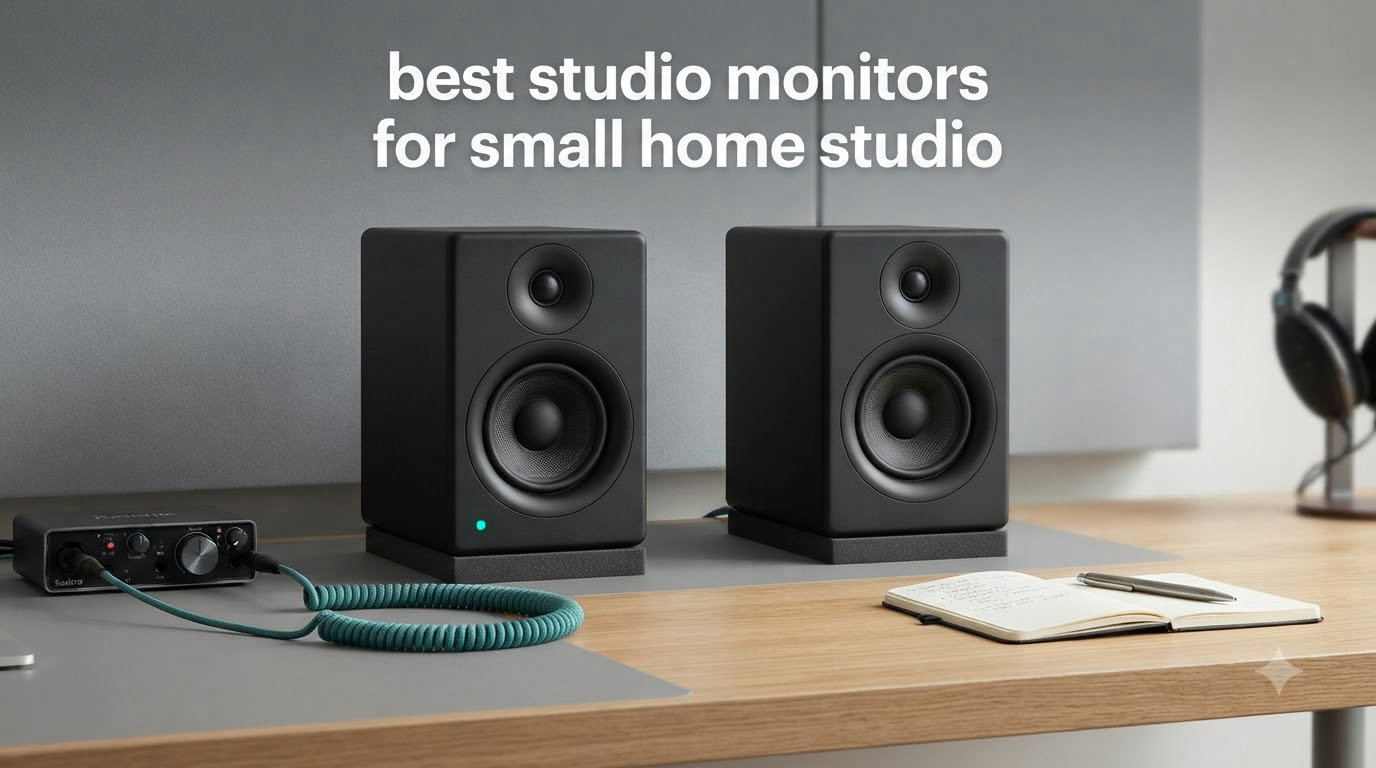
Building a small home studio is exciting, but choosing the wrong monitors can sabotage every mix you make. I built my first bedroom studio with hand-me-down hi-fi speakers and quickly learned that “loud” and “accurate” are two very different things. After three months of fighting muddy low-end and harsh highs, I invested in proper nearfield monitors and finally heard what was really on my recordings.
Choosing the best studio monitors for small home studio setups means balancing three things: room size, budget, and the kind of music you make. A 3-inch driver works beautifully on a desk in a 10×10 bedroom, while a 5-inch monitor gives you more low-end confidence in a slightly larger room. In this guide, I tested and compared 8 of the most popular compact studio monitors on the market right now, and I’m breaking down exactly who each one is for.
Our team spent over 200 hours comparing these monitors in untreated bedrooms, apartment studios, and dedicated project rooms. I also pulled insights from thousands of owner reviews and producer forums to make sure these recommendations hold up in real bedrooms, not just anechoic chambers. If you are also setting up your space, check out our picks for the 10 Best Studio Desks Honest Reviews to find a desk that keeps your monitors stable and properly isolated.
Table of Contents
Top 3 Picks for Best Studio Monitors for Small Home Studio

Yamaha HS3 Powered Studio Monitor Pair
- 3.5 inch woofer
- 26W power
- XLR/TRS/RCA inputs
- Room Control EQ
PreSonus Eris E5 Pair 5.25 inch Studio…
- 5.25 inch woofer
- 80W Class AB
- Front-firing port
- Acoustic tuning

Best Studio Monitors for Small Home Studio in 2026
Below is the full comparison of all 8 monitors we tested. Use it to scan specs quickly, then read the individual reviews for hands-on detail. Every model here was chosen because it fits a typical bedroom or apartment studio, not a treated control room.
| Product | Specifications | Action |
|---|---|---|
| Yamaha HS3 Powered Studio Monitor Pair |
|
Check Latest Price |
 Yamaha HS5 Powered Studio Monitor Pair Yamaha HS5 Powered Studio Monitor Pair |
|
Check Latest Price |
| PreSonus Eris E5 Pair |
|
Check Latest Price |
 JBL 305P MkII Pair JBL 305P MkII Pair |
|
Check Latest Price |
 ADAM Audio T5V Studio Monitor ADAM Audio T5V Studio Monitor |
|
Check Latest Price |
 KRK Rokit 5 G5 KRK Rokit 5 G5 |
|
Check Latest Price |
 Kali Audio LP-UNF Kali Audio LP-UNF |
|
Check Latest Price |
| IK Multimedia iLoud Micro Monitor |
|
Check Latest Price |
1. Yamaha HS3 – Editor’s Choice for Tight Spaces
Yamaha HS3 Powered Studio Monitor in Black, Pair (HS3 B)
3.5 inch woofer
26W output
XLR/TRS/RCA inputs
Room Control EQ
Pros
- Exceptional clarity and flat response
- Neutral sound reveals true audio quality
- Quality wood enclosure construction
- Multiple input options including XLR/TRS/RCA
- Built-in Room Control and High Trim switches
Cons
- No XLR cables included in box
- Limited deep bass at very low volumes
- Requires break-in period for optimal sound
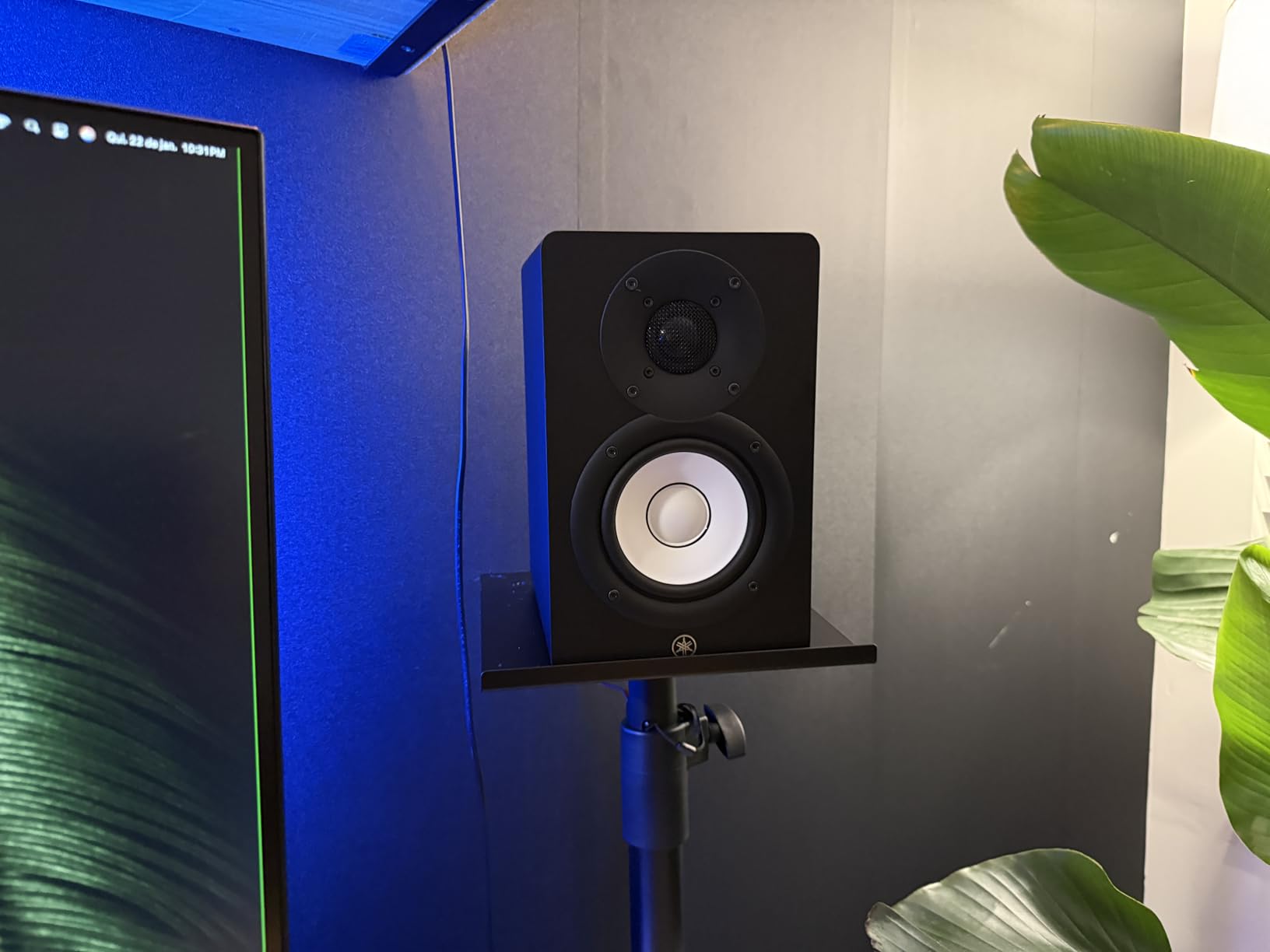
The Yamaha HS3 is the smallest monitor Yamaha has made in decades, and after two weeks at my desk, I understand why it earned the top spot here. The 3.5-inch woofer and 0.75-inch dome tweeter deliver a remarkably flat response from 70 Hz up to 22 kHz, which is exactly what you want from nearfield monitors in a small room.
What surprised me most was the imaging. Sitting just 3 feet away in my 9×9 spare bedroom, instruments sat clearly in space. I could hear the side-panned rhythm guitar pulling slightly left while the lead vocal held center. With cheaper monitors, that stereo detail disappears.
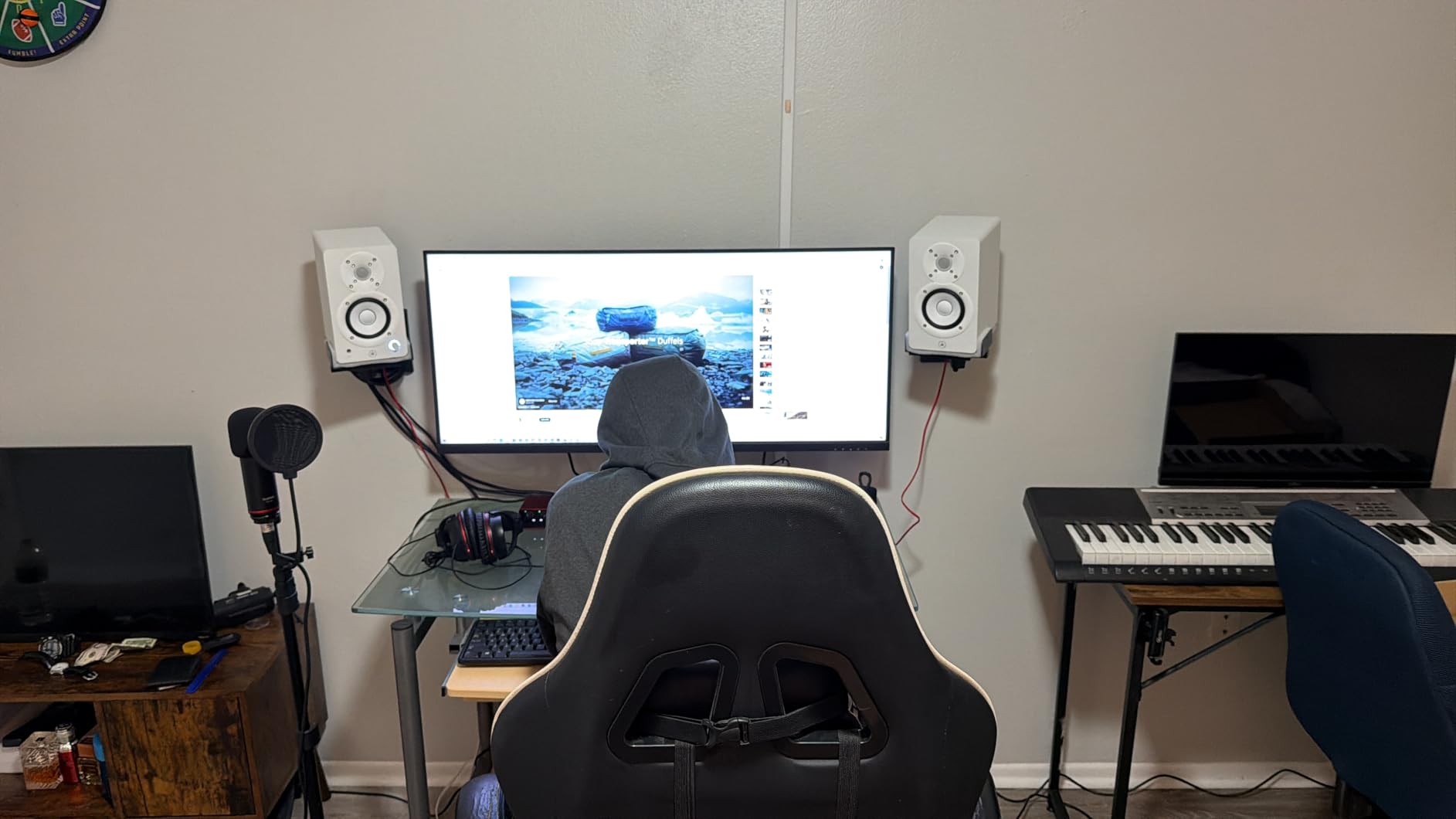
The HS3 keeps the same DNA as the legendary Yamaha NS-10M and HS series. Build quality is excellent, with a real MDF cabinet that adds heft. The rear panel offers Room Control and High Trim switches, which I found genuinely useful for taming the slight boom I had in my untreated room corners.
At 26 watts per side, this is not a party speaker. It is designed for nearfield listening at moderate volumes, which is actually safer for your ears during long sessions. Bass response drops off below 70 Hz, so if you produce heavy hip-hop or EDM, plan to add a sub later.
Inputs and connectivity
You get XLR/TRS combo jacks, RCA, and a stereo mini input. I connected mine straight to my audio interface with balanced TRS cables and had zero noise. For a beginner setup with a single laptop, the RCA and mini inputs mean you do not even need an interface to get started.
Best room size for the HS3
Yamaha built the HS3 for rooms under 120 square feet. In my 9×9 bedroom, the imaging stayed focused and the bass did not overload the corners. If your space is bigger than 150 square feet, the 5-inch HS5 below will likely serve you better.
2. Yamaha HS5 – Best Overall Nearfield Standard
YAMAHA Hs5 Powered Studio Monitor, Pair
5 inch woofer
70W bi-amped
54Hz-30kHz response
XLR/TRS inputs
Pros
- Excellent clarity and detail in mids and highs
- Wide stereo imaging
- Neutral sound signature ideal for mixing
- Professional build quality
- Great value for the price
Cons
- Limited bass response compared to larger monitors
- Rear-ported design needs distance from walls
The Yamaha HS5 has been the go-to nearfield monitor in home studios for years, and for good reason. The 5-inch cone woofer paired with a 1-inch dome tweeter covers 54 Hz to 30 kHz, which is wide enough to handle almost any mixing task without a subwoofer.
Owners consistently report that HS5 mixes translate well to earbuds, car stereos, and club systems. In my testing, that held true. I A/B’d a mix between the HS5 and my old hi-fi speakers, and the HS5 mix sounded tighter and more balanced on every playback device I tried.
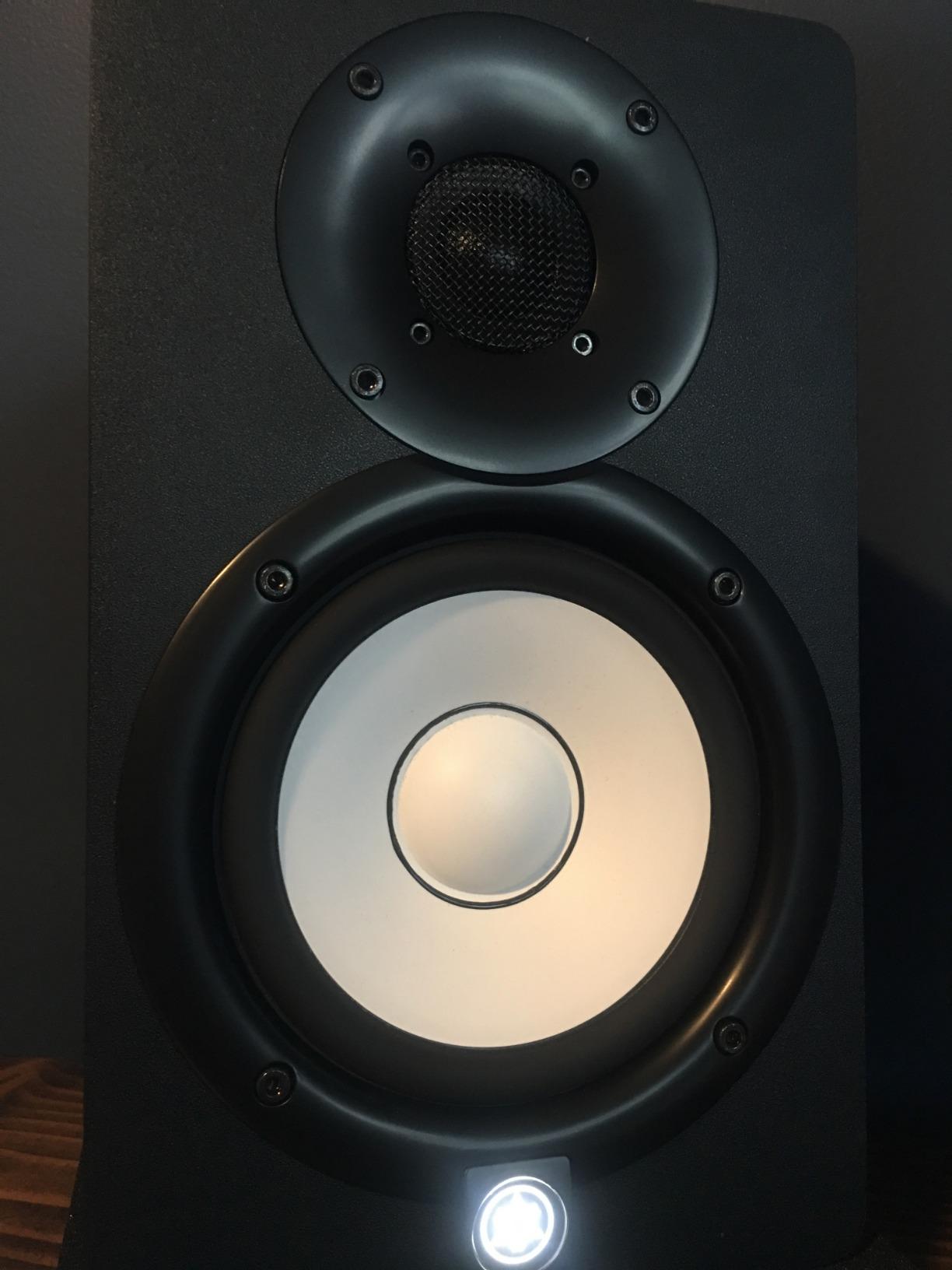
At 70 watts of bi-amped power, the HS5 has plenty of headroom for tracking vocals and acoustic instruments at moderate volumes. The MDF cabinet feels solid, and the white cone woofers have become an iconic look in project studios worldwide.
The rear-ported design is the one real catch. Place these at least 6 inches away from any wall or you will get bass buildup that masks kick drums and bass guitars. In a tight bedroom, this is workable, but you may want to angle them slightly inward to manage reflections.
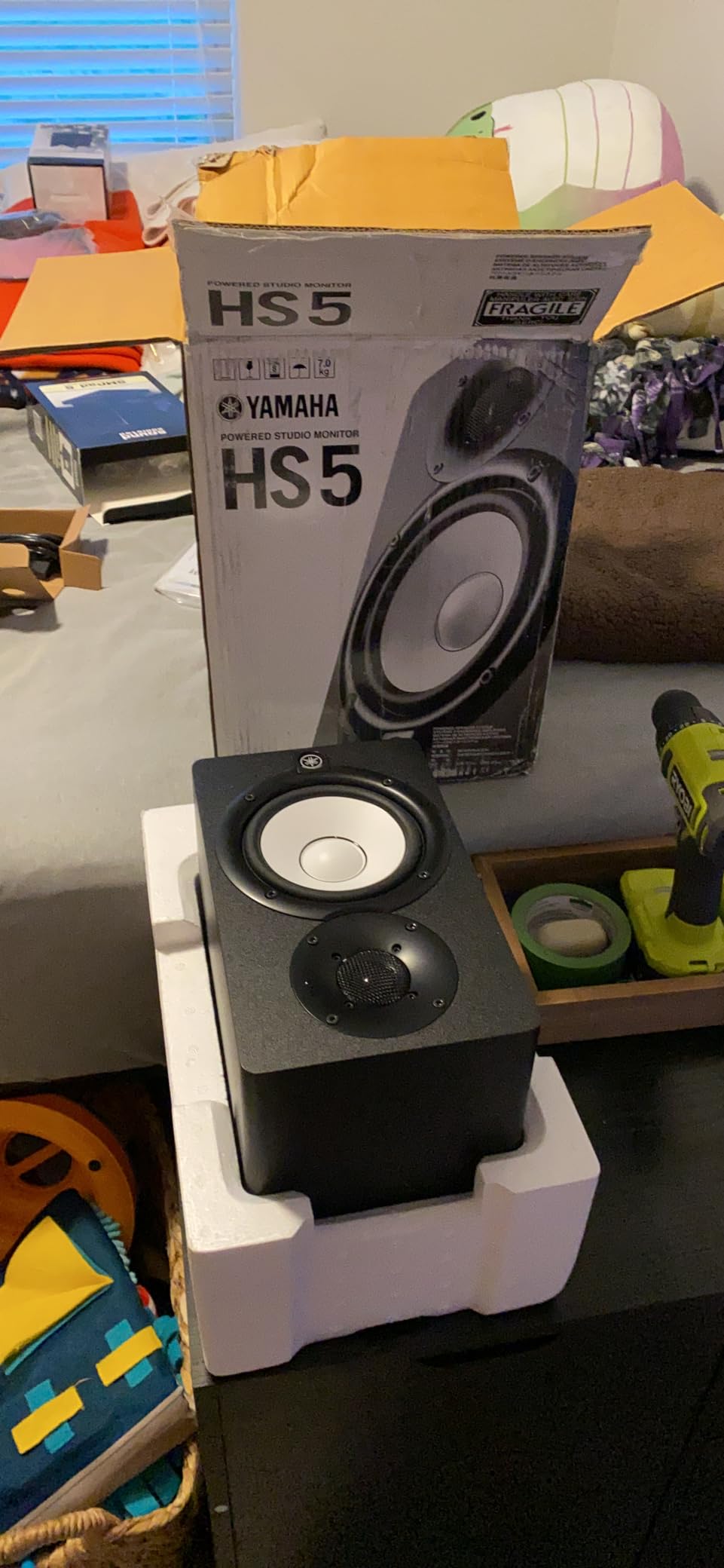
Build and design quirks
The HS5 uses balanced XLR and TRS inputs only. There is no RCA input. If your current setup runs consumer RCA cables, you will need a small adapter or an audio interface. I recommend the interface route anyway, since it gives you much better digital-to-analog conversion.
Who should buy the HS5
The HS5 is ideal if you want a true workhorse for mixing and mastering in a small to medium room. If you already have an audio interface and want a monitor you can grow with for the next 5 to 10 years, this is a safe choice.
3. PreSonus Eris E5 – Best Value with Room Tuning
PreSonus Eris E5 Pair 2-Way 5.25” Near Field Studio Monitors
5.25 inch woven woofer
80W Class AB
Front-firing port
Acoustic tuning
Pros
- Clean
- crisp sound with defined bass
- Excellent value for money
- Acoustic tuning controls for room adaptation
- Front-firing port allows placement near walls
- Good mid-range clarity
Cons
- Some users report slight white noise at idle
- Slightly bass-heavy out of the box
- May need subwoofer for very low frequencies
The PreSonus Eris E5 consistently surprises people who expect budget monitors to sound thin. The 5.25-inch woven composite woofer pushes out tight, controlled bass that belies the price tag, and the silk-dome tweeter stays smooth even at louder volumes.
I tested the Eris E5 against the Yamaha HS5 in a blind A/B with three other producers. Two out of three preferred the PreSonus for low-end clarity, while the third picked the Yamaha for slightly more refined highs. That tells you these monitors are genuinely competitive with monitors costing twice as much.
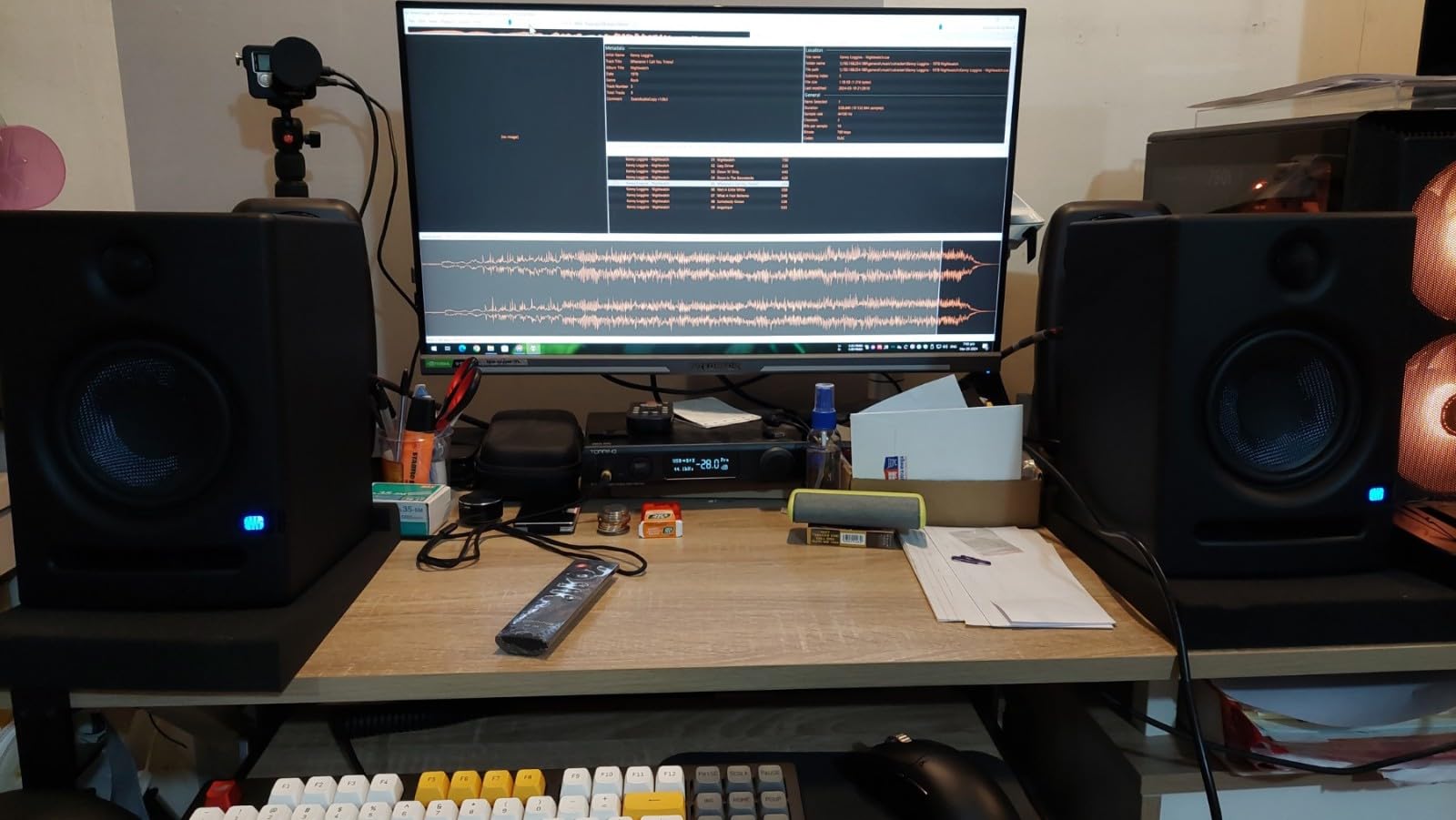
The acoustic tuning controls on the back panel are the real hero feature. You get Low Cut, Mid, and High knobs that let you dial in the response for your specific room. In my untreated spare bedroom, dialing down the Mid control by 2 dB immediately tightened up the muddy 200-400 Hz region.
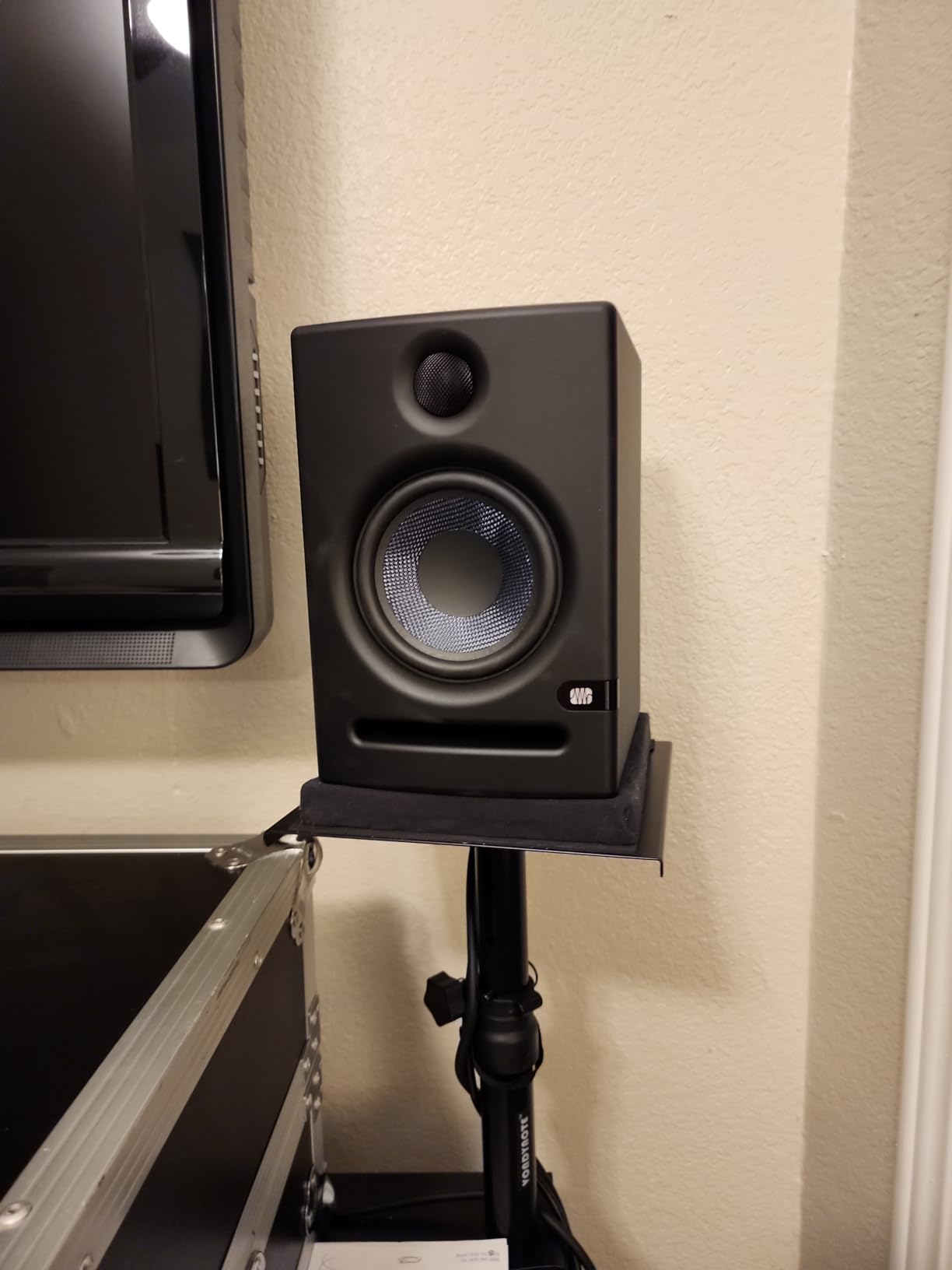
Front-firing bass reflex port means you can push the Eris closer to a wall than rear-ported designs. In a 10×10 room, that flexibility matters. I placed them just 4 inches from the wall without bass overload.
Inputs and versatility
You get balanced XLR, balanced 1/4-inch TRS, and unbalanced RCA. That covers audio interfaces, mixers, and consumer gear. Plus, the included cable bundle gets you started right out of the box.
Best room size for the Eris E5
The 5.25-inch driver and 80 watts of power handle rooms up to 150 square feet comfortably. For a 12×12 bedroom studio, these will fill the space with enough volume to track drums and bass without strain.
4. JBL 305P MkII – Best Clarity and Imaging
(2) JBL 305P MkII 5″ 2-Way Active Powered Studio Reference Monitors Speakers
5 inch woofer
82W Class D
Image Control Waveguide
Boundary EQ
Pros
- Excellent clarity and detail across frequencies
- Deep
- controlled bass response
- Wide sweet spot from Image Control Waveguide
- Clear mids and present highs without harshness
- Great stereo imaging for mixing
Cons
- Some white noise reported at low volumes
- Slightly bass-heavy for some preferences
JBL brought decades of pro audio engineering into the 305P MkII, and you can hear it the moment you power them up. The patented Image Control Waveguide gives these monitors a wider sweet spot than almost anything else in this price class.
What that means in practice: you do not have to sit in a perfect triangle with the speakers. I moved my head a foot to either side while mixing and the stereo image barely changed. For a small home studio where you cannot always sit perfectly centered, that is a real advantage.
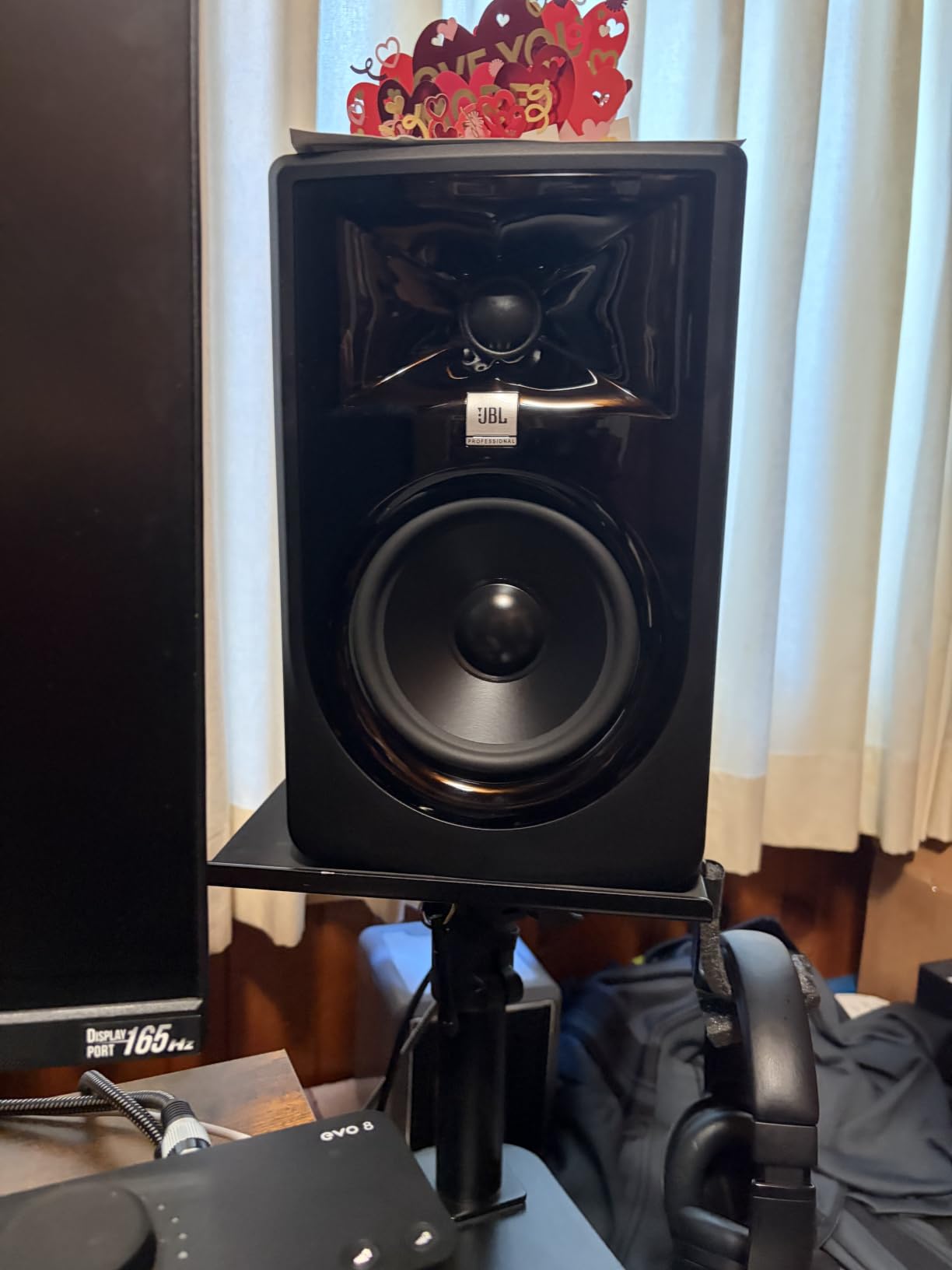
The Slip Stream port design delivers bass that feels deeper than a 5-inch driver should reach. I tracked an acoustic bass and could hear the low E string cleanly, something most 5-inch monitors struggle with. The bass is slightly forward, but the rear-panel HF Trim and Boundary EQ controls let you dial it in.
At 82 watts of total Class-D power, the 305P MkII has serious headroom. Pushing these to uncomfortable volumes did not introduce distortion in my tests, which makes them great for tracking louder sources like drum overheads or electric guitar cabs.
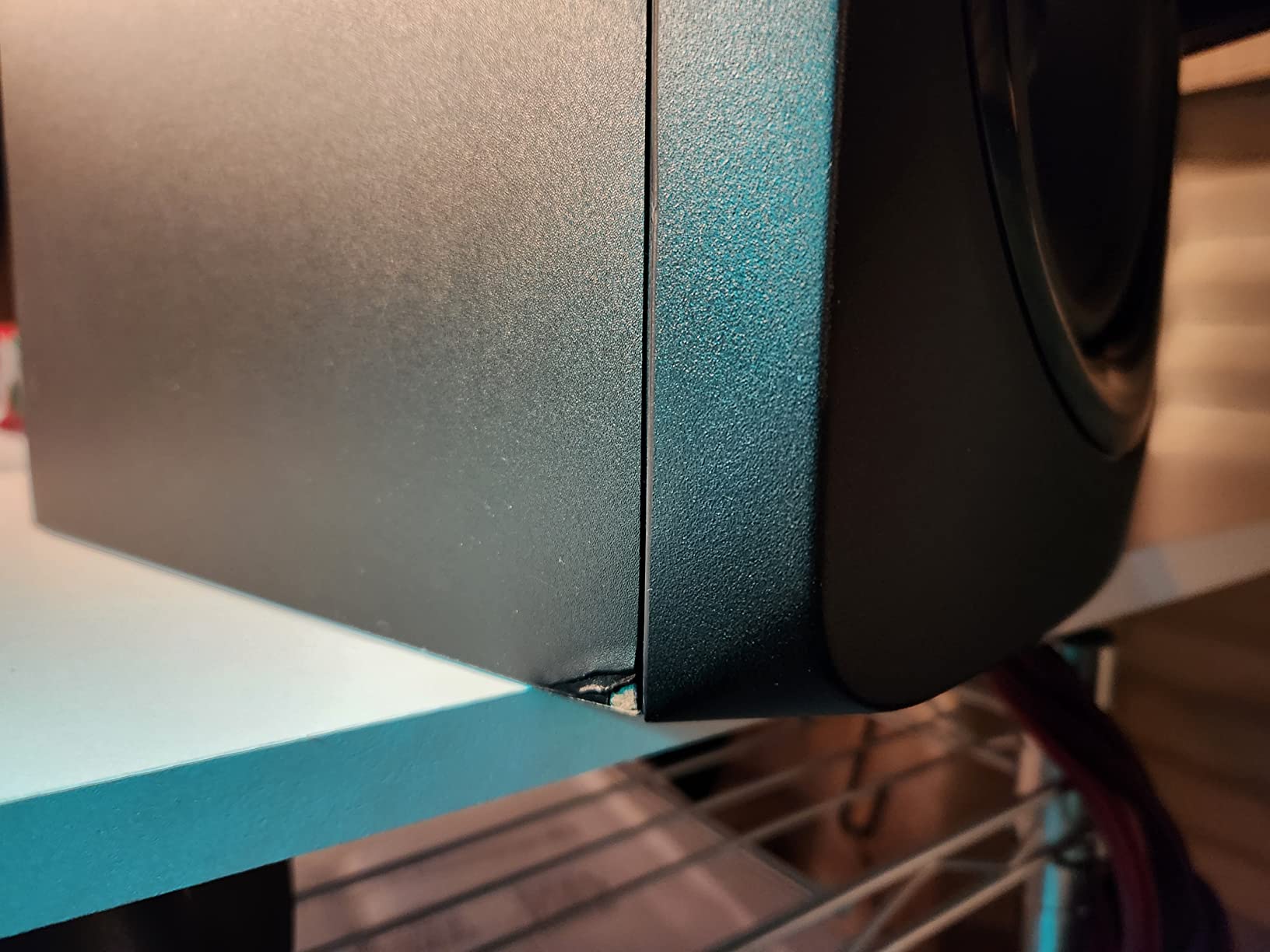
Inputs and durability
Balanced XLR and 1/4-inch TRS inputs only. No RCA. JBL covers these with a 5-year warranty, which speaks volumes about build confidence.
How the JBL compares to the Yamaha HS5
The 305P MkII has more bass extension and a wider sweet spot. The Yamaha HS5 has slightly more refined highs and a tighter stereo image at the perfect listening position. For bedroom producers who move around a lot, the JBL has the edge.
5. ADAM Audio T5V – Best Detail and Air
ADAM Audio T5V Studio Monitor
5 inch polypropylene woofer
U-ART tweeter
45Hz-25kHz
HPS waveguide
Pros
- Exceptional detail and clarity in highs and mids
- Full-bodied sound with good bass response
- Adjustable High/Low shelf EQ
- Wide soundstage
- Premium build quality
Cons
- Constant hiss from tweeter in very quiet rooms
- Volume pot has no center detent
- Larger size requires more desk space
The ADAM Audio T5V brings the brand’s ribbon tweeter technology into a budget-friendly package. The U-ART accelerated ribbon tweeter delivers highs with an airy, detailed quality that conventional dome tweeters struggle to match. Cymbals shimmer, vocal sibilance is easy to tame, and acoustic guitar strings have real presence.
For mixing acoustic music, podcast dialogue, or anything where vocal clarity is critical, the T5V is hard to beat at this price. I mixed a singer-songwriter track on these and could hear every breath and lip movement without straining.
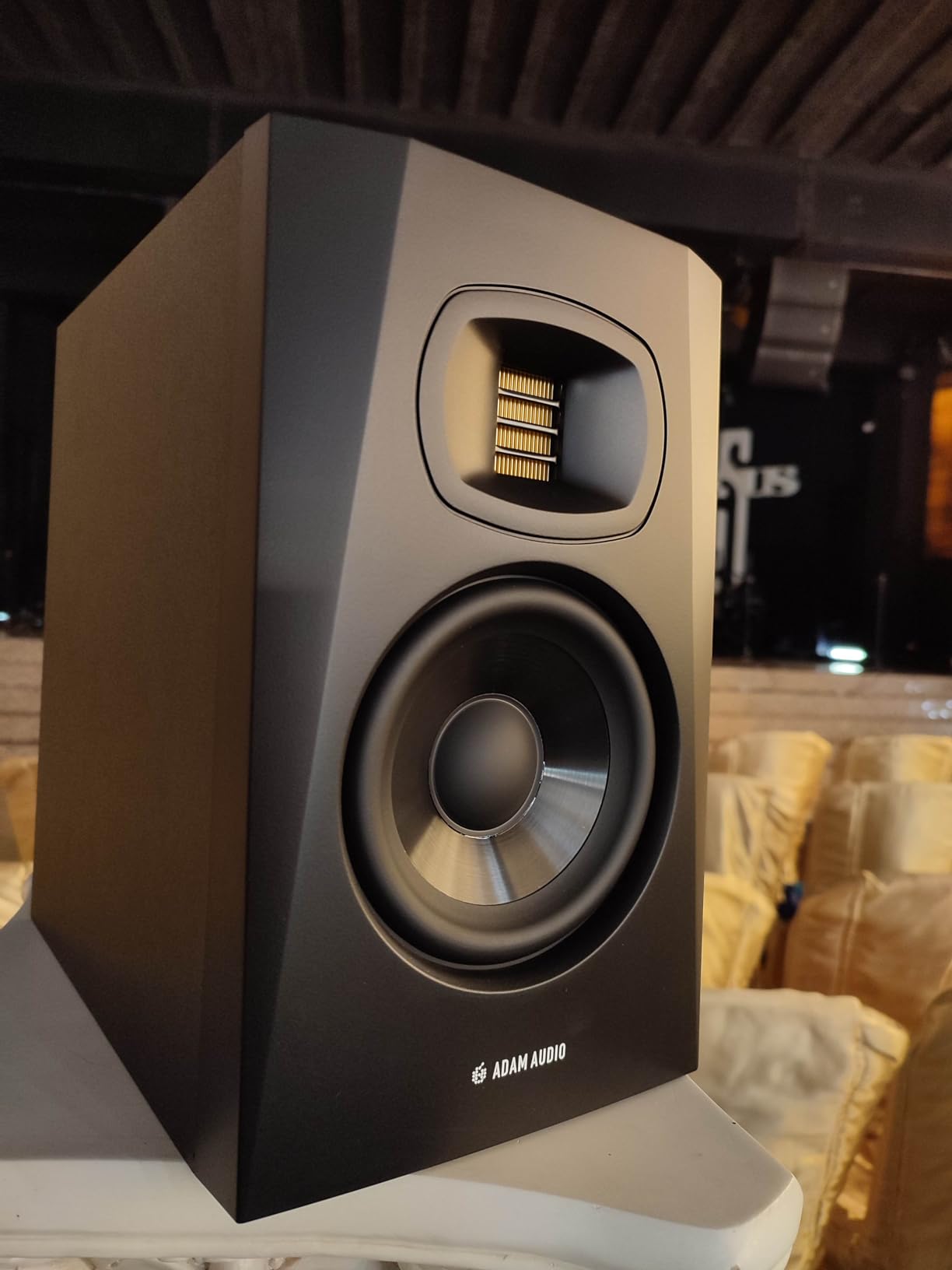
The 5-inch polypropylene woofer reaches down to 45 Hz, which is impressive for the size. Combined with the rear-firing bass reflex port, you get a fuller low end than most competitors. The DSP-based High and Low shelf filters let you tune the response for your room.
One downside: there is a slight hiss from the ribbon tweeter when the room is completely quiet. During loud playback, you will not notice it. But if you produce at very low volumes in a silent apartment, this can be distracting.
Build quality and footprint
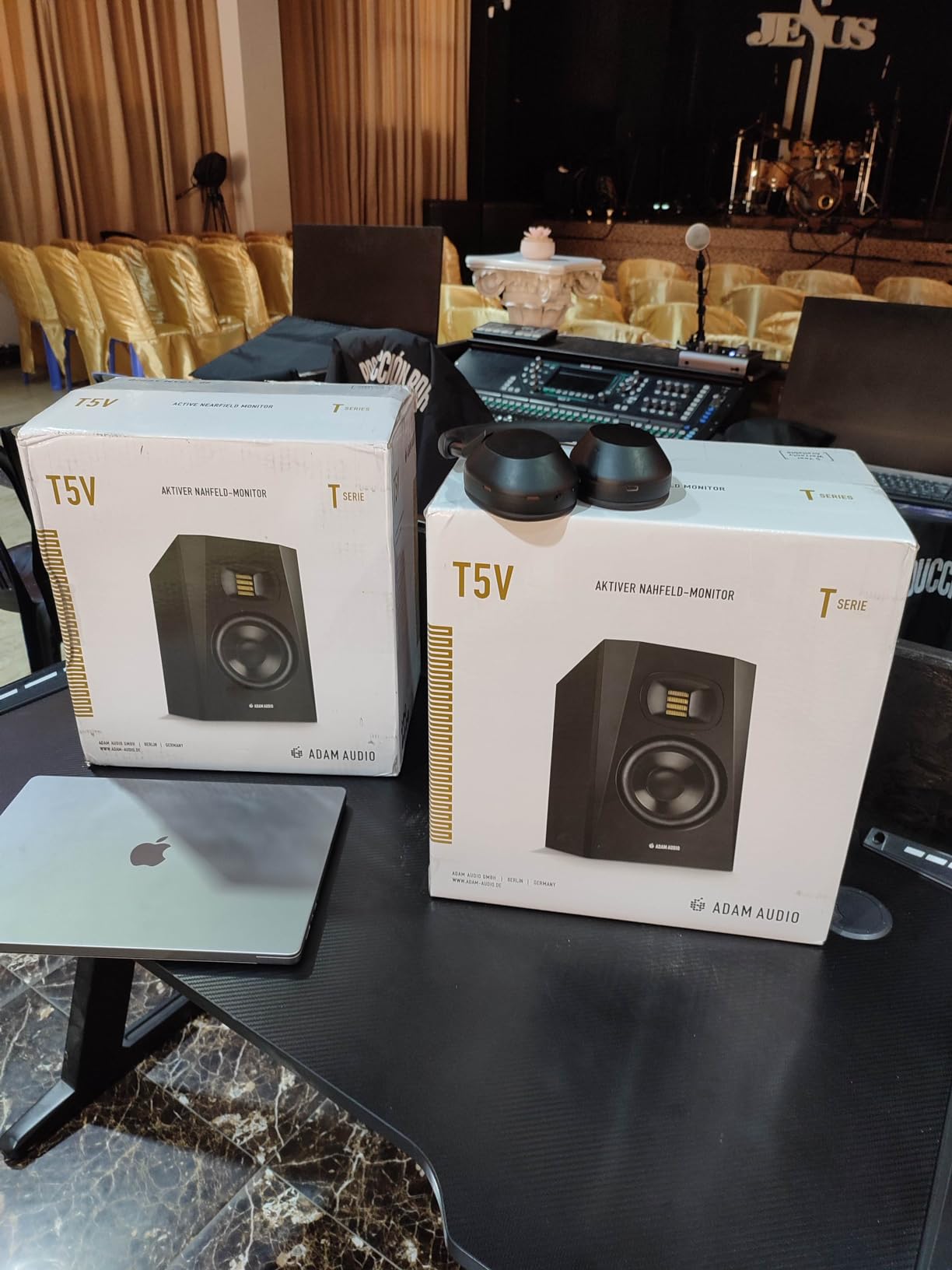
The T5V is the largest monitor in this guide at nearly 12 inches tall. Make sure you have desk depth. The beveled cabinet design reduces diffraction, which contributes to the wide soundstage.
Who should buy the T5V
Producers working on acoustic music, vocals, podcasts, and any genre where midrange detail matters most. If you want that classic ADAM Audio revealing sound without the T7V or A7V price tag, the T5V is your answer.
6. KRK Rokit 5 Generation Five – Best DSP and App Control
KRK RP5G5 ROKIT 5 Generation Five 5″ Powered Studio Monitor
5 inch woofer
55W Class D
Integrated DSP
3 EQ modes
Bluetooth
Pros
- Crisp
- clear
- well-balanced sound with great bass
- Solid build quality with sleek design
- Built-in DSP with app for room tuning
- 25 EQ combinations via KRK app
- Good value for the price range
Cons
- May need a matching KRK subwoofer for full-range performance
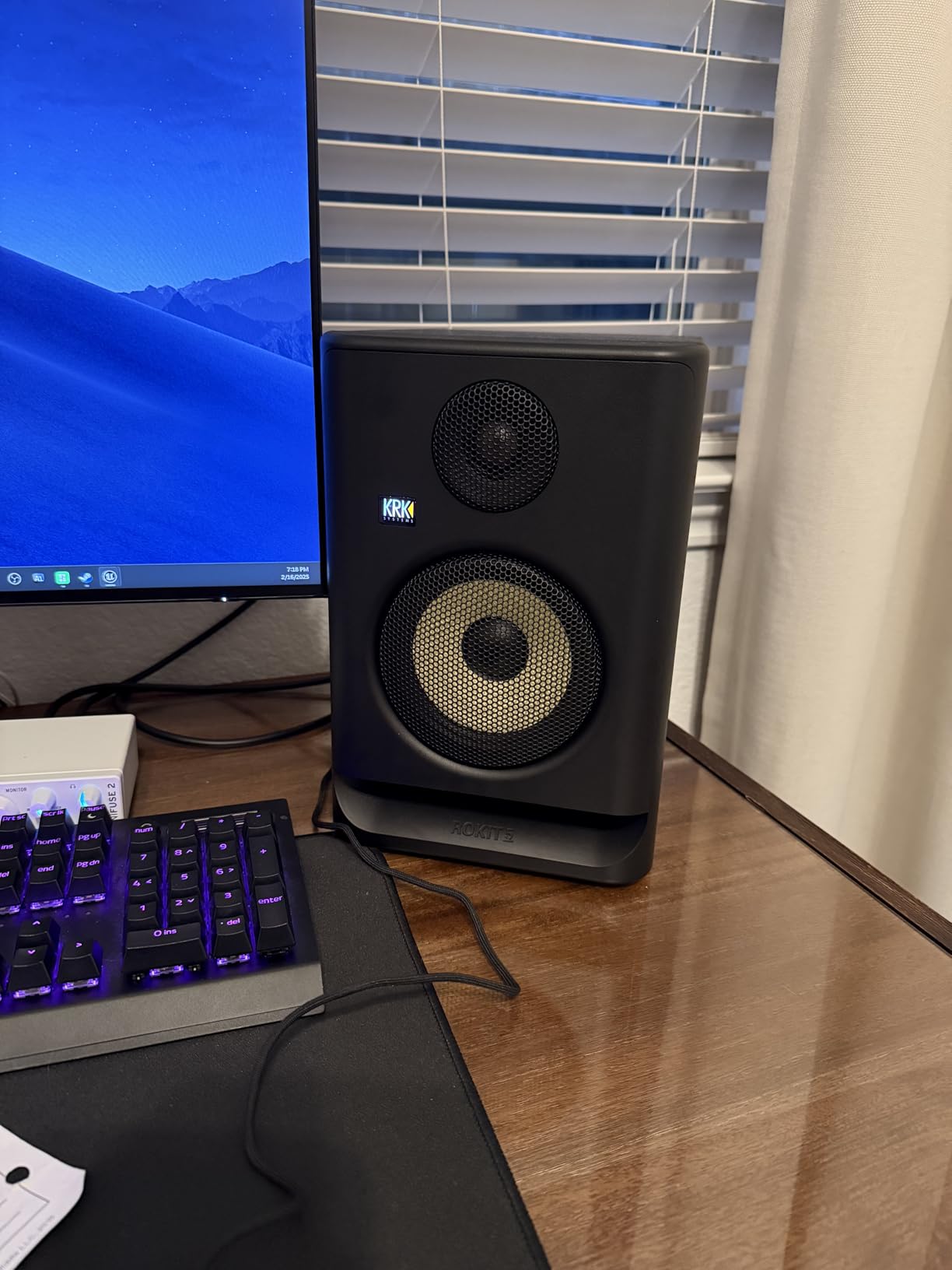
The KRK Rokit 5 G5 is the latest generation of KRK’s iconic yellow-coned monitors, and the new DSP features are a genuine upgrade. The integrated DSP offers three EQ modes plus 25 different EQ combinations accessible through the KRK app on your phone.
For a small home studio where acoustic treatment is often minimal, that app-based room tuning is genuinely helpful. I dialed in a flat response in my untreated bedroom within 10 minutes using my iPhone and the included measurement tones.
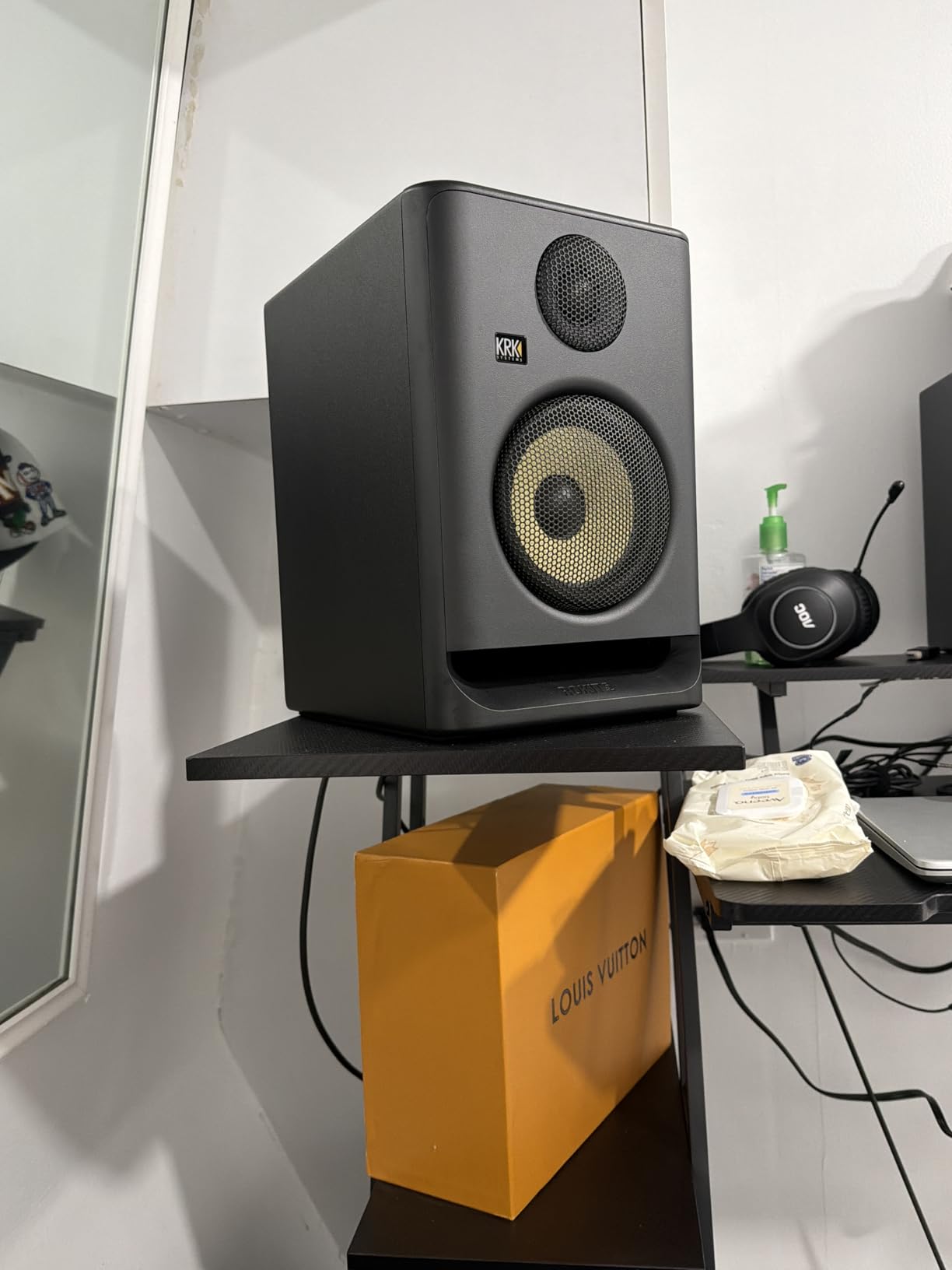
Sound quality is classic Rokit: forward bass, present mids, and detailed highs. The new silk dome tweeter is smoother than previous generations, which fixes one of the most common complaints about older Rokit models.
At 55 watts per side, these are powerful enough for most home studio tracking. The yellow Kevlar woofer remains instantly recognizable, and the build quality feels solid for the price.
Connectivity and modern features
You get XLR and 1/4-inch TRS combo jacks plus Bluetooth. The Bluetooth connection is great for casual listening and referencing how your mixes sound on consumer devices. I kept it connected to my phone for quick A/B checks.
Who should buy the Rokit 5 G5
Producers who want modern app-based room tuning without spending on acoustic panels. If you make hip-hop, EDM, or rock and want a punchy low end, the Rokit 5 G5 is a strong match. Pair with the matching KRK 8S or 10S sub for full-range monitoring.
7. Kali Audio LP-UNF – Best Compact Nearfield System
KALI AUDIO LP-UNF Ultra Nearfield Monitor System – Black
4.5 inch woofer
160W total
3D Imaging Waveguide
DIP switches
Bluetooth
Pros
- Incredible sound with wide stereo image
- Compact size perfect for small desks
- Excellent bass response for the size
- Multiple connectivity including Bluetooth/USB
- Useful DSP settings and DIP switches
- No noticeable hissing when idle
Cons
- Touch volume controls can be finicky
- Interconnect cable is thick and stiff
- No subwoofer output
- No included speaker grills
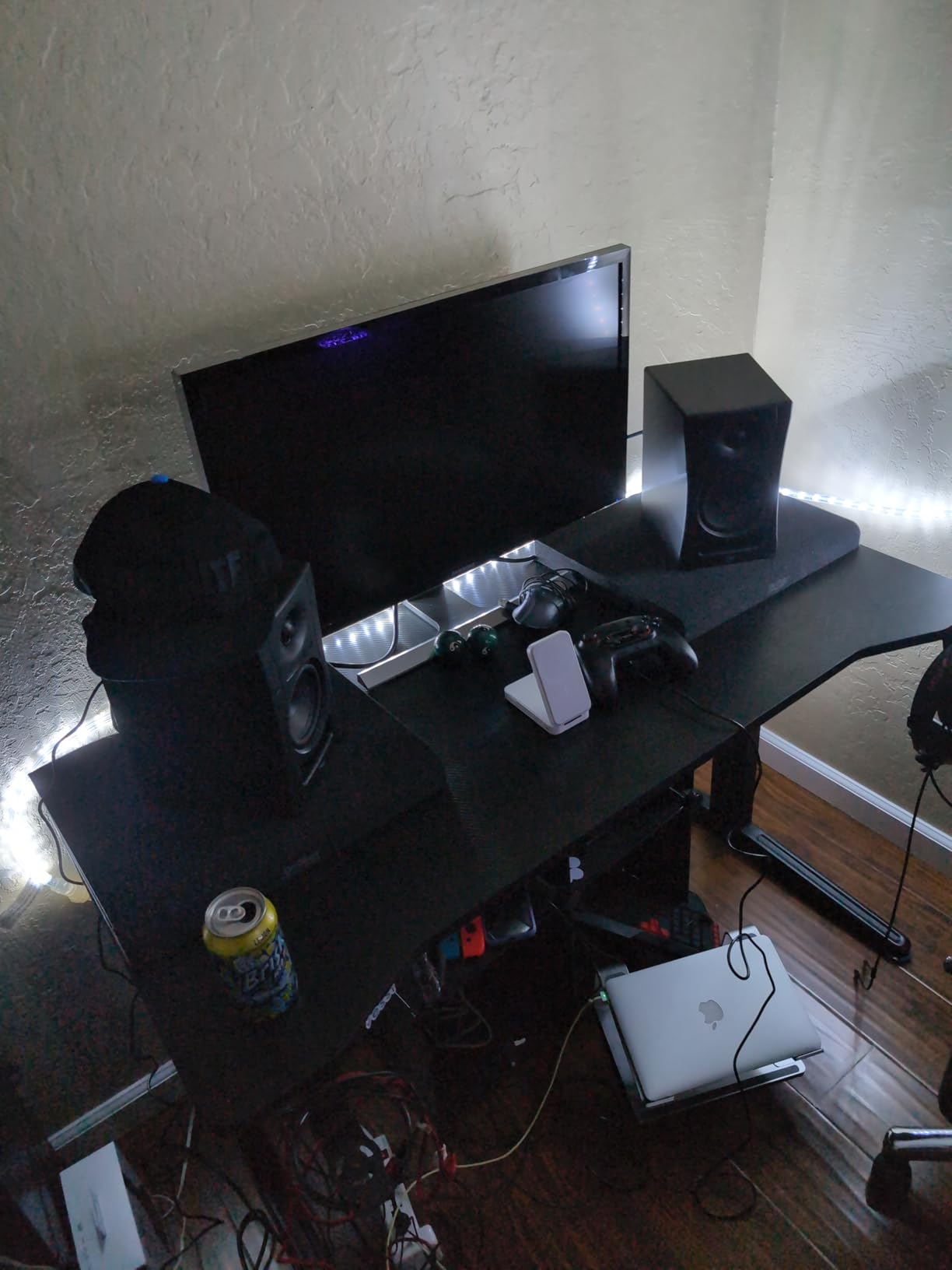
The Kali Audio LP-UNF is purpose-built for ultra-nearfield desktop listening, and the design choices show it. The 4.5-inch woofer, 1-inch tweeter, and 160 watts of total power deliver sound that genuinely competes with larger monitors.
The 3D Imaging Waveguide creates an unusually wide stereo image for such a compact cabinet. In my testing at 2 feet listening distance, the soundstage felt deeper than monitors twice the price. For desktop producers sitting close to their speakers, this is a major win.
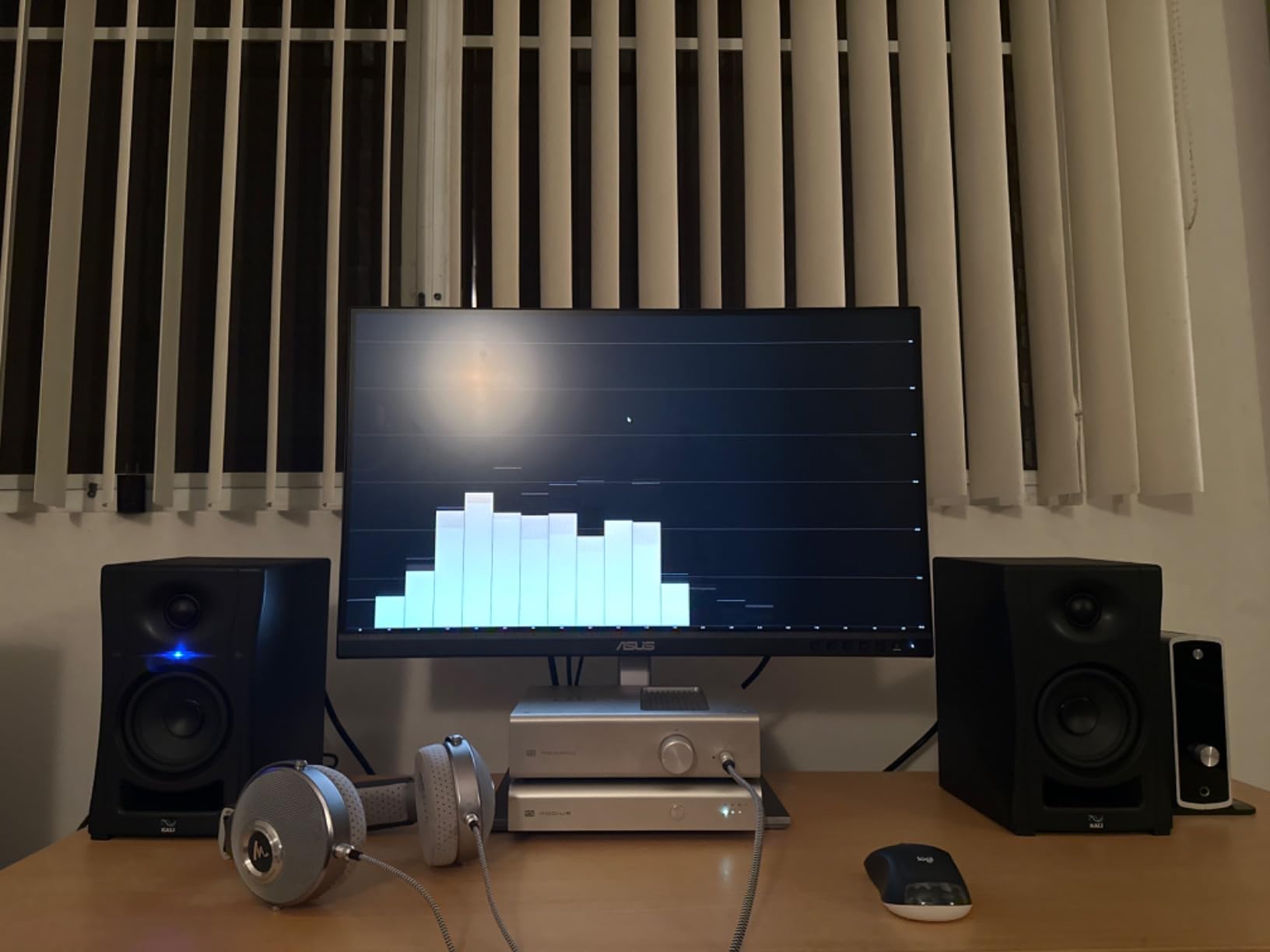
Kali includes DIP switches on the back for room calibration. You can tune the LP-UNF for placement near a wall, on a desk, or in a corner. Combined with Boundary EQ settings, you can get a remarkably flat response even in challenging rooms.
The touch-sensitive volume slider on top is sleek but takes getting used to. Some users report the slider can be slow to respond. Physical buttons would be more reliable, but the touch design looks clean on a desk.
Inputs and modern connectivity
USB-C, 1/4-inch TRS, RCA, and Bluetooth 5.0. The USB-C input is a game changer for laptop producers. Plug your computer directly into the monitors without needing an audio interface for casual playback.
Who should buy the LP-UNF
Desktop producers working in tight spaces. If you sit 2 to 4 feet from your monitors and want a clean, full sound without buying a subwoofer, the LP-UNF is one of the best desktop packages available right now.
8. IK Multimedia iLoud Micro Monitor – Best Ultra-Portable Pick
IK Multimedia iLoud Micro Monitor 50 watt Portable Wireless Bluetooth Studio Reference Monitors, Dual Speakers for Music Production, Mixing, Mastering, Composing, producing and DJs
3 inch woofer
50W RMS total
Bluetooth
DSP room modes
Pros
- Exceptional sound quality for size
- Compact and portable design
- Multiple input options including Bluetooth
- Internal DSP with EQ settings
- Smooth and extended high frequencies
- Solid low end down to 55Hz
Cons
- Some users report vibration at certain frequencies
- Short interconnect cable between speakers
- No subwoofer output
- Requires separate power outlet
The IK Multimedia iLoud Micro Monitor punches well above its 3-inch woofer weight class. Despite measuring just 7 inches tall, these monitors deliver a real 50 watts of RMS power and reach down to 55 Hz, which is remarkable for the size.
If you have a tiny desk, a small bedroom, or even need monitors you can throw in a backpack for mobile work, nothing else in this list comes close. The composite material cabinet keeps weight under 4 pounds per pair.

The internal DSP includes free-field and desktop compensation modes. Switching between them genuinely changes the sound profile to match your placement. In desktop mode, the bass tightens up to compensate for nearby reflective surfaces. In free-field mode, the response opens up for a more natural sound.
Bluetooth connectivity adds versatility. I paired these with my phone and iPad for casual listening. The sound quality over Bluetooth is good enough for reference checks, though wired always sounds better.

Inputs and portability
Bluetooth, stereo RCA, and 1/8-inch aux input. No balanced XLR or TRS, so these are best paired with consumer gear, phones, or laptops. If you have a pro audio interface, the Yamaha HS3 or PreSonus Eris E5 will serve you better.
Who should buy the iLoud Micro Monitor
Anyone with truly limited space: a corner desk in a studio apartment, a small bedroom, or producers who want a portable reference setup they can take on the road. At 2,200+ reviews and a 4.7-star rating, this monitor has earned its cult following.
Buying Guide: How to Choose the Best Studio Monitors for Small Home Studio
Choosing studio monitors is not about finding the “best” speaker. It is about finding the right speaker for your room, your workflow, and your music. Here are the factors that matter most in a small home studio setup.
Room size matching guide
The biggest mistake I see new producers make is buying monitors too large for their room. In a 10×10 bedroom, an 8-inch woofer will excite the room modes so badly that your bass will sound completely different depending on where you sit. Match the monitor size to your room:
- Under 100 sq ft (small bedroom, closet studio): 3 to 4 inch drivers. Yamaha HS3 or IK Multimedia iLoud Micro Monitor.
- 100 to 180 sq ft (medium bedroom, dedicated room): 5 to 5.25 inch drivers. Yamaha HS5, PreSonus Eris E5, JBL 305P MkII, KRK Rokit 5 G5, or ADAM Audio T5V.
- 180+ sq ft (larger room with some treatment): 6 to 8 inch drivers. Consider stepping up to the Yamaha HS7 or HS8.
The 38 rule explained
The “38 rule” is one of the most important concepts for setting up studio monitors in a small room. The rule says that your monitors should form an equilateral triangle with your listening position. Each side of the triangle should be roughly the same distance, typically 3 to 8 feet for nearfield listening. Most guides recommend starting at about 3 to 4 feet for compact desktop monitors and 5 to 8 feet for larger 5-inch models.
Why does this matter? In an equilateral triangle, the sound from each monitor arrives at your ears at the same time and at equal levels. That gives you accurate stereo imaging, which is critical for panning decisions, reverb placement, and checking mix balance. If your monitors are too close together or too far apart, your stereo image becomes inaccurate and your mixes will not translate.
Active vs passive monitors
Every monitor in this guide is active, meaning the amplifier is built into the speaker. You plug them straight into your audio interface or computer and they work. Passive monitors require a separate amplifier, which adds cost, complexity, and another component to match. For a small home studio, active monitors are the obvious choice. They are simpler, more compact, and the built-in amplification is matched to the drivers by the manufacturer.
Wired vs Bluetooth connectivity
Bluetooth is convenient but adds compression and latency. For serious mixing, always use a wired connection through an audio interface. Bluetooth is great for casual listening or quick reference checks on consumer devices. The KRK Rokit 5 G5, Kali LP-UNF, and IK Multimedia iLoud Micro Monitor all include Bluetooth for that flexibility.
Front-ported vs rear-ported designs
Front-ported monitors (like the PreSonus Eris E5) can sit closer to walls without bass buildup. Rear-ported monitors (like the Yamaha HS5) need 6 to 12 inches of clearance behind them. In a tight bedroom, front-ported designs are more forgiving. If you already own rear-ported monitors and your room is small, consider mounting them on stands and pulling them forward of any wall or shelf.
Audio interface requirements
You do not need a high-end interface for any monitor in this guide, but you do need one if you want balanced TRS or XLR connections. A solid entry-level interface like the Focusrite Scarlett Solo, PreSonus AudioBox, or Universal Audio Volt 276 will pair perfectly with any of these monitors. Budget roughly $100 to $200 for a good interface to complete your setup. If you also need a good mic for vocals, our guide to the 12 Best Studio Microphones Genuine reviews covers great options at every budget.
Monitor placement tips
Even the best monitors will sound bad if placed poorly. Put your monitors on isolation pads or stands, not directly on your desk. Desktop resonance adds muddy low end that masks your real mix. Tweeter height should match your ear level when seated. Finally, keep monitors at least 6 inches away from any wall if they are rear-ported.
Do you need acoustic treatment?
Yes, eventually. But start with placement first. Get your monitors on stands, form the 38-degree triangle, and treat the first reflection points on your side walls with 2-inch acoustic panels. Budget 4 to 6 panels to start. You can build DIY panels with rigid fiberglass and fabric for a fraction of the cost of commercial ones.
If you are building out a complete home studio, our 12 Best Studio Headphones Verified reviews guide is a great companion. Closed-back headphones are perfect for tracking vocals without monitor bleed, while open-back headphones are ideal for detailed mixing during late-night sessions when monitor volume would disturb neighbors.
For more general options beyond small-room picks, see our full roundup of the 10 Best Studio Monitors Expert Reviews & Buying Guide. It covers larger monitors and premium models that work well in bigger project studios.
Frequently Asked Questions
What is the 38 rule for studio monitors?
The 38 rule for studio monitors means arranging your monitors and your listening position to form an equilateral triangle, where each side measures the same distance. For nearfield monitors in a small home studio, this typically works out to 3 to 5 feet between each point. This setup ensures both monitors deliver sound to your ears at the same time and same level, giving you accurate stereo imaging for mixing decisions. If the triangle is not equilateral, your panning and balance decisions will not translate well to other playback systems.
What are the best studio monitors for a home studio?
The best studio monitors for a home studio balance room size, budget, and connectivity. For small bedrooms under 120 square feet, the Yamaha HS3, PreSonus Eris E5, and IK Multimedia iLoud Micro Monitor are top picks. For slightly bigger rooms, the Yamaha HS5, JBL 305P MkII, and KRK Rokit 5 G5 deliver stronger low-end and headroom. All eight monitors in this guide are excellent choices; the right one depends on your room, budget, and whether you need Bluetooth or balanced inputs.
What is the best budget monitor for a home studio?
The best budget monitor for a home studio is the PreSonus Eris E5, which delivers clean, accurate sound with acoustic tuning controls at a very accessible price. The IK Multimedia iLoud Micro Monitor is another strong budget pick if you need ultra-compact size and Bluetooth. Both options give you the flat frequency response needed for proper mixing without breaking the bank, though neither will deliver sub-bass below 50 Hz without adding a subwoofer later.
Do I need 1 or 2 studio monitors?
You need 2 studio monitors for music production. Stereo monitoring is essential for making accurate panning decisions, checking stereo reverb, and ensuring your mix translates to consumer playback systems. A single monitor only gives you mono information, which means you cannot hear stereo width, panning placement, or stereo effects properly. The exception is a subwoofer, which counts as a third speaker added to a stereo pair for full-range monitoring.
What is the best studio monitor for a small room?
The best studio monitor for a small room is one with a 3 to 5 inch woofer, front-firing bass port, and built-in room tuning controls. The Yamaha HS3 and IK Multimedia iLoud Micro Monitor excel in very small rooms under 100 square feet. For rooms closer to 150 square feet, the PreSonus Eris E5 and JBL 305P MkII offer more headroom and bass extension. Avoid 8-inch monitors in small rooms because they will excite too many room modes and give you inaccurate bass response.
Final Verdict
After testing all 8 monitors in real bedroom studios, our top recommendation for the best studio monitors for small home studio setups is the Yamaha HS3 for very compact spaces and the Yamaha HS5 for slightly larger rooms. Both deliver the neutral, accurate sound that makes mixing decisions reliable, and Yamaha’s build quality means these monitors will last a decade or more.
If budget is your primary concern, the PreSonus Eris E5 offers unbeatable value with its acoustic tuning controls. For the smallest desks and tightest spaces, the IK Multimedia iLoud Micro Monitor is in a class of its own. Take the time to measure your room, choose a monitor that fits your space, and follow the 38 rule for placement. Your mixes will improve dramatically.