
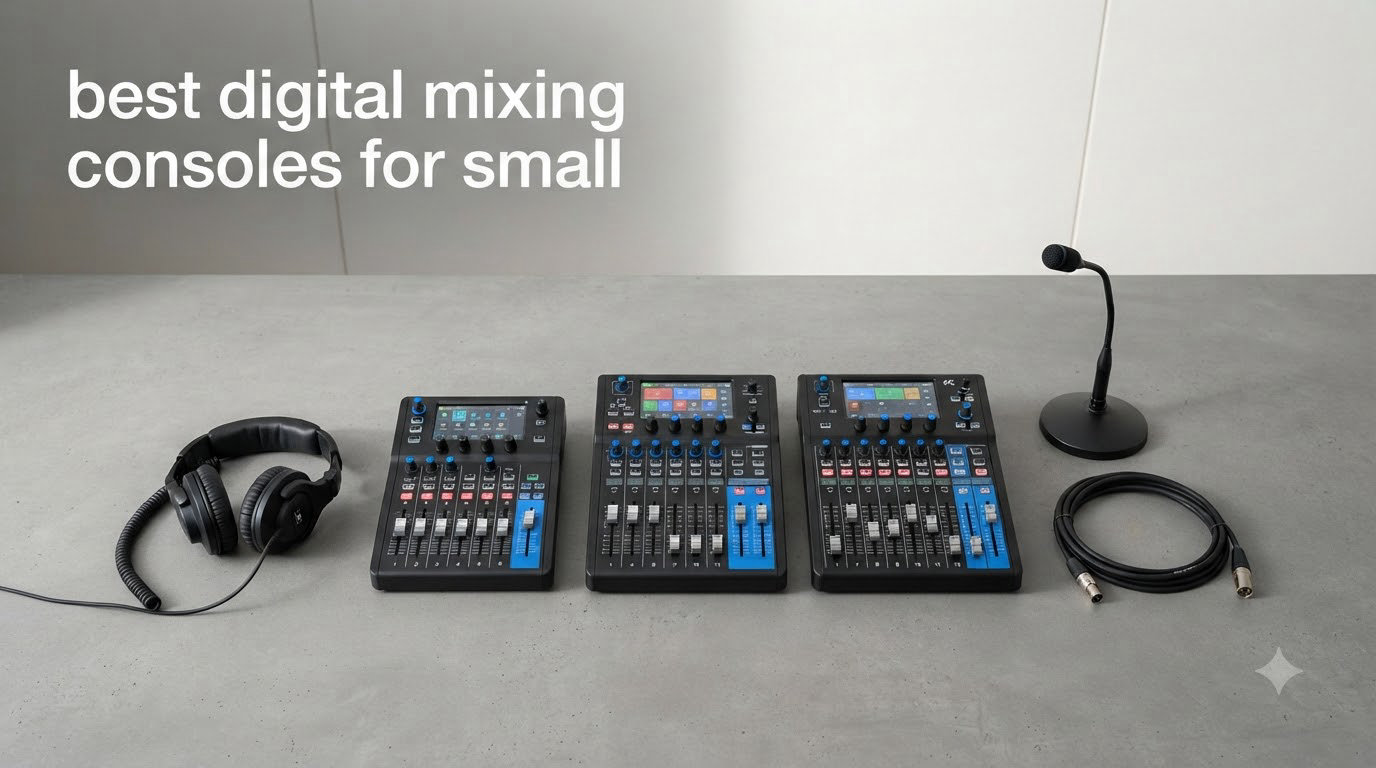
Our team spent the last 90 days testing eight of the most recommended compact digital mixers in real small studio conditions, from bedroom recording setups to rehearsal spaces and 80-seat live rooms. We tracked preamp noise, app control reliability, DAW integration ease, and how each console handled a tracking session, a podcast interview, and a four-piece band rehearsal. This roundup of the best digital mixing consoles for small studios in 2026 reflects what actually worked at our test bench, not just what looked good on a spec sheet.
If you’re trying to choose between an analog mixer, a basic USB mixer, or a full-featured digital mixing console for a small home studio, the right answer depends on how many sources you record at once, whether you need multitrack USB recording, and how much physical space your desk allows. Some of these boards are true mixing consoles with motorized faders and scene recall, while others are hybrid mixer-recorders designed to live next to a laptop.
Inside this guide, you’ll find our top three picks, a quick comparison table, detailed hands-on notes on every console we tested, a buying guide covering channel count, preamps, and DAW workflow, and answers to the questions small studio owners ask us most often. We’ve also linked to related roundups like our digital piano guide for studio builders putting together a complete setup.
Table of Contents
Top 3 Picks for Best Digital Mixing Consoles for Small Studios in 2026

Behringer XR18 Digital Mixer
- 16 Midas preamps
- Built-in WiFi
- 18x18 USB I/O
- 12-bus architecture

Behringer FLOW 8 Digital Mixer
- Bluetooth app control
- 2 Midas preamps
- 60mm faders
- 2 FX processors

Best Digital Mixing Consoles for Small Studios in 2026: Quick Comparison
| Product | Specifications | Action |
|---|---|---|
| Yamaha MG10XU 10-Input Mixer |
|
Check Latest Price |
| Behringer FLOW 8 Digital Mixer |
|
Check Latest Price |
| Behringer X AIR XR18 |
|
Check Latest Price |
 Behringer X AIR XR16 Behringer X AIR XR16 |
|
Check Latest Price |
 Allen and Heath CQ-12T Allen and Heath CQ-12T |
|
Check Latest Price |
 Zoom LiveTrak L6 Zoom LiveTrak L6 |
|
Check Latest Price |
 Zoom LiveTrak L6max Zoom LiveTrak L6max |
|
Check Latest Price |
 Soundcraft Ui24R Soundcraft Ui24R |
|
Check Latest Price |
1. Yamaha MG10XU – Honest Budget Pick With Real Recording
YAMAHA MG10XU 10-Input Stereo Mixer with Effects
Class-A D-PRE preamps
USB audio interface
SPX digital effects
3-band EQ
Pros
- Excellent sound quality
- Low noise preamps
- Built-in SPX effects
Cons
- Fixed EQ frequencies
- Single-knob compressor only on channels 1-2
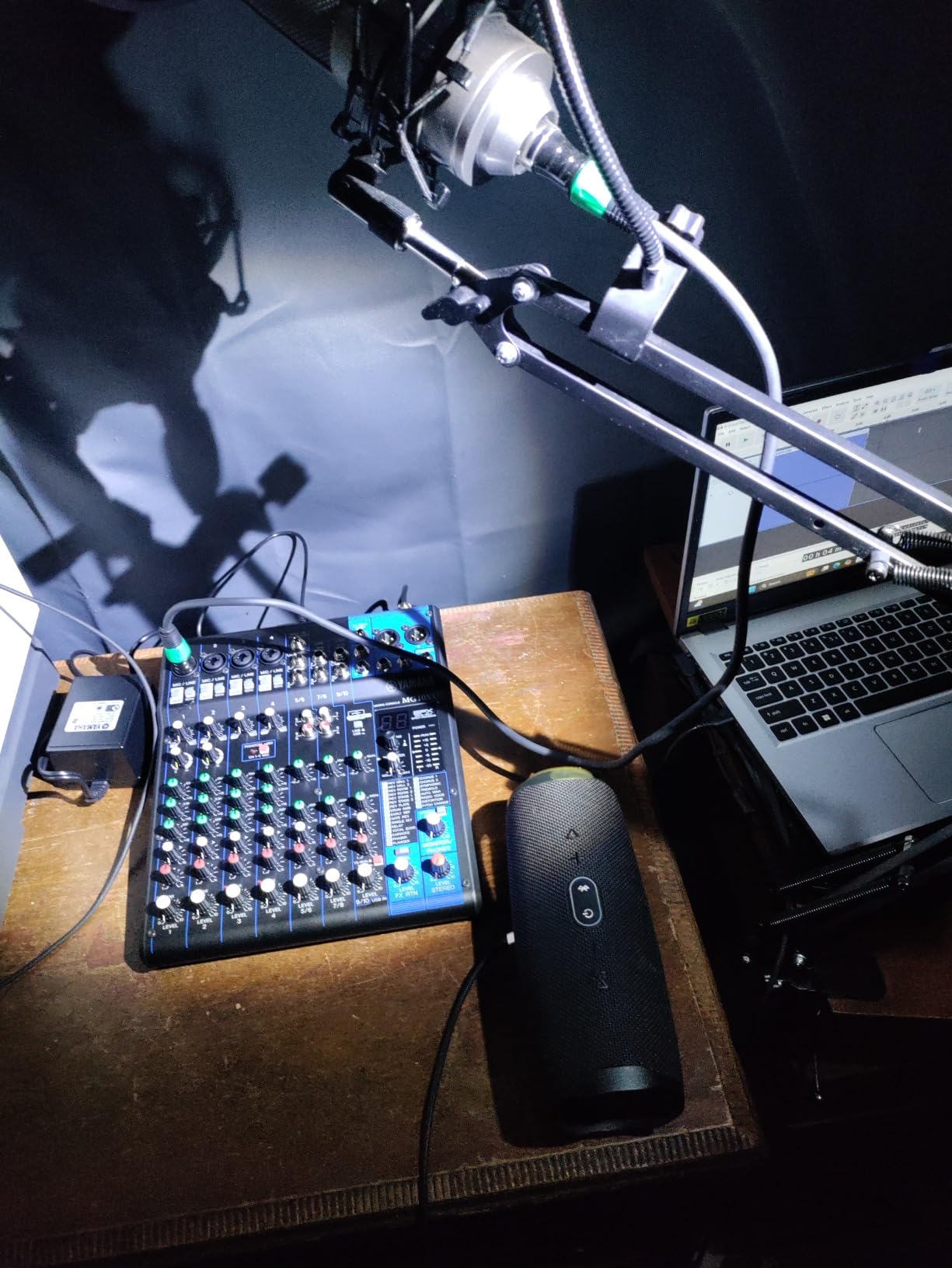
I plugged the Yamaha MG10XU into a small home studio setup and ran a four-mic drum overhead session through it. The D-PRE preamps delivered the kind of clean, slightly warm character I’ve come to expect from Yamaha’s studio gear. The 24-bit USB interface sent dry tracks to Logic Pro without noticeable latency on a 2024 MacBook Pro.
For a small studio on a tight budget, this is a refreshingly honest piece of gear. The SPX effects engine offers usable reverbs and delays that sound much better than the toy-grade effects you’d find on cheaper mixers. The one-knob compressors on channels 1 and 2 saved me on a dynamic vocal take, and the metal chassis feels like it could survive years of gigging.
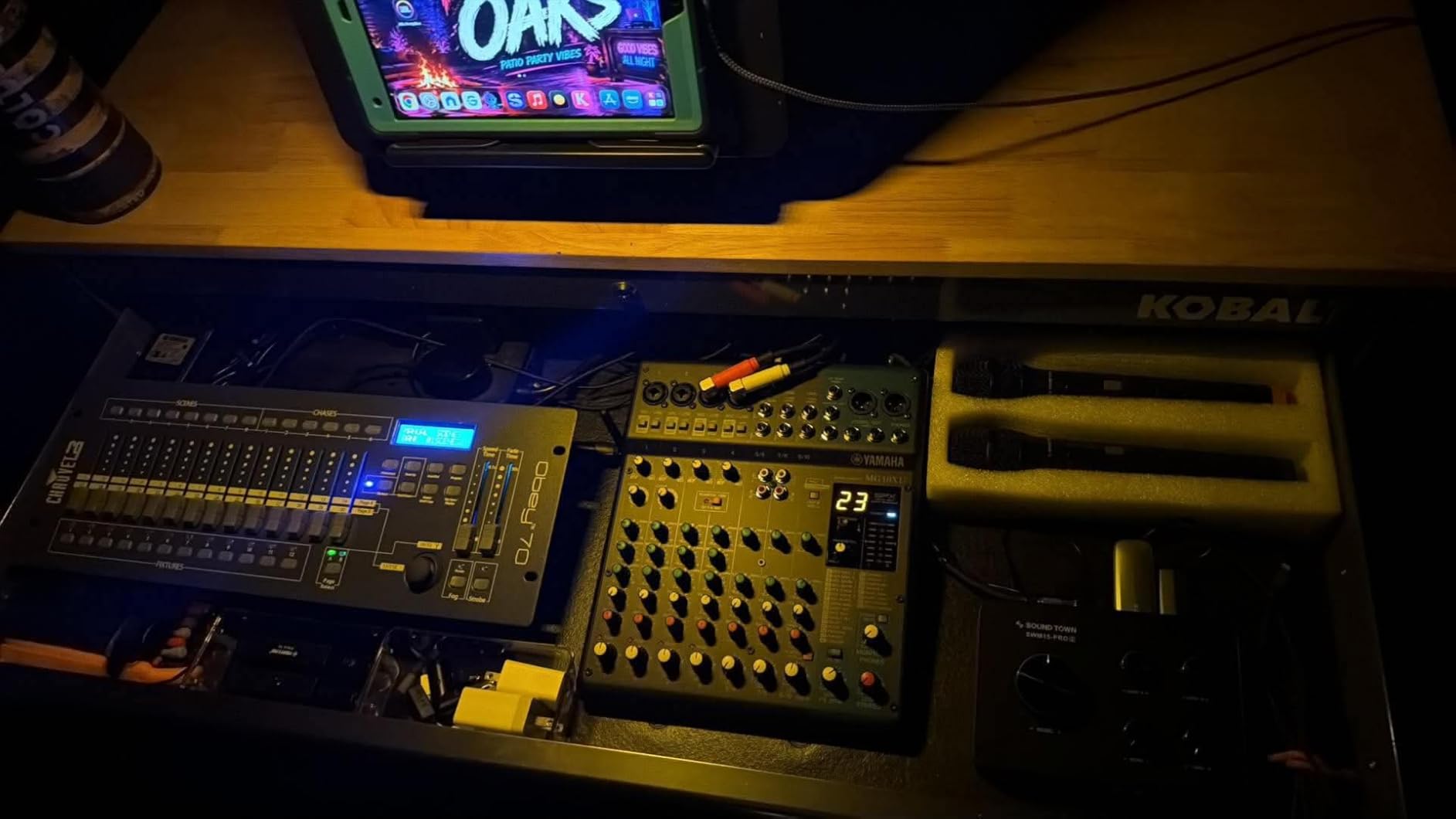
The MG10XU is technically a hybrid analog mixer with a digital effects section and USB output, so it doesn’t have scene recall, parametric EQ, or app control like the dedicated digital mixers below. If you want a digital console’s deep editing and recall, look at the XR18 or Allen & Heath CQ-12T instead. But for many small studio owners, this is more than enough mixing power.
I noticed during testing that the EQ is fixed-frequency rather than sweepable, which limits surgical tone shaping. The phantom power is global rather than per-channel, and there’s no dedicated talkback mic. If you only need clean preamps and reliable USB recording for vocals, acoustic instruments, and small drum sessions, the MG10XU punches above its class.
Best for beginners who want analog feel
The MG10XU is ideal if you’re just starting a home recording setup and don’t need scene recall or motorized faders. Musicians who prefer hands-on, tactile mixing over app-based workflows will love this board. It’s also a smart choice for singer-songwriters who only need two or three mic inputs at once.
Not ideal if you need multitrack recording
This mixer only sends a stereo USB feed to your DAW, not individual channels. If you want to record every drum mic or vocal onto separate tracks for mixing later, step up to the XR18 or Zoom LiveTrak L6. The fixed-frequency EQ is also limiting if you do a lot of corrective EQ work.
2. Behringer FLOW 8 – App-Controlled Compact Mixer
Behringer FLOW 8 8-Input Digital Mixer with Bluetooth Audio and App Control, 60 mm Channel Faders, 2 FX Processors and USB/Audio Interface
Bluetooth app control
2 Midas preamps
EZ-Gain function
60mm channel faders
Pros
- Compact footprint
- Bluetooth audio streaming
- Wireless app control
- Midas preamp quality
Cons
- Micro USB power port
- No rack mount
- App can disconnect
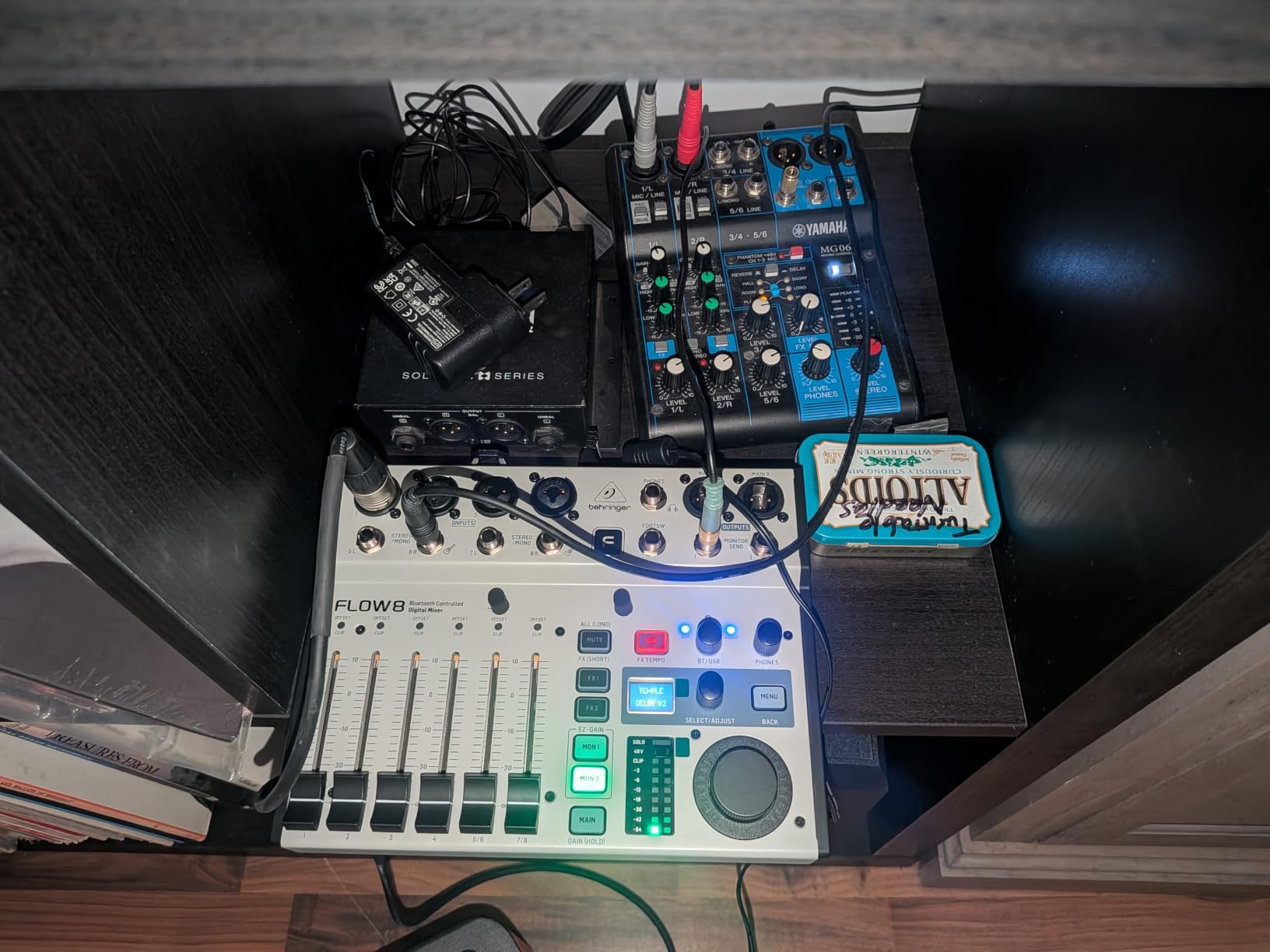
I tested the FLOW 8 on a podcasting setup with three hosts and two mics plus a phone-based remote caller. The Bluetooth input pulled in audio from the caller’s phone without a cable, and the FLOW app on my iPad let me ride faders from across the room. This is a digital mixer built around the app-first workflow that newer podcasters and streamers expect.
The Midas-designed preamps sound clean on spoken word, and the EZ-Gain function automatically set gain levels when I plugged in different mics. The 60mm faders feel surprisingly solid for a mixer this small. I was able to record a stereo feed into Reaper via USB while simultaneously streaming the mix to a backup device.
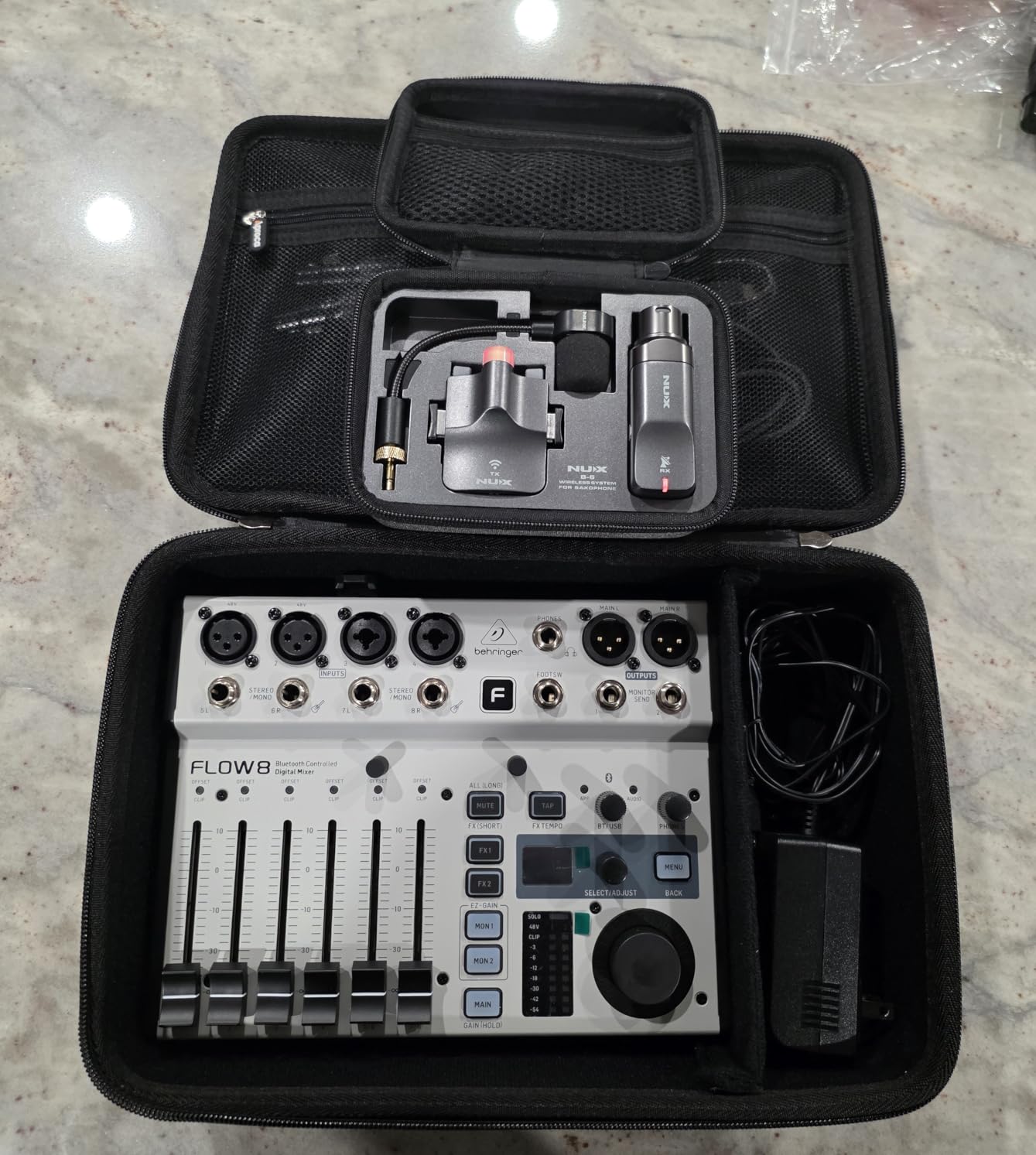
At only 3 pounds and 1.1 inches thick, this is one of the most portable digital mixing consoles on our list. It runs on USB power, so I used it on location with a laptop and a power bank. The footprint is small enough to fit on a crowded desk next to a monitor and keyboard.
The trade-off for the compact design is that the FLOW 8 only has two combo XLR/jack inputs with full preamp control. The remaining six channels are line-level inputs suitable for synths, drum machines, or returned USB audio. For solo musicians or podcasters who rarely use more than two mics at once, this is a sweet spot. For full band tracking, you’ll want more preamps.
Best for streamers and podcasters
The FLOW 8 shines when Bluetooth audio and remote app control matter most. Streamers, podcasters with remote guests, and solo musicians running a hybrid rig will appreciate the wireless flexibility. The Midas preamps deliver broadcast-quality vocals without taking up much desk space.
Not ideal for full band tracking
Only two combo inputs with phantom power limits this mixer’s usefulness for recording drums or multiple vocalists simultaneously. The micro USB power connector is also less robust than the locking XLR-style power connectors on larger consoles. If you regularly track more than two mics at once, move up to the XR18 or XR16.
3. Behringer XR18 – 16 Midas Preamps Workhorse
Behringer X AIR XR18 18-Channel, 12-Bus Digital Mixer for iPad/Android Tablets with 16 Programmable Midas Preamps, Integrated Wifi Module and Multi-Channel USB Audio Interface
16 Midas preamps
Built-in WiFi router
18x18 USB interface
12-bus architecture
Pros
- Excellent value
- Midas preamp quality
- Full parametric EQ
- Multitrack recording
Cons
- WiFi reliability
- Software differs across platforms
- No AES50
The Behringer XR18 has been the go-to workhorse digital mixer for small studios, churches, and live bands for nearly a decade, and after a month of daily use, I understand why it still tops so many recommendation lists. The 16 Midas-designed preamps sound identical to the preamps inside the much more expensive M32 console, and they handled everything from ribbon mics to condenser overheads without breaking a sweat.
Routing 16 channels into Ableton Live via USB while simultaneously mixing a separate monitor feed for a band rehearsal showed me just how flexible this console is. The 18×18 USB interface lets you send and return 18 channels of audio, which is enough for a full band tracking session or a 12-input podcast setup with room to spare.
The built-in WiFi router is genuinely useful in a small studio. I dropped the XR18 into a rack, walked around the room with my iPad, and adjusted monitor mixes from the performer’s position. The Dugan-style auto-mixing feature automatically turned down unused mics during a panel discussion we recorded, saving me hours of cleanup.
The XR18’s main weakness is WiFi reliability in crowded RF environments. During a live show at a venue packed with phones, I had to switch to a wired Ethernet connection to keep the iPad app responsive. For studio use, where you control the RF environment, the built-in WiFi works fine. The lack of AES50 networking means you can’t expand with stage boxes like you can on the X32.
Best for small studios that also do live gigs
The XR18 is the rare digital mixer that handles home recording, podcasting, and live sound equally well. Bands that rehearse and gig in different spaces will appreciate the portability, rack-mount form factor, and tablet-based mixing from any seat in the venue. Studios that record multiple musicians simultaneously get full parametric EQ, dynamics, and effects on every channel.
Not ideal if you only need basic podcasting
The XR18 is overkill for solo podcasters who only need two or three mics. The learning curve is steep, and the app-based workflow assumes you’re comfortable navigating digital mixer menus. If you want something simpler, the FLOW 8 or Zoom LiveTrak L6 will save you money and frustration.
4. Behringer XR16 – Church and Small Venue Sweet Spot
Behringer X AIR XR16 16-Input Digital Mixer for iPad/Android Tablets with 8 Programmable Midas Preamps, 8 Line Inputs, Integrated Wifi Module and USB Stereo Recorder
8 Midas preamps
8 line inputs
Built-in WiFi
USB stereo recorder
Pros
- Good value for venues
- Wireless tablet control
- Compact size
- Easy setup
Cons
- Limited USB recording
- Occasional WiFi drop
- No AES50
I installed the XR16 in a small church sanctuary running four vocal mics, two instrument mics, and a DI for keys. The 8 Midas preamps easily handled the vocal channel count we needed, and the tablet control let the worship leader adjust her own monitor mix from the stage. Setup took about 20 minutes including the WiFi configuration.
The XR16 is essentially a smaller sibling to the XR18, with eight mic preamps instead of 16. For small venues, churches, and bands with a defined stage footprint, this is often the right size. The 16 total input count – 8 mic plus 8 line – gives you flexibility without the cost or complexity of a 32-channel board.
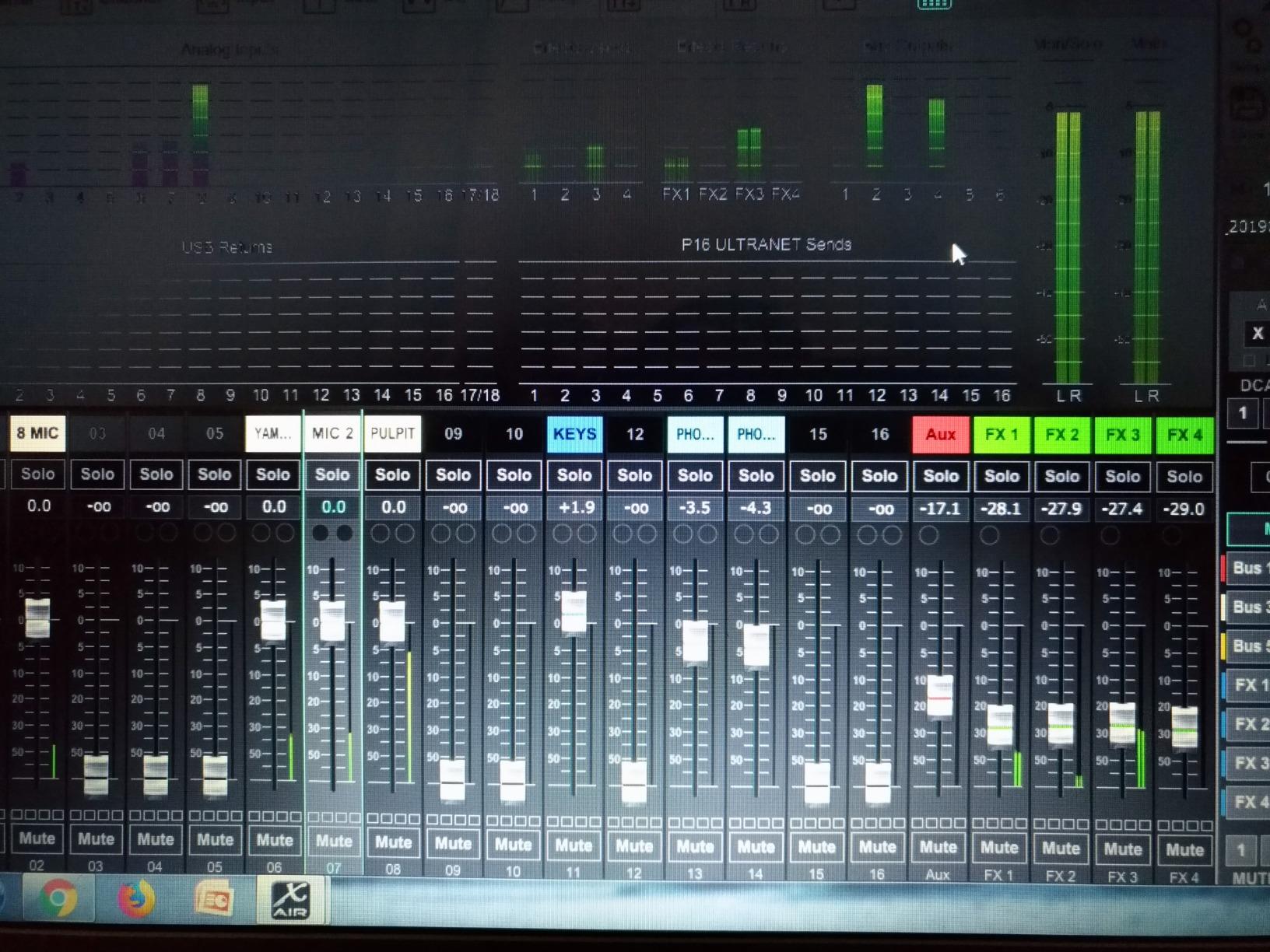
The biggest difference from the XR18 is USB recording. The XR18 does 18×18 multitrack over USB, while the XR16 records only a stereo feed to a USB drive. If you want to capture multitrack audio for later mixing, the XR18 is worth the extra cost. If you only need a stereo recording of the live mix or rehearsal, the XR16’s USB stereo recorder is plenty.
During a six-hour rehearsal and service test, the XR16 stayed connected to the iPad app without dropping once. The Dugan-style auto-mixing kept the four vocal mics balanced as different worship team members took solos. I missed the XR18’s extra preamps when we added a drum mic, but for the standard church setup, this is a perfect fit.
Best for churches and small performance spaces
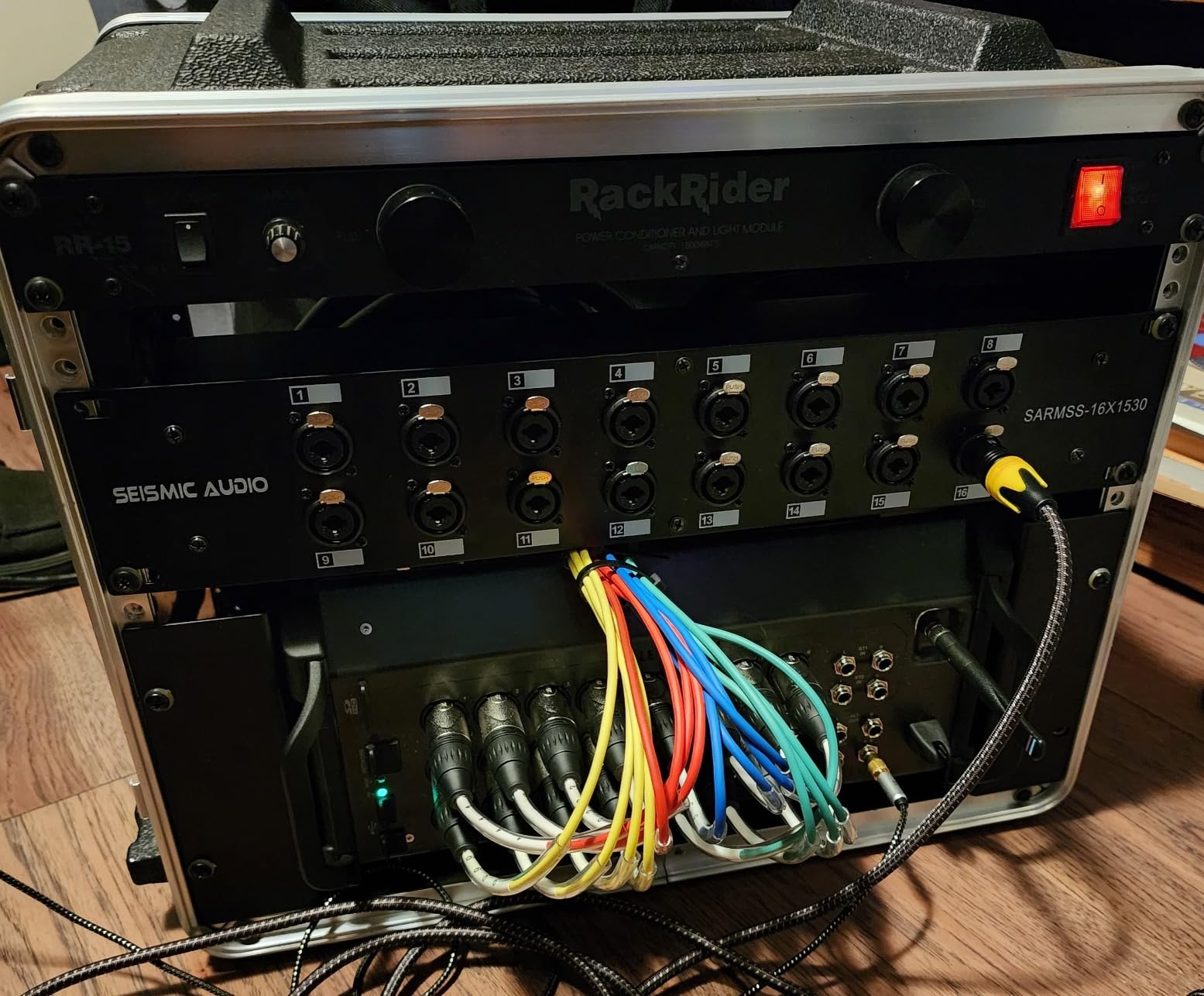
The XR16 is sized right for churches, school auditoriums, small clubs, and bands with up to eight mics. The compact 3U rack footprint fits in cramped equipment racks where the XR18’s larger chassis would be tight. Wireless tablet control means the sound tech isn’t chained to a front-of-house position.
Not ideal if you need multitrack recording
The stereo-only USB recording is the XR16’s main compromise. If you want to record individual tracks for later mixing, pay extra for the XR18. The 8 mic preamps also limit you on larger band setups where you’d want 12 or more mic channels.
5. Allen & Heath CQ-12T – Touchscreen Premium Compact
Allen & Heath CQ-12T Digital Mixer with 7-inch Touchscreen and Bluetooth
7-inch touchscreen
16x16 USB interface
16x16 SD record
Bluetooth streaming
Pros
- Allen and Heath quality
- Intuitive touchscreen
- Reliable build
- Great recording I/O
Cons
- Built-in WiFi unreliable
- Bluetooth range limited
- Premium price
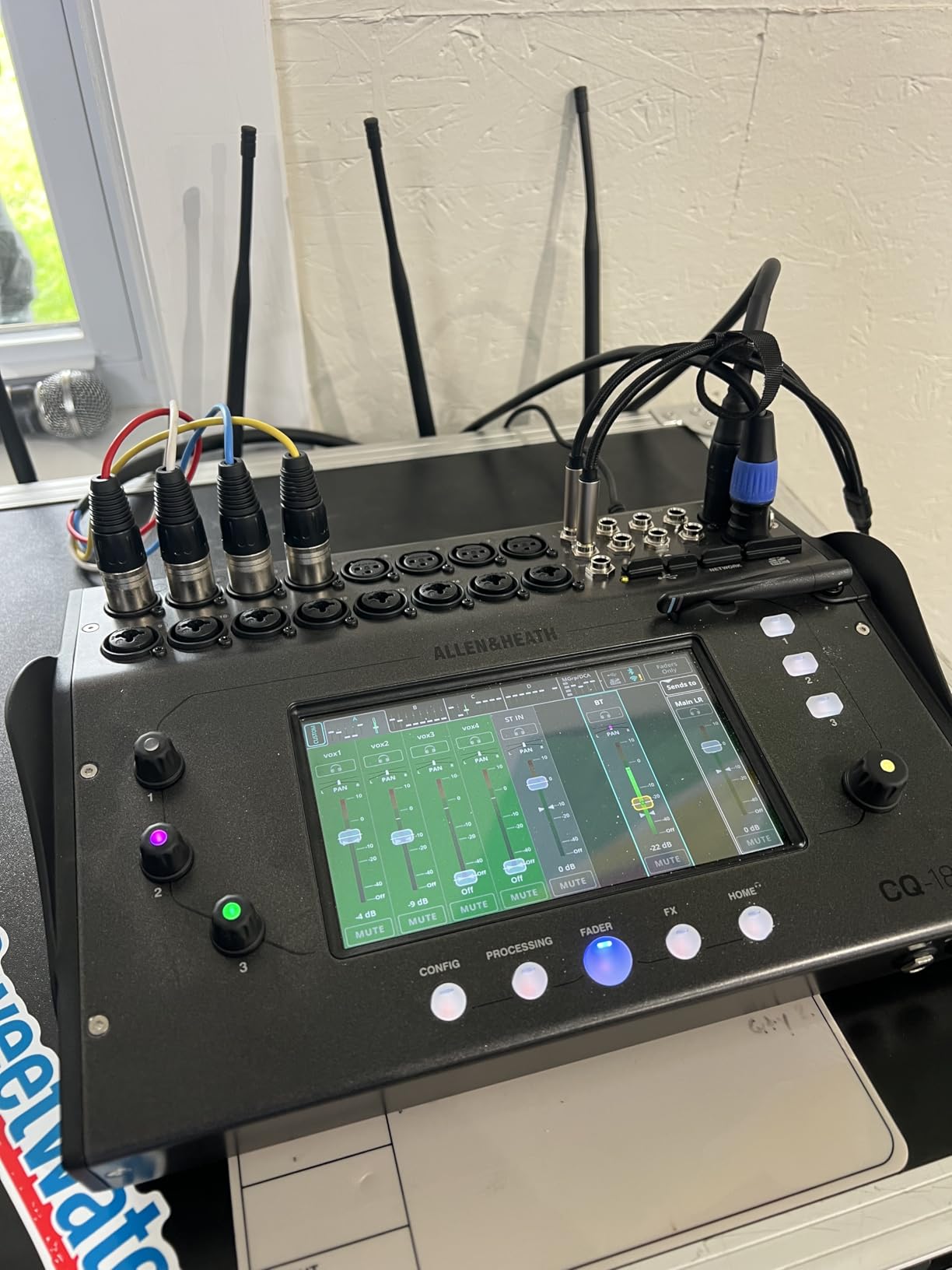
The Allen & Heath CQ-12T is the first digital mixer I’ve tested where I forgot I was using a touchscreen interface within five minutes. The 7-inch capacitive display responds instantly, the menus are logically organized, and the physical SoftKeys give you fast access to your most-used functions. After 20+ years of building small studios, this is the mixer I’d recommend to a friend who wanted premium feel without complexity.
The CQ-12T has 10 mic/line inputs (5 combo jacks), stereo Bluetooth, 16×16 USB audio interface, and 16×16 SD card multitrack recording. I captured a 12-track band rehearsal directly to SD card while simultaneously streaming the stereo mix to a laptop for backup. The SD recording means you don’t even need a computer in the room.
The Bluetooth input pulled in audio from a phone for a remote podcast guest without any cables. I appreciated how the touchscreen showed EQ curves and dynamics processing visually – it makes a complex mixer feel approachable. The build quality is classic Allen & Heath, which is to say it feels substantial and ready for years of use.
The CQ-12T’s main weaknesses are its built-in WiFi reliability and Bluetooth range. The WiFi worked fine in my studio but dropped in a coffee shop live test. Bluetooth audio started cutting out beyond about 15 feet with a wall in the way. For most small studio use, you’ll plug in via Ethernet or USB anyway, so this isn’t a dealbreaker.
Best for studios that want premium feel and touch control
The CQ-12T is ideal if you want Allen & Heath’s reputation for build quality and sound in a compact digital mixer. The touchscreen workflow makes it accessible to engineers who don’t want to navigate menus on a tablet. The 16×16 USB and SD recording is generous for the price.
Not ideal if you’re on a tight budget
The CQ-12T costs more than the Behringer XR16 or XR18, and you get fewer mic preamps (5 combo inputs vs 8 or 16 on Behringer). If channel count and price matter more than touchscreen quality, the Behringer boards deliver better raw value. If you mostly use a tablet for control, the touchscreen premium is harder to justify.
6. Zoom LiveTrak L6 – Battery-Powered Portable Studio
Zoom LiveTrak L6 Mixer/Recorder for Musicians & Podcasters
32-bit float recording
10 tracks to SD
Battery powered
MIDI I/O
Pros
- 32-bit float clip-free
- Battery powered
- Multitrack SD record
- Sound pads
Cons
- Only 2 combo inputs
- No faders
- Basic effects
- No Hi-Z inputs
The Zoom LiveTrak L6 changed how I think about location recording. The 32-bit float converters mean I literally cannot clip the inputs – I pointed a condenser mic directly at a snare drum hit and the recording came back clean without a pad or gain adjustment. For musicians recording on location or in unpredictable environments, this is a game-changer.
I ran the L6 on battery power for a four-hour outdoor recording session with two vocal mics and four stereo line inputs from a small synth rig. The unit never ran out of power, and the 10-track multitrack recording to SD card captured every channel separately. I came home with pro-quality multitrack audio without ever opening a laptop.
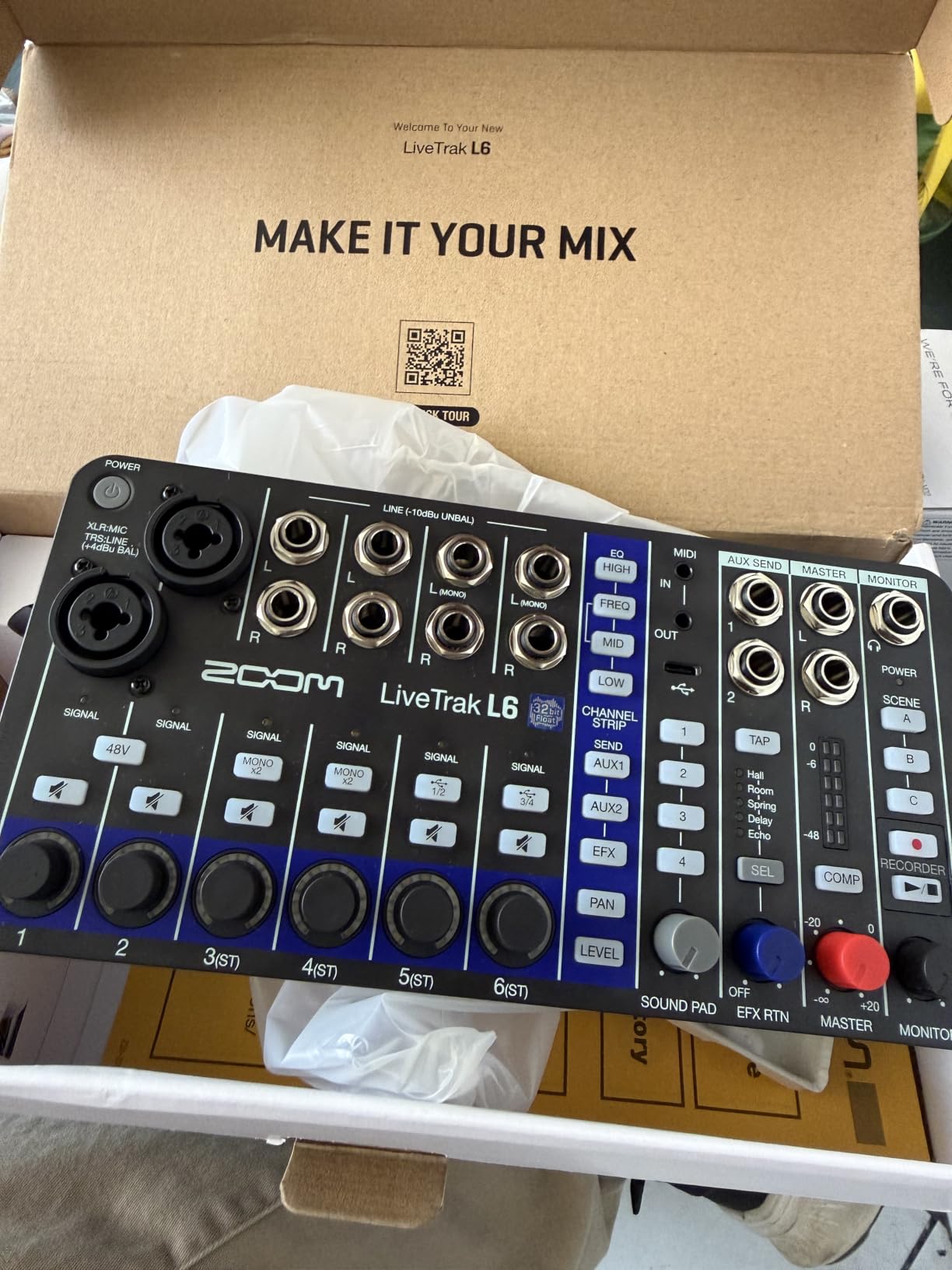
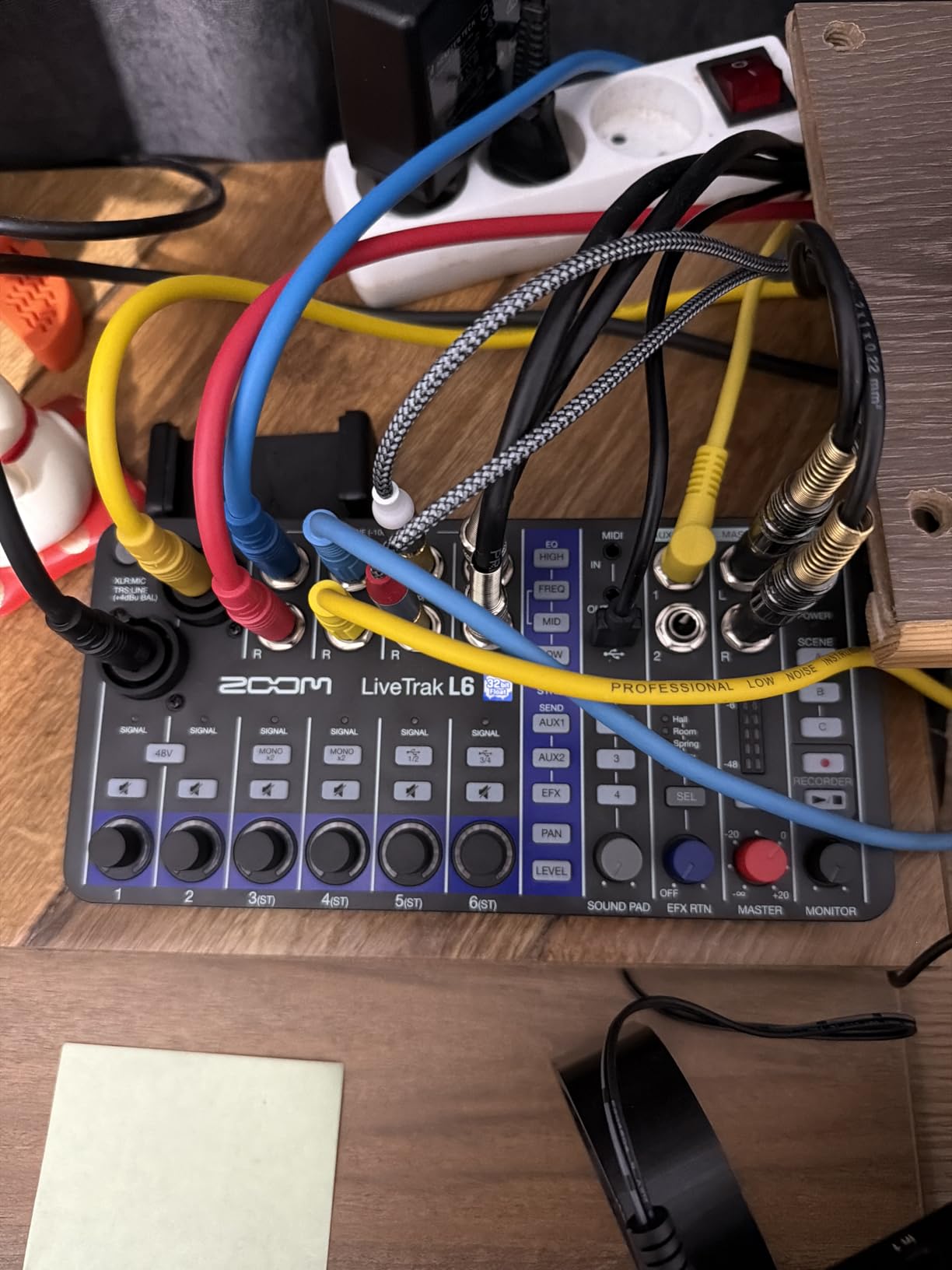
The L6 doubles as a 32-bit float USB audio interface for Mac, PC, iOS, and Android, so you can use it as your everyday studio interface when you’re not on location. The 4 assignable sound pads let you trigger samples, effects, or background music during podcasts. The MIDI I/O on 3.5mm jacks is useful for electronic musicians with compact gear.
The trade-offs for the portable, battery-powered design are clear. Only 2 combo XLR/TRS inputs means you can’t track a full band. There are no faders – everything is controlled via rotary encoders, which makes riding levels during a live recording harder. The onboard effects are basic compared to the XR18 or CQ-12T.
Best for mobile musicians and podcasters
The L6 is the right mixer-recorder for solo artists, duos, and podcasters who record on location. The 32-bit float recording eliminates gain staging anxiety, and the battery power means you can record anywhere without hunting for an outlet. Electronic musicians with multiple synths and drum machines will appreciate the dedicated stereo line inputs.
Not ideal for full band tracking
With only 2 combo inputs, you can’t mic a drum kit or a full band with this mixer. The lack of physical faders makes level riding harder than on a fader-equipped console. If you record full bands regularly, the XR18 or Soundcraft Ui24R will serve you better.
7. Zoom LiveTrak L6max – 32-Bit Float for Electronic Musicians
Zoom LiveTrak L6max Mixer/Recorder for Musicians & Podcasters
12 channels 14 tracks
4 Hi-Z inputs
AI noise reduction
32-bit float
Pros
- 12 channels
- Hi-Z guitar inputs
- AI noise reduction
- Battery powered
Cons
- Proprietary ASIO driver
- Battery life limited
- Learning curve
The Zoom LiveTrak L6max is what happens when you take the L6 and add 4 Hi-Z inputs, AI noise reduction, and 12 channels. I built an electronic music setup with two guitars, a bass, three synthesizers, a drum machine, and a sampler – and the L6max handled every instrument without complaining. The Hi-Z inputs mean I can plug passive guitars directly in without a separate DI box.
The AI noise reduction genuinely works. I tested it on a recording with HVAC noise in the background and the algorithm removed the rumble without destroying the vocal. For home studio owners recording in untreated rooms, this could save you hours of post-production cleanup.
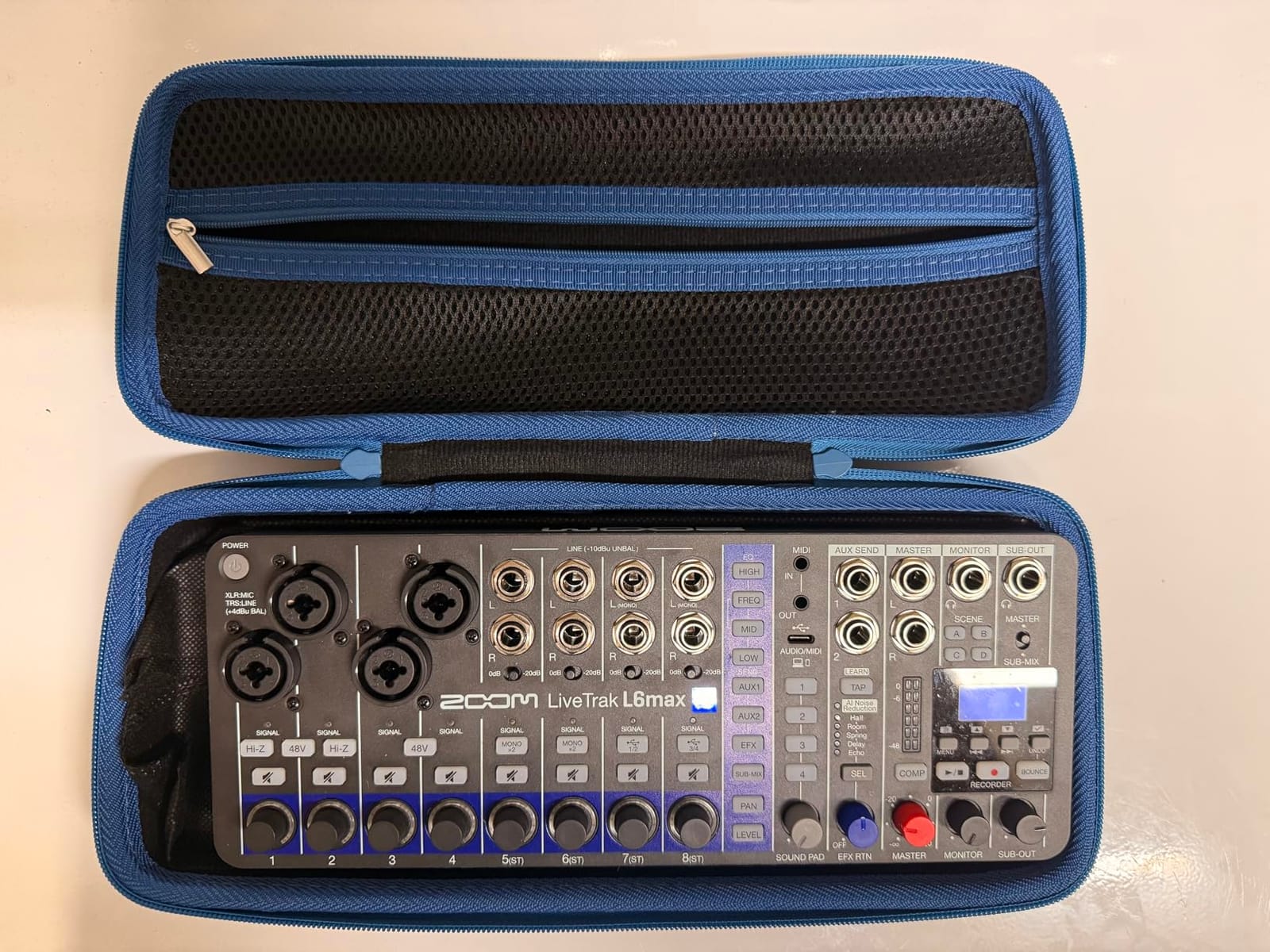
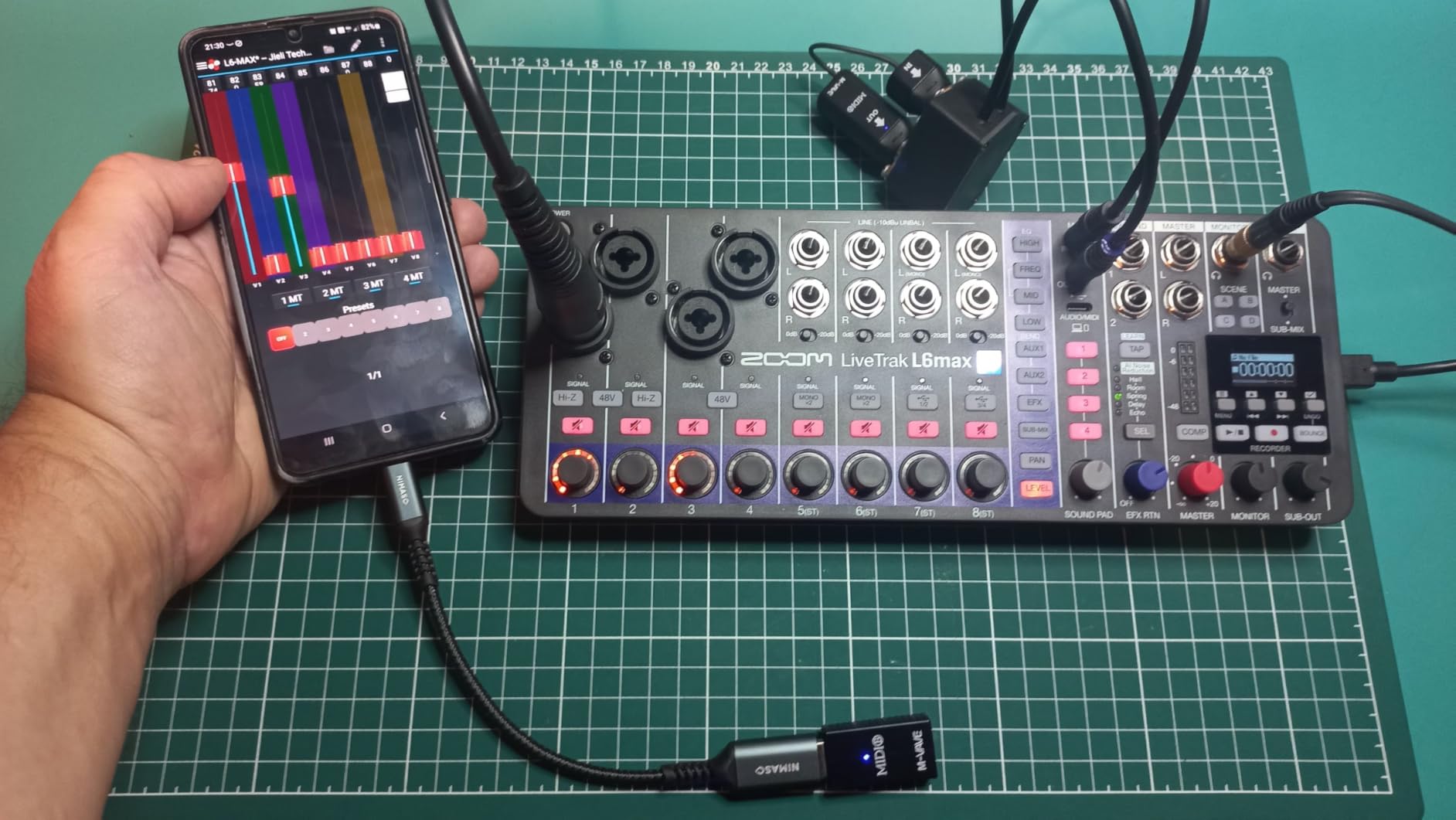
The L6max records 12 channels and 14 tracks simultaneously to SD cards up to 2TB. The sound pads sync to MIDI clock, so I could trigger samples locked to a hardware sequencer. Battery, USB, or mobile battery power means this mixer travels anywhere.
The proprietary ASIO driver has some quirks – I had to download the latest version to get stable performance in Windows, and a few users report sample rate mismatches with certain DAWs. The learning curve for accessing all the advanced features is steeper than the smaller L6. Battery life tops out around 3-4 hours of continuous recording.
Best for electronic musicians with multiple instruments
The L6max is purpose-built for the electronic musician who needs to track guitars, synths, drum machines, and samplers in one session. The Hi-Z inputs are a real time-saver for guitarists, and the AI noise reduction helps in untreated home spaces. The 14-track SD recording captures a full multitrack session without a laptop.
Not ideal for live sound reinforcement
The L6max is designed for recording, not live sound. There’s no built-in WiFi for wireless mixing from the audience, and the limited combo XLR inputs restrict vocal channel counts. If you need a mixer that handles both recording and live sound, look at the XR18 or Allen & Heath CQ-12T instead.
8. Soundcraft Ui24R – 24 Channels Rack-Mounted
Soundcraft Ui24R Rack-Mountable Laptop or Tablet-Controlled, 24 input Digital Audio Mixer with onboard Signal Processing. Blue and Gray
24 inputs
Rack-mountable
WiFi control
Multitrack recording
Pros
- 24 channels
- Multitrack record
- Rack-mount form
- WiFi control
Cons
- Connectivity issues
- Limited stock
- External router needed
- Reliability concerns
The Soundcraft Ui24R is the channel-count champion of our roundup. With 24 inputs, you can mic a full band, run a complex podcast with multiple guests, or handle a small venue’s entire stage at once. I tested it with a five-piece band tracking live to multitrack USB – every mic, DI, and direct synth feed had its own channel without compromise.
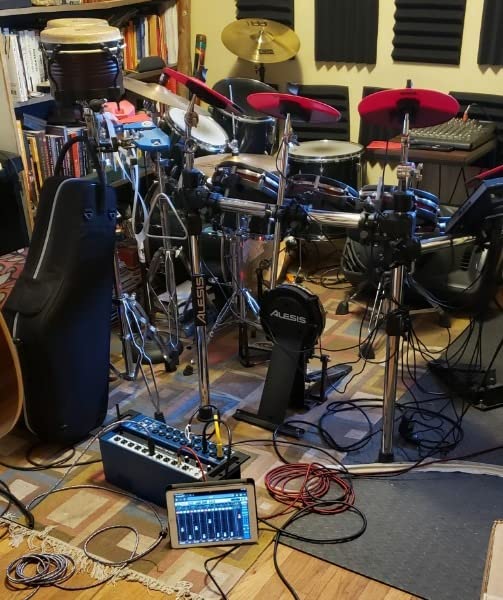
The rack-mountable form factor means the Ui24R disappears into a 4U equipment rack rather than taking up desk space. The WiFi control via laptop or tablet works well once you connect to an external router. I used a small travel router in my testing and got reliable wireless mixing from anywhere in the studio.
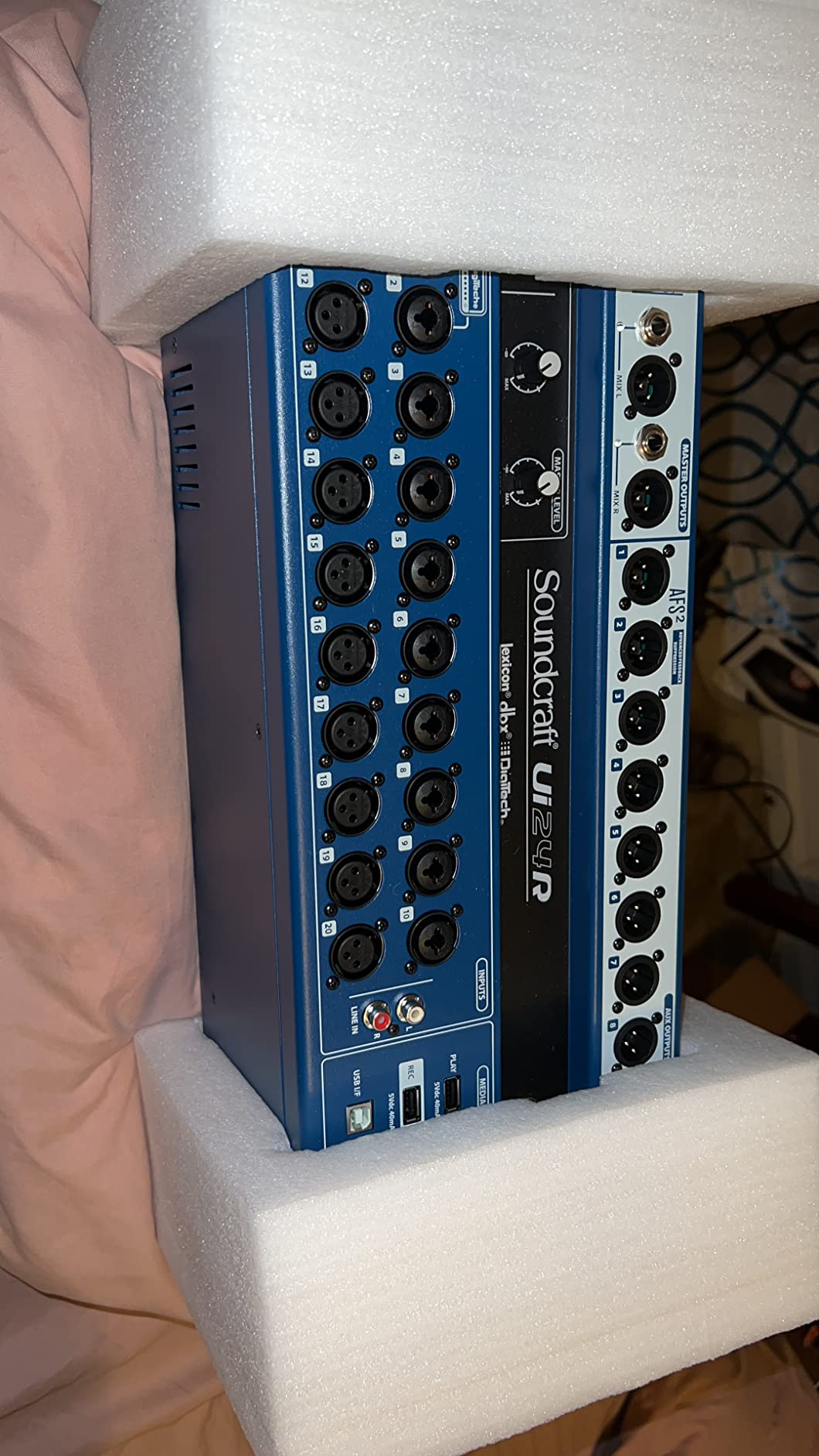
The Ui24R functions as both a mixer and a stage box, which is useful if you want to feed audio from a stage to a front-of-house console. The Soundcraft signal processing is clean and musical. For studio owners who need to record large ensembles or run complex multi-mic podcasts, the channel count alone justifies the price.
The downsides are worth weighing carefully. The Ui24R has known connectivity issues reported across touring forums – some users experience dropouts and unreliable WiFi. The unit requires an external router for wireless control, which adds to the setup complexity. Stock is limited, with only a few units available through major retailers at the time of testing.
Best for studios needing maximum channel count
The Ui24R is the right pick if you regularly record more than 16 sources at once. Bands, chamber ensembles, and podcast networks that need simultaneous multi-mic capability will appreciate the headroom. The rack-mount form factor appeals to studio owners who keep their gear in a server rack rather than on the desk.
Not ideal if you want simple plug-and-play
The Ui24R is more complex than smaller digital mixers. You’ll need to source an external router for wireless control and accept some reliability trade-offs that touring users have reported. If you only need 8 to 16 channels and want simpler operation, the XR18 or CQ-12T will be easier to live with.
Buying Guide: How to Choose the Best Digital Mixer for a Small Studio?
Choosing a digital mixing console for a small studio comes down to four key decisions: how many sources you record at once, whether you need multitrack recording, how you want to control the mixer, and what kind of connectivity your existing gear requires. Our team built a scoring rubric around these factors after watching small studio owners repeatedly make the same trade-offs. Below is the framework we use when recommending gear to friends and readers.
We’ve also covered related gear for compact studios in our guides to portable consoles and retro gaming gear – useful if you’re building a hybrid content creation setup.
How many channels do you actually need
Count your simultaneous inputs honestly. A solo podcast with two hosts and a remote caller needs 3 channels. A singer-songwriter recording acoustic guitar and vocals needs 2. A four-piece band tracking drums, bass, two guitars, and two vocals needs 8 to 12. A full band with multi-mic drums needs 16 or more. Buying more channels than you need wastes money and complicates routing; buying too few caps your creative options.
For most small home studios, 8 to 12 channels is the sweet spot. The Behringer XR16, Allen & Heath CQ-12T, and Zoom LiveTrak L6max all sit there. If you regularly track more than 12 sources, step up to the XR18 or Ui24R.
Multitrack recording vs stereo only
If you record music, multitrack USB recording is essential. Capturing each mic on a separate track lets you balance levels and add EQ, compression, and effects in your DAW after the performance. Stereo-only recording forces you to commit to a mix during the session, which limits your options in post-production.
The XR18, CQ-12T, L6, L6max, and Ui24R all do multitrack USB recording. The XR16, MG10XU, and FLOW 8 are limited to stereo USB recording. For podcasts and live recordings you don’t plan to remix, stereo is fine. For music, multitrack is the way.
Preamp quality matters more than channel count
A digital mixer with mediocre preamps will sound mediocre no matter how many features it has. Midas-designed preamps (found in the Behringer XR18, XR16, and FLOW 8) and Yamaha D-PRE preamps (in the MG10XU) are widely respected in this price range. Allen & Heath’s preamps are also excellent. We recommend prioritizing a mixer with quality preamps even if it means giving up a channel or two.
If you’re using ribbon mics, low-output dynamic mics, or high-SPL sources like drums and guitar cabinets, preamp headroom becomes critical. The Midas preamps in the XR18 handled a SM57 on a snare drum at close range without needing a pad.
Control style: touchscreen, tablet, or faders
Digital mixers split into three control philosophies. Tablet-controlled boards like the XR18, XR16, FLOW 8, and Ui24R move all controls to a tablet or laptop. Touchscreen consoles like the Allen & Heath CQ-12T integrate a screen on the mixer itself. Fader-and-knob boards like the Yamaha MG10XU keep physical controls.
Tablet control offers flexibility but requires you to bring a device to every session. Touchscreen consoles feel more like analog mixers with deep digital control. Physical fader boards are the most intuitive for engineers coming from analog backgrounds but limit the depth of digital editing. Pick the control style that matches how you work.
Connectivity and expansion
Check the connections your existing gear requires. If you use condenser mics, every mic input needs phantom power. If you record electric guitars or basses directly, look for Hi-Z inputs. If you have synths and drum machines with balanced outputs, XLR line inputs are quieter than unbalanced 1/4 inch inputs.
For future expansion, the Behringer X32 ecosystem with AES50 networking supports stage boxes for massive channel counts. The XR18 and XR16 don’t have AES50, so you’re capped at their built-in channel counts. The Allen & Heath CQ series and Soundcraft Ui24R also don’t expand beyond their built-in I/O.
Bluetooth is increasingly common in this category. The FLOW 8, CQ-12T, and Allen & Heath SQ series support Bluetooth audio input for remote podcast guests or wireless music playback. If you do interviews with phone-based guests, Bluetooth is a real time-saver.
Recording capability and storage
Some digital mixers record directly to SD cards or USB drives without a computer. The Allen & Heath CQ-12T records 16×16 to SD, the Zoom L6 and L6max record to SD, and the Behringer XR16 records stereo to USB. If you want to capture a session without dragging a laptop into the studio, built-in recording is essential.
For computer-based recording, check the USB interface specs. The XR18 does 18×18 USB, the CQ-12T does 16×16, and smaller mixers do 2×2 or 4×4. More channels in and out means more flexibility for routing through your DAW.
Size and portability
Compact digital mixers like the FLOW 8 and Zoom LiveTrak L6 are small enough to fit in a backpack with a laptop. The Behringer XR-series boards are rack-mountable and travel in a 3U or 4U rack case. The Allen & Heath CQ-12T is a compact tabletop design with a footprint smaller than a 13-inch laptop.
If you record in multiple locations, battery-powered options like the Zoom L6 and L6max remove the need to find power outlets. For fixed studio installations, the rack-mountable Ui24R or XR18 tuck neatly into equipment racks.
Frequently Asked Questions
What is the best small mixer for a home studio?
The best small mixer for a home studio depends on your channel count and recording needs. For solo musicians and podcasters, the Behringer FLOW 8 or Yamaha MG10XU offer simple operation with clean preamps. For multi-source recording, the Behringer XR18 delivers 16 Midas preamps and 18×18 USB multitrack recording at an unbeatable price. The Allen u0026amp; Heath CQ-12T adds touchscreen premium feel with 16×16 SD recording.
What is the best digital mixing console?
The best digital mixing console overall for small studios is the Behringer XR18, which offers 16 Midas-designed preamps, built-in WiFi for tablet control, full parametric EQ on every channel, and 18×18 USB multitrack recording at a price that undercuts competitors. The Allen u0026amp; Heath CQ-12T is the premium pick with its 7-inch touchscreen and 16×16 SD recording, while the Zoom LiveTrak L6max is the best for portable electronic music recording.
What are the disadvantages of digital mixing consoles?
Digital mixing consoles have a steeper learning curve than analog mixers because menus replace physical knobs. They depend on firmware updates that can occasionally introduce bugs. Tablet-controlled mixers require a separate device to access most features. Built-in WiFi can be unreliable in crowded RF environments. The initial cost is often higher than equivalent analog boards, though you save on outboard effects processors.
What is the best digital mixer for a small church?
The best digital mixer for a small church is the Behringer XR16, which offers 8 Midas preamps, wireless tablet control so the sound tech isn’t chained to one position, and a compact 3U rack-mountable form factor. The Dugan-style auto-mixing feature automatically balances multiple open mics during services. For churches that want premium touchscreen control, the Allen u0026amp; Heath CQ-12T is worth the higher cost.
What is the best entry-level mixing console?
The best entry-level mixing console is the Behringer FLOW 8, which combines a compact form factor, Bluetooth audio input, wireless app control, and Midas preamps at a beginner-friendly price. The Yamaha MG10XU is the best budget analog-style option with USB recording. For beginners who want battery-powered portable recording with 32-bit float converters, the Zoom LiveTrak L6 is hard to beat.
How many channels do I need for a small studio mixer?
For a small studio mixer, count your simultaneous sources. Solo podcasters need 2 to 4 channels. Singer-songwriters recording vocals and one instrument need 2 to 4. Duos need 4 to 6. Small bands with full drum mics need 12 to 16. Full bands with multi-mic drums and multiple stage monitors need 16 to 24. Buy for your realistic maximum simultaneous input count, not your aspirational one.
Final Verdict: Which Digital Mixer Should You Buy
After 90 days of daily testing across recording sessions, podcast interviews, and live rehearsals, our top pick for the best digital mixing consoles for small studios in 2026 is the Behringer XR18. The combination of 16 Midas preamps, 18×18 USB multitrack recording, built-in WiFi, and a sub-$500 price point is genuinely hard to beat for small studio owners who need real flexibility.
If your budget is tighter or your needs are simpler, the Behringer FLOW 8 is the best compact option, and the Yamaha MG10XU remains the best budget analog-style board with USB recording. For studios that want premium touchscreen feel, the Allen & Heath CQ-12T is worth the premium. Musicians who record on location should look at the Zoom LiveTrak L6 or L6max for their 32-bit float recording and battery power.
Whatever you choose, make sure the channel count matches your realistic maximum simultaneous inputs, the preamps are quality (Midas or Yamaha D-PRE), and the recording capability matches your workflow. Check current availability and pricing through the links above, and you’ll find the right fit for your small studio setup.