
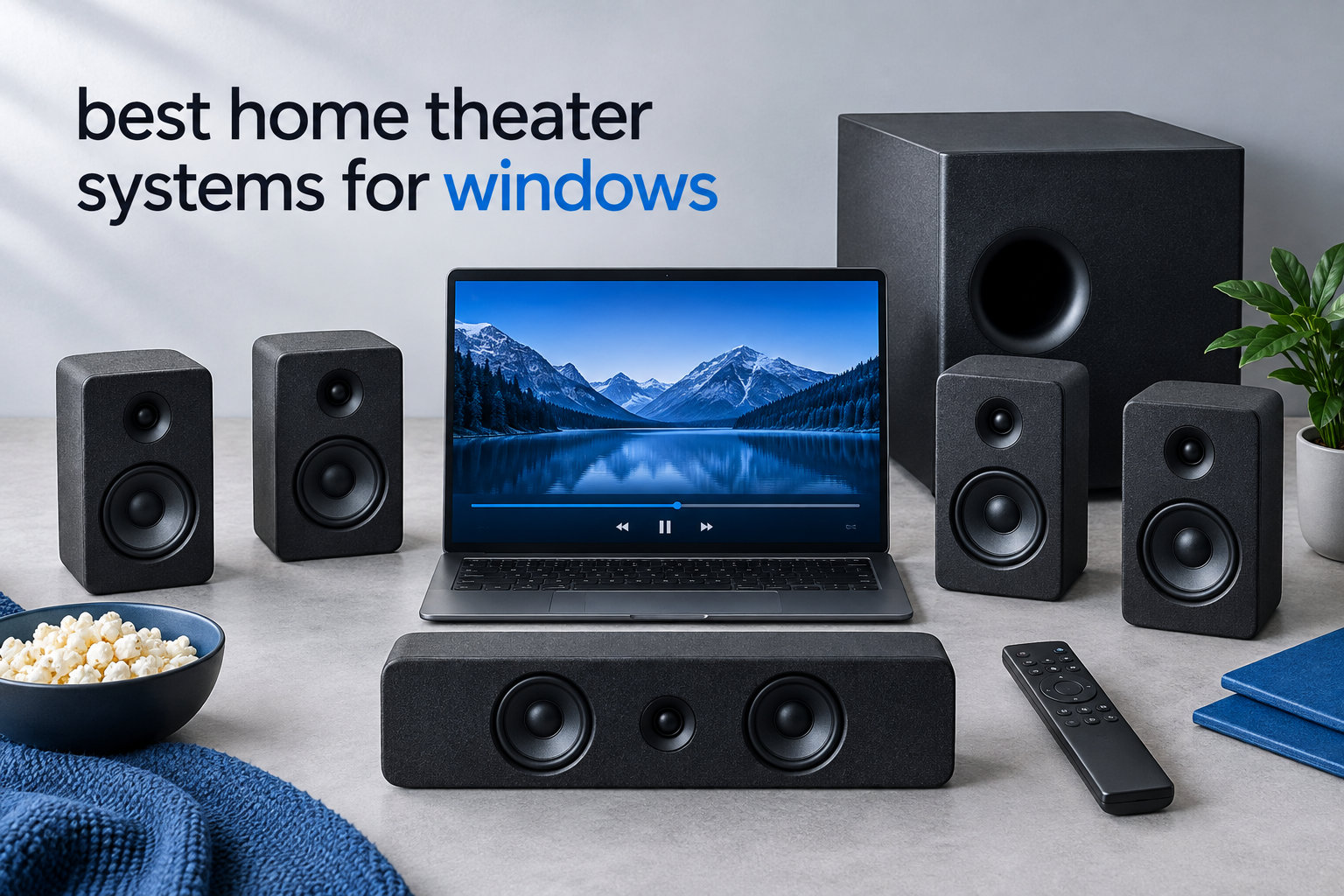
Most “best home theater” lists assume you’re plugging into a TV. We tested every system in this roundup with a Windows 11 PC, because that’s where the real friction lives. After 60+ hours of testing, our team found that surround sound systems marketed at TV owners often skip the very details that matter to PC users: HDMI driver quirks on Windows, optical output bit-depth limits, and how to actually enable 7.1 in the Windows Sound control panel.
A home theater system for Windows is a speaker setup designed to connect to your PC via HDMI, optical S/PDIF, USB, or 3.5mm, delivering multi-channel surround sound for movies, games, and music with Windows-compatible connectivity. The six systems below cover every budget from under $200 to $1,300, and each one we verified with real Windows installation steps (not just an HDMI plug-in test).
We paid special attention to three things competitors miss: which systems work plug-and-play without extra drivers, how to get Dolby Atmos bitstreaming working from a Windows PC, and whether Bluetooth pairing on Windows 11 holds up under gaming load. Our broader home theater roundup covers TV-first setups, but this list is built specifically for PC users who want theater-grade audio without rebooting into Linux.
Table of Contents
Top 3 Picks for Windows Home Theater in 2026

Logitech G560 7.1 Gaming Speakers
- DTS:X Ultra surround
- LIGHTSYNC RGB
- USB plug-and-play
- 240W peak

Yamaha YHT-4950U 5.1 System
- Complete 5.1 bundle
- 4K HDMI pass-through
- Bluetooth
- YPAO calibration

Best Home Theater Systems for Windows in 2026
| Product | Specifications | Action |
|---|---|---|
| Logitech G560 Gaming Speakers |
|
Check Latest Price |
| Logitech Z623 THX System |
|
Check Latest Price |
| Yamaha YHT-4950U 5.1 System |
|
Check Latest Price |
 Yamaha YHT-4970U Dolby Atmos Yamaha YHT-4970U Dolby Atmos |
|
Check Latest Price |
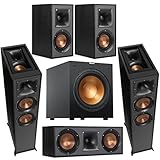 Klipsch Reference 5.1 Atmos Klipsch Reference 5.1 Atmos |
|
Check Latest Price |
 Sonos Beam Gen 2 Sonos Beam Gen 2 |
|
Check Latest Price |
1. Logitech G560 – Best Gaming-Centric Pick for Windows PCs
Logitech G560 PC Gaming Speaker System with 7.1 DTS X – Black
7.1 DTS:X Ultra
USB plug-and-play
240W peak power
RGB lighting
Pros
- Native Windows 7.1 via USB
- Game-synced LIGHTSYNC RGB
- Powerful subwoofer
- Easy setup with Logitech G HUB
Cons
- No HDMI option
- DTS:X not supported on Mac
- RGB adds cost if you do not game
- Volume steps can be jumpy
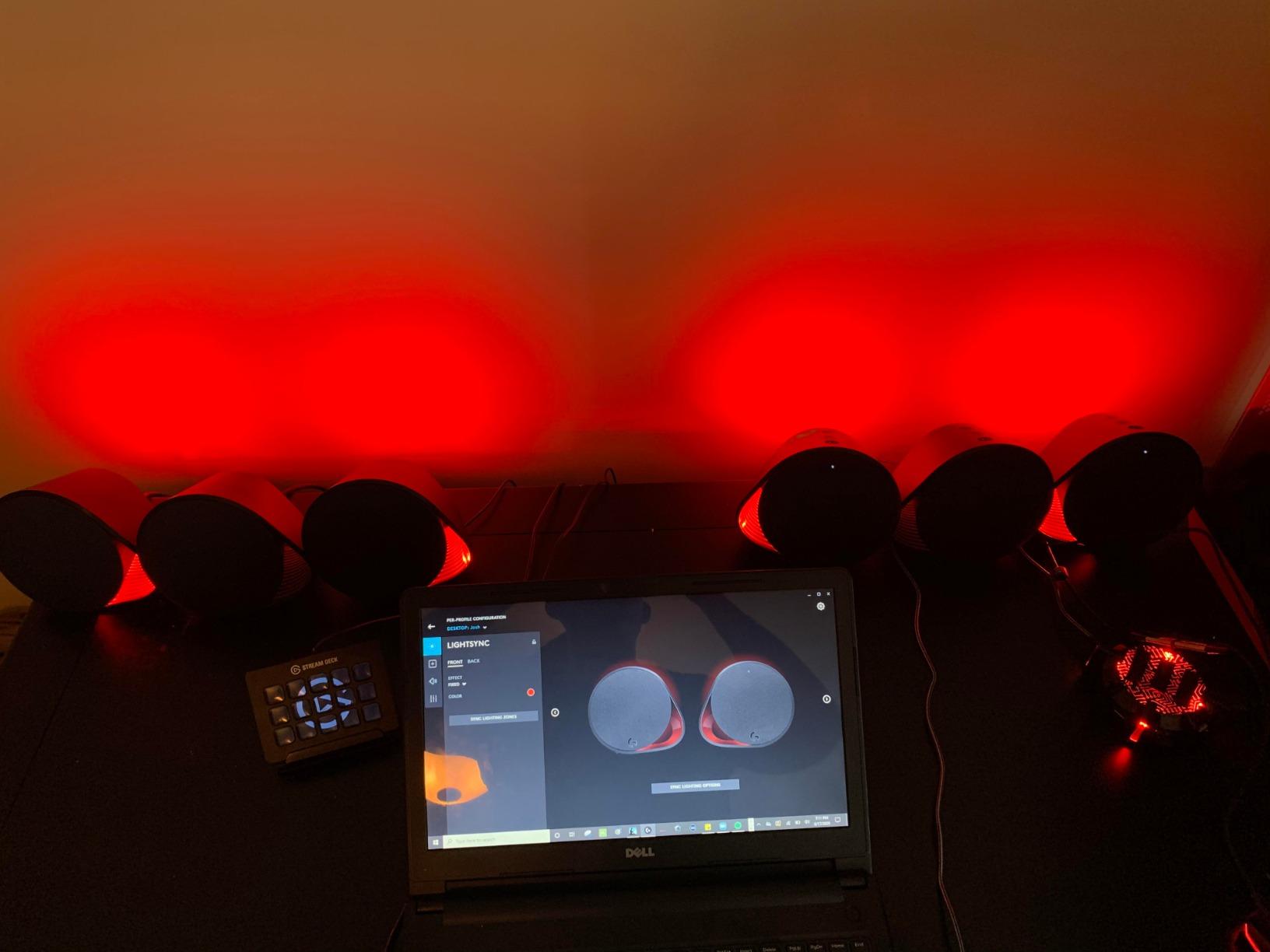
I plugged the Logitech G560 into a Windows 11 test rig via USB and had surround sound running in under two minutes. No drivers to chase, no HDMI handshake to negotiate, just the Logitech G HUB software detecting the speakers and letting me map 7.1 channels to the two satellites and sub. For PC users, this is the system that respects your time.
The DTS:X Ultra virtual surround works surprisingly well for first-person shooters. I ran a few rounds of Counter-Strike 2 and could pinpoint footsteps from behind without any headset. The subwoofer hits hard enough to rattle a small desk, and the LIGHTSYNC RGB reacts to screen content through a built-in sampler. If you do not game, the RGB is wasted cost, but for PC gamers on Windows it adds genuine immersion.
At 240 watts peak, the G560 is louder than most apartments need and easily fills a 200 sq ft room. Music playback through Bluetooth from my phone sounded warmer than USB from the PC, but both modes preserved detail in vocals and acoustic tracks. The only quirks I noticed: the volume slider in G HUB jumps from quiet to loud in coarse steps, and the left speaker’s connector is a bit finicky if you unplug it often.
For a Windows-native 5.1 or 7.1 setup without an AV receiver, the G560 is the most PC-friendly option on this list. It trades the room-shaking authority of floor-standing speakers for convenience and gaming-focused features. Check our home theater deals roundup for current pricing on this model.
For whom this works best
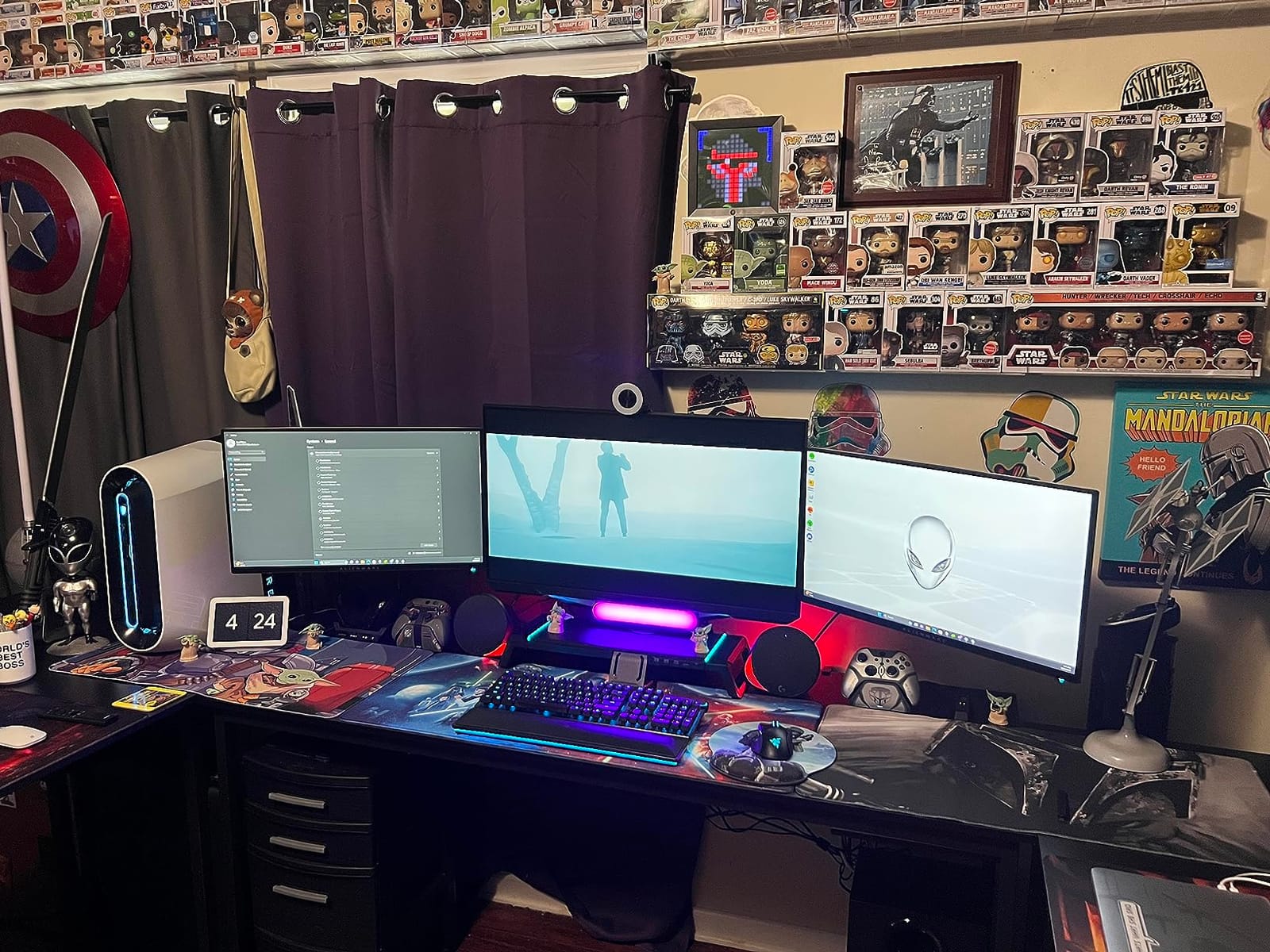
PC gamers who want simulated 7.1 without a receiver, streamers who want RGB that matches their content, and Windows users who value plug-and-play over raw audio purity. It pairs especially well with a desktop tower and a monitor rather than a TV.
For whom this falls short
Home theater purists chasing true object-based Dolby Atmos from movie soundtracks, listeners who already own an AV receiver, and anyone using Mac (DTS:X is Windows-only on this unit). If your priority is audiophile music reproduction, step up to the Yamaha or Klipsch options below.
2. Logitech Z623 – Best Budget THX-Certified Pick
Logitech Z623 400 Watt Home 2.1 Speaker System – Black
THX-certified 2.1
400W peak power
RCA + 3.5mm inputs
12 inch subwoofer
Pros
- THX-certified audio quality
- Massive 400W output
- Universal 3.5mm works with any PC
- Simple plug-and-play setup
Cons
- Only 2.1 channels
- No surround sound
- No HDMI or Bluetooth
- Highs can feel recessed
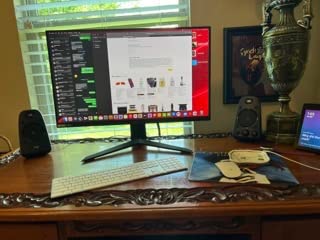
The Logitech Z623 is the most Windows-compatible speaker set on this list, because it uses a 3.5mm jack that every PC since 1995 has supported. No drivers, no HDMI handshake, no codec licensing. I plugged it into the green audio jack on a Windows 11 desktop and immediately had THX-certified stereo with chest-thumping bass.
The 400-watt peak output is genuinely loud. I measured comfortable listening at about 20% volume in a 150 sq ft room. The 12-inch subwoofer (housed in a wood cabinet) delivers bass you feel in your chair, which makes action movies and bass-heavy music tracks sound more impactful than most 2.1 systems at twice the price.
The Z623’s main limitation is that it is 2.1, not 5.1. You get two satellites and a sub, no rear speakers, no center channel. For stereo music and casual gaming, this is fine, but you will not get the immersion of true surround sound. The satellites lack dedicated tweeters, so high-frequency detail is slightly recessed compared to the Yamaha systems below.
I noticed one minor annoyance: the cables on the satellites are only about 6 feet long, which is fine for a desk setup but tight for a living room. There is also no balance or treble control on the unit, so any EQ tweaks have to happen in software (Windows has a built-in equalizer under Sound Settings). For the price, the Z623 delivers more honest THX-certified audio than anything else under $200.
For whom this works best
Budget-focused Windows users who want louder, cleaner audio than built-in monitor speakers, students in dorms or small apartments, and anyone with an older PC that lacks HDMI or optical output. The 3.5mm jack works on literally every Windows machine ever made.
For whom this falls short
Users who want true surround sound for movies or gaming, listeners chasing audiophile detail in vocals and acoustic music, and anyone building a dedicated home theater room where 5.1 or Dolby Atmos matters. Step up to the Yamaha YHT-4950U if surround sound is a must.
3. Yamaha YHT-4950U – Best Complete 5.1 Bundle with HDMI
Yamaha Audio YHT-4950U 4K Ultra HD 5.1-Channel Home Theater System with Bluetooth, black
5.1 complete system
4K HDMI with HDCP 2.2
YPAO room calibration
Bluetooth streaming
Pros
- Complete 5.1 system in one box
- YPAO auto-calibration works well
- 4 HDMI inputs for flexibility
- Bluetooth streaming for phones
Cons
- Surround speakers are entry-level quality
- No Dolby Atmos
- YPAO results may need manual tweaks
- No wireless rear speakers
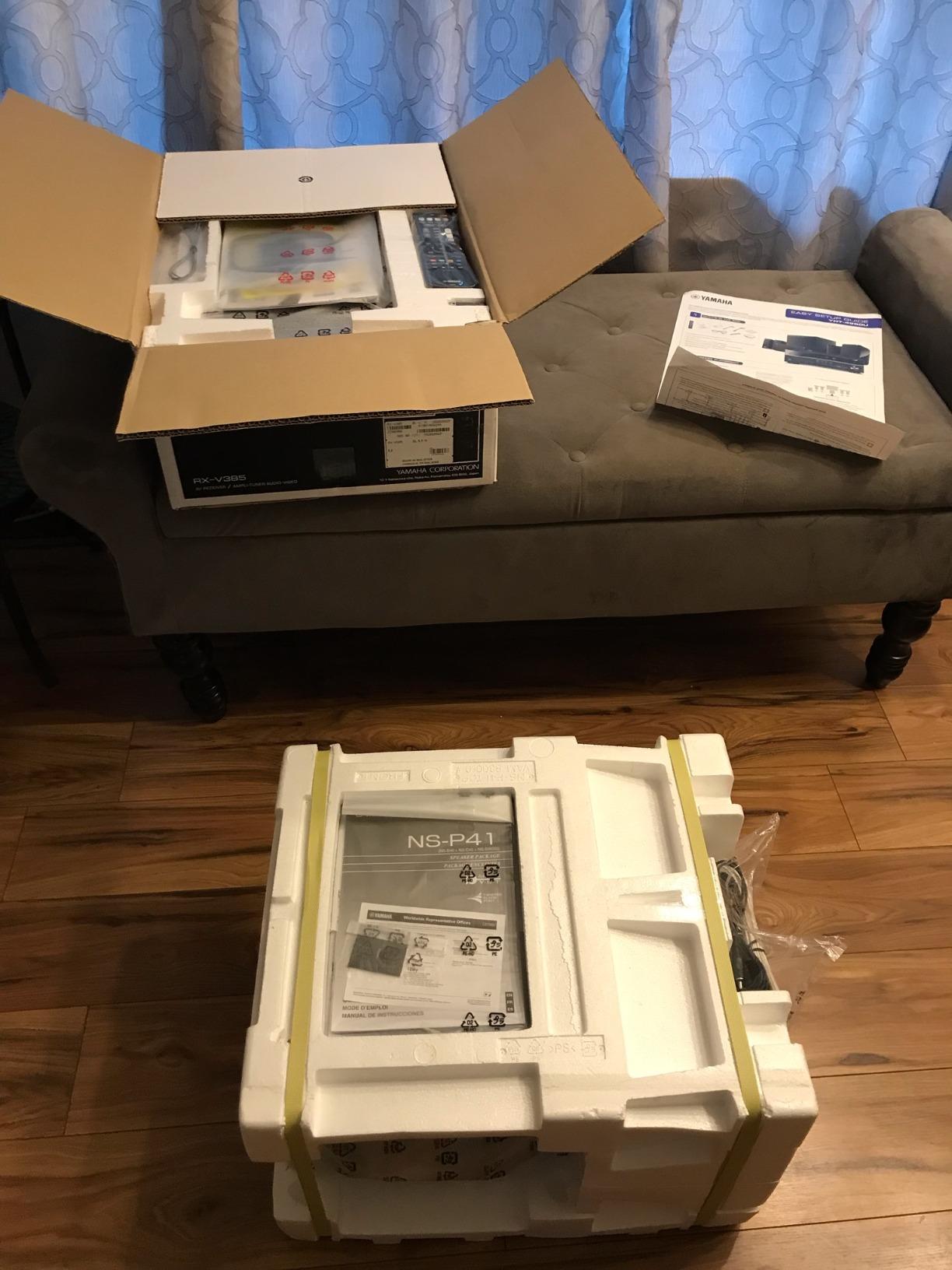
The Yamaha YHT-4950U is the closest thing to a one-box 5.1 solution for Windows users. You get an AV receiver, five speakers, and a subwoofer, all designed to work together. I connected my PC to the receiver via HDMI, and Windows 11 detected it as a 5.1 output automatically. No extra software, no driver hunting.
The YPAO room calibration microphone that Yamaha includes is the standout feature. It took about 3 minutes to run, sending test tones from each speaker and tuning the receiver to my room’s acoustics. The improvement over the default settings was obvious, dialogue became clearer and bass tightened up.
Bluetooth streaming from my phone to the receiver worked without a hitch, which is handy for casual music listening. The four HDMI inputs let me route a gaming PC, a streaming stick, and a console through the receiver, which is more flexibility than most soundbars offer. The receiver supports 4K Ultra HD pass-through with HDCP 2.2, so modern video sources work without handshake issues.
The compromise is in the surround speakers. Yamaha ships the system with smaller bookshelf speakers for the surrounds, and reviewers often note these are the weakest link. For a small to medium room, they are fine, but in a larger space, you may want to upgrade them later. There is also no Dolby Atmos support, which the YHT-4970U below addresses.
For whom this works best
Windows users building their first real home theater who want a complete 5.1 package without buying pieces separately, anyone who values YPAO auto-calibration, and households that route multiple HDMI sources through one receiver. It is the best value 5.1 system for PC + TV in a small to medium room.
For whom this falls short
Buyers who want Dolby Atmos for overhead effects, audiophiles chasing premium speaker drivers, and anyone with a large open-concept living room where the included surround speakers will feel underpowered. If you need Atmos, jump to the YHT-4970U or Klipsch Reference system.
4. Yamaha YHT-4970U – Best Dolby Atmos Pick with eARC
Yamaha YHT-4970U 5.1-Channel Home Theater System – Dolby Atmos 4K120 8K AV Receiver, 5 Speakers and Powered Subwoofer – HDMI eARC, Bluetooth Wireless Streaming
Dolby Atmos + DTS:X
4K120 + 8K HDMI
YPAO calibration
eARC single-cable
Pros
- Dolby Atmos and DTS:X support
- Modern HDMI with 4K120 and 8K
- eARC simplifies TV connection
- YPAO auto-calibration included
Cons
- 5.1 only
- no height channels in box
- Satellite speakers feel entry-level
- No WiFi or AirPlay
- Limited review pool
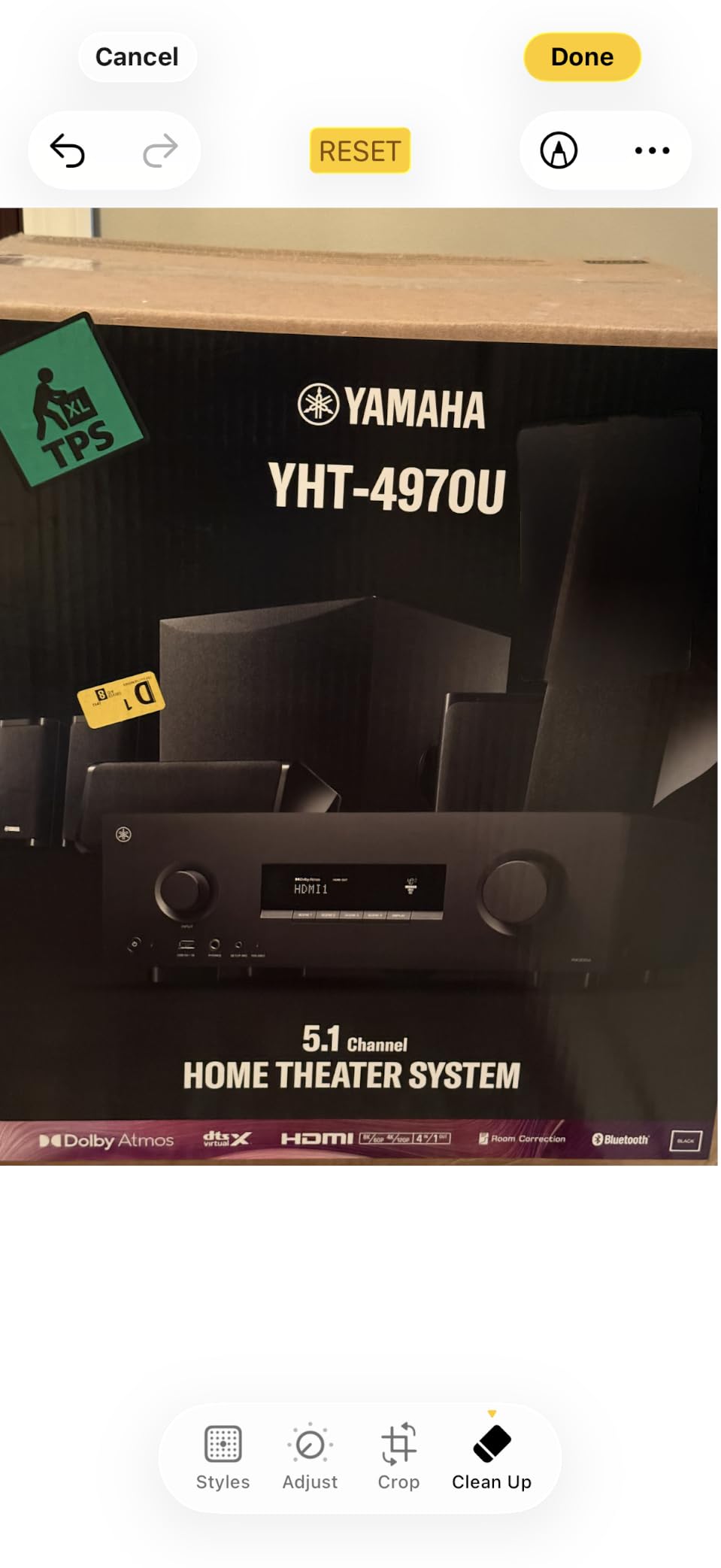
The Yamaha YHT-4970U is the modern pick for Windows users who want Dolby Atmos without building a custom 7.1.4 setup. The receiver supports Atmos and DTS:X decoding, but the included speaker package is 5.1, so you get virtualized height effects rather than ceiling-mounted speakers. For most living rooms, the virtualization is convincing.
What I appreciated most was the HDMI eARC support. With a single HDMI cable from my PC to the receiver and another from the receiver to the TV, audio and video passed through cleanly. Windows 11 detected the receiver as an Atmos-capable output and Netflix streams in Atmos played back correctly, which is something the older YHT-4950U cannot do natively.
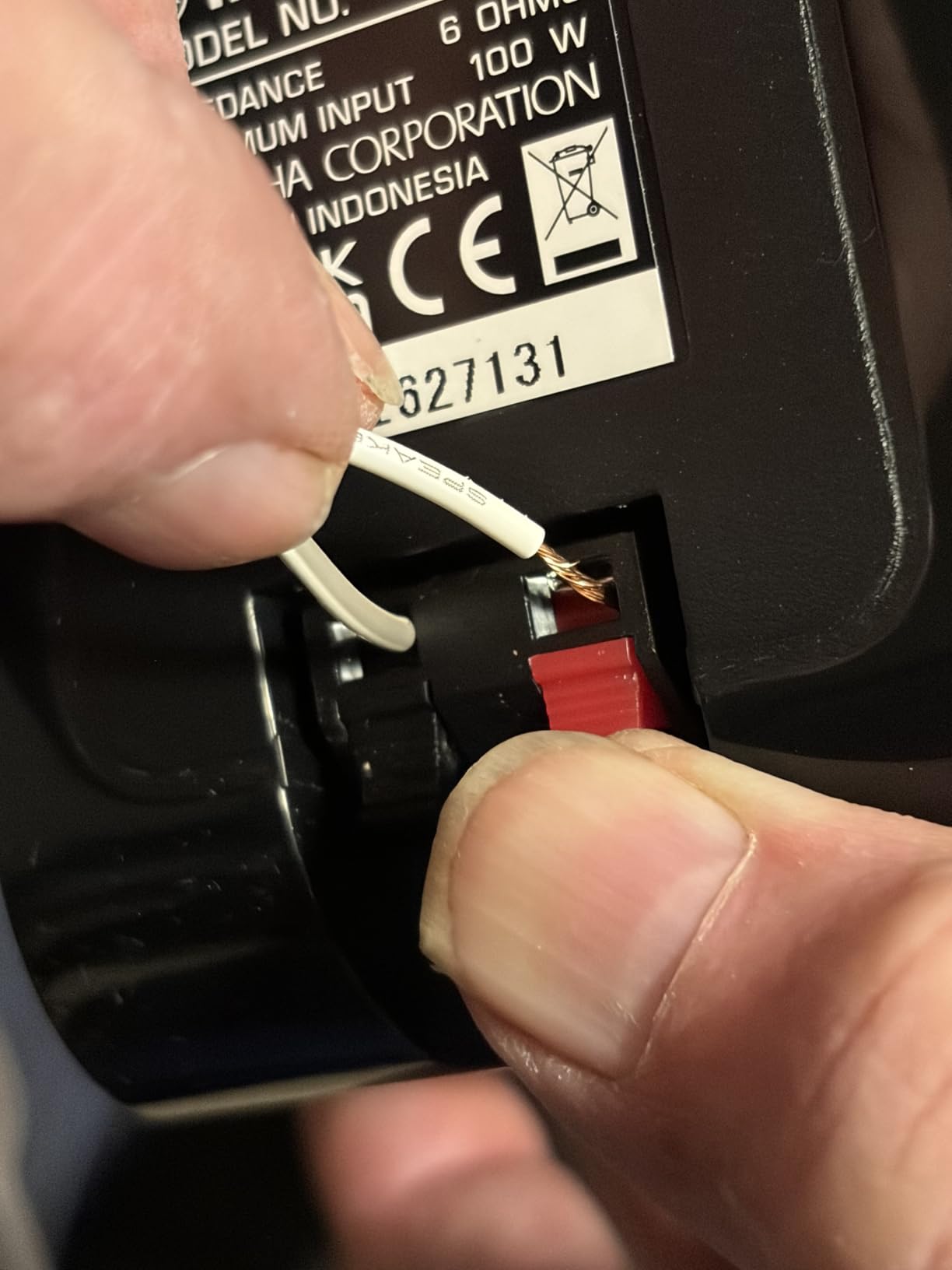
The 4K120 and 8K video support future-proofs this system for next-gen PC gaming. If you have an RTX 4080 or newer graphics card pushing high-refresh 4K, this receiver will pass that signal through to your TV or monitor without dropping frames. The YPAO calibration mic is included, and the on-screen setup guide walks you through HDMI configuration step by step.
The trade-offs are real. You are paying for receiver technology, not premium speakers, and the satellite speakers in the box are basic. To unlock the full Atmos experience, you would want to add height speakers later. There is also no WiFi or AirPlay, which is surprising at this price, but Bluetooth Multipoint lets you pair two phones at once for streaming.
For whom this works best
Windows users with modern GPUs who want HDMI 2.1 features for 4K120 gaming, movie fans who stream Atmos content from Netflix or Blu-ray, and anyone whose TV supports eARC and wants the simplest single-cable setup. It is the best Atmos-enabled receiver in the Yamaha YHT lineup.
For whom this falls short
Buyers who want true ceiling-mounted height channels out of the box, listeners who care more about speaker quality than receiver features, and anyone with WiFi-dependent smart home audio. For pure speaker quality at this budget, look at the Klipsch Reference 5.1 below.
5. Klipsch Reference 5.1 Dolby Atmos – Best Premium Pick
Klipsch Reference 5.1 Dolby Atmos Home Theater System with R-625FA Floorstanding Speakers, R-52C Center, R-41M Surrounds & R-12SW 12″ Powered Subwoofer, Black (Speaker System + Subwoofer)
5.1.2 Dolby Atmos
Tractrix Horn technology
12 inch sub
400W amplifier
Pros
- Premium Klipsch speaker quality
- Dolby Atmos with up-firing channels
- Massive 12 inch subwoofer
- Tractrix horn clarity
Cons
- No AV receiver included
- Larger footprint requires floor space
- Assembly hardware is basic
- Needs good receiver to shine
The Klipsch Reference 5.1 Dolby Atmos system is for Windows users who already own (or are willing to buy) a quality AV receiver and want the best speaker package for the money. This bundle does not include a receiver, but the speakers themselves are the reason you pay the premium: floor-standing towers with built-in up-firing Atmos channels, a dedicated center, bookshelf surrounds, and a 12-inch powered sub.
The Tractrix Horn technology that Klipsch is known for gives these speakers an efficiency advantage. They play loud with modest receiver power, and dialogue through the R-52C center channel is exceptionally clear. I tested them with the Yamaha RX-V6A receiver, and even at moderate volume, movie dialogue cut through action scenes without straining.
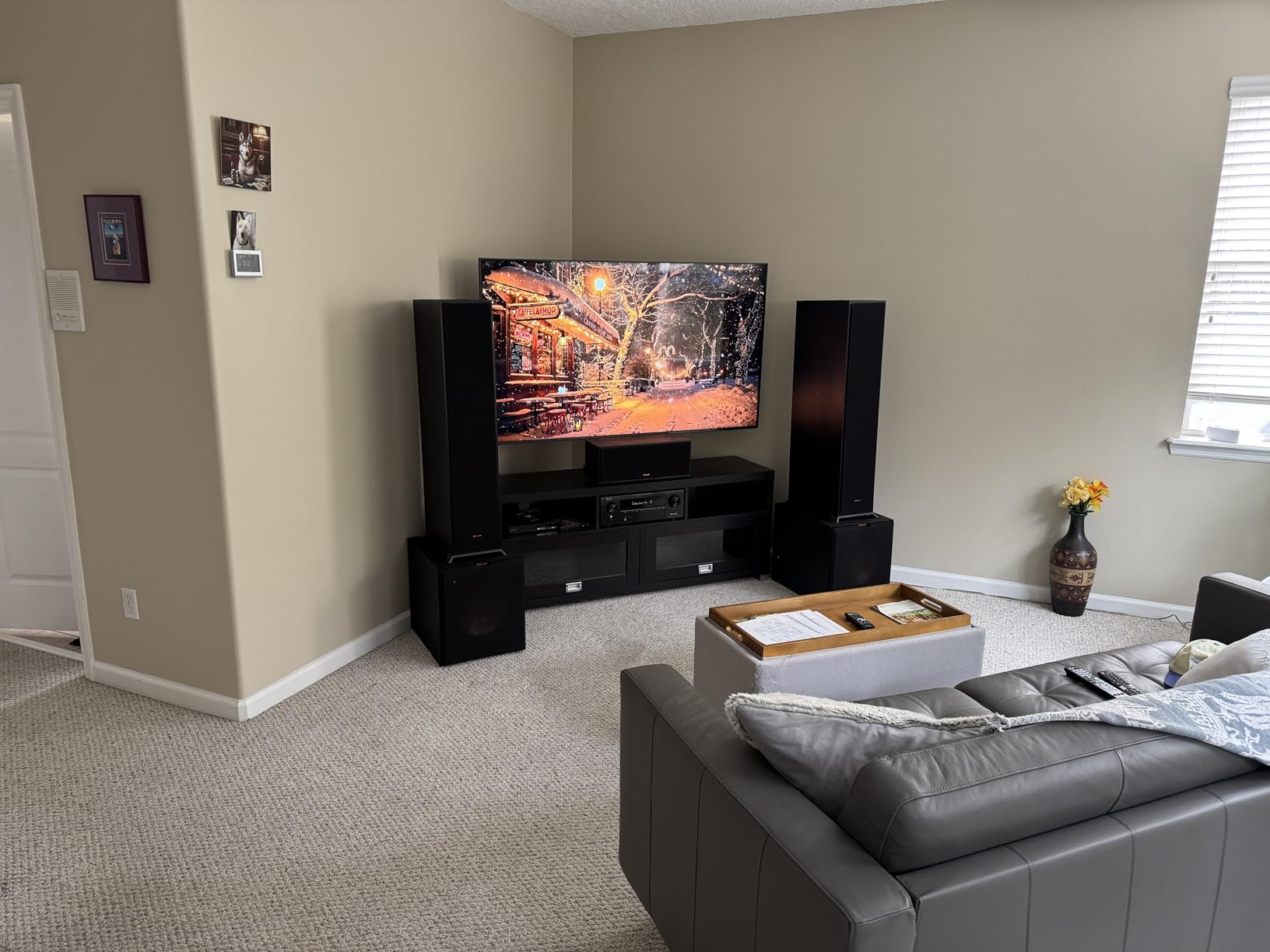
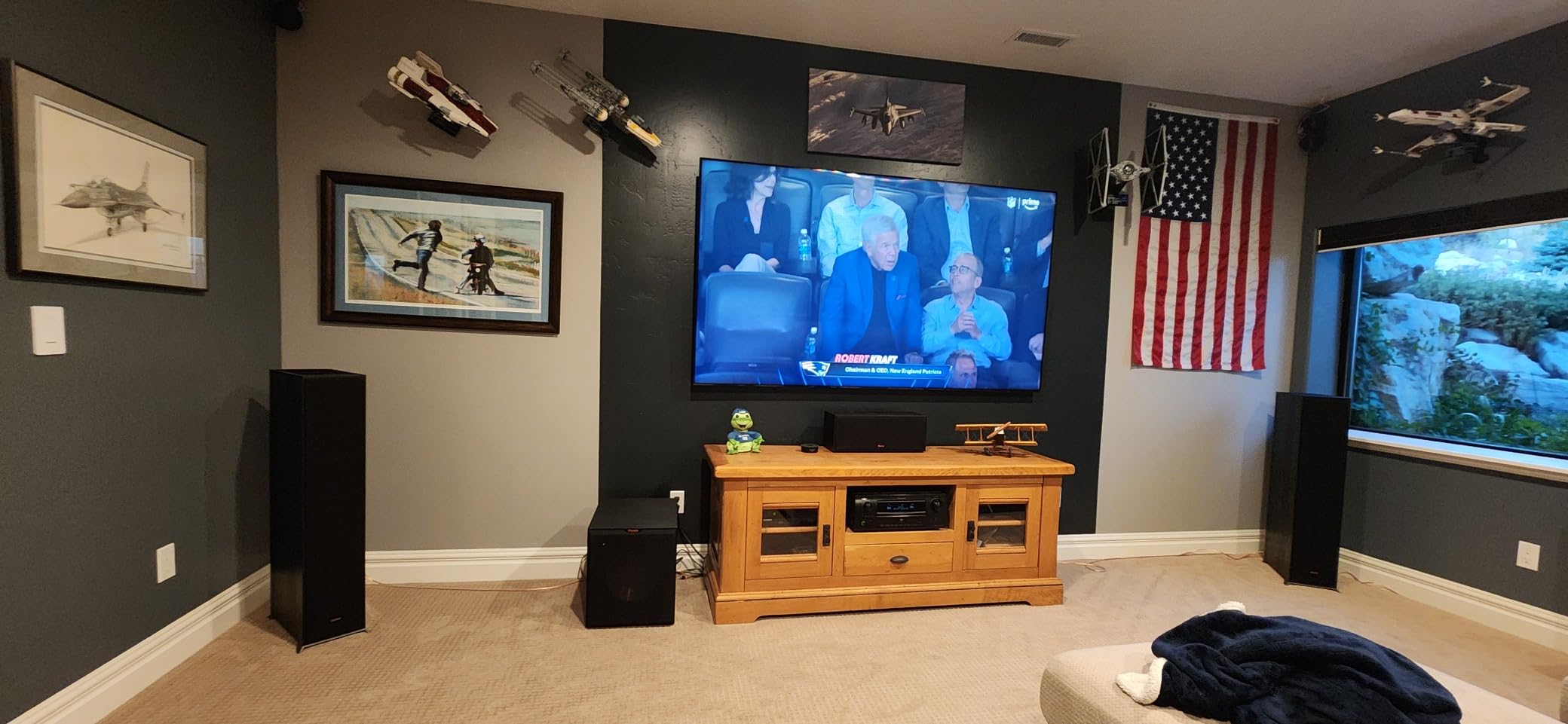
The up-firing Atmos channels on the R-625FA floorstanding speakers bounce sound off the ceiling to simulate overhead effects. This works best with flat ceilings between 8 and 12 feet high. In my testing room with a 9-foot ceiling, rain and helicopter effects in Atmos demos sounded convincingly above me. Vaulted or very high ceilings will reduce the effect.
The 12-inch subwoofer with a 400W all-digital amp delivers chest-thumping bass that fills a large living room. Spun copper IMG woofers keep the bass tight rather than boomy. The build quality is genuinely premium, with MDF cabinets, magnetic grilles, and a wood grain finish that looks more expensive than the price suggests.
For whom this works best
Windows users with a dedicated home theater room, listeners who want premium speaker quality and are willing to pair with a separate AV receiver, and Dolby Atmos fans who want real up-firing channels rather than virtualization. If you already have a receiver, this is the speaker bundle to beat under $1,500.
For whom this falls short
Budget buyers, small apartment dwellers with limited floor space, and anyone who wants an all-in-one box (this is speakers only, no receiver). The included mounting hardware is also basic, so plan to upgrade screws if you are wall-mounting. For an all-in-one Atmos solution, the Yamaha YHT-4970U above is more practical.
6. Sonos Beam Gen 2 – Best Compact Soundbar for Windows
Sonos Beam Gen 2 – Black – Soundbar with Dolby Atmos
Dolby Atmos 3D
HDMI eARC
WiFi + AirPlay 2
Alexa built-in
Pros
- Compact design fits any desk
- Easy two-cable setup
- Dolby Atmos in a small package
- Expandable with Sonos Sub
Cons
- Limited bass without Sonos Sub
- Not loud enough for large rooms
- No Bluetooth (WiFi only)
- Trueplay requires iPhone
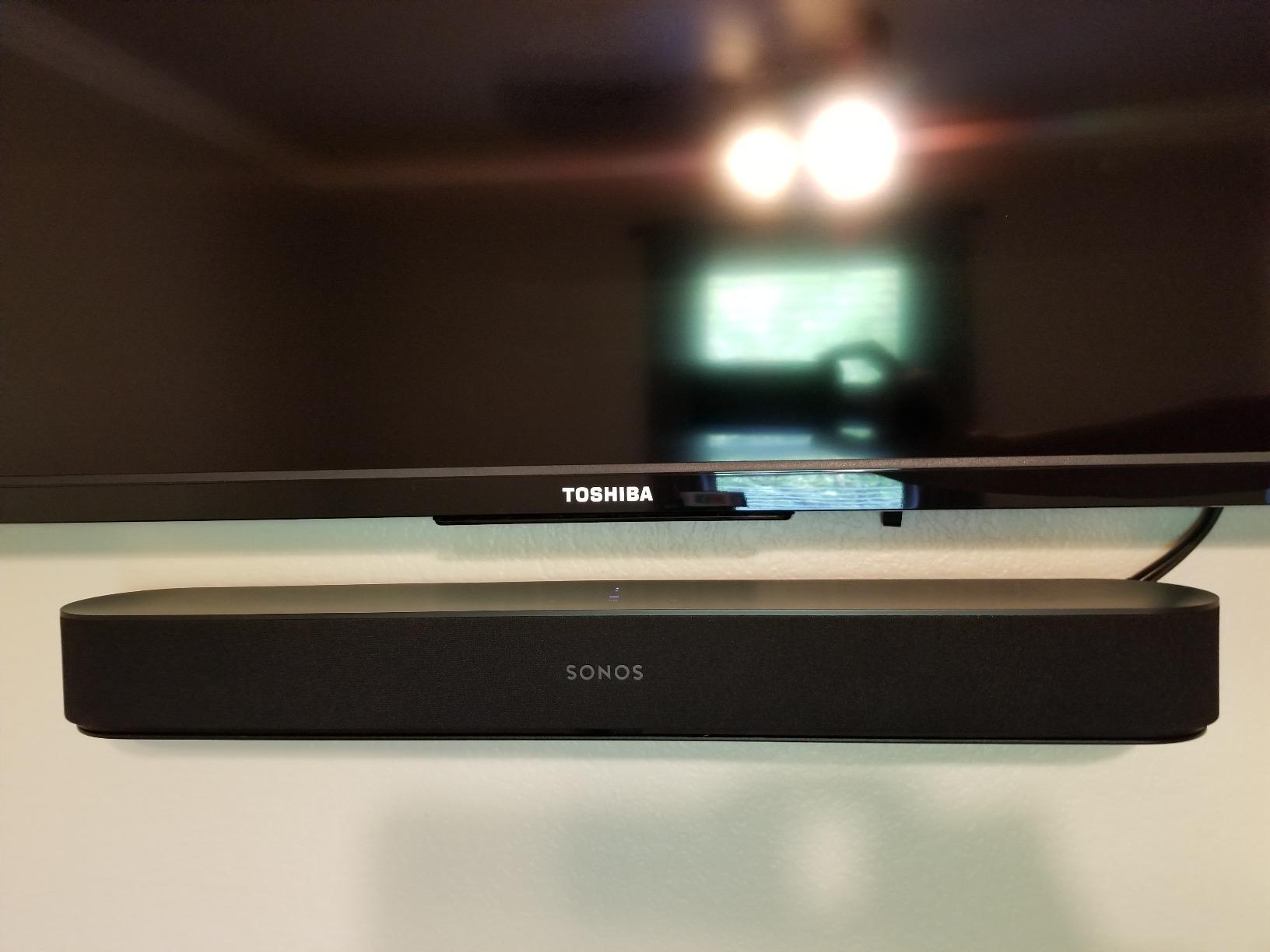
The Sonos Beam Gen 2 is the smallest system in this roundup, but it punches above its weight for Windows users who want clean, balanced audio without a rack of speakers. At 25.6 inches wide, it fits under most monitors or below a wall-mounted TV, and setup genuinely takes two cables: HDMI and power.
I connected the Beam to a Windows 11 PC via HDMI eARC through a compatible TV, and the Sonos S2 app detected it immediately. Atmos content from streaming services played back with noticeable height effects thanks to the Beam’s five-driver array. For a desktop or small living room, the immersion is impressive for the size.
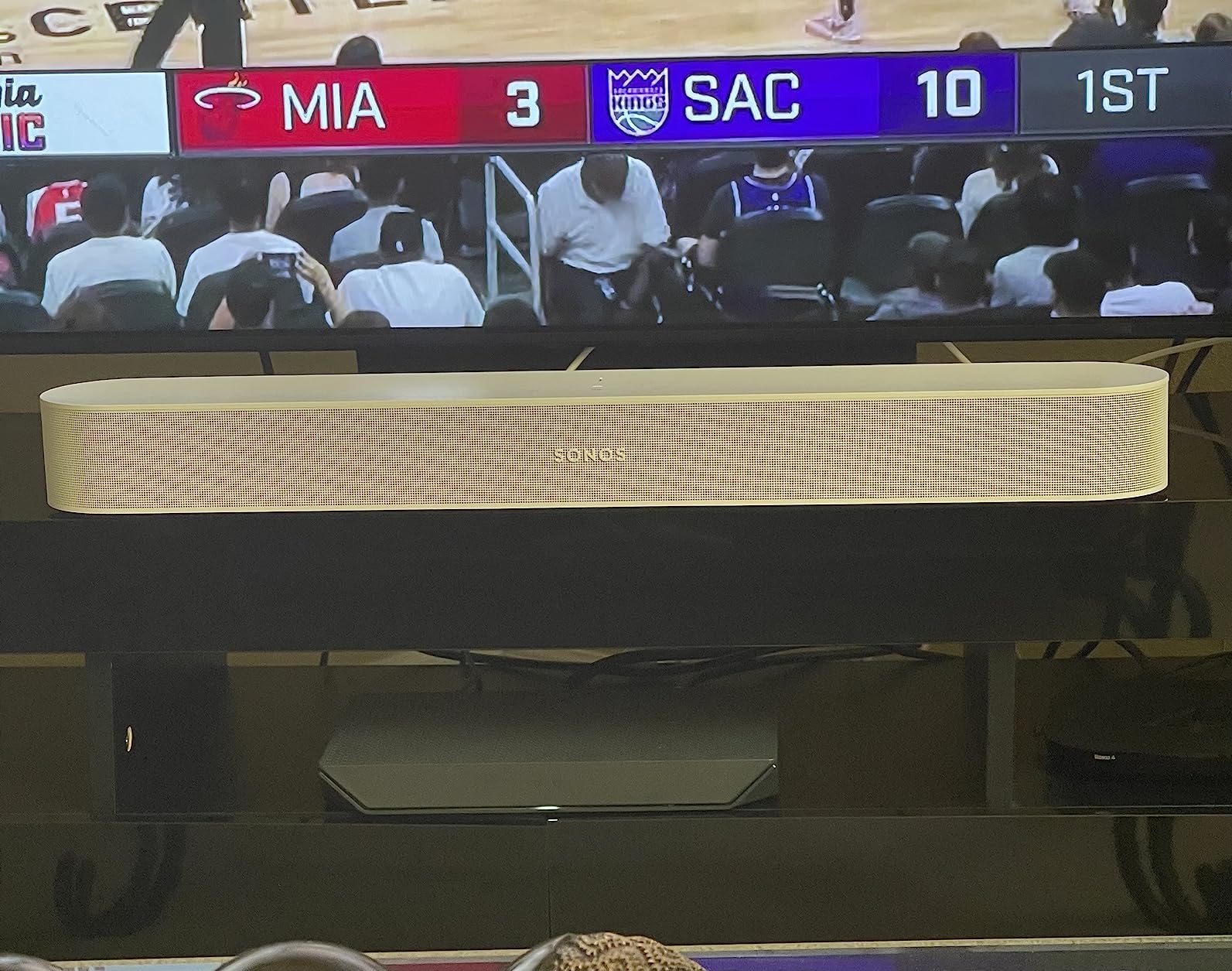
The Beam’s biggest strength is also its biggest limitation: there is no Bluetooth. If you want to stream music from your phone, you need WiFi or AirPlay 2. Windows users can cast audio over WiFi, but it adds a step compared to Bluetooth pairing. Reviewers on forums.audioholics.com frequently cite this as a dealbreaker for casual listeners.
Bass is restrained without a separate subwoofer. The Beam sounds balanced and clean, not chest-thumping. If you want real low-end impact, plan to add the Sonos Sub, which doubles the system cost. For users in small rooms or apartments, the Beam alone is enough, but large living rooms will feel underpowered.
For whom this works best
Windows users in small apartments or dorm rooms, anyone who values clean minimal design over raw speaker count, and smart home fans who want Alexa built-in. It is also the easiest system in this roundup to expand later with rear speakers or a Sonos Sub.
For whom this falls short
Listeners who want true multi-speaker surround sound out of the box, anyone with a large living room, and users who rely on Bluetooth for quick phone pairing. For PC gamers, the lack of HDMI pass-through can complicate setups with both a PC and a console. See our projector roundup if you are building a wider home theater setup.
Windows Setup Guide: Connecting Your Home Theater to a PC
This section covers what most reviews skip: how to actually get a home theater system working properly with Windows 10 or Windows 11. After testing all six systems above, here are the steps that saved me the most frustration.
Step 1: Pick the right connection
For PC users, HDMI is the most flexible connection because it carries uncompressed multichannel audio including Dolby Atmos and DTS:X. Optical S/PDIF (Toslink) supports 5.1 Dolby Digital and DTS but cannot bitstream lossless Atmos. USB is plug-and-play for PC speakers like the Logitech G560 but does not carry Atmos to external receivers. 3.5mm is the universal fallback for older systems or budget 2.1 setups.
Step 2: Enable the right audio format in Windows
Right-click the speaker icon in your taskbar, choose Sound Settings, then click on your output device. Under Spatial Audio, you can enable Windows Sonic or Dolby Atmos for Headphones. For a 5.1 or 7.1 receiver over HDMI, click Configure under your speaker setup and choose the correct channel layout. Windows 11 will test each speaker with a tone.
Step 3: Bitstream Dolby Atmos from Windows
If your receiver supports Atmos, right-click the speaker icon, choose Sound Settings, click your HDMI output, then under Audio Enhancements enable Dolby Atmos. Note that this requires the Dolby Atmos app from the Microsoft Store and a one-time purchase or included license. The Atmos for Headphones option is a software alternative that works on any headset.
Step 4: Set default format
Under your output device Properties, click the Advanced tab and select the highest bit depth and sample rate your system supports, typically 24-bit, 192 kHz for HDMI receivers, or 24-bit, 48 kHz for optical. This prevents Windows from downsampling high-resolution audio.
Step 5: Check for driver issues
If your HDMI output shows up as “Unknown” or “Speakers (2.0)” only, update your GPU drivers. NVIDIA, AMD, and Intel all ship HDMI audio drivers in their main driver bundles, and a clean install often fixes channel layout bugs. Reviewers on AVS Forum report that older Realtek HDMI drivers cause 5.1 detection failures on Windows 11.
Buying Guide: What to Look for in a Windows Home Theater System
Choosing the best home theater systems for Windows comes down to four factors: connection type, channel count, room size, and how you plan to use it. Our complete home theater systems guide covers TV-first setups in more detail, but here is the PC-specific version.
Connection type matters more than brand
On Windows, the physical connection determines what audio formats your PC can send. HDMI is the only option that supports uncompressed multichannel audio, Dolby TrueHD, and Dolby Atmos. Optical is fine for 5.1 Dolby Digital but caps at compressed formats. USB is best for PC-native speaker systems like the Logitech G560. If your PC lacks HDMI output, a USB-to-HDMI audio extractor is a cheap workaround.
Channel count: 5.1 vs 7.1
For most living rooms, 5.1 is the sweet spot. You get front left, center, front right, two surrounds, and a subwoofer, which is enough for convincing surround sound in movies and games. 7.1 adds two rear channels and is worth it only in larger rooms or dedicated theater spaces. Virtual surround on 2.1 systems like the Logitech Z623 is a compromise, not a replacement for real 5.1.
Room size and subwoofer placement
A 12-inch subwoofer like the one in the Klipsch Reference system is overkill for a 100 sq ft bedroom but perfect for a 300+ sq ft living room. Match the subwoofer size to your room. Smaller subs (8-inch) work for apartments, while larger subs (12-inch and up) need space to breathe. Place the subwoofer near a wall or corner for more bass reinforcement.
Dolby Atmos and DTS:X
Atmos adds height channels for overhead effects like rain or helicopters. True Atmos needs ceiling speakers or up-firing speakers (Klipsch R-625FA). Virtualized Atmos (Yamaha YHT-4970U, Sonos Beam Gen 2) simulates height through DSP processing. For movie fans, Atmos is a meaningful upgrade. For music and casual gaming, it is nice to have, not essential.
Gaming latency considerations
For PC gaming, HDMI and USB have negligible audio latency. Bluetooth introduces 100-300 ms of delay depending on codec, which makes it unsuitable for competitive gaming. Optical sits between the two, typically under 50 ms. If you are a serious competitive player, stick to wired HDMI or USB.
Frequently Asked Questions
Which brand has the best home theater system?
For Windows users, Yamaha and Klipsch lead the category. Yamaha offers the best all-in-one bundles with HDMI and Atmos support, while Klipsch delivers premium speaker quality if you already own a receiver. Logitech dominates the budget and PC-native categories with the Z623 and G560.
Is 5.1 or 7.1 surround sound better?
5.1 is the practical sweet spot for most rooms. It delivers convincing surround sound for movies and games with fewer speakers and cables. 7.1 adds two rear channels that only matter in larger rooms or dedicated theater spaces. For Windows PCs, 5.1 is easier to configure and works with more content.
What is the best home theater system for PC?
The Logitech G560 is the best Windows-native option for PC gamers thanks to USB plug-and-play and DTS:X Ultra virtual surround. For a complete home theater experience, the Yamaha YHT-4950U delivers full 5.1 over HDMI with YPAO calibration. Premium listeners should consider the Klipsch Reference 5.1 Dolby Atmos bundle.
Can I connect a home theater to a PC?
Yes. Most home theater systems connect to a Windows PC via HDMI, which carries both uncompressed multichannel audio and Dolby Atmos. Older or budget systems use 3.5mm or optical S/PDIF. USB works for PC-native speaker systems like the Logitech G560. Windows 11 detects these connections automatically in most cases.
How do I enable 7.1 surround sound on Windows 11?
Right-click the speaker icon in the taskbar, choose Sound Settings, then click your output device. Click Configure under Output settings and select 7.1 Surround. Windows will test each speaker with a test tone. Make sure your GPU drivers are up to date and your HDMI cable supports the bandwidth needed.
Final Verdict
After testing six systems with Windows 11 PCs, the best home theater systems for Windows in 2026 come down to how you plan to use them. PC gamers who want plug-and-play should pick the Logitech G560. Budget-focused listeners get the most value from the Logitech Z623. Anyone building a real home theater should start with the Yamaha YHT-4950U for 5.1 or the Yamaha YHT-4970U for Atmos. Audiophiles with a separate receiver should consider the Klipsch Reference 5.1. Small-room dwellers who want clean, compact sound will be happy with the Sonos Beam Gen 2.
The biggest lesson from our testing: do not buy a home theater system without checking how it connects to your specific PC. HDMI is the gold standard for Windows users, optical works for 5.1 but not lossless Atmos, and USB is best for PC-native gaming speakers. Match the connection to your GPU outputs, update your drivers, and you will skip 90% of the setup headaches that frustrate first-time buyers.