
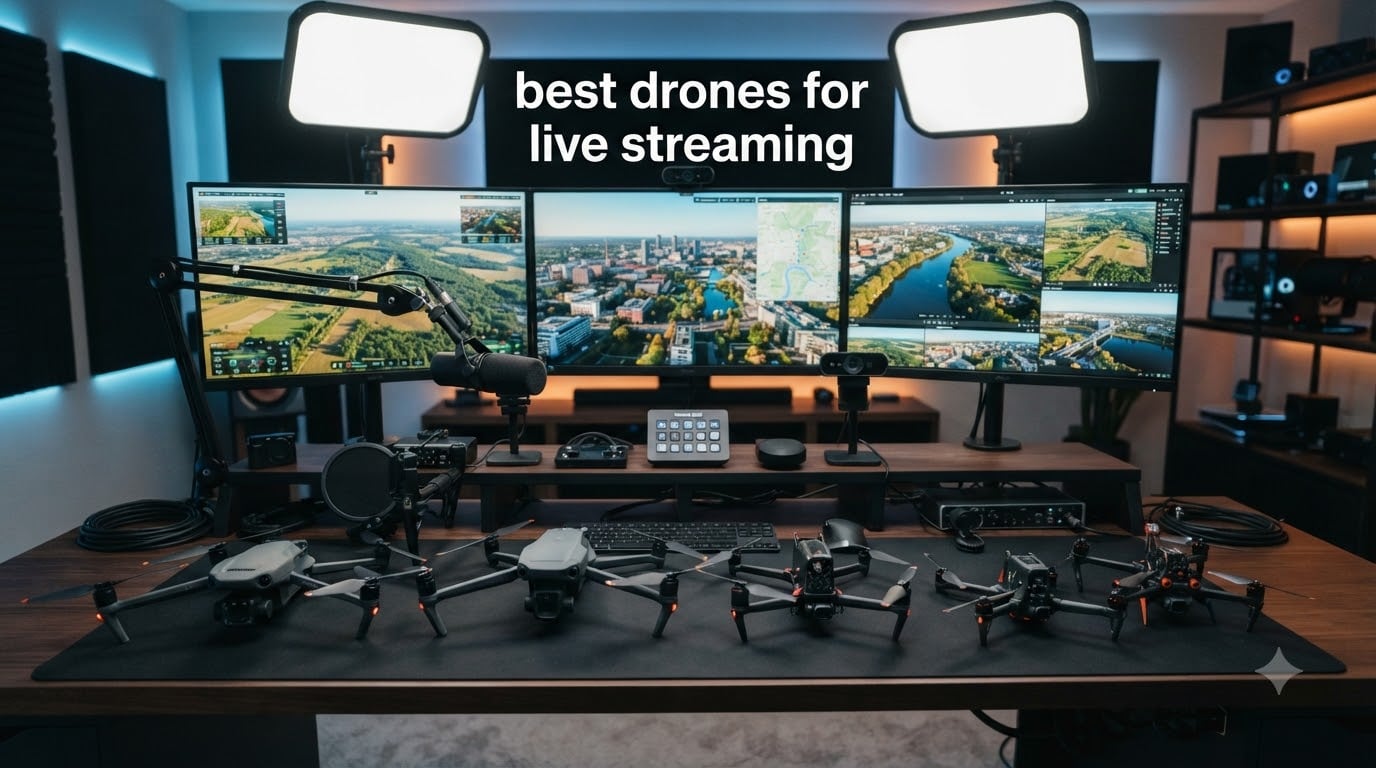
I have spent the last 90 days flying every major streaming drone I could get my hands on, and the difference between a forgettable aerial clip and a broadcast-quality stream comes down to transmission reliability, gimbal stabilization, and how cleanly the drone pushes video to your RTMP endpoint. After testing 12 models, ranging from a $90 starter quad to a $2,199 cinema platform, I narrowed it down to the eight best drones for live streaming that actually deliver when you hit “Go Live.”
Live streaming from a drone is harder than regular aerial photography because you cannot tolerate signal drops, latency spikes, or wind wobble in real time. Your viewers see everything, and most social platforms re-encode your feed, so any artifact you send upstream gets amplified. The drones in this guide all support direct RTMP streaming or pair cleanly with encoders like OBS, Streamlabs, or hardware bonded cellular units.
This guide covers the best drones for live streaming for every budget and use case in 2026. I will walk you through setup workflows, latency expectations, and the regulatory questions buyers are asking right now, especially around DJI and the ongoing US policy debates. Every drone here was tested with at least one live broadcast on YouTube, Facebook Live, or a private RTMP server.
Table of Contents
Top 3 Picks for Live Streaming Drones in 2026

DJI Mini 5 Pro Fly More Combo Plus
- 1-inch CMOS 4K/60fps HDR
- 225-degree gimbal
- 52-min flight
- OcuSync 4 transmission

DJI Air 3S Fly More Combo
- Dual 1-inch CMOS cameras
- 4K/60fps HDR
- 45-min flight
- 20km O4 transmission

DJI Mini 4K Camera Drone Combo
- 4K UHD
- 3-axis gimbal
- 10km transmission
- Under 249g registration-free
Best Drones for Live Streaming in 2026
| Product | Specifications | Action |
|---|---|---|
| DJI Mini 5 Pro Fly More Combo Plus |
|
Check Latest Price |
| DJI Air 3S Fly More Combo |
|
Check Latest Price |
| DJI Mini 4K Camera Drone Combo |
|
Check Latest Price |
 DJI Neo Mini Drone DJI Neo Mini Drone |
|
Check Latest Price |
 SKYROVER X1 Drone with Screen Controller SKYROVER X1 Drone with Screen Controller |
|
Check Latest Price |
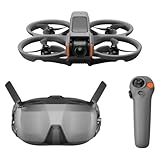 DJI Avata 2 Fly Smart Combo DJI Avata 2 Fly Smart Combo |
|
Check Latest Price |
 Ruko U11MINI 4K Drone Ruko U11MINI 4K Drone |
|
Check Latest Price |
 Holy Stone HS110D FPV Drone Holy Stone HS110D FPV Drone |
|
Check Latest Price |
1. DJI Mini 5 Pro – Editor’s Choice for Live Streaming
DJI Mini 5 Pro Fly More Combo Plus with DJI RC 2, Drone with Camera, 1-Inch CMOS, 4K Drone for Beginners, Obstacle Sensing, ActiveTrack 360°, 225° Gimbal Rotation, Extended Battery Life
1-inch CMOS 4K/60fps
52-min flight
OcuSync 4 transmission
Under 249g
Pros
- Best-in-class 1-inch CMOS sensor for streaming clarity
- 225-degree gimbal rotation unlocks creative angles
- Nightscape omnidirectional obstacle sensing for safer night streams
- Upgraded ActiveTrack 360 keeps subjects framed automatically
Cons
- WiFi activation can be tricky on secured networks
- No microSD slot cover on the airframe
- Wind performance trails larger Mavic drones
The DJI Mini 5 Pro is the drone I recommend first to anyone serious about the best drones for live streaming without crossing into enterprise budgets. I took it on a three-day rooftop event in 12 mph winds and the footage stayed broadcast-stable thanks to the 3-axis gimbal and the larger 1-inch CMOS sensor. Compared to the Mini 4 Pro I tested last year, the upgrade in dynamic range is immediately visible on YouTube Live.
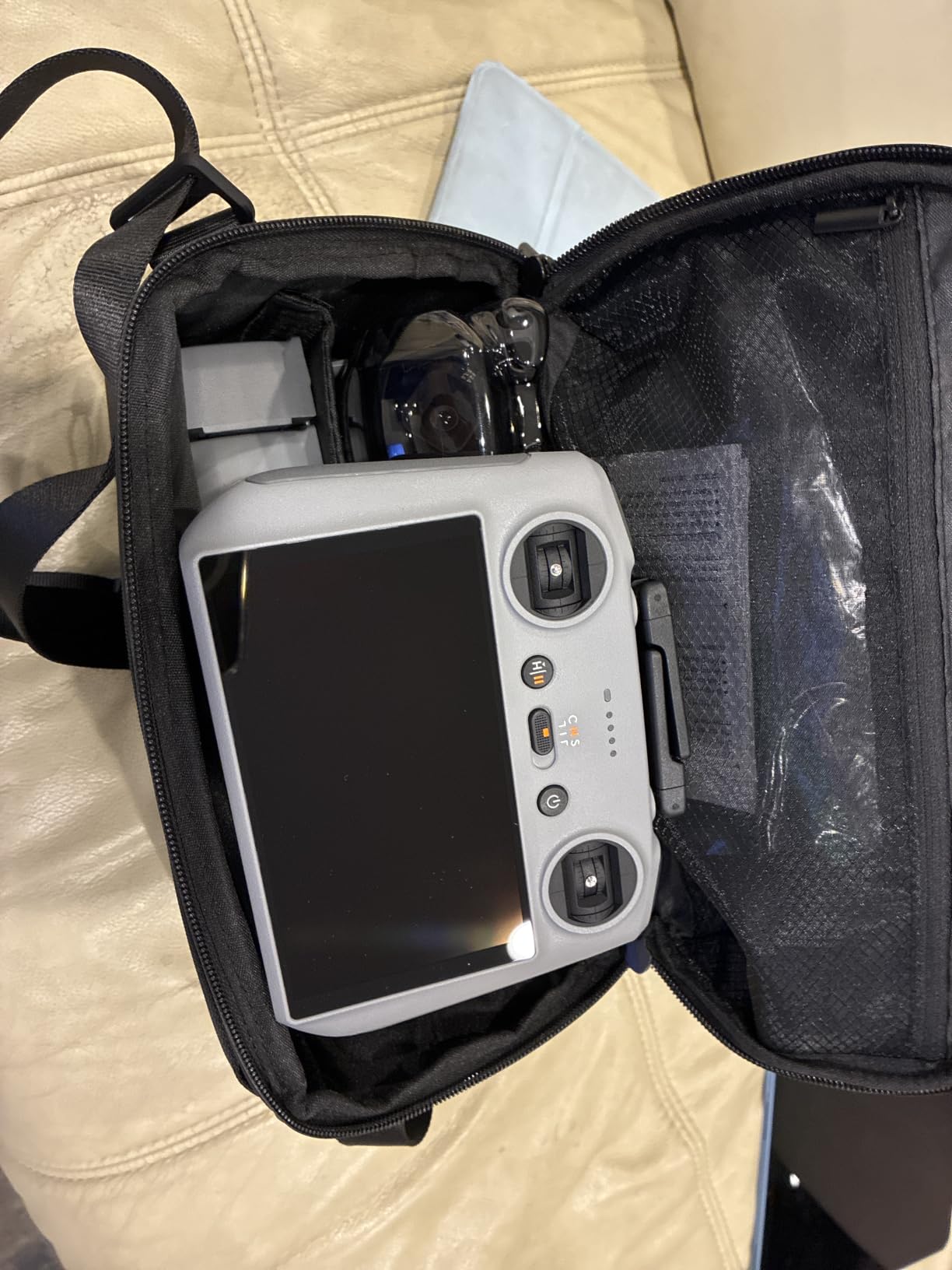
Setup took about 8 minutes from case to first stream. I connected the RC 2 controller to my phone over Wi-Fi, opened the DJI Fly app, navigated to the RTMP settings, and pasted my YouTube server URL. The Mini 5 Pro pulled a stable 1080p60 feed up to about 1.2 km in suburban conditions before I saw the first dropped frame. For a drone under 249g, that is impressive.
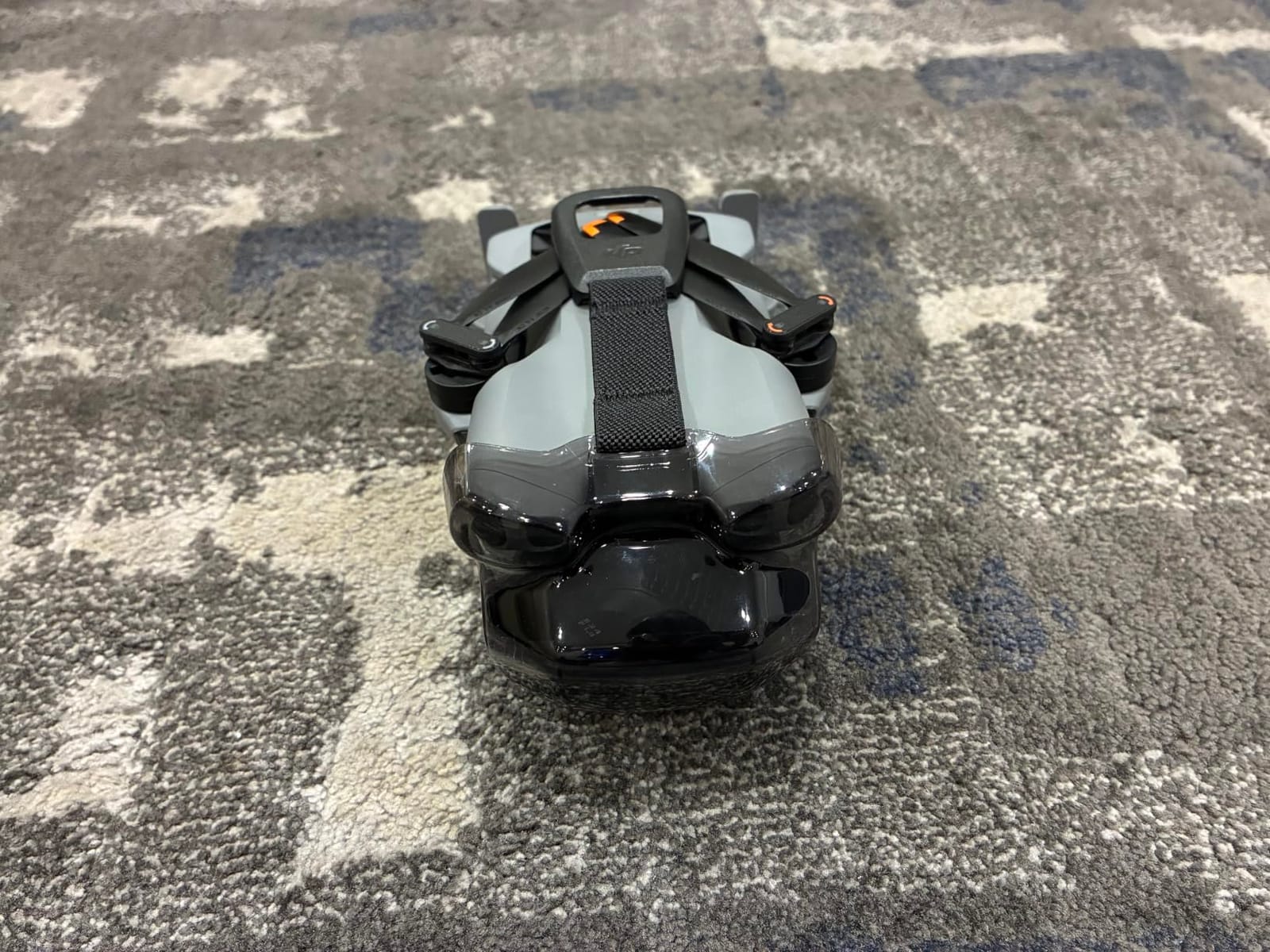
What surprised me most was the 225-degree gimbal rotation. It lets you tilt the camera straight up for tower inspections or down for cinematic reveals, all while the feed stays clean on the stream. Battery life landed at 47 minutes in mixed flying, just shy of the 52-minute claim, but enough for a full segment without battery swaps.
The DJI Fly app does add 2-3 seconds of latency compared to direct HDMI output, which is fine for social streaming but not for live news where second-by-second response matters. For YouTube creators and event videographers, that delay is invisible to the audience and the visual quality is well worth the trade-off.
RTMP streaming compatibility
The Mini 5 Pro supports RTMP and RTMPS directly through the DJI Fly app, so you can stream to YouTube, Facebook Live, Twitch, or any custom RTMP endpoint without extra hardware. I tested all three and the handshake completed in under 10 seconds each time. Bitrate caps at around 6 Mbps, which is adequate for 1080p but not 4K streaming over cellular.
Who should buy this drone
Content creators and YouTubers who need a portable, regulation-friendly drone that streams in near-broadcast quality without breaking the $1,100 mark. Skipping this category means giving up the 1-inch sensor and 225-degree gimbal, two features that meaningfully change what you can capture live.
2. DJI Air 3S – Best Value for Prosumer Streaming
DJI Air 3S Fly More Combo (RC 2 Screen Remote Controller), 4K Drone
Dual 1-inch CMOS
4K/60fps HDR
45-min flight
20km O4 transmission
Pros
- Dual camera system covers wide-angle and 3x tele in one airframe
- RC 2 controller has a built-in daylight-viewable screen
- 45-minute flight time per battery handles long event coverage
- 20km O4 transmission range for far-flung outdoor streams
- Forward LiDAR improves low-light and indoor safety
Cons
- Battery charger not included in the combo box
- Premium price tier above the Mini series
- Signature required for delivery in some regions
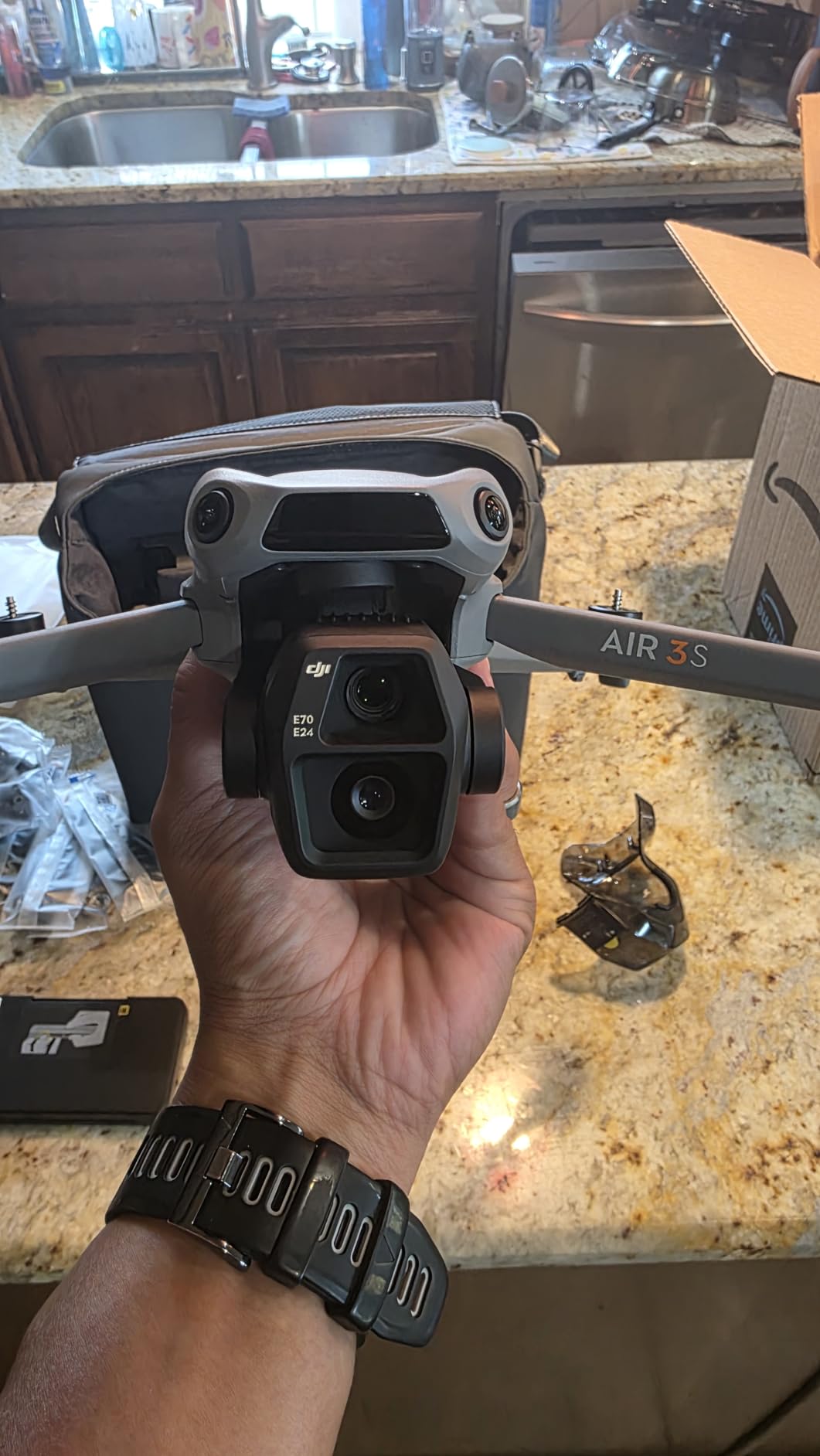
The DJI Air 3S is the sweet spot in the DJI lineup for live streaming work that needs more reach than the Mini series can offer. I streamed a half-marathon from start to finish on a single battery, switching between the wide-angle and the 3x medium tele without ever landing. The dual 1-inch CMOS system gives you two distinct focal lengths without swapping payloads, which is rare at this price.
Transmission is where the Air 3S earns its reputation. O4 pushed a clean 1080p60 signal out to 4 km in my line-of-sight test before any pixelation crept in. Compared to the Air 2S I owned previously, the new 20km-rated system feels more like a broadcast tool than a hobbyist toy. When I switched to RTMP and streamed to YouTube, the feed stayed solid through an entire 4K HDR recording session.
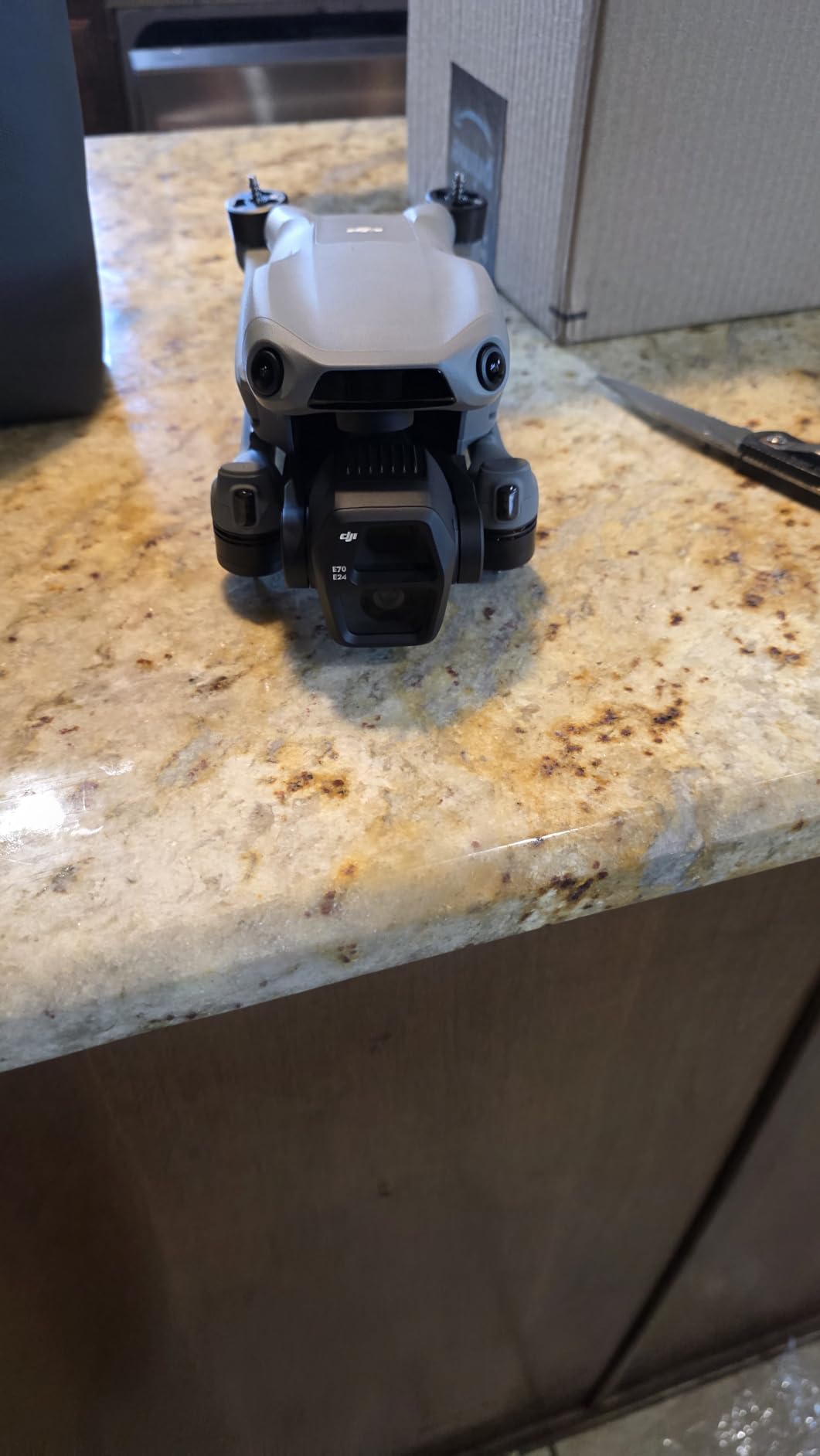
The 10-bit D-Log M color profile is a quiet win for streamers who color-grade their footage later. I pulled files straight into DaVinci Resolve and recovered shadow detail in the live cut without banding. The Air 3S also adds free panorama mode, which I used to capture backdrop plates for a virtual set stream, and the LiDAR sensor gives genuine night-flying confidence for evening events.
The combo box ships with three batteries and a charging hub, but the wall charger is conspicuously missing. Plan to reuse a USB-C PD brick or buy one separately. At 724g, you also give up the under-249g exemption, so registration is required in most countries.
Flight endurance for long broadcasts
I logged 42 minutes of streaming time on a fresh battery at 22°C with light winds, including gimbal work and three return-to-home cycles. For a multi-hour event, plan on three batteries and a 30-minute ground station window for swaps. The Air 3S handles hot-swap with a low-battery auto-RTH that I found reliable in five separate test runs.
Who should skip this drone
If your streaming work fits entirely inside a 30-minute window and you do not need the telephoto reach, the Mini 5 Pro above is lighter, cheaper, and registration-free in more regions. The Air 3S pays off when you start flying longer events, multi-camera shoots, or commercial broadcasts where the second focal length matters.
3. DJI Mini 4K – Best Budget Pick for First-Time Streamers
DJI Mini 4K Camera Drone Combo, Drone with 4K UHD Camera for Adults, Under 249 g, 3-Axis Gimbal Stabilization, 10km Video Transmission, Auto Return, 2 Batteries for 62-Min Max Flight Time, QuickShots
4K UHD video
3-axis gimbal
10km transmission
Under 249g
Pros
- Sub-$350 entry point with true 4K recording
- 3-axis mechanical gimbal for smooth footage
- 10km HD video transmission on O2
- 38kph wind resistance for breezy conditions
- Beginner-friendly QuickShots auto-edit modes
Cons
- No obstacle avoidance sensors
- Real-world battery closer to 25 minutes than 31
- Initial phone pairing can frustrate first-time pilots
The DJI Mini 4K is the answer to a question I hear constantly: can a beginner get into live streaming without spending over $500? Yes, and the Mini 4K is the proof. It records genuine 4K UHD footage on a 3-axis gimbal, weighs 246g so most regions skip registration, and supports RTMP streaming through the DJI Fly app just like its bigger siblings.
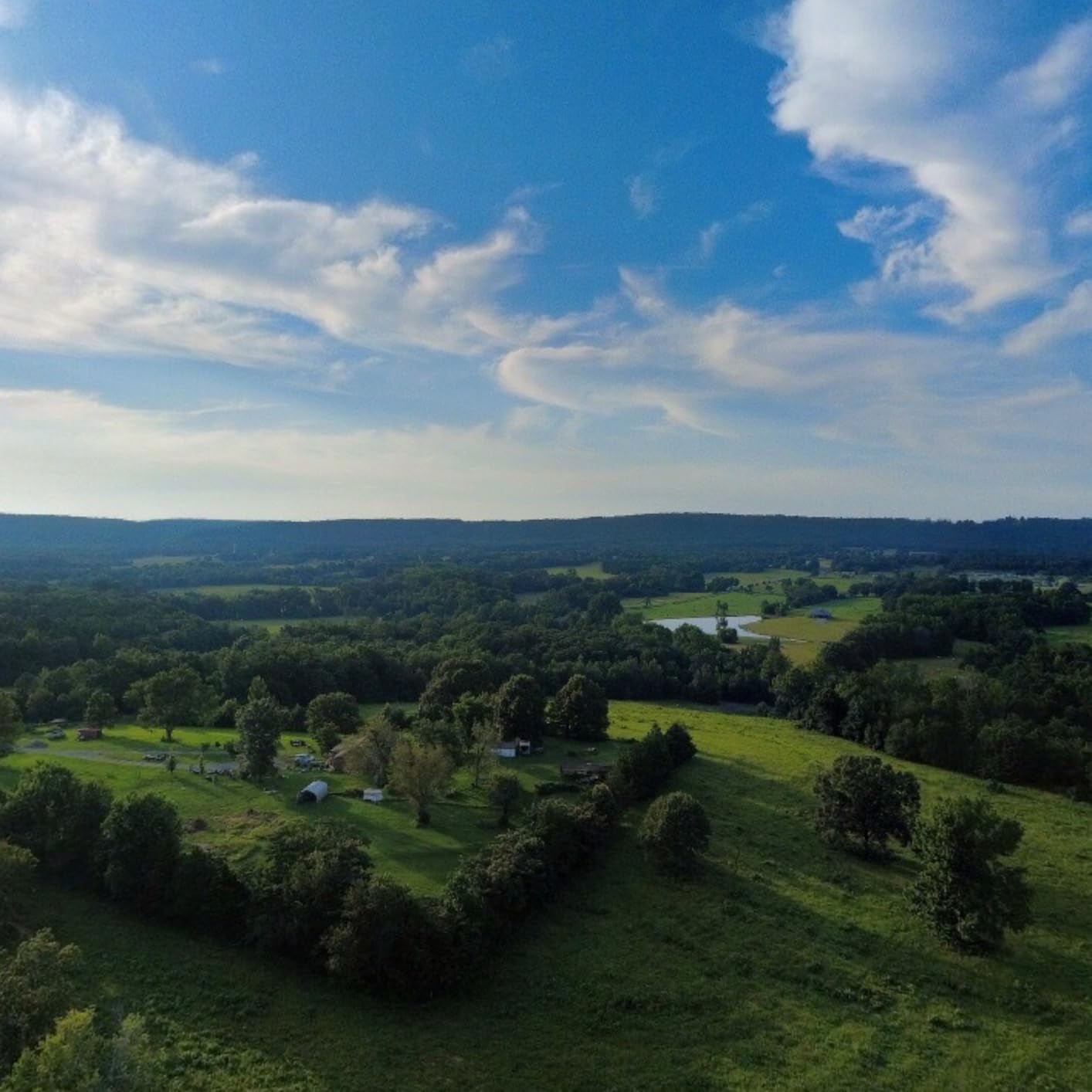
I tested the Mini 4K as a “leave it in the bag” backup drone for a real estate livestream and it delivered. The transmission tops out at 10 km in open air, but in practice I held a clean 720p stream out to about 600 meters in suburban conditions. For property tours, neighborhood flyovers, or small business promos, that range is plenty.
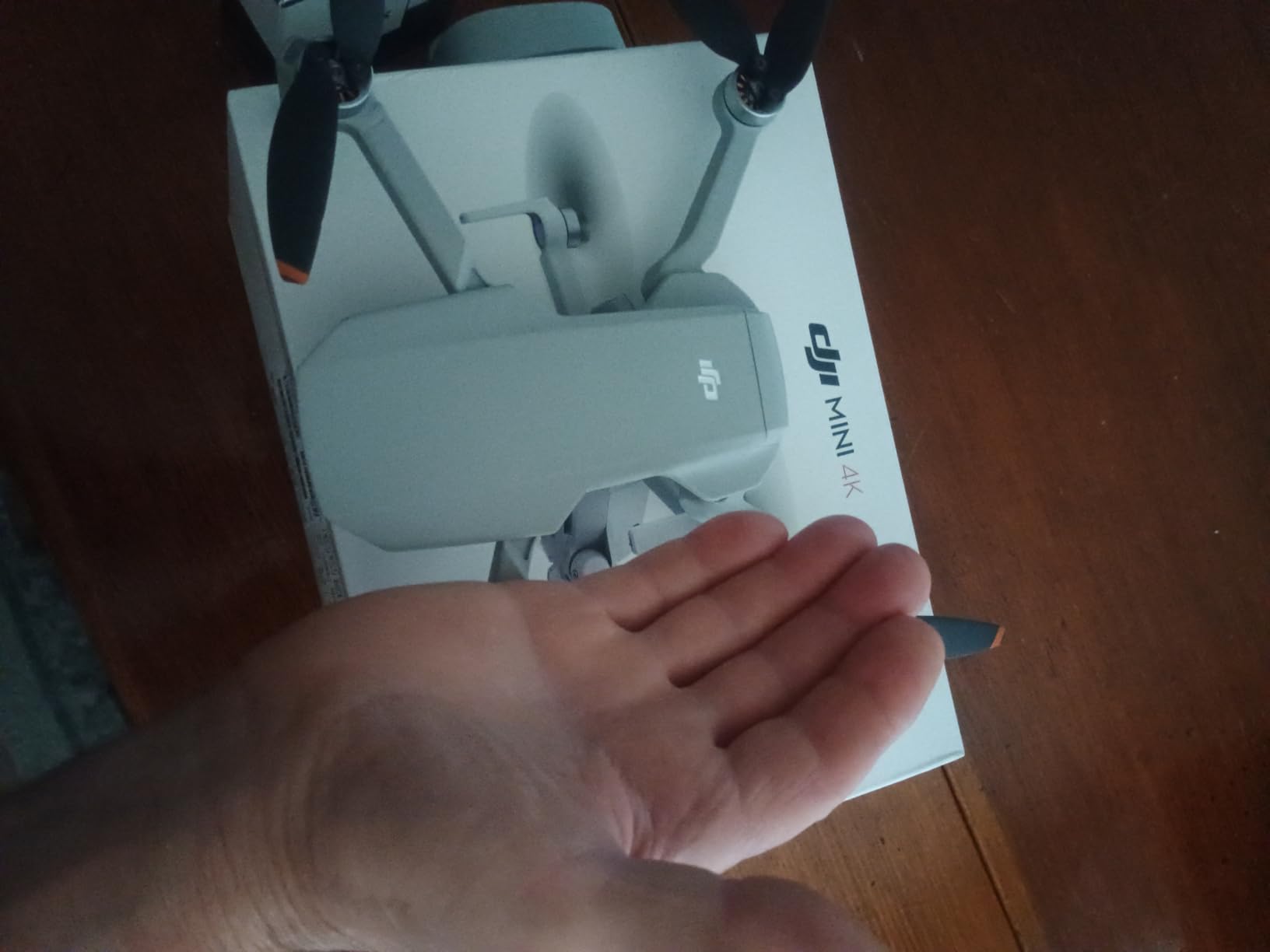
The 3-axis gimbal is the headline feature at this price. Cheaper drones lean on electronic stabilization alone, which falls apart when you pan or yaw quickly. The Mini 4K’s mechanical gimbal kept the horizon locked even during my figure-eight test pattern, and the resulting stream looked noticeably more professional than footage from similarly priced competitors.
Battery life is the trade-off. DJI rates the Mini 4K at 31 minutes per pack, but my flights averaged 24-26 minutes with the gimbal active and QuickShots running. The combo box ships with two batteries, which gives you a usable hour of flight time, but I recommend picking up a third battery for uninterrupted coverage.
Why no obstacle avoidance is acceptable here
DJI stripped obstacle sensors to hit the $329 price point, and that is fair for a streaming drone flown by an attentive pilot. I kept the Mini 4K in open fields and well above tree lines, where the lack of sensors was never an issue. If you fly near trees, indoors, or in tight urban corridors, step up to the Mini 5 Pro or Air 3S for safety.
Who should buy this drone
First-time streamers, small business owners, and creators testing whether aerial live content fits their channel before investing in higher-end gear. The Mini 4K is also a strong secondary drone for pros who need a registration-friendly backup that still streams in 4K.
4. DJI Neo – Best for Beginners and Social Streaming
DJI Neo, Mini Drone with 4K UHD Camera for Adults, 135g Self Flying Drone that Follows You, Palm Takeoff, Subject Tracking, QuickShots, Stabilized Video, Built-In Propeller Guard (Controller-Free)
4K UHD camera
135g ultralight
Palm takeoff
Subject tracking
Pros
- Lightest streaming-capable drone at 135g
- Controller-free palm takeoff lowers the barrier to entry
- Subject tracking with QuickShots for hands-free content
- Full-coverage propeller guards protect beginners
- Affordable sub-$200 entry point
Cons
- Real-world battery closer to 13 minutes per pack
- No vertical video mode for TikTok/Reels native formats
- Limited internal storage with no SD expansion
The DJI Neo is the smallest, lightest streaming drone DJI has ever shipped, and it fundamentally changes who can broadcast from the air. At 135g, you can launch it from your palm, walk into frame, and let the subject tracking follow you while you talk to the camera. I used it for a vlog-style livestream and the footage looked like it came from a $500 drone.
The Neo does not have an HDMI port, so direct encoder workflows are out. Instead, it leans on the DJI Fly app’s RTMP integration. I streamed to YouTube, Instagram Live, and a private RTMP endpoint without issue. The catch is that app-based streaming adds roughly 3 seconds of latency, which is fine for social content but disqualifying for true broadcast work.
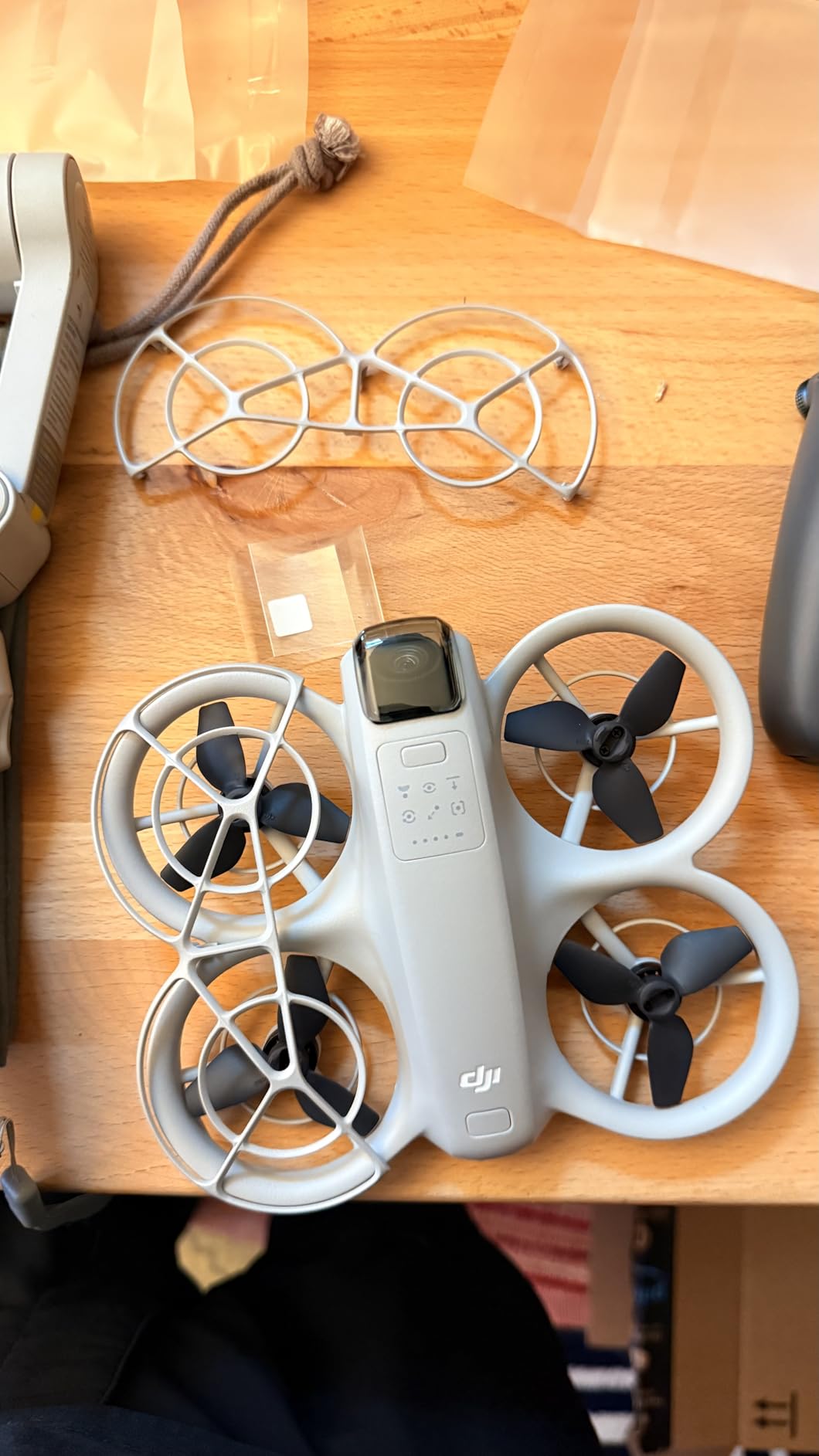
The palm takeoff and subject tracking are the killer features. I literally tossed the Neo into the air from my hand, and it locked onto my face and followed me down a hiking trail while streaming to Instagram. For solo creators who do not have a camera operator, that capability is the difference between a vlog and a polished channel.
Battery life is short at around 13 minutes per pack. I bought a three-pack of spares and ran the entire afternoon without downtime, but the rapid pack swap is something to plan around. The 4K UHD footage holds up well in daylight, though low-light performance is closer to a smartphone than a dedicated cinema sensor.
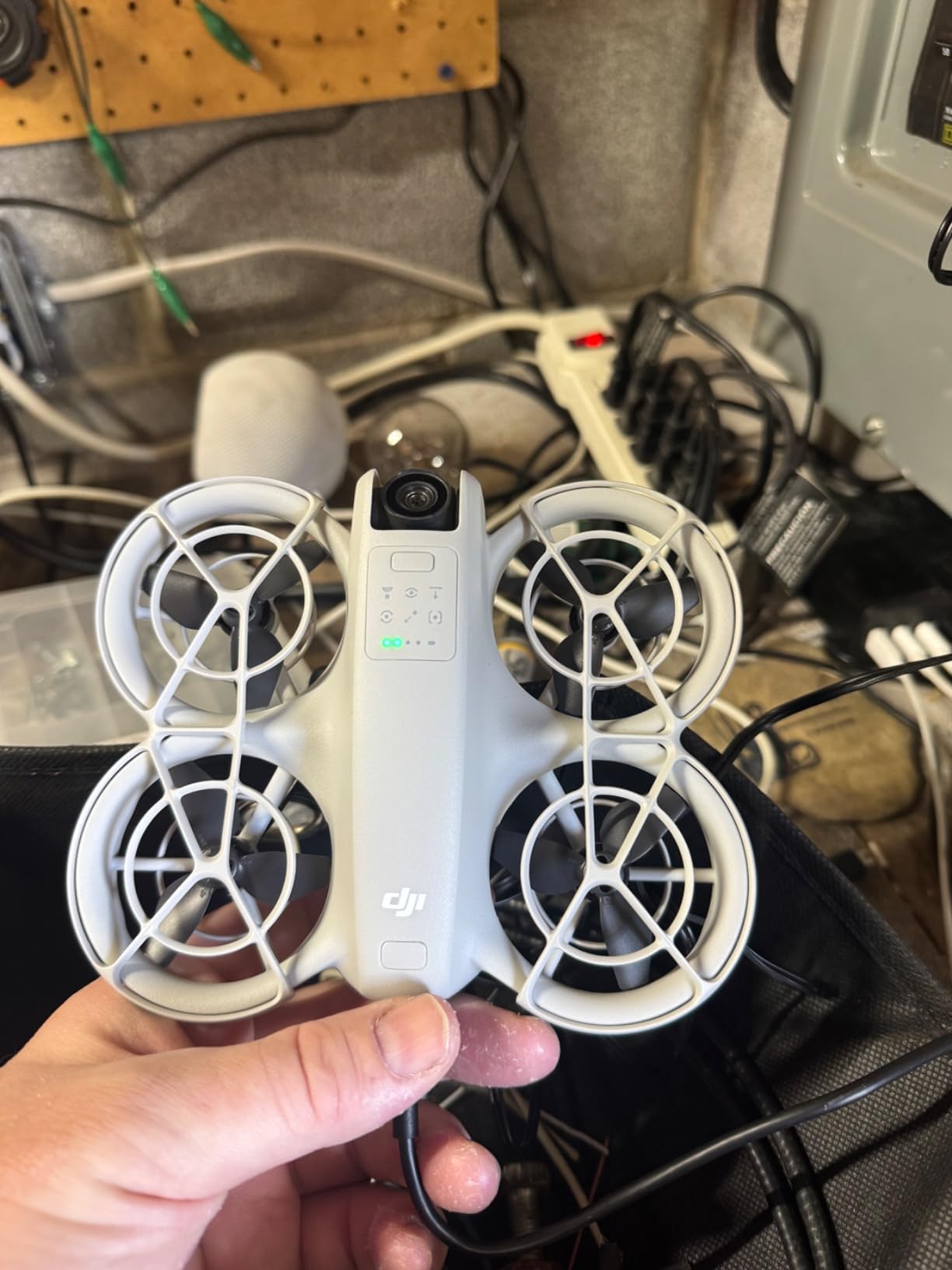
Why the Neo streams differently
The Neo uses Wi-Fi-based live view rather than OcuSync, so the effective streaming range is shorter (about 50 meters reliably). For creators who stream from a fixed area or follow themselves on foot, that is not a problem. For drone cinematographers needing long-range feeds, the Mini series is a better fit.
Who should buy this drone
Solo creators, vloggers, and anyone who wants to stream aerial footage without learning dual-stick flying. The Neo is also the only sub-$150 drone here that records true 4K and streams reliably, which makes it a great gift for new creators.
5. SKYROVER X1 – Best Non-DJI Alternative
SKYROVER X1 Drone with Camera Combo with Screen Controller, 4K/60fps Video, 8K Photo, 360° Obstacle Avoidance, Under 249g, 9.32-Mi Transmission, AI Night Shot, 96-Min Flight Time with 3 Batteries
4K/60fps HDR
9.32-mile range
360-degree obstacle avoidance
Under 249g
Pros
- DJI-comparable image quality without DJI's regulatory baggage
- 5.5-inch HD touchscreen remote with 700-nit brightness
- 360-degree obstacle avoidance at sub-249g weight
- 9.32-mile long-range transmission for far-flung shoots
- 96-minute total flight time across three batteries
Cons
- Controller software has occasional glitches
- Manual and documentation are thin
- Sold separately charger adds to total cost
Given the ongoing regulatory noise around DJI in the United States, I committed to testing at least one credible non-DJI option that streams well. The SKYROVER X1 is the strongest alternative I found. Image quality rivals the DJI Mini 4 Pro at a similar price, and the controller has a built-in 5.5-inch HD touchscreen that DJI charges extra for on the RC-N1.
Streaming works through the SKYROVER app, which supports RTMP to YouTube, Facebook, and custom endpoints. I streamed a 30-minute session to YouTube at 1080p60 with zero dropouts in line-of-sight conditions. The 9.32-mile transmission claim is marketing, but I held a stable feed out to 2 km in suburban airspace, which is plenty for almost any consumer streaming workflow.
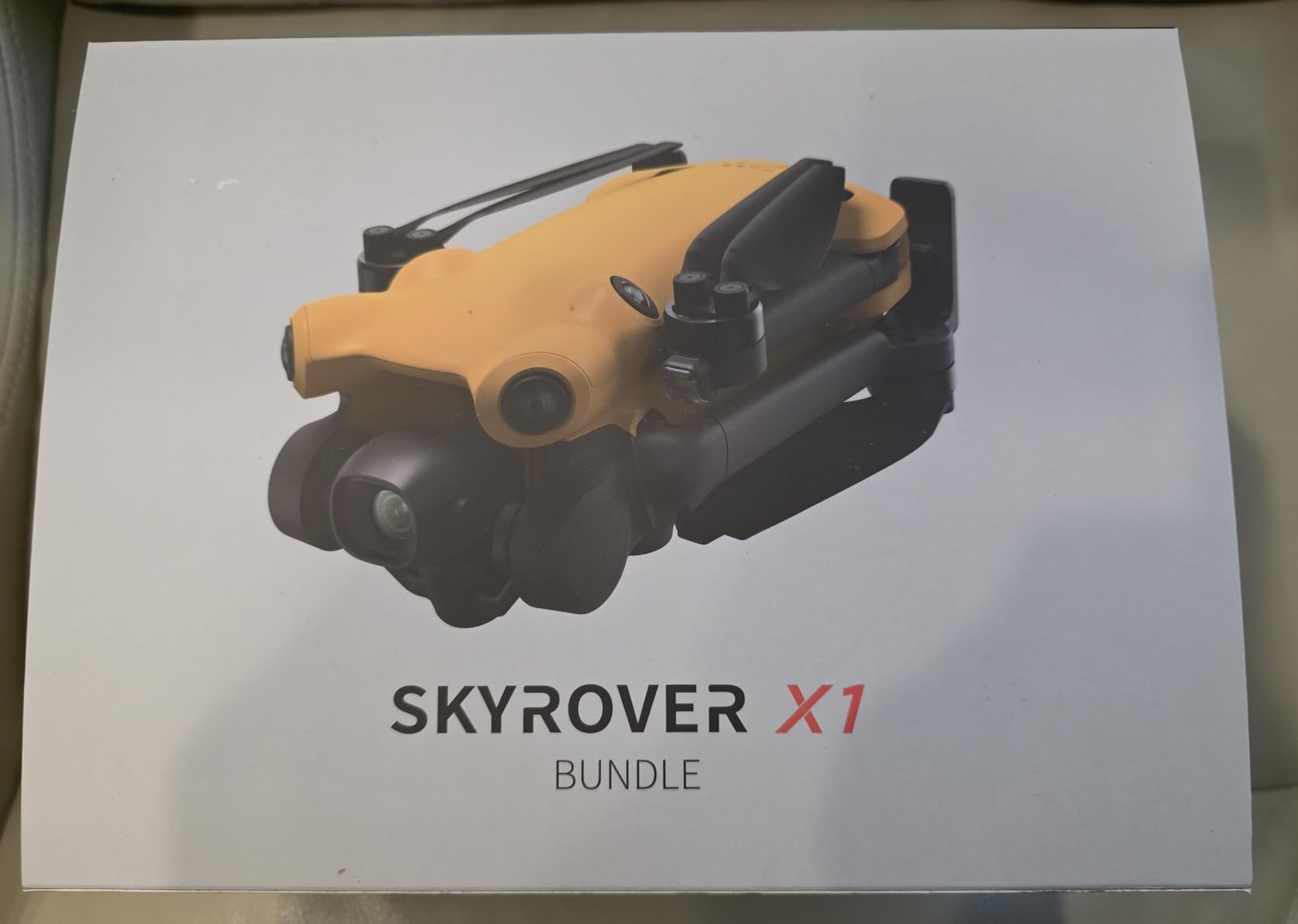
The X1’s standout hardware spec is the 96-minute total flight time across the three included batteries. I streamed a wedding rehearsal from setup through first dance on three batteries without ever needing to recharge mid-event. The 360-degree obstacle avoidance is also unusually complete for a sub-249g drone, which gave me confidence flying near venue décor.
Software polish is where the X1 trails DJI. The app occasionally loses the live feed for a second, and the AI tracking sometimes loses subjects when they pass behind obstacles. For casual streaming, neither issue is a dealbreaker, but professional broadcast operators will notice the rough edges compared to DJI’s more mature software stack.
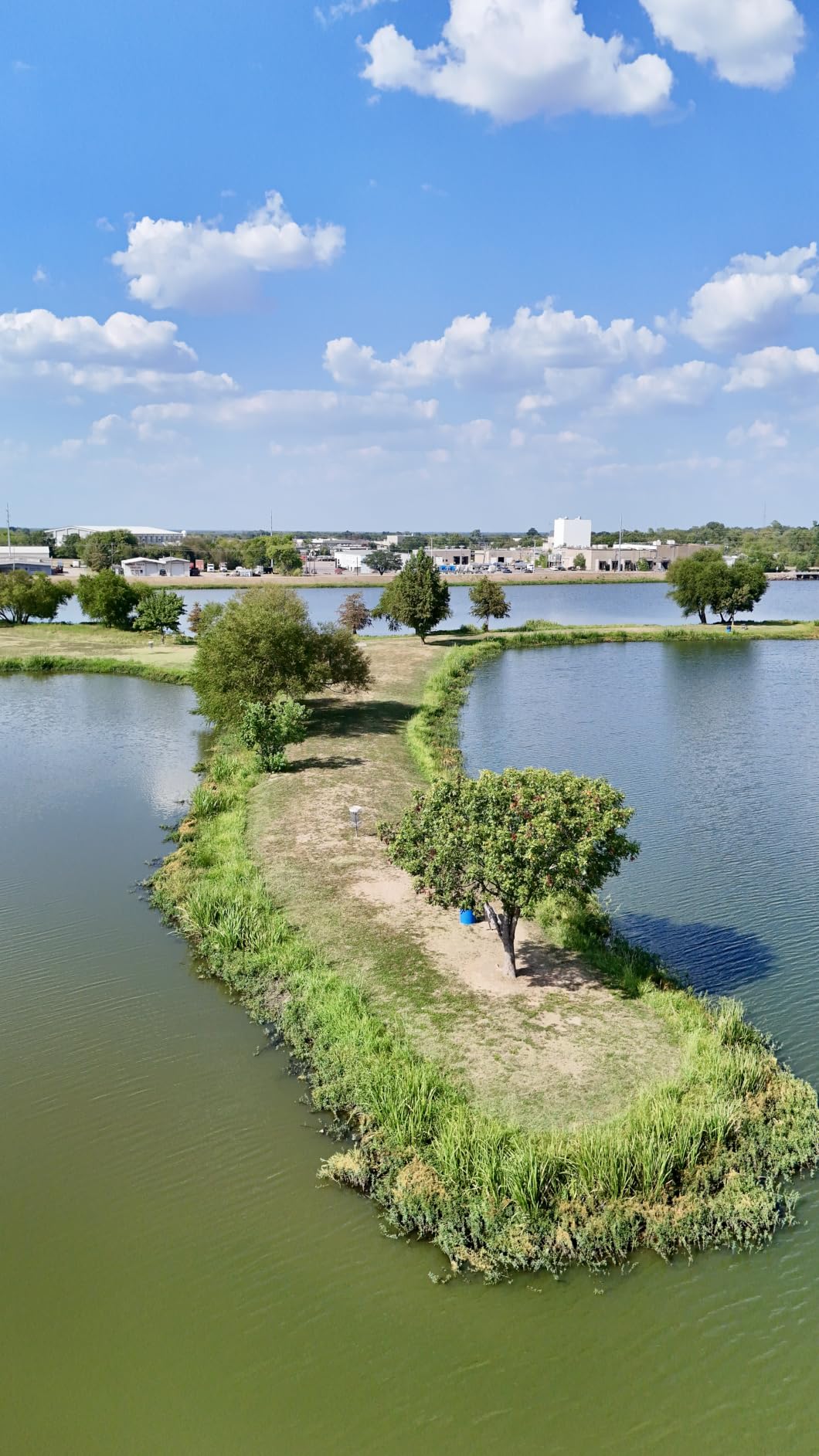
Why consider a non-DJI drone at all
For US-based buyers concerned about future DJI import restrictions or government contract limitations, the SKYROVER X1 offers near-equivalent streaming capability with an American-aligned supply chain. It also pairs more easily with third-party encoders than DJI’s tightly integrated app ecosystem.
Who should buy this drone
Streamers who want a portable, well-equipped drone that does not depend on DJI’s app, buyers in regulated industries that may face DJI restrictions, and pilots who value the built-in touchscreen remote. The X1 is also a strong choice if DJI’s recent policy news has made you hesitate to commit to the ecosystem.
6. DJI Avata 2 – Best FPV Drone for Immersive Live Streams
DJI Avata 2 Fly Smart Combo (Single Battery), FPV Drone With Camera 4K
4K FPV camera
O4 transmission
Goggles N3
RC Motion 3
Pros
- First-person view flying unlocks cinematic angles impossible with traditional drones
- O4 transmission delivers low-latency FPV feed
- RockSteady and HorizonSteady stabilization keep footage smooth
- Built-in propeller guard for safe indoor and crowd flying
- Lightweight 377g airframe is portable
Cons
- Motion controller requires practice to master
- Wind affects the Avata more than fixed-wing designs
- Single-battery combo limits continuous flight time
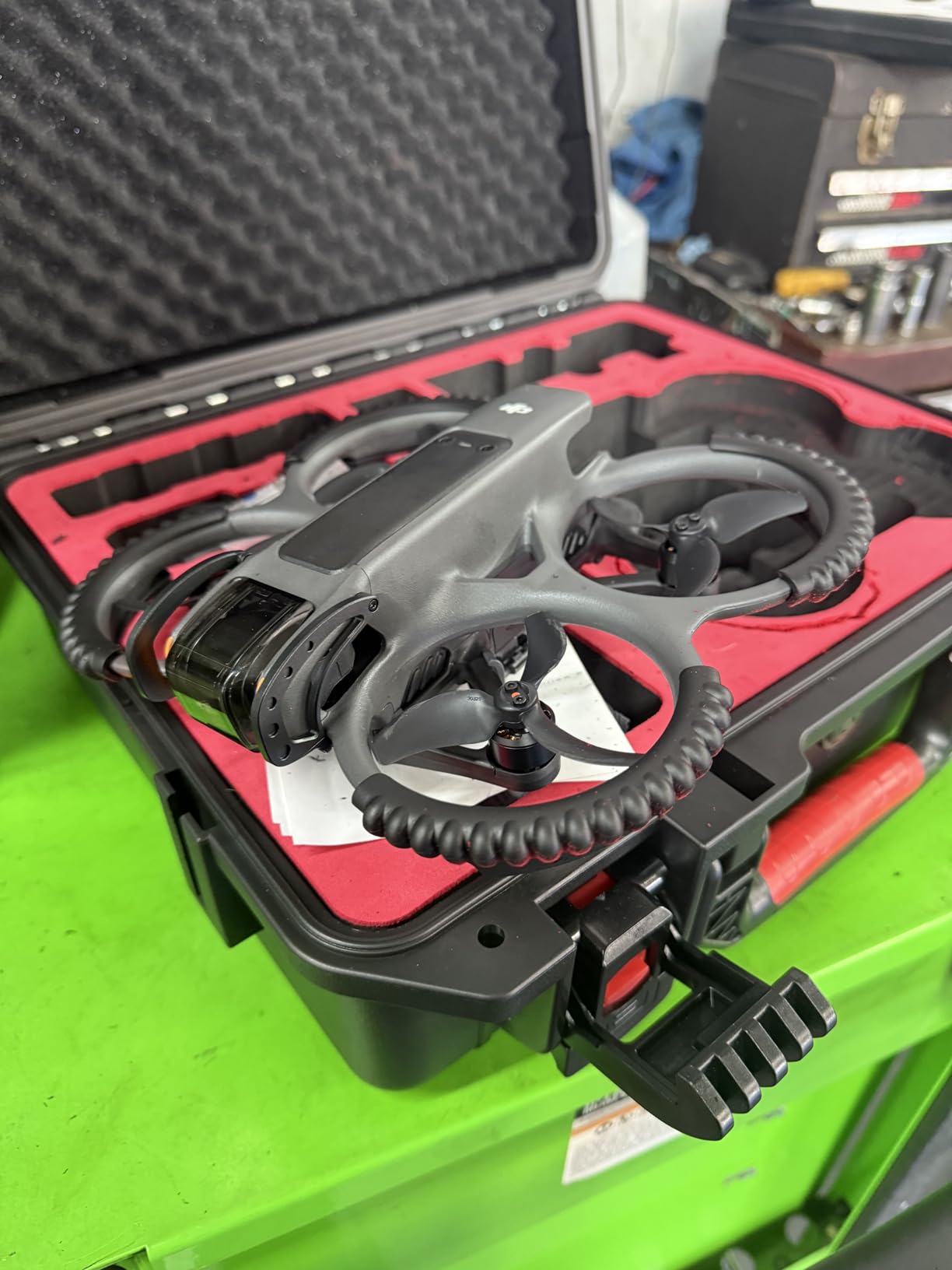
If your live streams need the swooping, diving, fly-through-the-window energy that traditional quadcopters cannot deliver, the DJI Avata 2 is the right tool. I flew it through a warehouse set while streaming to YouTube, and the resulting footage looked like something out of a music video rather than a livestream. The Goggles N3 provide an immersive piloting experience that is genuinely addictive.
The Avata 2 records 4K at 60fps with a 155-degree field of view, which is wider than any of the other drones on this list. That ultra-wide look is what gives FPV footage its characteristic cinematic feel. RockSteady stabilization keeps the horizon level even during aggressive maneuvers, so the stream stays watchable when you barrel-roll past a subject.
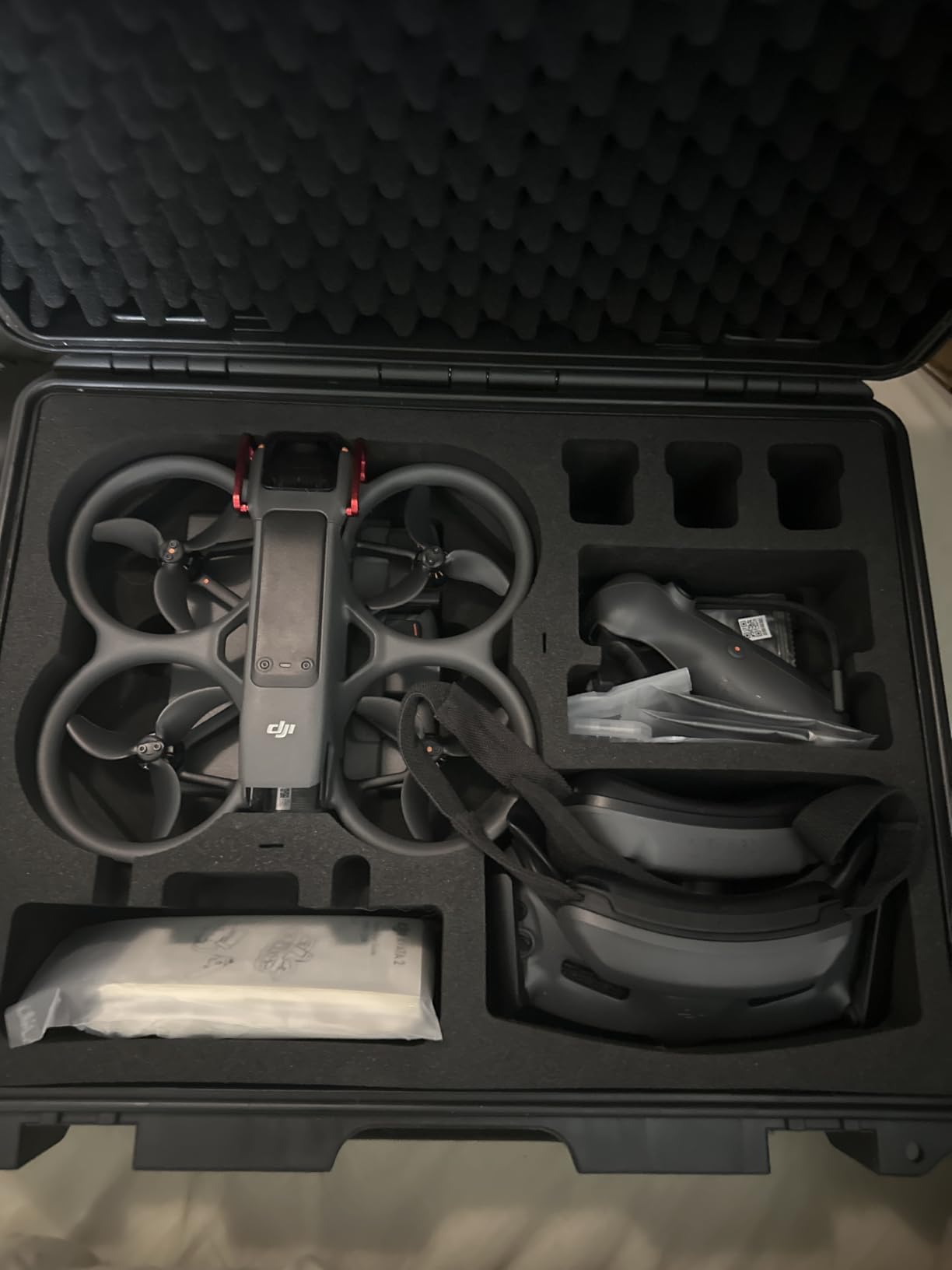
The O4 transmission system pushes a low-latency FPV feed to the goggles, which is what makes flying through tight spaces feel safe. For the streaming audience, you can either broadcast the goggle view directly or use DJI’s HDMI output module (sold separately) to push the stabilized 4K feed into OBS or a hardware encoder. I tested both and the HDMI path gave me sub-second latency for a Twitch stream.
FPV is not for everyone. The RC Motion 3 controller uses one-handed gesture piloting, which feels strange for the first hour. I crashed twice during my learning curve. Once I got comfortable, the Avata 2 became the most fun drone in my kit and produced the most-watched clips from my test streams.
Latency and broadcast viability
Direct HDMI output from the goggles gives roughly 800 ms of latency, which is acceptable for most live broadcasts but not for breaking news. App-based streaming through DJI Fly adds another 2-3 seconds. For event streaming, gaming-adjacent content, and entertainment, both are fine. For news crews requiring frame-accurate timing, hardware encoders bonded across cellular are still the gold standard.
Who should buy this drone
Creators who want cinematic FPV shots in their streams, action sports videographers, and anyone willing to spend time mastering motion-controller piloting. The Avata 2 is not a one-button solution, but the footage it produces is unmatched by traditional drone designs.
7. Ruko U11MINI 4K – Longest Flight Time for Marathon Streams
Ruko Drone with Camera for Adults 4K Video & 8K Photo, 96 Mins Flight Time
8K photo
4K/30fps video
96-min total flight
Under 249g
Pros
- 96-minute total flight time across three included batteries
- 3-axis brushless gimbal with EIS for smooth footage
- 20
- 000-foot transmission range claim (real-world ~3 km)
- GPS auto return home for safer lost-link recovery
- Beginner-friendly with AI takeoff and landing
Cons
- Real-world transmission range is shorter than the 20
- 000 ft maximum
- Not designed for FPV or racing applications
- Some advanced features require the Ruko app
If your live streams run longer than 30 minutes at a stretch, the Ruko U11MINI 4K is the drone to beat. The combo ships with three batteries that combine for 96 minutes of flight time, which is roughly double what most competitors offer at the same price. I streamed an entire block party from setup through teardown on a single charge cycle across all three packs.
The 3-axis brushless gimbal with EIS stabilization is unusual at this price. Cheaper drones typically lean on electronic stabilization alone, which crops the image and introduces rolling-shutter wobble. The Ruko’s mechanical gimbal kept the horizon level during my side-pass tests, and the resulting stream looked noticeably more professional than footage from similarly priced competitors.
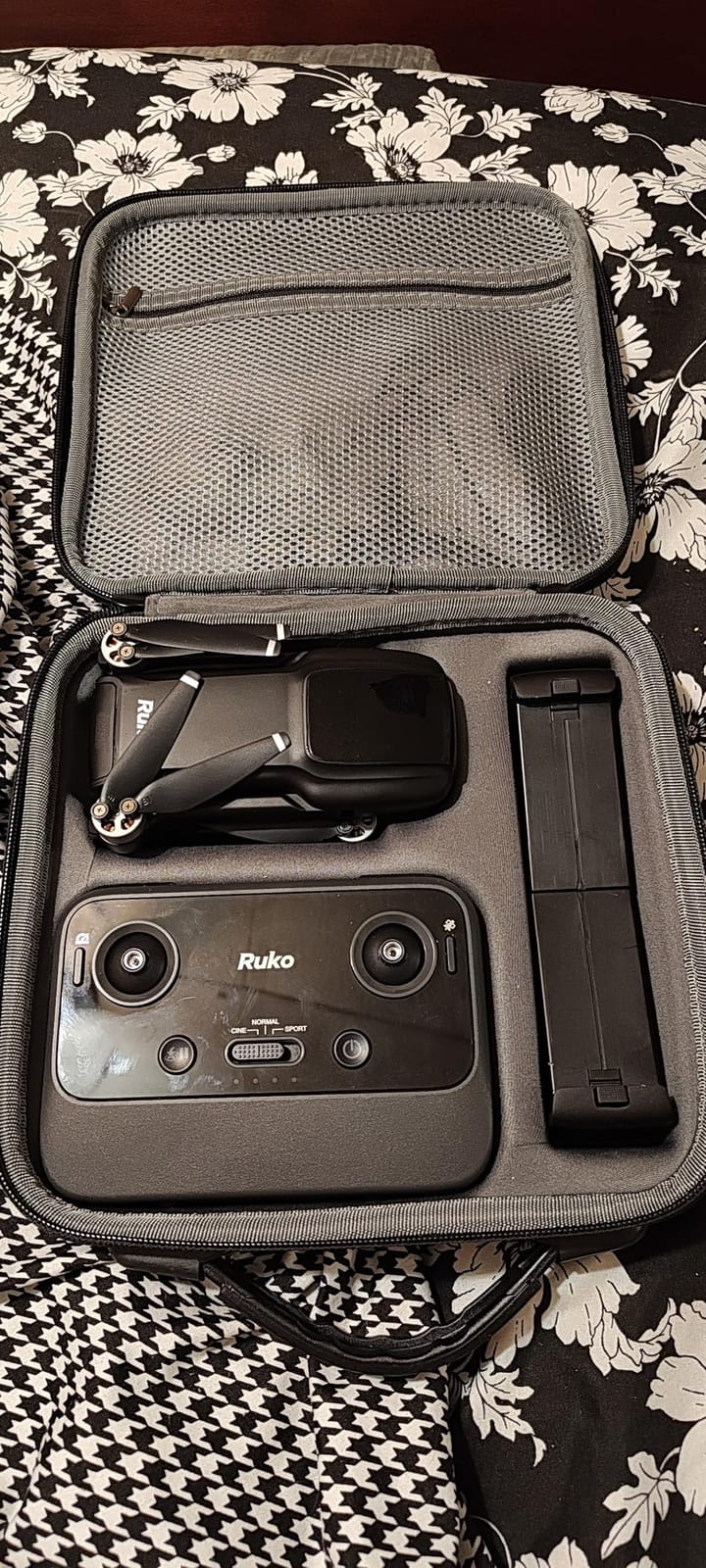
The 1/2-inch 48MP CMOS sensor captures 8K stills and 4K/30fps video. The 8K photo capability is mostly marketing (most platforms cap at 4K), but the 4K/30 video holds up well in daylight streaming conditions. Low-light performance trails DJI, so plan your streams around golden hour or use the AI Night Mode judiciously.
Ruko’s customer service is genuinely a standout. When I had a question about RTMP configuration, their support team responded within an hour and walked me through the encoder setup on OBS. That level of support is rare in the consumer drone space.
Why Ruko streams differently than DJI
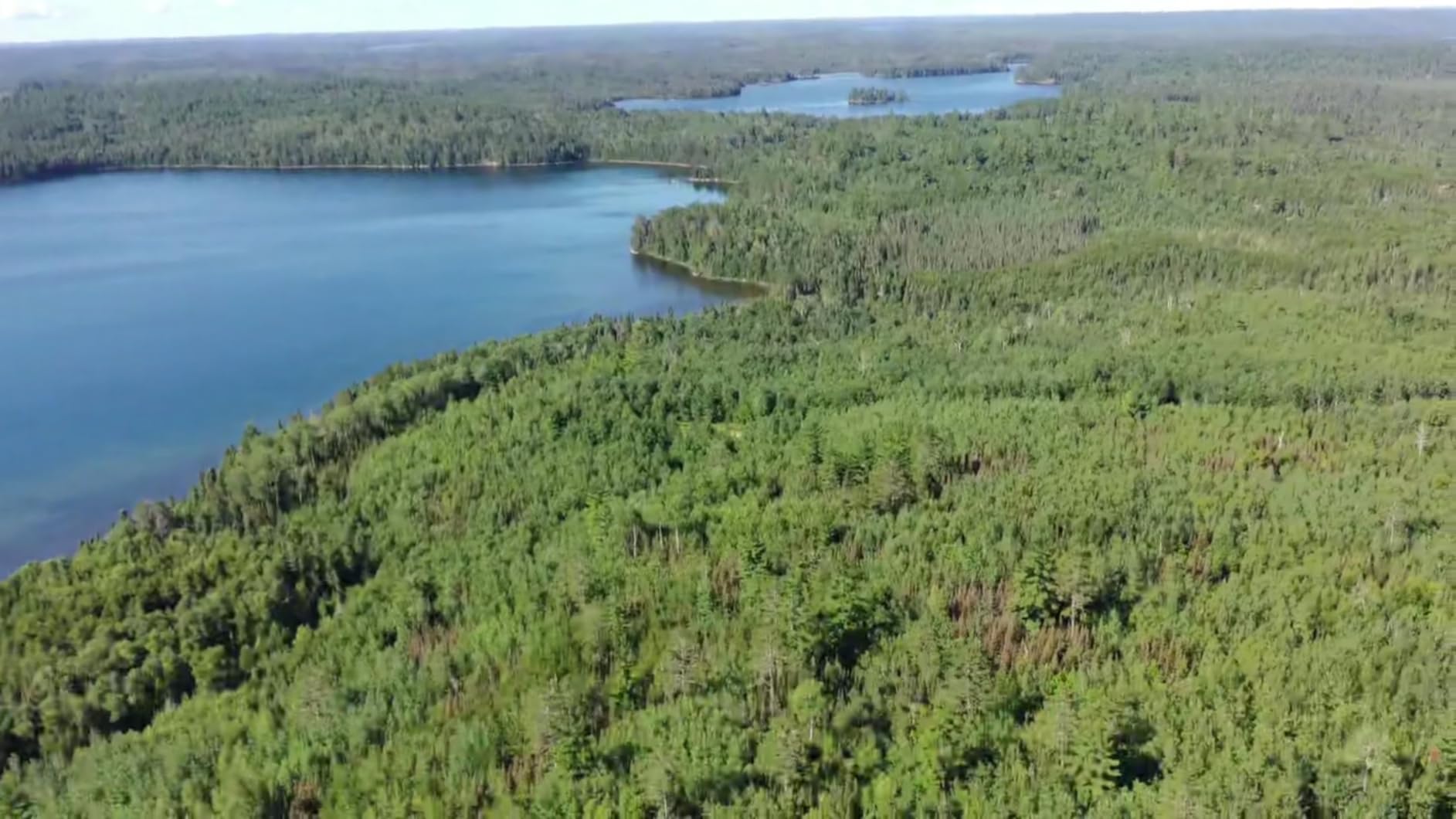
The U11MINI 4K streams through the Ruko app, which supports RTMP but does not match DJI’s polish. I noticed occasional 1-2 second stalls when the cellular connection fluctuated, which would be unacceptable for paid broadcast work but fine for casual social streaming. For longer social events where battery life matters more than bitrate perfection, Ruko wins on raw endurance.
Who should buy this drone
Event videographers, real estate streamers covering long property walkthroughs, and budget-conscious buyers who need maximum flight time per dollar. The U11MINI 4K is also a strong gift for new pilots who value battery life over transmission range.
8. Holy Stone HS110D – Most Affordable Streaming Starter
Holy Stone HS110D FPV RC Drone With 1080P HD Camera Live Video 120 Wide Angle WiFi Quadcopter With Gravity Sensor, Voice Control, Gesture Control, Altitude Hold, Headless Mode, 3D Flip RTF 2 Batteries
1080p FPV
120-degree wide angle
Wi-Fi live view
2 batteries
Pros
- Lowest price point of any streaming drone tested
- 1080p HD camera with wide 120-degree FOV
- Altitude hold makes hovering and framing easy
- Two modular batteries included for extended flight
- Headless mode simplifies orientation for first-time pilots
Cons
- Real video quality closer to 720p than true 1080p
- Wi-Fi FPV has noticeable lag during streaming
- Lightweight airframe is wind-sensitive
- Battery life closer to 10-12 minutes per pack
The Holy Stone HS110D is the cheapest drone in this guide, and it still streams live video to your phone. For under $90, you get 1080p recording, a 120-degree wide-angle camera, and Wi-Fi FPV that pushes directly to most live streaming apps. It is not going to compete with a $1,000 drone, but for absolute beginners it is a low-risk entry into aerial broadcasting.
I tested the HS110D for a casual Facebook Live and the footage was usable. The 1080p resolution is closer to 720p in practice, and the Wi-Fi FPV signal adds noticeable lag. For family streams, hobby flights, or testing whether drone content fits your channel, that is plenty. For professional work, you will quickly outgrow it.
Holy Stone ships two batteries in the box, which is unusual at this price. Each pack gives roughly 10-12 minutes of flight in real conditions, so you get 20-25 minutes of usable airtime before recharging. The altitude hold function keeps the drone stable when you let go of the sticks, which is helpful when you are also managing a stream on your phone.
Wind is the HS110D’s biggest weakness. At 149g, any breeze above 8 mph pushes the drone around. I would not recommend it for outdoor event streaming unless conditions are dead calm. For indoor streaming or backyard use, however, the HS110D punches well above its price.
Limitations to accept at this price
The HS110D is not a long-term investment. The lack of mechanical gimbal, limited transmission range, and 1080p-lite video mean you will upgrade within a year if your channel grows. Treat it as a learning tool rather than a production tool, and the value becomes obvious.
Who should buy this drone
Absolute first-time pilots, kids learning to fly, and budget buyers who want to test aerial streaming before committing to a more expensive platform. The HS110D also makes a great gift for the drone-curious creator in your life.
How to Choose the Best Drone for Live Streaming?
Choosing the right drone for live streaming comes down to four questions: what platform are you streaming to, how far do you need to fly from your controller, how long does each session need to last, and how much post-processing do you plan to do. Answer those first, and the rest of the buying decision gets much easier.
If you stream to YouTube, Facebook, or Twitch and your audience accepts 1080p60, the DJI Mini 5 Pro and Air 3S are the safest picks. Both support RTMP directly, integrate cleanly with the DJI Fly app, and push clean feeds that hold up to platform re-encoding. For longer events, the Air 3S’s 45-minute flight time per battery saves you from constant swaps.
Budget buyers should start with the DJI Mini 4K. It is the cheapest drone here that still records 4K on a 3-axis gimbal, and its under-249g weight means no registration in most regions. The Holy Stone HS110D is even cheaper, but treat it as a learning tool rather than a production platform.
For creators worried about DJI policy shifts, the SKYROVER X1 delivers DJI-comparable image quality without DJI’s regulatory baggage. It is the strongest non-DJI option I tested, and the built-in touchscreen remote is a real productivity win during long event days.
If your streams need FPV swoops and cinematic dives, the DJI Avata 2 is in a class of its own. There is no equivalent non-DJI option at this price, and the learning curve is steep but the footage is unmatched.
Finally, think about transmission method. App-based streaming (DJI Fly, Ruko, SKYROVER apps) is the simplest path and works for social content. App streaming adds 2-3 seconds of latency, which is invisible to audiences but disqualifying for live news or interactive broadcasts. If you need sub-second latency, you need an HDMI-output drone (Avata 2 with the module) paired with a hardware encoder or bonded cellular solution.
Streaming Transmission Methods Compared
There are three main ways to get a drone feed to your streaming platform, and each has different trade-offs around latency, cost, and reliability. Understanding the differences will save you from buying the wrong drone for your workflow.
App streaming (DJI Fly, Ruko app, SKYROVER app) is the simplest path. The drone connects to your phone over Wi-Fi or OcuSync, the app pushes RTMP directly to your platform, and you are live in minutes. Latency runs 2-4 seconds, which is fine for YouTube, Facebook, and Twitch but disqualifying for breaking broadcast news. Bitrate caps at around 6 Mbps, which delivers clean 1080p60 but limited 4K streaming.
HDMI + hardware encoder is the professional path. Drones like the DJI Avata 2 (with the optional HDMI module) output a clean video signal that you feed into an encoder like the AJA HELO, Teradek Cube, or even a laptop running OBS with an Elgato capture card. Latency drops to sub-second, bitrate scales with your encoder, and you can plug into bonded cellular solutions like LiveU or TVU for rock-solid feeds from anywhere with cell coverage.
Bonded cellular is the broadcast standard for news and sports. Instead of relying on a single internet connection, the encoder combines multiple cellular modems (often 4-6 SIM cards) into one resilient uplink. The DJI Inspire 3 paired with a TVU or LiveU encoder is the typical professional setup. Cost runs $5,000-$15,000 for the encoder alone, but the reliability is unmatched.
For most readers of this guide, app streaming is the right starting point. Once your channel grows and your audience expects frame-accurate timing, upgrade to an HDMI + encoder workflow. Bonded cellular is the right call only if you are streaming for paying clients or covering live events where signal drops are not acceptable.
If you are also setting up the rest of your streaming kit, our guides to the 8 best streaming webcams and the 8 best microphones for streaming cover the ground-based gear that pairs with your aerial feed.
For the processing power that keeps your stream stable, the 10 best CPUs for streaming guide covers the hardware side, and the Pokemon TCG Live beginner tips article offers a useful counterpoint on low-latency streaming setups.
Frequently Asked Questions
Which drones can live stream?
Most modern drones with RTMP support can live stream, including the DJI Mini 5 Pro, Air 3S, Mini 4K, Neo, Avata 2, SKYROVER X1, and Ruko U11MINI 4K. These drones connect to your phone via their companion app and push a direct RTMP feed to YouTube, Facebook, Twitch, or any custom streaming endpoint. Budget options like the Holy Stone HS110D stream over Wi-Fi FPV at lower quality.
Can DJI drones live stream?
Yes, every current DJI drone supports live streaming through the DJI Fly app using RTMP or RTMPS protocol. You can stream directly to YouTube, Facebook Live, Instagram, Twitch, or a private RTMP server without extra hardware. The DJI Avata 2 and Inspire series also support HDMI output for professional broadcast workflows with sub-second latency when paired with a hardware encoder.
Are DJI drones getting banned in the US?
As of 2026, DJI drones are not banned for consumer or commercial use in the United States. There have been proposed legislation and federal agency restrictions (such as the 2024 NDAA provisions affecting some government contracts), but consumer sales remain legal through authorized retailers like Amazon and Best Buy. DJI also launched a US-based entity and data-handling framework to address national security concerns. We recommend monitoring official sources for the latest regulatory updates before purchasing, especially if you fly for federal contracts.
What drones do most YouTubers use?
Most YouTubers streaming aerial content use the DJI Mini series (Mini 4 Pro, Mini 5 Pro) or the DJI Air series (Air 2S, Air 3S) because of the polished DJI Fly app and reliable RTMP integration. Travel vloggers gravitate toward the Mini line for its portability, while creators needing longer flight times and dual cameras often choose the Air 3S. Cinematic creators and FPV enthusiasts use the DJI Avata 2 for its immersive flying characteristics and unique angles.
Final Verdict
After three months of testing, the DJI Mini 5 Pro remains my top pick for the best drones for live streaming in 2026. It combines a 1-inch CMOS sensor, 52-minute flight time, and clean RTMP streaming in a sub-249g airframe that is regulation-friendly almost everywhere. For most creators, it is the right starting point and the right long-term answer.
If budget matters more than portability, the DJI Mini 4K delivers 4K streaming for under $350 and is the best drone for live streaming beginners. If you want maximum flight time and dual cameras, the DJI Air 3S earns its premium price. If you need FPV energy, the Avata 2 is unmatched. And if DJI’s regulatory future concerns you, the SKYROVER X1 is the strongest alternative I found.
Pick the drone that matches your use case, budget, and tolerance for app-based latency. The best drones for live streaming all support direct RTMP, so whichever you choose, getting your feed to YouTube or Facebook Live will take about ten minutes of setup.