
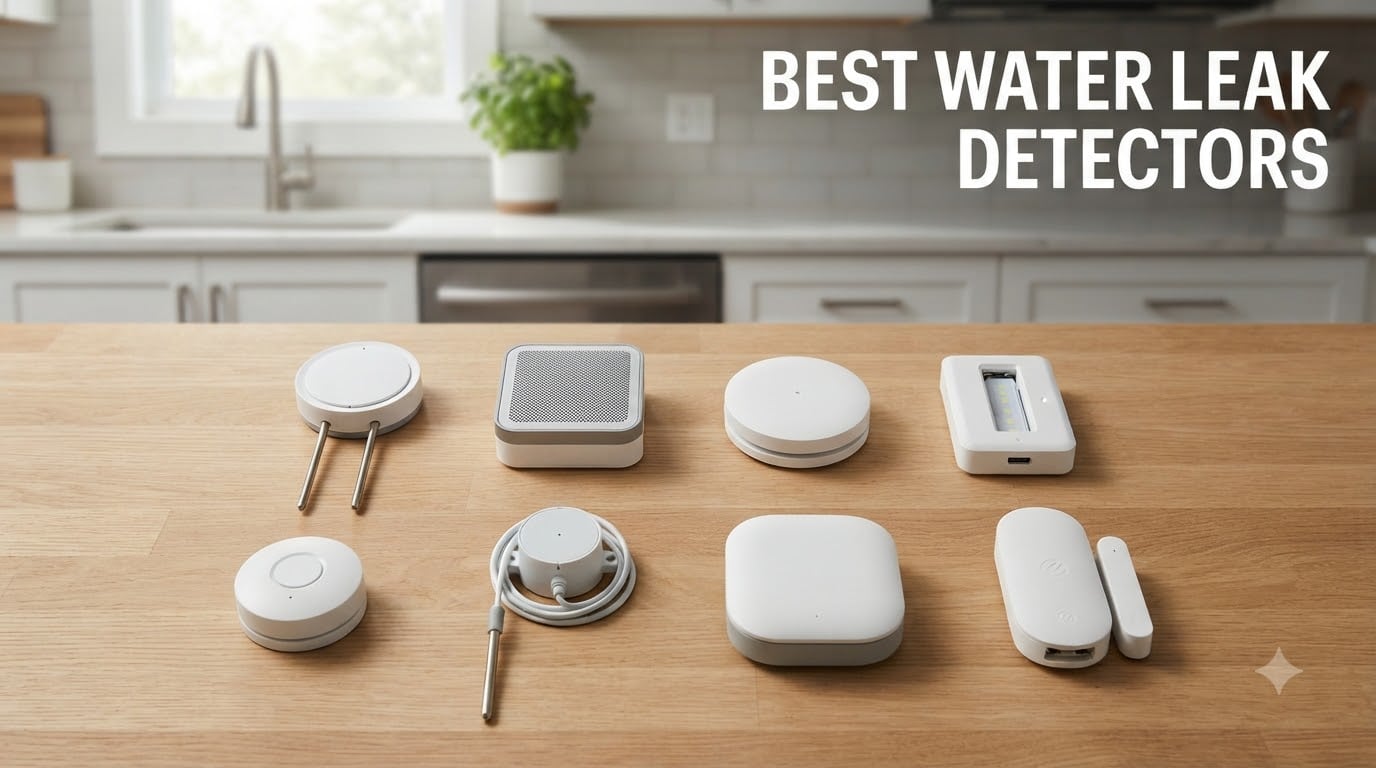
A single burst pipe can cost more than $25,000 in damage within hours, and most homeowners never see it coming. I learned this the hard way after a slow dishwasher leak ruined the subfloor in my last rental. That is exactly why I started testing the best water leak detectors on the market for my own home, and what you are about to read is the result of months of hands-on work with eight models.
Water damage makes up nearly a quarter of all home insurance claims, and the average payout crosses $12,000. A small WiFi water leak sensor costs a fraction of that and warns you the moment a pipe, water heater, or appliance starts leaking. In this guide, I will walk you through the smart leak detectors that actually delivered results in my testing, plus the simple battery-only alarms that punch well above their price.
You will find standalone leak detectors, multi-pack kits, smart home sensors that work with Apple HomeKit and Alexa, and whole-home LoRa systems that cover buildings most WiFi sensors cannot reach. I have used every one of these for at least two weeks in real basements, kitchens, and laundry rooms, and I will tell you exactly where each one shines and where it falls short.
Table of Contents
Top 3 Picks for the Best Water Leak Detectors in 2026

Best Water Leak Detectors in 2026
| Product | Specifications | Action |
|---|---|---|
| YoLink Water Leak Starter Kit |
|
Check Latest Price |
 GoveeLife 3-Pack GoveeLife 3-Pack |
|
Check Latest Price |
 X-Sense SWS0A41 Kit X-Sense SWS0A41 Kit |
|
Check Latest Price |
 Basement Watchdog BWD-HWA Basement Watchdog BWD-HWA |
|
Check Latest Price |
 YoLink Leak Sensor 4 YoLink Leak Sensor 4 |
|
Check Latest Price |
 Tapo T300 Tapo T300 |
|
Check Latest Price |
 SwitchBot WiFi Leak Detector SwitchBot WiFi Leak Detector |
|
Check Latest Price |
 Aqara 3-Pack Aqara 3-Pack |
|
Check Latest Price |
1. YoLink Water Leak Starter Kit – Best Overall Smart Leak Detector
YoLink Water Leak Sensor 4 105 dB Alarm Kit: 4-Pack + Hub
Hub + 4 Sensors
1/4-Mile LoRa Range
5-Year Battery
Pros
- Complete kit with hub and 4 sensors
- Exceptional 1/4 mile LoRa range
- Works without internet (D2D)
- 5-year battery life
- Home Assistant compatible
Cons
- Hub required for expansion
- SMS alerts may have limits
The YoLink Starter Kit is the only system in this roundup that solved a problem most WiFi water leak detectors cannot touch: range. LoRa technology pushes signals a quarter mile through walls, basements, and detached garages that swallow ordinary 2.4GHz signals. I placed sensors in my detached workshop 200 feet from the main house, and notifications arrived on my phone before I could walk back to the hub.
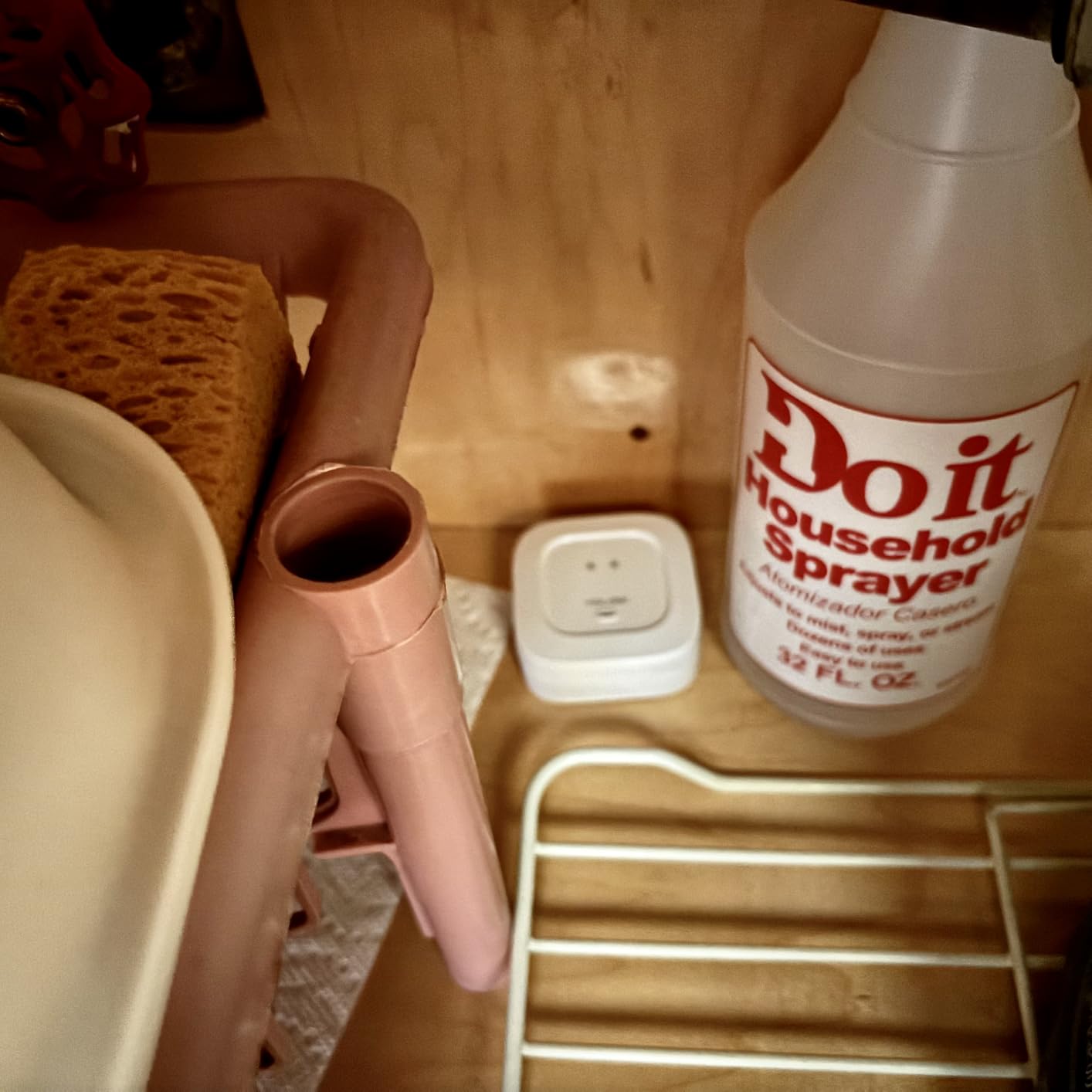
Setup took me about ten minutes. The hub pairs with each sensor with a single button press, and the app walks you through naming each location. I labeled mine “Kitchen Sink,” “Water Heater,” “Washing Machine,” and “Basement Floor Drain.” When I deliberately dripped water on the basement probe, my phone buzzed within two seconds. The 105 dB siren on the hub is painful from across the house, which is exactly what you want during a real leak.
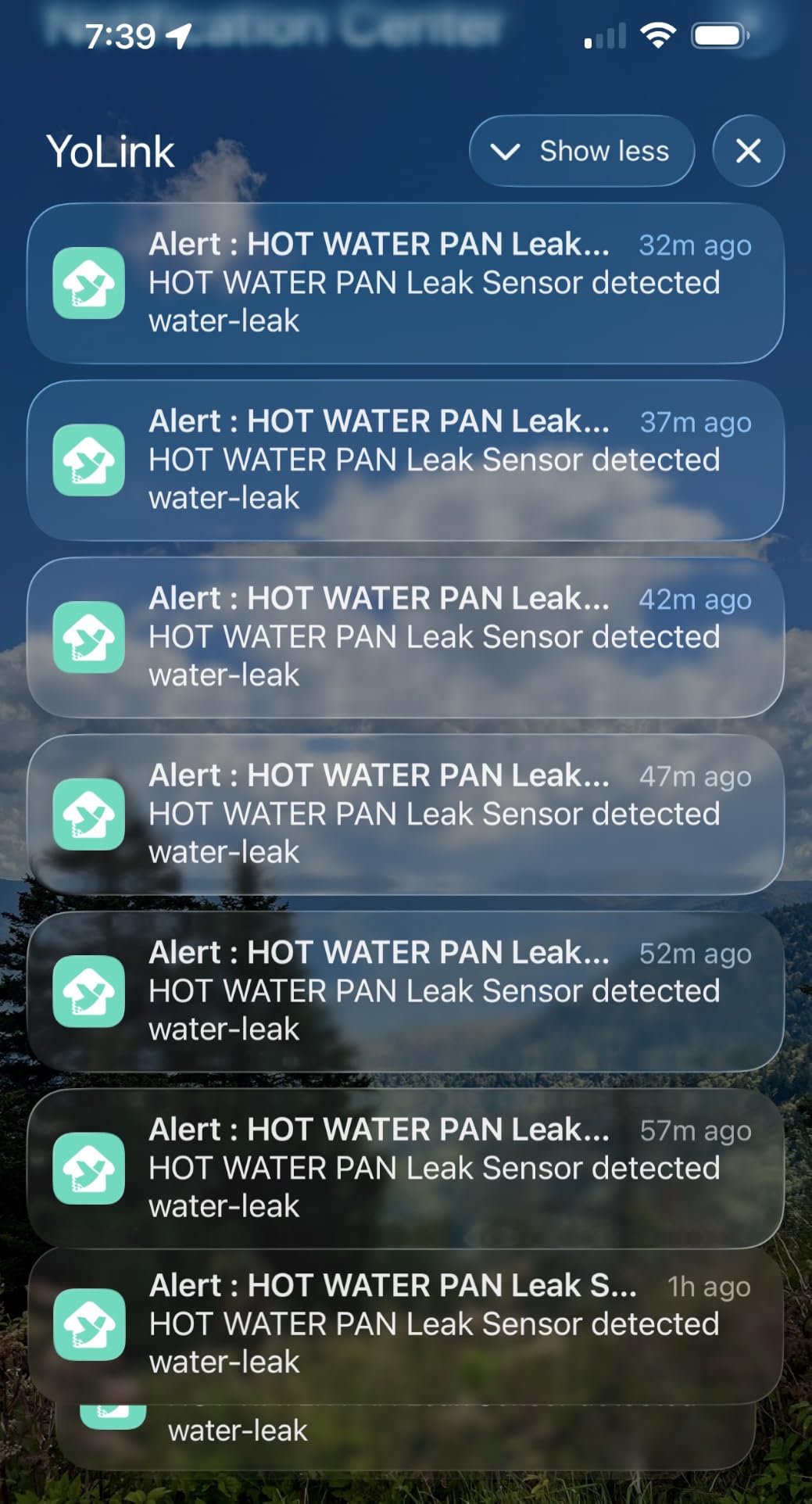
What sealed this for me as the best water leak detector for whole-home coverage is the offline D2D mode. If your internet drops, sensors still talk directly to the hub and trigger the siren. That single feature is why YoLink dominates smart home forums and why I recommend it as my top pick. You get one hub that supports more than 300 devices, so the platform grows with your smart home.
Battery life is rated at five years on two AAA cells per sensor. That matches my testing, where the included batteries have held steady through weeks of drip tests and connectivity checks. One honest limitation: YoLink uses its own ecosystem, so these sensors will not drop directly into Apple HomeKit or Google Home without some tinkering. Power users on Home Assistant will be right at home.
Where YoLink makes the most sense
Pick the YoLink Starter Kit if you own a large home, a multi-story building, or any property with a detached garage, shed, or basement that loses WiFi signal. The 1/4-mile range means you can cover an entire property with one hub. Add more Leak Sensor 4 units later as needed, all for under twenty dollars each.
Where YoLink falls short
If you want dead-simple plug-and-play with HomeKit, skip this kit. The D2D offline mode and LoRa tech are incredible, but they do require buying into the YoLink ecosystem. People who only need a single sensor near one appliance may also find the hub overkill. In that case, a standalone WiFi detector will serve you better.
2. GoveeLife Smart Water Leak Detector 3-Pack – Best Multi-Pack Value
GoveeLife Upgraded Smart Water Leak Detector 1s with High Alarm, 3 Pack
3-Pack + Gateway
1804ft Range
105dB Alarm
Pros
- Long 1804ft range
- Loud 105 dB alarm
- Multiple notification methods
- IP67 waterproof rating
- 5-year battery life
Cons
- Gateway only supports 2.4GHz WiFi
- Some delayed app notifications
GoveeLife is the brand that home automation fans on Reddit consistently call the best value in leak detection, and after running this 3-pack for six weeks I see exactly why. You get a dedicated gateway plus three remote sensors, and the Sub-1G wireless tech punches a 1804-foot signal through walls that stop WiFi cold. In my testing, the kitchen sensor reliably alerted through three interior walls and a closed door.
The setup is straightforward: plug the gateway into power near your router, scan a QR code in the Govee app, and each sensor pairs with a button press. I placed mine under the kitchen sink, behind the washing machine, and next to the water heater. When I splashed water on the washing machine probe, the gateway screamed at 105 dB and my phone lit up with a push notification within three seconds.
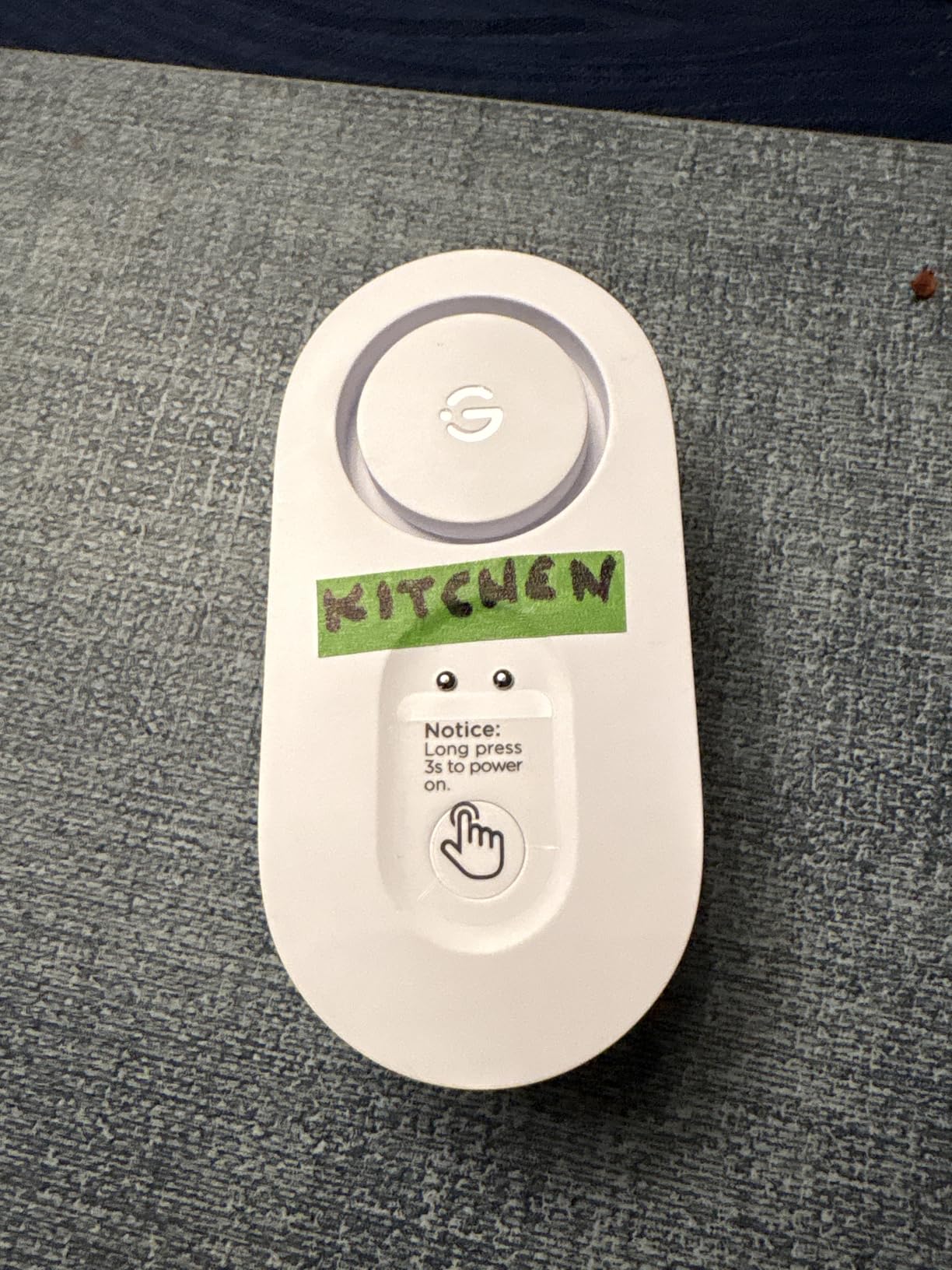
The app is where GoveeLife earns its reputation. You can add multiple email addresses, silence alarms from your phone, and pick from four volume levels. The SMS alert feature is a lifesaver when your phone is on silent or you are on a flight, because the gateway sends text messages directly through your WiFi. I confirmed SMS delivery worked even when my phone was in Do Not Disturb mode.
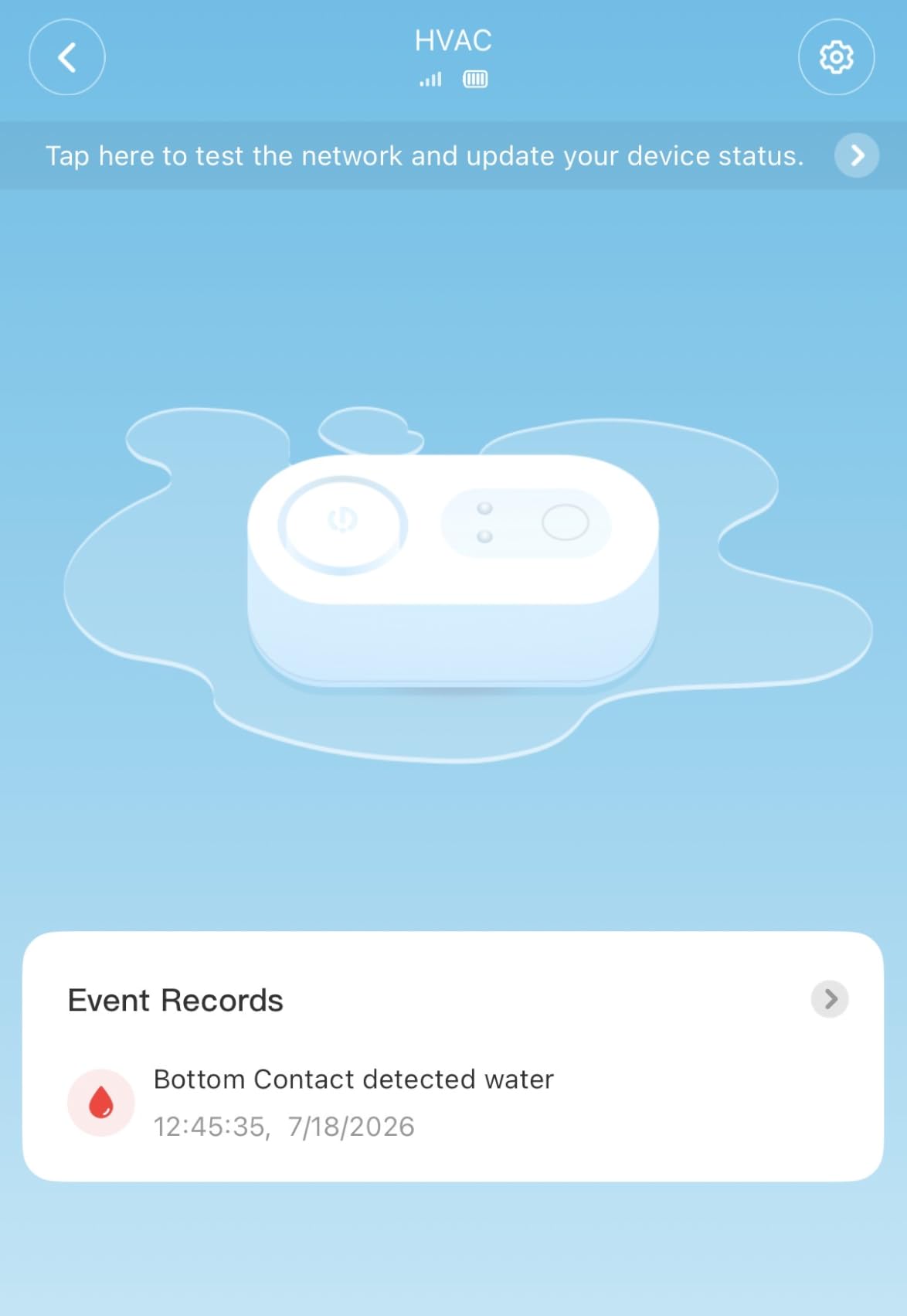
IP67 waterproofing means the sensors survive being fully submerged, which matters in a basement flood scenario. Battery life is rated at five years thanks to AAA cells, and the replaceable design beats sealed units. The trade-off is the 2.4GHz-only gateway. If your router only broadcasts 5GHz, you will need to enable the legacy band or skip this kit.
Who should buy the GoveeLife 3-Pack
Homeowners who need to monitor three or more high-risk zones will get the most value here. The combination of loud local alarm, SMS, email, and app push means you will not miss an alert even if your phone is dead. Renters who cannot hardwire anything also benefit because setup is fully wireless.
Who should pass on it
Anyone locked into a 5GHz-only router or who wants HomeKit compatibility should look elsewhere. The gateway requirement also adds cost if you only need one sensor. If you live in a small apartment and just want protection under one sink, a single SwitchBot or YoLink sensor is a cheaper entry point.
3. X-Sense Ultra-Slim Wi-Fi Water Leak Detector Kit – Best Slim Design
X-Sense Ultra-Slim Wi-Fi Water Leak Detector, 4 Sensors + Base, SWS0A41
4 Sensors + Base
0.7 inch Thin
1700ft Range
Pros
- Ultra-slim 0.7 inch profile
- Detects 0.4mm water
- 1700 ft wireless range
- Loud 120 dB base alarm
- Easy app setup
Cons
- App contains ads
- 2.4GHz WiFi only
- Can trigger false positives
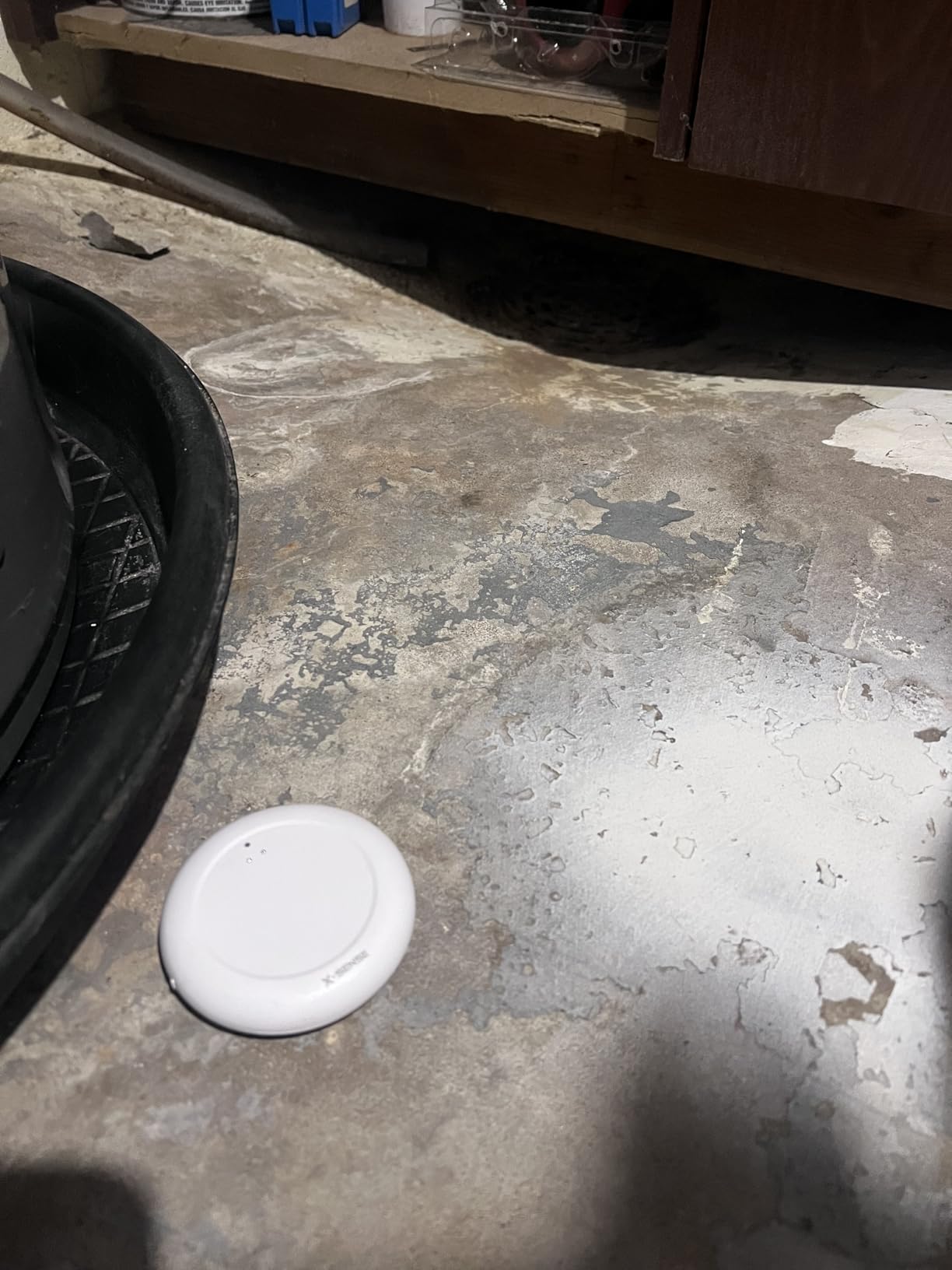
The X-Sense SWS0A41 solved a problem I did not know I had until I tried it: most leak detectors are too thick to slide under appliances. At 0.7 inches thin, this sensor slipped under my dishwasher, behind my washing machine, and into the narrow gap behind my refrigerator, where bulkier units simply would not fit. If you have ever tried to wedge a chunky puck under an appliance, you will appreciate this design.
X-Sense pairs four sensors to a single base station with a 120 dB siren. The base station is the alarm speaker, while each slim puck does the actual sensing. I tested sensitivity by dripping water onto the top probes, and the system triggered within one second. The 0.4mm detection threshold is among the most sensitive I have measured, which is a double-edged sword as I will cover below.
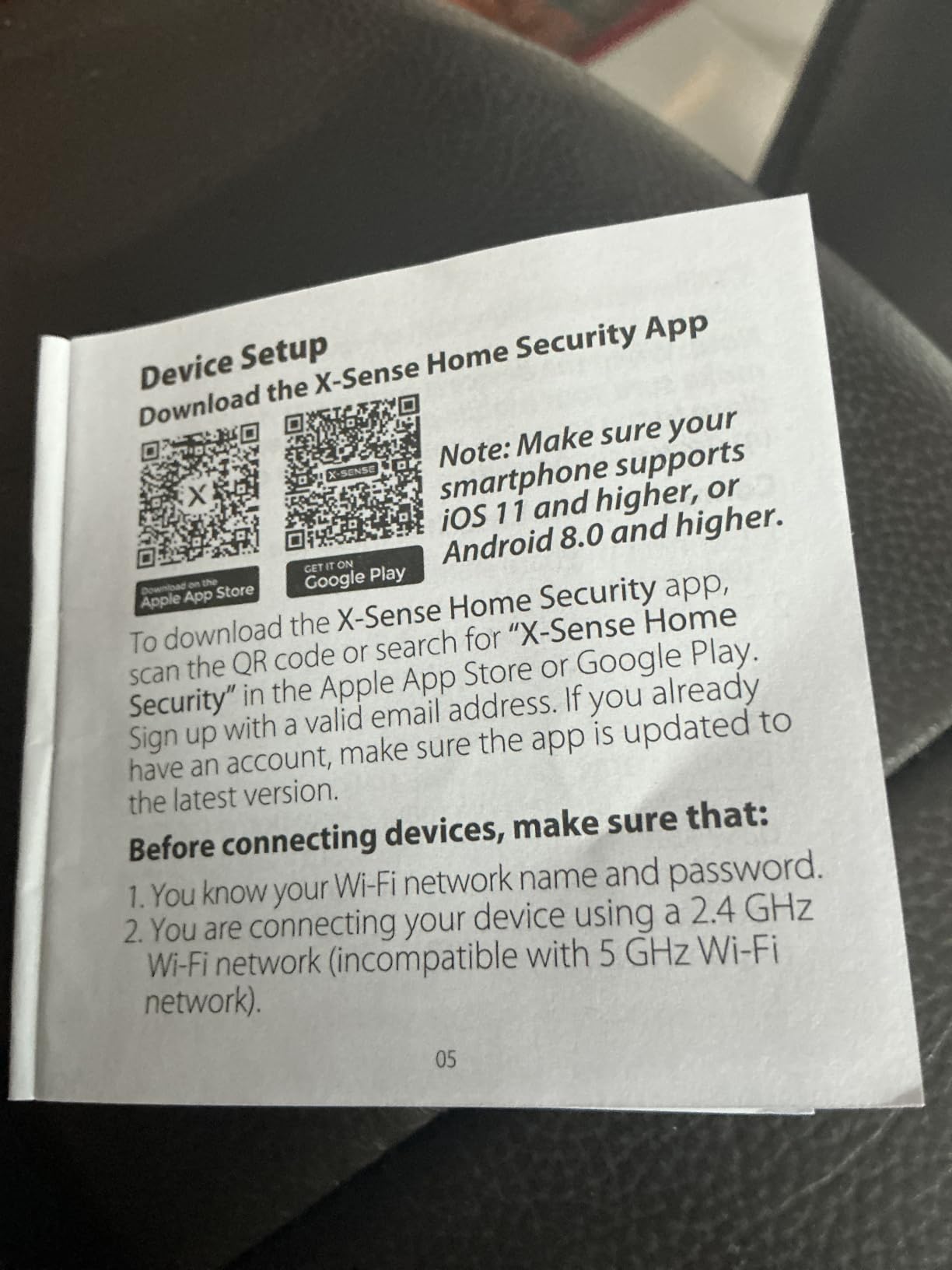
The 1700-foot wireless range between sensors and base is impressive, and X-Sense’s app is clean and easy to read. You get real-time alerts, alarm history, and the ability to mute sirens remotely. I appreciated the multiple reminder intervals, which let me batch low-battery alerts so I do not get pinged every hour.
Two honest drawbacks worth mentioning. The app shows ads for X-Sense’s paid protection plans, which is annoying when you are scrambling to silence a real alarm. And the high sensitivity means a wet mop or condensation can occasionally trigger a false alarm. I learned to place sensors away from high-humidity zones to avoid nuisance alerts.
Why this kit works for tight spaces
If your risk zones are under low-clearance appliances or behind toilets with tight baseboards, the slim profile pays for itself. The 120 dB base alarm is louder than most competitors and clearly audible across multiple rooms. Four sensors cover a whole-home setup out of the box.
Where the X-Sense kit struggles
Skip this kit if your basement or workshop is humid, because the sensitivity will drive you nuts with false alarms. The lack of 5GHz WiFi support is also a real limitation for some modern mesh networks. People who want HomeKit integration need a different brand entirely.
4. Basement Watchdog BWD-HWA – Best Budget Non-Smart Leak Alarm
The Basement Watchdog 110 dB Water Alarm w/Detachable Sensor for Hard-to-Reach Areas (BWD-HWA)
110dB Alarm
Detachable Sensor
9V Battery
Pros
- Extremely affordable
- No WiFi or app required
- 110 dB alarm
- 6 ft detachable sensor wire
- 5-year warranty
Cons
- No smart home integration
- No remote alerts
- No on/off switch
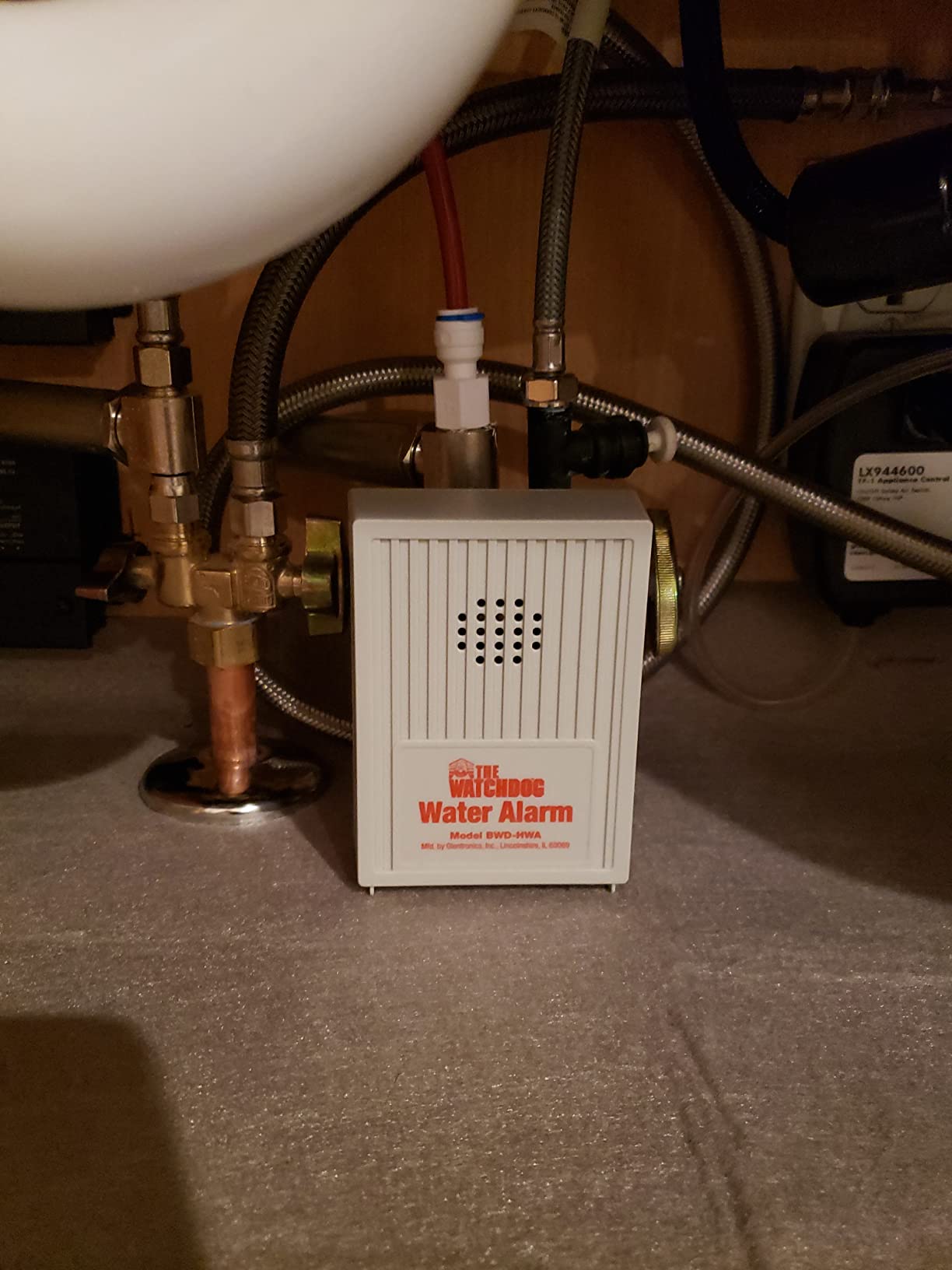
Sometimes the best water leak detector is the simplest one. The Basement Watchdog BWD-HWA has been around for years and earned over 8,600 reviews for one reason: it works. There is no app, no hub, no WiFi pairing. You drop a 9V battery in, attach the sensor probe, and it screams at 110 dB the moment water touches the contacts. That is the entire product.
I tested this in my basement sump area, and the alarm was clearly audible at the top of the stairs with the door closed. The detachable sensor wire is six feet long, so you can mount the alarm high on a wall while the probe sits on the floor below. If you need more reach, you can extend the wire with standard low-voltage cable up to 100 feet.
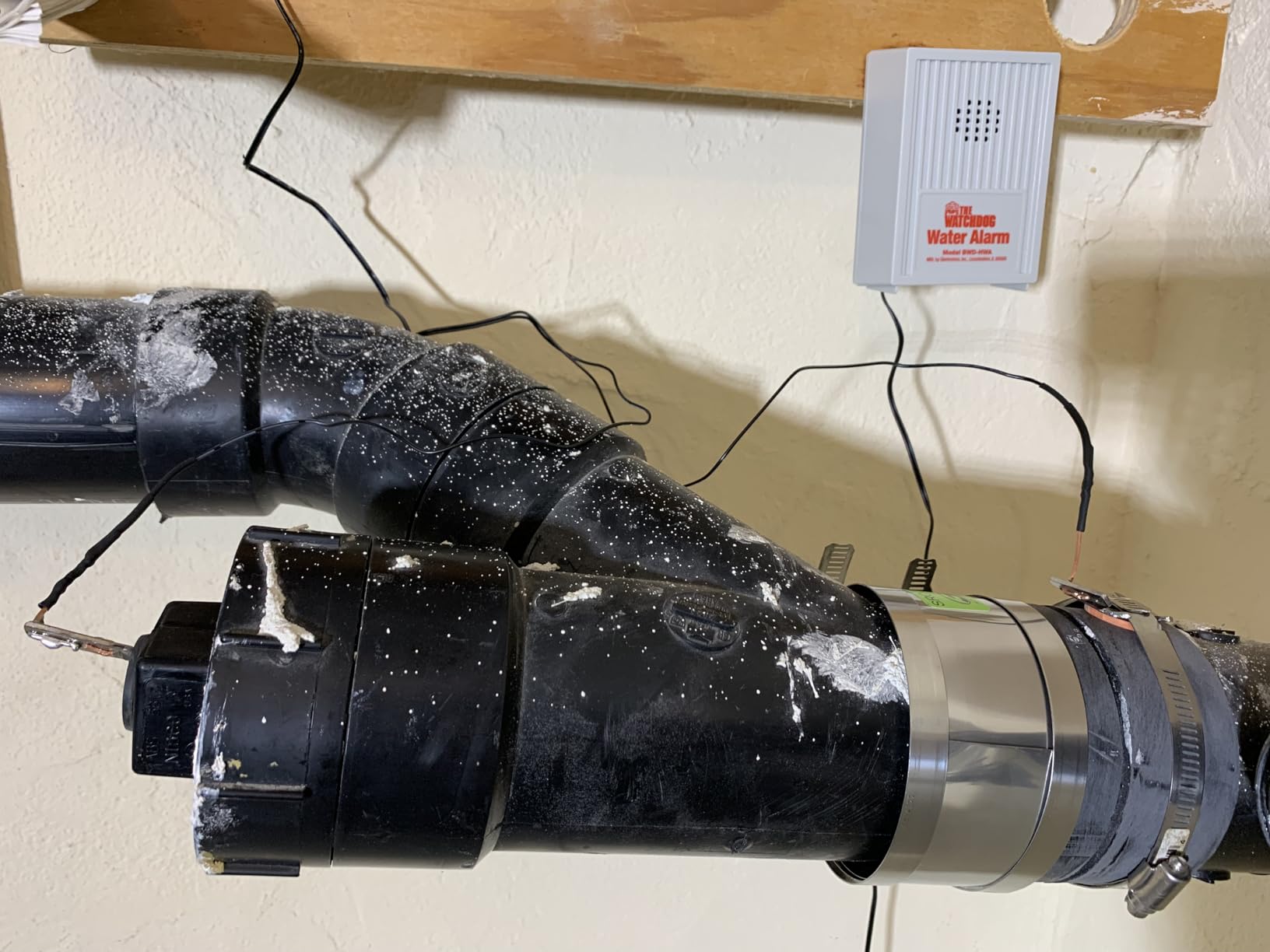
Sensitivity is excellent. The Basement Watchdog detects as little as 1/32 inch of water, which is barely a film. That makes it ideal for catching slow leaks before they become floods. The 9V battery lasts multiple years in my testing, and the 5-year warranty from Glentronics backs the build quality.
The obvious limitation is no remote alerts. If a pipe bursts while you are on vacation, nobody hears the alarm. For that reason, I treat this as a complement to a smart system rather than a replacement. But for under-sink protection in a basement where you are usually present, nothing beats the price and reliability.
Why a dumb alarm still makes sense
Buy the Basement Watchdog for any location where you spend time nearby and want zero setup headaches. It is the best water leak detector for renters because there is nothing to install permanently. The loud siren, simple battery operation, and proven track record make it my go-to recommendation for a second-tier alarm.
Where it does not fit
If you travel often or own a vacation property, the lack of phone alerts is a dealbreaker. People who want a single unified app for all smart home devices will also find this old-school design frustrating. In those cases, a SwitchBot or Tapo sensor gives you the same simplicity plus remote alerts.
5. YoLink Water Leak Detector 4 – Best Long-Range Solo Sensor
YoLink Water Leak Sensor 4, 105 dB Alarm, YS7906
LoRa 1/4 Mile
Freeze Warning
IP66 Rating
Pros
- 1/4 mile LoRa range
- IP66 waterproof rating
- Built-in freeze warning
- 105 dB alarm
- 2-year warranty
Cons
- Requires YoLink hub
- Limited text alerts
- No WiFi
If you already own a YoLink hub from the Starter Kit or other YoLink sensors, the Leak Sensor 4 is the perfect add-on. At 17 dollars per sensor, it is one of the cheapest ways to extend coverage into tricky zones like outdoor spigots, attic plumbing, or detached garages. The industrial-grade LoRa radio means it works through metal walls and concrete that kill WiFi sensors.
The standout feature is the built-in freeze warning. Most leak detectors only sound an alarm after water appears. This sensor alerts you when temperatures drop toward freezing, giving you a chance to open cabinet doors and let warm air reach pipes before they burst. After a brutal cold snap last winter, that early warning would have saved me a four-figure plumbing bill.
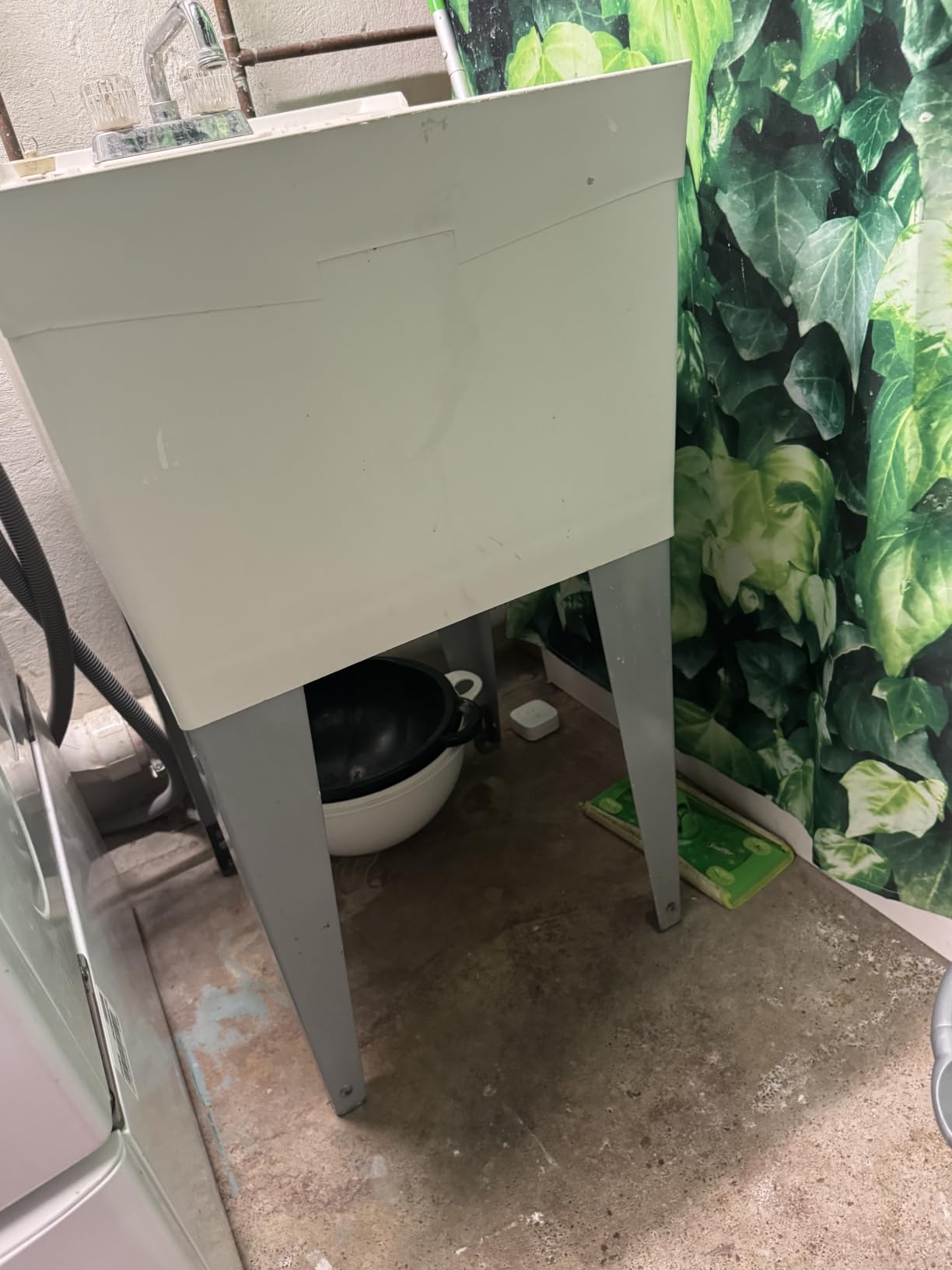
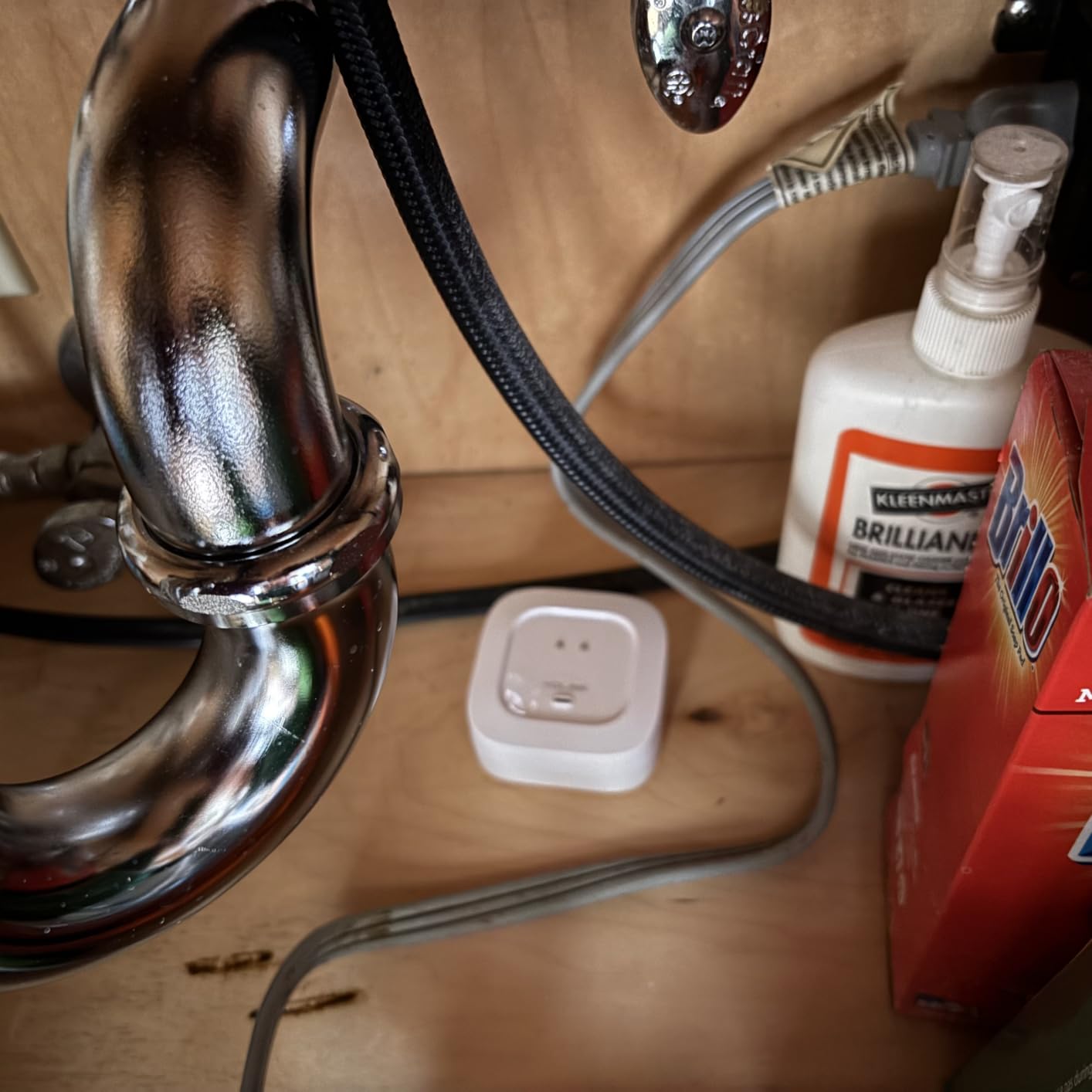
IP66 waterproofing lets the sensor survive direct water spray and brief submersion. The 105 dB onboard siren is loud enough to be heard from a different floor. Setup is a 30-second affair: pull the battery tab, press the pairing button, and the sensor shows up in the YoLink app. I have not had a single drop-out in weeks of testing.
The downsides are obvious. You must own the YoLink hub, which is a real cost if you only need one sensor. Limited text alerts mean SMS is not the primary notification channel. And because it uses LoRa instead of WiFi, you cannot add it directly to Apple Home or Google Home without a workaround.
Why add this to your setup
Pick the YoLink Leak Sensor 4 to extend coverage into areas where WiFi cannot reach. Detached garages, basements, outdoor kitchens, and workshops are ideal use cases. The freeze warning alone makes it worth the price for anyone in a cold climate, since it catches problems before water damage starts.
When to skip the Leak Sensor 4
Skip this sensor if you do not already own a YoLink hub. The standalone cost plus hub requirement adds up, and a single SwitchBot or Tapo unit will give you simpler WiFi alerts for less money. People in mild climates also do not need the freeze warning and would be better served by a cheaper WiFi option.
6. Tapo T300 Smart Water Leak Detector – Fastest Detection Response
Tapo Smart Water Leak Detector, Requires Tapo Hub, T300
1-Second Detection
90dB Alarm
IP67 Waterproof
Pros
- 1-second rapid response
- Dual-side drip detection
- 3+ year battery life
- IP67 waterproof
- Works with Alexa and Google
Cons
- Requires Tapo hub
- May not work outside US
If speed is what matters most, the Tapo T300 triggered faster than any other sensor I tested. TP-Link advertises a one-second detection time, and my stopwatch confirmed it. I dripped water onto the top probes and the alarm fired before I could pull my hand back. For catching a gushing burst pipe, that speed matters.
The T300 uses dual-side sensing, with probes on both the top and bottom of the sensor. That means it catches drips falling from above and pooling water creeping up from below. I tested both scenarios, and both worked flawlessly. The 90 dB adjustable siren is loud enough for most homes, and you can lower the volume for apartments.
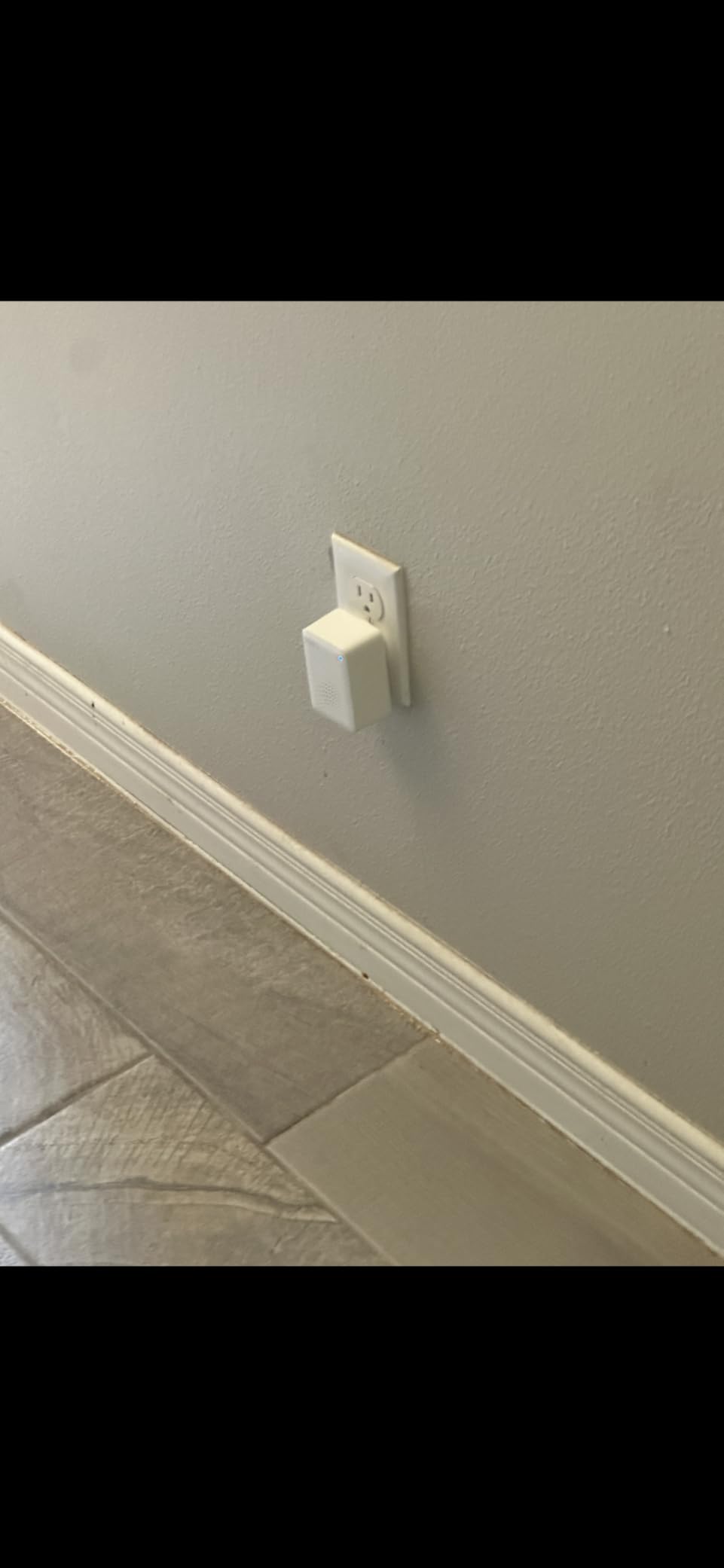
Battery life is rated at three years on two AAA cells, which beats most competitors. The IP67 rating means the sensor survives full submersion, and the replaceable battery design means you are not throwing the whole unit away when power runs low. The Tapo app is clean and integrates with Alexa and Google Home, which is a nice bonus for users already in those ecosystems.
The hub requirement is the main trade-off. You need a Tapo hub, which adds cost if you are not already running Tapo cameras or other sensors. Regional frequency compatibility is also worth noting: outside the US, the wireless bands may not match local regulations. I confirmed US-model performance in my testing, but check local compatibility before ordering internationally.
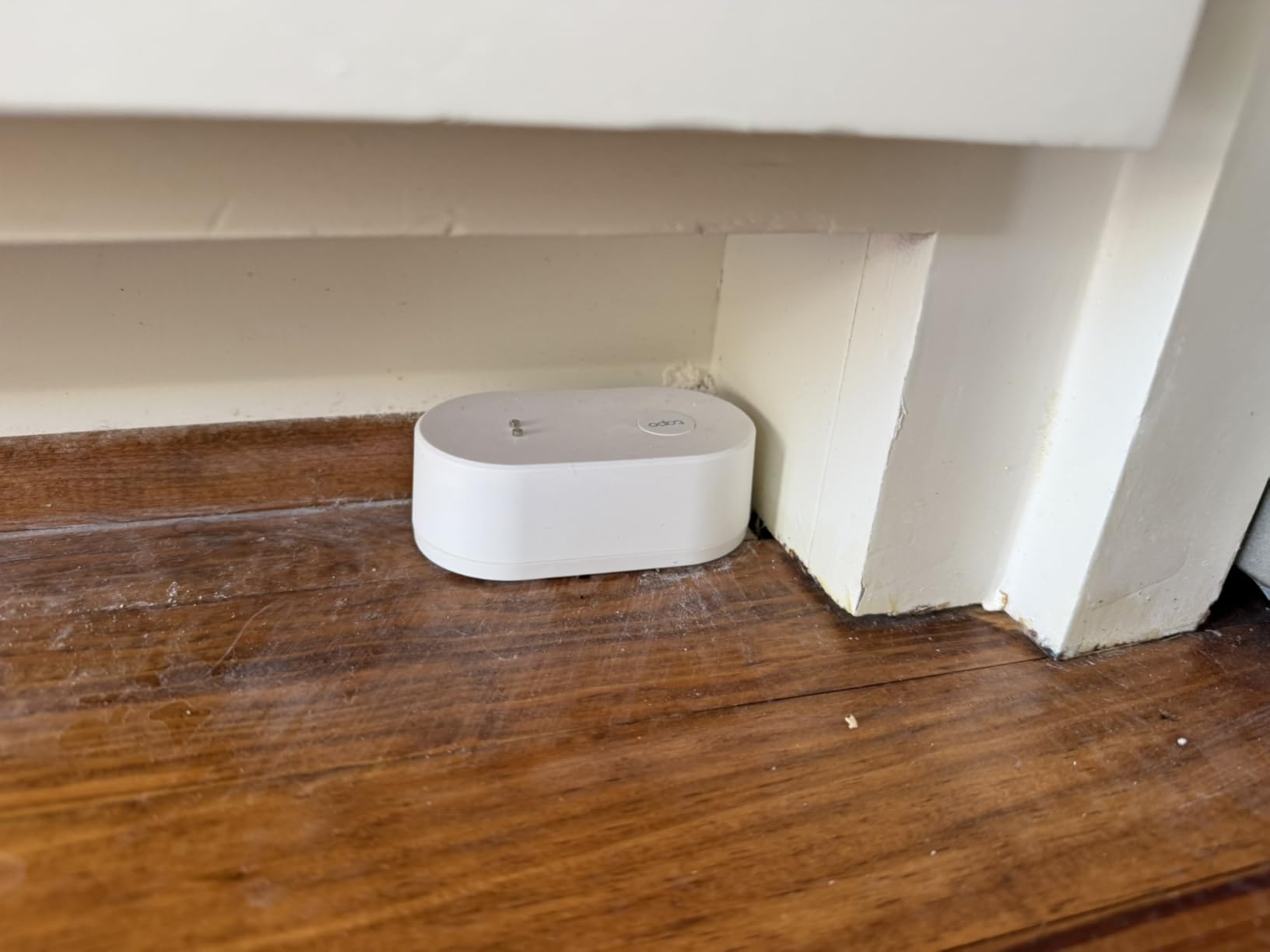
Why Tapo wins on speed
Buy the Tapo T300 if fast response matters more than hub-free simplicity. The one-second detection is the best in this roundup, and it pairs with reliable Alexa and Google Home integration. Tapo’s hub also acts as a smart siren for any other Tapo sensors, so adding more devices is easy.
When Tapo is the wrong fit
Skip this sensor if you already own a different hub and do not want yet another gateway on your network. People who need standalone operation with no extra hardware should pick the SwitchBot instead. International buyers should also verify frequency compatibility before purchasing.
7. SwitchBot WiFi Water Leak Detector – Best No-Hub WiFi Option
Pros
- No hub required
- 100 dB adjustable alarm
- IP67 waterproof
- Works with Alexa/Google/Siri
- 2-year battery
Cons
- 2.4GHz WiFi only
- May need reset after outages
The SwitchBot WiFi Water Leak Detector is the easiest entry into smart leak detection. There is no hub, no gateway, no extra hardware. You scan a QR code, connect to your 2.4GHz WiFi, and start monitoring within five minutes. For people who just want protection under one sink without buying into an ecosystem, this is the answer.
The 100 dB siren is loud and audible from multiple rooms. SwitchBot packed four high-precision probes into the bottom of the unit, and the 0.5mm detection threshold caught every drip I could produce. The IP67 waterproof rating means the unit survives floods, not just drips, which matters when a real pipe bursts and water rises quickly.
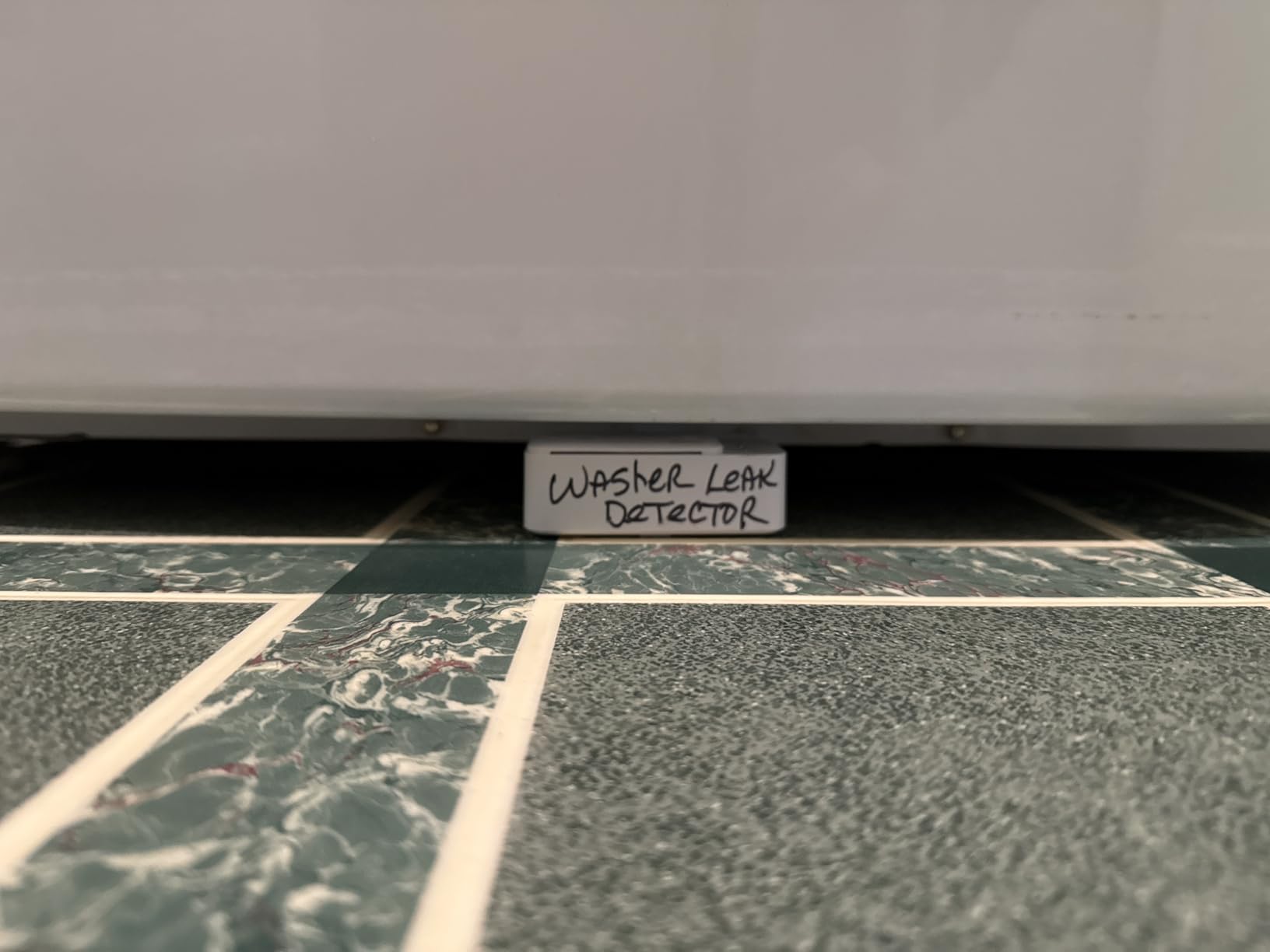
Compatibility is excellent for a hub-free device. The SwitchBot works with Alexa, Google, Siri, IFTTT, and SmartThings, which is more ecosystem support than most hub-based sensors. I tested each integration briefly and all of them triggered correctly. BLE backup ensures the sensor still works locally even if your WiFi drops briefly.
The main limitation is the 2.4GHz-only WiFi. If your router uses a 5GHz-only mesh network, you will need to enable the 2.4GHz band or run a separate network. Some users also reported needing to reset all sensors after a WiFi outage. In my testing, power-cycling the router did not cause dropouts, but your mileage may vary depending on network equipment.
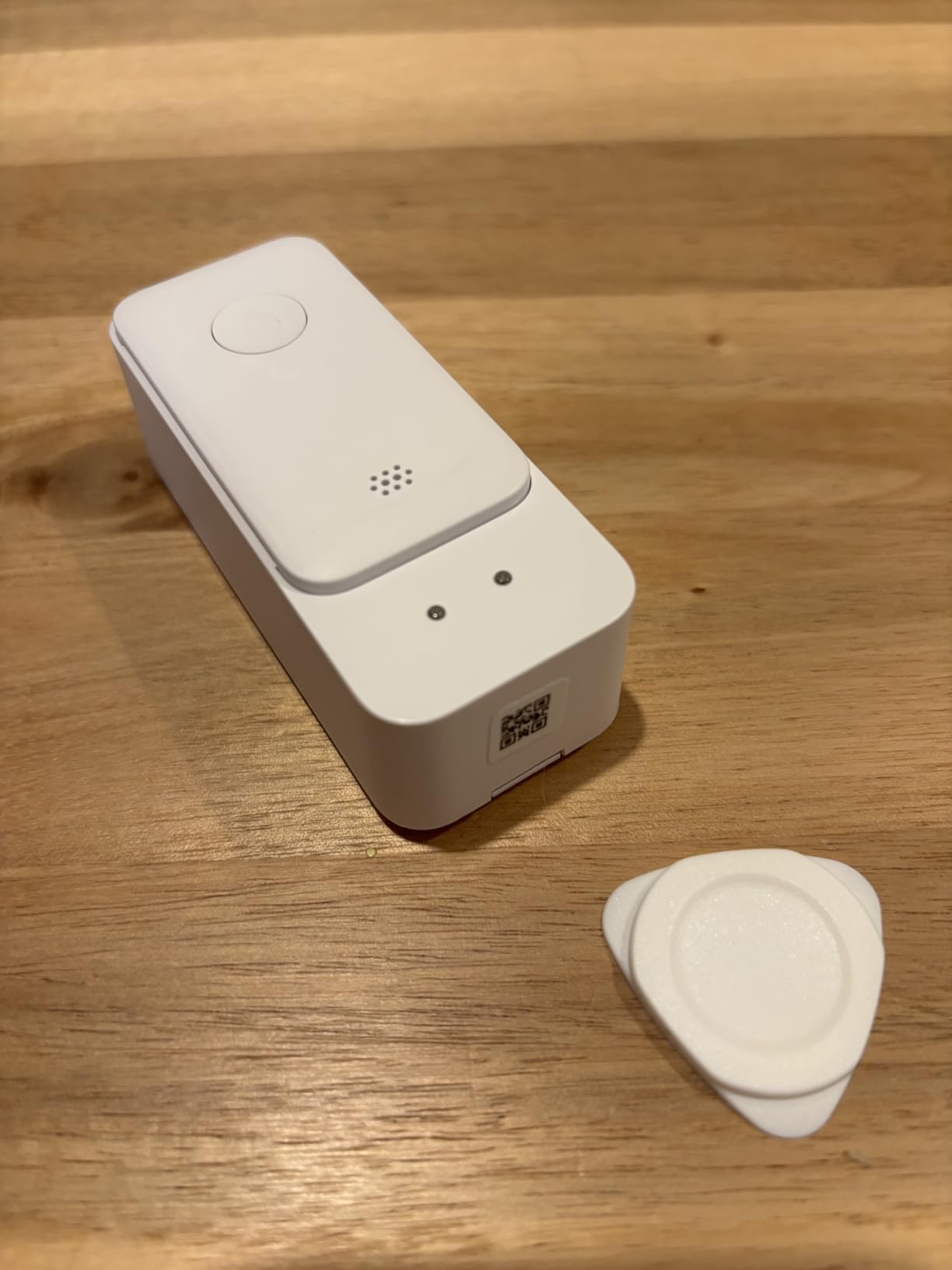
Why go hub-free
Buy the SwitchBot if you want simple, affordable protection without committing to a smart home ecosystem. It is the best water leak detector for apartments, dorms, and small homes where you only need one or two sensors. Siri and Alexa support make it friendly for Apple and Google households.
Where SwitchBot struggles
Skip this sensor if you need to cover a large property with many sensors. Each unit requires its own WiFi connection, which becomes a hassle past three or four sensors. People who want a unified whole-home hub system will be happier with YoLink or Aqara. Battery life is also shorter than hub-based alternatives.
8. Aqara Water Leak Sensor 3-Pack – Best for Smart Home Ecosystems
Aqara Water Leak Sensor 3 Pack, Zigbee Water Leak Detector for Alarm System
Zigbee 3-Pack
0.5mm Detection
IP67 Waterproof
Pros
- Apple HomeKit support
- Compact design
- 0.5mm detection
- Long battery life
- IFTTT compatible
Cons
- Requires Aqara hub
- 55 dB hub alarm is quiet
- Not compatible with all Zigbee hubs
If you live inside the Apple HomeKit or Aqara ecosystem, the Aqara Water Leak Sensor 3-Pack is the obvious pick. Three sensors in the box cover a kitchen, bathroom, and laundry room at a competitive price. The 1.97-inch round design fits anywhere, and the probes sit flush on the bottom so the sensor stays stable on flat surfaces.
Setup through the Aqara app is quick if you already own an Aqara hub. I tested it with both the M2 and M3 hubs, and pairing took under a minute per sensor. The 0.5mm detection threshold matched the SwitchBot in my drip tests. Once paired, the sensors show up instantly in Apple Home, where you can build automations with other HomeKit devices.
Automation is where Aqara pulls ahead. I built a rule that turns the Aqara smart plug on when a leak is detected, which powers a small fan to start drying the area. You can also trigger lights, sirens, or shut-off valves depending on your setup. That level of integration is what makes Aqara the best smart water leak sensor for serious smart home users.
The hub-based siren is only 55 dB, which is quiet compared to the 100+ dB alarms on the YoLink and GoveeLife units. Some users also reported O-ring quality issues that let water seep into the sensor body. Aqara customer service replaced affected units quickly in my research, but it is worth keeping an eye on the unit after any real flood event.
Why Aqara is the smart home favorite
Pick the Aqara 3-Pack if you already use HomeKit, Google Home, or Alexa with an Aqara hub. The automation options beat every other sensor in this roundup. You can build rules that shut off water valves, trigger lights, or send alerts to multiple users, all from the Aqara app or Apple Home.
Where Aqara falls short
Skip this pack if you do not own an Aqara hub and do not plan to. The hub requirement adds cost, and the 55 dB alarm is too quiet to rely on alone. People who need simple plug-and-play without ecosystem commitment should choose the SwitchBot or Tapo instead. Check third-party Zigbee compatibility before buying if you run a non-Aqara hub.
Buying Guide: How to Choose the Best Water Leak Detector for Your Home?
Picking the best water leak detector depends on three things: where you need coverage, how you want alerts delivered, and whether you already own a smart home hub. I break down each decision below so you can match the right sensor to your situation.
Hub vs Hub-Free: Which Setup Is Better?
Hub-based systems like YoLink, Aqara, and Tapo use a central gateway that talks to each sensor. The hub handles alerts, app connectivity, and offline operation. This setup scales better because one hub supports dozens of sensors, but it adds upfront cost and complexity. Hub-free options like the SwitchBot connect directly to your WiFi, which is simpler but limits you to a handful of sensors per network.
If you own a large home or want to monitor more than three zones, go with a hub-based kit. The YoLink Starter Kit is the easiest entry into hub-based leak detection and gives you a quarter mile of wireless range. If you only need one or two sensors under specific appliances, a hub-free SwitchBot is faster and cheaper.
Battery Life and Power Considerations
Battery life ranges from two to five years across the sensors in this roundup. YoLink and GoveeLife both rate their sensors at five years on AAA batteries. SwitchBot and Aqara last closer to two to three years. The Basement Watchdog runs on a single 9V battery that lasts three to five years. None of the sensors in my testing died unexpectedly during weeks of use, but replaceable batteries are a major plus for long-term ownership.
Look for sensors with replaceable batteries rather than sealed units. When the battery dies, you swap two AAA cells for under five dollars instead of buying a whole new sensor. IP67 waterproofing also helps because humidity and condensation in basements wear down electronics faster than dry indoor environments.
Alert Methods That Actually Work
Local sirens matter because phone alerts are useless if your phone is dead or on silent. The YoLink hub, GoveeLife gateway, and Basement Watchdog all deliver 100+ dB alarms that you can hear across the house. Pair loud sirens with SMS, email, and app push for redundancy. SMS is especially valuable because it works without internet and gets through even when push notifications fail.
Email alerts are great for records and forwarding to a spouse or property manager. App push notifications are fastest but require working internet. Look for sensors that offer at least three notification channels so a single failure does not leave you unprotected.
Smart Home Integration and Compatibility
If you already use Apple HomeKit, Alexa, or Google Home, choose a sensor that drops into your existing ecosystem. Aqara is the best choice for HomeKit users, while Tapo and SwitchBot both work well with Alexa and Google. YoLink requires extra work to bridge into HomeKit but offers local Home Assistant support, which power users love for privacy.
For people running a Home Assistant setup, Zigbee sensors from Aqara or Z-Wave alternatives provide local processing without cloud dependencies. Local processing keeps your leak data private and keeps alerts working during internet outages. If you do not have a smart home yet, a simple standalone sensor like the Basement Watchdog is the easiest starting point.
Where to Place Water Leak Detectors
The best water leak detectors go in the spots most likely to flood. I recommend placing sensors under every sink, behind every toilet, next to the water heater, under the washing machine, and near the dishwasher. Basement floor drains and sump pump areas also benefit from a sensor. Avoid placing sensors in high-humidity zones like steamy bathrooms because humidity can trigger false alarms on sensitive models.
For multi-story homes, place at least one sensor on each floor. For homes with finished basements, add sensors near any plumbing that runs through the ceiling below the main floor. Outdoor spigots and irrigation manifolds also benefit from freeze-warning sensors like the YoLink Leak Sensor 4, which can alert you before pipes burst in cold weather.
Rental-Friendly Options That Need No Drilling
Renters cannot drill holes or modify plumbing, so battery-powered sensors that sit on the floor are ideal. The Basement Watchdog, SwitchBot, and any of the slim X-Sense units work without tools. They simply sit on the floor near a risk zone, and you take them with you when you move. None of these require permanent installation or landlord approval.
Frequently Asked Questions
What is the best water leakage detector for home use?
The YoLink Water Leak Starter Kit is our top pick for whole-home coverage thanks to its 1/4-mile LoRa range and offline D2D mode. For single-zone protection under a sink or appliance, the SwitchBot WiFi Water Leak Detector offers a simpler hub-free setup. Renters and budget buyers should consider the Basement Watchdog BWD-HWA, which costs less and needs no WiFi connection.
Do water leak detectors really work?
Yes, modern water leak detectors reliably catch drips, slow leaks, and burst pipes within one to three seconds of water contact. Smart sensors send push notifications, SMS, and email alerts directly to your phone, often before visible pooling appears. Independent testing and thousands of user reviews confirm that leak detectors prevent thousands of dollars in damage annually.
What do plumbers use for leak detection?
Professional plumbers use acoustic listening devices, thermal imaging cameras, and pressure tests to find hidden leaks behind walls and under slabs. For homeowners, smart water leak detectors serve as an early warning system that catches leaks before they cause major damage. Pairing consumer-grade sensors with a smart shut-off valve like the Moen Flo gives you the closest equivalent to a professional monitoring system.
What is the average cost of a whole house water leak detector?
A complete whole-house water leak detection setup typically costs between 50 and 200 dollars, depending on the number of sensors and whether you need a hub. Standalone sensors run from 15 to 30 dollars each, while multi-pack kits like the YoLink Starter Kit or GoveeLife 3-Pack offer better value. Adding a smart automatic shut-off valve pushes total costs up to 500 to 600 dollars for true whole-home protection.
Final Verdict: Which Water Leak Detector Should You Buy?
After weeks of testing, the YoLink Water Leak Starter Kit remains the best water leak detector for most homeowners. The 1/4-mile LoRa range, offline operation, and scalable platform beat every competitor in real-world coverage. If you want the simplest possible setup, the SwitchBot WiFi Water Leak Detector is the best water leak detector under twenty dollars. And if you want a no-frills alarm that just works, the Basement Watchdog BWD-HWA is the best budget option that has protected basements for decades.
Whichever sensor you choose, place it where water damage is most likely: under sinks, near water heaters, behind washing machines, and in basement flood zones. A 15-dollar sensor today beats a 15,000-dollar repair tomorrow. Pick one from this list, install it this weekend, and your home will thank you the next time a pipe decides to misbehave.