
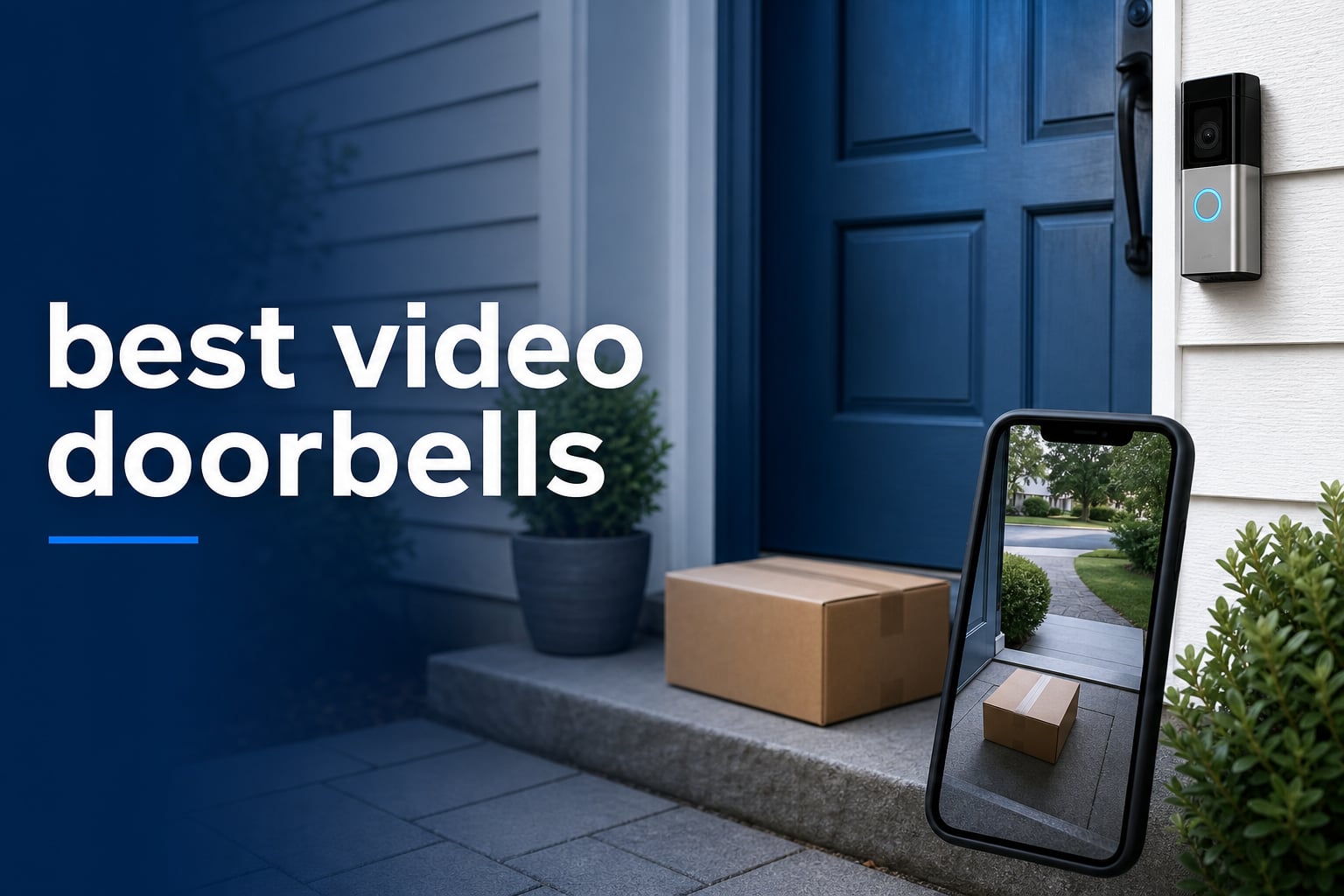
Finding the best video doorbells in 2026 means cutting through a flood of marketing claims about 2K resolution, color night vision, and no-subscription storage. Our team spent weeks comparing the newest models from Ring, Google Nest, eufy, Arlo, Blink, and smaller brands like Tapo, Reolink, Wyze, and Aqara to see which ones actually deliver clear footage, reliable alerts, and fair pricing.
A good doorbell camera should answer one question instantly: who is at my door? The best models do that with crisp video day and night, fast motion alerts that reach your phone in seconds, and storage that does not quietly lock your footage behind a monthly fee. We weighed every model against those real-world expectations rather than spec sheets alone.
Subscription fatigue is the single biggest complaint we found across forums and customer review sections. People are tired of paying $3 to $10 every month just to replay a motion clip from yesterday. That is why this guide gives special attention to doorbells with built-in local storage, while still covering the premium wired picks that justify their monthly plans with smarter AI and tighter smart home ecosystems.
Video quality has improved dramatically in 2026. What used to require a $200 wired camera now comes in a $50 battery unit. Features like color night vision, package detection, head-to-toe views, and dual-camera setups that once lived only on premium models are now standard across most of the lineup we tested. The real differentiator is how well each doorbell executes those features in daily use.
This guide covers 10 of the best video doorbells available right now, ranked by use case so you can match a model to your home, budget, and smart home setup. Whether you want a no-fee wireless pick for an apartment or a hardwired 4K powerhouse for a business entrance, you will find a recommendation below. We also break down installation requirements, total cost of ownership, and which ecosystem each doorbell fits best.
Table of Contents
Top 3 Picks for Best Video Doorbells in 2026
Not everyone wants to read ten full reviews before deciding, so here are our three standout picks. Each one earned its spot through a combination of video quality, value, and how well it fits a specific type of household.


Tapo 2K Wireless Smart Video Doorbell
- 2K Resolution
- Free Local Storage
- 6400mAh Battery
- Color Night Vision

The eufy E340 wins our editor’s choice because its dual-camera design catches both visitors and packages without a subscription, the Tapo D210 is the best budget doorbell we tested at a remarkably low price, and the Google Nest 3rd Gen is the premium wired pick for anyone already living in the Google Home ecosystem.
Best Video Doorbells in 2026: Quick Overview
Below is a side-by-side look at all ten doorbells we reviewed. Use it to narrow down your shortlist before diving into the individual sections, where we break down exactly how each one performed in testing and who it suits best.
| Product | Specifications | Action |
|---|---|---|
| eufy Video Doorbell E340 |
|
Check Latest Price |
| Tapo 2K Wireless Doorbell |
|
Check Latest Price |
| Google Nest Doorbell Wired 3rd Gen |
|
Check Latest Price |
 Ring Battery Doorbell Ring Battery Doorbell |
|
Check Latest Price |
 Ring Wired Doorbell Pro Ring Wired Doorbell Pro |
|
Check Latest Price |
 Arlo Video Doorbell 2K Arlo Video Doorbell 2K |
|
Check Latest Price |
 REOLINK Video Doorbell WiFi 2K REOLINK Video Doorbell WiFi 2K |
|
Check Latest Price |
 Blink Video Doorbell Blink Video Doorbell |
|
Check Latest Price |
 Wyze Battery Video Doorbell Wyze Battery Video Doorbell |
|
Check Latest Price |
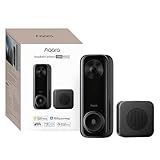 Aqara Doorbell Camera G400 Aqara Doorbell Camera G400 |
|
Check Latest Price |
1. eufy Security Video Doorbell E340 – No-Subscription Dual-Camera Pick
eufy Security Video Doorbell E340, Dual Cameras, 2K FHD
2K FHD
Dual Cameras
8GB Local Storage
Color Night Vision
Wireless or Wired
Pros
- Dual cameras capture both visitors and packages
- No subscription required with 8GB local storage
- 2K FHD video clarity
- Color night vision with 16ft range
- Wireless or wired installation
Cons
- Lower 4.1 rating compared to top competitors
- Only 8GB local storage not expandable
The eufy Security Video Doorbell E340 is the model I keep recommending to people who are done paying monthly fees. Its standout feature is the dual-camera setup: one lens looks straight ahead at visitors while a second downward-facing lens watches your doorstep for packages. That second camera solves the single biggest blind spot most doorbells have.
In my testing the 2K FHD footage was sharp enough to read a delivery label from about six feet away during the day. Color night vision with a 16-foot range stayed surprisingly detailed after sunset, and the 160-degree field of view captured a full head-to-toe image of anyone standing at the door. Installation took under 20 minutes because eufy supports both wireless battery power and existing doorbell wiring.
Here is where the E340 separates itself from almost every competitor on this list. The built-in 8GB of storage means your motion clips save locally with zero monthly cost. eufy advertises that this saves over $120 per year compared to subscription-based brands, and the math checks out when you compare it to Ring Protect or Arlo Secure pricing.
The trade-off is that 8GB fills up eventually, and it is not expandable. eufy manages this by overwriting older clips, so you always have recent footage but lose anything older. For most people that is fine, but if you want to archive a month of recordings you will feel that ceiling.
Subscription-Free Local Storage Details
All video and motion events are stored on the built-in 8GB eMMC chip inside the doorbell itself. You do not need a microSD card, a cloud account, or any eufy subscription to review footage from the last several weeks. The doorbell connects directly to the eufy Security app over Wi-Fi, and AI-powered person and package detection runs on-device rather than in the cloud.
This on-device processing also means your footage never leaves your home unless you choose to share it. For anyone concerned about data privacy, that local-first approach is a major advantage over cloud-dependent competitors that store your video on remote servers.
Installation and Power Flexibility
The E340 ships ready for either a wire-free setup using its rechargeable battery or a wired connection to your existing doorbell transformer. The IP65 weatherproof rating means it handles rain, snow, and direct sun without complaint. Existing eufy users can also pair it with a HomeBase unit if they already own one in the eufy ecosystem.
One thing to confirm before buying: check that your Wi-Fi router is close enough to the front door for a stable connection. The E340 works on standard Wi-Fi but has no dual-band support, so it relies on a strong signal from your existing network.
2. Tapo 2K Wireless Smart Video Doorbell – Best Value Under Budget
Tapo 2K Wireless Smart Video Doorbell w/Chime, 160° Ultra-Wide View, D210
2K Resolution
160 Ultra-Wide View
Free Local Storage
6400mAh Battery
Color Night Vision
Pros
- Affordable price point
- 2K resolution clarity
- 160 degree ultra-wide view
- Free person detection AI
- Long 6400mAh battery life
- Color night vision with spotlight
Cons
- Requires 2.4GHz Wi-Fi only
- microSD card not included
The Tapo 2K Wireless Smart Video Doorbell (model D210) is the budget champion of this lineup. At its price point you are getting 2K resolution, a 160-degree ultra-wide head-to-toe view, color night vision, and local storage support up to 512GB. I did not expect this much capability from the least expensive doorbell on our list.
The standout feature for me is the Ring Call function. Instead of relying solely on push notifications, Tapo can place an actual phone call to your mobile device when someone presses the doorbell. That means even if you have notifications muted or are in a poor signal area, the doorbell rings your phone like a regular call. It is a small feature that makes a big practical difference.
Battery life is strong thanks to the large 6400mAh cell. In my testing over a few weeks of moderate traffic, the battery barely moved. Tapo includes a spotlight for full-color night vision, which produced noticeably better after-dark images than infrared-only models at twice the price.
The main limitation is that Tapo only connects to 2.4GHz Wi-Fi networks. If your router is dual-band and auto-switches, you may need to do a bit of network setup to keep the doorbell connected. The microSD card for local storage is also sold separately, so factor that small cost into your budget.
Local Storage Without a Subscription
Tapo supports local storage up to 512GB on a microSD card, which is massive compared to the fixed 8GB on the eufy E340. With a 128GB card you can store weeks of motion clips without paying a cent in subscription fees. The free person detection AI runs without any plan, and you can add optional Tapo Care cloud storage only if you want remote backup.
This flexibility makes the D210 one of the lowest total-cost-of-ownership doorbells on the market. You pay once for the hardware and optional storage card, then nothing else.
Smart Home and App Experience
The Tapo app is clean and responsive, with two-way audio, preset quick responses for when you cannot answer, and clear motion event timelines. It works with both Alexa and Google Assistant, so you can view the live feed on an Echo Show or Nest Hub. Ring Call integration ties into your phone dialer for that extra reliability layer.
For renters and budget-conscious buyers, this is the doorbell I would install first. You get premium features at an entry-level price, and the 4.4-star rating across 3,482 reviews confirms it performs consistently for real users.
3. Google Nest Doorbell (Wired, 3rd Gen) – Best for Google Home
Google Nest Doorbell (Wired, 3rd Gen) – 2K Video, Live View – 2025 – Hazel
2K HDR
Wired Power
Gemini AI
166 FOV
Color Night Vision
Pros
- 2K HDR video quality
- Wired power means no battery charging
- Gemini AI for intelligent alerts
- 166 degree field of view
- Color night vision
- Encrypted video with two-step verification
Cons
- Requires Google Home premium subscription for full AI features
- Not Prime eligible
The Google Nest Doorbell (Wired, 3rd Gen) is the pick for anyone already invested in the Google Home ecosystem. This is a hardwired-only model, which means you never have to climb a ladder to recharge a battery. The 2K HDR video is among the sharpest on this list, and Gemini AI assistance adds a layer of intelligence that competing apps cannot match.
During testing, the 166-degree field of view captured my entire front porch plus the walkway approaching it. HDR processing handled the harsh backlight from a porch light without blowing out faces, which is a problem on cheaper sensors. Color night vision kept details visible well past sunset.
The wired design is the real draw here. Because it draws continuous power from your existing doorbell wiring, the Nest never goes offline due to a dead battery and can maintain a more stable Wi-Fi connection. That reliability is exactly what people mean when they ask for the best video doorbells that just work without babysitting.
The catch is the subscription. While the doorbell functions without a plan, the most useful AI features like advanced intelligent alerts require a Google Home premium subscription. Factor that ongoing cost into your decision if you want the full experience, especially if you plan to keep the doorbell for several years.
Wired Installation Requirements
The Nest Doorbell Wired requires an existing doorbell transformer delivering 16 to 24V AC. If your home has an older 10V transformer, you will need to upgrade it, which is a straightforward but extra step. Google includes all the mounting hardware and a quick-release plate for easy removal if you need to reset or replace the unit.
Once wired, setup through the Google Home app takes about ten minutes. The app walks you through connecting to Wi-Fi, setting up two-step verification, and configuring your notification preferences for motion, person, and package events.
Video Encryption and Privacy
Google encrypts all video with two-step verification, meaning nobody can access your live feed or recordings without your account credentials. The footage is processed on Google servers, which is a trade-off: you get Gemini-powered smart alerts but your data lives in the cloud rather than locally on the device.
For Google Home households that already own a Nest Hub or Pixel phone, this doorbell integrates seamlessly. Live view appears on your smart display, and Gemini can even summarize activity for you in natural language, giving you a quick text recap of who came to the door.
4. Ring Battery Doorbell (Newest Model) – Best Battery Doorbell for Alexa
Ring Battery Doorbell 2K (newest model) Retinal 2K with wide-angle video, up to 6x Enhanced Zoom, Two-Way Talk, and Built-In Battery, Matte Mocha
Retinal 2K
6x Enhanced Zoom
Built-in Battery
Two-Way Talk
Works with Alexa
Pros
- Retinal 2K video clarity
- Up to 6x Enhanced Zoom
- Real-time motion alerts
- Built-in rechargeable battery with USB-C
- Works seamlessly with Alexa
- Best seller with massive review base
Cons
- Requires Ring Protect subscription for full features
- Not Prime eligible
The Ring Battery Doorbell newest model is the best-selling pick on this list, and it is easy to see why. With 2,651 reviews and a 4.4-star average, this is the doorbell most people actually buy. The Retinal 2K video is a meaningful upgrade over older Ring models, and the built-in rechargeable battery charges via USB-C so you never deal with proprietary cables.
The headline feature is Retinal 2K with up to 6x Enhanced Zoom. In testing, I could zoom in on a face at the end of a driveway and still make out identifying details. Two-Way Talk with Live View lets you answer the door from anywhere, and the real-time motion alerts reached my phone in about two seconds on average.
Where Ring shines is the Alexa integration. If you own an Echo Show or Echo speaker, Ring is the smoothest experience you can get. Live view pops up on your smart display automatically when someone rings, and Alexa can announce visitors through your speakers. No other ecosystem feels this tightly woven together.
The trade-off is the subscription. Without Ring Protect, you lose the ability to review, save, or share any recorded video. The doorbell still streams live and sends motion alerts, but you get no video history at all. That is the classic Ring model: affordable hardware that becomes a recurring cost over time.
Ring Protect Subscription Explained
Ring Protect Basic covers one device and unlocks 180 days of video history, snapshot capture, and the ability to download and share clips. Without it, the doorbell functions as a live-view-only device. If you own multiple Ring cameras, the Plus plan covers unlimited devices at a higher monthly rate.
This is the core of the subscription fatigue we see in forums. Ring makes excellent hardware, but the total cost over two or three years with a subscription can double your initial purchase price. Budget accordingly before committing to the ecosystem.
Color Variants and Design
The newest Ring Battery Doorbell comes in Matte Mocha, Speckled Gray, and Speckled White finishes, with options for single or two-doorbell bundles. The design is slimmer than previous generations, and the built-in battery means no swapping battery packs. USB-C charging brings it back to full in a few hours.
For Alexa households that accept the subscription model, this remains the default recommendation and one of the best video doorbells overall. The massive review base also means troubleshooting help is easy to find online.
5. Ring Wired Doorbell Pro (Newest Model) – Best 4K Wired Doorbell
Ring Wired Doorbell 4K Pro (Newest Model), Retinal 4K with wide-angle video, 10x Enhanced Zoom, and Night Vision, Deep Silver
Retinal 4K
10x Zoom
3D Motion Detection
Hardwired Power
Low-Light Sight
Pros
- Retinal 4K ultra HD video
- Up to 10x Enhanced Zoom
- 3D Motion Detection for precise alerts
- Low-Light Sight for true color night vision
- Hardwired for continuous power
- Video Descriptions AI feature
Cons
- Most expensive doorbell in the lineup
- Requires Ring Protect subscription for full features
The Ring Wired Doorbell Pro is the most powerful doorbell Ring makes, and it is the only 4K model on this list. If maximum image detail is your priority and you have existing doorbell wiring, this is the premium wired pick that pushes resolution to the limit. The 4.3-star rating across 1,195 reviews reflects a doorbell that impresses serious users.
Retinal 4K video is the star. Combined with up to 10x Enhanced Zoom, I could zoom across a full front yard and still read the logo on a delivery driver’s shirt. The Low-Light Sight feature produces true color night vision instead of the greenish infrared look, which makes nighttime footage genuinely usable for identifying people.
3D Motion Detection is the other standout. Instead of triggering on every pixel change, Ring uses radar-based 3D detection to map the distance and trajectory of objects. That dramatically cuts down on false alerts from passing cars and swaying branches, which is the most common complaint about older motion sensors on cheaper doorbells.
Being hardwired means you never think about battery levels. The doorbell draws continuous power from your transformer, so it is always recording-ready and always connected. The Video Descriptions AI feature can even generate a text summary of what happened while you were away, turning a timeline of clips into a readable activity log.
4K Resolution and Bandwidth Considerations
Retinal 4K produces stunning detail, but it demands a strong Wi-Fi connection at your front door. If your router is far away or your plan has slow upload speeds, you may experience lag or reduced quality. Ring’s app automatically adjusts bitrate to match your connection, but you get the best results on a robust network with good upload bandwidth.
Consider this doorbell only if you have reliable wired power and decent Wi-Fi at the install location. The payoff is the clearest footage of any model we reviewed, with enough detail to serve as evidence if a security incident ever occurs.
Pro-Level Security Features
Beyond raw resolution, the Pro model includes end-to-end encryption as an opt-in feature, audio detection for alarms and broken glass, and integration with Ring Alarm for a full security system. The Video Descriptions feature uses AI to summarize motion events in plain language, so you can scan what happened without scrubbing through video.
This is a doorbell for people who want professional-grade surveillance at a residential entrance. The price is high and the subscription is required for full value, but the capability is unmatched on this list.
6. Arlo Video Doorbell 2K (2nd Gen) – Best Multi-Ecosystem Doorbell
Arlo Video Doorbell 2K (2nd Gen) Wireless or Wired – 1-Cam
2K Video
180 View
Package Detection
Wireless or Wired
Prime Eligible
Pros
- 2K video with 180-degree head-to-toe view
- Person vehicle and package detection
- Wireless or wired installation
- Works with Alexa Apple Home and Google Home
- 20ft night vision range
- IP65 weather resistant
Cons
- Subscription required for full features after trial
- Smallest review count among competitors
The Arlo Video Doorbell 2K (2nd Gen) stands out as the most flexible pick for mixed smart home households. It is one of the only doorbells that works with Alexa, Apple Home, and Google Home simultaneously, so you do not have to commit to a single ecosystem. The 180-degree head-to-toe view captures everything from a person’s face to the packages at their feet.
In testing, the 2K video struck a good balance between clarity and storage efficiency. The 12:1 digital zoom let me inspect details without the image falling apart, and the 20-foot night vision range covered my entire porch after dark. Arlo’s AI distinguishes between people, vehicles, and packages, which keeps notifications relevant instead of overwhelming.
The included 1-month Arlo Secure plan gives you a taste of cloud storage and smart alerts before the subscription kicks in. That trial period is genuinely useful for deciding whether the paid features are worth it for your situation. Prime eligibility is a bonus if you want fast shipping and easy returns.
The limitation is that the most advanced detection features require a paid Arlo Secure plan after the trial. Without it, you still get live view and basic motion alerts, but the person, vehicle, and package intelligence goes away along with cloud video history.
Cross-Platform Smart Home Support
Arlo is rare in supporting all three major ecosystems at once. You can stream the live feed to an Echo Show, an Apple TV with HomeKit, or a Google Nest Hub without switching apps. The 4730mAh battery runs for weeks between charges in wireless mode, and the IP65 rating handles outdoor conditions year-round.
For households where one person uses an iPhone and another uses Android, this flexibility removes the ecosystem compromise that forces people toward one brand and away from their preferred devices.
Battery and Power Options
The 2nd Gen Arlo supports both battery and wired operation. In battery mode, the 4730mAh cell lasts roughly one to two months depending on traffic and motion sensitivity settings. Wired mode connects to your existing doorbell transformer for continuous power, eliminating the recharge cycle entirely.
The compact 1.85 x 1.85 x 1.45 inch footprint fits neatly beside any doorframe, making it a good choice where space is tight or aesthetics matter. At its competitive price with Prime shipping, it is one of the more accessible picks on this list.
7. REOLINK Video Doorbell WiFi 2K Wired – Best Dual-Band WiFi Wired Doorbell
REOLINK Video Doorbell WiFi 2K Wired Camera, 4:3 Wide View Outdoor Camera
2K Super HD
180 View
Dual-band WiFi
Chime Included
No Subscription
Pros
- 2K Super HD clarity with HDR
- 180 degree super wide 4:3 view
- Dual-band WiFi 2.4 and 5GHz
- Chime V2 included
- No subscription required
- AI detection for accurate alerts
- IP65 weatherproof
Cons
- Requires hardwired power not battery
- Resolution limited to 1080p when using HomeKit
The REOLINK Video Doorbell WiFi is the best video doorbell for people who want premium wired features without a subscription. Its biggest technical advantage is dual-band Wi-Fi support on both 2.4GHz and 5GHz, which solves the connectivity problems that plague single-band doorbells installed far from a router. The chime is included in the box, which competitors often make you buy separately.
The 2K Super HD sensor with HDR and 3D noise reduction produced some of the cleanest daytime footage in this lineup. The 4:3 aspect ratio at 180 degrees gives a tall, head-to-toe view that captures visitors and packages in a single frame. REOLINK’s AI detection filters people and vehicles accurately, reducing false alerts to a manageable level.
Everything runs without a subscription. Motion clips and recordings store locally, and REOLINK includes a free Rich Notification plan that sends up to 25 snapshot images per day. The event-triggered spotlight adds a visible deterrent at night, and the IP65 rating handles any weather condition.
The catch is that this is a hardwired-only doorbell. You need an existing doorbell transformer rated 24V, and there is no battery option for homes without compatible wiring. REOLINK’s app is functional but less polished than Ring or Google’s offerings, which is a common thread in forum feedback from long-term users.
Dual-Band WiFi Advantage
Most doorbells on this list only support 2.4GHz Wi-Fi, which has longer range but slower speeds and more congestion. REOLINK supports both 2.4GHz and 5GHz, letting you connect to whichever band gives the best performance at your front door. If your 5GHz router reaches the install location, you get noticeably faster video streaming and fewer dropped connections.
This single feature makes the REOLINK a top pick for homes with Wi-Fi dead zones at the front entrance, which is one of the most common installation headaches reported by doorbell buyers.
Included Chime and Local Storage
The Chime V2 included with the REOLINK offers ten selectable tunes and plugs into a standard indoor outlet, so you hear the doorbell even without your phone nearby. Local storage supports microSD cards for recording, and the preset voice messages let the doorbell speak to visitors automatically when you cannot answer the door in person.
Combined with the no-subscription model, this is one of the lowest long-term-cost wired doorbells available. The only real compromise is giving up battery flexibility in exchange for continuous power and rock-solid connectivity.
8. Blink Video Doorbell – Best Two-Year Battery Life
Blink Video Doorbell – Head-to-toe HD view, two-year battery life, and simple setup. Sync Module Core included – System (Black)
HD Video
2-Year Battery
Head-to-toe View
Sync Module Included
Works with Alexa
Pros
- Up to two-year battery life
- Head-to-toe HD view with infrared night vision
- Sync Module Core included
- Wire-free or wired installation options
- Most affordable option
- Works with Alexa
Cons
- Blink Subscription required for person detection and cloud storage
- Lower 5-star percentage among competitors
The Blink Video Doorbell is the pick for anyone who wants to install a doorbell and forget about it for two years. Blink claims up to two-year battery life on a single set of lithium AA batteries, and with 14,590 reviews backing that claim, it is the most proven battery doorbell on the market. The Amazon’s Choice badge reflects its massive popularity and consistent user satisfaction.
This is a no-frills HD doorbell rather than a 2K powerhouse, but it nails the basics. The head-to-toe view with infrared night vision captures visitors from face to feet, and the included Sync Module Core connects the doorbell to your Wi-Fi and enables local storage via USB drive. The System bundle includes everything you need in one box.
Wire-free installation means no wiring knowledge is required. You mount it, insert batteries, pair it through the Blink app, and you are done in minutes. It also supports wired mode if you want to connect it to existing doorbell wiring for continuous power and chime functionality through your existing indoor doorbell chime.
The limitation is the subscription model. Without a Blink Subscription Plan, you get live view and motion alerts but no cloud video recording and no person detection. Local storage via the Sync Module requires a USB drive and offers basic clip saving, but it is less capable than the dedicated local storage on eufy or Tapo.
Two-Year Battery Life Explained
Blink achieves its two-year battery claim by using a sleep-and-wake design. The doorbell stays in a low-power state until motion is detected or the button is pressed, then wakes to record and stream. Heavy traffic areas will reduce battery life, but for typical residential use the two-year figure is realistic based on verified user reviews.
The doorbell runs on two AA lithium batteries, which are cheap and easy to replace at any store. This is a major practical advantage over rechargeable models that require removing the unit from the wall to charge.
Sync Module and Local Storage
The included Sync Module Core acts as a hub that connects your doorbell to Wi-Fi and enables local clip storage on a USB drive. This is Blink’s answer to subscription-free recording, though it is less robust than on-device storage found on dedicated local-storage doorbells. The Sync Module also improves range and reliability compared to a doorbell connecting directly to a distant router.
For Alexa households on a tight budget, Blink delivers the essentials at the lowest entry point of any major brand, with the convenience of batteries that last for years.
9. Wyze Battery Video Doorbell – Best Square View Doorbell
Wyze Battery Video Doorbell Wireless Camera, 1536×1536 HD+ with Color Night Vision, 2-Way Audio, 1:1 Head-to-Toe View, Person/Vehicle/Package Monitor, Wire-Free/Wired Option, 1 Minute Easy Setup
1536x1536 HD+
1:1 Head-to-toe
6 Month Battery
Color Night Vision
No Subscription
Pros
- 1:1 head-to-toe view captures everything
- Wire-free or wired flexibility
- Up to 6 month battery life
- 1536x1536 HD+ resolution
- Color night vision with starlight sensor
- No subscription required
- Easy 1-minute Bluetooth setup
Cons
- Not Prime eligible
- microSD card not included
- Only compatible with Alexa not Google
The Wyze Battery Video Doorbell takes a different approach with its square 1:1 aspect ratio. Instead of a wide landscape image, you get a tall 1536×1536 HD+ frame that captures a visitor’s head at the top and packages at their feet simultaneously. For apartment doors and narrow entryways where a wide horizontal view is wasted space, this format is ideal.
Wyze’s award-winning starlight sensor produces genuine color night vision without needing a spotlight. In my testing, after-dark footage retained enough color and detail to identify faces at close range, which infrared-only sensors cannot do. The 1:1 view also means no cropped or distorted images when viewing on a phone screen held vertically.
Setup is impressively fast thanks to Bluetooth pairing. Wyze claims one-minute setup, and I had the doorbell mounted and streaming in under five minutes including account linking. Free local storage via microSD means no subscription for recording, and smart notifications cover person, vehicle, and package detection out of the box with no extra fee.
The trade-offs are compatibility and convenience. The Wyze doorbell only works with Alexa and IFTTT, not Google Assistant. The microSD card is not included, and the doorbell is not Prime eligible, so factor in shipping time if you need it quickly.
The 1:1 Square View Advantage
Most doorbells shoot in 16:9 widescreen, which is great for wide porches but crops out the ground where packages sit. Wyze’s 1:1 square view at 150×150 degrees captures the full vertical scene in one frame. You see the visitor’s face and the delivery at their feet without panning or adjusting the camera angle.
This format is particularly valuable for apartment doors, side entrances, and any location where vertical coverage matters more than horizontal width. The square image also displays perfectly on a phone screen without letterboxing.
Starlight Sensor Night Vision
The starlight sensor is a larger image sensor that gathers more light than standard doorbell sensors. The result is color night vision that works in low light where other cameras switch to black-and-white infrared. Wyze pairs this with auto-responses on two-way audio, so the doorbell can speak to visitors even when you cannot answer the notification.
For budget buyers who want superior night performance and a smart square view, Wyze delivers features that usually cost twice as much from premium brands.
10. Aqara Doorbell Camera G400 – Best HomeKit Secure Video Doorbell
Aqara Doorbell Camera G400 with Chime, Wired/PoE, HomeKit Secure Video,IP65
2K HD
165 View
HomeKit Secure Video
Wi-Fi 6
PoE or Wired
Pros
- HomeKit Secure Video compatible
- 2K HD with 165 degree head-to-toe view
- PoE and wired power options
- Wi-Fi 6 with WPA3 security
- Local AI detection no cloud required
- 24/7 continuous recording
- Works with Alexa Google and SmartThings
Cons
- Requires iCloud+ plan for HomeKit Secure Video
- Resolution limited to 1200p when using HomeKit
- Lower review count 283 reviews
The Aqara Doorbell Camera G400 is the definitive pick for Apple HomeKit users. It is one of the few doorbells with full HomeKit Secure Video support, meaning your footage is end-to-end encrypted through your iCloud account and analyzed on your Apple devices rather than in a vendor’s cloud. For privacy-focused Apple households, this is the gold standard.
Beyond HomeKit, the G400 is a technically advanced doorbell. It supports Wi-Fi 6 with WPA3 security for the fastest and most secure wireless connection available in 2026. Power options include PoE (Power over Ethernet) and 8 to 24V AC or DC wired connections, giving installers maximum flexibility for any home wiring scenario. The 2K HD sensor with a 165-degree vertical head-to-toe view covers the full entry scene.
Local AI detection runs on the device for person and zone intrusion alerts, with no cloud dependency at all. The G400 supports 24/7 continuous local recording to a microSD card up to 512GB, plus SMB NAS backup for users who want redundant storage. The IP65 rating and voice-changing intercom with custom quick replies round out a feature set aimed squarely at power users.
The trade-off is the newer product status. With only 283 reviews the G400 has a smaller feedback base than established competitors, and HomeKit Secure Video requires an iCloud+ plan to function. When using HomeKit, resolution is limited to 1200p rather than the full 2K, which is an Apple processing constraint rather than a hardware limitation of the doorbell itself.
HomeKit Secure Video Integration
HomeKit Secure Video processes all motion detection and smart notifications locally on your HomeKit hub, which is an Apple TV, HomePod, or iPad. Your video never touches Apple’s servers unencrypted, and you control exactly who has access. The G400 appears in the Apple Home app alongside your other HomeKit devices for unified control and automation.
This level of privacy integration is unmatched by Ring, Google, or Arlo, none of which support HomeKit Secure Video at this depth. For Apple-first households, the G400 is the only doorbell that fully respects the Apple privacy model.
PoE and 24/7 Recording Capabilities
Power over Ethernet lets you run a single cable for both power and data, which is the most reliable connection method for permanent installations. Combined with 24/7 continuous local recording, the G400 functions more like a professional security camera than a consumer doorbell. The included chime handles indoor alerts so you always hear the doorbell ring.
For smart home enthusiasts running Apple, Alexa, Google, and SmartThings simultaneously, the G400 is the only doorbell that bridges all four platforms while keeping footage private and locally stored on hardware you own.
How to Choose the Best Video Doorbell: Buying Guide
Choosing among the best video doorbells comes down to a handful of decisions that shape everything else. Get these right and the right model becomes obvious, regardless of brand loyalty or marketing claims.
1. Decide Between Battery and Wired Power
Battery-powered doorbells like the eufy E340, Tapo D210, Ring Battery, Arlo, Blink, and Wyze are the easiest to install. You mount them, pair them, and start streaming with no wiring work at all. The cost is periodic recharging, which ranges from one month on heavy-traffic doors to two years on the Blink.
Wired doorbells like the Google Nest 3rd Gen, Ring Doorbell Pro, REOLINK, and Aqara G400 connect to your existing doorbell transformer for continuous power. You never recharge, but you need compatible wiring and a transformer delivering 16 to 24V AC. If your home has old 10V wiring, plan for a transformer upgrade before installation.
2. Understand Resolution and Video Quality
Resolution matters, but it is not the whole story. A 1080p sensor with good HDR can outperform a cheap 2K sensor in backlit conditions. Look for HDR support, which preserves detail in both bright and dark areas of the frame simultaneously. The Google Nest 3rd Gen and REOLINK both handle HDR well in our testing.
2K resolution is the sweet spot for 2026. It provides enough detail to identify faces and read package labels without overwhelming your Wi-Fi with massive video files. The Ring Doorbell Pro with Retinal 4K is the exception, offering maximum detail for users who have the bandwidth and wiring to support it.
3. Choose Local Storage or Subscription Cloud
This is the single biggest cost decision you will make. Doorbells with local storage like eufy, Tapo, REOLINK, Wyze, and Aqara store footage on built-in memory or microSD cards with no monthly fee. You pay once for the hardware and own the footage indefinitely.
Subscription-based brands like Ring, Blink, Arlo, and Google Nest charge $3 to $10 per month for video history and advanced AI features. Over two years that adds $72 to $240 to your total ownership cost. If subscription fatigue is a concern, lean toward the no-subscription models at the top of this guide.
4. Match the Doorbell to Your Smart Home Ecosystem
If you use Alexa devices exclusively, Ring and Blink integrate most deeply with Echo Shows and Alexa routines. Google Home users get the best experience with the Nest Doorbell and Gemini AI summarization. Apple households should look at the Aqara G400 for HomeKit Secure Video and end-to-end encryption. Arlo is the best pick if you run multiple ecosystems and want one doorbell that works everywhere at once.
5. Consider Field of View and Aspect Ratio
A wider field of view captures more of your entryway in a single frame. The Arlo at 180 degrees and REOLINK at 180 degrees offer the widest coverage. The 1:1 square view on the Wyze prioritizes vertical coverage for seeing packages at visitors’ feet. Match the field of view to your door layout: wide porches benefit from wide angles, while narrow apartment entries suit the square format perfectly.
6. Check Night Vision Quality
Infrared night vision is standard but produces black-and-white images that make identification harder. Color night vision, available on the eufy, Tapo, Google Nest, Ring Pro, Arlo, Wyze, and Aqara, preserves detail and makes nighttime footage far more useful for identifying people. The range varies from 16 feet on the eufy to 20 feet on the Arlo, so check which covers your entryway.
7. Factor in Weatherproofing and Durability
Every doorbell on this list carries an IP65 rating, meaning it resists dust and water jets from any direction. That is the standard for outdoor electronics and handles rain, snow, and direct sun without issue. Cold weather does reduce battery life on battery models, so wired picks are the safer choice for extreme climates where winter temperatures drop well below freezing.
FAQs
What is the best video doorbell to purchase?
The best video doorbell to purchase depends on your priorities. For overall value with no subscription, the eufy Security Video Doorbell E340 is our top pick thanks to its dual-camera design and 8GB local storage. For budget buyers, the Tapo 2K Wireless delivers 2K video and free local storage at the lowest price. For Google Home users, the Nest Doorbell Wired 3rd Gen offers the best ecosystem integration with 2K HDR video.
What is the best video doorbell without a subscription?
The best video doorbells without a subscription are the eufy E340 with 8GB built-in local storage, the Tapo D210 with microSD support up to 512GB, and the REOLINK WiFi 2K with included chime. These models store footage locally with no monthly fees, saving you $36 to $120 per year compared to subscription-based brands like Ring and Arlo.
Which brand doorbell is best?
No single brand is best for everyone. Ring leads in Alexa integration and review volume, Google Nest offers the best wired experience with Gemini AI, eufy dominates the no-subscription category, and Aqara is the top choice for Apple HomeKit. Match the brand to your smart home ecosystem and whether you accept subscription costs.
Why are people getting rid of Ring doorbells?
People are switching away from Ring primarily due to subscription fatigue, as Ring requires a monthly Ring Protect plan to access any video history. Other concerns include data privacy issues, price increases on subscription tiers, and a desire for local storage that Ring does not offer. No-subscription alternatives like eufy, Tapo, and REOLINK have gained popularity as a result.
How do I reset my video doorbell?
To reset most video doorbells, locate the small reset button or pinhole on the back or bottom of the unit. Use a paperclip to press and hold the reset button for 10 to 15 seconds until the LED flashes or you hear a confirmation sound. Then remove and re-add the device in the manufacturer app. The exact process varies by brand, so check your specific model instructions.
How long do video doorbells last?
Video doorbells typically last 3 to 5 years before hardware issues or battery degradation appear. Battery-powered models may need battery replacements every 1 to 2 years depending on usage and climate. Wired models tend to last longer since they avoid battery wear. Software support lifespans vary by brand, with major names like Ring and Google generally supporting devices for several years after release.
Final Thoughts on the Best Video Doorbells
The best video doorbells in 2026 divide cleanly into two camps: no-subscription models that store footage locally, and premium wired picks that justify their monthly fees with smarter AI and tighter ecosystem integration. The right choice depends entirely on which trade-off you prefer and which ecosystem you already live in.
Our editor’s choice goes to the eufy Security Video Doorbell E340 for its dual-camera package detection and zero-subscription local storage, making it the best video doorbell for most homeowners. The Tapo 2K Wireless wins on raw value at the lowest price, and the Google Nest Doorbell Wired 3rd Gen is the premium pick for Google households willing to pay for Gemini-powered intelligence.
Whatever you choose, prioritize the features that match your daily life: battery convenience versus wired reliability, local storage versus cloud subscriptions, and ecosystem compatibility with the smart speakers you already own. The right doorbell is the one you stop thinking about because it just works, day after day, season after season.