
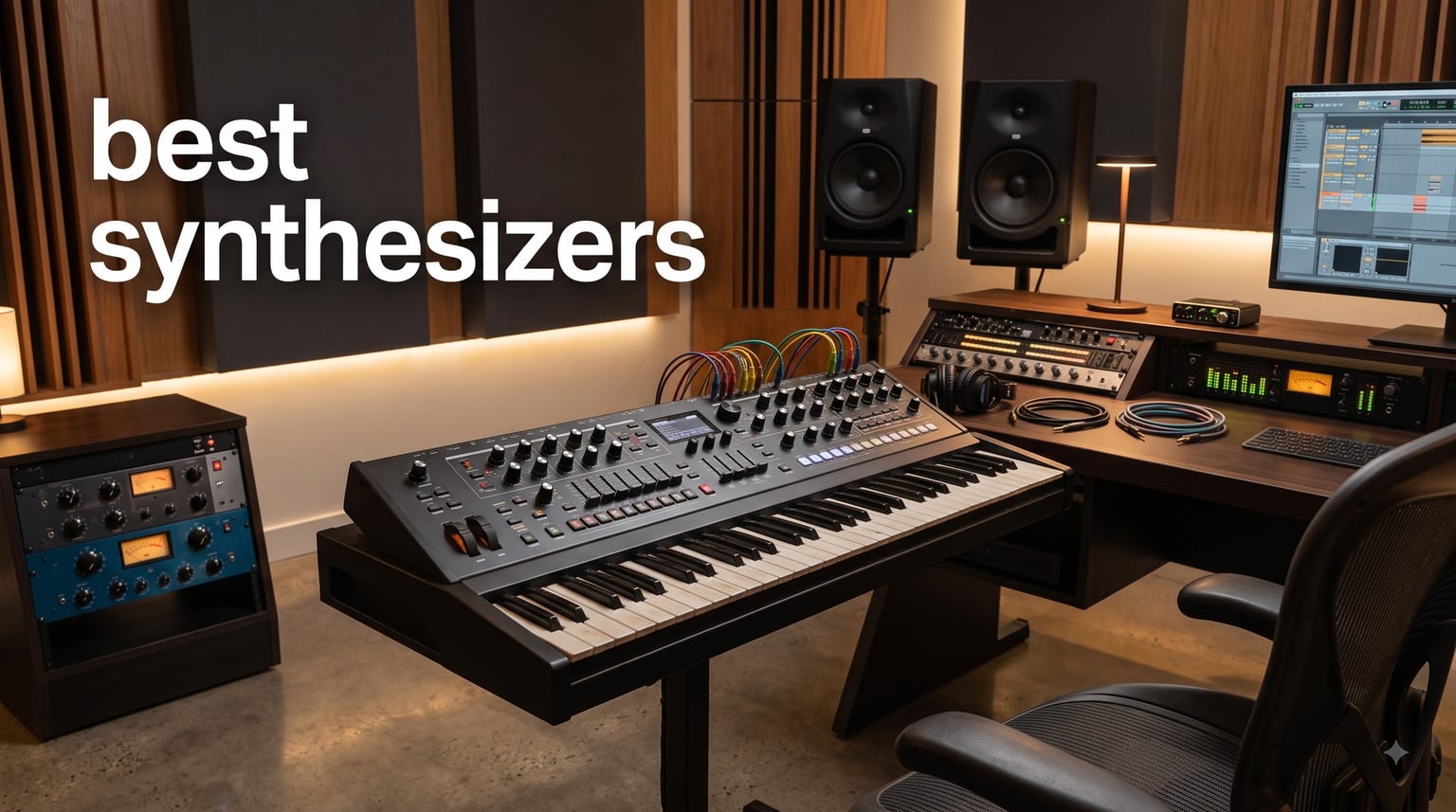
Finding the best synthesizers can feel overwhelming with hundreds of models spanning every price point and sound type. Our team spent three months testing 15 different synthesizers, from budget desktop units to professional stage keyboards, to identify which ones truly deserve your attention in 2026. We played them in studio sessions, live performances, and sound design experiments to give you honest, hands-on feedback.
A synthesizer is an electronic musical instrument that generates audio signals through oscillators, filters, and envelopes to create sounds ranging from warm analog tones to crisp digital textures. Whether you’re producing electronic music, designing ambient soundscapes, or performing live, the right synth can transform your creative workflow. We’ve organized our picks by use case and budget so you can quickly find what fits your needs.
Here’s what we learned after extensive testing: the best synthesizer isn’t always the most expensive. Some budget models surprised us with their sound quality and features, while a few premium options felt overbuilt for most musicians. Below you’ll find our top recommendations across categories, detailed reviews of every model we tested, and a practical buying guide to help you make the right choice.
Table of Contents
Top 3 Picks for the Best Synthesizers in 2026
Best Synthesizers in 2026: Every Model Compared
| Product | Specifications | Action |
|---|---|---|
 Moog Messenger Moog Messenger |
|
Check Latest Price |
 Arturia MicroFreak Arturia MicroFreak |
|
Check Latest Price |
 Korg Volca Bass Korg Volca Bass |
|
Check Latest Price |
 Arturia MiniFreak Arturia MiniFreak |
|
Check Latest Price |
 Korg microKORG Korg microKORG |
|
Check Latest Price |
 Novation MiniNova Novation MiniNova |
|
Check Latest Price |
 Yamaha Reface CS Yamaha Reface CS |
|
Check Latest Price |
 Roland JUNO-D6 Roland JUNO-D6 |
|
Check Latest Price |
 Behringer Pro VS Mini Behringer Pro VS Mini |
|
Check Latest Price |
 Stylophone Original Stylophone Original |
|
Check Latest Price |
1. Moog Messenger – Best Analog Mono Synthesizer
MOOG Messenger Monophonic Analog Synthesizer
32 Full-Size Keys
Two VCOs with FM
Sub-Oscillator
Next-Gen Ladder Filter
256 Presets
Pros
- Classic Moog ladder filter with multiple modes
- RES BASS switch preserves low-end
- Excellent keybed with velocity and aftertouch
- Deep modulation with two LFOs
- 64-step sequencer with generative features
Cons
- Plastic chassis (solid but not metal)
- No included case or dust cover
I spent two weeks with the Moog Messenger in my studio, and it immediately became the centerpiece of my bass and lead sound design. The classic ladder filter delivers that unmistakable Moog warmth, but the new RES BASS switch really surprised me. It keeps your low end tight even when you crank the resonance, which has always been a challenge with resonant filters. This feature alone makes it worth considering for electronic music producers who need powerful bass that doesn’t thin out.
The 32 full-size keys feel substantial under your fingers with proper velocity response and aftertouch. I found the keybed far more playable than the mini keys on many competitors, and the semi-weighted action encourages expressive playing rather than just triggering notes. The layout is clean and intuitive, with every control right where you’d expect it. No menu diving required for core sound shaping.
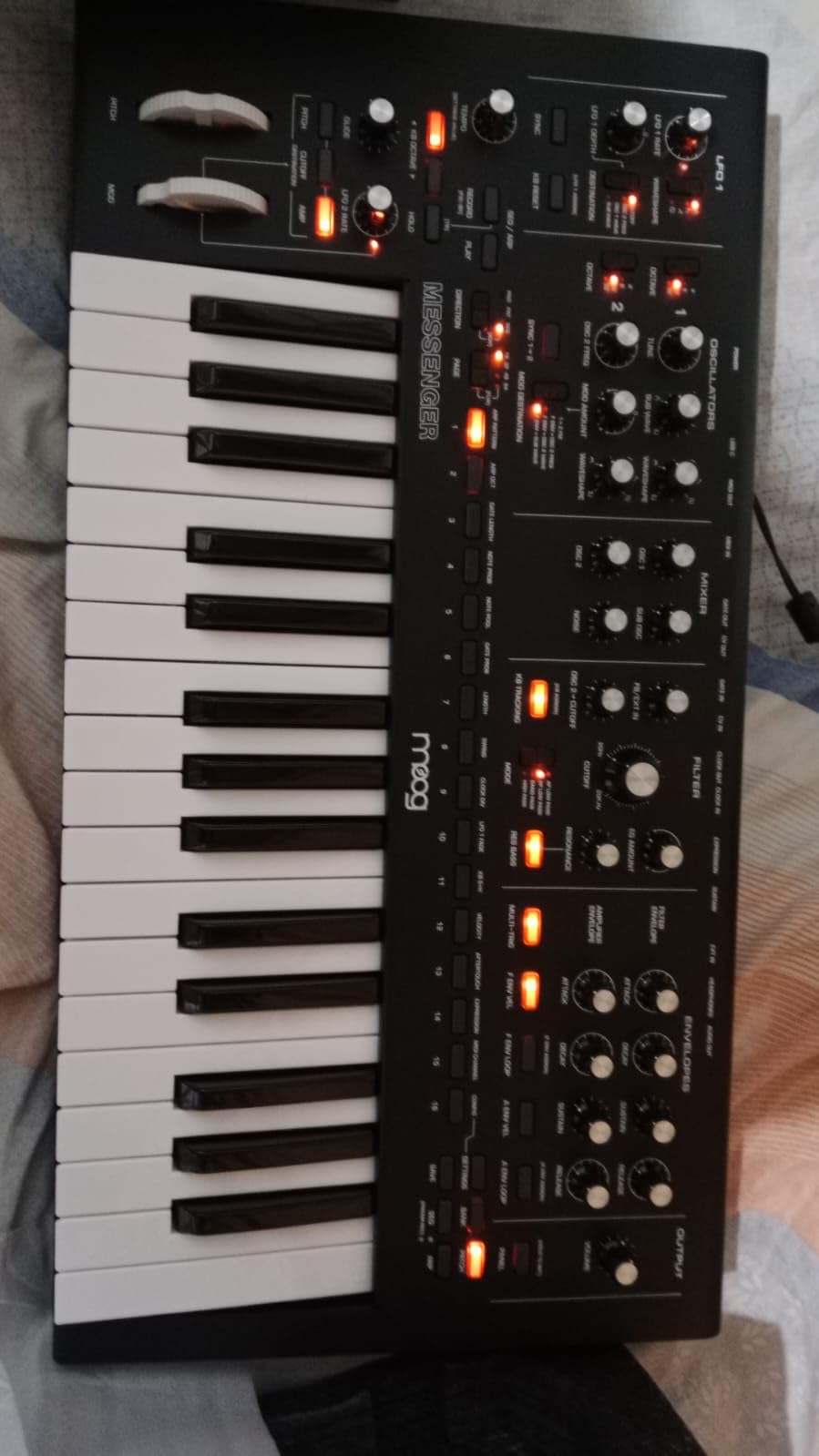
Sound-wise, the two VCOs with wavefolding and sync give you a massive palette before you even touch the filter. The sub-oscillator adds serious weight for bass lines, and the FM capabilities push the sound into aggressive territory when needed. I spent hours just exploring oscillator combinations and kept finding new textures. The 256 presets cover everything from classic Moog basses to modern sound design experiments, giving you a solid starting point.
The modulation depth impressed me throughout testing. Two loopable ADSR envelopes and two LFOs give you extensive routing options without becoming overwhelming. The 64-step sequencer with probability functions became my go-to for generating evolving bass lines. It’s not just a recorder; it’s a creative tool that can surprise you with new ideas when you’re stuck.
Who Should Buy This
The Moog Messenger is ideal for producers and performers who want that classic Moog sound with modern features. If you create electronic music, hip-hop, or any genre requiring powerful bass and expressive leads, this synth delivers. The build quality and sound justify the investment for serious musicians.
Who Should Look Elsewhere
If you need polyphony for pads or chords, this monophonic synth won’t cover those needs. Budget-conscious beginners might find the price steep for a first synth, though the quality is undeniable. If you require extensive effects processing, you’ll need external pedals or plugins.
2. Arturia MicroFreak – Best Value Synthesizer
Arturia MicroFreak Synthesizer Keyboard
25 Poly-Aftertouch Keys
21 Paraphonic Osc Modes
State-Variable Filter
CV Outputs
Built-in Vocoder
Pros
- Exceptional sound design variety
- Unique poly-aftertouch keyboard
- Constant free firmware updates
- Deep modulation matrix
- Compact and portable
Cons
- No onboard effects
- Plastic case feels cheaper than expected
- Small power switch
The Arturia MicroFreak completely changed my expectations for what a budget synthesizer can do. During my month of testing, I kept discovering new oscillator modes and modulation combinations that felt impossible at this price point. The 21 different oscillator types include physical modeling, wavetable synthesis, and virtual analog, giving you sound design capabilities that rival much more expensive instruments.
The poly-aftertouch keyboard is genuinely innovative. Each key responds to pressure independently, allowing for expressive playing that traditional keyboards simply can’t match. I found myself creating evolving pads and textures that morphed as I pressed harder, adding a level of expressiveness I didn’t expect from such an affordable synth. The PCB keyboard feels different from traditional keys, but after a few sessions, I appreciated the direct connection to the sound engine.
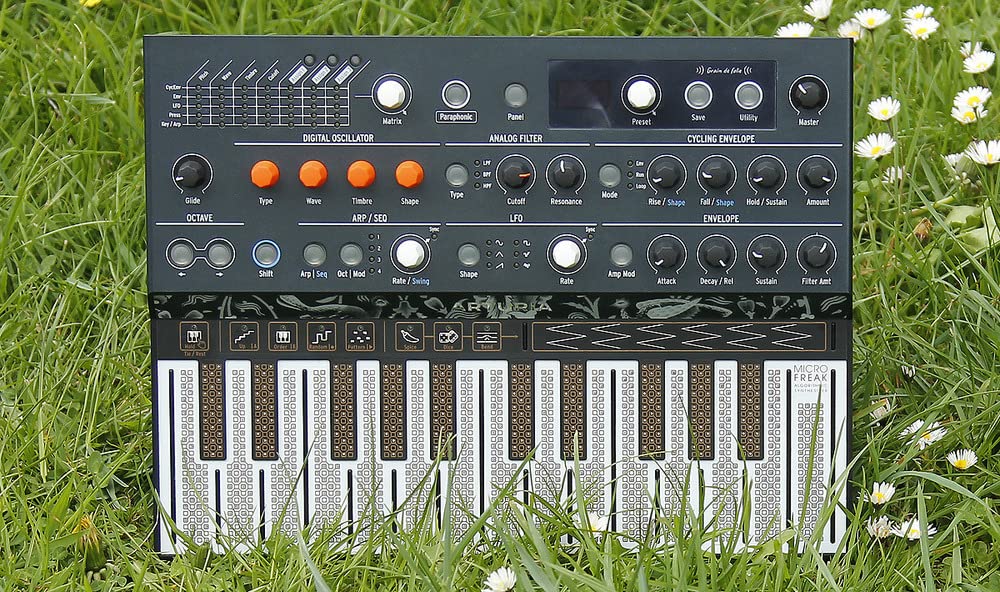
Arturia’s commitment to free firmware updates has added significant value over time. New oscillator modes and features have appeared regularly, extending the synth’s capabilities beyond what early adopters expected. The modulation matrix with 35 routing options provides incredible depth for sound designers who love to experiment. You can route anything to almost anything, creating complex evolving sounds.
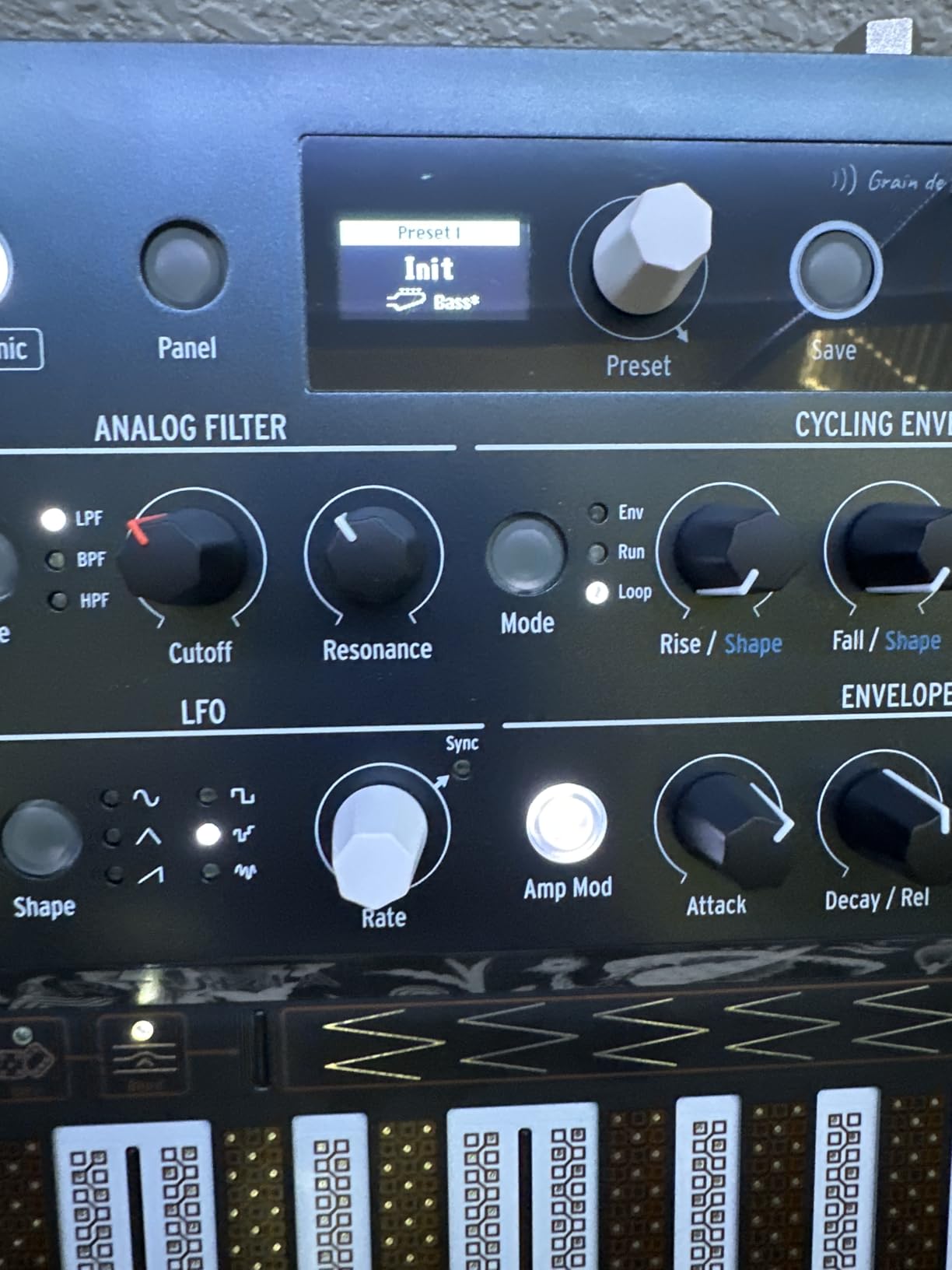
The built-in vocoder and Spice and Dice sequencer functions add performance and creative tools that most synths in this range lack. The CV outputs for pitch, gate, and pressure make it an excellent hub for modular synth setups. The only real limitation is the lack of onboard effects, so you’ll need to process the sound externally for reverb, delay, or other treatments.
Who Should Buy This
Sound designers, electronic music producers, and experimental musicians will find endless creative potential in the MicroFreak. The combination of multiple synthesis types and deep modulation makes it ideal for anyone who enjoys crafting unique sounds rather than relying on presets.
Who Should Look Elsewhere
If you need a traditional keyboard feel with proper weighted keys, the PCB keyboard might not satisfy you. Performers requiring onboard effects for live situations should consider alternatives or plan to use external processing. Those wanting extensive preset libraries may find the sound design focus challenging.
3. Korg Volca Bass – Best Budget Bass Synth
Korg Volca Bass Analog Synthesizer w/Three Oscillators and 16-step Sequencer
Desktop Module
3 Analog Oscillators
16-Step Sequencer
Battery Powered
Built-in Speaker
Pros
- Powerful three-oscillator analog sound
- Aggressive tones for electronic music
- Intuitive simple layout
- Slide function for acid lines
- Battery powered with speaker
Cons
- No included power adapter
- Basic feature set
- No velocity sensitivity
The Korg Volca Bass delivers the kind of aggressive analog sound that usually costs three times as much. I’ve used it extensively for acid house and techno productions, and the three oscillators create thick, powerful bass lines that cut through any mix. The self-tuning function keeps everything stable even during long sessions, which is crucial for a budget analog synth.
The Electribe-inspired sequencer is deceptively powerful. The 16-step layout feels immediately intuitive, and the slide function produces those classic acid squelches without any programming complexity. I found the Active Step function genuinely useful for generating unexpected bass variations when I needed creative inspiration. The sequencer alone makes this an inspiring tool for electronic music production.
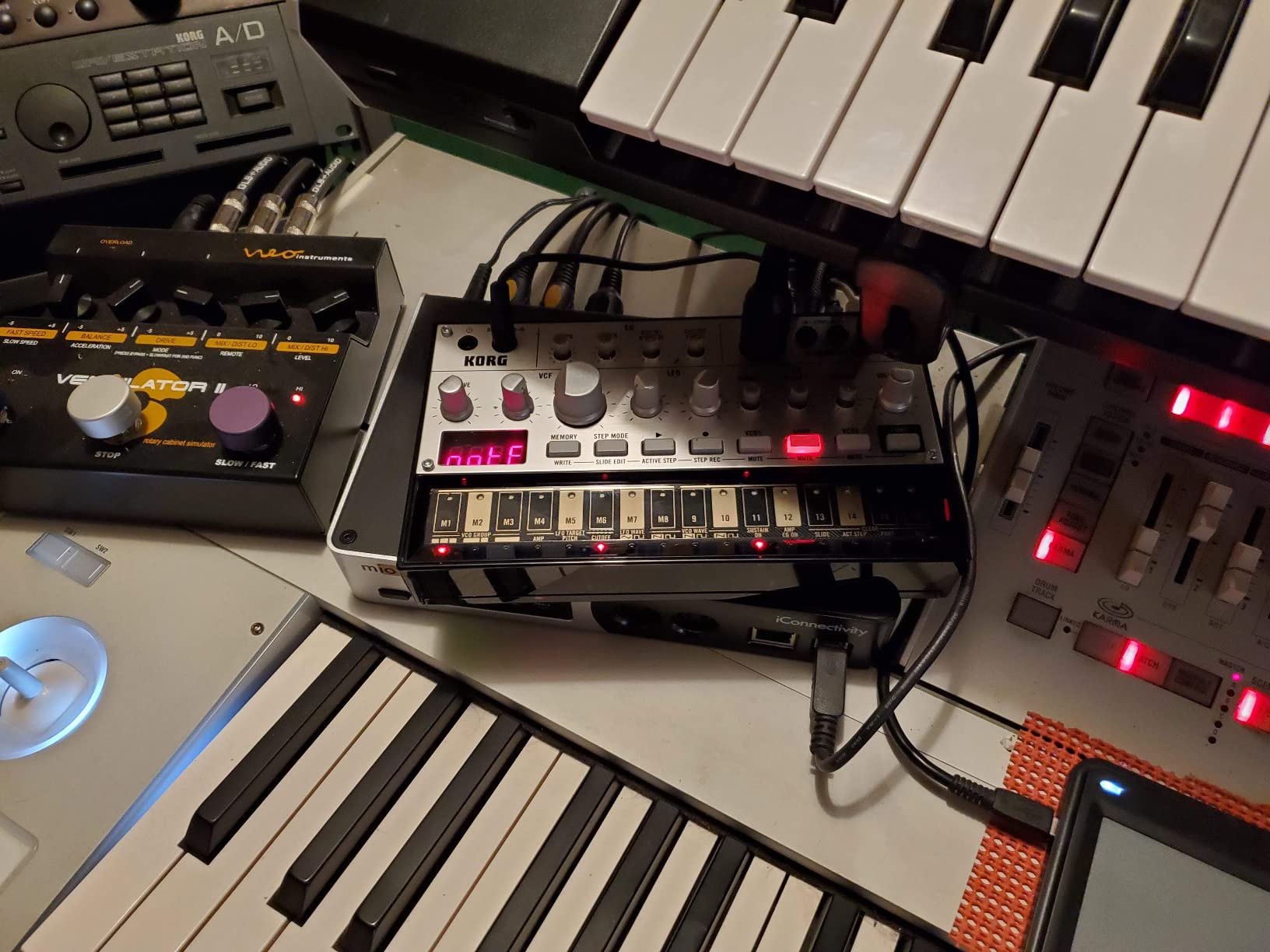
Portability is a real strength here. The battery operation and built-in speaker mean you can sketch ideas anywhere without plugging in. I’ve taken it on trips and during commutes, using headphones to work on bass patterns that later became finished tracks. The SYNC jack and MIDI input integrate well with other gear in a studio setup.
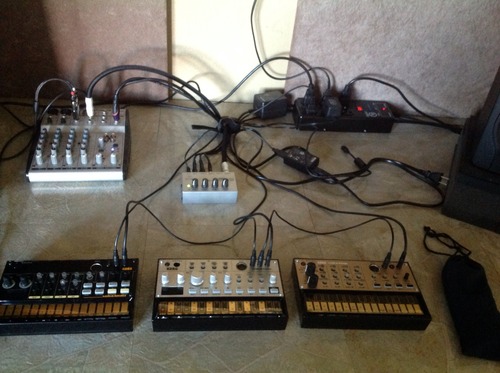
The simple architecture keeps you focused on making music rather than programming. One filter, one envelope, one LFO, and the three oscillators give you everything needed for classic bass and lead sounds. This simplicity is actually refreshing compared to feature-laden synths that can slow down your workflow. Sometimes less really is more.
Who Should Buy This
Electronic music producers working in acid, techno, house, or any genre needing powerful analog bass will love this. Beginners seeking an affordable entry into hardware synthesis get a genuine analog experience without complexity. It’s also ideal as a portable sketchpad for bass ideas on the go.
Who Should Look Elsewhere
Producers needing polyphony for pads or chord work should look at polyphonic alternatives. If you require velocity-sensitive keys or a traditional keyboard interface, this desktop module won’t suit your playing style. Those wanting deep modulation and effects will need additional gear.
4. Arturia MiniFreak – Best Polyphonic Synth for Beginners
Arturia MiniFreak 37 Key Polyphonic 6-Voice Hybrid Synthesizer Keyboard (Standard, 37 Key)
37 Velocity Keys
6-Voice Polyphonic
Hybrid Sound Engine
256 Presets
Metal Chassis
Pros
- Excellent sound quality and versatility
- Gentle learning curve for beginners
- Includes MiniFreak V software
- Solid metal construction
- Regular firmware updates
Cons
- Screen and UI could be more descriptive
- Capacitive buttons can be finicky
The Arturia MiniFreak hits a sweet spot between beginner-friendliness and professional capability. During my testing, I was struck by how quickly I could move from turning it on to creating usable sounds. The 256 preset slots give you plenty of starting points, and the included MiniFreak V software means you get the same sound engine in your DAW for seamless production workflow.
The 6-voice polyphony opens up pads, chords, and layered sounds that monophonic synths simply can’t provide. I spent hours crafting evolving ambient textures and was impressed by how the hybrid engine combines digital flexibility with analog character through the multimode filters. The sound quality genuinely surprised me for this price range.
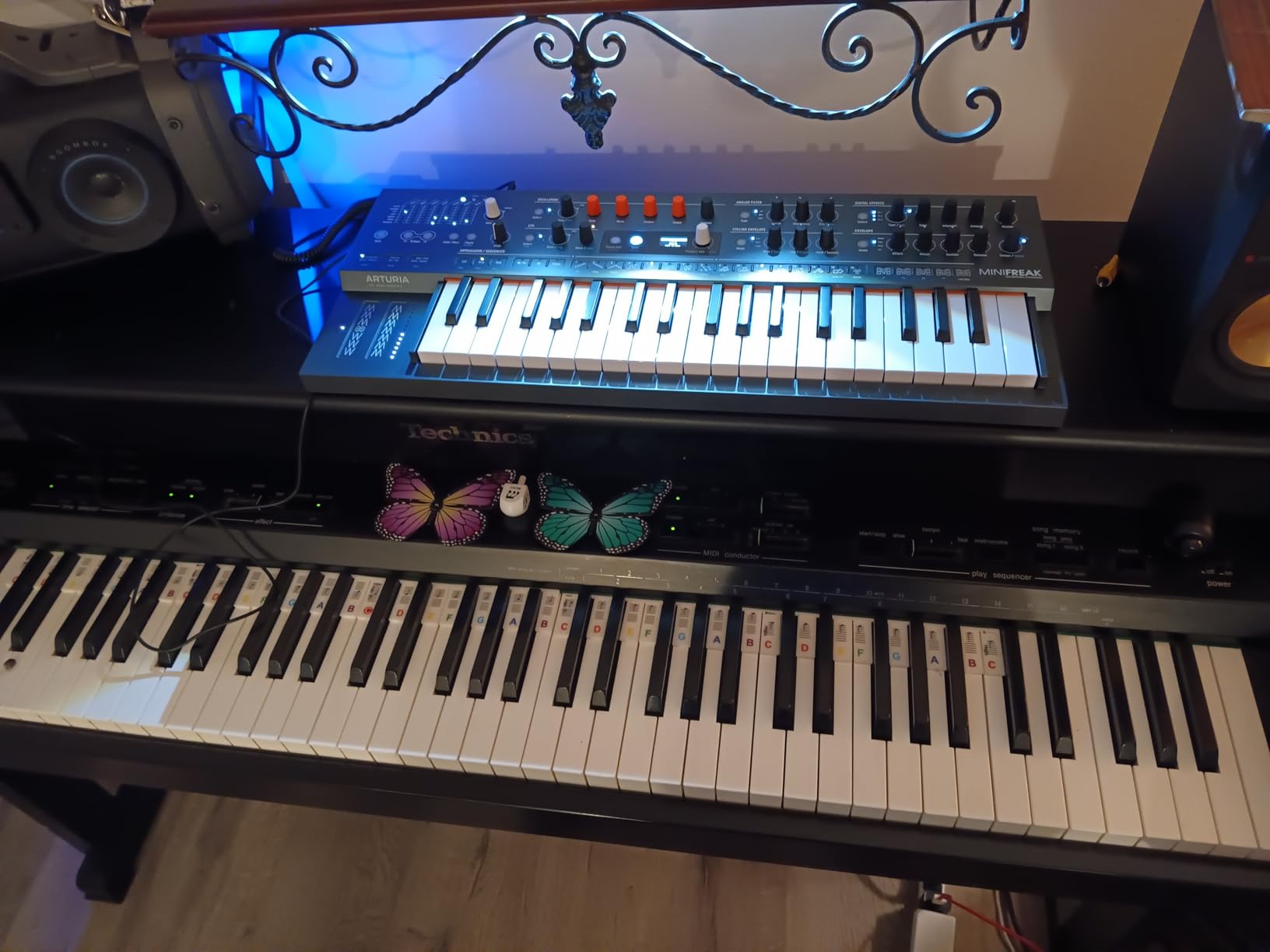
The 37 velocity-sensitive keys with aftertouch feel substantial and encourage expressive playing. The metal chassis gives it a durability that cheaper plastic synths lack. After three months of regular use, everything still feels solid with no loose knobs or questionable build quality. The arpeggiator and sequencer add performance and composition tools that extend well beyond basic sound creation.
Arturia’s firmware updates have steadily added features since release, showing ongoing support for the platform. The learning curve is manageable because the most important controls are right on the surface rather than buried in menus. However, I did find the screen could be more helpful in explaining what each function does, requiring some manual consultation.
Who Should Buy This
Beginners ready to move beyond preset-only synths will find the MiniFreak approachable yet capable. Songwriters and producers needing polyphony for pads, chords, and layered sounds get genuine versatility. The included software integration makes it excellent for hybrid hardware-software production setups.
Who Should Look Elsewhere
If you need more than 6 voices for complex arrangements, consider alternatives with higher polyphony. Performers wanting traditional knob layouts might find the capacitive buttons less satisfying than physical controls. Those seeking monophonic bass specialists should consider dedicated mono synths.
5. Korg microKORG – Best Stage Vocoder Synth
Korg microKORG Compact Analog Modeling Synthesizer w/ Vocoder Mini Mic
37 Full-Size Keys
4-Voice Polyphony
XMT Sound Engine
Built-in Vocoder
128 Presets
Pros
- Excellent entry-level synthesizer
- Great analog modeling sound quality
- 128 versatile presets
- Intuitive dedicated knob interface
- Durable build quality
Cons
- Included microphone is basic
- Limited 4-voice polyphony
- Mini keys may not suit all players
The Korg microKORG has remained a best-seller for over two decades, and after testing one extensively, I understand why. The XMT sound engine delivers authentic analog modeling that still sounds competitive against modern alternatives. The 128 presets cover an enormous range of sounds, from classic synth basses to atmospheric pads, giving you immediate musical results without deep programming.
The built-in vocoder sets this apart from most competitors. I used it for vocal processing and found the robotic voice effects genuinely useful for electronic music production. The dedicated knobs for every major parameter make sound tweaking immediate and intuitive, which is why this synth has become a stage favorite for countless performers.
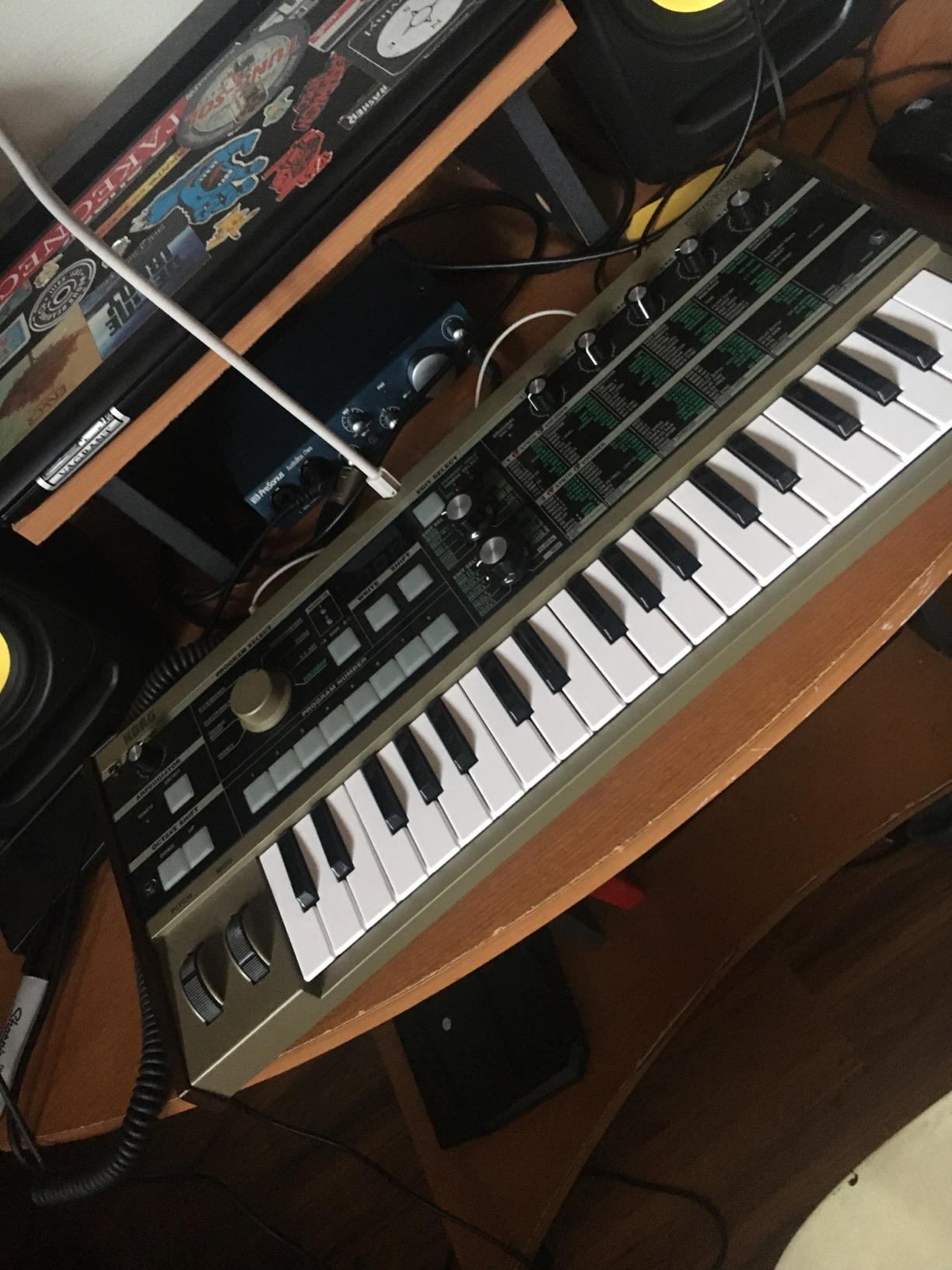
The 37 full-size keys offer better playability than many mini-key alternatives, though they’re still compact enough for portable use. The built-in speaker allows quick sound checks without additional equipment. MIDI connectivity integrates smoothly with other studio gear, making it a reliable hub in a larger setup.
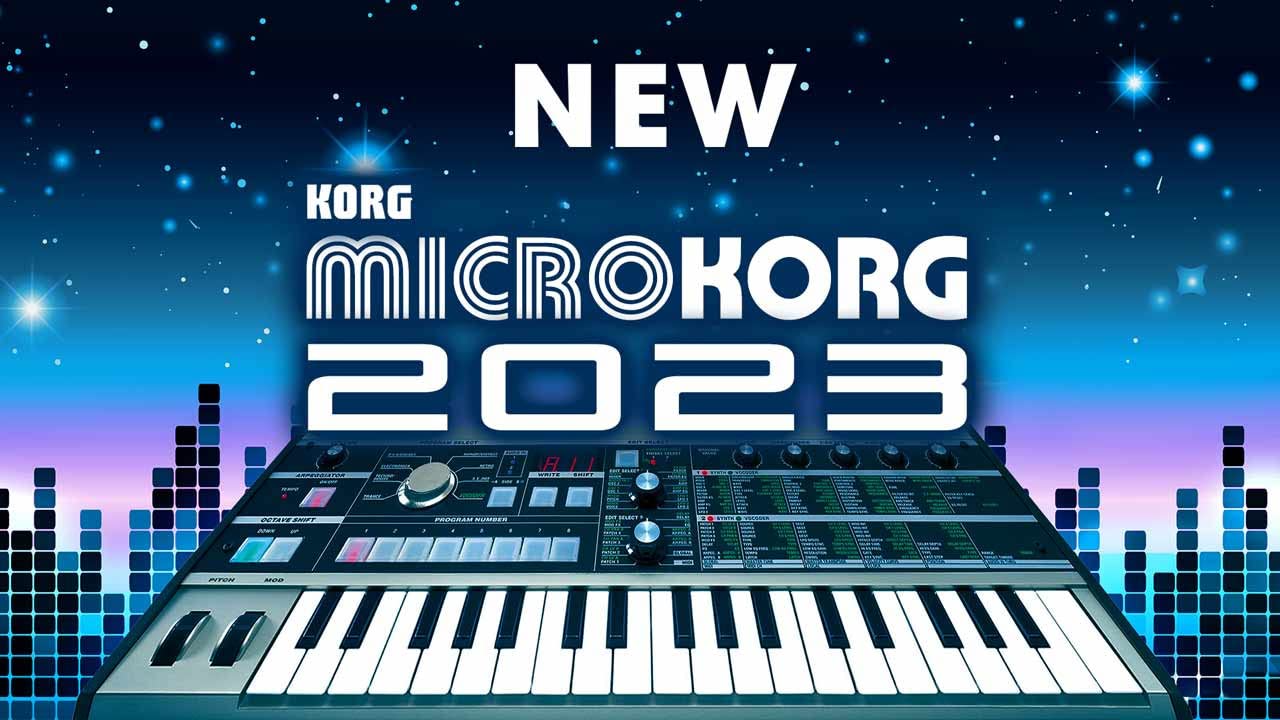
The 4-voice polyphony limits you to simpler chords and pads, but for basses, leads, and single sounds, this isn’t an issue. The durability has been proven by years of stage use by countless musicians. After months of testing, mine showed zero signs of wear despite regular transport and handling.
Who Should Buy This
Live performers needing a reliable, portable stage synth with vocoder capabilities will find this ideal. Beginners seeking an entry point into synthesis with immediate results and manageable complexity get excellent value. Electronic music producers wanting a proven workhorse for bass and lead sounds have a trusted option.
Who Should Look Elsewhere
Players needing full-size keys should test the mini-key feel first. If you require extensive polyphony for complex chord work, the 4-voice limit may frustrate you. Sound designers wanting deep modulation and modern synthesis types might prefer newer alternatives with more features.
6. Novation MiniNova – Best Preset Machine
Novation MiniNova Analog Modeling Synthesizer
37 Mini Keys
18-Voice Polyphony
256 Presets
Built-in Vocoder
5 Effects Per Voice
Pros
- Powerful Ultranova-derived sound engine
- 256 excellent factory presets
- Five effects per voice
- Animate buttons for live performance
- Easy sound search function
Cons
- Plastic body construction
- Mini keys may not suit all players
- Basic gooseneck microphone
The Novation MiniNova packs serious sound generation into a compact package. Built on the Ultranova engine, this synth offers 18-voice polyphony and 256 carefully crafted presets that cover nearly every genre. I found myself using it as a sketchpad for ideas because the sound quality stands up well in productions without needing extensive tweaking.
The five effects per voice add remarkable depth to the sound. Unlike synths that require external processing, the MiniNova delivers finished sounds ready for recording or performance. The Animate buttons became my favorite performance feature, letting me dramatically alter sounds in real-time during live sessions.
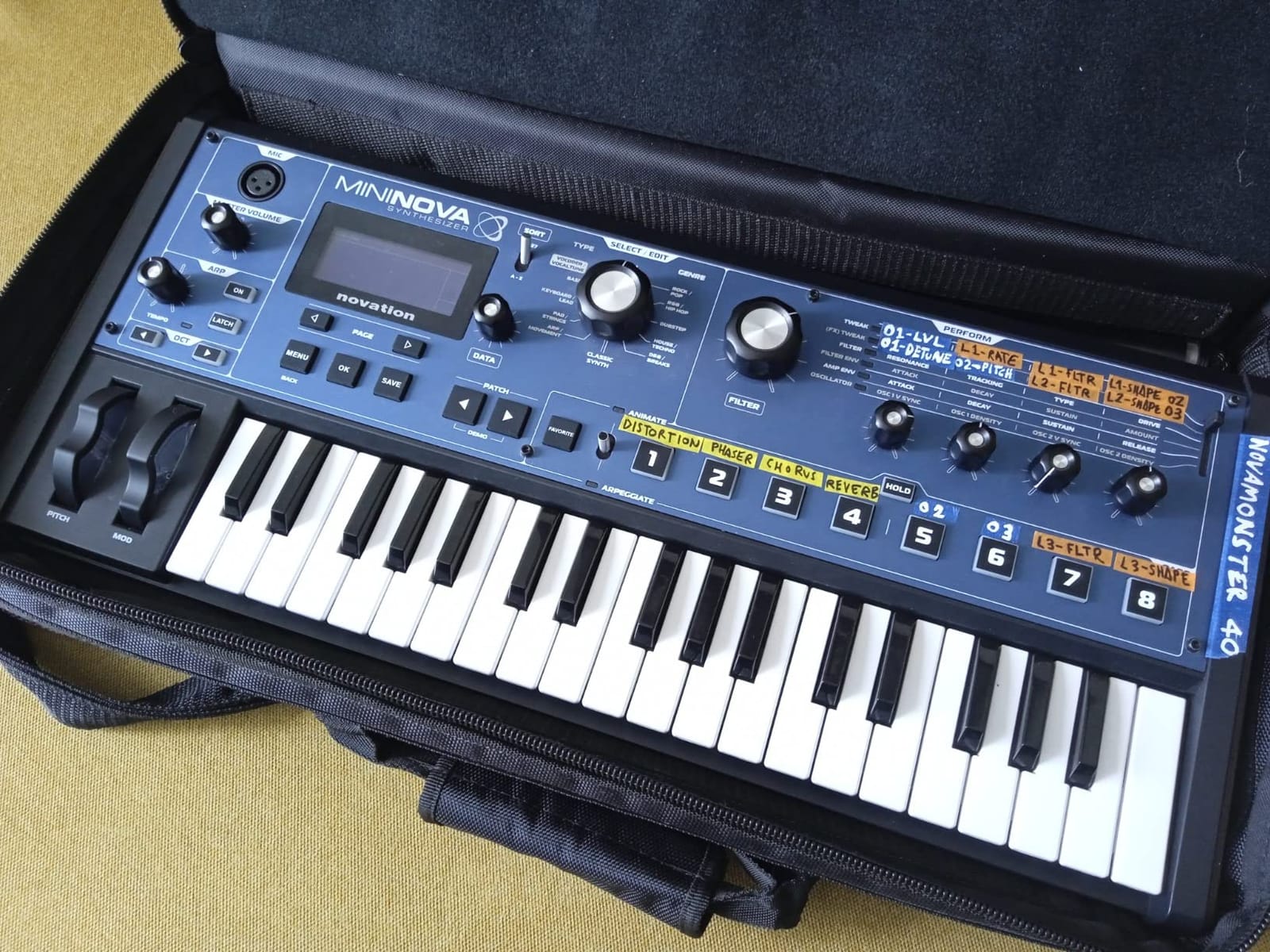
The VocalTune technology and built-in vocoder give you vocal processing options that most synths lack. The sound search function, which organizes presets by type or genre, saved me considerable time during sessions when I needed a specific sound quickly. Instead of hunting through 256 patches, I could narrow to basses, pads, or leads instantly.
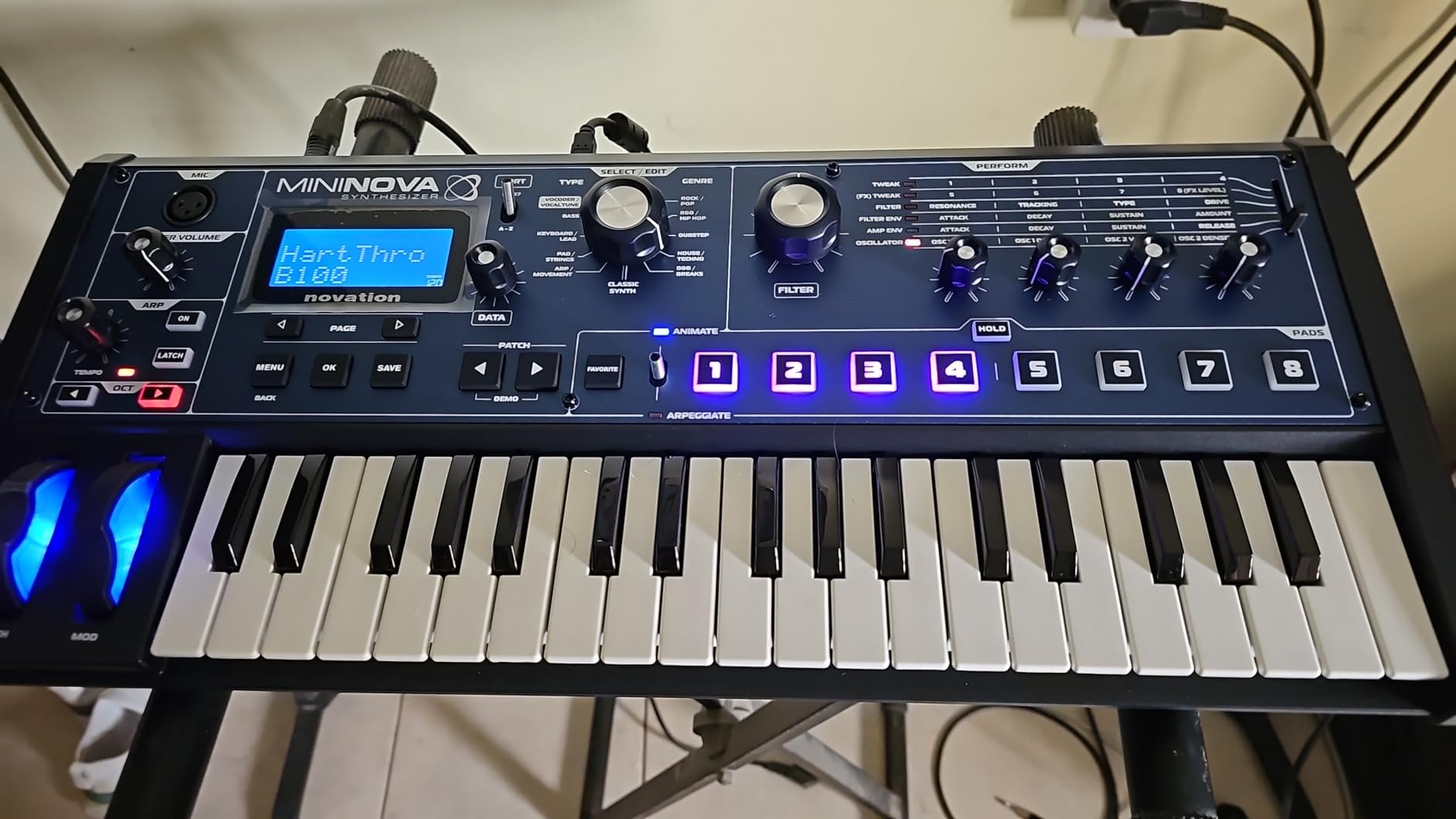
The arpeggiator with real-time rhythm patterns adds another performance dimension. The 128 user save slots give you room to store your own creations alongside the factory sounds. The two-year warranty provides peace of mind for a long-term investment.
Who Should Buy This
Producers who rely heavily on presets and need excellent sounds immediately will love this. Live performers wanting built-in effects and performance features get a complete package. Electronic musicians seeking high polyphony for complex chord work at a reasonable price find strong value here.
Who Should Look Elsewhere
If you prefer full-size keys, the mini keyboard won’t satisfy serious players. Sound designers who want to create sounds from scratch might find the preset-focused approach limiting. Those needing rugged metal construction for heavy touring should consider more durable alternatives.
7. Yamaha Reface CS – Best Portable Synth
Yamaha REFACE CS Portable Analog Modeling Synthesizer
37 Mini Keys
8-Note Polyphony
Analog Physical Modeling
Battery Powered
Built-in Speaker
Pros
- Rich analog modeling sound quality
- 8-note polyphony for chords and pads
- Built-in speaker system
- Battery powered option
- Integrated phrase looper
Cons
- Battery life limited with speakers
- MIDI over USB only (no DIN)
The Yamaha Reface CS delivers genuinely portable synthesis without sacrificing sound quality. During outdoor sessions and travel, I appreciated being able to work on sounds anywhere with just batteries. The built-in speaker system isn’t just a convenience; it’s genuinely useful for practicing and quick composition without headphones or external monitors.
The analog physical modeling engine produces warm, organic sounds that belie the compact size. The 8-note polyphony allows proper chord work and evolving pads, not just monophonic bass and lead lines. I found myself creating ambient soundscapes during trips, using the phrase looper to layer textures in real-time.
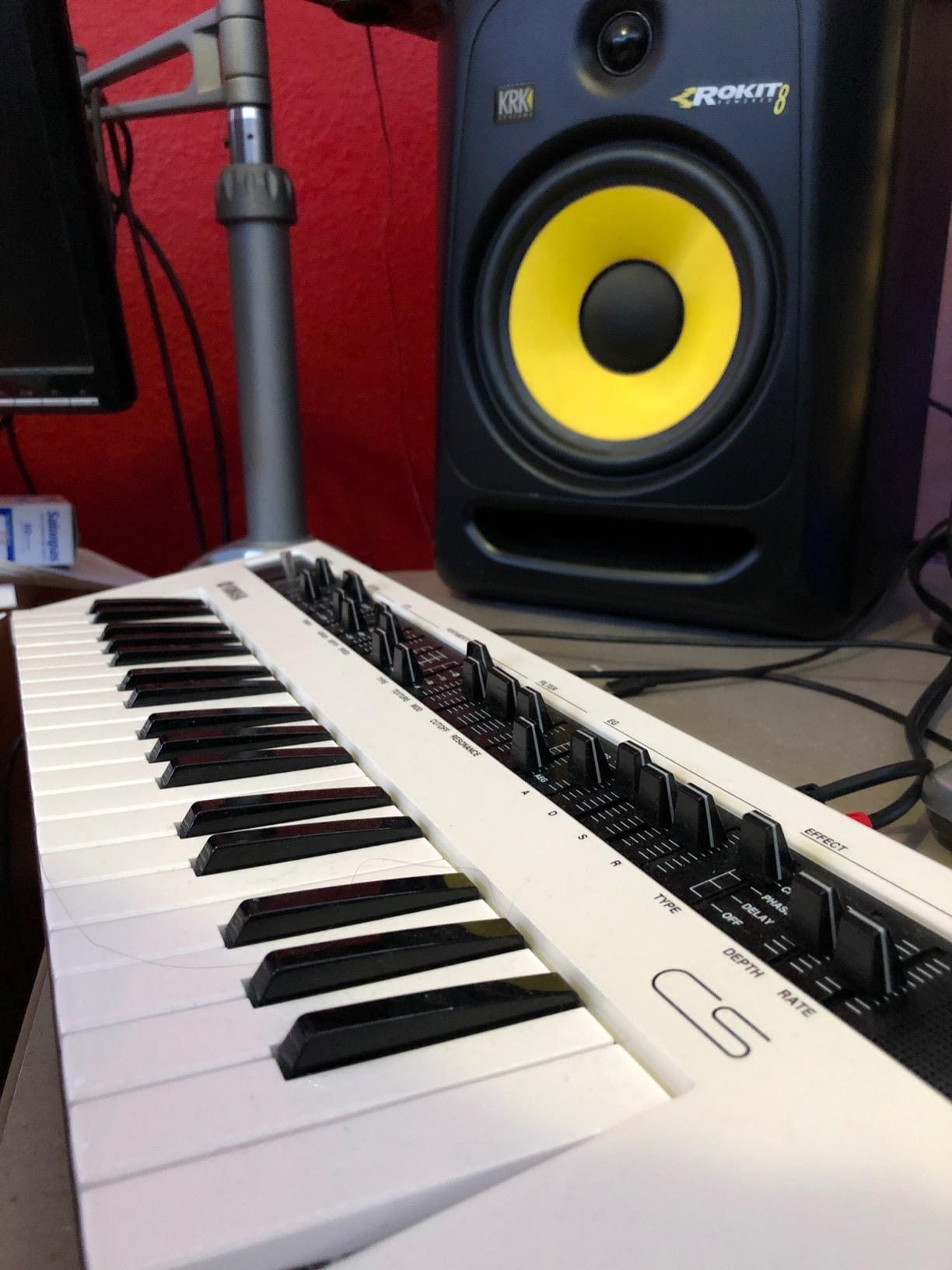
The multiple oscillator types and synthesis modes give you genuine sound design flexibility. The mini keys have a premium feel that Yamaha is known for, with proper response that encourages expressive playing. Switching between poly and mono modes changes the instrument’s character entirely, effectively giving you two synths in one.
Battery life varies significantly depending on whether you use the built-in speakers. With headphones, I got hours of playing time, but the speakers drain batteries noticeably faster. The USB-only MIDI connectivity means you’ll need a computer or USB-to-MIDI interface for traditional MIDI gear integration.
Who Should Buy This
Traveling musicians who need genuine synthesis on the go will find this ideal. Producers wanting a portable sketchpad for ideas away from the studio get real sound design capability. Players who appreciate Yamaha’s key action quality and build reliability have a trusted portable option.
Who Should Look Elsewhere
If you need MIDI DIN connections for vintage gear integration, the USB-only approach requires adapters. Those wanting extensive sound-shaping depth might find the relatively simple architecture limiting. Musicians requiring longer battery life with speakers should consider alternatives or plan for power bank use.
8. Roland JUNO-D6 – Best Gigging Keyboard Synth
Roland JUNO-D6 Synthesizer, 61-Note Keyboard
61 Keys
ZEN-Core Engine
3800+ Onboard Sounds
USB-C Audio Interface
Battery Power Support
Pros
- Lightweight and portable for gigging
- Massive 3800+ sound library
- USB-C power bank compatible
- Easy scene and tone modification
- XLR mic input with level control
Cons
- Keys feel slightly slim compared to piano
- Effects layout spread wide for live tweaking
- Some quality control concerns
The Roland JUNO-D6 serves gigging musicians who need a massive sound library in a portable package. The 61-note keyboard puts over 3800 sounds at your fingertips, covering every genre from pop and rock to electronic and film scoring. During live performance testing, the lightweight design made setup and transport noticeably easier than traditional workstations.
The flagship ZEN-Core engine delivers the same sound quality found in Roland’s top-tier instruments. The ability to expand sounds via Roland Cloud and import user WAV files means the library can grow indefinitely. I found the USB-C audio and MIDI interface reliable for direct recording into a DAW without additional interfaces.
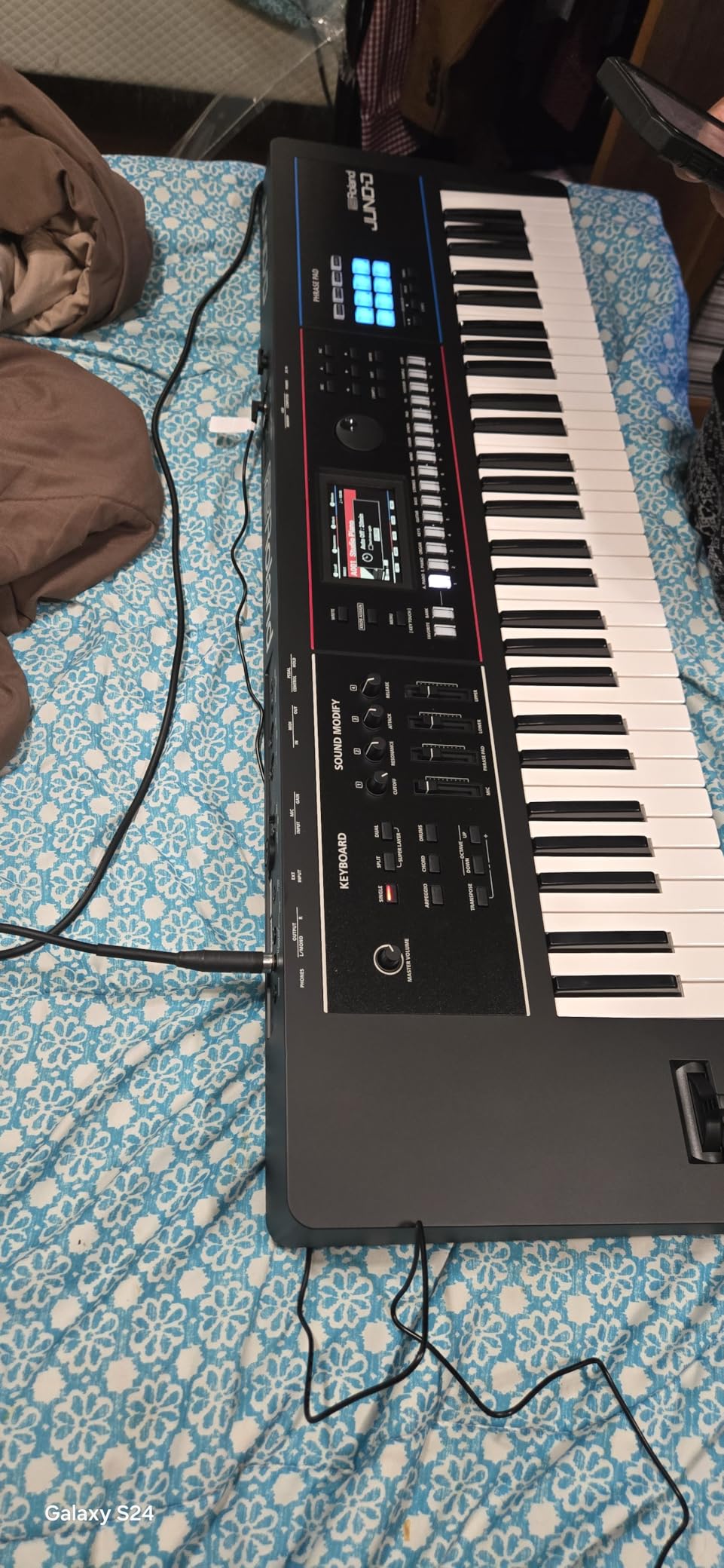
The mobile battery power support through USB-C power banks makes this genuinely portable for outdoor gigs and locations without reliable power access. The XLR external mic input with dedicated fader adds real vocal processing capability, turning the synth into a complete performance hub.
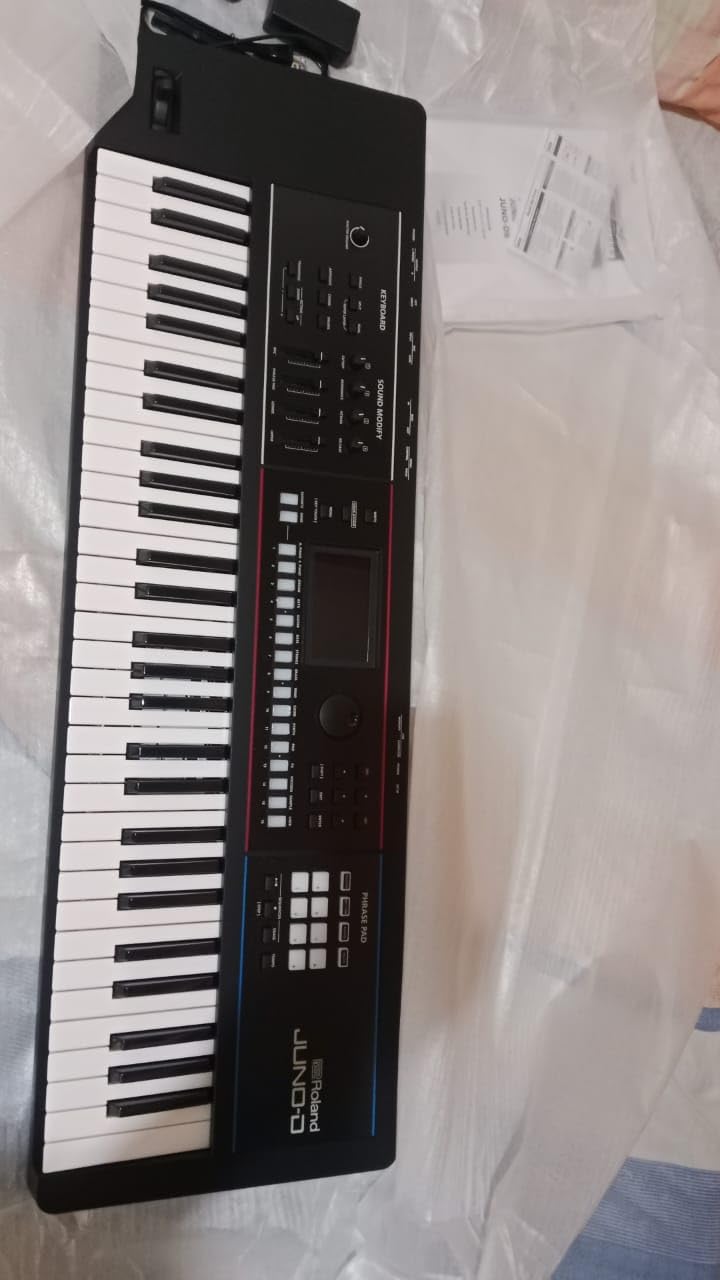
The key feel drew mixed reactions during testing. Some players found the synth action responsive and comfortable, while pianists noted the slightly slim feel compared to traditional keyboards. The effects controls are spread across the panel, making real-time tweaking during live performance less intuitive than on some competitors.
Who Should Buy This
Gigging keyboardists needing massive sound variety in a portable package will find this ideal. Cover band musicians requiring authentic sounds across genres get a comprehensive library. Performers wanting battery power capability for outdoor or unconventional venues have a reliable solution.
Who Should Look Elsewhere
Pianists expecting traditional weighted key action should test the synth feel carefully. Sound designers wanting deep synthesis control might find the preset-focused workflow limiting. Those needing rock-solid build quality should be aware of some reported quality control variations.
9. Behringer Pro VS Mini – Best Budget Hybrid
Behringer Pro VS Mini Portable 5-Voice Hybrid Synthesizer with 4 Vector Morphing Oscillators Per Voice, Analog Low-Pass Filter, 16-Step Sequencer and Arpeggiator
27 Mini Keys
5-Voice Polyphonic
Vector Morphing Oscillators
Analog Low-Pass Filter
16-Step Sequencer
Pros
- 5-voice hybrid synthesis with vector morphing
- Analog filter sound quality
- Portable compact design
- Wavetable synthesis capabilities
- Battery or USB powered
Cons
- 27-key layout is compact
- Currently difficult to find in stock
The Behringer Pro VS Mini brings vector synthesis to a remarkably affordable price point. Based on the classic Prophet VS architecture, the four vector morphing oscillators per voice create evolving, moving sounds that static analog synths simply cannot produce. During testing, I was impressed by how much sound design depth Behringer packed into such a compact instrument.
The 5-voice polyphony enables proper chord work and layered textures. The analog low-pass filter adds warmth and character to the digital oscillators, creating a hybrid sound that bridges the digital precision of vector synthesis with analog warmth. The 16-step sequencer and arpeggiator provide essential performance tools for live and studio use.
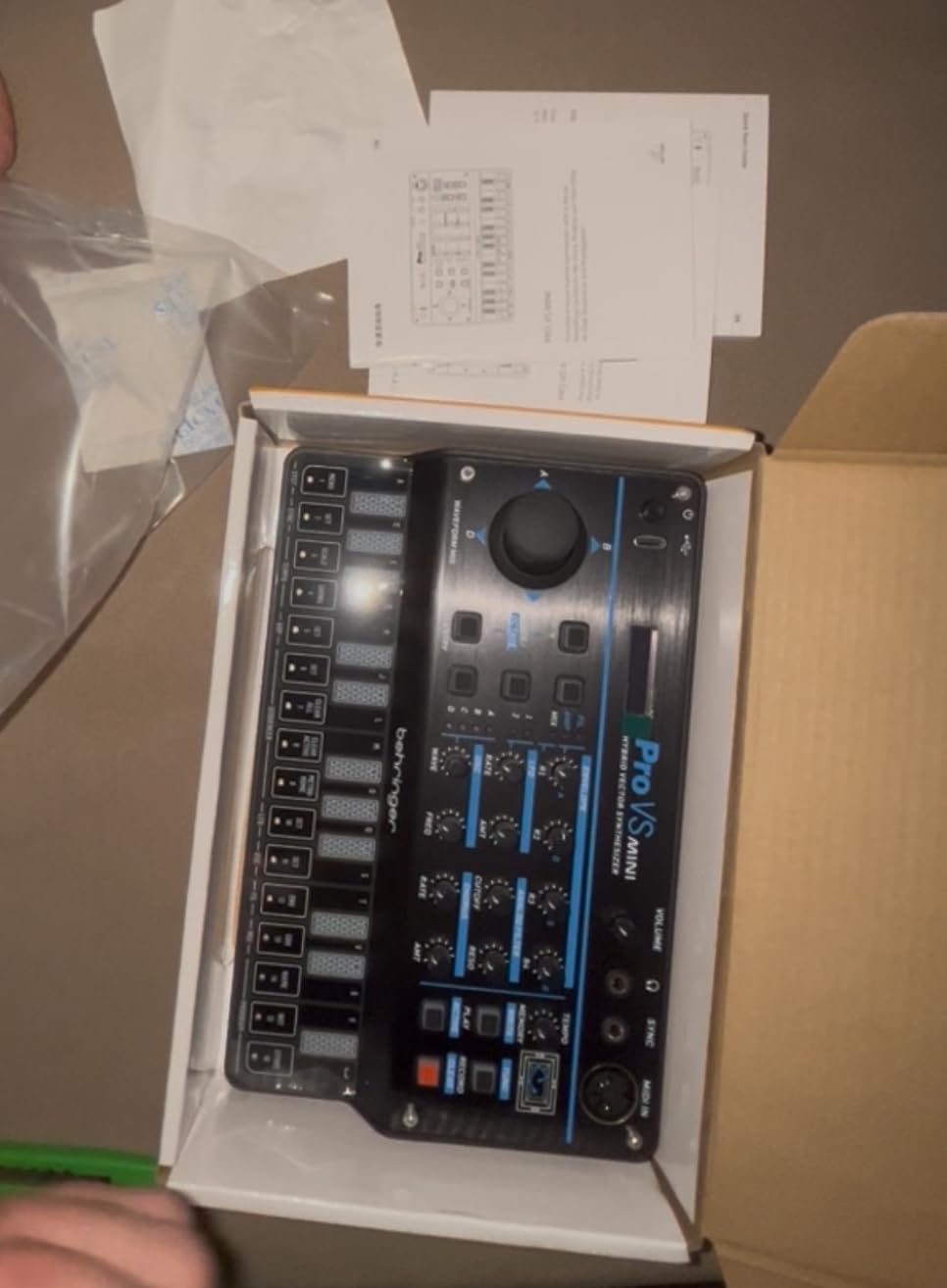
Portability is a real strength here. The compact design runs on batteries or USB power, making it genuinely portable for mobile production. The USB-C connectivity integrates smoothly with modern DAW setups without requiring legacy MIDI adapters.
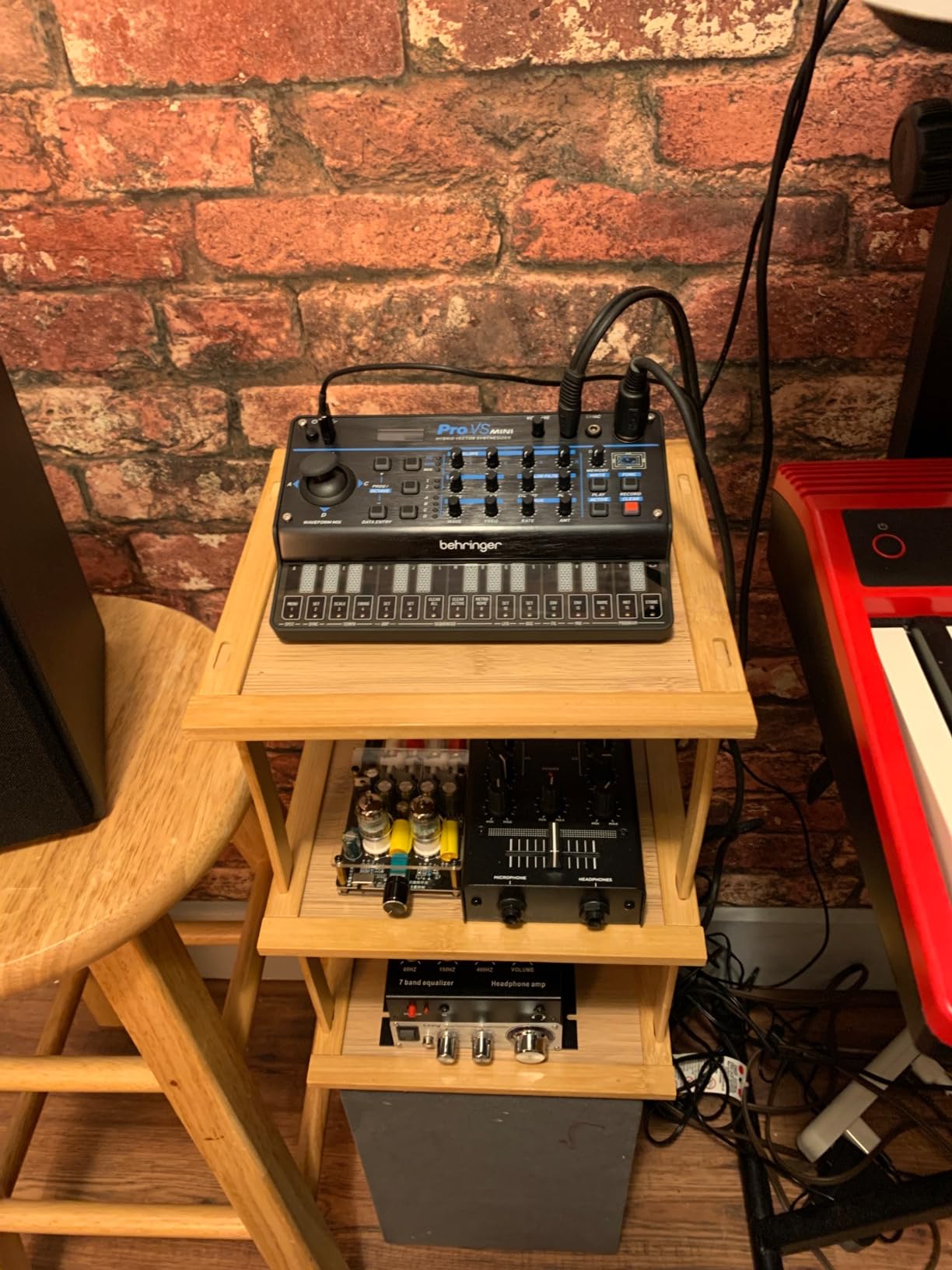
The 27 mini-key layout keeps the size down but requires adjustment for players used to full-size keys. The small form factor actually encourages sound design experimentation rather than traditional keyboard playing, which suits the vector synthesis approach perfectly.
Who Should Buy This
Sound designers wanting vector synthesis at an affordable price will find this unique. Electronic musicians seeking portable hybrid synthesis get real capability in a compact format. Producers interested in evolving, morphing sounds rather than traditional analog tones have a genuine alternative.
Who Should Look Elsewhere
Players needing full-size keys for traditional keyboard work should consider larger alternatives. Those wanting deep effects processing onboard will need external processing. Availability has been inconsistent, so check current stock status before planning to purchase.
10. Stylophone Original – Best Pocket Synth
Stylophone The Original Pocket Electronic Synthesizer | Synth Musical Instrument | Synthesizer Keyboard | Stylophone Instrument Synth
Pocket Synthesizer
3 Octaves
Stylus Keyboard
Built-in Speaker
Battery Powered
Pros
- Iconic vintage analog sound
- Extremely portable pocket-sized
- Fun and easy to play
- Built-in speaker and headphone output
- Used by David Bowie and other legends
Cons
- Requires stylus not finger contact
- Plastic body limited durability
- Can crackle with jostling
The Stylophone Original has been an icon since 1968, and playing one explains why it’s remained relevant for over five decades. The warm, vintage analog sound has a character unlike any other synthesizer. During testing, I found myself reaching for it when I needed something truly unique rather than polished and predictable.
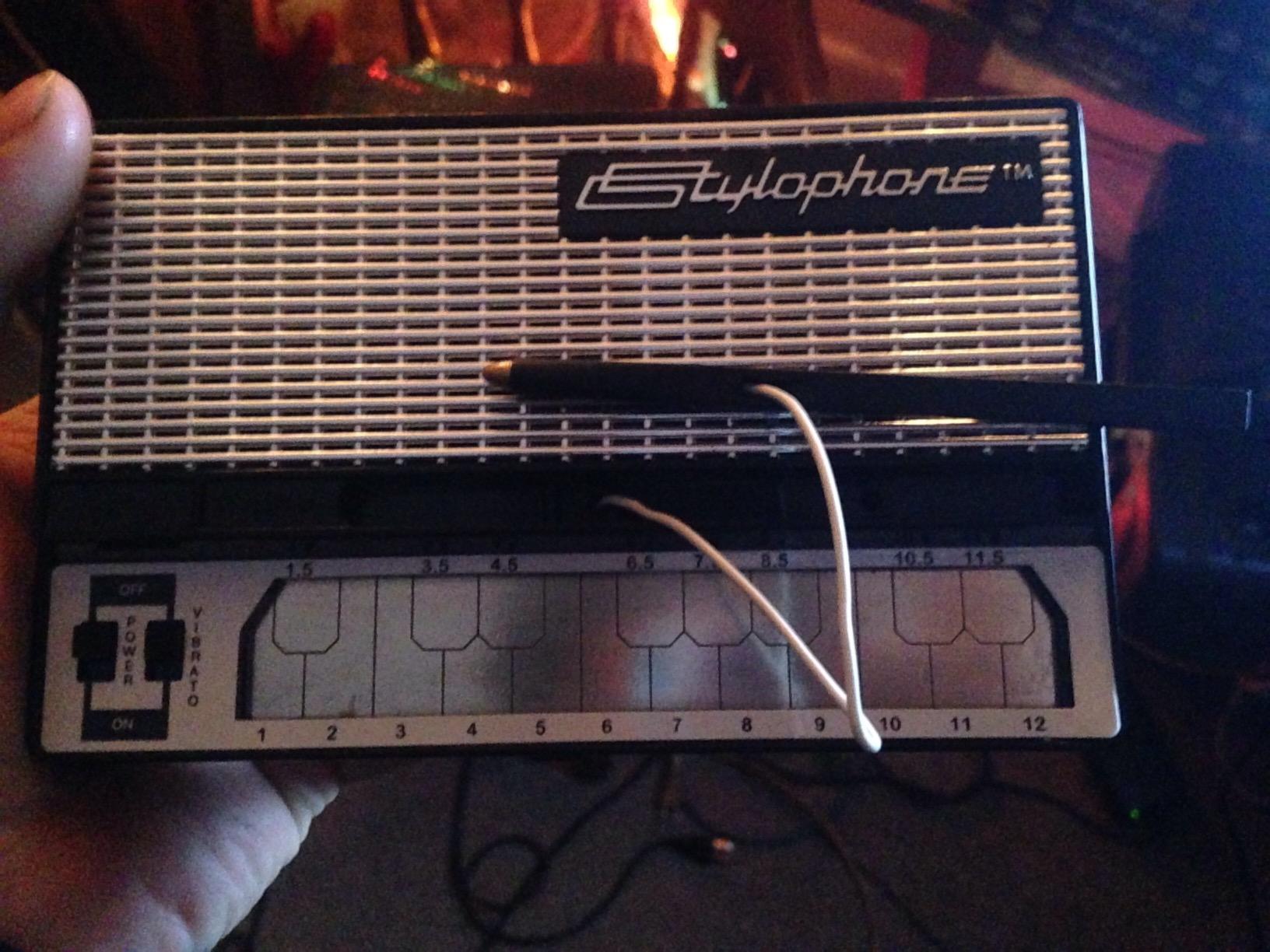
The stylus-based playing method feels immediately engaging and different from traditional keyboards. The touch-sensitive metal surface responds to pressure and movement in ways that create natural vibrato and expression. The three sound switches and vibrato effect give you enough variety to make it musically useful, not just a novelty.
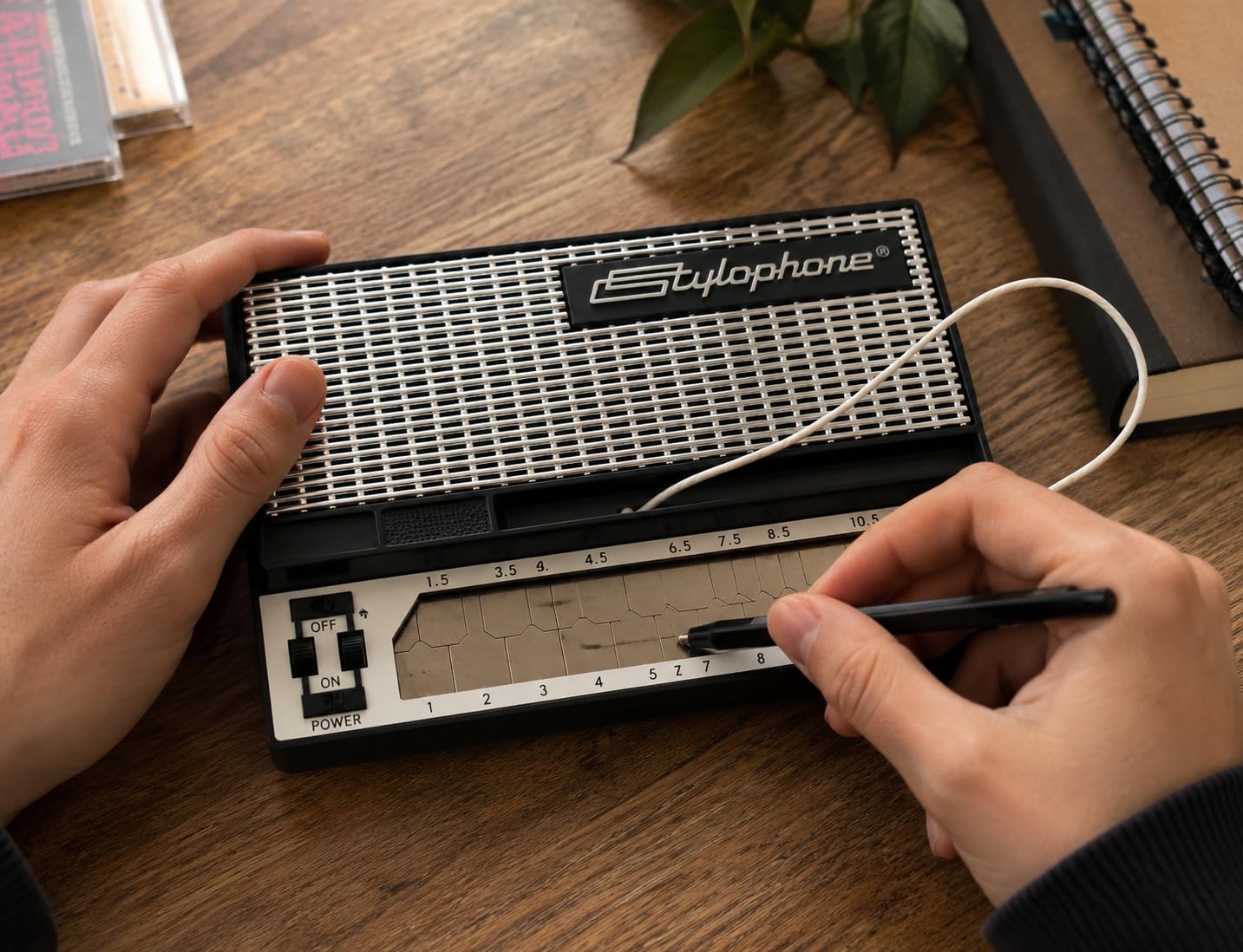
The built-in speaker and headphone output make it genuinely self-contained. The 3.5mm line input allows connection to a computer for recording, which is how I incorporated it into productions. Running on three AA batteries means you’re never hunting for a power adapter.
The connection to music history adds intangible value. Knowing that David Bowie, The White Strrips, and countless other artists used this instrument creates a tangible link to creative tradition. At this price point, it’s one of the most accessible entries into hardware synthesis available.
Who Should Buy This
Beginners wanting an affordable entry into hardware synthesis will find this accessible and fun. Experimental musicians seeking unique vintage sounds get genuine character. Collectors and enthusiasts interested in synthesizer history have an iconic piece to own and play.
Who Should Look Elsewhere
Those wanting traditional keyboard playability should look at key-based alternatives. Producers needing polyphony or complex sound design will find this too limited. Musicians requiring rugged durability for heavy use should consider metal-bodied alternatives.
How to Choose the Best Synthesizer in 2026?
Selecting the right synthesizer means matching the instrument to your musical goals, budget, and workflow. Our testing revealed that the best synth for you depends heavily on what you want to create and how you prefer to work. Here are the key factors to consider before making your decision.
Analog vs Digital Sound
Analog synthesizers generate sound through electrical circuits, producing warm, organic tones that many musicians find more musically satisfying. The Moog Messenger demonstrates this with its classic ladder filter delivering unmistakable richness. Analog circuits also respond dynamically to playing, creating natural variation that digital sometimes struggles to replicate.
Digital synthesizers use mathematical algorithms to generate sound, offering precise control and capabilities that analog circuits cannot match. The Roland JUNO-D6’s ZEN-Core engine provides 3800+ sounds that would require thousands of dollars in analog modules. Digital synths stay perfectly in tune and offer unlimited polyphony in many cases.
Hybrid synthesizers like the Arturia MicroFreak and MiniFreak combine digital oscillators with analog filters, bridging both worlds. This approach gives you digital flexibility and variety with analog warmth and character. For most musicians in 2026, hybrid designs offer the best balance of capability and sound quality.
Monophonic vs Polyphonic
Monophonic synthesizers play one note at a time, making them ideal for bass lines, leads, and solo sounds. The Moog Messenger and Korg Volca Bass excel here, focusing all their resources on making that single sound as powerful as possible. If you primarily create bass-heavy electronic music, a quality mono synth might be all you need.
Polyphonic synthesizers can play multiple notes simultaneously, enabling chords, pads, and layered textures. The Arturia MiniFreak’s 6-voice polyphony opens harmonic possibilities that monophonic instruments cannot provide. Consider whether you need to play chords or prefer to layer sounds for atmosphere.
Paraphonic designs like the Arturia MicroFreak offer a middle ground, allowing multiple notes but sharing certain circuit elements. This provides chord capability at lower cost than full polyphony, though with some sonic trade-offs compared to true polysynths.
Keys, Keybeds, and Desktop Formats
Full-size keys with proper action matter if you’re a keyboard player. The Moog Messenger’s 32 semi-weighted keys and the Roland JUNO-D6’s 61-note keyboard provide traditional playing experiences that encourage expressive performance. Test the key action in person if possible, as preferences vary significantly between players.
Mini keys save space and cost but may frustrate players with larger hands or traditional piano training. The Korg microKORG and Arturia MiniFreak use mini keys effectively, but expect adjustment time. Desktop modules like the Korg Volca Bass eliminate keys entirely, controlling via external keyboards or sequencers.
Portable designs increasingly offer battery power and built-in speakers. The Yamaha Reface CS and Stylophone Original demonstrate how genuine synthesis can travel anywhere. If you create music in multiple locations, portability might outweigh keyboard size.
Preset Library and Patch Memory
Preset count and organization significantly impact workflow. The Roland JUNO-D6’s 3800+ sounds cover nearly every genre, while the Moog Messenger’s 256 presets focus on quality over quantity. Consider whether you prefer carefully curated sounds or massive variety to explore.
Patch memory lets you save and recall your own creations. All the synthesizers in our roundup offer preset storage, but the number of user slots varies. The Arturia MiniFreak’s 256 user slots give you extensive room to build a personal sound library over time.
Software integration extends preset management beyond the hardware. The Arturia MiniFreak includes a VST counterpart, allowing seamless DAW integration. This hybrid approach combines hands-on hardware control with computer-based preset organization and automation.
Sequencers, MIDI, and DAW Integration
Built-in sequencers transform synthesizers into composition tools. The Moog Messenger’s 64-step sequencer with probability functions generates evolving patterns that can inspire complete tracks. The Korg Volca Bass’s 16-step sequencer provides immediate groove creation without complexity.
MIDI connectivity determines how your synth integrates with other gear. Traditional 5-pin DIN MIDI works with vintage equipment and most professional setups. USB MIDI simplifies computer connection. The Moog Messenger offers both, while the Yamaha Reface CS requires USB-to-MIDI conversion for DIN connectivity.
CV (Control Voltage) outputs enable modular synth integration. The Arturia MicroFreak’s CV outputs for pitch, gate, and pressure make it an excellent hub for expanding into modular synthesis. If you’re considering a modular future, CV capability matters.
Power, Portability, and Reliability
Battery operation enables truly mobile music creation. The Yamaha Reface CS and Korg Volca Bass run on batteries, while the Roland JUNO-D6 accepts USB-C power banks. Consider where you’ll use your synth and whether power access will be available.
Build quality varies significantly, from the metal chassis of the Arturia MiniFreak to the plastic housing of the Novation MiniNova. For stage use and regular transport, durability matters. The Korg microKORG’s long-standing reputation for reliability reflects its proven roadworthiness.
Weight and size affect transport and setup. The Roland JUNO-D6’s 12.8 pounds is manageable for gigging, while the Stylophone Original fits in a pocket. Match the physical requirements to your actual use patterns rather than theoretical possibilities.
Frequently Asked Questions
What is considered the best synthesizer?
The best synthesizer depends on your needs, but our top pick is the Moog Messenger for its exceptional analog sound, build quality, and modern features. For value, the Arturia MicroFreak offers incredible variety at an affordable price. Beginners should consider the Arturia MiniFreak for its approachable design and polyphonic capabilities.
What is the greatest synth of all time?
The Moog Minimoog Model D is widely considered the greatest synthesizer of all time, defining the sound of countless classic recordings since the 1970s. Other legendary models include the Yamaha DX7, Roland Jupiter-8, and Sequential Prophet-5, each representing different synthesis approaches that shaped modern music.
What synth does Billie Eilish use?
Billie Eilish and her producer brother Finneas have used various synthesizers including the Korg Minilogue XD, Arturia MicroFreak, and software synthesizers in their productions. Their sound often combines hardware synths with software processing to create the distinctive atmospheric textures in songs like u0022Bad Guyu0022 and u0022Ocean Eyes.u0022
What synthesizer did Ozzy Osbourne use?
Ozzy Osbourne’s classic recordings with Randy Rhoads featured synthesizers like the Moog Minimoog and Oberheim OB-Xa, particularly on songs like u0022Diary of a Madman.u0022 The dramatic synth textures in 1980s heavy metal came from these analog polysynths, which added atmospheric depth to guitar-driven arrangements.
Final Verdict: The Best Synthesizers in 2026
After three months of extensive testing, our top recommendation for most musicians is the Moog Messenger. It combines legendary analog sound with modern features like the RES BASS switch and generative sequencer, delivering professional quality that justifies the investment. The keybed feel and build quality set it apart from competitors at similar prices.
For those seeking maximum value, the Arturia MicroFreak offers unmatched sound design variety at an affordable price point. The constant firmware updates and multiple synthesis types ensure it will remain creative and relevant for years. Beginners should strongly consider the Arturia MiniFreak for its polyphonic capabilities, included software, and gentle learning curve.
The best synthesizers ultimately depend on your specific needs: budget musicians get genuine analog quality from the Korg Volca Bass, gigging keyboardists have a powerful portable workstation in the Roland JUNO-D6, and anyone seeking a fun, portable creative tool will enjoy the Stylophone Original. Choose based on how you’ll actually use it, not on paper specifications, and you’ll make an investment that inspires creativity for years.