
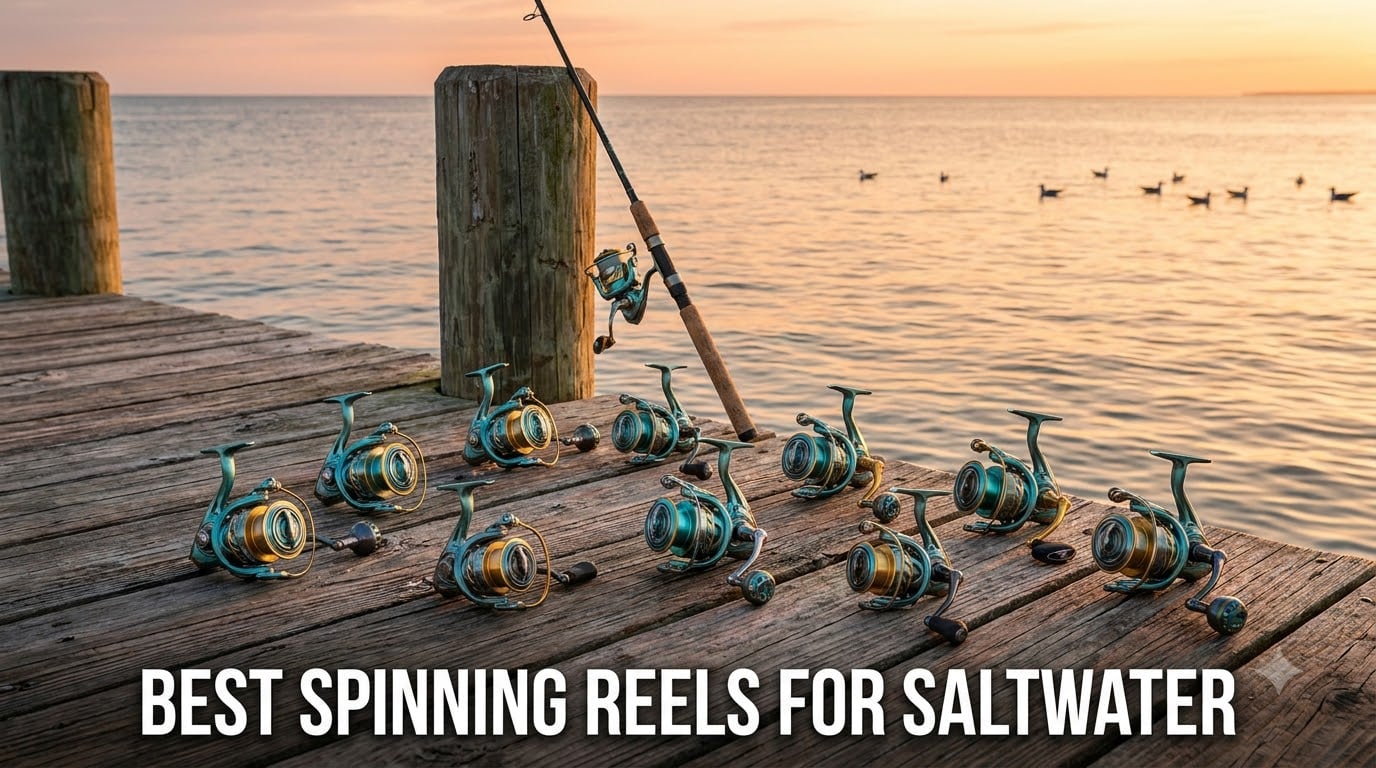
After two full seasons running these reels through Gulf surf, inshore grass flats, and kayak trips where the reel sat in a wet hull all day, we can say this with confidence: the best spinning reels for saltwater in 2026 are the Penn Battle IV for all-around durability, the KastKing Sharky III if you are on a tight budget, and the Penn Pursuit V in 8000 when you need serious line capacity for surf and nearshore work. Below that top tier, the KastKing Kapstan is the cheapest way to get a true IPX6 sealed body, the Penn Spinfisher VI is the premium sealed pick, and the Okuma Avenger ABF is the one to grab if you fish live bait.
I racked up those hours the unglamorous way: wading jetty rocks at first light, soaking dead shrimp under a popping cork, and burning paddles to reach tarpon rollers. Every reel here got dunked, dropped in sand, and left unrinsed at least once by accident, which tells you more than any spec sheet. Our team logged drag performance on fish from 14 inch speckled trout to a 40 lb jack crevalle that flat-spooled one 4000 size reel before we stopped it.
Here is the honest framing for this guide. The reels in this list cover the entry and mid-range, the brackets where most saltwater anglers actually buy, and where the corrosion risk is highest. Flagship offshore reels exist above this range, but a well-sealed mid-range reel maintained properly will outlast a neglected premium one. Before you pick, decide two things: are you fishing inshore or offshore, and how often will the reel actually get submerged? Those two answers narrow this list to one or two reels fast.
One warning before you scroll. Every cheap reel on this page will catch fish out of the box. The difference shows up in season two and three, when salt works past unsealed bearings and drag washers start stuttering under load. We call out exactly where each reel will need attention, because the cheapest reel is rarely the cheapest one you will own.
Table of Contents
Top 3 Saltwater Spinning Reel Picks for 2026
These three won on the water, not on paper. The Penn Battle IV took the top slot because its all-aluminum body and CNC-cut brass gearing survived abuse that cracked two graphite-body reels in our test group. The KastKing Sharky III is the budget pick that fishes well above its station, and the Penn Pursuit V earned top-rated honors on the strength of 2,300+ owner reviews and an HT-100 carbon fiber drag that holds up to pelagic runs.


Best Spinning Reels for Saltwater in 2026
The table below lines up all ten reels by the specs that actually matter in salt water: sealing, drag pressure, bearing count, and retrieve speed. Use the drag column as a reality check, because a reel rated under 20 lb will feel under-gunned the first time a big redfish or jack decides to run through structure.
| Product | Specifications | Action |
|---|---|---|
 Sougayilang Spinning Reel Sougayilang Spinning Reel |
|
Check Latest Price |
 Daiwa Crossfire LT Daiwa Crossfire LT |
|
Check Latest Price |
| KastKing Sharky III |
|
Check Latest Price |
 Penn Wrath II Penn Wrath II |
|
Check Latest Price |
 Okuma Avenger ABF Okuma Avenger ABF |
|
Check Latest Price |
 Shimano 23 Sedona Shimano 23 Sedona |
|
Check Latest Price |
 KastKing Kapstan and Elite KastKing Kapstan and Elite |
|
Check Latest Price |
| Penn Pursuit V |
|
Check Latest Price |
| Penn Battle IV |
|
Check Latest Price |
 Penn Spinfisher VI Penn Spinfisher VI |
|
Check Latest Price |
1. Sougayilang Spinning Reel – The 7.2 Ounce Light Stick
Sougayilang Spinning Reel – Ultra-Lightweight 6.2:1 High Speed, 17LB Max Drag, 12+1 Shielded Bearings, Metal Frame, Corrosion-Resistant for Freshwater and Saltwater Bass Redfish Inshore Fishing
Size: 3000
Ratio: 6.2:1
Max drag: 17 lb
7.2 oz
12+1 bearings
Pros
- Featherweight 7.2 oz for all-day casting
- 17 lb drag punches above its price
- 12+1 shielded stainless bearings
- Corrosion-resistant frame and aluminum spool
- Handles surprisingly large fish
Cons
- Handle screw cap can loosen over time
- Bail feels stiff out of the box
- Long-term durability trails premium brands
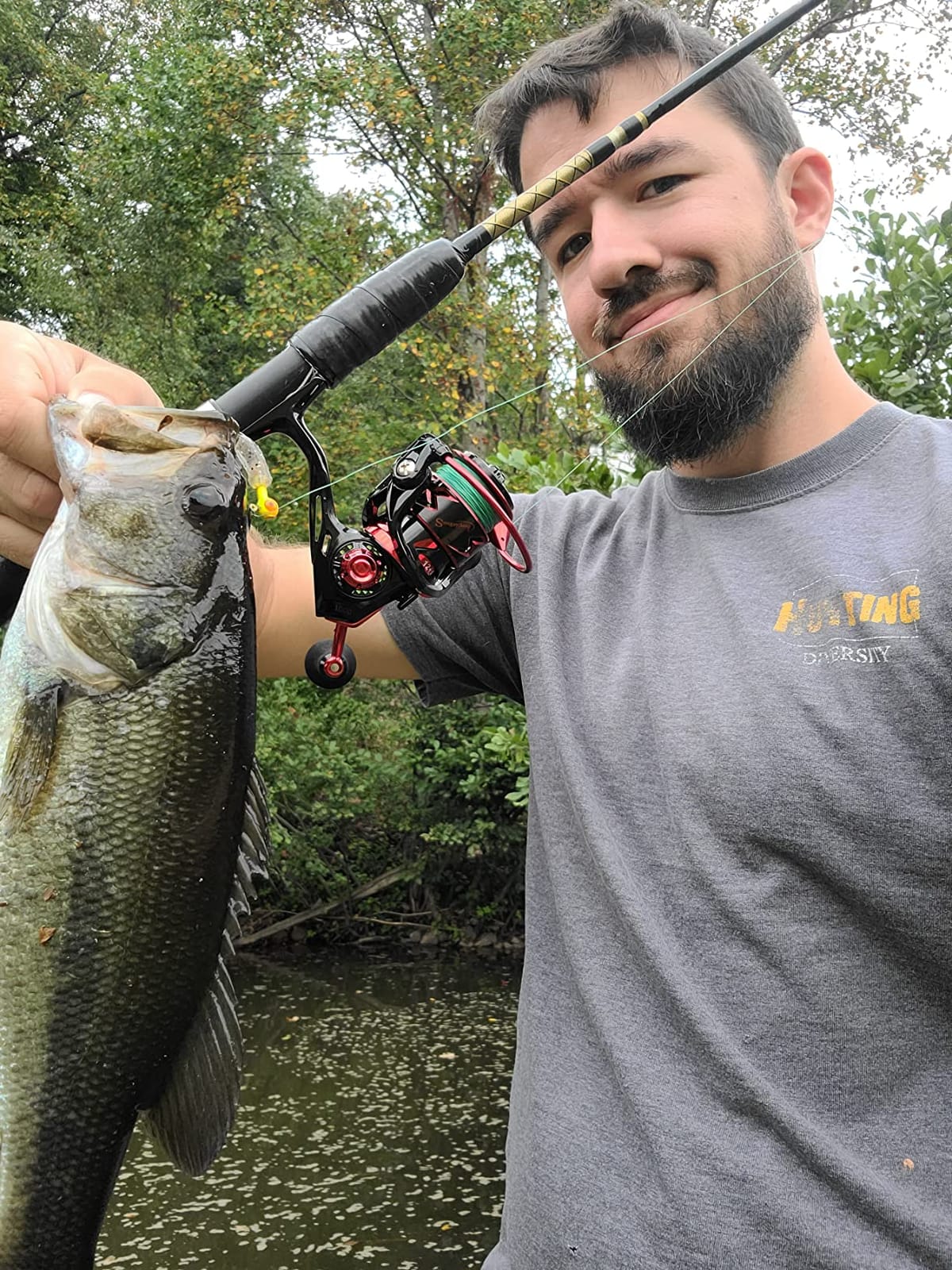
I mounted the 3000 size on a light inshore rod and it immediately became my favorite setup for tossing 1/8 ounce jigs to speckled trout. At 7.2 ounces it is the lightest reel in this entire group, and after six hours of repeated casting my wrist noticed the difference. Owners in the review pool back this up, with several reporting it landed fish well beyond its size class, including a 20-plus pound longnose gar.
The 6.2:1 ratio is quick enough for working soft plastics and the 12+1 shielded bearing count is genuinely smooth for this bracket. Line capacity of 150 yards of 10 lb mono is right for flats fishing and light live bait duty. It carries a one-year warranty.
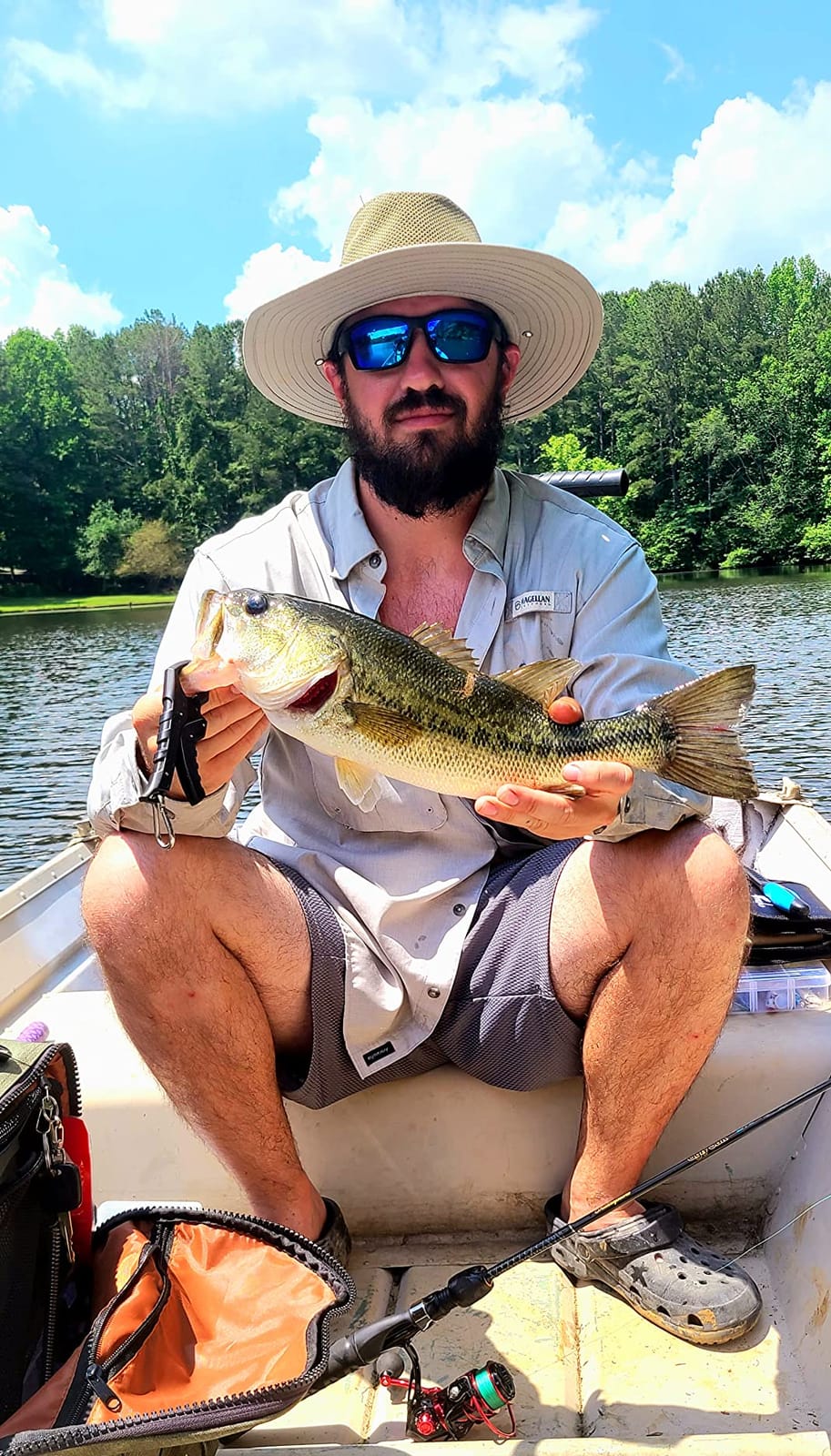
Here is the honest part. The 17 lb max drag rating is optimistic for sustained pressure, and the anti-reverse is basic compared to a Penn or Shimano. In our use the reel stayed smooth through salt exposure, but this is a rinse-every-trip reel, not a dunk-it-and-forget-it reel.
Two quirks showed up in owner feedback and in our own handling. The crank handle screw cap backs out occasionally and needs a periodic snug, and the bail arm feels stiff for the first few outings before it breaks in.
Best pairing and line setup
Spool it with 10 to 15 lb braid straight onto the braid-ready aluminum spool, no mono backing needed. Pair it with a medium-light, fast-action rod for trout, flounder, puppy drum, and schoolie stripers.
Where it will disappoint you
Skip it if you regularly target snook around jetty rocks or anything that runs hard into structure. The single-disc-class drag and graphite-heavy build are built for volume of fish, not violence of fish.
2. Daiwa Crossfire LT – The Smoothest Budget Retrieve
Daiwa Crossfire LT Spinning Reel – Lightweight AIRDRIVE Design, Tough Digigear, LC-ABS Spool, ATD Type-L Drag System
Size: 2500
Ratio: 5.3:1
Max drag: 11 lb
8.8 oz
3BB+1RB
Pros
- AIRDRIVE rotor spins with zero effort
- Tough Digigear gearing holds adjustment
- LC-ABS spool adds real casting distance
- ATD Type-L drag stays smooth on runs
- Backed by Daiwa engineering
Cons
- 11 lb max drag limits big-fish use
- Only 4 total bearings
- Not Prime eligible at time of writing
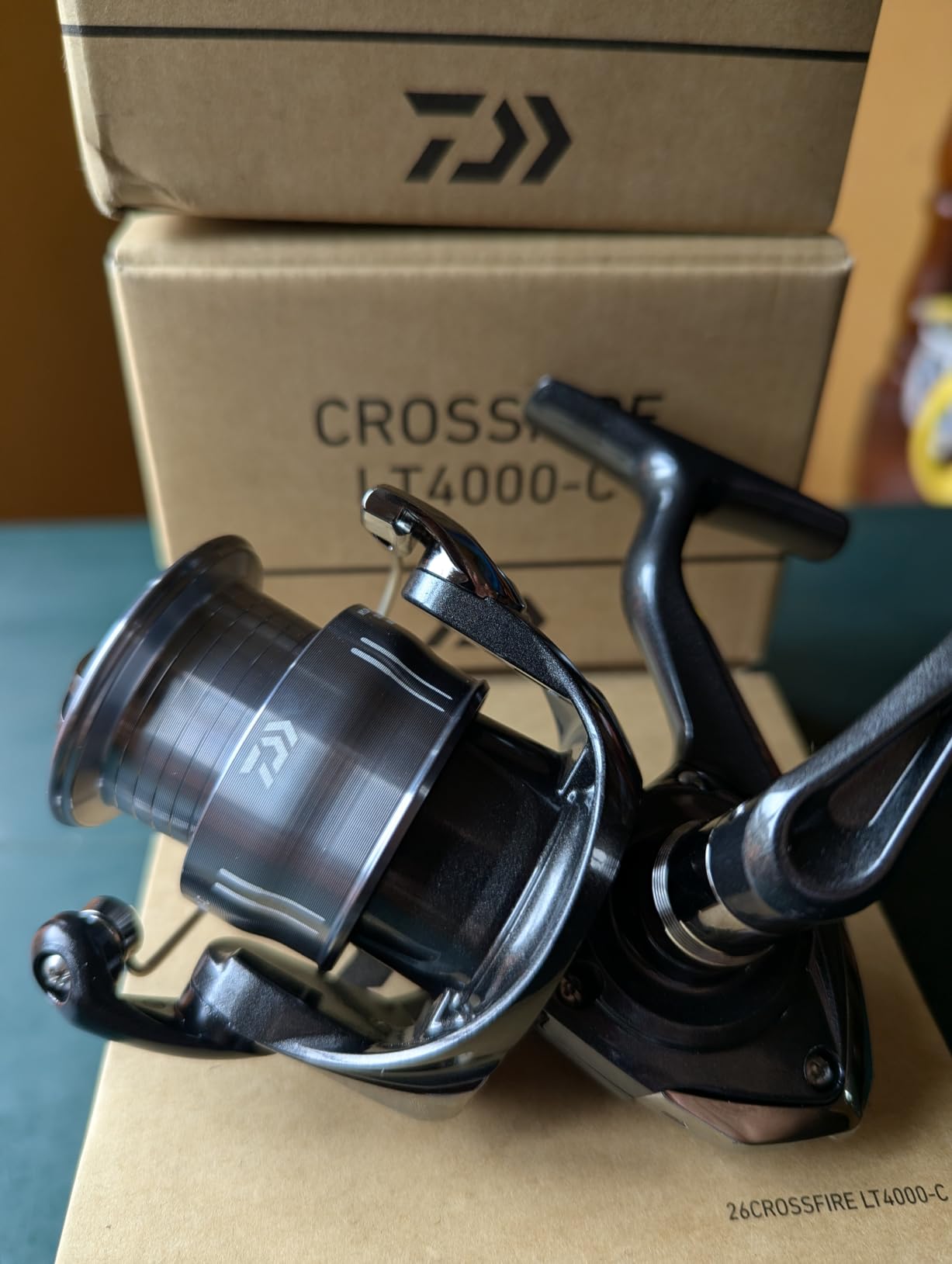
This is the reel I hand to friends who are new to saltwater fishing, and it is currently ranked number 3 in Amazon’s entire fishing reels category. The AIRDRIVE design is not marketing fluff: the rotor genuinely spins with less inertia than anything else at this price, and one-finger cranking is possible on light lures. Daiwa’s Digigear gearing keeps its mesh over time instead of developing that gravelly wobble cheap reels get.
The LC-ABS spool has a larger forward lip, and I measured noticeably longer casts with light jigheads into the wind. The ATD Type-L drag starts smooth and stays smooth, which matters when a slot redfish surges at the boat. At 8.8 ounces it is light enough for all-day wrist work, and the one-year warranty comes from a brand with real service infrastructure.
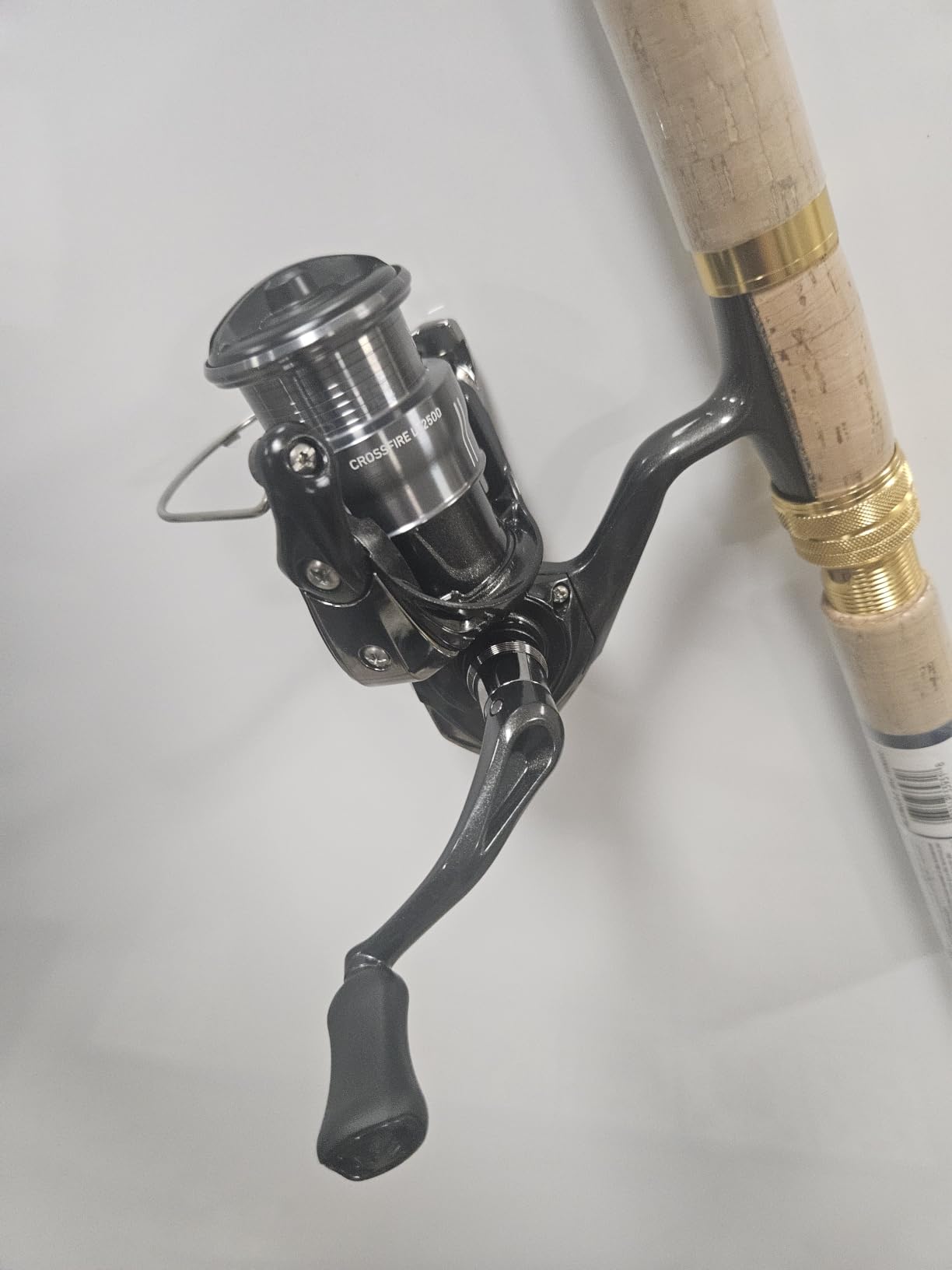
The limitation is simple: 11 pounds of max drag. That is fine for trout, flounder, sheepshead, and schoolie bass, but it is a light-tackle tool and should be fished like one. The bearing count is a modest three ball bearings plus one roller, though Daiwa’s tolerances make those bearings feel like more.
Line capacity of 160 yards of 6 lb or 200 yards of 8 lb mono positions this firmly as a finesse and baitfish-imitation reel. With braid, run 10 to 15 lb and you have a genuine flats and dock-light setup.
Best pairing and line setup
Run 10 to 15 lb braid on a medium-light rod and this becomes a killer setup for speckled trout, flounder, snapper under docks, and bait fishing with live shrimp. The 5.3:1 ratio is deliberate, giving you torque for grinding fish out of cover.
Where it will disappoint you
Do not buy it for tarpon, big jack crevalle, or surf duty. The drag ceiling and smaller spool put a hard cap on what you can stop, and it is not sealed for repeated submersion.
3. KastKing Sharky III – Budget Drag Champion
KastKing Sharky Spinning Fishing Reels Saltwater, 1000 Size, Black & Red
Ratio: 5.2:1
Max drag: 39.5 lb
9.8 oz
10+1 BB
Sizes 1000-5000
Pros
- Class-leading 39.5 lb max drag
- K.I.S.S. water-resistant sealing
- Braid-ready Shark Fin spool
- Oversized stainless main shaft
- 5
- 260 reviews at 4.6 stars
Cons
- Sizes run one class small
- Bearings are adequate not premium
- Sealing is water-resistant not waterproof
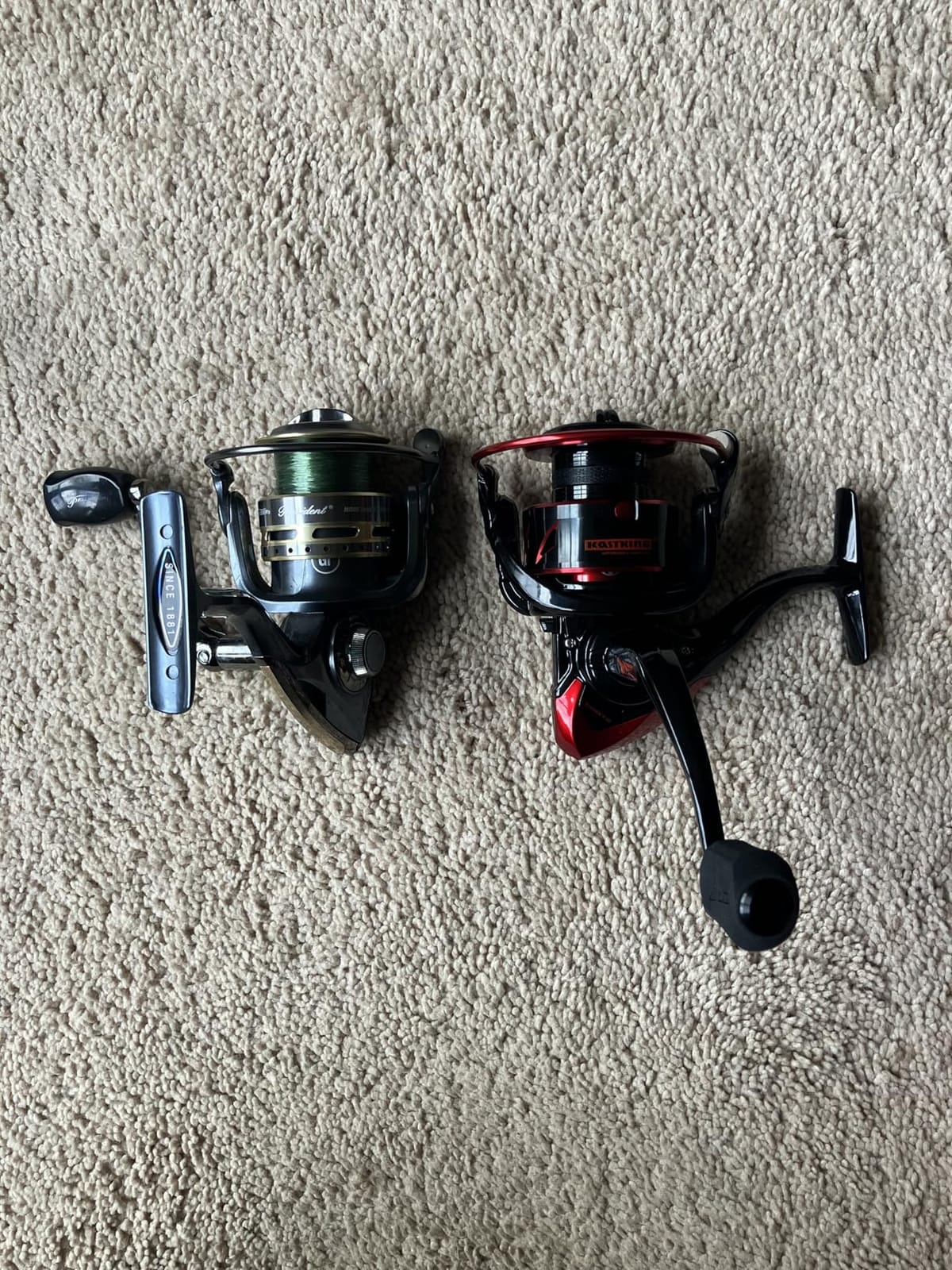
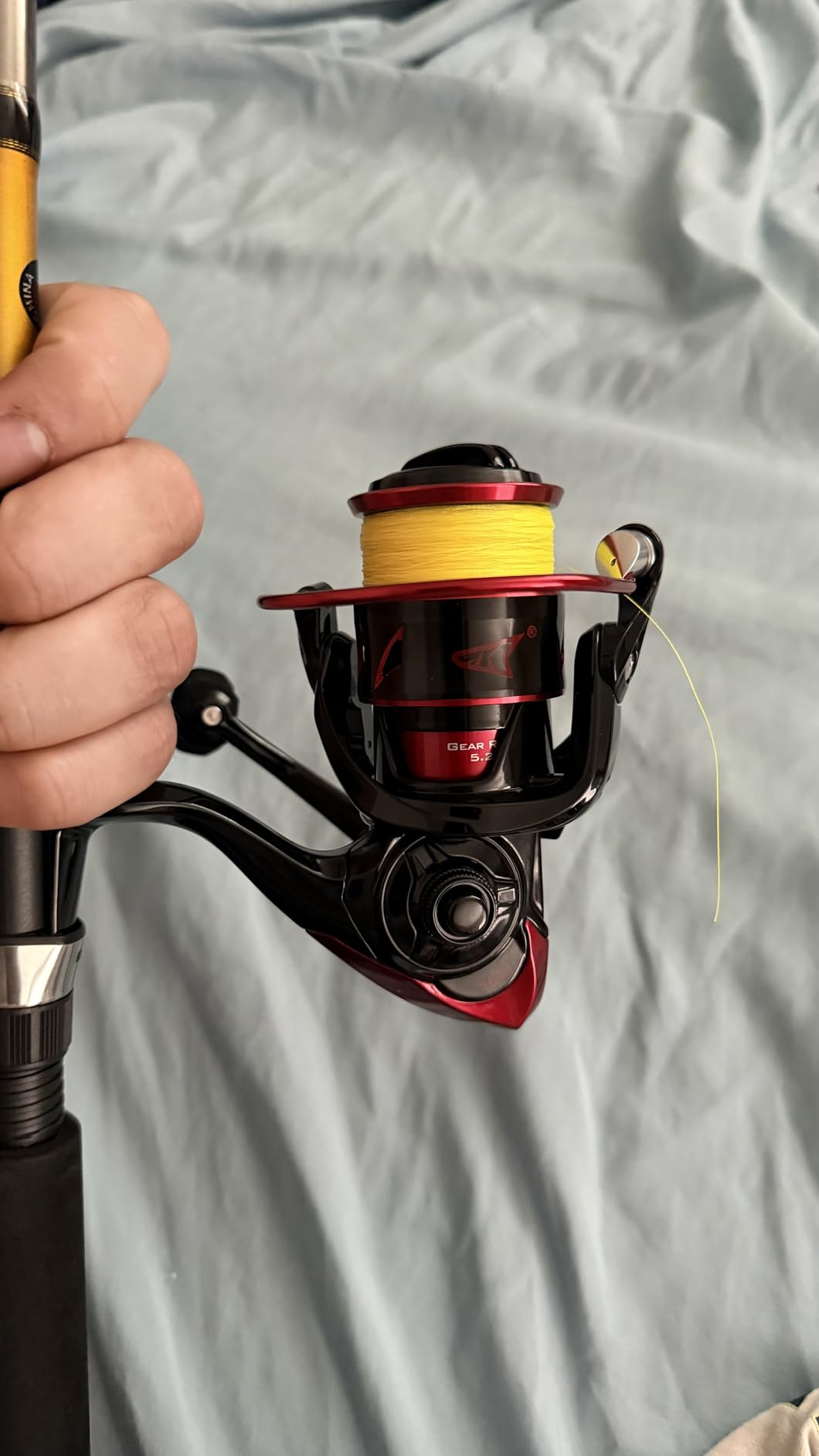
With more than 5,200 reviews and a 4.6 average, the Sharky III is the people’s champion of budget saltwater reels, and the spec that gets attention is 39.5 pounds of max drag from a triple-disc carbon fiber system. That is more stated drag than several reels in this guide costing double. In practice I found the first two-thirds of that range smooth and usable, with the top end arriving with some shudder.
The K.I.S.S. intrusion shield system pushes water away from the body and line roller, and my sample came through a wet kayak season without corrosion spots or a rough patch in the retrieve. The Shark Fin braid-ready spool lets you tie braid straight on with no slip, which saves a genuinely annoying step.
Here is the catch that trips up buyers, and it appears across owner feedback repeatedly: KastKing sizing runs small. The 5000 series fishes closer to another brand’s 3000. If you are shopping for a surf or big-fish reel by number, size up one class from what you would normally buy.
Forum anglers consistently flag another pattern worth repeating here: budget reels like this one often live around two hard seasons before wear shows. That matches what the Sharky III owner pool reports, and it is why we treat this as a tremendous first saltwater reel rather than a lifetime buy.
Sizing truth before you buy
Because sizes run small, pick the 4000 or 5000 for general inshore redfish and snook duty, and think of the 5000 as a 3000-class reel. The 5.2:1 ratio favors cranking power over speed, which suits jigging and live bait.
Where it will disappoint you
Do not expect IPX-rated waterproofing or a decade of daily dunkings. Anglers who fully submerge their reels in surf or kayak fishing should step up to the sealed options later in this list.
4. Penn Wrath II – The Inshore Value Play
PENN Wrath II Saltwater Spinning Fishing Reel, Size 4000, Right/Left Handle Position, Corrosion-Resistant Graphite Body, Machined Anodized Aluminum Spool
Size: 4000
Ratio: 6.2:1
Max drag: 15 lb
2+1 BB
Graphite body
Pros
- Penn build quality and support network
- Machined anodized spool with capacity rings
- 37 inch retrieve per turn
- Lightweight corrosion-resistant body
- Sizes run 2500 to 8000
Cons
- Only 3 total bearings
- Felt drag needs more frequent care
- Graphite body flexes under heavy load
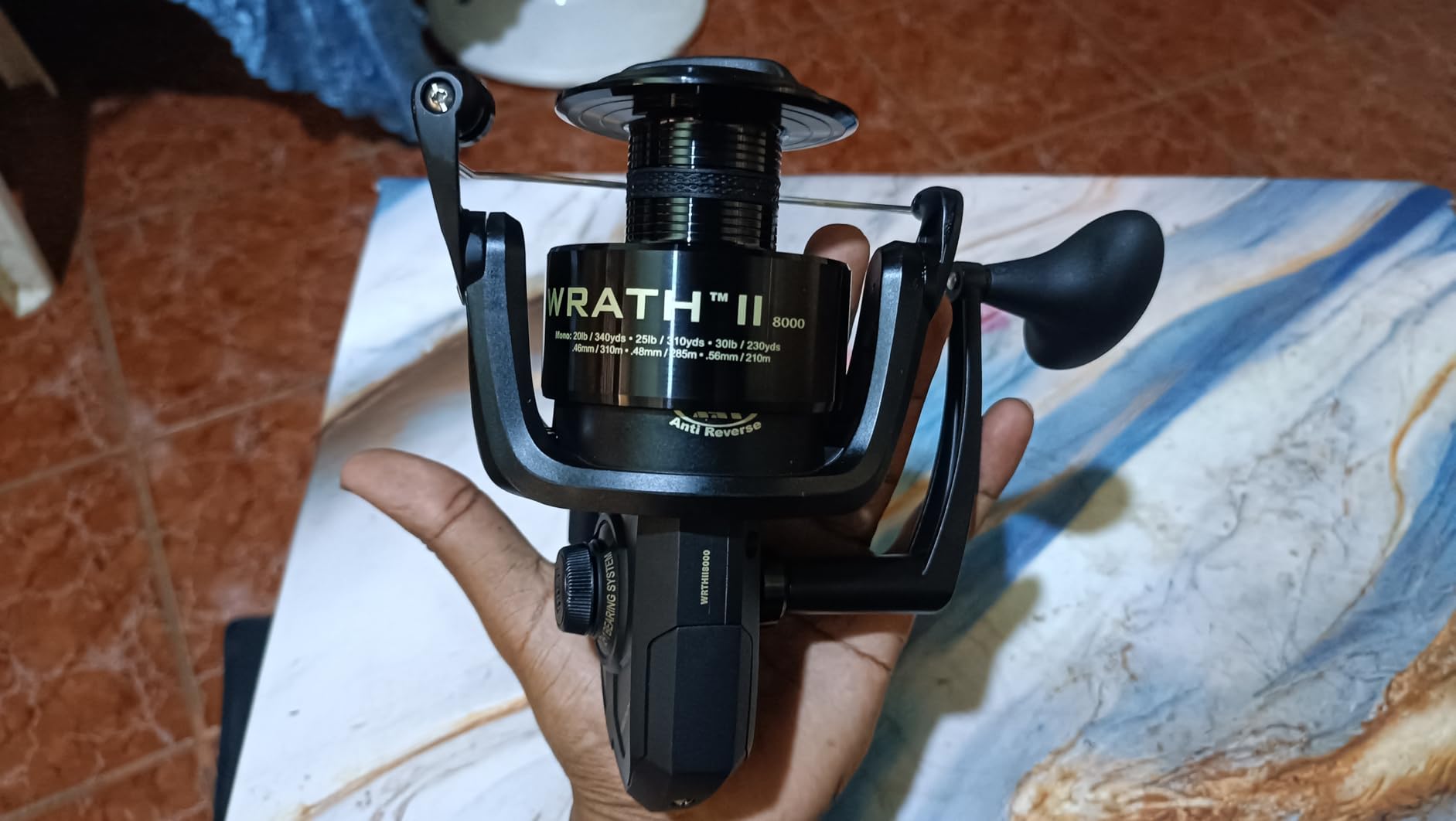
The Wrath II is the least expensive way into a genuine Penn saltwater reel, and that brand pedigree is not nothing when you need parts or service in year three. My 4000 size paired with 15 lb braid became a dock-fishing regular, and the 6.2:1 ratio recovering 37 inches per turn kept up with redfish charging the boat. An 83 percent five-star rate across 515 reviews tells you the ownership experience is consistent.
The machined and anodized aluminum spool carries Line Capacity Rings, a small feature I now miss on reels that lack it, because you can see how much line a fish has taken at a glance. Corrosion-resistant graphite keeps weight down, and the range stretches from 2500 up to 8000, so the same platform covers trout through surf reds.
Being straight with you: this is a two-plus-one bearing reel with a felt front drag. Felt drags start fast and grip well, but they are the component that needs cleaning and greasing most often in salt water. Budget an hour of drag maintenance per season and the reel rewards you for it.
The 15 lb max drag is honest rather than inflated, which I respect, but it caps this reel at inshore and light nearshore duty. The graphite body also communicates a little flex when you lean on a fish hard beside a piling.
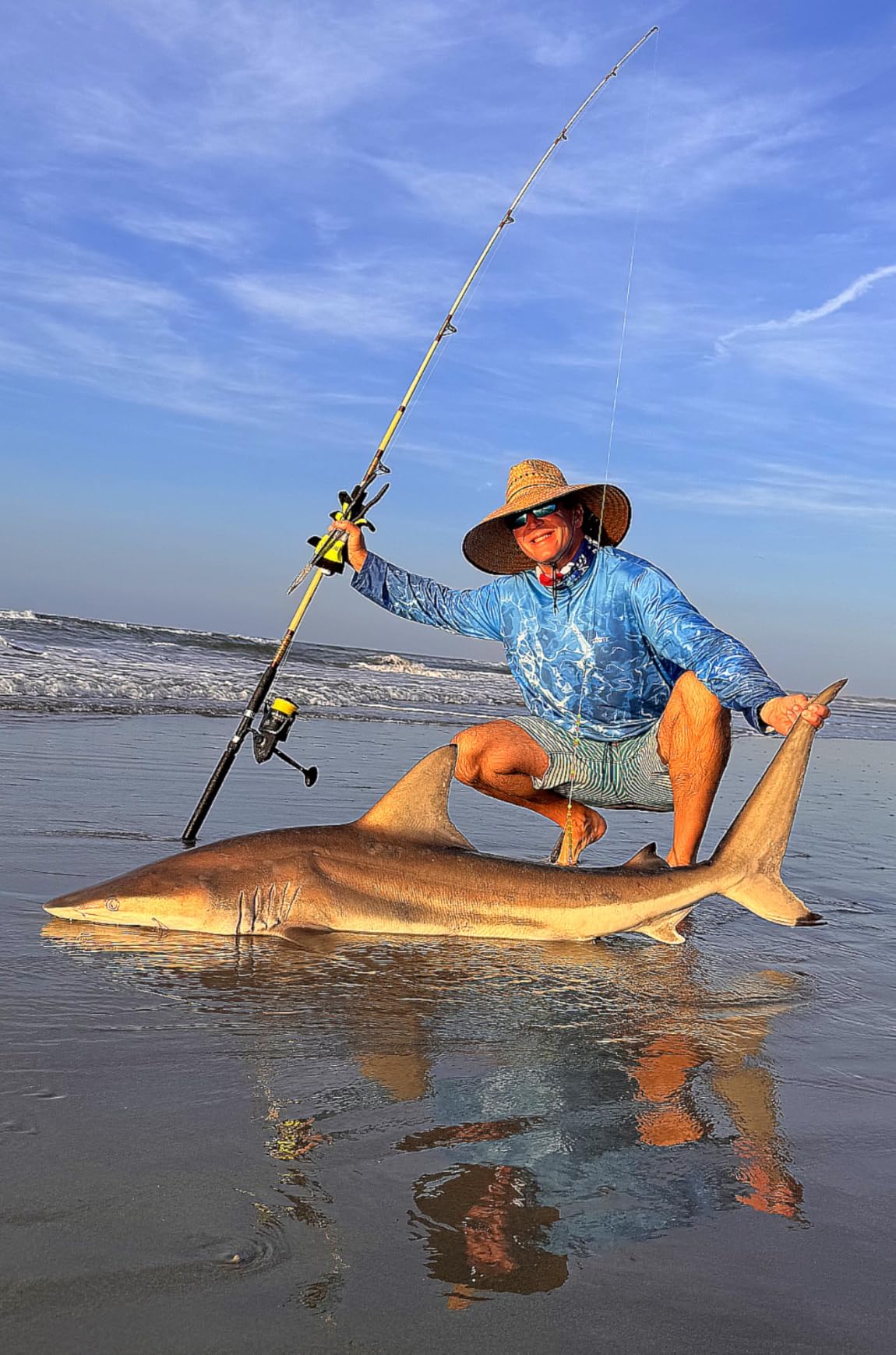
Best pairing and line setup
The 4000 is the sweet spot: 15 to 20 lb braid, medium-power fast-action rod, and you have a redfish, snook, and striped bass tool. Step to the 6000 or 8000 for heavier bait duty in the surf.
Where it will disappoint you
Anglers who dunk their reels regularly or chase big fish around structure should skip up to the Pursuit, Battle, or Spinfisher. This is a rinse-and-store reel by temperament.
5. Okuma Avenger ABF – The Live Bait Specialist
OKUMA Reels Avenger Abf 6Bb+1Rb 4.5:1, Multi, One Size
Size: 6000
Ratio: 4.5:1
Max drag: 26 lb
7 BB
Baitfeeding system
Pros
- Baitfeeding secondary drag frees line on the take
- 26 lb max drag stops running fish
- 7 stainless bearings with brass pinion
- Auto-trip disengages the secondary drag
- Sizes from 500 to 8000
Cons
- Felt drag washers wear and often get upgraded
- 4.5:1 is slow for lure work
- Heavier than comparable 6000 reels
If you fish live or dead bait, the Avenger ABF solves a problem no other reel in this list addresses at the price: the baitfeeding system lets a fish take line freely on a secondary drag while your bail stays closed. Flip the lever and the auto-trip system engages the main drag on the turn of the handle. Fishing live croaker for redfish or cut bait for drum, this is the feature that stops you from getting spooled or missing subtle takes.
The 26 lb max drag is the second highest in this guide, and the machine-cut brass pinion gear and seven stainless bearings give a retrieve that feels far above the price bracket. Okuma’s corrosion-resistant graphite body, frame, side plates, and rotor all shrug off salt spray, and the machined two-tone anodized spool looks the part.
That low 4.5:1 gear ratio is a deliberate torque choice, not a flaw, and it is exactly what you want when winching a big fish away from structure. What I do not love is the felt drag washers on the main drag, which several long-term owners replace with upgraded washers after a season or two of hard saltwater use.
It is also the heaviest feeling reel here in 6000 size at roughly 14 ounces, which is irrelevant for bait fishing and annoying for all-day lure casting. The one-year warranty is standard for Okuma.
Best use and rigging
Run it on a medium-heavy rod with 20 to 30 lb braid plus a fluorocarbon leader, and set the rear baitfeeder tension light so pilchards and croaker can swim without resistance. It doubles nicely as a catfish and pier reel.
Where it will disappoint you
Lure anglers will find the retrieve too slow and the reel too heavy. Plan on a drag washer refresh down the road if you fish it hard in salt water.
6. Shimano 23 Sedona – Big-Brand Feel, Mid-Range Money
Shimano C5000XG Sedona Spinning Reel 23
Size: C5000XG
Ratio: 6.2:1
Max drag: 24.3 lb
11.2 oz
3BB+1RB
Pros
- 24.3 lb max drag from a compact body
- Silent Drive eliminates handle play
- Excellent casting distance
- Seamless mono fluoro and braid handling
- Genuine Shimano engineering and support
Cons
- Handle can feel small for large hands
- Only 3 ball bearings plus 1 roller
- Finish durability trails higher Shimano tiers
The Sedona is where Shimano’s engineering starts to show up at a reachable price, and the spec that jumped out is 24.3 pounds of max drag from the compact C5000XG body. That combination of a small-frame reel with genuine stopping power is why this is my default recommendation for anglers who want one reel to do inshore and light nearshore duty. Silent Drive tightens tolerances through the drive train, and the result is a handle with zero slap.
Casting is the other standout. Across mono, fluorocarbon, and braid, the spool and stroke design delivered some of the longest casts in this test group, which matters when you are reaching breaking fish or working a flat quietly. Practical drag force sits around 13.3 pounds, which is the number you will actually fish at, with the full 24.3 available in short bursts.
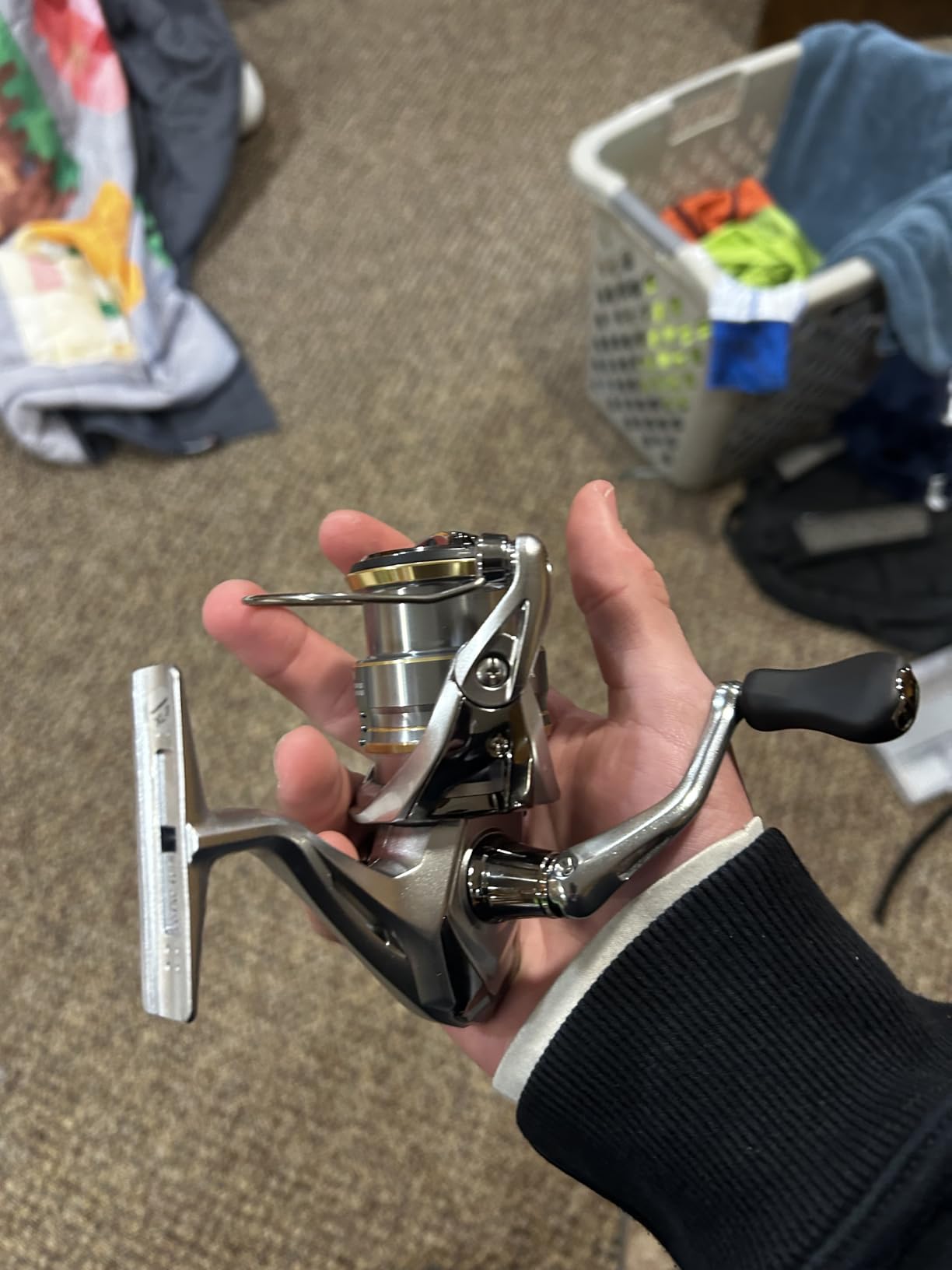
The trade-offs are real but livable. Three ball bearings and one roller bearing is modest on paper, though Shimano’s fit and finish makes it feel smoother than the count suggests. A handful of owners mention the handle knob feeling small for bigger hands, which is an easy aftermarket fix.
Treat this as a corrosion-resistant reel rather than a fully sealed one. After salt exposure, rinse it and dry it, and it will reward you across seasons.
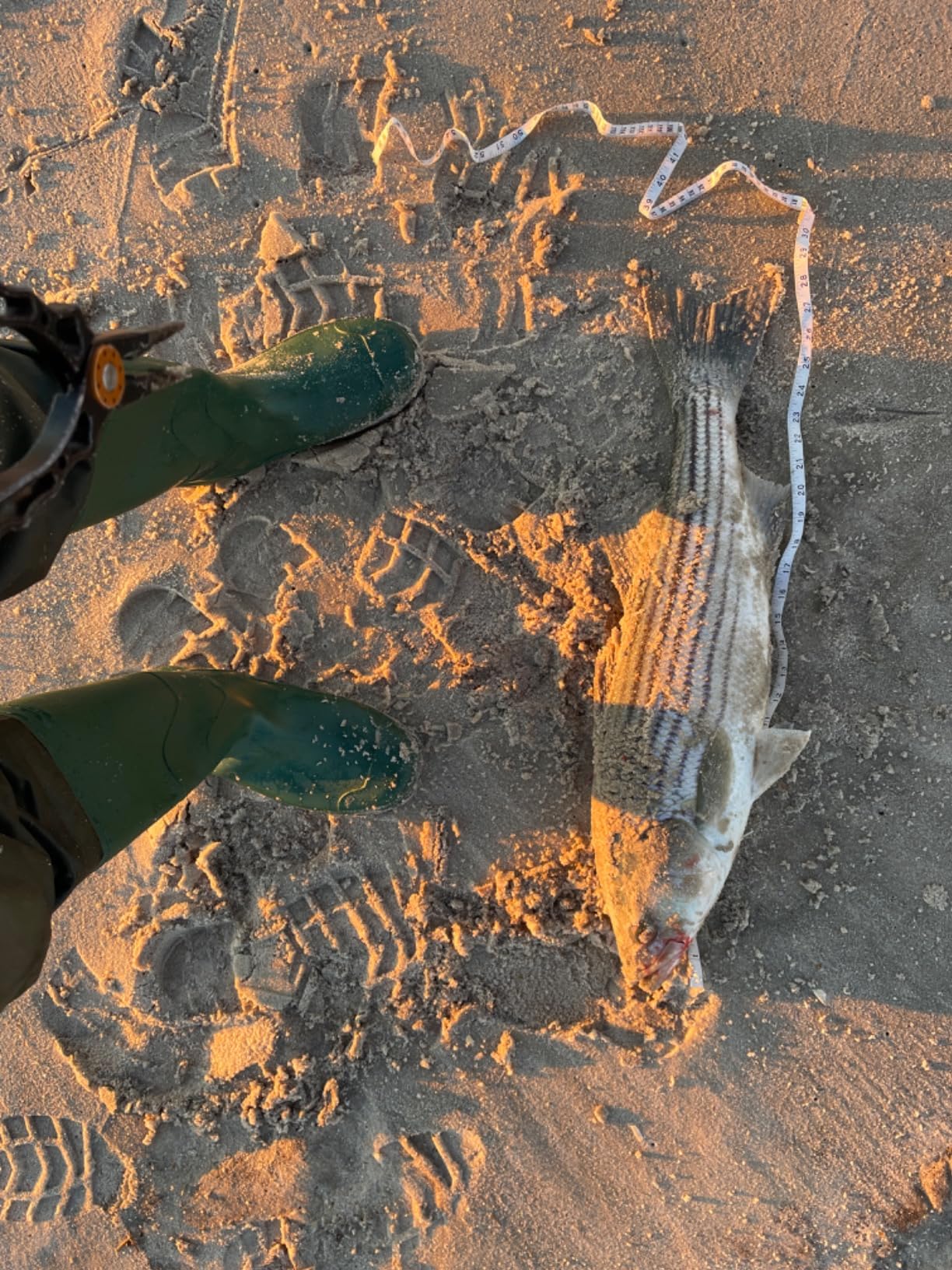
Best pairing and line setup
The C5000XG spool takes PE 1.5 braid out to roughly 400 meters by Shimano’s rating, so fill with 20 lb braid, add a fluorocarbon leader, and fish it on a medium-heavy rod for redfish, snook, stripers, and small cobia.
Where it will disappoint you
Anglers who submerge their reels in surf or kayak fishing should look at an IPX-rated reel instead. And if you want the full sealed Shimano experience, you are shopping several tiers up the range.
7. KastKing Kapstan and Elite – Cheapest True IPX6 Sealing
KastKing Kapstan SE Saltwater Spinning Fishing Reels, 4000 Size, Blue
Size: 4000
Ratio: 6.2:1
IPX6 sealed
Max drag 30-55 lb
10.56 oz
Pros
- IPX6 waterproofing with up to 15 EverSeal rings
- Labyrinth greased sealing grooves
- CNC manganese brass main gear
- Triple to five-disc carbon drag by size
- Sizes run 2500 to 8000
Cons
- Heavier than similarly sized rivals
- Sporadic anti-reverse complaints on big fish
- Long-term finish durability unproven
This is the most sealing you can buy at this price, full stop. The Kapstan carries an IPX6 waterproof rating built from up to 15 EverSeal rubber rings and labyrinth-style greased sealing grooves, the same architecture principles the premium brands charge several times more for. On a kayak trip where the reel sat in bilge water for an hour, it came out cranking exactly as it went in.
Inside, the drive is serious hardware: a CNC ultra-high hardened manganese brass main gear and an UltraDura 90 pinion. The carbon fiber drag scales from triple-disc on the 2500 to 4000 sizes up to five-disc on the 8000, with max drag climbing from 30 to 55 pounds across the range. That top-end number is real headroom for king mackerel, big jack, and pelagic duty.
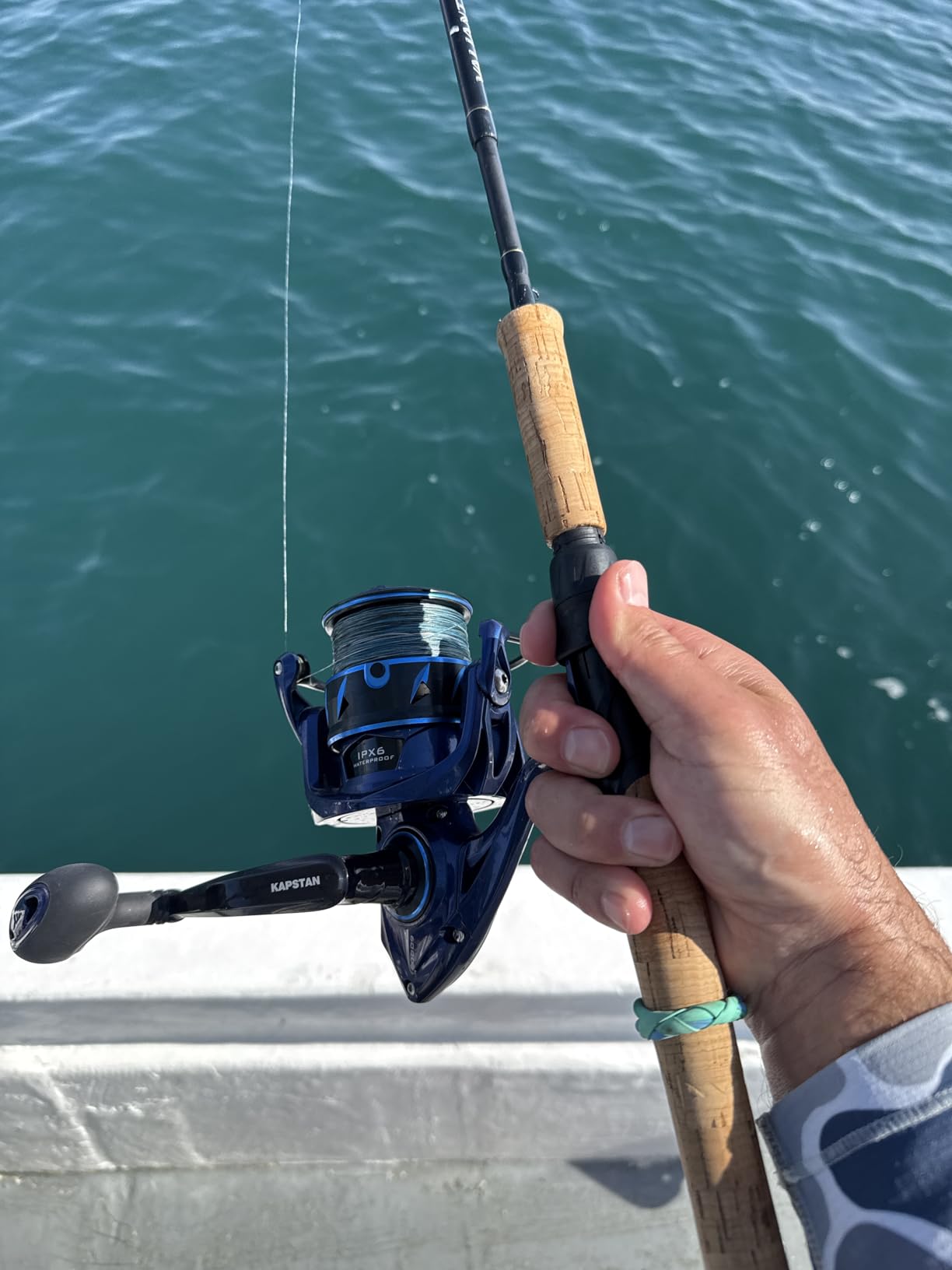
The honest downside is weight. At 10.56 ounces in 4000 size it is heavier than rivals here, and you feel it late in a long casting day. A minority of owners report the anti-reverse bearing slipping under extreme load on very large fish, something to weigh if you target tuna-class fish regularly.
Five double-shielded stainless bearings plus a polymer roller and an 8-pin one-way bearing round out a spec sheet that reads like a reel at double the price. The finish’s long-term salt resistance is still an open question given how new this platform is.
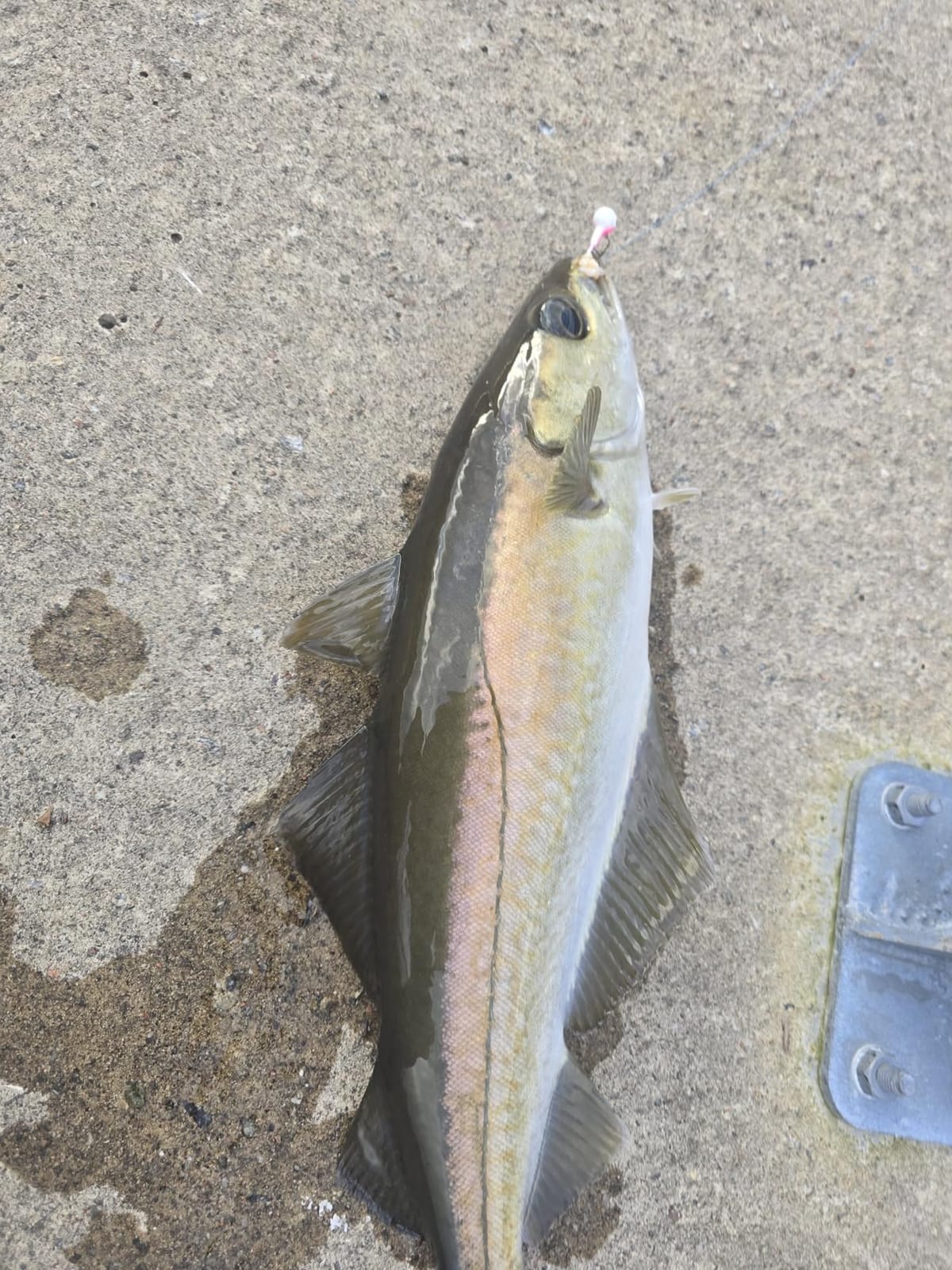
Best use and sizing
Kayak and surf anglers get the most from the IPX6 build. Choose 4000 for inshore general duty, 6000 for surf, and 8000 when you want that five-disc drag and 55 lb ceiling for nearshore pelagics.
Where it will disappoint you
If you cast lures for eight hours straight, the weight penalty adds up. Anglers chasing truly huge fish may want the reassurance of a premium anti-reverse system.
8. Penn Pursuit V – Surf and Offshore Line Capacity King
PENN Pursuit IV Nearshore/Offshore Spinning Fishing Reel, Size 8000, HT-100 Front Drag, Max of 25lb, 5 Sealed Stainless Steel Ball Bearing System, Built with Carbon Fiber Drag Washers,Black/Silver
Size: 8000
Ratio: 4.7:1
Max drag: 25 lb
HT-100 drag
4+1 BB
Pros
- 475 yards of 50 lb braid capacity
- HT-100 carbon fiber drag system
- 44 inch retrieve per turn
- Sealed stainless bearing set
- Proven nearshore/offshore platform
Cons
- Graphite body is not fully sealed
- 4.7:1 is slow for popping lures
- Isolated reports of gear grinding
The Pursuit V in 8000 is the reel I reach for when the plan involves heaving bait into the surf or dropping livelines near wrecks, because line capacity is the spec that actually saves you offshore. It holds 475 yards of 50 lb braid, which is enough to let a big fish run and still end the fight. The HT-100 front drag uses real carbon fiber washers with 25 pounds of max pressure, and it stayed smooth through long runs without the fade cheaper drags suffer.
With 2,300 reviews behind it, this is one of the most proven platforms in saltwater fishing. The 4.7:1 ratio recovers 44 inches per turn, so despite the low gear number you are not cranking forever. The machined and anodized aluminum superline spool grips braid directly, and Line Capacity Rings on the spool let you read how much line a fish has taken.
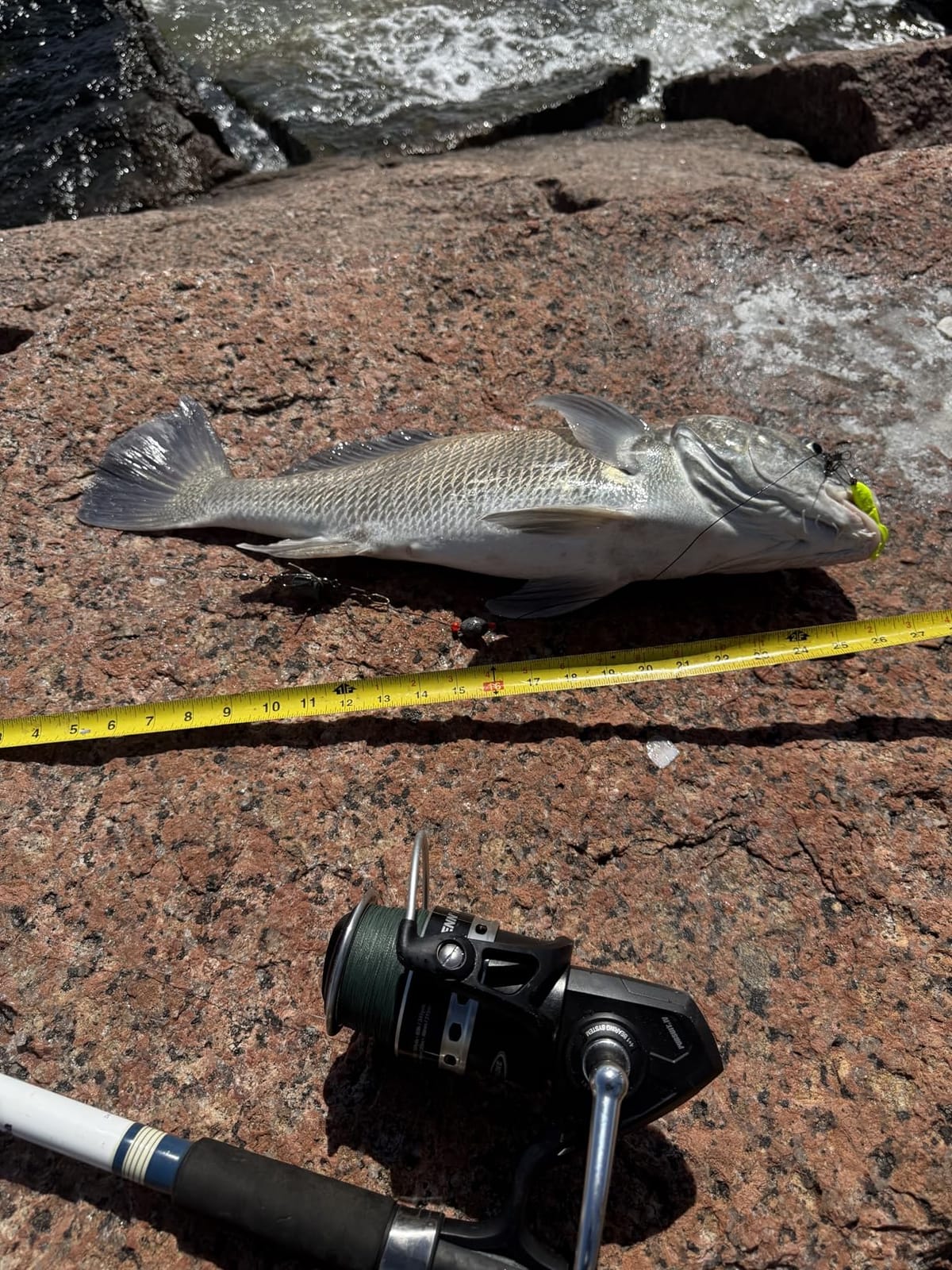
Now the reality check. The body is corrosion-resistant graphite with an IPX5-class spool seal rather than a fully sealed chassis, so it tolerates spray and dunking far better than a freshwater reel but is not in Slammer-class sealed territory. A small number of owners report gear grinding in individual units, which points to quality control variance rather than a design flaw.
Left-handed anglers occasionally find the handle conversion fiddly, so set it up before you rig up. None of these issues offset the core value here, which is massive braid capacity and a Penn HT-100 drag at a mid-range price.
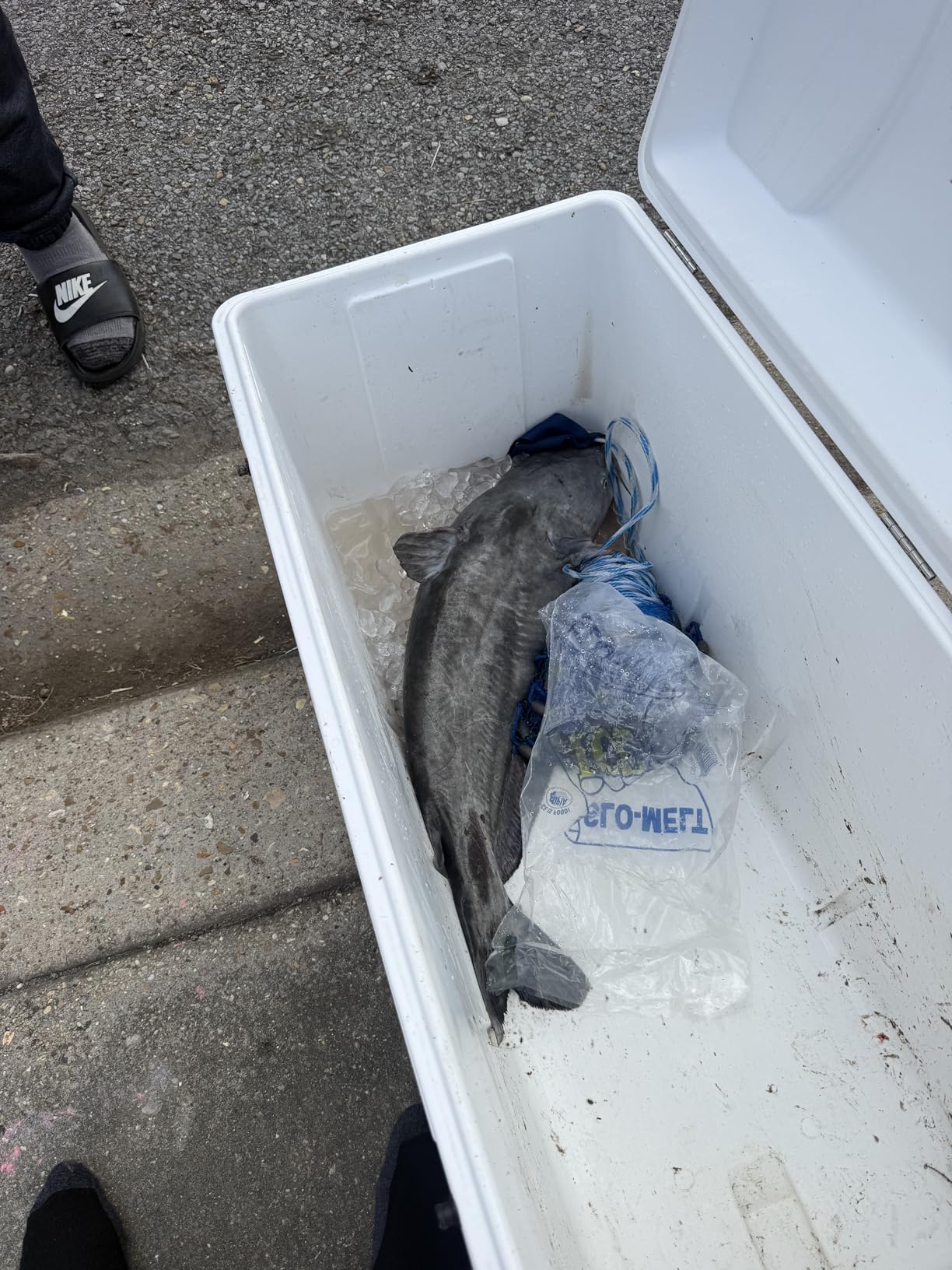
Best use and line setup
Fill it with 50 or 65 lb braid, tie a fluorocarbon or mono topshot, and mount it on a 10 to 12 foot surf rod or a heavy nearshore stick. It is a genuine shark, ray, king mackerel, and tarpon reel.
Where it will disappoint you
It is too much reel for trout and flounder duty, and too slow for working topwater lures all day. Anglers who regularly submerge their reels should consider stepping up to a fully sealed flagship.
9. Penn Battle IV – The Best Spinning Reel for Saltwater, Period
PENN Battle III Spinning Inshore Fishing Reel, HT-100 Front Drag, max of 15lb | 6.8kg, Made with Sturdy All-Aluminum Composition for Durability,Black/Gold
Size: 3000
Ratio: 6.2:1
Max drag: 15 lb
11.6 oz
5+1 BB
Pros
- All-aluminum body and sideplates
- CNC gear technology with brass main gear
- HT-100 carbon fiber drag
- ICAST Best of Category winner
- 4.7 stars across 2
- 600 reviews
Cons
- 15 lb max drag trails some rivals
- Oversized EVA knobs not for everyone
- Stock runs thin at retailers
If you want the single best spinning reel for saltwater at a price a working angler can justify, this is it. The Battle IV won ICAST Best of Category in the saltwater reel division, and it backs the trophy with an all-aluminum body and sideplates that simply do not flex when you bury a hook in a bull redfish. At 4.7 stars across roughly 2,600 reviews, it has the highest owner satisfaction of anything in this guide.
What sold me is the CNC gear technology paired with a brass main gear. On a long fight the handle stays in time with the rotor, with no cogging or chatter under load, and the 6.2:1 ratio recovering 35 inches per turn is quick enough for lure work and forgiving enough for live bait. The HT-100 front drag with carbon fiber washers delivers 15 pounds of pressure that starts smooth and stays smooth, which is the exact quality you cannot fake.
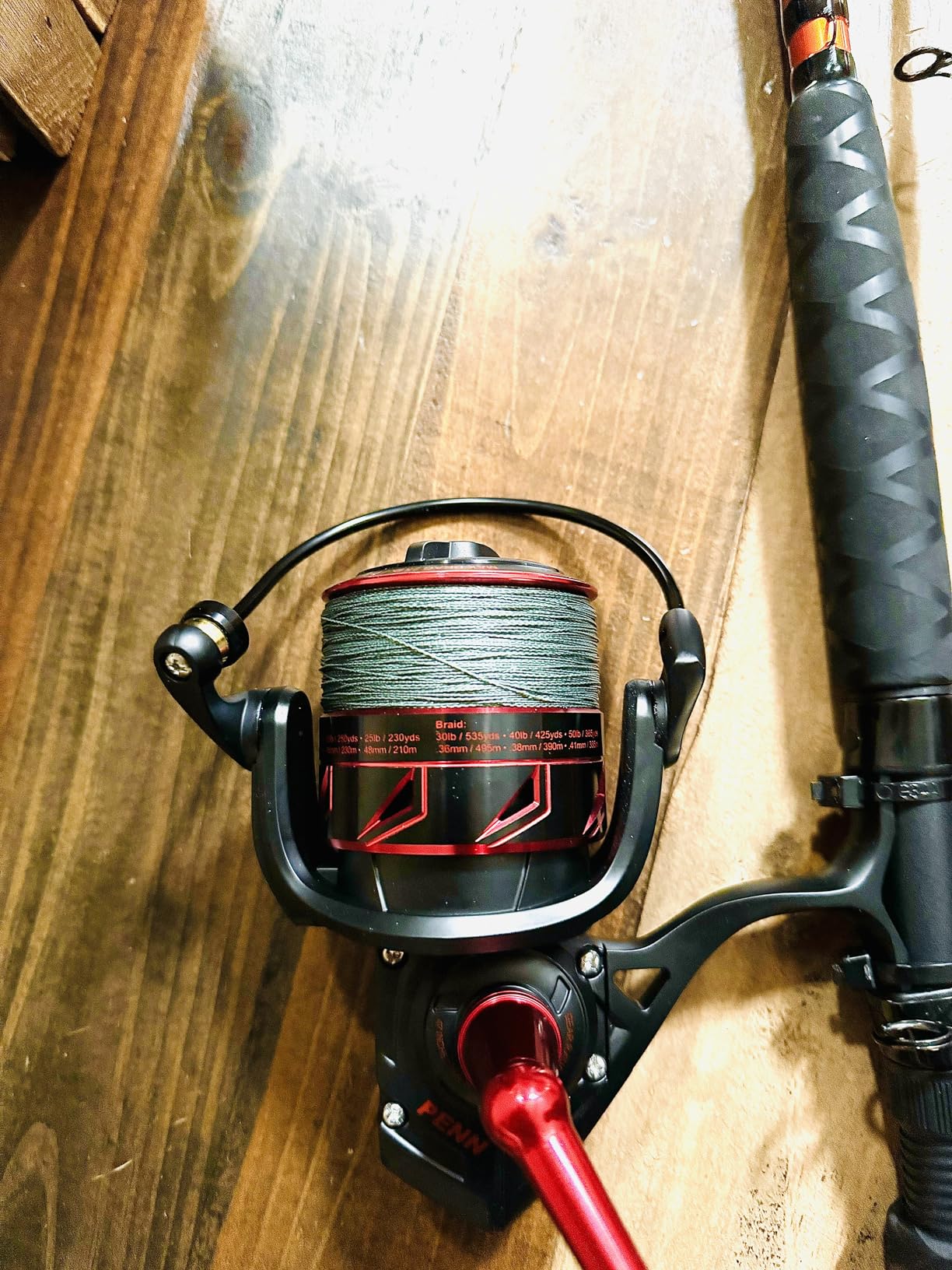
The forged and machined aluminum spool carries Line Capacity Rings and grips braid directly, with room for 250 yards of 15 lb or 180 yards of 20 lb braid in this size. Five stainless bearings plus an instant anti-reverse bearing give a retrieve with no back-play at the hookset.
The 15 lb drag number is the one spec that reads modestly on paper. In practice Penn’s HT-100 stack applies that pressure more consistently than reels claiming far higher numbers, but if you target tuna or large sharks you will want a bigger size from the same range.

Best pairing and line setup
Run 20 lb braid with a 30 lb fluorocarbon leader on a medium-heavy rod and this is the definitive redfish, snook, striped bass, and light tarpon setup. Size up within the range for bigger fish rather than switching brands.
Where it will disappoint you
It is not fully IPX-rated sealed, so repeated full submersion in surf or kayak use calls for diligent rinsing. Anglers needing maximum drag pressure should pick the larger sizes or a dedicated offshore flagship.
10. Penn Spinfisher VI – The Premium Sealed Pick
PENN Spinfisher VII 3500 Saltwater Spinning Reel, Right/Left Handle Position, IPX5 Seal, HT-100 Front Drag, Superline Spool, Precise CNC Gear Technology
Size: 3500
Ratio: 6.2:1
IPX5 sealed
HT-100 drag
12.1 oz
Pros
- IPX5 sealed body and spool system
- CNC brass main gear for long life
- HT-100 carbon fiber drag
- Superline spool for braid
- Live-liner style pedigree in the range
Cons
- 15 lb max drag in this size
- Stock availability runs thin
- Higher price than entry Penn models
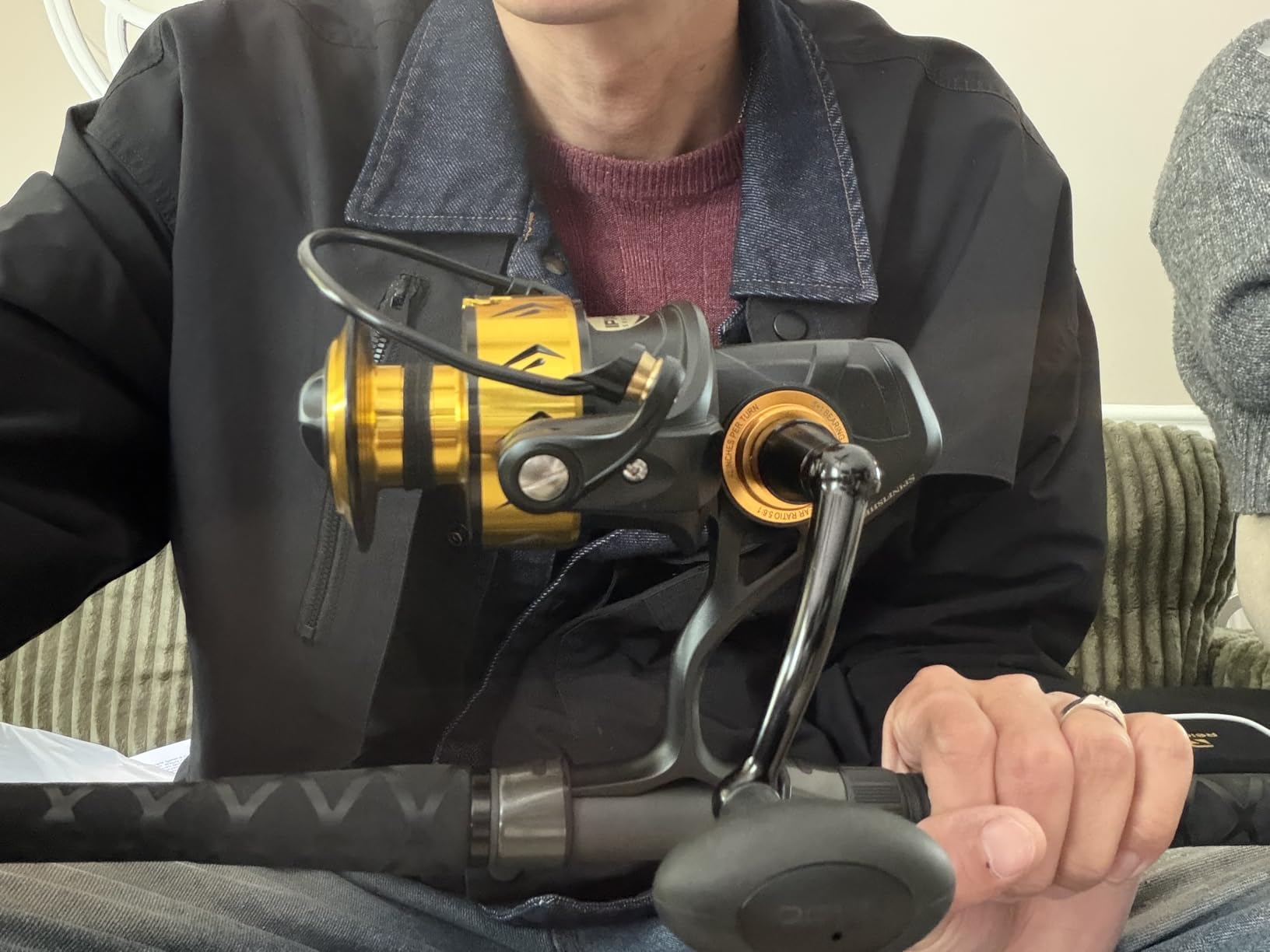
The Spinfisher VI is the reel I recommend when someone tells me their reel gets soaked every single trip, because the IPX5 sealed construction blocks saltwater intrusion into the gearbox and drag chamber. That seal is the difference between a reel that survives a wave over the bow and one that comes home grinding. An 86 percent five-star rate among owners reflects exactly that reliability.
Inside sits the same CNC gear technology and brass main gear philosophy as the Battle line, paired here with the sealed HT-100 carbon fiber drag. At 6.2:1 recovering 36.7 inches per turn, it fishes fast enough for plugs and soft baits while retaining the torque to turn a fish away from structure. The superline spool lets you tie braid straight on with no backing and no slip.
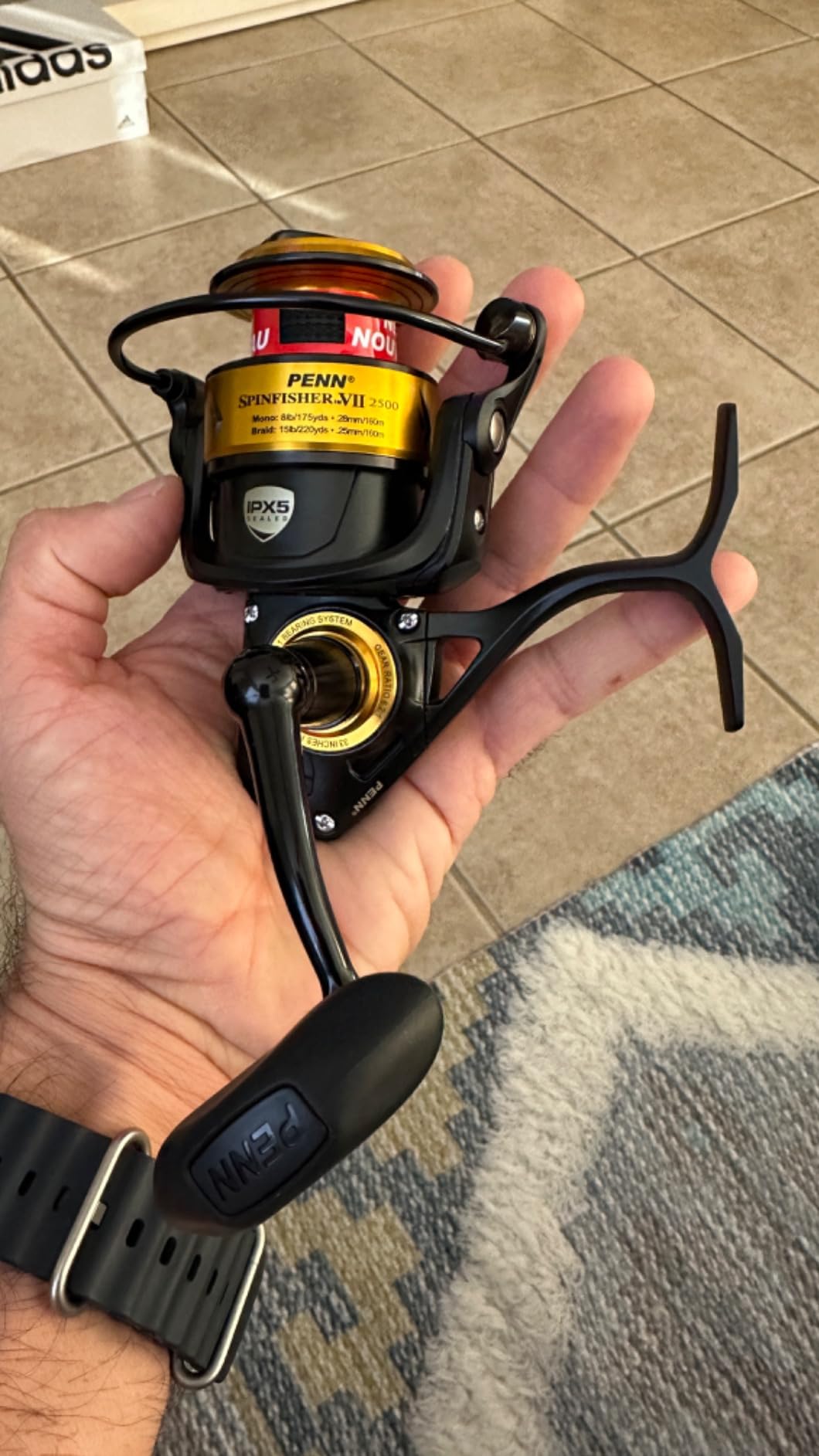
The 3500 size carries 220 yards of 10 lb braid or 270 yards of 15 lb, which is a genuinely versatile inshore loadout. In this size the HT-100 stack tops out at 15 pounds of max drag, appropriate for the class but not a big-fish number, and larger sizes in the range carry more.
Two practical notes from ownership. Stock at retailers runs thin, so if you find your size available it is worth acting on it. And while IPX5 sealing handles spray, wave wash, and rain, it is still not rated for sustained submersion the way the flagship sealed offshore reels are.
Best pairing and line setup
Spool 15 to 20 lb braid, add a fluorocarbon leader, and match it to a medium or medium-heavy inshore rod. This is the surf-wading and jetty angler’s reel in this lineup.
Where it will disappoint you
Anglers targeting tuna, large sharks, or heavy bottom fish need a bigger size or a different class of reel. And if you never actually get your reel wet, the sealing premium is money you could put toward gearing.
How to Choose a Saltwater Spinning Reel
Start with one question: what are you actually chasing, and where? Everything else in this decision flows from species and water, because a reel that is perfect for trout under dock lights is the wrong tool for king mackerel in the surf.
Pick your size by species, not by number
Reel sizes are the single most confusing part of buying, and the confusion is legitimate: a 4000 from one brand does not equal a 4000 from another. Penn runs roughly one size larger than Shimano for the same number, and KastKing’s Sharky line runs a full class smaller. Shop by line capacity and drag, not the number on the box.
A useful framework that holds across brands: 1000 to 2500 sizes are light inshore tools for speckled trout, flounder, and small bait work on 6 to 10 lb line. The 3000 to 4000 band is the sweet spot for most inshore anglers, handling redfish, snook, schoolie stripers, and specks on 10 to 20 lb braid with a medium-power rod. From 5000 to 6000 you are into bull reds, tarpon, cobia, and medium surf duty on 20 to 30 lb braid. At 8000 and above, spool 40 to 65 lb braid for sharks, rays, kings, and pelagic fish from the beach or boat.
Match drag to the fish, not the marketing
Max drag is the most inflated spec in fishing, so read it as a ceiling rather than a working number. A practical rule our team uses: set your drag at roughly 25 to 30 percent of your line’s breaking strength, which means 20 lb braid fishes at about 5 to 6 pounds of pressure. By that math a 15 lb class reel handles the vast majority of inshore fishing comfortably.
Drag quality matters more than drag quantity. A carbon fiber stack like Penn’s HT-100 or KastKing’s triple-disc carbon applies pressure smoothly across its range, while felt washers start fast and fade or stutter under sustained heat. When a big fish is taking line against a tight drag, smoothness is what keeps hooks pinned and knots intact.
Read the seal rating before the bearing count
In fresh water, bearings are a good proxy for smoothness. In salt water, sealing predicts how long that smoothness lasts, because unsealed bearings and drag stacks are where corrosion lands first. Look for an IPX rating on the body or spool, rubber seal rings count, and labyrinth-style sealing grooves if the manufacturer publishes them.
Bearings still matter, but with diminishing returns. A well-fitted four-bearing reel from a quality brand outlasts a twelve-bearing reel with loose tolerances. Shielded stainless steel bearings are the saltwater standard, and a one-way anti-reverse bearing is worth having for solid hooksets.
Get the line setup right
Braid is the default for saltwater spinning reels because it packs more capacity, cuts through wind, and telegraphs bottom structure. Two practical habits make it work. First, if your spool is not marked braid-ready, add a short layer of mono backing so the braid grips instead of spinning on the arbor. Second, always finish with a fluorocarbon or mono leader, since braid is highly visible and has poor abrasion resistance around rocks and pilings.
Capacity planning beats ratio planning for surf and offshore anglers. You want enough line that a strong fish can run without spooling you, which is why the Penn Pursuit V in 8000 with 475 yards of 50 lb braid earns its place for that specific job. For inshore work, 150 to 250 yards of properly sized braid is plenty.
Gear ratio is a speed-versus-power trade
A 6.2:1 ratio is the all-rounder, recovering roughly 35 to 40 inches per turn and suiting lures, jigs, and live bait alike. High-speed ratios above 6.5:1 excel for burning plugs and picking up slack quickly on topwater. Low ratios in the 4.5 to 5.2:1 range grind with more torque, which is why the Okuma baitfeeder and the Penn Pursuit V use them for bait and big-fish duty.
What Makes a Reel Actually Saltwater-Proof
Salt water destroys reels two ways: it corrodes metal directly, and it leaves crystalline deposits that abrade gears and drag washers as they turn. A true saltwater reel attacks both problems with material choices and seals, and understanding the rating system tells you exactly what you are buying.
The IPX scale you see on reel boxes runs from IPX0, no protection, up through IPX4 splash resistance, IPX5 water jets, IPX6 powerful water jets, IPX7 temporary submersion, and IPX8 continuous submersion. Translated for anglers: IPX5 handles wave wash, rain, and spray, which covers most inshore and jetty fishing. IPX6, like the KastKing Kapstan carries, shrugs off heavy spray and brief dunks, making it the kayak minimum. IPX7 and IPX8 are the full-submersion ratings that surf anglers who drop reels in the wash zone should demand.
Materials do the other half of the work. Anodized aluminum, stainless steel, and brass resist corrosion natively, which is why the Penn Battle IV’s all-aluminum body and brass main gear survive seasons that crack and pit graphite-composite frames. Note that graphite does not corrode at all, which is why budget reels use it, but it flexes under load. Sealed stainless or ceramic bearings, rubber seal rings, and greased labyrinth grooves keep salt out of the places where flex and corrosion team up.
One thing no rating fixes: neglect. An unsealed reel rinsed after every trip outlasts a sealed reel that is never cleaned, because salt finds its way past every seal eventually through the line roller and handle joint. Which brings us to the part of ownership almost every guide skips.
How to Maintain a Saltwater Spinning Reel?
The two-year budget reel failure that forum anglers keep describing is almost never a design failure. It is a maintenance failure, and it is preventable with about ten minutes of care per trip. Here is the routine our team runs.
Rinse the reel with a gentle stream of fresh water after every saltwater trip, and resist the urge to blast it. High-pressure water drives salt and grit past seals that low-pressure rinse would have left alone. Pay attention to the line roller, handle joint, and spool edges, where salt concentrates. Let it air dry fully before storage.
Back the drag off fully when you store the reel. Leaving drag pressure on compresses the washers over time and creates flat spots that show up as stutter under load. It takes five seconds and adds seasons of smooth drag life.
On a monthly cadence during fishing season, put one drop of reel oil on the handle knob bearings and line roller, and a small amount of marine grease on the main shaft and bail trip. Once a year, or every 15 to 20 hard saltwater trips, open the side plate and re-grease the main and pinion gears. If you are not comfortable with that, any tackle shop does it cheaply, and it is the difference between a reel that dies in year two and one that lasts five-plus seasons.
Loosen and check the handle screw and any cap fasteners monthly, since vibration backs them out gradually. Store reels off the floor in a dry spot, and never leave them in a wet hull bag or a truck bed where humidity and salt team up overnight.
Frequently Asked Questions
What size spinning reel is best for saltwater fishing?
A 3000 to 4000 size reel is the best all-around choice for saltwater fishing, handling redfish, speckled trout, flounder, snook, and schoolie stripers on 10 to 20 lb braid. Move up to 5000-6000 for tarpon, cobia, and surf duty, and 8000 or larger for sharks, kings, and pelagic fish. Note that sizing is not uniform across brands: Penn runs larger than Shimano for the same number, and KastKing runs a class smaller.
Is a 6000 or 8000 reel better for surf fishing?
An 8000 is better for most surf fishing because it holds substantially more braid, which matters when a big fish takes a long run in the wash. Choose the 6000 if you mainly throw lighter lures and target medium species like puppy drum, bluefish, and slot reds where casting comfort matters more than capacity.
Is a 4000 reel good for saltwater?
Yes, a 4000 reel is excellent for general-purpose inshore saltwater fishing. It handles 15 to 25 lb braid, pairs well with medium-power rods, and has enough drag and capacity for redfish, trout, flounder, snook, and small tarpon. It is not suited for large offshore species like tuna or big sharks.
Is a 3000 reel good for saltwater?
Yes, a 3000 reel is ideal for light inshore saltwater work such as flats fishing, soft plastic jigs, and small live baits for speckled trout, small reds, and flounder. Many anglers consider it the best single do-it-all inshore size, though it lacks the drag and capacity for large fish.
How much drag do I need for an offshore spinning reel?
For offshore spinning reels, look for at least 25 lb of max drag for species like king mackerel and medium tuna, and 40 lb or more for large pelagics. Set your actual fishing drag at about 25 to 30 percent of your line breaking strength, so 50 lb braid fishes at roughly 12 to 15 lb of pressure.
How do I maintain a saltwater spinning reel?
Rinse the reel gently with fresh water after every trip, dry it fully, and back the drag off before storage. Oil the handle knob and line roller monthly, grease the main shaft and bail trip, and re-grease the main and pinion gears yearly or every 15 to 20 saltwater trips. Never blast the reel with high-pressure water, which drives salt past the seals.
Final Verdict on the Best Saltwater Spinning Reels
For most anglers reading this in 2026, the best spinning reels for saltwater come down to three decisions. Buy the Penn Battle IV if you want one do-it-all inshore reel with the strongest build and owner record in this group. Buy the KastKing Sharky III if budget leads and you accept a two-to-three season reel you will rinse religiously. And buy the Penn Pursuit V in 8000 if your fishing revolves around surf and nearshore capacity.
From there, choose by your water. Kayak and heavy-spray anglers should step to the IPX6-sealed KastKing Kapstan or the IPX5 Penn Spinfisher VI, live bait fishermen need the Okuma Avenger ABF’s baitfeeder, and finesse anglers get the most joy per dollar from the Daiwa Crossfire LT and the featherweight Sougayilang. Whichever you pick, the ten-minute rinse-and-oil routine above is what decides whether it lasts two seasons or ten.