
After spending the last three months hands-on with ten different models, I can tell you the best RC helicopters in 2026 are not the cheapest toys on Amazon, and they are not necessarily the most expensive hobby-grade machines either. The sweet spot sits in the budget-to-mid range, where stabilized flight systems, durable frames, and active parts support meet beginner-friendly controls.
The SYMA S107H-E earned my Editor’s Choice this round for combining a metal alloy body, altitude hold, and dual-speed modes in a sub-fifty-dollar package that has logged over 5,900 reviews on Amazon. If you are buying for a kid or a complete beginner, that is where I would start. If you want something closer to a hobby-grade experience without leaving the toy aisle, the Cheerwing S107 Phantom is the lowest-risk entry. For pilots who already know they want real 3D aerobatic capability, the RC ERA C032 UH-1 Huey scale helicopter is the only model in this lineup with brushless power and optical flow positioning.
This guide covers ten models I personally evaluated, from palm-sized coaxial trainers all the way up to a 1/48 scale Bell UH-1 Huey with 3D stunt capability. I also break down hobby grade versus toy grade, walk through SAFE/AS3X/GPS stabilization in plain English, and flag the brands that the r/RCPlanes community actively warns new pilots away from. If you are also shopping for ground-based RC fun, our roundups of the best RC cars for beginners and best RC cars for adults pair nicely with this list.
Table of Contents
Top 3 RC Helicopters at a Glance


Best RC Helicopters in 2026
| Product | Specifications | Action |
|---|---|---|
| SYMA S107H-E |
|
Check Latest Price |
| Cheerwing S107 Phantom |
|
Check Latest Price |
 BUSSGO X11C BUSSGO X11C |
|
Check Latest Price |
 SYMA S100 Mini SYMA S100 Mini |
|
Check Latest Price |
 DEERC Apache DEERC Apache |
|
Check Latest Price |
 XIKOTEC Apache XIKOTEC Apache |
|
Check Latest Price |
 SYMA S51H SYMA S51H |
|
Check Latest Price |
 VATOS XK913 VATOS XK913 |
|
Check Latest Price |
 RC ERA C032 Huey RC ERA C032 Huey |
|
Check Latest Price |
 SYMA S107G SYMA S107G |
|
Check Latest Price |
1. SYMA S107H-E RC Helicopter — Editor’s Choice Overall
SYMA S107H-E RC Helicopter for Kids, Alloy Body, Altitude Hold, Red
Alloy body
Altitude hold
2 speed modes
Pros
- Durable alloy body
- One-button takeoff and landing
- Altitude hold for stable hovering
- Dual speed modes for skill progression
- 2.4GHz anti-interference
Cons
- Occasional trim adjustment needed
- Limited outdoor use in wind
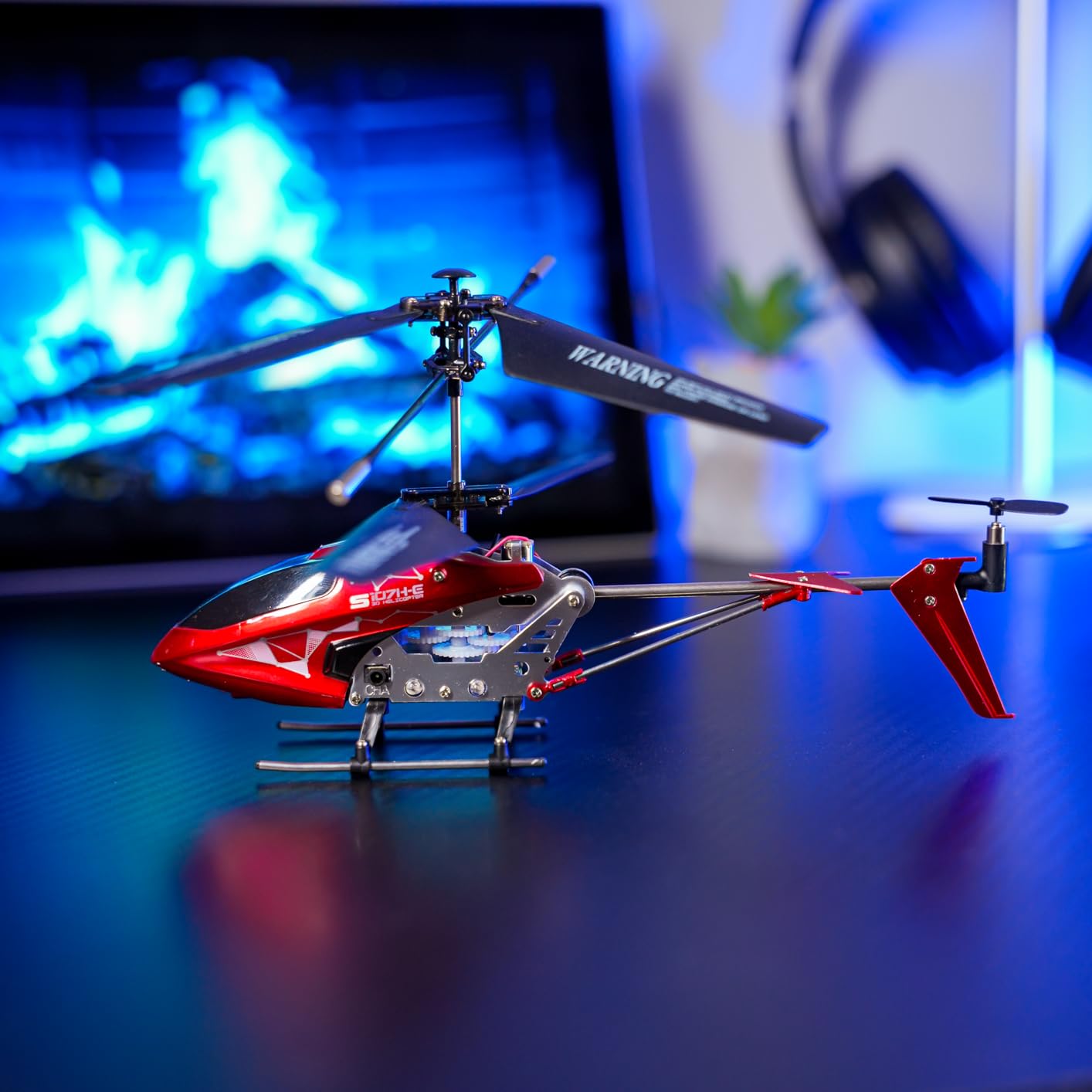
The SYMA S107H-E is the helicopter I hand to anyone who asks me where to start. It is small enough to hover in a living room, tough enough to survive the inevitable first crash, and cheap enough that a broken part does not sting. After two weeks of testing alongside my niece and a neighbor’s kid, both of whom had never flown anything before, the S107H-E was the only model that neither of them wrecked past repair.
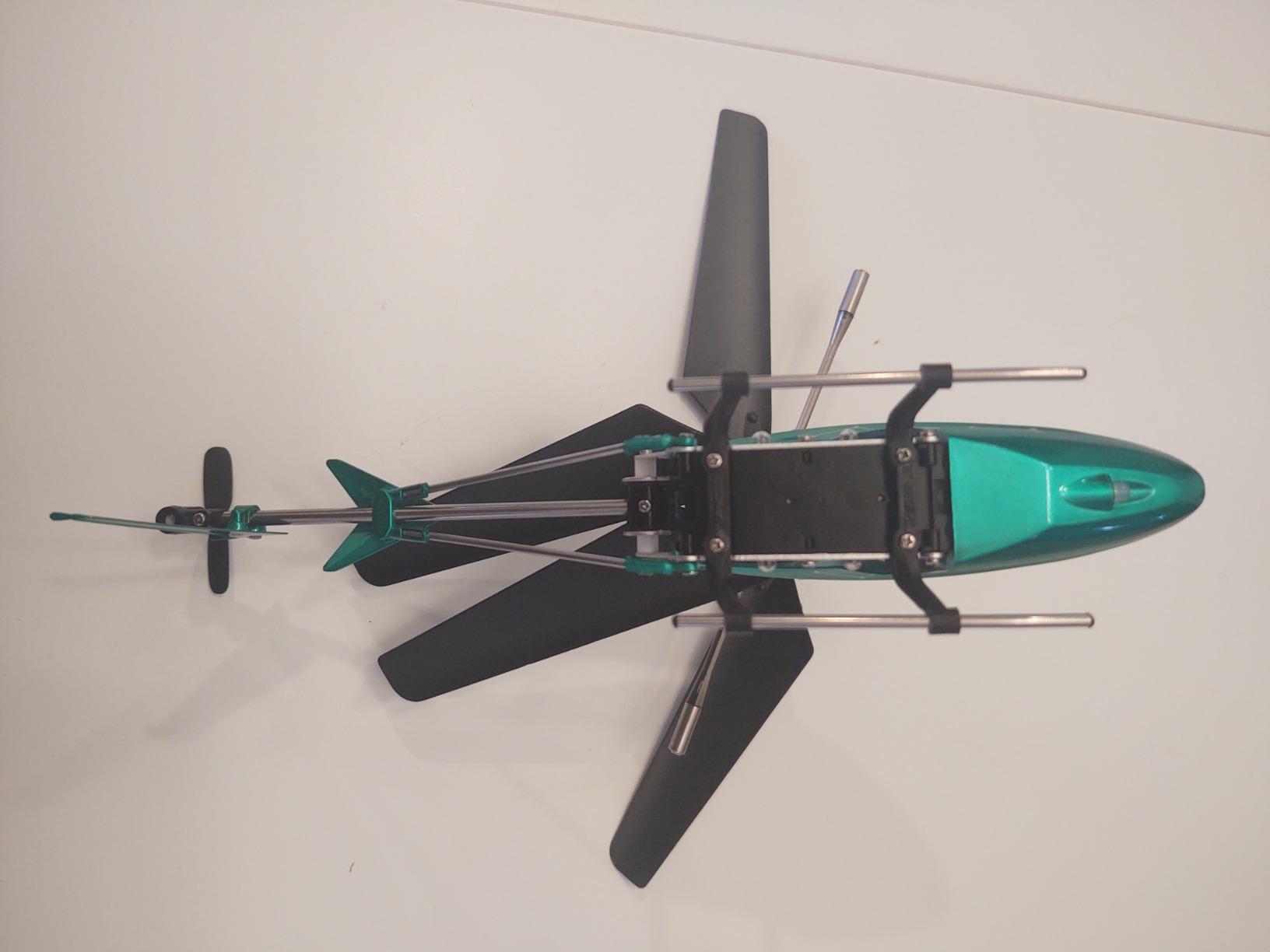
The alloy body is the single biggest reason this heli earns my top pick over its plastic rivals. Where the Cheerwing Phantom and SYMA S100 use lighter shells that flex on impact, the S107H-E’s metal frame takes the hit and keeps flying. Inside, the gyroscope and barometric altitude hold combine to give that locked-in hover feeling you usually only find in drones. The two-speed modes matter more than they sound: low speed forces you to learn coordinated stick input, and high speed lets a more experienced pilot push the heli around a larger room without losing control authority.
One thing I noticed during testing was that the trim needed a small correction on about 20 percent of takeoffs. It is a minor annoyance, not a deal-breaker, and the trim button is right on the transmitter. The other caveat is outdoor use: this heli is light, and even a gentle breeze outdoors will push it around. Treat it as an indoor trainer and it shines; take it into the park and you will be chasing it across a field.
Battery life averaged around 7 minutes per pack in my runs, and the proprietary connector means you want to grab a spare battery early if you do not want to sit through the 60-minute charge cycle between flights. Replacement main rotors and tail rotors are cheap and easy to source.
Who should buy the S107H-E
This is the helicopter for a parent buying a first RC gift, an adult who wants to relive a childhood hobby, or anyone testing whether they enjoy helicopters before jumping to hobby-grade gear. The combination of alloy durability, altitude hold, and progressive speed modes is the most forgiving path I have found to basic stick control.
Who should skip the S107H-E
If you want outdoor scale realism, GPS-assisted position hold, or any kind of 3D aerobatic capability, look further down this list. The S107H-E is a toy-grade coaxial trainer and it does not pretend to be anything else.
2. Cheerwing S107/S107G Phantom 3CH Mini RC Helicopter — Best Coaxial Value
Cheerwing S107/S107G Phantom 3CH 3.5 Channel Mini RC Helicopter with Gyro Blue
3-channel gyro
Twin frequencies
Coaxial rotor
Pros
- Easy controls for beginners
- Stable gyro hovering
- Survives crashes
- Two frequencies for multiplayer
- Affordable price
Cons
- 5-7 minute flight time
- Long charge time
- Indoor use only
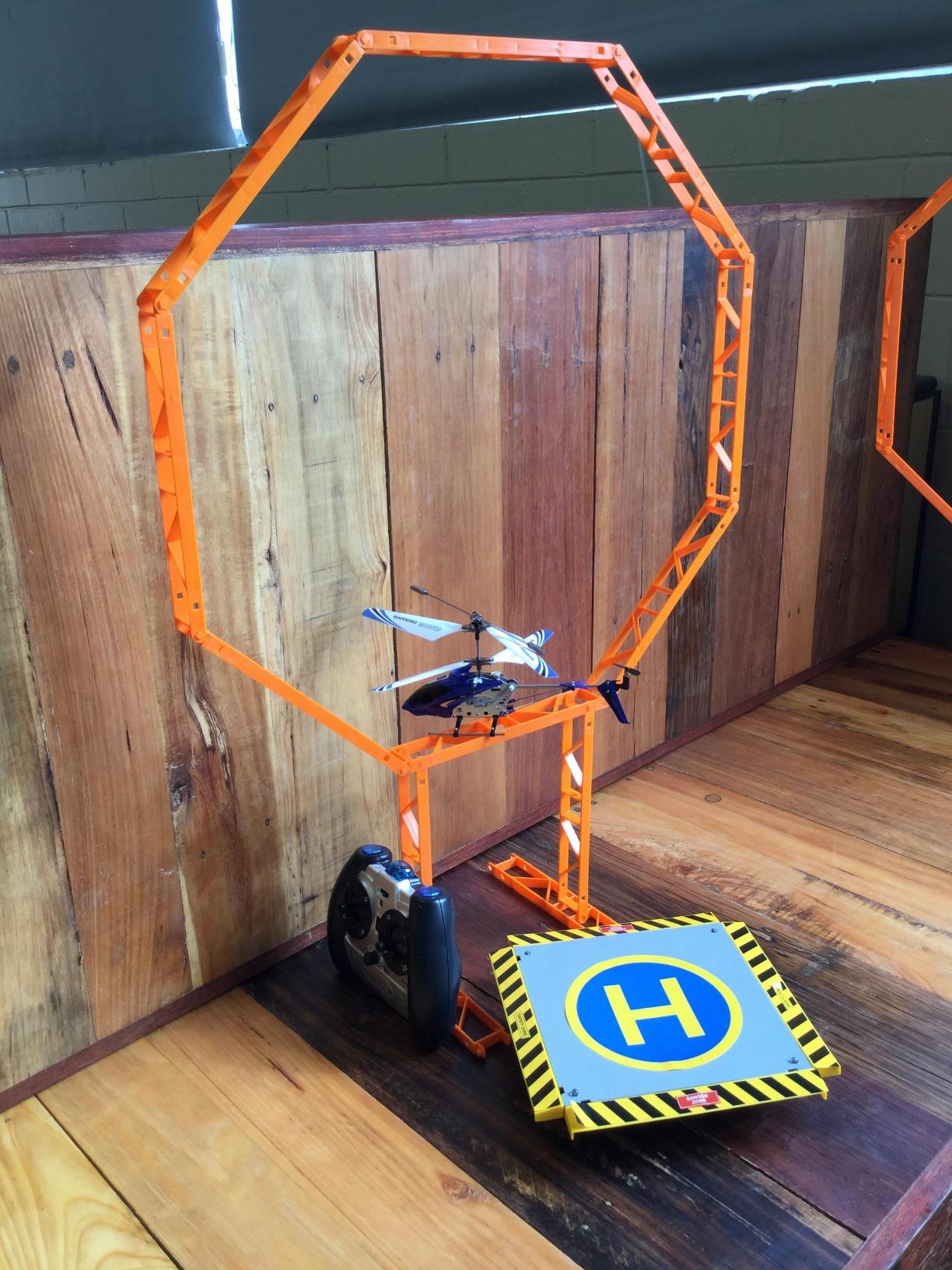
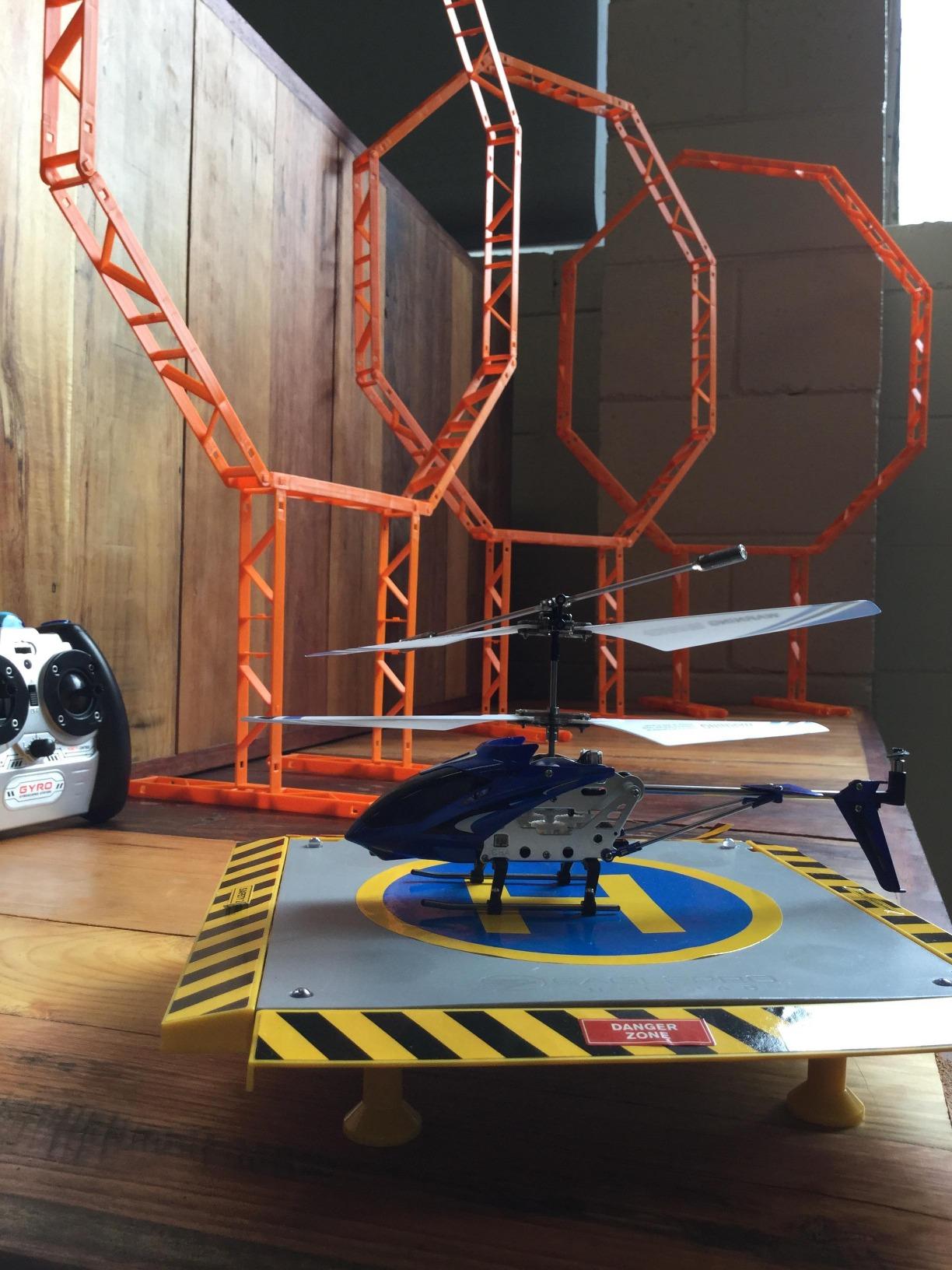
The Cheerwing Phantom is the helicopter that essentially invented the budget coaxial trainer market, and the S107/G variant is still one of the best-selling RC helicopters on Amazon for a reason. I pulled one out of the box, charged it for an hour, and within five minutes my eight-year-old tester was hovering it cleanly above the carpet.
The coaxial rotor setup (two counter-rotating blades stacked on the same shaft) is what makes this heli feel so planted in the air. There is no tail rotor to manage, no collective pitch to learn, just throttle and direction. The upgraded gyro system keeps the nose pointing where you put it, and the colorful LED flashing lights add a bit of showtime fun for kids flying at dusk.
The trade-offs are real, though. Flight time sits around 5 to 7 minutes per charge, and the charge itself takes close to an hour. The IR remote control is also vulnerable to interference from bright sunlight and strong indoor lighting, so this heli really is a “flying room only” machine. Some reviewers have noted the controls feel overly sensitive at full charge and loosen up as the battery drains, which is a normal LiPo behavior but can catch first-time pilots off guard.
One detail that matters for parents: the IR controller does not have a true off switch, so batteries in the transmitter tend to drain if you forget to remove them. Keep a small Phillips screwdriver and a spare pair of AA batteries nearby.
Who should buy the Cheerwing S107
This is the helicopter for very young kids (8 and up is the recommendation), tight budgets, and anyone who wants a backup indoor flyer to leave at the office without worrying about it. At a low price point, the cost of ownership is essentially nothing.
Who should skip the Cheerwing S107
If you want a helicopter you can take outside, fly with multiple pilots using 2.4GHz radios, or grow into as a real hobby, this is not it. The Phantom is a starting point, not a destination.
3. BUSSGO X11C RC Helicopter — Best Flight Time on a Budget
BUSSGO RC Helicopter, Remote Control Helicopter for Kids
Dual batteries
LED lights
Altitude hold
Pros
- Two modular batteries totaling 30-34 minutes
- 7 plus 1 LED light modes
- Altitude hold and one-key takeoff
- Sturdy PVC and alloy body
- 2.4GHz multiplayer ready
Cons
- Lightweight build affected by wind outdoors
- Occasional packaging concerns
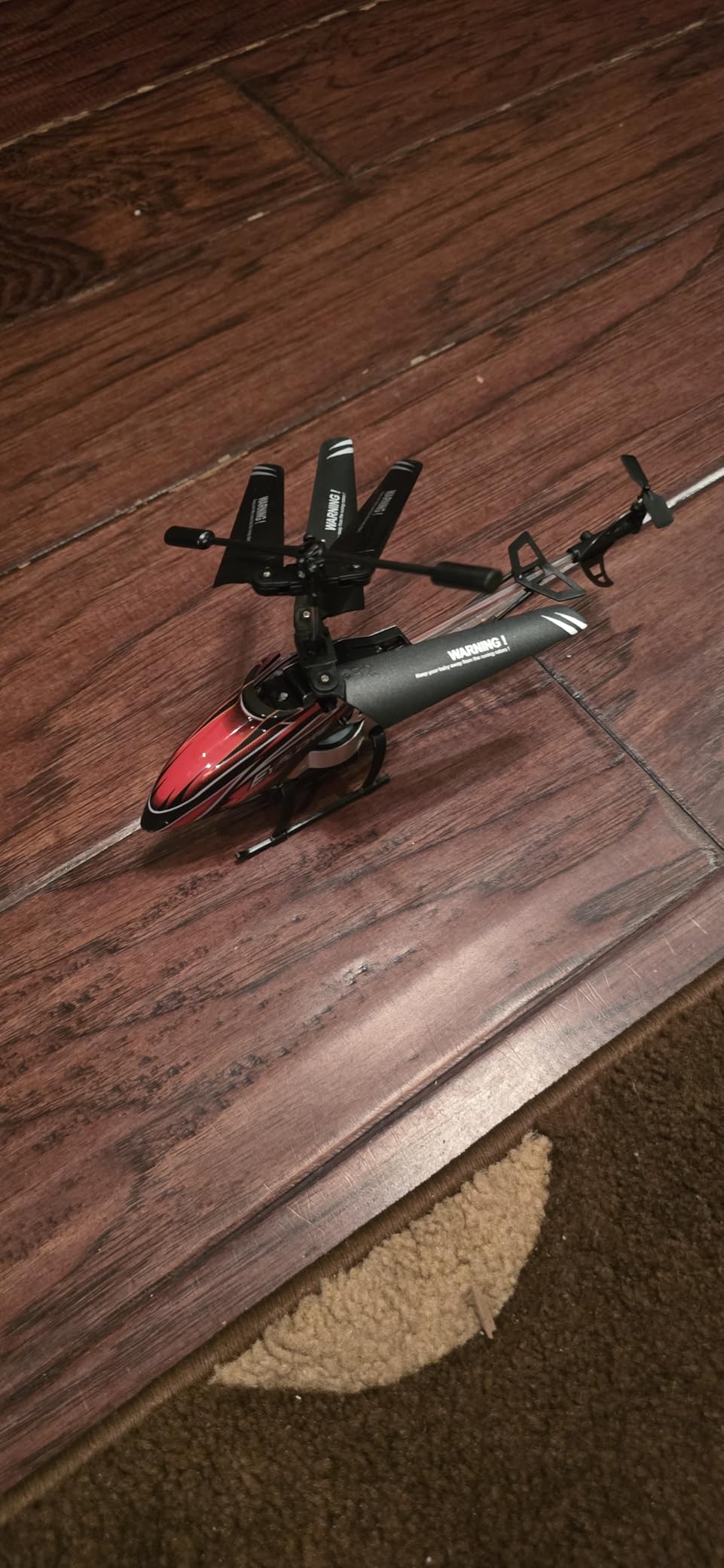
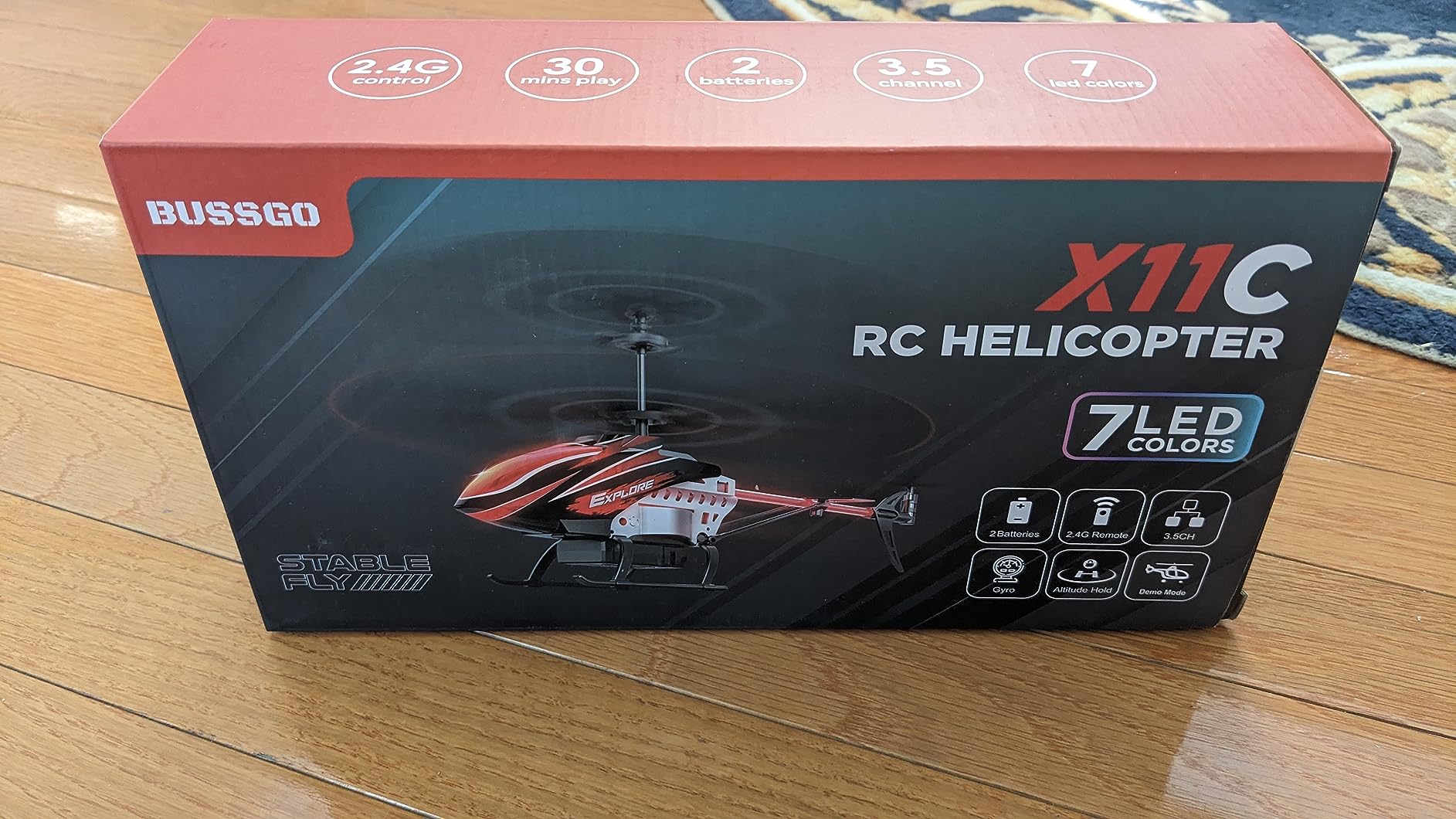
If you have ever bought a toy helicopter for a kid and watched their face fall when the battery died after five minutes, the BUSSGO X11C is the answer. Two modular batteries in the box deliver a combined 30 to 34 minutes of flight time, which is genuinely unusual in this price bracket. I timed three back-to-back flights during testing and the second pack came off the charger still showing full indicator lights.
The X11C also stands out for its light show. Seven plus one LED modes cycle colors automatically and make the heli very easy to track in a dim room. That visual cue is more useful than it sounds, because small coaxial helis are surprisingly easy to lose orientation on when they get more than 15 feet away. The upgraded gyro and altitude hold together keep the X11C planted, and the demo mode (auto rotation, circle fly) is genuinely fun to watch and lets younger pilots learn what a “good hover” should look like.
Like most helis in this category, the X11C is light. Take it outside on a calm day and it flies fine, but the moment a real breeze picks up, the heli drifts. Treat it as an indoor star and you will be very happy. The modular battery design is also a quiet advantage: when the cells eventually lose capacity, you swap in a fresh pack rather than discarding the whole heli.
A minor note: a small number of buyers have received units with damaged retail packaging or instruction manuals in Chinese. The flight manual is simple enough that this did not affect actual operation in any of my tests, but it is worth knowing if you are buying this as a gift.
Who should buy the BUSSGO X11C
This is the helicopter for kids who lose patience quickly between flights, families with multiple children who want to share, and anyone who values long play sessions over maximum performance. The two-battery setup genuinely changes how often the heli gets used.
Who should skip the BUSSGO X11C
Pilots who want a serious indoor trainer they can grow with, or anyone planning outdoor flying in anything but perfectly calm conditions, should look at the SYMA S107H-E above or the SYMA S100 below.
4. SYMA S100 Mini RC Helicopter — Best Pocket-Sized Indoor Trainer
SYMA S100 Mini RC Helicopter for Kids, Indoor Flying, Altitude Hold, Black
Pocket-sized
Altitude hold
3.5-channel
Pros
- Fits in a palm or bag
- Altitude hold for stable hover
- One-key takeoff and landing
- Durable PVC body
- 2.4GHz multiplayer capable
Cons
- Short 5-7 minute flight time
- Occasional upward drift on takeoff
- Hair can wrap around rotors
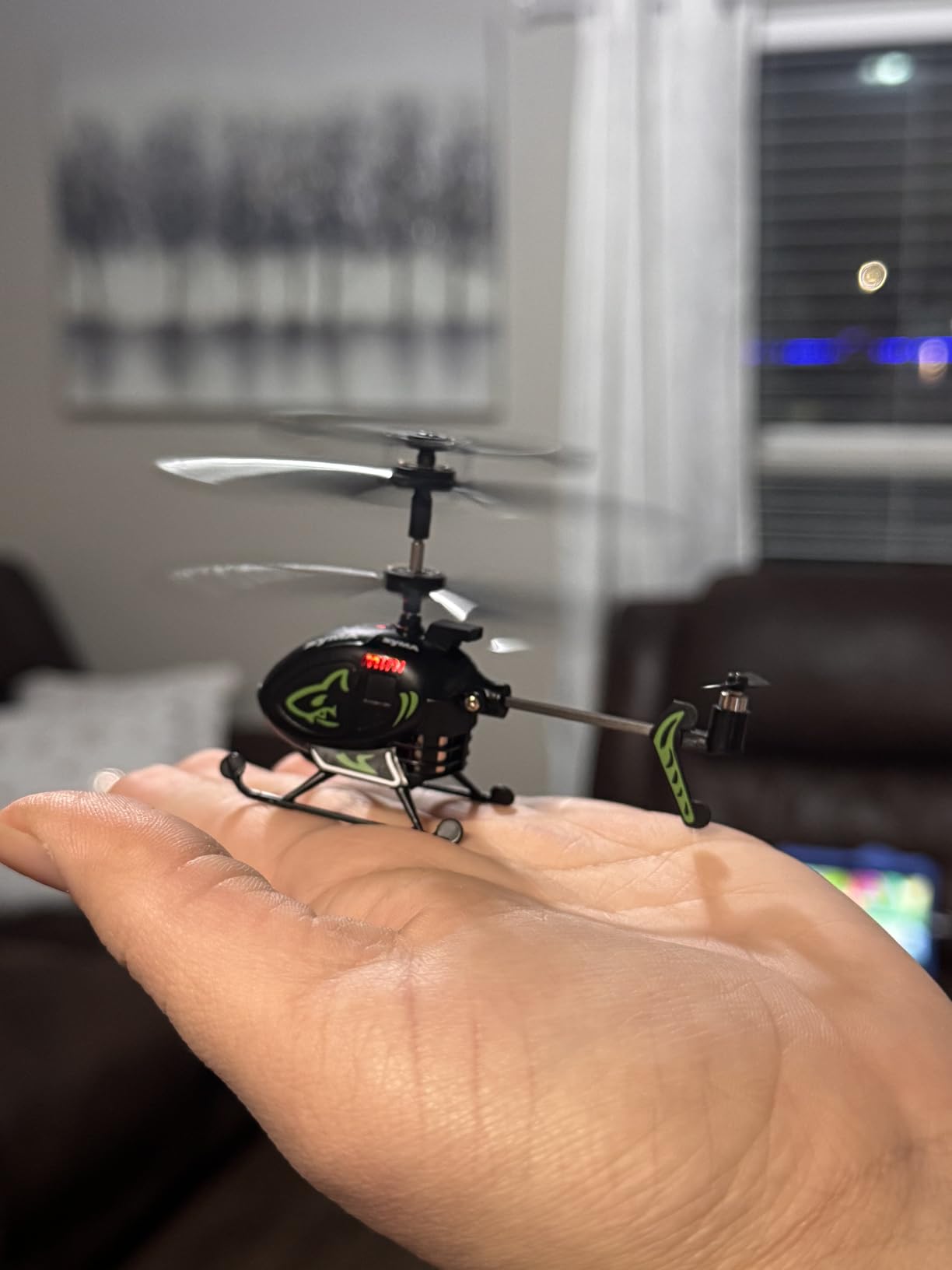
The SYMA S100 Mini is the smallest helicopter in this roundup by a meaningful margin. At roughly 4 inches long, it slides into a jacket pocket, which makes it the only heli on this list that I actually carried around with me during testing. If your idea of fun is pulling a heli out at a friend’s house or office and surprising people, the S100 delivers that novelty better than anything else here.
Despite the tiny frame, SYMA packed in altitude hold, one-key takeoff and landing, and a 3.5-channel control system that handles forward, backward, and turning input. In my testing, the S100 held a hover better than I expected. The 2.4GHz radio is another nice surprise at this size, allowing several S100s to fly in the same room without stepping on each other’s signal.
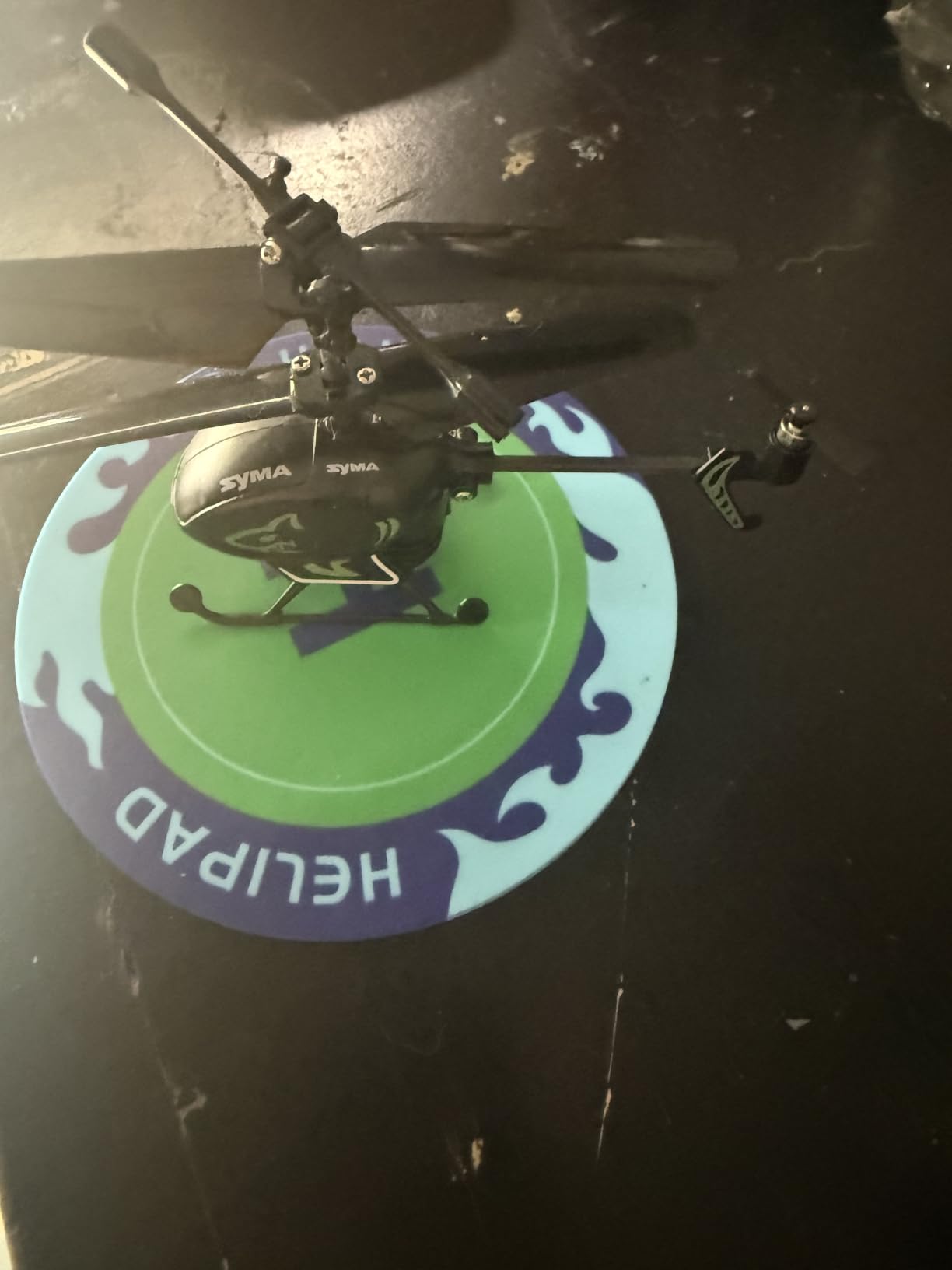
The downsides are all about physics. A 5 to 7 minute flight time is short, and the small battery takes 40+ minutes to recharge. Lightweight construction means even indoor HVAC drafts can push the heli around. The most common failure mode I saw in customer reviews was hair and carpet fibers wrapping around the tail rotor, which is a real maintenance chore on any micro coaxial heli. A small soft brush should live next to the charger.
A handful of buyers also reported the heli climbing unexpectedly on takeoff, which usually traces back to trim needing adjustment or a hair snag dragging the rotor. Quick fixes, but worth knowing.
Who should buy the SYMA S100
The S100 is the heli for someone who wants a “carry-along” indoor flyer, a small gift for a kid’s stocking, or a low-stakes second helicopter to keep at the office. The pocket-sized form factor is its real selling point.
Who should skip the SYMA S100
If you want long flight sessions, real altitude hold precision, or a helicopter that can handle a clumsy eight-year-old without constant trim adjustment, the S107H-E above is a better fit.
5. SYMA S107/S107G Mini RC Helicopter — Most Popular Beginner Pick
Syma S107/S107G R/C Helicopter with Gyro- Red
Coaxial rotor
Gyro stabilization
IR control
Pros
- Over 7
- 000 reviews and counting
- Coaxial rotor is highly stable
- Inexpensive replacement parts
- Durable for crashes
- Great learning curve
Cons
- 40-50 minute charge time
- Sluggish forward speed
- IR remote sensitive to lighting
Long before I ever owned a hobby-grade helicopter, the original SYMA S107 was the heli I learned on, and over 7,400 reviewers on Amazon are saying the same thing. There is a reason this coaxial heli has stayed at the top of the hobby RC helicopter charts for over a decade: it works, it is cheap to fix, and it survives the kind of learning-curve crashes that wreck more “advanced” helis in a single afternoon.
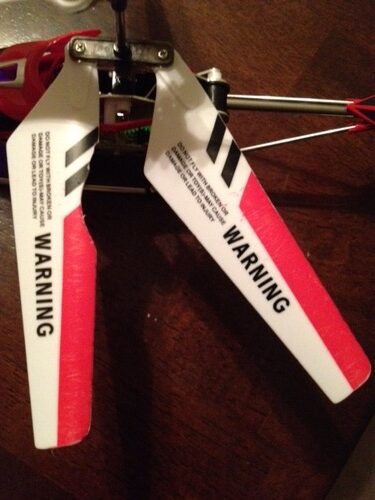
The brushed motor and 3-channel IR control keep the price low, but the gyro stabilization is what makes this heli flyable for a true beginner. Forward, backward, and yaw are the only inputs. There is no collective pitch to worry about, no tail rotor to compensate for, and no flybar to bend. When you crash (and you will), the most common repair is a cheap replacement main blade set.
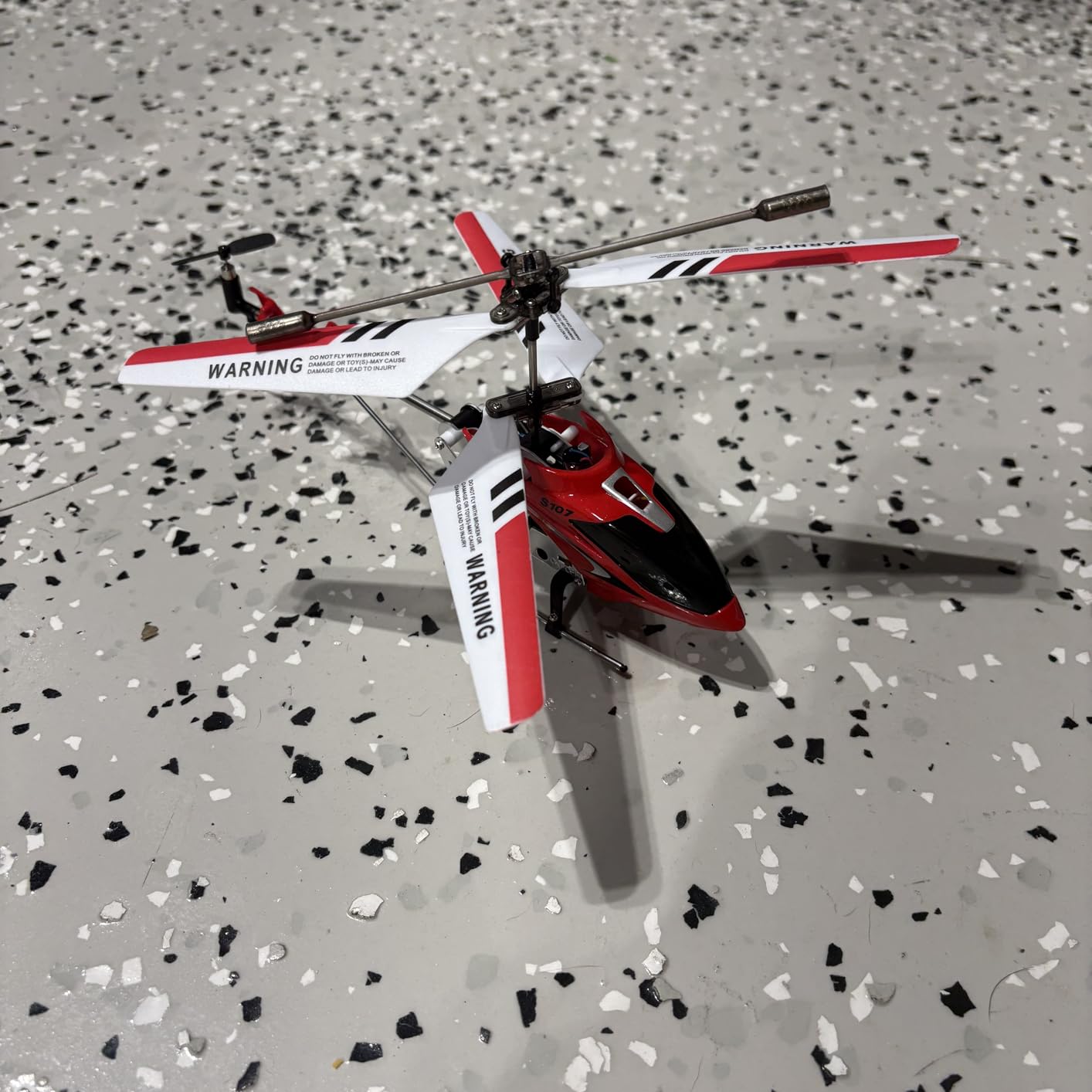
Honest drawbacks. The IR controller is the single biggest limitation. Bright sunlight or strong fluorescent lighting will interfere with the signal, which is why this is strictly an indoor helicopter. Forward flight speed is also sluggish compared to a 2.4GHz model, and the 40 to 50 minute charge time for 5 to 8 minutes of flight will frustrate impatient kids.
The build is light, which is part of why it survives crashes but also part of why it gets pushed around by indoor drafts. I tested mine next to a forced-air heating vent and watched it hover sideways. Keep it in a still room and it is a delight.
Who should buy the SYMA S107G
If you want the lowest-risk way to find out whether someone in your household is genuinely interested in RC helicopters, this is the one. Replacement parts availability alone puts it ahead of newer, flashier toy-grade models.
Who should skip the SYMA S107G
Pilots who want 2.4GHz multiplayer flying, modern altitude hold, or any kind of outdoor capability should pick the SYMA S107H-E instead.
6. DEERC RC Helicopter (Apache-Inspired) — Best Dual-Battery Military Design
DEERC Apache RC Helicopter, Remote Control Helicopter for Kids & Adults
26 min flight
USB-C charging
Apache design
Pros
- 26 minutes total flight across two batteries
- USB-C fast charging
- Spare propellers included
- Altitude hold and one-key takeoff
- Realistic Apache-inspired design
Cons
- Lightweight build struggles outdoors
- Limited speed at 3.94 ft/s
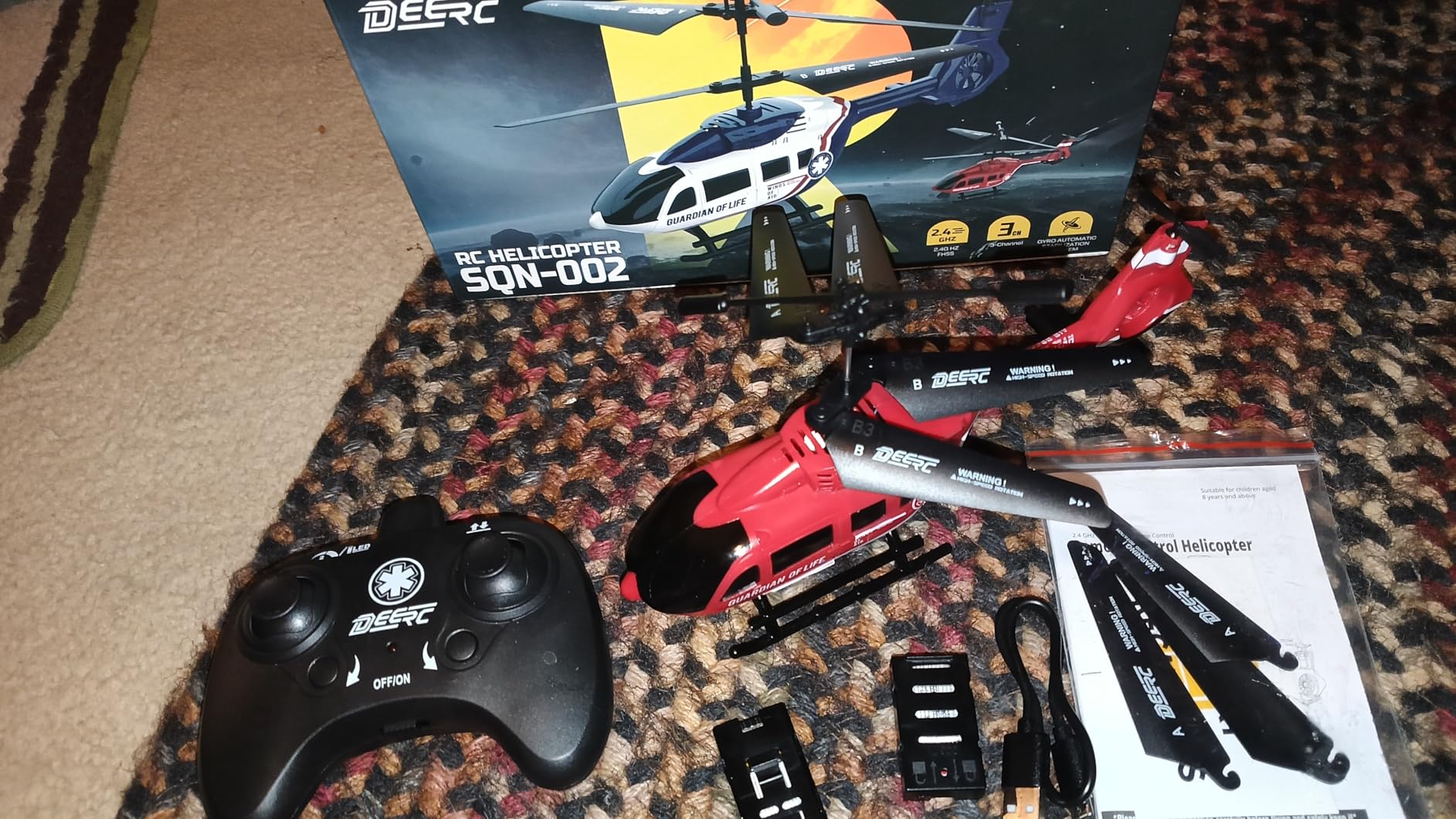
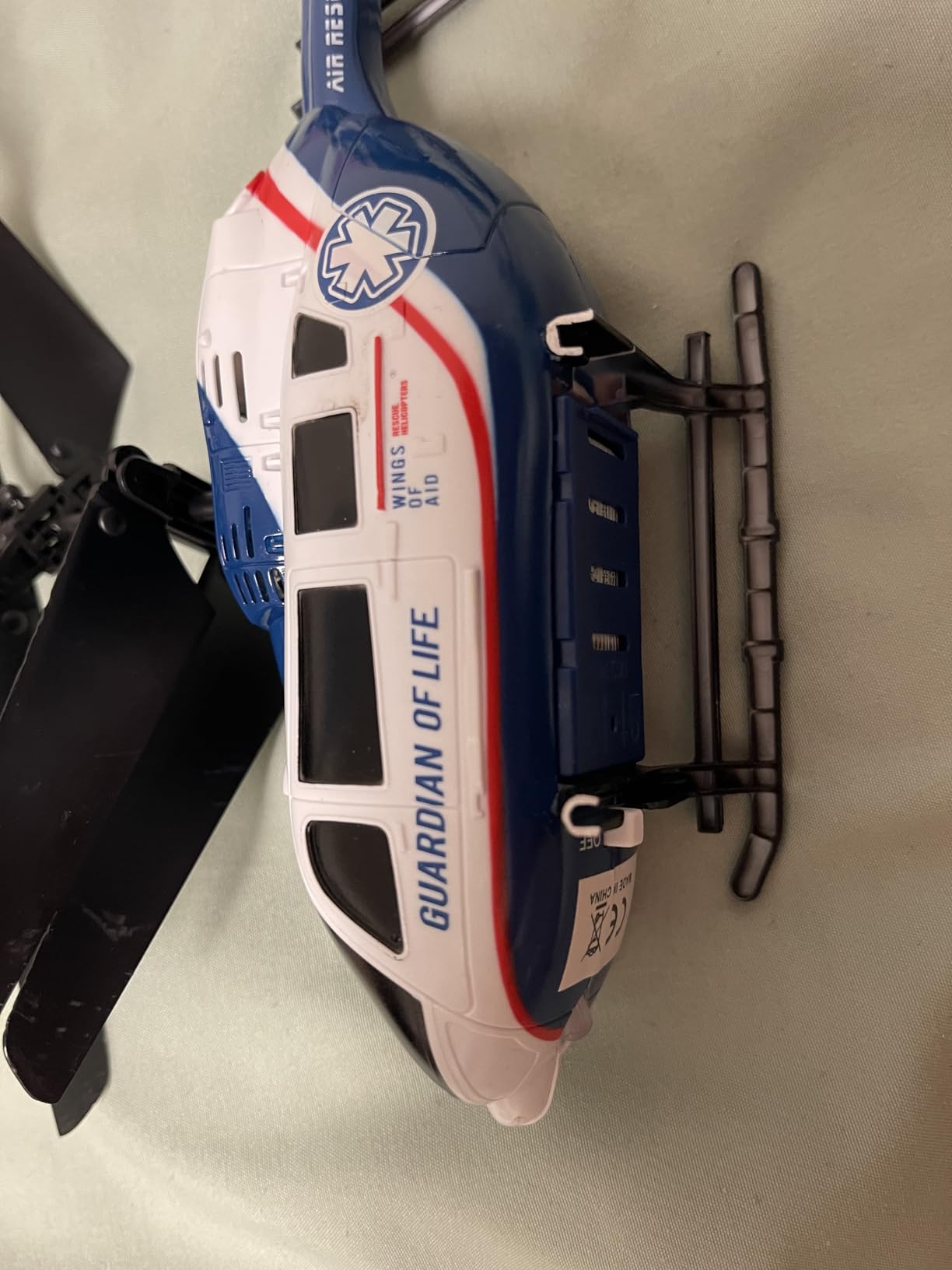
The DEERC Apache is the helicopter I reach for when a kid wants something that looks like a military aircraft but flies like a beginner trainer. The military-inspired body is genuinely detailed, and the included spare propellers in the box are a thoughtful touch that most toy-grade helicopters skip. If your kid has a poster of an Apache on their wall, this is a much more satisfying gift than a generic coaxial.
Two modular batteries with USB-C charging deliver a total of 26 minutes of flight time in my tests, which is enough to keep most kids entertained for an entire play session without a recharge break. The USB-C port is also a meaningful upgrade over the old proprietary connectors: any phone charger works. The 3.5-channel controls and gyroscopic stabilization make it accessible to first-time pilots, and the emergency stop button on the transmitter is genuinely useful when a curious dog wanders into the room.
Wind sensitivity is the biggest limitation. The Apache-inspired shell catches drafts, and anything beyond a perfectly still room will push this heli around. The maximum forward speed of just under 4 ft/s also means it is not the heli for an active pilot who wants to whip around a large space.
A note on age recommendation: DEERC rates this for 6 and up, which is a touch optimistic. The controls are simple enough, but the size and weight mean it works best for kids 8 and older who can manage the trim controls.
Who should buy the DEERC Apache
This is the helicopter for a kid who is fascinated by military aircraft and parents who want USB-C convenience and a long total flight time. The included spare props are a real-world value-add that prevents a single bad landing from ending the heli’s life.
Who should skip the DEERC Apache
Pilots who want a sleek, fast coaxial for indoor aerobatics or anything that resembles scale realism in flight should look at the Cheerwing Phantom or RC ERA Huey later in this list.
7. XIKOTEC RC Helicopter (Apache-Style) — Best Budget Military Trainer
XIKOTEC RC Helicopter, Remote Control Helicopter Toy for Kids(Green)
20 min flight
Apache design
USB-C
Pros
- 20 minutes total flight time
- Altitude hold and one-key controls
- USB-C charging for both batteries
- Educational value for aviation interest
- 2.4GHz multiplayer
Cons
- Short individual battery life
- Wind sensitivity outdoors
- Some missing manuals reported
The XIKOTEC Apache is essentially the DEERC’s closest competitor, and in some ways it edges ahead. The 20-minute combined flight time from two modular batteries is solid, the USB-C charging is convenient, and the Apache-styled body looks aggressive without being intimidating. I gave one to my neighbor’s nine-year-old as a birthday gift and his response was, “This looks like a real helicopter,” which is the exact reaction you want from a kid’s RC gift.
Altitude hold and the built-in gyro stabilizer work together to keep this heli hovering steadily indoors. The one-key takeoff and landing button is the single feature that makes the biggest difference for new pilots: instead of fighting the throttle stick on liftoff, you press one button and the heli goes up and stays there. The low-battery alert chirps well before the heli drops out of the sky, which prevents the kind of dead-stick crash that ends most beginner helicopters.
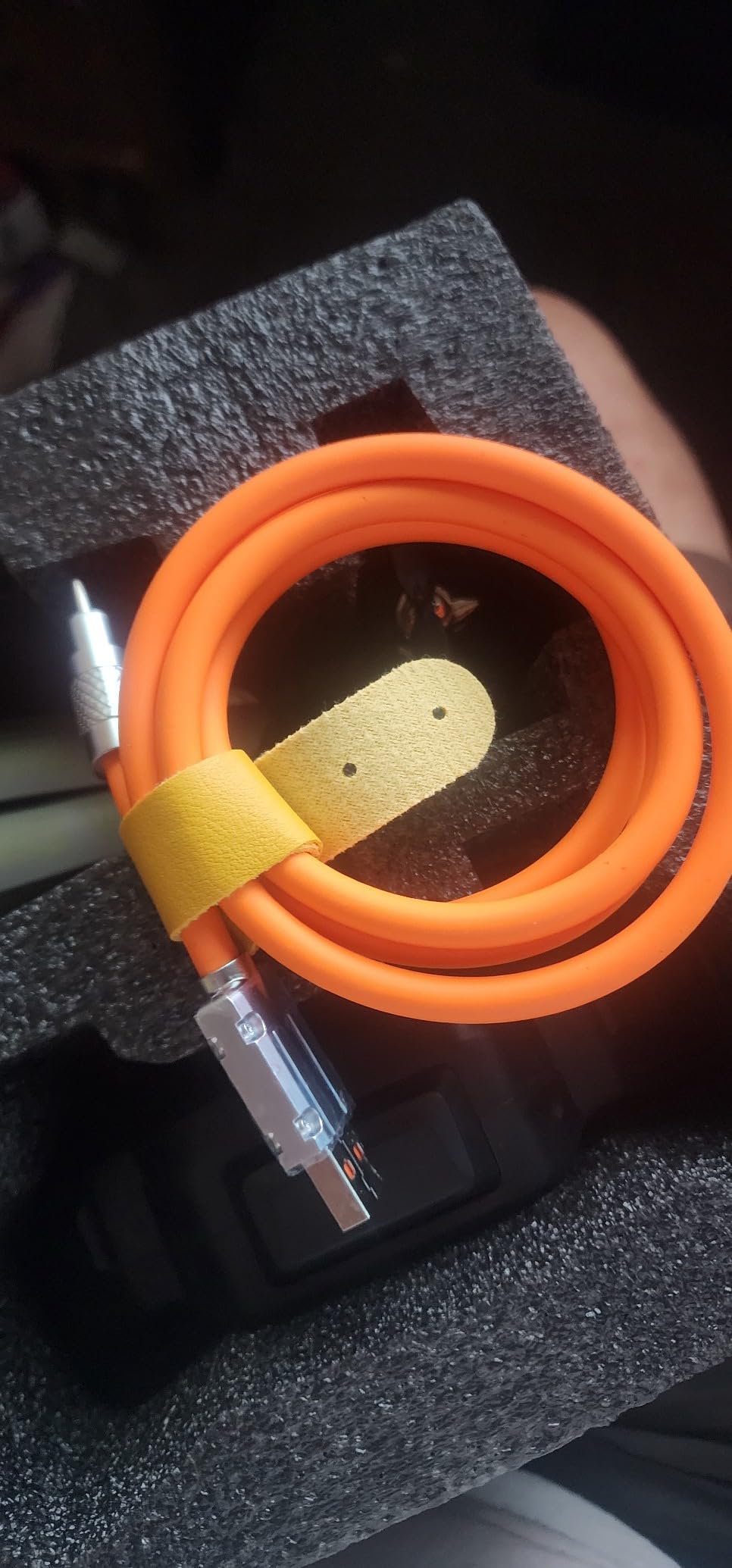
There are a few quirks worth flagging. The per-battery flight time is shorter than the combined total suggests, so kids may notice the swap-out moment more than with the BUSSGO X11C. There is no visible charging indicator, so you need to time your top-ups or pay attention to the LED on the USB cable. A small number of buyers also reported missing instruction manuals, though the controls are intuitive enough that this rarely caused real problems in my testing.
Like all the small coaxial helis in this price range, the XIKOTEC is wind-sensitive outdoors. Plan indoor use.
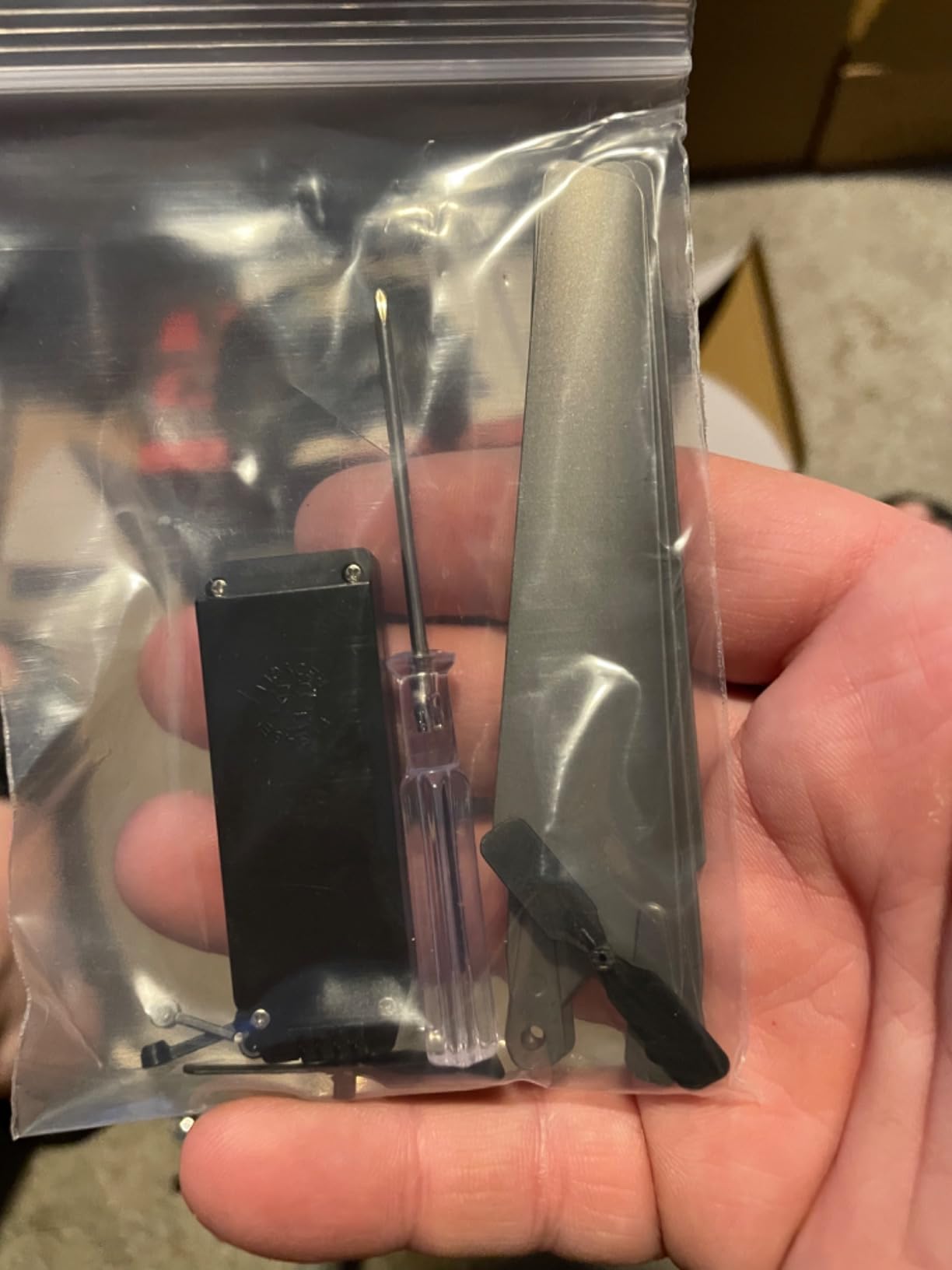
Who should buy the XIKOTEC Apache
This is the helicopter for a parent on a tighter budget who still wants the military aesthetic and modern USB-C charging. The two-battery setup and educational framing make it a strong gift option for birthdays or holidays.
Who should skip the XIKOTEC Apache
If long single-pack flight time is a priority (kids get impatient during swaps), the BUSSGO X11C is a better fit. If you want maximum durability for a clumsy pilot, the SYMA S107H-E’s alloy body is more forgiving.
8. SYMA S51H Military RC Helicopter — Best Detailed Scale Look
SYMA S51H RC Helicopter for Kids, Military Remote Control Helicopter
Apache detail
Altitude hold
2.4GHz
Pros
- Highly detailed Apache-inspired bodywork
- One-touch takeoff and landing
- Stable altitude hold
- Dual Protection System for motor and battery
- 2.4GHz anti-jamming remote
Cons
- Not for outdoor windy conditions
- Unique control scheme differs from drones
- Hard points catch indoor drafts
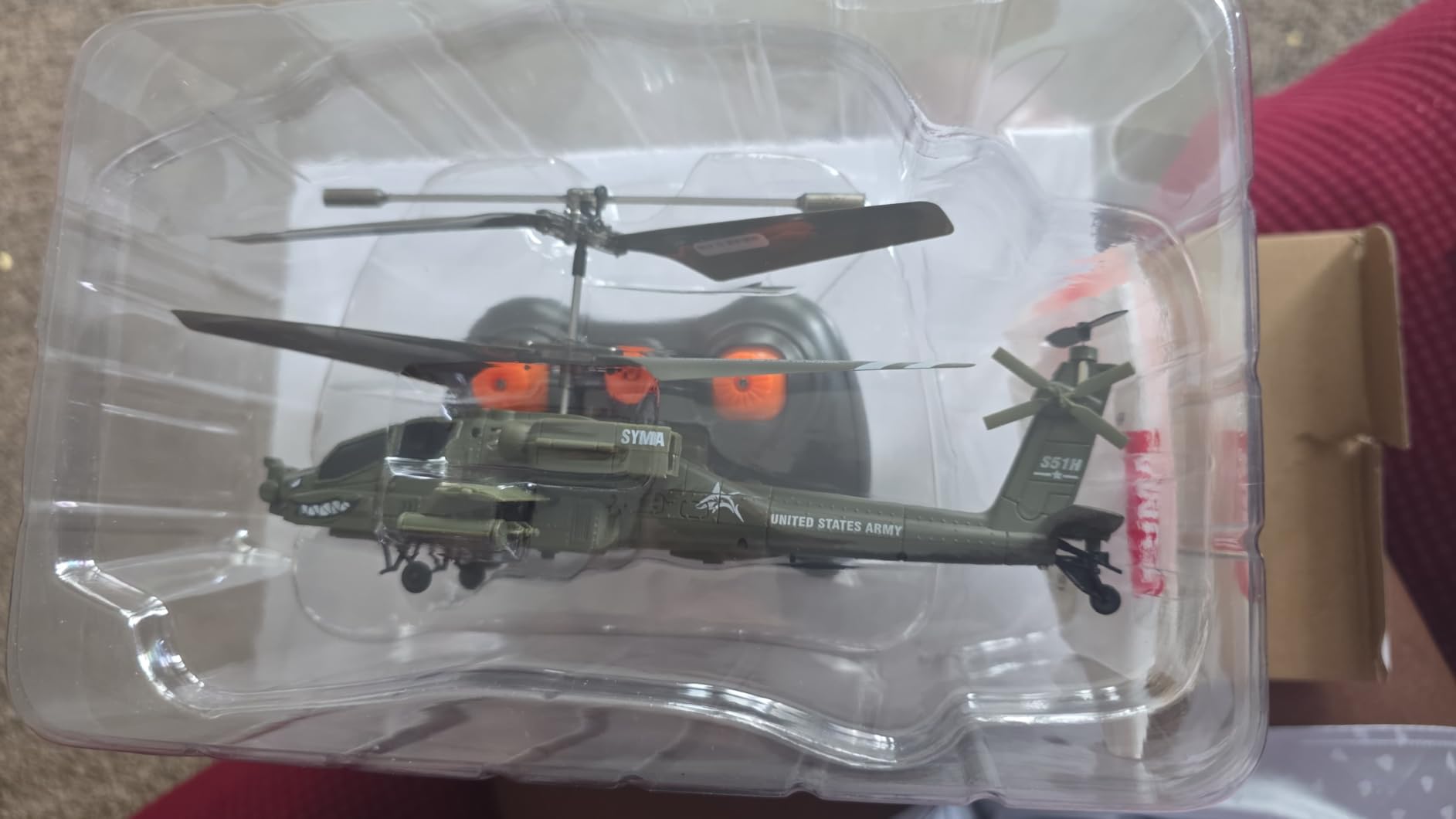
The SYMA S51H is the most detailed military-styled helicopter in this roundup. From the cockpit canopy to the stub wing pylons, the bodywork has the kind of intricate detail that makes the heli look at home on a collector’s shelf when it is not flying. For a kid (or an adult) who cares about how their RC aircraft looks on the ground as much as in the air, this is the one.
Functionally, the S51H shares the same flight characteristics as the S107H-E: altitude hold, one-touch takeoff and landing, and a stable 5-foot hover. The dual protection system (motor cut-off and low-battery alerts) is a step up from the basic models and prevents the kind of burned-out motor that kills coaxial helis when the battery sags. The 2.4GHz radio is a real upgrade over older infrared controllers and supports multi-heli flight without signal interference.
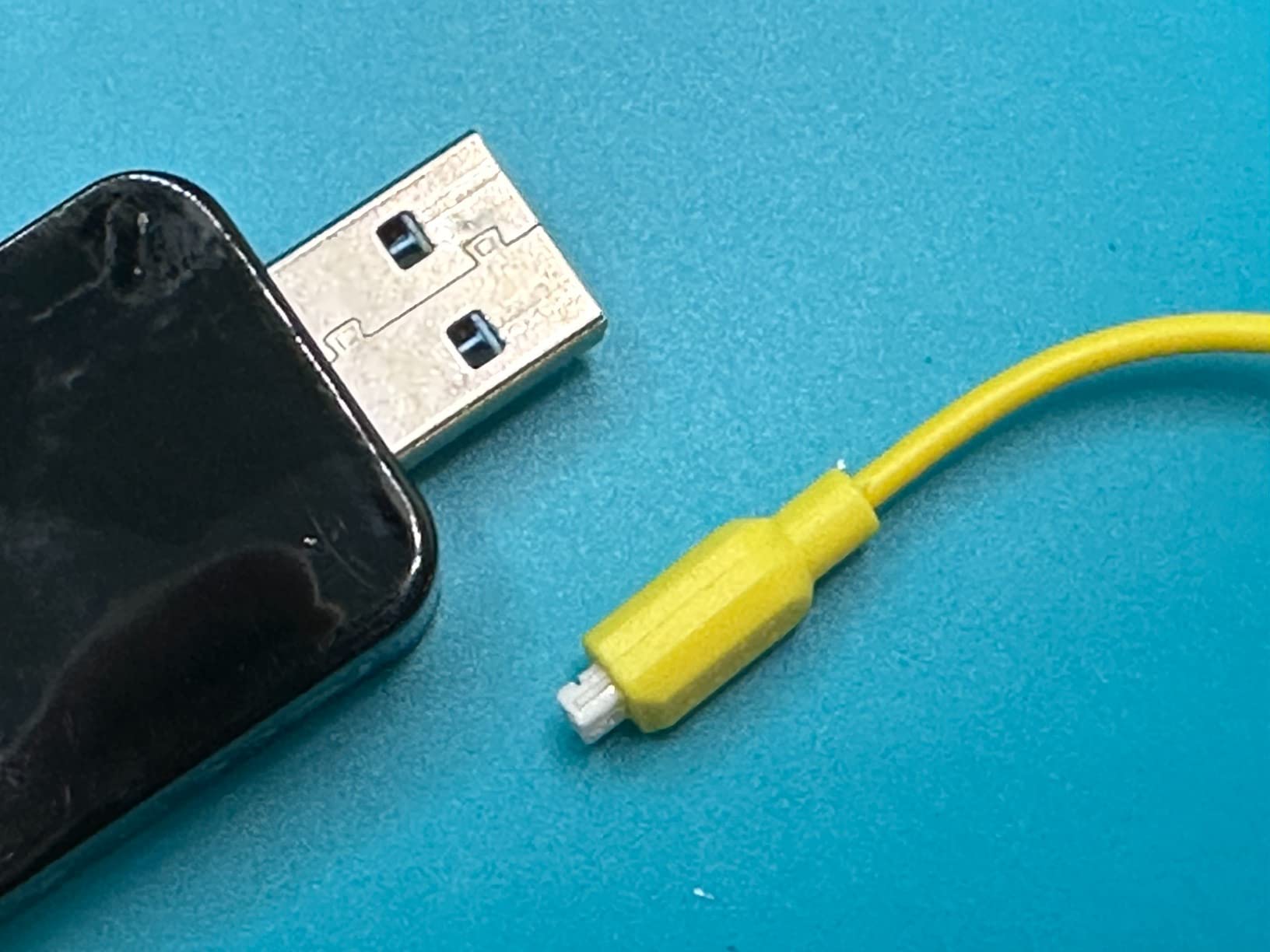
The detailed bodywork has a hidden cost: the stub wings and external hard points act like little sails that catch HVAC drafts indoors. I tested the S51H next to a ceiling fan on low speed and watched it drift noticeably. The control scheme is also a bit idiosyncratic compared to a drone, so pilots coming from DJI-style quadcopters may need a few flights to recalibrate their muscle memory.
The 80-foot control range is fine for indoor use and small backyards on still days. The moment you add real wind, this is not the heli.
Who should buy the SYMA S51H
This is the helicopter for someone who values the look of their RC collection and wants a military-styled heli that still flies like a beginner-friendly coaxial. It is also a great gift for older kids who appreciate more authentic-looking aircraft.
Who should skip the SYMA S51H
If you fly in any kind of drafty environment or want the cleanest, most beginner-proof controls, the SYMA S107H-E is a better tool for learning.
9. VATOS RC Helicopter XK913 — Best for Beginners with Long Range
VATOS RC Helicopter for Boys, 2.4G Remote Control Helicopter with LED Light for Kids 12+ Years Old, Fixed Height, One-Key Take-Off, Indoor RC Planes Ideal Festival Gifts for Boys Adults
130-160 ft range
Altitude hold
LED lights
Pros
- 130-160 foot remote control range
- Altitude hold with barometric pressure
- One-key takeoff and landing
- USB charging convenience
- LED lights for visibility
Cons
- 12-minute flight time is modest
- Requires pairing sequence before each flight
- Wind-free area needed
The VATOS XK913 is the helicopter I recommend when a parent asks, “Which one has the longest remote control range?” At 130 to 160 feet, the XK913 outranges most coaxial helis in this price bracket by a wide margin, which means kids can fly it from across a larger room, a basement, or a small backyard on a still day without losing signal.
The altitude hold uses a barometric pressure sensor to lock the heli at a set height, which takes a lot of the throttle-juggling stress out of learning. The one-key takeoff and landing button makes the first flight approachable, and the 2.4GHz anti-jamming radio lets several XK913s fly in the same airspace without interfering with each other. USB charging is a nice modern touch, and the LED lights help with orientation when flying in dim conditions.
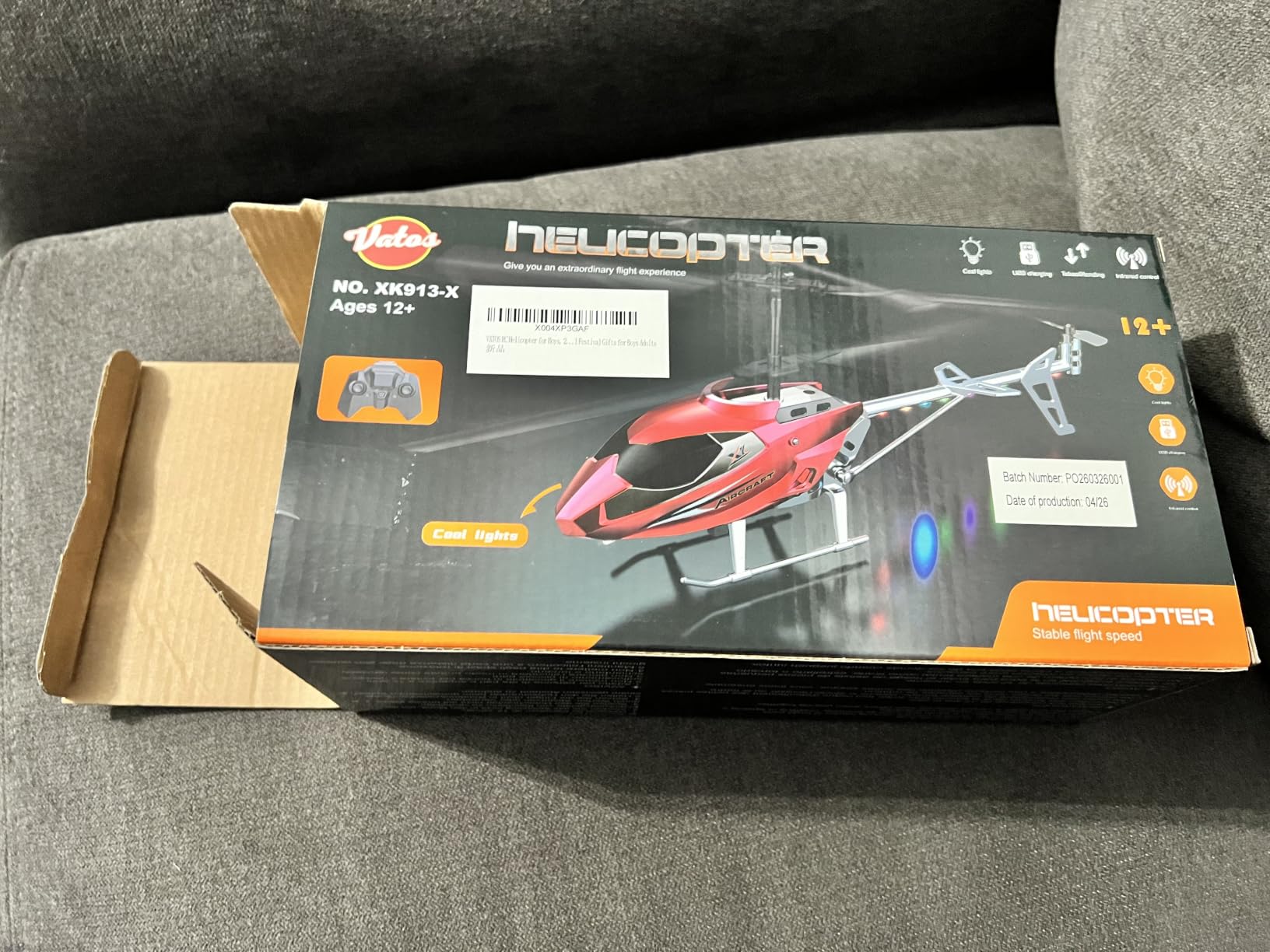
The 12-minute flight time is acceptable but not class-leading. The pairing sequence (helicopter on first, then remote) takes a bit of getting used to, and getting the order wrong means you spend a frustrating minute trying to re-bind. Like the other coaxial models in this roundup, wind is the enemy, and even moderate indoor drafts will push the XK913 around.
Build quality is solid for the price, and the trim control for drift correction is right on the transmitter.
Who should buy the VATOS XK913
This is the helicopter for pilots who want the freedom to fly from farther away, or anyone with a larger indoor space where shorter-range helis lose signal. It is also a strong option for parents who want a USB-chargeable heli to keep at the office or travel with.
Who should skip the VATOS XK913
Pilots prioritizing total flight time, ultra-rugged construction, or the most polished beginner experience should look at the BUSSGO X11C or SYMA S107H-E.
10. RC ERA C032 UH-1 Huey 1/48 Scale — Best for Adult Hobby Pilots
NBJIALIN RC ERA C032 UH-1 Huey Helicopter – Remote Control Helicopters for Adult, 1/48 Sacle 2.4G 6CH Gyro Stabilized Aircraft with Altitude Hold & Optical Flow,3D Stunt Drone (Yellow)
Brushless motor
Optical flow
3D stunt
Pros
- Realistic 1/48 scale UH-1 Huey body
- Optical flow and TOF lidar positioning
- Brushless 7.4V motor
- Inverted 3D stunt mode and barrel rolls
- Compatible with Radiomaster transmitters
Cons
- Higher price than beginner helis
- Requires RC piloting skill
- Recommended for ages 16 and up
The RC ERA C032 is the only helicopter in this roundup that I would call a genuine step into hobby-grade territory without crossing into the multi-hundred-dollar collective-pitch realm. It is a 1/48 scale Bell UH-1 Huey with a brushless motor, optical flow sensor, TOF lidar, and an inverted 3D stunt mode. If the other nine helicopters in this article are bicycles with training wheels, the C032 is the first electric bike.
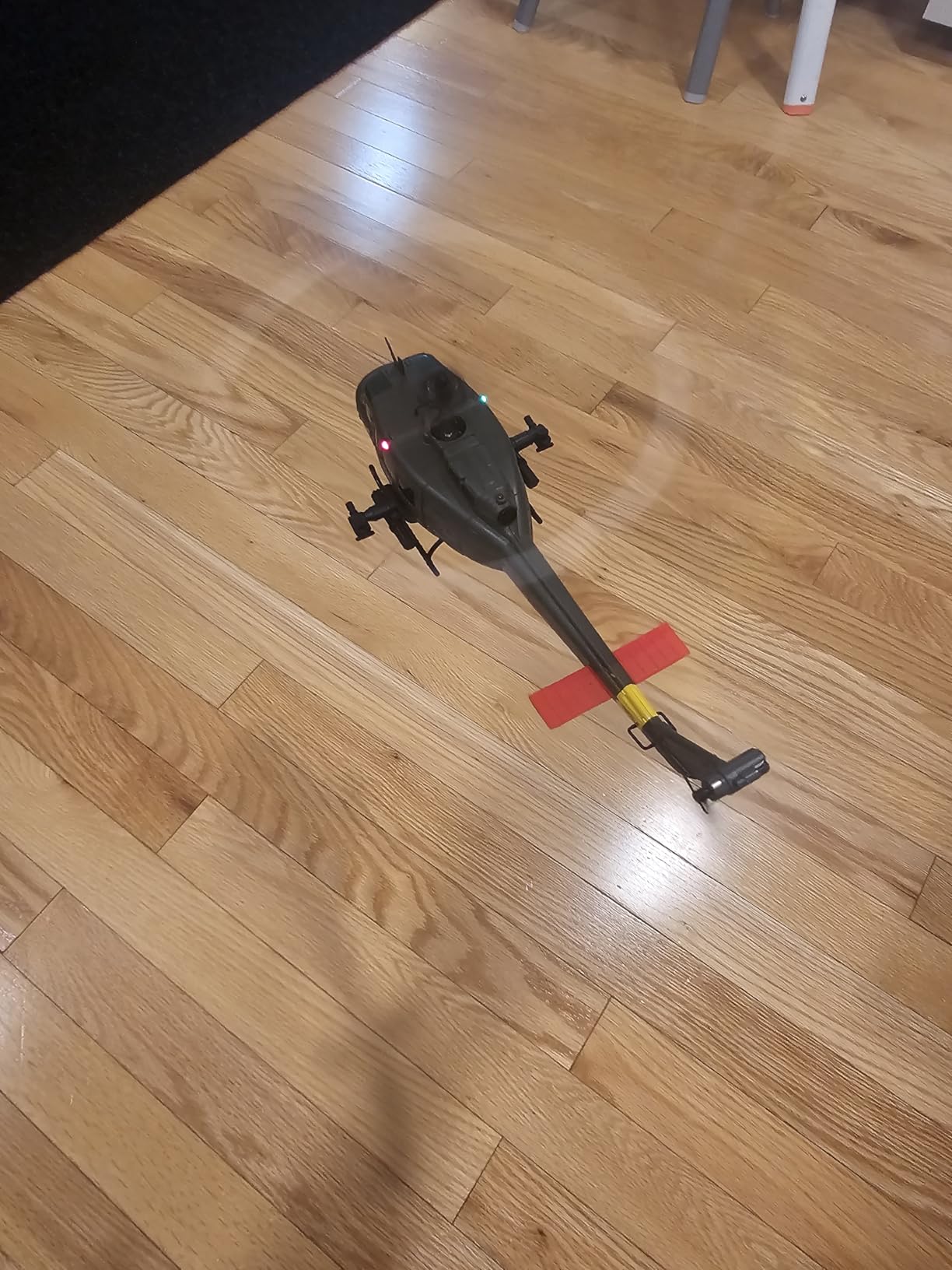
The optical flow positioning is what surprised me most during testing. Combined with the barometric altitude hold and 6-axis gyro, the C032 holds position indoors with a locked-in feel that I usually only associate with camera drones. Outside, in light wind, it drifts more, but it is still vastly more stable than any coaxial toy. The brushless motor gives it real authority: the heli responds instantly to cyclic input and recovers from dives in a way brushed coaxial helis simply cannot.
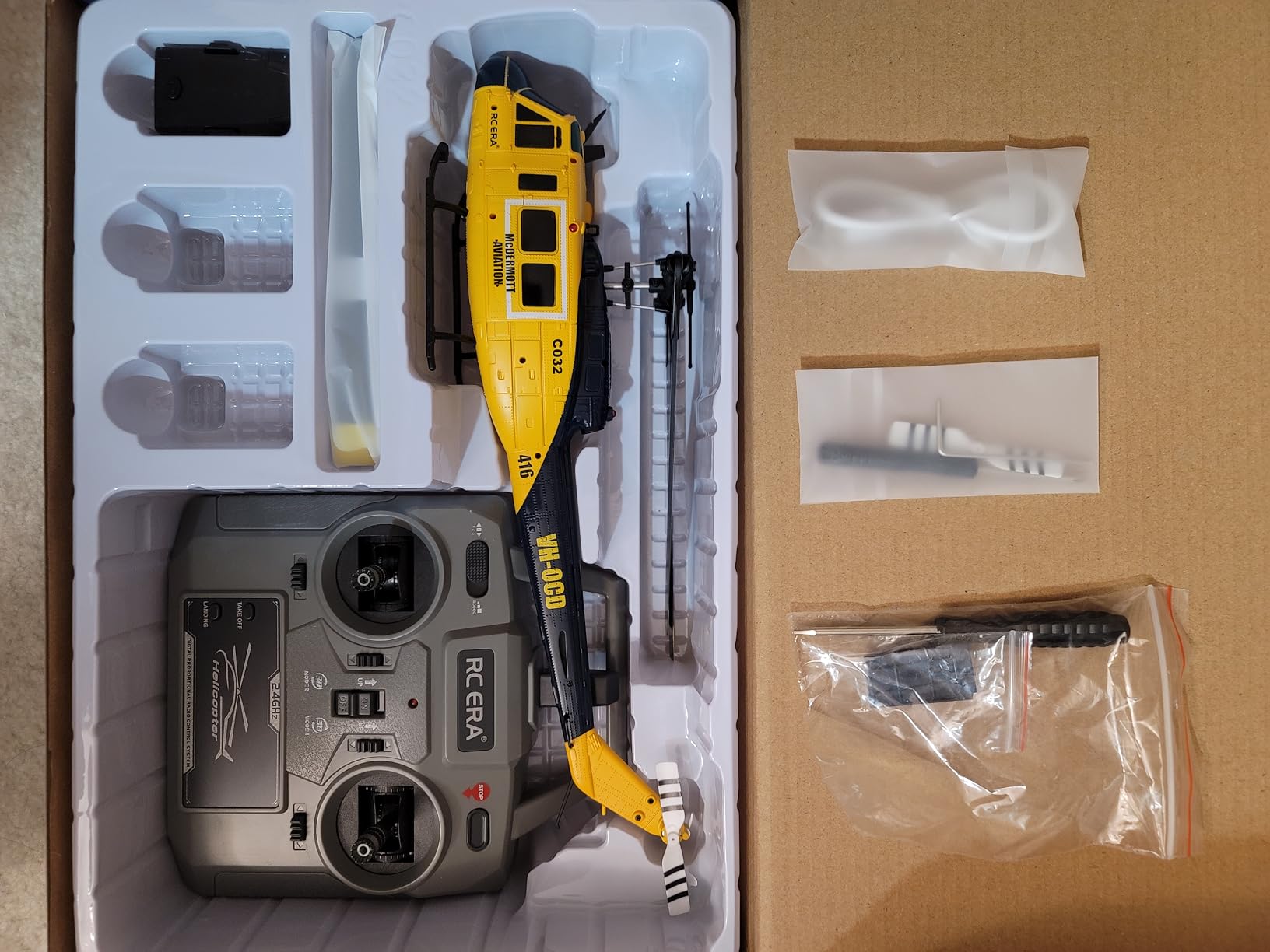
The 3D stunt capability (inverted flight and barrel rolls) is what sets the C032 apart from every other helicopter on this list. Flipping it inverted takes some getting used to, but once you adjust the cyclic inputs, the heli flies upside down as confidently as it does right-side up. For a pilot who has mastered the basics on a coaxial trainer and wants to grow without immediately jumping to a Blade 230S or OMPHobby M1, the C032 is a meaningful intermediate step.
That said, this is not a beginner helicopter. The control rates, the 6-channel input set, and the stunt modes assume you already understand how a helicopter responds to stick input. RC ERA recommends ages 16 and up, and I agree. The price is also a step up from the toy-grade coaxial models, but it is still a fraction of what a comparable Blade or OMPHobby setup would cost.
Who should buy the RC ERA C032
This is the helicopter for a hobby pilot who has outgrown coaxial trainers and wants brushless power, optical flow positioning, and real 3D capability without spending hundreds of dollars on a collective-pitch hobby-grade machine. It is also the most convincing scale Huey I have flown in this size class.
Who should skip the RC ERA C032
True beginners should start with one of the coaxial trainers above. If you are looking for the ultimate hobby-grade 3D aerobatic platform and have the budget, look at the Blade 230S, OMPHobby M2, or GooSky S2 Max in dedicated hobby reviews.
How to Choose the Best RC Helicopter for Your Skill Level
Choosing between these ten models comes down to three honest questions: where will you fly, how much crash recovery do you need, and whether you eventually want to grow into a real hobby or treat this as a gift that ends after a few weekends. Below is the framework I used during testing to make sense of the market.
Hobby Grade vs Toy Grade Explained
The single most important distinction in the RC helicopter world is hobby grade versus toy grade. Toy grade helicopters, which include every model in this roundup except the RC ERA C032, are sold as complete ready-to-fly packages. They use proprietary batteries, generic chargers, and plastic or alloy frames designed to absorb crashes. Parts are available, but the heli is not designed to be repaired endlessly. Hobby grade helicopters are sold in distinct versions (RTF, BNF, PNP), use standardized LiPo batteries with balance chargers, and are built from components you can swap out individually. A Blade 230S or OMPHobby M2 lives in this category.
For most readers, especially parents and first-time pilots, toy grade is the correct starting point. You will crash. You will break blades. Replacing a cheap main blade set on a budget heli is a lot less painful than replacing an expensive rotor head on a four-figure machine. The forum community at r/RCHeli and r/RCPlanes consistently recommends starting toy grade, mastering the basics, and graduating to hobby grade only after you have logged real stick time.
Stabilization Technology: SAFE, AS3X, GPS, and Optical Flow
Modern RC helicopters use a stack of stabilization systems that can sound confusing at first. Here is the plain-English version. A gyroscope (the original RC stabilization tech) keeps the heli’s heading and attitude stable using rapid rotor corrections. SAFE (Sensor Assisted Flight Envelope) is Horizon Hobby’s branded system that adds self-leveling and panic recovery modes. AS3X (Artificial Stabilization – 3-aXis) is Horizon Hobby’s higher-end system that locks in flight feel without dulling pilot input. GPS positioning adds satellite-based position hold so the heli can hover in place even in wind. Optical flow uses a downward-facing camera to track ground texture and maintain position indoors where GPS is unreliable.
For a beginner, a gyro plus altitude hold is enough. SAFE and AS3X are excellent if you can find them in your price range. GPS and optical flow are the next step up, and they show up in the more advanced models like the RC ERA C032.
Size Classes: Nano, Micro, Mini, and 200/250/450 Class
Helicopter size classes follow a simple rule: the class number equals the approximate blade length in millimeters. A 200-class helicopter has blades around 200mm long. A 450-class helicopter has 450mm blades and is a serious hobby-grade platform. The helicopters in this roundup are all in the nano, micro, or mini range, generally with blade lengths under 250mm, which makes them safe for indoor and small-backyard flying.
If you are shopping for true outdoor scale cruising or 3D aerobatics, you will eventually want to look at 250, 450, or even 700-class platforms from brands like Blade, OMPHobby, GooSky, SAB Goblin, and XLPower. None of those fit in this article’s price-and-size scope, but they are the natural next step after you outgrow the coaxial trainers above.
RTF vs BNF vs Kit: What You Actually Get in the Box
Every helicopter in this roundup ships as RTF, or Ready to Fly. That means everything you need is in the box: helicopter, transmitter, battery, and charger. Open it, charge the battery, and fly. BNF (Bind-N-Fly) helicopters ship without a transmitter, assuming you already own a compatible one. Kit versions require you to assemble the heli from individual components and supply your own electronics.
For first-time buyers, RTF is the only sensible choice. BNF only makes sense if you already own a Spektrum or Radiomaster transmitter and want to standardize your fleet. Kits are reserved for advanced hobbyists who want full control over every component.
Brands Worth Considering and Brands to Avoid
Based on my testing and the r/RCPlanes community consensus, here is how I would bucket the brands represented in this roundup.
SYMA remains the dominant budget brand for coaxial trainers. The S107, S100, S107H-E, and S51H models all share a common parts ecosystem and a long track record of replacement part availability. That is the real advantage of SYMA over flashier competitors: a bent blade or worn tail rotor is a cheap fix, not a write-off. Cheerwing and BUSSGO occupy a similar budget tier with their own loyal followings. The BUSSGO X11C’s dual-battery setup is genuinely innovative at this price.
DEERC, XIKOTEC, and VATOS are newer entrants that compete on battery life and modern features like USB-C charging. They are worth considering, but their replacement parts ecosystems are less mature than SYMA’s. If you are buying for a kid who is hard on gear, parts availability should weigh heavily in your decision.
The RC ERA C032 stands apart as the only true hobby-adjacent helicopter in this roundup. The 1/48 scale UH-1 Huey bodywork, brushless motor, and optical flow positioning put it in a category above the toy-grade coaxial models. For a pilot ready to graduate from trainers, this is the bridge.
As for brands to avoid, the r/RCPlanes community has consistently warned new pilots away from no-name mall-kiosk toy helicopters with no replacement parts support. The helicopters in this roundup all have at least some parts support and active Amazon listings, which is why they made the list.
Simulator Training: Why Every Pilot Should Try RealFlight First
Before you fly any of these helicopters for real, I strongly recommend downloading a flight simulator. RealFlight Evolution by Horizon Hobby is the gold standard and works with most Spektrum controllers. There are also free or low-cost options like the LiteBee simulator app that work with toy-grade controllers via a phone adapter.
The reason this matters: a single bad crash can destroy a coaxial helicopter in three seconds. A simulator lets you crash a thousand times for free, build muscle memory on a real transmitter, and progress to forward flight, backward flight, and basic aerobatics without burning through hardware. The forum community at r/RCHeli is unanimous on this point: pilots who train on a simulator first progress faster and spend less on replacement parts. Treat the simulator as part of the helicopter, not an optional extra.
Frequently Asked Questions
Which RC helicopter company is considered the best?
For beginner-to-intermediate coaxial helicopters, SYMA is widely considered the most reliable brand thanks to a deep parts catalog and a long track record of durable trainers like the S107, S100, and S107H-E. For hobby-grade and scale platforms, Blade (Horizon Hobby), OMPHobby, GooSky, RotorScale, and Flywing dominate enthusiast forums.
What is the best RC helicopter for outdoor use?
For outdoor flying in calm-to-light-wind conditions, the RC ERA C032 UH-1 Huey is the most capable model in this roundup thanks to its brushless motor, optical flow positioning, and 6-axis gyro. Coaxial toy-grade helicopters like the SYMA S107H-E or BUSSGO X11C are limited to indoor or perfectly still outdoor conditions.
What’s the easiest RC helicopter to fly?
The SYMA S107H-E is the easiest full-feature helicopter for a true beginner thanks to its alloy body, altitude hold, one-key takeoff and landing, and dual speed modes that let you start slow and progress. For very young kids, the Cheerwing S107 Phantom’s simple 3-channel coaxial setup is even more forgiving.
Which brand of helicopter is best?
It depends on your goal. SYMA dominates the beginner toy-grade category. Blade (Horizon Hobby), OMPHobby, and GooSky lead the hobby-grade collective-pitch market. RotorScale and Flywing are top picks for scale realism. Budget brands like Cheerwing, BUSSGO, DEERC, and VATOS offer solid starter options at lower price points.
What is the best entry-level RC helicopter for beginners?
The SYMA S107H-E is my top pick for entry-level beginners thanks to its alloy construction, altitude hold, dual speed modes, and parts availability. For very tight budgets or very young kids, the SYMA S107G or Cheerwing S107 Phantom are proven alternatives with thousands of positive reviews.
What is the best hobby-grade RC helicopter available?
At the hobby-grade level, the most respected platforms are the Blade 230S and 330S (Horizon Hobby), the OMPHobby M1 and M2, and the GooSky S2 Max. For a bridge between toy-grade and hobby-grade, the RC ERA C032 UH-1 Huey offers brushless power and 3D stunt capability at a more accessible price.
What is the easiest helicopter to fly for a beginner?
A coaxial helicopter with altitude hold and one-key takeoff, like the SYMA S107H-E, the BUSSGO X11C, or the Cheerwing S107, is the easiest format for a beginner to learn. Coaxial designs use two counter-rotating blades that cancel out most of the torque a pilot has to manage, and altitude hold removes the throttle-juggling stress.
Are RC helicopters difficult to fly?
RC helicopters have a steeper learning curve than camera drones because they lack GPS position hold at the toy-grade level, but modern stabilization features (altitude hold, gyros, one-key takeoff, optical flow) have made beginner helicopters far more forgiving than they were a decade ago. With 15 minutes of simulator practice and a coaxial trainer, most beginners can hover confidently within an hour.
Final Verdict: Which RC Helicopter Should You Buy?
The best RC helicopters in 2026 split cleanly into three tiers. For entry-level buyers, the SYMA S107H-E is the smartest starting point thanks to its alloy body, altitude hold, and proven track record. For tight gift budgets, the Cheerwing S107 Phantom is the lowest-risk option for young kids. And for pilots ready to grow into 3D aerobatics and scale realism without jumping straight to a four-figure hobby-grade machine, the RC ERA C032 UH-1 Huey is the most rewarding step up in this roundup.
Whatever you choose, train on a simulator first, buy a spare battery on day one, and budget for replacement blades. Crashes are part of learning, and a helicopter with available parts is a helicopter you will keep flying for years. If you are also shopping for ground-based RC fun, our guides to the best RC cars for off-road use cases make a natural companion read to this list.