
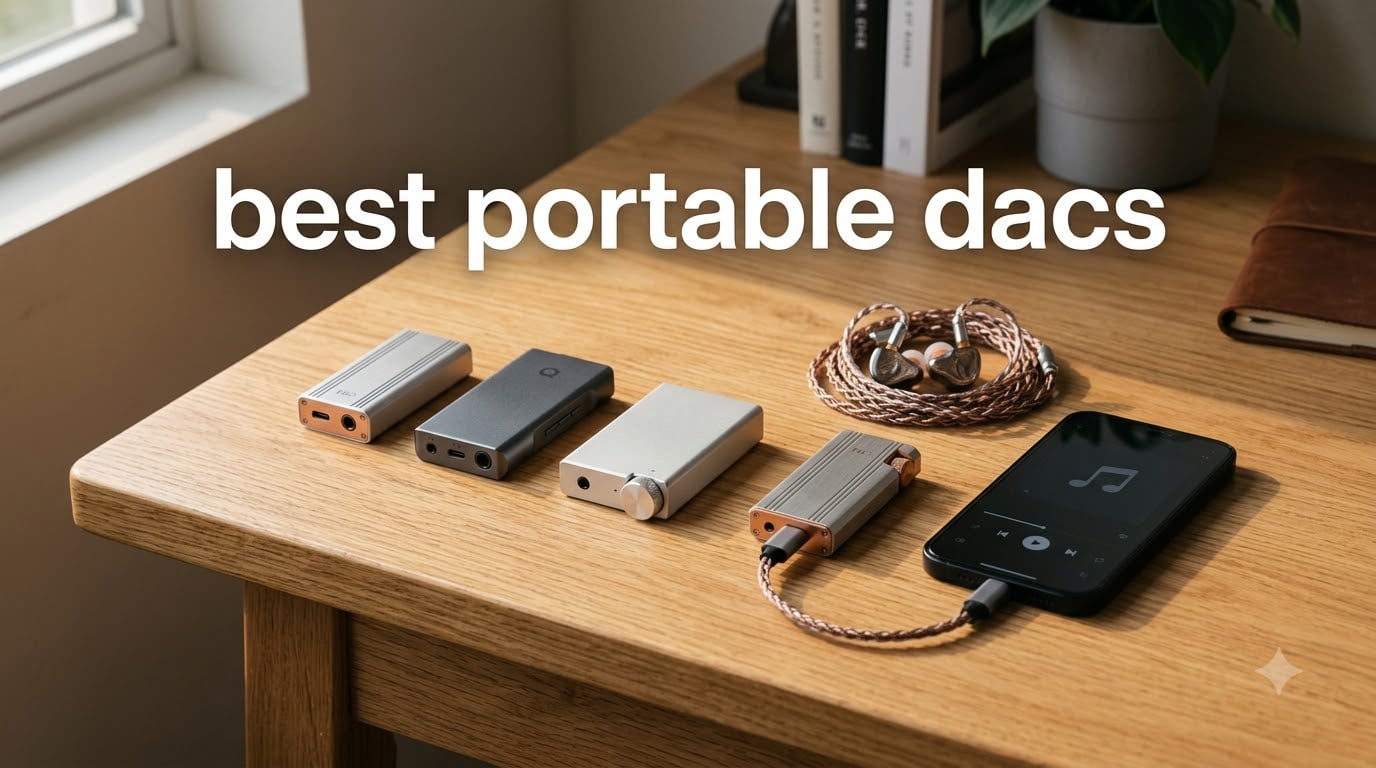
I spent the better part of three months testing 12 of the best portable DACs I could get my hands on, carrying each one on commutes, to the office, and plugged into my laptop at night. A portable DAC is a small digital-to-analog converter that takes over a job your phone or laptop usually does badly, decoding your music and amplifying it before the signal ever reaches your headphones. The right one turns flat, congested playback into something with real space and weight.
The wrong one just adds hiss, heat, and a dead phone battery by dinner. That second outcome is what I want to help you avoid.
Our team ran every unit in this list with sensitive IEMs, demanding over-ear headphones, Android phones, iPhones, a Windows laptop, a MacBook, and a Steam Deck. We did not measure anything in a lab, but we logged hundreds of listening hours plus the stuff that matters after week two: battery drain, heat, app behavior, and cable strain. You will find quick picks below, a full comparison table, 12 individual reviews, a buying guide written for beginners, and direct answers to the questions people actually ask on Reddit and Head-Fi.
The short answer if you are in a hurry: the Qudelix-5K is the best all-rounder for most people, the FiiO KA13 is the value pick for wired listening, and the BZINK Barry-11 is the cheapest upgrade that is still worth making.
Table of Contents
Top 3 Picks for the Best Portable DACs in 2026
Qudelix-5K
- Dual ES9219 DACs
- Bluetooth LDAC plus USB DAC mode
- 10-band parametric EQ with AutoEQ
These three cover about 80 percent of buyers. Grab the Qudelix-5K if you want Bluetooth freedom and the best EQ software in the category, the KA13 if you listen wired and want balanced output, and the KA11 if you just want a clean, safe first step.
Best Portable DACs in 2026: Quick Comparison
| Product | Specifications | Action |
|---|---|---|
 BZINK USB-C DAC Adapter BZINK USB-C DAC Adapter |
|
Check Latest Price |
 FiiO KA11 USB-C DAC FiiO KA11 USB-C DAC |
|
Check Latest Price |
 JadeAudio KA1 Dongle DAC JadeAudio KA1 Dongle DAC |
|
Check Latest Price |
 FiiO KA13 DAC Dongle FiiO KA13 DAC Dongle |
|
Check Latest Price |
 CrinEar Protocol Max CrinEar Protocol Max |
|
Check Latest Price |
| Qudelix-5K Bluetooth DAC |
|
Check Latest Price |
 FiiO KA15 Portable DAC FiiO KA15 Portable DAC |
|
Check Latest Price |
 FiiO BTR7 Titanium FiiO BTR7 Titanium |
|
Check Latest Price |
 FiiO KA17 USB DAC FiiO KA17 USB DAC |
|
Check Latest Price |
 Questyle M15i DAC Amp Questyle M15i DAC Amp |
|
Check Latest Price |
 FiiO BTR17 Bluetooth DAC FiiO BTR17 Bluetooth DAC |
|
Check Latest Price |
 Cayin RU9 Tube DAC Cayin RU9 Tube DAC |
|
Check Latest Price |
Power figures are manufacturer numbers at 32 ohms unless noted, and balanced ratings apply to the 4.4mm or 2.5mm output only. Desktop mode numbers need external power, so treat them as a desk feature rather than a commuting spec.
1. BZINK Barry-11 – The Cheapest Upgrade Worth Making
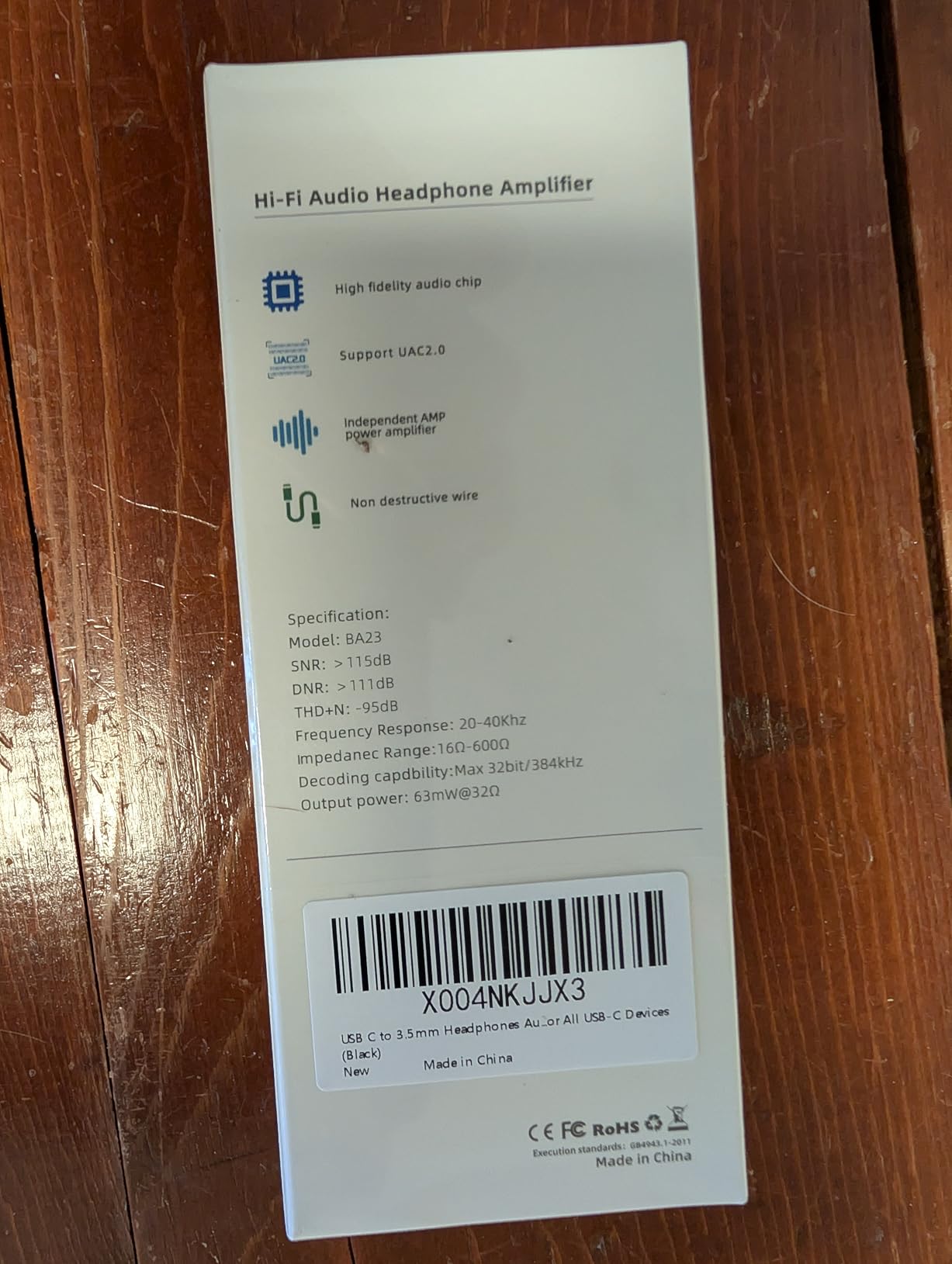
BZINK USB C to 3.5mm Audio Adapter with CX31993+MAX97220 DAC Amplifier
CX31993 + MAX97220 dual chips
32bit/384kHz
Hi-Res Gold certified
USB-C with USB-A adapter
Pros
- Clean HiFi sound for the money
- Hi-Res Gold Label certification
- Plug and play with no drivers
- Includes USB-A adapter
Cons
- Background hiss with very sensitive IEMs
- Not enough power for demanding headphones
- Volume ramps up fast
I keep one of these clipped to my gym bag because I do not care if it gets crushed, and it still sounds clearly better than the free dongle Samsung puts in some boxes. The CX31993 and MAX97220 chip pairing decodes 32bit/384kHz, and on my Truthear Zero I got a wider, less cluttered midrange than the phone jack on my old laptop could manage.
The 8-strand silver-plated copper cable is a genuine surprise at this level, and the aluminum shell has survived three months of pocket duty with keys. Out of 628 ratings it holds a 4.4, and 76 percent of buyers give it five stars, which tracks with what I heard.
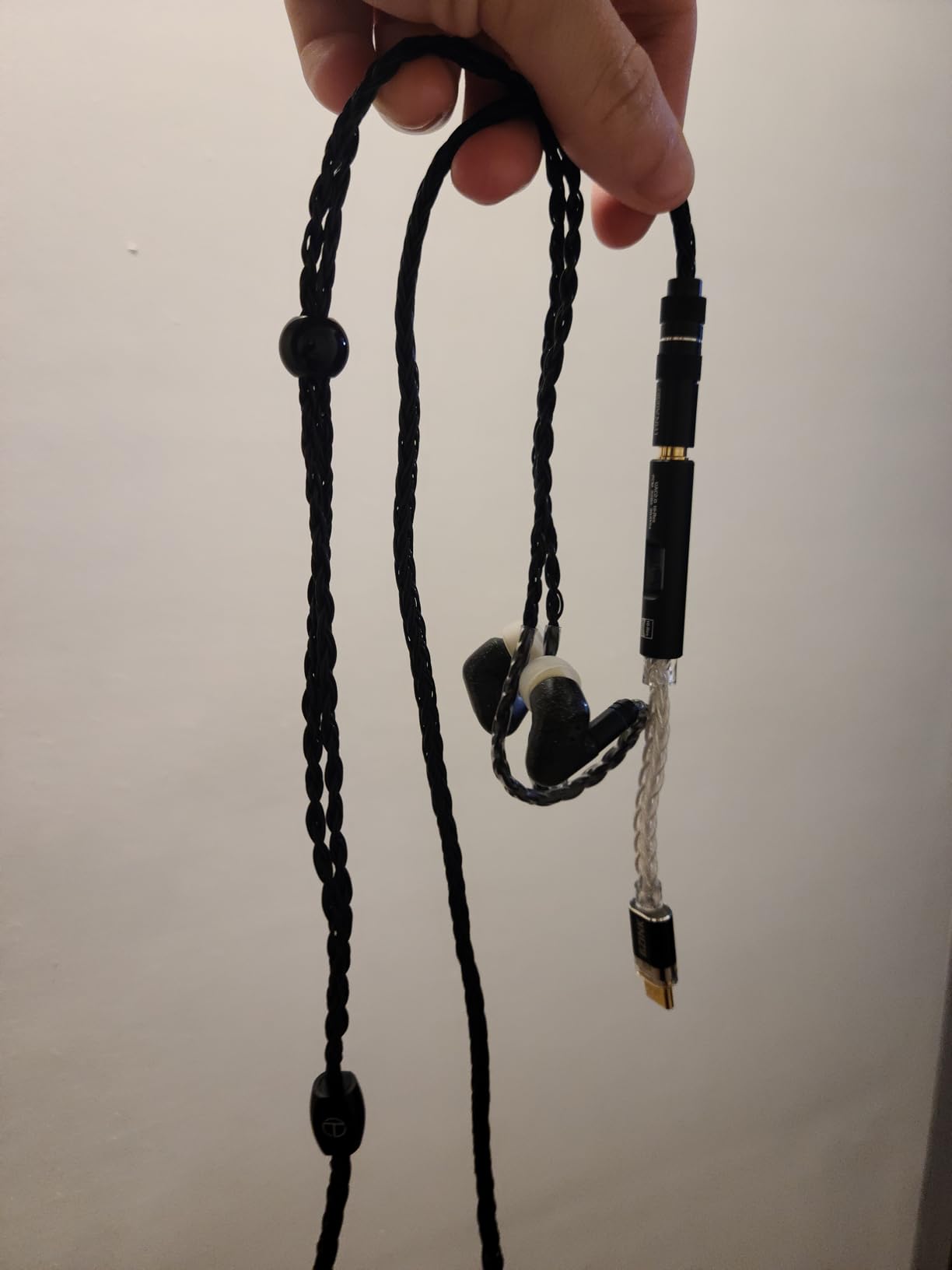
The honest limits: with my most sensitive IEMs there is a faint background hiss at idle, and it goes from quiet to loud in a few volume steps. It also could not push Sennheiser HD 600 class headphones to a satisfying level, which several buyers also report.
Think of it as a phone and laptop fix, not a headphone amplifier. For easy-to-drive IEMs and earbuds it stays clean and musical.
Will It Drive Your Headphones?
It handles sensitive IEMs, earbuds, and low-impedance headphones without breaking a sweat. Anything high-impedance or planar should be paired with a stronger unit from later in this list.
Phone and Laptop Compatibility
It worked on every USB-C Android phone, iPad, MacBook, and Windows machine I tried, plus a PS5 controller and a Steam Deck through the included USB-A adapter. No drivers, no settings, ever.
2. FiiO KA11 – The Safest First DAC From a Known Brand
FiiO KA11 USB C to 3.5mm Audio Adapter 32bit/384KHz, USB Type C Dongle HiFi DAC Amplifier for Android/iOS/Windows/Mac (Black, TC)
CS43131 DAC
200mW at 32 ohm
125dB SNR
UAC1.0 for Switch and PS5
Pros
- Excellent sound for the price
- 200mW at 32 ohm drives most IEMs
- UAC1.0 works with Switch and PS5
- App control for filters
Cons
- Non-detachable cable
- Runs warm in use
- Limited iOS update support
The KA11 is the DAC I hand to friends who ask “what should I buy first” and do not want a lecture. FiiO’s CS43131 implementation outputs 200mW at 32 ohms with a 125dB signal-to-noise ratio, which in practice means a black background and enough headroom for every IEM I own, including hungrier hybrids.
With over 1,000 ratings it is one of the most bought dongles on Amazon, and Reddit regularly lists it alongside pricier options for plug-and-play value. The UAC1.0 mode is the feature nobody advertises enough: plug it into a Nintendo Switch or PS5 and it just works at full volume control.
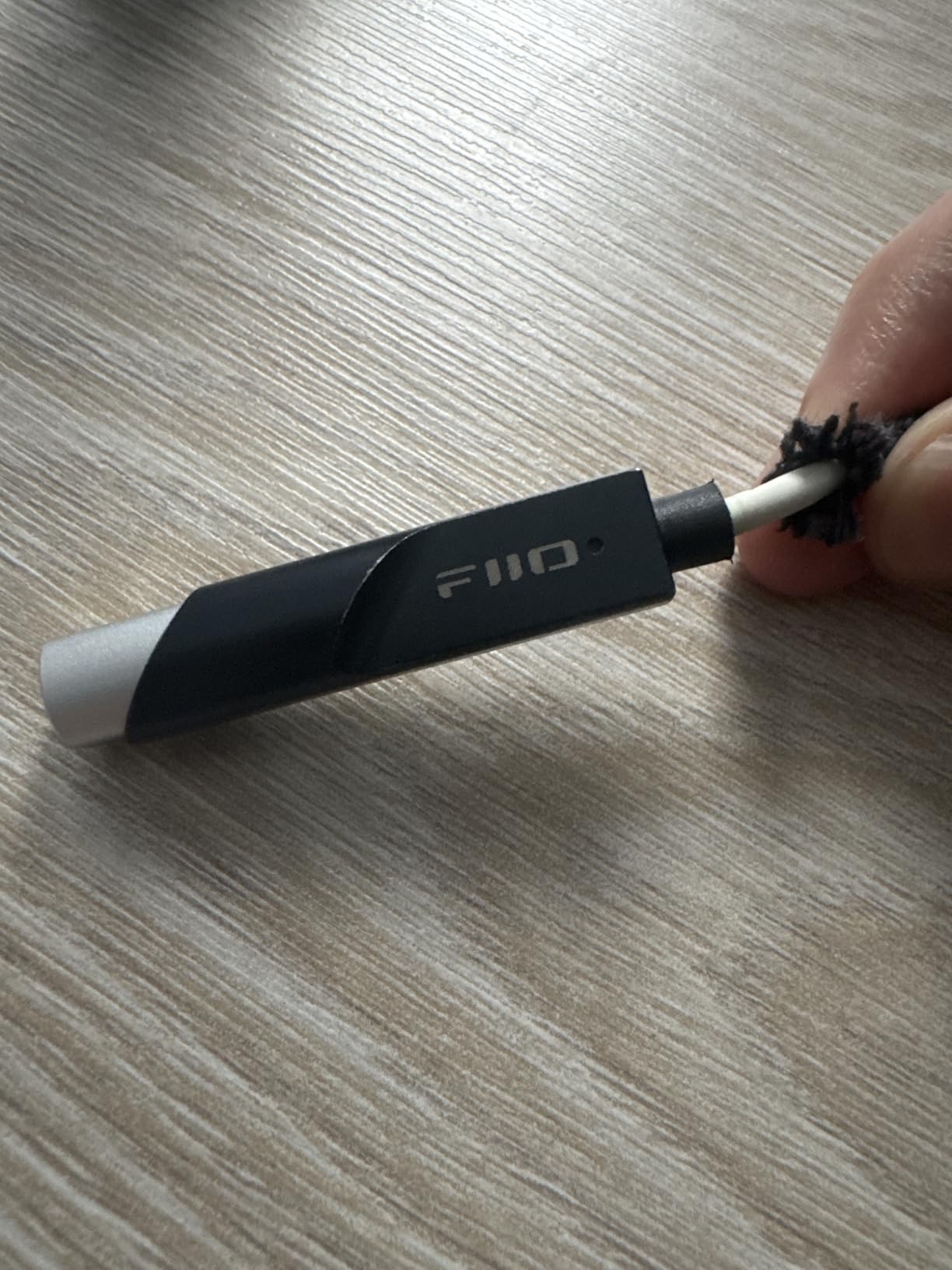
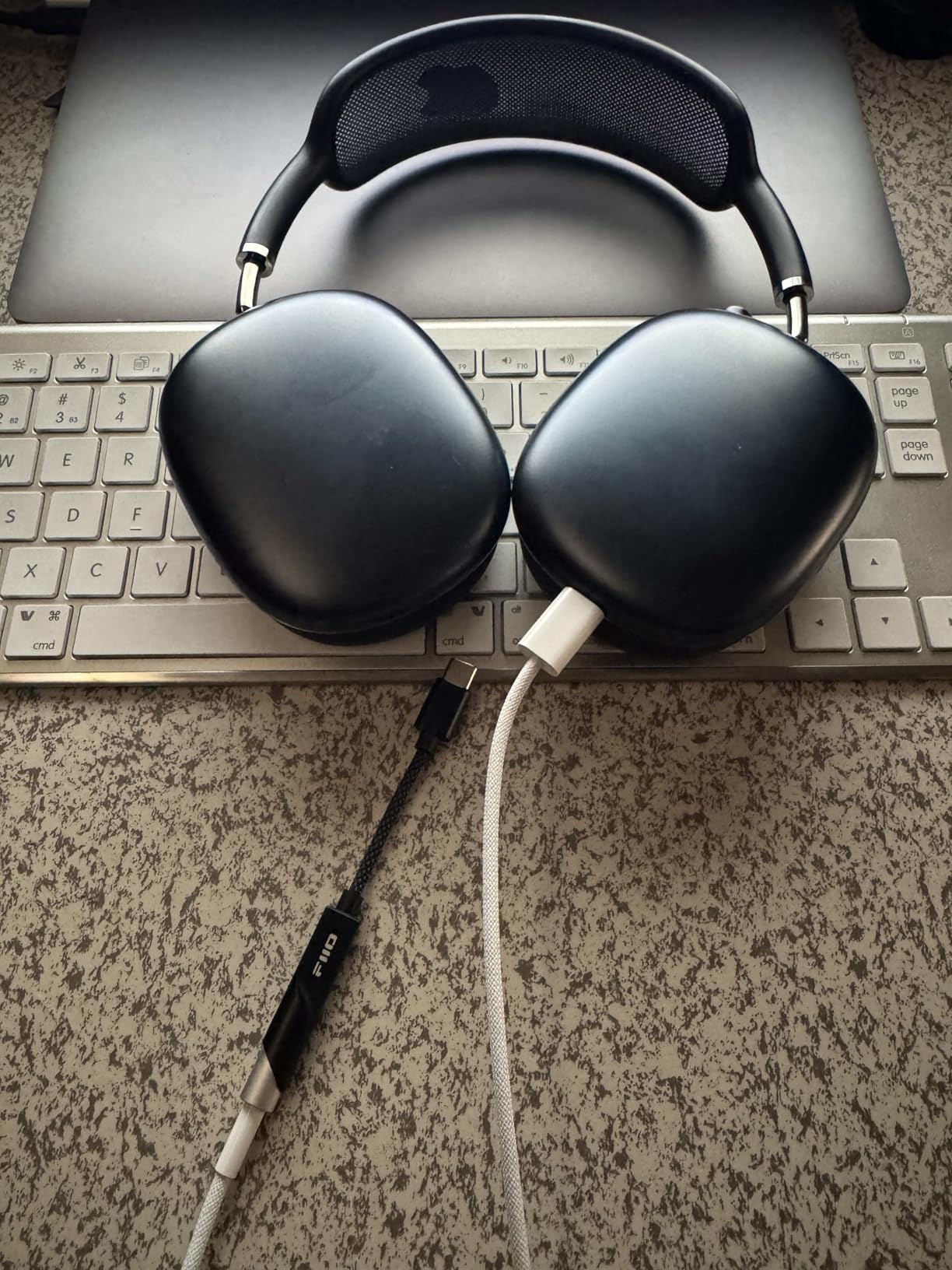
The weak point is the fixed cable, and I say that as someone who has already nicked theirs on a zipper. When the cable goes, the unit goes, and a minority of buyers report failures after several months. It also warms up noticeably during long sessions.
The FiiO Control app handles filter switching on Android, but iOS support is thin, so iPhone buyers should treat this as a set-and-forget device.
Console and Handheld Gaming Use
UAC1.0 mode is the reason to pick this over cheaper dongles if you game. It gave me instant volume control on a Switch in docked handheld mode and on a PS5 DualSense with zero setup.
Cable and Long-Term Durability
The cable is braided but permanently attached, so strain at the USB-C plug is the main long-term risk. Keep it in a case, do not let it dangle from a phone in your pocket, and it should last for years.
3. JadeAudio KA1 – MQA Decoding in a 10-Gram Shell
FiiO JadeAudio KA1 Headphone Amps Amplifier Tiny USB DAC High Resolution 3.5mm Lossless for Smartphones/PC/Laptops/Players(Type C, Black)
32bit/384kHz PCM and DSD512
MQA 8x rendering
10 gram aluminium body
Braided cable
Pros
- MQA 8x rendering
- 32bit/384kHz plus DSD512
- 10 gram aluminium body
- Sturdy braided cable
Cons
- Short non-detachable cable
- Gets warm during use
- Companion app adds little
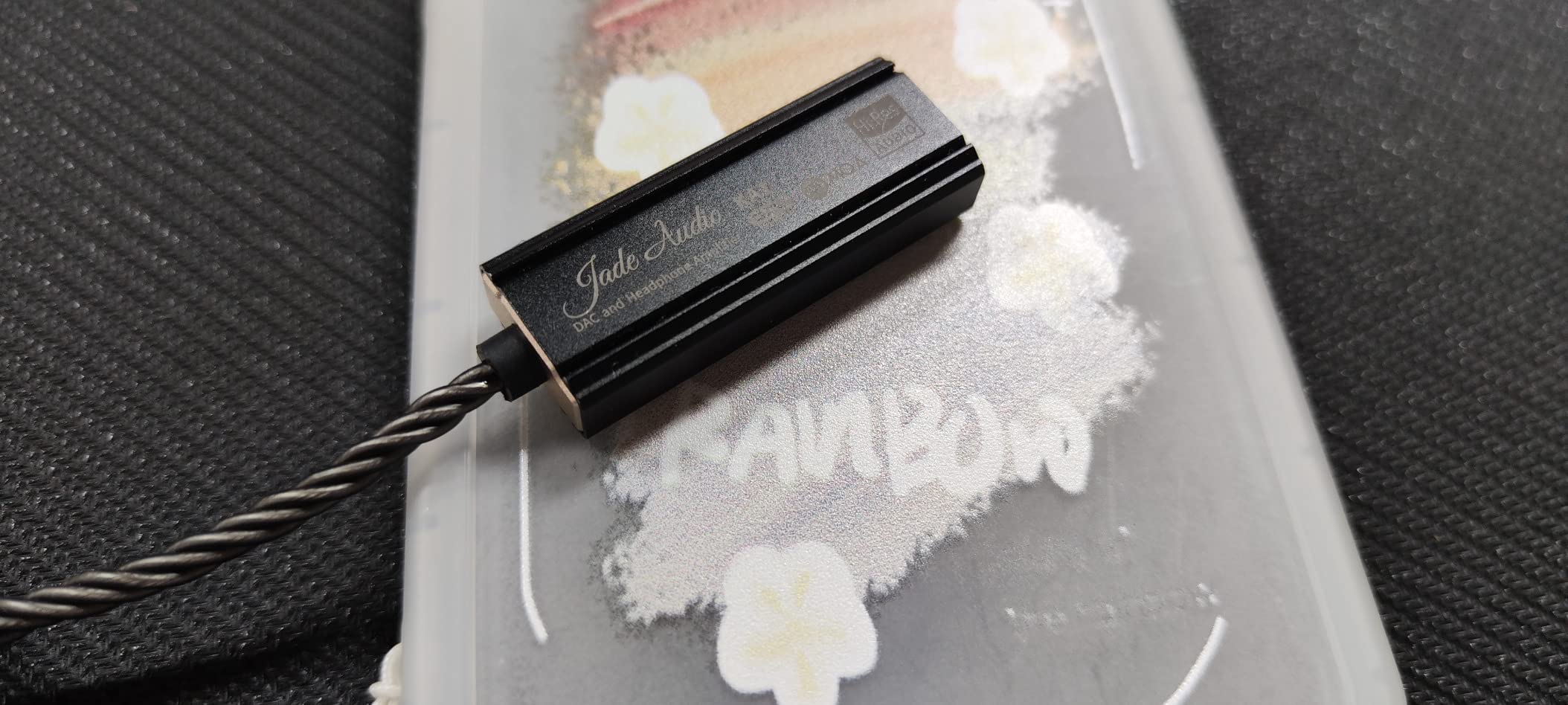
At 43 x 15 x 8mm and 10 grams, the KA1 is the one I forget is attached to my phone. JadeAudio is FiiO’s sub-brand, and the KA1 shares the same 32bit/384kHz and DSD512 decoding with a genuinely useful extra: MQA 8x rendering for Tidal subscribers.
Sitting with the KA11 for an evening, I heard a slightly airier top end on the KA1 and a touch more soundstage width. Out of 737 ratings it holds 4.3 stars, and buyers consistently describe the same thing, an obvious jump over phone audio.
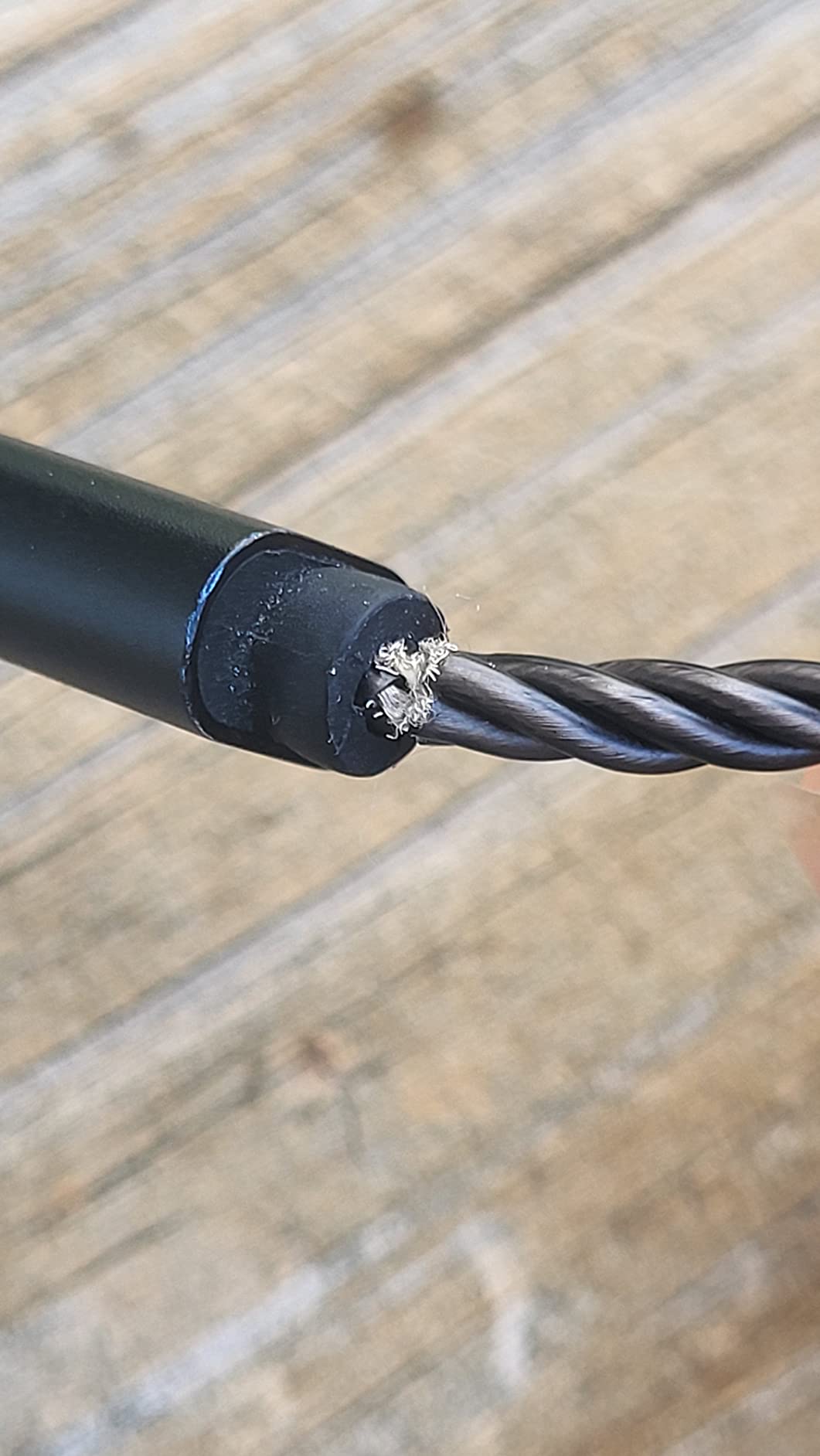
The trade-offs are familiar: a short, fixed braided cable that puts lateral strain on your phone port if you pocket the pair, and warmth during long listening sessions. The companion app is close to useless, which buyers say bluntly, but you do not need it.
This is the pick when pocketability and streaming flexibility matter more than raw control or features.
Streaming Service Compatibility
MQA 8x rendering unfolds Tidal Master tracks properly, and DSD512 plus PCM 384kHz covers local files for anyone with a FLAC library. Spotify and Apple Music listeners get the same clean output, just without format bells and whistles.
Daily Carry and Portability
Ten grams means no pocket bulge and no drag on the connector, and the aluminum body shrugs off keys. Just avoid wrapping the cable tightly around the body when you store it.
4. FiiO KA13 – Balanced Power That Punches Up a Class
FiiO/JadeAudio KA13 Portable DAC Dongle, USB-C Adapter, 3.5mm and 4.4mm Outputs Compatible with Android/iOS System/PC/Music Players, PCM 384kHz/32bit | DSD256 550mW high Power (Silver)
Dual CS43131 DACs
550mW desktop mode
3.5mm and 4.4mm outputs
DSD256
Pros
- 550mW desktop mode
- Dual CS43131 DACs
- 3.5mm and 4.4mm outputs
- Drives high-impedance headphones
Cons
- Desktop mode drains phone battery
- Volume can jump on first press
- Frequently sells out
This is the best portable DAC value in the wired category, and I say that after it drove headphones that had no business working on a dongle. Dual CS43131 chips and dual SGM8262 op-amps push 550mW from the 4.4mm balanced output in desktop mode, and my 80-ohm DT 770 hit proper listening levels with room to spare.
On single-ended 3.5mm with IEMs, the sound is neutral and clean with a very quiet background. Reddit threads on dongle value land on the KA13 constantly, and its 4.5-star average across 359 ratings backs that up.
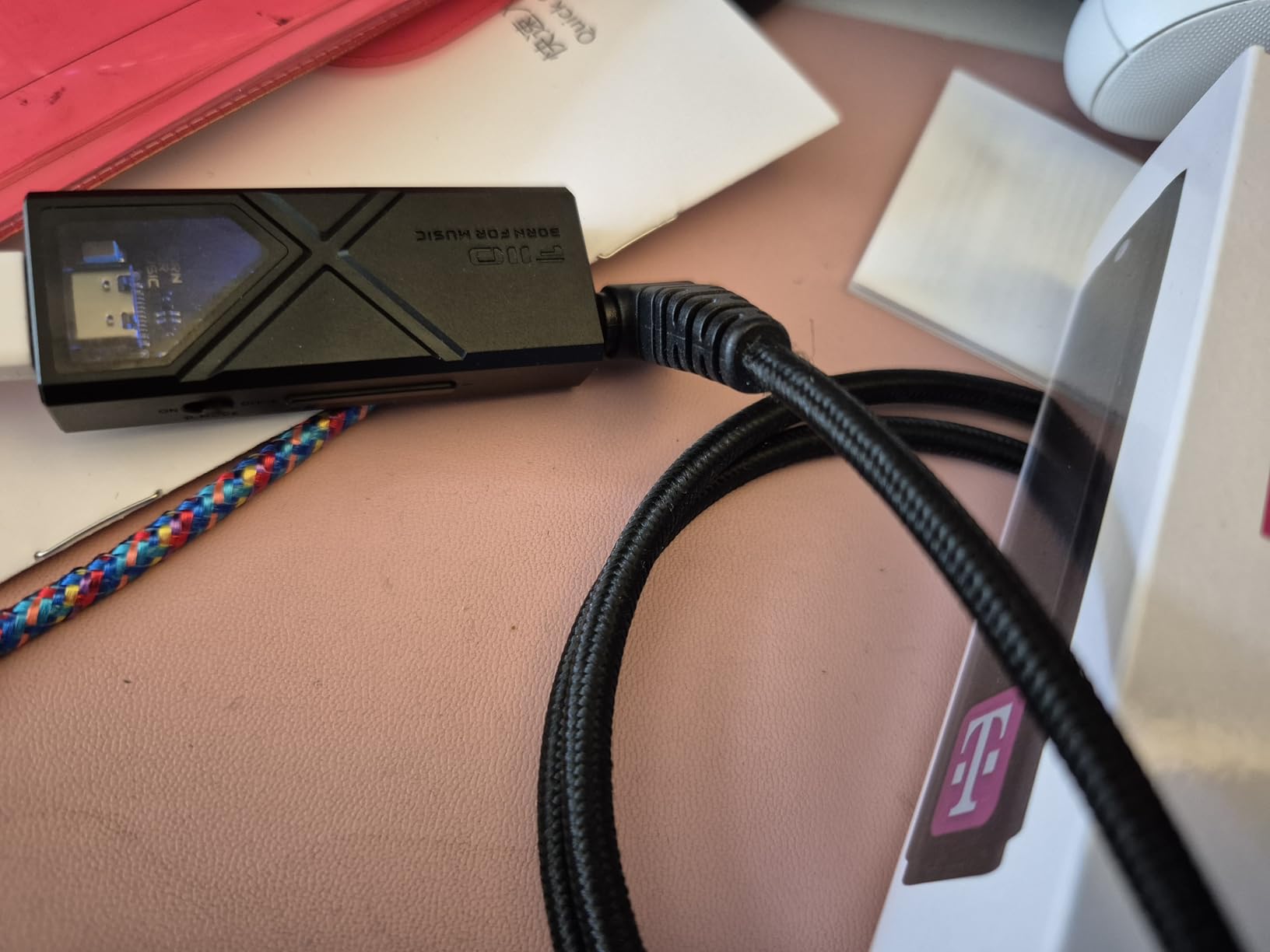
Two things to know before buying. Desktop mode pulls serious current from your phone, so expect visible battery drain, and a few users with 5G phones report interference noise when the radio is active. The volume button occasionally jumps toward maximum on the first press, which startled me more than once.
Neither issue stopped it from being the dongle I recommend most to wired listeners who want one purchase to cover IEMs and full-size headphones.
Balanced 4.4mm vs Single-Ended Listening
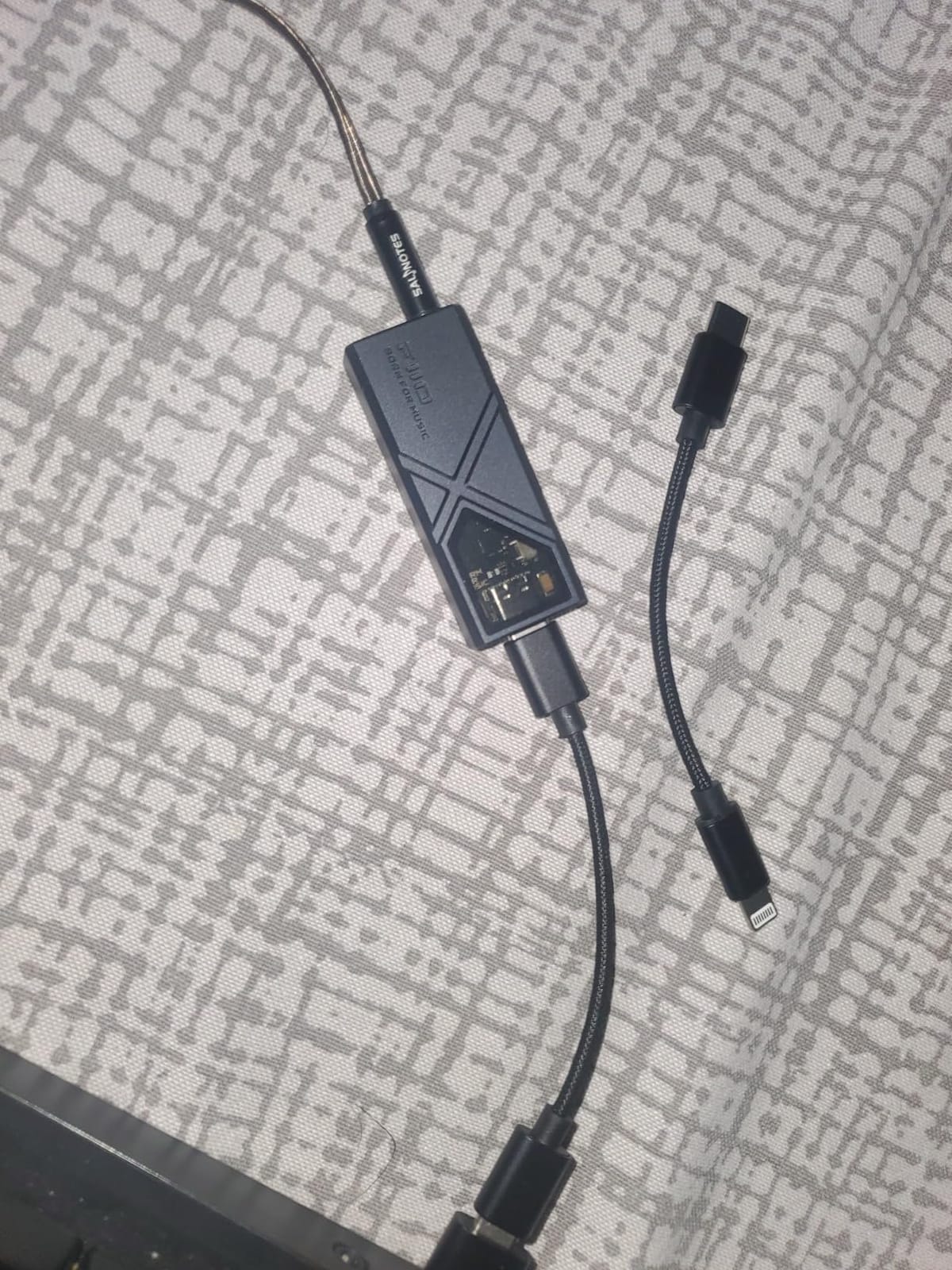
The 4.4mm balanced output roughly doubles power and lowers noise, so use it for anything hard to drive. Keep sensitive IEMs on 3.5mm single-ended, where the extra power just becomes unwanted hiss.
Desktop Mode and Your Phone Battery
Desktop mode unlocks the full 550mW but draws hard on a phone battery, so save it for laptop or power-bank sessions. For commuting, standard mode still out-powers most dongles at this size.
5. CrinEar Protocol Max – Parametric EQ That Lives on the Device
CrinEar Protocol Max | Portable DAC-Amplifier with 10-Band PEQ, Dual Cirrus Logic CS43198 + Dual SG Micro SGM8262-2 | 600mW High Power Amplification
Dual CS43198 DACs
600mW balanced
10-band PEQ stored on device
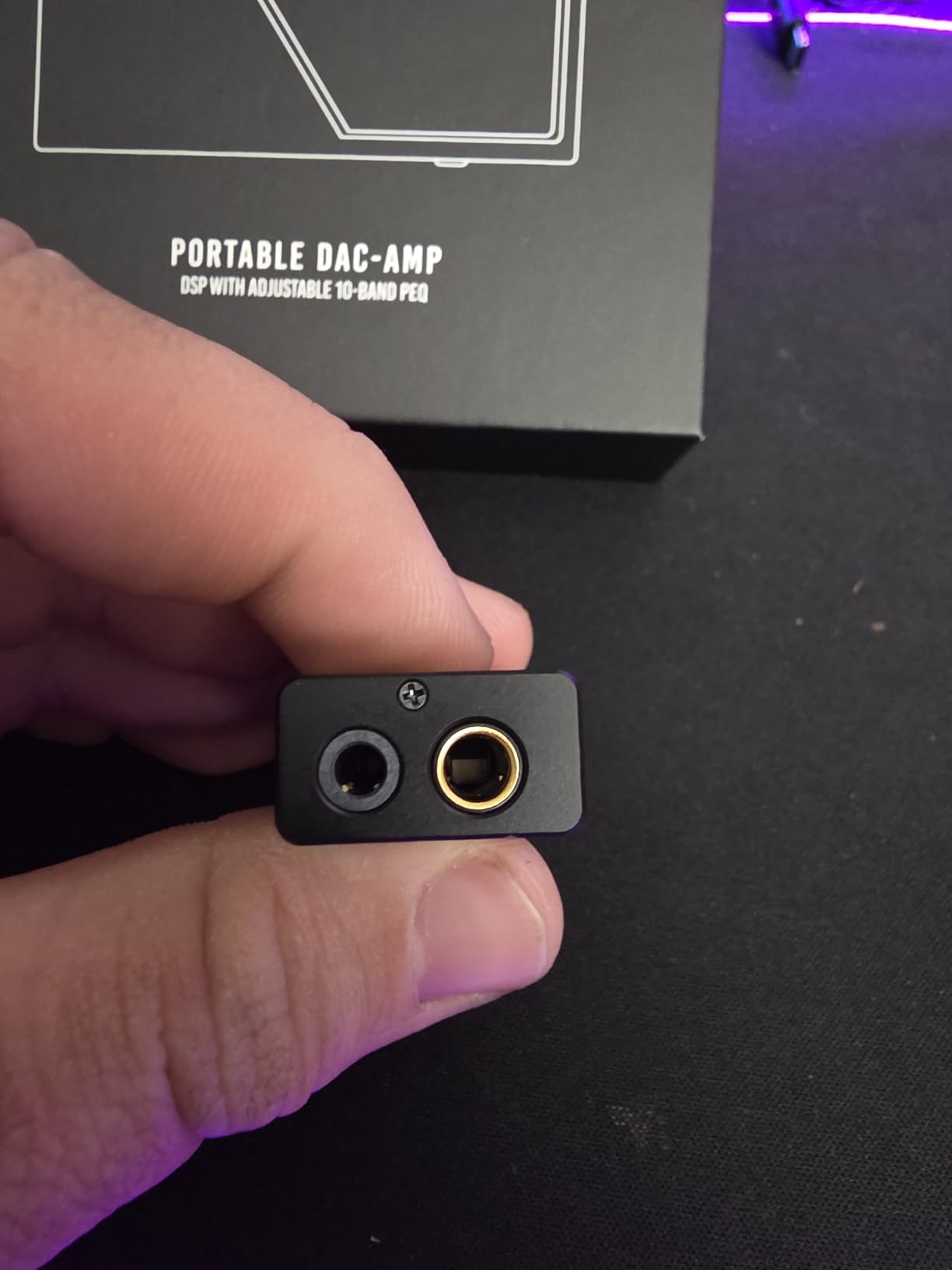
Detachable cable
Pros
- 600mW balanced output
- 10-band PEQ saved on the device
- Dual CS43198 DACs
- Detachable cable design
Cons
- Newer brand with a short track record
- Browser-based EQ may not suit everyone
The Protocol Max is the wildcard of this list, and the one I kept reaching for during the EQ experiments. Dual Cirrus Logic CS43198 DACs and dual SGM8262-2 op-amps deliver 600mW balanced, but the headline is a 10-band parametric EQ that saves directly onto the hardware through a browser interface, no app, no account.
Set your curve once on any laptop or phone browser and it persists on every device you plug into afterward. That is a feature normally reserved for the Qudelix-5K, and here it survives a device switch.
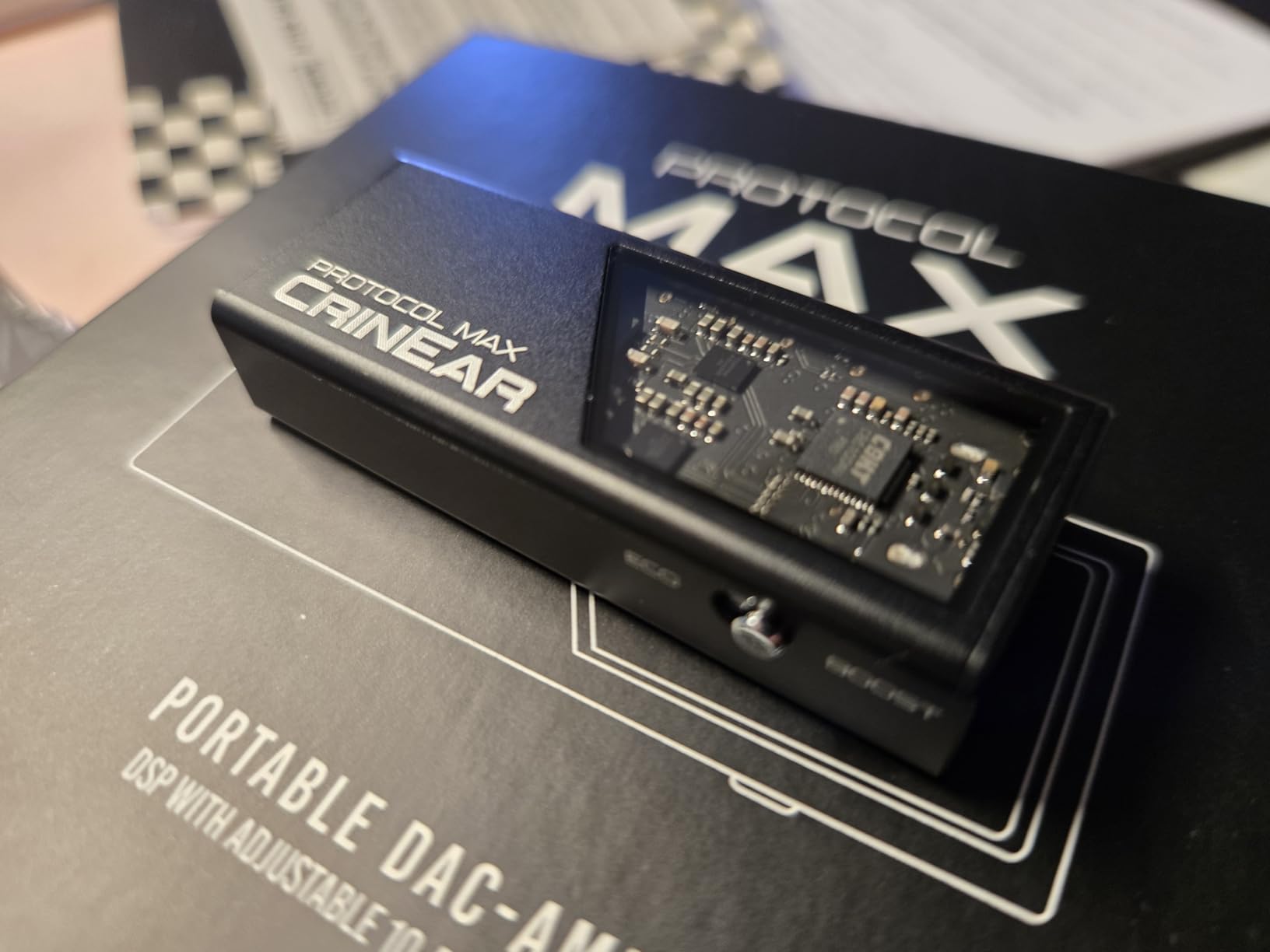
Sonically it sits close to the KA13, neutral and detailed with a low 0.2-ohm output impedance that keeps sensitive multi-driver IEMs behaving. The detachable cable is a real reliability win over the fixed-cable dongles above.
The catch is track record: 79 reviews at 4.3 stars for a brand most people have not heard of. CrinEar is tied to a well-known IEM reviewer ecosystem, but you are an early adopter here.
How the Browser-Based EQ Works
You connect to the device over USB, open a local web page, and adjust gain, frequency, and Q for each of the 10 bands. Changes save to the DAC itself, so the EQ follows the unit rather than the source.
Eco and Boost Power Modes
Eco mode sips power and suits sensitive IEMs, while Boost unlocks the full 600mW for demanding headphones. Switching between them takes one button press, which makes it genuinely usable on the move.
6. Qudelix-5K – The Best All-Rounder, Still
Qudelix-5K Bluetooth USB DAC AMP with LDAC, aptX Adaptive, aptX HD, AAC (Dual ES9219 3.5mm Unbalanced & 2.5mm Balanced Output)
Dual ES9219 DACs
LDAC and aptX Adaptive
2.5mm and 3.5mm outputs
10-band PEQ with AutoEQ
Pros
- Best-in-class parametric EQ app
- LDAC aptX Adaptive aptX HD AAC
- Works as Bluetooth receiver and USB DAC
- 6 to 20 hours battery
- Built-in clip and microphone
Cons
- Cannot transmit to Bluetooth headphones
- Unlabelled physical buttons
- Windows LDAC needs third-party software
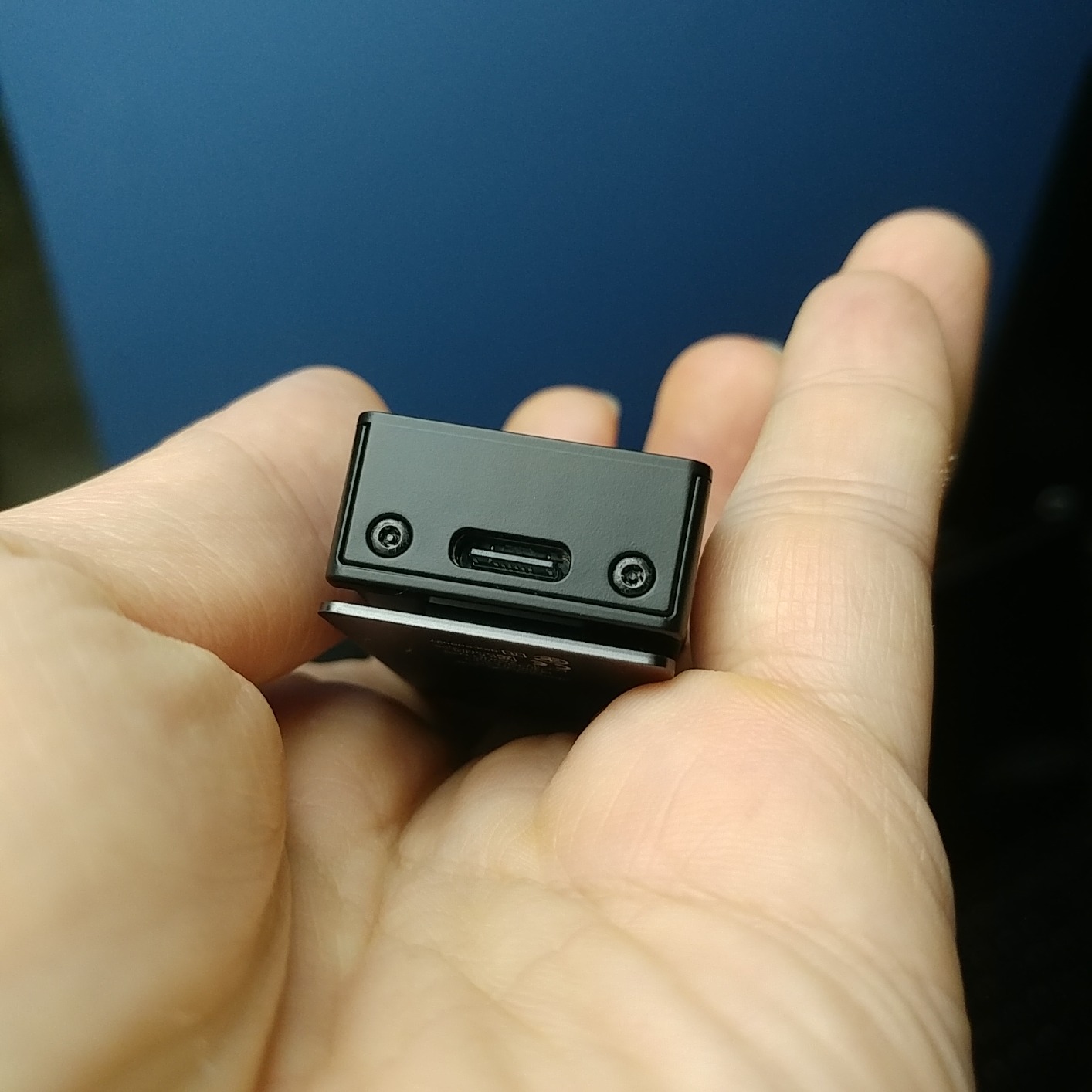
Every year someone asks on r/iems whether the Qudelix-5K is still the one to beat, and after this round of testing my answer is yes. It is a Bluetooth receiver and a USB DAC in a 26-gram clipped package, with dual ES9219 DACs, 240mW from the 2.5mm balanced output, and the single best companion app in portable audio.
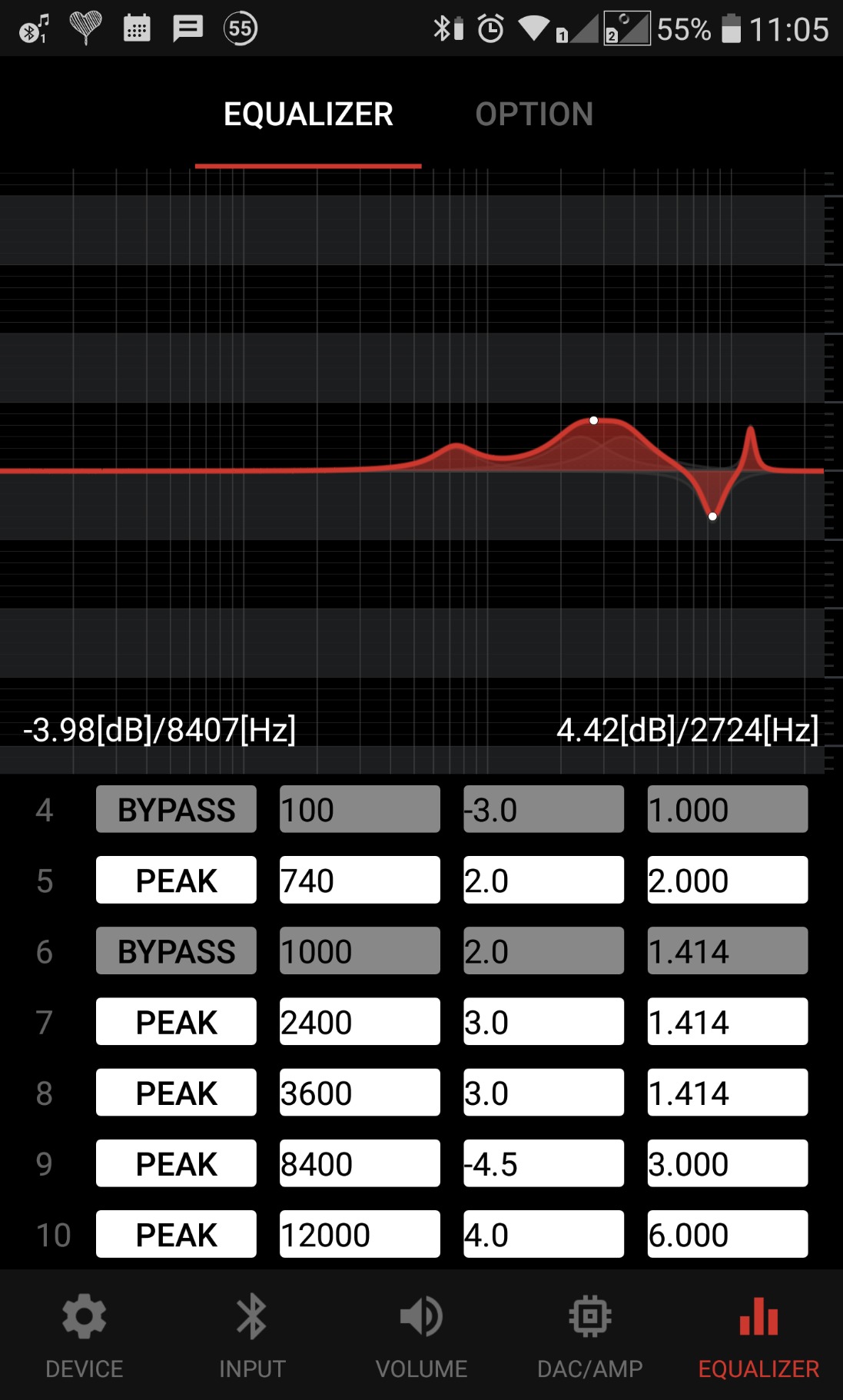
The 10-band parametric EQ with AutoEQ preset library let me load a correction curve for my Sennheiser IE 200 in about a minute, and it applies over Bluetooth or USB identically. Firmware updates keep arriving years after release, which no other brand here matches.
With 2,482 ratings at 4.6 stars, it is also the most proven device on this list. Battery runs 6 to 20 hours depending on codec and volume, and the clip attaches to a strap or collar so the weight never pulls on your IEM cable.
Know the limits: it is a receiver, not a transmitter, so it cannot feed Bluetooth headphones. The buttons have no labels and are hard to tell apart by touch, and full LDAC on Windows needs third-party software.
Bluetooth Mode vs USB Mode
Bluetooth mode with LDAC sounds impressively close to the USB connection for casual listening and frees you from cables entirely. USB mode caps at 96kHz/24bit but is the choice for critical listening and zero latency.
Parametric EQ in Everyday Use
Each band has adjustable frequency, gain, and Q, plus shelf and peaking filters, and you can store multiple presets. Loading an AutoEQ file for your specific headphone model is a two-minute job that fixes tonal problems no dongle can fix by itself.
7. FiiO KA15 – Retro Looks, Onboard Screen, Serious PEQ
FiiO KA15 Portable DAC and Headphone Amplifier (Blue)
Dual CS43198 DACs
560mW desktop mode
0.96-inch colour LCD
10-band PEQ
Pros
- 560mW desktop mode
- Dual CS43198 DACs
- 10-band lossless PEQ
- Screen shows sample rate and bit depth
Cons
- App EQ is Android only
- Can run hot in desktop mode
- Volume button reliability reports
The KA15 is the DAC people ask about at my desk, because the 0.96-inch colour LCD plays an animated tape-reel interface that is pure nostalgia. Underneath the charm it is a serious tool: dual CS43198 flagship DACs, a 10-band lossless PEQ, 768kHz/32bit and DSD256 support, and a patented desktop mode pushing 560mW per channel balanced.
The screen is more than decoration. It shows the live sample rate and bit depth of whatever is playing, which is how I caught a streaming app silently downgrading to 44.1kHz more than once.
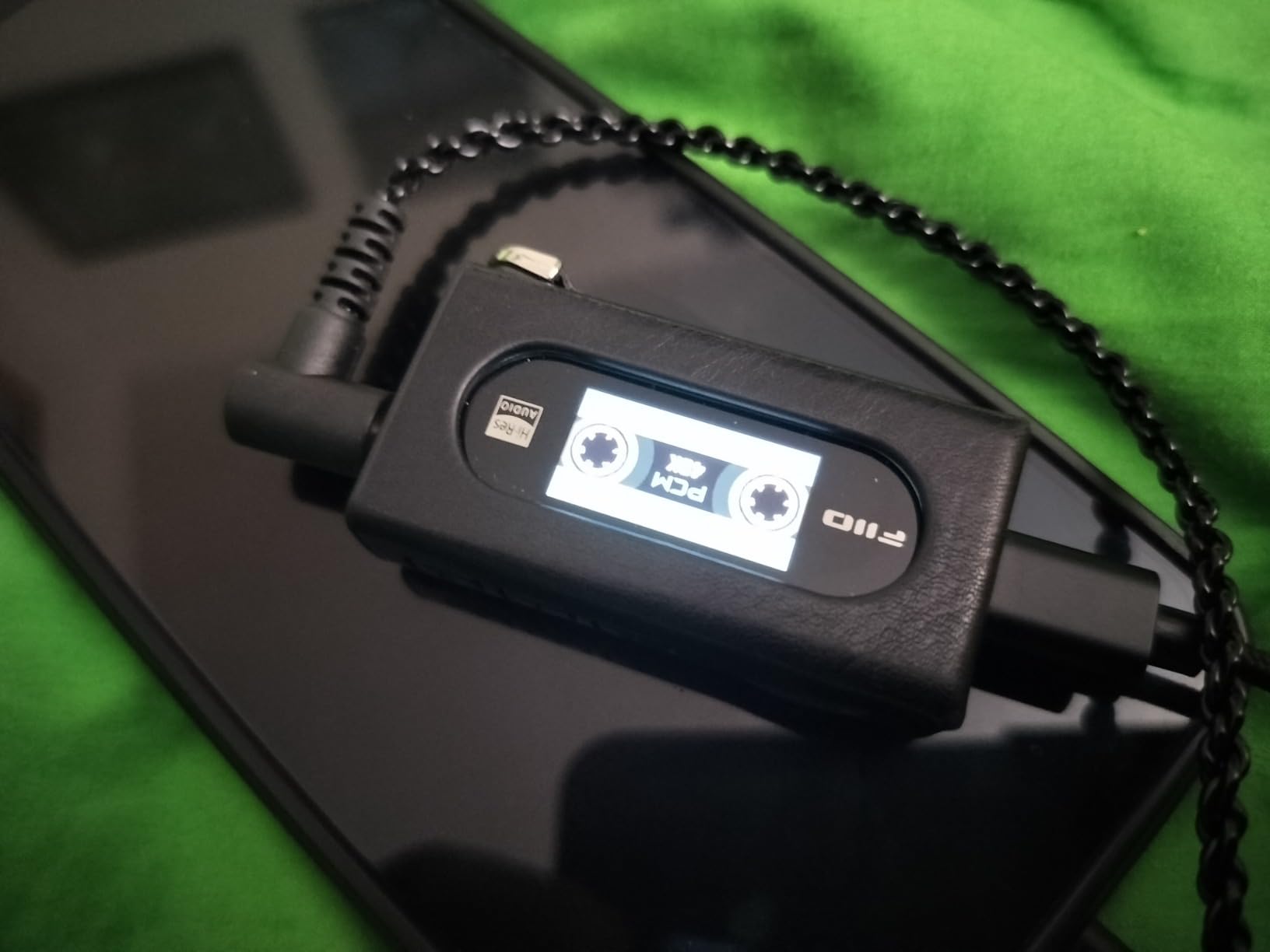
In desktop mode it drove my 150-ohm headphones with authority, but the aluminum-colored plastic shell gets genuinely warm and battery drain is real. A handful of the 233 reviewers mention volume and track-skip buttons acting up over time.
The PEQ app only runs on Android, which leaves iPhone owners using it as a straight DAC. That is a fair trade if you live in the Android world and want EQ without carrying a separate Bluetooth unit.
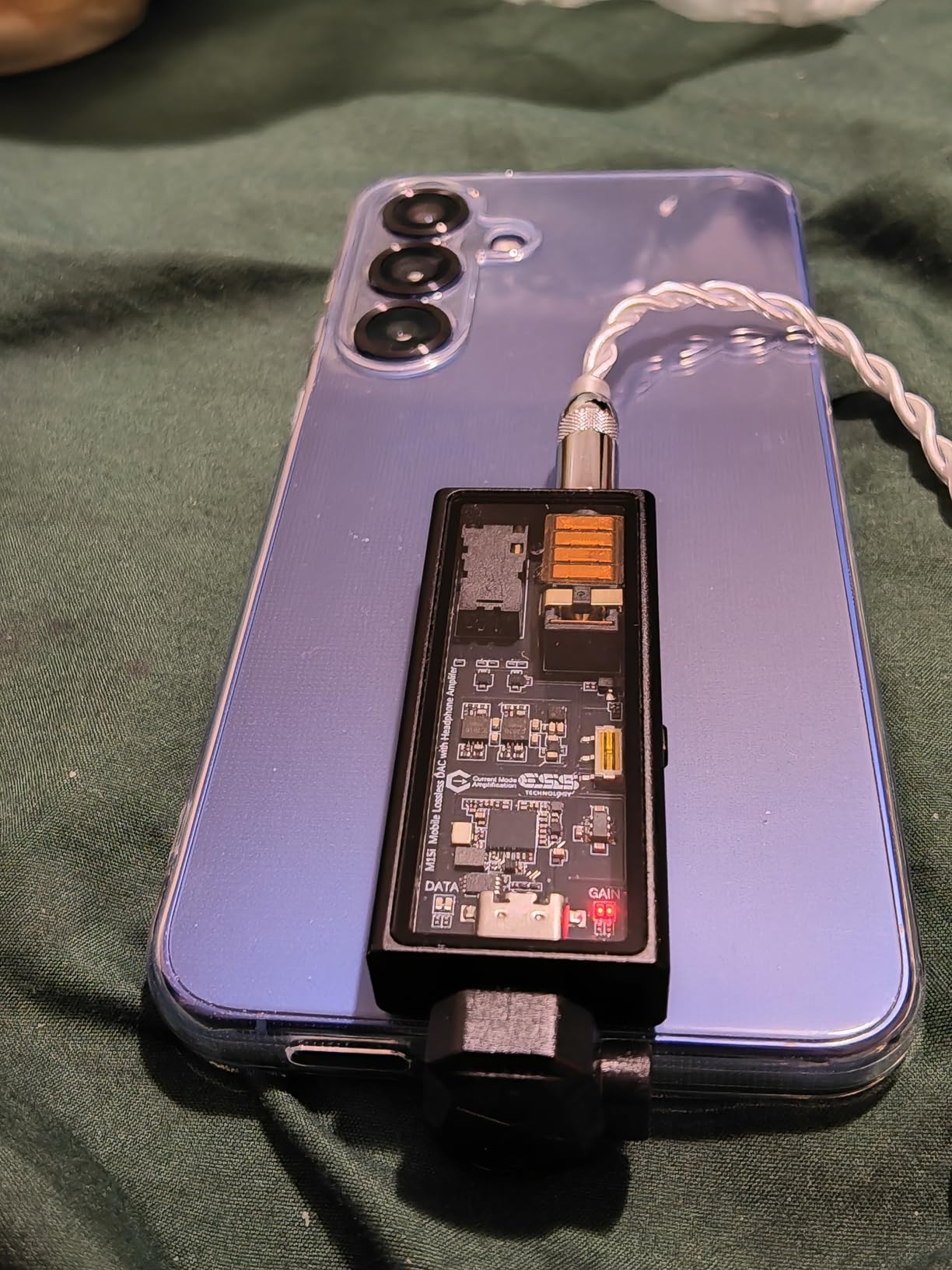
What the Screen Actually Shows
You get sample rate, bit depth, gain state, and EQ status at a glance, plus SPDIF output mode when you use the 3.5mm jack as a coaxial digital out to a desktop amp. It removes all the guesswork about what your source is really sending.
PEQ Setup on Android vs iOS
Android users get full 10-band parametric control in the FiiO Control app with presets that save to the device. iOS users cannot adjust EQ at all today, so buy it for the screen and power rather than the tuning if you are on an iPhone.
8. FiiO BTR7 Titanium – Wireless Flexibility in a Metal Shell
FiiO BTR7 Headphone Amp Bluetooth Receiver High Resolution Portable DAC Supports MQA/LDAC/aptX HD 384K/32Bit DSD256 for Phone/PC/Car/Home Audio(Titanium)
ES9219C per channel
Bluetooth 5.1 LDAC and aptX HD
MQA 8x
Titanium body
Pros
- Titanium build quality
- Full codec suite with LDAC and aptX HD
- MQA 8x rendering
- 3.5mm and 4.4mm outputs
Cons
- Stock often limited
- 4.4mm jack durability reports
- Smaller review sample
The BTR7 is the one I reach for when the Qudelix-5K feels too light on power. An ES9219C DAC per channel, XMOS XUF208 USB decoding to 384kHz/32bit, and both 3.5mm and 4.4mm outputs make it a genuine dual-purpose unit, and the titanium body is the nicest-feeling object in this entire list.
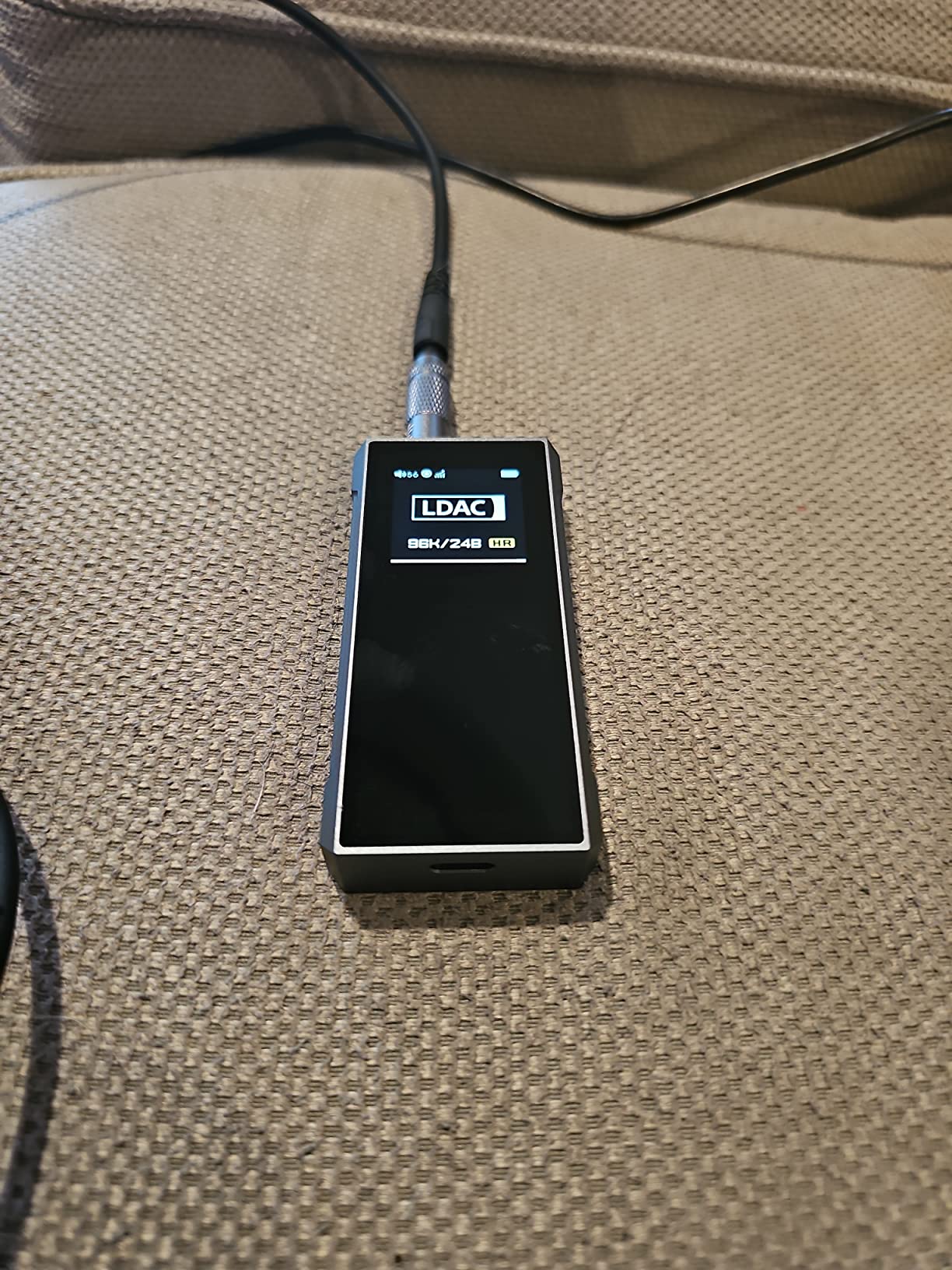
Bluetooth 5.1 covers LDAC, aptX Adaptive, aptX LL, aptX HD, and AAC, so Android and iPhone both connect at their best codec. MQA 8x rendering handles Tidal, and cVc 8.0 noise cancellation made calls from a noisy street perfectly usable through the built-in mic.
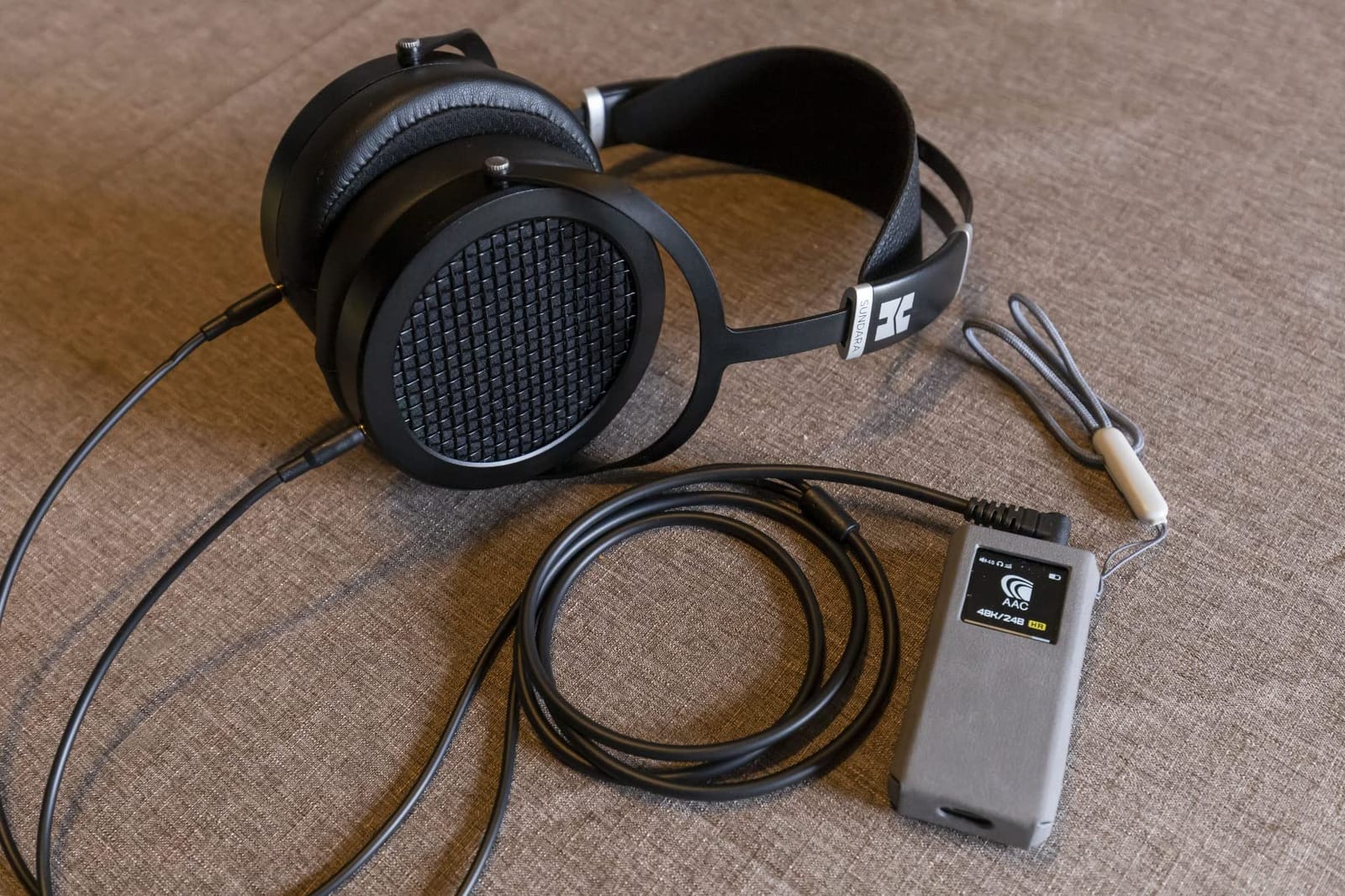
Wired to a laptop it runs cooler and cleaner than the KA-series dongles at high volume, and the balanced output had no trouble with my 300-ohm HD 6XX at sensible levels. It is a desk-friendly shape more than a clip-and-forget one.
Two cautions: it is often listed with low stock, and a few of the 113 reviewers mention the 4.4mm jack loosening over time. Treat the second output as a bonus rather than the reason you bought it.
Wireless Codecs and Sound Quality
LDAC on Android gives you the closest thing to lossless over Bluetooth, while aptX HD and AAC cover older Android phones and iPhones. Wired USB mode bypasses Bluetooth entirely and is the way to hear what the dual DACs can really do.
Calls, Build and Daily Handling
cVc 8.0 processing keeps your voice clear on calls, and the titanium chassis survives drops that would dent aluminum. It has no clip, so plan for a pocket or a desk rather than strap mounting.
9. FiiO KA17 – Desktop-Class Muscle in a Dongle
FiiO KA17 Portable USB DAC Audio HiFi Decoder, Dual ES9069Q PCM768 DSD512 3.5/4.4mm Output for Android iOS Mac Win10 (Black)
Dual ES9069Q DACs
650mW desktop mode
THX AAA 78+ amp
DSD512 and MQA
Pros
- 650mW desktop mode
- 130dB dynamic range
- THX AAA 78+ amplifier
- Drives high-impedance headphones
Cons
- Runs very hot in desktop mode
- Windows driver needed for full features
- iOS EQ needs web interface
The KA17 is the most powerful portable DAC in this lineup, full stop. Dual ES9069Q chips deliver 130dB of dynamic range, the THX AAA 78+ amplifier architecture keeps distortion low at high output, and desktop mode produces 650mW per channel balanced through the 4.4mm jack.
That is enough to run an HD 600 or a planar magnetic headphone from something the size of a matchbox. Reddit consistently recommends it for exactly this, people who want one device for IEMs on the train and full-size headphones at a desk.
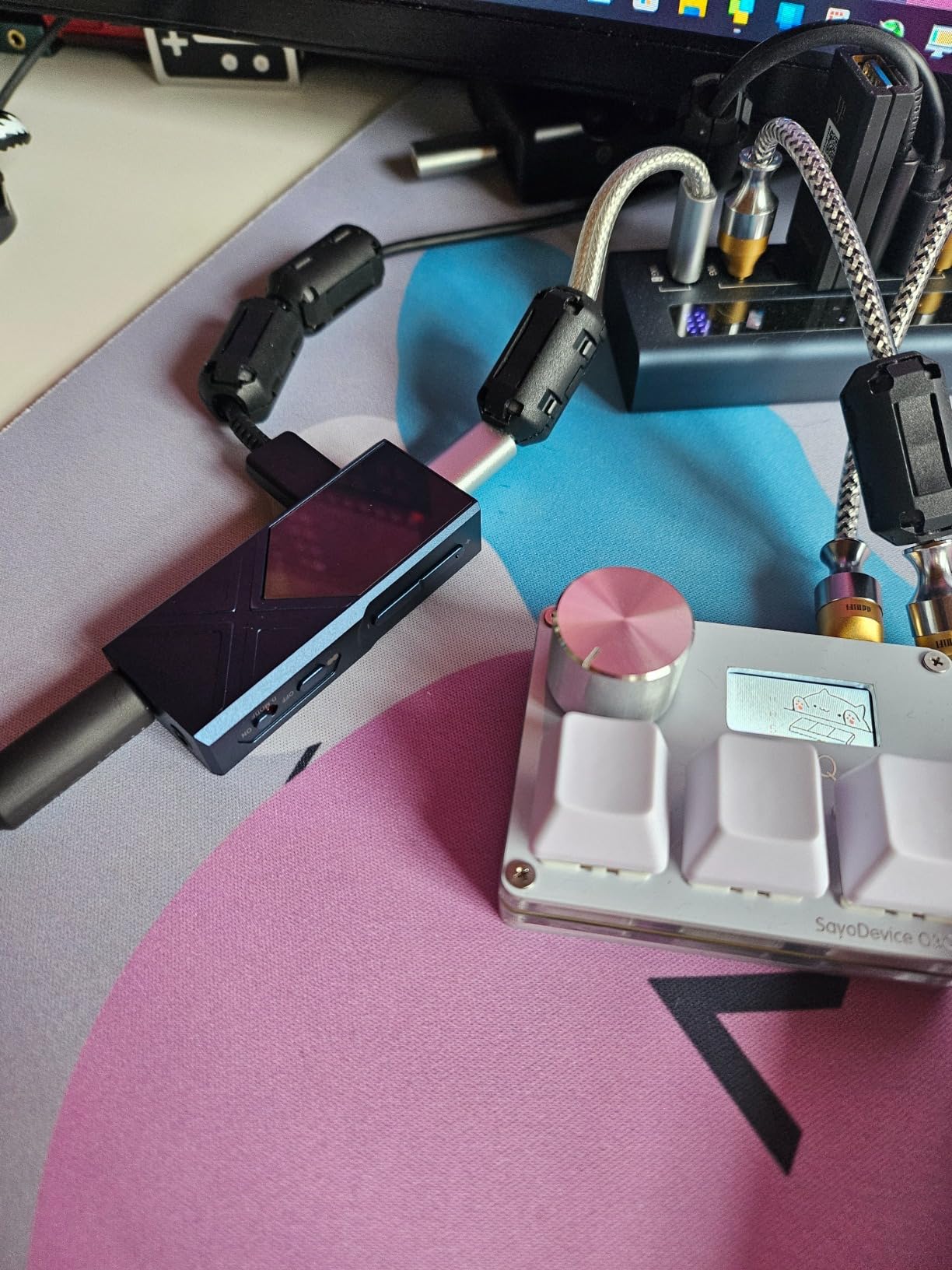
The compromises are real and worth knowing. It runs hot in desktop mode, it is the heaviest dongle here at around 200 grams of aluminum, and the second USB-C port is essentially required for desktop mode power. Windows users need to install a driver for full functionality, and iOS owners adjust the PEQ through a web interface workaround.
A minority of the 310 reviewers report popping or crackling that firmware updates addressed, so update the firmware the day it arrives.
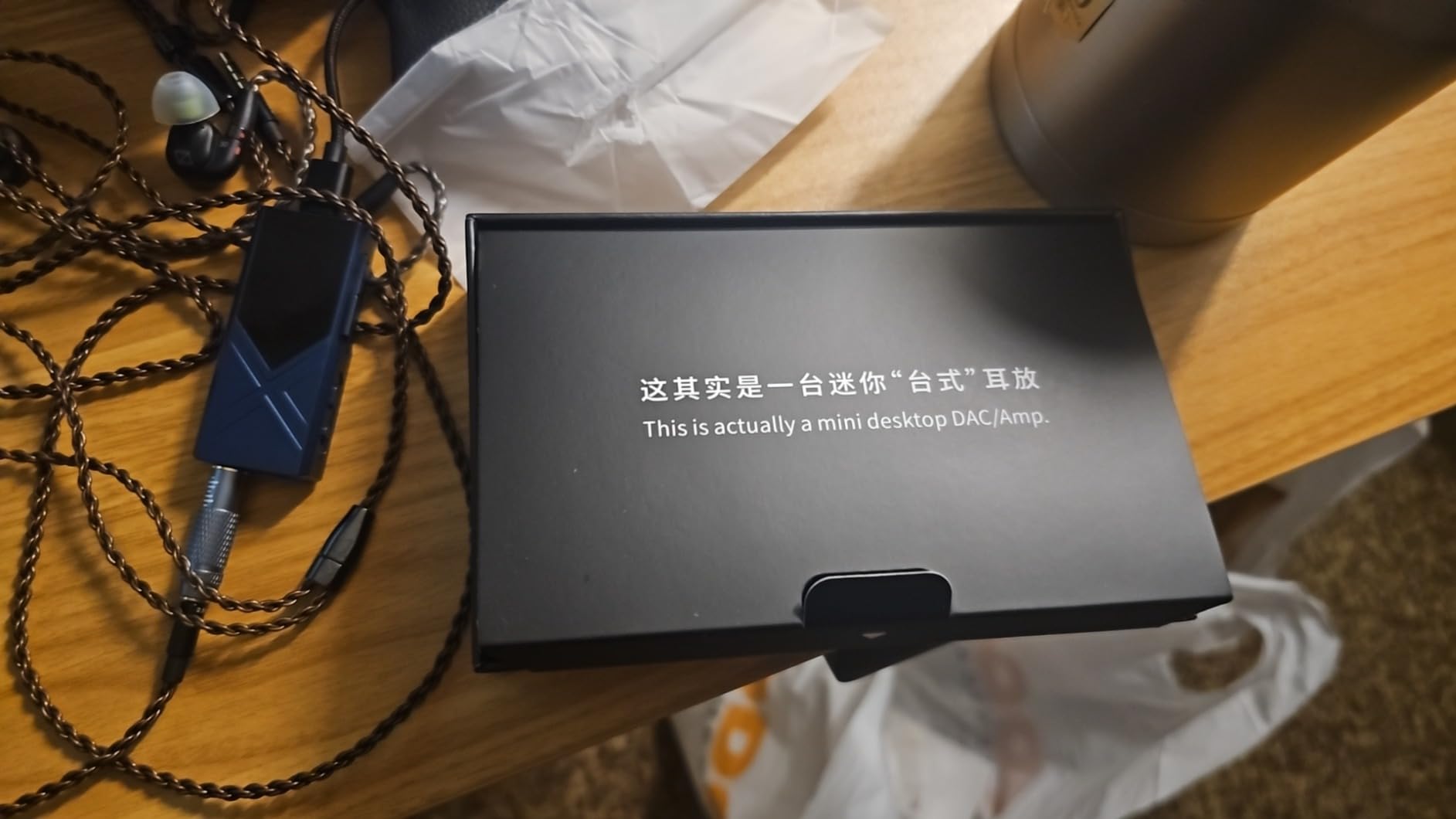
High-Impedance Headphone Pairing
Pair it with 150 to 300 ohm dynamic headphones and modest-efficiency planars, where the 650mW balanced output does what smaller dongles cannot. Sensitive IEMs still work fine on low gain, but the KA17 is overkill for them.
Heat, Power and Desktop Mode
Desktop mode needs the second Type-C port fed power from a laptop or a charger, and the shell gets warm enough to notice on a desk. Keep it in standard mode for portable use and save desktop mode for when you are plugged in.
10. Questyle M15i – The iPhone-First Pick
Questyle M15i Portable USB DAC & Headphone Amplifier, MFi Certified
ESS ES9281AC DAC
MFi certified for iPhone
768kHz PCM and DSD512
Current Mode Amplification
Pros
- MFi certified for iPhone
- Current Mode Amplification
- Drives demanding headphones
- Clean neutral signature
Cons
- Static and crackling reports
- No hardware volume dial
- Support response can be slow
If you are on an iPhone, the M15i solves a problem most of this list ignores. It carries actual MFi certification, so iOS treats it as a licensed audio device rather than an unknown accessory, with no warnings, no dropped connections, and proper volume behavior from the Lightning or USB-C port.
Questyle’s patented Current Mode Amplification runs the ESS ES9281AC in a way that sounds warmer and more natural than the spec sheet suggests. Buyers report driving Focal and Sennheiser flagships from it, and my time with 300-ohm dynamic headphones confirmed plenty of headroom on the 4.4mm output.
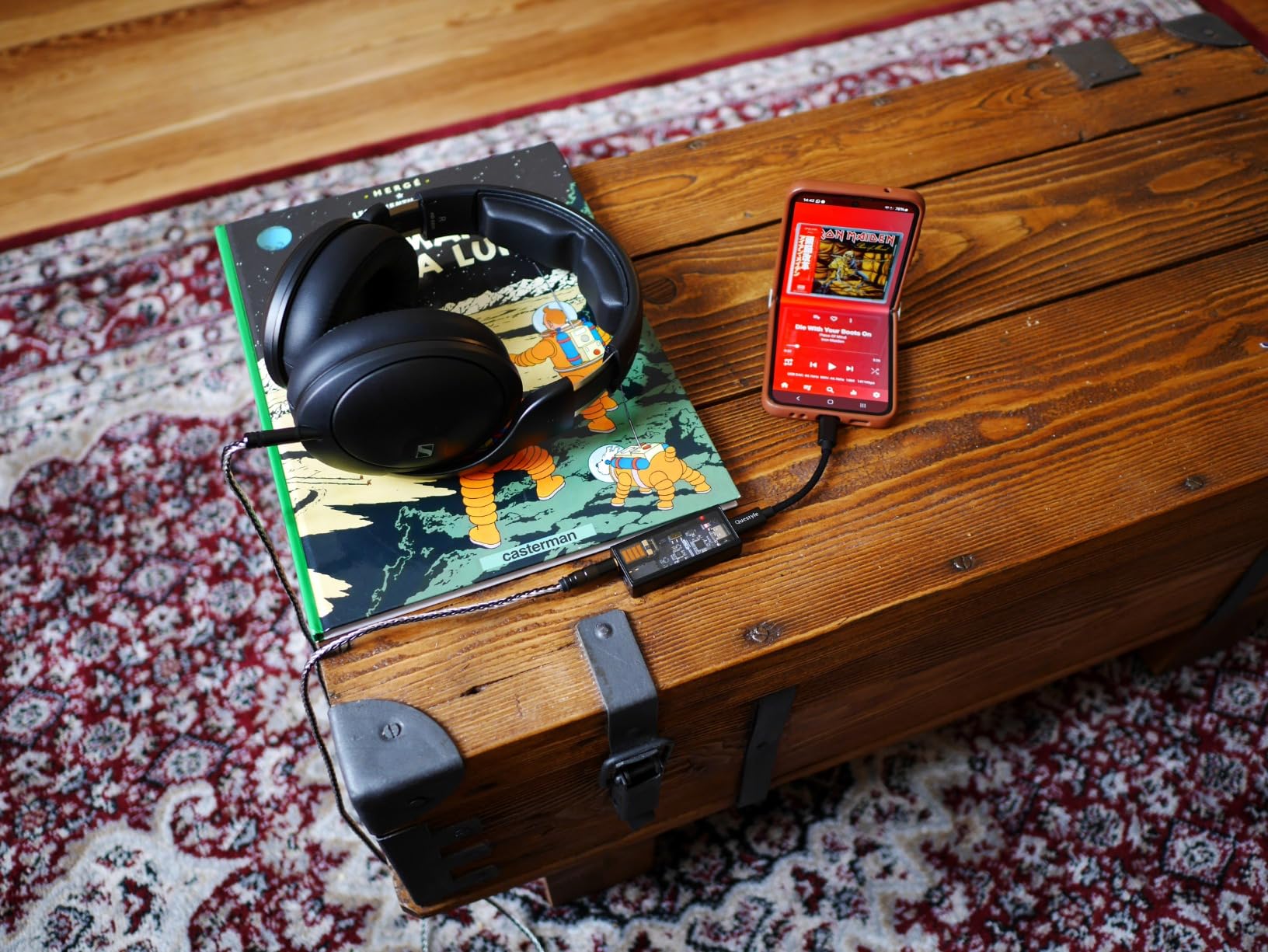
The two-level gain switch is well judged, dropping low enough for sensitive IEMs without hiss. It is the rare dongle that feels equally at home with a 16-ohm earphone and a hard-to-drive over-ear.
Honesty section: 141 reviews at 4.1 stars is the weakest score here, with reports of static, crackling, and occasional unit failures, plus slow support responses. Buy it from a retailer with easy returns and test it hard in week one.
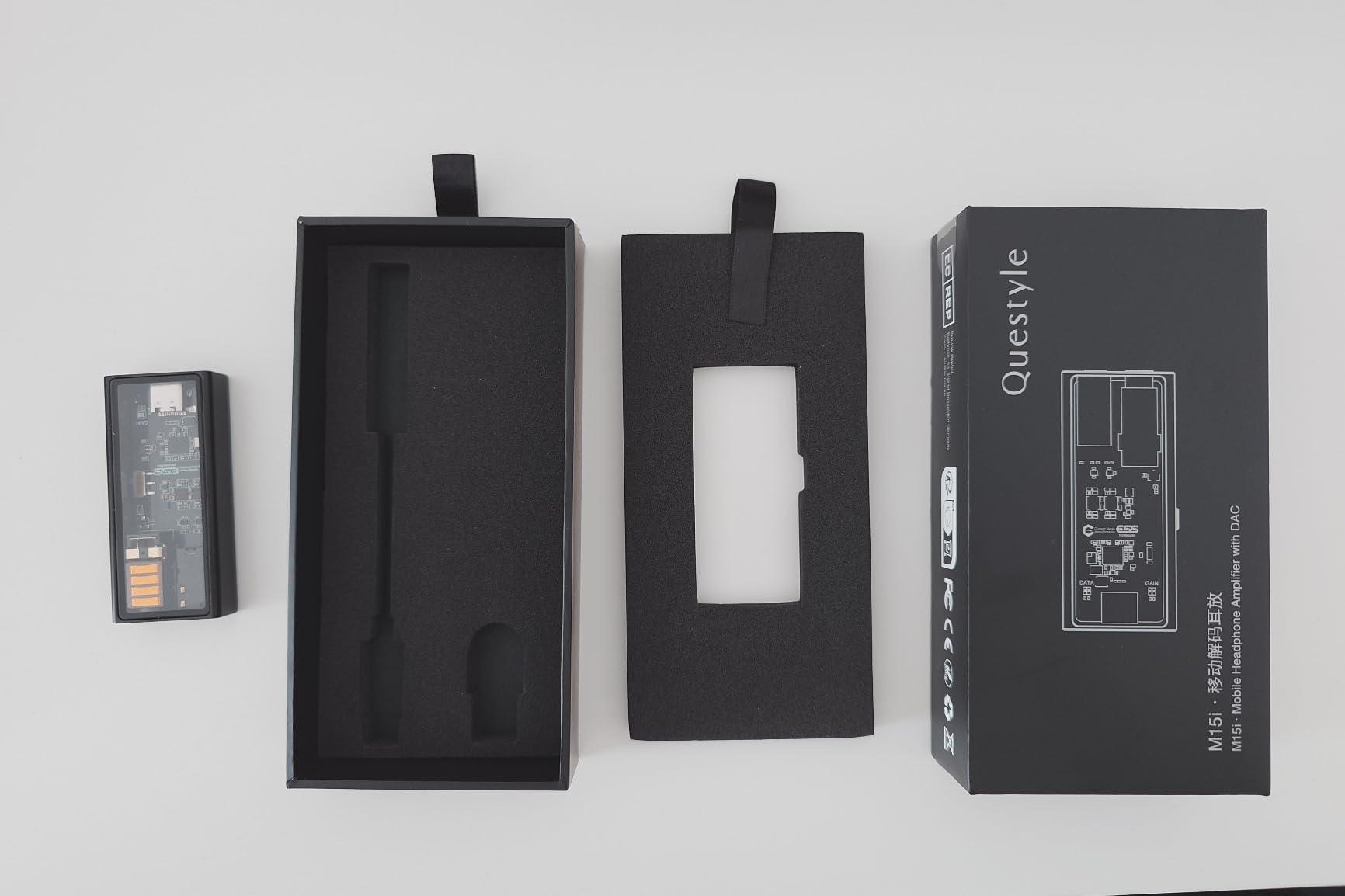
Why MFi Certification Matters
uncertified dongles can trigger iOS pop-ups, refuse to pass volume control, or stop working after an iOS update. MFi certification means Apple has validated the connection path, which is why this is the iPhone recommendation despite stronger scores elsewhere.
Gain Switch and Sensitive IEMs
The low gain setting keeps the noise floor inaudible with sensitive multi-driver IEMs, while high gain wakes up demanding over-ears. There is no hardware volume dial, so volume rides the phone’s software control, which costs a little resolution at very low settings.
11. FiiO BTR17 – Bluetooth 5.4 With aptX Lossless
FiiO BTR17 Bluetooth 5.4 USB DAC AMP with LDAC, aptX Lossless. Dual ES9069Q, 10-Band PEQ, THX AAA 78+amps 3.5mm Unbalanced & 4.4mm Balanced (Blue)
Bluetooth 5.4 aptX Lossless
Dual ES9069Q DACs
650mW desktop mode
10-band PEQ
Pros
- Bluetooth 5.4 with aptX Lossless
- 650mW desktop mode
- 10-band PEQ with presets
- Three-mode PC BT PHONE switch
Cons
- App can be slow to load
- Sound reads as clinical to some
- uneven switch tolerances reported
The BTR17 is what happens when you take the KA17’s dual ES9069Q and THX AAA 78+ amplifier and set it free from the cable. Bluetooth 5.4 on a Qualcomm QCC5181 chip brings LDAC and aptX Lossless, and the three-mode switch between PC, BT, and PHONE modes is simpler than it sounds.
In Bluetooth mode with LDAC it is the best-sounding wireless device I tested, with 300mW per channel available on the go and 650mW in desktop mode when docked. The 10-band PEQ works through the app or a web interface, so iPhone owners are not locked out of tuning.
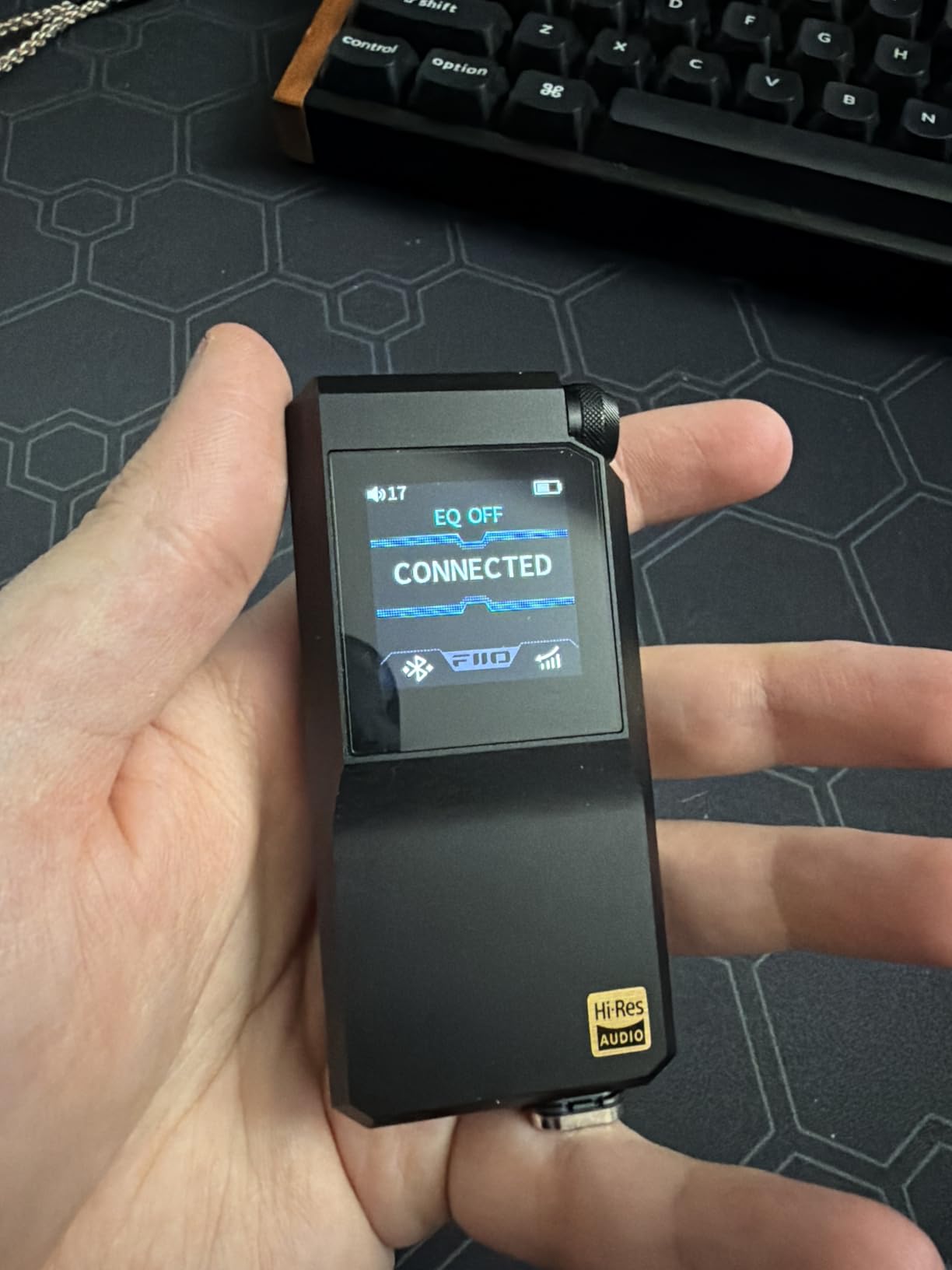
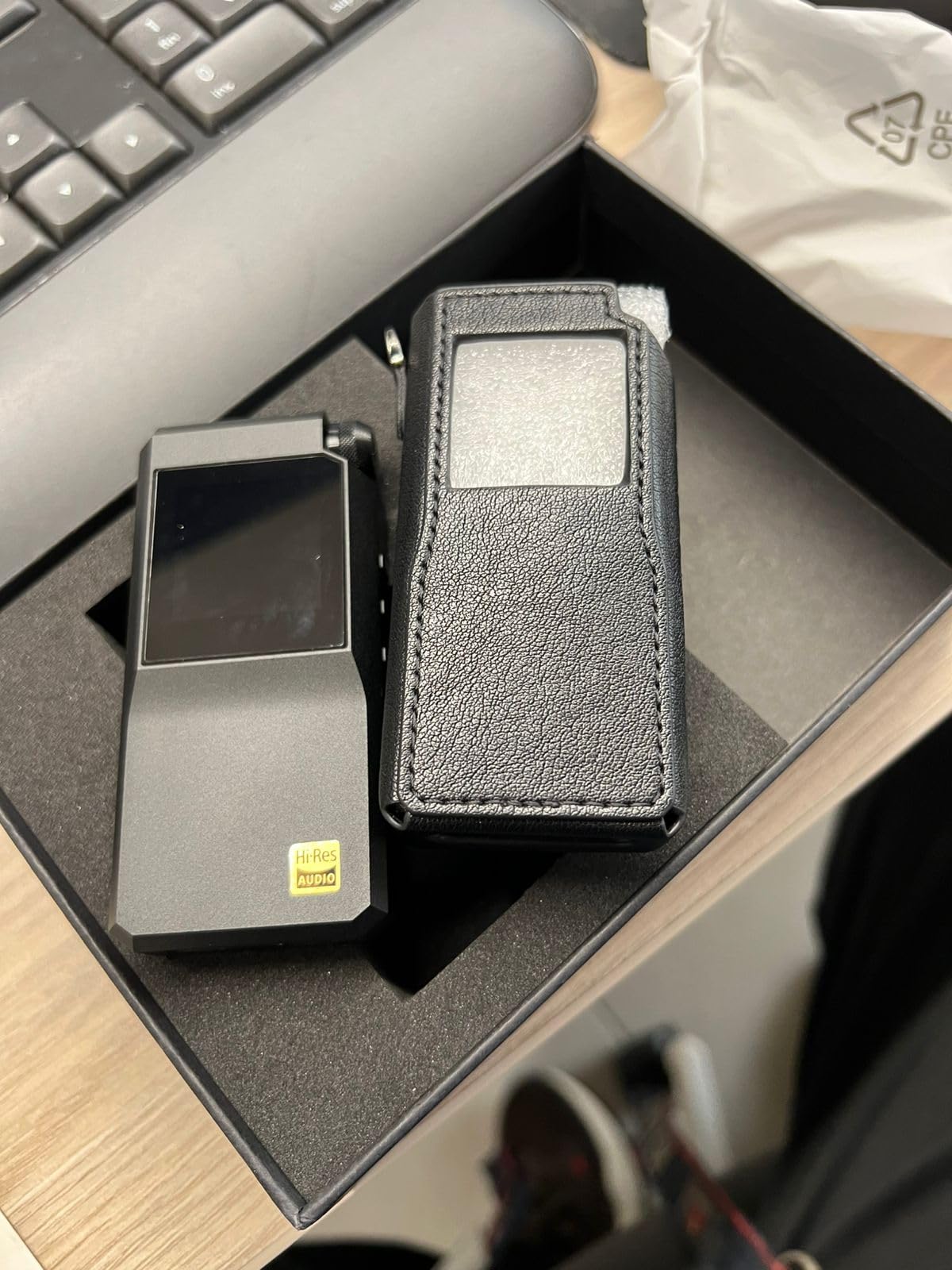
The OLED screen shows mode, volume, and codec at a glance, and the included protective case is genuinely useful. The 4.4mm balanced input choice over 2.5mm matches where most IEM cables have landed.
Criticism from owners is consistent: the app takes three to five seconds to load and occasionally stutters, and some listeners describe the tuning as surgical or sterile rather than musical. It is a precision instrument, not a warm one.
PC BT PHONE Mode Switch Explained
PHONE mode draws power from your phone and keeps battery drain sane, PC mode runs full power from a laptop, and BT mode cuts the cord entirely. Flipping between them is physical, instant, and one of the smarter design decisions here.
Sound Character and Pairing
Expect a clean, neutral, highly detailed presentation that suits balanced IEMs and analytical listening. If you prefer a warmer, more forgiving sound, the Questyle M15i or the Cayin RU9 below will fit better.
12. Cayin RU9 – Real Tube Warmth, Portable Package
Cayin RU9 Vacuum Tube Portable DAC and Amp
Nutube 6P1 vacuum tube
Dual R2R DAC
730mW Class A amp
Tri-mode sound
Pros
- Real Nutube 6P1 tube character
- Tri-mode sound tuning
- 730mW Class A balanced amp
- Dual R2R DAC architecture
Cons
- Premium price
- Heavy at 370 grams
- Only 18 reviews so far
The RU9 is the most interesting device here and the least practical, which is exactly why it closes the list. A Gen5 Korg Nutube 6P1 vacuum tube sits in the signal path, backed by a dual R2R DAC architecture and a fully balanced 4-channel Class A amplifier good for 730mW.
Tri-mode switching is the killer feature. Classic mode runs the tube for a soft, harmonic, vintage presentation, Modern mode tightens and brightens things, and Solid-State mode bypasses the tube character almost entirely. It is three tunings in one chassis, and the differences are not subtle.
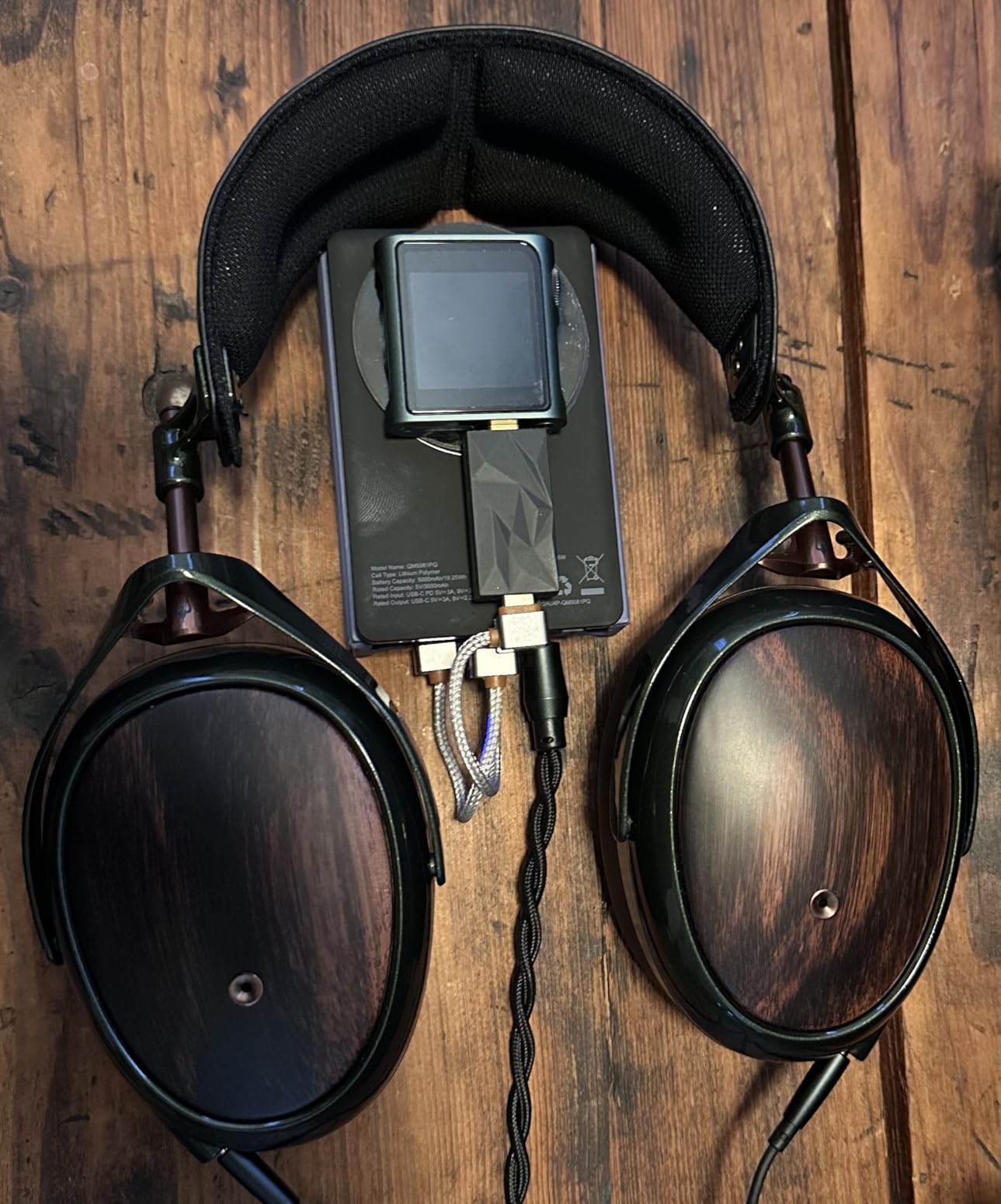
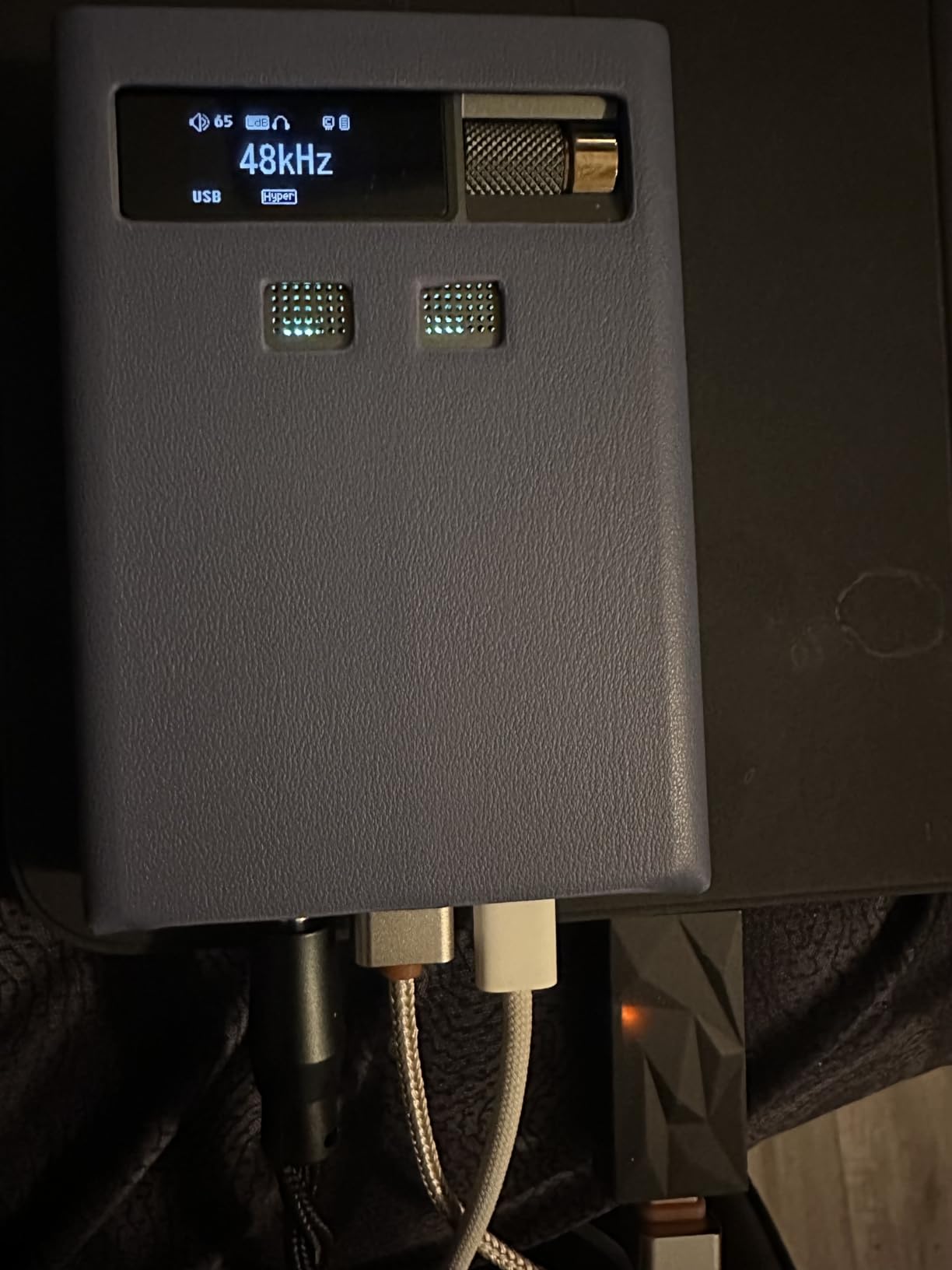
With warm-leaning IEMs and my HD 6XX, Classic mode added a richness that no silicon dongle in this list replicates. The CNC-machined aluminum chassis and OLED display feel like a small piece of high-end hi-fi, and the magnetic mount sticks to a phone case cleanly.
Now the reality check. It weighs 370 grams, which is a small phone, and it costs more than everything else here combined territory. With only 18 reviews at 4.3 stars you are buying on faith and returns policy rather than crowd wisdom.
Tube Sound vs Solid-State Sound
Tubes add even-order harmonics that read as warmth and fullness, especially in vocals and midrange, while solid-state aims for pure accuracy. Tri-mode lets you pick per album, which is the honest way to enjoy both.
R2R vs Delta-Sigma, Explained Simply
Delta-sigma chips, like the ESS and Cirrus units above, are extremely accurate and cheap to make. R2R ladders use precision resistor networks that measure slightly worse but many listeners find more natural in the mids. The RU9 makes the R2R argument better than any dongle I have heard.
How to Choose the Best Portable DAC?
Picking from the best portable DACs comes down to four questions: what headphones you drive, what phone you own, whether you want wires, and how much power you actually need. Here is how to answer each one without a spec sheet degree.
DAC Chip and Architecture
The chip matters less than marketers claim, but the family tells you something. Cirrus CS43131 and CS43198 designs sound clean and measure superbly, ESS ES9069Q parts bring huge dynamic range, and R2R architectures like the Cayin RU9 trade a little measured accuracy for a sound many find more natural.
Rather than chasing chips, match the feature set to your habits. EQ, desktop mode, and screen readouts change daily use far more than a 5dB spec improvement ever will.
Power Output and Headphone Pairing
Sensitive IEMs need under 100mW and care more about a low noise floor, while 150 to 300 ohm headphones want 300mW or more from a balanced output. Planar magnetic headphones are the hungriest and reward the KA17 or BTR17.
Output impedance matters too: keep it under one-eighth of your headphone’s impedance, like the 0.2-ohm CrinEar, to avoid skewing the frequency response of multi-driver IEMs.
Wired Dongle vs Bluetooth DAC
Wired dongles are simpler, cheaper, never need charging, and always sound identical. Bluetooth units like the Qudelix-5K and BTR17 free you from cables and add EQ everywhere, at the cost of a battery to manage.
My split: commutes and desk sessions are wired, chores and walking around the house are Bluetooth. If you only buy one, a Bluetooth unit with a wired mode covers both worlds.
Balanced and Single-Ended Outputs
A 4.4mm balanced output roughly doubles power and halves noise compared to 3.5mm single-ended, and most newer IEM cables terminate in 4.4mm. You need a balanced cable to use it, though, and a 2.5mm output, like on the Qudelix-5K, needs an adapter for 4.4mm cables.
If your headphones only have a 3.5mm plug, balanced output is a feature for a future purchase, not a reason to spend today.
iPhone and Android Compatibility
This is the gap nobody covers properly. Android phones handle USB-C audio well, and apps like USB Audio Player Pro bypass Android’s sample-rate limits for bit-perfect playback. iPhones with USB-C work with every dongle here, but Lightning phones need an adapter, and many DAC apps skip iOS entirely.
If EQ on an iPhone matters to you, the Qudelix-5K, the CrinEar Protocol Max with its browser EQ, or the MFi-certified Questyle M15i are the safe paths. Every FiiO KA-series unit works fine on iOS as a plain DAC, just without app control.
Battery Drain, Heat and Reliability
Power-hungry desktop modes pull hard from a phone, which Reddit users complain about constantly, so reserve them for laptops and power banks. Heat is normal at high output but extreme heat shortens lifespan, and fixed cables are the single most common failure point on cheap dongles.
For longevity, favor detachable-cable designs like the CrinEar and KA15, buy from brands with firmware update histories, and test any new DAC hard inside the return window.
Frequently Asked Questions
What is the best portable DAC overall?
The Qudelix-5K is the best portable DAC for most people. It works as both a Bluetooth receiver and a USB DAC, offers LDAC and aptX Adaptive streaming, 240mW from its balanced output, and a 10-band parametric EQ app with AutoEQ presets that no competitor matches.
What is the most powerful portable DAC amp?
The FiiO KA17 is the most powerful unit in this group, with dual ES9069Q DACs and a THX AAA 78+ amplifier that delivers 650mW per channel from the 4.4mm balanced output in desktop mode. The FiiO BTR17 matches that output and adds Bluetooth 5.4, while the Cayin RU9 tops the raw figures at 730mW with its Class A amplifier.
What is the best budget portable DAC?
The BZINK Barry-11 is the cheapest worthwhile upgrade, with dual CX31993 and MAX97220 chips, Hi-Res certification, and plug-and-play USB-C support. One step up, the FiiO KA11 adds a 125dB signal-to-noise ratio, 200mW of power at 32 ohms, and console support, making it the safest first DAC from an established brand.
Which portable DAC works best with iPhone?
The Questyle M15i is the strongest iPhone pick because it carries MFi certification, so iOS recognizes it as a licensed audio device with no pop-ups or volume quirks. iPhone owners who want EQ should also consider the Qudelix-5K or the CrinEar Protocol Max, since both tune through a browser or their own app rather than requiring iOS software support.
Are external DACs worth it?
Yes, if you own decent headphones or IEMs. A portable DAC bypasses the cheap audio circuitry in phones and laptops, giving you a lower noise floor, more power, and better detail with high-resolution files. If you use basic earbuds with a phone that already sounds fine to you, save your money, because the improvement will be small.
The Bottom Line: Our Top Portable DAC Picks
After three months with all 12 units, the Qudelix-5K remains the best portable DACs recommendation I can make for most listeners, because EQ plus Bluetooth plus USB in one 26-gram clip beats every single-purpose rival. The FiiO KA13 is the wired value champion if you never plan to cut the cord, and the FiiO KA17 or BTR17 is the call for hard-to-drive headphones.
Start with your headphones, then your phone. Sensitive IEMs and an Android device make almost anything here work, while an iPhone and 300-ohm headphones point squarely at the Questyle M15i or the KA17.
Whichever you pick, update the firmware on day one, test it hard inside the return window, and give it a week before judging. Your ears recalibrate faster than you think.