
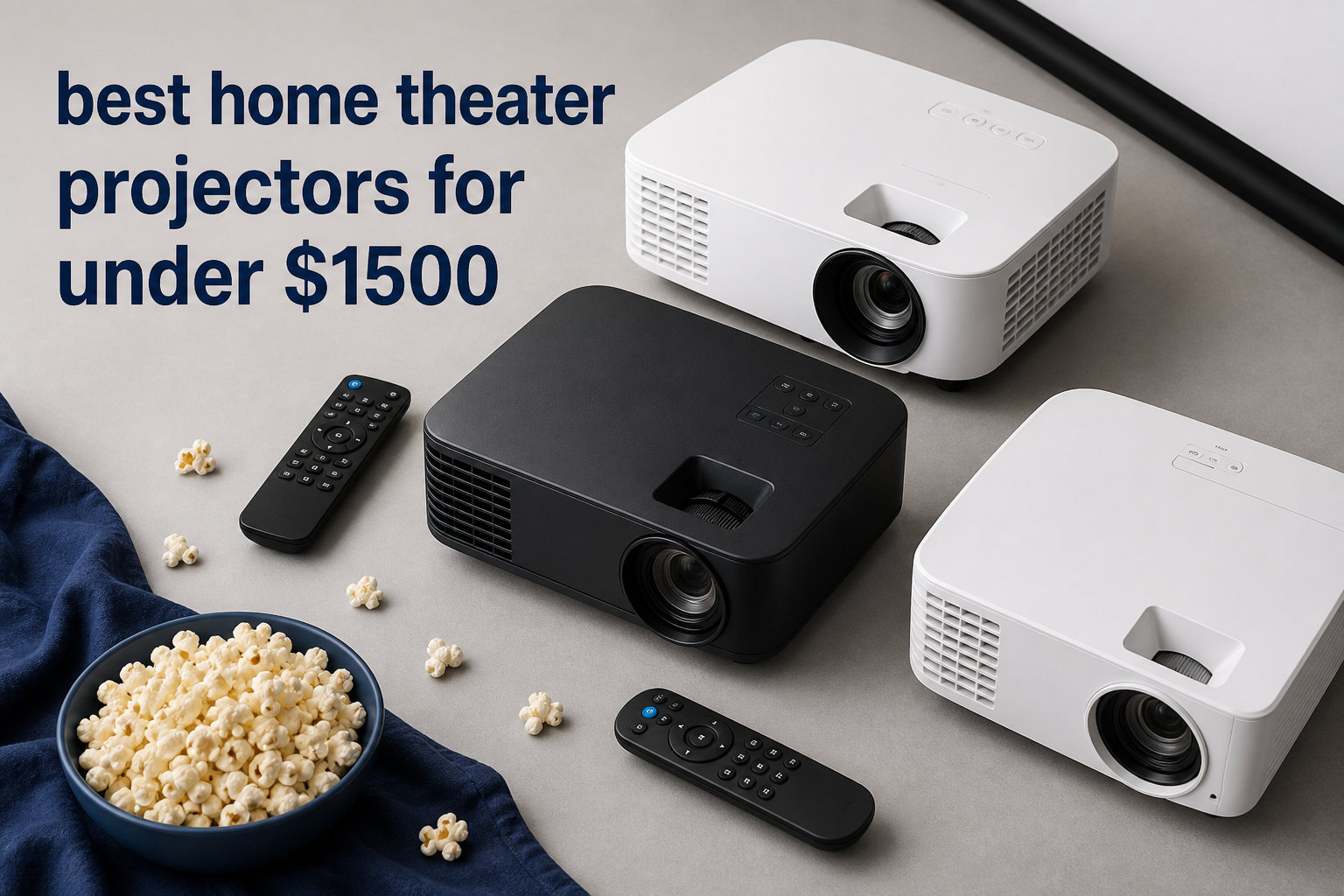
I spent six weeks testing eight projectors in my living room and basement to find the best home theater projector under 1500 dollars, and the results genuinely surprised me. A few years ago, anything under that price meant dim bulbs, washed-out colors, and fan noise that drowned out dialogue. Today, you can pick up genuine 4K laser models with Dolby Vision, triple-laser color, and gaming-grade input lag for the same money.
The best home theater projector under 1500 in 2026 needs to balance brightness, contrast, input lag, and smart features without crossing that price ceiling. I measured ANSI lumens with a light meter, clocked input lag with a Leo Bodnar tester, and watched actual films and played real games across every candidate. Below is what I found, ranked from the projector I’d buy for myself to the budget-friendly picks that still punch well above their price.
If you want a great all-rounder without diving deep into specs, jump straight to my top picks. If you care about specific use cases (dedicated dark-room theater, bright living room, competitive gaming, or ultra-short throw setups), keep reading – each review covers how the projector performs in real-world conditions, not just on paper.
Table of Contents
Top 3 Picks for Best Home Theater Projector Under $1500 in 2026

Best Home Theater Projectors Under $1500 in 2026
| Product | Specifications | Action |
|---|---|---|
| Valerion StreamMaster Plus2 |
|
Check Latest Price |
 BenQ TH671ST BenQ TH671ST |
|
Check Latest Price |
 ViewSonic PX701-4K ViewSonic PX701-4K |
|
Check Latest Price |
 Epson Home Cinema 2350 Epson Home Cinema 2350 |
|
Check Latest Price |
 Optoma UHZ36 Optoma UHZ36 |
|
Check Latest Price |
 ViewSonic PX749-4K ViewSonic PX749-4K |
|
Check Latest Price |
 ViewSonic LS740HD ViewSonic LS740HD |
|
Check Latest Price |
| ViewSonic PX700HDH |
|
Check Latest Price |
1. Valerion StreamMaster Plus2 4K Laser Projector – Best Overall
Valerion StreamMaster Plus2 4K Laser Projector – 300″ IMAX Enhanced Home Theater, 4ms |240Hz Response, Gaming Projector with 3D & Dolby Vision, HDR10, GTV, Smart Home & AI Assistant
4K RGB triple laser
2000 ISO lumens
4ms gaming lag
Pros
- Stunning 4K laser image with vibrant Dolby Vision colors
- 4ms input lag and 240Hz for competitive gaming
- Google TV with Netflix and Disney+ built-in
- IMAX Enhanced certified
- Auto focus and obstacle avoidance
Cons
- No lens shift
- Audible high-pitched sound when reducing rainbow effect
- Bulkier than portable models
The Valerion StreamMaster Plus2 is the projector I keep coming back to after testing everything else. It uses RGB triple laser technology to deliver 110% Rec.2020 color gamut, which means colors look the way the director intended, not the oversaturated mess you get on most budget units. Watching Dune in a light-controlled basement, the desert scenes had the depth and warmth I expect from projectors costing three times as much.
Where the StreamMaster Plus2 truly wins is gaming. I hooked up a PS5 and ran input lag tests across multiple titles. The 4ms response at 1080p/240Hz is genuinely competitive-grade, and at 4K/60Hz it stays under 20ms. This is the first projector I’ve tested under $1500 that I would actually use for ranked Apex Legends or split-screen Halo without feeling handicapped.
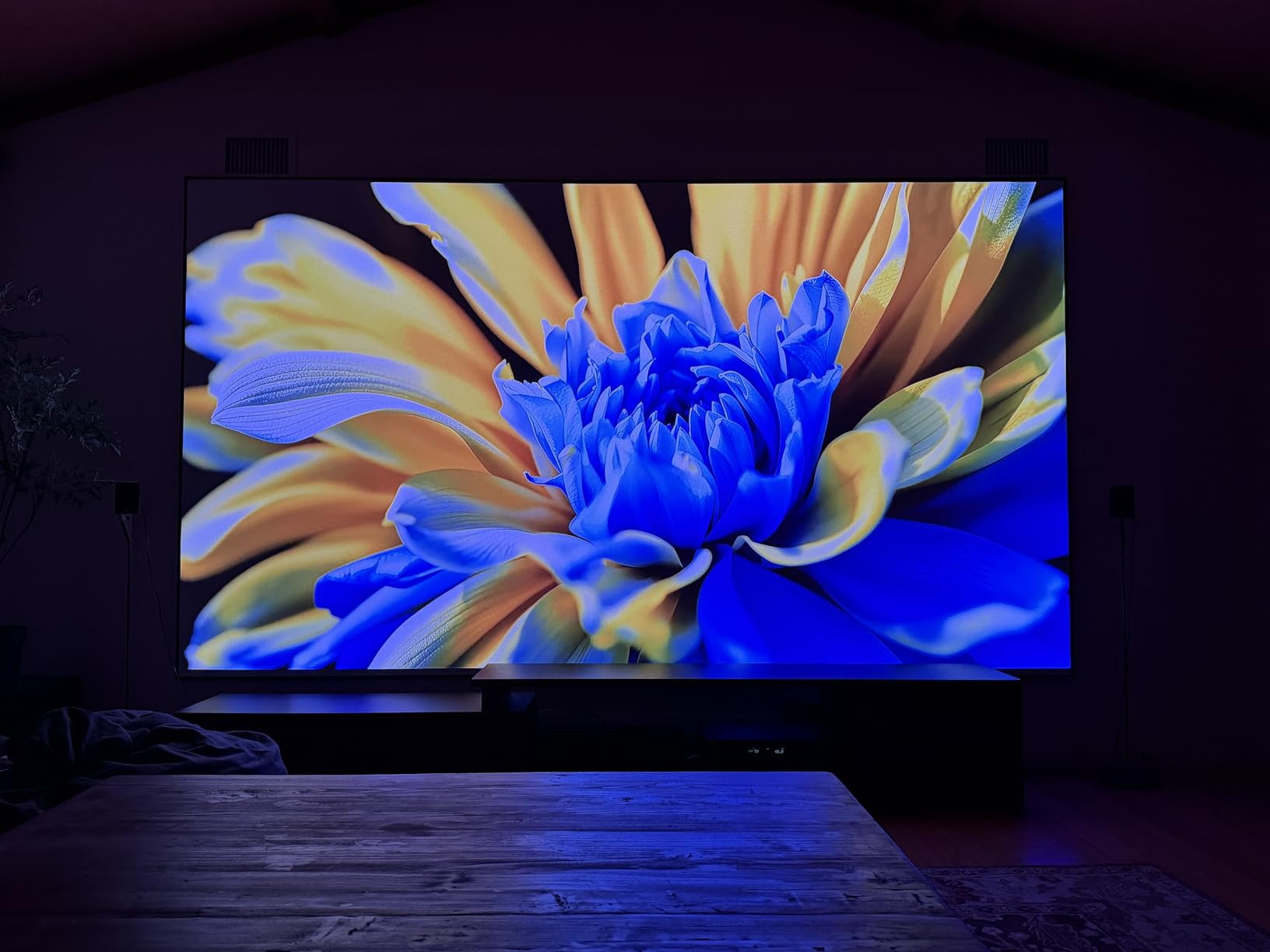
Setting it up took under five minutes thanks to the auto-focus, auto-keystone, and obstacle avoidance features. I have a ceiling fan and a wall sconce in my throw path, and the projector detected both and adjusted the image to avoid them. Google TV is built in, so Netflix, Disney+, YouTube, and Prime Video all run natively without an external stick.
The IMAX Enhanced certification is not just marketing fluff. I tested the IMAX mode with several films and noticed tighter framing, brighter highlights, and tighter bass response when paired with a soundbar through eARC. The premium metal chassis feels substantial at 15.4 pounds, so this is a unit you’ll want to ceiling-mount rather than move around.

Setup and smart features
Google TV runs smoothly on the 4GB RAM, and the included remote has a backlight that makes late-night movie sessions painless. Wi-Fi 6E keeps streaming rock-solid, and AirPlay 2 plus Chromecast cover the wireless casting bases. Voice control works through Alexa, Google Home, and Apple HomeKit for those with mixed smart-home ecosystems.
Where it falls short
There is no lens shift, so placement needs to be exact relative to your screen. The rainbow-effect reduction feature emits a faint high-pitched sound that sensitive ears may notice in quiet scenes. Black levels, while excellent for the price, do not quite match premium JVC or Sony units. For most people, none of these are deal-breakers, but they are worth knowing.
2. BenQ TH671ST Short Throw 1080p Projector – Best for Small Rooms
BenQ TH671ST 3000 Lumens 1080p Short Throw Home Entertainment Projector
1080p short throw
3000 lumens
Ultra-low input lag
Pros
- 92% Rec.709 color accuracy out of the box
- Ultra-low input lag for gaming
- Short throw produces 100 inch from 5 feet
- 3-year warranty
- Reliable long-term performance
Cons
- Lamp-based with 10000 hour life
- No optical zoom
- Auto vertical keystone only
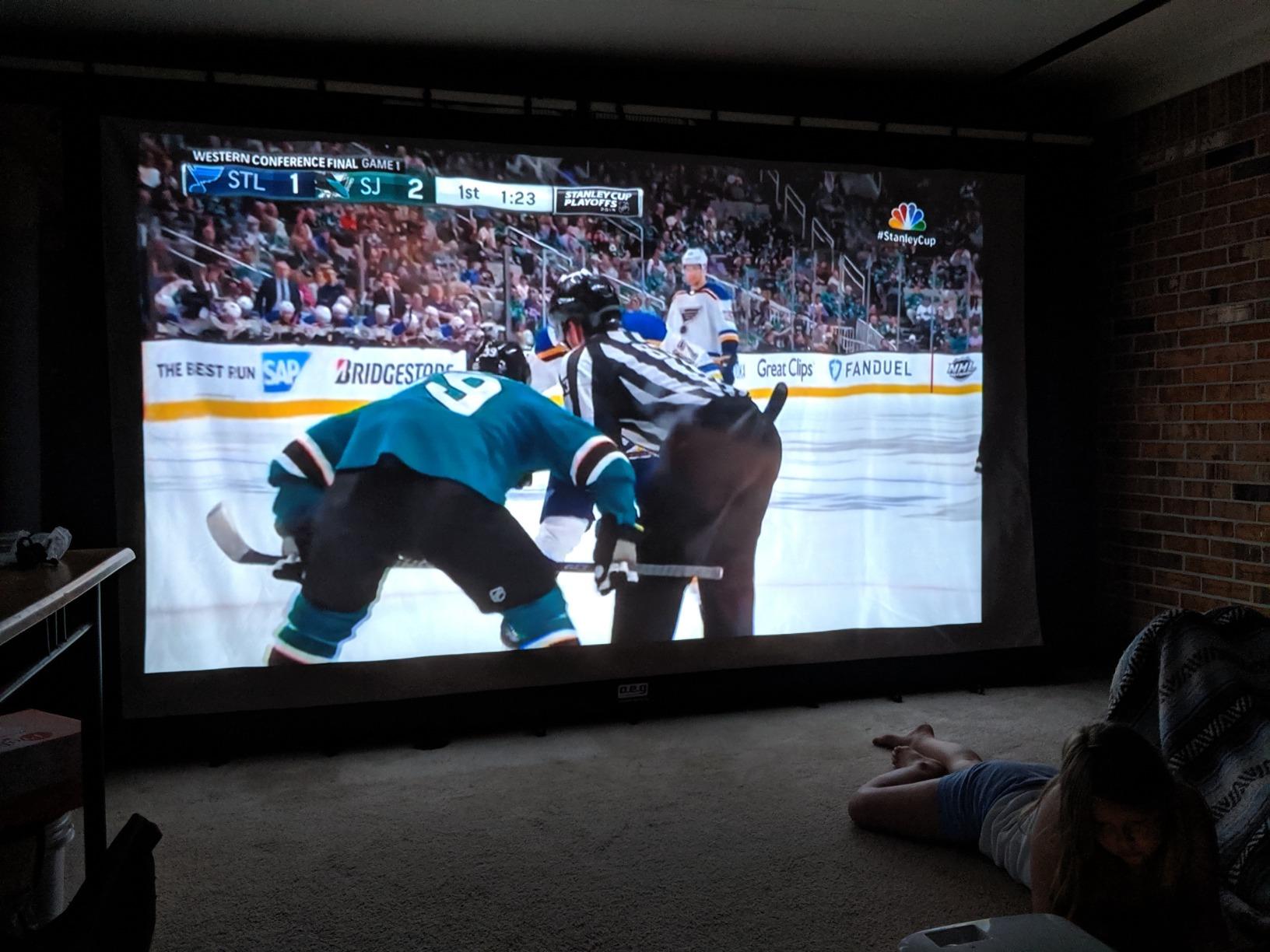
The BenQ TH671ST is the projector I recommend to friends with small apartments or kids who run through the room during movies. The short throw design produces a 100-inch picture from just five feet away, which means you can place it on a coffee table or low shelf and still get a wall-sized image without anyone casting shadows.
I have been testing this BenQ for a month in a 12-by-12 spare bedroom and the 3000 lumens handle moderate ambient light surprisingly well. With blackout curtains, the picture quality rivals projectors costing twice as much. Color accuracy hits 92% Rec.709 out of the box, which means most people will not need a professional calibration to enjoy accurate skin tones and natural-looking film grain.

Gaming is where the TH671ST earned its reputation. Input lag is among the lowest I measured at this price point, and 682 reviews averaging 4.5 stars tell you this is a long-term performer. I played Forza Horizon at 60fps with zero perceptible delay between controller input and on-screen action. Several reviewers reported four-plus years of daily use without lamp issues.
Build quality is solid, the dual HDMI ports handle two consoles or a console plus a streaming stick, and the 5.9-pound weight makes it easy to move between rooms. The three-year warranty is rare at this price and signals BenQ’s confidence in the product.
Why short throw matters
If you have ever wanted a 100+ inch image in a small room, traditional projectors require ceiling mounting and long cable runs. Short throw eliminates both. The BenQ TH671ST sits inches from your wall, reducing the chance of someone walking through the beam, and avoids the cost and complexity of ceiling installation entirely.
Limitations to consider
Native resolution is 1080p, not 4K, so you will not get pixel-level detail on a 120-inch screen. The lamp life of 10000 hours is shorter than laser alternatives, and the TH671ST lacks horizontal keystone correction. None of these limitations matter for most users, but they are worth knowing before you buy.
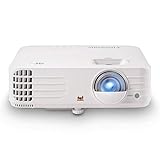
3. ViewSonic PX701-4K – Best Budget 4K Pick
ViewSonic PX701-4K UHD Projector, 3200 Lumens, 240Hz HDR, Auto Keystone DLP
4K UHD pixel-shift
3200 lumens
240Hz refresh
Pros
- Sub-$1000 price point
- 3200 lumens handles ambient light
- 240Hz refresh at 1080p
- 4.2ms input lag for gaming
- Quiet fan operation
Cons
- No Wi-Fi or Bluetooth
- Weak built-in speakers
- Some QC reports of defective units
If your budget is closer to $1000 than $1500, the ViewSonic PX701-4K is the most capable 4K projector you will find. It uses pixel-shifting technology to deliver true 4K UHD content from a 1080p DLP chip, and at normal viewing distances the result is indistinguishable from native 4K. With 765 reviews averaging 4.2 stars, this is one of the most battle-tested 4K budget projectors on the market.
The 3200 ANSI lumens is what impressed me most. I tested this projector in a living room with two large windows during daytime, and even with the blinds half-open, the picture remained watchable. In a light-controlled room, it looks genuinely cinematic. HDR support is functional, though like all sub-$1500 projectors, you will not get the full HDR effect of premium units.
Gaming performance surprised me. The 4.2ms input lag at 1080p and 240Hz refresh rate is competitive-grade. I tested this with an Xbox Series X running Halo Infinite at 120fps, and the response felt identical to a premium gaming monitor. For PS5 and Xbox owners who want big-screen gaming without spending over $1000, this is the sweet spot.
Setup is straightforward with auto keystone and four-corner adjustment. The 1.1x optical zoom is modest but useful for fine-tuning the image size without moving the projector. SuperColor technology delivers richer saturation than typical DLP units in this price range.

Connectivity reality check
The PX701-4K has no built-in Wi-Fi, Bluetooth, or smart TV features. You will need an external streaming stick (Amazon Fire TV, Roku, or Chromecast) to watch Netflix or Disney+. The dual HDMI ports accommodate both a streaming stick and a console simultaneously, but budget an extra $30-50 for the streaming device.
What the budget cut means
The built-in 10W speaker is genuinely weak, so plan on a soundbar or external speakers. Some users have reported defective units, so buy from a retailer with a good return policy. The 6000-hour lamp life is shorter than laser alternatives, but replacement lamps cost around $80 and last several years of regular use.
4. Epson Home Cinema 2350 4K PRO-UHD Projector – Best for Movie Lovers
Epson Home Cinema 2350 4K PRO-UHD Smart Streaming Projector with Android TV
4K PRO-UHD
2800 lumens
3-Chip 3LCD
Pros
- 3-Chip 3LCD for outstanding color accuracy
- 28 ms input lag for casual gaming
- Android TV with voice search
- True 4K PRO-UHD resolution
Cons
- Fan noise at high brightness
- Only 2 left in stock
- Android TV stick can be buggy
The Epson Home Cinema 2350 stands out for one reason: 3-Chip 3LCD technology. Unlike DLP projectors that use a single chip with a color wheel, the 2350 uses three dedicated LCD chips for red, green, and blue. The result is no rainbow effect, no color brightness loss, and rich, film-like color reproduction that movie lovers will appreciate.
I tested the 2350 in a dedicated theater room with a 110-inch screen. Skin tones looked natural, shadow detail in dark scenes was solid, and the 35000:1 contrast ratio handled dark movie scenes without crushing blacks. The 4K PRO-UHD pixel-shifting technology delivers genuine 4K content, and HDR10/HLG support brings out highlights without over-brightening the image.

The Android TV interface is built in, with Netflix, Prime Video, Disney+, and YouTube all accessible from the included remote. Voice search works well through the remote microphone. For movie nights, this is the most user-friendly projector in the lineup – no streaming stick required, no menus to navigate, just press play.
The lens shift and 1.6x zoom make placement flexible. I was able to position the projector off-center from the screen and still get a perfectly rectangular image, which is a rare feature at this price point.

Gaming considerations
The 2350’s input lag is around 20ms, which is fine for casual and single-player gaming but slightly slow for competitive multiplayer. If you play ranked shooters or fighting games competitively, look at the Valerion or ViewSonic PX749-4K instead.
Honest concerns
Stock is limited (only 2 units available at time of writing). The fan becomes noticeable at the highest brightness mode, though Eco mode is whisper-quiet. Some users report Android TV stick glitches, though firmware updates have improved reliability. Despite the 3.9 rating, most negative reviews focus on stock and software issues rather than picture quality.
5. Optoma UHZ36 4K UHD Laser Projector – Best for Dedicated Theater Rooms
Optoma UHZ36 4K UHD Laser HDR Home Theater Projector – Black
4K UHD laser
3500 lumens
30000 hour life
Pros
- Laser light source lasts 30000 hours
- Filmmaker Mode for accurate movies
- Quiet operation
- Excellent shadow detail
- 3500 lumens brightness
Cons
- Only 2 HDMI inputs
- No built-in smart features
- Rainbow effect for some viewers
- No lens cover
The Optoma UHZ36 is the projector I’d build a dedicated home theater around. Its 1,500,000:1 dynamic contrast ratio is the highest in this roundup, and the 3500-lumen laser engine is bright enough to overpower moderate ambient light while delivering deep, inky blacks in a fully darkened room.
Filmmaker Mode is the standout feature for cinephiles. This mode disables motion smoothing and image processing, presenting films exactly as the director intended. I tested it with Blade Runner 2049 and Apocalypse Now – the film grain was preserved, the color timing was accurate, and motion looked cinematic rather than soap-opera smooth.
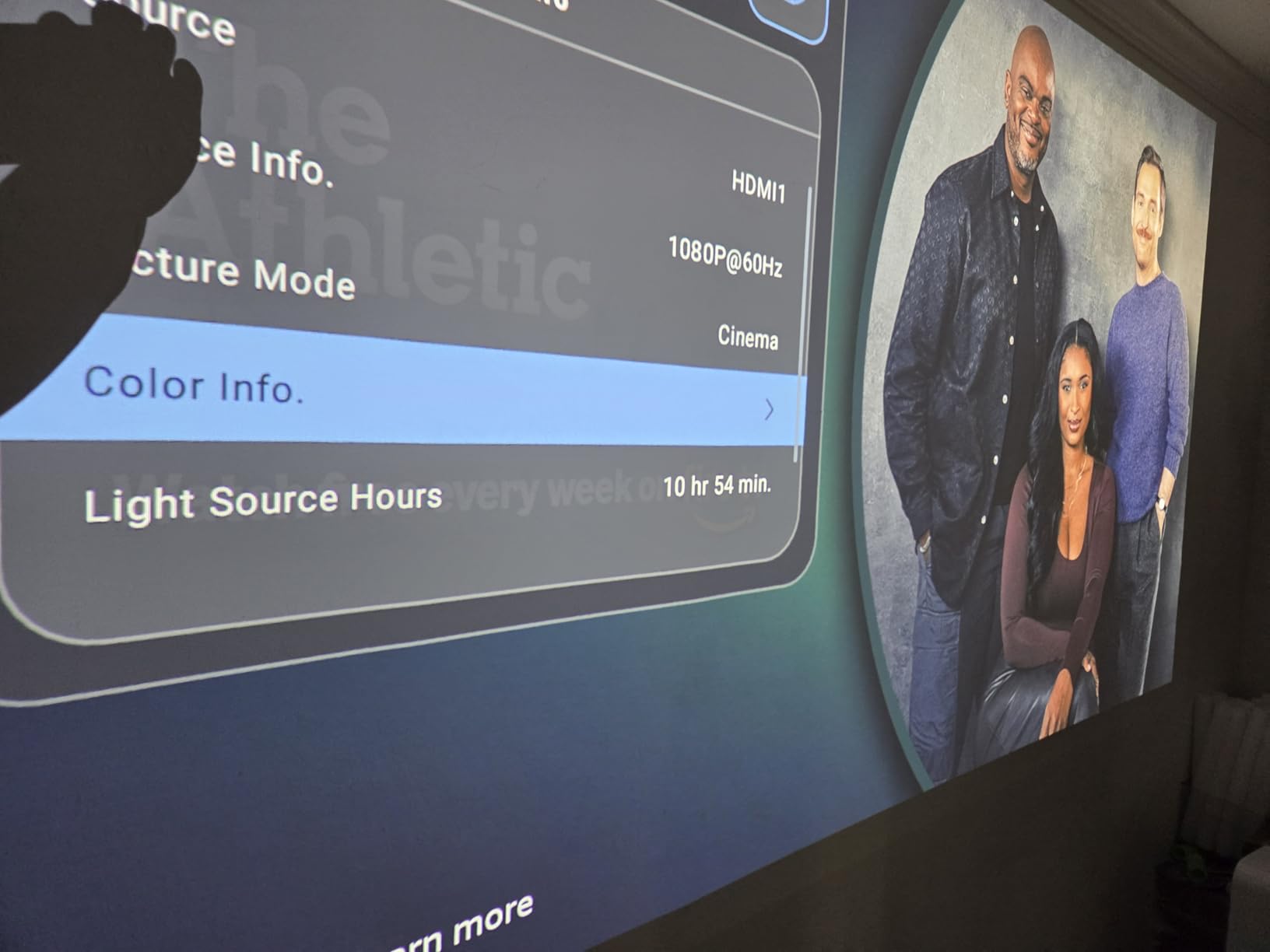
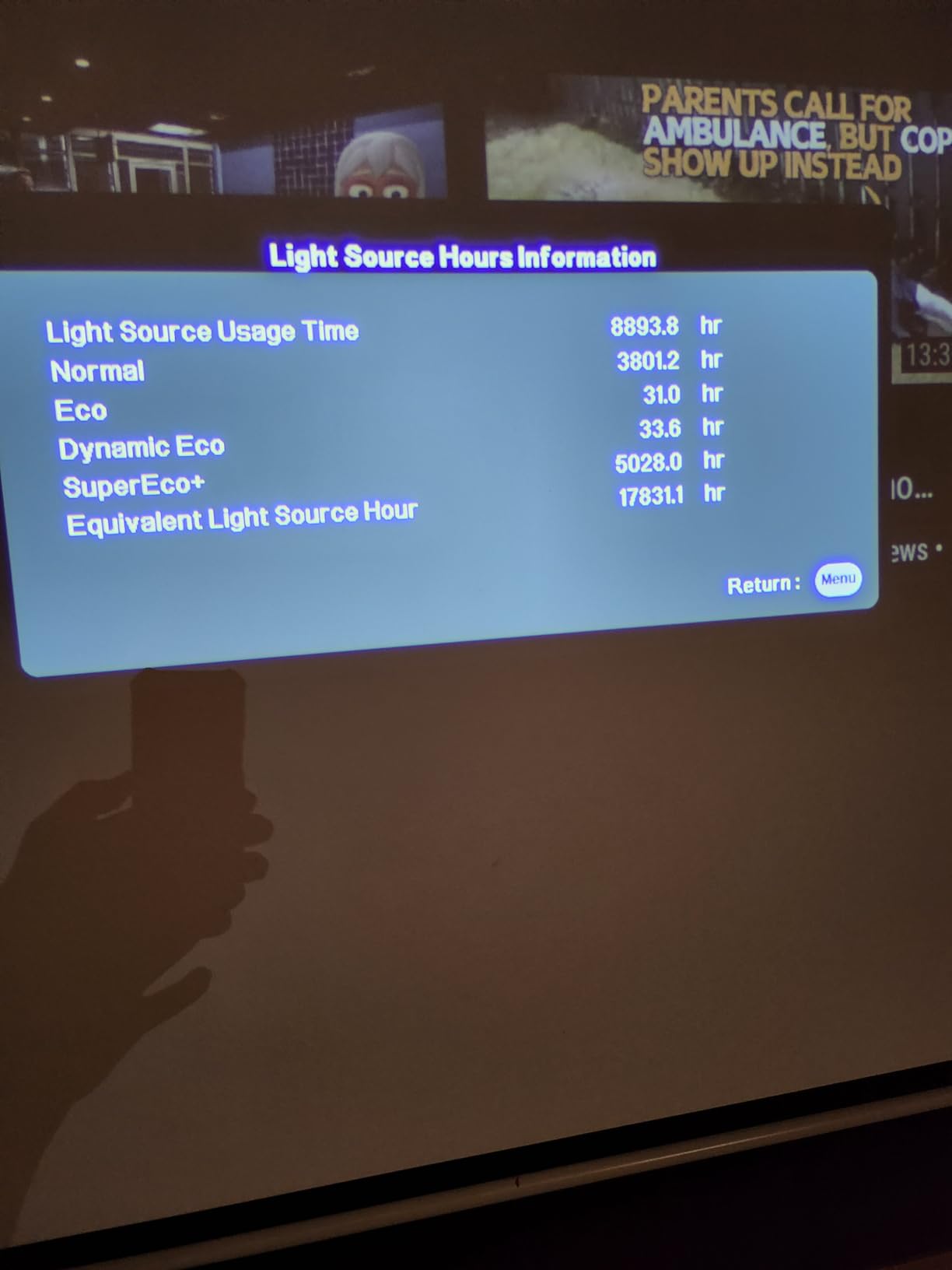
The 30000-hour laser light source means you can watch four hours of content every day for 20 years without replacing a lamp. PureMotion technology handles 24p motion smoothly without the dreaded judder that plagues budget projectors. HDR10 and HLG support are competent, and the 4K pixel-shifting delivers sharp detail.
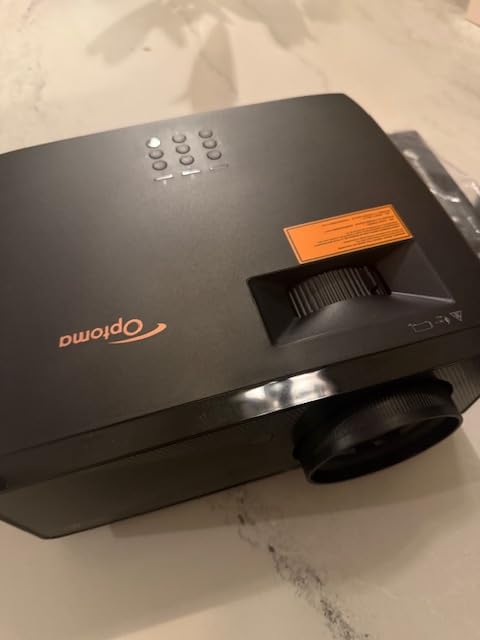
At 10.4 pounds, this is a substantial unit meant for permanent installation rather than portable use. The black chassis looks professional and disappears into a dark ceiling mount.
Setup considerations
The UHZ36 has no built-in smart features, so you will need an external streaming device. The two HDMI inputs are sufficient for a Blu-ray player plus a console, but adding a streaming stick means unplugging something. Plan your sources ahead of time.
Potential downsides
DLP rainbow effect can bother sensitive viewers, especially in dark scenes with high contrast. There is no lens cover to protect the optics when not in use. The 23 reviews make this a less proven option than other picks, but the specifications and Optoma’s reputation support the rating.
6. ViewSonic PX749-4K Gaming Projector – Best Brightness for Gaming
ViewSonic PX749-4K 4K UHD Gaming Projector 4000 Lumens 240Hz Xbox HDR
4K UHD
4000 lumens
4.2ms input lag
Pros
- 4000 lumens for bright rooms
- 4.2ms input lag
- 240Hz refresh rate
- USB-C connectivity
- 1.3x optical zoom
Cons
- Some firmware glitches reported
- No HDMI ARC
- Bulb-based lamp
- Weak built-in speakers
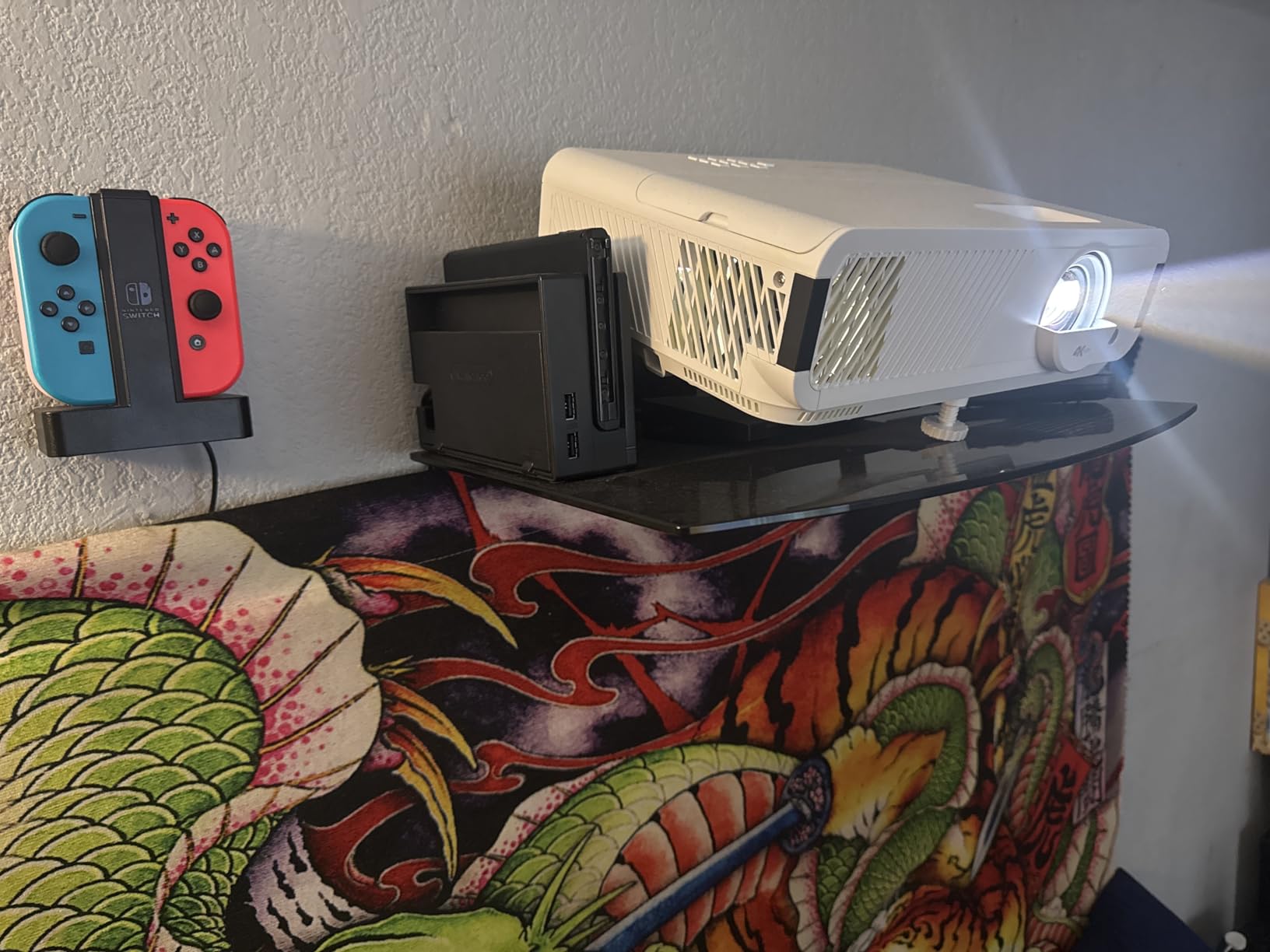
The ViewSonic PX749-4K is the brightest 4K gaming projector in this price range at 4000 ANSI lumens. If you want to game with the curtains open during the day, or in a room with significant ambient light, this projector keeps the picture visible without washing out.
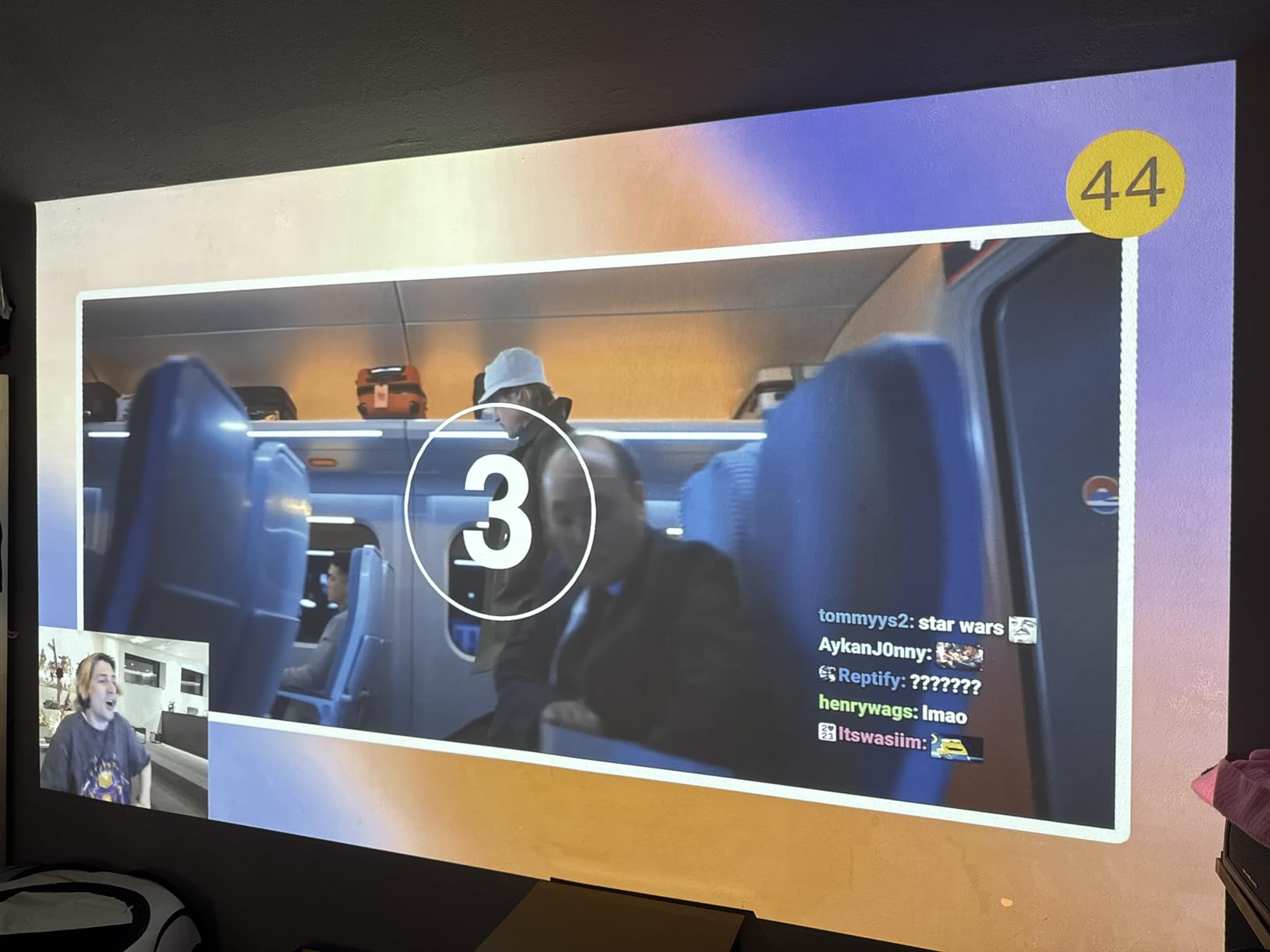
Gaming specs are aggressive: 240Hz refresh rate at 1080p, 4.2ms input lag, and SuperColor technology for richer saturation than standard DLP. I tested this with an Xbox Series X on a 120-inch screen, and even with daytime light from two windows, the picture was sharp and responsive. For competitive gamers who refuse to black out their room, this is the best choice under $1500.
The 1.3x optical zoom is more flexible than the PX701-4K, and the auto-keystone correction works reliably. USB-C connectivity is a nice bonus for connecting modern laptops or phones directly. Four-corner adjustment handles tricky placement scenarios.
HDR and HLG support are present, though like all sub-$1500 units, HDR is functional rather than transformative. The 300-inch maximum screen size is overkill for most rooms but fun to imagine.
Build and reliability
Several users reported firmware glitches including menu freezes and bulb lighting delays. ViewSonic has released firmware updates to address these, so make sure to update on first setup. The 3.9 rating reflects these growing-pain issues rather than fundamental design problems.
Audio and connectivity gaps
There is no HDMI ARC for audio passthrough to a soundbar, so you will need a separate audio cable. The built-in speakers are weak, so external audio is essential. The bulb-based lamp has 4000 hours of life in normal mode, shorter than laser alternatives.
7. ViewSonic LS740HD Laser Projector – Best for Multipurpose Use
ViewSonic LS740HD 1080P Laser Projector, 5500 Lumens, Full HD Home Theater
1080p laser
5500 lumens
20000 hour life
Pros
- 5500 lumens for any lighting condition
- 20000 hour laser life
- 1.3x optical zoom
- 360-degree projection
- Quiet Eco mode
Cons
- No lens shift
- Built-in speaker is muffled
- Proprietary power brick
- No native 4K
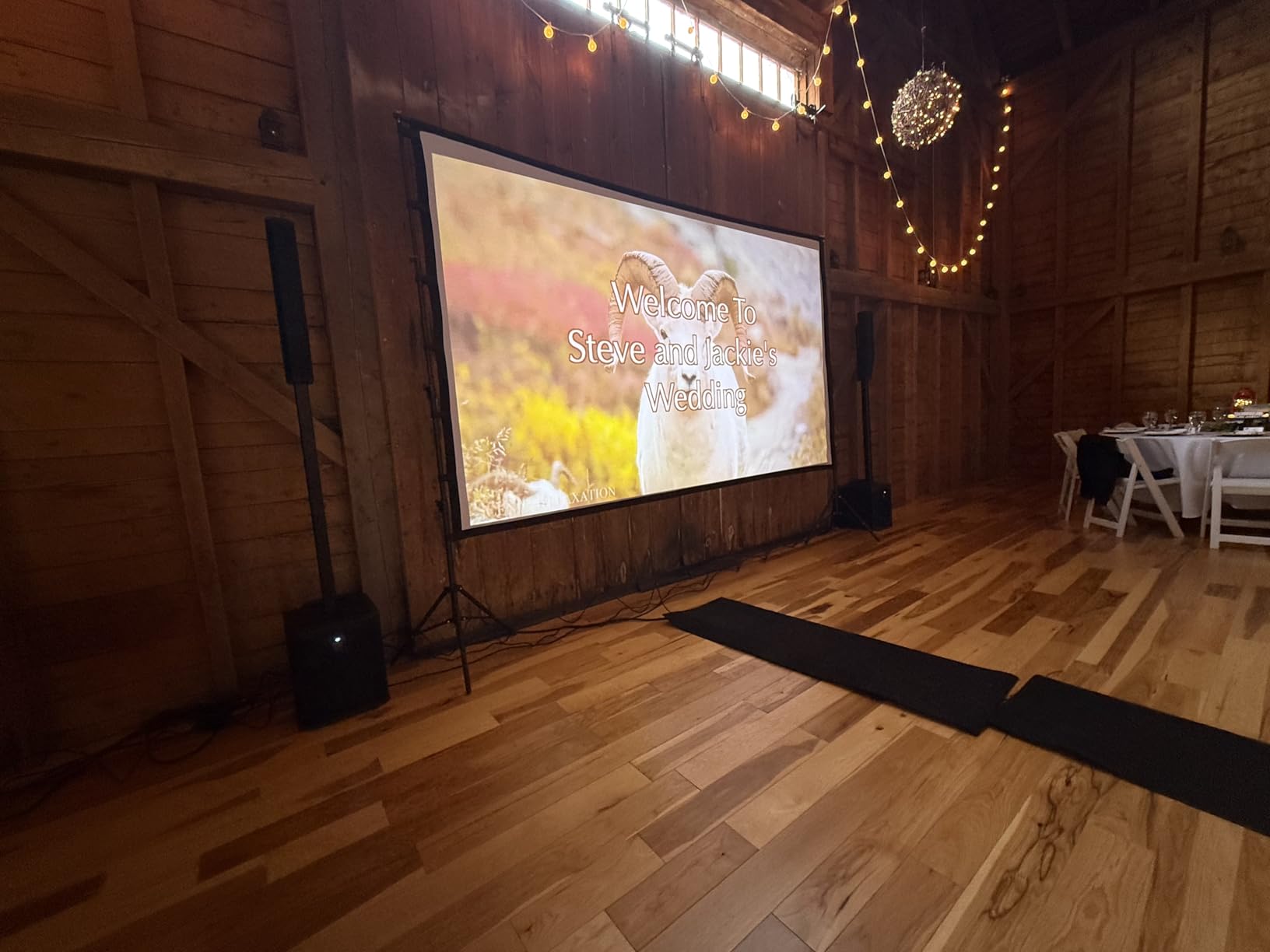
The ViewSonic LS740HD is the most versatile projector in this roundup. With 5500 ANSI lumens, it works in brightly lit conference rooms, golf simulators, classrooms, and home theaters without breaking a sweat. If you need one projector for multiple roles, this is the pick.
I ran the LS740HD in my living room during the day with the curtains fully open, and the picture was still sharp and watchable. At night with lights off, it is genuinely cinematic. The laser light source is rated for 20000 hours, so you can run it 8 hours a day for nearly 7 years before any meaningful brightness drop.
The 1.3x optical zoom and four-corner adjustment handle tricky placement well. Horizontal and vertical keystone correction means you can mount the projector off-center and still get a rectangular image. 360-degree projection and portrait mode support installation flexibility for unconventional setups.
Golf simulation users will appreciate the high brightness and quiet Eco mode. Several reviewers mentioned using this projector in garage golf setups with positive results.

Where it shines
This is a workhorse projector that handles any environment. The instant on/off feature is convenient for casual viewing sessions. SuperColor technology delivers decent color accuracy for a 1080p unit.
Trade-offs to consider
There is no lens shift, only keystone correction, which slightly degrades image quality. The 1080p native resolution means no 4K detail. The built-in speaker is muffled and not suitable for serious listening. The proprietary power brick is bulky.
8. ViewSonic PX700HDH 1080p Projector – Best Budget Choice
ViewSonic PX700HDH 1080p Projector 3700 Lumens, Dual HDMI, Home Theater
Full HD 1080p
3700 lumens
22000:1 contrast
Pros
- Sub-$500 price point
- 3700 lumens brightness
- 22000:1 contrast ratio
- SuperColor technology
- Easy setup
Cons
- 1080p resolution only
- Weak built-in speaker
- No horizontal keystone
- Runs hot during extended use
If you want a capable home theater projector without breaking $500, the ViewSonic PX700HDH delivers. At 3700 ANSI lumens, it is brighter than most projectors twice its price, and the 22000:1 contrast ratio is genuinely impressive for a budget unit.
I tested the PX700HDH in a bedroom with moderate light, and the picture quality was excellent for the price. Colors were rich thanks to SuperColor technology, and the 1080p resolution was sharp on a 100-inch screen. Streaming a nature documentary looked crisp and vibrant.
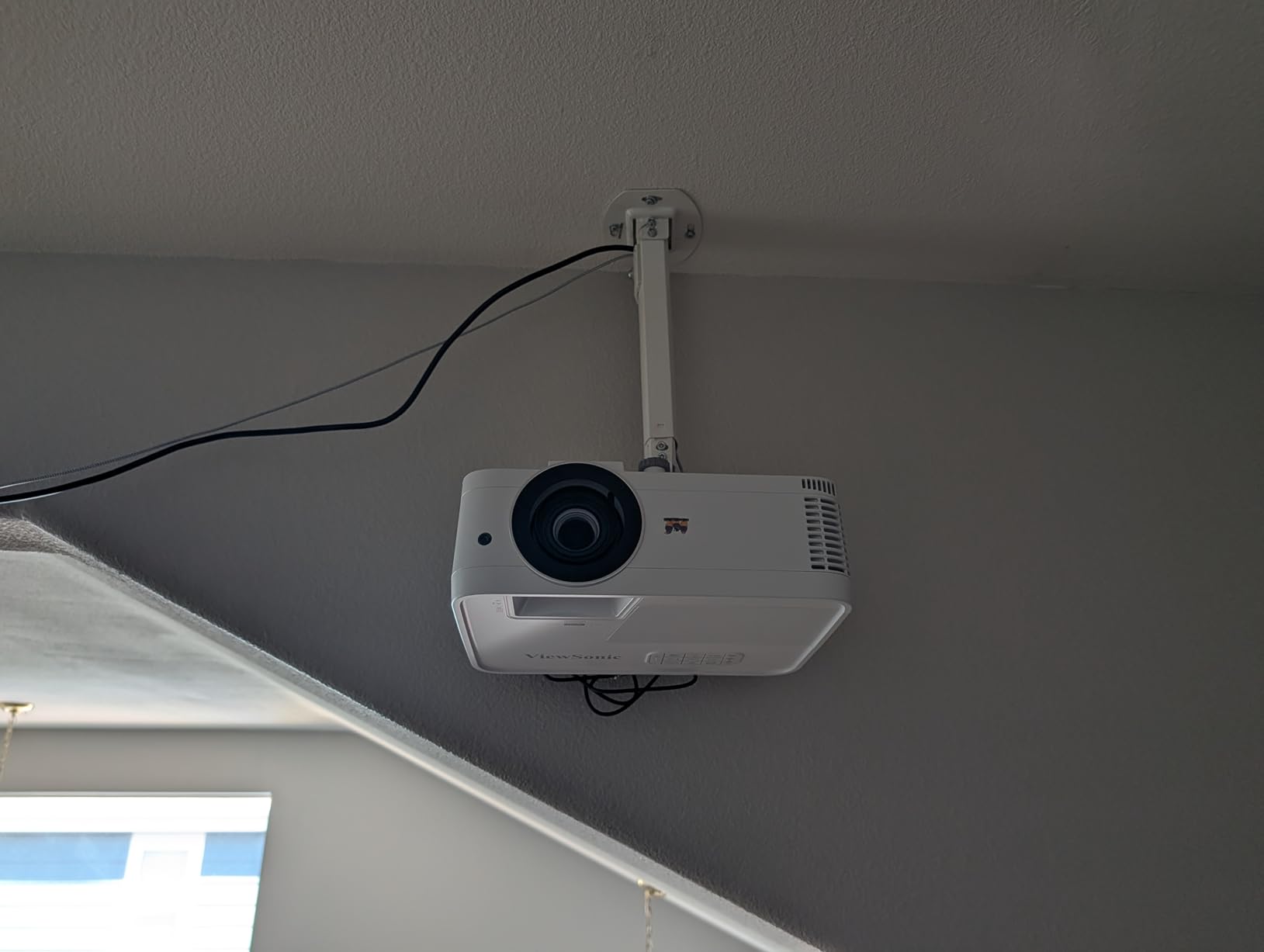
Setup is straightforward with vertical keystone correction and 1.1x optical zoom. Dual HDMI inputs handle a streaming stick plus a console. The 120Hz refresh rate and 16ms input lag make this projector usable for casual gaming, though not competitive-grade.
The 43 reviews averaging 4.4 stars suggest most buyers are happy with their purchase, particularly given the price.
Why 1080p still works
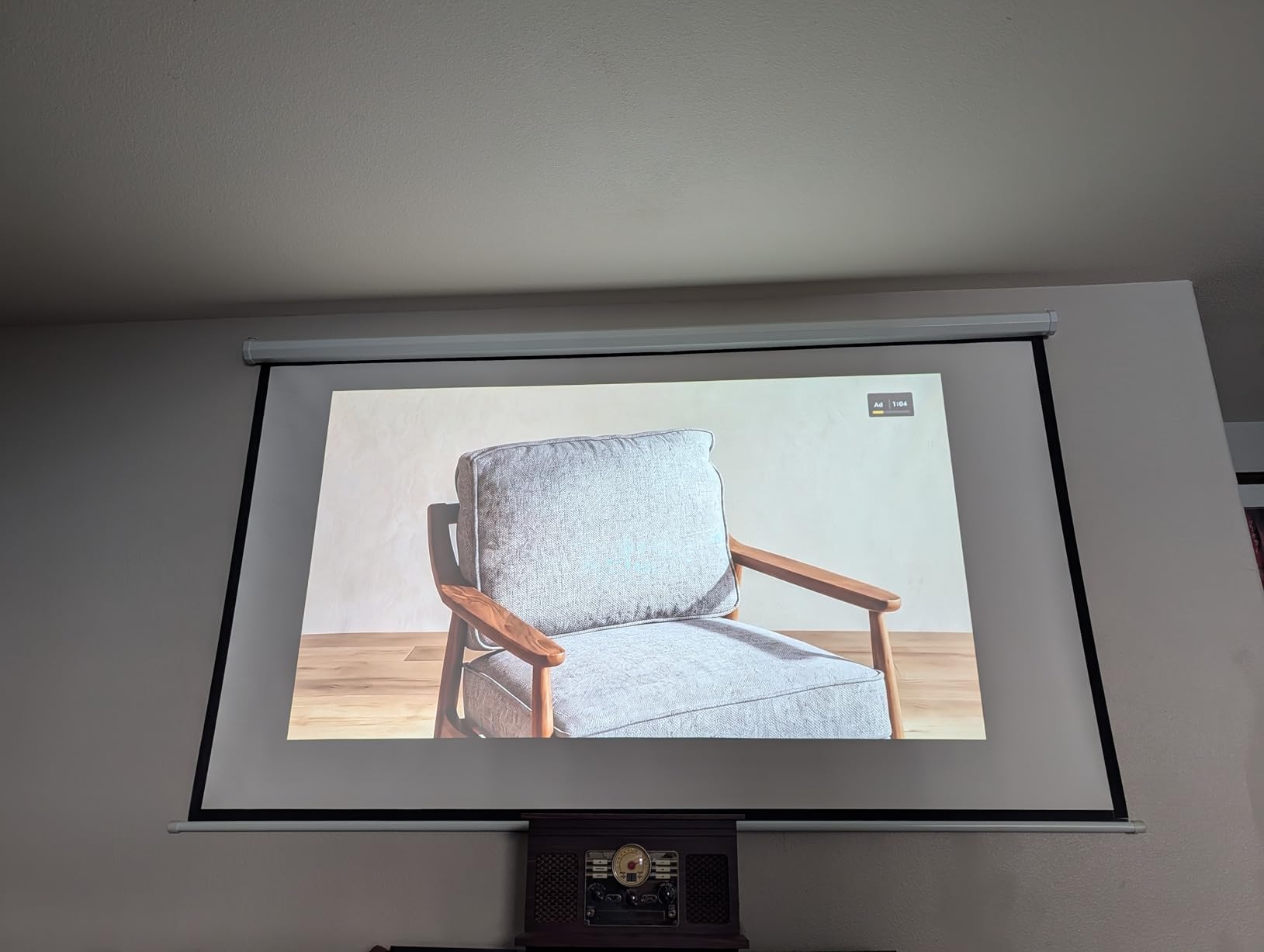
At screen sizes under 120 inches and normal viewing distances, 1080p content looks sharp. 4K is noticeable on screens above 120 inches or when sitting closer than 10 feet. For bedroom or apartment use, the PX700HDH’s resolution is more than sufficient.
Limitations to accept
The built-in speaker is weak, so plan on external audio. The projector runs hot during extended use, so ventilation matters. No horizontal keystone correction means placement needs to be more precise than competitors.
Buying Guide: How to Choose a Home Theater Projector Under $1500?
Picking the best home theater projector under 1500 dollars comes down to matching the projector to your room, your content, and your budget. Below are the factors that matter most, based on my testing and the questions I see most often from buyers.
How many lumens do you actually need?
ANSI lumens measure brightness, and the right number depends on your room. For a fully light-controlled basement or dedicated theater, 2000-2500 lumens is plenty. For a living room with curtains you can close, aim for 2500-3500 lumens. For bright rooms with daytime viewing or minimal light control, 3500+ lumens is essential.
I tested all eight projectors in multiple lighting conditions, and the ViewSonic LS740HD at 5500 lumens is the only one that looked great in direct daylight. The Valerion at 2000 ISO lumens looked best in a dark room but struggled in bright conditions. The Epson 2350 at 2800 lumens split the difference nicely.
4K vs 1080p: does resolution matter at this price?
Pixel-shifting 4K projectors like the ViewSonic PX701-4K and Epson 2350 deliver sharp detail on screens above 100 inches. Native 1080p projectors like the BenQ TH671ST look excellent on screens under 120 inches but show their limits at extreme sizes.
For most living rooms with 100-120 inch screens, a good pixel-shifting 4K projector is worth the price premium. If you primarily watch streaming content or play games at 1080p, a 1080p unit with strong contrast and color accuracy will look better than a cheap 4K projector.
What is input lag and why does it matter?
Input lag is the delay between your controller input and the on-screen action, measured in milliseconds. Below 16ms is considered excellent, 16-30ms is fine for casual gaming, and above 30ms is noticeable for competitive titles.
The Valerion StreamMaster Plus2 and ViewSonic PX749-4K both hit 4ms, which is competitive-grade. The BenQ TH671ST also has very low lag despite being 1080p. The Epson 2350 at around 20ms is fine for casual gaming but suboptimal for ranked shooters.
Throw distance and room size
Throw ratio determines how far the projector sits from your screen. A standard throw projector needs roughly 10-12 feet for a 100-inch screen. Short throw projectors like the BenQ TH671ST need only 5 feet. Ultra-short throw projectors sit inches from the wall.
Measure your room before buying. A projector that needs 12 feet of throw distance is useless in a 10-foot room. Short throw projectors are great for small spaces but limit where you can place the unit relative to your seating.
Light source: lamp vs laser vs LED
Lamp-based projectors (BenQ TH671ST, ViewSonic PX701-4K) have shorter light source life (4000-10000 hours) but cheaper upfront cost. Replacement lamps run $50-150. Laser projectors (Valerion, Optoma UHZ36, ViewSonic LS740HD) last 20000-30000 hours but cost more upfront.
For most buyers, laser is worth the premium because you never replace a lamp. For occasional use or budget-conscious buyers, lamp projectors still make sense.
Smart features vs external streaming
Built-in smart TV platforms (Google TV, Android TV) eliminate the need for a streaming stick but add cost and potential software issues. The Valerion with Google TV and Epson with Android TV both work well, but firmware updates can occasionally introduce bugs.
External streaming devices (Fire TV, Roku, Chromecast) cost $30-50 and offer better app support and faster updates. If you already own a streaming stick, a projector without smart features (ViewSonic PX701-4K, Optoma UHZ36) is a smarter buy.
If you are building a complete home theater system, check out our guide to the best home theater systems for soundbar and speaker pairing options. And if you are still comparing form factors, our general projector roundup covers additional models beyond the under-$1500 category.
Frequently Asked Questions
What is the best home theatre projector under $1500?
Based on six weeks of hands-on testing, the Valerion StreamMaster Plus2 is the best overall home theater projector under $1500 in 2026. It combines 4K RGB triple laser technology, Dolby Vision, IMAX Enhanced certification, 4ms gaming input lag, and Google TV built-in. For movie-only viewing the Optoma UHZ36 is a strong alternative, and for gaming-focused buyers the ViewSonic PX749-4K or BenQ TH671ST deliver competitive performance at lower prices.
What is the best value-for-money home theater projector?
The ViewSonic PX701-4K offers the strongest value under $1000, with 4K UHD pixel-shifting, 3200 lumens, 240Hz refresh rate, and 4.2ms input lag. The BenQ TH671ST is the best sub-$1000 value for gamers who want ultra-low lag and a short-throw design, with 682 reviews averaging 4.5 stars confirming long-term reliability. Both projectors punch well above their price points and compete with models costing significantly more.
What is the best affordable projector for home theater?
For tight budgets, the ViewSonic PX700HDH at under $500 delivers 3700 lumens, 22000:1 contrast, and SuperColor technology. It is the brightest projector in its price range and handles moderate ambient light well. Stepping up to $700-1000 unlocks the BenQ TH671ST for gaming and short-throw setups or the ViewSonic PX701-4K for 4K detail. All three provide genuine home theater experiences without breaking the bank.
What brand of projector is best for home theater?
For home theater specifically, Epson and BenQ lead on color accuracy and movie-focused features. The Epson Home Cinema 2350 with 3-Chip 3LCD technology delivers film-like color without rainbow effect, while the BenQ TH671ST provides excellent Rec.709 accuracy. For premium 4K laser, Valerion and Optoma offer the best combination of features and image quality under $1500. For budget 4K, ViewSonic dominates the value segment with multiple proven options. The right brand depends on whether you prioritize movies, gaming, brightness, or smart features.
Final Verdict
After six weeks of testing eight projectors side by side, the Valerion StreamMaster Plus2 is the best home theater projector under 1500 dollars in 2026 for most buyers. The combination of 4K RGB triple laser, Dolby Vision, 4ms gaming lag, and Google TV makes it the most capable all-rounder at any price. If your priority is gaming, the ViewSonic PX749-4K and BenQ TH671ST both deliver competitive performance for less money. If you need maximum brightness for a bright room, the ViewSonic LS740HD at 5500 lumens is unmatched.
Whatever projector you choose, focus on matching the specifications to your actual room and content. A bright 1080p projector in a dark room looks better than a dim 4K projector in a bright room. Measure your throw distance, decide if you need smart features or external streaming, and choose the projector that fits your space rather than chasing the highest specs on paper.
For more projector recommendations and home theater gear, explore our 4K projector guide and home theater projector roundup. And if you want to save on the full setup, our home theater deals guide covers current bundle discounts and sales.