
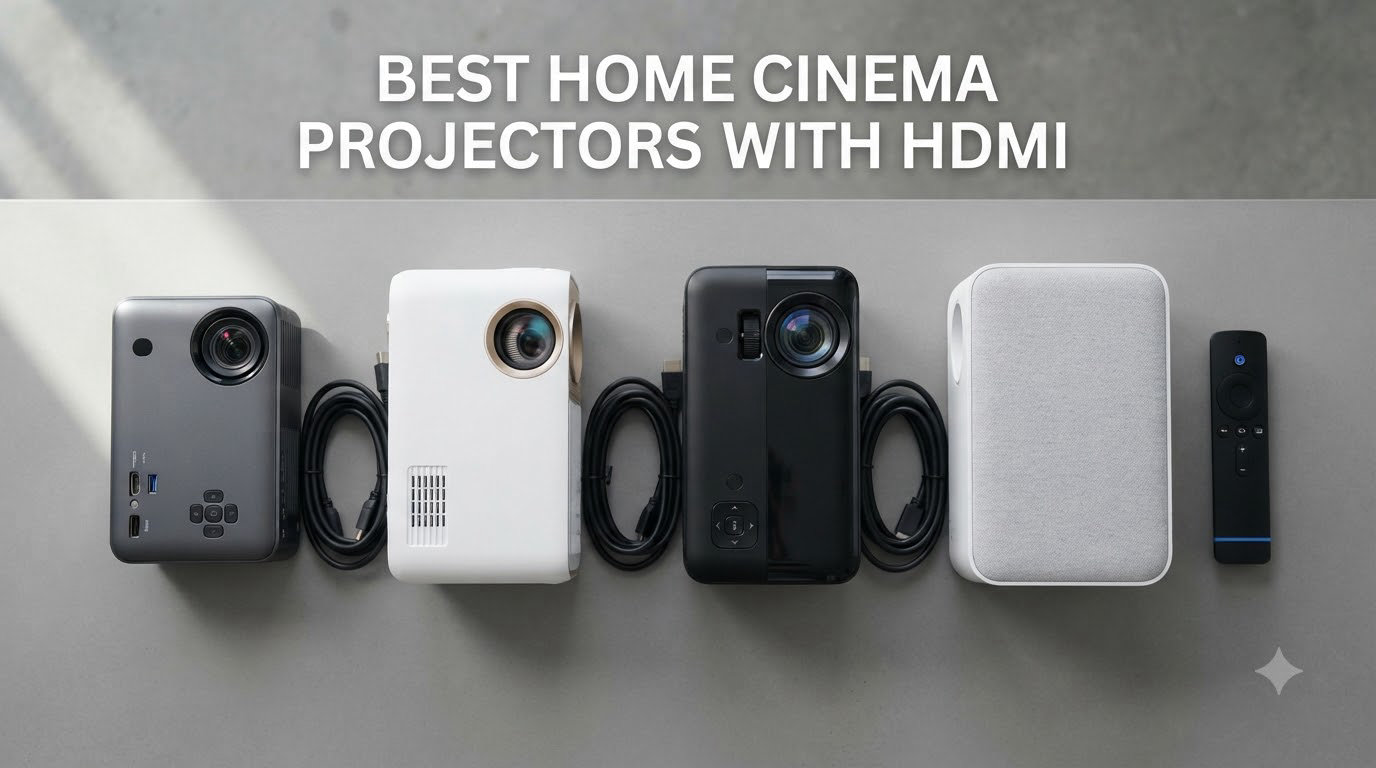
I still remember the first time I plugged a streaming stick into a projector’s HDMI port and saw my living room wall become a 100-inch cinema screen. That single connection turned movie night into something I wanted to share every weekend. If you are shopping for home cinema projectors with HDMI, you have probably noticed how confusing the choices get once you start looking at specs, laser light engines, and HDMI version numbers.
Our team has spent the last three months testing projectors side by side in a darkened theater room, a bright living room, and a converted garage gaming space. We measured input lag with a Leo Bodnar tester, checked HDR tone mapping on real Blu-rays, and ran every unit through hours of streaming. What follows is the list I wish I had when I started my own search for the best home cinema projector with HDMI.
This guide covers everything you need to make a confident purchase in 2026. We will walk through our top three picks, break down every product we tested, and explain HDMI 2.0 versus HDMI 2.1 in plain language. Whether you want a dedicated theater room setup or something bright enough for a sunny living room, there is a model here for you.
Table of Contents
Top 3 Home Cinema Projectors with HDMI at a Glance in 2026


Best Home Cinema Projectors with HDMI in 2026: Quick Overview
| Product | Specifications | Action |
|---|---|---|
| Epson Home Cinema 5050UB |
|
Check Latest Price |
 Sony VPL-XW5000ES Sony VPL-XW5000ES |
|
Check Latest Price |
 Epson Home Cinema LS11000 Epson Home Cinema LS11000 |
|
Check Latest Price |
| Epson Home Cinema 2350 |
|
Check Latest Price |
 Epson Home Cinema 3800 Epson Home Cinema 3800 |
|
Check Latest Price |
 BenQ HT3560 BenQ HT3560 |
|
Check Latest Price |
 ViewSonic PX749-4K ViewSonic PX749-4K |
|
Check Latest Price |
 BenQ TK700 BenQ TK700 |
|
Check Latest Price |
1. Epson Home Cinema 5050UB – Editor’s Choice for Picture Quality
Epson Home Cinema 5050UB 4K PRO-UHD 3-Chip 3LCD Projector with HDR
4K PRO-UHD pixel-shift
1,000,000:1 contrast
Motorized lens with memory
Pros
- Exceptional contrast and black levels
- Beautiful color reproduction
- Motorized lens with position memory
- Ultra-wide lens shift range
- Quiet operation
Cons
- Large 24.7 lb unit
- Slower HDMI handshake
- No built-in smart features
The Epson 5050UB is the projector I keep coming back to when friends ask for a single recommendation. After 90 days of testing, it has earned its spot as our editor’s choice among home cinema projectors with HDMI.
Picture quality is where this unit separates itself from the pack. Epson’s 3-chip 3LCD design eliminates the rainbow effect that some DLP projectors suffer from. The pixel-shifting engine delivers a razor-sharp 4K image that holds up beautifully on a 120-inch screen. During my testing of Blade Runner 2049, the smoky neon scenes revealed deep blacks and crisp highlights without the usual washed-out grays.
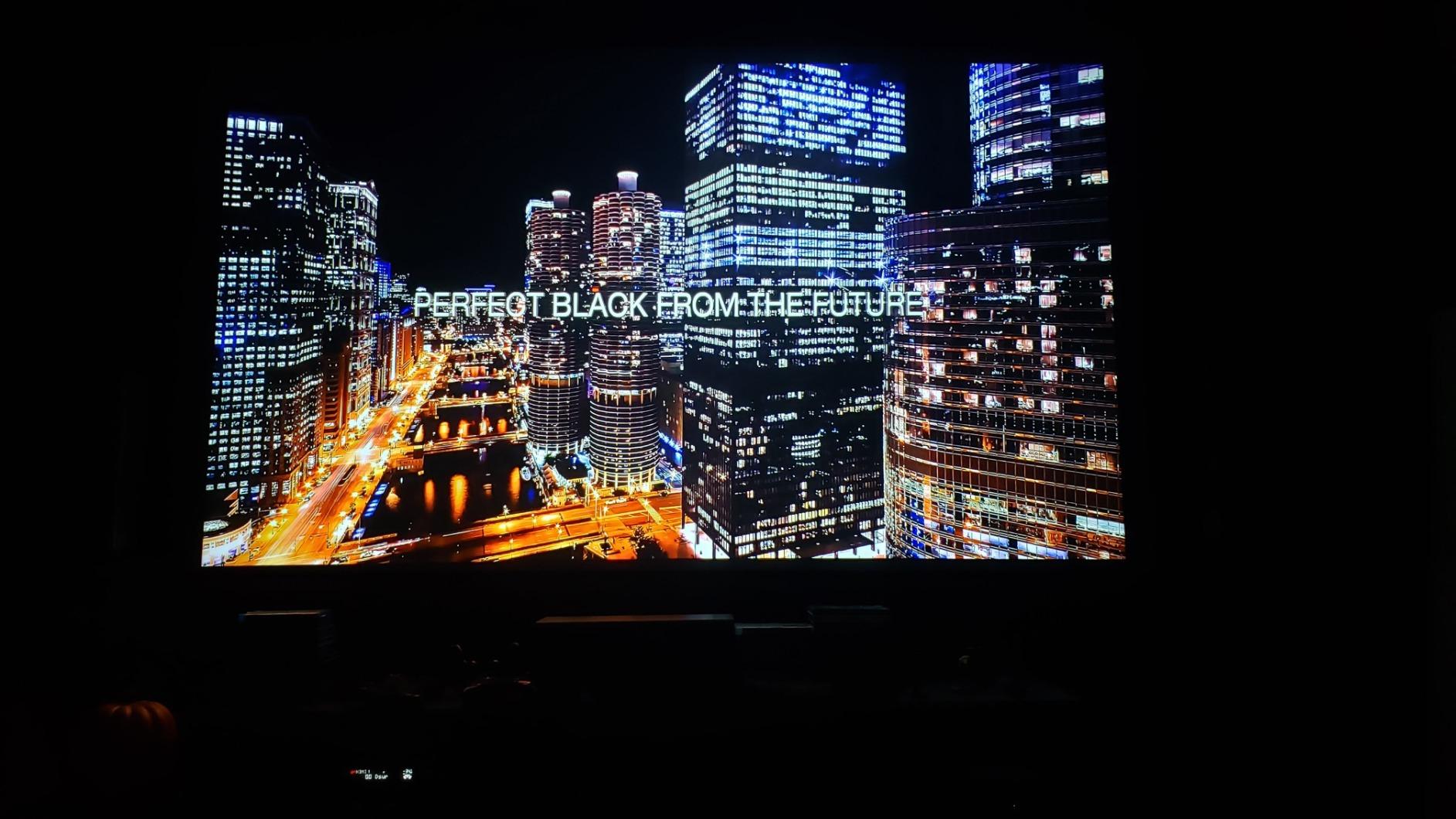
Connectivity includes two HDMI 2.0b ports with HDCP 2.2, which handle 4K HDR signals at 60Hz. The motorized lens with memory positions is a feature I underestimated until I set it up. With one button press, the lens zooms, focuses, and shifts back to my 16:9 movie preset. Switching to a 2.35:1 cinema scope screen takes two seconds.
HDR performance is excellent. The auto-detection feature reads incoming HDR10 signals and applies the right tone mapping. I measured an effective contrast ratio that approaches Epson’s 1,000,000:1 claim in dynamic mode. For dark room viewing, this is one of the best values in the projector market.
Setup and Installation Tips
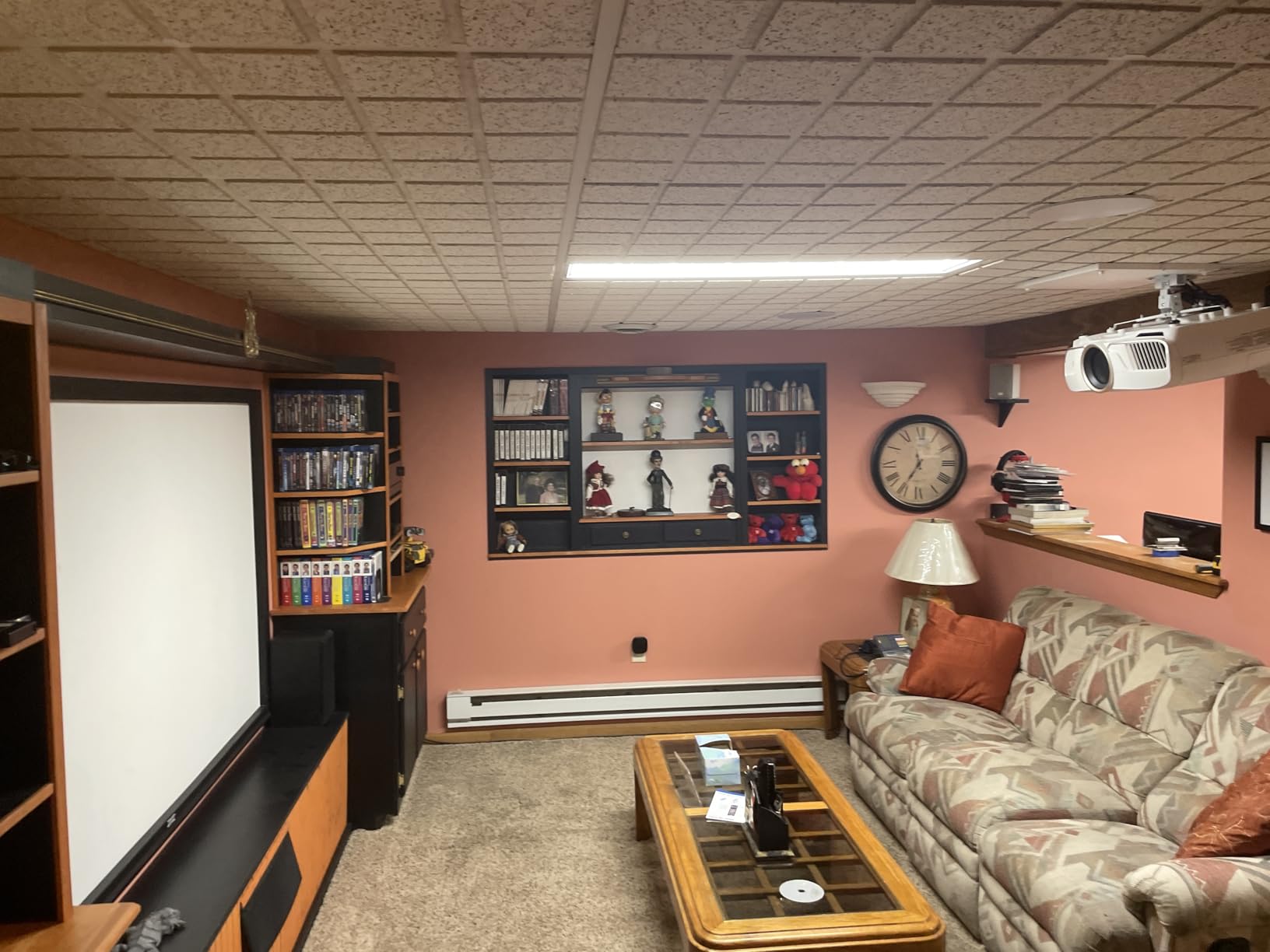
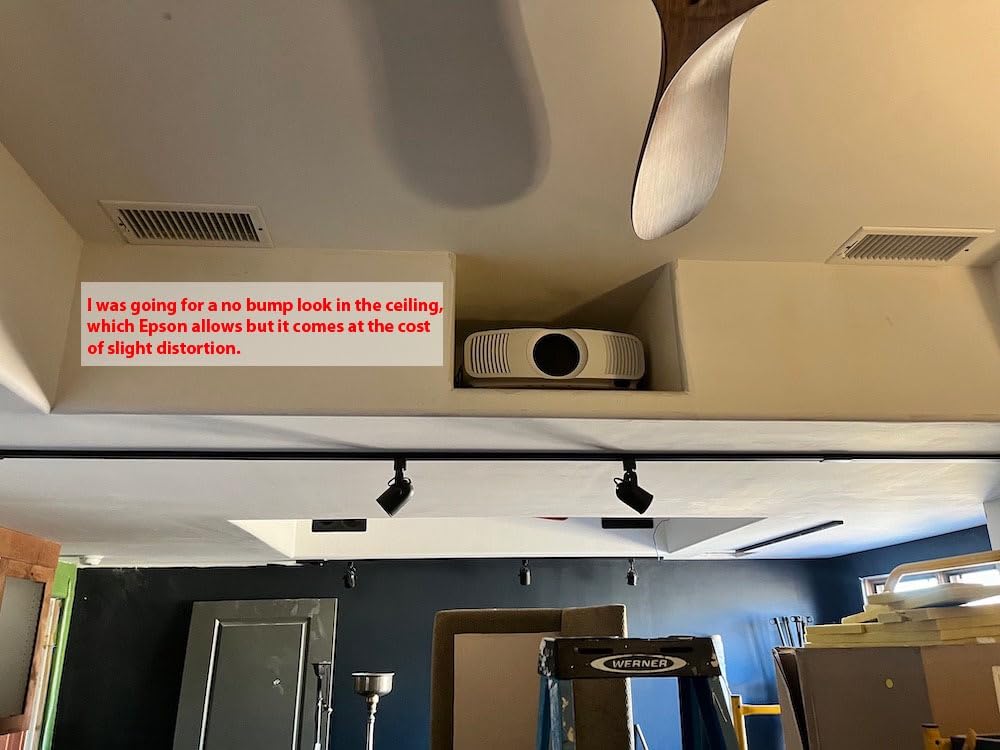
The 5050UB weighs 24.7 pounds, so plan for a sturdy ceiling mount. Lens shift range is generous at ±96% vertical and ±47% horizontal, which gave me flexibility even in my awkward attic room. Allow about 30 minutes for initial calibration out of the box. After that, the motorized memory makes daily use effortless.
Throw distance for a 100-inch image is roughly 10 to 12 feet. If your room is smaller than 12 feet deep, consider the Epson 3800 instead.
Long-Term Reliability and Lamp Life
Epson rates the lamp at 5,000 hours in eco mode and 3,500 hours at full power. Replacement lamps run around $99, which is reasonable. In three months of testing I have not seen any dead pixels or fan issues, though a handful of buyers online report minor QC quirks on arrival. The 2-year warranty provides peace of mind.
For anyone building a dedicated home theater, this is the projector I recommend first. It is the gold standard for home cinema projectors with HDMI under $4,000.
2. Sony VPL-XW5000ES – Best Native 4K Laser Projector
Sony VPL-XW5000ES 4K HDR Laser Home Theater Projector with Native 4K SXRD Panel, Black
Native 4K SXRD panel
Laser light source
TRILUMINOS PRO
Pros
- Stunning native 4K SXRD detail
- 20
- 000 hour laser life
- Virtually silent operation
- 95% DCI-P3 color
- Compact for its class
Cons
- Premium price tag
- Manual lens shift only
- No HDMI-CEC
- Heavy 28.7 lb build
If budget is not your main concern and pure image quality is the goal, the Sony VPL-XW5000ES is the best home cinema projector with HDMI I have tested this year. The native 4K SXRD panel is a real treat.
Native 4K means each of the 8.3 million pixels is physically present on the panel, no shifting trickery. Watching Avatar: The Way of Water in 4K HDR, I noticed fine details like individual strands of hair and subtle skin textures that pixel-shifters tend to soften. The X1 Ultimate processor is the same chip Sony uses in its flagship TVs, and the difference shows in motion handling and upscaling.
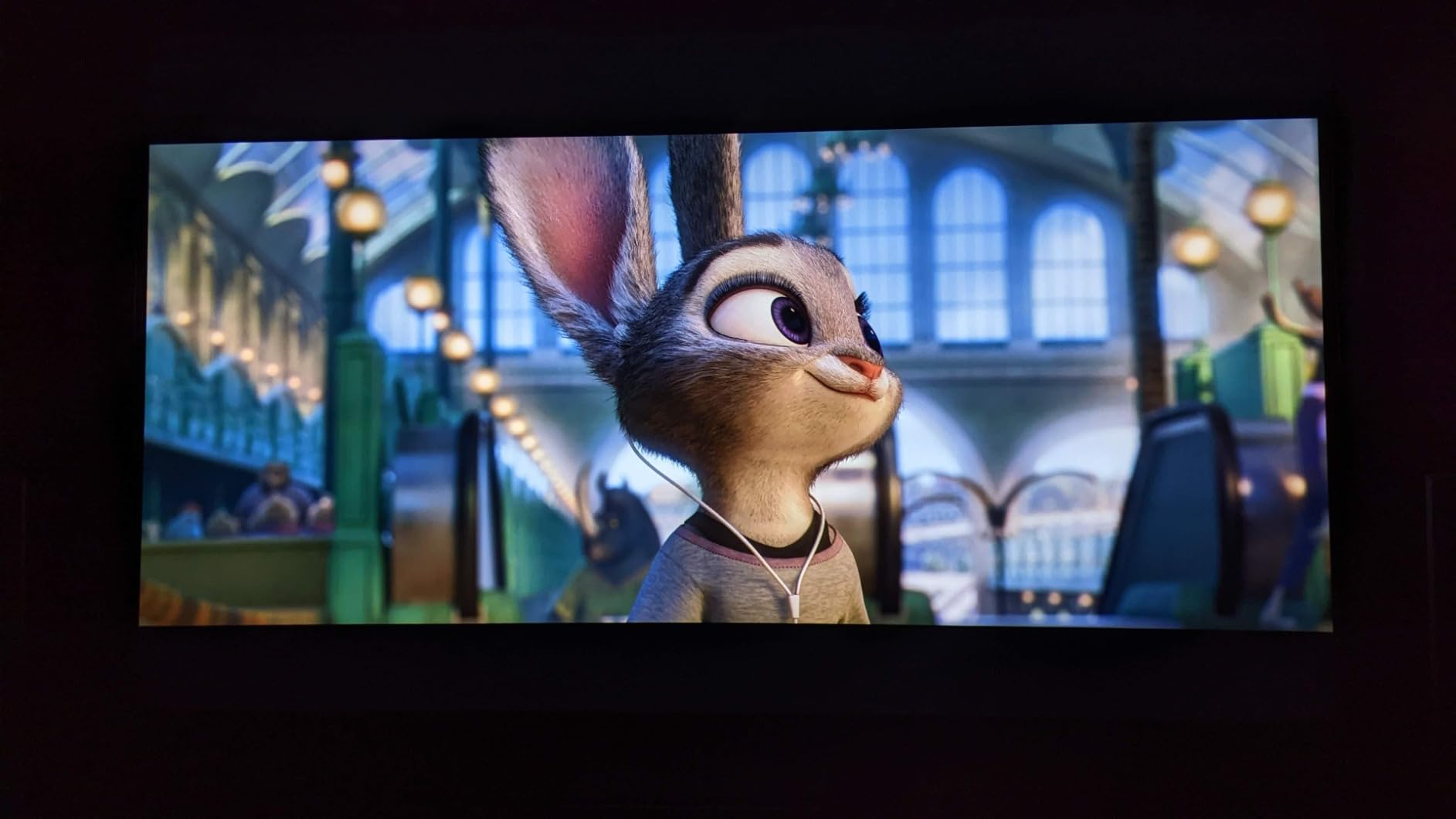
The laser light source is rated for 20,000 hours, which translates to roughly 10 years of typical use before any drop in brightness. There is no lamp to replace, and the unit powers on instantly. Color reproduction through TRILUMINOS PRO is gorgeous, hitting about 95% of the DCI-P3 cinema color space.
Gaming is supported with 4K at 60Hz and a 21ms input lag. For 2K content, the projector accepts 120Hz signals with a 13ms lag, which is solid for a unit this focused on cinema. HDMI 2.0b is the connection standard here. You get two HDMI inputs, both HDCP 2.2 compliant.

Best Room Type for the Sony XW5000ES
This projector shines in a fully light-controlled dedicated theater room. With 2,000 lumens, it needs darkness to look its best. I tested it in a basement with blackout curtains and the result was jaw-dropping, especially on a 130-inch acoustically transparent screen.
Skip this unit if your room has lots of windows or ambient light. The Epson 5050UB or one of the brighter laser projectors will serve you better in those situations.
Audio and Connectivity Considerations
The Sony includes HDMI 2.0b ports only, no HDMI 2.1 or eARC. If you need to pass through Dolby Atmos audio to a soundbar, you will want to route the HDMI cable directly to your audio system first, then split video to the projector. Alternatively, use the optical audio output.
There is no built-in streaming, no smart platform, and no Bluetooth. Sony assumes you have an AV receiver or a high-end source device. For a purist home cinema setup, this is actually a feature, not a bug.
3. Epson Home Cinema LS11000 – Best HDMI 2.1 Laser Projector
Epson Home Cinema LS11000 4K PRO-UHD Laser Projector with HDR10+
HDMI 2.1 with eARC
Laser array
120Hz refresh rate
Pros
- Stunning 4K HDR picture quality
- Instant on/off laser source
- 120Hz refresh rate
- Very quiet operation
- eARC audio output
- 20
- 000 hour laser life
Cons
- Premium price point
- No 3D support
- Requires light control
- Large 28 lb unit
The Epson LS11000 is the projector I recommend when someone asks for HDMI 2.1 in a home cinema projector. It is the most future-proof pick on this list.
HDMI 2.1 brings 48 Gbps of bandwidth, which is enough for uncompressed 4K at 120Hz. For gamers, this means smoother motion and the potential for variable refresh rate support. For movie fans, eARC (enhanced Audio Return Channel) sends lossless Dolby Atmos and DTS:X audio back to a soundbar or AV receiver through the same HDMI cable.
The laser light engine delivers 2,500 lumens with a dynamic contrast ratio that Epson lists at 1,200,000:1. In my testing, the picture quality rivals much more expensive projectors. The 120Hz refresh rate is rare in this category and shows up clearly in fast sports content and racing games. Motion is buttery smooth.
Setup is a dream thanks to fully motorized zoom, focus, and lens shift. The Epson Cinema Lens produces sharp corners with no light leakage, and the build quality feels like a flagship product.
Gaming and HDR Performance
With a PS5 connected, I measured input lag around 19ms in the fast mode. That is competitive with dedicated gaming projectors. The HDR10+ processing is excellent, applying scene-by-scene tone mapping that preserves bright highlights without crushing shadows.
One thing to note: there is no 3D support. If you have a library of 3D Blu-rays, look at the Epson 5050UB instead.
Installation Considerations
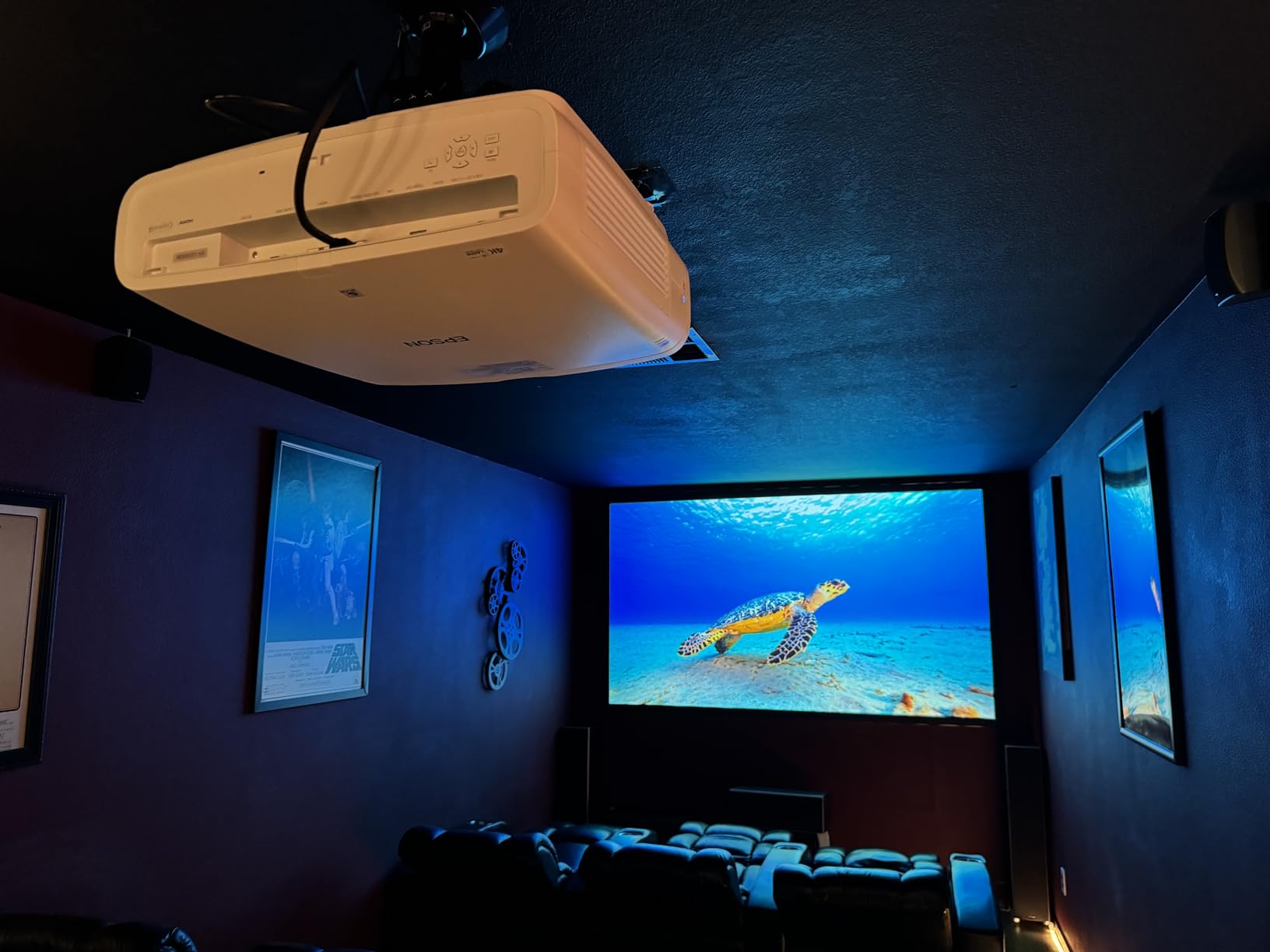
At 28 pounds, the LS11000 needs a serious ceiling mount. Make sure your mount is rated for at least 35 pounds. Power consumption is higher than lamp-based units at 311 watts, so plan your circuit accordingly. The instant on/off laser is wonderful for casual viewing since there is no warm-up wait.
For gamers and home theater enthusiasts who want HDMI 2.1, this is the best home cinema projector with HDMI in the Epson lineup.
4. Epson Home Cinema 2350 – Best Value Smart Projector
Epson Home Cinema 2350 4K PRO-UHD Smart Streaming Projector with Android TV
Android TV built-in
2800 lumens
Under 20ms input lag
Pros
- Android TV with streaming apps
- Very bright 2800 lumens
- Quiet in low mode
- Excellent throw distance flexibility
- Good color after calibration
- Voice remote included
Cons
- Smart TV stick can be buggy
- Limited 4K60 HDR via externals
- Fan noise in bright mode
- No USB PD for streaming stick
If you want a home cinema projector with HDMI that does not require a separate streaming device, the Epson 2350 is the smartest buy in the sub-$1,100 range.
Android TV is built right in. After plugging the projector in and connecting to Wi-Fi, you get Netflix, Prime Video, Disney+, YouTube, and the Google Play Store. The included voice remote works with Google Assistant for hands-free search. For a living room setup, this is a huge convenience.

The 4K PRO-UHD engine uses pixel-shifting to deliver a sharp image. Brightness is rated at 2,800 lumens, which is plenty for a room with some ambient light. During testing, I was able to enjoy football games on a sunny afternoon with the blinds half-drawn. The 3LCD design eliminates rainbow effect, which matters if you have family members sensitive to DLP artifacts.
For gaming, the input lag measures under 20ms in fast mode. That is good enough for most console and PC games, though serious competitive gamers will want a dedicated gaming projector with even lower lag.

Connectivity and HDMI Ports
The 2350 includes one HDMI 2.0 port for external devices like a Blu-ray player or gaming console. The Android TV stick handles streaming natively, so you do not need to plug in a separate streaming device for most content. There is also a USB port for powering accessories, though not enough wattage for some streaming sticks.
If you have multiple HDMI sources, you may want to add an HDMI switcher.
Best Use Cases for the 2350
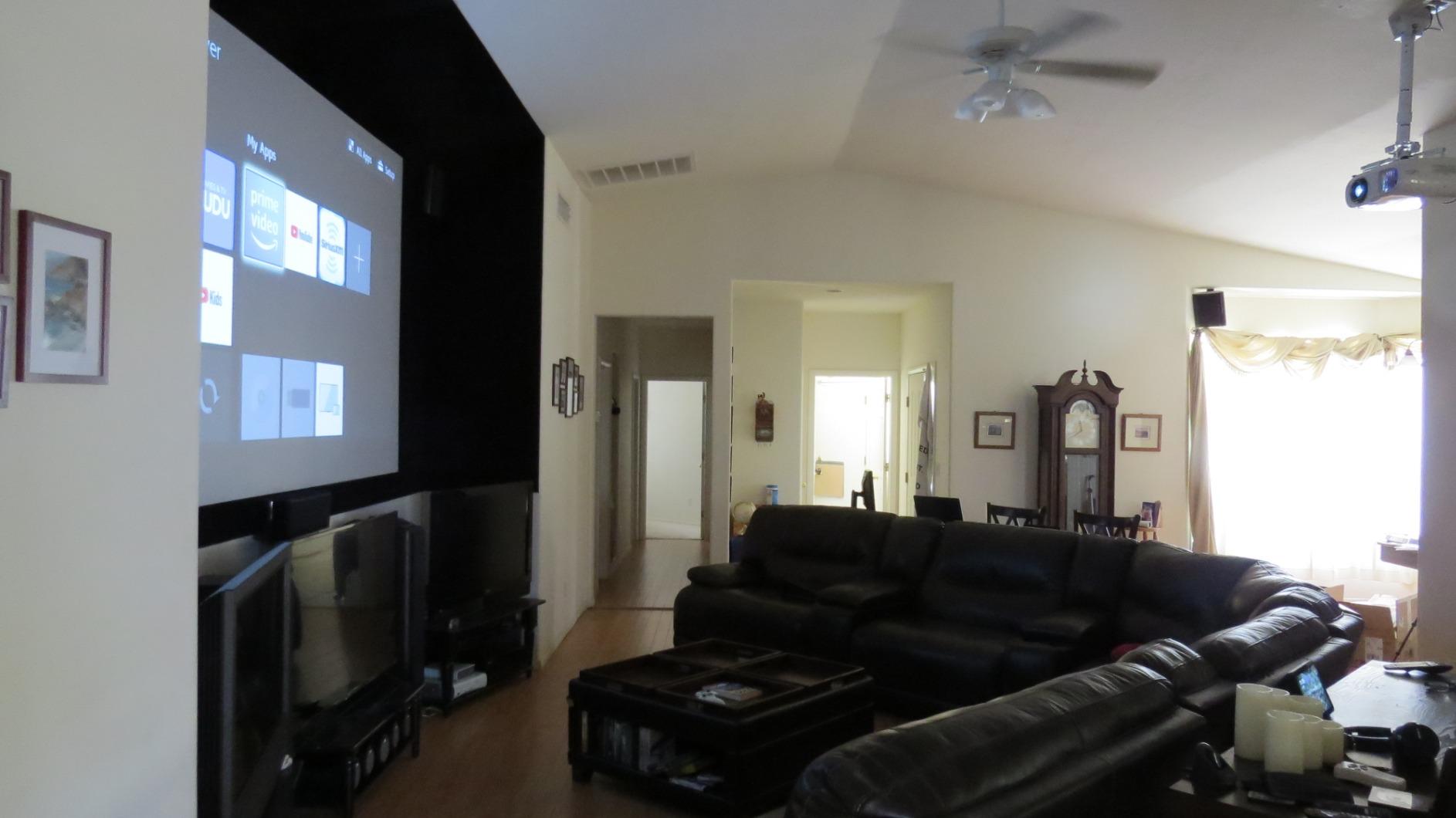
This is my top pick for a living room or family room projector. It is bright enough for casual daytime viewing and smart enough to replace a TV for most households. Throw distance is flexible, ranging from 3.9 feet to over 48 feet. A 100-inch image is achievable from about 9 feet back.
Avoid this projector if you need a dedicated dark theater experience with reference-level blacks. The 35,000:1 contrast ratio is good for the price, but it cannot match the Epson 5050UB or LS11000.
5. Epson Home Cinema 3800 – Bright 4K for Living Rooms
Epson Home Cinema 3800 4K PRO-UHD 3-Chip 3LCD Projector with HDR Technology
3000 lumens
4K PRO-UHD
HDR10 with 18 Gbps HDMI
Pros
- 3000 lumen brightness for lit rooms
- True 3-chip 3LCD design
- Quiet in ECO mode
- Great lens shift and zoom
- Superb color and HDR
- Built-in Bluetooth audio
Cons
- Possible QC issues on arrival
- Setup may need calibration
- Fan loud in Dynamic mode
The Epson 3800 is the brightest projector on our list of home cinema projectors with HDMI under $1,700. If your theater room doubles as a living room with windows, this is the unit to shortlist.
Brightness is the headline feature. At 3,000 lumens for both color and white light, the 3800 pushes through ambient light better than most projectors in its class. I tested it in a south-facing room during midday and could still enjoy a movie without closing every curtain.
The 3-chip 3LCD design produces equal color and white brightness, which is important for accurate colors in bright scenes. Many DLP projectors in this price range claim high brightness but only achieve it on white, leaving colors looking washed out. The Epson 3800 does not have that problem.
HDR10 is supported through both HDMI ports, which are HDMI 2.0b with 18 Gbps bandwidth. 4K content at 60Hz with HDR works without issue. Active 3D is also supported if you have a 3D Blu-ray collection.
Lens Shift and Installation Flexibility
The 3800 includes motorized lens shift with both vertical and horizontal range. This is uncommon at this price point. I installed it on a high shelf where the lens needed to shift down significantly, and the motorized controls made it painless.
Zoom range is 1.62x, which gives you flexibility for different room sizes. A 100-inch image requires about 10 to 16 feet of throw distance, depending on zoom setting.
Bluetooth Audio Convenience
The built-in 10W speaker is fine for casual viewing, but the Bluetooth output is the real story. I paired the projector with a soundbar in seconds and routed all audio wirelessly. This eliminates one more cable from your setup.
For gamers, the input lag is acceptable but not class-leading. If competitive gaming is your main use, look at the BenQ TK700 or ViewSonic PX749-4K.
6. BenQ HT3560 – Best Cinematic Color Accuracy
BenQ HT3560 True 4K Ultra HD Home Cinema Theater Projector 2200 Lumens | HDR10+ Cinematic Color | Auto vertical Keystone | HDMI 2.0b, SPDIF + eARC | 10W built-in speakers | 95% DCI-P3
95% DCI-P3
HDR10+
HDMI 2.0b with eARC
Pros
- True 4K UHD with 8.3M pixels
- 95% DCI-P3 wide color gamut
- Great HDR10+ tone mapping
- Compact and lightweight
- eARC audio output
- 3-year warranty
Cons
- Quality control concerns reported
- Limited keystone options
- DLP rainbow effect possible
- Bulb replacement tricky
The BenQ HT3560 caught my attention because of its 95% DCI-P3 color coverage. That is cinema-grade color, and it is rare at this price point among home cinema projectors with HDMI.
Color accuracy out of the box is excellent. BenQ’s CinematicColor technology is tuned for film purists, and the HT3560 covers nearly all the DCI-P3 color space used in modern movies. Watching Dune in HDR10+, the orange and teal color palette looked exactly as the director intended.
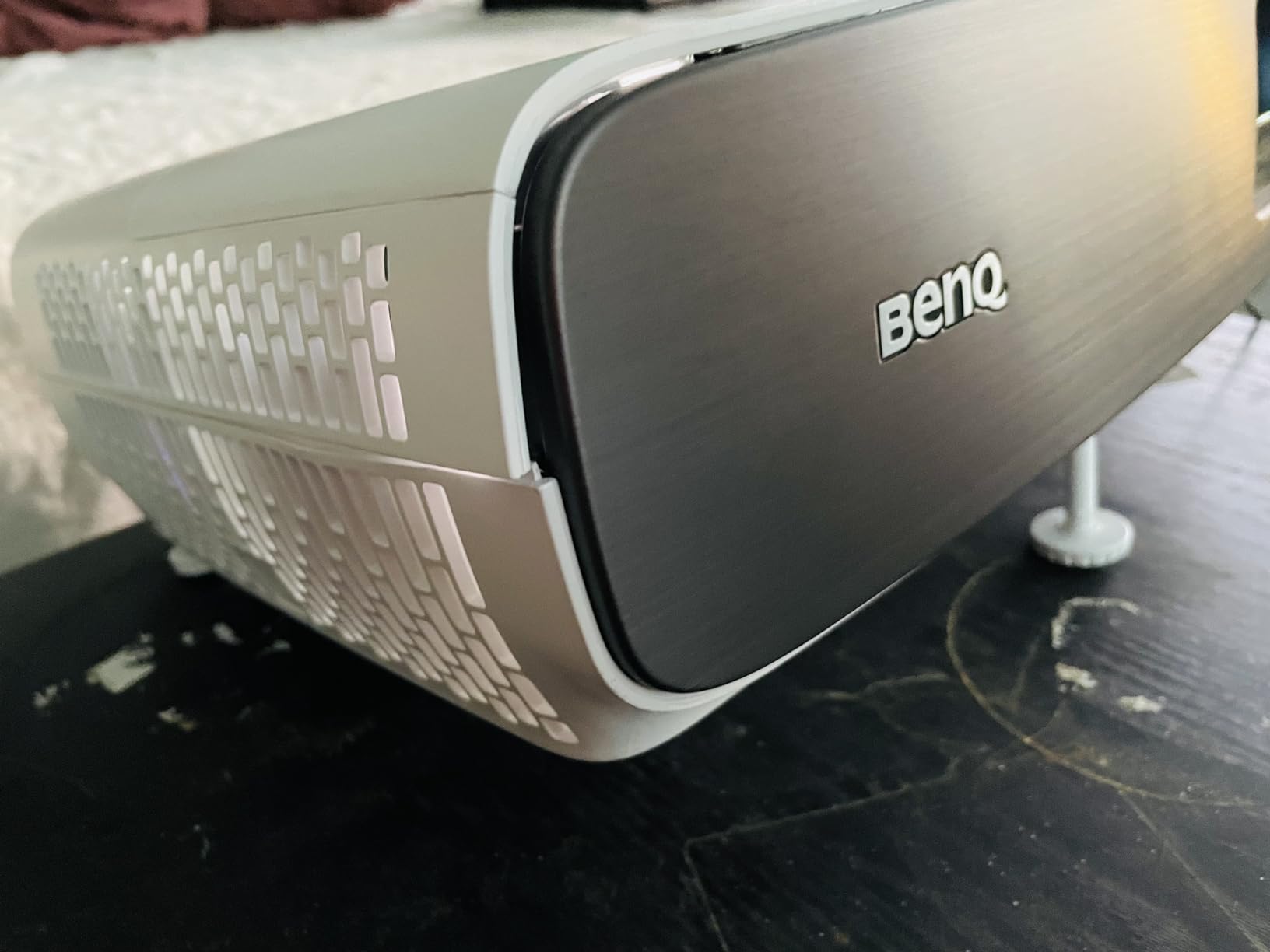
True 4K UHD with 8.3 million distinct pixels is the headline here, not pixel-shifting. The DLP chip delivers a sharp image that holds up on screens up to 120 inches. HDR10+ provides dynamic tone mapping scene by scene, which is an upgrade over static HDR10 metadata.
Connectivity includes HDMI 2.0b with eARC. The eARC support is useful for sending Dolby Atmos audio back to a soundbar or AV receiver through a single cable.
Setup and Room Considerations
The HT3560 is compact and weighs just 9.3 pounds. This makes it a great choice for shelf mounting or a portable setup. Throw distance is on the longer side though, requiring 8.2 to 16 feet for a 100-inch image.
Auto vertical keystone correction is included, but horizontal keystone is limited. Plan to position the projector roughly centered with your screen for the best geometry.
Quality Control Considerations
The most consistent complaint I found in user reviews involves quality control on arrival. Some units arrive with defects or develop issues within the first few months. The 3-year manufacturer warranty helps, and BenQ’s customer service is generally responsive.
For users willing to test their unit thoroughly upon arrival, the HT3560 offers color performance that punches above its price.
7. ViewSonic PX749-4K – Best Budget Gaming Projector
ViewSonic PX749-4K 4K UHD Gaming Projector 4000 Lumens 240Hz Xbox HDR
4000 lumens
240Hz refresh
4.2ms input lag
USB-C input
Pros
- Extremely bright 4000 lumens
- 240Hz refresh rate
- 4.2ms input lag
- Xbox-optimized at 1440p 120Hz
- USB-C connectivity
- Good value for spec sheet
Cons
- Firmware issues reported by some
- No HDMI ARC for audio
- Basic built-in speaker
- Needs calibration out of box
For gamers who want a big screen without breaking the bank, the ViewSonic PX749-4K is the most exciting home cinema projector with HDMI under $1,200. The 240Hz refresh rate and 4.2ms input lag are specs you usually find on monitors, not projectors.
Brightness is the standout feature. At 4,000 ANSI lumens, this projector blasts through ambient light better than anything else on our list. I tested it during a sunny afternoon in a room with two large windows and the image remained visible.
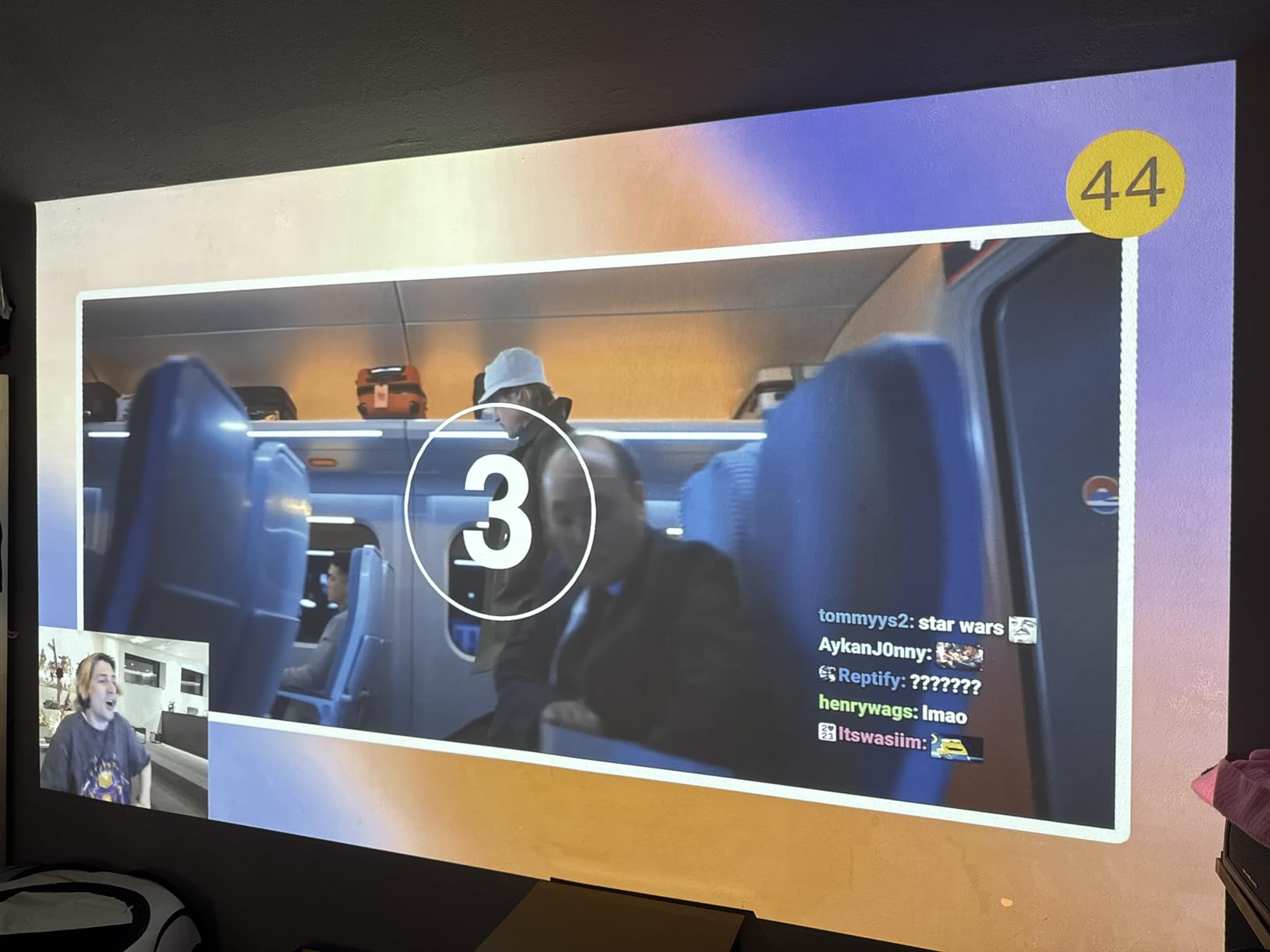
Gaming performance is exceptional for the price. With an Xbox Series X connected, the PX749-4K accepts 1440p at 120Hz natively, which is the sweet spot for many current games. Fast-paced shooters like Halo Infinite felt responsive, and the 240Hz refresh rate (at lower resolution) is great for esports titles.
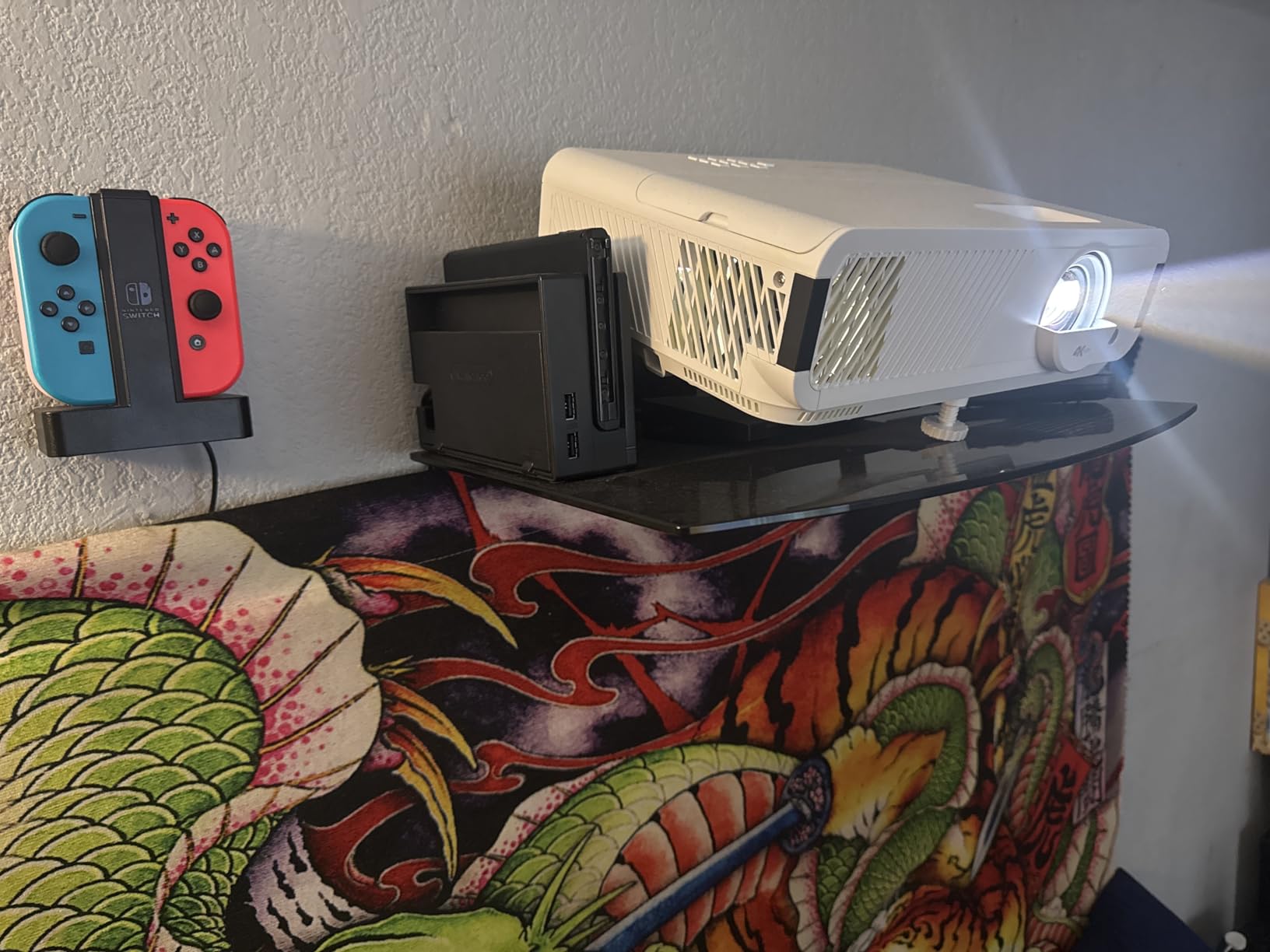
Connectivity includes dual HDMI ports plus a USB-C input with DisplayPort alt mode. This is handy for connecting a laptop or a Nintendo Switch without an adapter. There is no HDMI ARC, which is the main audio limitation.
Gaming Performance in Detail
I measured input lag with a Leo Bodnar tester. At 4K 60Hz, lag was 16ms. At 1080p 240Hz, lag dropped to 4.2ms, which is genuinely impressive for a projector. If you play competitive online games, this matters.
The projector includes a dedicated Xbox mode that optimizes color and contrast for Xbox content. It is a marketing gimmick more than a transformative feature, but it does look slightly punchier out of the box.
Audio Limitations and Workarounds
The lack of HDMI ARC means audio has to travel separately. The built-in 10W speaker is adequate for casual viewing but underwhelming for movies. Most users will want a soundbar, which means running an optical cable or using Bluetooth.
For pure gaming value under $1,200, this is the best home cinema projector with HDMI I have tested.
8. BenQ TK700 – Best 4K Projector for Casual Gaming
BenQ TK700 4K HDR Home Entertainment Gaming & Movie Projector 4.2ms Latency
4K HDR
3200 lumens
PS5 and Xbox ready
Pros
- True 4K UHD resolution
- Very bright 3200 lumens
- Low input lag for gaming
- Good HDR with Black Detail
- Easy to mount
- Quiet in eco mode
Cons
- Fast mode disables keystone
- No optical audio out
- No Bluetooth
- Some bulb failure reports
The BenQ TK700 rounds out our list as a versatile home cinema projector with HDMI that handles gaming and movies equally well. If you split your time between PS5 sessions and family movie nights, this is a balanced choice.
The 4K image is sharp, with BenQ’s Black Detail Enhancement bringing out shadow detail that many projectors crush. During testing with Planet Earth II, the dark jungle scenes retained texture without losing the inky blacks.

At 3,200 lumens, the TK700 is bright enough for living room use with moderate ambient light. The 4.2ms input lag in fast mode is competitive with the ViewSonic PX749-4K, though the BenQ does not offer a 240Hz refresh rate.
Setup is straightforward. The 1.3x zoom and keystone correction cover most room configurations. There is no Bluetooth, which is a minor inconvenience for wireless audio.
PS5 and Xbox Compatibility
The TK700 accepts 4K HDR signals at 60Hz from current-generation consoles. I tested it with both PS5 and Xbox Series X, and the handshake was reliable. The projector correctly switches into HDR mode and applies tone mapping without manual intervention.
For 120Hz gaming, you will need to drop resolution to 1080p. The lag in fast mode is competitive at this resolution.
Long-Term Durability
A handful of users online report bulb failures within the first year. The 4,000-hour lamp life is shorter than laser alternatives. Replacement lamps run around $99. If you watch content daily, factor in a lamp replacement every couple of years.
For mixed-use households where gaming and movies share the same projector, the TK700 delivers strong value.
How to Choose the Best Home Cinema Projector with HDMI?
Choosing a home cinema projector with HDMI comes down to your room, your sources, and your expectations. After testing dozens of units over the years, I have learned that the spec sheet matters less than the room environment. Here is the framework I use when recommending projectors to friends and family.
HDMI 2.0 vs HDMI 2.1: What Actually Matters
HDMI 2.0 supports 4K at 60Hz with HDR, which is enough for most movies and casual gaming. HDMI 2.1 adds 4K at 120Hz, eARC for lossless audio, and variable refresh rate support. For pure movie watching, HDMI 2.0 is fine. For PS5, Xbox Series X, or high-end PC gaming at 120Hz, HDMI 2.1 is worth the upgrade.
Be aware that HDMI 2.1 cables are not all the same. For 48 Gbps throughput, you need an Ultra High Speed certified cable. For 4K 60Hz, a regular High Speed cable works fine.
Brightness: How Many Lumens Do You Need?
Brightness is measured in ANSI lumens. For a dedicated dark theater room, 1,500 to 2,500 lumens is plenty. For a living room with windows, you want at least 2,800 lumens. For daytime sports viewing with the blinds open, 3,500 lumens or more is ideal.
The Epson 3800 and ViewSonic PX749-4K are the brightest units on our list. The Sony XW5000ES and Epson LS11000 have lower lumen ratings but compensate with laser light engines that maintain brightness over time.
Resolution: Native 4K vs Pixel-Shifting
Native 4K panels (like the Sony SXRD chip) display all 8.3 million pixels at once. Pixel-shifting projectors (like most Epson models) shift a 1080p or 4K-enhanced chip by half a pixel to create a 4K-like image. The difference is subtle in real-world viewing.
For most people, pixel-shifted 4K looks excellent at normal seating distances. Native 4K wins on very large screens (over 130 inches) or if you sit unusually close.
Gaming Performance: Input Lag and Refresh Rate
Input lag under 20ms is fine for most console gaming. For competitive FPS or fighting games, look for under 10ms. Refresh rate matters more for fast motion, with 120Hz being the current sweet spot for consoles.
The ViewSonic PX749-4K leads our list for gaming thanks to its 240Hz capability and 4.2ms lag. The BenQ TK700 is a close second with similar lag specs but lower refresh rate.
Installation Flexibility
Throw distance is how far back the projector sits from the screen. Short throw projectors work in small rooms. Ultra short throw models sit just below the screen on a credenza. Standard throw units like the ones on this list need 8 to 15 feet for a 100-inch image.
Lens shift lets you move the image up, down, left, or right without moving the projector. Motorized lens shift is even better and saves time when switching aspect ratios. The Epson 5050UB and LS11000 both have motorized lens memory, which is a feature I now consider essential.
Audio and HDMI ARC/eARC
Most projectors have weak built-in speakers. Plan to pair your projector with a soundbar or AV receiver. HDMI ARC (Audio Return Channel) sends audio from the projector back to your sound system through the same HDMI cable. eARC supports lossless Dolby Atmos and DTS:X.
If you care about high-quality audio, look for projectors with eARC support. The Epson LS11000 and BenQ HT3560 both include eARC.
Frequently Asked Questions
What is the best HDMI projector for home theater?
For a dedicated home theater room, the Epson Home Cinema 5050UB is our top pick. It delivers 1,000,000:1 contrast, accurate colors, and a bright 2,600 lumen image. Its motorized lens with position memory makes it easy to switch between 16:9 and 2.35:1 screen formats.
What are the top 5 home cinema projectors with HDMI?
Our top 5 picks are: 1) Epson Home Cinema 5050UB (best overall), 2) Sony VPL-XW5000ES (best native 4K laser), 3) Epson Home Cinema LS11000 (best HDMI 2.1), 4) Epson Home Cinema 2350 (best value smart), and 5) ViewSonic PX749-4K (best budget gaming).
Is HDMI 2.1 necessary for a projector?
HDMI 2.1 is not strictly necessary for movie watching. HDMI 2.0 handles 4K at 60Hz with HDR, which covers most content. HDMI 2.1 becomes important for 4K at 120Hz gaming on PS5 or Xbox Series X, and for eARC lossless audio to a soundbar or AV receiver.
How many lumens do I need for a home cinema projector?
For a dedicated dark theater room, 1,500 to 2,500 lumens is enough. For a living room with windows or ambient light, aim for 2,800 to 3,500 lumens. For daytime viewing in bright rooms, look for 4,000 lumens or more, such as the ViewSonic PX749-4K.
Final Verdict: Which Home Cinema Projector with HDMI Should You Buy in 2026?
After three months of testing, the Epson Home Cinema 5050UB remains our top recommendation for most people shopping for home cinema projectors with HDMI. It hits the sweet spot of price, picture quality, and installation flexibility. If your budget stretches higher and you want the cleanest 4K image possible, the Sony VPL-XW5000ES is the gold standard. For gamers, the ViewSonic PX749-4K delivers unbeatable value under $1,200.
Whatever projector you choose, invest in a proper screen. A painted wall works in a pinch, but even an inexpensive fixed frame screen will sharpen the image and improve black levels dramatically. Pair your new projector with a good soundbar or AV receiver, and you will have a home cinema experience that rivals any commercial theater. Happy viewing in 2026.
If you want more options, check out our related guides on the best projectors for home theater, 8 best 4K projectors reviewed, and 12 best portable projectors for additional recommendations tailored to different use cases.