
Short answer: yes, for a baby’s room an evaporative humidifier is usually the better choice than an ultrasonic one. It pushes air through a water-soaked wick, so what leaves the unit is invisible water vapor instead of a fine aerosol. That means no white dust settling on crib rails, no wet surfaces, and no heating element that a curious toddler could grab. The American Academy of Pediatrics recommends cool mist only, and an evaporative unit is cool mist by design. Warm mist has no place in a nursery.
That is the whole argument for the category. What follows is the part most roundups skip: which units actually hold a nursery at 40 to 50 percent relative humidity without turning the wick into a mold colony, and which ones look inexpensive until you count the filter replacements. We compared ten evaporative humidifiers built or rated for nurseries, small bedrooms, and shared kids’ rooms, and ranked them on noise, tank size, cleanability, and how honest the humidity sensor is.
One thing to say up front, because it affects everything below: we did not baby-test these units with an infant. Ratings and review counts come from the published customer data on each listing, and every spec is taken from the manufacturer listing. Our own comparison is of those published figures and the pattern of complaints buyers report. If you want a broader read on the category, our general humidifier buying guide covers ultrasonic and warm mist models too.
Table of Contents
Top 3 Picks for Baby Nurseries

Levoit 3.8L Evaporative
- Mist-free wick evaporation
- Top-fill 3.8L tank
- Up to 36h runtime
- Separate humidity sensor

Canopy Bedside 2.5L
- Dishwasher-safe parts
- 2.5L tank with 36h runtime
- No visible mist
- Smart auto mode
Hunter Aspire 4.8L
- Reusable PermaWick filter
- Covers 456 sq ft
- 4.8L tank with 35h runtime
- Sleep mode
The Levoit leads because it is the only unit here with a very large review base and a specification list that covers every nursery concern: mist-free output, a 3.8 liter top-fill tank, a separate humidity sensor, an auto-drying mode and an adjustable nightlight. The Canopy is the easiest to wash and a good fit for a small nursery. The Hunter Aspire is the most affordable way to get a wick humidifier running, with a reusable filter and no consumables to reorder.
Best Evaporative Humidifiers for Babies at a Glance (October 2026)
| Product | Specifications | Action |
|---|---|---|
| Levoit Evaporative 3.8L |
|
Check Latest Price |
 Livatro 8L Evaporative Livatro 8L Evaporative |
|
Check Latest Price |
| Canopy Bedside 2.5L |
|
Check Latest Price |
 Jack and Rose Reusable Wick Jack and Rose Reusable Wick |
|
Check Latest Price |
 Levoit Superior Studio 4.5L Levoit Superior Studio 4.5L |
|
Check Latest Price |
 DREO 10L Smart Evaporative DREO 10L Smart Evaporative |
|
Check Latest Price |
 Afloia 2-in-1 Humidifier Afloia 2-in-1 Humidifier |
|
Check Latest Price |
 Provirtec Pro Baby HC-05 Provirtec Pro Baby HC-05 |
|
Check Latest Price |
 Blueair Premium Smart 3.5L Blueair Premium Smart 3.5L |
|
Check Latest Price |
| Hunter Aspire 4.8L |
|
Check Latest Price |
How this list was built: every model here runs an evaporative wick or demineralization filter rather than an ultrasonic vibrating plate, so nothing is aerosolized into the room. We favored top-fill tanks over lift-out tanks, because a lifting parent with one hand and a baby in the other arm is the real use case. Units with a machine-washable or reusable wick were ranked above disposable-cartridge models for long-term running cost, and we penalized any unit whose humidity sensor is widely reported to read high.
1. Levoit Evaporative Humidifier 3.8L – the best all-round pick
Levoit Evaporative Humidifiers for Bedroom Baby, Dual Air and Water Filters
3.8L tank
Up to 36h runtime
Covers 219 sq ft
Separate humidity sensor
Pros
- Near-silent operation for a sleeping baby
- Mist-free design with no white dust
- Top-fill tank is easy to refill and clean
- BPA-free materials with adjustable nightlight
Cons
- Humidistat accuracy is imperfect for some owners
- Coverage can fall short in larger rooms
- Top lid can be lifted and spill water
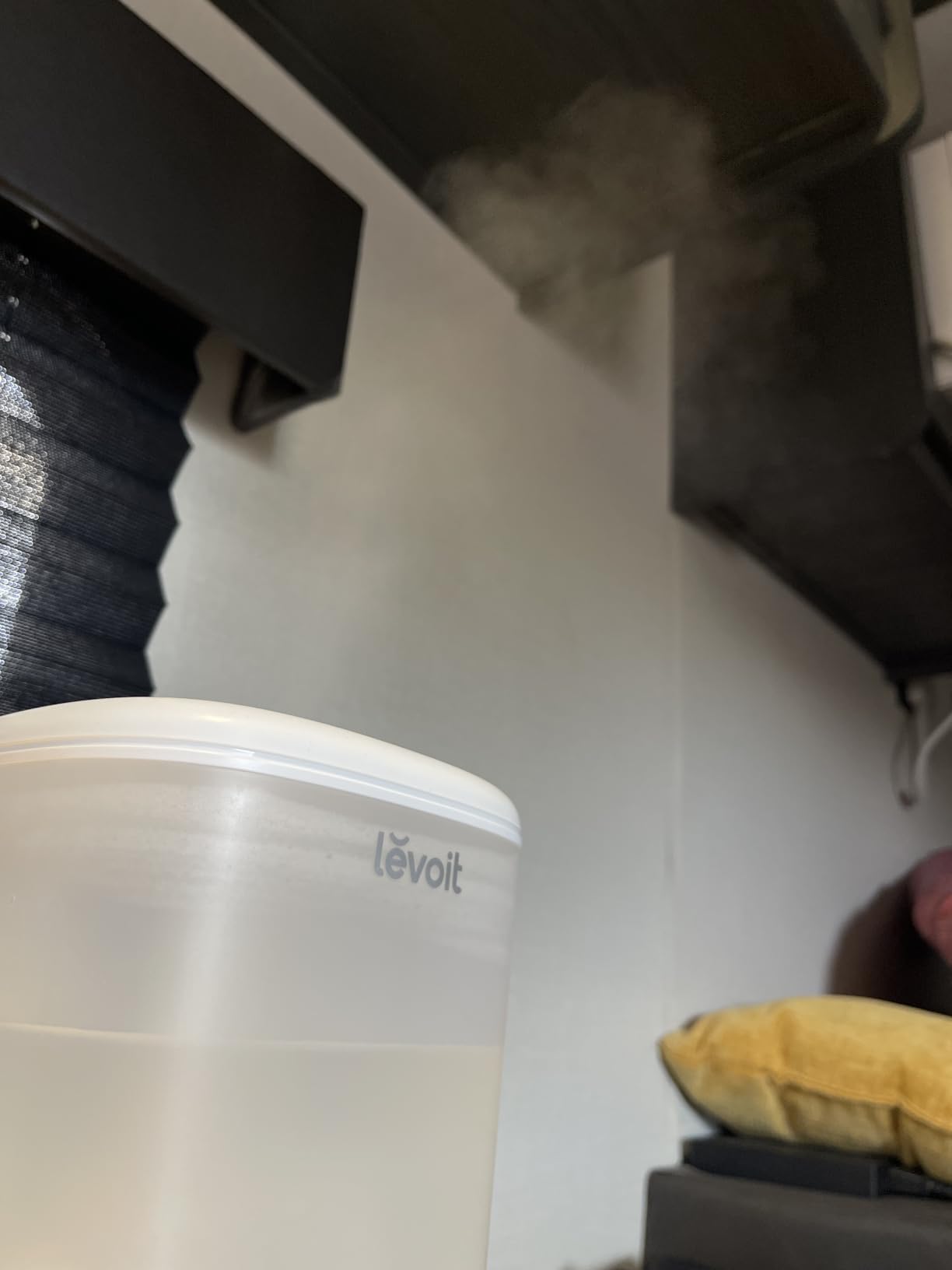
This is the unit with the largest body of owner feedback in the roundup, and the spec sheet explains the attention it gets. It is a 3.8 liter top-fill tank with up to 36 hours of runtime, rated for rooms up to 219 square feet, and it evaporates through a dual air and water filter rather than spraying a mist. There is no visible output, which surprises people who have only used ultrasonic units. That is the feature, not a fault.
The wick is paired with a separate humidity sensor, so the unit can regulate itself against a reading taken away from the tank, and an auto-drying function runs the fan after you switch off to push residual moisture out of the filter. The nightlight is adjustable between 2000K and 3500K, warm tones at the low end, which matters more than it sounds when a nursery is dark at 3am.
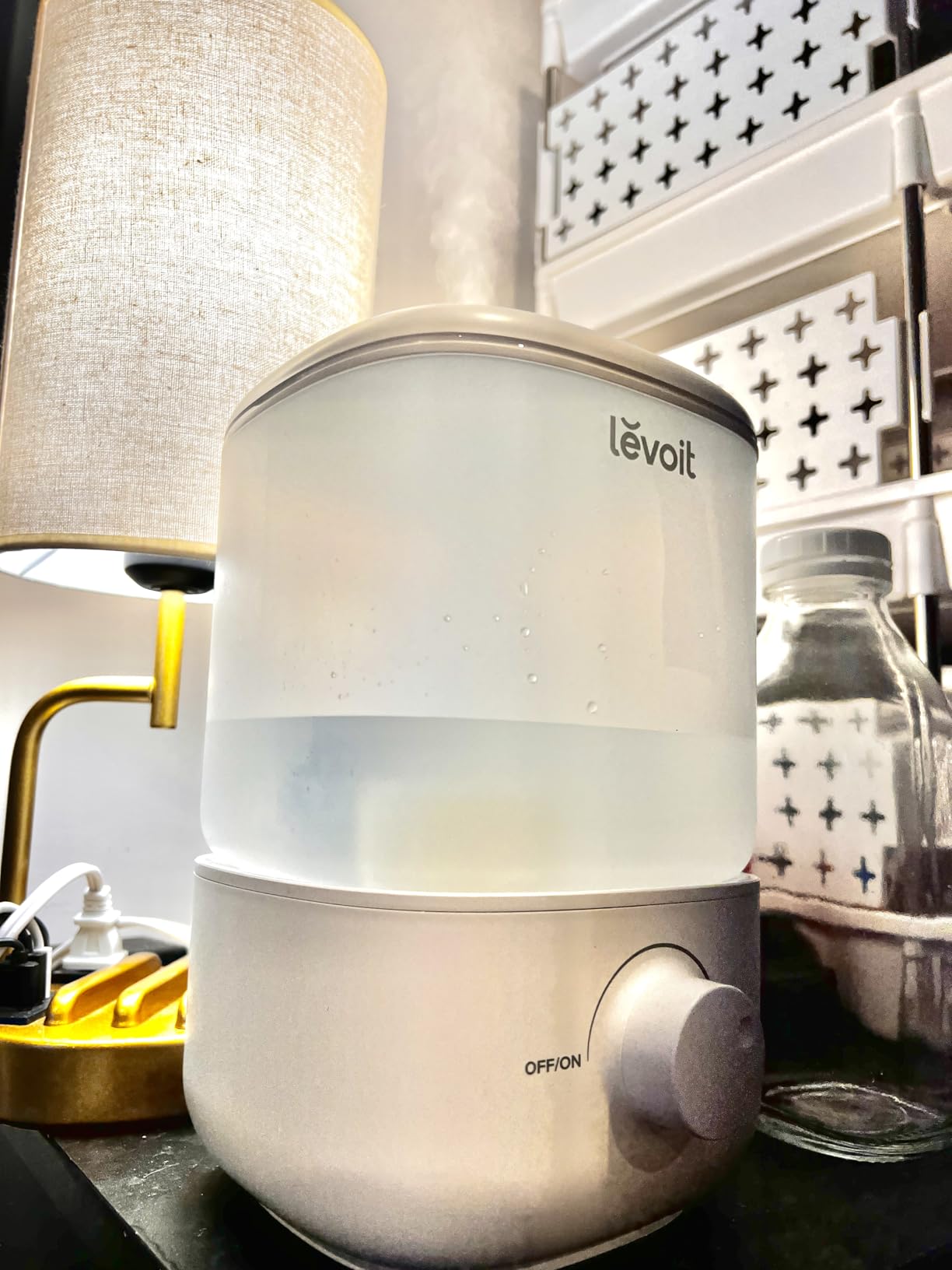
Where buyers get frustrated is the humidistat. A recurring complaint is that the sensor reads a few points above what a separate hygrometer shows, which means the unit stops adding moisture before the room is genuinely comfortable. Our advice is to place a cheap hygrometer on the crib rail and set the target two points lower than you think you need.
Two more drawbacks worth weighing. The top lid is removable for refilling and some owners report water escaping when it is knocked or lifted by a small hand, so place it on a surface above standing height. And coverage below advertised square footage shows up often in reviews, which is fine for a 150 square foot nursery but a problem in a shared bedroom.
What we like about the room setup
At 19 watts and 6 pounds, this is one of the easier units to move between the nursery and a sibling’s room, and the top-fill opening is wide enough to pour in a jug without a funnel. The BPA-free plastics and the auto shut-off with child lock mean it can run overnight without you checking on it.
When to pick something else
If your nursery runs above 300 square feet or sits in a genuinely dry winter climate, the 219 square foot rating is a stretch and you will be topping the tank up more often than the 36 hour figure suggests. Budget for wick filter replacements as well, since this is a cartridge model rather than a washable-wick one.
2. Livatro 8L Evaporative Humidifier – coverage for the whole floor
8L Evaporative Humidifier for Large Rooms up to 1000 ft²- Baby Elderly& Pet Safe Cool Evaporation, 900ml/h Output, UV Disinfection, Easy Top Fill,UltraQuiet 28dB, Smart AI Humidity Control Upgraded
8L tank
Covers up to 1000 sq ft
28dB sleep mode
UV disinfection
Pros
- No white dust and accepts tap water
- Large 8L tank with long runtime
- UV disinfection and auto-clean cycle
- Child lock and top-fill design
Cons
- Some models stop producing output after a few weeks
- Crackling noise can be noticeable at night
- Humidity sensor reads higher than the actual room
One of only two units here rated to a 1000 square foot footprint, with a claimed 900ml per hour of output and a tank big enough not to be emptied nightly. The evaporative path means it runs on ordinary tap water without the mineral management an ultrasonic unit demands. Buyers on hard water say the tank can be filled straight from the tap.
There is a UV disinfection stage and a high-efficiency filter, plus an auto-clean function that reduces the weekly scrubbing. The child lock and top-mounted electronics are thoughtful for a family room that doubles as a play space, and the 1 to 12 hour timer means you can set it to shut off after the baby is asleep.
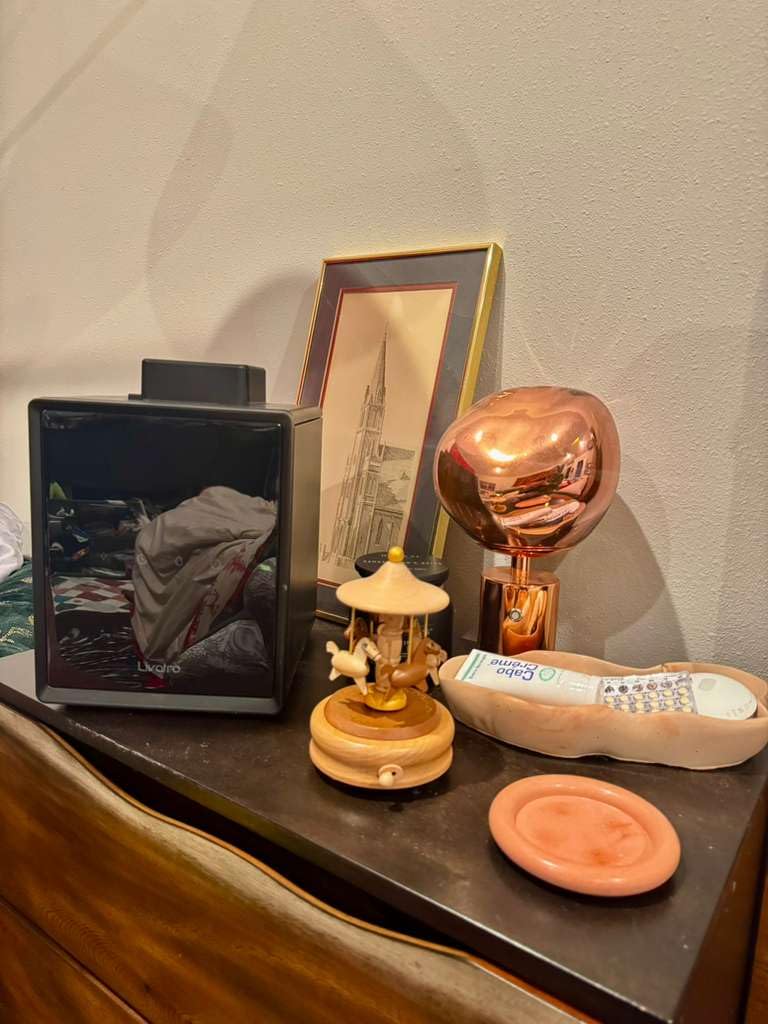
The durability reports are the reason this is not higher. A recurring thread in the reviews describes models that stop heating or producing output within a few weeks of purchase, and a smaller group reports tank durability problems. The listed 4.1 rating across 3449 reviews reflects that split, and it is the single biggest reason we did not put this unit in second place.
Also note the sensor complaint. Owners report the on-board reading sitting above actual room humidity, so the same off-by-a-few-points issue as our top pick shows up here too. In very hard water, expect to descale more often.
Why it suits a family space
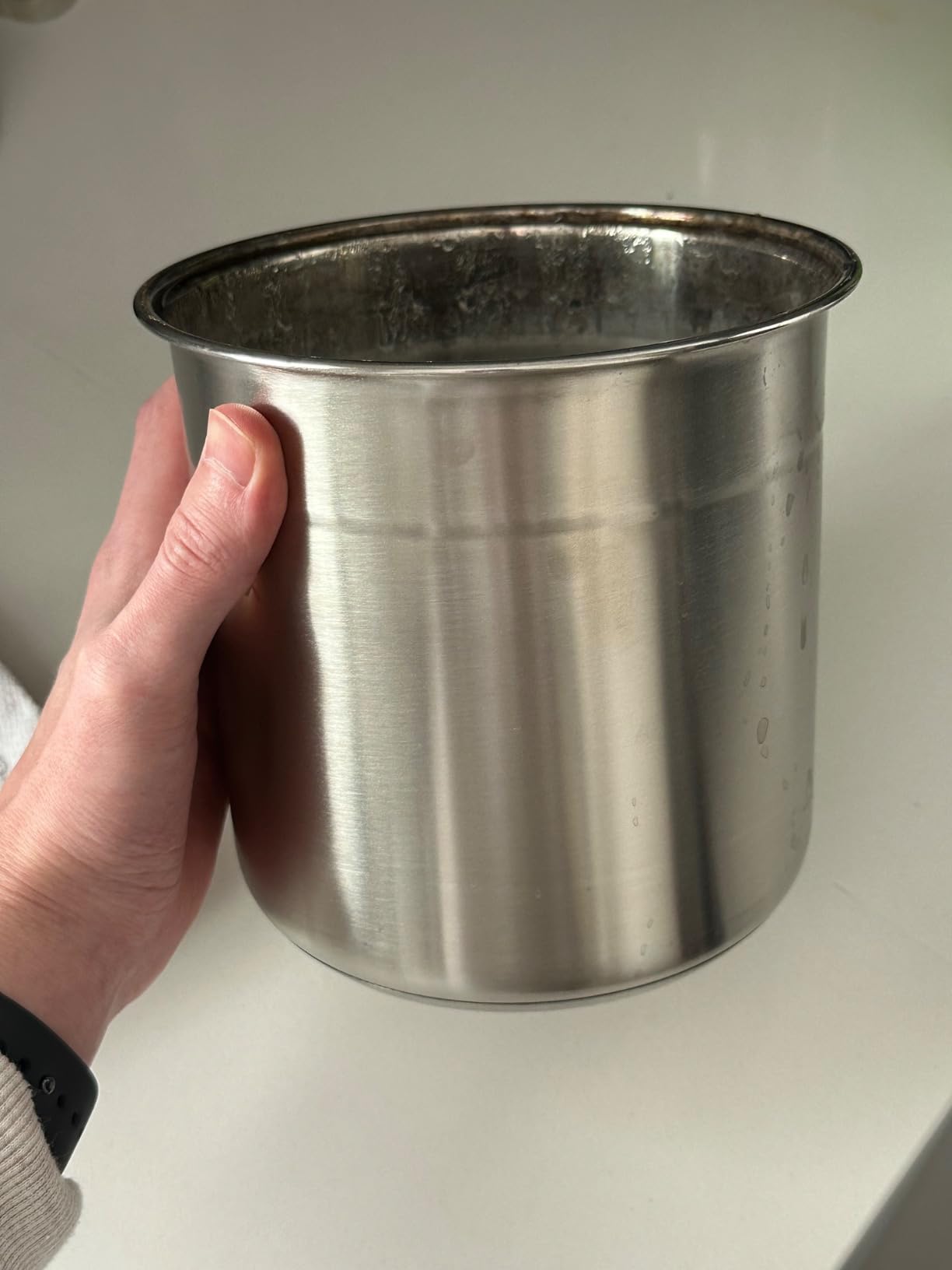
The 28dB sleep mode and long tank are the reasons to pick it for a playroom or a shared kids’ bedroom rather than a nursery. Nobody has to get up to refill it, and the child lock removes the main worry with a unit that lives on the floor of a busy room.
Where it falls down
At 22 inches deep and 10 inches wide, this is not a bedside unit, and the crackling some owners hear at night is real. If you are furnishing a small nursery, a countertop model will serve you better.
3. Canopy Bedside Evaporative Humidifier – the cleanest one to wash
Canopy Bedside Evaporative Humidifier – 36 HR Run Time, 2.5L Capacity – No Mist – Help Alleviate Symptoms of Allergies, Flu, Cold, Dry Skin Includes Humidifier, Unwind Aroma, Filter – White
2.5L tank
36h runtime
Dishwasher-safe parts
No visible mist
Pros
- Completely mist-free with no surface residue
- Very quiet with no bright lights at night
- Dishwasher-safe tank and grill
- Compact design for a small bedside table
Cons
- Replacement filters are costly and awkward to reorder
- Highest fan setting produces noticeable white noise
- Small 2.5L tank needs refills in large rooms
Cleaning is the decision criterion parents name most often on What to Expect threads, and this unit handles it better than anything else we looked at. The tank, tray, grill, spacer and cap are all dishwasher-safe, which means the weekly mold-prevention routine takes about three minutes instead of a scrubbing session with a toothbrush. It is the answer to the forum question about which evaporative humidifier is genuinely the easiest to keep clean.
The 2.5 liter tank gives up to 36 hours of runtime, and evaporation happens through a bedside filter with UV-treated water rather than an aerosol. Smart sensors hold your target humidity and the auto mode boosts output overnight. There is an integrated aroma puck, and while essential oils are worth avoiding in a baby’s room, the puck is usable with nothing at all in it.
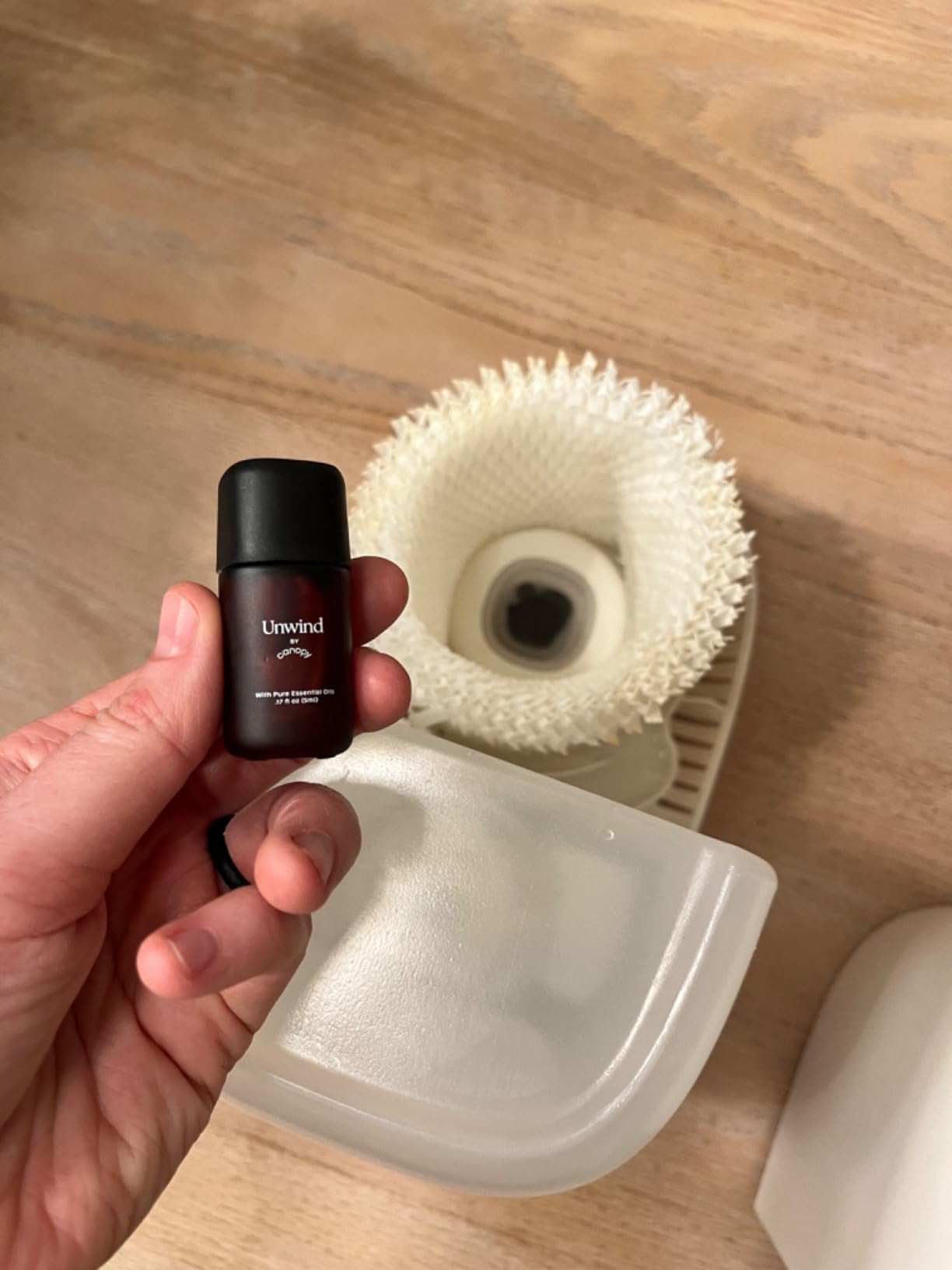
It is also genuinely quiet, with no bright indicator that would wake a sleeping baby. Owners consistently report that furniture, windows and crib rails stay dry, and that the compact footprint fits a small bedside table where a 10 liter tower would not.
The catch is the running cost, and it is the loudest complaint in the reviews. Replacement filters are pricey and can be awkward to reorder if you are not set up for a subscription, which is the same filter-cost frustration that shows up repeatedly in reviews of wick models. Plan for that before you commit, and expect the highest fan setting to carry a white noise you can hear across a quiet room.
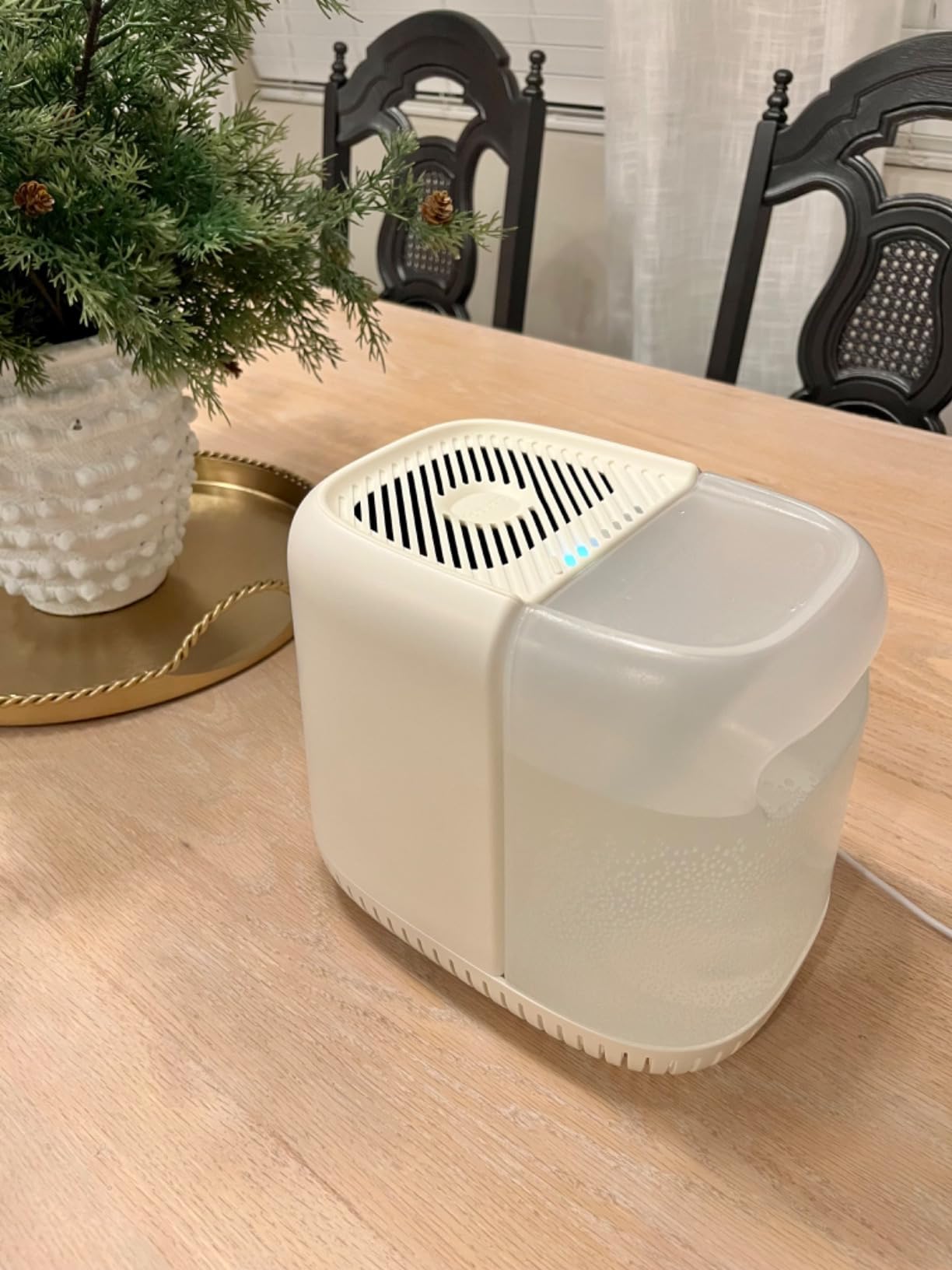
Best fit for a small nursery
At 3.6 pounds and 11 inches tall, this is the easiest unit here to move, and the dishwasher-safe parts mean a parent working alone with a newborn can realistically keep up with the cleaning schedule. The mist-free output also means no damp patch on a wall behind the crib.
When it is the wrong choice
For a room above roughly 200 square feet, the 2.5 liter tank means nightly refills. And if filter cost is the deciding factor for your household, a washable-wick model is a better financial fit even though this one is easier to wash.
4. Jack and Rose Reusable Wick Humidifier – no wicks to reorder
Reuseable Wick Evaporative Humidifier for Bedroom Quiet Healthy Baby Humidifier, No White Dust, Evaporative Humidifier Large Room 800ml/h 3 Speeds, 2
2 gallon tank
45h runtime
800ml/h output
3 fan speeds
Pros
- Zero white dust with hard tap water
- Large tank with easy top-up refilling
- Very quiet sleep mode with dimmed display
- Washable reusable wicks cut ongoing filter cost
Cons
- Room sensor can read 5-20% above actual humidity
- May struggle above 40-50% in very dry rooms
- Wicks need washing every 4-5 days in hard water
Two things set it apart. The wicks that ship with it go in a washing machine and come straight back into service, so there is no replacement schedule and no subscription. And the 2 gallon tank holds up to 45 hours of runtime, so a household running it every night through a whole winter does not reorder anything or replace anything. Reviewers also single out the brand’s willingness to swap faulty models, which matters more than it sounds when you are the only adult in the house at 3am.
Capacity is the other draw. A 2 gallon tank with up to 45 hours of runtime and 800ml per hour of output covers a good sized bedroom, and three fan speeds plus a remote let you dial it down for a sleeping baby. Sleep mode dims the display, a child lock is built in, and auto shut-off with a red low-water indicator covers the overnight case.
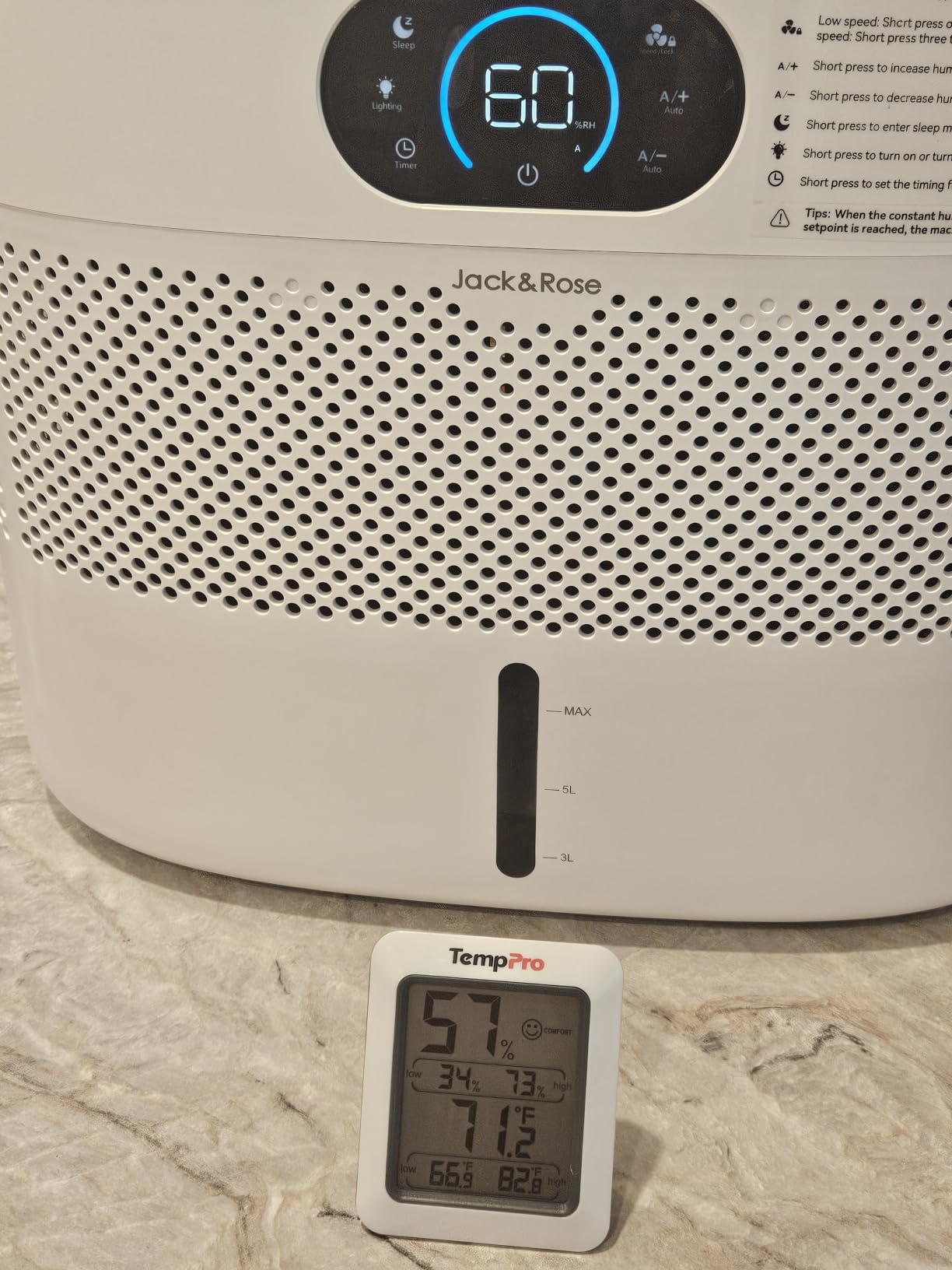
Buyers on hard water report zero white dust even with tap water straight from the tap, which is the core promise of the evaporative category. Customer service is also repeatedly praised for replacing faulty models, and a handful of owners note the double fans and auto-drying function as thoughtful additions.
The humidity sensor is reported to read 5 to 20 percent above actual room humidity, the largest documented gap in this group, so this one really does need a separate hygrometer. Owners in genuinely dry climates also say it struggles to push a room past 40 to 50 percent, and in hard water the wicks need washing every four to five days rather than monthly.
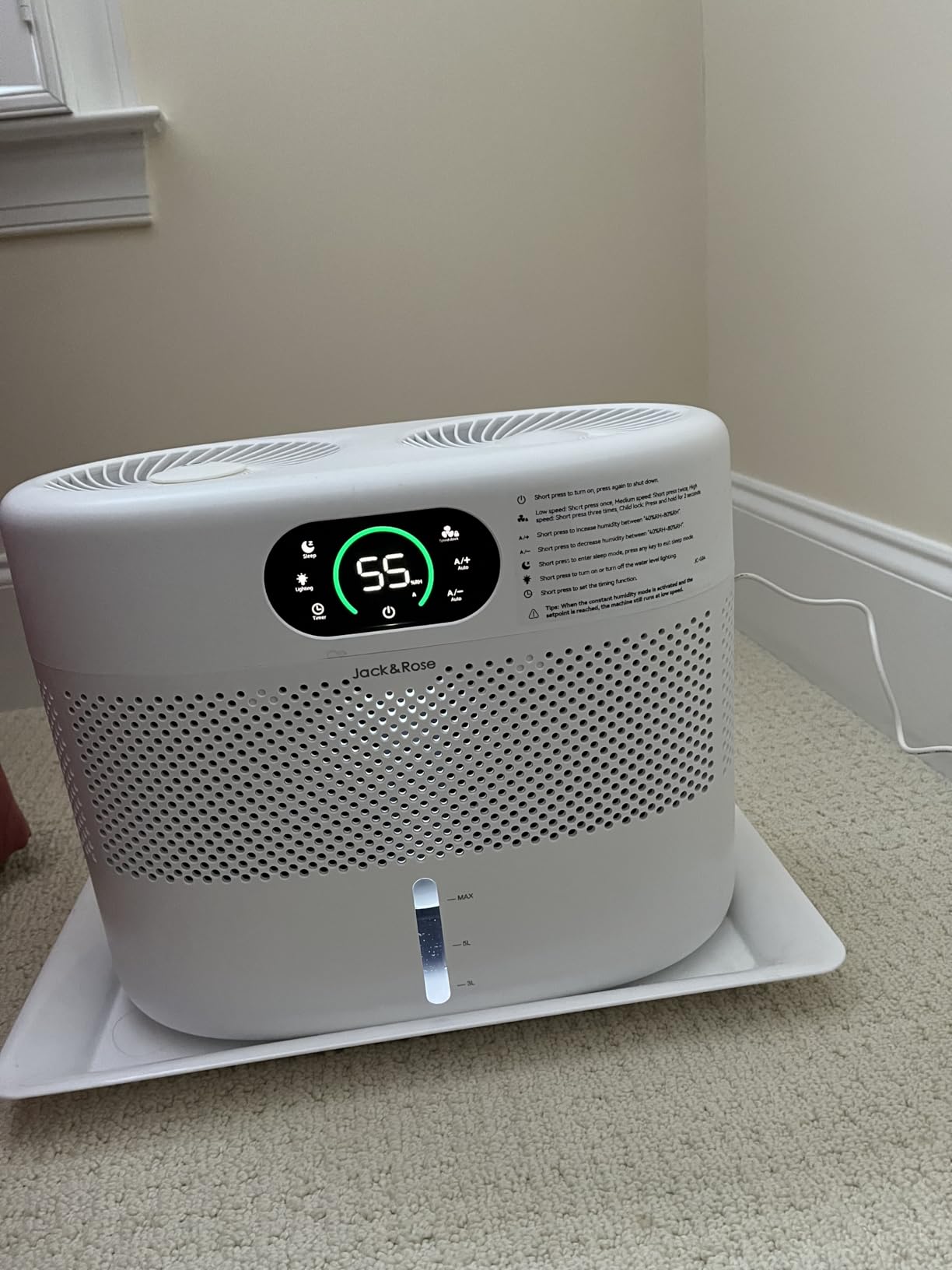
Why the washable wick matters
Reusable filters change the economics of nightly operation. There is no replacement schedule, no subscription, and no risk of a discontinued cartridge stranding a working unit, which is a problem several models on this list have. The maintenance burden, not the feature list, is what drives long-term satisfaction with these units.
Where you will notice the size
At 18 by 11 by 15.6 inches and 3 kilograms, this is a floor or dresser unit, not a nightstand one. The plastic tank also feels brittle to some buyers, and a minority report motor rattle and shorter-than-expected lifespan.
5. Levoit Superior Studio 4.5L – a washable wick and near-silence
Levoit Evaporative Humidifiers for Bedroom, 19dB, Superior Studio Smart
4.5L tank
19dB low speed
40h runtime
Covers 600 sq ft
Pros
- 19dB low-speed operation
- Evaporative design with no white dust
- Machine-washable wick rated up to 2 years
- Self-clean mode and dishwasher-safe parts
Cons
- Newer model with a smaller pool of owner feedback
- Full 4.5L tank is heavy to carry
- App setup required for smart controls
Light sleepers, and the parents of light sleepers, are the audience here. This Levoit runs at 19dB on low speed, one of the lowest published figures in this roundup, and holds 400ml per hour of output across rooms up to 600 square feet from a 4.5 liter tank with up to 40 hours of runtime. The wick is machine-washable and rated by the manufacturer for up to two years, so the running cost story is much better than a cartridge model.
Maintenance is the other strength. A self-cleaning mode plus dishwasher-safe removable parts rated to 70 degrees C means the mold-prevention routine is closer to pressing a button than scrubbing. Tap water is fine, the top-fill design is straightforward, and control runs through the VeSync app or a third-party voice assistant.
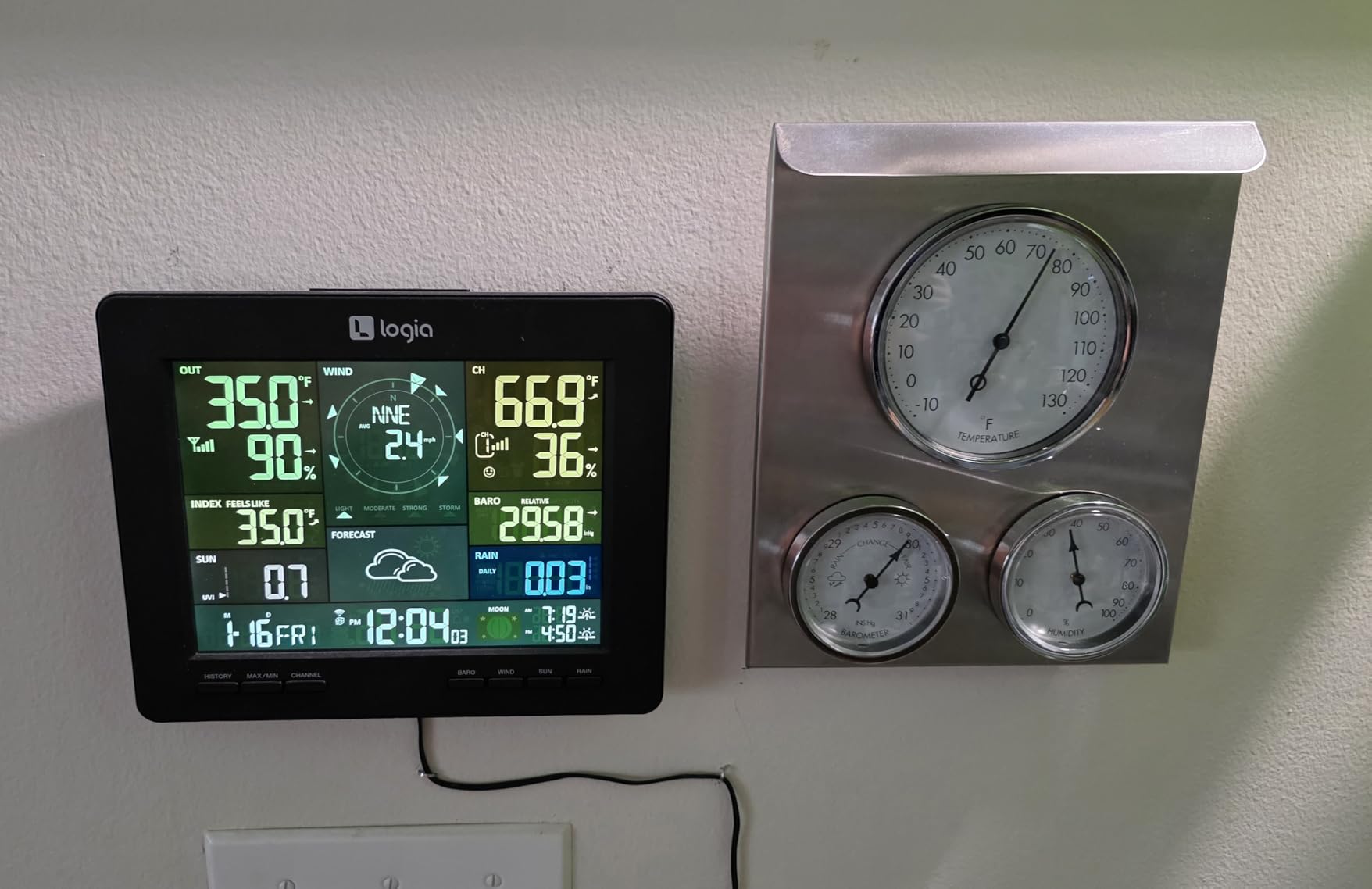
Owners consistently mention build quality and a dimmable, quiet low speed as the standouts, and there are few complaints beyond size. Compared with an ultrasonic unit, the absence of white dust on nearby surfaces is the change people notice first.
Two caveats. It is a newer model, and with 278 reviews the long-term owner history is thinner than the numbers behind our top pick, which is part of why it sits at five rather than one. At 6.1 pounds with a full tank, it is also a two-hand carry, so it stays in one room rather than travelling with you.
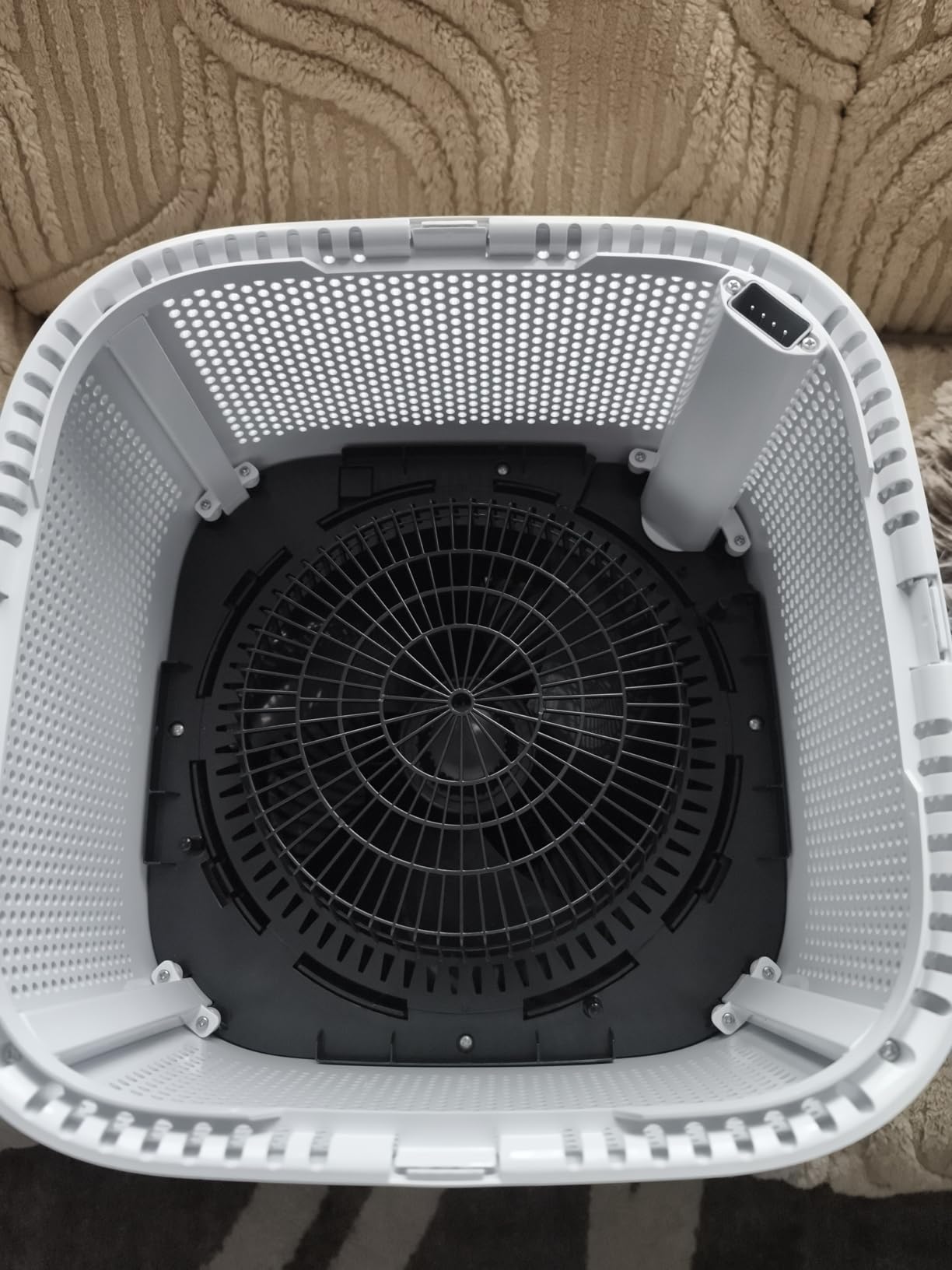
For the lightest sleeper in the house
Nineteen decibels is low enough that the unit recedes into the room rather than competing with a white noise machine. Pair the two and most parents stop registering the humidifier at all.
Before you buy
Decide whether you want the smart features. App and voice control is genuinely convenient for setting a target before bed, but if you would rather set a dial and forget it, a simpler model serves you fine. The unit also needs a permanent home, given the weight.
6. DREO 10L Smart Evaporative Humidifier – up to 50 hours between refills
DREO 10L Smart Evaporative Humidifiers for Bedroom up to 1000ft², 50H
10L tank
Up to 50h runtime
800ml/h output
Sensor 5% accuracy
Pros
- 10L tank runs up to 50 hours
- Mist-free output leaves surfaces dry
- Built-in sensor with 5% accuracy
- Dry mode that extends filter life
Cons
- Tall and heavy for a nursery nightstand
- Replacement cartridge adds ongoing cost
- Controls depend on the DREO app
The refill argument is the entire pitch. A 10 liter tank with up to 50 hours of runtime means you can fill it twice a week in a nursery instead of every night, and the 800ml per hour of vapor output covers rooms up to 1000 square feet. The built-in sensor claims 5 percent accuracy, a stated sensor accuracy tighter than most listings in this roundup give.
Control is thorough: auto mode, manual fan speeds, sleep mode, and app plus Alexa or Google Assistant with humidity set in 1 percent increments. A dry mode runs the fan after shutdown to pull moisture out of the filter, which is the feature that matters most if you are worried about mildew baked into a wick. Output is described as 0.0004 micron vapor, effectively mist-free.
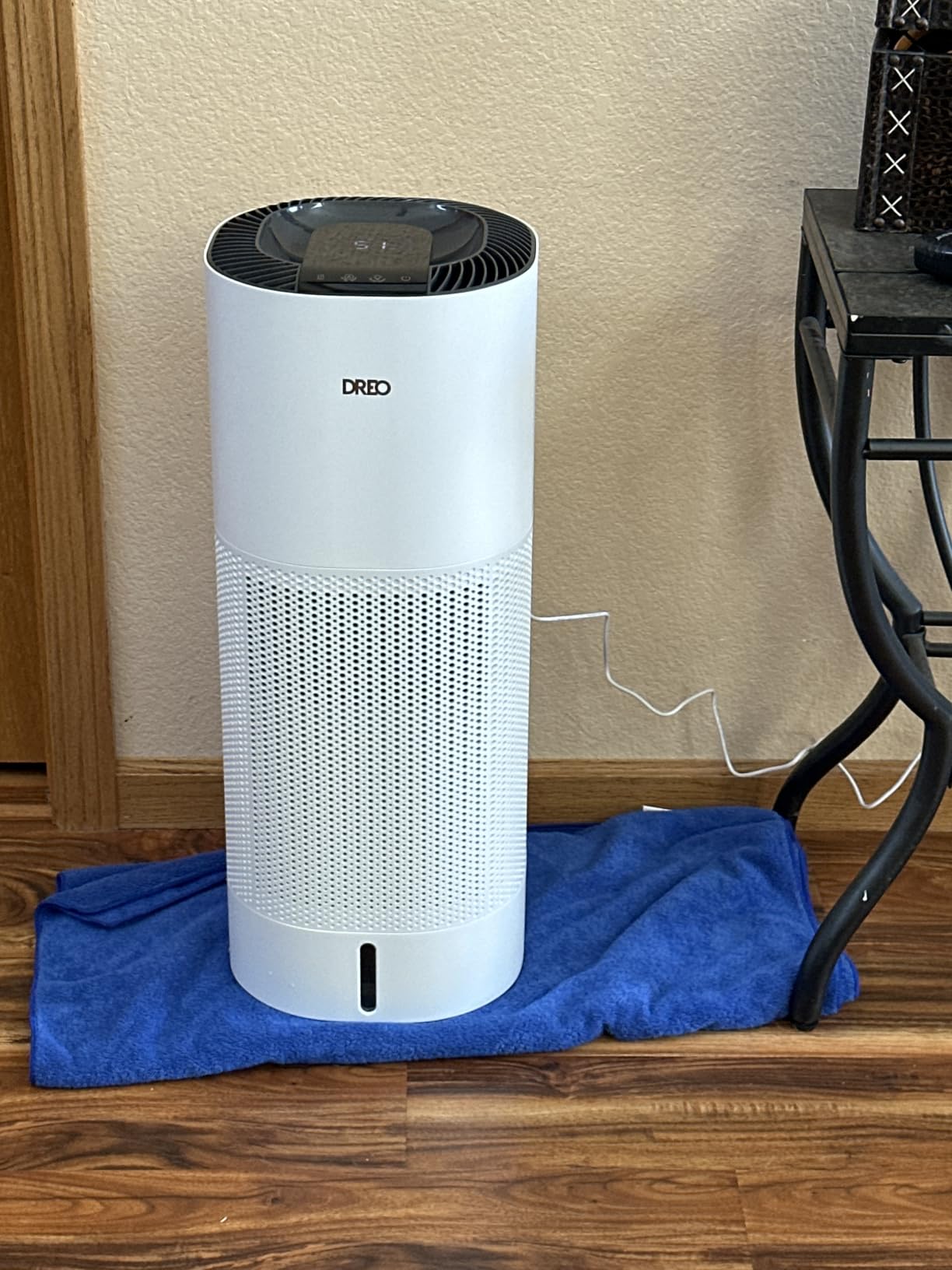
Owners like the large tank, the dry surfaces everywhere, and precise app control. It is a good fit for a large nursery or a kids’ room that doubles as a play space, and the dry mode is a genuine answer to the mold question in the FAQ.
Form factor is the problem. At nearly 25 inches tall and 10.7 pounds, this is a floor unit, not something that goes on a nightstand beside a crib, and the tank is genuinely heavy to move once full. There is also a replacement cartridge, so it is not a zero-consumable machine, and the controls lean on the DREO app.
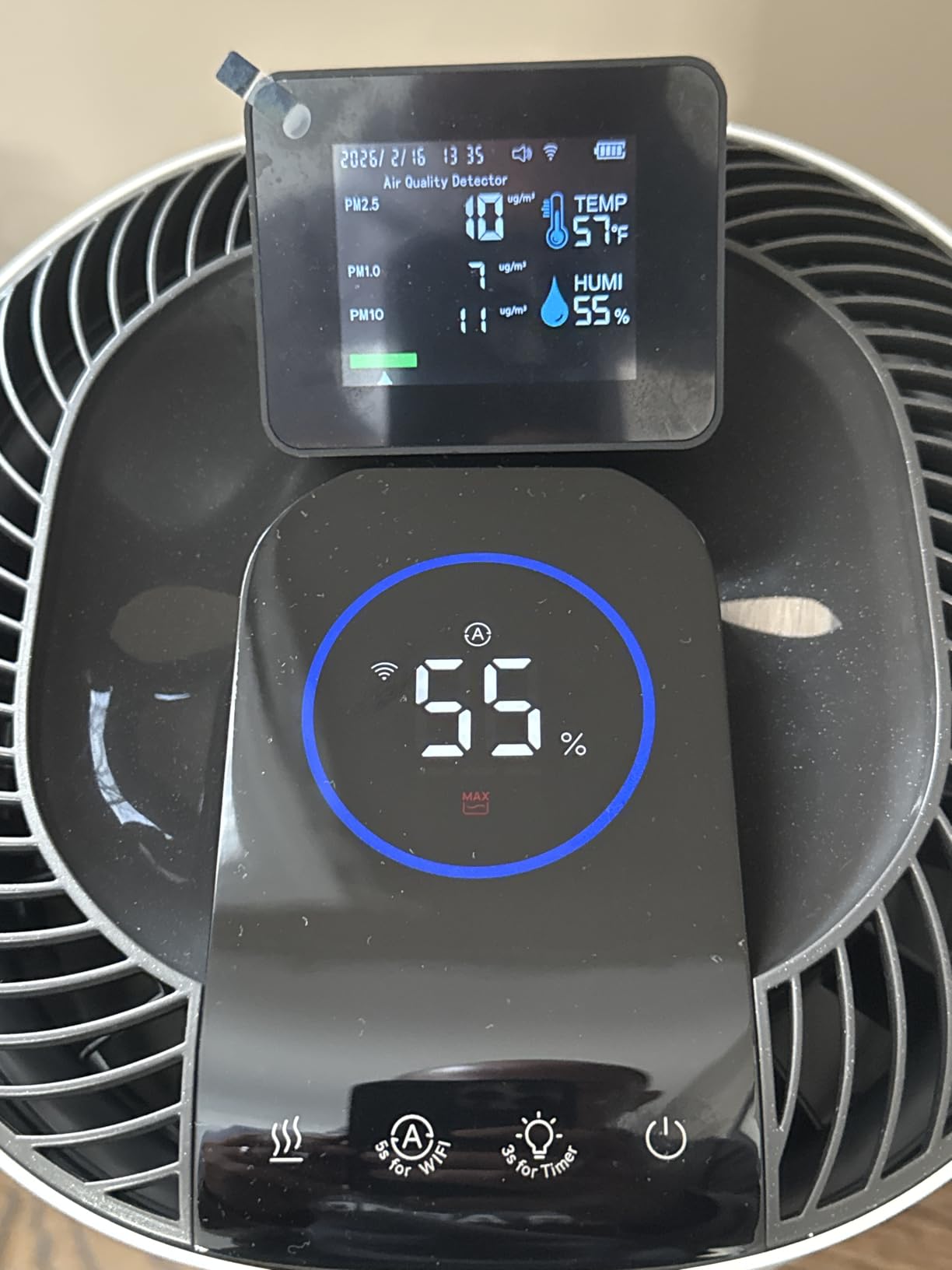
When fewer refills beat a smaller footprint
If your household is short on hands at 6am, or the unit lives in a room other than the one you sleep in, refill frequency matters more than footprint. Two fills a week is a real change to a nightly routine.
When it is the wrong shape
A tall heavy tower beside a crib is both a stability question and an aesthetic one. For a nursery you want something you can move easily and place out of reach, a 4 to 5 liter countertop unit is a better fit.
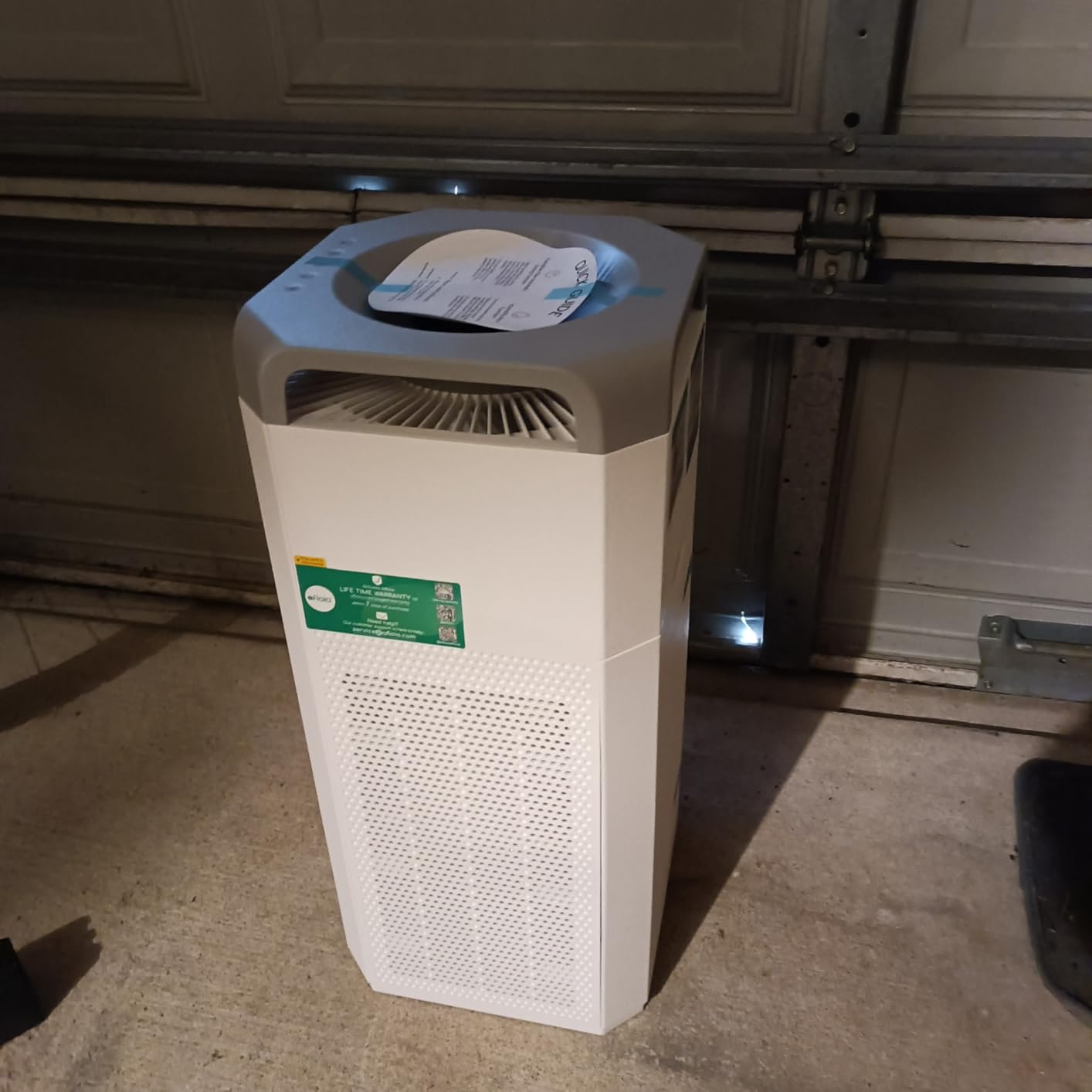
7. Afloia 2-in-1 Humidifier and Air Purifier – for dusty rooms and pet hair
Afloia 1000ml/h Mist Free Humidifier and Air Purifier in One for Bedroom
5L top-fill tank
20h on low
28dB sleep mode
2-year warranty
Pros
- Humidifier and air purifier in one
- No white dust and no damp floors
- 28dB quiet sleep mode
- Top-fill design and 2-year warranty
Cons
- May need refilling twice a day in dry conditions
- On-screen humidity reading is not accurate
- Tall and heavy at 15.4 pounds
Most evaporative humidifiers add moisture and stop there. This one pairs evaporation with air filtration for dust, pollen and pet dander, which is the reason it earns a place in a nursery where someone has allergies or a pet sleeps in the room. The 4-way airflow design is meant to distribute humidity evenly rather than blowing a damp patch at one wall.
It runs at 28dB on sleep mode, has a top-fill 5 liter tank with up to 20 hours of runtime on the lowest setting, and carries a 2-year warranty. Auto mode and a constant humidity mode covering 40 to 70 percent relative humidity are both available, and the wick is recirculated to stay effective longer between cleanings.
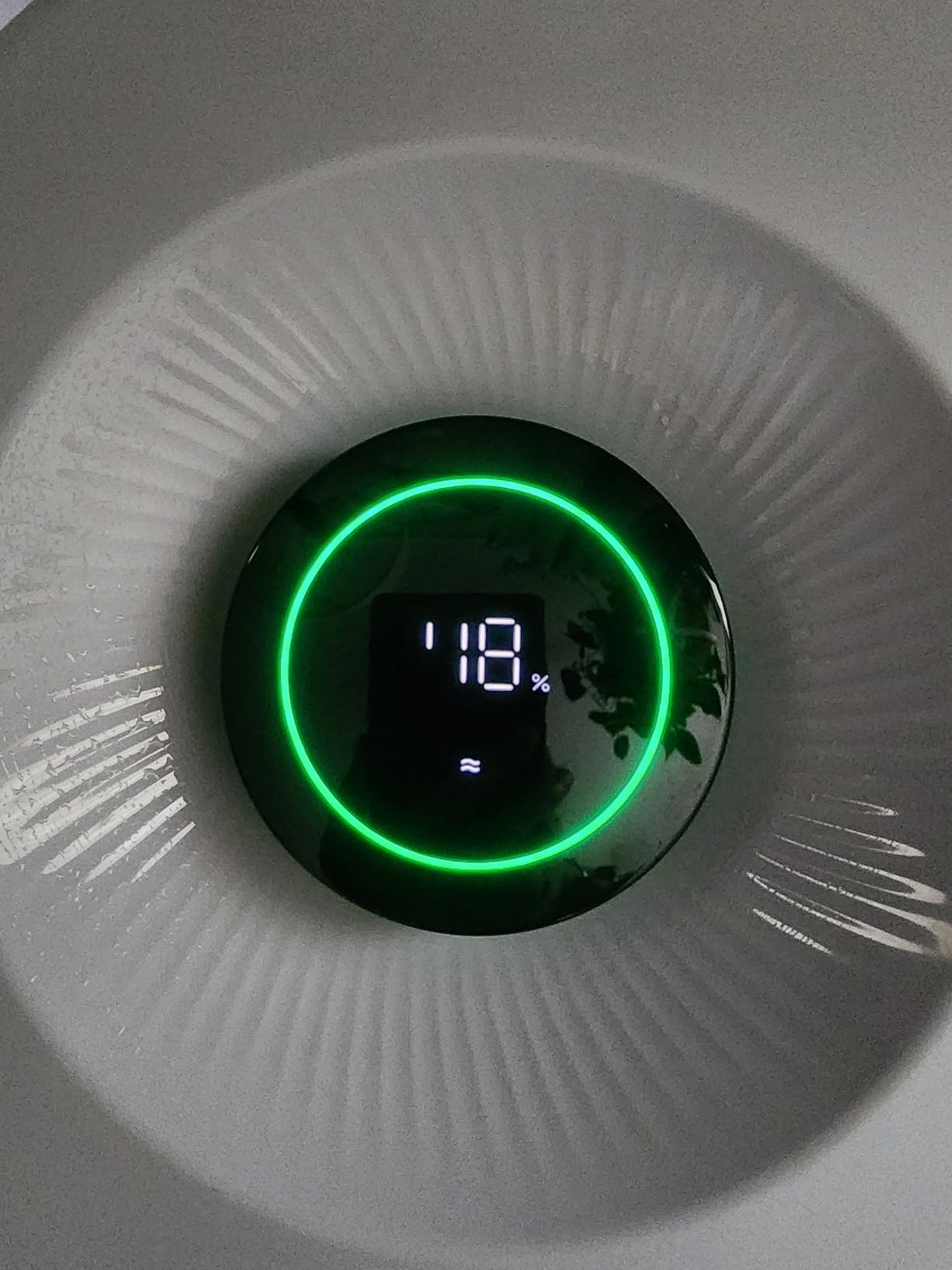
Owners with 4.4 ratings across 116 reviews point to the clean, dust-free output and the combined air cleaning as the reasons it works for them. The recirculating wick design is credited with keeping output steady over time.
The 5 liter tank is the weak point for a nursery. Owners in dry conditions report refilling as often as twice a day, which undercuts the quiet 28dB advantage, and the on-screen humidity reading is described as inaccurate. At 15.4 pounds and 23.5 inches tall, it is among the heaviest units here, and the air filter itself needs periodic cleaning as it collects dust.
When air quality is the actual problem
A stuffy, dusty nursery with a pet or an allergy sufferer is where the two-in-one earns its cost. You are not buying a second air purifier, and the evaporative path still means no white dust on surfaces.
When it is overkill
If your only problem is dry winter air in a small room, this is a lot of machine for the job. The weight, the height and the twice-daily refill habit all work against a nursery use case, and a smaller unit will serve you better.
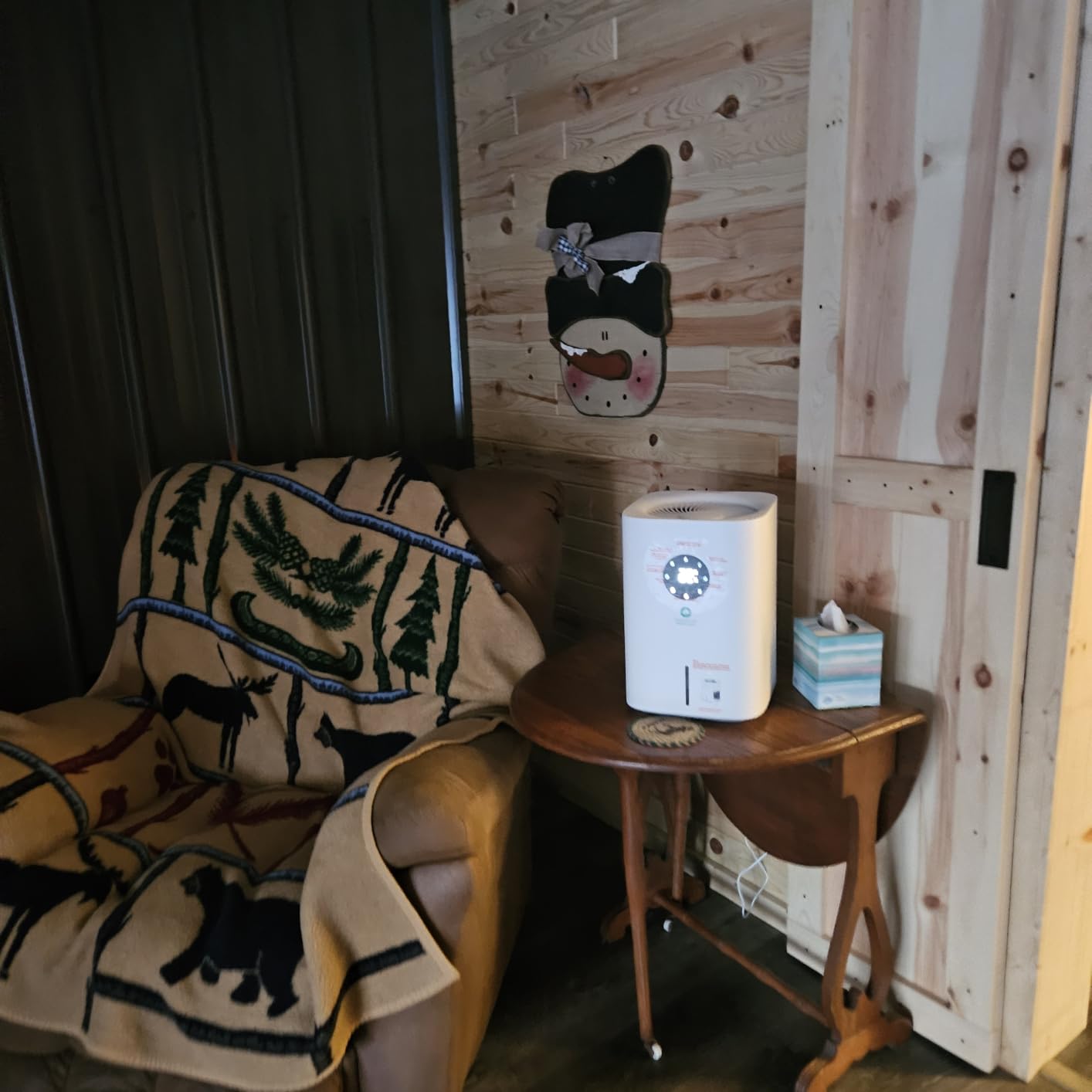
8. Provirtec Pro Baby Humidifier HC-05 – built for a newborn’s room
Provirtec Pro MistFree Evaporative Humidifier for Bedroom Easy Clean
4L tank
16dB sleep mode
300 sq ft coverage
3 age modes
Pros
- Works with ordinary tap water and no white dust
- 16dB sleep operation with dimmed display
- Infant toddler and child modes
- Child lock with tip-over and dry-run protection
Cons
- Replacement filters are hard to source and pricey
- 300 sq ft coverage suits small rooms only
- 10-hour runtime means nightly refills
This is the only unit here designed around infant stages rather than adapted to them. It runs three age-specific modes for infants from birth to one, toddlers one to three, and children three to six, each tuning output to a smaller body’s needs. A real-time humidity display shows you what is happening, and the demineralization filter is washable and rated for 6 to 12 months.
Safety hardware is where it separates itself. Tip-over protection, a child lock, auto shut-down and dry-run protection are all standard, and the CPC and FCC certifications are stated on the listing. At 16dB in sleep operation with a dimmable display, it is the quietest unit in this roundup by its published figure, and it works on ordinary tap water with no white dust.
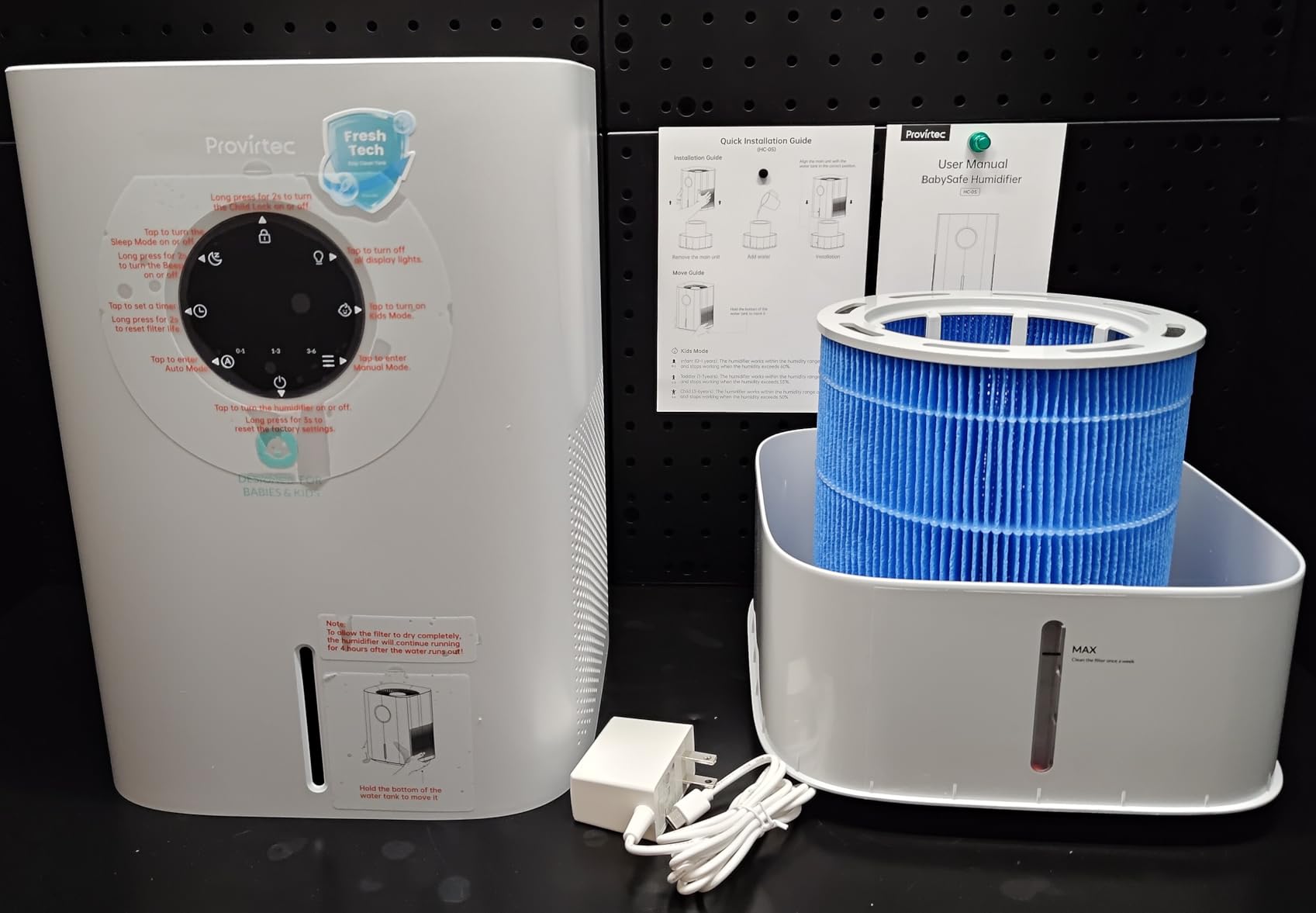
The 4 liter top-fill tank and 400ml per hour of output cover rooms up to 300 square feet, which covers most nurseries. Owners like the quietness, the top-fill convenience and the age modes, and the 4.0 rating across 148 reviews is the lowest here, mostly for reasons that have nothing to do with how it performs.
Replacement filters are the repeated complaint. Owners report difficulty sourcing compatible cartridges after several months, and when they are available they are pricey, which is a real risk for a unit whose only consumable is hard to find. The 300 square foot ceiling and a 10-hour stated runtime also mean nightly refills in most nurseries.
Why the age modes are worth something
Output that is already set for a newborn is one fewer variable to get wrong, and the tip-over and dry-run protection are the combination you actually want on a dresser next to a crib. The dimmed display keeps the room dark.
Where the compromises are
Small rooms only, nightly refills, and a filter supply you should confirm before buying. If you can verify the cartridge is available for your region, this is a strong choice for a first-year nursery.
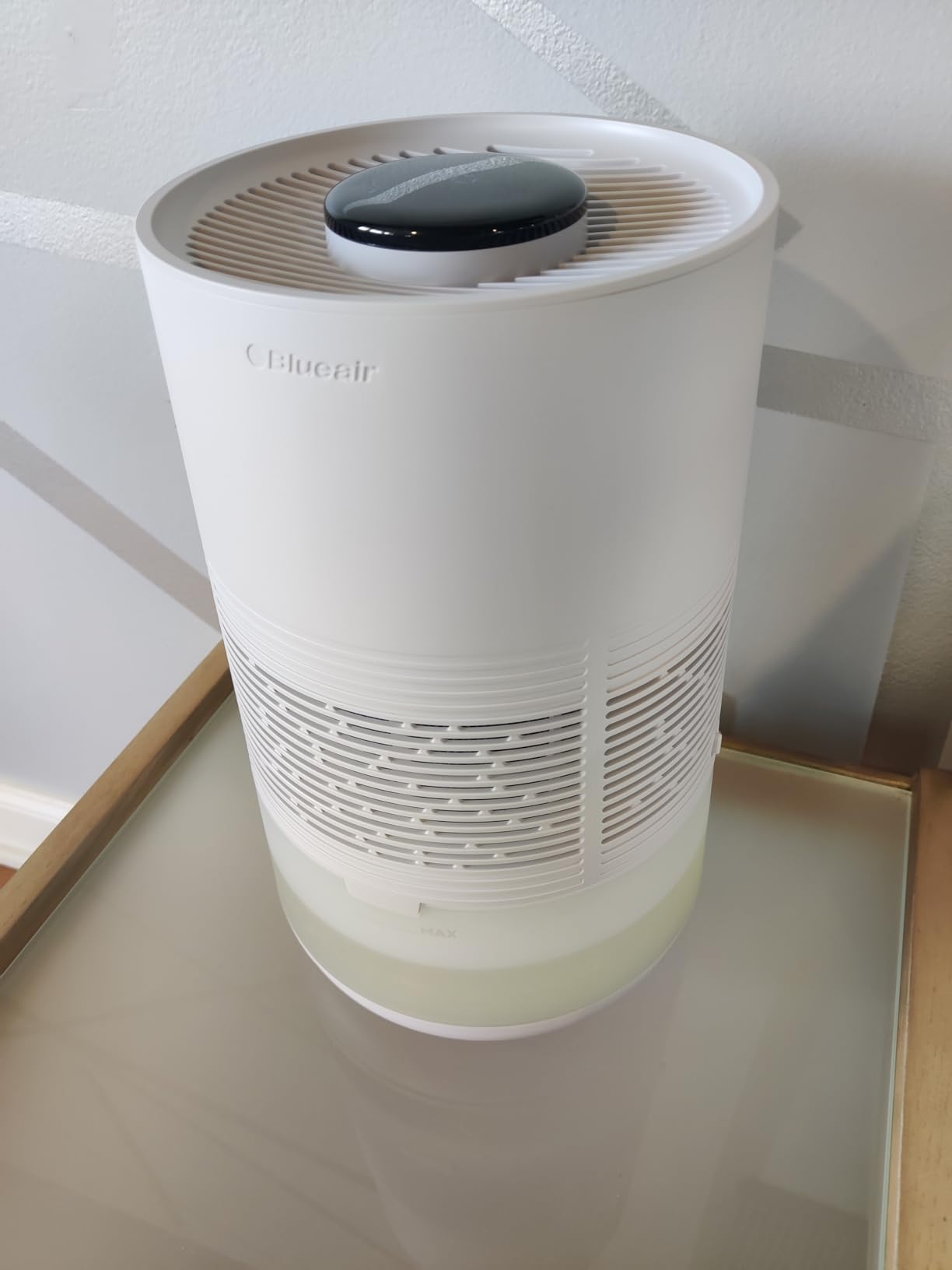
9. Blueair Premium Smart Humidifier – wick upkeep and mold control
BLUEAIR 3.5L Humidifiers for Bedroom, Large Room, InvisibleMist H35i
3.5L tank
Up to 48h runtime
Anti-microbial wick
Auto Dry mode
Pros
- Mist-free output with no powdery residue
- Anti-microbial wick rated for 6 months
- Auto Dry and AutoHydrate modes
- Top-fill dishwasher-safe tank
Cons
- Requires a smartphone and app setup
- Often needs refilling every 24 hours
- Some models fail within 6-10 months
Wick mildew is the failure mode nobody talks about, and this unit is engineered against it. The wick filter is anti-microbial, rated by the manufacturer for a 6-month lifespan, and there is a UV-integrated pump with automatic water detection and recirculation so the water does not sit stagnant. Auto Dry mode runs the fan after shutdown to dry the filter, which is the most direct thing you can do to prevent mildew.
Everything else is conventional and solid. A 3.5 liter top-fill tank is dishwasher-safe, the 360-degree InvisibleMist evaporation leaves no residue, and coverage is rated at 500 square feet with up to 48 hours of runtime. Control is available through an app, voice assistant, or a touchscreen on the unit.
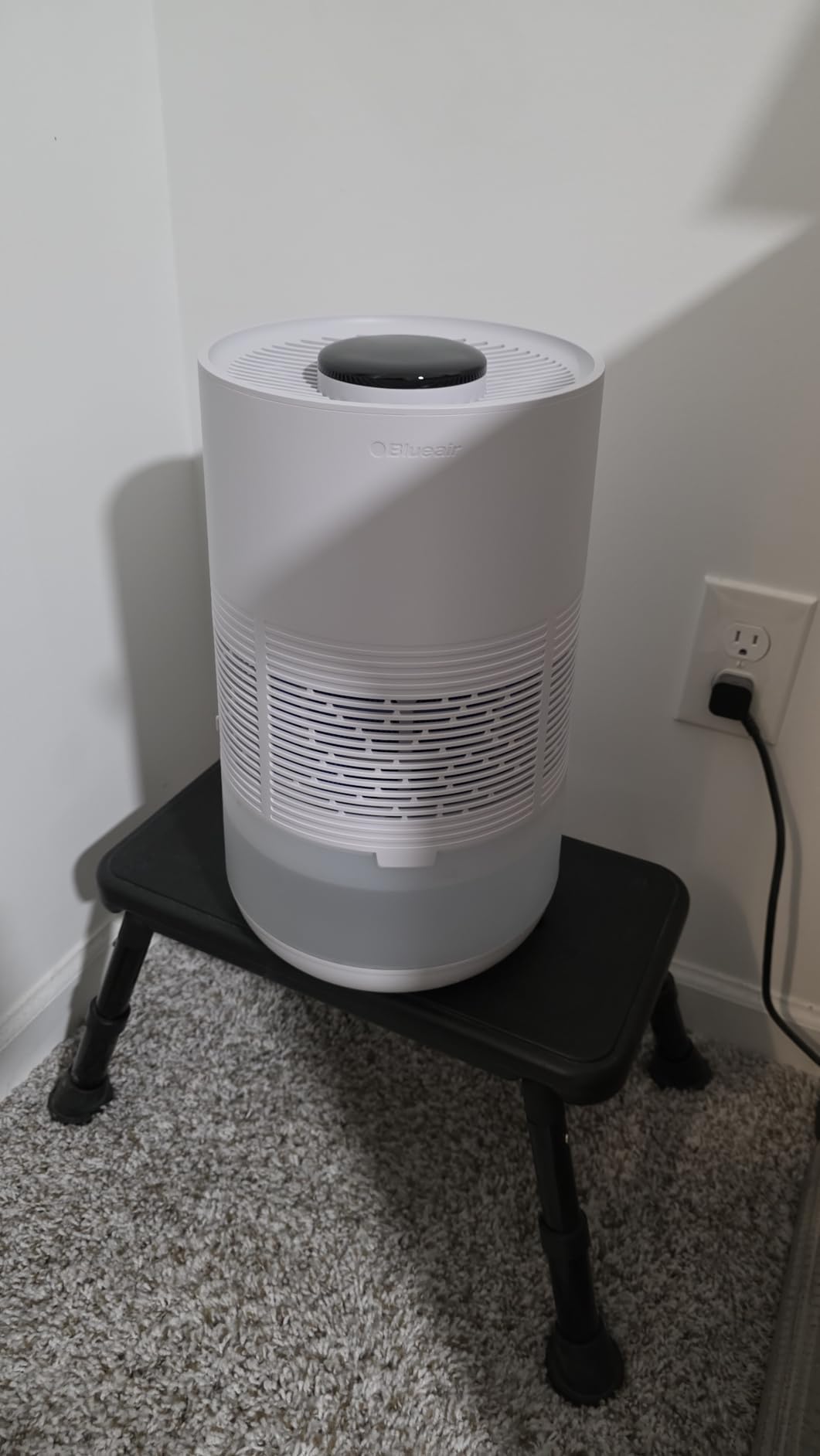
Owners report no mold or mildew after extended use, constant stable humidity once the target is set, and a leak-proof top-fill design. The residue-free output is the most common positive, and it is the reason evaporative models are chosen over ultrasonic in the first place.
Three cautions. Setup depends on an app, which is a barrier for anyone not comfortable with phones. The 48 hour runtime claim is disputed: reviewers say a refill is often needed every 24 hours. And the wick needs weekly cleaning with citric acid or the water discolors, while a minority report models failing within 6 to 10 months and support being slow to respond.
For parents whose main worry is mold
If you have already had a humidifier grow something unpleasant, the anti-microbial wick, UV pump and auto-dry cycle are the features that address it directly. The dishwasher-safe tank removes the other half of the problem.
Before you commit
With 70 reviews this is the thinnest owner history in the roundup, so you are buying on specification rather than on a long pattern of feedback. It is also the least hands-on option for anyone without a smartphone.
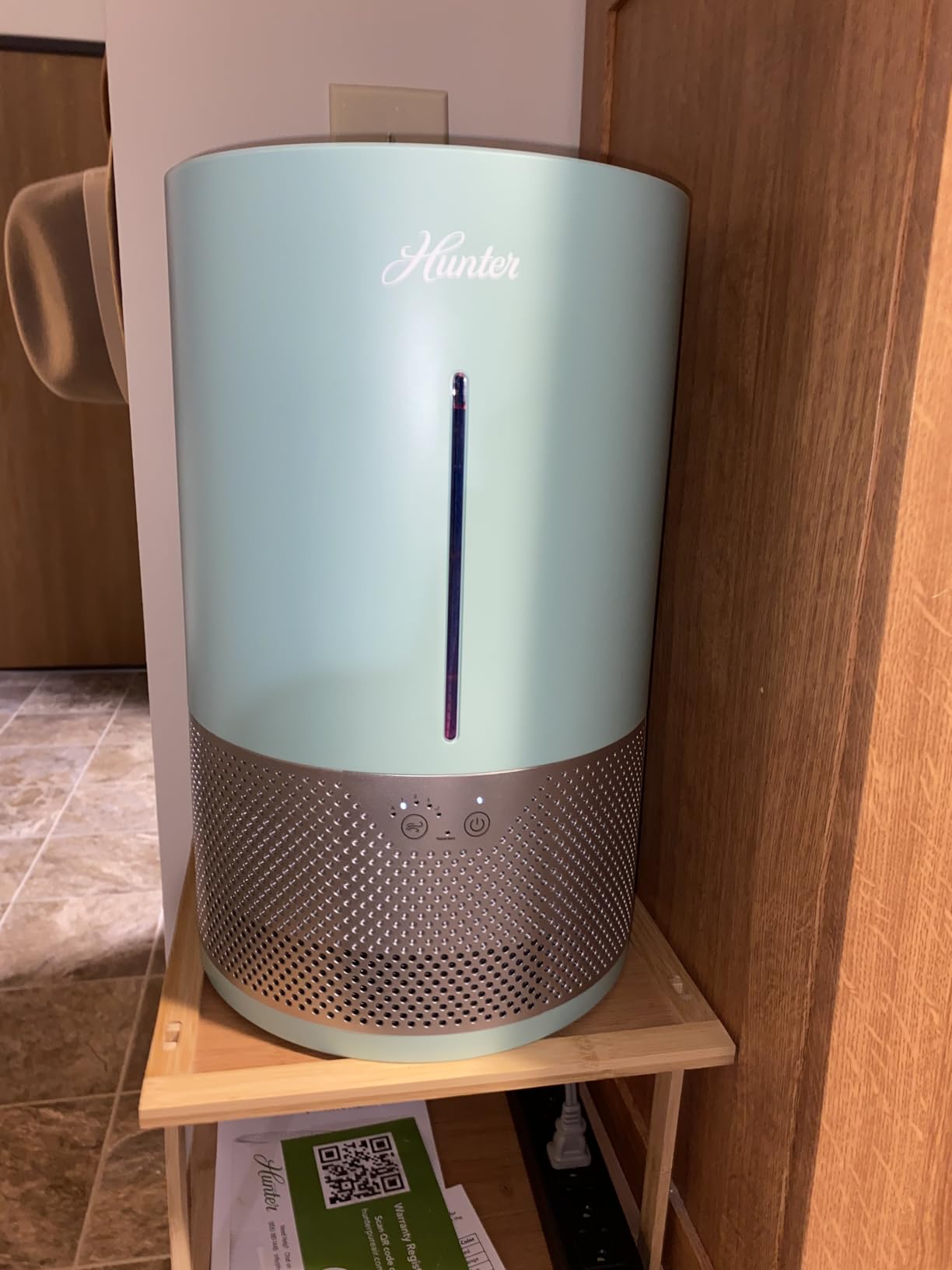
10. Hunter Aspire Evaporative Humidifier – a reusable wick with no reorder cost
Hunter Fan Aspire Evaporative Humidifier, Bedroom & Large Room, 456 Sq Ft
4.8L tank
35h runtime
Covers 456 sq ft
Reusable PermaWick
Pros
- Reusable PermaWick filter with no white dust
- Sleep mode dims lights for a dark nursery
- Auto mode holds 45-50% humidity
- Four colour options
Cons
- High-pitched motor whine on medium and high speeds
- Needs refilling up to twice a day
- Auto shut-off does not always engage
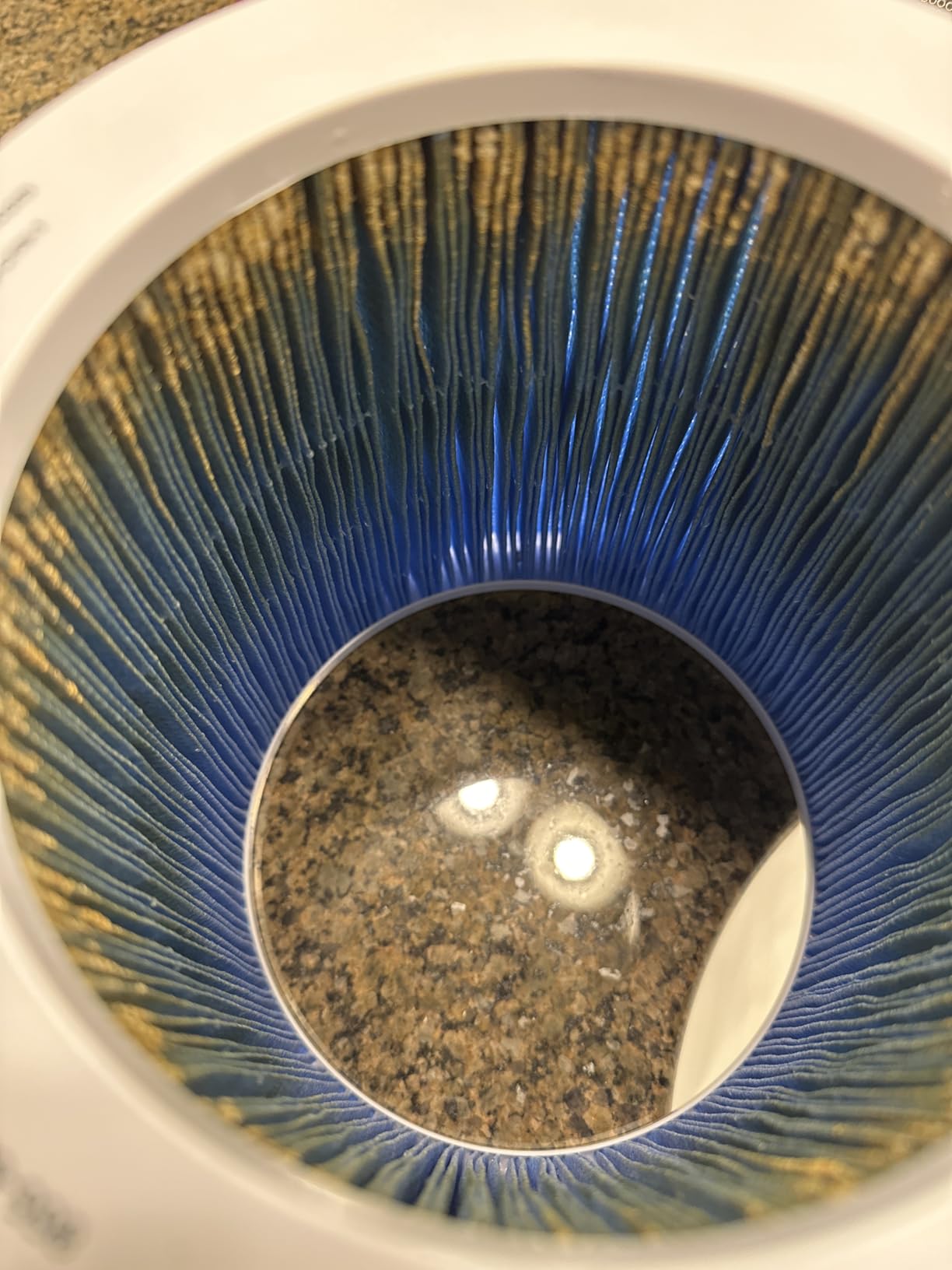
If the question is simply whether evaporative is worth trying, this is the lowest-commitment way to find out. The PermaWick filter is reusable rather than a consumable cartridge, so there is nothing to reorder, and it traps minerals well enough that owners report no white dust on ordinary tap water.
Auto mode adjusts the fan speed to room conditions, and owners report it holding 45 to 50 percent humidity in medium bedrooms. The 4.8 liter tank gives up to 35 hours of runtime with coverage rated to 456 square feet. Sleep mode turns off the display lights entirely, which is exactly what a dark nursery needs.
It is also offered in four colours, which sounds minor and is not when you are trying to make a humidifier disappear into a room. The 4.2 rating across 81 reviews comes mostly from owners satisfied with output per pound spent.
The complaints are consistent enough to plan around. A high-pitched motor whine shows up on medium and high speeds, so this is a low-speed unit in practice. It needs refilling up to twice a day. A minority report filter mold even with cleaning, which suggests a stricter wash routine than the every one to three months the manual suggests. Most seriously for a nursery, some owners report auto shut-off that does not engage when the tank empties.
When a first humidifier is the right buy
For a small room, a trial run, or a household that does not want a consumable cost, the reusable filter and auto mode do the job without an ongoing reorder. The dimmed sleep mode is a genuine nursery feature.
When to spend more instead
If auto shut-off reliability matters to you, which it should in a baby’s room, move up to a unit with a verified fail-safe and a quieter motor. Twice-daily refills are also hard to sustain through a long winter with one parent at home.
How to Choose an Evaporative Humidifier for a Baby’s Room
Cool mist only, and that is not negotiable. The American Academy of Pediatrics recommends cool mist humidifiers for infants, and warm mist units are rejected on burn risk: a toddler who can reach a steam outlet or tip a hot-water unit gets scalded, and the warm vapor itself can swell nasal passages. If you are still deciding between categories, our evaporative versus fan cooling comparison explains the same fan-driven moisture logic applied to a different room type, and evaporative humidifiers are the cooling cousins of that technology.
Match the tank to the room, not the other way around
For a 100 to 150 square foot nursery, a 2.5 to 4.5 liter tank is enough. Beyond 250 square feet, move up to 8 or 10 liters, and accept the height and weight that comes with it. The runtime figure on the box is measured on the lowest setting, so treat it as a ceiling rather than a promise.
Buy for the water you actually have
Evaporative models can run on tap water because minerals stay in the wick instead of reaching your furniture as dust. That is the main advantage on hard water. The exception is hard water with an ultrasonic-style demineralization cartridge, which still needs replacing on a schedule.
Check the wick economics before the tank size
Count how often you will replace the wick and what one costs. A washable wick rated for two years changes the math entirely, a 6-month cartridge is manageable, and a subscription-based filter is a recurring bill you should decide on knowingly rather than discover in month three.
Treat noise as a sleep feature
Anything under 25dB disappears in a sleeping room. Above that, look for a sleep mode that dims the display, and be aware that fan whine on medium and high speed is the most common complaint in this category.
Ask how easy it is to wash
A top-fill tank with dishwasher-safe parts is the single biggest predictor of whether a humidifier stays clean or develops biofilm. The What to Expect threads on this topic are literally titled around cleaning, and the parents who keep up with it are the ones whose units last.
Evaporative vs Ultrasonic vs Warm Mist
The short version: evaporative wins on safety and dust, ultrasonic models are the ones with no consumable parts to reorder, and warm mist should not be used in a baby’s room at all.
Evaporative models use a fan and a wick, produce no visible mist, leave no white dust, tolerate tap water, and cost more over their life because of filter replacements. Ultrasonic models have no consumables to reorder and are often the quietest option, but they aerosolize whatever minerals are in the water, which is why white dust on crib rails is their defining complaint. Warm mist heats water to near boiling, which raises humidity fastest and carries a burn and scald risk that every credible pediatric source rules out for infants.
Cleaning frequency is similar across the first two types, roughly weekly for the tank and base, with the wick or ultrasonic plate needing attention on top of that. If you cannot commit to a weekly wash, the honest answer is that no humidifier type is right for your household yet.
Where to Put a Humidifier in a Nursery
Never on, over, or inside the crib. The vapor should reach the baby without the unit being reachable, so place it on a dresser or shelf at least three feet from the crib on a hard surface, with the outlet directed at the room rather than at the mattress or a wall, since damp surfaces invite mold.
Route the cord so it cannot be pulled and cannot become a strangulation hazard, and keep the unit out of reach once a baby can sit up and lean. A child lock helps but is not a substitute for placement. Check that auto shut-off actually engages when the tank runs dry, which is the one safety feature worth testing yourself within the first week.
Keep the room between 30 and 50 percent relative humidity, and buy a cheap hygrometer to check, because a sensor that reads high will stop the unit short. Above 50 percent you gain nothing and start encouraging dust mites and mold, which is worse for a congested baby than dry air.
Cleaning Schedule and Wick Maintenance
In the first week with a new unit, change the water daily and wipe the tank, base and wick frame. Rinse the wick rather than just letting it sit soaked, since a permanently wet filter is where mildew starts. If the tank came from storage or a second-hand source, run one full wash cycle before the baby sleeps in the room.
Weekly, empty and rinse the tank, wipe the interior, and clean the wick filter. Dishwasher-safe parts go in the dishwasher; everything else gets a scrub brush and a rinse. Monthly, descale mineral deposits with white vinegar or citric acid, and check the wick for stiffness or discoloration, which means it has reached the end of its useful life.
Two habits do more than any schedule. Running the unit’s dry or auto-drying mode after shutdown pulls moisture out of the wick overnight instead of leaving it damp, and never adding essential oils to a baby’s humidifier, which is both a respiratory irritant and a fast way to foul a wick. If a used or hand-me-down humidifier has a mineral-scaled tank, a missing wick frame, or unknown age, replace the filter at minimum and consider a new unit rather than putting it near an infant.
Frequently Asked Questions
Are evaporative humidifiers better than ultrasonic for babies?
For a baby’s room, yes, usually. Evaporative units push air through a water-soaked wick and release invisible vapor, so there is no aerosolized mist, no white dust on surfaces, no heating element and no burn risk. Ultrasonic units are cheaper and quieter but mineralize the water and deposit white dust, which settles on crib rails and nearby furniture. The main trade-off with evaporative units is the recurring cost of wick or cartridge replacements.
Is it safe to leave a humidifier on all night in a baby’s room?
It is, with conditions. Use a cool mist or evaporative unit, never warm mist. Place it at least three feet from the crib on a hard surface, out of reach, with the cord routed so it cannot be pulled. Choose a model with auto shut-off when the tank empties and a child lock, and keep the room between 30 and 50 percent relative humidity using a separate hygrometer, because built-in sensors often read high.
Do pediatricians recommend humidifiers for babies?
The American Academy of Pediatrics recommends cool mist humidifiers for infants and advises against warm mist because of burn and scald risk. Pediatricians do use humid air to ease congestion, dry cough and irritated nasal passages in dry winter air, on the condition that a dirty humidifier or excess moisture can make symptoms worse. That makes cleaning and humidity control part of the recommendation rather than optional extras.
Which type of humidifier requires the least cleaning?
Evaporative and ultrasonic models both need a weekly tank and base wash, and both benefit from a top-fill tank with dishwasher-safe parts. Evaporative models add a wick that must be rinsed regularly, while ultrasonic models add a vibrating plate that scales and can harbor biofilm. Whichever type you choose, the deciding factor is how easy the parts are to disassemble, not the humidifier technology itself.
Which humidifier does not leave white dust behind?
Evaporative humidifiers do not produce white dust, because water never becomes droplets and the minerals stay trapped in the wick or demineralization filter. That is why they are the safer choice in a nursery, especially on hard water where an ultrasonic unit would scatter mineral residue across surfaces a baby touches. The trade-off is a replacement filter on a schedule rather than a tank-only consumable-free design.
The Bottom Line
For most nurseries the Levoit 3.8L evaporative humidifier is the one to buy: mist-free output, a top-fill tank that runs up to 36 hours, a separate humidity sensor, an auto-drying mode and a nightlight, backed by by far the largest review base here. Choose the Canopy Bedside if the dishwasher-safe parts matter more to you than filter cost, the Jack and Rose if you want to stop paying for replacement wicks every few months, and the Provirtec Pro Baby if your baby is under a year old and you want age-specific modes and verified tip-over and dry-run protection.
Whatever you pick, buy a hygrometer, keep the room under 50 percent, run the dry mode after shutdown, and place the unit three feet from the crib and out of reach. That routine matters more than the model. This guide reflects the models and listings we researched in 2026, so check the current details before you buy.