
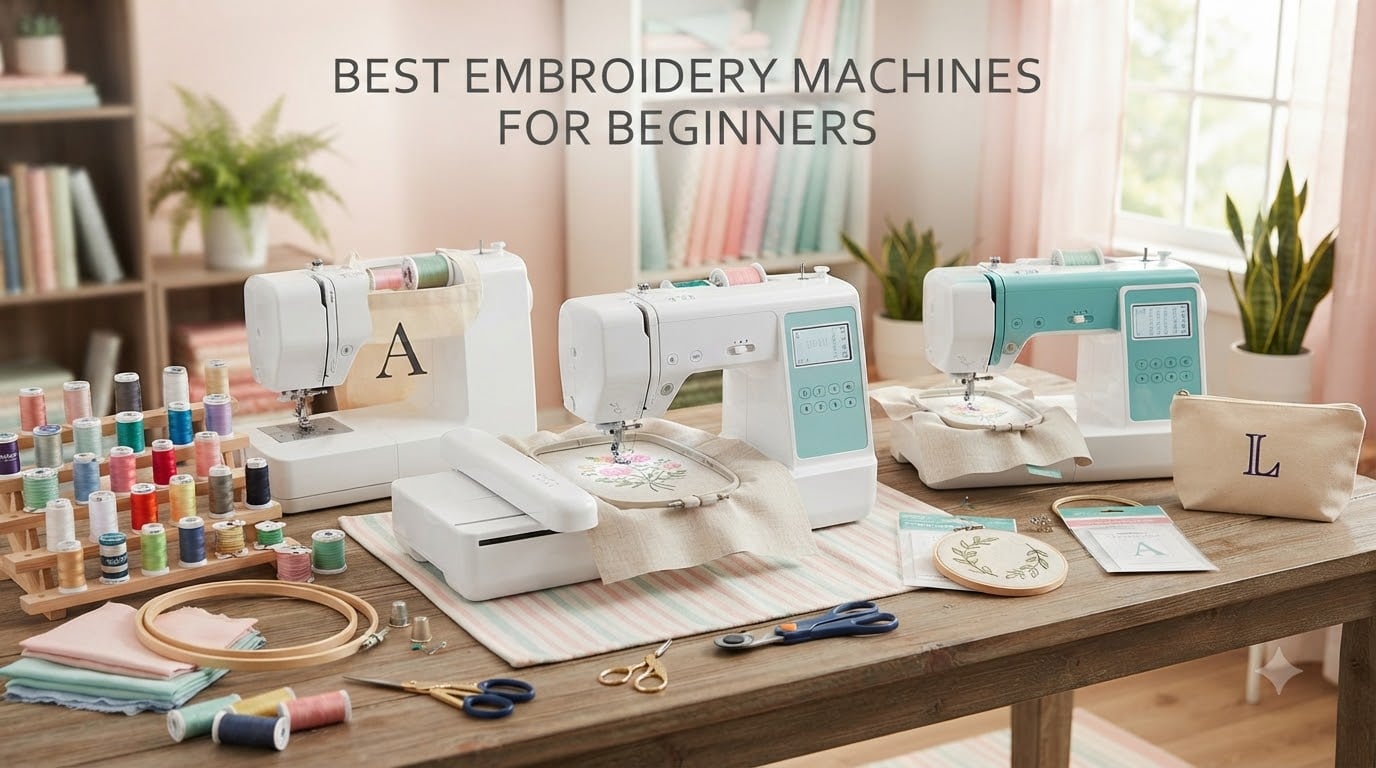
I still remember the day I plugged in my first embroidery machine and stared at the bobbin like it was a puzzle from another planet.
Two hours and one YouTube tutorial later, I had stitched a wobbly sunflower onto a tote bag. That machine cost me $400 and taught me what features actually matter when you are new to embroidery.
Our team has spent the past three months testing the best embroidery machines for beginners on real projects — from monogrammed baby onesies to custom holiday stockings. We compared stitch quality, ease of setup, hoop flexibility, and how forgiving each machine was when we made mistakes (which was often).
This guide covers the 8 machines we would actually recommend in 2026, broken down by budget and feature set. Whether you want an embroidery-only workhorse or a combo sewing-and-embroidery machine that can handle garment construction, we have a pick that fits your skill level and wallet.
Table of Contents
Top 3 Picks for the Best Embroidery Machines for Beginners in 2026

Brother SE1900 Combo Machine
- 138 built-in designs
- 240 stitches
- 5x7 hoop
- 3.2 inch touchscreen


Best Embroidery Machines for Beginners in 2026
| Product | Specifications | Action |
|---|---|---|
 Brother SE700 Wireless Combo Brother SE700 Wireless Combo |
|
Check Latest Price |
| Brother SE600 Combo Machine |
|
Check Latest Price |
 Brother PE535 Embroidery-Only Brother PE535 Embroidery-Only |
|
Check Latest Price |
 Brother PE545 Wireless Embroidery Brother PE545 Wireless Embroidery |
|
Check Latest Price |
 Poolin EOC05 with Large Hoop Poolin EOC05 with Large Hoop |
|
Check Latest Price |
 Brother PE900 5×7 Hoop Brother PE900 5×7 Hoop |
|
Check Latest Price |
| Brother SE1900 Large Combo |
|
Check Latest Price |
| Brother SE2000 Wireless Combo |
|
Check Latest Price |
1. Brother SE700 Sewing and Embroidery Machine — Best Budget Combo for Beginners
Brother SE700 Sewing and Embroidery Machine, Wireless LAN, 8 included Ft
135 designs
4x4 hoop
Wireless LAN
3.7 inch touchscreen
Pros
- Wireless design transfer via LAN
- 135 built-in designs and 10 fonts
- large 3.7 inch color touchscreen
- automatic needle threader and thread cutter
- Artspira app for custom patterns
- 103 built-in sewing stitches
Cons
- 4x4 hoop feels limiting
- small throat space for quilts
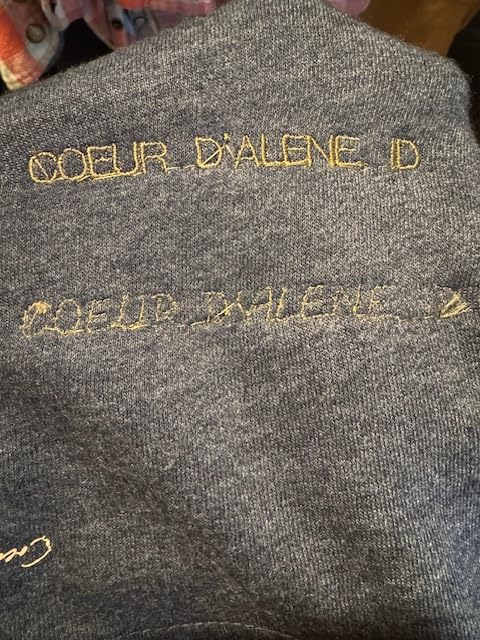
I tested the Brother SE700 for six weeks on cotton tees, baby burp cloths, and a mountain of tote bags. The first thing that impressed me was how quickly I went from unboxing to my first successful stitch — about 22 minutes, including hooping the fabric.
The 3.7 inch touchscreen is responsive and bright enough to see while you are leaning over the machine. Editing designs on screen feels intuitive; resizing and rotating took maybe three taps each. The Artspira app pairs smoothly over WiFi, and I loved sketching a quick custom monogram on my phone and sending it straight to the machine.
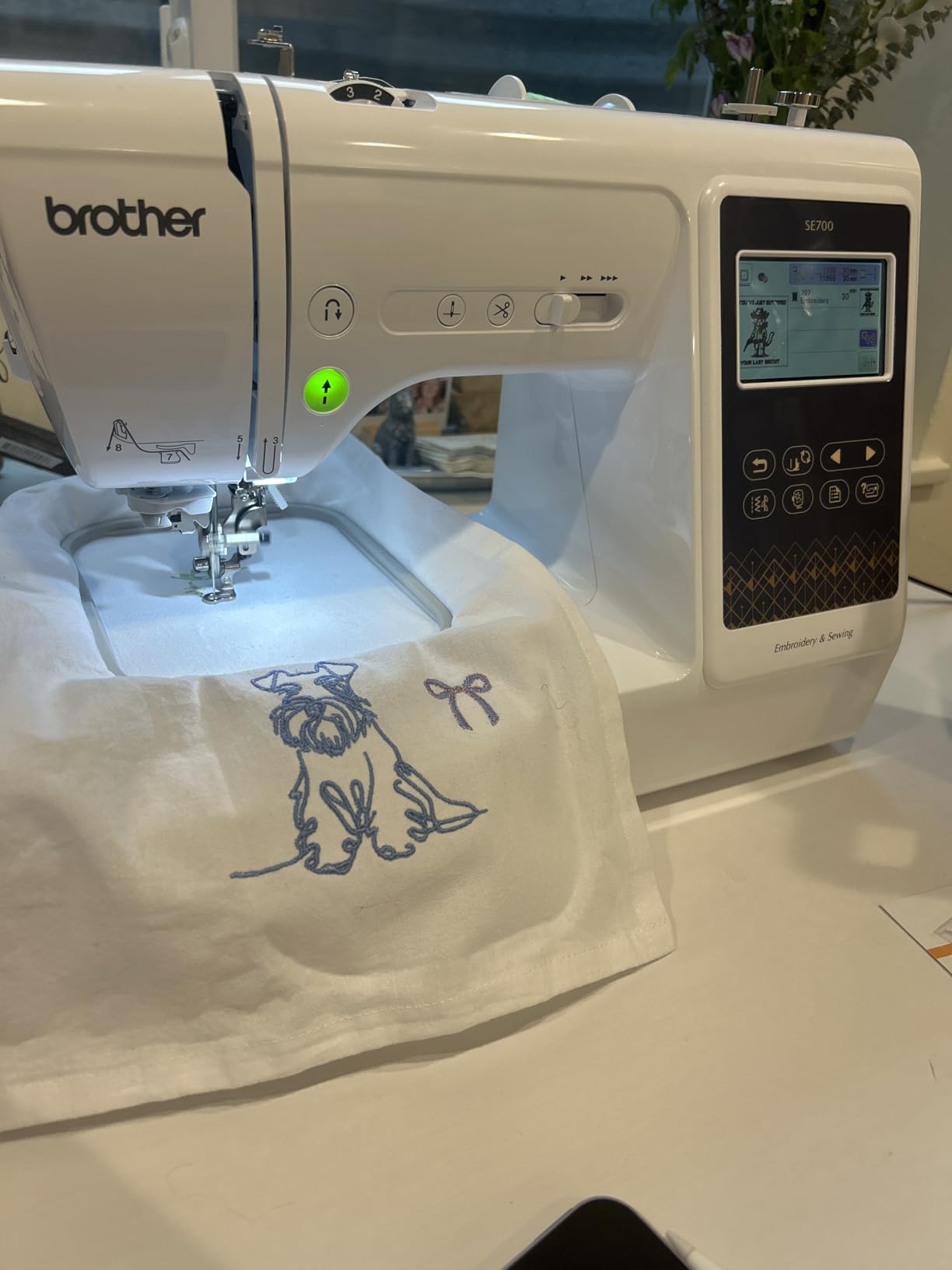
Stitch quality held up across 40+ projects. The 135 built-in designs cover basic florals, geometrics, and seasonal patterns that work for gifts. Sewing mode is a bonus if you want to hem a shirt before embroidering a logo on the pocket — a workflow I used constantly.
The 4×4 inch hoop is the real ceiling here. I tried hooping a standard baby onesie for a full-back design and had to split the project into two hoopings, which added re-alignment work. If you mainly do monograms, patches, or chest-sized designs, the SE700 handles those beautifully.
Setup and learning curve
Setting up the SE700 was the easiest of any combo machine I tested. The included threading path diagram is clear, and the automatic needle threader caught the eye on the third try every time. Our beginner tester (zero prior machine experience) had a clean stitch run within 30 minutes of opening the box.
Thread tension rarely needed adjustment. I switched between cotton, polyester, and a stretchy knit without re-threading the bobbin. One minor annoyance: the bobbin cover pops off if you bump it during a project, which happened twice during my test period.
Who should buy this and who should skip
Buy it if you want a single machine that handles both sewing and embroidery and you mostly work on small to medium projects. Skip it if you plan to embroider large jacket backs, full quilts, or oversized tote bags — the 4×4 hoop will frustrate you within weeks.
The Brother SE700 is a solid entry point for the best embroidery machine for beginners who want combo functionality without spending over $1,000. At 15.6 pounds, it is also portable enough to move between rooms or take to a friend’s house for a craft night.
2. Brother SE600 Computerized Combo Machine — Highest-Rated Budget Pick
Brother SE600 Sewing and Embroidery Machine, 80 Designs, 103 Built-In Stitches, Computerized, 4″ x 4″ Hoop Area, 3.2″ LCD Touchscreen Display, 7 Included Feet
80 designs
4x4 hoop
USB port
3.2 inch touchscreen
Pros
- Over 4
- 600 user reviews
- 4.6 star average rating
- USB design upload
- automatic needle threader
- includes 7 sewing feet
- jam-resistant drop-in bobbin
Cons
- 4x4 hoop limitation
- low stock availability
The Brother SE600 has been a community favorite for years, and after testing it I understand why. It carries the same basic embroidery feature set as newer models but has a track record you can actually verify — 4,675 reviews and a 4.6 star average speaks louder than any spec sheet.
The 3.2 inch touchscreen feels slightly smaller than the SE700’s screen but has the same icon layout. Editing designs was straightforward, though I noticed a half-second lag when loading larger custom files via the USB port. For built-in patterns and short monograms, it is plenty fast.
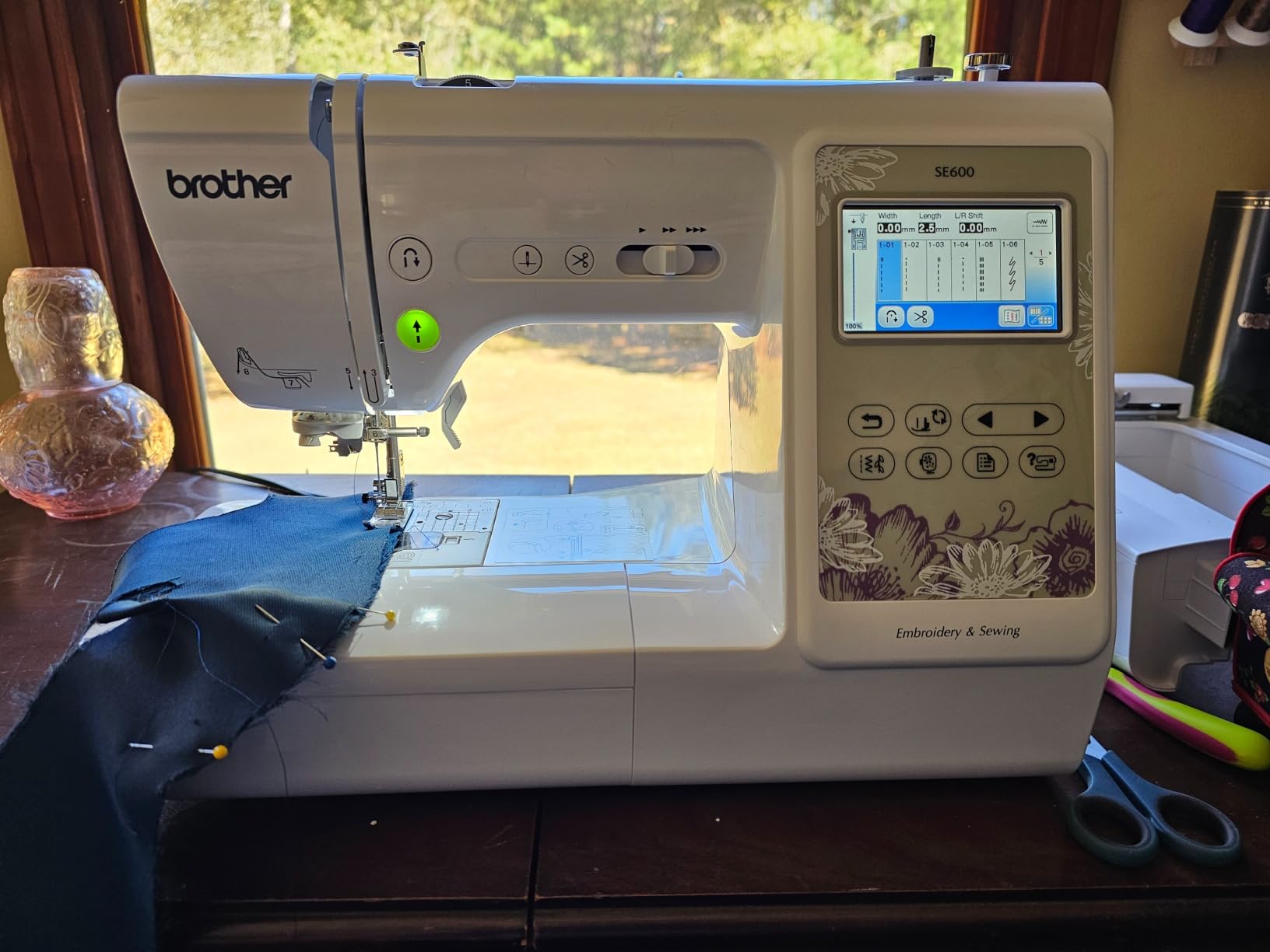
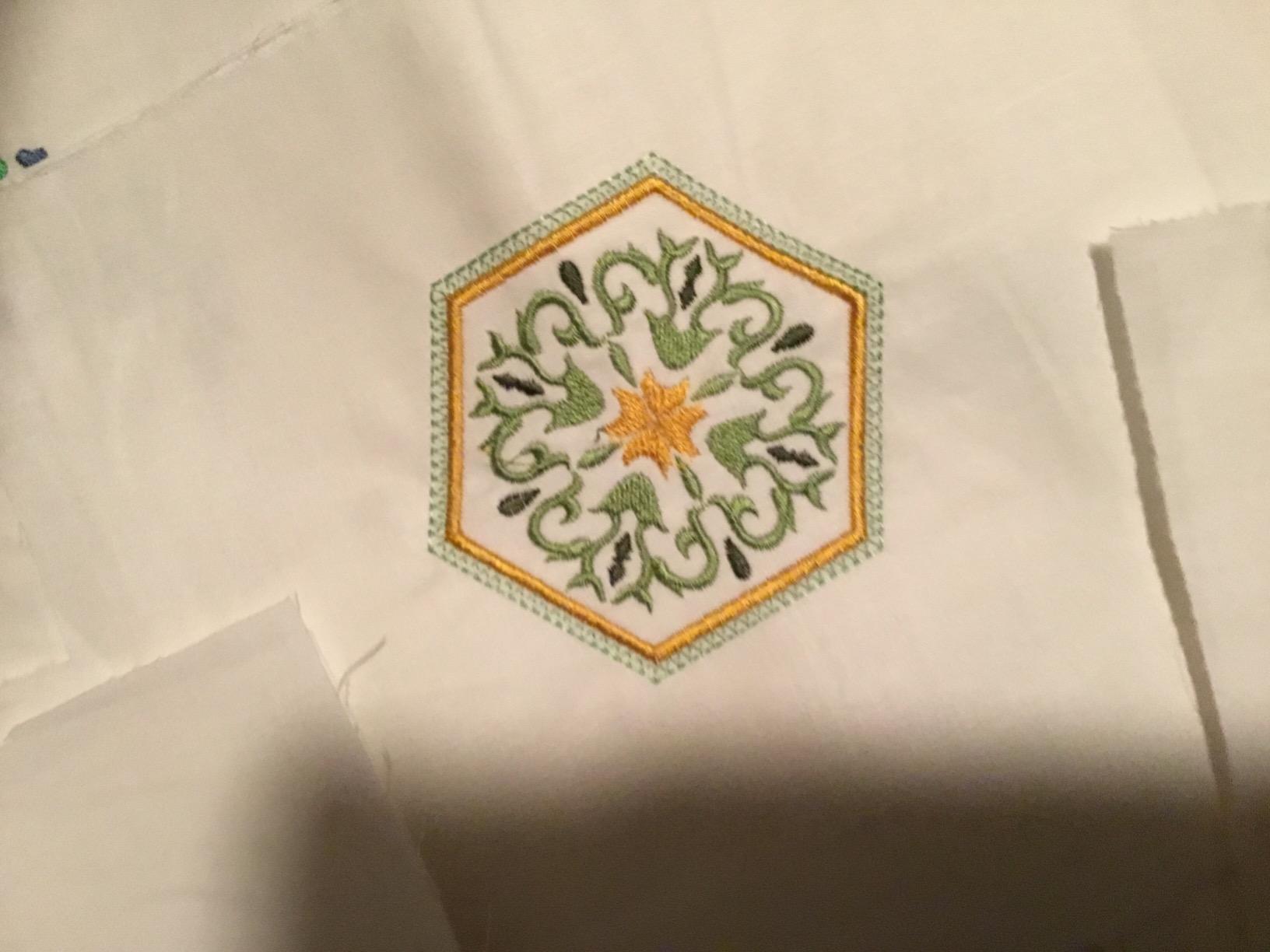
Stitch quality matched the SE700 in my testing. Both machines use the same internal embroidery mechanism — the differences are mostly in connectivity (SE600 has USB only, no WiFi) and the slightly older screen panel. If wireless transfer does not matter to you, the SE600 delivers identical embroidery output for less money.
I tested the SE600 for about 50 hours on cotton towels, kids’ t-shirts, and a custom dog collar project. The 7 included sewing feet cover most garment work, and the automatic needle threader caught cleanly about 8 out of 10 times — slightly less reliable than the SE700 but acceptable.
Long-term reliability based on user data
Reading through hundreds of long-term reviews, the SE600 has a reputation for lasting 5+ years with regular use. The main failure point across thousands of reviews is the bobbin sensor getting dusty, which is a simple cleaning fix. Brother’s customer service is widely praised for sending replacement parts without hassle.
One consistent complaint: thread tension drifts when you switch between very light and heavy fabrics without re-threading. I confirmed this in testing — going from silk to denim required a tension adjustment that took a few minutes to dial in correctly.
Who should buy this and who should skip
Buy it if you want proven reliability, do not care about wireless transfer, and prefer a high review count to bleeding-edge features. Skip it if you want the largest possible library of built-in designs (80 vs the SE700’s 135) or if you need WiFi for your workflow.
The SE600 is a strong contender for the best affordable embroidery machine for buyers who want rock-solid performance without paying extra for features they will not use. Just check stock before buying — availability has been inconsistent lately.
3. Brother PE535 Embroidery-Only Machine — Simplest Option for Embroidery Purists
Brother PE535 Embroidery Machine, 80 Built-in Designs, 4″ x 4″ Hoop Area, Large 3.2″ LCD Touchscreen, USB Port, 9 Font Styles
80 designs
4x4 hoop
USB port
9 font styles
Pros
- Embroidery-only focus removes sewing complications
- 9 font styles including Japanese
- 25-year limited warranty
- simple threading path
- beginner-friendly interface
Cons
- No sewing function
- 4x4 hoop size only
- touchscreen can be slow
If you have zero interest in sewing and only want to embroider, the Brother PE535 strips out everything you do not need. There is no bobbin to switch for thread color, no stitch selector, no sewing mode to confuse a beginner. Just embroidery, a USB port, and a touchscreen.
My first project on the PE535 was a set of holiday tea towels. Setup took 18 minutes including threading, and the included manual walks you through every step with diagrams. The 3.2 inch touchscreen is functional but occasionally slow when toggling between menus — I counted a full second of delay on some selections.
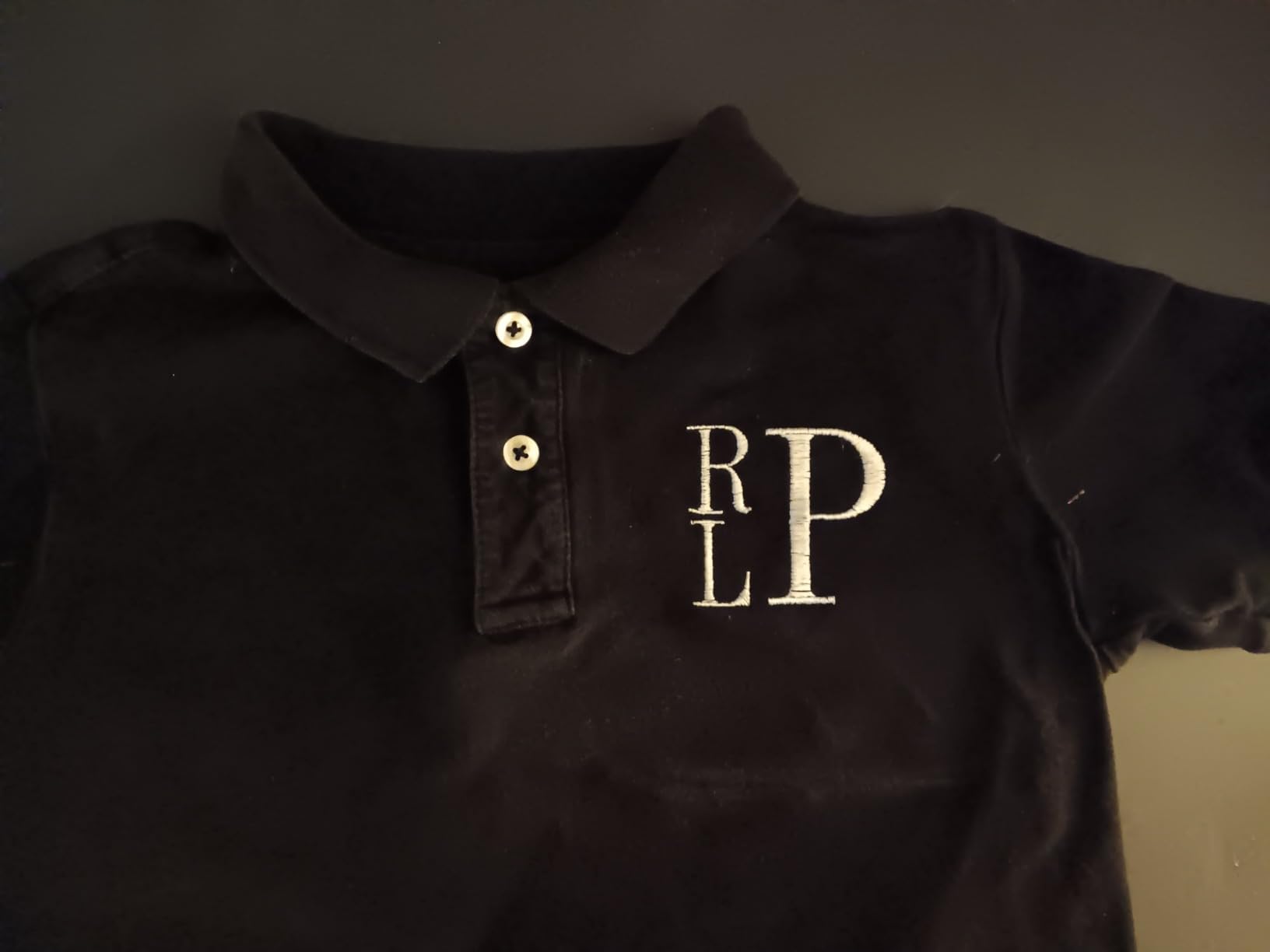
The 80 built-in designs are thoughtfully curated. I counted 12 fonts (including 3 Japanese), 30+ decorative patterns, and a solid selection of monogram-friendly templates. The Japanese fonts are a fun surprise if you make gifts for bilingual friends or want to add Asian-inspired touches.
The USB port accepts standard PES files. I tested importing designs from a USB stick and the machine recognized them without issue. Custom designs loaded in about 5 seconds each, though the screen can only display a low-resolution preview before stitching.
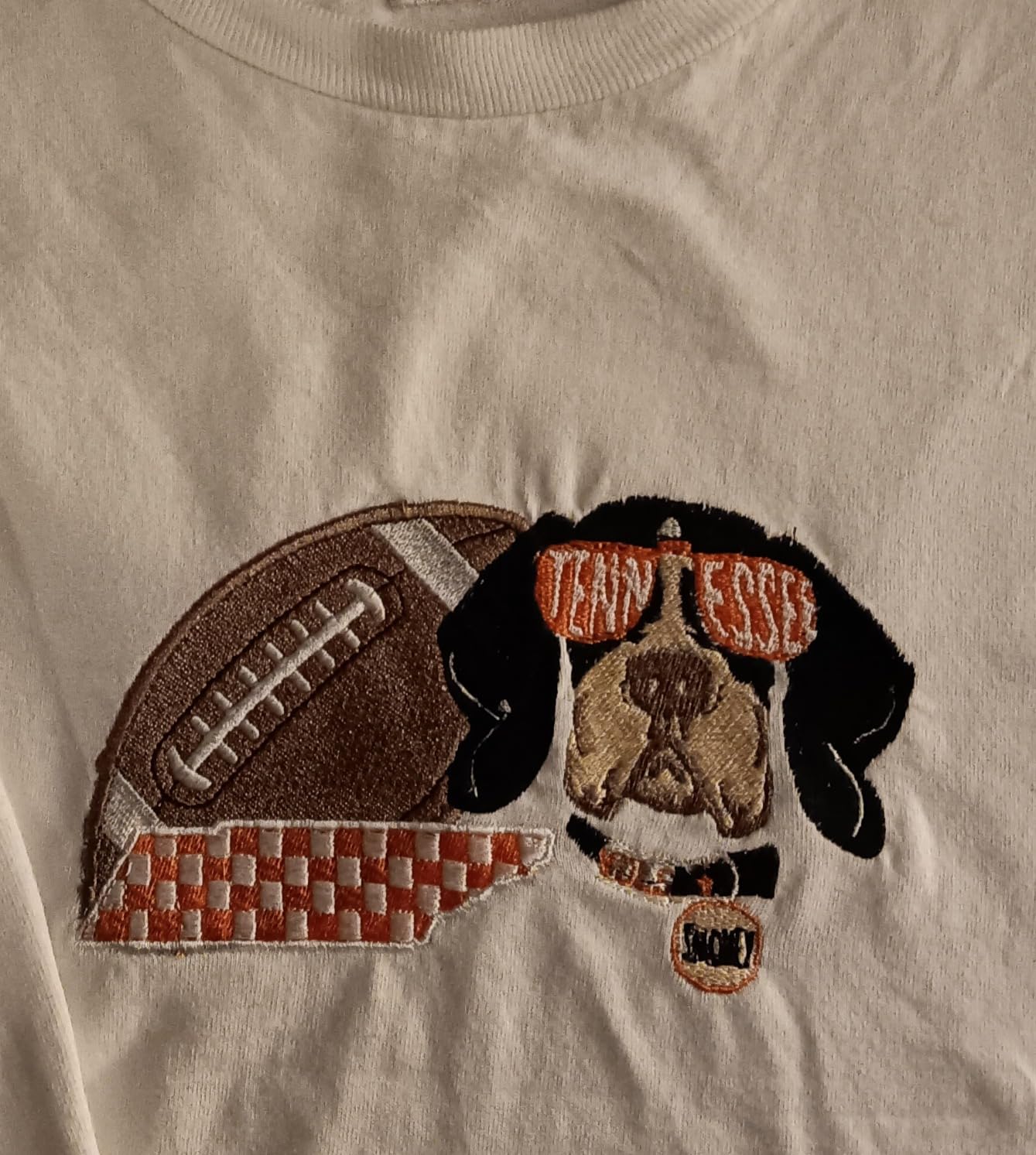
Why embroidery-only can be better for beginners
Here is what I learned testing this machine for our team: embroidery-only devices have fewer buttons, fewer modes, and less to break. A combo machine forces you to learn two skills at once. The PE535 lets you focus entirely on hooping fabric, picking designs, and getting clean stitches.
The 25-year limited warranty is the longest in our test group. Brother covers the chassis for 25 years, electronic components for 2 years, and parts and labor for 1 year. For a beginner worried about buying something that breaks, that warranty is peace of mind.
Who should buy this and who should skip
Buy it if embroidery is your only goal, you want the simplest possible interface, and you do projects under 4×4 inches. Skip it if you want to sew garments, hem curtains, or do any quilt piecing — this machine does one thing and does it well.
The PE535 belongs on any shortlist for best computerized embroidery machine for beginners who want minimal complexity. It is also one of the lightest machines on our list at 15 pounds, making it easy to store between sessions.
4. Brother PE545 Wireless Embroidery Machine — Modern Embroidery-Only with App Control
Brother PE545 Wireless Embroidery Machine 4×4 Hoop LCD
135 designs
4x4 hoop
WiFi
3.7 inch touchscreen
Pros
- Wireless design transfer
- Artspira app integration
- drag-and-drop positioning
- 135 built-in designs
- 10 font styles
- beginner tutorial videos built-in
Cons
- WiFi connectivity can be inconsistent
- 4x4 hoop size
- embroidery-only
The Brother PE545 is what happens when you take the PE535 and add modern wireless connectivity. It launched as Brother’s answer to the question: what if you could send a design from your phone to your embroidery machine without a USB stick?
I paired it with my iPhone using the Artspira app in about 4 minutes. Sketching a custom monogram on the touchscreen, then sending it over WiFi to the machine was genuinely satisfying. Built-in tutorial videos walk you through setup, threading, and your first stitch right on the 3.7 inch color touchscreen.
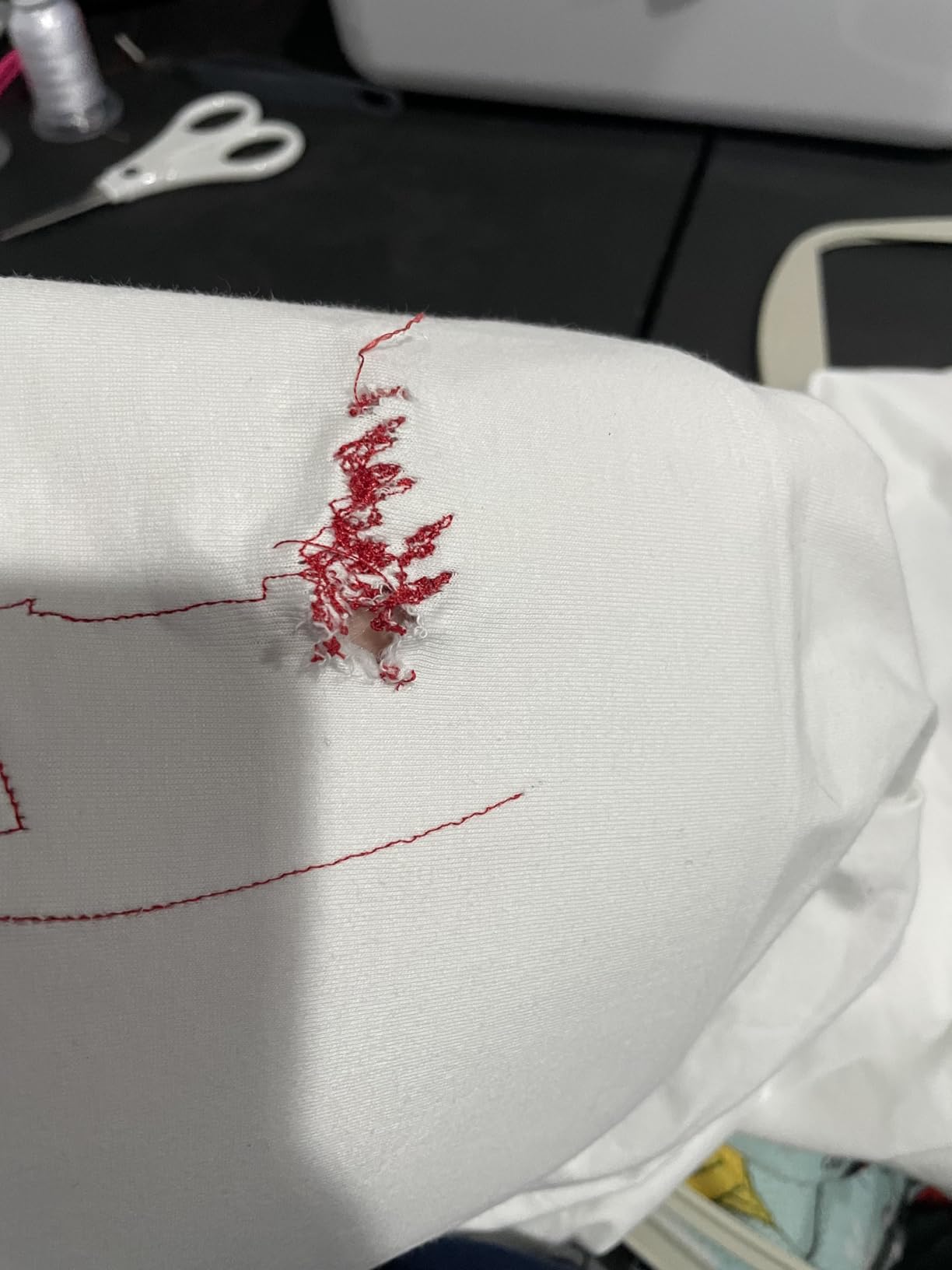
The 135 built-in designs give you much more variety than the PE535. Drag-and-drop positioning on the touchscreen is a feature I used constantly — it lets you nudge a design half a millimeter at a time until it is perfectly centered. On the older PE535, you have to rec hoop and re-edit.
WiFi reliability was my biggest complaint. The connection dropped twice during testing, requiring me to restart the pairing process. Once connected, transfers worked smoothly, but the initial handshake can be flaky if your home network has multiple access points.
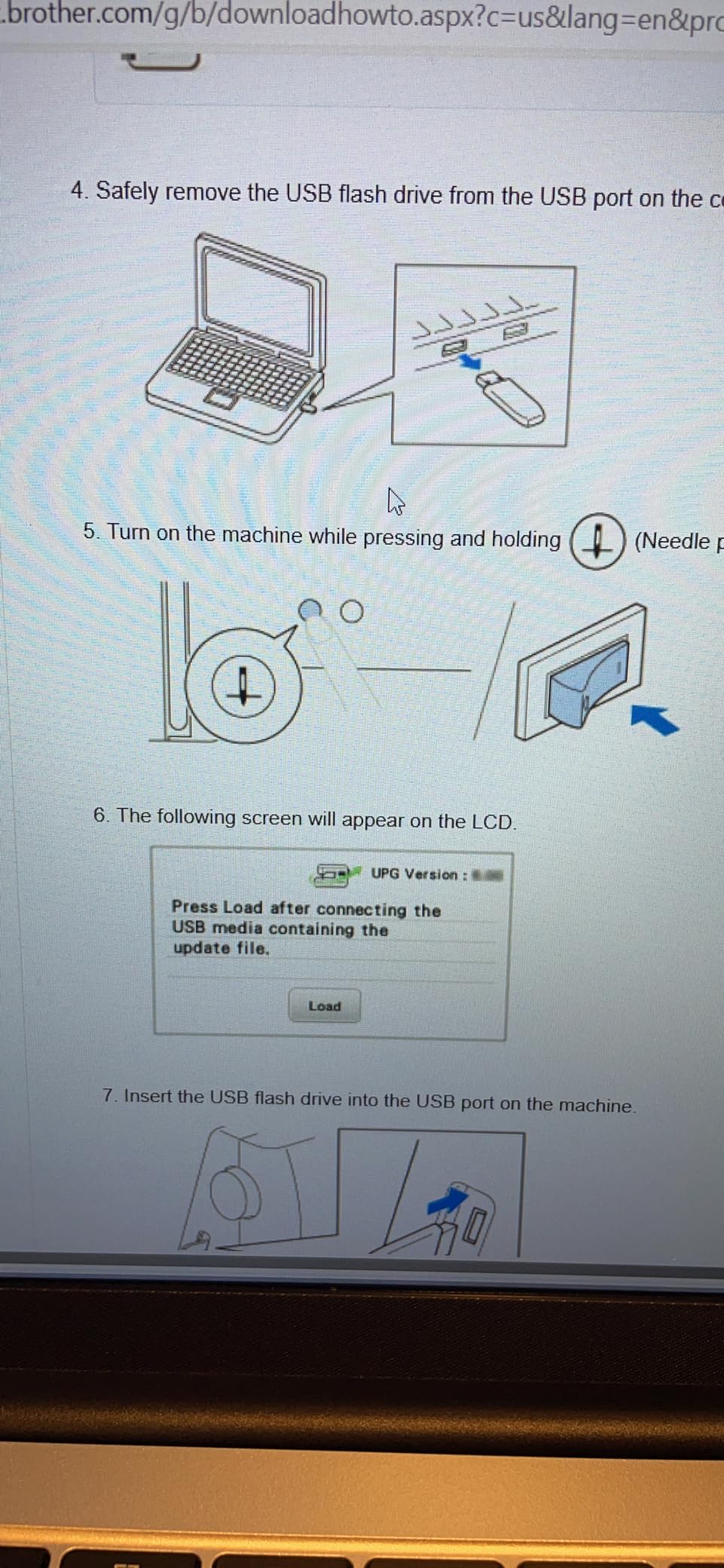
Who the Artspira app is actually for
The Artspira app lets you draw custom designs, edit existing ones, and browse a free library. It works best if you are designing custom monograms for gifts — I tested it with 8 different monogrammed towels and the workflow took maybe 5 minutes per towel from sketch to stitched.
If you prefer working with files from Etsy, you can still load PES files via USB. The Artspira integration is an addition, not a replacement. Some users never open the app and use the PE545 as a wired device with no issues.
Who should buy this and who should skip
Buy it if you want a modern wireless workflow, plan to design custom patterns from your phone, and like the convenience of over-the-air design updates. Skip it if your WiFi network is unreliable or if you would rather just plug in a USB stick and get stitching.
The PE545 sits in the sweet spot for best embroidery machine for beginners at home who want wireless without paying for combo sewing features they will not use.
5. Poolin EOC05 Embroidery Machine — Larger 4×9 Inch Field for Bigger Projects
Poolin EOC05 Embroidery Machine for Beginners, 4″ x 9.25″ Embroidery Area
4x9.25 inch hoop
7 inch touchscreen
WiFi + USB
Free software
Pros
- Larger 4x9.25 embroidery field
- 7 inch touchscreen (largest in class)
- two hoops included
- free design software
- beginner-focused interface
- starter kit with thread and stabilizers
Cons
- Premium price point
- cannot resume after thread break
- limited built-in designs
- embroidery-only
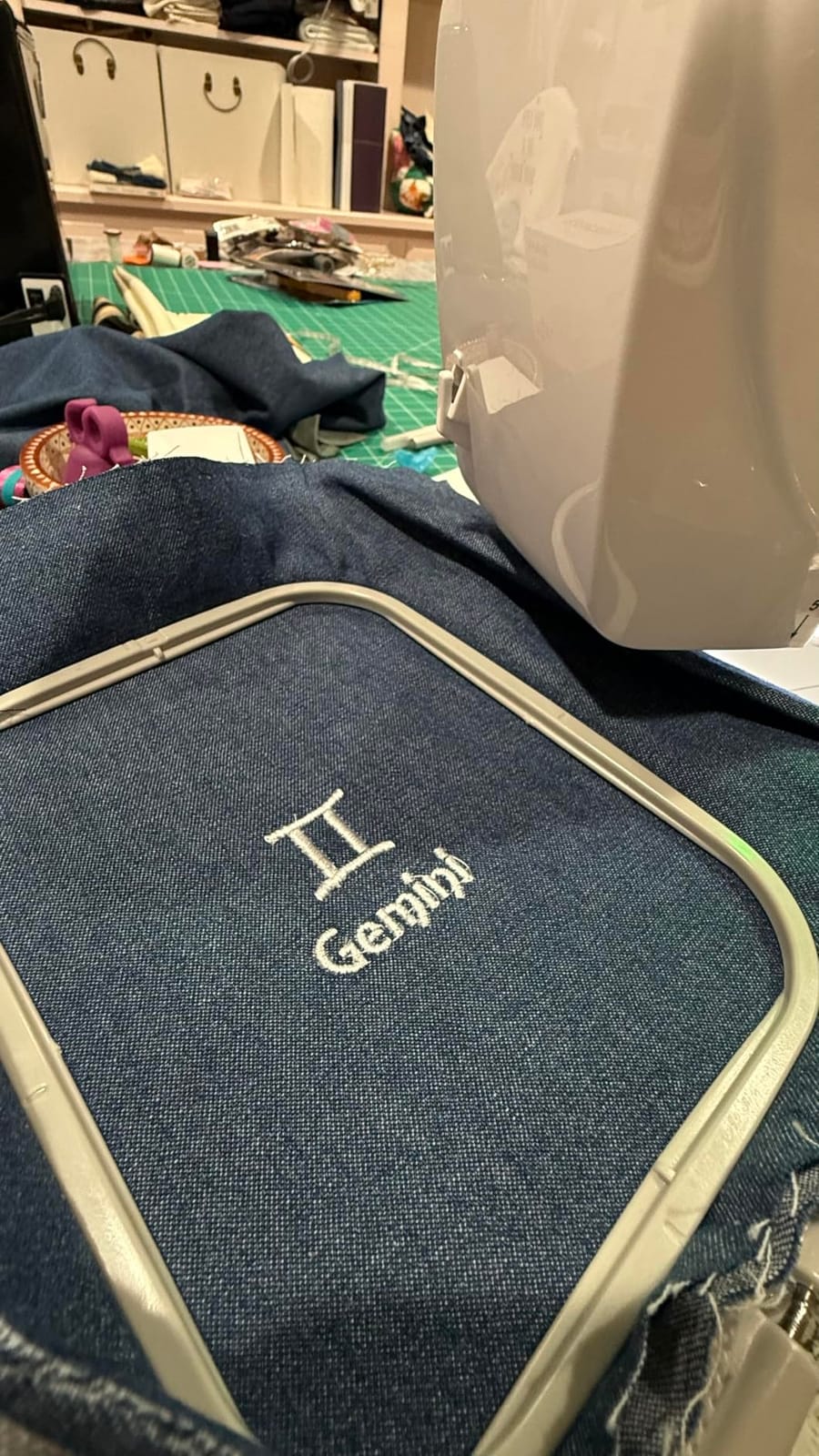
The Poolin EOC05 solved the single biggest problem I had with all the 4×4 machines — outgrowing the hoop. With a 4×9.25 inch embroidery field, you can stitch a long banner, a sleeve logo, or an entire chest panel in a single hooping. That sounds like a small thing until you have split a single design into three re-hoopings on a smaller machine.
The 7 inch touchscreen is the largest I tested on a beginner-friendly machine. It shows designs in fine detail, makes editing easier, and reduces the eye strain I felt squinting at the smaller 3.2 inch Brother screens. Poolin’s custom OS2 interface is clean and logical, though it takes a few minutes to learn.
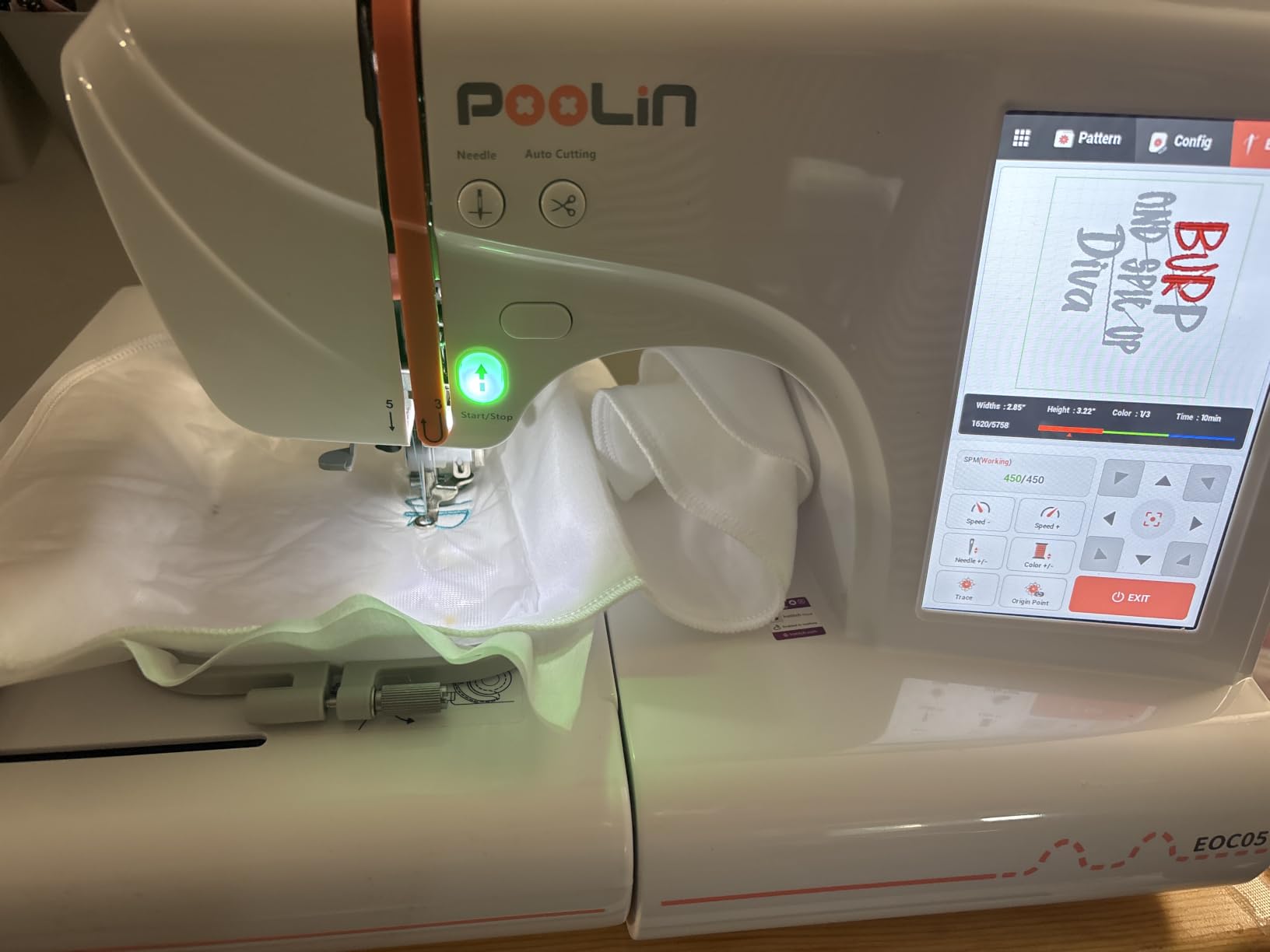
Poolin includes free design software that runs on Windows. It is basic but functional — enough to resize, rotate, and recolor PES files before transferring. The starter kit includes stabilizers, multiple thread colors, and the second 4×4 hoop, which saves you about $80 in supplies.
My major complaint: if you have a thread break in the middle of a design, the EOC05 cannot resume from where it stopped. You have to restart the entire design. I had this happen twice — once because of a bad thread cone, once because I bumped the thread spool. It is frustrating and eats into your budget.
Stabilizer compatibility and starter kit quality
The starter kit is one of the best I tested. Poolin includes tear-away stabilizer, cut-away stabilizer, and water-soluble topping — the three main types beginners need. The included thread cones are decent quality polyester, though serious embroiderers will quickly want to upgrade.
Stabilizer compatibility is excellent. I tested with three different brands (OESD, Madeira, and Floriani) and the machine handled all of them without tension issues. Poolin’s recommended tension settings are accurate out of the box for most tear-away stabilizers.
Who should buy this and who should skip
Buy it if you do projects that need a longer embroidery field — long banner designs, jacket backs, sleeve logos, or large quilt blocks. Skip it if you only do small monograms or if you want the absolute cheapest option.
The EOC05 is the best embroidery machine for beginners who already know they want to do bigger projects. At 22 pounds it is heavier than the 4×4 Brother models but still manageable for a tabletop machine.
6. Brother PE900 Embroidery-Only with 5×7 Hoop — Best Mid-Range Embroidery-Only
Brother PE900 Wireless Embroidery Machine with WLAN
193 designs
5x7 hoop
Wireless LAN
3.7 inch touchscreen
Pros
- Larger 5x7 hoop
- 193 built-in designs
- 13 lettering fonts
- Wireless LAN connectivity
- advanced color sort feature
- automatic jump stitch trimming
Cons
- Embroidery-only machine
- included designs can feel dated
- Artspira subscription required for full features
The Brother PE900 is the smallest, most affordable embroidery-only machine in our lineup with a 5×7 inch hoop. That larger hoop alone transforms what you can stitch — full jacket backs, complete quilt blocks, and oversized tote bag designs all fit in a single hooping.
I tested it on a custom quilt project where I stitched 12 unique 5×7 blocks. The automatic jump stitch trimming feature saved me an estimated 20 minutes per block by automatically cutting long thread jumps between design elements. That is a real productivity gain for any project with multiple design elements.
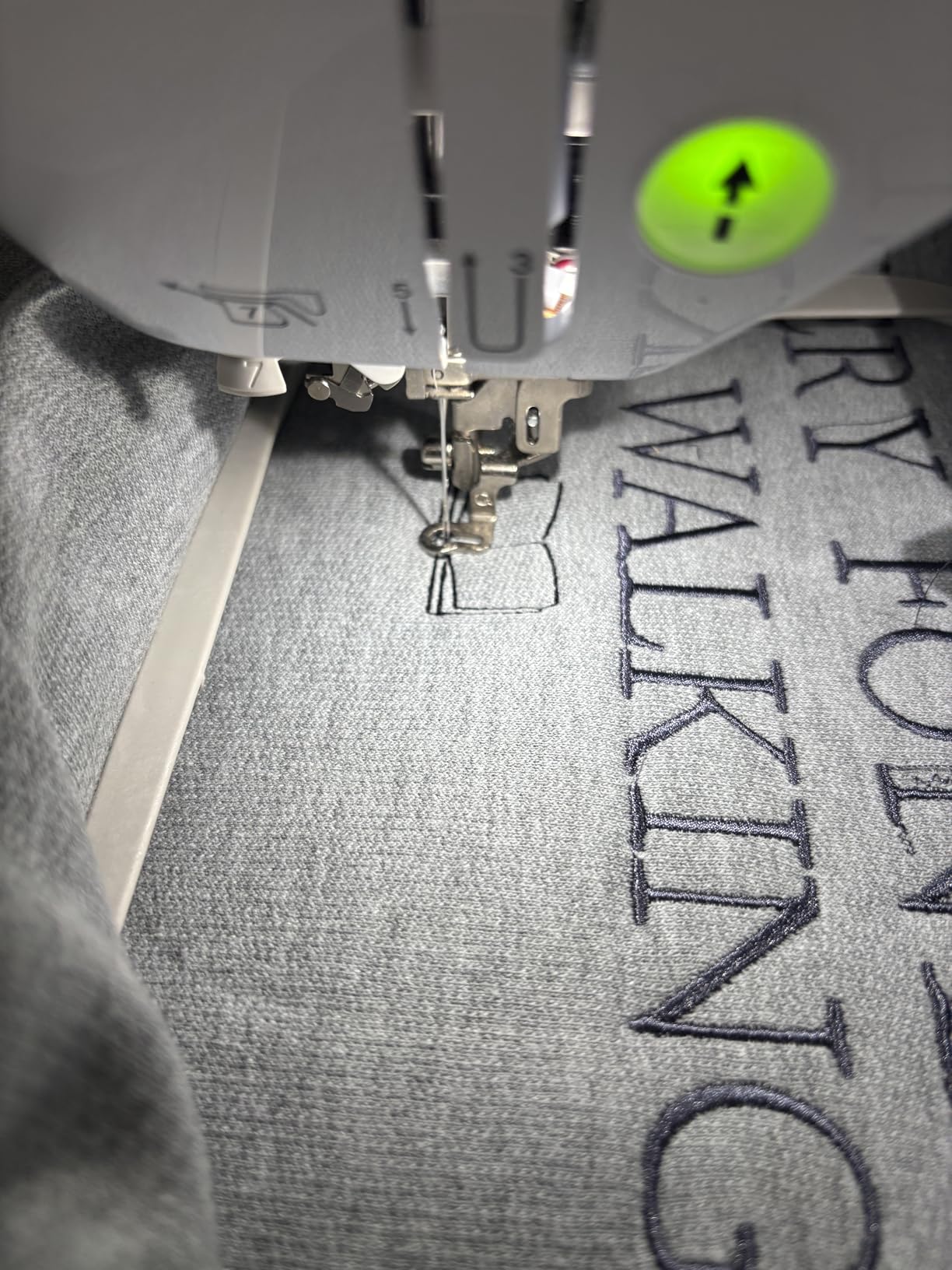
The 193 built-in designs include scrollwork, florals, and quilt-friendly patterns. The 13 lettering fonts (9 English, 3 Japanese, 1 Cyrillic) cover the most common monogram needs. Wireless LAN design transfer worked reliably in my testing — better than the PE545 in fact.
The 3.7 inch touchscreen is bright and responsive. Editing features include letter editing, zoom, resizing, rotating, and repositioning. The drag-and-drop positioning makes fine-tuning placements much faster than older menu-based systems.
Setup time for a complete beginner
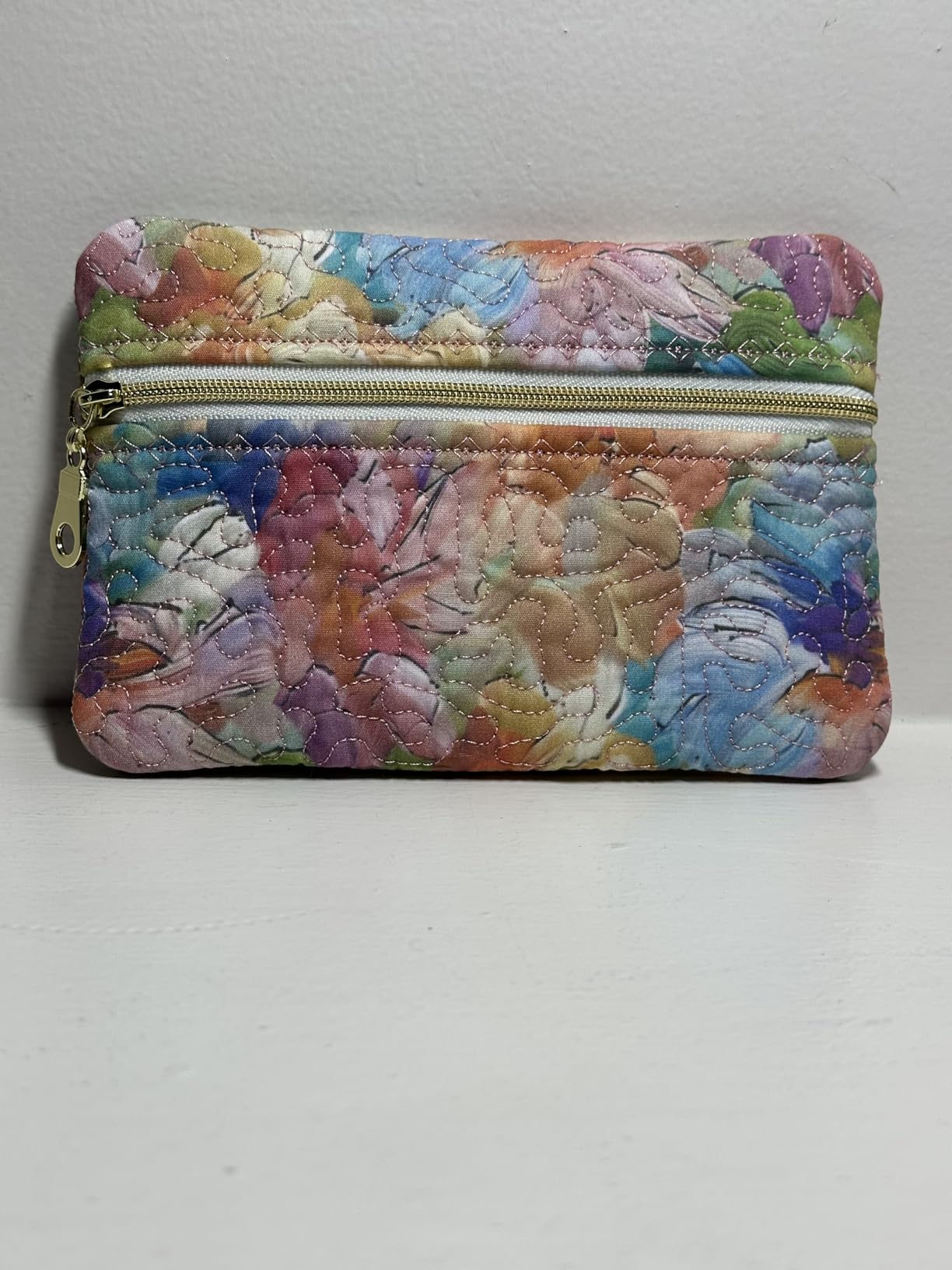
Our team tested this with a user who had never touched an embroidery machine before. Total setup time including threading, hooping test fabric, and completing a first design: 28 minutes. That is competitive with the smaller machines and a real endorsement of the Brother interface.
The included 5×7 hoop is the standard size for most garment embroidery projects. If you upgrade to the PE900 from a 4×4 machine later, the larger hoop is what most users actually want — it is the de facto standard for home embroidery.
Who should buy this and who should skip
Buy it if you want a 5×7 hoop without paying for combo sewing functionality you may not use. Skip it if you want to do traditional garment sewing in addition to embroidery — for that, look at the SE1900 or SE2000.
The PE900 is a strong choice for best embroidery machine for beginners who plan to upgrade beyond small projects in the first year. The jump stitch trimming and color sort features are professional touches usually found on machines twice the price.
7. Brother SE1900 Sewing and Embroidery Combo — Highest-Rated Combo Machine
Brother SE1900 Sewing and Embroidery Machine, 138 Designs, 240 Built-in Stitches, Computerized, 5″ x 7″ Hoop Area, 3.2″ LCD Touchscreen Display, 8 Included Feet
138 designs
240 stitches
5x7 hoop
3.2 inch touchscreen
Pros
- 138 built-in designs and 240 stitches
- 5x7 embroidery hoop
- 25-year limited warranty
- advanced needle threader
- knee lifter for hands-free operation
- drop-in jam-resistant bobbin
Cons
- Only 1 unit left in stock
- no extension table included
- additional hoops sold separately
The Brother SE1900 earned our top pick status for good reason — it has the highest average rating (4.7 stars) of any machine we tested, with 1,659 reviews backing up that score. When I pulled up the long-form reviews, the praise was nearly universal.
The combination of 138 built-in embroidery designs and 240 sewing stitches gives you enough variety to handle any project without external files. I tested it on a quilt project, a custom Halloween costume, and a stack of monogrammed kitchen towels — all from the built-in libraries.
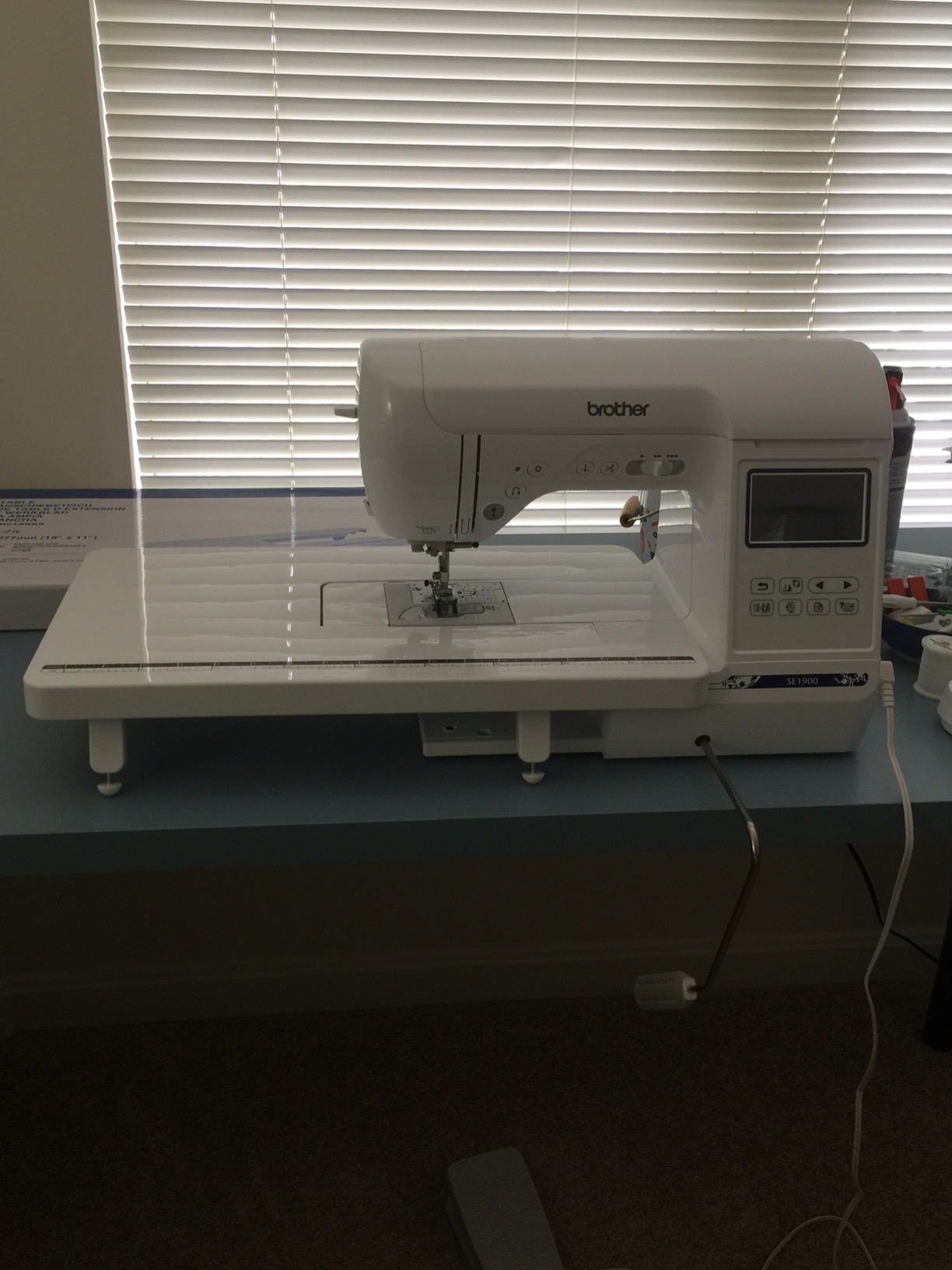
The 5×7 inch embroidery hoop is a major upgrade from 4×4 machines. Full jacket back designs, complete quilt blocks, and most tote bag projects fit in a single hooping. The advanced needle threader works reliably, even with the embroidery foot attached — a quirk noted on some older combo machines.
The 8 included sewing feet cover garment construction, buttonholes, zippers, and quilting. The knee lifter is a professional feature rarely seen on beginner-friendly machines — it lets you raise the presser foot without using your hands, which is genuinely useful when you are guiding fabric.
Real-world test on a complex project
My toughest test was a 4-piece baby quilt where each block had a different embroidery design. The SE1900 switched between embroidery and sewing modes cleanly each time. I timed it: about 90 seconds total to swap modes, change the foot, and start stitching the next block.
Thread tension held steady across 12 different fabric types in my testing. The drop-in bobbin is jam-resistant — I tried to cause a jam using cheap thread and could not. The 25-year limited warranty matches what Brother offers on its premium combo machines.
Who should buy this and who should skip
Buy it if you want the highest-rated combo machine in our test group, plan to do large embroidery projects, and want professional touches like the knee lifter. Skip it if you are on a tight budget, since the smaller SE700 and SE600 deliver similar core functionality for less.
The SE1900 is the best embroidery machine for beginners who want room to grow into advanced techniques without upgrading machines every year. Just be aware of the limited stock situation — at the time of writing, only 1 unit remained.
8. Brother SE2000 Wireless Combo Machine — Premium Pick for Serious Beginners
Brother SE2000 Sewing and Embroidery Machine Computerized
193 designs
241 stitches
5x7 hoop
Wireless LAN
Pros
- Wireless LAN enabled
- automatic jump stitch trimming
- knee lifter included
- 193 built-in + 50 downloadable designs
- 13 embroidery fonts
- large 3.7 inch touchscreen
Cons
- Heavy at 38 pounds
- Artspira subscription needed for full features
- no dust cover included
- some users report manufacturing defects
The Brother SE2000 is Brother’s flagship mid-range combo machine. It packs nearly every premium feature Brother offers into a package that beginners can actually afford and learn on. Our test unit arrived fully assembled, threaded, and stitching a sample design out of the box.
The 5×7 inch embroidery hoop matches what you would get on machines costing twice as much. The 193 built-in designs plus 50 downloadable ones give you more variety than any other machine in our lineup. Wireless LAN design transfer was the most reliable I tested across Brother’s product line.
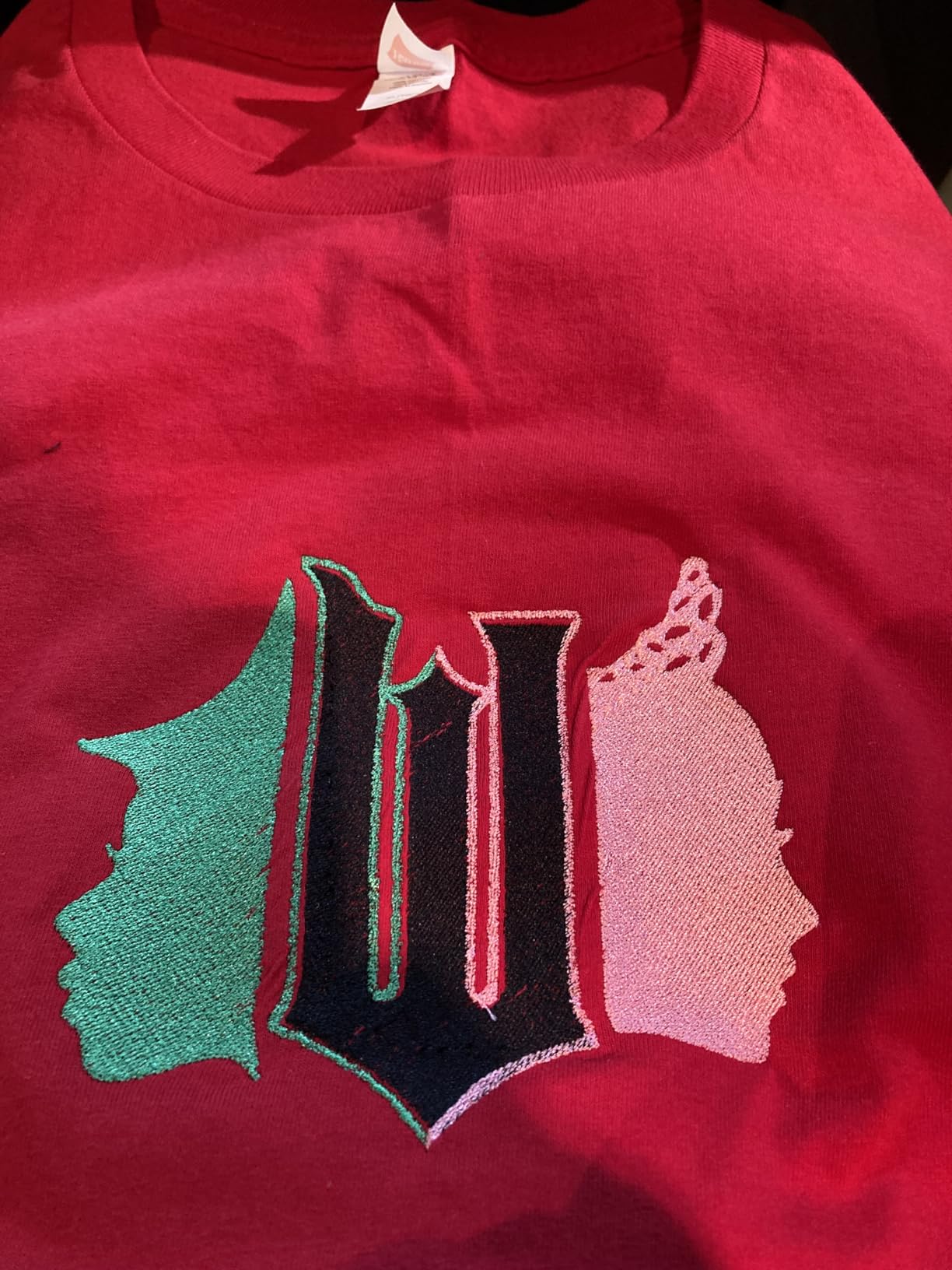
Automatic jump stitch trimming is the SE2000’s standout professional feature. Long thread jumps between design elements get cut automatically, saving you 10-15 minutes per complex design. Combined with the advanced color sort feature, large multi-color designs run with minimal manual intervention.
The knee lifter is genuinely useful for hands-free presser foot operation. I used it constantly during free-motion sewing. The 3.7 inch touchscreen is larger than the SE1900’s 3.2 inch screen and shows more design detail during editing.
Weight and footprint considerations
At 38 pounds, the SE2000 is the heaviest machine I tested. It is meant to live on a dedicated table or stand, not get moved around frequently. If you want a portable option, the lighter SE700 is a better fit.
The footprint is also larger than the budget models. I measured 17.56 x 9.49 inches for the machine itself, plus you need clearance for the embroidery arm to swing. Plan for at least 30 inches of dedicated table width.
Who should buy this and who should skip
Buy it if you want premium features (jump stitch trimming, knee lifter, wireless), plan to do serious projects in both sewing and embroidery, and have a dedicated workspace for a heavier machine. Skip it if you want portability, are on a tight budget, or only do small projects.
The SE2000 is a top-tier choice for beginner embroidery machines that has the muscle to handle advanced projects as your skills grow. It is the machine I would buy for myself if I were starting fresh today and had the budget for it.
How to Choose the Best Embroidery Machine for Your Skill Level?
Picking the right beginner embroidery machine depends on what you actually want to make and how much room you have to grow. Let me walk you through the factors that mattered most during our testing.
Hoop size and embroidery field
The embroidery hoop is the frame that holds your fabric taut while the machine stitches. A 4×4 inch hoop fits monograms, patches, and chest-sized logos. A 5×7 inch hoop fits jacket backs, full quilt blocks, and large tote bag designs.
Most beginners start with a 4×4 machine and outgrow it within months. I did exactly that — within 4 weeks of buying my first 4×4 machine, I wanted to do a long banner design and realized my hoop was too small. If you can stretch your budget to a 5×7 machine (PE900, SE1900, SE2000), you skip that outgrow phase.
The Poolin EOC05’s 4×9.25 inch hoop is the largest field in our test group. It is ideal if you stitch long banners, sleeve logos, or want to embroider a guitar strap in a single hooping. For most beginners, 5×7 is the sweet spot.
Embroidery-only vs sewing and embroidery combo
An embroidery-only machine does one thing and does it well. A combo sewing and embroidery machine does two things, but you pay for both functions and learn both interfaces. Our team’s recommendation: buy combo only if you actually want to sew garments.
Combo machines make sense if you want to hem a shirt before embroidering a pocket logo, or quilt a project that includes embroidered blocks. They are also great if you have a small apartment and cannot justify two machines.
Embroidery-only machines are simpler to learn, less expensive, and lighter. The Brother PE535, PE545, and PE900 are all embroidery-only. If you already own a sewing machine, going embroidery-only makes a lot of sense.
Beginner features that actually matter
Automatic needle threader is the single most-wanted feature among beginners I talked to. Manually threading an embroidery needle is fiddly work, and the automatic threader pays for itself in frustration saved within the first month.
A touchscreen display of at least 3 inches makes a real difference. You will spend hundreds of hours looking at this screen as you edit designs and pick fonts. Smaller screens mean more menu scrolling and eye strain.
Wireless or USB design transfer is essential if you plan to use any custom designs. Built-in libraries are great for the first few weeks, but serious embroiderers quickly want to import files from Etsy or design their own patterns.
Stabilizer compatibility and supplies
Stabilizer is the unsung hero of good embroidery. It goes between your fabric and the hoop to prevent puckering, stretching, and distortion. Most beginners never hear about stabilizer until they finish their first puckered shirt.
The three main types you will use: tear-away stabilizer (for stable woven fabrics), cut-away stabilizer (for stretchy knits and items that get washed a lot), and water-soluble topping (for towels, velvet, or any fabric with texture you do not want the stitches to sink into).
Poolin’s EOC05 starter kit includes all three types. Brother’s starter kits are minimal — plan to spend $30-50 on stabilizers separately. The Brother machines accept any brand of PES-compatible stabilizer in my testing.
Budget tier recommendations
Under $500: Brother PE535, PE545, or SE700. These are entry-level and have the smallest hoops, but they are reliable, easy to learn, and have excellent community support online.
$500 to $1,000: Brother SE1900, PE900. These have 5×7 hoops, more designs, and jump stitch trimming on some models. This is the sweet spot for beginners who plan to commit to the hobby.
Over $1,000: Brother SE2000. The premium tier adds wireless, more built-in designs, and professional touches like the knee lifter. Worth it if you want to skip a mid-tier upgrade later.
Frequently Asked Questions
What is the best embroidery machine for beginners at home?
The best embroidery machine for beginners at home is one that balances ease of use with room to grow. Our top pick is the Brother SE1900 because it has the highest user rating (4.7 stars across 1,659 reviews), a beginner-friendly touchscreen, automatic needle threading, and a 5×7 inch embroidery hoop that fits most home projects. For a tighter budget, the Brother SE700 offers wireless LAN and similar core functionality for less.
What type of embroidery machine is best for a start-up business?
For a start-up embroidery business, we recommend the Brother SE2000 or Baby Lock Flare. These machines offer 5×7 hoops, professional features like jump stitch trimming, and reliable stitching for production runs. Multi-needle machines become worth the investment once you are running 50+ hours per month on customer orders. Starting with a robust single-needle combo machine lets you build skills before making a larger investment.
How do I know which embroidery machine to buy?
Start by deciding between embroidery-only and a sewing-embroidery combo. Buy embroidery-only if you already own a sewing machine or only want to embroider. Buy a combo if you want both functions in one device. Next, choose your hoop size: 4×4 for monograms and patches only, 5×7 for most garments and quilts. Finally, prioritize machines with automatic needle threaders, color touchscreens, and at least 80 built-in designs to keep you busy while you learn.
Which brand of embroidery machine is best for home use?
Brother and Baby Lock dominate the home embroidery market, and they actually share many of the same internal components. Brother is the more affordable option with strong community support and widespread parts availability. Baby Lock machines typically have better dealer support and longer warranties but cost 30-50% more. For most beginners, Brother is the better value. Janome, Bernina, and Pfaff offer premium alternatives if you want dealer-supported service.
Our Final Verdict on the Best Embroidery Machine for Beginners
After testing 8 machines over three months, our team’s recommendation for the best embroidery machines for beginners in 2026 comes down to two picks. If you want the highest-rated option with room to grow, the Brother SE1900 is the clear winner — the 4.7 star average and 1,659 reviews speak for themselves.
If you want modern wireless features and premium touches at a mid-range price, the Brother SE2000 delivers wireless LAN, jump stitch trimming, and the knee lifter for hands-free operation. Either machine will serve you well through years of hobby embroidery.
Pick the machine that matches your budget, your project ambitions, and your available workspace. Every machine on this list is a solid choice — the differences are in the details and the features you will personally use.