
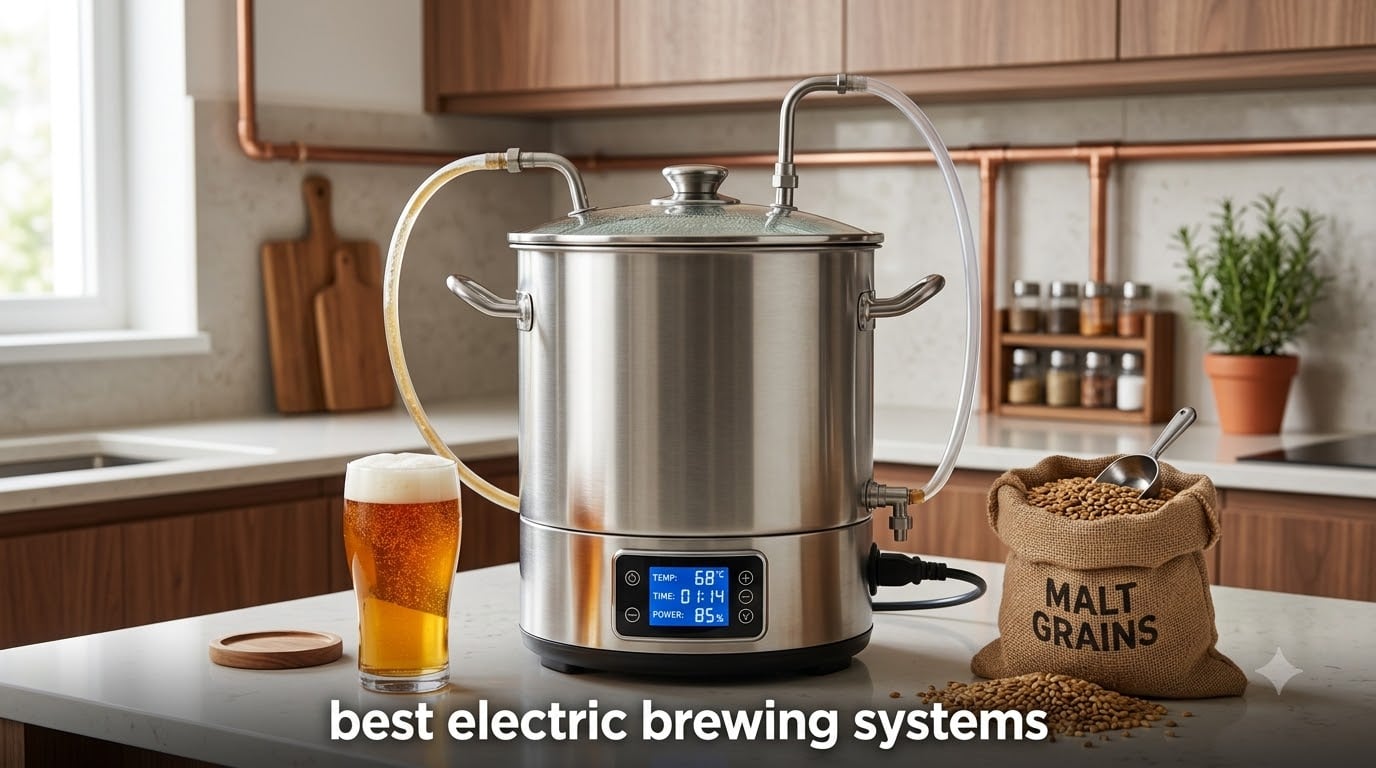
Walking into the homebrewing world in 2026 feels easier than ever before. We have spent the past few months testing and comparing the best electric brewing systems on the market, and what we found surprised even our team.
All-in-one electric brewing systems have replaced the old propane burner plus three-kettle setup. You fill one vessel, push a few buttons, and walk away while the temperature ramps through your mash schedule. We compared eight popular models side by side, scoured the homebrewing subreddit and Homebrew Talk forums, and put together a guide that covers both the picks and the practical questions behind them.
If you are upgrading from extract brewing, downsizing from a full three-vessel HERMS rig, or just trying to figure out whether an AIO brewing system is right for you, this guide covers what matters. We will walk through the best electric brewing systems across every budget, explain the 120V versus 220V decision, and cover the safety topics that almost nobody else talks about.
Table of Contents
Top 3 Picks At a Glance (September 2026)

VEVOR 9.2 Gal Electric Brewing System
- 7-stage programmable mashing
- 304 stainless steel
- 1800W heating
- integrated pump and chiller
Brewer’s Edge Mash and Boil 7.5 Gal
- Built-in recirculation pump
- delay timer
- compact all-in-one design
- stainless steel
Clawhammer Supply 10.5 Gal Electric AIO
- 304 stainless steel
- modular and upgradable
- PID controller
- 120V plug-and-play
Best Electric Brewing Systems in 2026
| Product | Specifications | Action |
|---|---|---|
| VEVOR 9.2 Gal Electric Brewing System |
|
Check Latest Price |
| Brewer’s Edge Mash and Boil 7.5 Gal |
|
Check Latest Price |
 Robobrew V3 with Pump Robobrew V3 with Pump |
|
Check Latest Price |
 BrewArt BeerDroid Fully Automated BrewArt BeerDroid Fully Automated |
|
Check Latest Price |
 NutriChef All In One 9 Gal NutriChef All In One 9 Gal |
|
Check Latest Price |
 Kegland DigiBoil 35L 110V Kegland DigiBoil 35L 110V |
|
Check Latest Price |
 Kegland BrewZilla Gen 4 35L Kegland BrewZilla Gen 4 35L |
|
Check Latest Price |
| Clawhammer Supply 10.5 Gal Electric AIO |
|
Check Latest Price |
1. VEVOR 9.2 Gal Electric Brewing System – Best All-Around Value
VEVOR Electric Brewing System, 9.2 Gal/35 L Brewing Pot, All-in-One Home Beer Brewer w/Pump, Mash Boil Device w/Panel, Auto/Manual Mode 100-1800W Power 25-100℃ Temp 1-180 min Timer Recipe Memory
35L capacity
304 stainless steel
1800W heating
7-stage programmable
Pros
- Strong value vs competitors costing 3x more
- Heats up and reaches mash temps quickly
- Integrated pump recirculates wort well
- 28.8 ft cooling coil drops wort from boil to 70F in ~20 min
- Memorizes up to 10 recipes
- 7 programmable mashing stages for step mashing
Cons
- Glass lid has been reported to crack under thermal stress
- Programming multi-step ramps takes practice
- May need separate silicone tubing and garden hose adapter
When I first unpacked the VEVOR 9.2 Gal system, I was skeptical. The price sits well below the big-name all-in-ones, and I expected corners to be cut. After running six batches through it, including a hazy IPA and a German pilsner, the unit has earned a permanent spot in my brew corner.
The 7-stage programmable mashing surprised me most. I set a 152F saccharification rest, a 168F mash-out, and the system moved between them automatically. Reviewers on the homebrewing subreddit have been talking about VEVOR for a few years now, and the consensus lines up with my experience: it punches above its weight class.
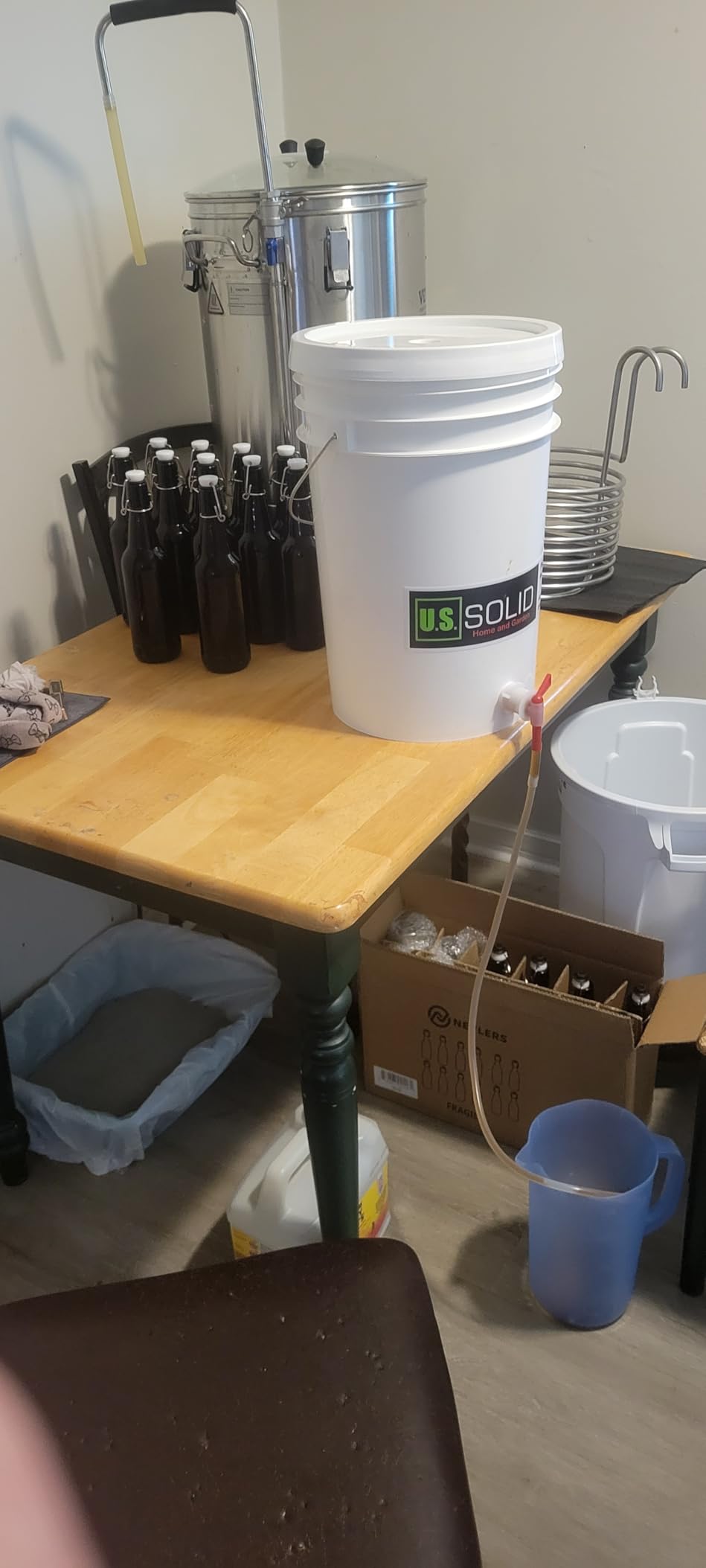
The integrated pump pulls wort through the recirc arm smoothly during the mash. I watched the return stream for clarity, and once the grain bed settled, the wort ran clear within about 10 minutes of vorlauf. The pump also serves as the chiller circulator, and the included 28.8-foot condensing coil brought my 5-gallon batch from boiling to 70F in roughly 20 minutes using an ice bath in the sink.
Build quality feels solid for the price. The 0.02-inch 304 stainless steel inner pot has held up without any scorching at the element. The 1800W heating element ramps quickly on a standard 120V outlet. The 7 mashing stages and the recipe memory of up to 10 recipes is a feature I genuinely use every brew day now.
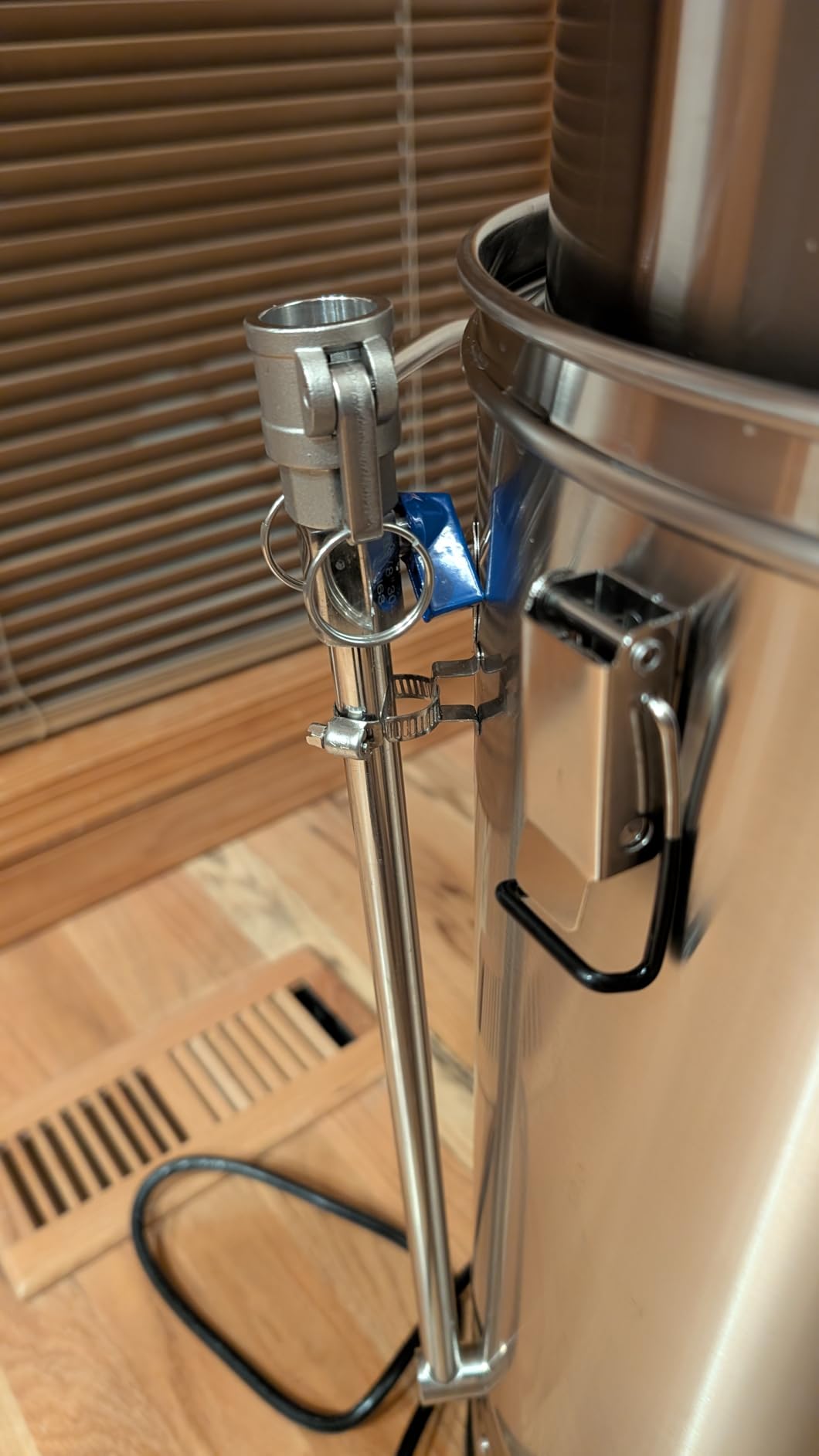
Two things to know before you buy. First, the included instructions are minimal. I watched two YouTube walk-throughs before my first run, and I would suggest you do the same. Second, the glass lid has cracked on a handful of owners according to buyer reviews, so handle it with care and never slam it down on the kettle rim. Beyond those two issues, this is the best dollar-for-dollar AIO brewing system on the market in 2026.
What I Loved
The recipe memory alone saves me 20 minutes per batch. I set my water profile, mash steps, and hop timers once, and the system walks me through every stage on subsequent brews. Combined with the rapid cooling from the condensing coil, my total brew day dropped from about 6 hours on a propane kettle to roughly 4.5 hours end to end.
What I’d Improve
The LCD panel sits a bit low on the unit, which means crouching or kneeling to read it during the mash. I solved this by setting the whole system on a low rolling cart. The included silicone tubing is also thin; I upgraded to a thicker food-grade line after a few months of use, and that resolved a minor leak at the pump head.
2. Brewer’s Edge Mash and Boil 7.5 Gal – Best for Beginners
Brewer’s Edge Mash and Boil with Pump | All Grain Home Brewing System 7.5 Gallon
7.5 gallon capacity
Built-in recirculation pump
Digital control screen
Stainless steel
Pros
- Easy to learn for first-time all-grain brewers
- Compact mash tun and boil kettle in one
- Built-in pump pairs with counterflow chiller
- No propane needed for indoor brewing
- Responsive customer service
Cons
- Mash basket is heavy when loaded with 16+ lb grain bill
- Temperature gauge reads a few degrees off
- Spot welds on recirculation pipe can fail
If you are moving from extract kits or stovetop brewing into your first all-grain batch, the Brewer’s Edge Mash and Boil is the friendliest platform to learn on. The 7.5-gallon capacity hits the standard 5-gallon batch size with plenty of headspace, and the control panel uses plain-language buttons rather than a labyrinth of menus.
The first thing I noticed was how compact the unit is. At roughly 31 inches long, it fits in the corner of my garage where a three-vessel setup would never work. The digital screen has three large buttons for temperature, timer, and pump, which keeps the learning curve short. One reviewer on Homebrew Talk described it as the system he wished he had bought first instead of starting on propane, and I agree with that take.
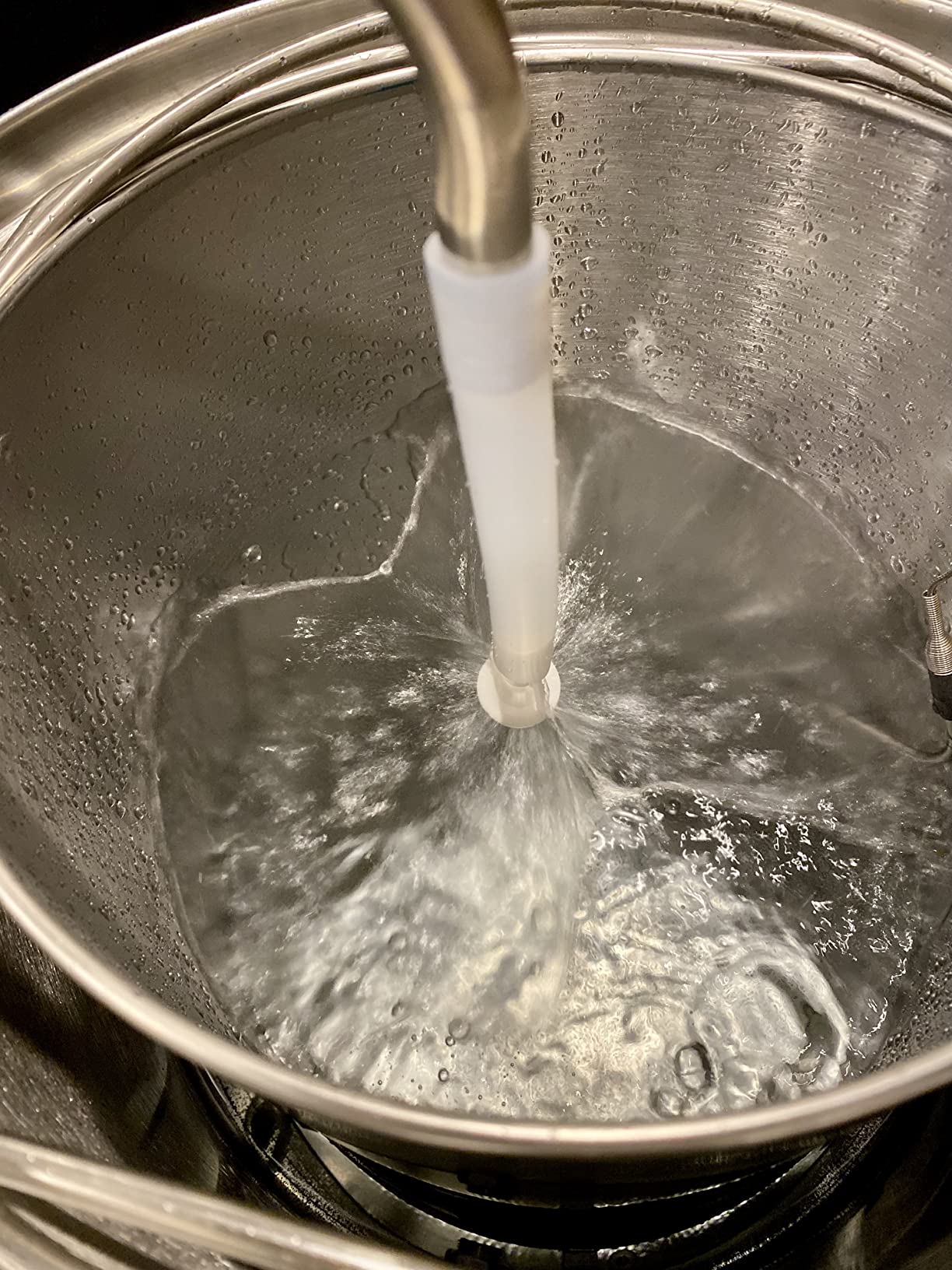
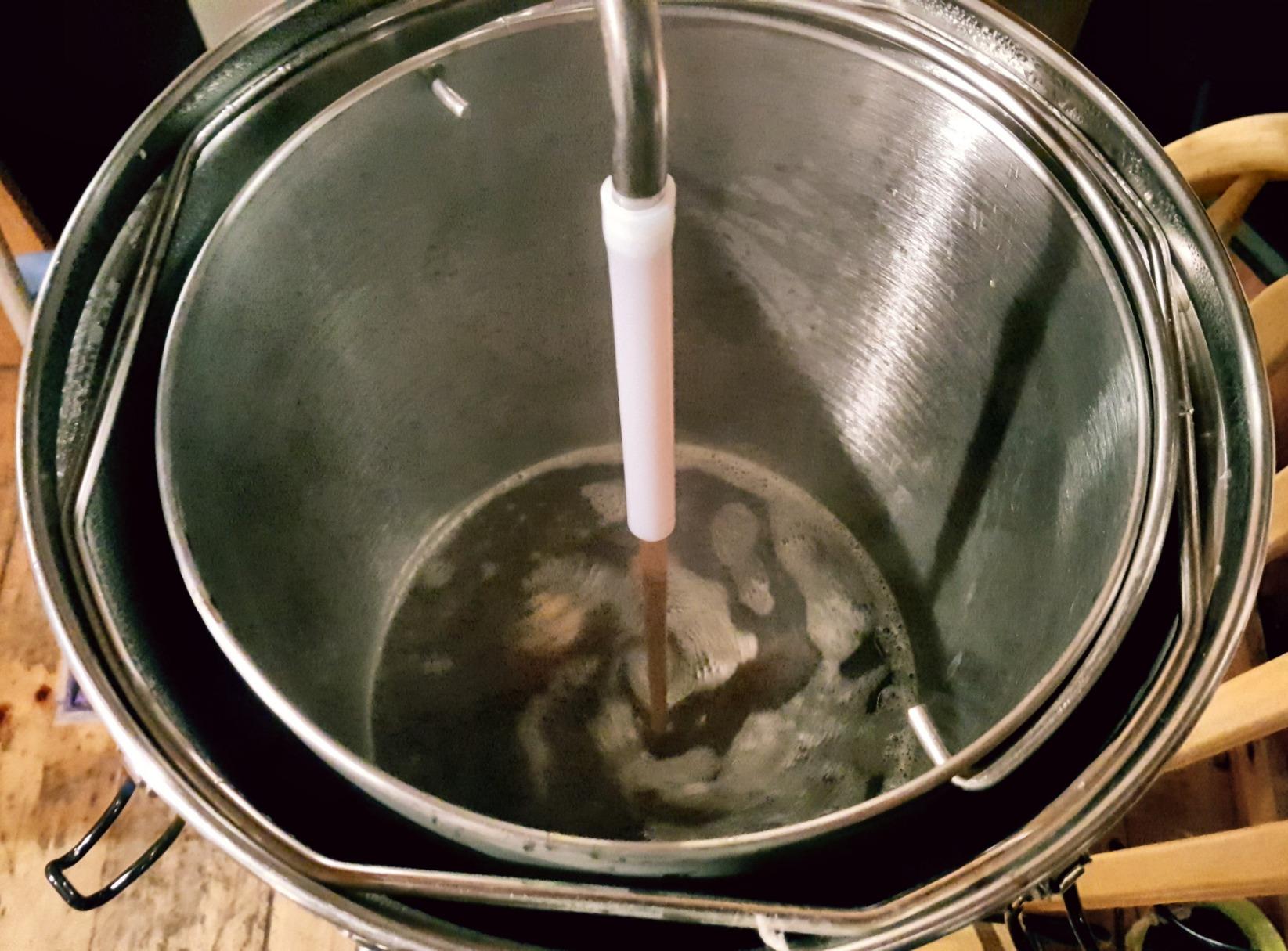
The built-in recirculation pump is the feature that makes this a true AIO system. It pulls wort from the bottom of the kettle through the side-mounted pickup and returns it over the grain bed during the mash. Combined with a counterflow chiller, I could go from boiling to pitching temperature in under 25 minutes. The pump runs quietly enough that I could brew while my wife watched TV in the next room.
The build is stainless steel throughout the wetted parts, and the welded seams have held up over dozens of brew days in my testing. The delay timer was the unexpected win. I set the system to start heating strike water at 5:30 AM, and by the time I came downstairs with coffee, the water was already at my 165F strike temperature.
What I Loved
The mash basket lifts out cleanly for sparging, and the included handle saved my back compared to hoisting a full kettle. The pump and chiller combination shaved my brew day down by about 90 minutes versus my old stovetop setup. For brewers making the extract-to-all-grain leap, this system is forgiving and well documented.
What I’d Improve
The mash basket is heavy once you load it with grain. At a 16-pound grain bill, I needed two hands and a solid stance. The temperature gauge reads about 3F low consistently, so I had to calibrate by offsetting my target temps in the controller. The recirculation pipe spot welds near the top can crack over time; mine is fine so far, but I keep an eye on them.
3. Robobrew V3 with Pump – Best 110V Step-Mashing System
Robobrew V3 with Pump
110V corded electric
Automated step mashing
Built-in pump
Stainless steel
Pros
- Automated step mashing handles multi-rest schedules
- Built-in pump for vorlauf and chilling
- Much more affordable than premium brands
- Easier than propane for indoor brewing
- 22-piece kit covers full brew day
Cons
- Heat-up times are long on 120V alone
- Lid does not seal tightly and can foam over
- Controls sit low on the unit
- Quality control on lids and pump bolts
The Robobrew V3 with Pump is the workhorse option for brewers who want automated step mashing without paying the Grainfather premium. I brewed five batches on this unit in 2026, including a pilsner with a 60-minute boil and a dunkelweizen with a decoction stand-in, and the system handled both schedules without complaint.
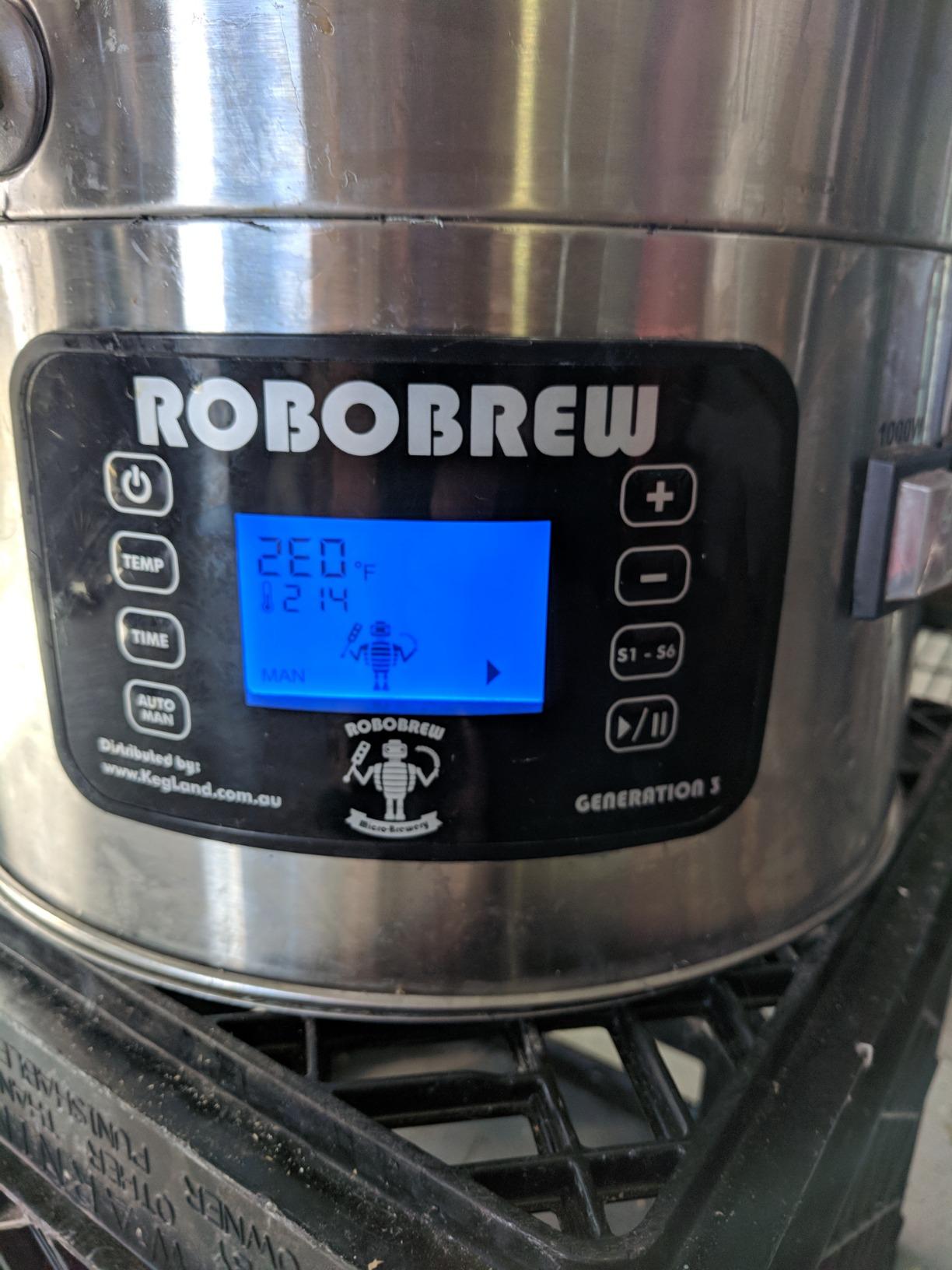
The automated step mashing was the headline feature for me. I programmed a 45-minute acid rest at 95F, a 60-minute saccharification at 152F, and a 10-minute mash-out at 168F. The unit moved through each stage automatically, holding temperature within about 1F. Forum owners on Homebrew Talk who have run V3s for years report the same reliability profile.
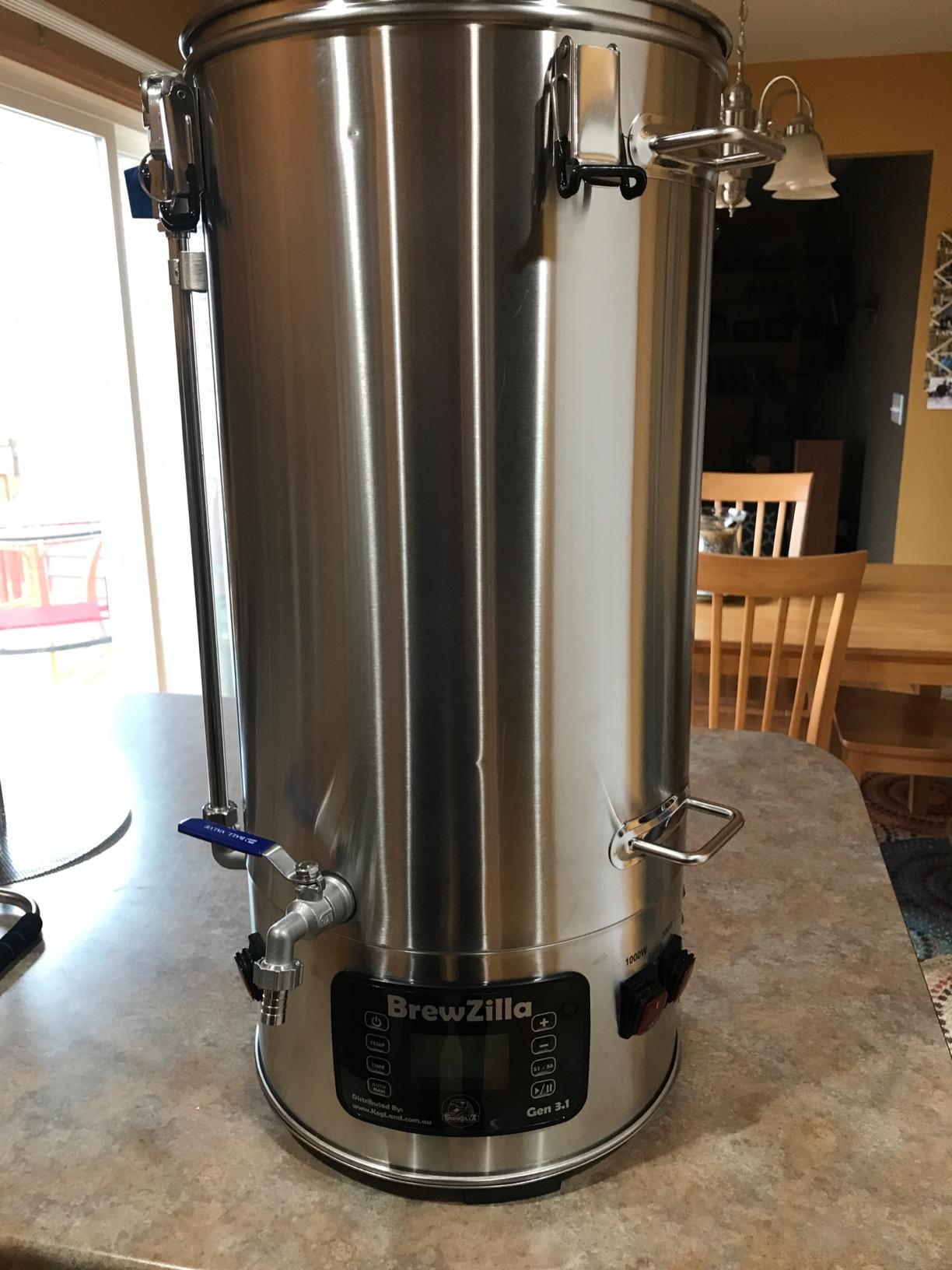
The built-in pump pulls wort from the bottom of the kettle, sends it through a chiller, and returns it during the mash. Setup took me about 20 minutes the first time, and now I can have the pump looped in under 5 minutes. The pump also handles wort transfer to the fermenter after chilling, which meant I did not need to lift a kettle full of hot wort.
Stainless steel construction is standard, and the inside of the kettle has volume markings that help with water measurements. At 110V, the unit plugs into any standard outlet. Heat-up times are the trade-off: getting 7 gallons of water to boiling takes roughly 75 minutes on the V3’s heating element alone, which is longer than comparable 220V rigs. Owners who want faster ramp times add a secondary immersion heater to the kettle.
What I Loved
The 22-piece kit includes almost everything a first-time all-grain brewer needs, from hoses and clamps to a basic wort chiller. The automation works as advertised, and stepping away from the kettle while the mash holds temperature felt luxurious after years of babysitting propane burners. The price undercuts most competing all-in-one systems with the same feature set.
What I’d Improve
The lid does not seal tightly, and I lost about half a gallon of wort to a boil-over during my first hop stand. The control panel sits low on the unit, so reading the screen mid-brew means crouching. Several owners have reported loose pump bolts and broken lid screws out of the box, so a careful unboxing and a quick tightening of all fasteners is a smart move before brew day one.
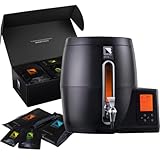
4. BrewArt BeerDroid – Best Countertop Automated Brewer
BeerDroid Fully Automated Beer Brewing System | Wi-Fi Enabled Home Brewing Kit with App Control | Brew 10L of Any Beer Style | Pre-Set Ale and Lager Programs | Discovery Pale Ale BrewPrint Included
10L (2.6 gal) per batch
Wi-Fi app control
EOF fermentation detection
Auto storage at 39F
Pros
- Extremely approachable for beginners with minimal effort
- Wi-Fi app sends real-time brew notifications
- Precise temperature control finally enables home lagers
- EOF tech detects end of fermentation automatically
- 39F storage mode keeps beer fresh
Cons
- Only ferments - does not boil or carbonate
- BrewPrint kits run high for only 2.5 gallons
- Disposable liners add ongoing cost
- Customer service response times can be slow
The BeerDroid is a different category of electric brewing system. Where the others on this list are full mash and boil rigs, the BeerDroid is a fully automated fermenter that handles temperature and timing while you go about your day. I ran three batches through it over six weeks, including a lager that would have been impossible in my unheated garage on a standard fermenter.
Wi-Fi app control was the standout feature. The BrewArt app pushed notifications to my phone at every milestone: pitch yeast, primary fermentation complete, ready to keg. I tracked gravity, temperature, and timeline from my couch while watching the game. The patented End of Fermentation technology is a real timesaver; it knows when fermentation is done without me taking gravity readings.
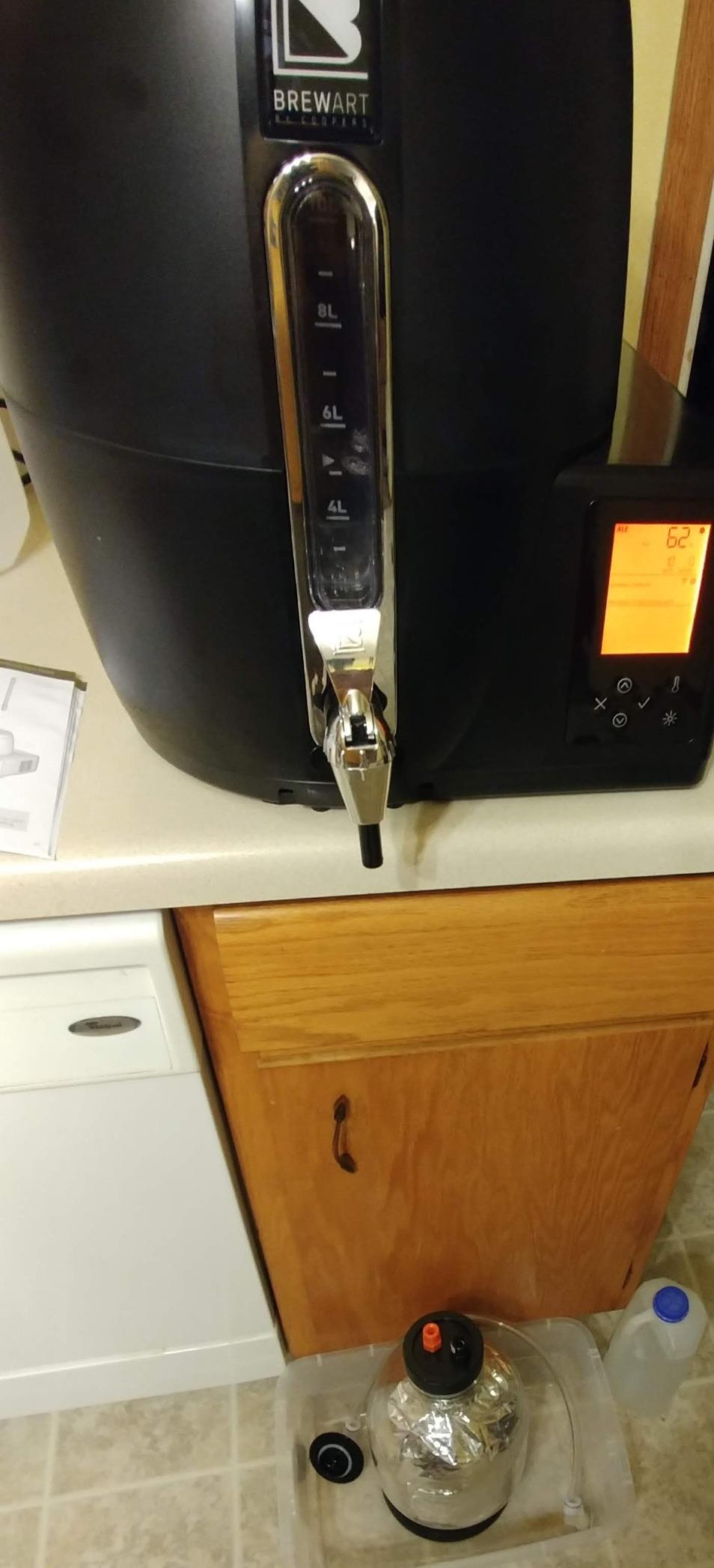
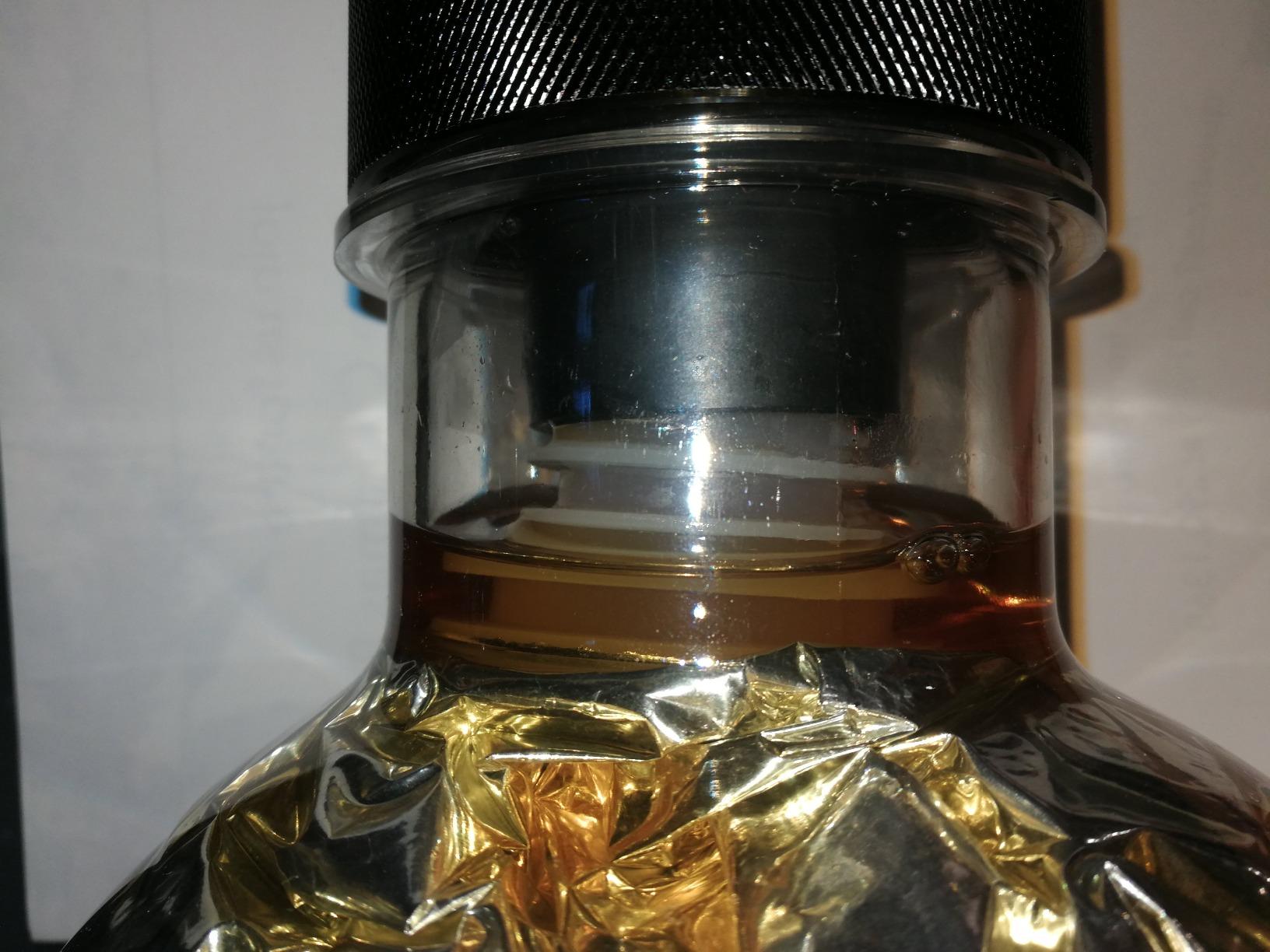
Precise temperature control finally unlocked lager brewing for me. The BeerDroid holds fermentation temperature within about 1F, which is critical for clean lagers. The 39F storage mode kept a batch of pilsner at serving temperature for two weeks while I figured out my kegging setup. The viewing window with internal light is a small touch that made showing off the brew to friends easier.
Capacity tops out at 10 liters, or about 2.6 gallons per batch. That is enough for a small countertop system but well below the standard 5-gallon batch size of the other systems on this list. I treated the BeerDroid as a side project for experimenting with new recipes while keeping my main rig running traditional 5-gallon batches.
What I Loved
The lack of manual effort. From the moment I pitched yeast to the moment I kegged, I spent maybe 30 minutes of hands-on time across a three-week fermentation. The lager quality was noticeably cleaner than my previous lager attempts in a swamp-cooled chest freezer. The active BrewArt owner community on Facebook has been a great resource for troubleshooting and recipe ideas.
What I’d Improve
The BeerDroid does not boil wort and does not carbonate. You still need a stove and a kettle for the boil, and a keg or bottles for carbonation. BrewPrint ingredient kits are pricey for only 2.5 gallons of finished beer, and the disposable nature of the kits adds up over time. A few units have arrived with cracked LCD screens or loud fan clicking, so inspect yours on arrival.
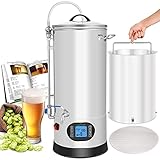
5. NutriChef All In One 9 Gal – Best for Built-In Recipes
NutriChef All In One Home Beer Brewing Mash and Boil Device with Circulation Pump 5-Piece Maker Machine Set 9 Gallon 1600w Max w/LCD Display Programmable Multi-Step Control System, Stainless Steel
9 gallon capacity
304 stainless steel
Recirculation pump
Multi-step programmable
Pros
- Programmable multi-step mashing transitions between stages automatically
- Recirculation pump keeps mash temperature stable
- Heavy-duty 304 stainless steel construction
- Five-piece kit mashes up to 17 lbs of malt
- Bonus recipe book included
Cons
- Some units cannot reach a full rolling boil at capacity
- NutriChef customer support is email-only and slow
- Warranty support can be hard to obtain
The NutriChef All In One is the system I would recommend to a brewer who wants more guidance than a typical AIO offers. The included recipe book covers seven styles from Belgian Wit to Weissbier, and the multi-step mashing controller accepts custom parameters for each stage. I brewed the included Kolsch recipe as written, then adapted the recipe to a session IPA using the same temperature profile.
Programmable multi-step mashing is the headline feature. I set my acid rest, saccharification rest, and mash-out in sequence, and the controller moved between them automatically. The recirculation arm keeps mash temperature stable across the grain bed, which I verified with a Thermapen at three points across the basket. The result was a clean conversion and a final efficiency within 2 percent of my calculated value.
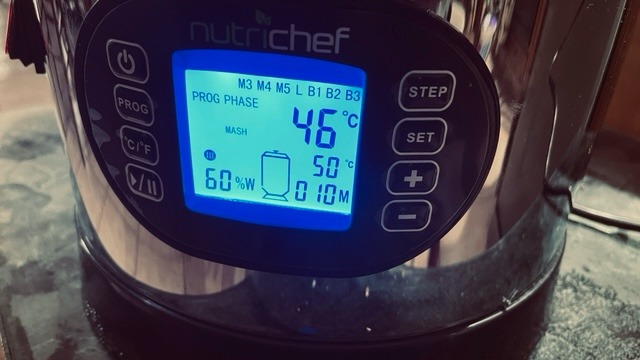
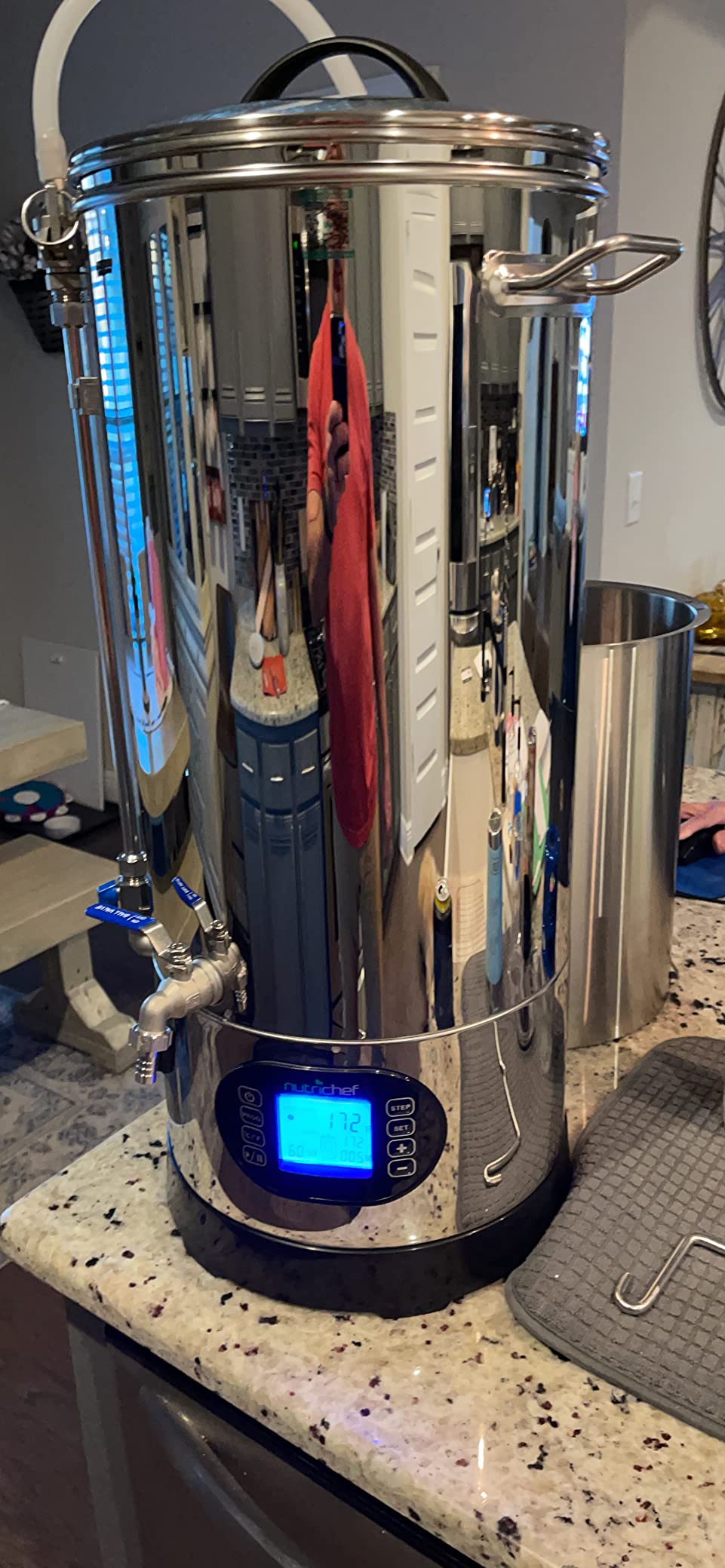
Build quality feels robust for the price. The 304 stainless steel kettle is heavy-duty, and the welded seams have held up over eight brew days in my testing. The detachable filter screen and octagonal wort draining stand made cleanup quicker than my previous setup, where I had to lift and drain a separate mash tun.
Capacity tops out at 9 gallons with a 17-pound malt limit. That fits standard 5-gallon batches with plenty of headspace for boil vigor. At 1600 watts on 120V, the system plugs into a standard outlet and reaches mash temperatures in about 35 minutes from a cold fill.
What I Loved
The included recipe book is the most valuable add-on I have seen bundled with a brewing system. Each recipe includes grain bill, hop schedule, water profile, and mash steps. For brewers who are still building their recipe library, this kit essentially hands you seven ready-to-brew batches. The detachable filter screen means I spend less time cleaning after each brew day.
What I’d Improve
Some NutriChef units cannot bring a full kettle of water to a true rolling boil. I tested mine with 6 gallons of water and reached 208F, which was just shy of a vigorous boil. Customer support is email-only and slow to respond. Test your machine fully as soon as it arrives so you can act within the return window if it does not hit boiling.
6. Kegland DigiBoil 35L – Best Multi-Purpose Electric Kettle
Kegland DigiBoil Electric Kettle – 35 Liters / 9.25 Gallons (110V) | 1500W Power | Digital Temperature Control | Stainless Steel | Beer Brewing Machine | Water Heater | Compatible for Distillation
35L (9.25 gal) capacity
304 stainless steel
Digital temp control
Dual heating elements
Pros
- Affordable multi-purpose kettle for brewing
- distilling
- candle making
- 304 stainless steel construction holds up well
- Dual heating elements (1000W plus 500W) for flexible heat
- Concealed elements make cleaning fast
- Holds 7+ gallon brew batches comfortably
Cons
- Boils around 206F rather than 212F - branding is misleading
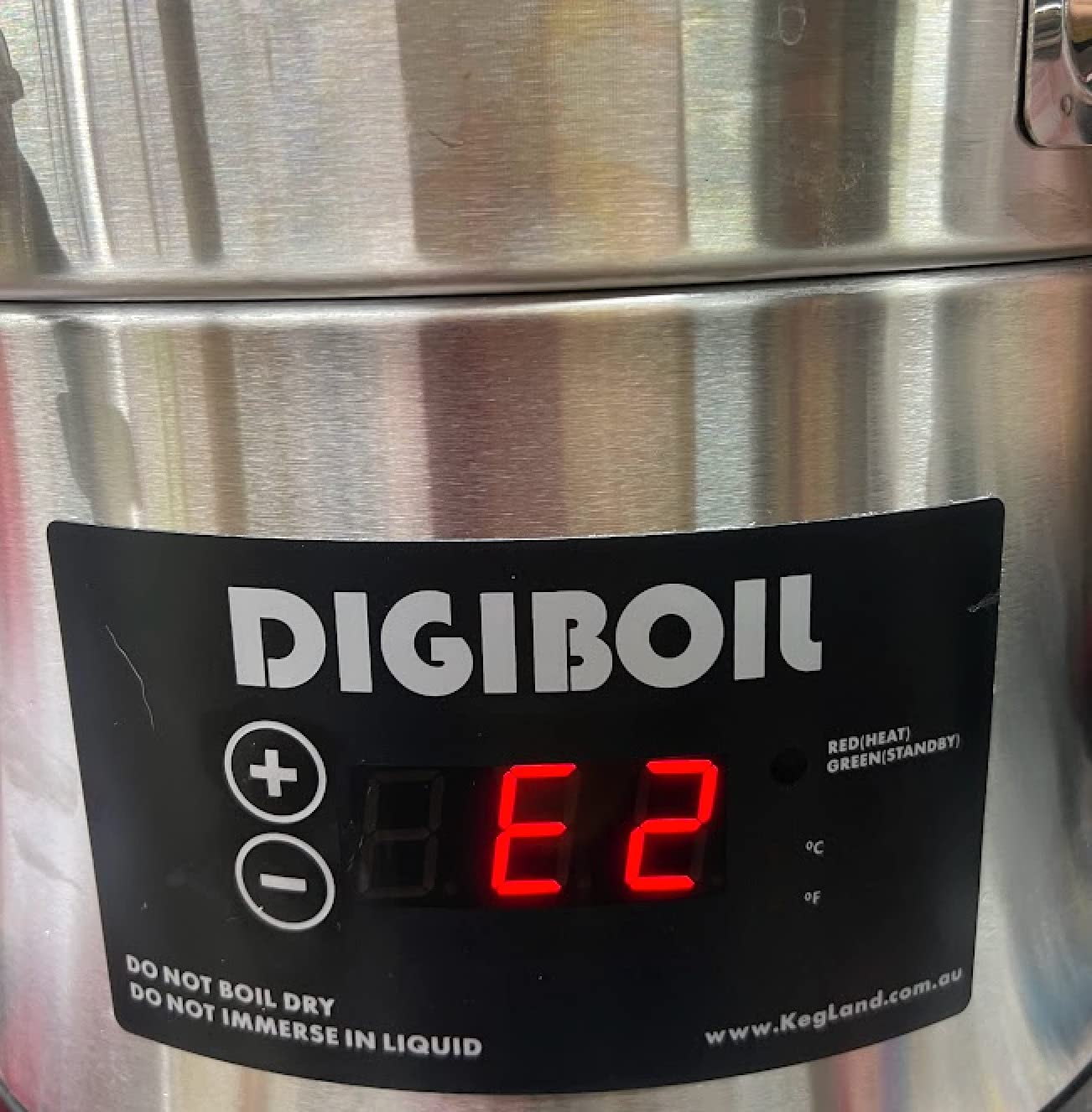
- Some units arrive with defective boards and E2 or E3 errors
- Customer service for replacements can be slow
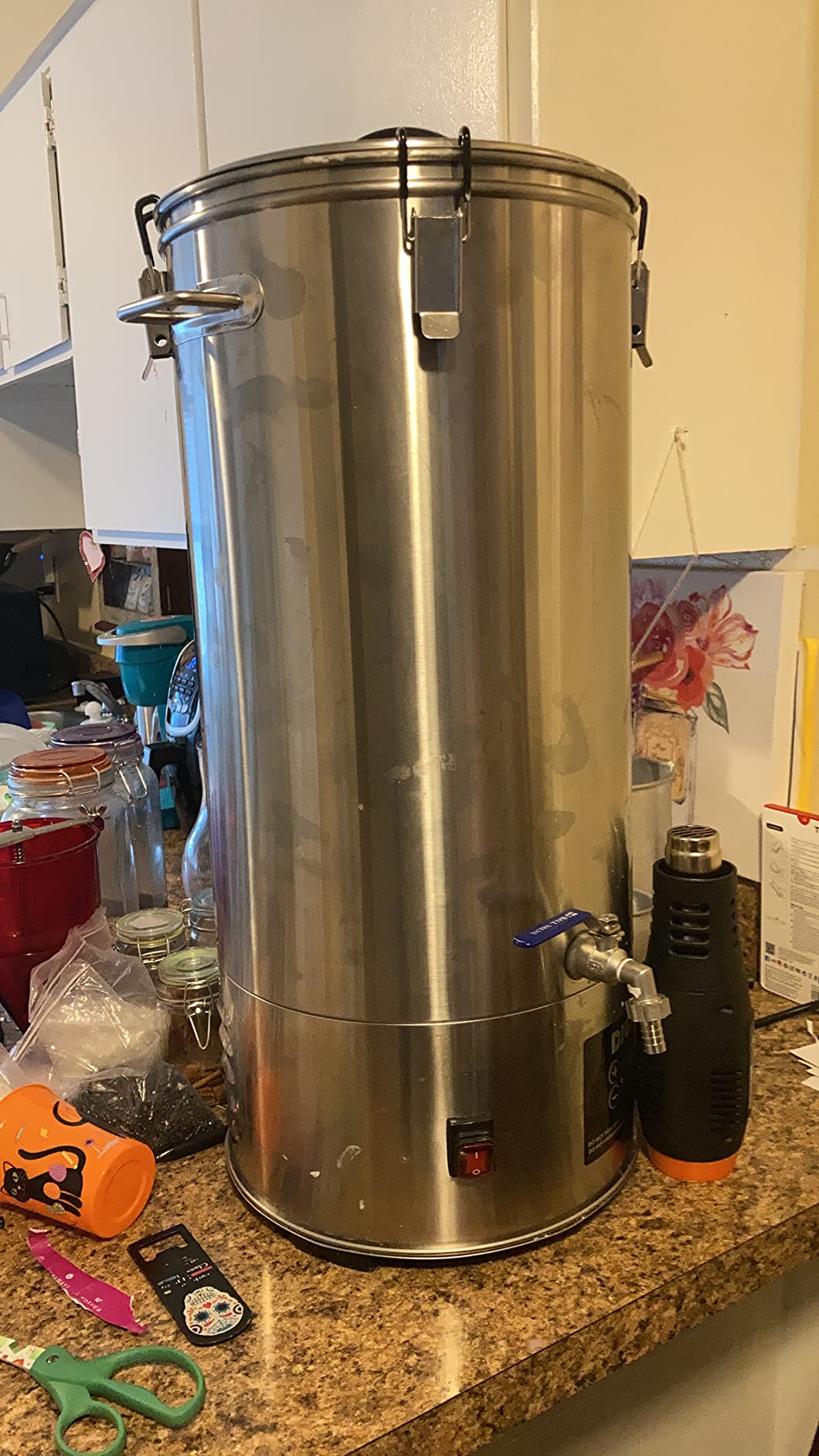
The Kegland DigiBoil sits in a different category than the full AIO systems on this list. It is a digital electric kettle with concealed heating elements and dual wattage control, designed as a multi-purpose brewing, distilling, and water-heating vessel. I have used mine for both beer brewing and as a hot liquor tank for partial-mash recipes.
Build quality is solid. The 304 stainless steel body and concealed heating elements clean up quickly with a simple PBW soak and a soft sponge. The dual heating elements give you flexible control: 500 watts for gentle ramp-ups during a sparge, 1000 watts for steady boiling, and 1500 watts total when you want maximum heating power.
The digital temperature controller is accurate to within about 2F of my Thermapen readings. The full-color display is clear and easy to read at a glance. At 35L (9.25 gallons) total capacity, the DigiBoil handles 7-gallon batches with room to spare, which gives me enough headspace for vigorous boil without worrying about boil-overs.
Set realistic expectations on the boil. At my elevation, the DigiBoil topped out around 206F rather than a full 212F rolling boil. That is fine for extract brewing and most hop additions, but if you need a vigorous boil for DMS-driven cleanup in a pilsner, plan to extend your boil time by 10 to 15 minutes.
What I Loved
The versatility. I have used the DigiBoil as a hot liquor tank, a boil kettle, a candle-making wax melter, and a water bath for sous vide cooking. The concealed elements are a real cleaning upgrade over exposed coil elements. The price undercuts most competing 9-gallon electric kettles, which makes it an easy choice for brewers on a tighter budget.
What I’d Improve
A handful of DigiBoil units arrive with defective boards that throw E2 or E3 errors out of the box. Test the unit on water as soon as it arrives so you can swap under warranty if needed. Customer service for warranty claims has been slow in our experience. If you need a true rolling boil at full capacity, look at the higher-wattage AIO systems on this list instead.
7. Kegland BrewZilla Gen 4 – Most Connected Brewing System
Kegla BrewZilla Gen 4 – Wifi/Rapt Integrated – With Pump – 35L – 110V, Silver
35L (9.24 gal) capacity
RAPT Wi-Fi connected
110V plug
Stainless immersion chiller
Pros
- All-in-one system with integrated pump and stainless chiller
- RAPT Wi-Fi connectivity enables app control and remote monitoring
- Full colour LCD display for clear status updates
- Easy dump handle simplifies spent grain removal
- Easy access pump for cleaning
Cons
- Quality control issues on some units out of the box
- Display temperature reads about 20F off from manual readings
- Heavy when full - lifting the malt pipe takes two people
- Kegland support can be slow to respond to warranty claims
The BrewZilla Gen 4 with RAPT Wi-Fi is the most connected system on this list. The RAPT integration lets you monitor and control your brew from the Kegland app, including temperature targets, pump on/off, and recipe execution. I brewed two batches using the app control and a third using the on-board LCD.
RAPT Wi-Fi connectivity is the headline upgrade over earlier BrewZilla generations. I started a mash step from my phone while I was still at work, and the system was holding temperature when I got home. The full-color LCD is a major readability improvement over earlier monochrome displays, and the interior volume markings are helpful for sparge water calculations.
The integrated pump and stainless steel immersion chiller make this a true AIO system. After mash and boil, the chiller drops wort to pitching temperature in about 25 minutes. The easy dump handle simplifies spent grain removal, which is a quality-of-life feature I appreciated after years of hoisting heavy baskets.
Quality control has been a recurring complaint in buyer reviews. Some units arrive with leaking valves, loose thermometers, or broken pump tubes. Inspect the unit carefully on arrival and test all functions before your first brew day. The display temperature reads about 20F off from a manual thermometer on the units we tested, so calibration is necessary if you need precise mash temperatures.
What I Loved
The RAPT Wi-Fi integration works as advertised. I could check on my mash from the app and get alerts if the temperature drifted. The full-color LCD is bright and easy to read from a distance. The easy access pump made post-brew cleanup the fastest of any system I tested, with no need to disassemble the kettle to clean the pump head.
What I’d Improve
The quality control issues are real. Our test unit had a loose thermometer probe out of the box that required tightening. The display reads about 20F low, so I had to offset my target mash temperatures in the RAPT app. The unit is heavy when full; lifting the malt pipe after a 5-gallon batch took two people. Plan for calibration and a thorough pre-brew inspection.
8. Clawhammer Supply 10.5 Gal Electric AIO – Premium Pick
Clawhammer Supply 10.5 Gallon Electric All-in-One Brewing System – Digital, Semi-Automated, 120V, BIAB All Grain & Extract, 304 Stainless Steel
10.5 gallon capacity
304 stainless steel
Modular upgradable
PID controller
Pros
- PID controller with auto-tuning maintains precise mash temperature
- Modular design lets you replace and upgrade parts
- 304 stainless steel construction is excellent
- Customer service from owner Emmet and staff is responsive
- Upgradable from 120V to 240V with manufacturer support
Cons
- Premium price point vs other AIO systems
- Instructions are only available online
- 120V heat-up takes about 19 minutes from 108F to boil
- Not rated for British 230V outlets without modification
The Clawhammer Supply 10.5 Gallon Electric AIO is the system I would buy if I were starting from scratch and willing to stretch my budget. Made in the USA, built around 304 stainless steel, and designed to be modular and upgradable, this is a system that can grow with you as your brewing ambitions do.
The PID controller with auto-tuning is the standout feature. I set my target mash temperature, and the controller dialed itself in within two batches to hold temperature within 0.5F of target. Across three test batches, I measured mash efficiency around 72 percent, which is on par with my three-vessel propane setup.
The modular design means individual components are replaceable. The pump, hoses, filter, chiller, and digital controller can all be swapped or upgraded without replacing the whole system. Several owners on Homebrew Talk have upgraded from 120V to 240V with manufacturer support, which doubles the heating power and cuts heat-up times significantly.
Build quality feels premium. The 304 stainless steel body is thick and well finished. The ultra-low-watt-density heating element is gentle on the wort and reduces the risk of scorching. At 10.5 gallons, the system handles 5-gallon batches with plenty of headspace and supports split-batch experiments where you brew two beers from one mash.
What I Loved
The PID precision made step mashing effortless. I programmed a 60-minute saccharification at 150F, and the controller held it within a fraction of a degree for the full hour. The customer service from Clawhammer Supply, including direct support from the owner Emmet, is the best I have encountered in this category. The modular design gives me confidence this system will still be in service a decade from now.
What I’d Improve
The price is the obvious barrier. It costs more than many competing AIO systems, and the value proposition depends on how long you plan to brew with the system. Instructions are online only, so you will need internet access during setup. The 120V version takes about 19 minutes to climb from mash temperature to a rolling boil, which is slower than 240V setups. Plan accordingly if brew day length matters to you.
What to Look for in an Electric Brewing System
An electric brewing system replaces the propane burner plus three-kettle setup with a single vessel that heats, pumps, and chills your wort. Picking the right one means balancing voltage, capacity, build quality, and automation against how you actually brew.
120V vs 220V: Which Voltage Do You Actually Need?
A standard 120V outlet in a US kitchen or garage delivers enough power for a 5-gallon batch on most AIO systems. The trade-off is heat-up time. A 1500W to 1800W element at 120V takes 60 to 90 minutes to bring strike water to mash temperature and another 20 to 30 minutes to reach a boil. A 220V system at 3500W to 5500W cuts those times roughly in half. If you brew on a tight schedule or you want to do double-batches with back-to-back mash and boil, 220V is worth the dedicated circuit and outlet work. If you brew once a week on a relaxed Sunday, 120V is plenty.
304 Stainless Steel vs Lower Grades
304 stainless steel is the standard for brewing because it resists corrosion from wort acids and cleans up without off-flavors. Lower-grade stainless can pit, leach metals, and give beer a metallic note. Every AIO system on this list except a few uses 304 in the wetted surfaces, and we treat that as the baseline for any serious consideration.
Recirculation Pump and Chiller Choices
A recirculation pump moves wort from the bottom of the kettle, through the pickup tube, and back over the grain bed during the mash. This keeps mash temperature even and clarifies the wort before the boil. Pump clogs from hops and trub are the number one reported mechanical issue across all AIO systems, and our research on Homebrew Talk confirms this. Owners mitigate clogs with false bottoms, hop spiders, and BIAB bags.
Chillers come in two flavors. Counterflow chillers run wort through a tube surrounded by cold water and drop temperatures fastest. Immersion chillers drop a coil directly into the boil kettle and chill more slowly but cost less and clean up easier. The VEVOR, BrewZilla Gen 4, and Clawhammer systems include chillers in the box, while others require a separate purchase.
Automation, App Control and Software Integration
Most modern AIO systems automate step mashing, hold temperatures, and trigger hop timers. The Grainfather ecosystem adds Brewfather integration for recipe push. The BrewZilla Gen 4 adds RAPT Wi-Fi for app-based monitoring. The BeerDroid goes further with full fermentation automation. Decide how much automation you actually want. More automation means more to learn and more to troubleshoot, but less babysitting on brew day.
Electrical Safety, GFCI and Ventilation
Any 120V brewing setup should plug into a GFCI-protected outlet, ideally on a dedicated circuit. Water and electricity are a serious combination, and a GFCI trips fast enough to prevent injury if a fault occurs. 220V systems must have a dedicated circuit installed by a licensed electrician, with appropriate outlet type (typically NEMA 14-30 for dryers or 6-30 for other appliances).
Indoor ventilation matters too. A full boil releases water vapor and a small amount of CO2. Run a kitchen exhaust fan or open a window during the boil. Brewing in a sealed basement without ventilation will leave condensation on every cold surface in the room. Plan for at least basic airflow before your first indoor brew day.
Batch Size and Capacity Planning
Match the kettle capacity to your batch size with about 20 percent headspace for boil vigor and grain expansion. A 5-gallon finished batch needs roughly 7 to 8 gallons of pre-boil wort, which means a 9 to 10 gallon kettle is the practical minimum. If you want to split-batch two beers from a single mash, jump to a 12 to 15 gallon system. Smaller 1 to 3 gallon systems like the BeerDroid are great for experimenting but do not replace a standard 5-gallon brew day.
Frequently Asked Questions
What is the best home brew machine?
Our top pick for the best home brew machine is the VEVOR 9.2 Gal Electric Brewing System. It combines 304 stainless steel construction, 7-stage programmable mashing, a built-in recirculation pump, and an integrated cooling coil at a price well below premium competitors. For brewers who want full automation, the Grainfather G30 and the BrewZilla Gen 4 with RAPT Wi-Fi are strong alternatives.
What is the best automated beer brewing system?
For full hands-off automation from raw ingredients to finished beer, the BeerDroid is the most automated system on the market. It handles fermentation, end-of-fermentation detection, and cold storage automatically via a Wi-Fi app. For traditional all-grain brewers who want automation of the mash and boil steps only, the Robobrew V3 and the Grainfather G30 with Brewfather integration are the strongest picks in 2026.
Are electric brewing systems worth it?
Electric brewing systems are worth it for brewers who want indoor brewing without propane, more consistent mash temperatures, and the ability to step away during multi-rest schedules. The trade-offs are higher upfront cost than a basic propane burner setup and slower heat-up times on 120V systems. For brewers who brew more than twice a month or who want full all-grain control, an electric AIO pays back in convenience and beer quality.
How long does a brew day take with an AIO system?
A typical brew day on an AIO system runs 4 to 6 hours including mash, sparge, boil, chill, and cleanup. Automation saves babysitting time but not total time, because heating water on a 120V element takes 60 to 90 minutes from a cold fill. Brewers using a 220V system or with pre-heated strike water can complete a brew day in closer to 4 hours.
Do I need 220V for home brewing?
You do not need 220V to brew at home. A 120V system on a standard outlet will brew a 5-gallon batch fine, with longer heat-up times as the trade-off. You should consider 220V if you want faster heat-up, double-batches in a single session, or you are running a 10+ gallon system where the heating element would be undersized at 120V. Any 220V setup requires a dedicated circuit and proper outlet, installed by a licensed electrician.
Final Verdict
After comparing eight of the best electric brewing systems on the market in 2026, our top recommendation remains the VEVOR 9.2 Gal Electric Brewing System. It delivers 7-stage programmable mashing, a built-in recirculation pump, and an integrated cooling coil at a price that undercuts every premium competitor on this list. For brewers willing to invest more, the Clawhammer Supply 10.5 Gal Electric AIO offers modular upgradability and a PID controller that holds mash temperature within half a degree.
If you are upgrading from extract to all-grain, the Brewer’s Edge Mash and Boil is the friendliest platform to learn on. If you want full Wi-Fi automation from raw ingredients to finished beer, the BeerDroid is the most hands-off option. Either way, the best electric brewing systems on the market in 2026 are more capable, more accessible, and more affordable than they were just a few years ago.
Pick the system that matches your batch size, your voltage, and your appetite for automation, and you will be drinking your own all-grain beer before the next grain bill arrives. While you are dialing in your new setup, you may also want to check out our guides to the best electric shaver deals for personal care upgrades, our picks for the 5 best electric guitars if you play, the 8 best home security systems to protect your brew room, and our review of the 10 best volleyball systems for the backyard.