
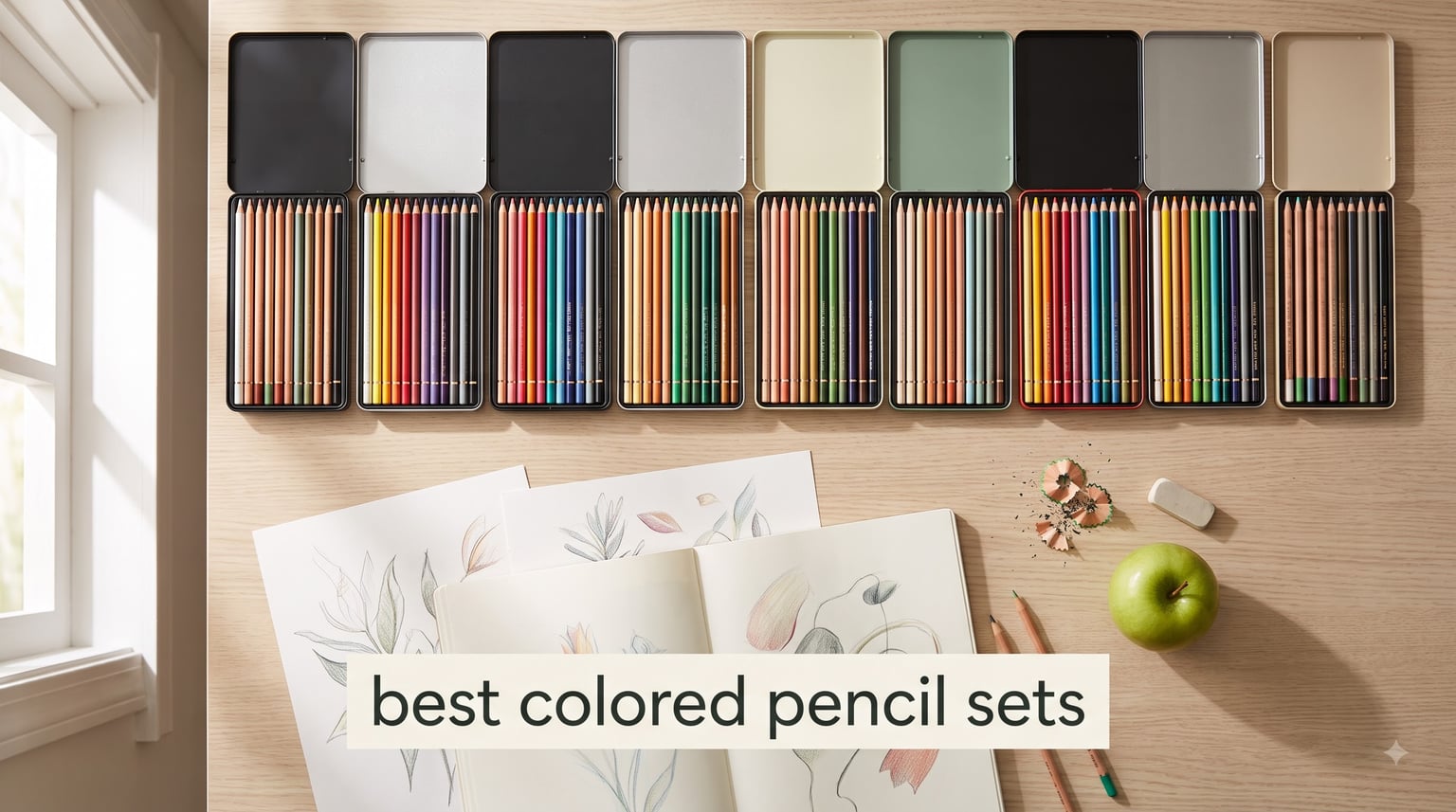
I have been drawing with colored pencils for over a decade, and I still get excited opening a fresh tin. The right set can turn a flat sketch into something that feels alive. The wrong set leaves you fighting the tool instead of the art. After testing 10 sets over the past three months, layering swatches, blending gradients, and pushing each pencil through heavy pressure and light hatching, I have my honest list of the best colored pencil sets you can buy right now.
If you are searching for the best colored pencil sets in 2026, you will find most articles lump everything into one bucket. That is a mistake. Wax-based pencils like Prismacolor give you creamy blends that melt on the paper. Oil-based pencils like Polychromos give you crisp detail and a point that actually lasts. Water-soluble pencils open an entirely different door. I cover all three categories below, and I have ranked each set by what it does best rather than just by brand name.
Our team tested 10 sets across 90 days, drew the same portrait study with each one, and tracked how each handled blending, layering, lightfastness, and sharpening. This article breaks down what we found, who each set is for, and how to pick the right one for your skill level and budget.
Table of Contents
Top 3 Picks at a Glance in 2026

Prismacolor Premier 24-Color Set
- Soft wax-based cores
- Ultra-smooth blending
- Tin case included

Castle Art Supplies 120-Piece Tin
- 120 colors included
- Premium pigments
- 3-layer presentation tin

Faber-Castell Polychromos 24-Color
- Oil-based break-resistant cores
- Lightfast rated
- SV bonding
Best Colored Pencil Sets in 2026
| Product | Specifications | Action |
|---|---|---|
| Prismacolor Premier 24-Color Set |
|
Check Latest Price |
| Faber-Castell Polychromos 24 Color Tin |
|
Check Latest Price |
 Castle Art Supplies 72-Piece Tin Castle Art Supplies 72-Piece Tin |
|
Check Latest Price |
 Soucolor 72 Colored Pencils Soucolor 72 Colored Pencils |
|
Check Latest Price |
 Castle Art Supplies 72 Zipper Case Castle Art Supplies 72 Zipper Case |
|
Check Latest Price |
| Castle Art Supplies 120-Piece Tin |
|
Check Latest Price |
 ARTEZA 72 Colored Pencils ARTEZA 72 Colored Pencils |
|
Check Latest Price |
 Prismacolor Premier 48-Color Set Prismacolor Premier 48-Color Set |
|
Check Latest Price |
 Prismacolor Premier 150-Color Set Prismacolor Premier 150-Color Set |
|
Check Latest Price |
 Derwent Inktense 100 Watercolor Pencils Derwent Inktense 100 Watercolor Pencils |
|
Check Latest Price |
1. Prismacolor Premier 24-Color Set – Best for Beginners
Prismacolor Premier Colored Pencils, Soft Core, Assorted Colors, 24 Count – Durable, Vibrant, Ultra-Smooth, Adult Coloring, Drawing, Sketching, Arts & Crafts
Soft wax cores
24 vibrant colors
Includes tin case
Pros
- Incredibly smooth laydown
- Excellent for shading and layering
- Pre-sharpened on arrival
- Lightfast richly saturated pigments
- Blends beautifully
Cons
- 24 count has limited color range
- Soft cores require gentle sharpening
- Tin can dent on impact
The Prismacolor Premier 24-Color Set is the gateway pencil for most American colored pencil artists. I started with this exact set back in 2014, and it is still on my desk. The soft wax core glides across paper with almost no pressure, which makes building gradients feel effortless. For adult coloring books and first portrait attempts, this is where most artists cut their teeth.
During my test, I drew the same eye study with each set. On the Prismacolor paper, I got smooth peach-to-crimson transitions in two layers. The pigments are richly saturated, which means a single stroke covers the page more completely than most budget pencils.
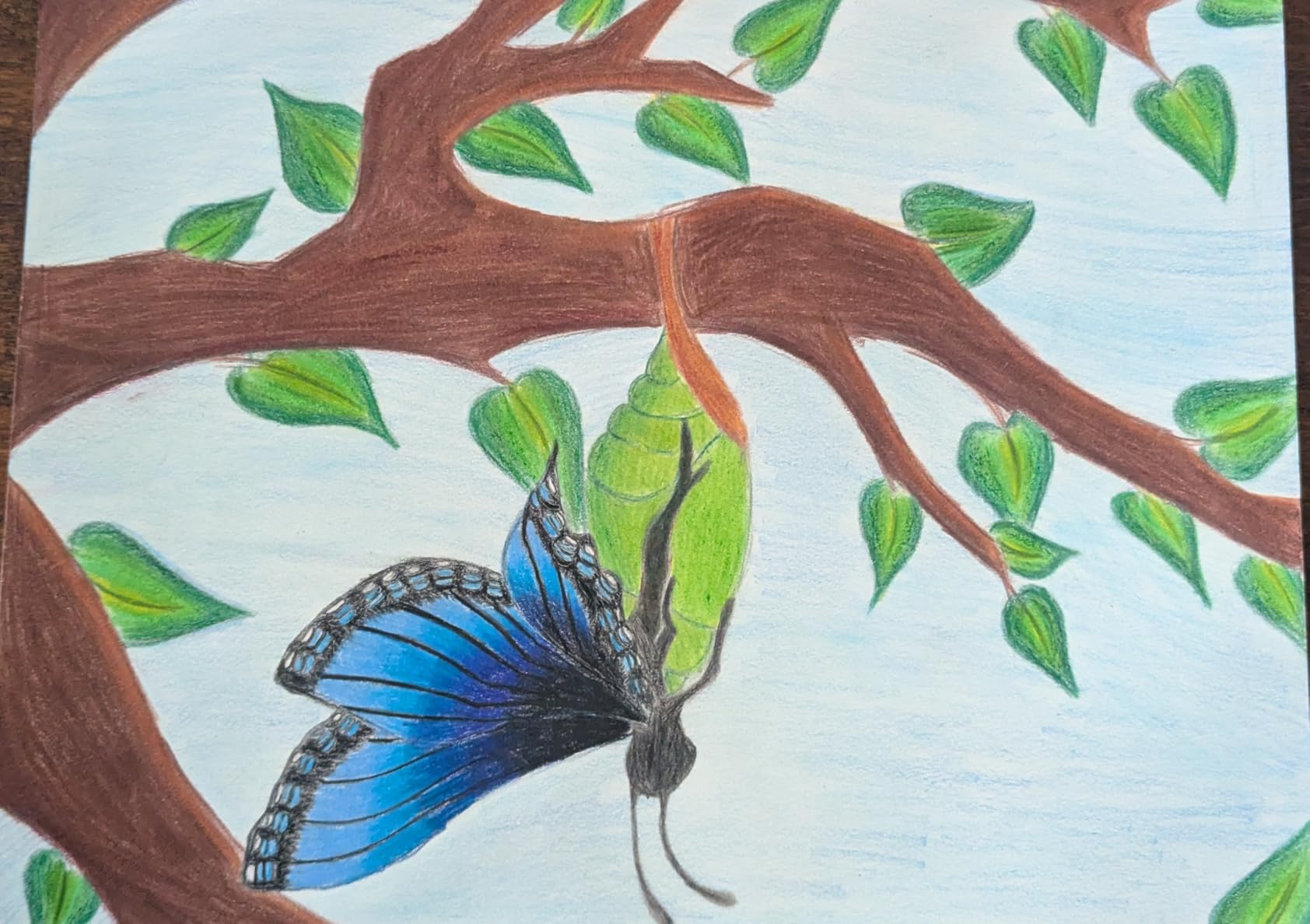
The 24-count tin is enough to handle most beginner projects without overwhelming you with choice. Once you have learned how hard to press and how to layer without picking up pigment from the layer below, you can step up to the 48 or 150 count without relearning the system. That is a real advantage.
The biggest downside is fragility. These cores snap if you drop them or press too hard on a sharp tip. A good electric sharpener designed for soft-core pencils helps a lot. I recommend keeping the tin padded in a drawer.
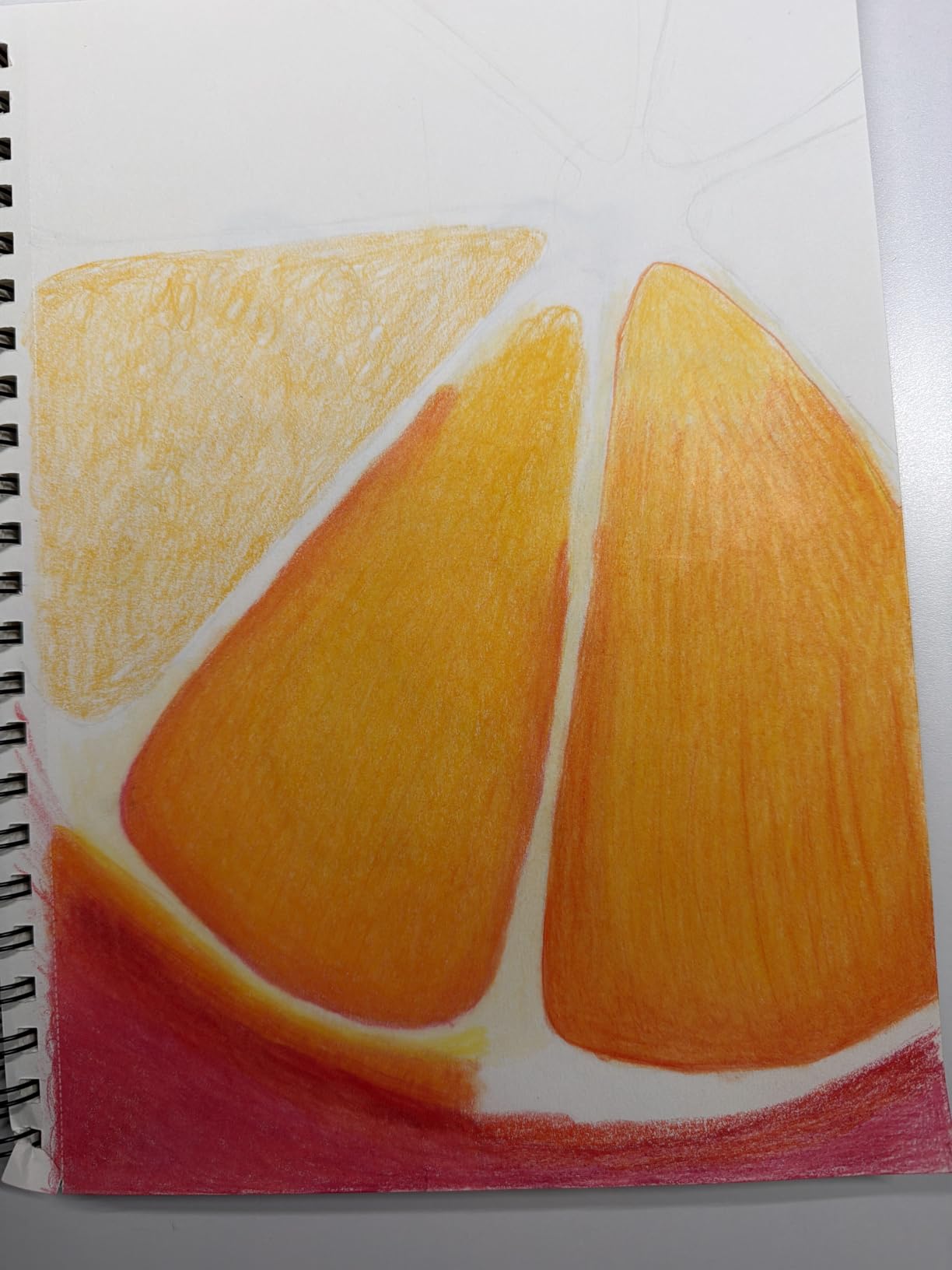
What I liked about paper compatibility
I tested this set on Stonehenge, Strathmore 400, and Canson XL. It performed best on papers with some tooth, like Stonehenge, where the pigment grips the texture. On super-smooth Bristol, the wax sat on top and looked waxy instead of absorbed.
What disappointed me in real use
Blending past three layers gets tricky. The wax builds up and starts pushing back rather than absorbing more pigment. For professional portrait work that needs ten or more layers, you will want to switch to Polychromos or layer with a solvent.
2. Faber-Castell Polychromos 24-Color Tin – Best for Detail Work
Faber-Castell Polychromos Artists’ Color Pencils – Tin of 24 Colors – Premium Quality Artist Pencils
Oil-based cores
24 colors
SV bonding break-resistant
Pros
- Break-resistant SV bonding leads
- Smudge-proof and water-resistant
- Lightfast ratings printed on each pencil
- Beautiful cedar wood shavings
- Holds a point for a long time
Cons
- Expensive per pencil
- 24-set has no purple
- Limited color range in starter tin
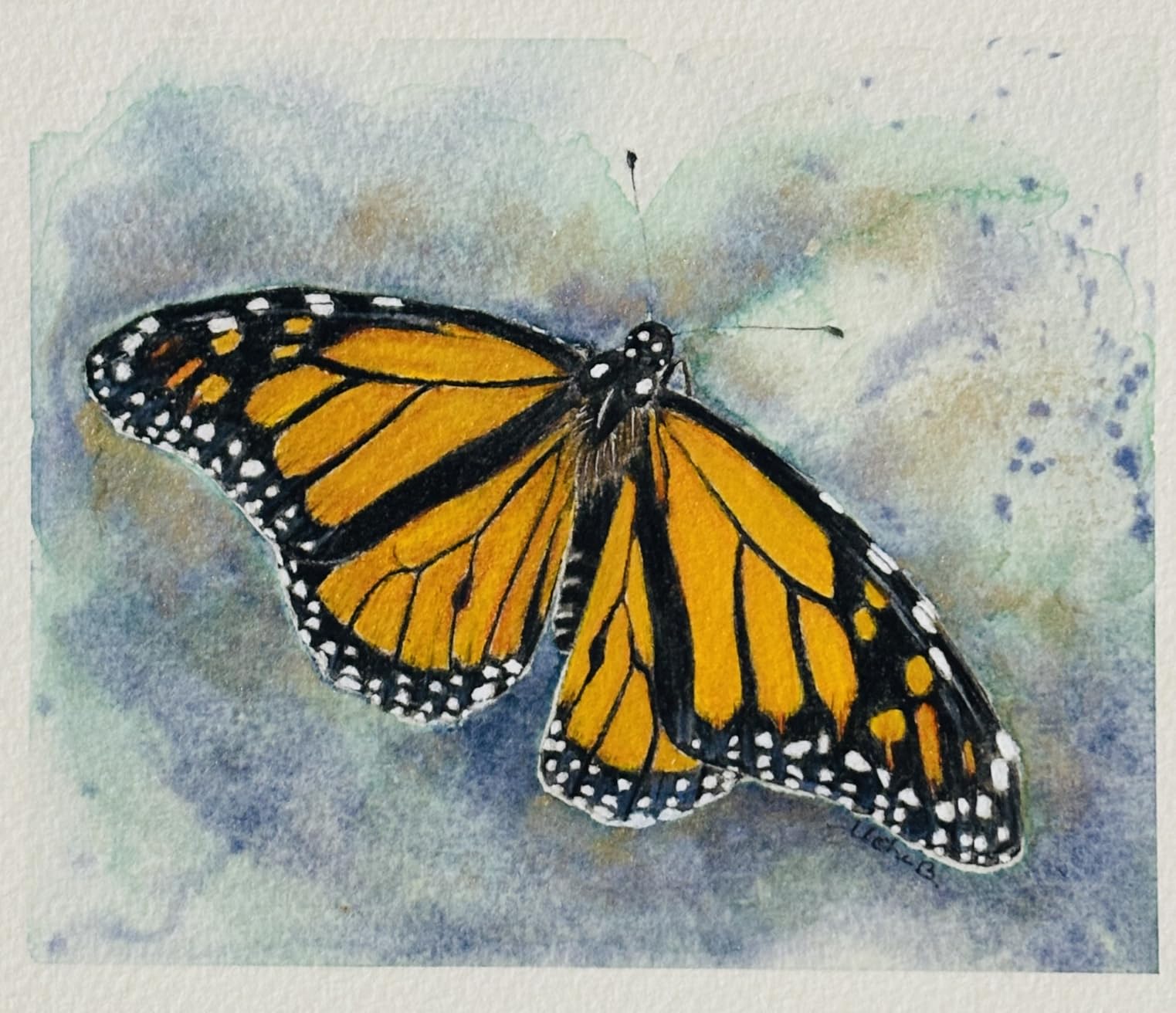
The Faber-Castell Polychromos set is the industry standard for artists who care about crisp detail. These oil-based pencils feel different from the moment you uncap one. The lead is harder, the point holds longer, and the pigment goes down exactly where you put it. For botanical art, architectural renderings, and detailed portraits, this set is hard to beat.
What surprised me most during testing was the lack of wax bloom. Wax bloom is that white haze that appears on heavily layered wax-based work. Polychromos layers stay clean because the binder is oil, not wax. After my test portrait sat under a lamp for a week, the Polychromos version looked identical to the day I finished it.
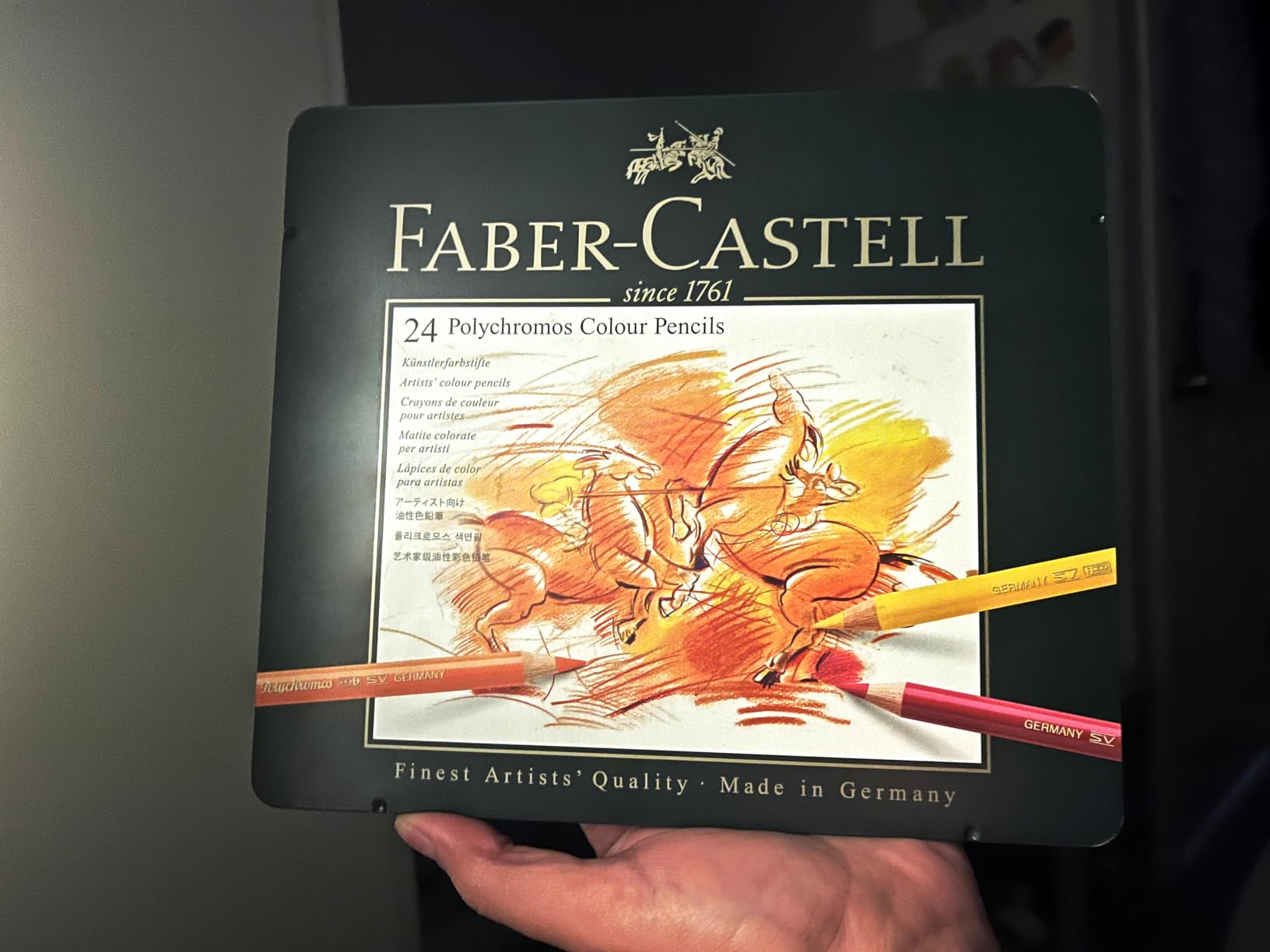
The SV bonding technology genuinely works. I dropped a few pencils from desk height onto carpet and not one snapped. Try that with a Prismacolor and you will be picking up broken cores. For studio artists who work standing up or carry their kit to classes, this matters.
The lightfastness ratings are printed on each pencil, which is something only artist-grade brands bother with. If you are selling original work, you need this rating. Polychromos earns an excellent rating across the line.
Why the price is justified for serious work
The 24-count tin is the most expensive pencil in this roundup on a per-pencil basis, but each pencil lasts far longer than a soft-core wax pencil. A single Polychromos outlasts two or three Prismacolors in my tests because the harder core does not wear down as quickly.
Where the Polychromos falls short
Blending takes more effort. Wax pencils melt together with light pressure. Polychromos need either heavy pressure or a blending solvent to get the same buttery transition. If you are coming from a Prismacolor background, expect a learning curve.
3. Castle Art Supplies 72-Piece Tin – Best Mid-Range Value
Castle Art Supplies 72 Colored Pencils for Adults – Soft Core Leads
72 soft-core pencils
Presentation tin
Color-coded by family
Pros
- Rich vibrant colors
- Soft buttery laydown
- Sturdy tin presentation box
- Color-coded and numbered
- Fold-out tutorial included
- Trusted by 3.5 million artists
Cons
- Some lighter colors apply unevenly
- No blending pencil included
- Tin can dent if dropped
Castle Art Supplies makes the best value pencil in this roundup by a wide margin. The 72-piece tin costs less than half of the Polychromos 24-count but gives you three times the color range. The laydown feels surprisingly close to Prismacolor, with creamy coverage and easy blending.
During my side-by-side test, I genuinely struggled to tell Castle Art Supplies and Prismacolor apart in casual observation. Both had the same buttery feel, the same rich saturation. When I zoomed in under magnification, Prismacolor had slightly denser pigment. For most users, the difference is invisible.
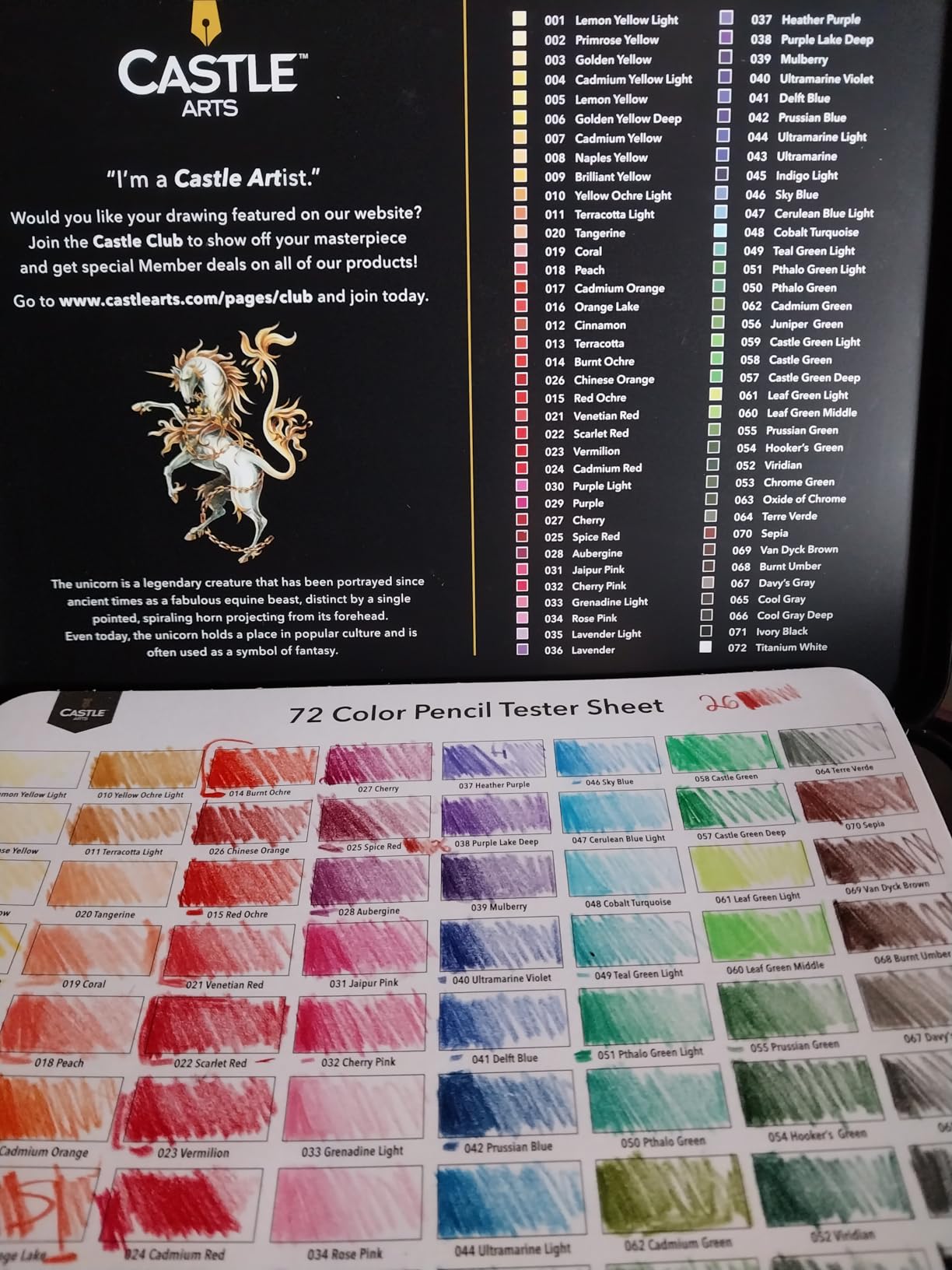
The color organization is excellent. Pencils are arranged by color family in the tin, which makes selecting gradients intuitive. Each pencil is named, numbered, and color-coded, which removes the frustration of guessing which pencil is which. Beginners especially benefit from this system.
The included fold-out tutorial is actually useful, which is rare for any included pamphlet. It walks you through blending, shading, and basic techniques with the pencils themselves. Castle Art Supplies clearly designed this set for newcomers.
Why this is the best value in the lineup
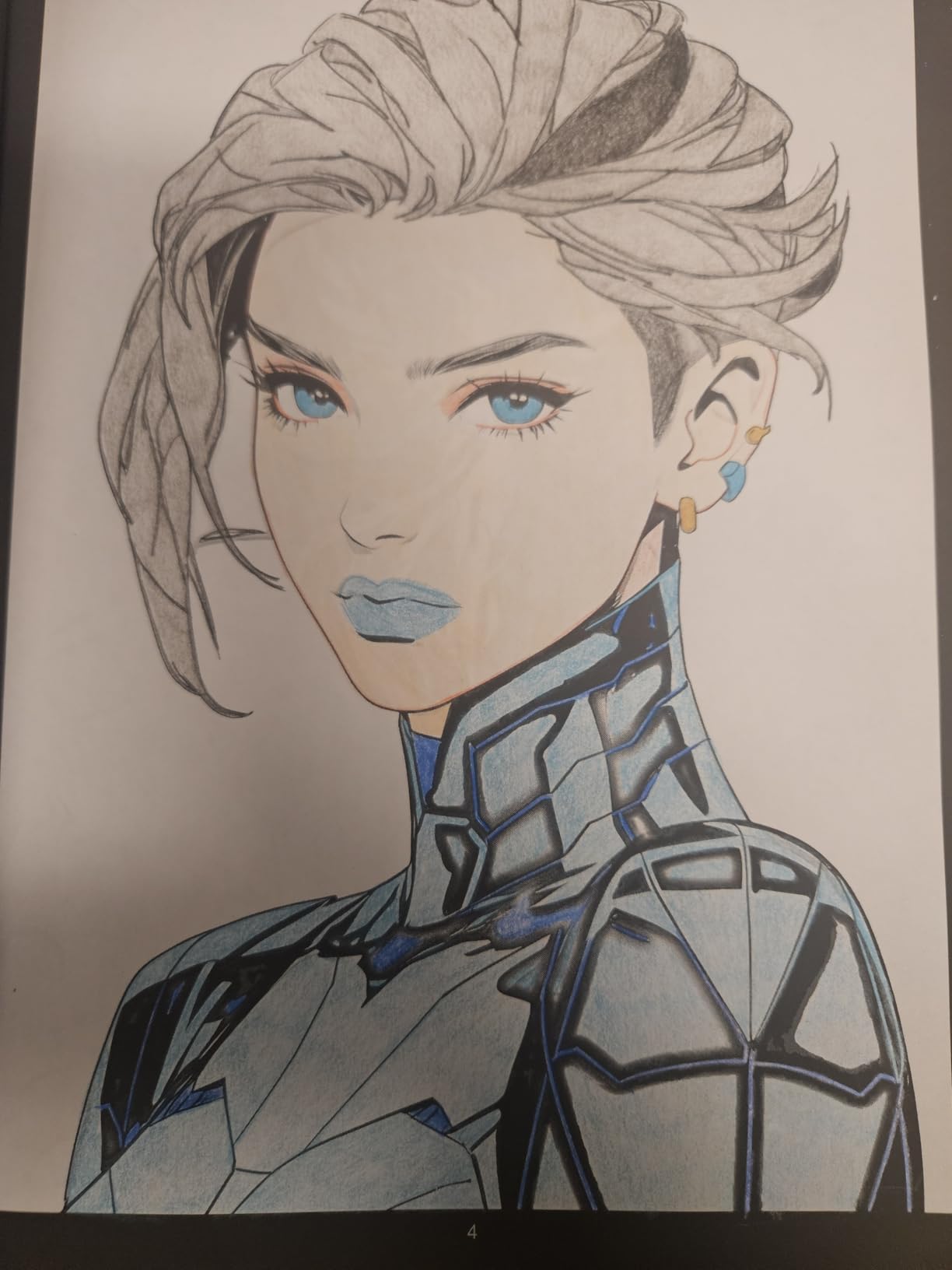
You get 72 colors, a sturdy tin, a tutorial, and color naming. That is more value than almost any other set at this price. If you want Prismacolor feel without the Prismacolor price, this is the answer.
Limitations worth knowing
A few of the lightest tones apply patchier than the rest. The white and pale yellow needed extra pressure to lay down evenly. If you do heavy sky work or bright highlights, you may burn through those pencils faster than the rest.
4. Soucolor 72 Colored Pencils – Best Budget Pick
Soucolor 72 Colored Pencils for Adult Coloring Book,Back to School Supplies
72 vibrant colors
Pre-sharpened
Storage case included
Pros
- Rich pigments and seamless blending
- Soft break-resistant cores
- Pre-sharpened on arrival
- Easy color identification with numbers
- Non-toxic safe materials
Cons
- Not Prime eligible
- Some colors slightly less vibrant
- Cardboard case not very portable
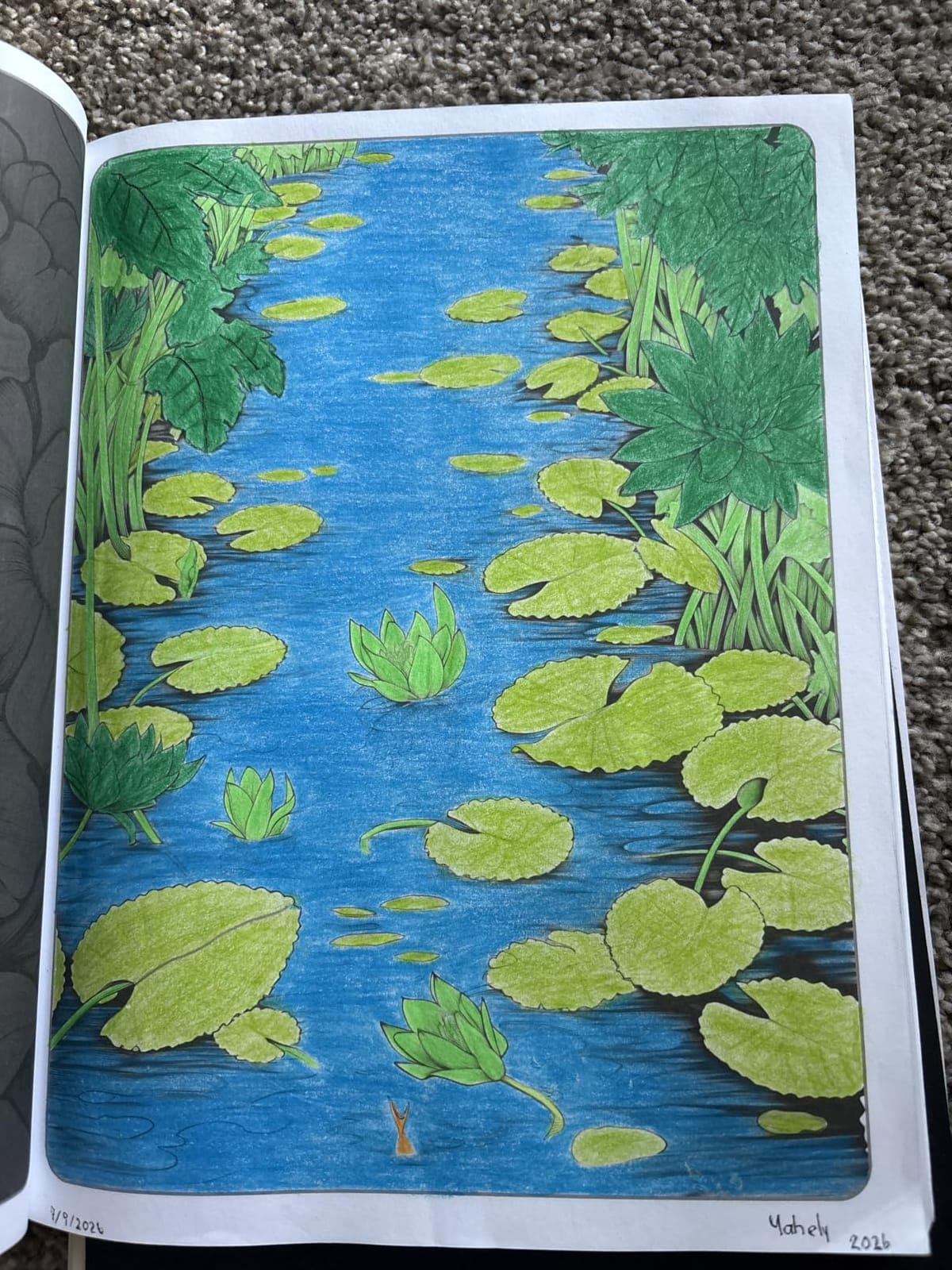
The Soucolor 72-piece set is the budget option that genuinely surprised me. At under $10, I expected school-grade quality and instead got soft-core pencils with respectable blending. For parents outfitting a kid’s art kit or adults who want to try colored pencils without committing to a premium set, this is the most accessible entry point on the market.
Color vibrancy is the obvious compromise. Compared to Prismacolor, the Soucolor pigments are less saturated, so you need more layers to reach the same intensity. If you are willing to build up gradually, the result is acceptable. If you need one-stroke coverage, step up.
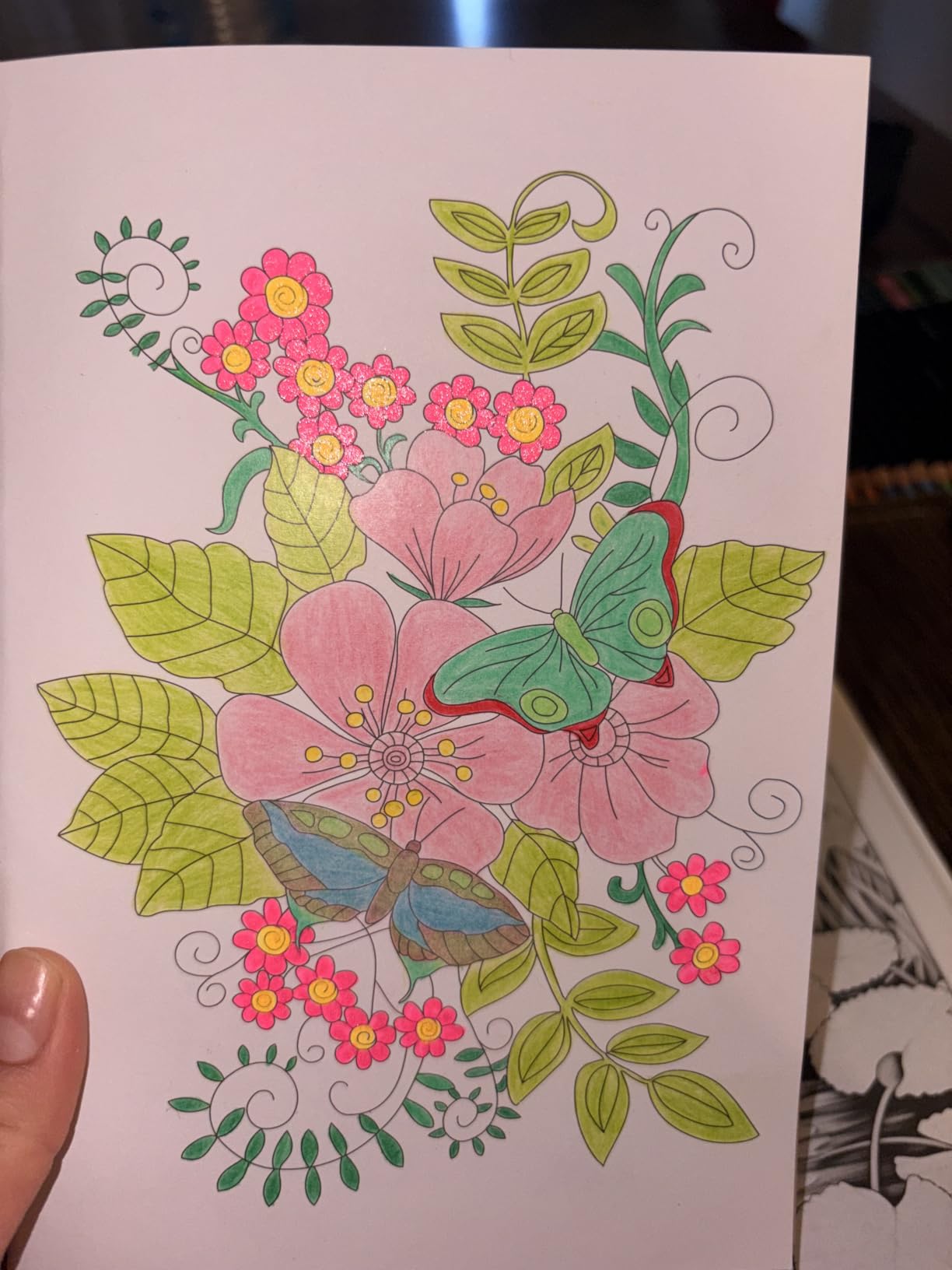
The cores are advertised as break-resistant, and in my drop test from desk height onto carpet, none snapped. The casing is standard wood, and the leads sharpen cleanly in a manual sharpener without crumbling. That is a better result than I expected at this price point.
The 72-color range is generous for a budget set, including skin tones, neutrals, and a full primary spectrum. The numbering system lets you reorder singles if a pencil runs out, which is rare at this price.
Who should buy Soucolor
Parents buying for kids, classroom teachers stocking supplies, or hobbyists who want a stress-free set to keep in a bag without worrying about damage. The cardboard case is not portable, but it does keep pencils organized at home.
When to skip Soucolor
If you plan to sell your finished work, or if lightfastness matters for archival projects, this set is not built for that. The pigments are not lightfast rated, so expect some fading over years of display.
5. Castle Art Supplies 120-Piece Tin – Best Extended Palette
Castle Art Supplies 120 Colored Pencils for Adults – Soft Core Leads
120 colored pencils
3-layer tin
Premium artist's colors
Pros
- Massive 120-color variety
- Rich vibrant pigments
- Smooth layering and blending
- Sturdy metal tin with 3 layers
- Good point retention
- Premium artist's colors included
Cons
- Tin can arrive dented
- Plastic tray straps may break
- Tin packaging can be tight
The Castle Art Supplies 120-piece tin is what I reach for when I want maximum color choice. With 120 pencils, you essentially eliminate the need to mix, because there is a close-enough hue for almost any reference. Botanical artists, portrait painters, and anyone working from complex references will appreciate this range.
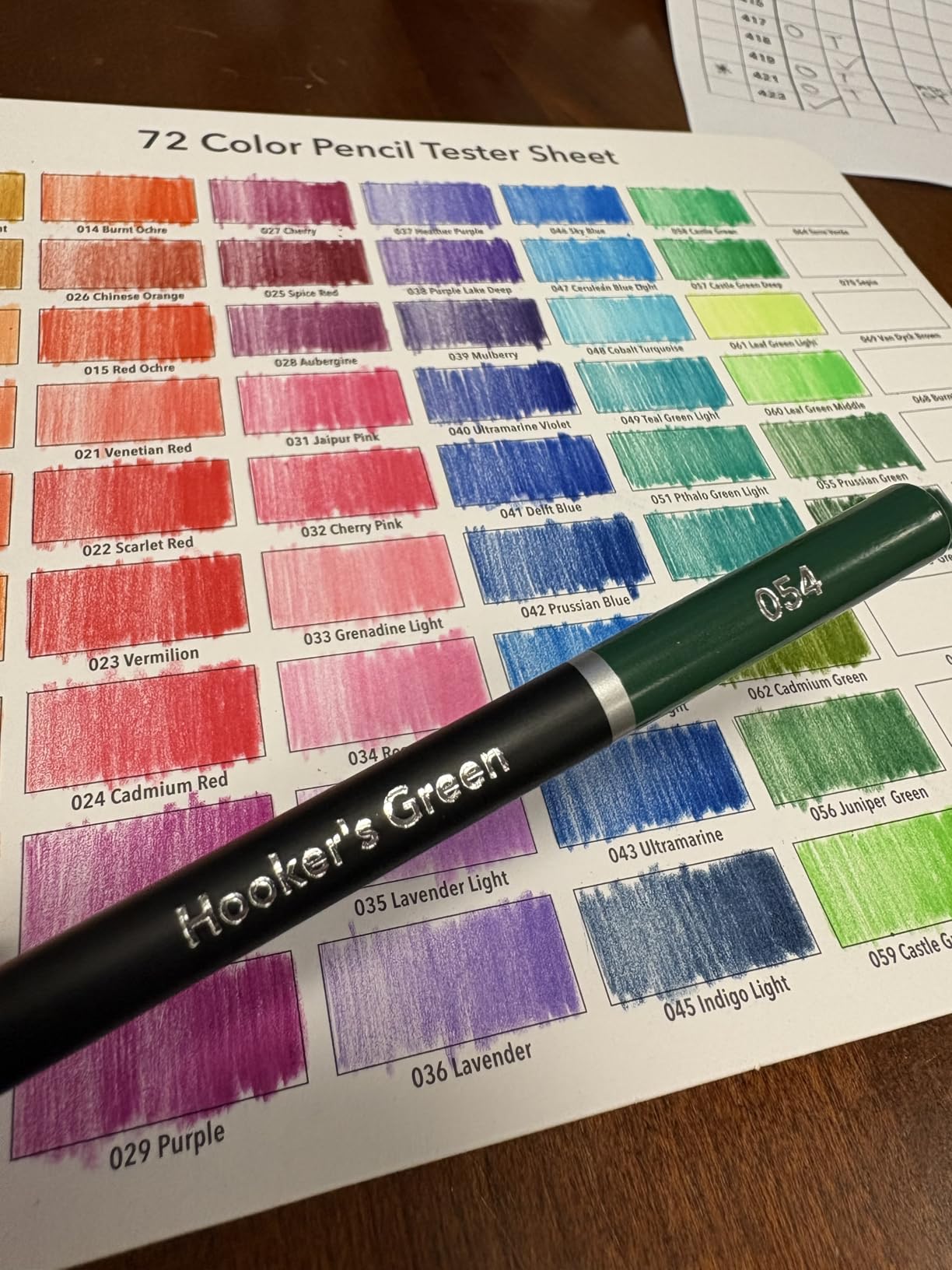
The tin has three layers, so storage is organized rather than chaotic. Pencils are arranged by color family on each tray, and the layered design keeps the set compact. The included color swatch chart is genuinely useful for picking colors without opening every pencil.
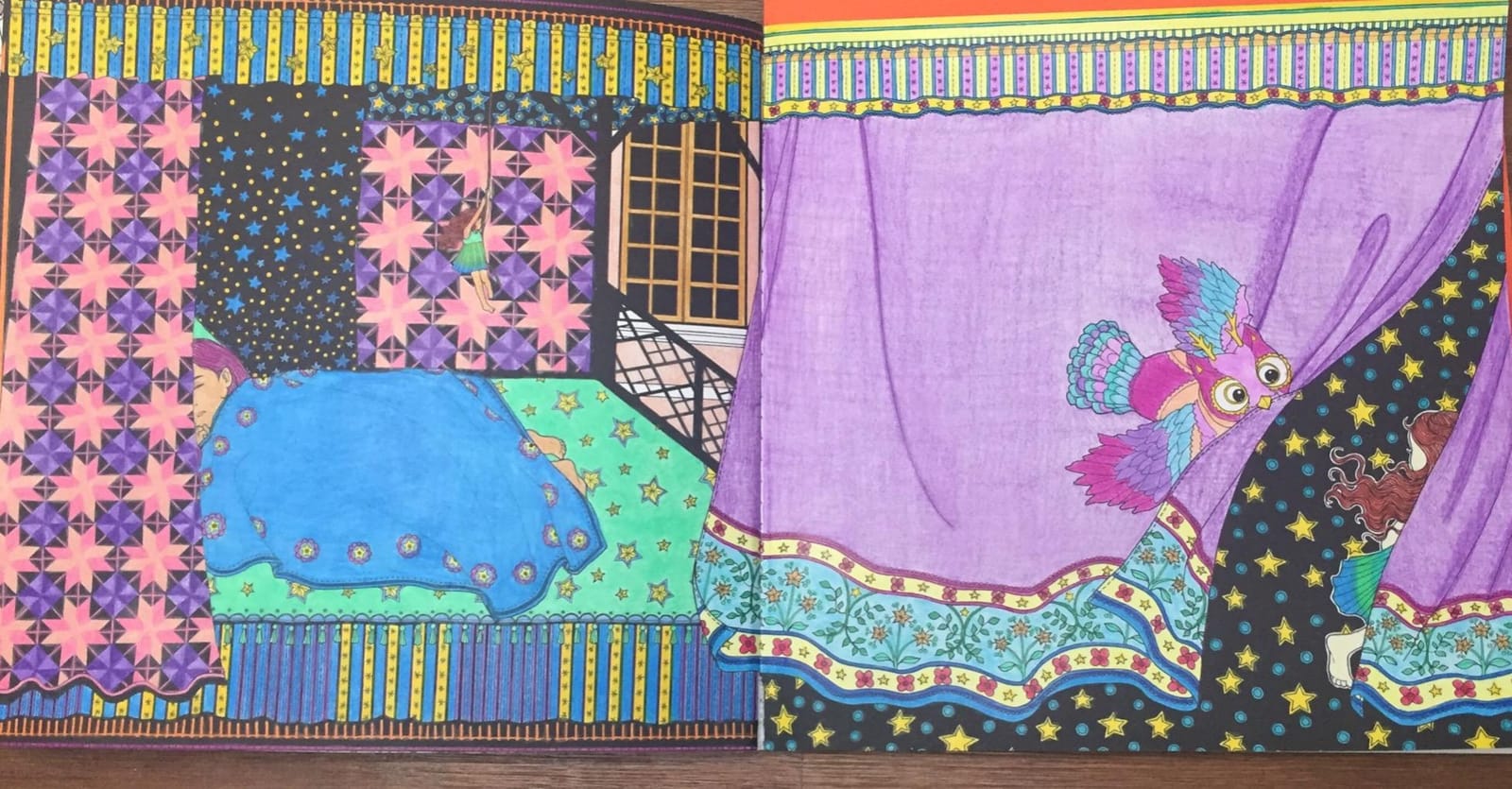
Premium artist’s colors like cadmium, cobalt, and phthalo greens and blues are included, which is rare in a mid-price set. These hues are harder to mix from primary colors, so having them pre-made is a real time-saver for landscape and floral work.
In my layering test, this set handled five-layer gradients without becoming waxy or chalky. The core stays consistent across the spectrum, unlike budget sets where mid-tones perform differently than primary tones.
Why 120 colors beats 72
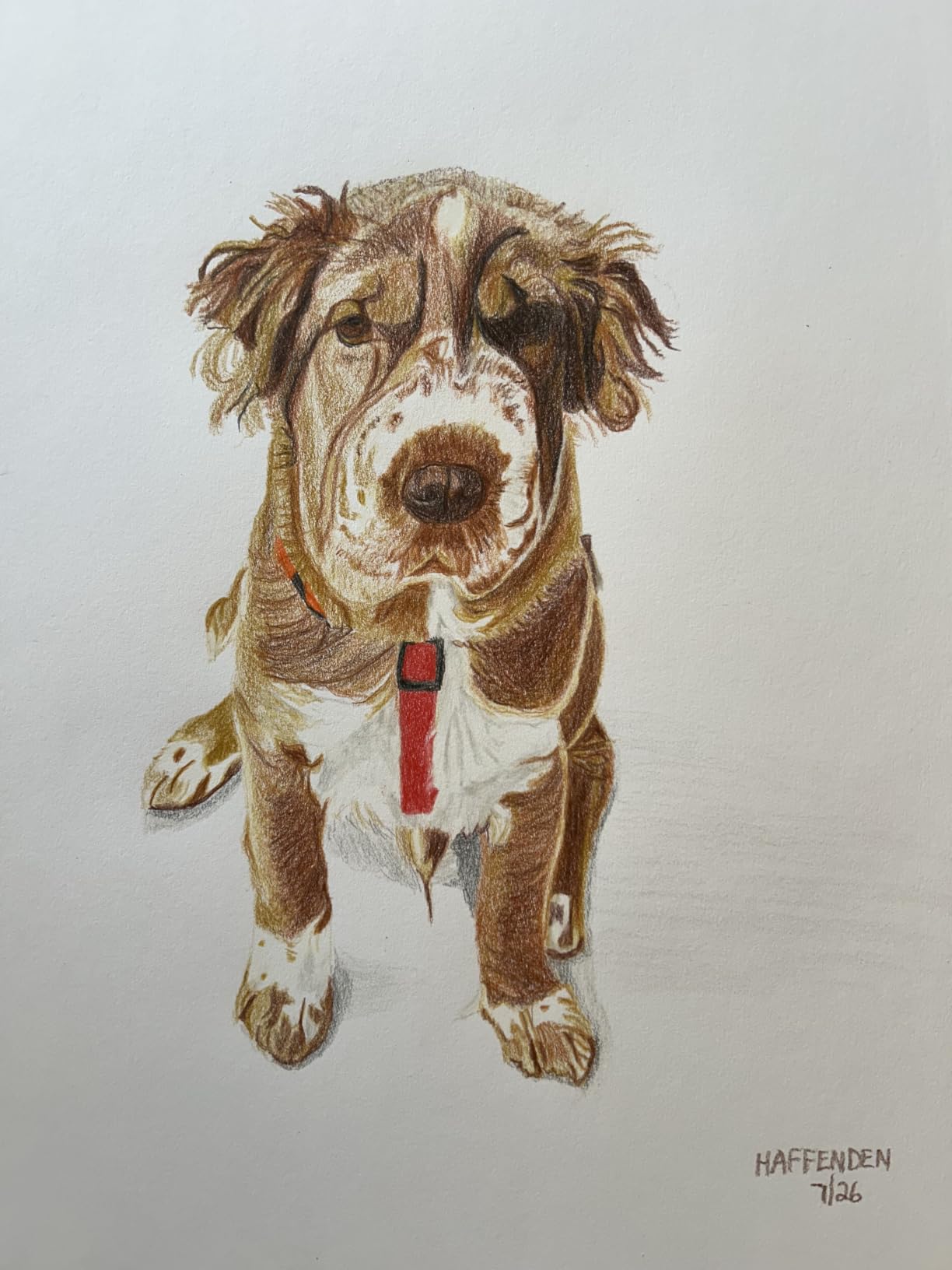
The jump from 72 to 120 pencils is the difference between having enough and having options. If you work with photo references, especially portraits with subtle skin tones, you need that gradient range. Cheaper sets force you to mix, which works but slows you down.
Practical drawbacks to consider
The tin is heavier than the 72-count. Plastic tray straps can crack if the tin is opened roughly. If you travel with this set, expect to add bubble wrap or a sleeve for protection.
6. ARTEZA 72 Colored Pencils – Best Break-Resistant Core
ARTEZA Colored Pencils, 72 Colors, Soft Wax Cores for Coloring and Drawing
72 unique colors
4mm wax cores
Metal tin with color chart
Pros
- 72 unique colors with good variety
- Soft wax-based cores
- 4mm break-resistant cores
- Pre-sharpened and labeled
- Metal tin with color chart included
- Creamy but not too soft
Cons
- Some colors weaker in certain ranges
- Plastic trays in tin are flimsy
- Not as pigmented as Prismacolor
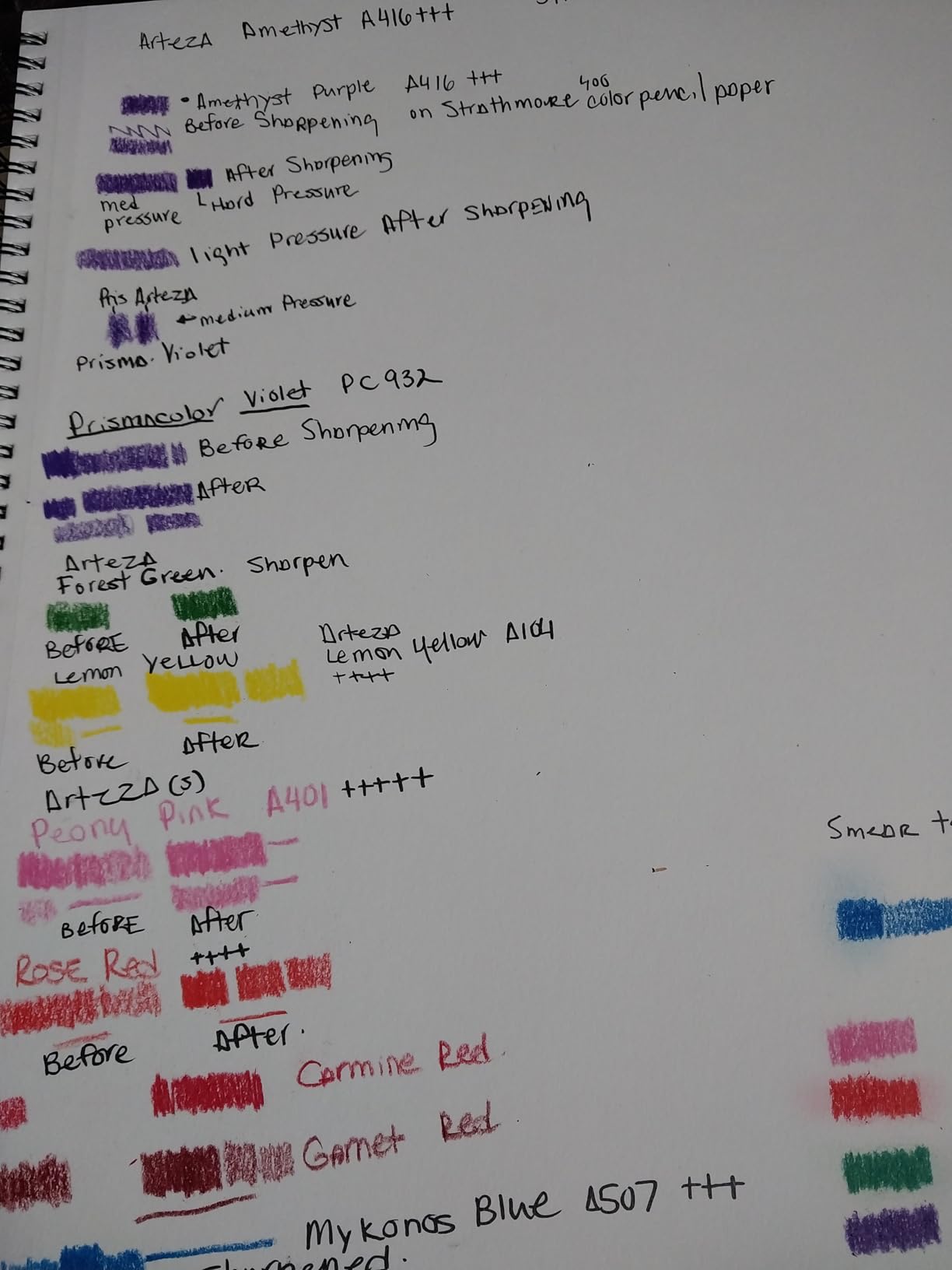
ARTEZA built this 72-piece set with durability as the headline feature. The 4mm cores are noticeably thicker than the industry standard 3mm, and ARTEZA bonded them to resist breaking. For students who press too hard, beginners still learning pressure control, or anyone frustrated by snapped cores, this is a meaningful upgrade.
In my drop test, this set outperformed every wax-based competitor. Several pencils survived falls from standing height without a single chip. The 4mm cores sharpen to a slightly chunkier point than thinner cores, but the difference is small.
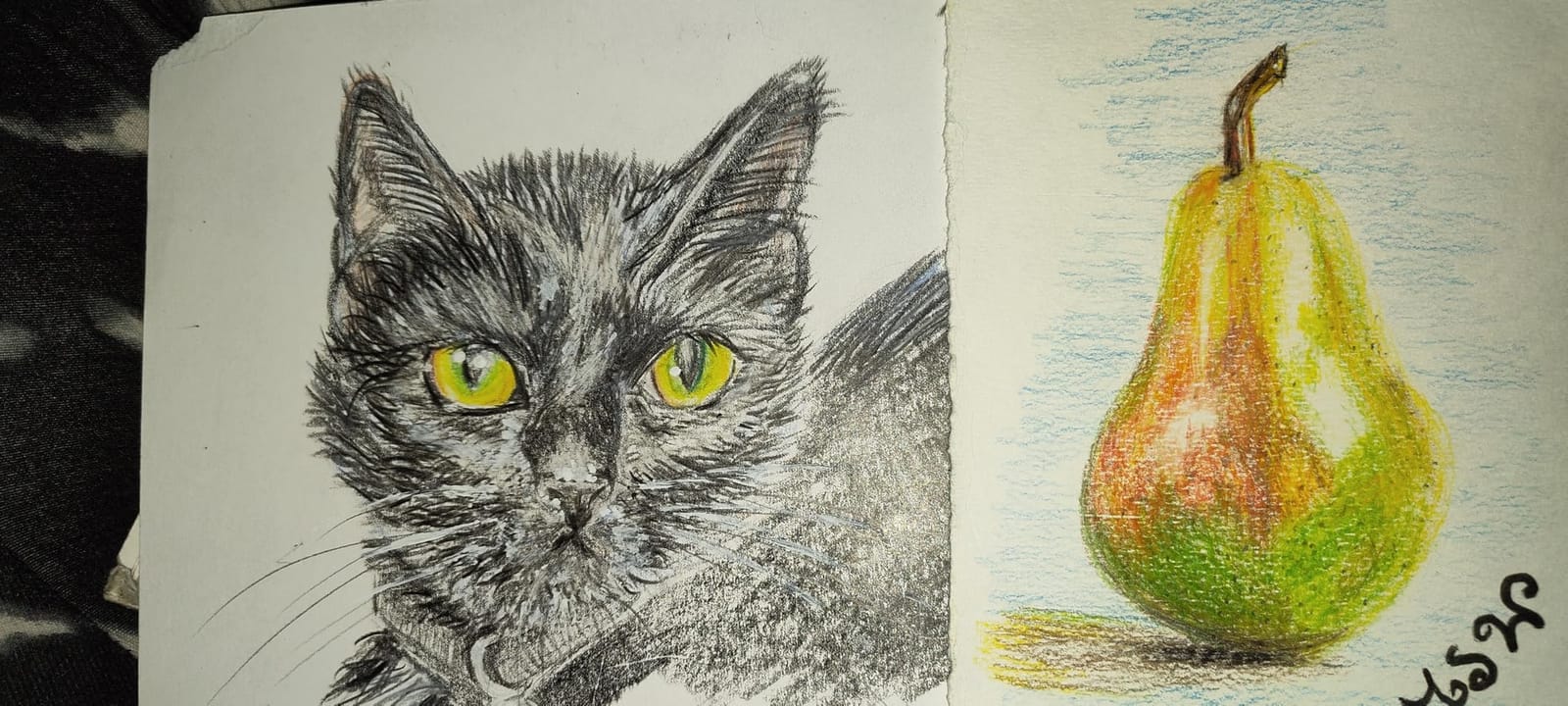
The wax-based formula is creamy without being too soft. It blends almost as well as Prismacolor and holds its shape slightly better. The metal tin is sturdy, and the included color chart is helpful for picking the right pencil without test-swatches.
The 72 colors are well distributed across the spectrum, including enough neutrals and darks for portrait work. ARTEZA clearly thought about color distribution rather than just filling the count with bright primaries.
Why durability matters in colored pencils
Soft-core pencils snap. That is the single most common frustration I hear from beginner colored pencil users on Reddit. A broken core wastes the pencil and interrupts your flow. Thicker cores reduce this risk without compromising performance much.
What ARTEZA could improve
The plastic tray inside the tin is flimsy and tends to crack with repeated opening. Replacing it with elastic loops like the Castle Art Supplies Zipper Case would solve this problem entirely.
7. Prismacolor Premier 48-Color Set – Best Mid-Size Prismacolor
Prismacolor Premier Colored Pencils, Soft Core, Assorted Colors, 48 Count – Durable, Vibrant, Ultra-Smooth, Adult Coloring, Drawing, Sketching, Arts & Crafts
48 vibrant colors
Soft wax cores
Tin case included
Pros
- Brilliant rich pigments
- Soft thick cores perfect for shading
- Ultra-smooth laydown
- Excellent blending capability
- Durable leads resist cracking
- Wide color array
Cons
- Wears down faster than harder pencils
- Sharp point can break easily
- Requires proper sharpener
The Prismacolor 48-Color Set is the sweet spot for many intermediate artists. You get double the color range of the 24-count but stay within a manageable size and price. For most portraits, landscapes, and still life work, 48 colors is enough without forcing you to mix constantly.
If you already know you like the Prismacolor feel and want a larger working range without jumping straight to the 150-count, this is the answer. The tin is the same form factor as the 24-count, just deeper.
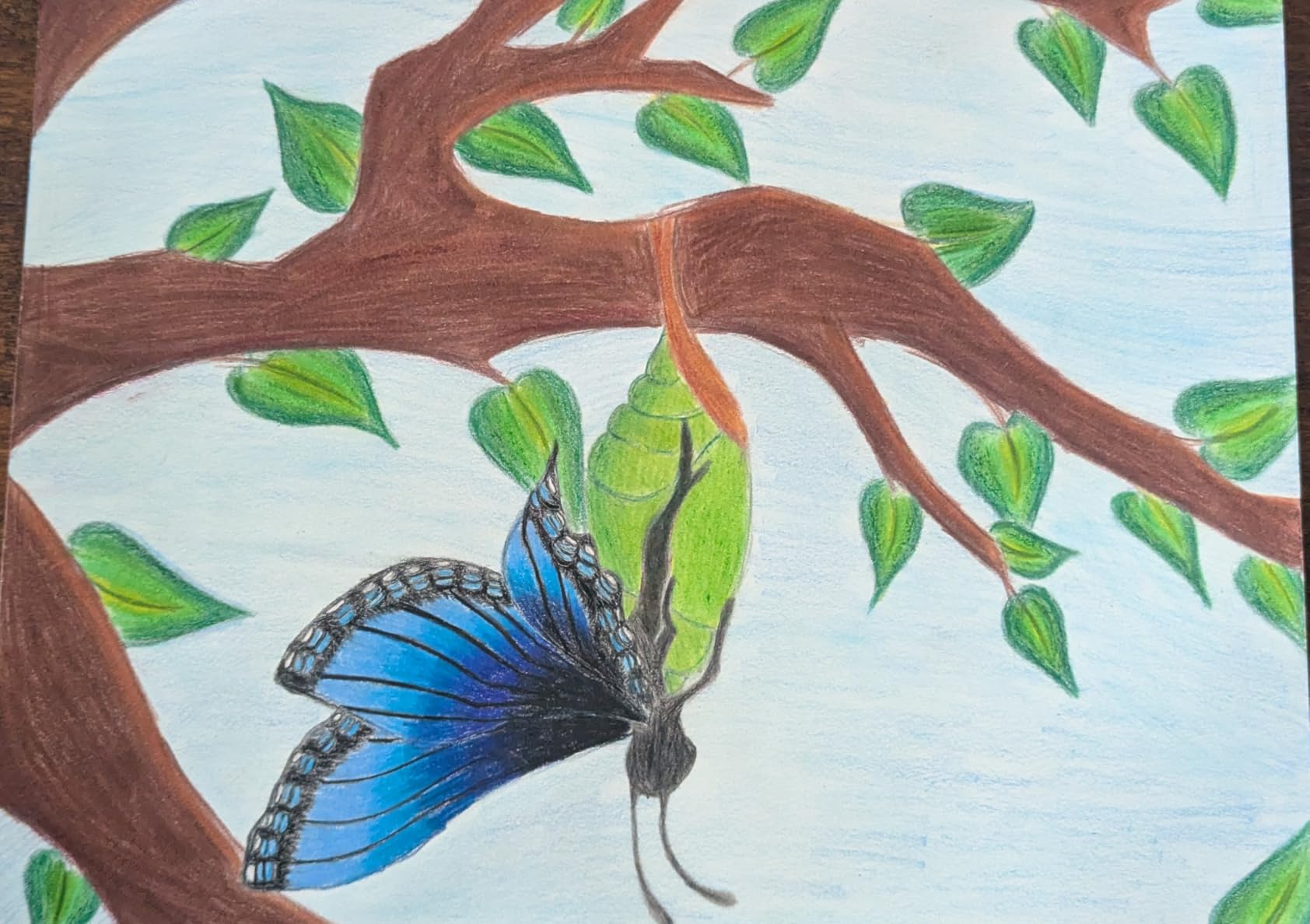
The pigments perform identically to the 24-count because they are the same pencils. You get the same creamy blending, same saturation, same brand consistency. The only difference is color count.
In my test portrait work, I found myself reaching for the 48-count more often than the 24 because skin tones and subtle gradients need that wider range. Two extra flesh tones and several more neutrals make a real difference in finished portraits.
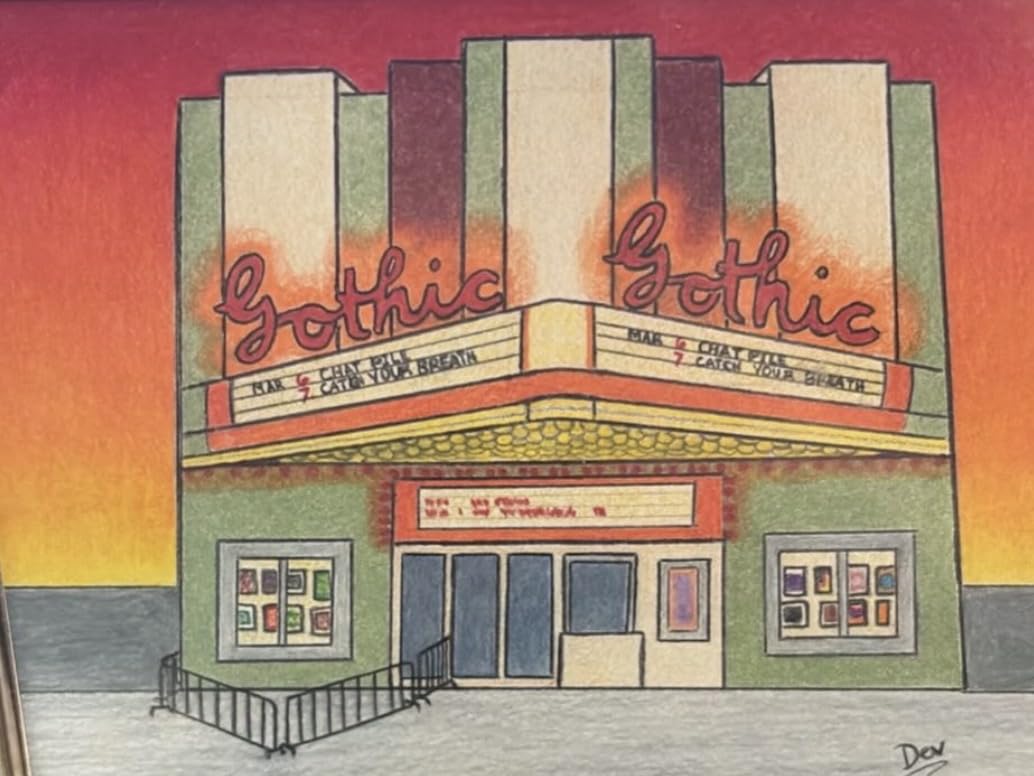
Why 48 is the practical sweet spot
Sets under 30 colors force too much mixing. Sets over 100 colors overwhelm beginners and cost too much to risk on a first serious purchase. The 48-count hits the middle, where you have enough range to handle most references without buying duplicates or paying for colors you will never use.
The biggest issue with this set
Prismacolor does not include grey tones in this set. For monochromatic studies or graphite-style underdrawings, you will need to buy greys separately. It is a strange omission given the comprehensive coverage elsewhere.
8. Castle Art Supplies 72-Piece Zipper Case – Best Portable Option
Castle Art Supplies 72 Colored Pencils for Adults – Professional Quality
72 pencils
Zip n Flip nylon case
Elastic holders
Pros
- Rich vivid colors
- Soft and easy to blend
- Excellent color payoff
- Sturdy zipper case with elastic holders
- Each pencil individually numbered
- Great for beginners and professionals
Cons
- Case may show wear over time
- One pencil occasionally damaged in shipping
The Castle Art Supplies Zipper Case set is the same pencils as the tin version but in a portable nylon case. The Zip n Flip case holds each pencil in its own elastic loop, so nothing rolls around or falls out. For artists who travel to classes, plein air sessions, or just want a tidy studio, this case is meaningfully better than a tin.
The laydown and pigment quality match the tin version exactly, so you do not sacrifice performance for portability. The case lies flat when open, which makes color selection easier than digging through a tin.
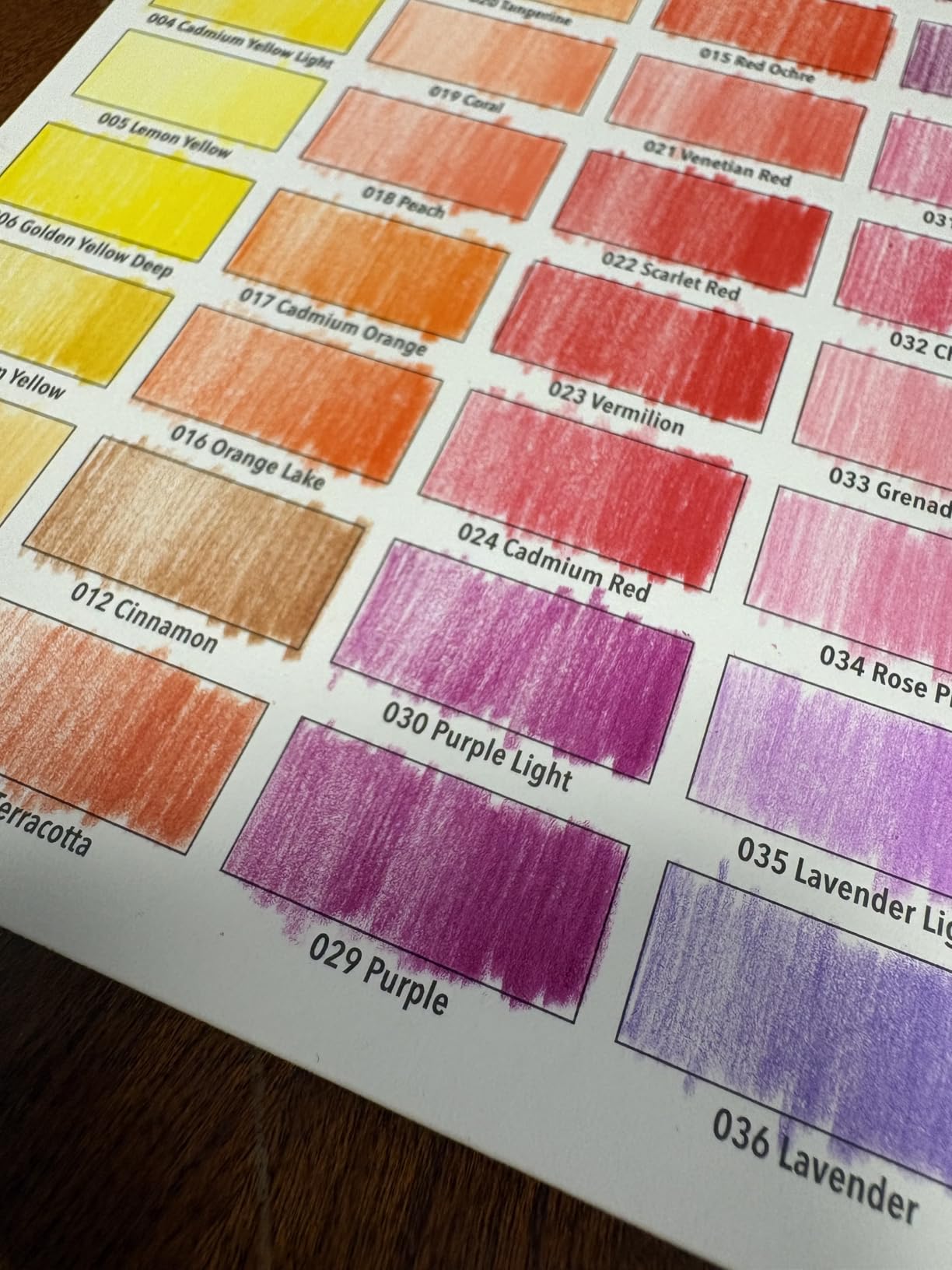
I have taken this set to coffee shops, art meetups, and classes without any pencil damage. The zipper keeps everything secure, and the case fits easily into a backpack. The included color swatch card and tutorial mirror the tin set.
The 72 colors are identical to the tin version, organized by family and numbered. If you already own the tin and want a duplicate set in portable form, this is the cleanest solution.
Who needs a zipper case over a tin
If you travel with your art supplies, teach, attend workshops, or work in multiple locations, the zipper case is worth the small premium. Tins dent, pop open, and are harder to pack. The case solves all three problems.
Tradeoffs to consider
The nylon case is not as rigid as the tin, so it does not protect against crushing as well. For airline travel or checked luggage, consider adding a hard shell around the case for extra protection.
9. Prismacolor Premier 150-Color Set – Best for Realistic Art
Prismacolor Premier Colored Pencils, Soft Core, Assorted Colors, 150 Count – Durable, Vibrant, Ultra-Smooth, Adult Coloring, Drawing, Sketching, Arts & Crafts
150 assorted colors
Soft wax cores
Premium pigments
Pros
- Massive 150-color collection
- Ultimate for realistic portraits and skin tones
- Exceptional blending capability
- Ultra-soft wax core is creamy
- Rich pigmentation with little pressure
- Perfect for layering
Cons
- Expensive investment
- Some pencils may have off-center cores
- Leads wear down quickly on white black and yellow
- Plastic trays in box are flimsy
The Prismacolor 150-Color Set is the holy grail for serious colored pencil artists. With 150 colors, you have a match for almost any reference photo, especially skin tones and subtle gradients. If you do portraits, this set is what most working artists eventually graduate to.
The blendability is exceptional. With 150 colors at your fingertips, you almost never need to mix, which means every transition stays clean and predictable. The creamy wax core builds rich, opaque layers that look almost like paint at full saturation.
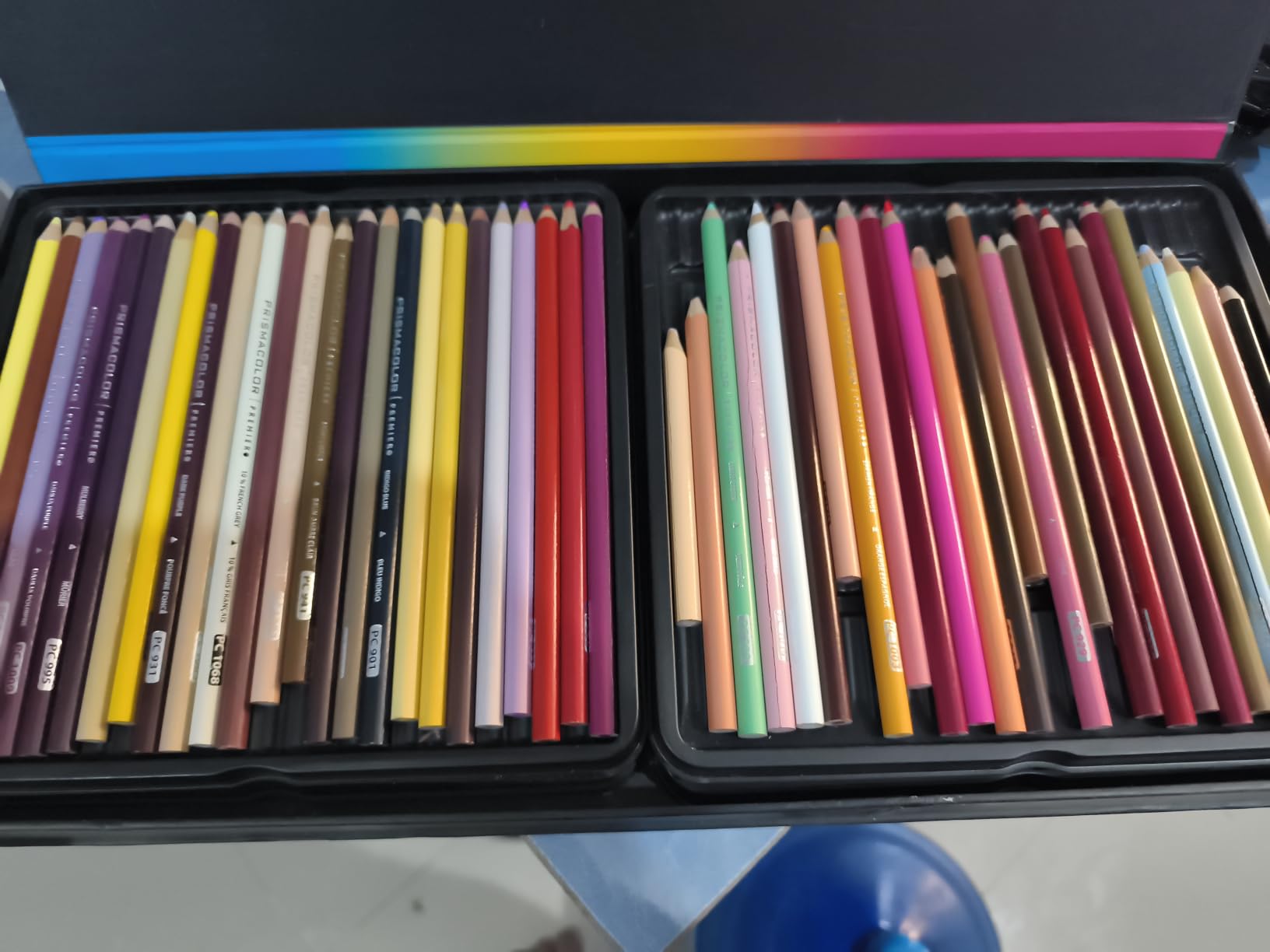
During my portrait study with this set, I was able to match my reference photo’s skin tones almost exactly using only Prismacolor pencils. The 150-count provides enough flesh tones, hair colors, and shadow hues to capture real human skin.
The set comes in a sturdy box with plastic trays, though those trays are the most common complaint. They crack with rough handling. Some users transfer the pencils to a third-party case like the Castle Art Supplies zipper case.
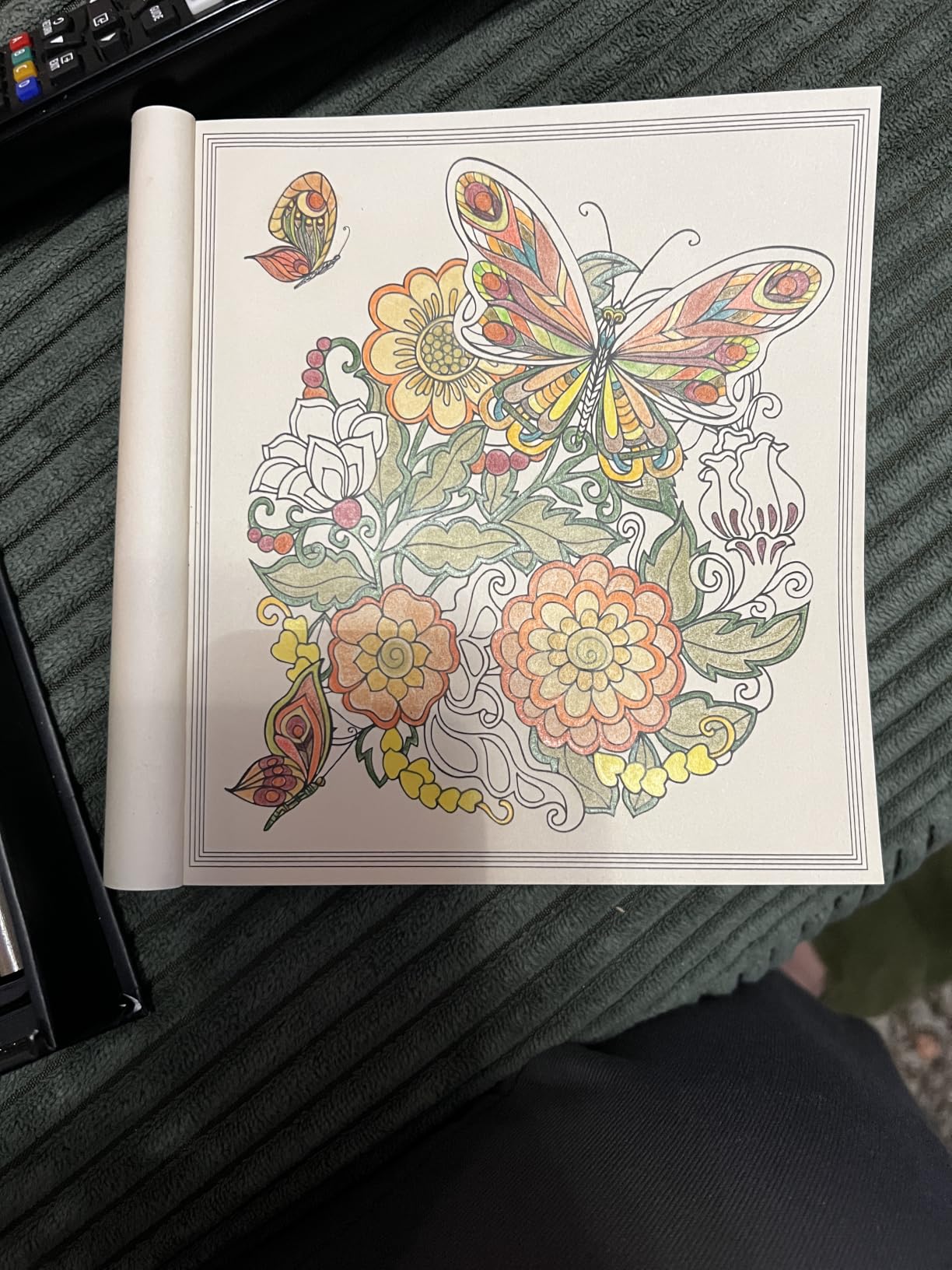
Why 150 colors is the real artist standard
Below 100 colors, you mix frequently. Mixing in colored pencils works, but it requires skill and time. With 150, you spend your energy on drawing rather than color theory. For commissioned portrait work or gallery pieces, that time savings is worth the investment.
The honest downside
White, black, and yellow wear down fastest because they get used in nearly every piece for highlights, shadows, and base layers. Budget for replacing those colors regularly, and use a light touch when laying them down.
10. Derwent Inktense 100 Watercolor Pencils – Best for Mixed Media
Derwent Inktense Pencils Art Set, 100 Permanent Watercolor Pencils Set in Tin, Premium Colored Pencils for Adults, Water-Soluble Indelible Pencil Collection, 4mm Core, Professional Quality (2306130)
100 water-soluble pencils
4mm core
Permanent when dry
Pros
- India ink-based pigments for permanent results
- Water-soluble with ink-like intensity
- Permanent once dry - layers won't disturb beneath
- Highly pigmented 4mm core
- Creamy smooth application
- Excellent for botanical and detailed work
Cons
- Not Prime eligible
- Tin case doesn't snap tightly
- Some colors may reactivate when wet again
- Requires quality brushes for best results
The Derwent Inktense set is in a category of its own. These are not regular colored pencils. They are water-soluble pencils with India-ink-based pigments that become permanent once dry. If you want watercolor effects with the precision of a pencil, this set is unmatched.
The magic happens when you add water. Dry, the pencils lay down like any other. Wet, the pigment transforms into something that looks like real India ink, with deep saturation and flowing transitions. Once the layer dries, it is permanent, so you can layer on top without disturbing what is underneath.
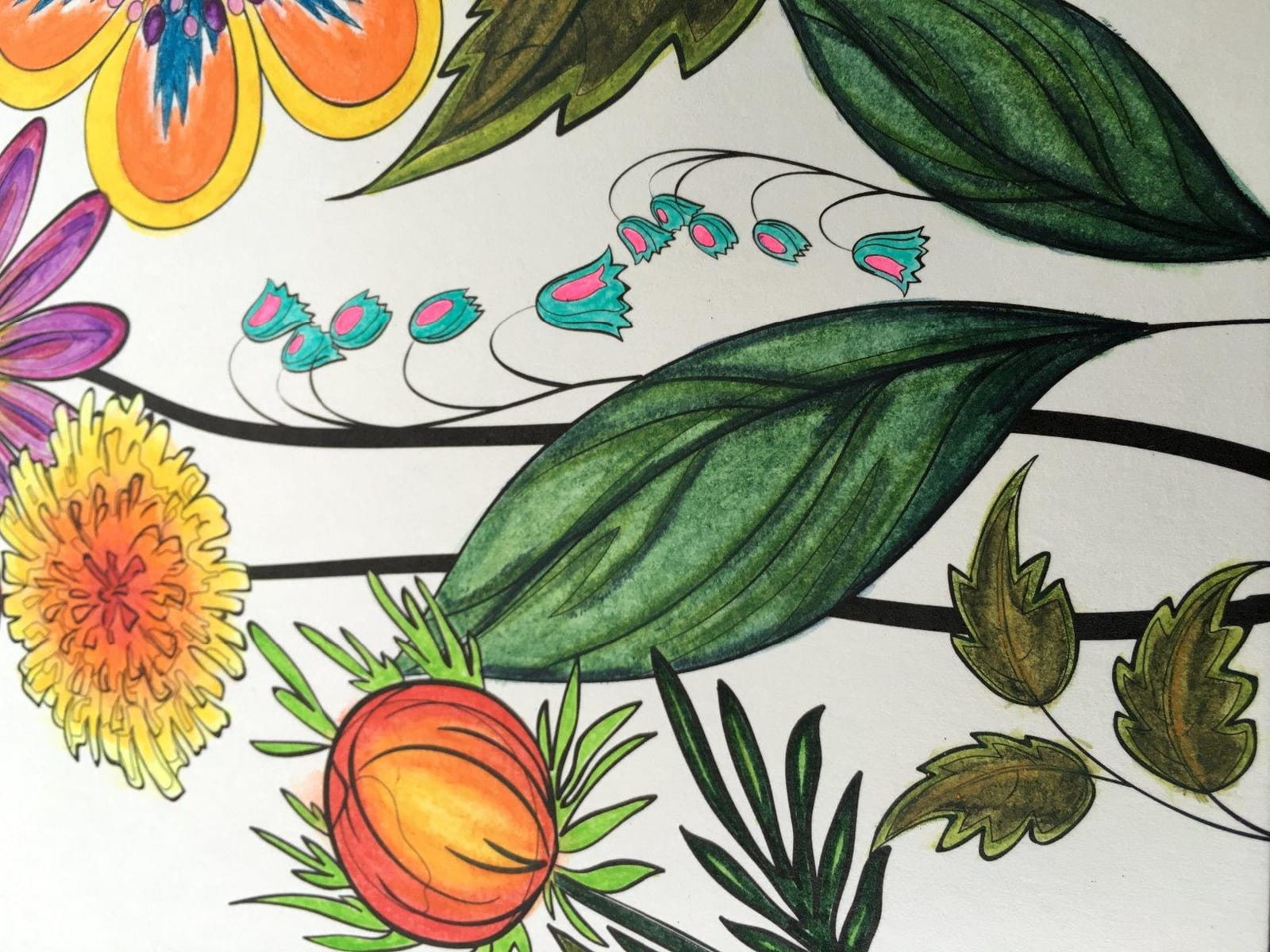
I tested this set on hot press watercolor paper with a wet brush. The results were stunning. Botanical art, in particular, looks incredible with Inktense because you can sketch the outline, wash in the color, and add dry details on top with the same pencil.
The 100 colors cover a wide range, including metallics and vibrant brights. For mixed media artists who combine pencil with traditional watercolor, having both tools in one stick is a real workflow advantage.
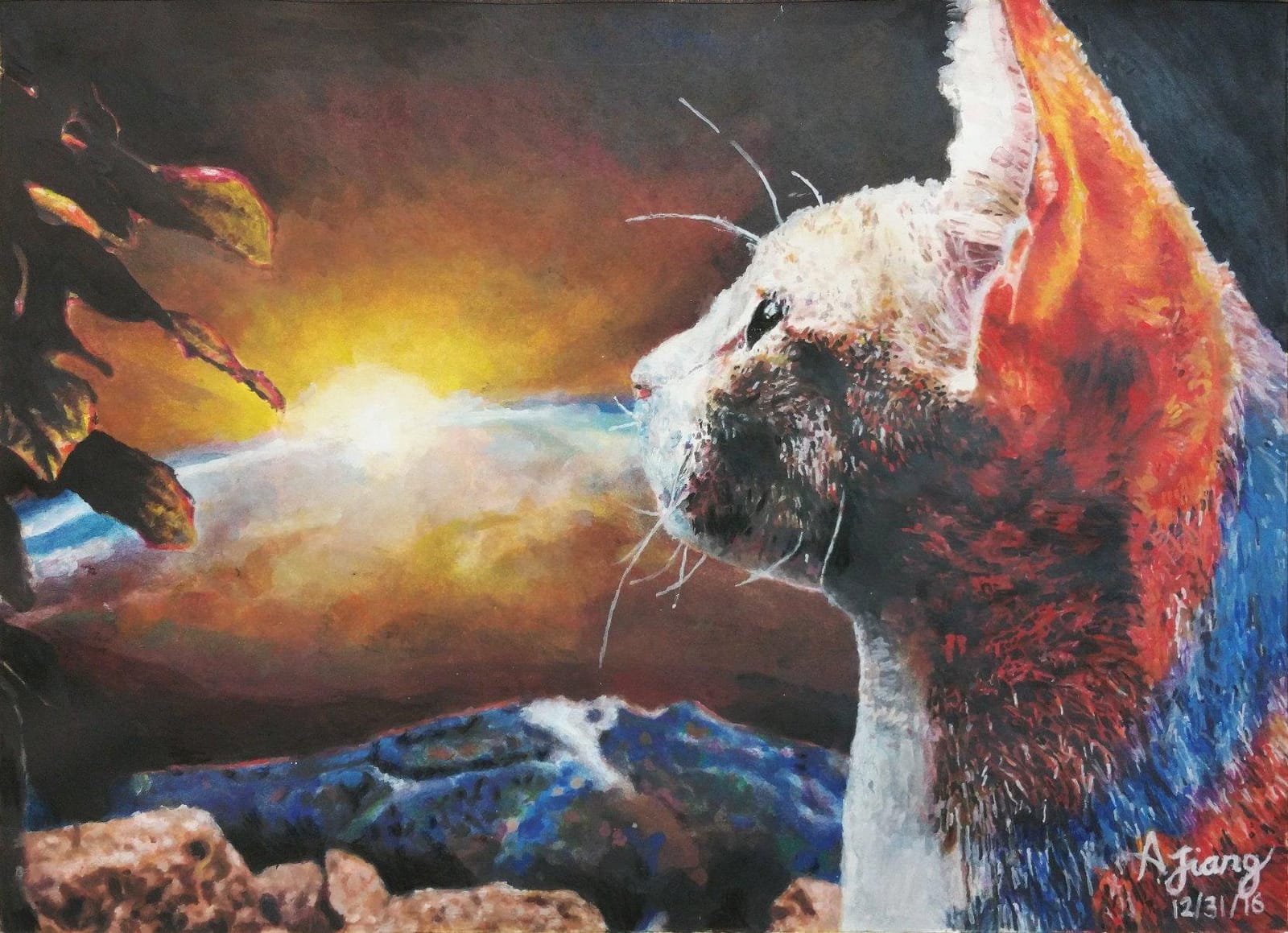
Why this is a specialty pick
If you do not plan to use water, this set is overkill. Standard colored pencils like Prismacolor or Polychromos will serve you better. Inktense shines specifically when you want that ink-paint hybrid look, which is why I recommend it for botanical art, card making, and mixed media work.
What you need to use it well
A good brush with a fine tip makes a big difference. Cheap brushes leave streaks and do not activate the pigment evenly. I recommend a sable or synthetic sable watercolor brush in size 4 or 6 for most detail work.
How to Choose the Right Colored Pencil Set?
Picking the best colored pencil sets for your needs comes down to four questions. What will you draw? What is your budget? Do you want to layer heavily? And does portability matter? Below is what I tell every artist who asks me for advice.
Wax-Based vs Oil-Based vs Water-Soluble
Wax-based pencils like Prismacolor, Castle Art Supplies, and ARTEZA give you the smoothest blending and creamiest feel. They are the easiest for beginners because they require less pressure and melt into the paper with light strokes. The downside is fragility, snapping under pressure, and wax bloom after heavy layering.
Oil-based pencils like Faber-Castell Polychromos give you crisper detail and harder cores that hold a point longer. They are ideal for botanical art, architectural renderings, and detailed portraits. Blending takes more effort, but layers stay cleaner and more archival.
Water-soluble pencils like Derwent Inktense give you watercolor effects with pencil control. They are a specialty tool for mixed media artists. They do not replace regular colored pencils but complement them.
Set Size by Skill Level
Beginners should start with 24 to 48 colors. The smaller range is less overwhelming and forces you to learn mixing, which builds color theory skills. Once you understand how colors interact, step up.
Intermediate artists benefit most from 72 to 120 colors. This range covers nearly any reference photo without forcing constant mixing. Castle Art Supplies 72 or 120 are excellent mid-tier choices.
Advanced and professional artists usually want 120 to 150 colors for realistic portraits and detailed work. The Prismacolor 150 or Castle Art Supplies 120 are the standards.
Lightfastness and Archival Quality
If you are creating work to sell or display long-term, lightfastness matters. Lightfast pigments resist fading under UV exposure. Polychromos pencils are individually lightfast rated, and Prismacolor claims lightfastness across their line. Budget sets often skip this rating, which means fading over years of display.
Paper Compatibility
Colored pencils behave differently on different papers. Stonehenge and other vellum surfaces give pigment something to grip, resulting in richer coverage. Hot press papers give smoother results with water-soluble pencils. Bristol and other smooth surfaces can make wax pencils look waxy and unblended.
I recommend testing any new pencil set on a swatch before committing to a final piece. The paper choice matters as much as the pencil choice.
Storage and Portability
Tins protect against impact but can dent and pop open. Zipper cases like the Castle Art Supplies option keep everything organized and travel well. Plastic trays inside boxes are often the weak link, so consider transferring to a third-party case if you travel with your set.
Price-Per-Pencil Calculation
Calculating price per pencil helps compare sets fairly. The Soucolor 72 at $9.99 works out to roughly 14 cents per pencil. The Castle Art Supplies 120 at $52.99 works out to about 44 cents per pencil. The Polychromos 24 at $52.99 works out to roughly $2.21 per pencil.
The cheapest per pencil is not always the best value. A Polychromos that lasts three times longer than a budget pencil actually costs less per finished drawing.
Frequently Asked Questions
Which brand of colored pencils is considered the best?
Prismacolor, Faber-Castell, and Caran d’Ache are widely considered the top three colored pencil brands. Prismacolor dominates the wax-based category with creamy blending, Faber-Castell Polychromos leads the oil-based category with break-resistant cores and lightfast ratings, and Caran d’Ache Luminance ranks among the best for professional artists who want archival quality.
What are the top 3 brands of colored pencils?
The top 3 colored pencil brands in 2026 are Prismacolor, Faber-Castell, and Caran d’Ache. Prismacolor offers the most popular wax-based option with the Premier line, Faber-Castell Polychromos sets the standard for oil-based pencils, and Caran d’Ache Luminance is the premium choice for professionals who need museum-grade lightfastness.
Is Faber-Castell or Prismacolor better?
Faber-Castell Polychromos is better for detailed work, durability, and archival projects because the oil-based cores resist breaking and maintain lightfastness. Prismacolor Premier is better for blending, smooth gradients, and beginners who want creamy laydown with minimal pressure. Most professional artists eventually own both for different applications.
What kind of colored pencils do professional artists use?
Professional artists typically use artist-grade colored pencils from brands like Faber-Castell Polychromos, Caran d’Ache Luminance, Derwent Lightfast, and Prismacolor Premier in 72 to 150 color sets. They prioritize lightfastness ratings, pigment density, and core durability over price. Oil-based pencils dominate professional portrait and botanical work.
Are expensive colored pencils worth it for beginners?
Expensive colored pencils are not necessary for absolute beginners. A mid-range set like Castle Art Supplies 72 or Prismacolor 150 offers enough quality to learn proper technique without the high price of premium brands. Once you understand your preferences and are committed to the hobby, investing in Polychromos or Luminance pencils is worthwhile.
Final Thoughts
The best colored pencil sets are the ones that match your project, your skill level, and your budget. After testing all ten sets, my honest recommendation is to start with the Prismacolor Premier 24-count if you are a beginner, the Castle Art Supplies 72-tin if you want the best value, the Faber-Castell Polychromos 24-tin if you want premium oil-based quality, and the Prismacolor 150 if you are ready to commit to serious portrait or realism work.
I still keep all of these on my desk for different applications. Polychromos for botanical work, Prismacolor for portraits, Derwent Inktense for mixed media, and Castle Art Supplies for quick sketches and teaching. The best colored pencil sets in 2026 are the ones you actually use, so pick the one that excites you and start drawing.