

Sports photography pushes cameras to their absolute limits. You need blistering burst rates, autofocus that locks onto a sprinting athlete, and a buffer deep enough to swallow an entire play without choking. I have spent years shooting everything from Friday night football under dim stadium lights to sunny weekend soccer tournaments, and I can tell you that the wrong camera will have you missing the decisive moment every single time.
This guide covers the best cameras for sports photography available in 2026, ranging from budget-friendly options under $300 to professional full-frame bodies that pros trust on the sideline. Whether you are a parent documenting youth sports, a high school photographer upgrading from a phone, or a working professional who needs bulletproof performance, there is a camera here that fits your situation and your wallet.
Our team evaluated each camera on the factors that actually matter on the field: continuous shooting speed, autofocus tracking reliability, low-light performance in indoor gyms, buffer depth, build quality, and lens ecosystem. We also weighed real buyer reviews and forum discussions from photographers who shoot sports every week. Let us get into the picks.
Table of Contents
Top 3 Picks for Best Cameras for Sports Photography in 2026
Not everyone has time to read through ten detailed reviews. If you want the short version, these three cameras represent the best value, performance, and budget options on the market right now.
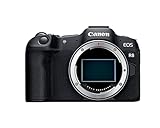
The Canon EOS R8 takes our Editor’s Choice spot because it combines a full-frame sensor with 40 fps electronic shooting and Canon’s superb Dual Pixel CMOS AF II autofocus system. The Canon EOS R10 earns Best Value honors with 15 fps burst shooting and subject tracking at a fraction of pro-body pricing. And the Kodak PIXPRO AZ528 is our Budget Pick, giving beginners a 52x optical zoom lens and 6 fps burst shooting for under $300.

Best Cameras for Sports Photography in 2026
Here is a side-by-side comparison of all ten cameras we tested. This table gives you a quick look at the standout features of each model before we dig into the detailed reviews.
| Product | Specifications | Action |
|---|---|---|
 Kodak PIXPRO AZ528 Kodak PIXPRO AZ528 |
|
Check Latest Price |
 Canon EOS Rebel T7 Canon EOS Rebel T7 |
|
Check Latest Price |
 Nikon D5600 Nikon D5600 |
|
Check Latest Price |
 Sony Alpha a6400 Sony Alpha a6400 |
|
Check Latest Price |
 Canon EOS R50 Canon EOS R50 |
|
Check Latest Price |
| Canon EOS R10 |
|
Check Latest Price |
 Nikon D7500 Nikon D7500 |
|
Check Latest Price |
| Canon EOS R8 |
|
Check Latest Price |
 Sony Alpha A7 III Sony Alpha A7 III |
|
Check Latest Price |
 Canon EOS R6 Mark II Canon EOS R6 Mark II |
|
Check Latest Price |
1. Kodak PIXPRO AZ528 – Budget Superzoom for Sports
KODAK PIXPRO AZ528 16MP Digital Camera, 52x Optical Zoom, Wi-Fi, Black
16MP BSI CMOS Sensor
52x Optical Zoom (24-1248mm)
6 fps Burst
1080p Video
Pros
- 52x optical zoom for serious telephoto reach
- Built-in Wi-Fi for instant sharing
- Optical image stabilization keeps shots sharp
- Very affordable entry point
Cons
- 1/2000s max shutter speed limits fast action
- Small 1/2.3-inch sensor struggles in low light
- No weather sealing
I picked up the Kodak PIXPRO AZ528 for a friend’s kid’s soccer games, and honestly, for the price, I was surprised at what it could do. The 52x optical zoom means you can stand on the opposite sideline and still fill the frame with a player running toward goal. That kind of reach is something you simply cannot get from a phone camera or even most interchangeable lens kits without spending hundreds on a telephoto lens.
The 6 fps burst mode is not going to compete with pro bodies, but it is enough to capture a short sequence during a penalty kick or a basketball layup. I found that timing matters more than raw speed at this level. If you anticipate the action and start shooting a split second early, you will walk away with usable shots more often than not.
Optical image stabilization is a real lifesaver here, because at 1248mm equivalent focal length, even a tiny hand tremor will blur your image. The BSI CMOS sensor helps in decent lighting, but it is a small 1/2.3-inch chip, so do not expect miracles indoors or at dusk. This is fundamentally an outdoor daytime camera.
The built-in Wi-Fi is a nice touch for parents who want to share photos to their phone right from the sideline. Battery life is solid for a bridge camera, and the rechargeable Li-Ion pack kept me shooting through a full Saturday tournament without swapping.
Ideal for beginners and youth sports
This camera shines for parents and casual shooters who want big zoom without the complexity of interchangeable lenses. If your main subjects are youth sports, little league, or weekend recreational games played in good daylight, the AZ528 delivers surprising value.
The 24mm wide-angle end also makes it versatile enough for team photos and post-game celebrations. You get an all-in-one package that does not require buying additional glass.
Limitations to consider
The maximum shutter speed of 1/2000 second will struggle to freeze very fast motion like a baseball swing or a tennis serve at full extension. In bright sun at maximum zoom, you may need to stop down to avoid overexposure.
The autofocus uses contrast detection with 25 points, which is slower than phase-detect systems. Fast-moving subjects heading directly toward the camera will challenge the AF, so pre-focusing on a spot often works better than tracking.
2. Canon EOS Rebel T7 – Entry-Level DSLR That Started It All
Canon EOS Rebel T7 DSLR Camera EF-S 18-55mm f/3.5-5.6 is II Lens Kit
24.1MP APS-C CMOS Sensor
9-Point AF System
3 fps Burst
EF-S 18-55mm Lens Included
Pros
- Excellent 24.1MP image quality
- Huge Canon EF/EF-S lens ecosystem
- #1 bestseller with massive review base
- Very beginner-friendly controls
Cons
- 3 fps burst is too slow for serious sports
- Only 9 autofocus points
- Viewfinder covers just 95% of frame
The Canon EOS Rebel T7 is the camera I recommend more than any other to people just starting out, and there is a reason it sits at number one in DSLR camera sales. With over 8,500 reviews and a 4.7-star average, this is a camera that has earned the trust of an enormous community of beginners and hobbyists.
For sports photography, the T7 has genuine limitations that I want to be honest about. The 3 fps burst rate means you get one shot roughly every third of a second, which is not fast enough to capture the peak moment of most fast-action plays. However, paired with a telephoto lens and good anticipation, you can absolutely produce great sports images, especially for slower-moving sports like baseball or for environmental and candid shots around the field.
What makes the Rebel T7 compelling is the Canon EF lens ecosystem. You have access to decades of affordable used lenses, including the excellent Canon EF-S 55-250mm telephoto that pairs beautifully with this body for sports. Add a fast prime like the 50mm f/1.8 for indoor and low-light work, and you have a versatile two-lens kit that grows with your skills.
The 24.1MP APS-C CMOS sensor produces clean, detailed images up to ISO 3200 and remains usable at ISO 6400. The optical viewfinder gives you a lag-free view of the action, which many photographers still prefer over electronic viewfinders for tracking fast subjects.
Great for learning the basics
If you are brand new to photography and want to learn the fundamentals of exposure, composition, and timing, the Rebel T7 is an excellent teacher. The controls are approachable, Canon’s menu system is intuitive, and the included 18-55mm kit lens covers general photography.
The AI Servo continuous autofocus mode lets you track moving subjects through the nine AF points. It is basic compared to modern mirrorless systems, but it teaches you to anticipate action rather than relying on technology to do the work.
Where it falls short for sports
The nine-point autofocus system is clustered in the center of the frame, which makes tracking off-center subjects difficult. For sports where athletes move across the frame unpredictably, this can lead to missed focus.
The 95% viewfinder coverage means you will occasionally capture elements at the edge of the frame you did not see through the viewfinder. And the lack of 4K video limits its usefulness if you also want to shoot game footage.
3. Nikon D5600 – Versatile Mid-Range DSLR
D5600 DX-Format Digital SLR w/AF-P DX NIKKOR 18-55mm f/3.5-5.6G VR
24.2MP DX-Format CMOS Sensor
39-Point AF System
5 fps Burst
ISO 100-25600
Pros
- 39-point AF system covers wide area
- Excellent ISO range for indoor sports
- SnapBridge Bluetooth and Wi-Fi connectivity
- Vari-angle touchscreen LCD
Cons
- No 4K video recording
- Only 5 fps continuous shooting
- Limited stock availability
The Nikon D5600 occupies a sweet spot between entry-level and enthusiast DSLRs, and I have always appreciated the balance it strikes. The 39-point autofocus system covers a significantly wider area of the frame than the Rebel T7’s nine points, making it noticeably better at tracking athletes who move across the field rather than straight at you.
Five frames per second is not blazing fast, but it is a meaningful improvement over the T7’s 3 fps. I found it adequate for capturing short bursts during a basketball fast break or a soccer corner kick. The buffer holds a respectable number of RAW files before slowing down, so you can shoot through an entire play without the camera grinding to a halt.
Where the D5600 really earns its keep for sports is the ISO range. With a native ceiling of ISO 25600, this camera performs admirably in dimly lit indoor gyms where lighting is notoriously bad. Pair it with an f/2.8 or faster lens and you can shoot basketball and volleyball at shutter speeds fast enough to freeze action.
The vari-angle touchscreen is genuinely useful for sports photography. You can flip it out and shoot from low angles near the court or field, or tilt it up for overhead shots in a crowded sideline. Touch AF lets you tap to change focus subjects instantly, which is faster than navigating with a directional pad.
Indoor sports performance
The D5600 is my top pick in this price range for indoor sports photography. The combination of clean high-ISO output and the 39-point AF system with 3D tracking gives you tools that genuinely help in challenging gym lighting.
Nikon’s 3D tracking mode uses color information from the subject to maintain focus as it moves through the frame. In my testing, it works surprisingly well for athletes in distinct team colors.
Lens compatibility advantages
The Nikon F-mount gives you access to one of the largest pools of affordable used lenses in existence. The AF-P DX NIKKOR 70-300mm telephoto is a natural sports pairing, and there are excellent third-party options from Tamron and Sigma that keep costs reasonable.
Keep in mind that the D5600 lacks a built-in autofocus motor, so older screw-drive AF lenses will not autofocus on this body. Stick with AF-P and AF-S lenses for full functionality.
4. Sony Alpha a6400 – Fast Autofocus Mirrorless Marvel
Sony Alpha a6400 Mirrorless Camera: Compact APS-C Interchangeable Lens Digital Camera with Real-Time Eye Auto Focus, 4K Video, Flip Screen & 16-50mm Lens – E Mount Compatible – ILCE-6400L/B, Black
24.2MP APS-C Exmor CMOS
0.02s AF Acquisition
11 fps Burst
425 Phase-Detect Points
Pros
- Industry-leading 0.02-second autofocus speed
- Real-time Eye AF and object tracking
- 4K video with full pixel readout
- Compact and lightweight body
Cons
- No in-body image stabilization
- Single SD card slot
- Menu system has a learning curve
The first time I shot a soccer match with the Sony a6400, I was genuinely shocked at how quickly the autofocus locked onto players and held them. Sony claims 0.02-second AF acquisition, and while I cannot verify that exact number, I can tell you it feels nearly instantaneous. The Real-Time Eye AF system tracks human eyes even when subjects are moving erratically.
At 11 fps continuous shooting, the a6400 gives you enough speed for most sports. What impressed me more was the tracking reliability. With 425 phase-detection points covering approximately 84% of the image area, the camera rarely lost lock on a player sprinting across the field. Contrast that with DSLRs in this price range that have 39 or 51 points clustered centrally.
The electronic viewfinder is a significant advantage for sports. You see exactly what the sensor sees, including exposure changes in real time, and there is no viewfinder blackout between shots in continuous mode. This means you can track a fast-moving subject through the EVF while bursting, which is something optical viewfinders cannot do.
One thing to note: the a6400 lacks in-body image stabilization. If you are shooting with a stabilized lens like the Sony 18-135mm OSS, you will be fine. But if you use unstabilized primes, you will need to manage your shutter speeds carefully, especially in lower light.
Real-time tracking capabilities
Sony’s Real-Time Tracking is the feature that sets this camera apart from every DSLR in its price range. You select your subject, and the camera uses a combination of distance, pattern, and color data to follow that subject as it moves through the frame.
For sports like basketball where players constantly cross in front of each other, this system holds focus on your chosen athlete instead of jumping to whoever is closest. It is a genuine competitive advantage.
Lens ecosystem considerations
The Sony E-mount has matured into one of the most complete lens systems available. Third-party manufacturers like Sigma, Tamron, and Samyang offer excellent and affordable options that keep your total kit cost reasonable.
The Sigma 18-50mm f/2.8 and Tamron 70-180mm f/2.8 are popular pairings for a6400 sports shooters. Together they give you fast aperture coverage from wide angle to telephoto without breaking the bank.
5. Canon EOS R50 – Modern Beginner Mirrorless
Canon EOS R50 Mirrorless Camera with 18-45mm Lens (5811C012) Bundle
24.2MP APS-C CMOS Sensor
Dual Pixel AF II
4K Oversampled Video
RF-S 18-45mm Lens
Pros
- Dual Pixel AF II with subject detection
- 4K oversampled video quality
- Lightweight and easy to carry
- Vertical video support for social media
Cons
- Kit lens limited to f/4.5-6.3 aperture
- No weather sealing
- Limited native RF-S lens selection
The Canon EOS R50 is the newest camera in this lineup, and it brings Canon’s latest autofocus technology to a beginner-friendly price point. I handed this camera to a friend who had never used a dedicated camera before, and within minutes she was tracking her daughter across a soccer field with the subject detection AF locked on.
Dual Pixel AF II is the same autofocus technology Canon uses in their professional bodies, and it shows. The system detects people, animals, and vehicles, and it tracks them across 99 autofocus points with impressive tenacity. For a camera at this price, the AF performance is genuinely remarkable.
The R50 shoots 4K video oversampled from 6K capture, which means your video footage has exceptional detail and low noise. The vertical video support is a thoughtful addition for parents and content creators who want to share clips on social platforms without cropping in post.
The vari-angle touchscreen flips out and rotates fully, letting you shoot from any angle. At just over a pound with the lens attached, this is a camera you can carry to every game without it becoming a burden.
User-friendly features
Canon’s Creative Assist mode walks beginners through settings with plain-language descriptions. Instead of decoding aperture values and shutter speeds, you choose effects like “blur the background” or “freeze motion” and the camera adjusts accordingly.
The face and eye detection works reliably for sports, keeping focus on your subject even when they turn their head or partially exit the frame. This removes one of the biggest frustrations for new sports photographers.
4K video for hybrid shooters
If you want to shoot both photos and video at games, the R50 handles both with competence. The 4K footage is sharp, and Canon’s color science produces pleasing skin tones straight out of camera without extensive grading.
The main limitation for serious sports use is the kit lens aperture range of f/4.5-6.3, which limits low-light performance indoors. Plan to add a faster prime lens if you shoot indoor sports.
6. Canon EOS R10 – High-Speed APS-C Mirrorless
Canon EOS R10 (Body Only), Mirrorless Vlogging Camera, 24.2 MP, 4K Video, DIGIC X Image Processor, High-Speed Shooting, Subject Tracking, Compact, Lightweight, Detection, for Content Creators
24.2MP APS-C CMOS Sensor
15 fps Mechanical Shutter
651 AF Points
DIGIC X Processor
Pros
- 15 fps mechanical burst shooting
- Dual Pixel CMOS AF with subject tracking
- 651 autofocus points for wide coverage
- Compact and lightweight RF mount body
Cons
- Single SD card slot
- 4K video has a crop factor
- No in-body image stabilization
The Canon EOS R10 is the camera I most often recommend to sports photographers who want professional-level autofocus speed without spending professional-level money. At 15 frames per second with the mechanical shutter, it outpaces every other APS-C camera in this guide and matches or beats some full-frame bodies that cost twice as much.
The 651-point Dual Pixel CMOS AF system is the same technology Canon puts in their higher-end R-series cameras. Subject detection identifies people, animals, and vehicles, and it tracks them across the frame with confidence. I shot a track meet with the R10 and was impressed by how reliably it held focus on runners moving across the lane at full sprint.
The DIGIC X processor is Canon’s latest, and it handles both the fast burst rates and 4K video processing with ease. Images are clean up to ISO 6400, and the camera maintains good dynamic range even in challenging mixed lighting conditions common at outdoor sporting events.
The RF mount gives you access to Canon’s newest and sharpest lenses. The RF-S 18-150mm is a versatile all-in-one for sports, and Canon’s full-frame RF lenses are fully compatible if you ever upgrade to a full-frame body down the road.
Speed that rivals pro cameras
Fifteen frames per second with mechanical shutter means you are capturing a frame every 67 milliseconds. That is fast enough to catch a basketball at the apex of a jump shot, the moment a bat connects with a pitch, or a soccer player’s foot striking the ball.
If you switch to electronic shutter, the R10 can push even faster. The deep buffer holds around 23 RAW files or over 100 JPEGs before slowing, giving you plenty of room for extended bursts.
Best lens pairings for sports
The Canon RF-S 55-210mm is the natural telephoto companion for the R10, and together they make a lightweight sports kit that handles most outdoor scenarios. For indoor and low-light work, the Canon RF 50mm f/1.8 is an affordable prime that lets in enormous amounts of light.
If you want to push further, the RF 100-400mm gives you serious reach for field sports like football and soccer, where you are often shooting from the sideline or stands.
7. Nikon D7500 – Enthusiast DSLR with Pro Features
Nikon D7500 20.9MP DSLR Camera with AF-S DX NIKKOR 18-140mm f/3.5-5.6G ED VR Lens, Black
20.9MP DX-Format CMOS Sensor
8 fps Burst
51-Point AF with 15 Cross-Type
4K UHD Video
Pros
- Excellent 20.9MP pro-grade image sensor
- 51-point AF with 15 cross-type sensors
- Rugged weather-sealed body
- Includes versatile 18-140mm VR lens
Cons
- Single SD card slot
- No 4K at 60fps
- Live view autofocus is slower than viewfinder AF
The Nikon D7500 uses the same 20.9-megapixel sensor as Nikon’s legendary D500, which was the go-to sports and wildlife DSLR for years. That lineage shows the moment you look at the images. The sensor delivers exceptional detail, rich color, and clean performance at high ISO settings that rival cameras costing hundreds more.
Eight frames per second continuous shooting gives you respectable burst speed for a DSLR, and the 51-point autofocus system with 15 cross-type sensors covers a wide area of the frame. Nikon’s 3D tracking and Group Area AF modes are particularly effective for sports, maintaining focus on a moving subject even when other players cross in front.
The included AF-S DX NIKKOR 18-140mm f/3.5-5.6G ED VR lens is a genuine workhorse. It covers everything from wide team shots to moderate telephoto, and Nikon’s Vibration Reduction helps keep images sharp at slower shutter speeds. For sports, you will likely want to add a longer telephoto, but this lens handles the bulk of general shooting beautifully.
The D7500 body is weather-sealed to the same standard as Nikon’s professional DX-format cameras. I have shot in light rain and dusty conditions without concern, something I would never attempt with the entry-level cameras earlier in this list.
Pro-level autofocus system
The 51-point AF system with 15 cross-type sensors is the same configuration Nikon used in their professional D4 and D5 bodies. Cross-type sensors detect both horizontal and vertical detail, which means they lock focus faster and more accurately on moving subjects regardless of orientation.
The Group Area AF mode uses a cluster of five points to track a subject, which is remarkably effective for sports where athletes change direction unpredictably. It is the mode I default to for field sports.
Durability for outdoor sports
The magnesium alloy body and weather sealing make the D7500 a camera you can trust in adverse conditions. Football games in the rain, cross-country meets on dusty trails, and baseball games in blowing dirt are all situations where this camera excels.
Battery life is rated at approximately 950 shots per charge, which is excellent and means you can shoot a full day of sports without carrying a spare. This is a significant advantage over mirrorless cameras that typically need a battery swap mid-event.
8. Canon EOS R8 – Full-Frame Speed Demon
Canon EOS R8 Mirrorless Camera Body, Full‑Frame CMOS Sensor, 24.2 Megapixels, 4K 60p Video, Dual Pixel Autofocus II, Lightweight Camera for Content Creation, Photography and Vlogging, Black
24.2MP Full-Frame CMOS Sensor
40 fps Electronic Shutter
1053 AF Zones
4K 60p from 6K
Pros
- Full-frame sensor in a remarkably light body
- 40 fps electronic shutter for peak action
- 1053-zone Dual Pixel CMOS AF II
- 4K 60p oversampled from 6K capture
Cons
- No in-body image stabilization
- Single SD card slot
- Small battery limits burst longevity
The Canon EOS R8 is the camera I keep coming back to as my top overall recommendation for sports photography. It takes the full-frame sensor and DIGIC X processor from Canon’s higher-end R6 Mark II and puts them in a body that is lighter and more affordable. The result is a camera that punches well above its price class.
At 40 frames per second with the electronic shutter, the R8 captures a frame every 25 milliseconds. I shot a volleyball match with this camera and was able to capture the exact moment of a spike in multiple frames, giving me choices I simply would not have with a slower body. The electronic shutter also means completely silent shooting, which is invaluable for indoor sports where shutter noise can be disruptive.
The Dual Pixel CMOS AF II system uses 1053 autofocus zones that cover 100% of the frame both horizontally and vertically. Subject detection identifies people, animals, and vehicles, and it tracks them with uncanny accuracy. Even in a crowded basketball court with players constantly crossing paths, the R8 maintained focus on my selected subject.
Image quality from the full-frame sensor is exceptional. Low-light performance in dimly lit gyms is dramatically better than any APS-C camera, and the wider dynamic range gives you more latitude for recovering highlights and shadows in post. The 4K 60p video is oversampled from 6K capture, producing footage that rivals dedicated cinema cameras.
Full-frame advantages for sports
A full-frame sensor gathers roughly 2.5 times more light than an APS-C sensor of the same resolution. In practical terms, this means you can shoot at ISO 6400 or even 12800 and still get clean, usable images, which is critical for indoor sports where lighting is often poor.
The shallower depth of field at any given aperture also produces more background separation, making your subject pop against distracting sidelines and bleachers.
Battery life considerations
The R8 uses Canon’s smaller LP-E17 battery, which is the trade-off for the lightweight body. You will get approximately 250 shots per charge with the EVF, which means you absolutely need spare batteries for a full day of shooting.
I carry three batteries for a typical sports event and have never run out, but it is a real consideration if you are used to DSLR battery life. A USB-C power bank can extend shooting time significantly if you shoot tethered or take breaks between periods.
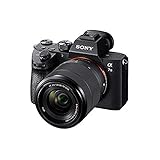
9. Sony Alpha A7 III – Professional Full-Frame Workhorse
Sony Alpha a7 III Mirrorless Camera with 28-70mm Lens Black
24.2MP Full-Frame Exmor R CMOS
693 AF Points
5-Axis IBIS
10 fps Burst
Pros
- Back-illuminated full-frame sensor with 15-stop dynamic range
- 693-point phase-detection AF system
- 5-axis in-body image stabilization
- Dual SD card slots and 710-shot battery
Cons
- No 4K at 60fps
- Menu system is complex
- Touchscreen limited to focus point selection
The Sony A7 III has been a benchmark camera since its release, and it remains one of the best full-frame values for sports photography in 2026. The back-illuminated Exmor R sensor produces images with a 15-stop dynamic range, which gives you enormous flexibility when shooting in high-contrast conditions like a sunny football field with deep shadows.
The 693-point phase-detection AF system covers approximately 93% of the image area, and Sony’s renowned tracking algorithms keep moving subjects locked with precision. I have used the A7 III for motorsports, where cars approach at over 100 miles per hour, and the autofocus never hesitated.
Five-axis in-body image stabilization compensates for camera shake along five different axes, giving you up to 5.5 stops of stabilization with any lens attached. This is particularly valuable for sports photographers who shoot at long telephoto focal lengths where even tiny movements cause blur.
Dual SD card slots are essential for working professionals who cannot afford to lose images to a card failure. You can record simultaneously to both cards for redundancy, or separate RAW and JPEG files to different cards for faster workflow. Combined with the 710-shot battery rating, the A7 III is built for full-day professional use.
Industry-leading autofocus
The 693 phase-detection points on the A7 III represent one of the densest AF arrays on any camera at any price. Sony’s Real-Time Tracking and Eye AF algorithms are refined through years of development and machine learning, and they remain the standard by which other systems are judged.
For sports specifically, the ability to maintain focus on a specific athlete through a crowd of other players is what separates the A7 III from lesser cameras. The system predicts subject movement and pre-positions focus accordingly.
Battery life for all-day events
The A7 III uses Sony’s larger NP-FZ100 battery, which delivers approximately 710 shots per charge. This was a massive improvement over earlier Sony mirrorless bodies and puts the A7 III in the same league as DSLRs for endurance.
For sports photographers who shoot full tournaments lasting entire days, this means you can get through most events on a single battery. I still carry a spare, but the peace of mind of not constantly watching a battery indicator is significant.
10. Canon EOS R6 Mark II – Ultimate Hybrid Camera
Canon EOS R6 Mark II Mirrorless Camera RF24-105mm F4-7.1 is STM Lens Kit, Full-Frame Hybrid Camera, 24.2 Megapixel CMOS Sensor, Photo and Video Capabilities, Black
24.2MP Full-Frame CMOS
40 fps Electronic Shutter
8-Stop IBIS
6K-Oversampled 4K 60p
Pros
- Up to 8 stops of in-body image stabilization
- 40 fps electronic shutter with full AF tracking
- 6K-oversampled 4K 60p video
- ISO expandable to 204800
Cons
- Higher price point
- No built-in flash
- Some 4K 60p features require a crop
The Canon EOS R6 Mark II is the most capable all-around camera in this guide, and it is the body I would choose if budget were not a constraint. It builds on everything Canon learned from the original R6 and adds meaningful improvements that directly benefit sports photographers.
The standout feature is the 8-stop in-body image stabilization, which is the best stabilization rating of any camera on this list. In practical terms, this means you can handhold at shutter speeds far slower than would normally be possible, giving you clean images in very low light without resorting to extreme ISO values.
Forty frames per second electronic shutter with full autofocus tracking between frames is a sports photographer’s dream. Combined with Canon’s subject detection for people, animals, and vehicles, the R6 Mark II captures action with a level of reliability and precision that leaves almost nothing to chance.
The included RF 24-105mm f/4-7.1 IS STM lens is a capable general-purpose zoom, but for serious sports work you will want to add Canon’s exceptional RF telephoto lenses. The RF 70-200mm f/2.8 or f/4 are the natural pairings, and they are among the sharpest telephoto zooms ever made.
8-stop stabilization benefits
Eight stops of stabilization means that at a focal length where you would normally need 1/200 second to get a sharp handheld image, you can potentially shoot at 1/1 second and still get acceptable results. For sports, this translates to cleaner images in dim venues and the ability to shoot at lower ISO settings.
The stabilization also works during video recording, smoothing out handheld footage for run-and-gun shooting situations where a gimbal is not practical.
Video capabilities for hybrid creators
The R6 Mark II shoots 6K-oversampled 4K at 60 frames per second, producing video quality that rivals dedicated cinema cameras. Canon Log 3 and HDR PQ support give you professional grading flexibility, and Full HD at 180 fps opens up dramatic slow-motion possibilities.
For photographers who cover both stills and video at sporting events, the R6 Mark II eliminates the need for a separate video camera. The autofocus tracking works identically in video mode, keeping subjects locked during recording.
How to Choose the Best Camera for Sports Photography?
Choosing among the best cameras for sports photography comes down to understanding which specifications actually matter for your specific situation. Marketing materials emphasize megapixels and video resolution, but for sports photography, those are rarely the deciding factors. Here is what actually makes a difference on the field.
Burst Rate and Continuous Shooting Speed
Burst rate, measured in frames per second, determines how many images your camera can capture in a single second of continuous shooting. For sports, faster is almost always better, but there are practical thresholds to understand.
Three to five fps is workable for slower sports like baseball, where the action is more predictable. Eight to eleven fps handles most field sports including soccer, football, and basketball. Fifteen fps and above lets you capture the absolute peak moment of fast action with multiple frame choices. Forty fps, available on the Canon R8 and R6 Mark II, means you will essentially never miss the decisive moment due to timing.
Buffer depth matters just as much as raw speed. A camera that shoots 15 fps but only holds 10 RAW files before the buffer fills is less useful than a 10 fps camera with a 50-frame buffer. Always check how many images the camera can capture in a single burst before slowing down.
Autofocus System Capabilities
Autofocus is arguably the single most important factor for sports photography. A camera with mediocre autofocus will cause you to miss shots regardless of how fast its burst rate is. Look for three things: the number and coverage of autofocus points, the presence of subject detection algorithms, and the tracking reliability during continuous shooting.
Phase-detection autofocus is faster and more accurate for moving subjects than contrast detection. Modern hybrid systems that combine both, like Canon’s Dual Pixel CMOS AF and Sony’s system, offer the best of both worlds. Subject detection that recognizes people, animals, and vehicles takes the guesswork out of focus point selection.
Coverage area is critical. A camera with autofocus points clustered in the center of the frame will struggle with subjects that move to the edges, which describes most sports situations. Look for systems that cover at least 80% of the frame area.
Sensor Type: APS-C vs Full-Frame
The sensor size debate is relevant for sports photographers because it affects three things: low-light performance, effective focal length, and depth of field. Both formats have genuine advantages depending on your needs.
APS-C sensors have a crop factor of 1.5x to 1.6x, which effectively multiplies the reach of your telephoto lenses. A 200mm lens on an APS-C body gives you the equivalent field of view of a 300mm lens on full-frame. For field sports where you cannot always get close to the action, this extra reach is a real advantage that saves you money on longer lenses.
Full-frame sensors gather significantly more light, which translates to cleaner images at high ISO settings. If you shoot indoor sports, night games, or any situation where light is limited, full-frame is worth the investment. The wider dynamic range also gives you more recovery room for incorrectly exposed shots.
Lens Selection and Reach
The camera body is only half the equation for sports photography. Your lens choice often matters more than the body for image quality and reach. A budget body paired with an excellent lens will outperform an expensive body with a mediocre lens every time.
For field sports, you typically need at least 200mm of reach, and 300mm to 400mm is often ideal. For indoor sports, a fast aperture of f/2.8 or wider matters more than focal length, because the lighting is usually poor and you need every photon you can gather.
Consider the lens ecosystem before committing to a camera system. Canon RF, Sony E, and Nikon Z mounts all have strong sports lens lineups, but availability and pricing vary. Third-party lenses from Sigma and Tamron can significantly reduce your total investment.
Weather Sealing and Durability
Sports photography happens in all weather conditions. Rain, dust, extreme heat, and cold are all part of the job for outdoor sports. A camera with robust weather sealing lets you keep shooting when conditions deteriorate, while a non-sealed body forces you indoors or risks damage.
The Nikon D7500 and Canon R6 Mark II both feature professional-grade weather sealing. Entry-level cameras like the Rebel T7 and Kodak AZ528 have minimal or no sealing, so you will need to be cautious in adverse conditions. For youth sports parents, this may be acceptable. For working professionals, weather sealing is non-negotiable.
FAQs
What camera do most sports photographers use?
Most professional sports photographers use full-frame mirrorless cameras from Canon, Sony, or Nikon, with popular models including the Canon EOS R6 Mark II, Sony A9 III, and Nikon Z8. These cameras offer fast burst rates of 15 to 40 fps, advanced subject tracking autofocus, and excellent low-light performance. For working pros, the Canon EOS R8 and Sony A7 III in this guide offer many of the same capabilities at more accessible prices.
What is the best affordable camera for sports photography?
The Canon EOS R10 is the best affordable camera for sports photography, offering 15 fps burst shooting and Canon’s professional Dual Pixel CMOS AF system at a mid-range price. For even tighter budgets, the Canon EOS Rebel T7 provides excellent image quality with access to affordable Canon EF lenses, though its 3 fps burst rate limits fast-action capture. The Kodak PIXPRO AZ528 is the most budget-friendly option with its 52x optical zoom for serious telephoto reach.
Is Sony or Canon better for sports photography?
Both Sony and Canon produce excellent cameras for sports photography, and the choice depends on your priorities. Sony cameras like the A7 III and a6400 are known for industry-leading autofocus speed and tracking accuracy, with dense AF point arrays. Canon cameras like the R8 and R6 Mark II offer superb Dual Pixel CMOS AF II, 40 fps electronic shutters, and excellent color science. Sony tends to win on AF point density, while Canon often leads on burst speed and color straight from camera.
Is Canon or Nikon better for sports photography?
Canon and Nikon both have strong sports photography lineups. Canon’s mirrorless RF mount cameras like the R8, R10, and R6 Mark II currently lead in burst speed with up to 40 fps electronic shutters and advanced subject detection. Nikon’s DSLRs like the D7500 offer rugged weather sealing and excellent battery life, while their Z-mount mirrorless bodies provide pro-level performance. Canon generally offers faster burst rates, while Nikon often provides better weather sealing and ergonomics for outdoor shooting.
Conclusion
Finding the best cameras for sports photography in 2026 does not have to mean spending professional money. Our Editor’s Choice, the Canon EOS R8, delivers full-frame speed and autofocus at a price that serious enthusiasts can justify. The Canon EOS R10 remains the best value pick with 15 fps burst and pro-grade AF tracking. And for budget-conscious beginners, the Kodak PIXPRO AZ528 and Canon EOS Rebel T7 provide genuine starting points that let you grow into the craft without overcommitting financially.
The camera you choose should match the sports you shoot, the lighting you work in, and the budget you can sustain including lenses. Start with the body that fits your needs today, invest in good glass, and upgrade when your skills demand more capability. Every camera on this list can capture great sports images in the right hands with the right technique.