
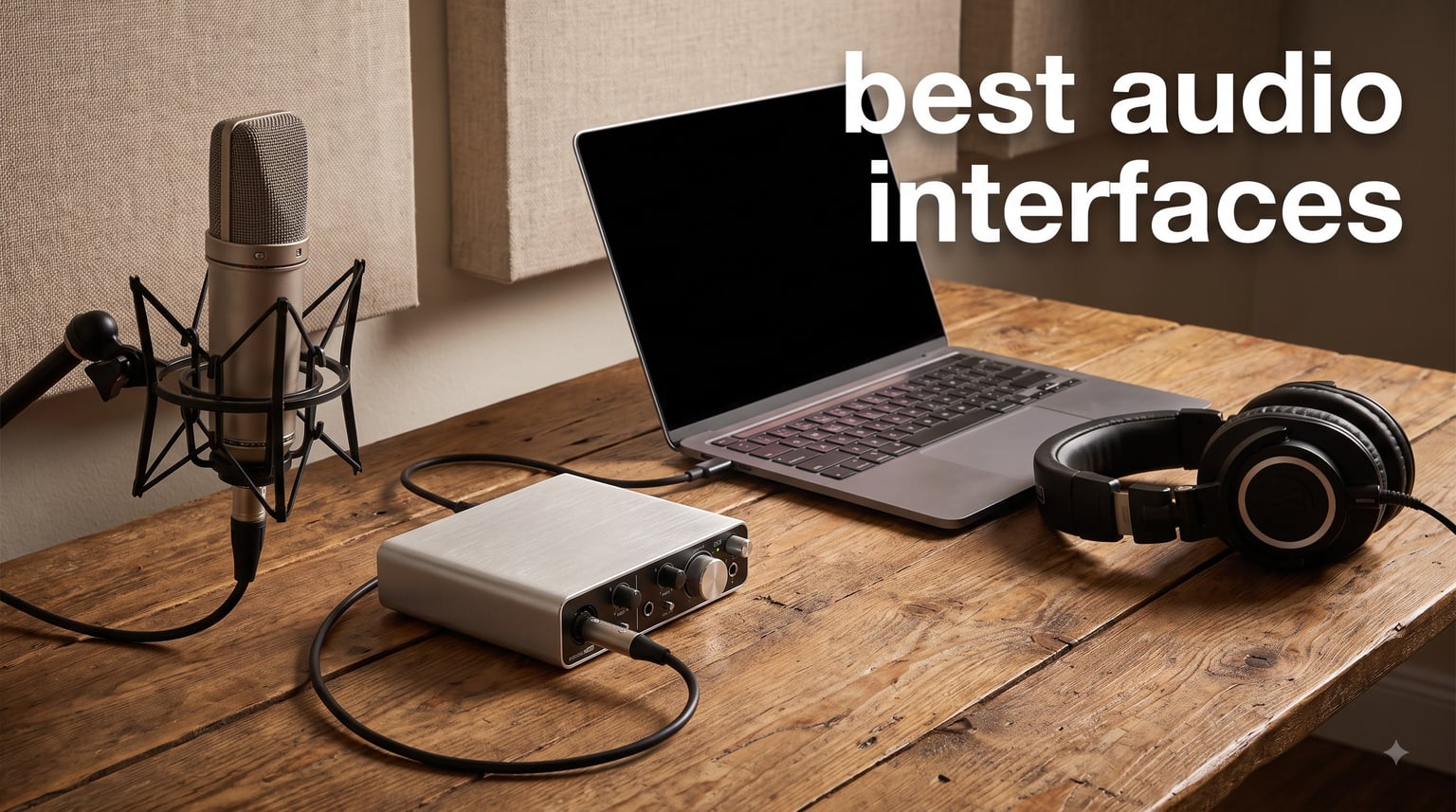
If you’ve ever tried recording with a built-in computer microphone, you know the frustration of thin, noisy audio that sounds nothing like professional productions. That’s where the best audio interfaces come in. These essential devices convert analog signals from microphones and instruments into crisp digital audio your computer can actually use for music production, podcasting, and streaming.
I’ve spent countless hours testing interfaces across different setups, from home recording sessions to podcast studios. The right interface transforms your recordings from amateur to professional quality. This guide covers 8 top-rated options in 2026, from budget-friendly starters to studio-grade performers.
Table of Contents
Top 3 Picks for Best Audio Interfaces in 2026

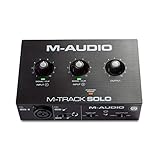
M-Audio M-Track Solo
- Crystal Preamps
- Zero Latency
- Phantom Power
- USB Bus Power
- Includes Software

Best Audio Interfaces in 2026
| Product | Specifications | Action |
|---|---|---|
| Focusrite Scarlett 2i2 4th Gen |
|
Check Latest Price |
| M-Audio M-Track Solo |
|
Check Latest Price |
| Behringer UMC202HD |
|
Check Latest Price |
 Arturia MiniFuse 1 Arturia MiniFuse 1 |
|
Check Latest Price |
 Universal Audio Volt 2 Universal Audio Volt 2 |
|
Check Latest Price |
 MOTU M2 MOTU M2 |
|
Check Latest Price |
 MOTU M4 MOTU M4 |
|
Check Latest Price |
 Focusrite Scarlett 4i4 4th Gen Focusrite Scarlett 4i4 4th Gen |
|
Check Latest Price |
1. Focusrite Scarlett 2i2 4th Gen – Studio-Quality Recording Made Simple
Focusrite Scarlett 2i2 4th Gen USB-C Audio Interface
24-bit/192kHz Resolution
120dB Dynamic Range
2 Mic Preamps
USB-C Connectivity
Auto Gain & Clip Safe
Pros
- Studio-quality sound with 120dB dynamic range
- Auto Gain sets perfect levels automatically
- Clip Safe prevents clipping during recording
- Air Mode adds musical presence to recordings
- Clean low-noise preamps
Cons
- Limited documentation for new functions
- Only 2 inputs may need larger model for more
After testing the Scarlett 2i2 4th Gen for several weeks, I immediately understood why it’s the #1 best-seller in its category. The sound quality punches far above its weight class. Recordings come through with remarkable clarity and depth.
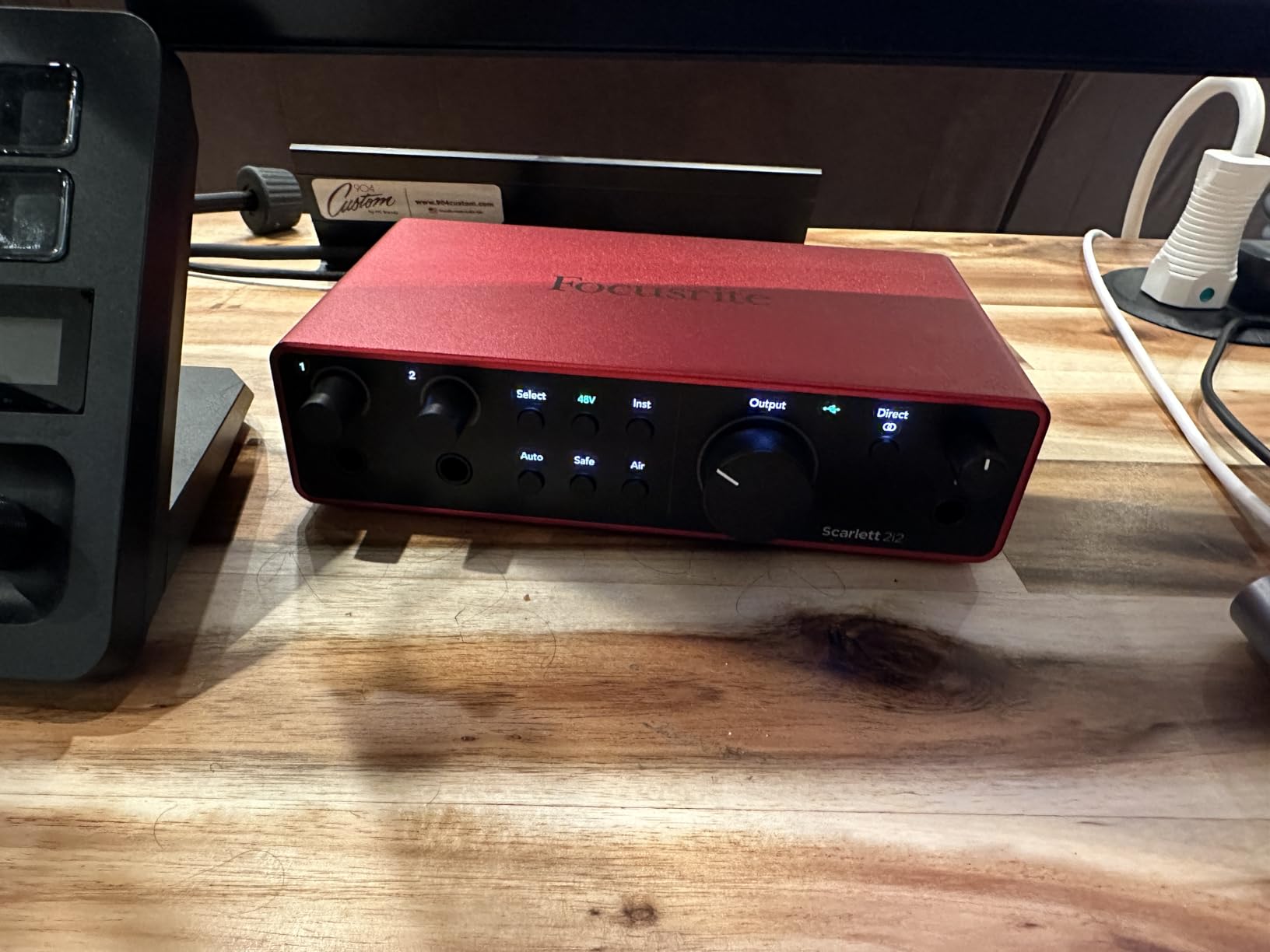
The Auto Gain feature genuinely saves time in my workflow. Instead of fiddling with levels for each new vocalist or instrument, the interface handles it automatically. I found this especially useful during quick podcast recording sessions where time matters.
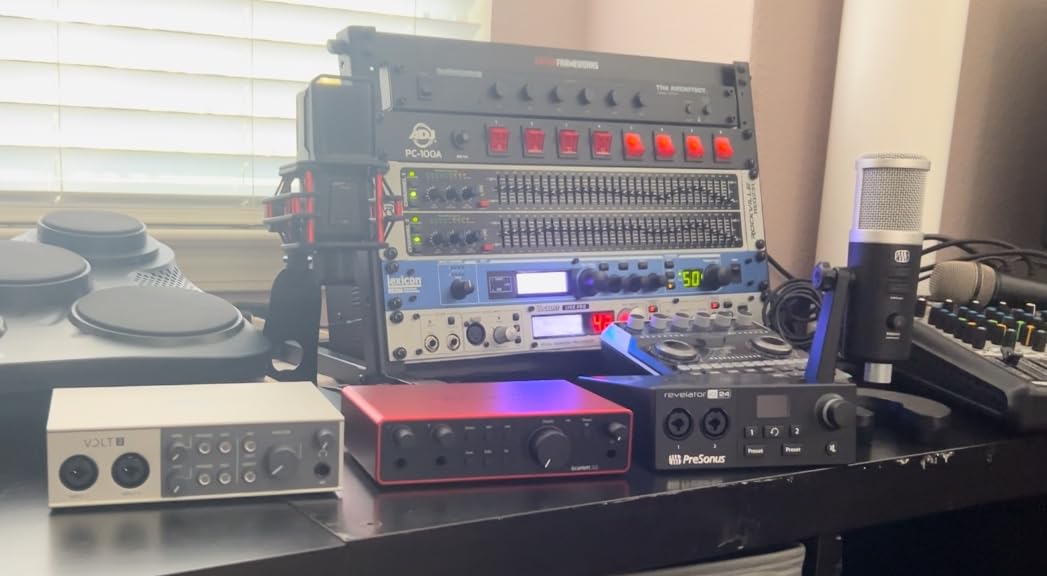
Air Mode adds a pleasant presence boost that works beautifully on vocals and acoustic guitars. It’s not a gimmicky effect. The enhancement feels natural and musical without requiring extra plugins or processing.
Clip Safe protection caught multiple potential disasters during my testing. When a vocalist suddenly belted out a loud note, the interface smoothly compensated without any harsh clipping artifacts. This alone makes the 4th Gen worth the upgrade from older models.
Best Use Cases for the Scarlett 2i2
This interface shines for solo musicians, podcasters, and streamers who need reliable, professional sound without complexity. The two inputs handle most single-person recording situations perfectly. Singer-songwriters will appreciate being able to record vocals and guitar simultaneously with pristine quality.
Home studio owners building their first serious setup benefit from the straightforward operation. No confusing menus or hidden settings. Just plug in, set your levels, and record. The included software bundle adds genuine value for beginners starting from scratch.
Limitations to Consider
Bands and groups will find the two-input limitation restrictive. If you need to record drums, full bands, or multiple simultaneous vocalists, consider the Scarlett 4i4 instead. The 2i2 excels as a personal recording solution but doesn’t scale for larger sessions.
New users might find the documentation for Auto Gain and Clip Safe features sparse. I had to experiment a bit to fully understand how these functions interact during actual recording sessions. Focusrite could improve their quick-start guides for the 4th Gen’s new capabilities.
2. M-Audio M-Track Solo – Budget-Friendly Entry Point
M-AUDIO M-Track Solo USB Audio Interface
48kHz Sample Rate
Crystal Preamps
XLR/Line/DI Inputs
Zero Latency Monitoring
USB Bus Powered
Pros
- Excellent price-to-performance ratio for beginners
- Crystal clear audio quality
- Simple plug-and-play setup
- USB powered - no external power adapter needed
Cons
- Only one XLR/1/4 inch combo input limits multi-track recording
- Plastic housing despite metallic appearance
At under $60, the M-Track Solo proves you don’t need to spend hundreds for decent recording quality. I tested this interface for beginner podcasting and voice-over work. The results genuinely surprised me for the price point.
The Crystal Preamps deliver clean, transparent sound without the noise floor issues common in budget interfaces. Voice recordings came through clearly with minimal background hiss. For spoken-word content, this interface performs admirably.
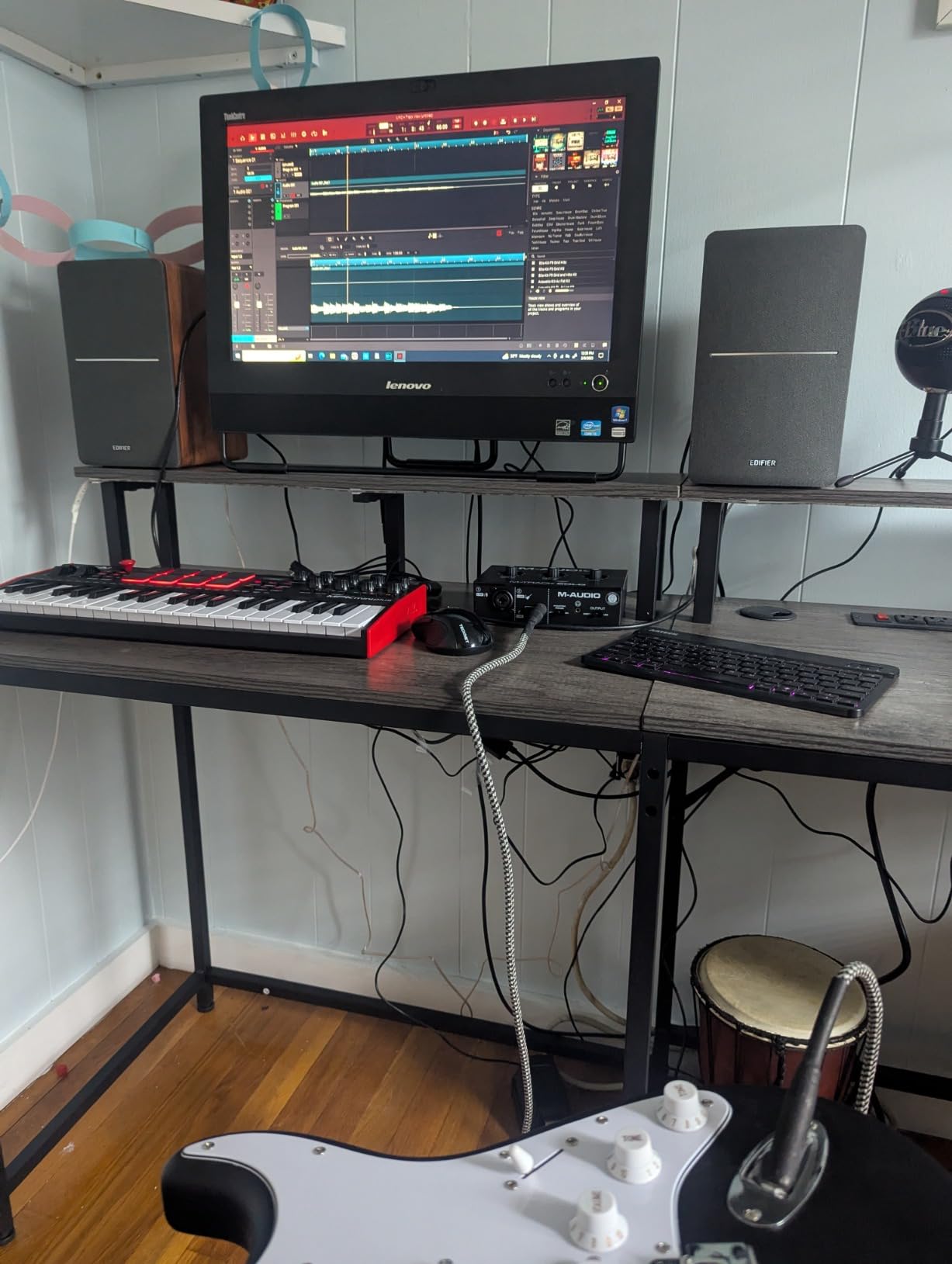
Setup couldn’t be simpler. Plug it into any USB port, select it in your recording software, and you’re ready to record. No driver installations, no complicated configuration screens. This plug-and-play simplicity makes it perfect for absolute beginners.
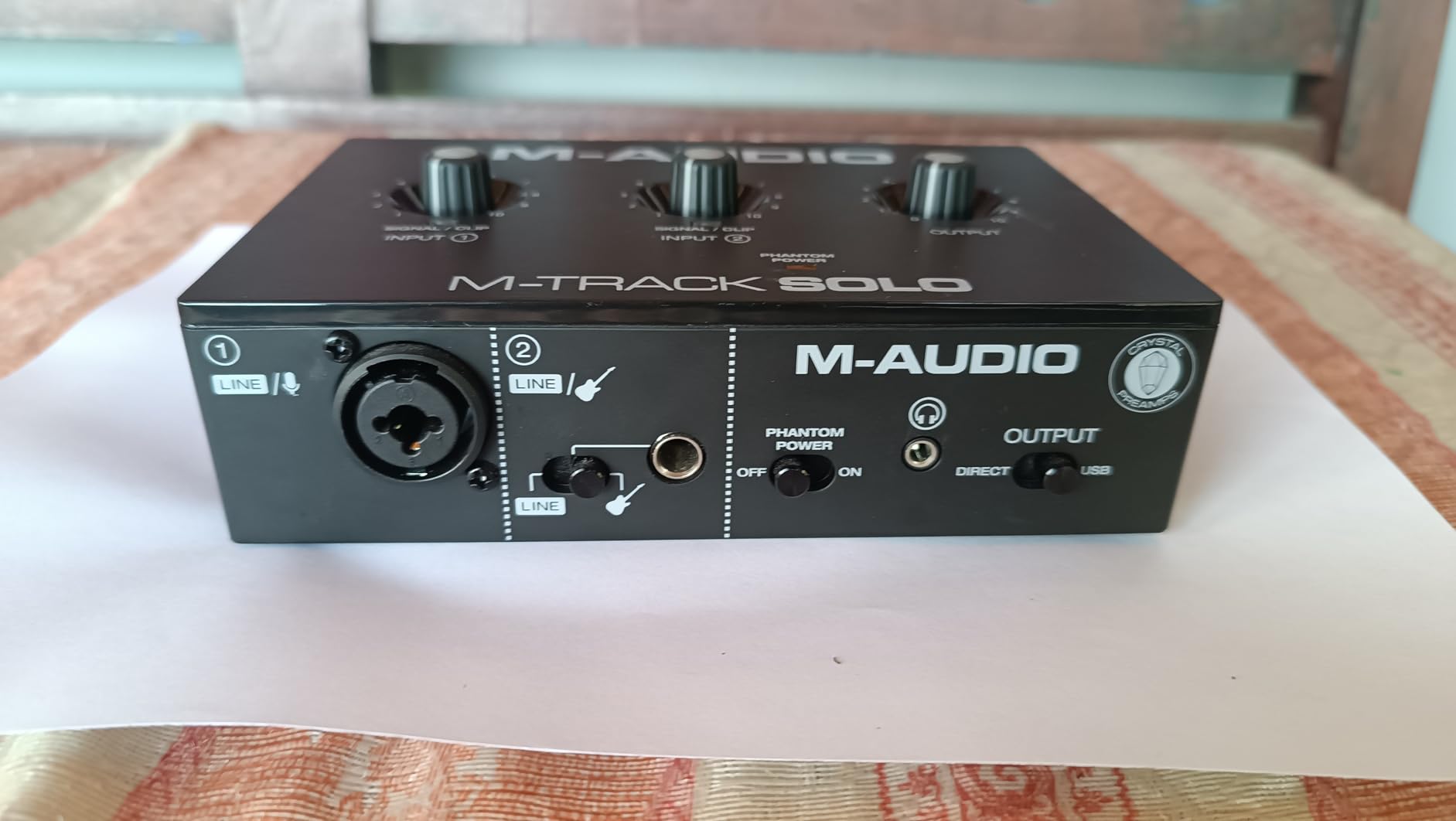
The USB/Direct switch enables zero-latency monitoring without routing through your computer. I found this essential for vocalists who need to hear themselves without the distracting delay of digital processing.
Who Should Buy the M-Track Solo
Beginners testing the waters of home recording will find this interface offers tremendous value. If you’re unsure whether podcasting or voice-over work will become a regular pursuit, the low investment minimizes risk. The included software bundle with MPC Beats and Ableton Live Lite adds genuine production tools.
Streamers and content creators working with voice-only content benefit from the straightforward operation. One quality input handles most single-microphone scenarios without overwhelming new users with features they’ll never use.
When to Look Elsewhere
The single combo input immediately limits multi-track possibilities. You can’t record two microphones simultaneously, making duets, interviews, or band recordings impossible without additional equipment. Musicians wanting to capture vocals and guitar together should consider interfaces with more inputs.
Plastic construction keeps costs down but doesn’t inspire confidence for mobile use. Touring musicians or podcasters recording on location might prefer something more rugged. For stationary home setups, the build quality works fine for the price.
3. Behringer UMC202HD – Professional Preamps on a Budget
Behringer UMC202HD Audiophile 2×2, 24-Bit/192 kHz USB Audio Interface with Midas Mic Preamplifiers | For Recording Microphones and Instruments
24-bit/192kHz Converters
Midas Mic Preamps
2x2 USB Interface
Zero Latency Monitoring
+48V Phantom Power
Pros
- Midas preamps deliver exceptional sound quality
- Excellent value - rivals much more expensive interfaces
- Ultra-low latency with proper ASIO drivers
- Solid build quality
Cons
- Direct monitoring is hard-panned left and right
- Requires ASIO knowledge for optimal use on Windows
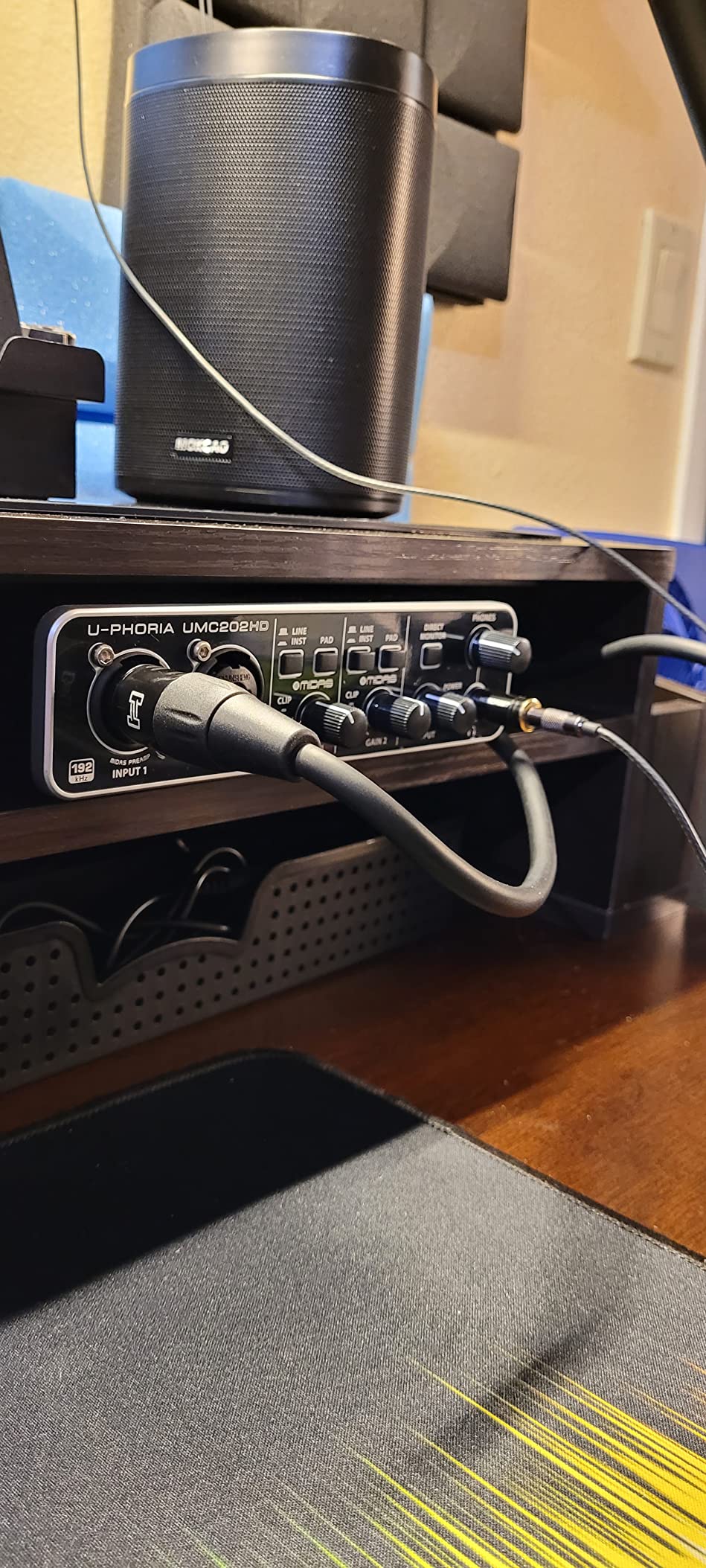
The UMC202HD represents an incredible value proposition. Behringer’s Midas-designed preamps deliver audio quality that genuinely rivals interfaces costing three times as much. I compared recordings side-by-side with premium options and the differences were subtle.
Those Midas preamps deserve their reputation. Microphone signals come through with warmth and presence that elevate vocal recordings above typical budget interface results. The preamp character adds a pleasing coloration without sounding artificial.
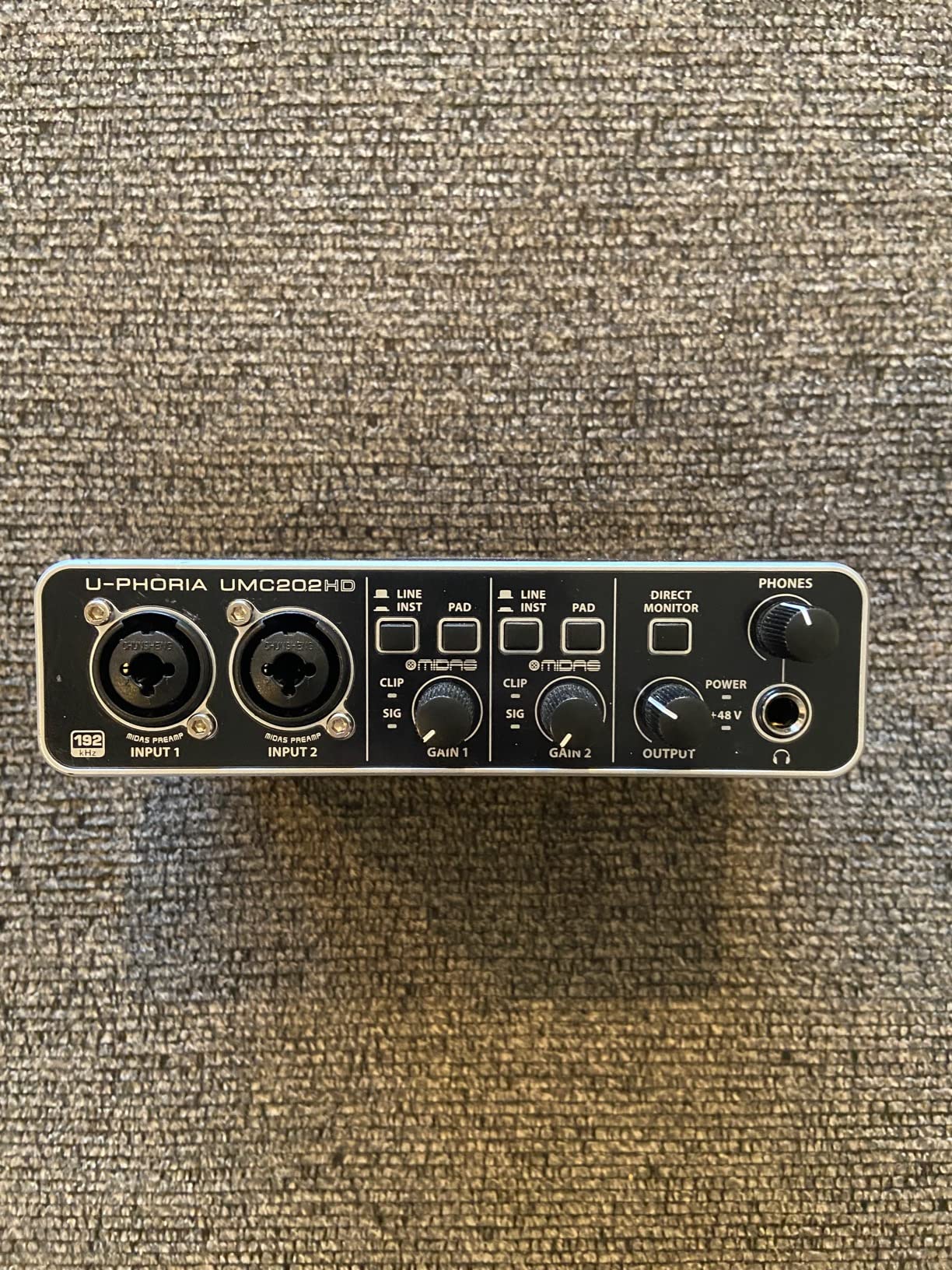
24-bit/192kHz converters give you professional-grade audio resolution for future-proof recordings. Even if you don’t need the full bandwidth now, having it available means your recordings won’t become obsolete as your skills improve.
During my testing, latency performance impressed me significantly. With proper ASIO drivers on Windows, I achieved near-instant monitoring that made tracking instruments comfortable. The performance matches interfaces at much higher price points.
Ideal Users for the UMC202HD
Musicians who want professional sound quality without the professional price tag will find this interface hits the sweet spot. The two inputs handle most singer-songwriter and small ensemble recording scenarios. Guitarists recording both acoustic and electric instruments benefit from the flexible combo inputs.
Home studio owners prioritizing audio quality over brand prestige get tremendous value here. The preamp performance alone makes this worth serious consideration against more expensive competitors.
What You Should Know Before Buying
Direct monitoring hard-pans inputs left and right by default. This means input 1 appears in your left headphone and input 2 in your right. Some users find this disorienting when recording themselves. The workaround involves adjusting your DAW’s monitoring settings or using a mixer.
Windows users need to install and configure ASIO drivers for optimal performance. This adds a step beyond simple plug-and-play operation. Mac users enjoy class-compliant operation without driver installation. The technical requirement might frustrate absolute beginners.
4. Arturia MiniFuse 1 – Premium Build with Exceptional Warranty
Arturia MiniFuse USB Audio & MIDI Interface, MiniFuse 1
192kHz/24-bit Audio
Combo XLR/Inst/Line Input
USB Hub
MIDI I/O
5-Year Warranty
Pros
- 5-year warranty for peace of mind
- Best-in-class audio specs
- Transparent noise-free sound quality
- USB hub on rear panel for MIDI controllers
Cons
- Single input limits multi-track recording
- Requires registration before driver updates
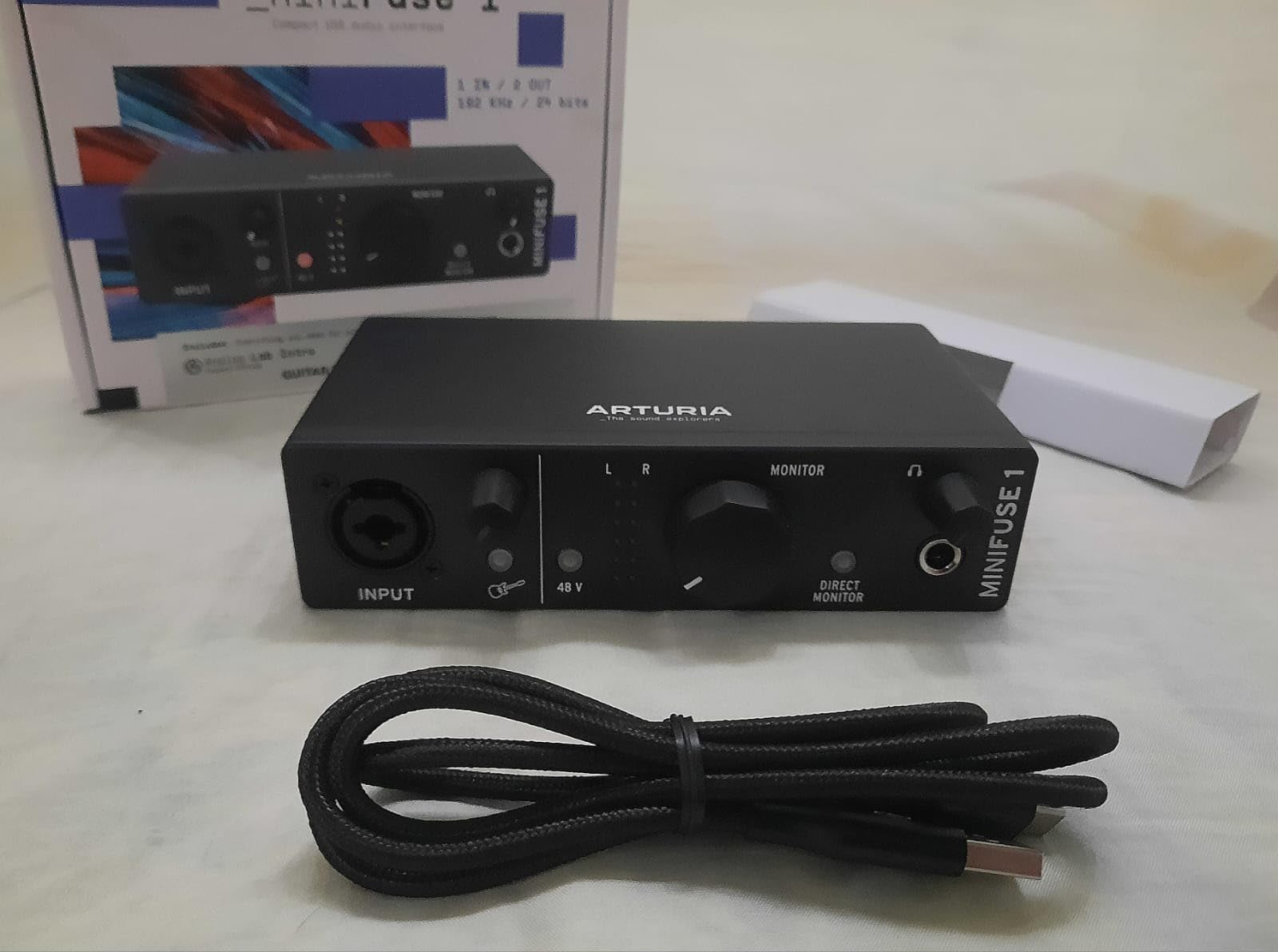
Arturia’s MiniFuse 1 immediately impressed me with its premium feel and thoughtful design. The 5-year warranty speaks volumes about the manufacturer’s confidence in build quality. Most competitors offer only 1-2 years of coverage.
Sound quality delivers on Arturia’s reputation for excellence. Recordings emerge transparent and noise-free, capturing the source accurately without coloration. This neutrality makes the MiniFuse 1 excellent for critical listening and accurate monitoring.
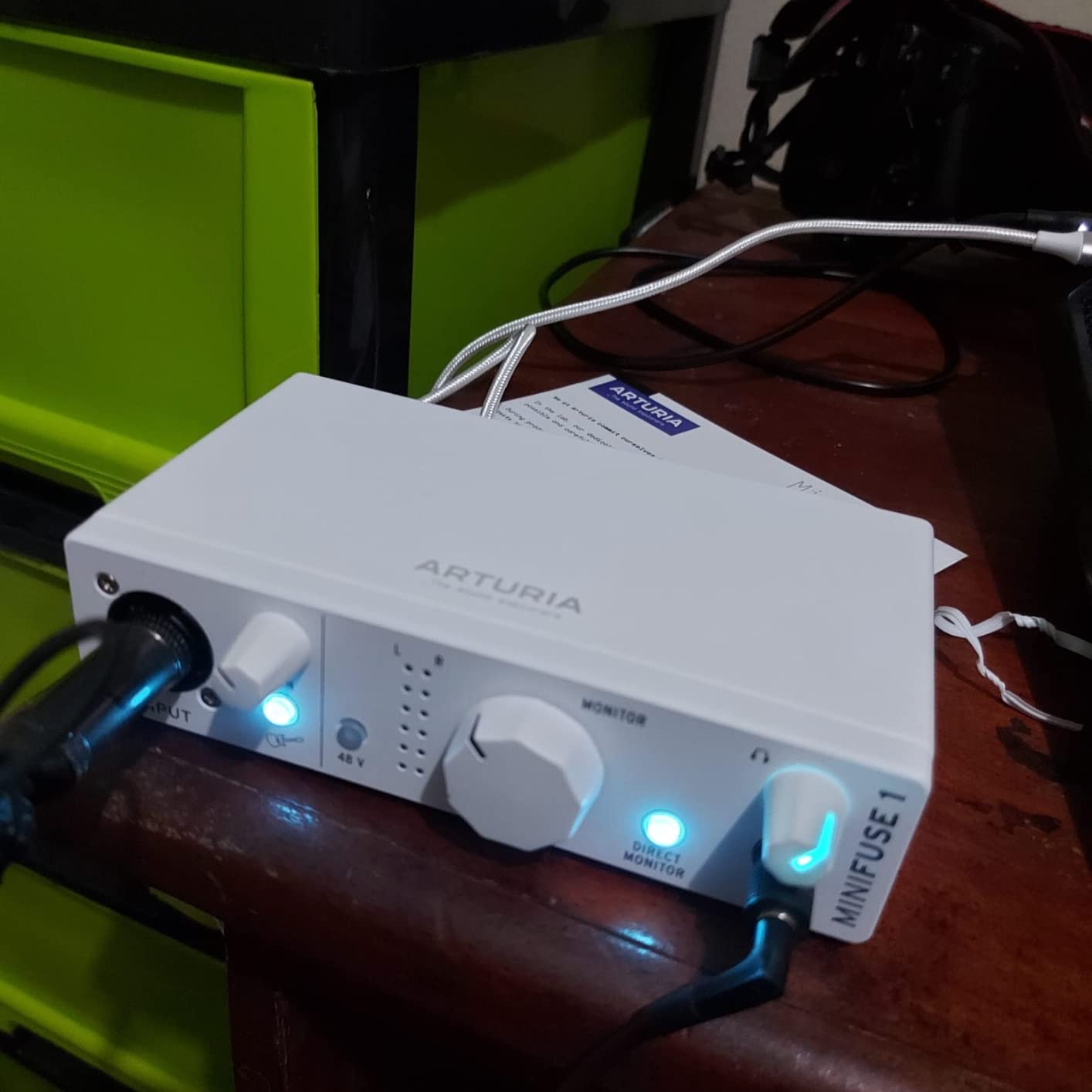
The built-in USB hub on the rear panel solves a real problem for modern producers. I connected my MIDI controller directly to the interface, eliminating cable clutter and freeing up computer ports. This thoughtful inclusion shows Arturia understands real workflow needs.
MIDI input/output adds flexibility for electronic musicians. You can connect synthesizers, drum machines, and controllers without additional interfaces. For the price, having both MIDI and USB hub connectivity represents excellent value.
Best Applications for the MiniFuse 1
Electronic music producers benefit enormously from the MIDI I/O and USB hub combination. Connecting controllers, synthesizers, and other gear becomes streamlined through a single interface. The loopback feature also helps with capturing streaming audio for sampling.
Voice-over artists and podcasters who value reliability over features will appreciate the straightforward operation. One quality input handles most spoken-word scenarios without unnecessary complexity. The 5-year warranty provides long-term peace of mind for professional use.
Important Considerations
The single input immediately restricts simultaneous multi-track recording. Like the M-Track Solo, you cannot record two sources at once. Musicians needing to capture vocals and instruments simultaneously should look toward interfaces with more inputs.
Driver updates require product registration before download. This adds an extra step compared to direct downloads from manufacturer websites. The process takes only minutes but might frustrate users expecting immediate access.
5. Universal Audio Volt 2 – Legendary Sound Character
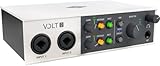
Universal Audio Volt 2 USB Audio Interface
610 Tube Emulation
24-bit/192kHz
USB-C Connectivity
MIDI I/O
Vintage Mode
Pros
- Warm clear audio with 610 tube emulation
- Excellent build quality
- Low latency performance
- USB powered without additional adapter
Cons
- Only 5 left in stock - limited availability
- Some users report app registration issues
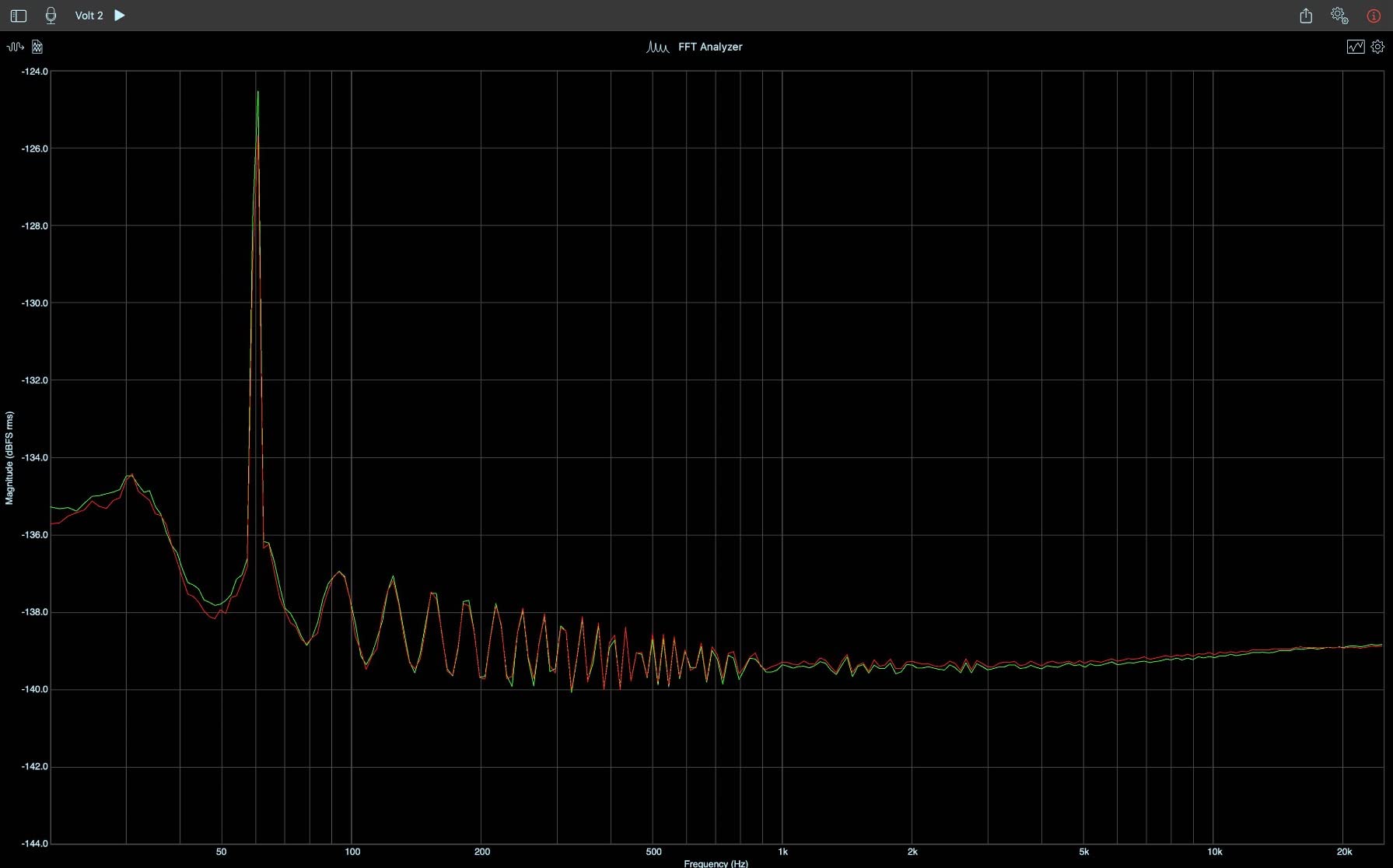
Universal Audio built their reputation on premium studio equipment, and the Volt 2 brings that heritage to a more accessible price point. The 610 tube emulation immediately adds warmth and character to recordings. This isn’t a subtle effect—it genuinely transforms microphone signals with pleasing analog-style saturation.
I tested the Vintage mode on several vocal recordings. The tube emulation adds richness and presence that typically requires external preamps or plugins. For singers wanting that classic studio warmth, the Volt 2 delivers it straight from the interface.
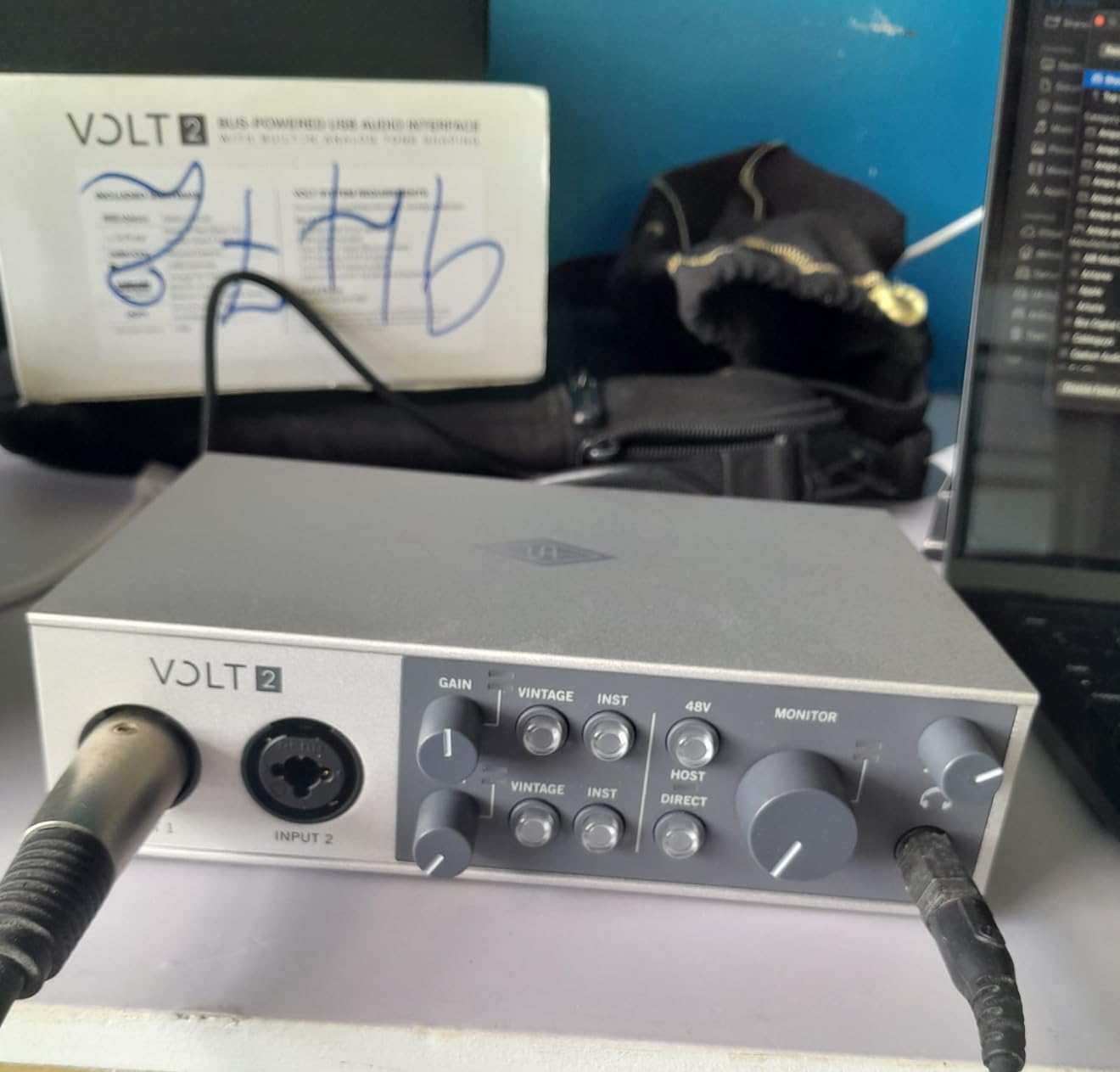
Build quality matches Universal Audio’s professional standards. The metal chassis feels substantial and durable, inspiring confidence for long-term use. This interface looks and feels like a professional tool, not a consumer gadget.
USB-powered operation simplifies mobile recording setups. No need for external power adapters when recording on location. The USB-C connection ensures compatibility with modern computers and mobile devices.
Who Benefits Most from the Volt 2
Vocalists and voice-over artists seeking warm, radio-ready sound without additional processing will find the 610 tube emulation invaluable. The Vintage mode adds professional character that elevates recordings beyond typical interface quality.
Producers wanting that classic Universal Audio sound without the Apollo price tag get genuine value here. The preamp quality rivals more expensive options while the tube emulation adds creative possibilities.
Potential Drawbacks
Limited stock availability at times means you might wait for your order. This popularity speaks to quality but frustrates buyers wanting immediate purchase. The demand-driven scarcity suggests considering alternatives if you need equipment quickly.
App registration for the included software bundle has caused issues for some users. Downloading and activating the bundled plugins requires navigating Universal Audio’s system. While not difficult, it adds steps beyond simple plug-and-play operation.
6. MOTU M2 – Exceptional Clarity and Low Noise
MOTU M2 USB-C Audio Interface
ESS Sabre DAC
LCD VU Meters
24-bit/192kHz
MIDI I/O
USB-C Bus Powered
Pros
- Excellent audio quality with ESS Sabre DAC
- Very low noise floor
- Clean and clear preamps
- USB-C bus powered
- LCD VU meters
Cons
- Included USB-C to USB-A cable is short and thin
- Headphone amp may not drive high-impedance planars adequately
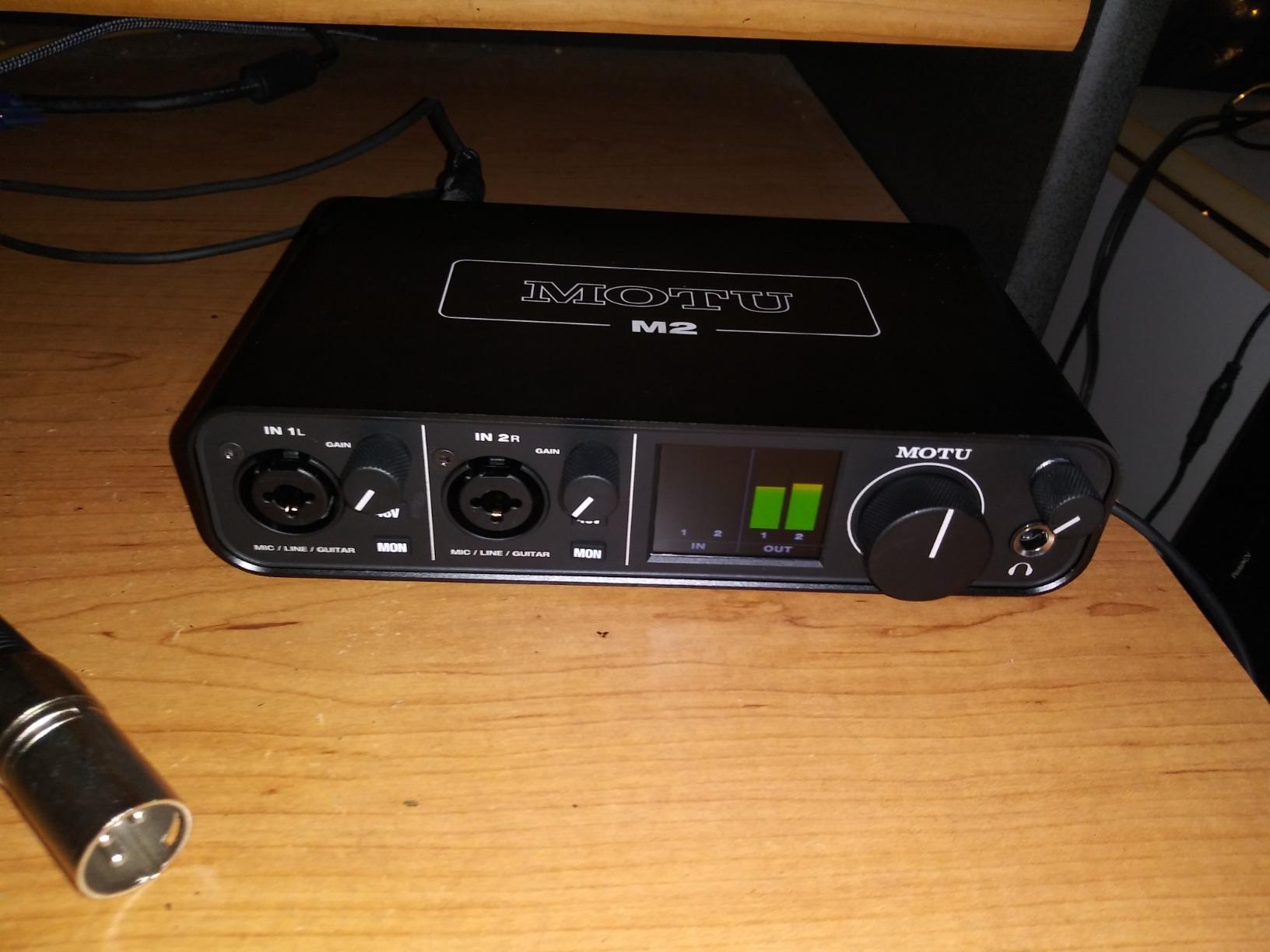
The MOTU M2 earned serious respect in my testing for its exceptional audio clarity. The ESS Sabre DAC delivers conversion quality that typically costs much more. Every recording emerges with startling transparency and definition.
The LCD VU meters provide visual feedback that I found invaluable during sessions. Instead of guessing levels, you see exactly where your signal sits. This feature matters enormously for maintaining consistent recording quality across different sources.
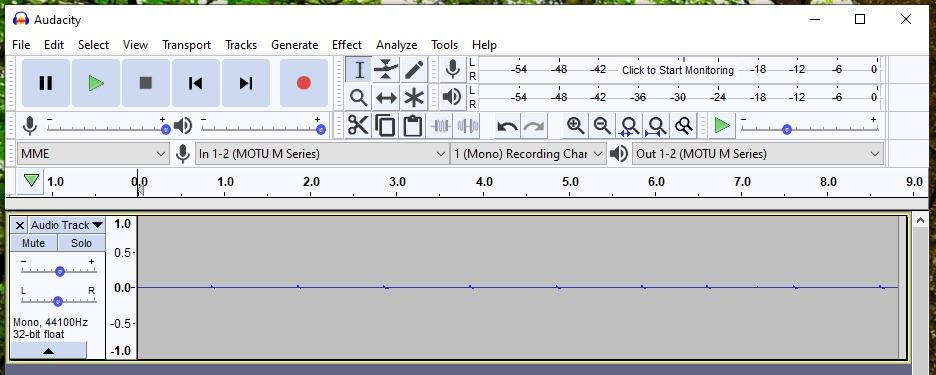
Streamer-specific needs receive proper attention here. The ultra-low noise floor ensures clean signal capture without background hiss. Low-latency monitoring keeps real-time audio synced with video, essential for live broadcasts.
USB-C bus power eliminates the need for external adapters. I moved the M2 between computers without hunting for power supplies. This portability makes it excellent for mobile recording situations.
Perfect Scenarios for the MOTU M2
Streamers and content creators benefit from the low-latency performance and clean preamp quality. Real-time monitoring without perceptible delay makes live broadcasts sound professional. The LCD meters help maintain consistent levels during dynamic content.
Podcasters who need reliable, no-fuss operation will appreciate the straightforward design. Two inputs handle interview-style shows when paired with a second microphone. The transparent sound signature works excellently for spoken-word content.
Things to Consider
The included USB-C to USB-A cable runs short and feels thin. For permanent studio setups, you’ll likely want a longer, higher-quality replacement. Mobile users might not notice, but desktop configurations benefit from better cabling.
Headphone amplification may disappoint users with high-impedance planar headphones. The bus-powered design limits available current for demanding loads. Most standard monitoring headphones work fine, but audiophile-grade planars might require dedicated amplification.
7. MOTU M4 – Expanded I/O for Growing Studios
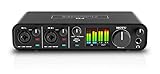
Motu M4 4×4 USB-C Audio Interface
4-in/4-out Configuration
Built-in Loopback
LCD Screen
MIDI I/O
Low Latency Monitoring
Pros
- Transparent clean sound quality
- Rock solid Windows drivers
- Very low noise floor and distortion
- LCD display for level metering
- Built-in loopback
- 4 inputs and 4 outputs
Cons
- Headphone amp power is limited bus powered limitation
- M4 is essentially same as M2 with more I/O
The MOTU M4 takes the M2’s excellent foundation and adds meaningful expansion. Four inputs and four outputs create possibilities for more complex recording scenarios. I tested it with full band rehearsals where the extra channels proved essential.
Built-in loopback functionality represents a game-changer for streamers and podcasters. You can capture computer audio alongside microphone input without complex routing or additional software. This feature alone justifies the upgrade from the M2 for content creators.
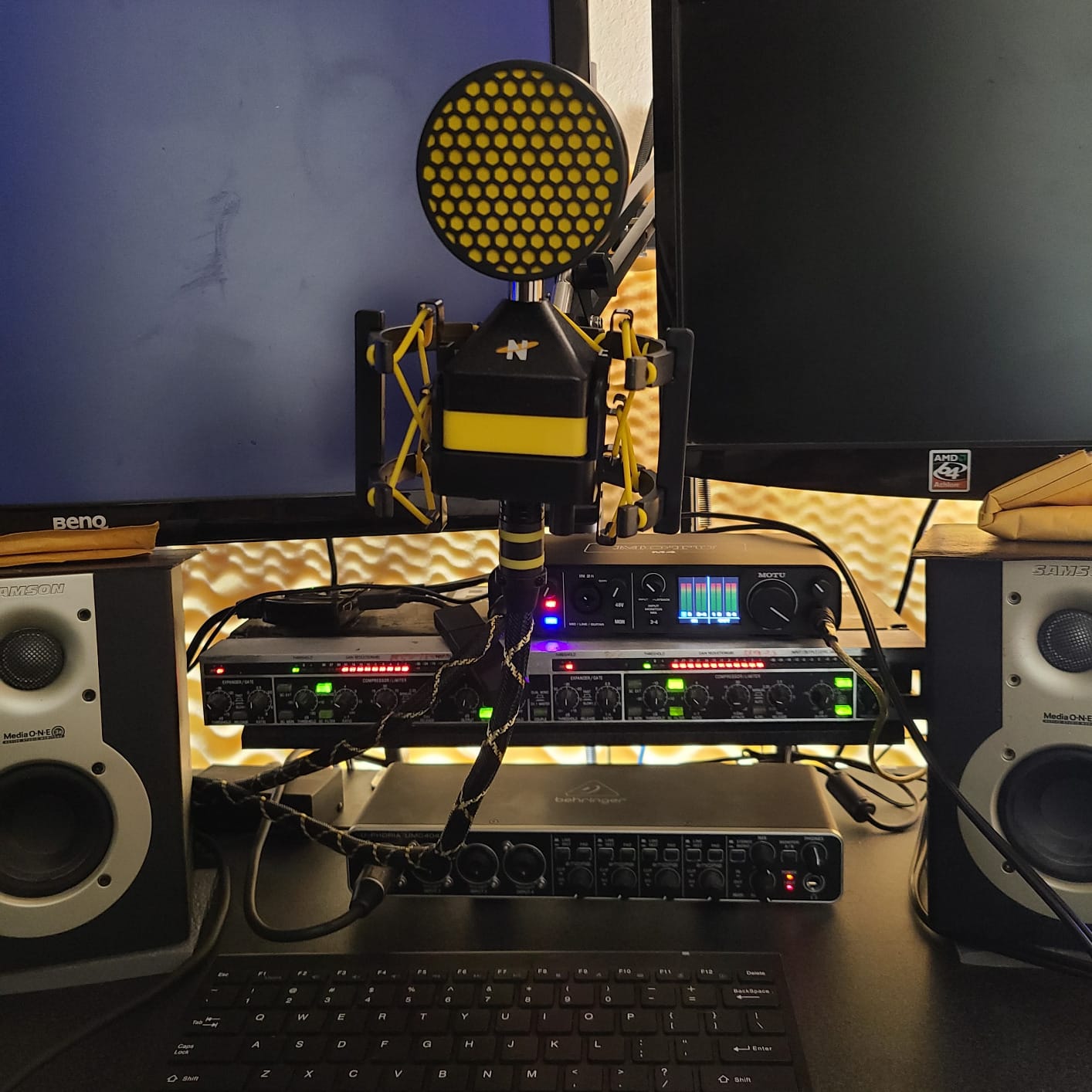
Windows driver stability impressed me during extended testing sessions. The M4 maintained rock-solid connection without dropouts or glitches over multiple hours of recording. This reliability matters enormously for professional workflows where technical failures cost time and money.
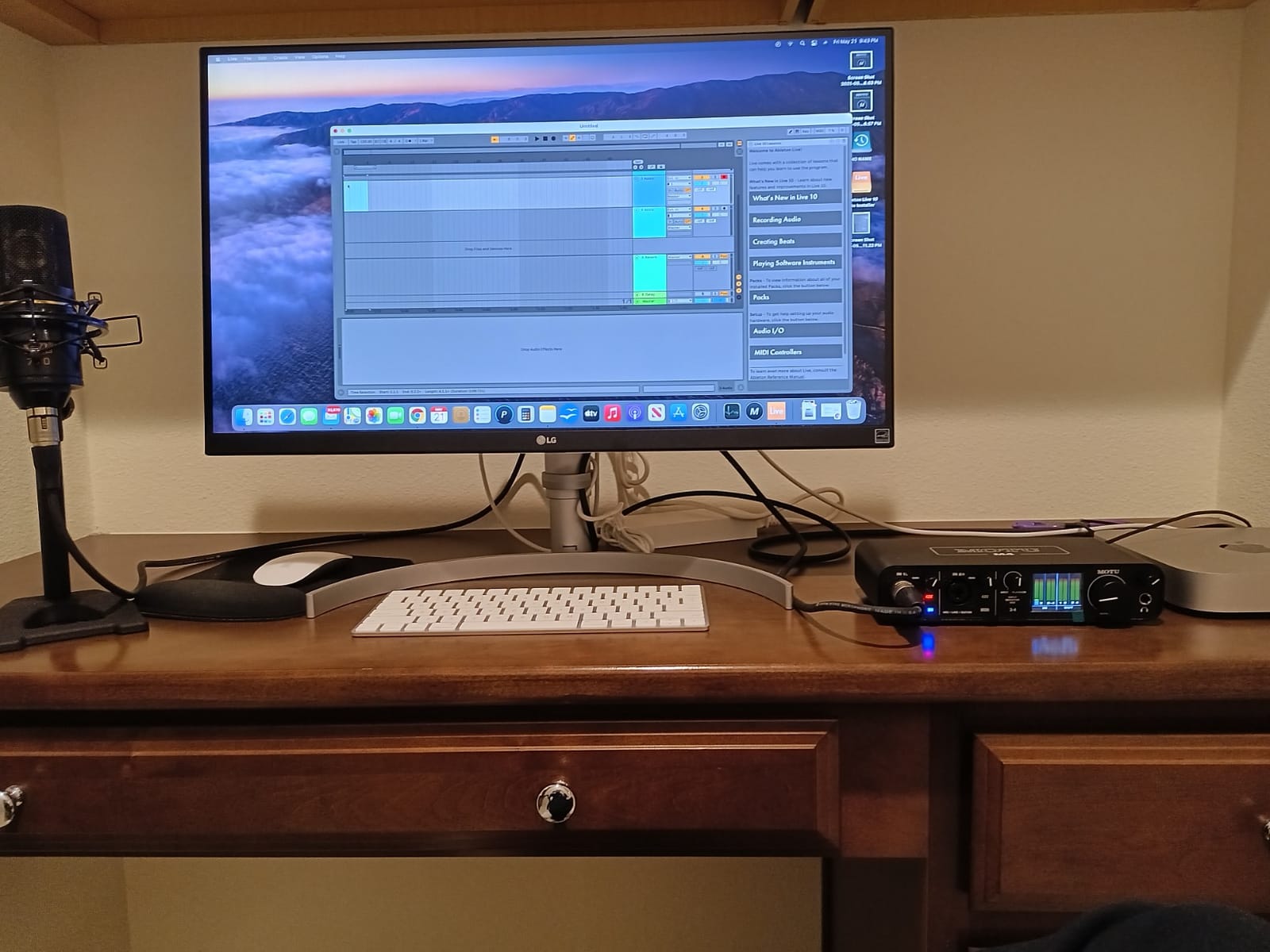
The LCD screen provides the same excellent visual feedback as the M2. Seeing input levels in real-time helps maintain consistent recording quality across multiple sources. The meters respond quickly and accurately to dynamic signals.
When the M4 Makes Sense
Home studios recording multiple sources simultaneously need the expanded I/O. Drummers, bands, and ensembles benefit from having four inputs available. You can capture drums with multiple microphones or record full band rehearsals without compromising channel count.
Streamers wanting to mix game audio, voice chat, and microphone input together will find the loopback feature essential. No complicated software routing required—the interface handles the mixing internally. This simplifies setup dramatically for live broadcasts.
Important Limitations
Bus-powered headphone amplification shares the same current limitations as the M2. High-impedance headphones may not reach adequate volume levels. Consider dedicated headphone amplification for critical monitoring applications.
The M4 essentially offers the M2’s audio quality with added I/O. If you don’t need the extra inputs, outputs, or loopback, the M2 provides identical sound quality for less money. Evaluate your actual needs before paying for channels you won’t use.
8. Focusrite Scarlett 4i4 4th Gen – Maximum Flexibility
Focusrite Scarlett 4i4 4th Gen USB-C Audio Interface
4-in/4-out Configuration
2 Mic Preamps
2 Hi-Z Inputs
MIDI I/O
120dB Dynamic Range
Pros
- Studio-quality converters same as flagship Focusrite interfaces
- Air mode adds musical presence and harmonic drive
- Auto Gain sets perfect levels automatically
- Clip Safe prevents clipping
- Excellent build quality
Cons
- Only 2 XLR inputs other 2 inputs use 1/4 inch TRS
- Driver can crash in some games/software
The Scarlett 4i4 4th Gen expands on the 2i2’s success with double the connectivity. Four inputs and four outputs handle more complex recording scenarios while maintaining the same exceptional sound quality. I found this interface perfect for my singer-songwriter sessions where I track vocals and guitar simultaneously.
Two dedicated XLR microphone preamps plus two Hi-Z instrument inputs cover most home studio needs. The combo configuration lets you record vocals through XLR while capturing guitar direct through the instrument inputs. No compromised signal paths or adapter cables needed.
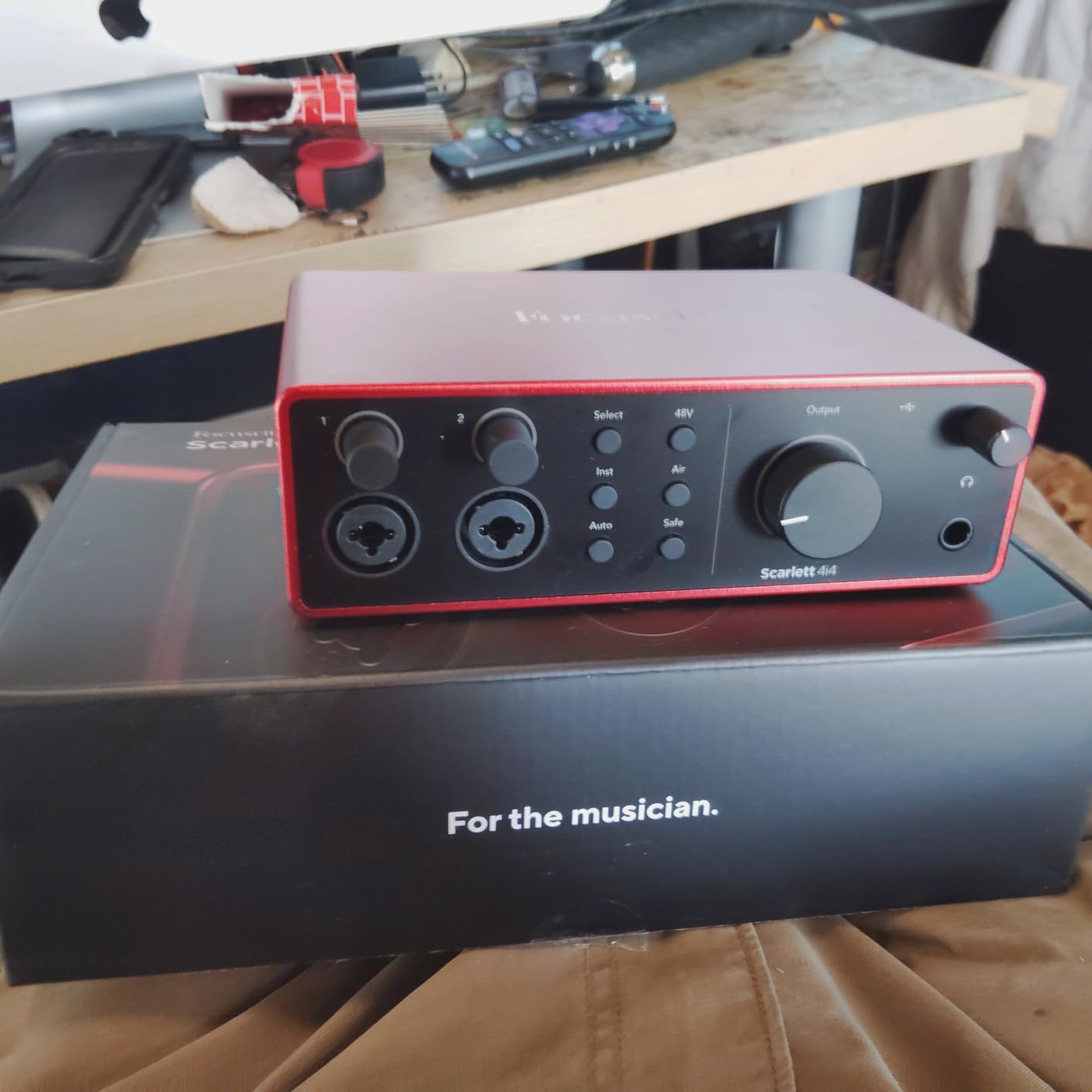
MIDI I/O on the rear panel connects synthesizers, controllers, and other gear without additional interfaces. Electronic musicians and producers working with hardware synths will appreciate having everything integrated into one unit.
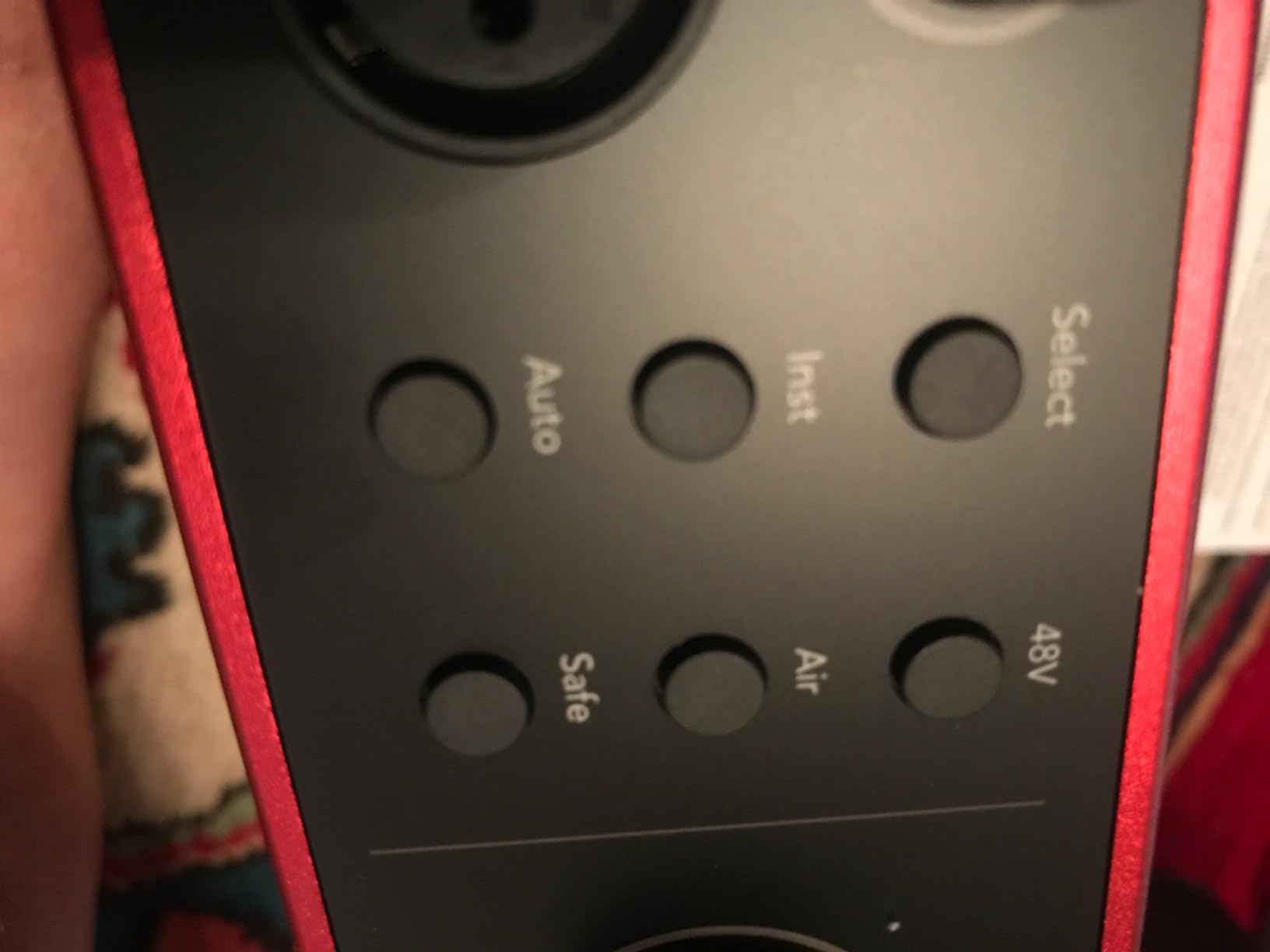
The 4th Gen features match the 2i2’s innovations: Auto Gain for perfect levels, Clip Safe for protection, and Air Mode for enhanced presence. These thoughtful additions genuinely improve workflow rather than adding gimmicky features.
Best Applications for the Scarlett 4i4
Singer-songwriters who need simultaneous vocal and instrument recording will find the input configuration ideal. Two XLR inputs handle vocal microphones while the instrument inputs capture guitars or keyboards directly. This eliminates the need to record tracks separately.
Home studios anticipating growth should consider the expandable I/O. Starting with four inputs means you won’t immediately outgrow the interface as your needs evolve. The MIDI connectivity and line outputs provide connection points for future gear additions.
Key Considerations
Only the first two inputs accept XLR connections. Inputs three and four use 1/4″ TRS connections for line-level signals. This means you can’t connect four microphones simultaneously. The design targets singer-instrument combinations rather than full band recording.
Some users report driver crashes in specific gaming software. If you plan to use this interface for gaming in addition to recording, test compatibility with your particular titles. For pure audio production work, the drivers perform excellently without issues.
Buying Guide: How to Choose the Best Audio Interface?
Choosing the right audio interface depends on your specific recording needs, budget, and technical requirements. Here’s what matters most when making your decision.
Connection Type: USB vs Thunderbolt
USB remains the most practical choice for most users. USB-C connections offer adequate bandwidth for typical home studio applications while maintaining broad compatibility. Thunderbolt provides lower latency and higher bandwidth for demanding professional applications, but costs significantly more. Most musicians and podcasters won’t notice the difference in real-world use.
Input and Output Count
Count your actual needs honestly. Solo performers need only one or two inputs. Podcasters recording interviews benefit from two XLR inputs. Bands and ensembles require four or more inputs to capture multiple sources simultaneously. Don’t pay for channels you’ll never use, but don’t underestimate your growth either.
Sample Rate and Bit Depth
24-bit/192kHz capability has become standard across quality interfaces. This resolution provides ample headroom for professional production. Higher sample rates matter mainly for specific applications like sound design. For most music, podcasting, and streaming, 24-bit/48kHz works perfectly fine while saving storage space.
Preamp Quality and Phantom Power
Preamp quality significantly impacts your recordings’ character. Budget interfaces often cut costs here. Look for low noise floors and adequate gain for your microphone choice. Phantom power (+48V) is essential for condenser microphones. Most interfaces include it, but verify before purchasing if you use condenser mics.
Latency Performance
Low latency matters enormously for real-time monitoring during recording. Excessive delay between playing and hearing creates distracting performance issues. Quality interfaces achieve round-trip latency under 10ms, which feels natural for most musicians. Streamers need particularly low latency to keep audio synchronized with video.
Build Quality and Portability
Mobile recorders should prioritize rugged construction and bus-powered operation. Studio-bound interfaces can prioritize connectivity over portability. Consider where you’ll actually use the interface, not just where it will live most of the time.
Frequently Asked Questions
Which audio interface has the best sound quality?
The MOTU M2 and M4 deliver exceptional sound quality with their ESS Sabre DAC converters, rivaling interfaces costing much more. The Focusrite Scarlett 4th Gen series also offers studio-quality 120dB dynamic range. For premium character, Universal Audio Volt 2 adds pleasing warmth through its 610 tube emulation.
Which brand is considered the best for audio interfaces?
Focusrite dominates the market with their Scarlett series offering excellent value and reliability. Universal Audio represents the premium tier with legendary preamp quality. MOTU earns respect for transparent sound and rock-solid drivers. Each brand serves different needs and budgets effectively.
What is the most reliable audio interface?
RME interfaces are renowned for bulletproof driver stability over years of use. Focusrite Scarlett series offers reliable operation for most users. MOTU M2 and M4 maintain rock-solid connections with excellent Windows driver support. Driver stability matters more than hardware for long-term reliability.
What audio interfaces do professional studios use?
Professional studios commonly use Universal Audio Apollo series, RME Babyface Pro and Fireface, Focusrite Red series, and Avid Pro Tools hardware. These interfaces offer premium preamp quality, low latency, and integration with professional workflows. The MOTU M4 provides professional-grade specs at a more accessible price point for home studios.
Final Thoughts on the Best Audio Interfaces
The best audio interface for you depends on your specific recording needs and budget. For most beginners and intermediate users, the Focusrite Scarlett 2i2 4th Gen delivers exceptional all-around value with professional sound quality and helpful features like Auto Gain and Clip Safe. Budget-conscious beginners will find the M-Audio M-Track Solo more than adequate for podcasting and basic recording.
Those prioritizing sound quality should consider the MOTU M2 for streaming or the Behringer UMC202HD for professional preamp performance at a budget price. Growing home studios benefit from the MOTU M4 or Focusrite Scarlett 4i4’s expanded I/O. Choose the interface that matches your actual workflow needs, not just the highest specs on paper.