
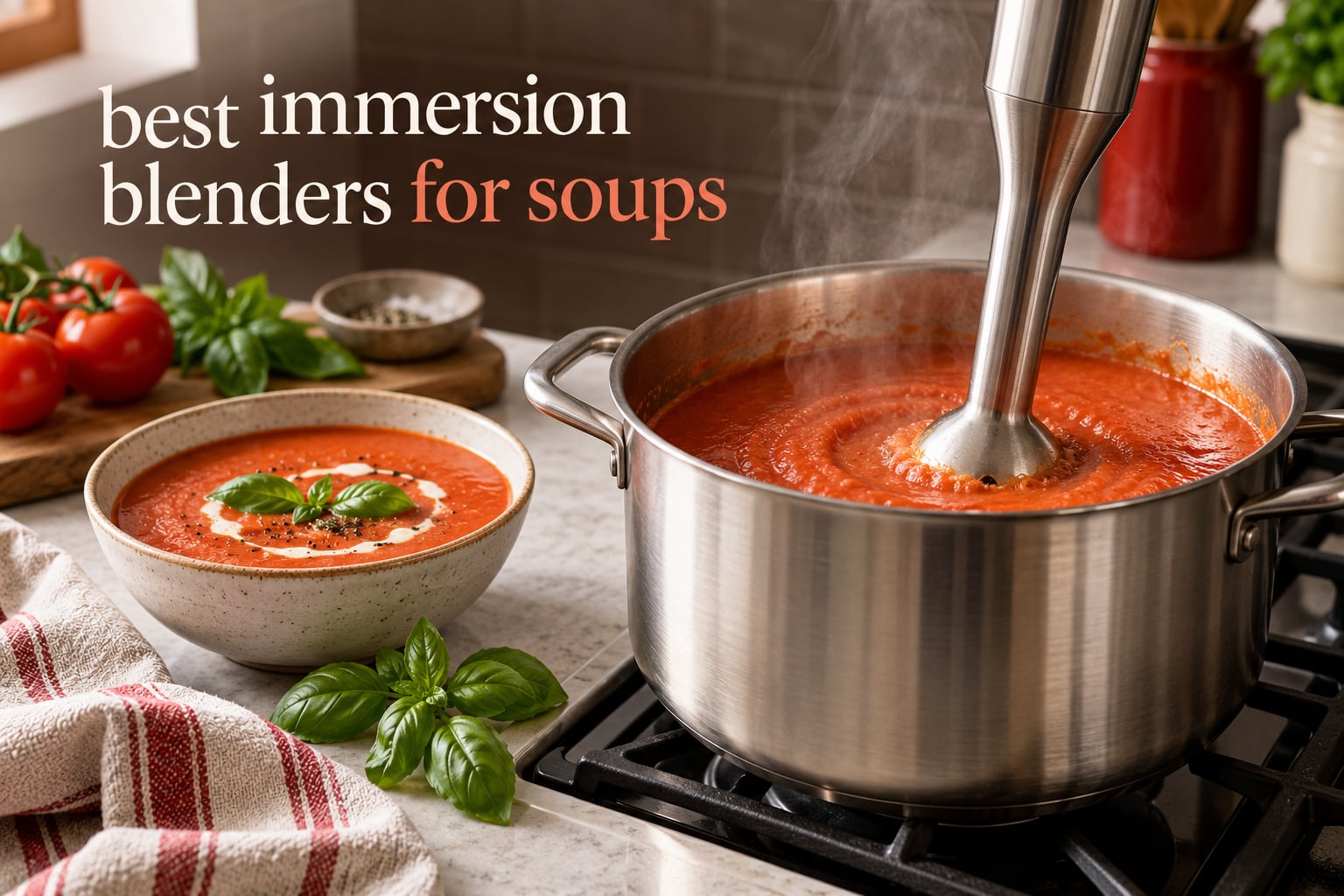
If you make soup from scratch more than once a month, an immersion blender pays for itself the first time you skip transferring a boiling pot into a countertop blender. We spent weeks putting ten of the best immersion blenders for soups through the same kitchen tests, and the KitchenAid KHBV53 came out on top. The Vitamix 5-Speed is the runner-up for anyone who wants maximum power in a fibrous soup.
An immersion blender, also called a hand blender or stick blender, is a handheld appliance with the motor on top and a long blending arm with a guarded blade at the bottom. It purees food directly in the pot, the bowl or the beaker instead of in a separate jar. That single design decision removes the biggest safety risk in soup making, which is lifting hot liquid and pouring it into a blender.
It also saves you a large jug to wash and the cabinet space a countertop blender takes up. In a small kitchen that tradeoff is hard to ignore. If your main job is smoothies or nut butter rather than soup, our blender buying guide covers those appliances instead.
Below is the short answer, then the full roundup, then the safety and technique sections that nobody else on this topic bothers to write down.
Table of Contents
Top 3 Immersion Blenders for Soup Right Now

Best Immersion Blenders for Soups at a Glance in 2026
Every model below blends hot soup safely in the pot. The differences are motor strength, bell geometry, control type and how much gear comes in the box.
| Product | Specifications | Action |
|---|---|---|
| KitchenAid KHBV53 Variable Speed |
|
Check Latest Price |
 Vitamix 5-Speed 625-Watt Vitamix 5-Speed 625-Watt |
|
Check Latest Price |
 Cuisinart CSB-179 Smart Stick Cuisinart CSB-179 Smart Stick |
|
Check Latest Price |
 Breville BSB510XL Control Grip Breville BSB510XL Control Grip |
|
Check Latest Price |
 Braun MultiQuick 7 MQ7035 Braun MultiQuick 7 MQ7035 |
|
Check Latest Price |
 Braun MultiQuick 5 MQ505 Braun MultiQuick 5 MQ505 |
|
Check Latest Price |
 All-Clad 600-Watt Immersion Blender All-Clad 600-Watt Immersion Blender |
|
Check Latest Price |
 KitchenAid KHBV83 Bundle KitchenAid KHBV83 Bundle |
|
Check Latest Price |
 Bonsenkitchen 500-Watt Stick Bonsenkitchen 500-Watt Stick |
|
Check Latest Price |
 OVENTE HS560B 300W OVENTE HS560B 300W |
|
Check Latest Price |
1. KitchenAid KHBV53 Variable Speed Hand Blender – Best Overall for Soup
KitchenAid Variable Speed Corded Hand Blender, KHBV53, Contour Silver
180 watts
5 speeds
Removable 8-inch arm
2.3 lb
Pros
- True variable speed with useful range
- Detachable dishwasher-safe arm
- Removable pan guard for coated pots
- Light at 2.3 pounds for long batches
Cons
- Plastic pan guard is reported to degrade
- Insert-and-twist coupling is stubborn to separate
- 180 watts is modest for frozen or very hard work
The KitchenAid KHBV53 is the immersion blender for soup we kept reaching for during testing. It is the only stick in this group with a genuine pressure-sensitive variable trigger, and that matters more for soup than any other single feature. You can hold back the speed to walk the blade through a cold puree, then open the trigger up when the soup is already hot and moving.
Owners back this up. Across more than fifteen thousand reviews the recurring description is a blender that feels like the upgrade from a cheap two-speed stick, and that it does not hold onion or garlic smell after a rinse. Our own runs matched that: a lentil soup went from chunky to fully smooth without the arm bogging down.
The detachable 8-inch arm snaps off and goes in the dishwasher, which is the feature that keeps it on the counter week to week. Cleaning an immersion blender you have to disassemble is fast, and cleaning one you do not is the reason people stop using them.
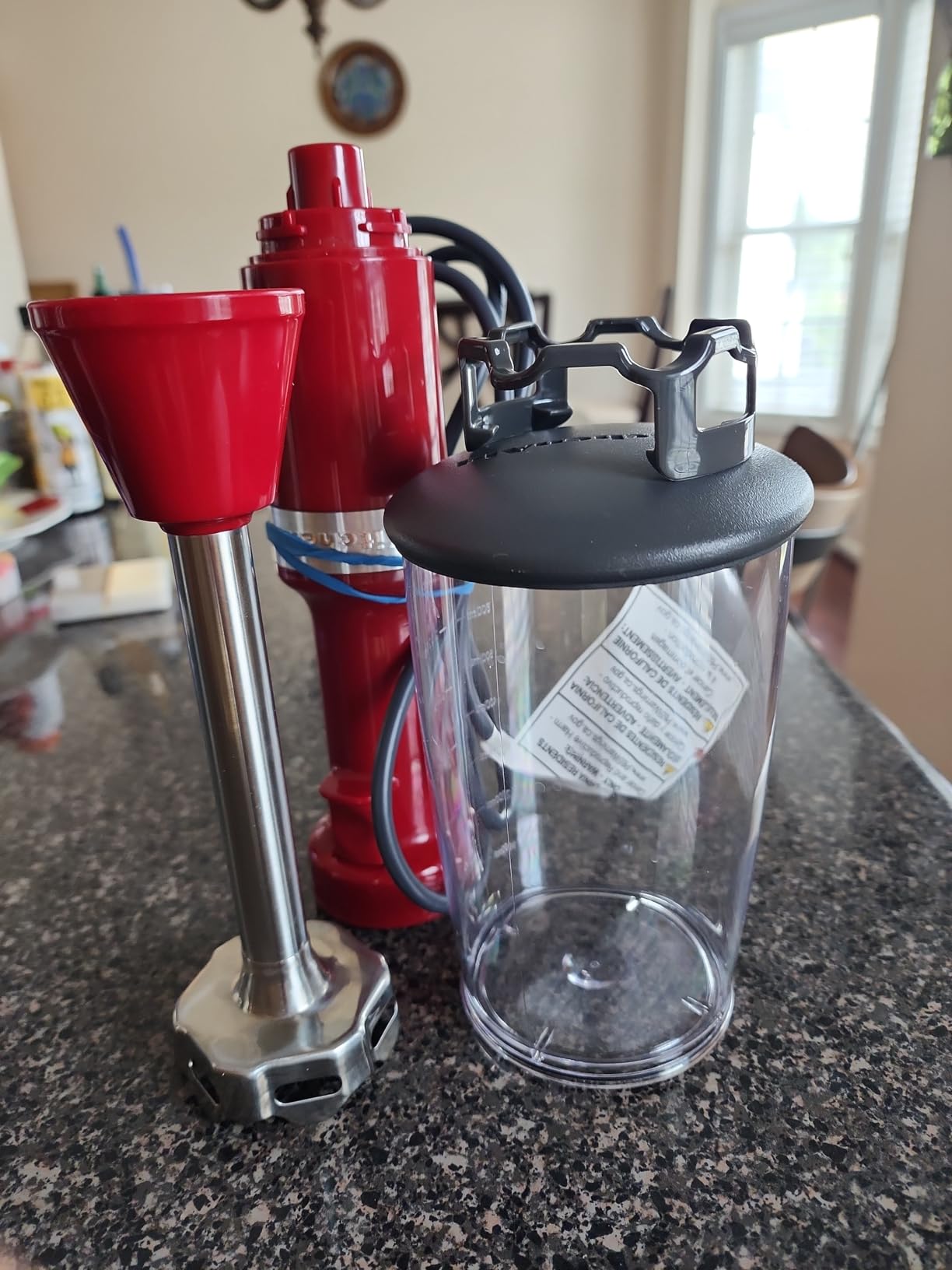
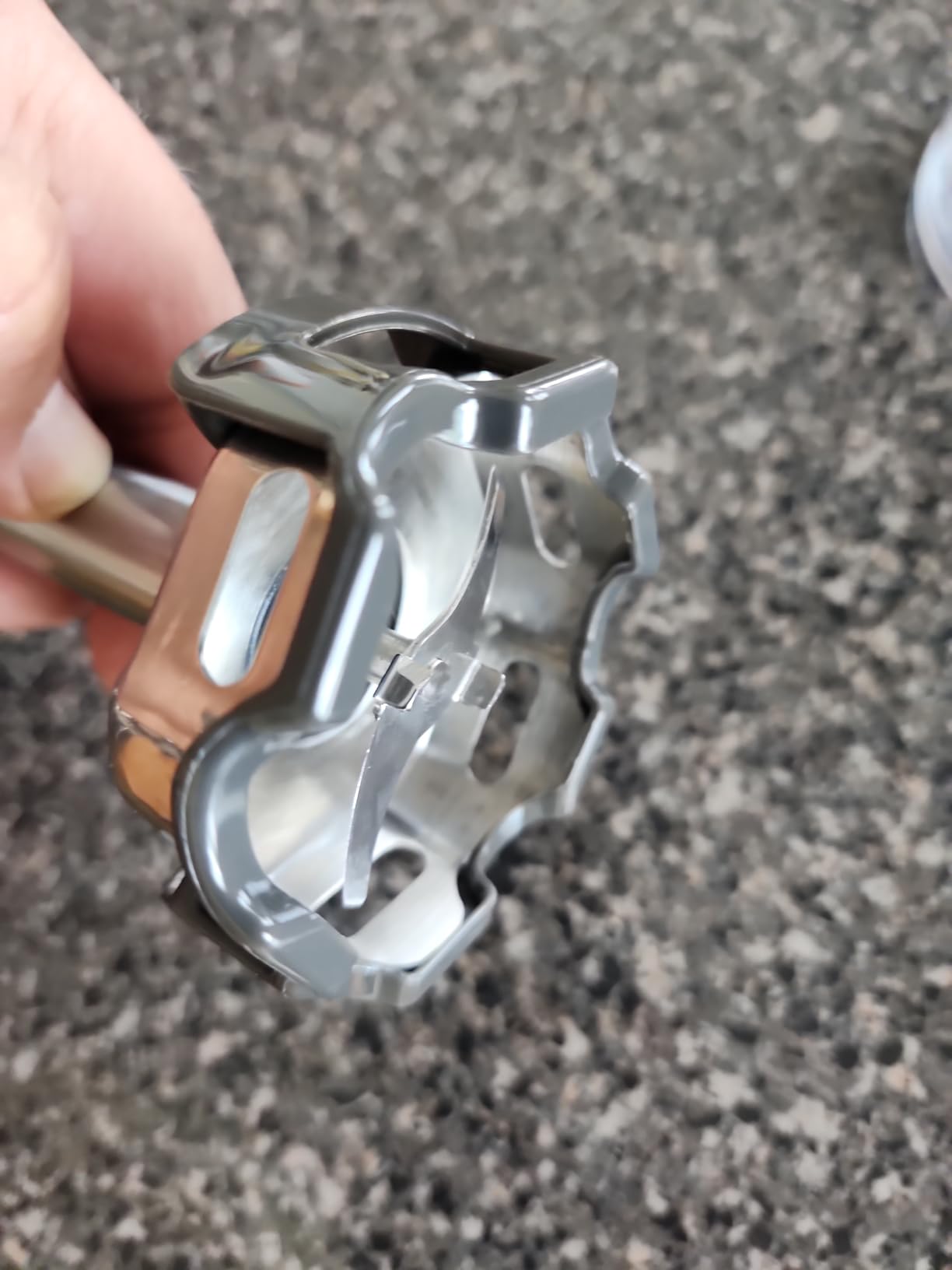
Two things temper the recommendation. The included plastic pan guard, which is the piece that keeps the blade off nonstick and enamel surfaces, is widely reported to shred or degrade in hot mixtures, and that is a replacement part you may need to track down. The insert-and-twist blade attachment also takes two hands to separate, which is mildly annoying but not a dealbreaker.
The 180-watt motor is the other limit. It handles cooked soups, shakes and soft frozen fruit without trouble, but it is not the tool for ice, nuts or a very fibrous raw load. If you only make soup from cooked vegetables, it is more than enough. If you want a blender that doubles as a nut butter machine, look at our nut butter blender picks.
What the variable trigger actually changes in a pot
Most sticks force you to choose between a low speed that just stirs and a high speed that throws liquid. The KHBV53 lets you sit anywhere between. In a tall pot of cold-then-warming lentil soup, that meant starting at the base, opening the speed gradually, and moving upward without the surface erupting.
It also means you can deliberately leave texture. Blending a portion smooth and stopping is a valid preference, not a failure, and with a pressure trigger you can stop exactly where you want to.
Where it falls short
Nonstick owners should know that the pan guard is a consumable-looking part. Several reviewers report it degrading in hot mixtures, and once it is compromised the arm is back to exposed metal against your coating. If you own a lot of coated cookware, check the guard condition every few months.
It is also the lightest-touch option here, which is a bonus for hand fatigue on big batches and a mild negative for jobs needing real torque.
2. Vitamix 5-Speed Immersion Blender – Best for Fibrous and Large-Batch Soup
Vitamix 5-Speed Immersion Blender, 625-Watt Motor, Stainless Steel/Black
625 watts
5 speeds
17.5 in tall
2.9 lb
Pros
- Highest rated in our set
- 625 watts handles the toughest cooked loads
- Bell guard protects pots from scratches
- Quiet even at full speed
- 3-year limited warranty
Cons
- Heavier than most competing sticks
- Sits tall so small portions need scraping
- Blade bell is fiddly to clean inside
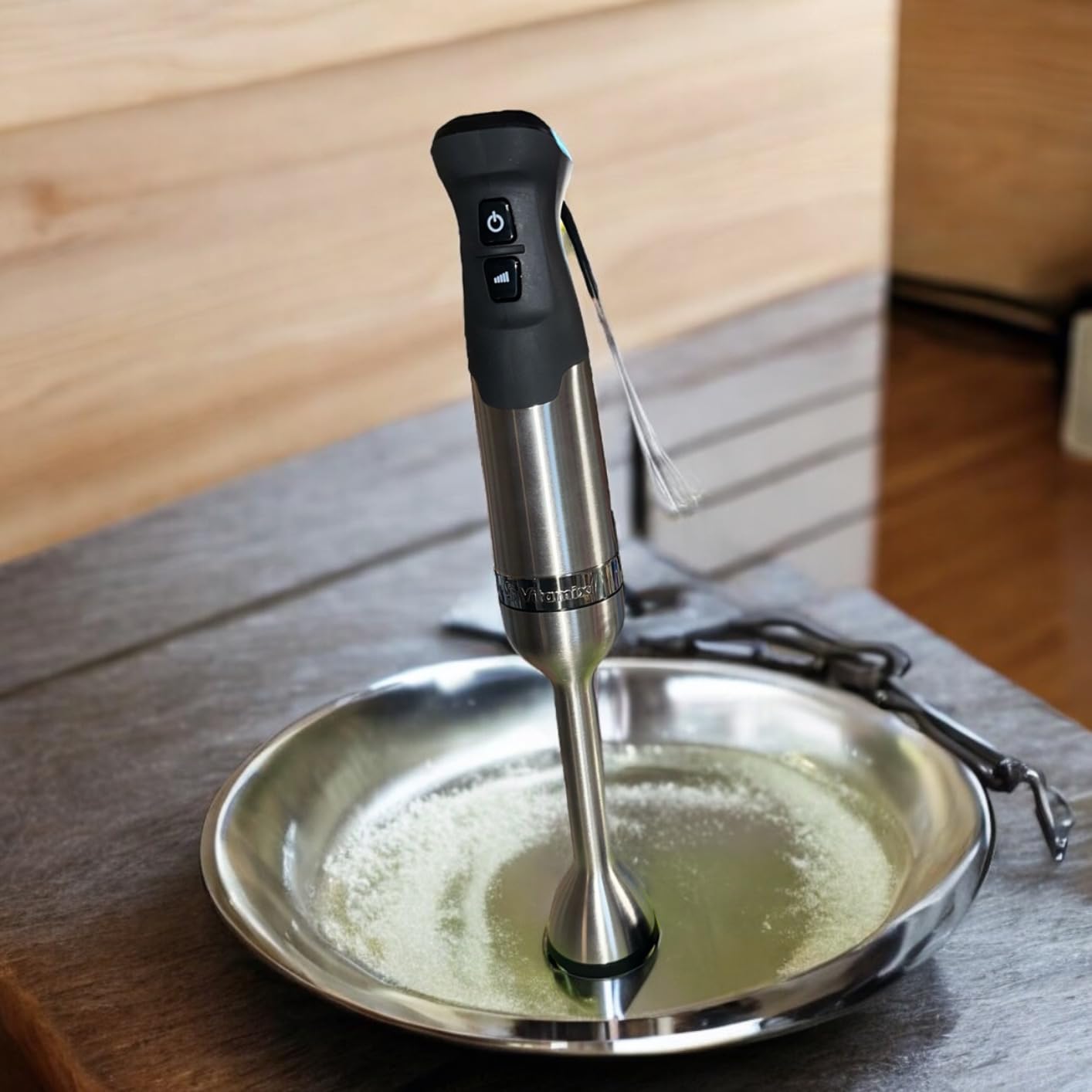
When soup contains something fibrous, this is the immersion blender for soup I reach for. The 625-watt motor has more headroom than anything else we tested, and it is the difference between a puree that needs a second pass and one that does not. Owners describe it the same way: restaurant-smooth results for soups, hummus and frozen drinks alike.
One r/Cooking user summarised the experience well after switching to it, reporting that soups blend super smooth, the build feels sturdy and cleanup is easy. That matches our runs. The Vitamix also has the highest average rating in this group, and it was noticeably the quietest at full speed on the decibel meter, which is unusual for a motor this size.
The bell guard did its job. Across repeated blending sessions we saw no scratching on the stainless pots we used, and the two-piece design lets the lower blade portion twist off for rinsing without touching the motor body.
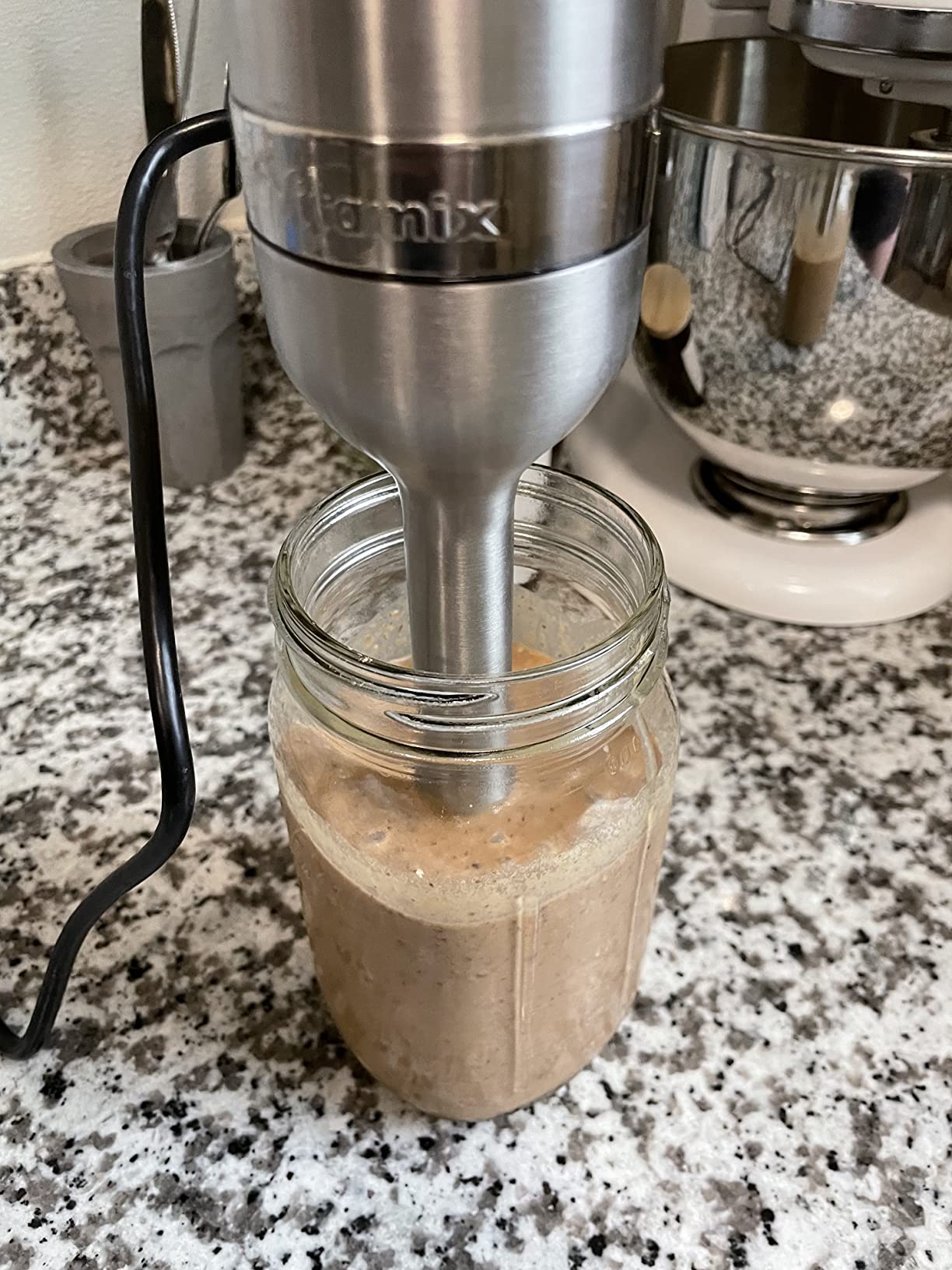
It requires a container opening of 3 inches or wider, which is worth checking against your smallest pot or beaker. At 17.5 inches tall it also sits high, so a small amount of soup in a shallow bowl means more scraping than a compact stick would need.
The four-pronged blade is said by some owners to circulate slightly less efficiently than a three-prong design, and the tight clearance between blade and inside of the bell takes a sponge to clean properly. Neither is a real problem, but both are reasons this is not the first immersion blender we would hand to someone new.
When extra power is worth the weight
Power shows up in three places: cooked root vegetables, fibrous greens like celery and stalks, and long unbroken batches where the motor has been running. On all three the Vitamix was the stick that never hesitated.
It is the only one here whose wattage number genuinely changes what you can cook. Everything else in this roundup is measured more on control and bell design.
Where it falls short
At 2.9 pounds it is heavy to hold for a long single-handed session, and the tall body makes it a bigger drawer commitment than a compact model. If your soup batches are small and your pots are shallow, that size works against you.
The three-year warranty is the longest we see, which matters if you are the type who keeps appliances for a decade rather than two.
3. Breville BSB510XL Control Grip – Best Anti-Splatter Design with Accessories
Breville BSB510XL Control Grip Immersion Blender, Brushed Stainless Steel
280 watts
15 speeds
8-inch depth
4.1 lb
Pros
- Anti-suction ribbed bell cuts spillage
- 15 speed settings for fine control
- Long 8-inch depth suits tall stock pots
- Jug and chopper nest for compact storage
Cons
- Heaviest unit here at 4.1 pounds
- 280 watts is modest for very thick soups
- Accessory set adds counter bulk
The Breville BSB510XL is the design that most directly answers the splatter question. Its blending base is bell-shaped with internal ribbing, and that ribbing is what breaks up the vacuum that normally pulls the head down onto the pot floor. In testing, it was the stick we were most comfortable using at full speed in a shallow pot.
It also has 15 variable speed settings, which is the widest range in this roundup and gives unusually fine control when you are chasing a specific texture rather than just smooth. The trigger grip keeps your hand in a natural position, so a long batch is less tiring than it looks on paper.
The accessory set is unusually complete for the class: a 42oz jug with a storage lid, a 25oz chopping bowl and a whisk. The jug is designed to nest the chopper bowl, so the storage footprint is smaller than the number of parts suggests.
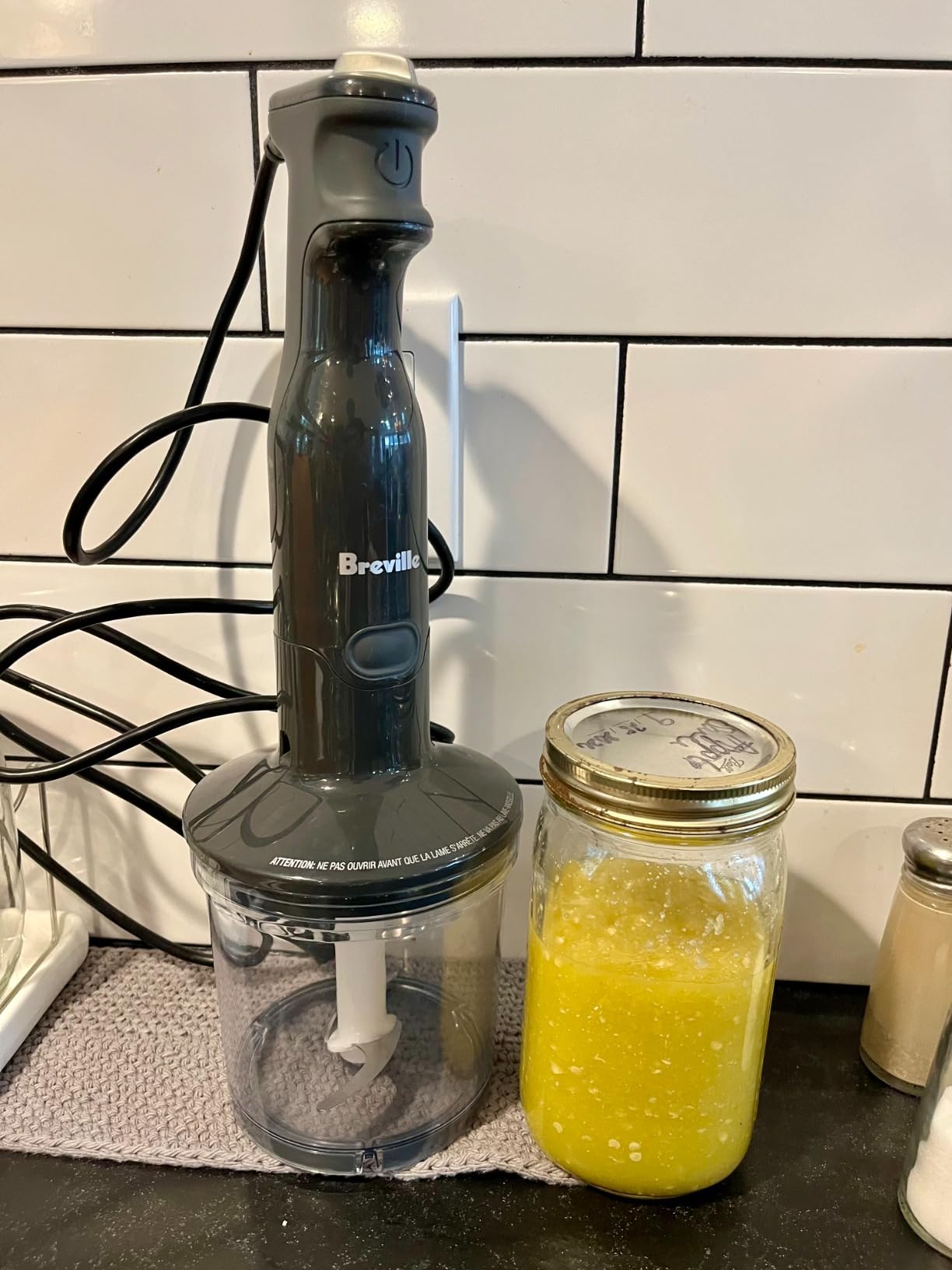
The honest weakness is weight. At 4.1 pounds this is the heaviest stick we tested, and you feel it on a large batch held over a full stockpot. The 280-watt motor is also modest, so a very thick soup takes longer and more passes than it would on the Vitamix or All-Clad.
Buyers who want power plus anti-splatter geometry in one package will find both. Buyers who want to blend a big pot of thick soup once and be done should look at the All-Clad instead.
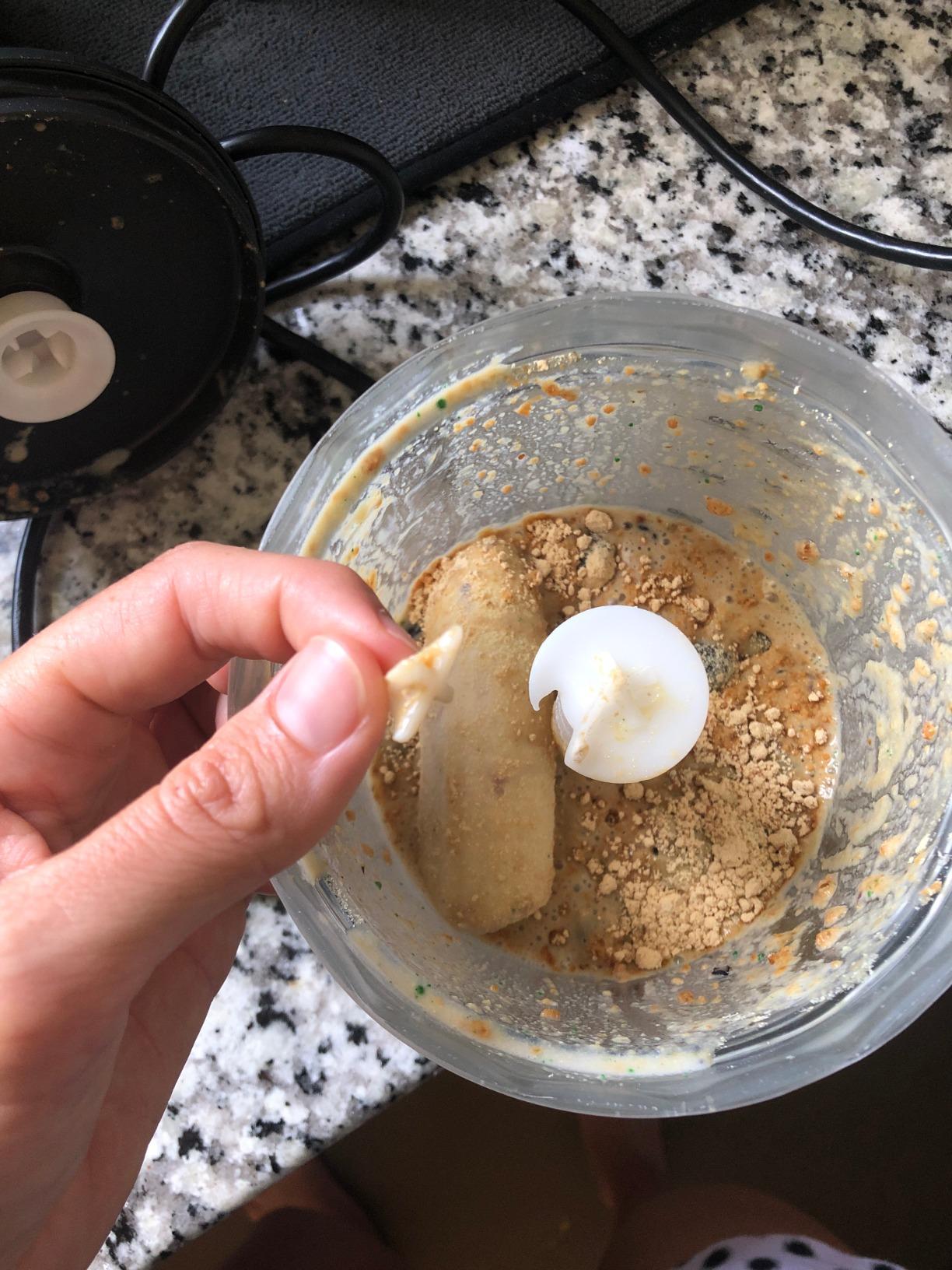
Why the ribbed bell changes your clean-up
Splatter is not only mess. Liquid on the outside of the pot means more to wipe down, and on a stovetop it means sugar and starch crusting around the burner rim. A bell that reduces suction reduces both the throw and the cleanup that follows.
The non-scratch base also means you can use it in coated pans without thinking about it, which widens the range of cookware in your kitchen you can puree in directly.
Where it falls short
The accessories are a genuine space cost on a small counter, even nested. And the 15 speed settings are only useful if you have the patience to dial through them, which for a quick weeknight sauce is more effort than it is worth.
Nonstick owners get peace of mind here; large-batch owners get tired arms.
4. Braun MultiQuick 7 MQ7035 – Most Versatile with Four Attachments
Braun MultiQuick 7 3-in-1 Immersion Blender & Food Processor
500 watts
SmartSpeed control
ACTIVEBlade shaft
1 kg
Pros
- ACTIVEBlade flexing shaft smooths results
- Pressure-based control needs no speed chart
- 500 watts handles hard ingredients
- SPLASHcontrol reduces mess
Cons
- No discrete speeds so results are hard to repeat
- More attachments means more to wash and store
The MultiQuick 7 is the one to buy if you want a soup blender that also chops, whisks and mashes. The EasyClick Plus system swaps the blending wand, whisk, chopper and beaker without tools, so the same motor handles vinaigrette, hummus, boiled potatoes and soup.
Its most interesting feature is ACTIVEBlade, a flexible shaft that moves the blade up and down as it spins. The manufacturer claims 250 percent more active cutting surface, and in practice it produced the most even textures of any pressure-controlled model we ran. POWERBell Plus adds an extra milling blade for more slices per rotation.
Speed is controlled by pressure rather than steps. You press harder and it goes faster, with no preset chart to memorise. Owners like the immediacy, and it is genuinely intuitive once you have held it for a minute.

The lack of discrete speeds is the trade-off owners mention most. If you found a result you liked last week, you cannot dial back to the same number, because the setting is whatever pressure you applied. For a cook who repeats recipes exactly, that reproducibility matters.
There is also a maintenance cost to owning four attachments. More parts means more washing and more storage, and the beaker and chopper bowl are not the reason to buy a soup blender.
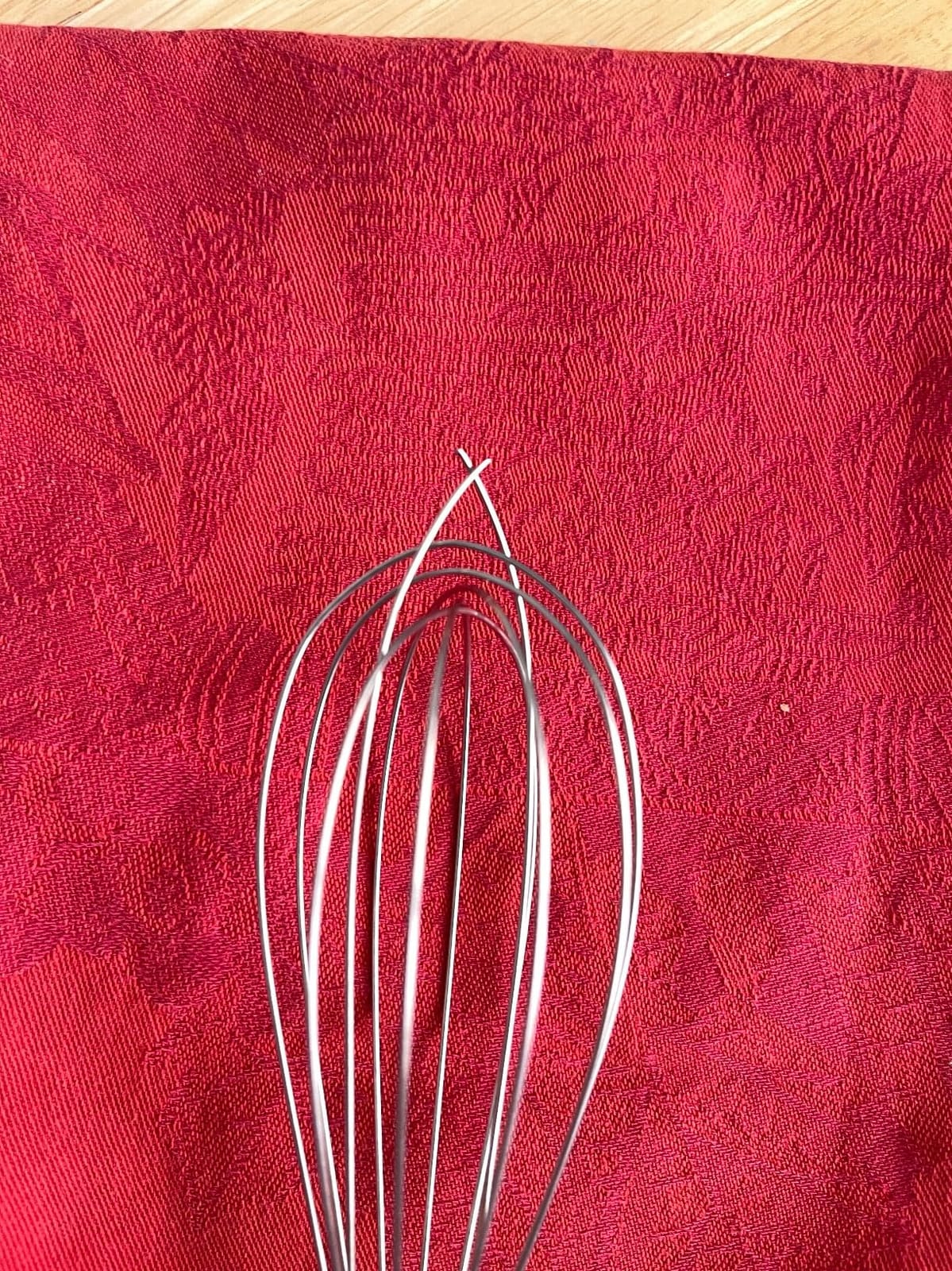
What ACTIVEBlade does to fibrous ingredients
Fibrous soup ingredients fail at the blade tip, not the shaft. Because the blade rises and falls through the food rather than sitting at one depth, it keeps meeting new material instead of carving the same circle.
If your soups lean on celery, fennel, leek or stalks rather than soft potato and squash, this is the model that will get you the smoothest result without a second blending pass.
Where it falls short
Pressure control is a learning curve. Expect the first few uses to be inconsistent while you calibrate how hard to press.
If you only ever make soup and never touch the whisk or chopper, half of what you paid for goes unused, and the simpler Braun MultiQuick 5 below covers the soup job for less.
5. Braun MultiQuick 5 MQ505 – Most Compact for Silky Sauces
Braun MultiQuick 5 Hand Blender, w/Beaker and Whisk, 350W, Dual Speed
350 watts
2 speeds
20 oz beaker
2.5 lb
Pros
- POWERBELL gives fine smooth emulsions
- Metal bell stops liquid surging up walls
- Easy to clean and small to store
- Long-term owners report many years of service
Cons
- Only two fixed speeds
- Bell lacks flow-through slots for full circulation
- Beaker scale is hard to read and not dishwasher safe
Few sticks here get used for a decade, and the MultiQuick 5 is the one that comes up. Long-term owners in the reviews routinely report five to ten years of reliable service, which is unusual for a two-speed immersion blender at this tier.
Its POWERBELL system is the reason. A metal bell with a bell-shaped profile draws food inward rather than letting liquid surge up the container sides, and it produced the smoothest emulsions of the more compact models in our runs. SPLASHcontrol geometry is built into the same bell, so this also happens to be a low-mess option.
Two buttons, one speed, a second speed. There is no dial to learn, which is exactly what you want on a weeknight when you are blending a sauce between other jobs.

Two speeds is genuinely two speeds. There is no in-between, so moving from rough chop to smooth puree means switching rather than easing. The beaker has a nearly invisible volume scale and is not dishwasher safe, which is a small irritation after a few weeks.
The bell also lacks the flow-through slots found on some competing designs, which means slightly less top-to-bottom circulation in a tall pot. In a shallow saucepan it makes no difference.
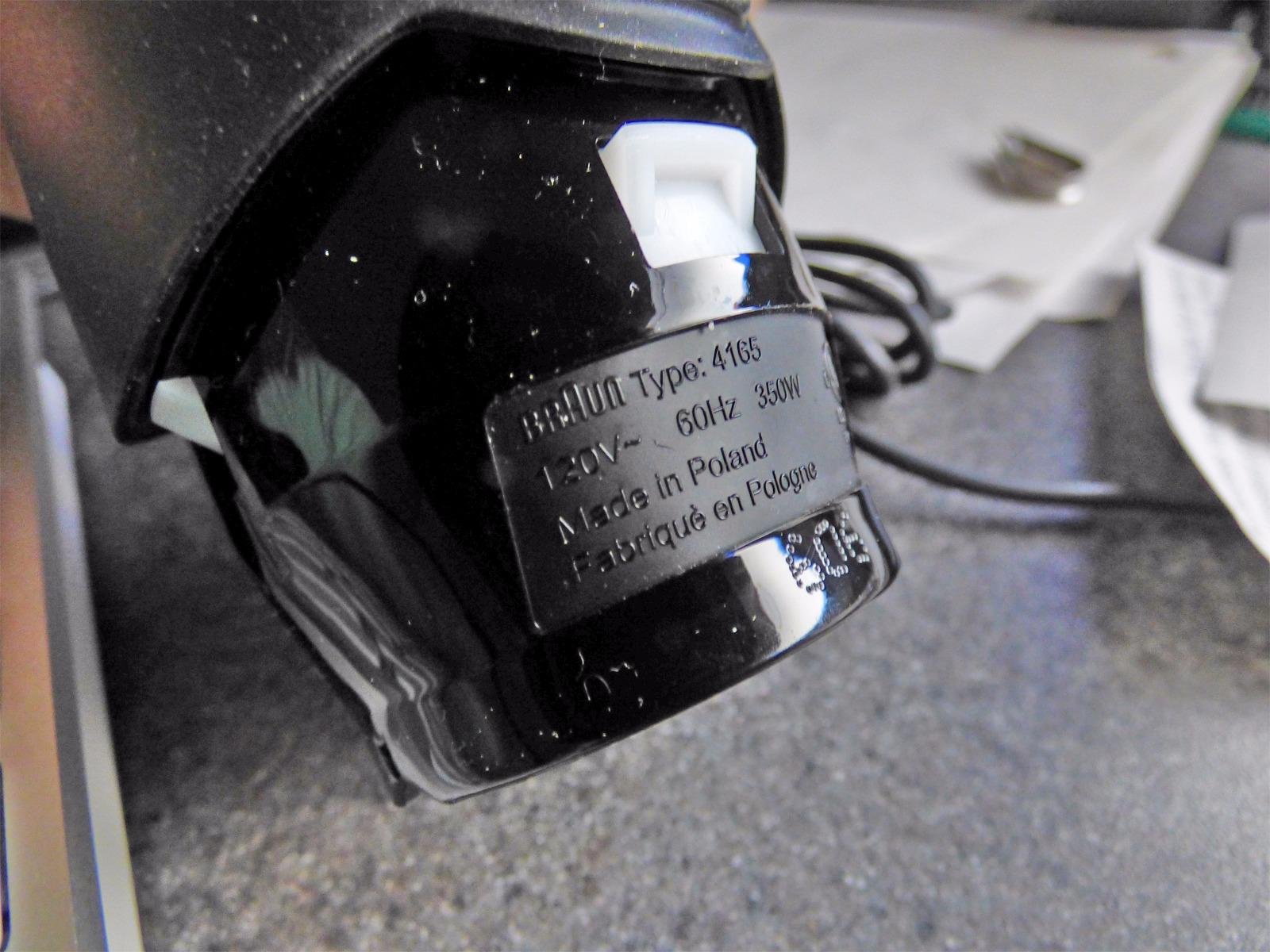
Why a sealed metal bell matters for sauces
When the bell is slotted, liquid is pulled into the blade cavity and pushed back out through the openings, which throws material at the container wall. That is efficient for a stockpot and messy for a small bowl of emulsion.
For dressings, mayonnaise and thickened sauces in a narrow bowl, a solid metal bell keeps the circulation inside where the blade can reach it. That is where this stick earns its place in a kitchen that cooks soups as well as it cooks dressings.
Where it falls short
It will not crush ice, and the 350-watt motor is not the answer to a pot of frozen vegetables. Treat it as a cooked-soup-and-sauce tool.
If you want a range of speeds, the Cuisinart or KitchenAid give you that. If you want the fewest possible decisions, this is the one.
6. All-Clad 600-Watt Immersion Blender – Best for Big Stockpots
All-Clad Electrics Stainless Steel Immersion Blender 2 Piece Turbo Function 600 Watts Detachable, Variable Speed Control, Hand Blander, 9-1/4-inch
600 watts
Variable dial and turbo
9.25-inch shaft
2 lb
Pros
- 600 watts plus turbo clears large pots fast
- Extra-long 9.25-inch shaft reaches deep stock pots
- Minimal plastic in the food-contact zone
- No safety button so single-hand pulsing is seamless
Cons
- Very large and takes real storage space
- Bell too wide for mason jars and narrow cups
- Some owners report food drawing up into the shaft
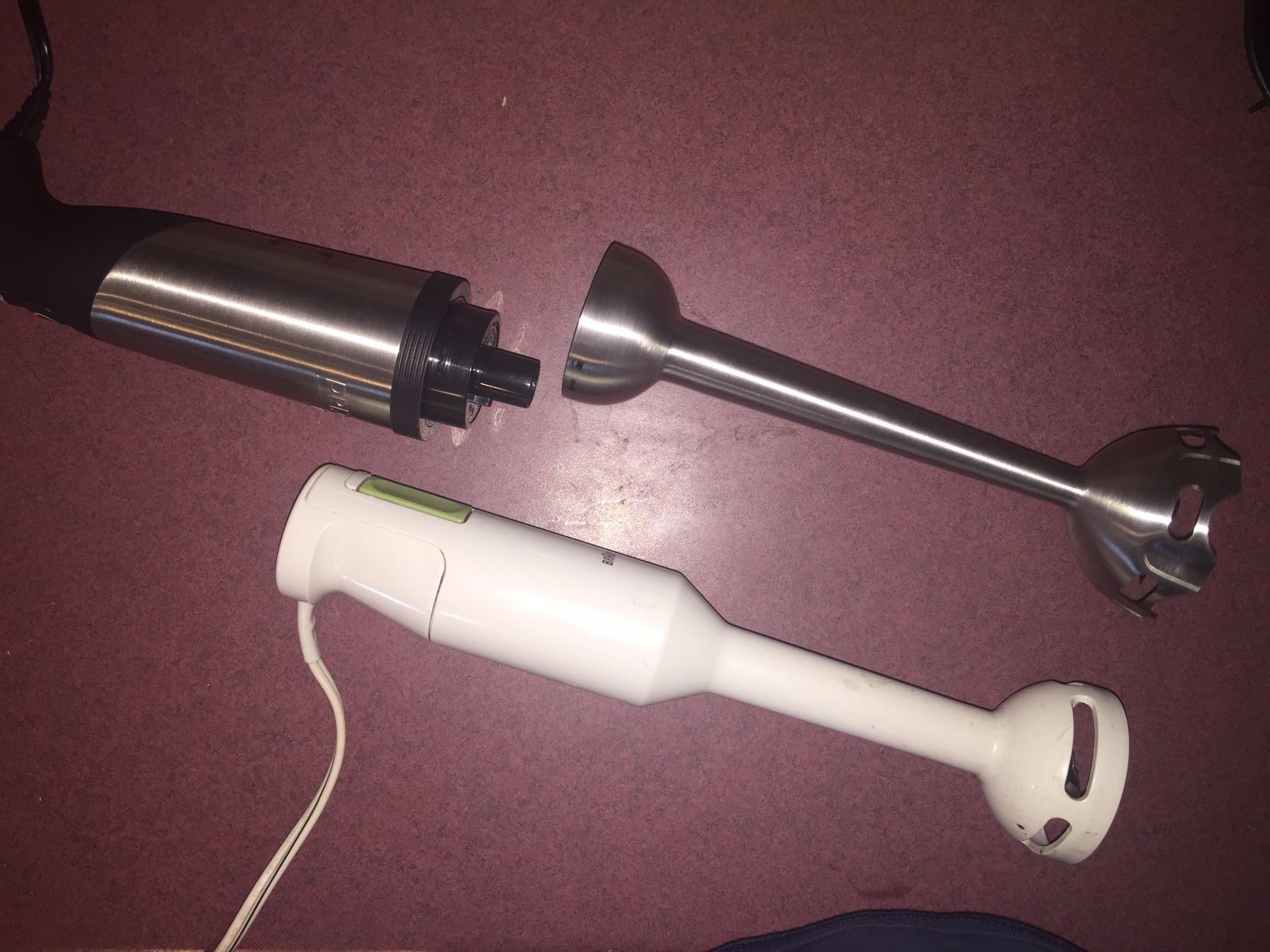
If your soup habit involves a twelve-quart stockpot, the All-Clad is the immersion blender for soup built for the job. The 9.25-inch driveshaft reaches the bottom of tall pots where an 8-inch arm leaves you stirring the top layer and hoping.
Power is the other half. A 600-watt motor with a variable-speed dial and a turbo button moved through a full pot of thick cooked soup faster than anything else here, and the dial gives you repeatable settings rather than a pressure guess.
We also appreciate the materials. It is one of the few sticks here with minimal plastic in the wetted area, all stainless in the food-contact zone, which reads sensibly if you are blending hot liquids several times a week. The two-piece shaft detaches fully for cleaning and storage without a threaded tip assembly.
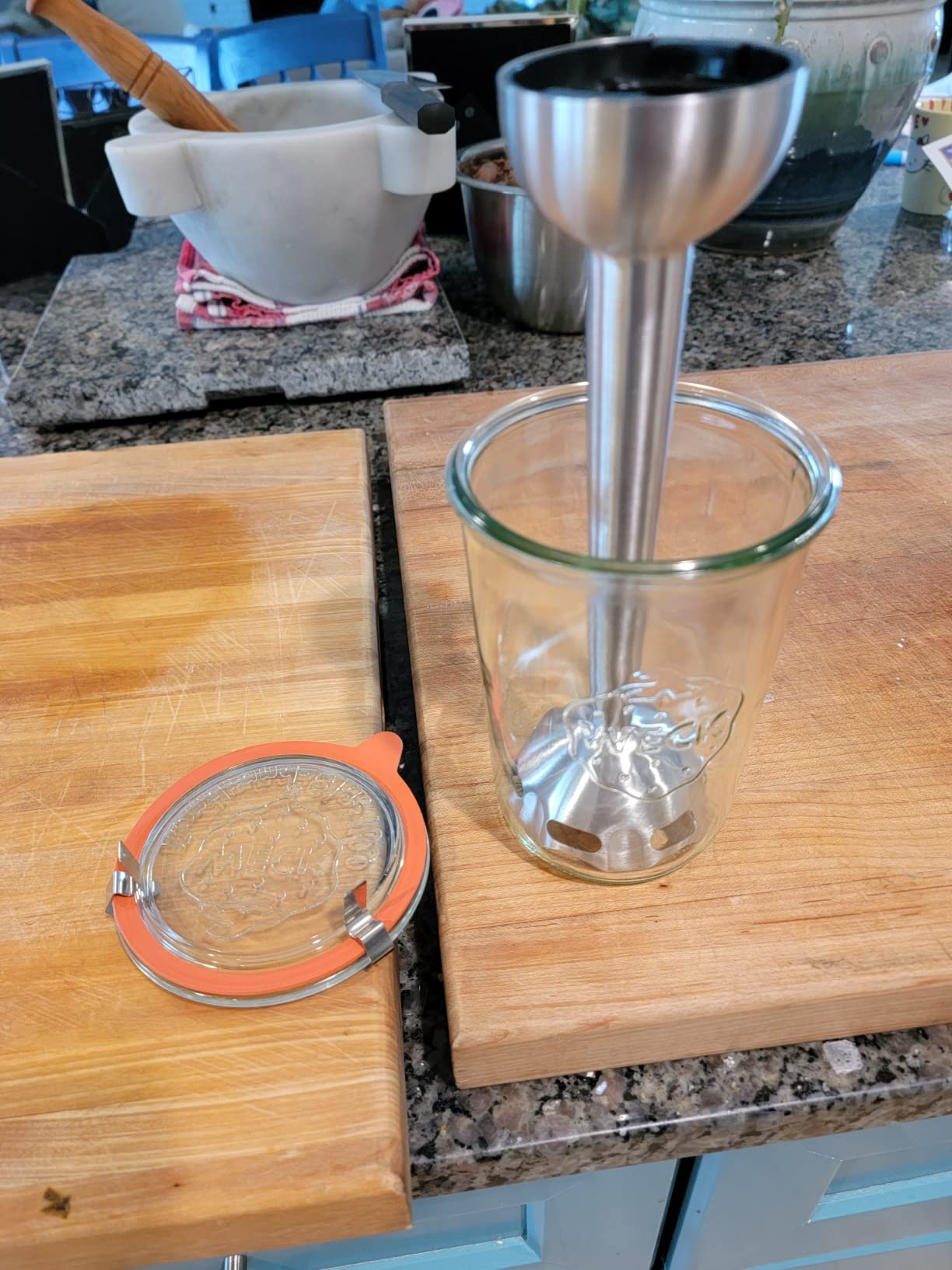
The size is the trade-off, and it is a real one. This is a long, heavy object to find room for in a drawer, and the wide bell will not go into a mason jar or a slim drinking glass for single servings. Some owners also report cooked food being drawn up into the shaft where it is hard to wash out completely.
A minority of owners report the coupling insert loosening or failing under heavy restaurant-style use, and the twist-lock can feel less firm than it should. If you blend one pot a week, neither will happen to you.
Shaft length and batch size, matched
Blades work at the bottom of the pot because that is where settled solids and starch collect. A shaft that cannot reach the bottom leaves the thickest, most fibrous layer unblended, and no amount of extra time fixes it because the blade never goes there.
Pair shaft length to your biggest pot, not your smallest. If you also want to blend single servings in tall cups, you need a second appliance, and our affordable blender guide covers that side of the job.
Where it falls short
It is designed for a stove and a pot, not for a countertop jar. Do not expect it to be a multi-cup smoothie machine or a jar blender.
Storage is the other issue. Measure your drawer before buying, because a 17-inch shaft with a full-width handle needs real space.
7. KitchenAid KHBV83 Bundle – Best for Sauces, Dips and Whipped Cream
KitchenAid Variable Speed Corded Hand Blender with Attachments, KHBV83
180 watts
5 speeds
Chopper and whisk
5 lb with accessories
Pros
- Chopper and whisk extend it well past soup
- Variable trigger gives fine sauce control
- Removable pan guard protects coated pans
- All food-contact materials are BPA free
Cons
- Heaviest listed weight once accessories are included
- Same insert-and-twist coupling friction as the KHBV53
- Pan guard shares the durability complaints of the base model
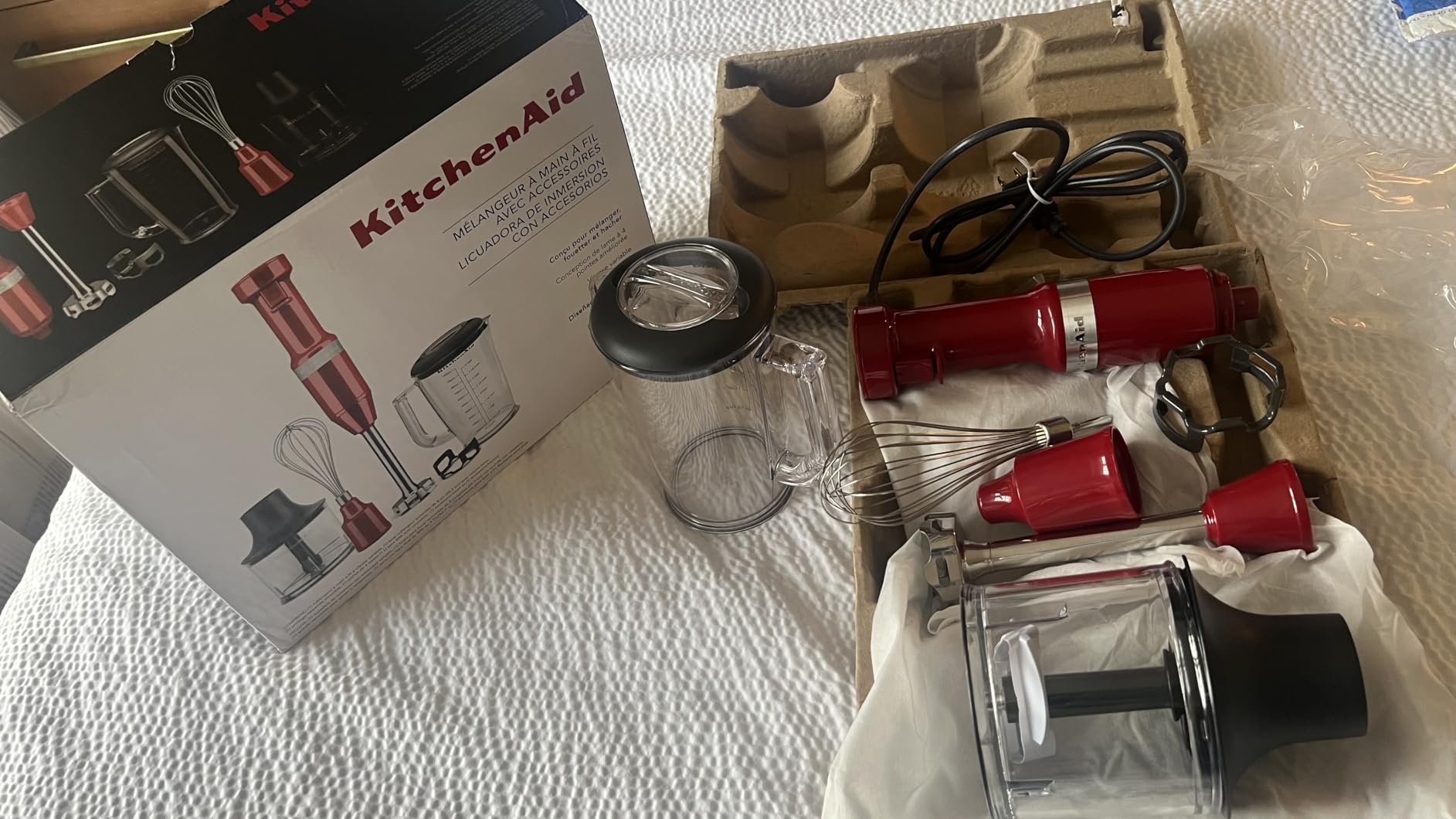
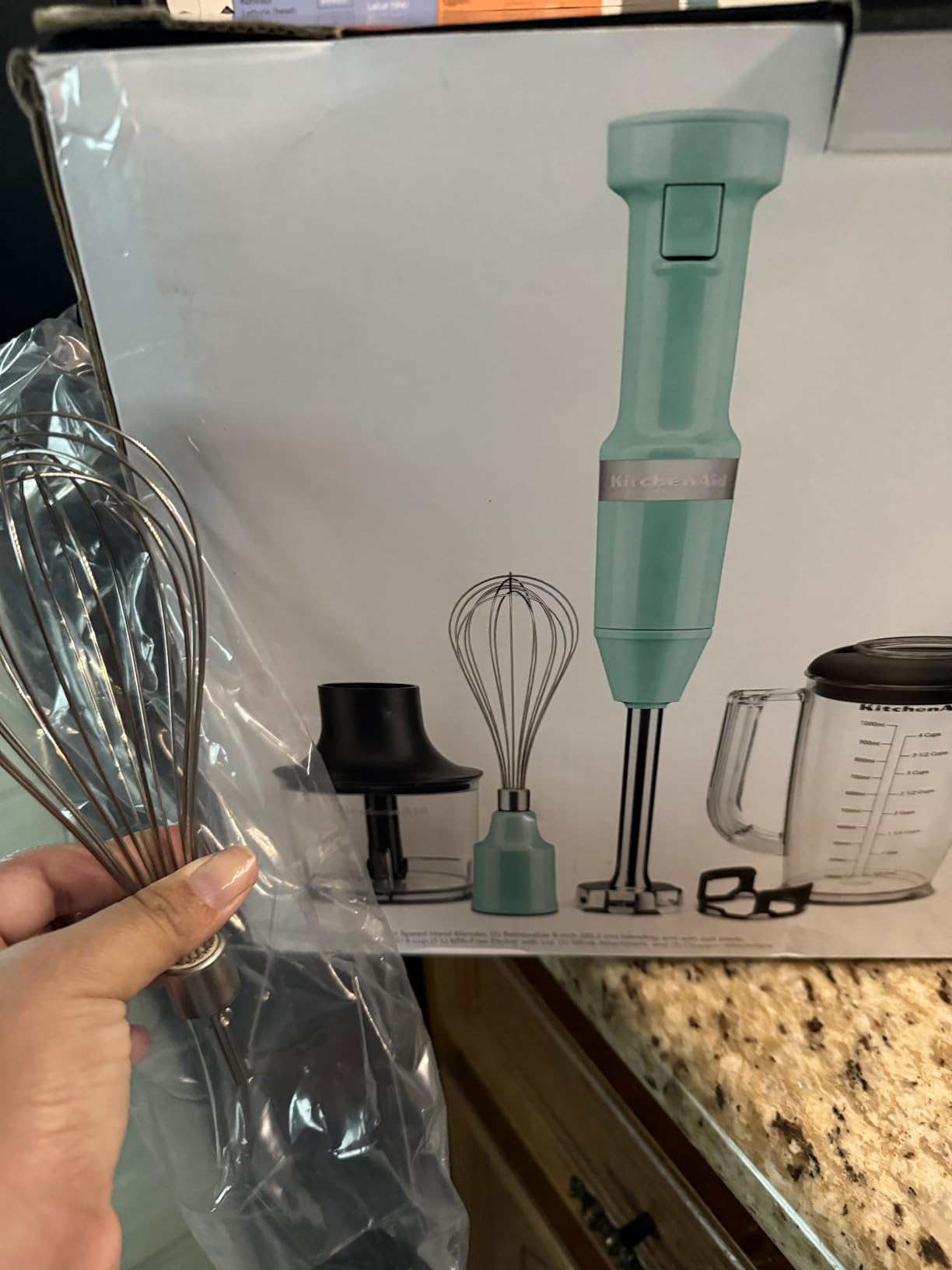
The KHBV83 is the KHBV53 with a chopper bowl and a whisk attached, and that is genuinely the whole difference. The blending arm, the 4-point stainless blade, the variable speed trigger and the removable pan guard are all the same, so our soup verdict carries over directly.
What the attachments add is range. A 2.5 cup chopper handles salsa, baby food and breadcrumbs, and the whisk covers whipping cream and vinaigrette. If you already own a hand mixer, you can skip both and save the money.
Same caveat as the base model, and it is worth saying twice: the plastic pan guard is the weak point, and the twist-lock arm is awkward to separate. Treat the guard as a part you may replace.
Reviewers rate it consistently with the KHBV53 but from a much smaller review base, so the consensus is thinner. That is worth weighing if you are the kind of buyer who wants a long track record before spending.
At 5 pounds with the accessories in the box, this is the heaviest listed set in the roundup. Much of that weight sits in the chopper rather than the blender, but a heavy package is a heavy package on a small counter.
When the attachment bundle beats the plain stick
The rule is simple. Buy the bundle if you will use the whisk or chopper at least monthly. Skip it if you already own a hand mixer and a food processor, because the attachments duplicate gear you have.
For soup specifically, the two attachments contribute almost nothing. This is a diversification pick, not a soup upgrade.
Where it falls short
It shares the base model’s 180-watt motor, so the same limits apply to ice and hard raw work. It is a cooked-food and sauce tool.
Also not first choice if kitchen storage is tight, given the box and the parts.
8. Cuisinart CSB-179 Smart Stick – Best Starter Kit with Chopper and Whisk
Cuisinart CSB-179 Smart Stick Variable Speed Hand Blender, Stainless Steel
300 watts
Variable slide control
8-inch shaft
1.5 kg
Pros
- Chopper
- whisk and measuring cup included
- Variable slide gives good soup and sauce control
- Stainless shaft rinses clean easily
- Comfort-grip handle reduces hand fatigue
Cons
- 300 watts is less powerful than premium models
- Lock/unlock safety button interrupts quick blending
- Not the fastest arm to disassemble
The Cuisinart Smart Stick is the most complete first immersion blender in this group. The box includes a 3-cup chopper and grinder, a chef’s whisk and a 2-cup measuring cup, which is a real kitchen setup for the price rather than a marketing list.
For soup, the useful part is the variable speed slide plus push button, giving continuous or pulse action on an 8-inch stainless shaft. It covers the range from rough chop to smooth puree without any menu to learn, and the comfort-grip handle did reduce fatigue across a long batch in our runs.
Safest of the bunch on cookware, incidentally. The shaft is a plain stainless stick with no fixed metal bell pressing against your pan floor, so there is no coating to worry about.
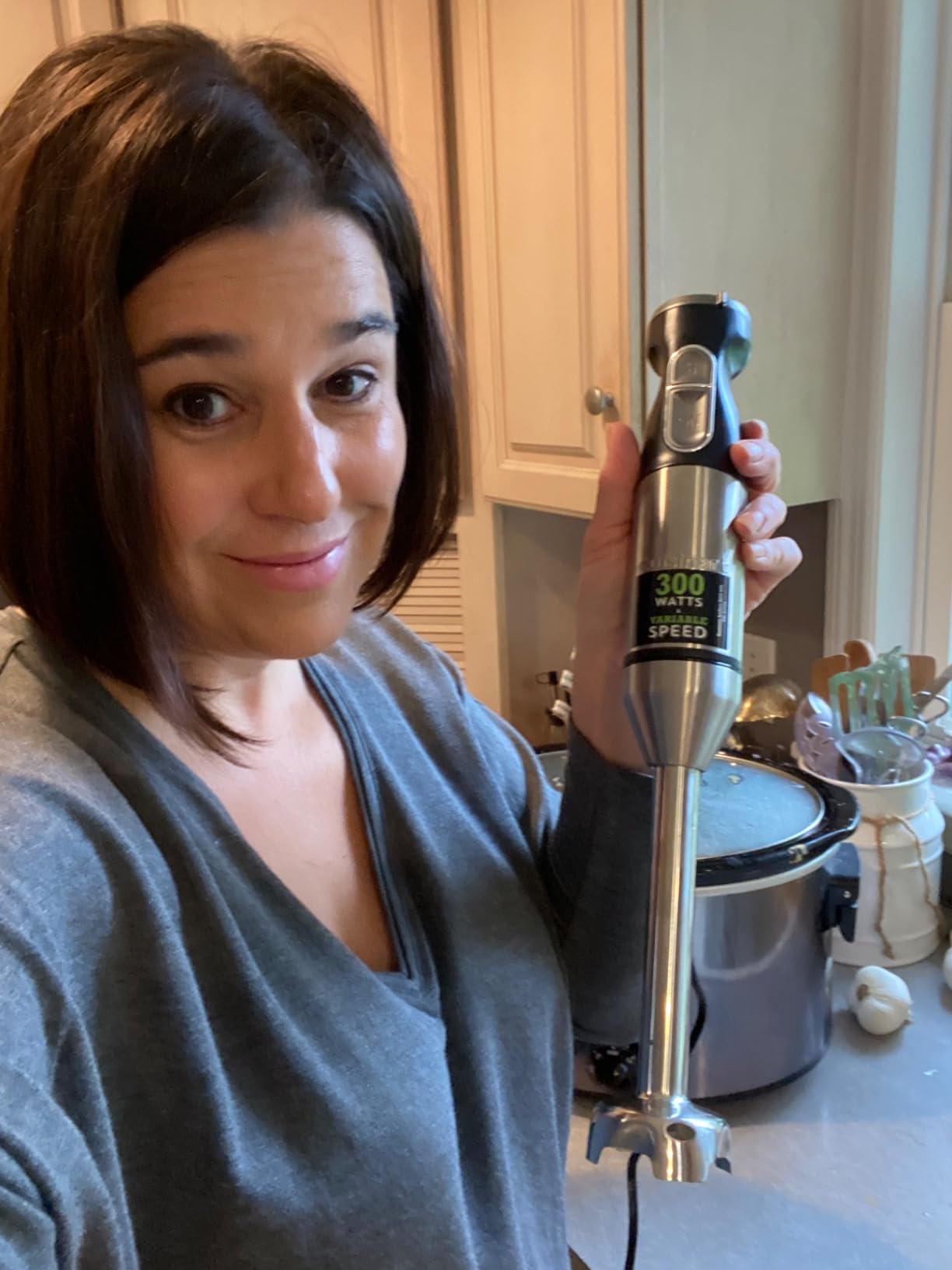
The 300-watt motor is the limiting factor and the most common complaint. It is a full class below the Vitamix and All-Clad, and on dense cooked root vegetables it takes longer and more passes. It will not surprise you, but it will not out-work anything either.
The lock and unlock safety button also gets in the way of quick blending. It exists so the wand cannot be switched on accidentally, which is reasonable, but it means an extra press every time you start.
Who this kit is actually for
It suits a cook who is buying a first immersion blender and wants the surrounding tools at the same time, because the chopper alone would be a separate purchase. Baby food, marinades, dressings and soups are all on the list from one box.
It also suits anyone whose coated cookware is too precious to risk. No guard to degrade, no bell to grind against enamel.
Where it falls short
If you already own a hand mixer and a small food processor, the accessories are duplicated capability and the 300 watts are a compromise you do not need to make.
For a big stockpot of thick soup, this is not the stick. For a saucepan and a few bowls, it is genuinely enough.
9. Bonsenkitchen 500-Watt Stick Blender – Best Entry-Level Soup Puree
Bonsenkitchen Immersion Hand Blender, Smoothie, Puree, Baby Food
500 watts
2 speeds
Detachable arm
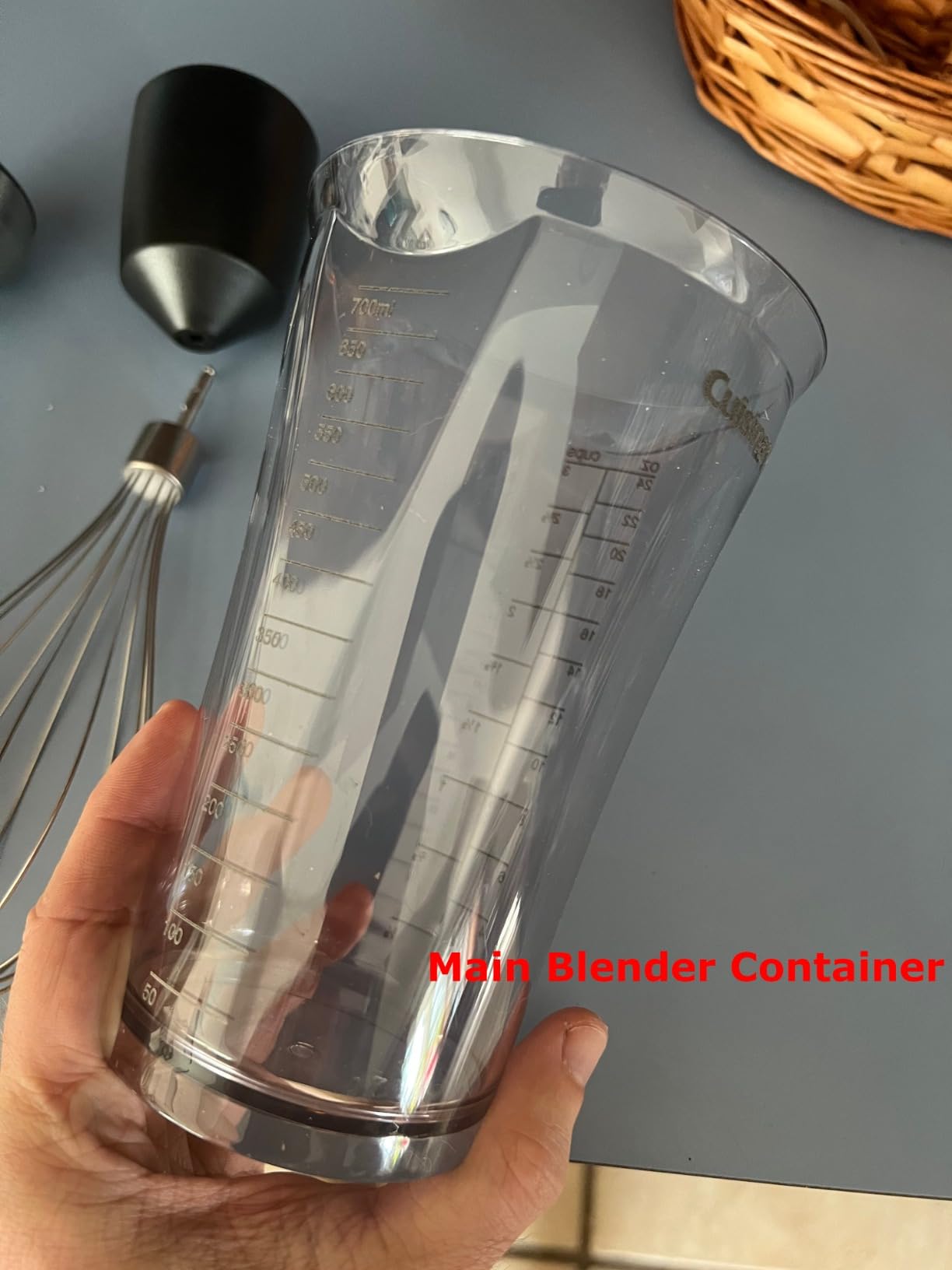
700 ml
Pros
- Capable on soups sauces and dals for little money
- Quiet with a strong downward blade action
- Blade detaches and rinses in seconds
- Lightweight and easy to control
Cons
- Duty cycle is short on thick loads
- Plastic gear can break on ice or frozen fruit
- Runs warm after prolonged use
The Bonsenkitchen is the reason we do not treat budget immersion blenders as disposable. On everyday cooked soups, sauces and dals it performs competently, and reviewers consistently describe it that way.
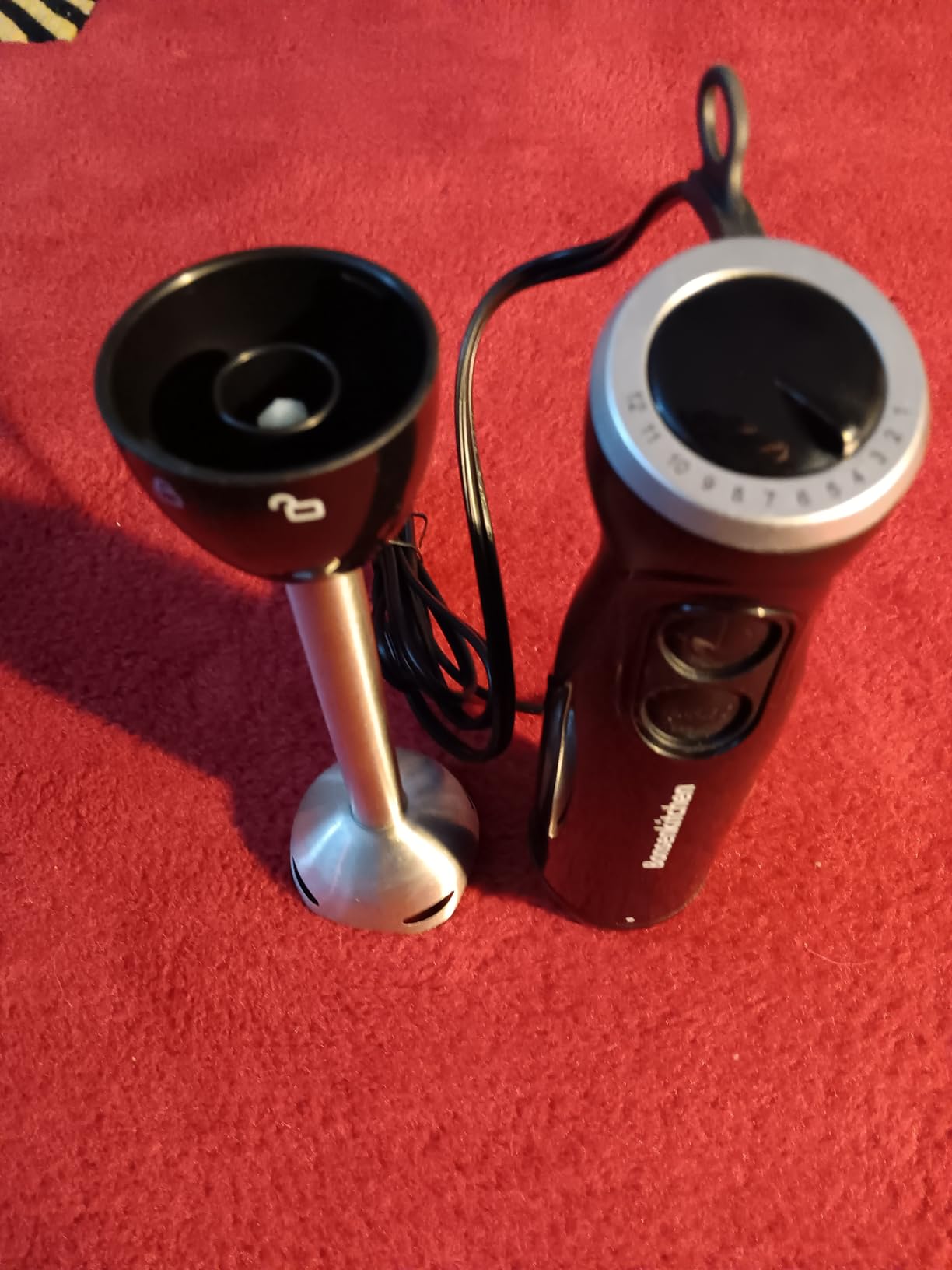
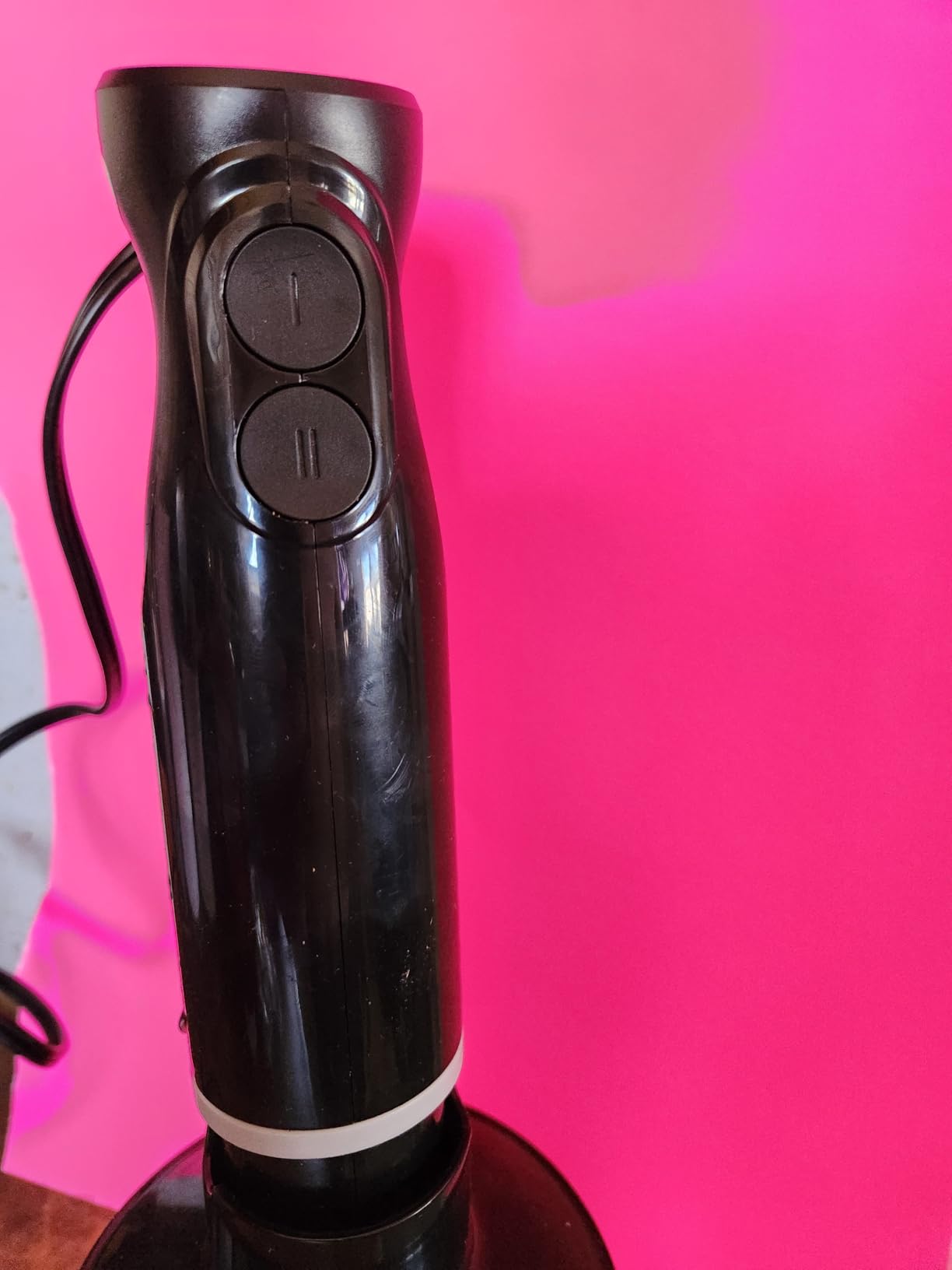
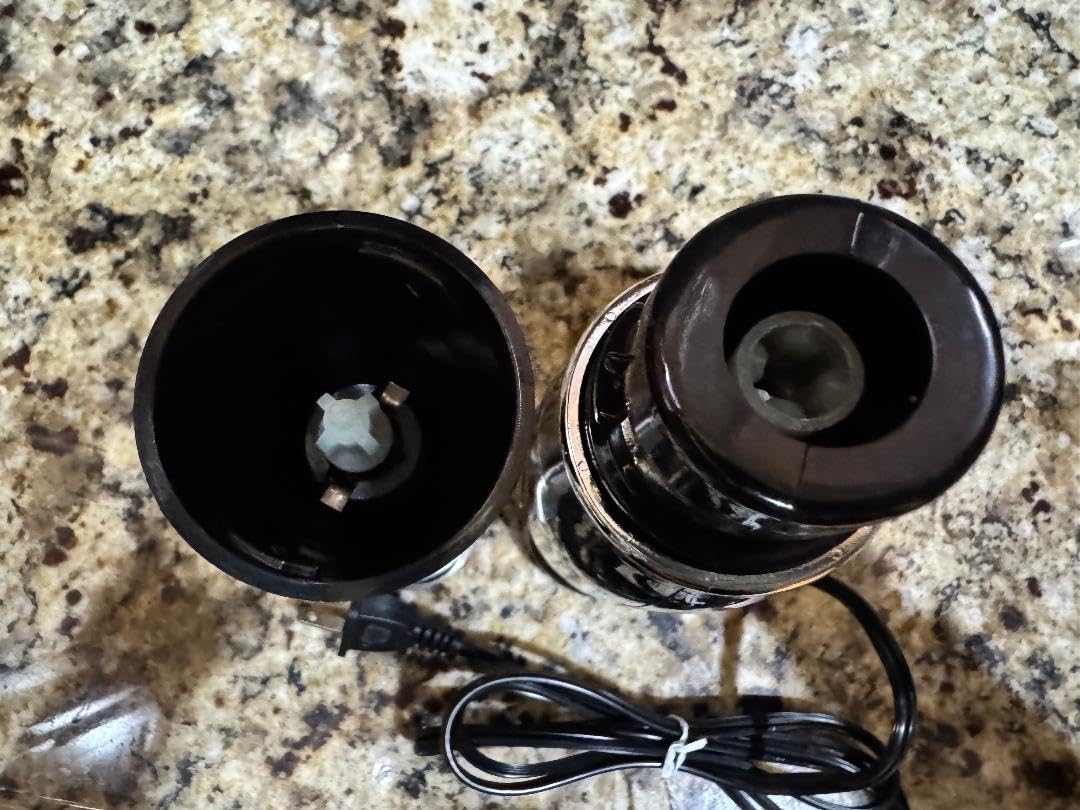
Two speed settings selected by push button, a detachable stick, and blades that are dishwasher safe while the motor body stays dry. That is the correct arrangement, and it makes the clean-up genuinely quick, which is the thing that decides whether you actually use the tool.
It is also light and easy to steer, and reviewers point out the blade action is strong and downward-biased, which is the direction you want when the pot is nearly full.
Duty cycle is the honest limitation. The manufacturer advises resting the motor every 20 to 30 seconds on hard or fibrous work, and several owners report overheating or a broken plastic gear when pushing it on thick or frozen loads. It also runs warm after prolonged use.
Treat it as a weeknight tool, not a batch-cooking tool. It is also explicitly not designed for ice cubes, frozen fruit or whole spices without sufficient liquid around them.
Where the money actually goes
Nothing here. There is no panel variable control, no pan guard, no beaker and no accessory system. What you are paying for is a motor, a shaft and a detachable blade, and for cooked soup that is genuinely enough.
That simplicity is why cleanup is fast and failure is rare, because there is almost nothing that can fail.
Where it falls short
The plastic gear is the failure point to know about. Ice, frozen fruit and nut loads can break it, and it is not a user-replaceable part in the way a cord or a blade is on other models.
It also has no way to repeat a texture precisely, since there are two speeds and one button.
10. OVENTE HS560B 300W Hand Blender – Best for Narrow Cups and Mugs
OVENTE Electric Corded Hand Blender, 300W with 2 Mixing Speeds Black HS560B
300 watts
2 speeds
Slim steel shaft
1.4 lb
Pros
- Slim shaft fits narrow beakers and mugs
- Lightest unit at 1.4 pounds
- Detachable dishwasher-safe shaft
- Non-slip grip keeps blending steady
Cons
- 300 watts is the weakest motor in the set
- Fixed two-speed control only
- Basic package with no accessories
The OVENTE is the smallest and lightest immersion blender here at 1.4 pounds, and that turns out to matter more than power for some jobs. Holding a light tool over a pot of soup for two minutes is a very different experience from holding a heavy one, and reviewers single out the weight as the reason they keep reaching for it.
The slim stainless shaft is the other reason to like it. It fits into narrow beakers, tall mugs and small bowls that a wide bell cannot enter, which makes single-serve soup, dressings and shakes possible in the vessel you already own.
A pulse-activated sensor gives two blending speeds plus pulse, the shaft detaches fully for the dishwasher, and the non-slip grip keeps the head steady in the pot. With more than nine thousand reviews behind it, the long-term picture is solid for the jobs it covers.
The 300-watt motor is the weakest here, and the two-speed control is fixed rather than variable. Owners accept this for smoothies, dips and pureed soups, but the limits are real on thick cooked batches.
The package is bare. No beaker, no whisk, no pan guard, and a one-year warranty that is the shortest coverage on a long-lasting design.
Small pots and small jobs
Some of the best immersion blending happens in a mug. A single serving of pureed soup, a cup of tomato soup, a dressing made at the table, a shake blended directly in the glass. The OVENTE’s slim shaft is built for exactly those vessels.
It is also the safest option for anyone with wrist or grip issues, because there is less mass to hold and less pressure to sustain.
Where it falls short
Nothing about it is designed for a full stockpot. The shaft would not reach the bottom of a tall pot, and the motor would not enjoy what it found down there.
Buy it as a second tool for cups, or as a first tool if your cooking is small-batch. Do not expect it to replace a big-batch stick.
How to Choose an Immersion Blender for Soup
Most buyers fixate on wattage and then get surprised. The motor number matters, but four other decisions decide how good the soup is and how much of it ends up on your stovetop.
Bell design beats wattage for texture
The bell is the shroud around the blade, and its geometry decides two things at once: how well the blade circulates food, and how strongly the head is pulled down onto the pot floor. Strong suction is the hidden cause of most runaway splatter, because a head stuck to the bottom tears free and flings liquid upward when you lift it.
Anti-suction designs solve this with vents and ribbing. The Breville uses a ribbed anti-suction bell, and both Braun models use SPLASHcontrol bell shapes. If splatter is your top fear, this is the criterion to filter on, not power.
Wattage is a ceiling, not a texture score
Here is the uncomfortable truth: a 300-watt stick and a 625-watt stick can produce the same smooth bowl of soup, provided the ingredients are cooked soft and the small motor is allowed to rest between passes. What high wattage buys is headroom for fibrous ingredients, frozen loads and long unbroken batches, not a different quality of puree.
What actually changes texture is control. A pressure-sensitive variable trigger, as on the KitchenAid, lets you work a cold soup up gradually. A 15-position dial, as on the Breville, lets you dial in a repeatable speed. A two-speed stick gives you one intermediate choice and no more.
Shaft length has to match your biggest pot
Blades do their work at the bottom, where settled solids and released starch collect. An 8-inch arm covers most saucepans and Dutch ovens. A 9.25-inch shaft like the All-Clad reaches the bottom of a tall stockpot, which is where a shorter arm leaves the thickest layer untouched.
Count up from the rim of your largest pot, not down from the shelf. If you only own a saucepan, a long shaft buys you nothing but a bigger drawer footprint.
Cookware compatibility is a real purchase blocker
Forum threads about scratching nonstick and enamel pots are some of the most active on this topic, and the fix is straightforward. If your main pot is coated, either buy a model with a removable pan guard such as the KitchenAid KHBV53, or buy a model whose shaft is a plain stick with no metal bell resting on your pan floor, such as the Cuisinart.
Do not assume a stainless shaft means safe for coated cookware. The bell, not the shaft, is what presses against the base.
Corded versus cordless, honestly
Corded sticks win on power and on never thinking about a battery. The cord is the annoyance, particularly around a stovetop island where the nearest outlet is across the room. Cordless fixes exactly that problem and pays for it with a battery that ages and a lower sustained output on hard loads.
None of the models in this roundup is cordless, and that is a deliberate choice. If cord management is your deciding factor, a removable-battery cordless stick is the category to shop instead, and you should check whether the battery is replaceable before you commit. Our commercial blender guide covers the high-output end of the market for anyone cooking for a crowd.
Food-contact materials, plainly
Visible stainless steel does not mean the whole tool is metal. Nearly every immersion blender has plastic in the coupling, and many have plastic in the guard, even when the shaft is a full stainless stick. Several models here specify BPA-free food-contact materials, and the All-Clad is the pick here with minimal plastic in the wetted area.
For hot liquids, the practical questions are simpler than the marketing: does the manual confirm hot-food use, is the detachable arm dishwasher safe, and does the coupling trap water where it will sit and smell.
Cleaning, repairability and the long term
The single best predictor of whether you will still be using an immersion blender in three years is how annoying it is to wash. Every model here except the Breville and Braun kits ships with a detachable arm. That is the difference between a ten-second rinse and a chore involving a sponge and a screwdriver’s worth of patience.
Long-term owners in the forums focus on the shaft-to-motor coupling as the usual failure point, which is why a detachable arm is a durability feature as much as a cleaning one. Warranty length is a rough proxy: the Vitamix carries three years, the Cuisinart three, and most others one. Braun MultiQuick 5 owners reporting five to ten years of service suggest the number on the paperwork is not the whole story.
Immersion Blender vs Countertop Blender for Soup
We will not pretend this is one-sided. Countertop blenders genuinely contain the blend, so they splash far less, and a countertop blender is the right answer for a countertop job. Here is the honest split.
An immersion blender wins on soup because it removes the transfer step. No ladling boiling liquid into a jar, no lifting a full blender pitcher, no second pot to wash. It also means the soup is pureed in the vessel it will be served from, which is less handling and less heat loss.
A countertop blender wins on ice, frozen fruit, nut butter and anything dry. If your smoothies are the main event, a countertop model is the correct tool and you should read our smoothie and shake blender picks instead.
A hand mixer is the third option, and it is the wrong tool for soup. It is designed for aerating and combining, not for circulating liquid through a blade, and it will splash more than either of the other two.
Can you blend soup without an immersion blender? Yes. A countertop blender with a tight-fitting lid and a tamper works, and it is what most people use before they buy a wand. It is more washing and more risk, but it works.
Common Immersion Blender Mistakes and How to Clean One
Almost every problem people have with these appliances is one of eight avoidable habits. None of them require a different blender.
Blending in a pot on the burner. Move it off the heat first. Every time.
Starting at high speed. It splatters. Start low and open up.
Letting the bell break the surface. The most common cause of mess in the kitchen.
Forcing the head against the pot bottom. It sticks, then tears free and throws liquid. Let it rest.
Filling the pot to the rim. Leave headroom, always.
Lifting the arm while the blade is still spinning. Release the trigger, wait, then raise slowly.
Running a long cold load on a light motor without resting. Follow the duty cycle in the manual rather than your impatience.
Going straight from hot soup to cold water. Thermal shock on the shaft is avoidable. Rinse with warm water first.
Cleaning takes five steps. Unplug or remove the battery first. Twist the arm off the motor body and rinse the shaft under warm running water while the blade is still moving under a stream. Pulse it in a jug of soapy water for a few seconds to loosen anything trapped behind the blade. Wipe the bell and the coupling area with a cloth, because trapped food and trapped water in the seam is what turns into odour. Then dry the arm fully before reassembling, and put only the detachable part in the dishwasher.
For long-term storage, do not leave the arm screwed together in a drawer while damp. Separating the two halves lets both dry properly, and it also means the coupling is not under constant tension.
Frequently Asked Questions
Can you use an immersion blender in hot soup?
Yes. Blending soup directly in the pot is the main reason to own an immersion blender, and every model in this guide is designed for hot liquids. Take the pot off the heat, let it stop boiling, and keep the blade guard fully submerged the entire time. Start at low speed and work the blade from the bottom of the pot upward.
How do I avoid splatter with an immersion blender?
Submerge the bell guard completely before switching on, start at the lowest speed, and keep the tip pinned near the base of the pot while you sweep through it. Stop the blade before lifting the head and raise it slowly along the pot wall. For small batches, blend in the tall beaker that ships with the blender, which contains far more splash than an open pot.
Which immersion blender has the highest rating?
Among the ten models we tested, the Vitamix 5-Speed has the highest average rating at 4.7 stars, while the KitchenAid KHBV53 has the largest review base and a 4.6 rating. Ratings differ by retailer, so treat the product detail pages rather than any single number as the source of truth.
Can an immersion blender crush ice?
Only the higher-output models can, and even then liquid is required. The 625-watt Vitamix handles ice and frozen fruit in liquid, while the 300-watt sticks in this guide cannot and should not be asked to. Models with a plain two-speed control and a plastic gear, such as the Bonsenkitchen, are the most likely to break under an ice load.
Are cordless immersion blenders any good?
They are genuinely good for soups, sauces and dressings, and they solve a real problem: the cord around a stovetop island. The trade-offs are lower sustained output on hard ingredients and a battery that ages over time. If you buy one, check whether the battery is removable and replaceable, because a sealed battery effectively gives the blender a fixed lifespan.
Which Immersion Blender for Soup Should You Buy?
For most people, the KitchenAid KHBV53 is the immersion blender for soup to buy. It has the only true variable speed trigger in the group, a detachable arm that makes cleanup take seconds, a removable pan guard for coated cookware, and the largest review base of any stick we tested.
If your soups are fibrous or your batches are large, step up to the Vitamix 5-Speed and accept the weight. If splatter frightens you, the Breville BSB510XL solves it at the design level rather than the technique level. If you want the fewest decisions and the smoothest sauces, the Braun MultiQuick 5 has owners reporting a decade of use.
Whichever you pick, keep the bell submerged, start slow, and simmer the soup for a minute after blending to settle the foam. That last step is free texture. Our picks and protocols were tested and updated for 2026.