
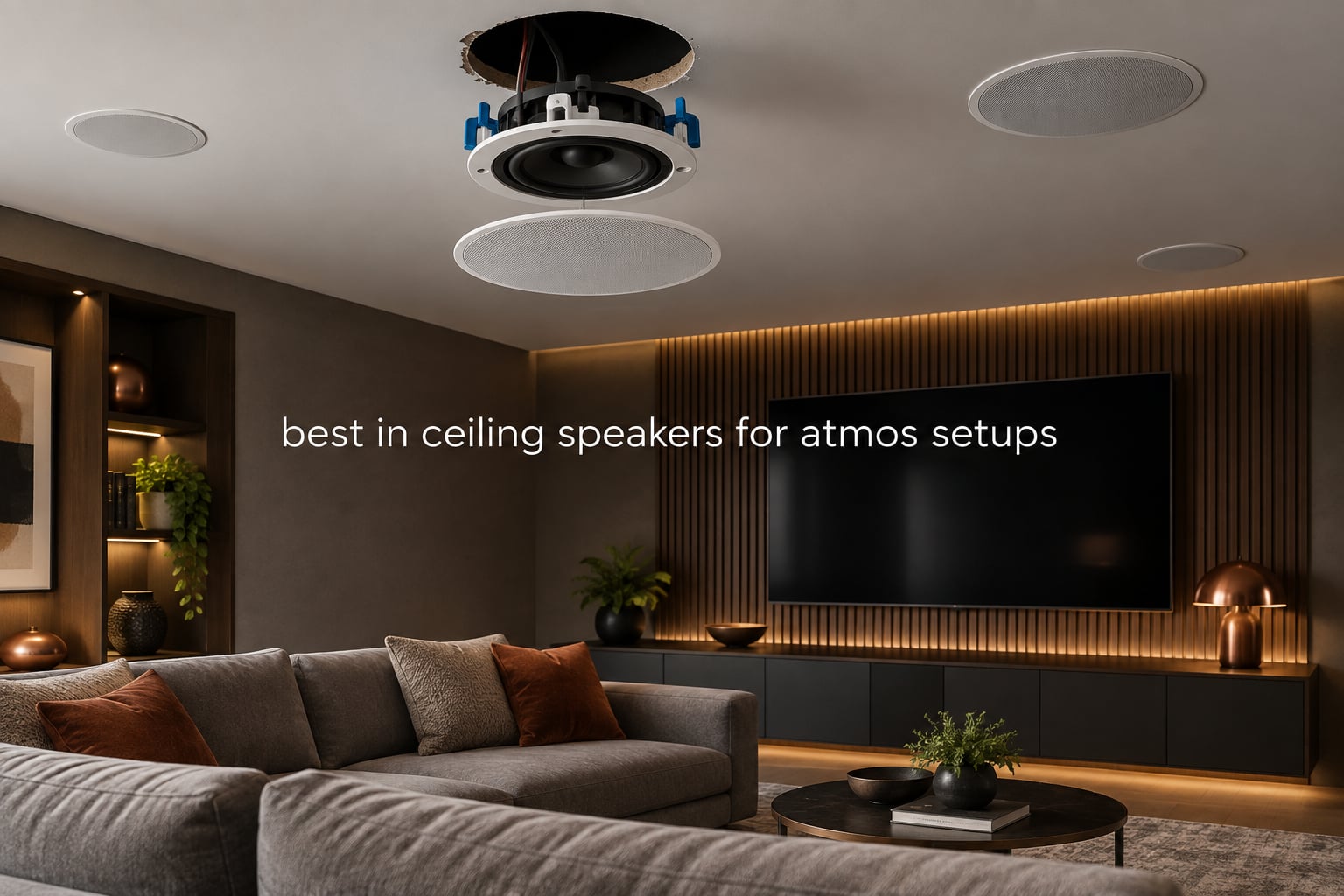
Adding the best in ceiling speakers for Atmos setups is the single biggest upgrade most home theater systems never get. A standard surround package puts every effect at ear level or below, so a helicopter passes overhead as a faint ripple. Ceiling speakers are the height channels that give a Dolby Atmos mix its missing top layer, and choosing the wrong model is where most installs go wrong.
After comparing the ten most-reviewed in-ceiling speakers on the market, using manufacturer cutout dimensions, sensitivity figures and crossover data, plus the real-world installation notes enthusiasts post about ducts, joists and low basements, three models stood apart for Atmos duty. The Polk Audio RC80i is the all-rounder, the Micca M-8C is the value pick, and the Klipsch CDT-5650-C II is the aiming specialist.
One note before we start: this list covers passive in-ceiling speakers that need speaker wire and an Atmos-enabled receiver. Soundbars, wireless systems and portable speakers do not fit here, because none of them can be mounted in a ceiling cavity or aimed at your seating. We also update this guide for 2026, and every spec below comes from the manufacturer’s own data sheet or the published listing.
Table of Contents
Top 3 Best In Ceiling Speakers for Atmos Setups (October 2026)
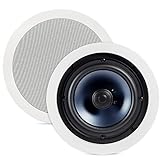
Polk Audio RC80i
- 8-inch mineral-filled polymer woofer
- Aimable pivoting silk dome tweeter
- Down to 35 Hz
- Sold as a matched pair
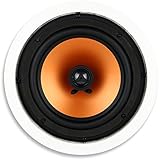
Micca M-8C
- 8-inch high-excursion poly woofer
- Pivoting silk dome tweeter
- 90 dB sensitivity
- 3.5 inch mounting depth

Klipsch CDT-5650-C II
- Independent 15 degree woofer tilt
- 100 degree Tractrix horn
- Treble and mid-bass switches
- 4.8 star average
Quick Overview: Best In-Ceiling Speakers for Atmos Setups in 2026
All ten models below are 8-ohm passive in-ceiling speakers suitable for height channel duty. Six are sold as pairs or multi-packs, and four are sold as single speakers, so check the quantity in the box before you order four.
| Product | Specifications | Action |
|---|---|---|
| Polk Audio RC80i 8-Inch Pair |
|
Check Latest Price |
| Micca M-8C 8-Inch |
|
Check Latest Price |
 Polk Audio RC60i 6.5-Inch Pair Polk Audio RC60i 6.5-Inch Pair |
|
Check Latest Price |
 Acoustic Audio CS-IC83 Five-Pack Acoustic Audio CS-IC83 Five-Pack |
|
Check Latest Price |
 Yamaha NS-IC800 8-Inch Pair Yamaha NS-IC800 8-Inch Pair |
|
Check Latest Price |
 Klipsch CDT-5800-C II 8-Inch Klipsch CDT-5800-C II 8-Inch |
|
Check Latest Price |
 Klipsch R-1650-C Four-Pack Klipsch R-1650-C Four-Pack |
|
Check Latest Price |
| Klipsch CDT-5650-C II 6.5-Inch |
|
Check Latest Price |
 Micca M-6C 6.5-Inch Micca M-6C 6.5-Inch |
|
Check Latest Price |
 Pyle PDIC1661RD 6.5-Inch Pair Pyle PDIC1661RD 6.5-Inch Pair |
|
Check Latest Price |
1. Polk Audio RC80i 8-Inch In-Ceiling Pair – Best Overall for Atmos
Polk Audio RC80i 2-Way Premium In Ceiling Speakers, 8″ Round Pair, White
8 inch woofer, 35 Hz
1 inch aimable silk dome tweeter
8 ohm, 50 watt
Matched pair
Pros
- 8 inch woofer outguns most 6.5 inch in-ceilings
- Aimable tweeter points at the listening position
- Paintable aluminium grille
- Matched pair with cutout templates
Cons
- Exposed driver components instead of a sealed back can
- Plastic bezel sits slightly proud of the ceiling
- Modest low-frequency reach versus a dedicated subwoofer
This is the model I keep recommending first, and it is not close. The RC80i is an 8-inch 2-way design, and driver size is the thing that matters most for a height channel because overhead effects are usually effects: rain, debris, engines, aircraft. A larger cone moves more air, so those sounds arrive with weight instead of a thin hiss.
Owners frequently report using them as ceiling surrounds or as bed down-firing Atmos channels and being impressed by how full the output feels for an in-ceiling. The 1-inch silk dome tweeter pivots, which lets you aim it at the seating area rather than spreading energy across an empty ceiling.
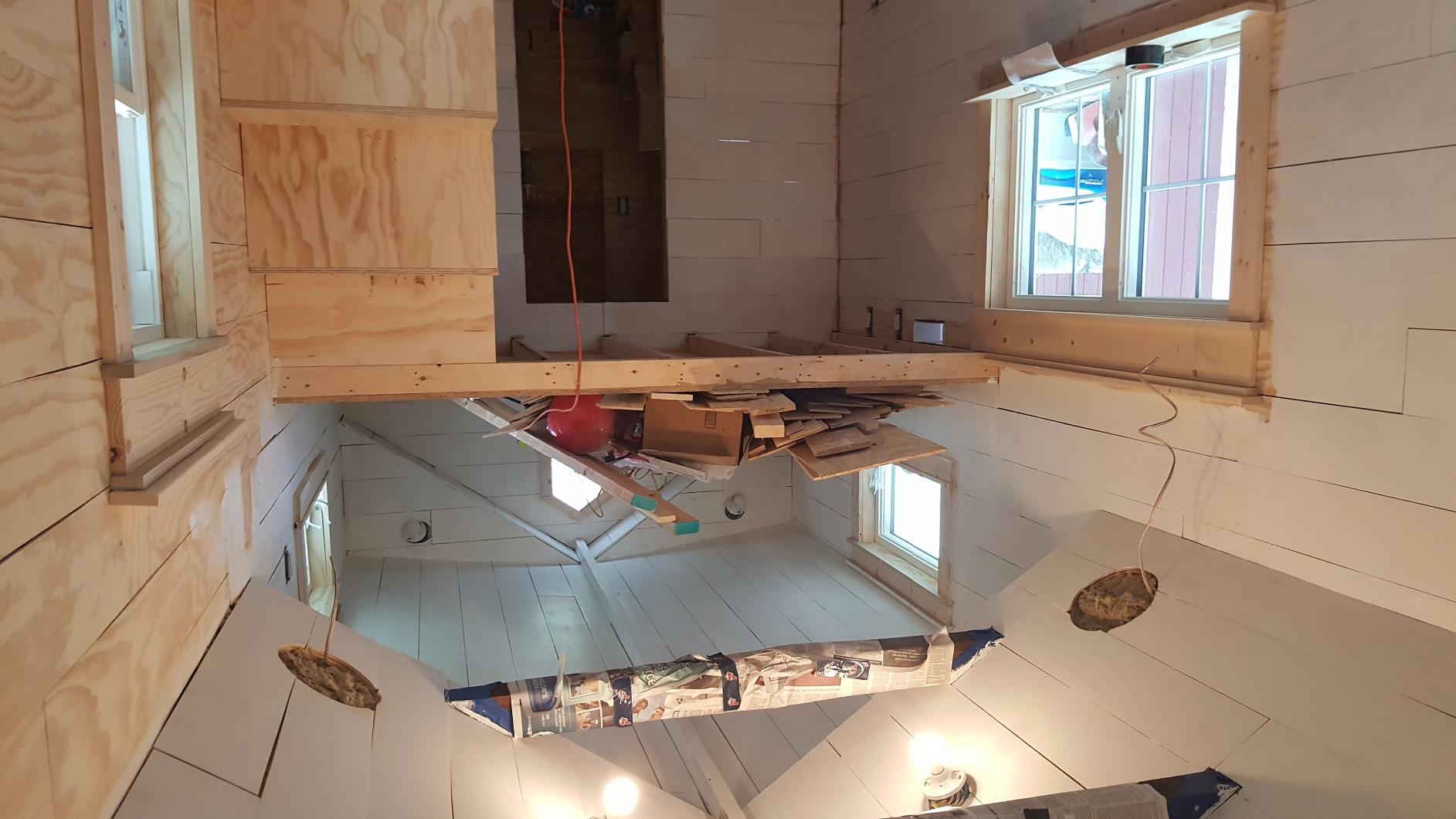
On the technical side, the mineral-filled polymer woofer is paired with an 8-ohm impedance and 50 watt RMS power handling, with frequency response reaching down to 35 Hz. That is a published figure, and it is low for the tier: it means effects with weight in them have something to work with even before the subwoofer kicks in.
The build is solid rather than premium. The housing is aluminium and plastic, the sealed rubber gasket helps with moisture, and the paintable aluminium grille is included along with cutout templates and paint masks. Warranty coverage runs five years parts and labour. Total weight for the pair is 9 pounds, and the baffle profile is 3.63 inches deep.
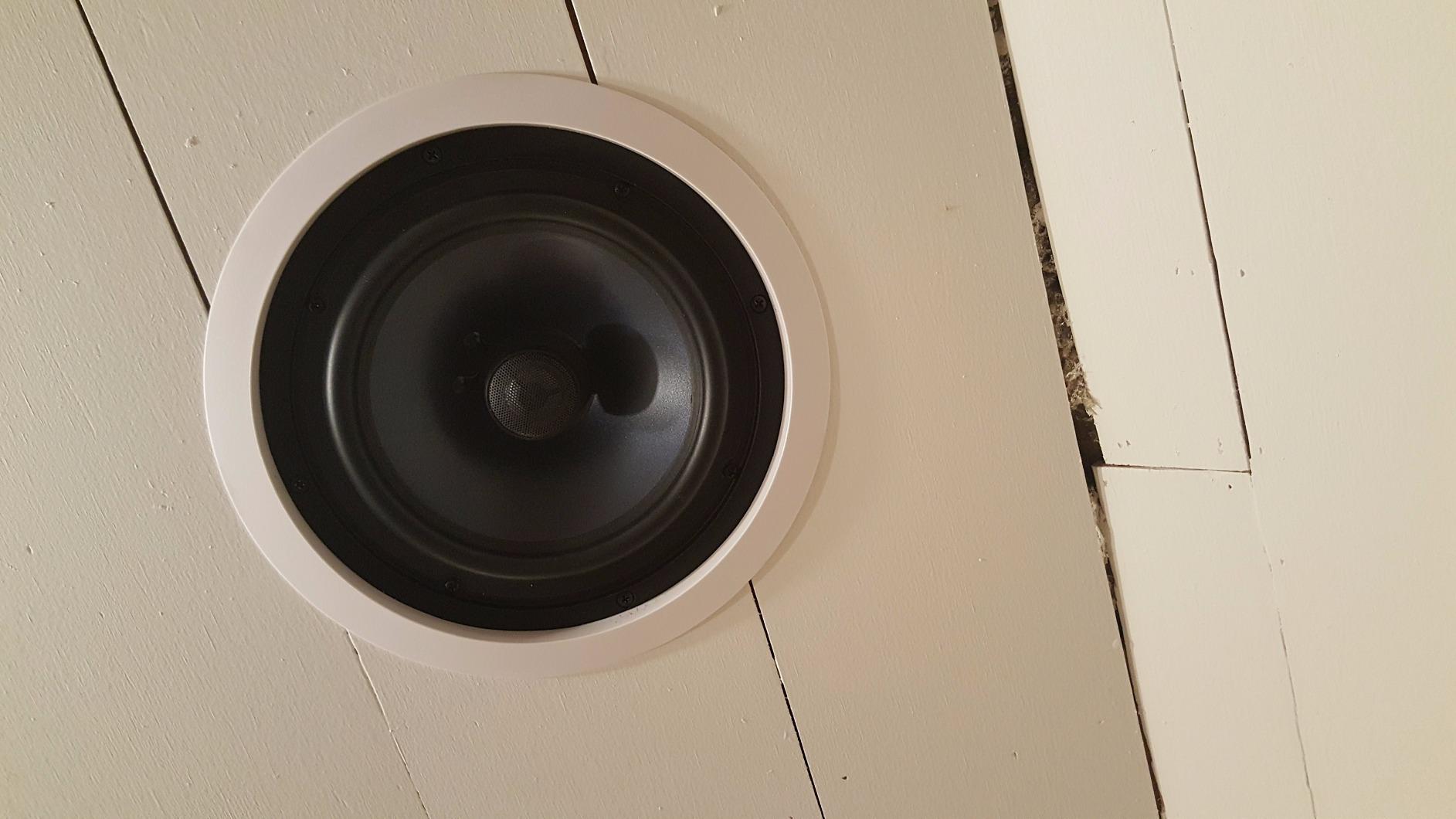
How the RC80i holds up as an Atmos height channel
The 35 Hz floor means a rainstorm overhead has some substance to it, and the aimable tweeter keeps dialogue and effects from smearing across the ceiling. For a 5.1.4 or 7.1.4 layout, four of these driven by a competent receiver are genuinely convincing, and the wide dispersion means off-axis seating still gets energy.
Because it is sold as a pair, buying two boxes gives you four speakers, which is exactly what a 5.1.4 needs. That is the practical reason this one leads the list: for most people the logistics work out cleanly with no extra ordering.
Where the RC80i falls short
The drivers are not fully enclosed, so in a ceiling with deep insulation above it the back wave is less controlled than a sealed design. Reviewers also mention treble can read slightly bright, and the friction-fit plastic grille is less convenient to remove than a magnetic one.
Budget roughly 3.5 inches of clearance behind the drywall for the body, and more if you intend to add a fire and acoustic back can. This is not a shallow-install model, so check the cavity before committing.
2. Micca M-8C 8-Inch In-Ceiling Speaker – Best Value
Micca M-8C 8-Inch 2-Way in-Ceiling Speaker, Round, Each, Paintable, White
8 inch poly woofer, 40 Hz
Pivoting silk dome tweeter
90 dB sensitivity
3.5 inch depth
Pros
- Very low cost for an 8 inch driver with a pivoting tweeter
- 90 dB sensitivity suits long cable runs
- Painted rimed grille sits nearly flat
- Spring clamps grip drywall without a box
Cons
- Sold as a single speaker so a layout needs multiple purchases
- One-year limited warranty
- Bass extension ends around 40 Hz
The M-8C is the value answer, and the gap between it and the models above it is smaller than the price difference would suggest. It is an 8-inch 2-way with a pivoting silk dome tweeter and a 6 dB crossover network that keeps the midrange transition coherent rather than abrupt.
Owners describe the sound as smooth and natural with more bass than expected for the tier, and the 90 dB sensitivity figure is genuinely useful here. A high-sensitivity overhead needs less amplifier power, which matters when four of them sit on the back channels of a receiver that is already driving the front stage.
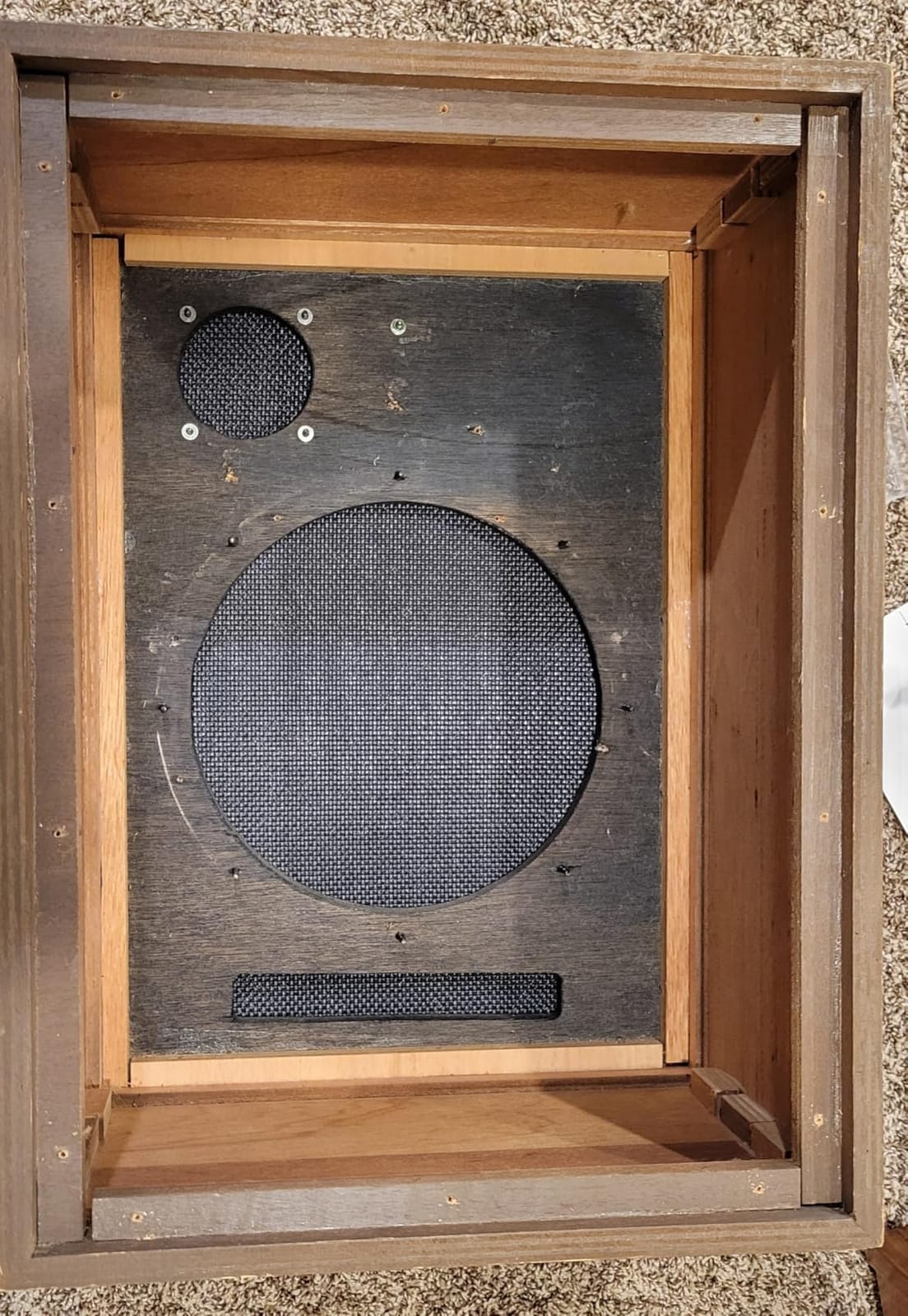
The specifications are unusually well documented for this tier. Frequency response runs 40 Hz to 20 kHz at 8 ohms, power handling is 100 watts each, the cutout is 9.4 inches in diameter, the outer dimension is 10.7 inches and the mounting depth is 3.5 inches. Each speaker weighs 3.6 pounds, which makes overhead work comfortable.
Installation is the easiest part. Built-in mounting tabs grip drywall or wood panels directly, so there is no back can to fit and no bracket to hang. The rimmed grille protrudes minimally and can be painted to match the ceiling. Warranty coverage is a limited one year, which is the main gap against the major brands.
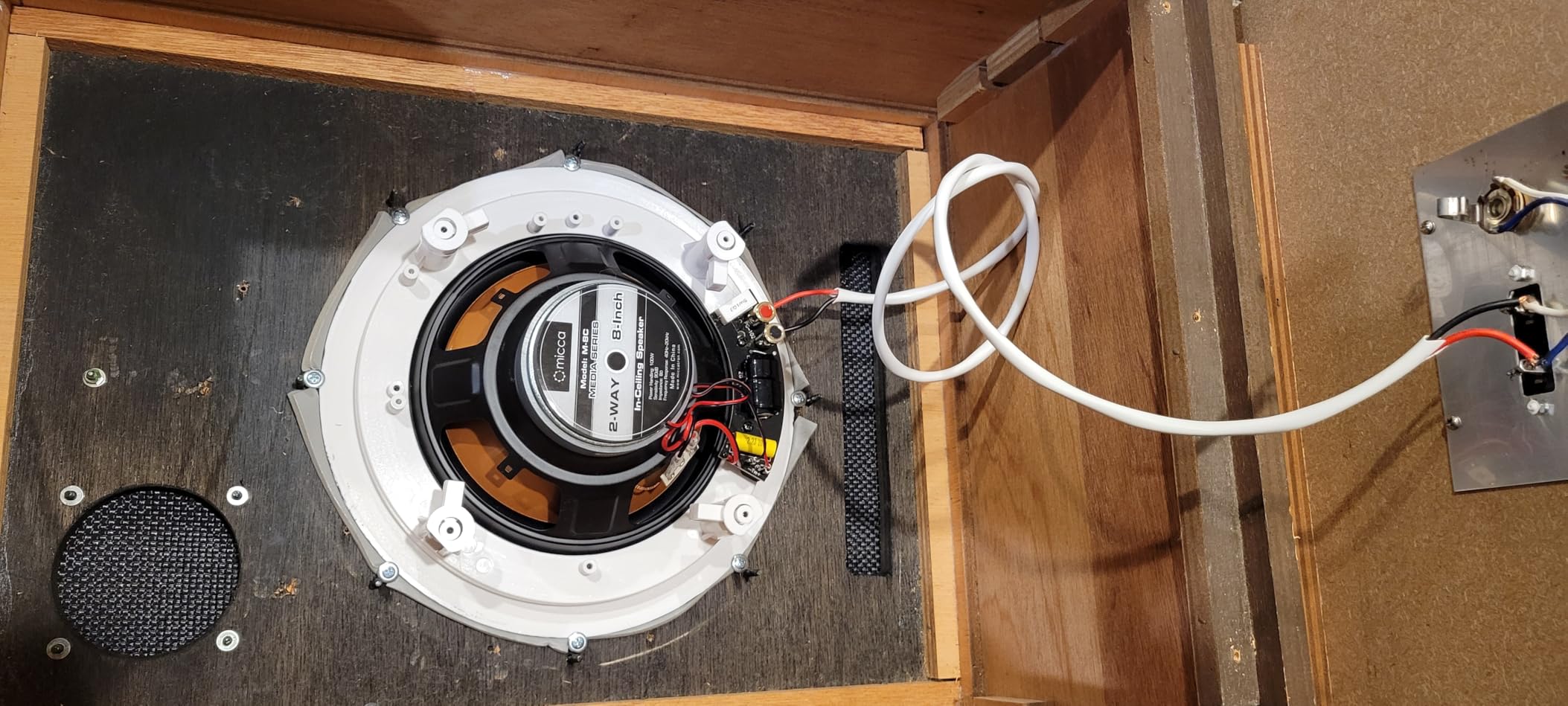
Why the M-8C suits a first Atmos build
Four identical speakers from one model keep the front-to-back timbre consistent across the height layer, and voice-matching overheads matters more than buyers expect. When the same driver design repeats across all four positions, the calibration sweep has an easier job and dialogue stays consistent between the front stage and the ceiling.
At 3.5 inches deep it also fits inside a standard residential ceiling cavity more easily than many 8-inch models, and the 9.4 inch cutout is a common round size, so it can drop into holes cut for other 8-inch speakers.
What you give up
This is a single speaker, so a 5.1.4 needs four separate purchases and you should check the total carefully before ordering. The 40 Hz bottom end means effects still depend on a subwoofer, and the one-year warranty offers no comfort if one of four fails in year two.
It is also a passive design with spring terminals, not an Atmos-enabled or active speaker. It needs a real speaker-wire run from the receiver, which is fine in new construction and more involved in a finished ceiling.
3. Polk Audio RC60i 6.5-Inch In-Ceiling Pair – Best for Whole-House Use
Polk Audio RC60i 2-Way Premium in-Ceiling Speaker, 6.5″ Round Pair, White
6.5 inch polypropylene woofer
0.75 inch swiveling tweeter
8 ohm, 50 watt
Lifetime warranty
Pros
- Swiveling tweeter aims at the main listening position
- Moisture resistant for kitchens and bathrooms
- Patented mounting clamps hold firmly overhead
- Paintable grille nearly disappears
Cons
- Plastic mounting dogs can snap if overtightened
- Light-grip spring terminals suit tinned wire
- White plastic can yellow over time
The RC60i is the model most people in the speaker world already know, because it has been a ceiling-surround default for years. For Atmos use it is a smaller sibling of the RC80i, and the trade is simple: less low-end reach in exchange for a smaller cutout, lower weight and a lifetime warranty.
Reviewers consistently mention using these in 5.1.4 height duties and report rich, deep sound that improved their system over older in-ceilings. The 6.5-inch Dynamic Balance polypropylene woofer handles effects well, and the swiveling silk dome tweeter handles the aiming.
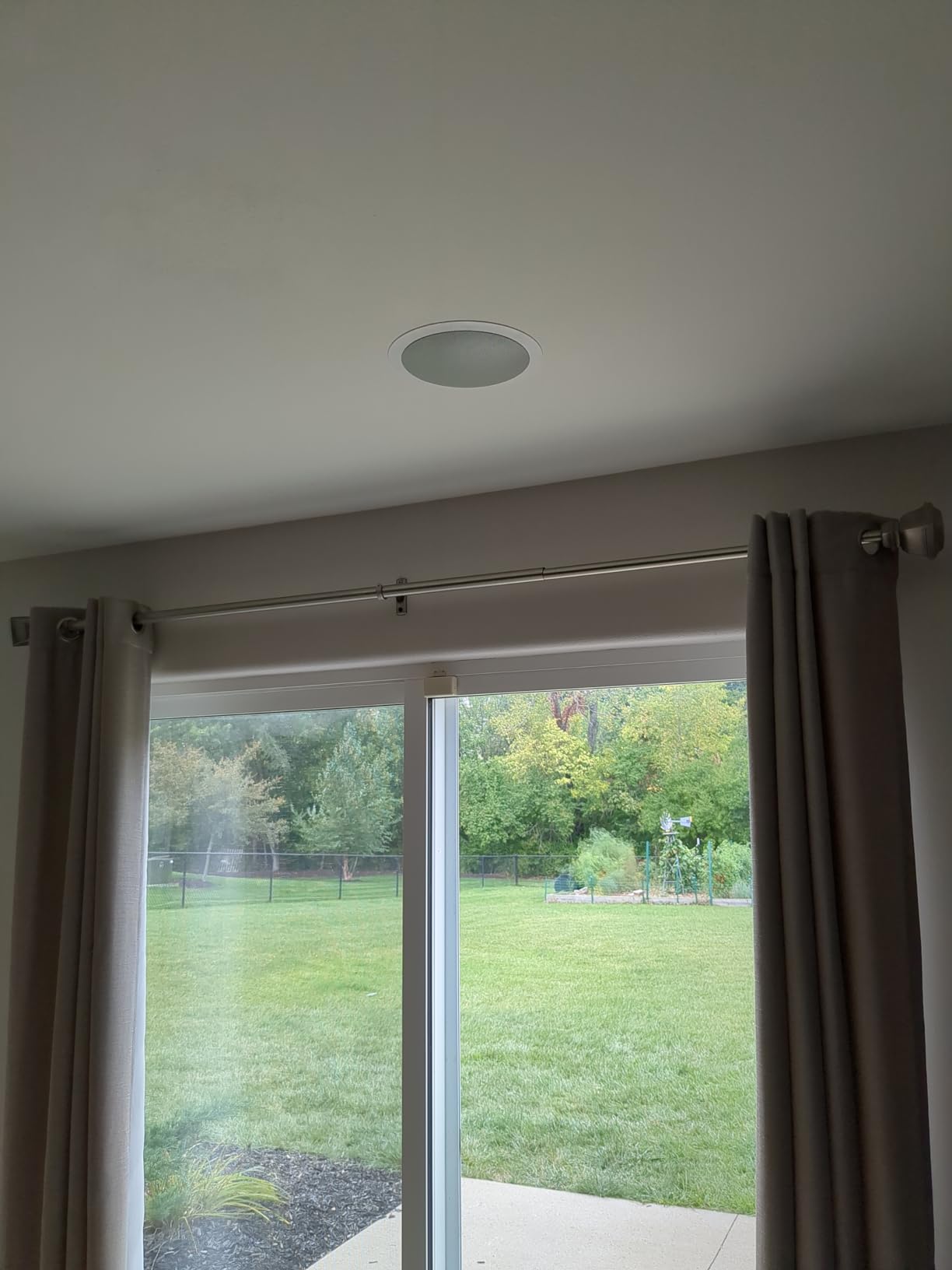
Spec-wise it is an 8-ohm, 50-watt design with response down to 40 Hz, a 9 inch outer diameter and a 2.88 inch baffle depth, weighing 5.7 pounds for the pair. The moisture-resistant construction is a real advantage if any position sits in a kitchen, bathroom or covered porch rather than a sealed theater room.
The warranty is listed as lifetime, which is unusual in this category and a genuine advantage over one-year coverage. The included cutout template and paint mask make the layout step quick, and the patented mounting clamps grip the drywall firmly once you get the weight above your head.
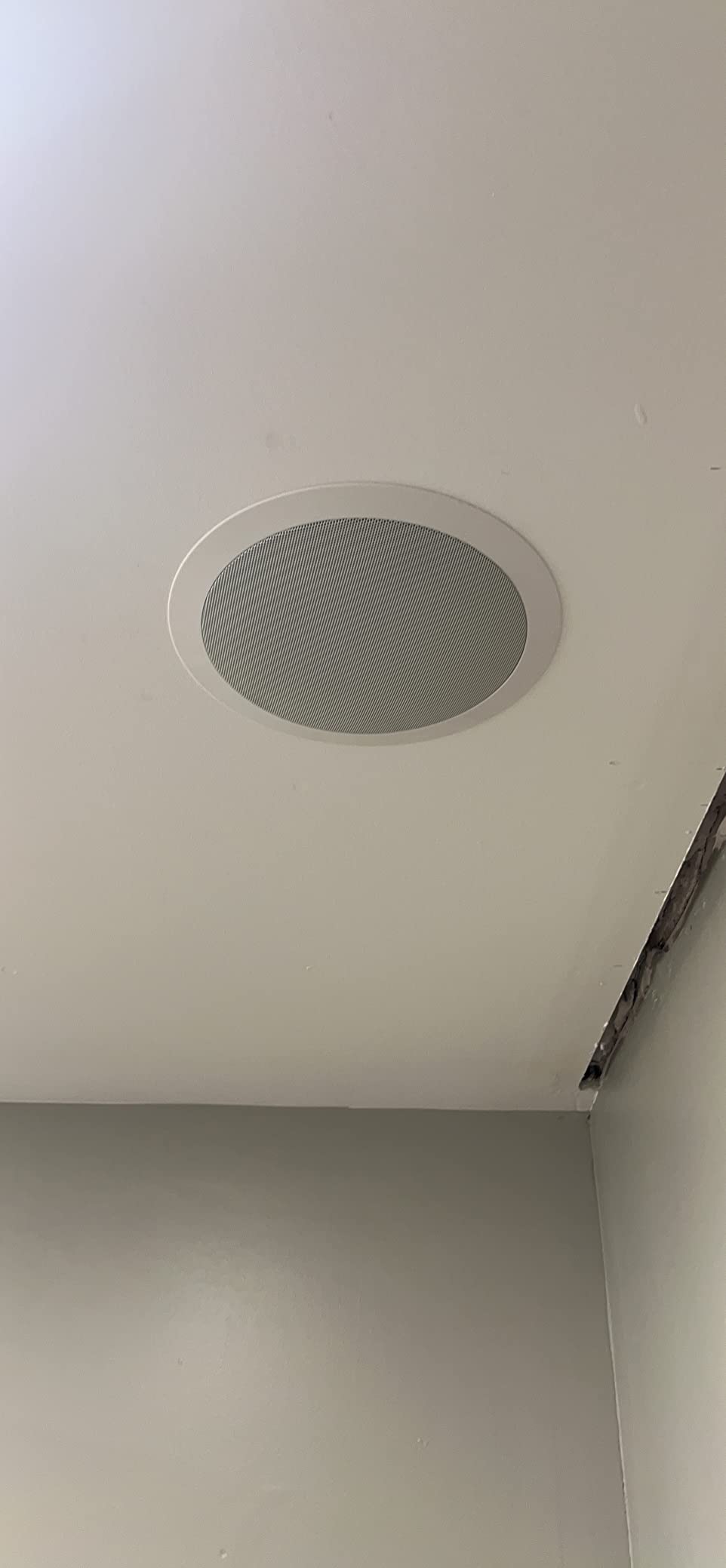
Best reasons to pick the RC60i
If your joist spacing is tight, a 6.5-inch cutout is far easier to accommodate than the 9.4 inch hole the Micca M-8C needs. That single practical fact decides installs in older homes with 16-inch joist centres, where an 8-inch round cutout can straddle two studs.
It is also the better pick for a mixed system. The same RC60i model works as ceiling surrounds in a non-Atmos zone and as height speakers in the theater, and the water resistance means it does not matter if one position ends up near a kitchen or bath.
The mechanical drawbacks are real
Reviewers warn the plastic mounting dogs can bend or break if tightened past the point of grip. Treat them as a hand-tight operation rather than a driver-bit operation, and check each dog before you close the ceiling.
The spring terminals are light-grip, so tinned wire makes a noticeably better connection than bare copper, and the friction-fit grille holes can stretch if you pry on them with a thin tool. If the receiver is in another room, run 14 AWG or better and confirm polarity at both ends before calibration.
4. Acoustic Audio by Goldwood CS-IC83 Five-Speaker System – Best for a Complete Layout
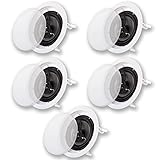
Acoustic Audio by Goldwood CS-IC83 8” 3-Way In Ceiling Home Theater Speaker System (White, 5 Speakers)
3-way, 8 inch woofer
Poly mica midrange, 13 mm dome
95 dB sensitivity
Five speakers
Pros
- Five matched 3-way speakers in one box
- Dedicated midrange improves dialogue clarity
- Wide dispersion blends with existing systems
- Cutout templates included
Cons
- Passive only
- needs wired speaker outputs
- 9.45 inch cutout demands good joist spacing
- Less established brand with fewer matching models
This is the only five-speaker box in the list, and for a first full Atmos layout that convenience is worth more than most spec differences. Five matched three-way speakers cover a complete surround and height scheme in a single purchase, which removes the risk of mismatched drivers across overhead and surround positions.
The three-way architecture is the differentiator. Instead of routing everything through a two-way crossover, you get an 8-inch high-rigidity poly woofer, a dedicated poly mica midrange and a 13 mm soft dome tweeter with passive three-way crossovers. Buyers credit the midrange driver with clear dialogue, which matters when the receiver is doing Atmos height processing.

Sensitivity is 95 dB at 8 ohms, well above the 87 and 88 dB figures the entry models are rated at, with a recommended power range from 10 to 350 watts per channel. Frequency response runs 40 Hz to 20 kHz. The cutout is 9.45 inches round, mounting depth is 3.78 inches, and the total weight of the set is 20 pounds.
Pressure-lock mounting clamps tighten against the drywall, and the housings and grilles are moulded ABS with a paintable finish. The housings can be painted along with the grilles, which matters more than it sounds when a speaker is visible against a white ceiling.

Where a five-speaker box earns its keep
If you are running 5.1.4, this box plus a separate centre and front pair covers the whole height and surround layer with identical drivers. Voice-matching overheads to surrounds becomes automatic, and that is the single most common complaint buyers have when they mix brands across a ceiling.
The 95 dB sensitivity also means four overheads will not strain a mid-range receiver, which matters more than raw power handling numbers suggest. On an eight-foot basement ceiling these are gentle loads.
Before you order this for a tight ceiling
The 9.45 inch cutout is the constraint. In a room with standard 16-inch joist spacing, a 9.45 inch hole is close to the limit, so measure joist positions across all five speaker locations before cutting anything. A layout that needs two of the five positions moved is a layout that stops feeling symmetrical.
It is also a passive, wired design with spring-loaded raw wire terminals, so it needs an amplifier or receiver with real speaker outputs rather than a wireless or active system. And while the model is well reviewed, the brand has a smaller catalogue, so finding a matching model later for a sixth position is harder than it would be with Polk, Klipsch or Yamaha.
5. Yamaha NS-IC800 8-Inch Pair – Best for Build Quality and a Clean Grille
Yamaha NS-IC800 140 Watt 8-Inch 2-Way In-Ceiling Speakers – Pair (White)
8 inch 2-way, 3.5 kHz crossover
140 watt max, 50 watt nominal
Sealed driver assembly
Magnetic grille
Pros
- Enclosed assembly resists dust and insulation contamination
- Full-coverage magnetic grille with no branding
- Gold-plated high-force spring terminals
- Loud and efficient with no distortion at volume
Cons
- Deep housing needs clearance for a back can
- Bass leans on an enclosure or subwoofer in a drop ceiling
- Average as a primary music speaker
The NS-IC800 is the pick for anyone who cares how the ceiling looks and how the speaker holds up over a decade. Buyers consistently highlight build quality above comparably priced competitors, and the magnetic full-coverage grille is the reason: it lays flat and carries no visible branding.
It is used in both directions in practice. Reviewers report it for whole-house background audio and for overhead Atmos duty, calling the sound crisp and punchy. The sealed driver assembly is the underrated feature, because dust and insulation fibres above a drywall ceiling are a genuine long-term problem for exposed drivers.
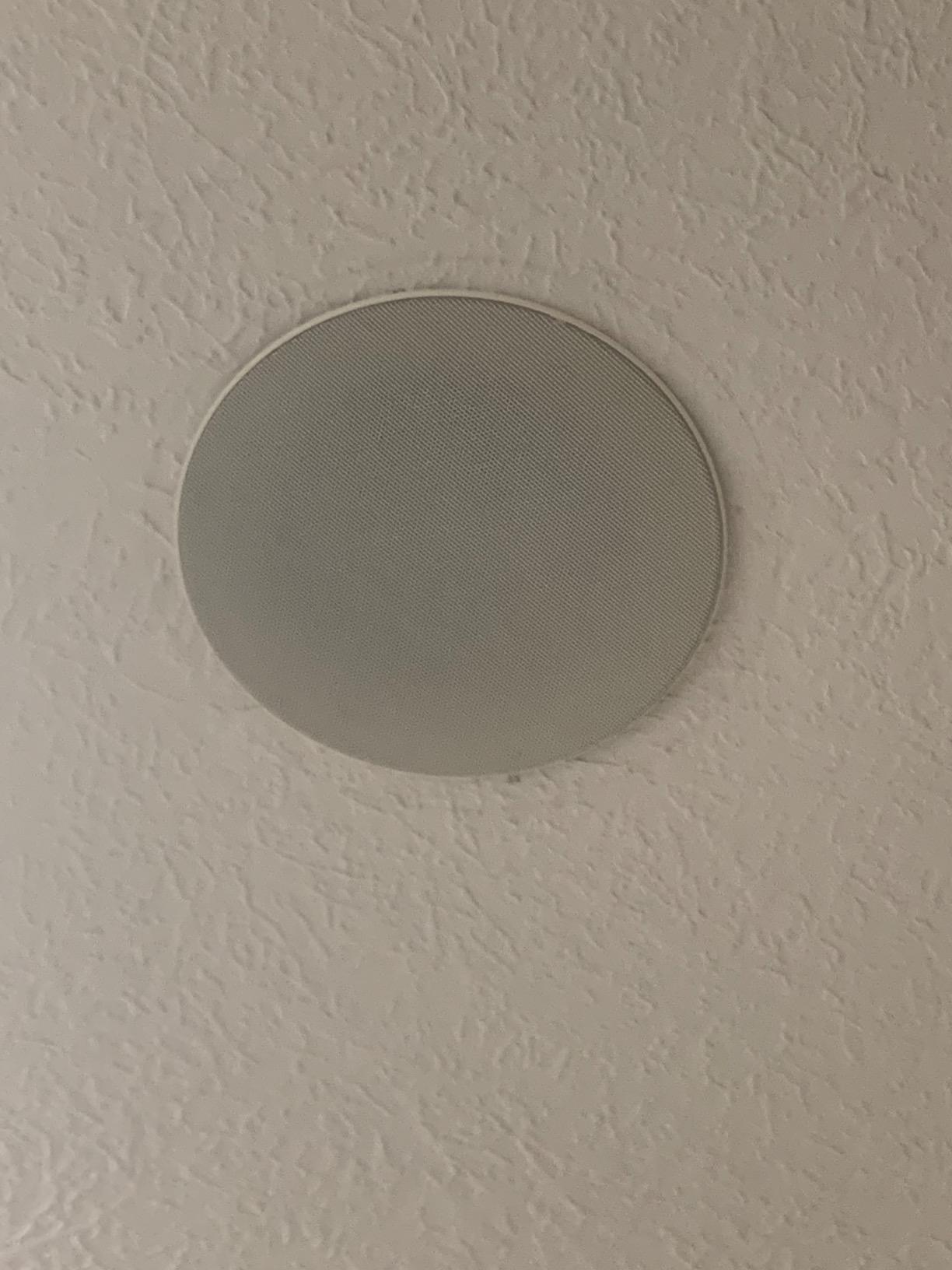
Specifications: 8 inch 2-way configuration with a 3.5 kHz crossover point, 140 watt maximum and 50 watt nominal input, 8-ohm impedance, and an 85 dB signal-to-noise ratio. The body is 4.3 inches deep with a 10.9 inch diameter, and each speaker weighs 4.2 pounds. Coverage extends to 28 kHz.
The swiveling tweeter adjusts across a modest arc rather than a full range, so plan your aim carefully. Gold-plated high-force spring push terminals hold wiring more securely than basic push-ins, and warranty coverage is two years parts and labour.
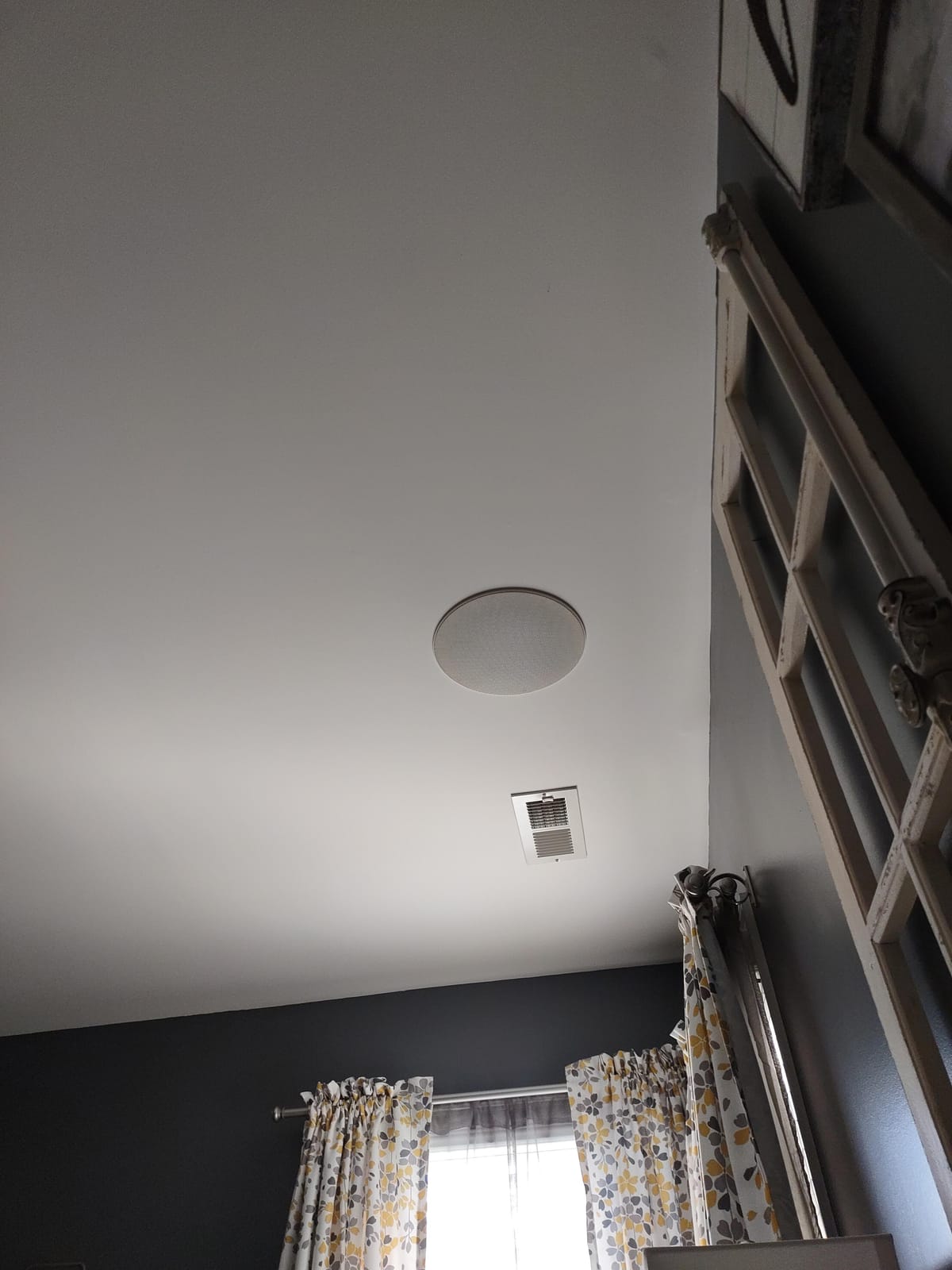
Why the sealed design matters overhead
A sealed driver does not blow a hole in the ceiling plenum the way an open-back design can, and it behaves more predictably when the cavity behind it is a shared HVAC space. In a retrofit where you cannot build a proper back can, a sealed driver is the safer default.
Paired with the flush magnetic grille, it is also the least conspicuous option here. In a finished room where the ceiling is a visible design element, that is worth a lot more than an extra decibel of output.
The depth trade-off
At 4.3 inches, this is one of the deeper cabinets in the roundup, behind the two Klipsch CDT models. Standard residential joists give you roughly 4.5 to 5.5 inches of clearance, so this fits in new construction but is tight in a retrofitted ceiling with insulation or a plenum above it.
Low-frequency output also depends on an enclosure or the room baffle in a standard drop-ceiling install, so pair it with a subwoofer rather than expecting the overhead channels to carry effects bass. For music on its own, the top end is average, which is normal for a speaker designed first as a theater channel.
6. Klipsch CDT-5800-C II 8-Inch – Best for High Output in a Large Room
Klipsch Outdoor/Surround in-Ceiling Speaker Soundbar Home Speaker, Set of 1, White (CDT-5800-C II)
8 inch woofer, 100 degree horn
360 degree tweeter adjustment
Treble and mid-bass switches
8 ohm
Pros
- Rotating woofer plus adjustable tweeter aim both drivers
- Treble and mid-bass switches tune the room
- Horn loading delivers high output with low distortion
- Magnetic grille lays flat
Cons
- Horn signature can read as bright or thin
- Listening position is proximity dependent
- Low frequency rolls off early
The CDT-5800-C II is the loud one. The horn-loaded compression driver produces high acoustic output with very low distortion, and Controlled Dispersion Technology with a 100-degree symmetric horn spreads that output evenly across a room. For a large space or a long throw to a back row, that is the point.
Owners use these in multiples for ceiling surrounds and Atmos height channels and report clear, crisp sound at high volume. Reviewers with audio engineering backgrounds tend to rate them as good rather than great, which tells you something useful about where this sits in the range.
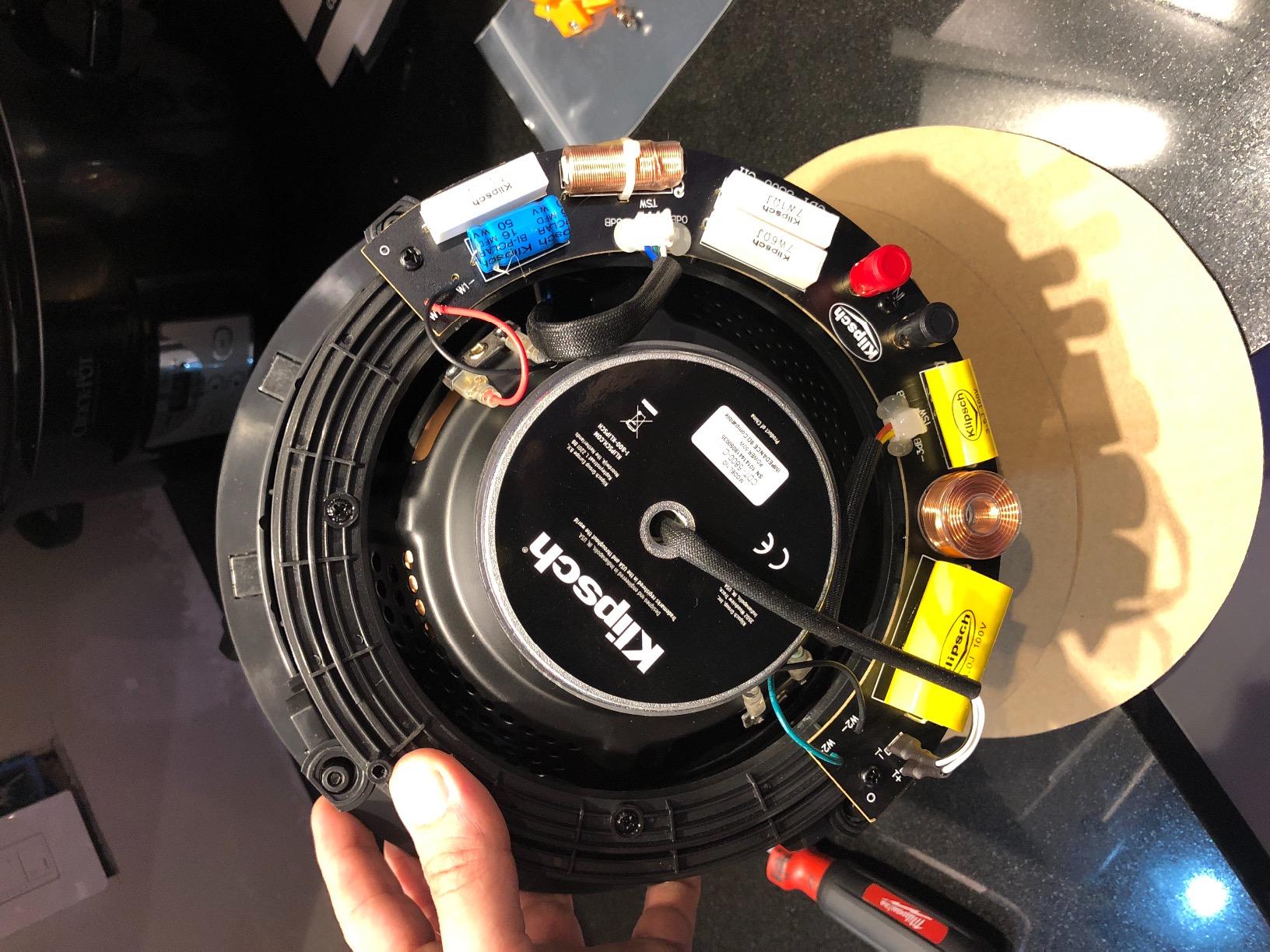
The mechanical control is exceptional: the woofer assembly rotates, and the compression tweeter adjusts through 360 degrees independently. Two attenuation switches, one for treble and one for mid-bass, let you match the speaker to a room rather than forcing the room to match the speaker. Impedance is 8 ohms with 200 watts rated maximum output.
Frequency response is listed down to 60 Hz, above the 35 to 40 Hz range the other 8-inch models here are rated at, and the body is 5.4 inches deep with an 11 inch width at 7.4 pounds. The flush magnetic grille has a paintable finish, and the warranty is limited.
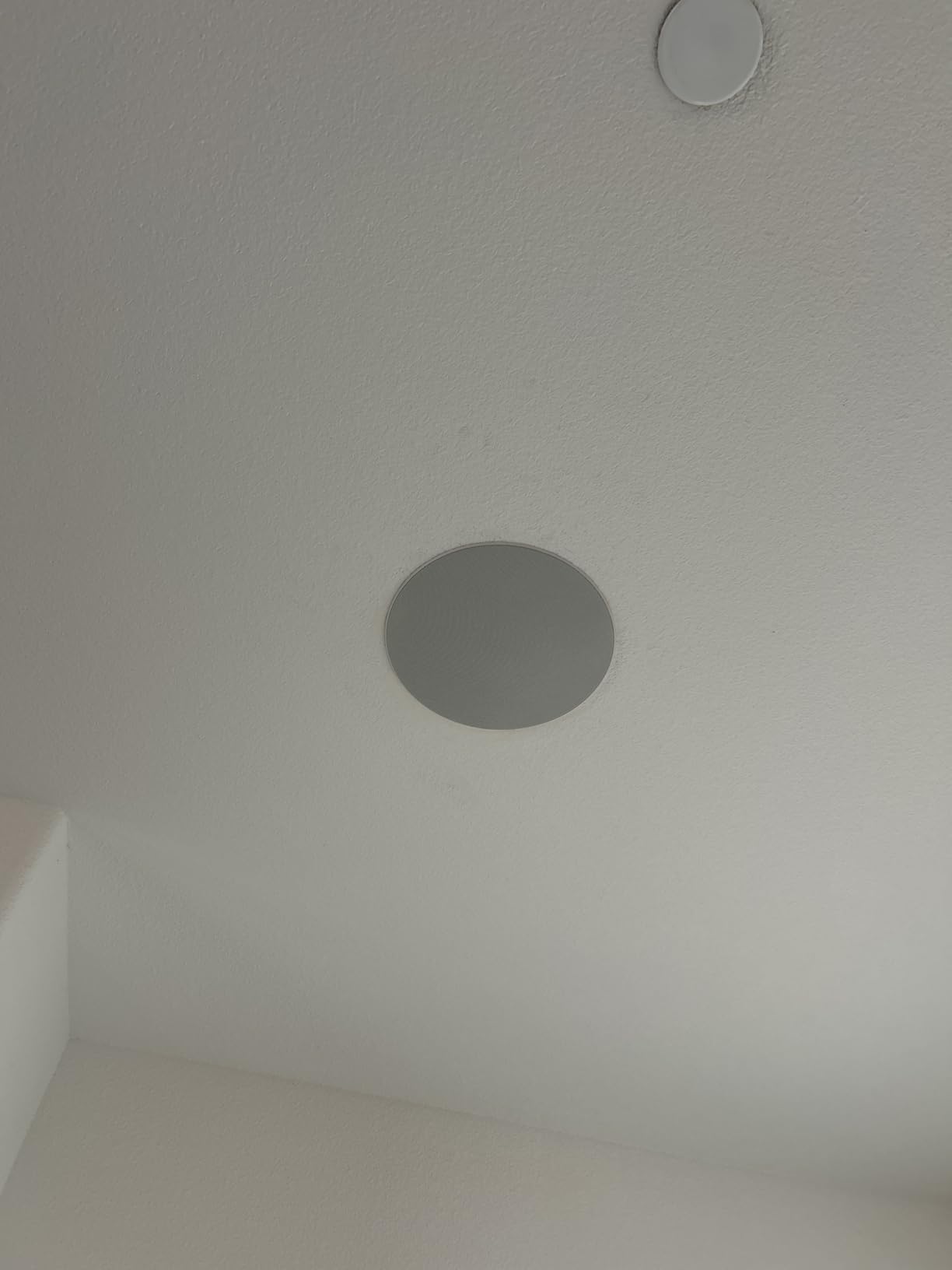
Best case: a big room that runs hot
Attenuation switches are the reason to choose this. If your front speakers are warm or your ceiling cavity adds a little brightness, dialling treble back with a switch is more repeatable than chasing it in receiver processing. In a large room with four overheads and a deep seating area, the output headroom matters too.
The 100-degree horn is forgiving when the speaker is not perfectly on-axis, which is common in a real room with ducts and joists forcing an off-plan position.
Where the horn signature bites
The presentation is treble-forward, and some listeners find it harsh without adjustment. That is a direct trade for the output and dispersion, and the switches only partly address it. Give it a listen at low volume in your own room before committing to four.
Second, the listening position is proximity dependent: the full output covers roughly a 20-degree cone, so a wide sofa can lose the near seats. Third, low frequency rolls off early and a subwoofer is expected to do the heavy work. Sold as a single, so a 5.1.4 needs four purchases.
7. Klipsch R-1650-C Four-Pack – Best for Low Ceilings
Klipsch R-1650-C in-Ceiling Speaker – White (4-Pack) Compact, Easy to Install, Durable
6.5 inch woofer, 57 Hz
Coaxial 1 inch tweeter
8.3 inch cutout
Four-speaker pack
Pros
- Four speakers cover a full height layout in one box
- Compact 8.3 inch cutout suits tight joist spacing
- Coaxial tweeter gives wide smooth coverage
- Clean output at low and high volume
Cons
- Coaxial design means no independent tweeter aim
- Mounting screws in the plastic sleeves are stiff
- Magnetic grilles can be tricky to reseat
The R-1650-C four-pack is the answer for a basement or a room with a low ceiling, and the reason is dimensional rather than acoustic. The 8.3 inch cutout is one of the smallest here, so it fits between joists in older construction where a 9.4 inch hole would be impossible.
Reviewers describe these as strong entry-level in-ceilings, particularly for Dolby Atmos height and surround duties where the effects are subtle. The sound is called crisp and clean with impressive dynamics for the size.
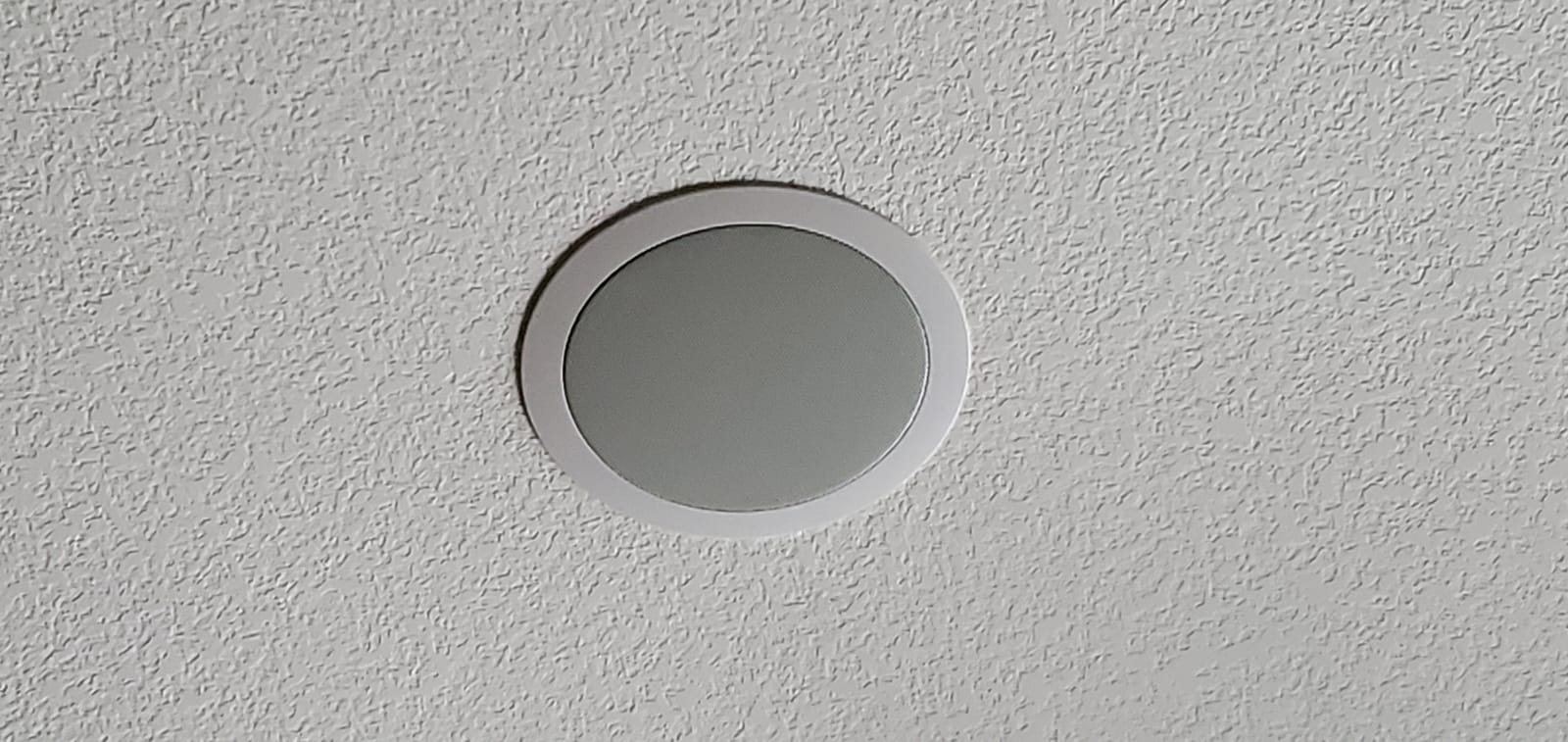
Technical details: a 6.5-inch polymer-cone woofer with a large motor structure for high sensitivity, with a 1-inch polymer-dome tweeter mounted coaxially for wide, smooth high-frequency dispersion. Impedance is 8 ohms, maximum output power is 140 watts and response runs down to 57 Hz. Speaker dimensions are 9.5 inches with a 3.5 inch height.
The paintable aluminium grille has added rust protection for moisture-prone rooms such as bathrooms and saunas, and the four speakers carry a limited five-year Klipsch warranty. Buying four matched from one box removes the matching question entirely.
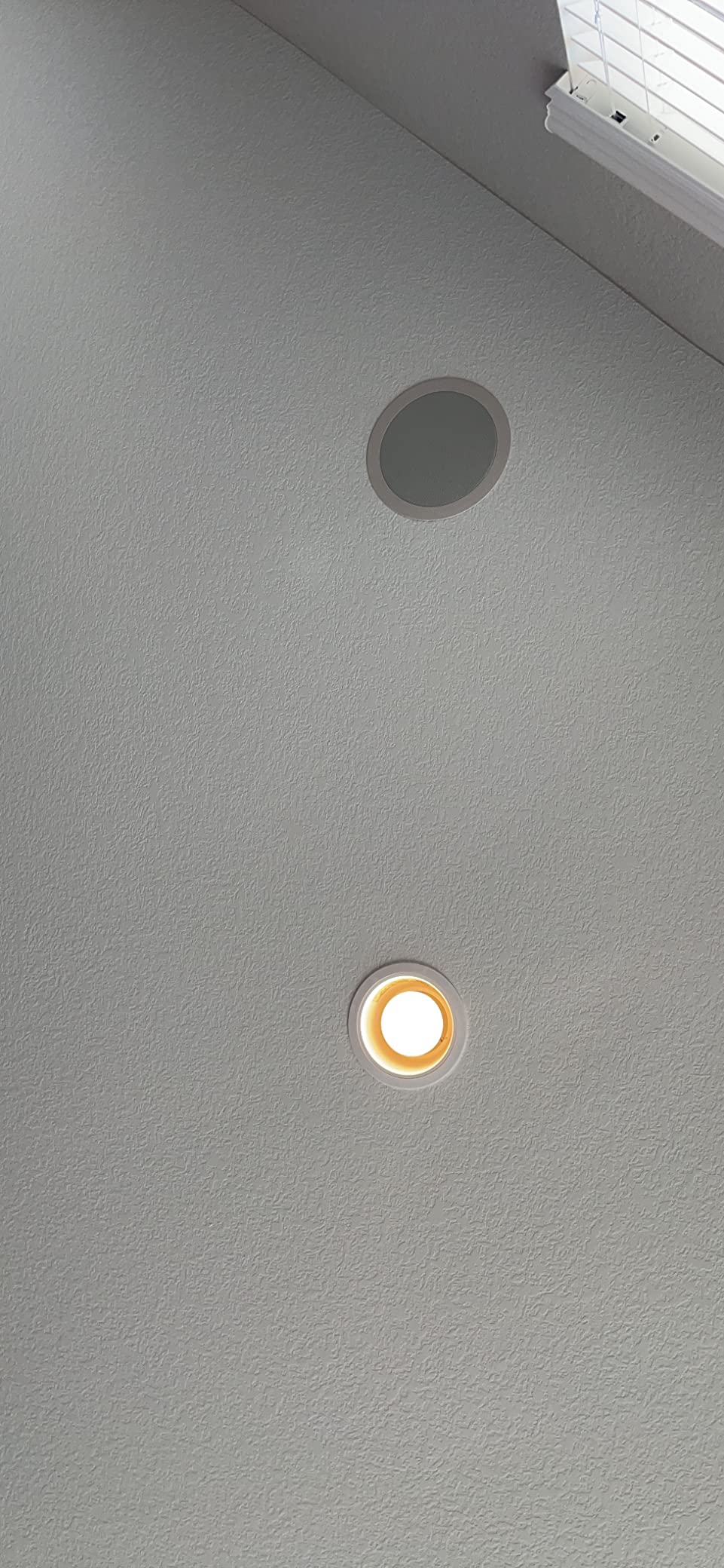
Why a four-pack fits a low-ceiling room
On a 7 to 8 foot ceiling, the four overhead positions are close to the seating, so the driver has less distance to cover and needs less output to reach the main listening position. A coaxial design with wide dispersion handles that closeness well, because there is no narrow beam to fall outside of.
The four-pack also means a 5.1.2 front-height-plus-rear-height layout is possible with matched drivers, and you can add surrounds from the same family later without a timbre mismatch.
What the coaxial layout costs you
Because the tweeter sits on the same axis as the woofer, you cannot aim it independently. On a wide room with off-axis seating, that removes the fine control the Klipsch CDT models offer, and it is the main reason to step up if your room is large.
The install hardware is also the most commonly criticised part: the mounting screws in the plastic sleeves are stiff, and the magnetic grilles can be hard to seat back into their grooves once removed. Budget extra time for the final fit, and keep the grilles on until every speaker is wired and tested.
8. Klipsch CDT-5650-C II 6.5-Inch – Best for Aiming Control
Klipsch CDT-5650-C II In-Ceiling Speaker – White (Each)
6.5 inch woofer, 15 degree tilt
1 inch titanium compression tweeter
100 degree horn
Attenuation switches
Pros
- Highest star average in the list at 4.8
- Independent 15 degree woofer tilt plus pivoting tweeter
- Attenuation switches tame the bright house sound
- SlimTrim grille sits nearly invisible
Cons
- Treble-forward signature can read as harsh unadjusted
- Supplied cutout template runs slightly undersized
- Sold as a single so pairs need two purchases
The CDT-5650-C II earns its place on one mechanical feature nothing else here has: the 6.5-inch Cerametallic woofer tilts independently through 15 degrees, and the tweeter pivots on top of that. In a room where the speaker cannot sit exactly where you want, that combination is the difference between sound arriving at the seat and sound arriving near it.
Owners call it a major step up from entry-level in-ceilings and a big improvement over upward-firing Atmos speakers, singling out the directional adjustment as transformative in theater rooms. At 4.8 stars it has the highest average rating of anything in this roundup.
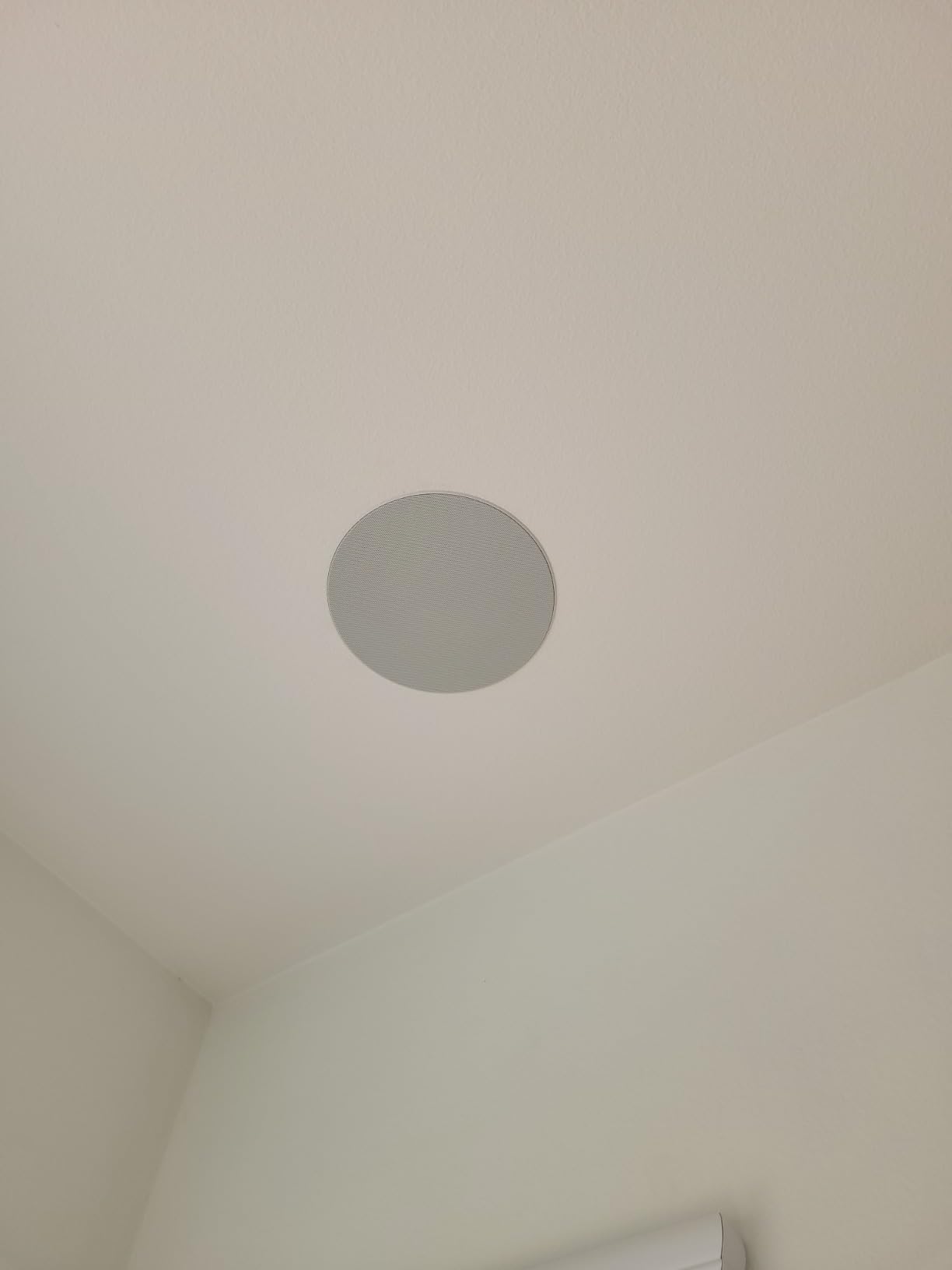
The driver detail: a 1-inch titanium diaphragm compression-driver tweeter with linear travel suspension, loaded into a 100-degree Tractrix horn with symmetrical controlled dispersion. Treble and mid-bass attenuation switches sit on the assembly. Impedance is 8 ohms, rated maximum output is 200 watts, and frequency response is listed down to 63 Hz.
Body dimensions are 9.5 inches square at 4.5 inches deep, weighing 0.5 kg per speaker. The low-profile SlimTrim magnetic grille sits nearly invisible against the ceiling. Warranty coverage is limited, and the speaker is sold singly.
When aiming control changes the result
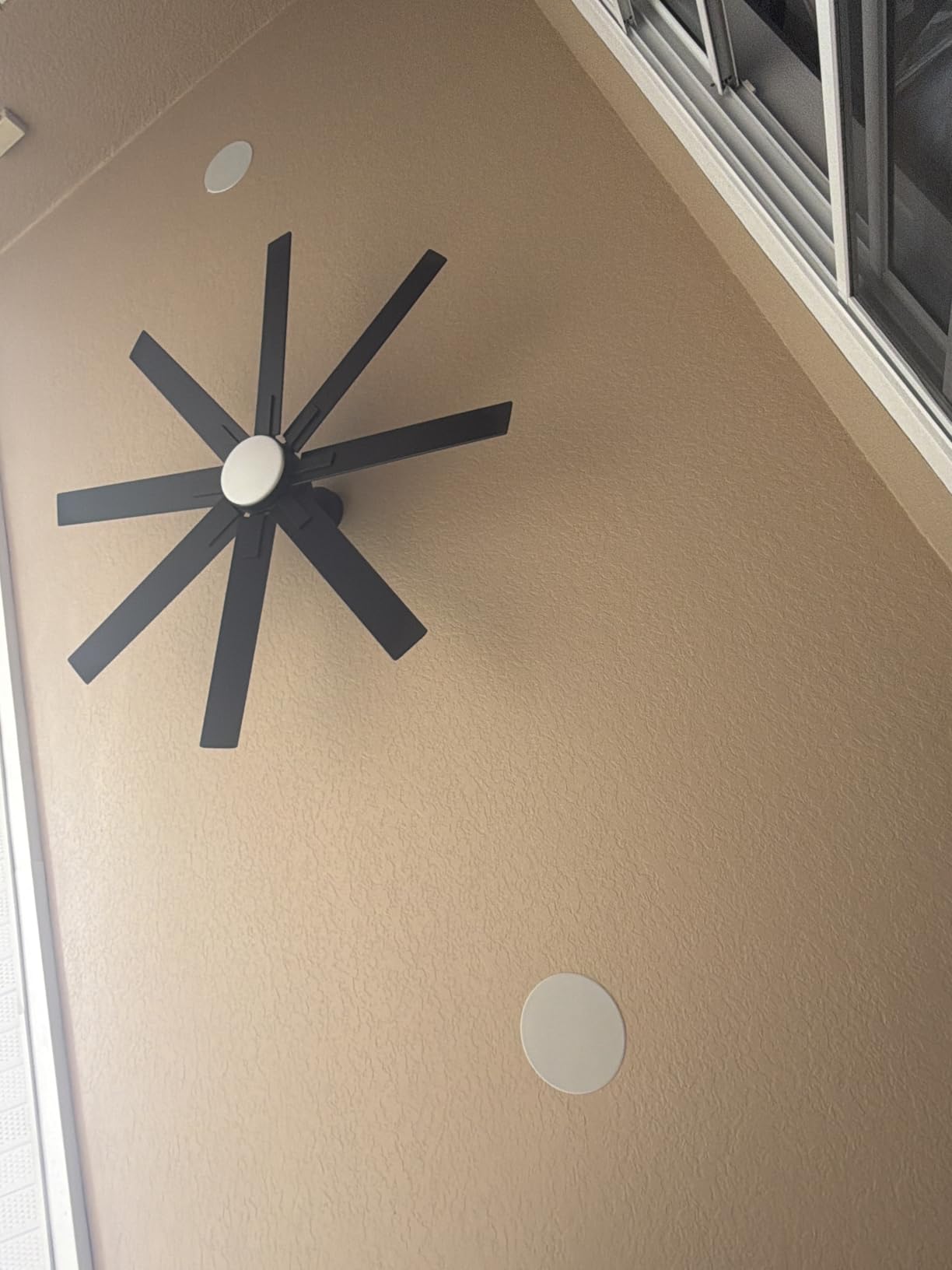
Height channels work best when energy arrives at the listening area from above rather than spreading across the ceiling and reflecting back. A 15-degree tilt plus a pivoting tweeter gets you close to the ideal position even when a duct or a joist has pushed the cutout off the plan, which is the situation most real installs end up in.
It is also the natural partner for a sloped or vaulted ceiling retrofit, where a flush driver fires into dead air and a tilted one still points down at the seats.
The brightness and the template
The recurring caution is the default treble. Klipsch house sound is bright, and without touching the attenuation switch some listeners find it harsh. Set the switch during setup and leave the grilles off while you sweep.
Also note the supplied cutout template runs slightly undersized, so check the measurement against your own hole rather than trusting the template as a guide. And since it is a single speaker, a pair means two purchases, and a 5.1.4 means four. Budget the extra clicks rather than assuming a pair is in the box.
9. Micca M-6C 6.5-Inch In-Ceiling – Most Versatile
Micca M-6C 6.5-Inch 2-Way in-Ceiling Speaker, Round, Each, Paintable, White
6.5 inch poly woofer, 50 Hz
Pivoting silk dome tweeter
7.6 inch cutout
Single speaker
Pros
- Very low cost for a pivoting silk dome tweeter
- 7.6 inch cutout matches common 6.5 inch openings
- Tweeter aim genuinely pulls sound to the seat
- Banana plug friendly terminals hold securely
Cons
- Bass rolls off quickly below roughly 70 Hz
- Soft grilles bend and resist reseating
- One-year limited warranty
The M-6C is the budget entry, and it is the model most people in our research repeatedly recommended for a first Atmos height position. Owners highlight the ratio of performance to cost, describing the sound as clear and balanced and comparable to speakers costing several times more.
Several buyers specifically endorse it for Dolby Atmos height channels, which is unusual for a model at this level. The pivoting 1-inch silk dome tweeter with 360-degree adjustment is the reason: aim genuinely works, and aim is most of what makes a height channel convincing.
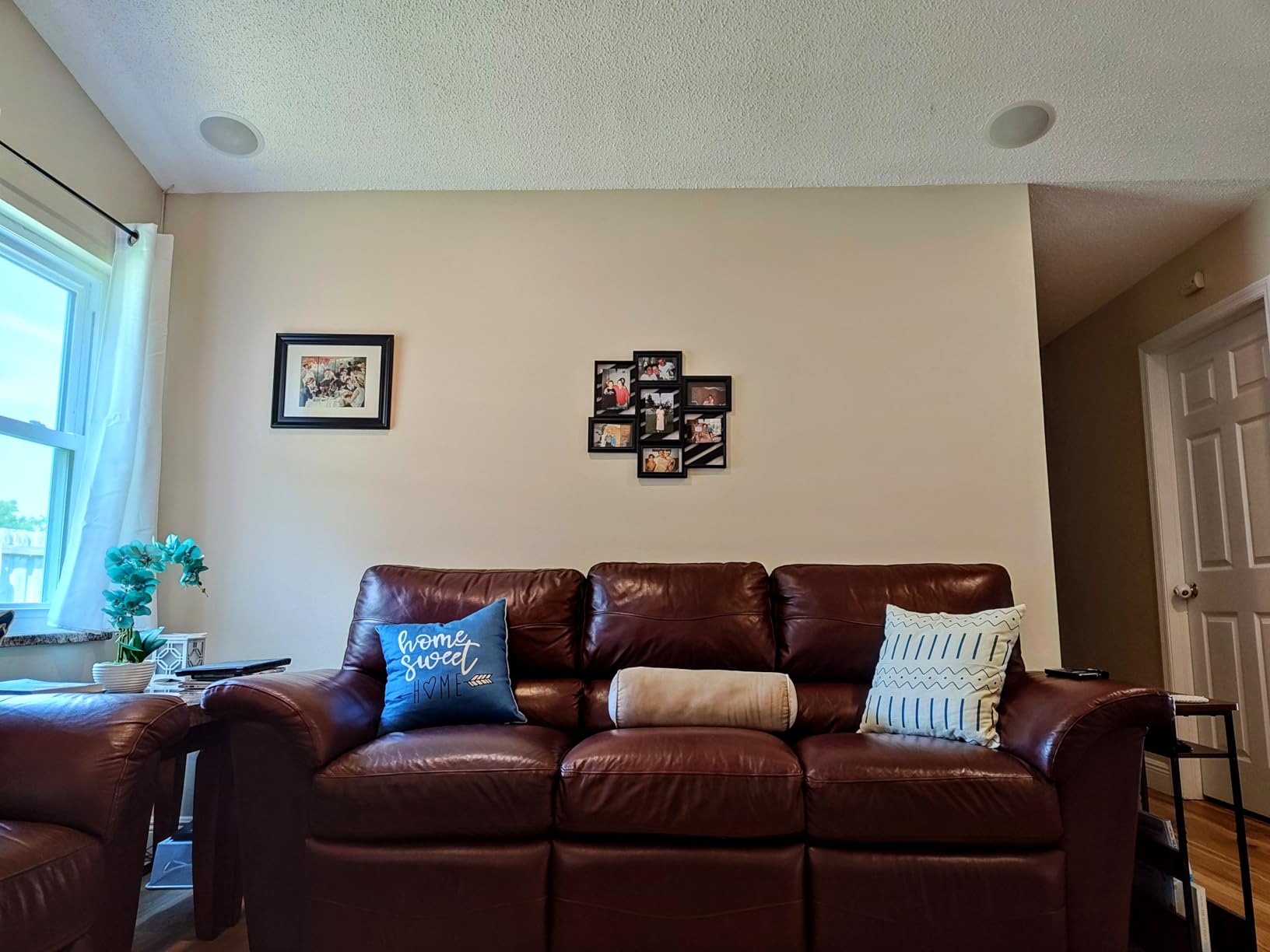
Specifications: 6.5-inch high-excursion poly woofer, 6 dB crossover network, 50 Hz to 20 kHz response, 8-ohm impedance, 87 dB sensitivity and 80 watts of power handling each. The cutout is 7.6 inches in diameter with a 9 inch outer dimension and 3 inch mounting depth, weighing 2.5 pounds.
The 3 inch depth is the second shallowest here, just behind the Pyle pair at 2.8 inches, which makes it among the easiest to fit into a tight or shallow ceiling cavity. Built-in mounting tabs grip drywall or wood directly, and the paintable rimed grille and bezel let it disappear visually. Warranty coverage is a limited one year.
Where the budget pick makes sense
The 7.6 inch cutout matches common 6.5-inch in-ceiling openings, which makes this an easy retrofit. If you are replacing speakers that are already in the ceiling, or you have measured and confirmed a 7.6 inch hole is what you need, this removes the biggest installation risk.
At 2.5 pounds each, four of them are comfortable to install solo, and the 87 dB sensitivity keeps the load easy on a mid-range receiver. The terminals accept banana plugs, which is a small quality-of-life detail when you are terminating wire at height.
Where it will not satisfy you
Bass rolls off quickly below roughly 70 Hz, so effects still need a subwoofer and this speaker adds no weight to the mix. Some listeners also consider these better suited to whole-house and surround ambience than to critical music listening, which is an honest limitation of the tier.
The soft grilles are the most common install complaint, since they bend and resist reseating after removal. Paint them before fitting them rather than after, and hold a spare in case one tears. It is a single speaker, so a full layout means four purchases.
10. Pyle PDIC1661RD 6.5-Inch Flush Mount Pair – Best for Secondary Rooms
Pyle 2 Way 6.5″ 200W in Ceiling Wall Speakers, PDIC1661RD, White, 1 Pair
6.5 inch flush mount 2-way
16 ohm impedance, 88 dB sensitivity
7.6 inch cutout
2.8 inch depth
Pros
- Very low cost for a matched flush mount pair
- 7.6 inch cutout often fits existing holes
- Spring-loaded terminals are quick and secure
- Stain-resistant grilles and good mounting clips
Cons
- Limited bass extension
- 16 ohm load
- Unclear grille removal instructions
- Basic rather than refined sound
This pair is not a reference recommendation, and it is not meant to be. It is the sensible choice for a garage, a den, a second living room or surround fill where the ceiling job is routine and the budget is genuinely constrained. Buyers treat it as a value option and say so plainly.
The most practical detail is the 7.6 inch cutout, which frequently matches holes from previous speakers. For a retrofit, that means a direct drop-in with no reframing of the ceiling, which is the difference between a one-afternoon job and a patching job.
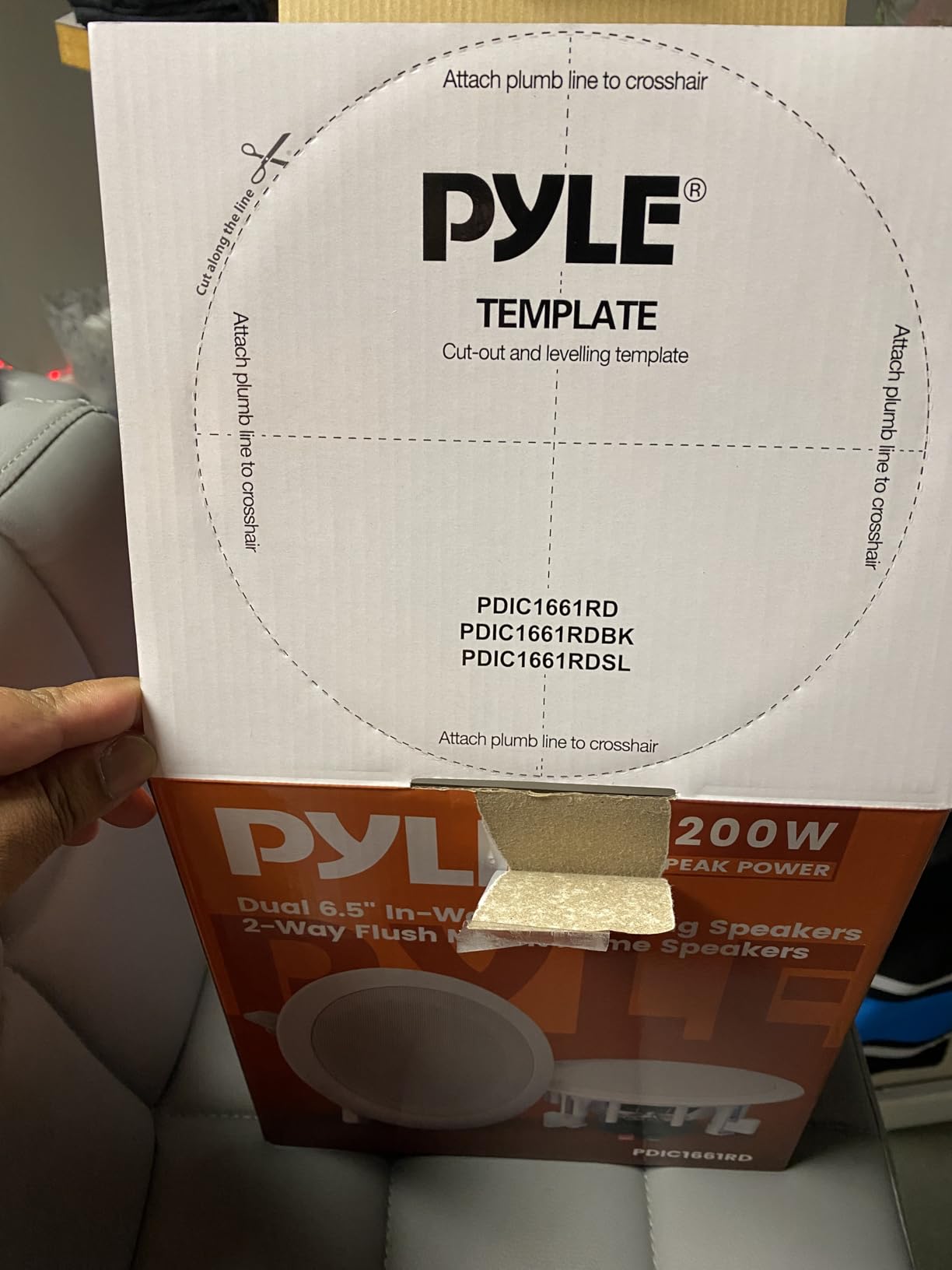
Specs: a 6.5-inch flush mount 2-way configuration with dual polypropylene cones and a polymer tweeter, 200 watts total system rating, 16-ohm impedance, 88 dB sensitivity and an 89 dB signal-to-noise ratio. Response runs 70 Hz to 20 kHz. Cutout diameter is 7.6 inches with a 2.8 inch mounting depth, and each speaker measures 9.0 by 3.1 inches.
The pair weighs 5.36 pounds and includes spring-loaded quick-connection terminals, stain-resistant grilles and a cutout template. Warranty coverage is one year. The full plastic construction keeps moisture resistance reasonable for indoor secondary spaces.
Reasons it still makes sense
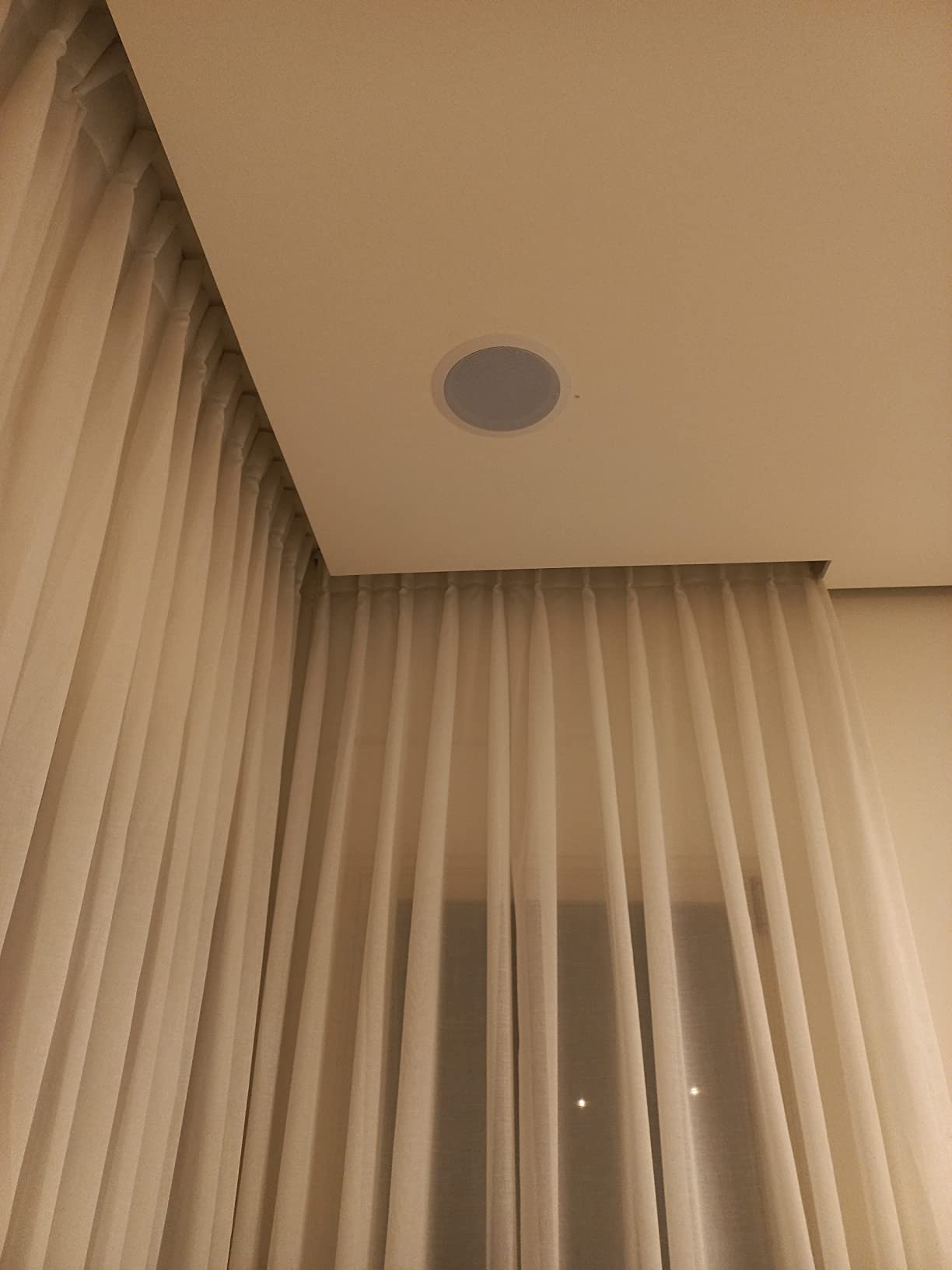
For surround fill, a second-zone living room or a bedroom, a height channel is an Atmos bonus rather than a reference requirement, and this pair delivers it. The 88 dB sensitivity is workable, and the 2.8 inch depth is among the shallowest here, so it fits a constrained cavity without drama.
Spring-loaded terminals make the wiring quick at height, which matters more than elegance. When you have four speakers to terminate, faster connections mean less time on a ladder.
The limitations are honest ones
Two things to check before committing. First, the 16-ohm impedance needs a receiver or amplifier that can drive high-impedance loads; some older or multi-channel amps are unhappy with that, and a mismatch can reduce the output available to the channel.
Second, sound quality is basic rather than refined, with limited bass extension, so reviewers with higher expectations rate it as average. The instructions for removing the metal grille are also unclear, which is a small irritation during install. For a primary theater ceiling, choose one of the models above instead.
Can You Use Regular Ceiling Speakers for Dolby Atmos? Angled vs Flush vs Upfiring
Yes, you can use a standard flush in-ceiling speaker for a height channel, and most of this roundup is exactly that. What changes is aim. An angled driver points its output at the seating, a flush driver sprays energy across the ceiling, and an upfiring speaker bounces sound off the ceiling from a cabinet sitting on top of a floor speaker.
Choose angled when the speaker can sit roughly in the right place. Choose flush when the cavity depth is too shallow for a tilted baffle, or when the ceiling is low. Choose upfiring when cutting the ceiling is genuinely not an option, and accept that it is an approximation of the real thing.
Forum consensus lands in the same place. Enthusiasts lean toward angled in-ceiling speakers when a true flush position exists, and toward upper-corner or on-ceiling downward-aimed speakers when the ceiling is low or ducts are in the way. One recurring correction: aim at the listening area as a whole rather than at one specific seat, because nobody sits in exactly the same place every night.
The low-ceiling question deserves a direct answer. Forum users note that low ceilings are actually kinder to Atmos, because the overhead reflection path is shorter and the effects arrive with less travel. The real constraint at 7 to 8 feet is physical space, not acoustics: you have less cavity above the drywall and less room to build a back can. In that case a shallow model such as the Micca M-6C or the Pyle pair installs more easily than a deep one, and an upper-corner mount aimed down at the seats often beats a cramped ceiling position.
How Many Ceiling Speakers Do You Need?
Four ceiling speakers is the standard target, because four height channels is what a 5.1.4 or 7.1.4 layout uses. Two is enough for a front-height-only upgrade, and three is what many 5.1.4 systems run in practice.
Pick the configuration from your room rather than from your receiver’s channel count. A 5.1.4 needs two front heights above or in front of the main listening position and two rear heights above or behind the surrounds. A 5.2.4 adds a second subwoofer channel, which does not change the ceiling count. A 7.1.4 adds surround back speakers, which moves the rear overheads slightly forward.
Once four ceiling speakers are in place, forum advice repeatedly favours moving surrounds to roughly the 110-degree angle and dropping the surround backs, because the overheads already carry the top rear cues. That trade frees amplifier channels and simplifies the layout.
For a narrow room or a single row of seating, two front heights plus two rear heights placed symmetrically is enough. For a wide room with a wraparound couch, four overheads spread further apart to cover every seat. Confirm positions on paper with the receiver in the room, mark the four cutout centres, then check the ceiling for ducts and joists before ordering.
What to Confirm Before You Order: Cutout Size, Depth and Back Can
Measure these four things before you buy anything. Most return-level frustration with in-ceiling speakers traces back to a cutout that was 0.25 inch too small or a body that did not fit the cavity.
Cutout diameter is the published number on every spec sheet, and it is not the same as the outer diameter. The Micca M-8C needs a 9.4 inch round hole inside a 10.7 inch flange, while the Micca M-6C needs 7.6 inches inside a 9 inch flange. Older 16-inch joist centres often cannot accept a 9.4 inch hole without trimming a stud.
Mounting depth is the second trap. Published depths here run from 2.8 inches on the Pyle pair to 5.4 inches on the Klipsch CDT-5800-C II. Standard residential joists give roughly 4.5 to 5.5 inches of clearance; anything deeper needs a check for a fire suppression line, a duct or a sprinkler head directly above the planned position.
A back can or fire and acoustic hood is the third item. A properly sized enclosure controls the low-frequency output and stops sound leaking into the room above, and in some jurisdictions a fire-rated hood is required when you penetrate a ceiling. Ask your installer to confirm the local requirement before you cut, and confirm whether a back can is included or sold separately.
Fourth, run the wire. Speakers at height mean a long run, and the ceiling position is the most expensive place to fix later. Our in-ceiling roundup for tighter budgets and the value ceiling speaker guide both cover the practical side of planning an install, and it is worth reading before the drywall goes up.
What Actually Matters When Choosing Ceiling Speakers for Atmos
Sensitivity decides how hard your receiver works. Four overheads at 95 dB, as the Acoustic Audio CS-IC83 is rated, need far less amplifier power than four at 87 dB. On long cable runs or a modest receiver, that difference decides whether the channels reach clean reference level.
Driver size decides weight. An 8-inch woofer moves more air than a 6.5-inch one, and overhead effects are mostly effects. If your cavity allows it, take the larger driver. If it does not, accept the smaller one and let a subwoofer handle the low end rather than forcing a model that will not fit.
Aim control decides realism. A pivoting or swiveling tweeter is a modest feature. An independently tiltable woofer, as on the Klipsch CDT-5650-C II, is a different category, and it earns its place in rooms where ducts prevent ideal placement.
Voice matching matters more than buyers expect. Ceiling speakers should sound like your front stage, and mixing a bright brand with a warm one overhead is audible on dialogue panning across the height layer. If a true match is impossible, match at least within the height layer itself, and use the receiver’s distance and level calibration to balance the rest.
Enclosure and grille finish decide longevity and appearance. A sealed driver assembly resists dust and fibres above the drywall, and a magnetic full-coverage grille with no branding sits flatter than a friction-fit plastic one. Both are cheaper to live with for a decade.
Impedance and power handling are the final check. Most models here are 8 ohm, which is the easy case, but the Pyle pair is 16 ohm, so confirm your receiver can drive it. For a broader view of the market, our entry-tier ceiling speaker roundup is the companion read for the cheapest end of the range.
How to Install In-Ceiling Speakers for Atmos
Mark the four positions first. Use the manufacturer’s cutout template, tape it in place, and check each location for joists, ducts, wiring and fire suppression heads before any cutting begins.
Run the wire next. In new construction, pull 14 AWG or better to each position while the joists are open, label both ends, and coil a service loop above the drywall.
Cut the holes with a hole saw or a keyhole saw at low speed, wearing eye protection and a respirator, and support the cutout from below so the drywall does not tear out on the last quarter turn.
Fit the speaker, connect the wire with polarity matched channel by channel, and tighten the clamps a firm hand-turn only. Overtightening is the single most common install mistake and it cracks the plastic mounting dogs on several models here.
Aim the driver or tweeter at the listening area before you fit the grille, with the grilles off for the entire process. Aim for the general seating region rather than one chair.
Refit the grilles, then run your receiver’s calibration with the measurement microphone at the main listening position. Save the result before you move anything, and re-run the sweep if you change the subwoofer settings later.
If the depth rating demands a back can and you have the cavity for one, fit it before the grille goes on. Once the ceiling is closed, adding one means cutting a second hole.
Frequently Asked Questions
Do I need Dolby Atmos ceiling speakers for a Dolby Atmos setup?
No, but they are the only speakers that reproduce the real overhead layer. Without them, a receiver typically downmixes an Atmos mix to 5.1 and virtualizers approximate the top layer using reflections off the ceiling or the screen. Angled drivers aimed at your seating give the precise effect that upfiring approximations cannot.
How many ceiling speakers do I need for a Dolby Atmos setup?
Four is the standard target, covering two front heights and two rear heights in a 5.1.4 or 7.1.4 layout. Two is enough for a front-height-only upgrade, and three is common in 5.1.4 systems where one ceiling position is blocked. Add two more only if your room and receiver support them.
Are angled ceiling speakers better than flush ones for Dolby Atmos?
Angled speakers are better when the driver can be aimed at the main listening position, because height effects then arrive from above rather than scattering off the ceiling. Flush speakers are the right choice when cavity depth is too shallow for a tilted baffle or when the ceiling is low. Upfiring speakers are the fallback when cutting the ceiling is not an option.
What cutout size do in-ceiling speakers need?
The cutout is the hole diameter in the ceiling, which is smaller than the visible outer diameter of the grille. Figures range from 7.6 inches on 6.5-inch models to 9.45 inches on 8-inch models. Always measure joist positions, because a 9.4 inch hole can straddle two studs in older construction.
Should ceiling speakers match my front speakers?
Matching is ideal, because ceiling speakers reproduce dialogue and effects, and a bright or thin overhead becomes obvious when a voice pans across the height layer. If a true match is impossible, match all four overheads to each other and use the receiver distance and level calibration to balance them against the front stage.
Can you install in-ceiling speakers in an existing ceiling?
Yes, though cutting into a finished ceiling is a one-way decision for most DIYers. Check for ducts, joists and wiring above the drywall first, confirm the cavity is deep enough for the body plus any back can, and use a stud finder across a wide area rather than a single point. New construction makes the same job far easier.
What is the difference between single and pair in-ceiling speakers?
A single listing sells one speaker, so a 5.1.4 height layer needs four separate purchases. A pair listing sells two matched speakers, and a four-pack or five-speaker system covers a whole layout in one box. Check the quantity in the box and the unit count before ordering, because it is the most common source of ordering mistakes in this category.
Final Verdict on the Best In-Ceiling Speakers for Atmos
For most people, the Polk Audio RC80i is the right answer: 8-inch drivers, an aimable tweeter, response down to 35 Hz and a matched pair in the box that makes a four-speaker height layer straightforward. If the budget is tighter, the Micca M-8C delivers the same core ingredients at a fraction of the cost, and its 90 dB sensitivity is easy on any receiver.
Buy the Klipsch CDT-5650-C II when placement is difficult and the driver cannot sit where the plan says, since the 15-degree tilt and pivoting tweeter are the best aim control in the roundup. Buy the Klipsch R-1650-C four-pack when the ceiling is low or the joists are tight, and buy the Acoustic Audio CS-IC83 five-pack when you want a complete matched layout from one box. The Yamaha NS-IC800 is the one to choose for a sealed driver and a genuinely invisible grille.
Whichever you pick, measure the cutout, confirm the cavity depth, and decide angled versus flush before the drywall goes up. The best in ceiling speakers for Atmos setups in 2026 are the ones that physically fit your ceiling and can be aimed at your seats, and those are the two questions no spec sheet can answer for you.