
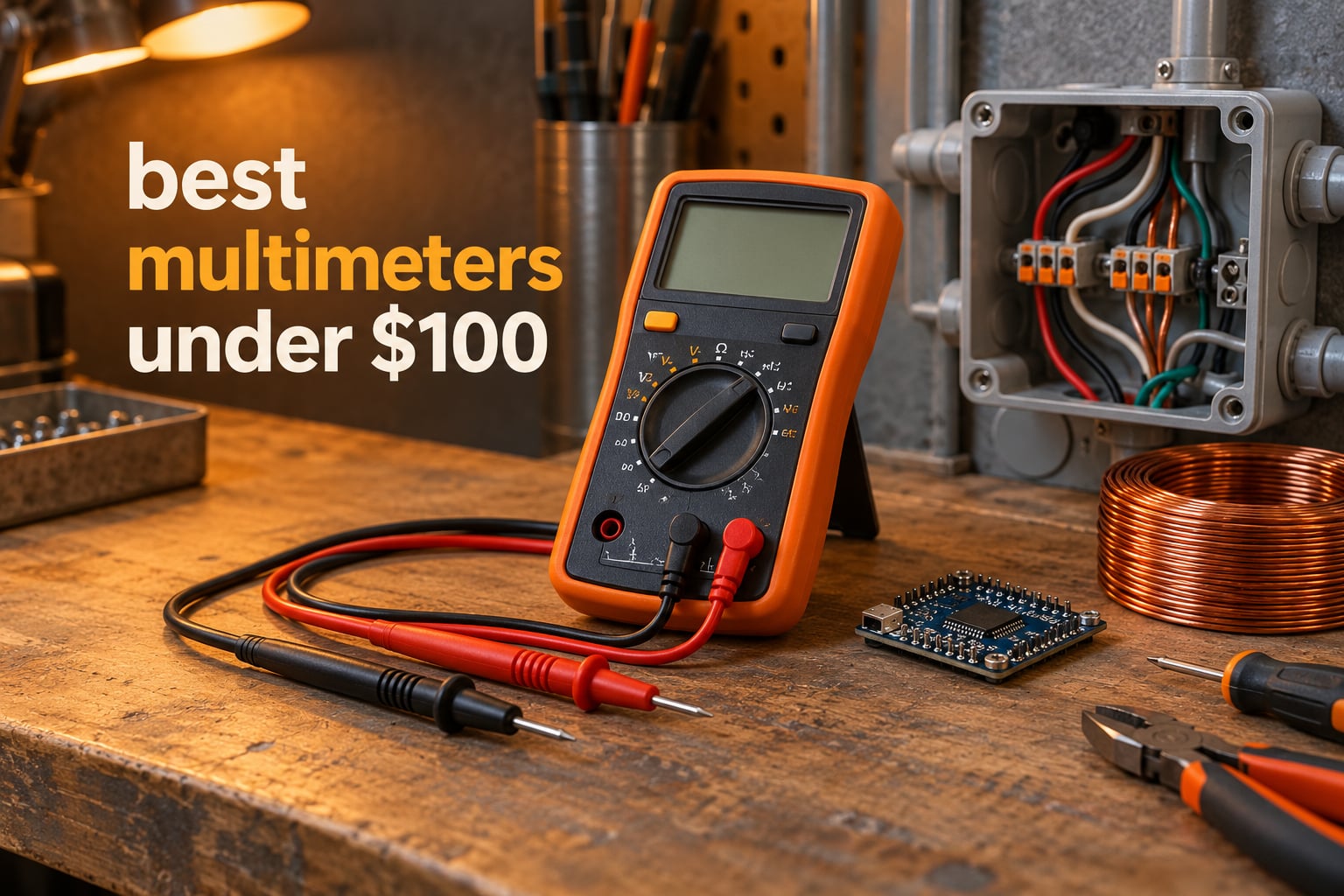
Every roundup of multimeters I have read in the last year puts something expensive in the top three. A professional Fluke here, a Klein MM700 at the top of the range there, and a fieldpiece that costs more than a used car. That is fine for them, but it does not answer the question most people actually type into a search box.
The best multimeters under 100 dollars is a much tighter brief than it sounds. You are not buying a hobby, you are buying a safety-rated instrument that will sit in a garage or a toolbox and get pointed at live circuits. The gap between an entry-level meter and a trade-brand one is not a quality gradient, it is a change in what the instrument will safely do and what it can measure.
We compared eight meters that all land under that ceiling, read the specifications closely and weighed them against what technicians and hobbyists report in forums like r/multimeters and r/AskElectronics. The short version: the AstroAI AST-6000-D is the one I would put in my own toolbox, the Fluke 101 is the one I would put in an apprentice electrician’s bag, and for electronics bench work the FNIRSI DMT-99 does something the others cannot at all. If you want the full reasoning for each, keep reading. If you want our general approach to measurement instruments, our broader multimeter roundup covers the tiers above this budget too.
Table of Contents
Top 3 Multimeter Under $100 (October 2026)

AstroAI 6000-Count True RMS
- True RMS AC measurement
- 6000 counts auto-ranging
- Temperature and capacitance
- Dual ceramic fuses

Crenova MS8233D TRMS
- True RMS 6000 counts
- NCV live-wire detection
- CAT III 600V rated
- Case and clips included

FNIRSI DMT-99
- 9999 counts True RMS
- Rechargeable 1500mAh battery
- Color TFT screen
- Waveform monitoring
Two of those three give you True RMS readings and a CAT rating worth trusting. The third wins on a completely different axis, which is resolution and battery life rather than safety certification.
Quick Overview: Every Meter We Compared
| Product | Specifications | Action |
|---|---|---|
| AstroAI 6000-Count True RMS Multimeter |
|
Check Latest Price |
 AstroAI AM33D 2000-Count Multimeter AstroAI AM33D 2000-Count Multimeter |
|
Check Latest Price |
| Crenova MS8233D True RMS |
|
Check Latest Price |
 AstroAI DM130B 4000-Count AstroAI DM130B 4000-Count |
|
Check Latest Price |
 INNOVA 3320 Auto-Ranging INNOVA 3320 Auto-Ranging |
|
Check Latest Price |
 Fluke 101 Digital Multimeter Fluke 101 Digital Multimeter |
|
Check Latest Price |
 Klein Tools MM325 Klein Tools MM325 |
|
Check Latest Price |
| FNIRSI DMT-99 |
|
Check Latest Price |
Every meter below carries two customer photographs, so you can see what owners actually received rather than just the product render.
1. AstroAI 6000-Count True RMS Multimeter – Best Overall
AstroAI Digital Multimeter, True RMS 6000 Counts Auto-Ranging Volt Meter for Automotive & Home Electrical Troubleshooting, AC/DC Voltage Current Resistance Continuity Capacitance Temperature Tester
True RMS
6000 counts auto-ranging
AC/DC voltage and current
Temperature and capacitance
Pros
- True RMS on AC voltage and current
- 6000-count auto-ranging display
- Covers voltage current resistance capacitance frequency duty cycle and temperature
- Data hold auto shut-off and kickstand
- Dual ceramic fuses rather than glass
Cons
- Frequency counter tops out far below the advertised 60MHz
- Backlight times out quickly with no obvious way to keep it on
- Included leads draw complaints from some buyers
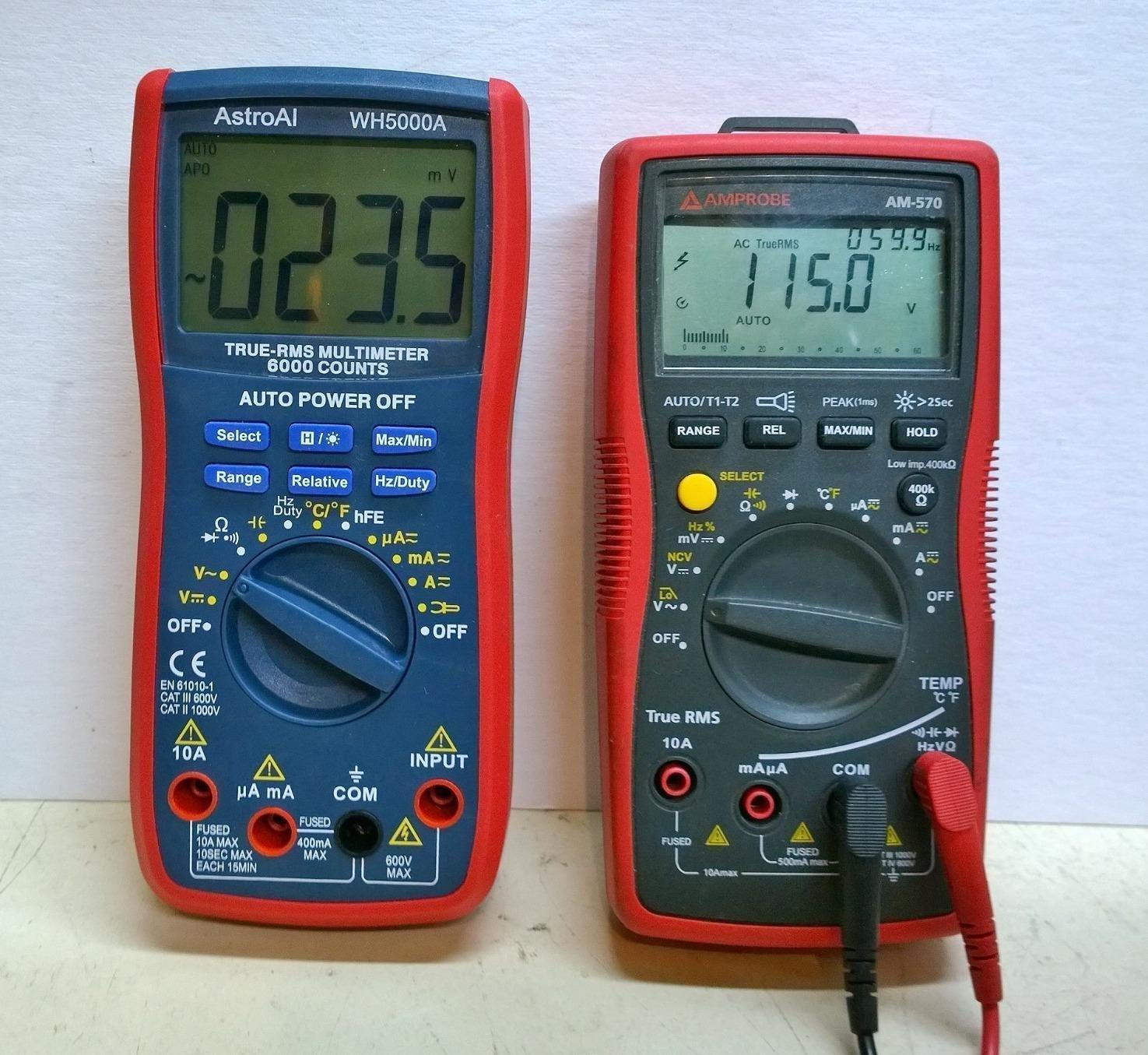
This is the meter I keep reaching for. The model number is AST-6000-D and it arrives with a 9V battery, a pair of test leads, a multi-function socket and a manual, so nothing needs buying before the first measurement.
What separates it from the cheap tier is function coverage. It measures AC and DC voltage, AC and DC current, resistance, capacitance, frequency, duty cycle, diode drop, continuity and temperature through the included thermocouple. That is the full shopping list of what a technician normally reaches for, packed into a meter that costs less than a takeout order.
The 6000-count auto-ranging display means you turn the dial to the function, not to a range, and the meter figures out the rest. Experienced hobbyists in forum threads report checking its DC and AC RMS readings, resistance and diode figures against meters costing several times more and finding them within spec.
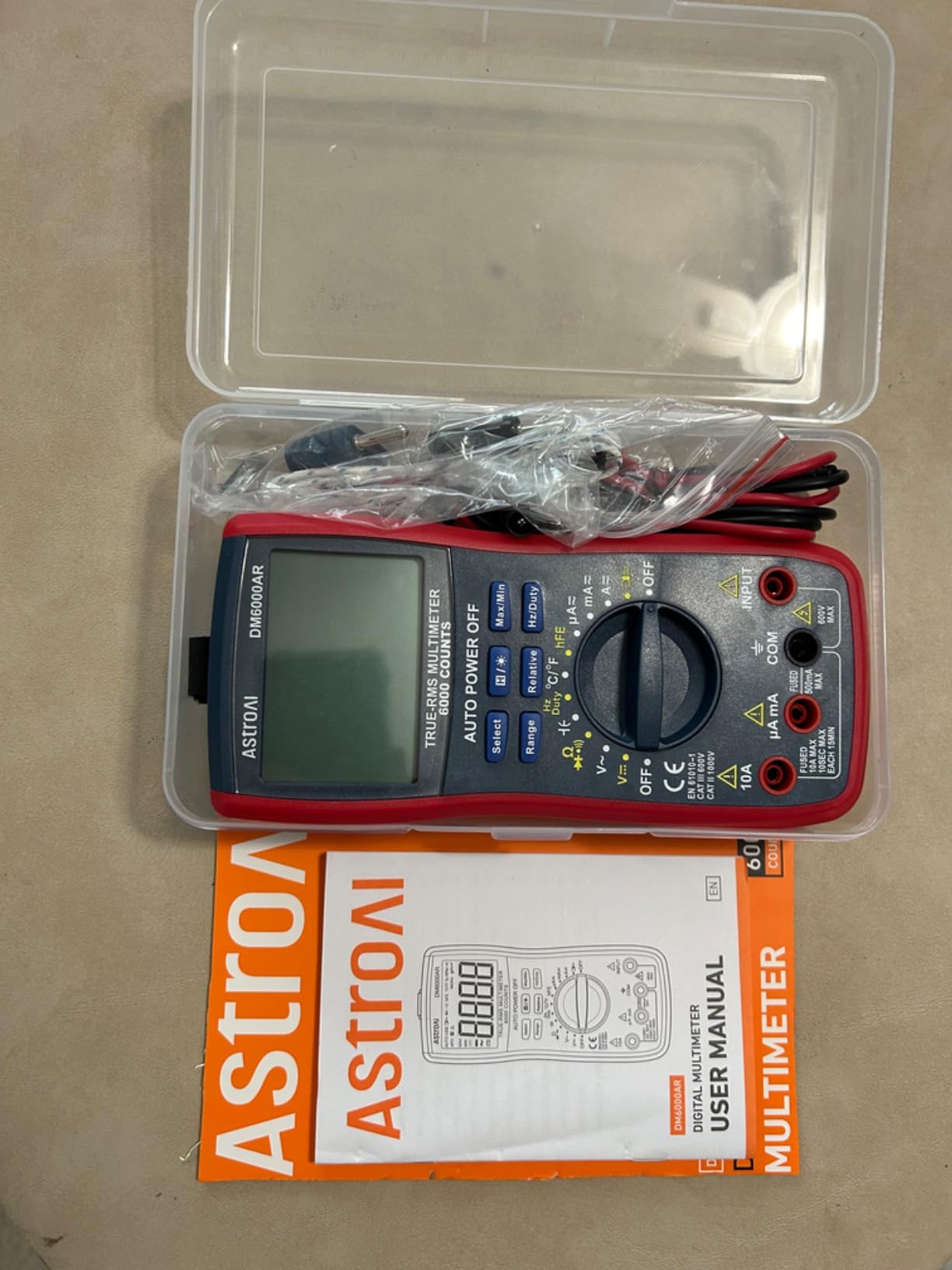
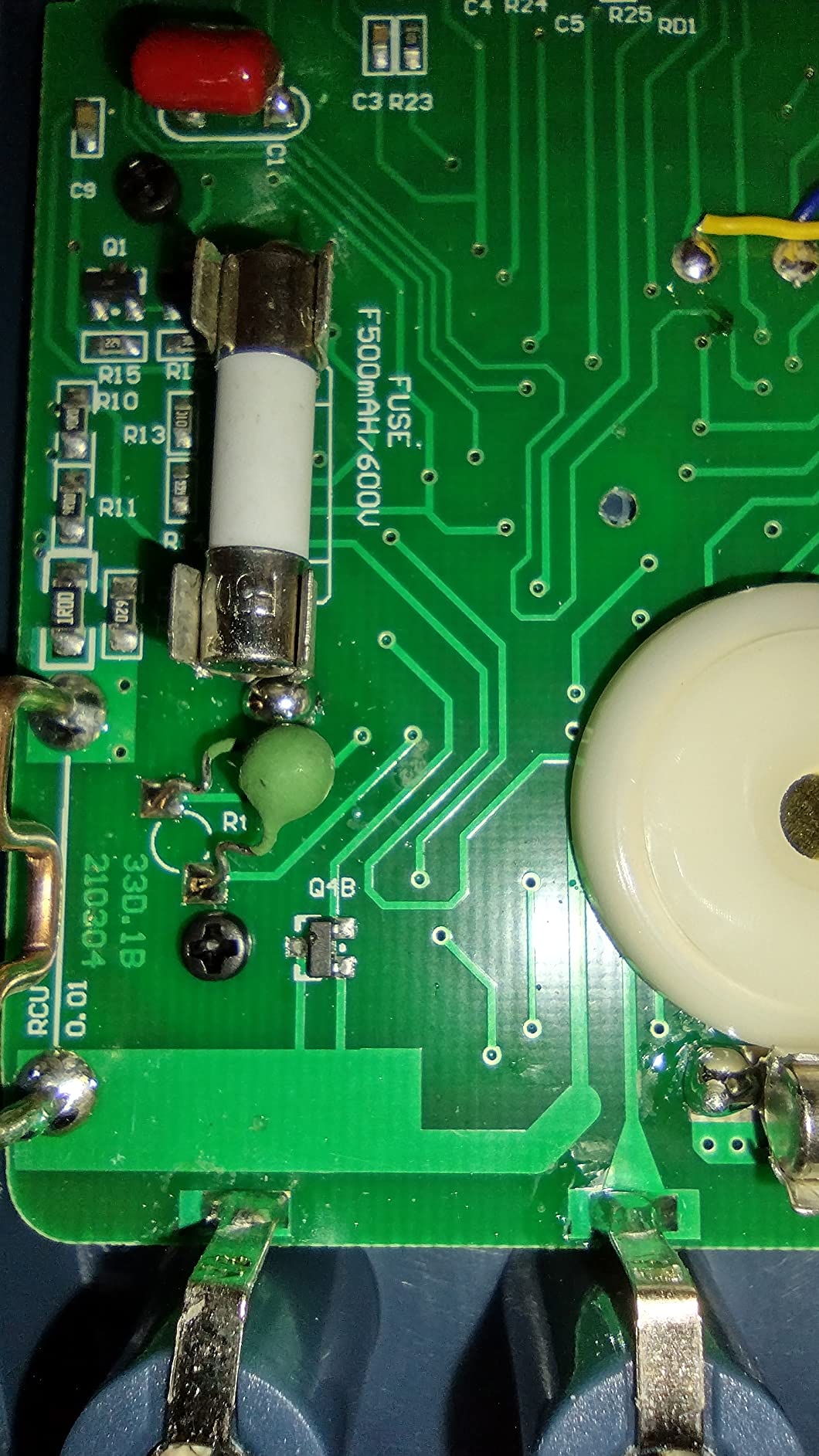
Safety hardware is where budget meters usually cut corners and this one does not. It carries double ceramic fuses rated F400mA 600V and F10A 600V, rated explosion-proof, instead of the fragile glass fuses found on entry-level models. There is a magnetic hanger on the back and a kickstand, so it works on a ladder or a bench without a second pair of hands.
Two honest caveats. The advertised 60MHz frequency counter behaves more like a 16MHz range and needs a fairly strong signal to lock on, so treat frequency as a secondary function. The backlight also cuts out quickly and there is no obvious way to keep it lit, which matters in a crawlspace.
What this meter handles well
True RMS matters here, and this is one of the few sub-100 dollar meters that delivers it on both AC voltage and AC current. On modern electronics with switch-mode supplies, dimmers, or variable frequency drives for fans and pumps, an averaged RMS reading can be badly wrong. This meter reads those waveforms properly.
It is also the pick for anyone splitting time between the car and the house. AC and DC current at 10A covers alternator output checks, and the thermocouple handles a stove element or an oven thermostat without a second tool.
Where it falls short
The transistor test socket is arranged C-B-E rather than the conventional B-C-E order, which makes testing a TO-220 package mildly annoying if you are used to the standard layout. It is a soldering-bench frustration, not a household one.
Some buyers also report that the supplied leads feel cheaper than the meter deserves, and we agree it is worth spending a few dollars on a proper lead set early. That is exactly the kind of small addition our benchtop instrument picks assume you will make. Budget for a good set of probes and a small screwdrivers set before you start.
2. AstroAI AM33D 2000-Count Multimeter – Best on a Tight Budget
AstroAI Digital Multimeter Tester 2000 Counts with DC AC Voltmeter and Ohm Volt Amp Meter; Measures Voltage, Current, Resistance, Continuity and Diode, Blue
1999 count display
AC and DC voltage
DC current resistance diode
Backlit LCD with data hold
Pros
- Comes with a 9V battery and test leads in the box
- Double fuse anti-burn protection
- Backlit display and data hold make readings easy in dim spaces
- Silicone cover and low battery indicator
- Three year warranty from AstroAI
Cons
- 1999-count display limits resolution on low-level readings
- No AC current measurement
- AC voltage below 100mV is out of range
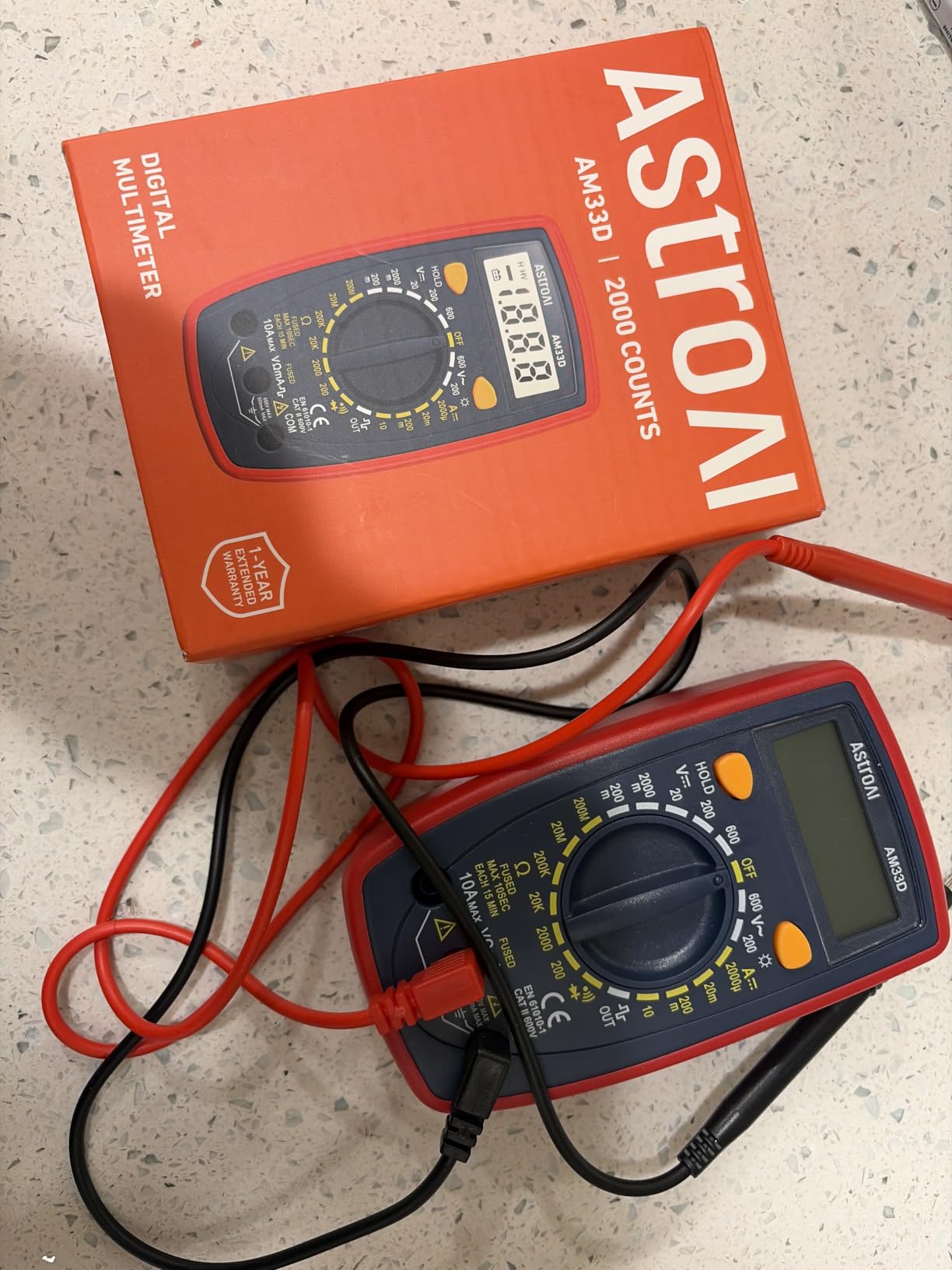
With tens of thousands of reviews behind it, the AM33D is the most proven meter in this roundup by a wide margin. It is the first meter most people buy and, for a lot of them, the only one they ever buy.
The 3 and a half digit, 1999-count backlit display with data hold covers AC and DC voltage, DC current, resistance, continuity and diode testing. That is enough for outlet testing, checking car and household batteries, tracing a blown fuse and testing switches. It runs from 2 to 500 volts, which means it covers most low-voltage electronics work comfortably.
Sampling runs at two readings per second with positive and negative polarity indication. Owners consistently describe it as accurate for its class and easy to read, and a recurring theme is using it to replace far more expensive tools on routine jobs.
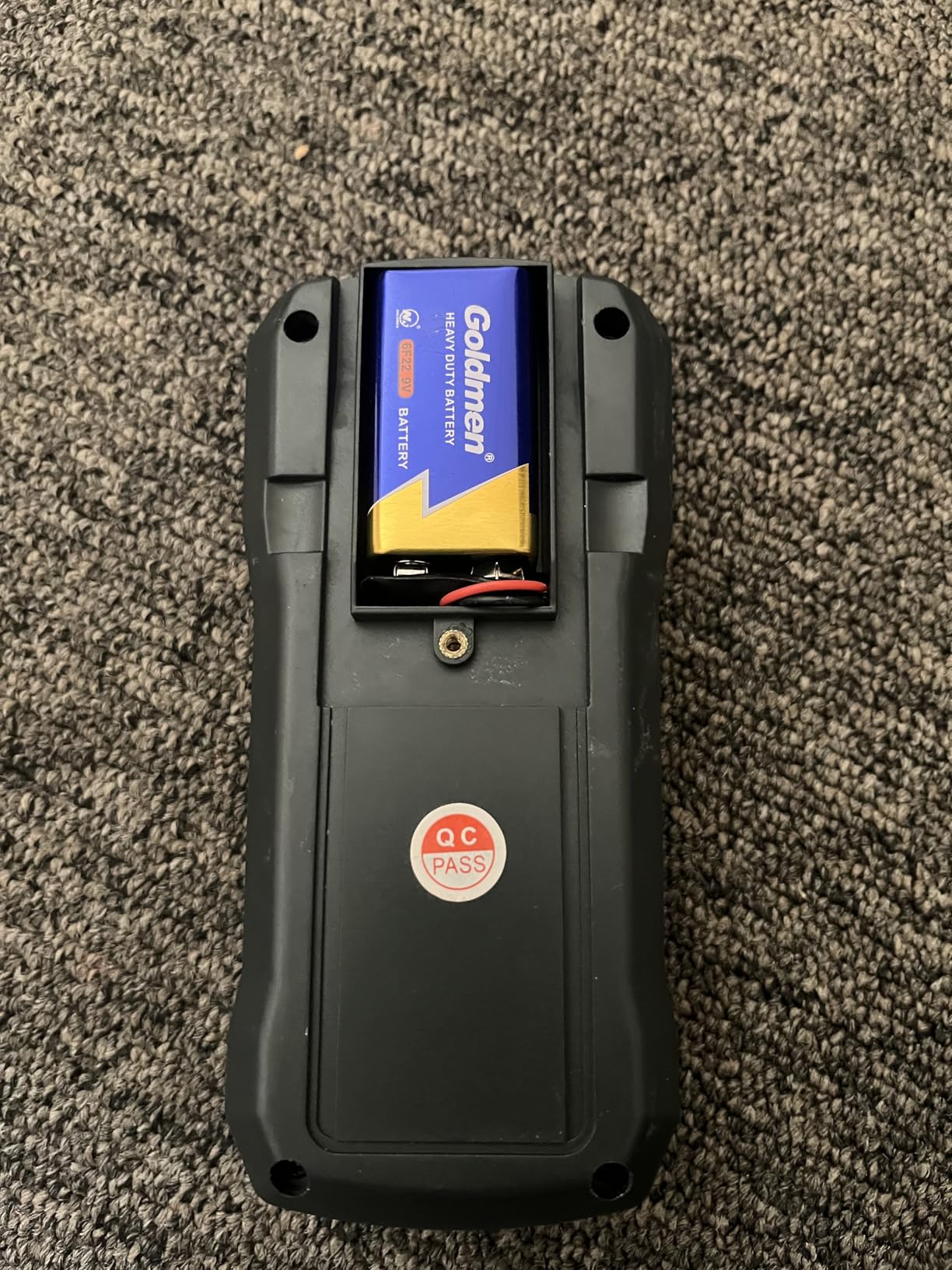
It ships with a 9V 6F22 battery, test leads and a user manual, so the box is complete. The double fuse anti-burn design, silicone cover and low battery indicator show the manufacturer paid attention to the failure modes that actually hurt beginners.
AstroAI also backs it with a three year warranty and a California-based support team that states it responds within 24 hours. That is a longer warranty than several competing brands offer at twice the price, and it is a genuine value factor at this level.
Where a 1999-count meter is the right call
Counts describe how many digits the display can show, and more counts means finer resolution on small readings. If you are measuring a 5V rail or a diode forward drop, that extra resolution is not cosmetic, it is the difference between seeing a change and rounding it away.
For household outlets, 12V automotive circuits, battery testing and general continuity work, resolution is not the limiting factor. Understanding and safe technique are, and this meter is simple enough that you will actually use it correctly.
Where you will notice the limits
There is no AC current measurement at all. If you need to measure running current on an AC circuit, this is not the tool, and it is the most commonly cited reason buyers step up a tier.
AC voltage below 100mV is also outside its range, which rules it out for low-level audio or signal work. Know that before you buy it for a specific job rather than after you have the probes in hand.
3. Crenova MS8233D True RMS 6000 Counts – Best Value Kit
Crenova MS8233D Multimeter TRMS 6000 Counts Auto-Ranging Live Wire NCV
True RMS
6000 counts
NCV live-wire detection
IEC61010-1 CAT III 600V
Pros
- Non-contact voltage detection with audible and visual alarms
- Switchable manual and auto ranging modes
- Carrying case alligator clips and batteries included
- Dual fuses and insulated rubber holster
- Max and min value capture with data hold
Cons
- Only a one year warranty
- Manual ranging mode adds dial work for some measurements
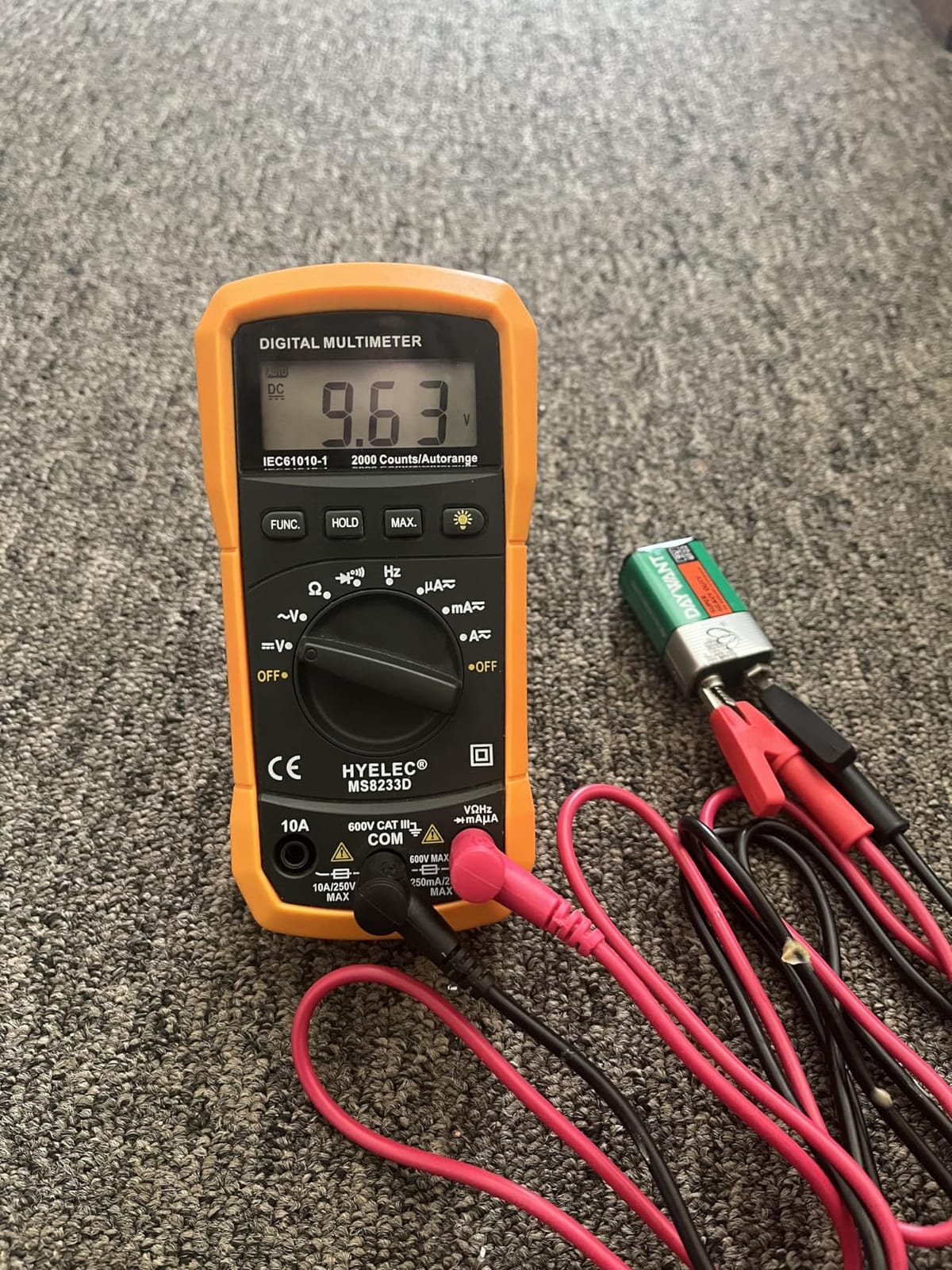
The MS8233D is the meter that arrives most complete. In the box you get the meter, probe test leads, alligator clips, two AAA batteries, a carrying bag and a manual. Nothing to add before the first job.
It conforms to IEC61010-1 CAT III 600V, which is the rating that matters for residential work, and it carries two internal fuses plus an insulated rubber holster. Buyers single out the accessory kit as unusually complete for the money, which is why it takes the best value slot here.
Function coverage is broad: DC and AC voltage, DC and AC current, resistance, capacitance, frequency, duty cycle, continuity and diode, plus live wire and non-contact voltage detection with both a buzzer and a light alarm. The buzzer speeds up as the detected AC voltage rises, which is a genuinely useful cue.
The 6000-count screen is a 3 and 5/6 digit readout with a bright backlight for dark workspaces. You can switch between manual and auto ranging, and it captures max and min values, holds data and shuts off automatically to protect the batteries.
The display works at 3 samples per second, fast enough that the readout does not feel laggy while you probe around a connector. Low battery indication and auto power off handle the small stuff that separates a well-designed instrument from a bare panel with leads attached.
Why the NCV mode earns its place
Non-contact voltage detection lets you find a live conductor through insulation without touching it. On a wall outlet or a buried cable run, that is faster and safer than probing blindly. Treat it as a screening tool rather than proof: cheap NCV circuits give false positives from fluorescent fixtures, motor controllers and partially energised circuits, so always confirm with a measurement.
Our view on True RMS for household 120V work is that a well-calibrated averaged meter is fine, which is why our dedicated True RMS home meter guide focuses on waveform accuracy rather than safety. For modern electronics, the True RMS in this model earns its place.
Where it falls short
The one-year warranty is the weakest in this roundup, and for a tool you may keep for a decade that is worth weighing. It is the main reason this model sits below the AstroAI on our list despite the excellent accessory kit.
Manual ranging mode means extra dial work when you want to force a specific range. It is a legitimate feature for bench work where you know exactly what you are measuring, but it adds friction for someone learning.
4. AstroAI DM130B 4000-Count Multimeter – Best for Beginners
AstroAI DM130B Multimeter, 4000 Counts, Auto-Ranging, Capacitance Testing
4000 counts auto-ranging
Capacitance testing
NCV detection
Bright backlight
Pros
- Clear dial layout and large easy-to-read display
- Auto-ranging across voltage current resistance and capacitance
- Capacitance plus NCV covers most homeowner jobs
- Compact hand-sized body that fits a small toolbox
- Runs on three standard AAA batteries
Cons
- Supplied test leads feel flimsy and need twisting to seat
- Included batteries reportedly zinc-oxide and prone to leaking
- Instructions may be limited depending on region
The DM130B is the pick if the last time you held a multimeter you were checking a battery and did not know what the dial positions meant. Its selling point is not raw capability, it is that the layout makes sense on the first attempt.
It auto-ranges across AC and DC voltage, DC current, resistance and capacitance, which covers AC run capacitors, one of the most common things homeowners measure beyond outlets and batteries. Non-contact voltage detection and a continuity buzzer round out the useful set, and the bright backlight stays readable in a garage or under a sink.
Owners repeatedly describe it as a good entry-level or backup meter that quietly replaces more expensive tools on routine work, with the simple layout and auto-ranging singled out as the reasons.
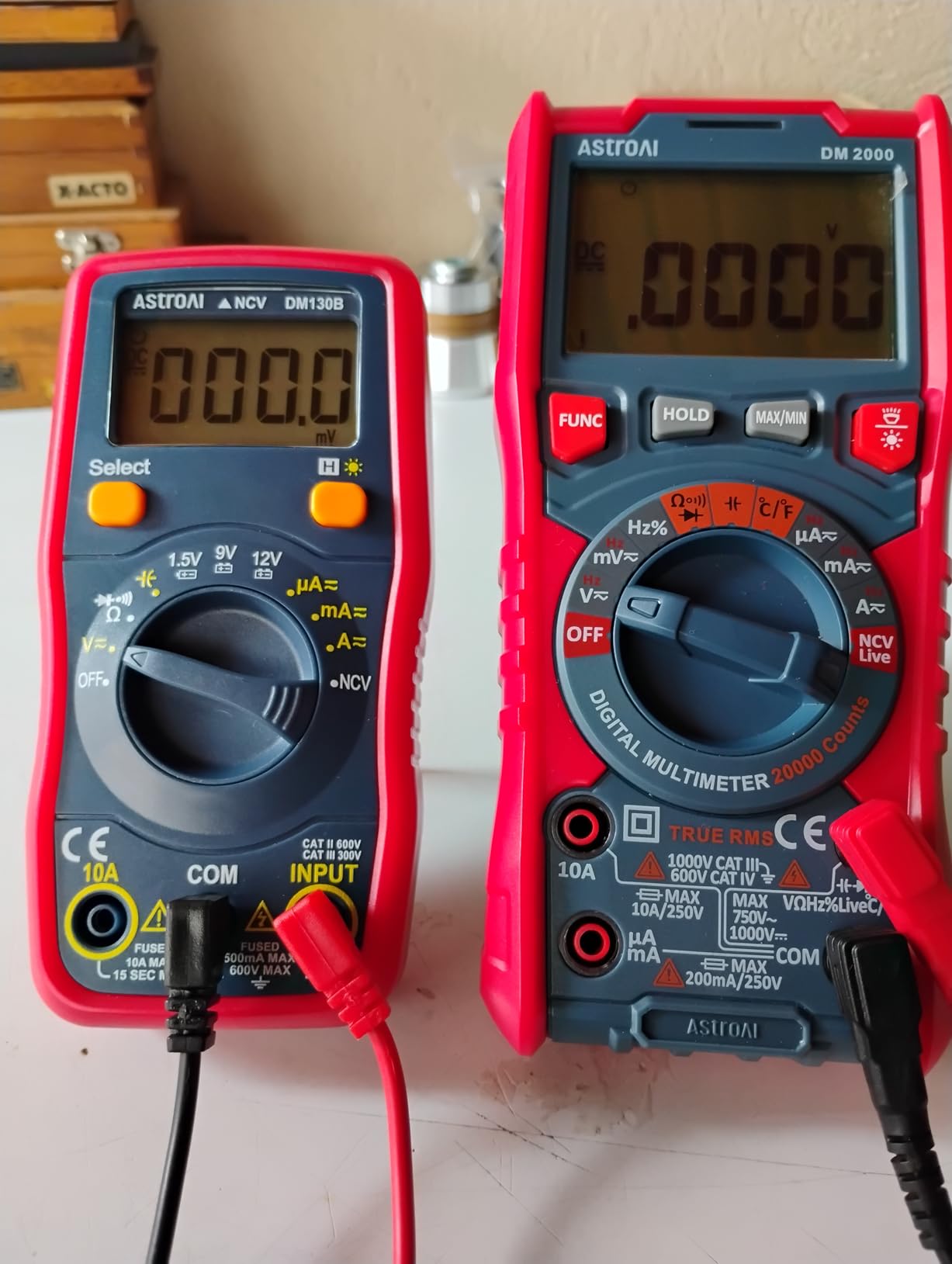
It runs on three AAA batteries, which is a genuine convenience compared with the 9V batteries most competitors use. Standard cells are cheap and available everywhere, and you can carry spares in the same pocket as the meter.
The body is compact at 6.3 by 4.53 by 1.57 inches and weighs under 10 ounces, so it fits a small toolbox next to a screwdriver and a pair of pliers without dominating the space.
Why auto-ranging helps a beginner most
Manual ranging is the single most common reason new owners abandon a meter. You pick the function, then pick the range, and if you pick the wrong one the display shows an over-range symbol and you have to start over. Auto-ranging removes the second decision entirely, which means fewer mistakes and more measurements per minute.
The tradeoff is that auto-ranging is slower on very low and very high values on some meters, and you lose the ability to force a range for fine work. For household diagnostics that is a trade most people should happily make.
Where you will notice the limits
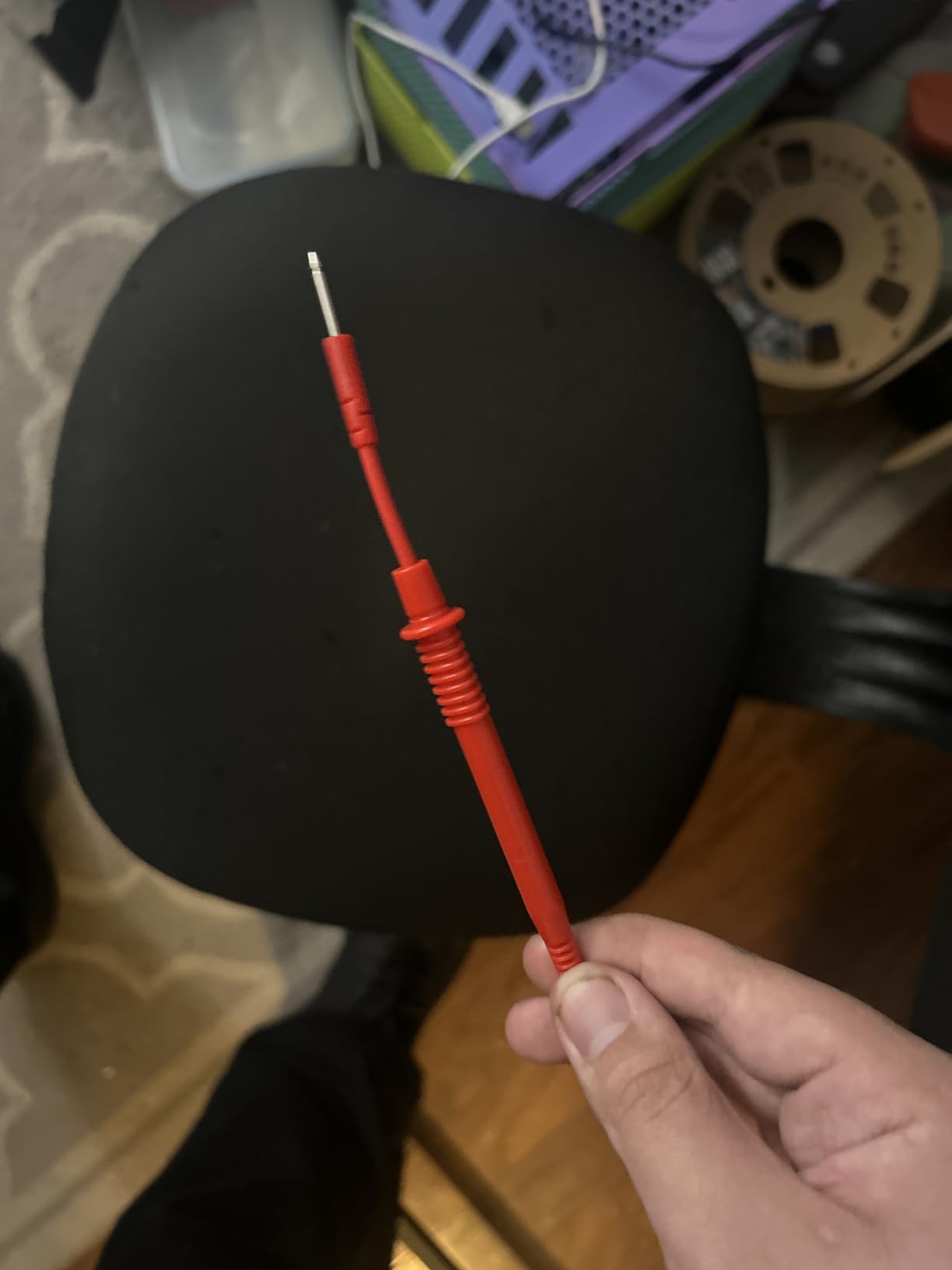
The included test leads are the weak point. Owners report they feel flimsy and sometimes need twisting to seat fully in the sockets, which produces intermittent readings that look like a meter fault. Replace them early with a known good set.
The supplied batteries are also reported to be zinc-oxide type, which can leak and corrode the battery contacts. Swap them for alkaline before first use, and remove them if you are storing the meter for months.
5. INNOVA 3320 Auto-Ranging Multimeter – Best for Automotive and Battery Testing
INNOVA 3320 Auto-Ranging Digital Multimeter, Red & Black
UL certified
Fully auto-ranging
Battery load test with color LEDs
10 MegOhm input impedance
Pros
- Under-load battery load test with color-coded LED indicators
- 10 MegOhm input impedance protects automotive control units
- Buyers report close agreement with Fluke 179 and 87-5 references
- Owners report five to six years of continuous service
- UL certified and compact enough to keep several
Cons
- AC current limited to roughly 200 mA
- AC voltage below about 50V varies noticeably
- No backlit display and no data hold
The INNOVA 3320 is the oldest design here and still the one that solves automotive problems best. The headline feature is the under-load battery test: colour-coded LEDs report battery charge status while the battery is supplying current, which is the only way to see a battery that reads fine at rest but fails the moment you crank the engine.
Its 10 MegOhm input impedance is the other automotive-specific detail. Modern vehicles have control units that can be damaged by a meter pulling too much current from a signal circuit, and that high impedance input keeps the meter from being the problem.
It is UL certified, fully auto-ranging across measurement types, and handles automotive components, batteries, solar panels, fuses and wiring. The single-setting resistance function for AC and DC voltage is a small quality-of-life touch that saves a dial turn every time.
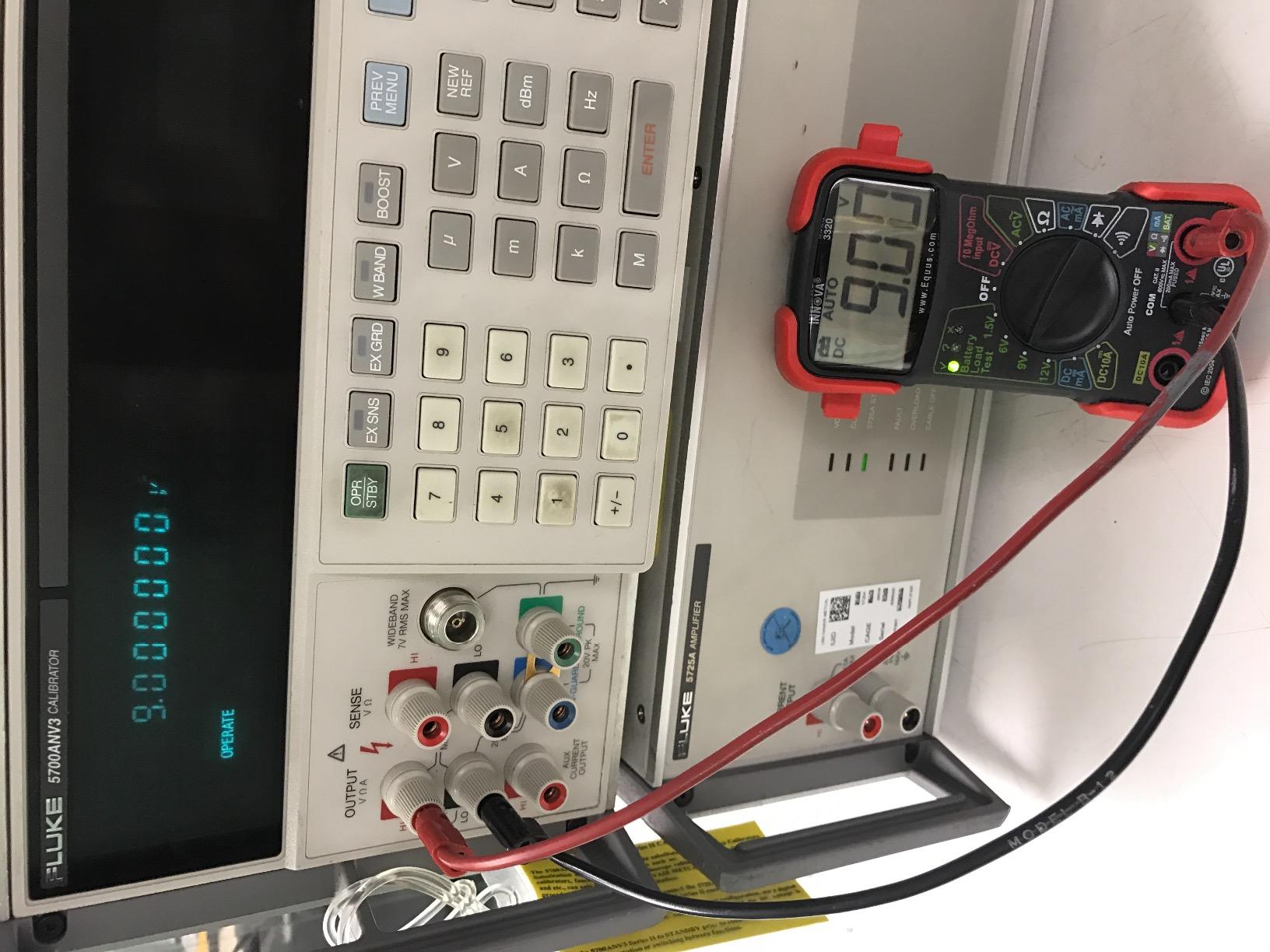
Buyers benchmark this meter against Fluke 179 and Fluke 87-5 references and report near-identical readings on DC volts, resistance and DC current. That is the strongest accuracy claim in this roundup, and it comes from owners rather than from a spec sheet.
It is also a long-service tool. Owners report five to six years or more of continuous use, and the compact body is small enough to keep one in the car, one in the garage and one in the house.
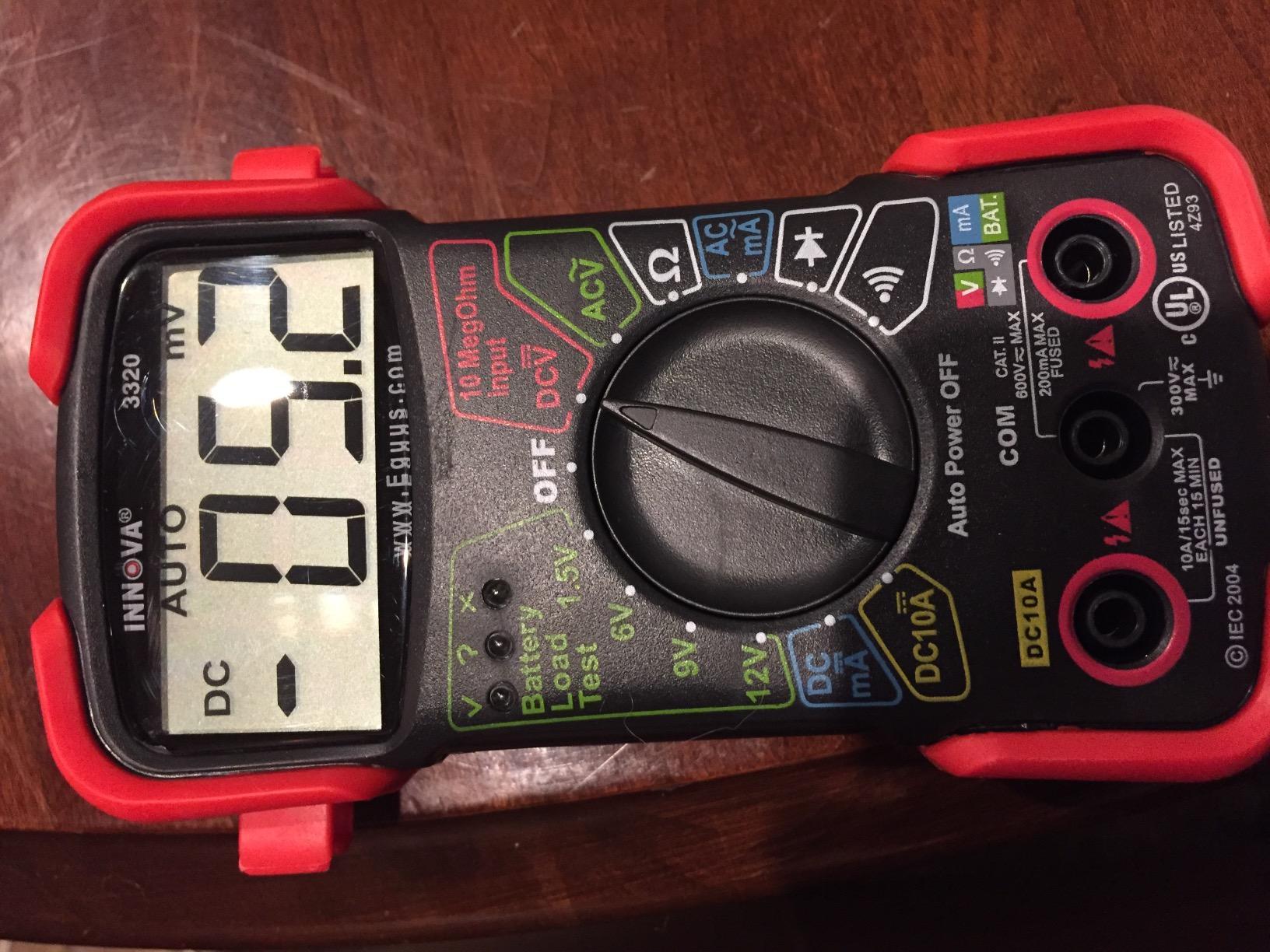
Why the load test matters
A standard voltage check tells you the open-circuit voltage of a battery, which recovers to healthy-looking levels the moment the load comes off. A load test applies current and watches what the voltage does under stress. That is why the LED indicators on this meter exist, and no other meter in this roundup has an equivalent.
For parasitic draw hunting, you want a meter with data hold to freeze a reading while you pull fuses one at a time. This meter has none, which is the one gap worth noting if battery drain is your primary job.
Where it falls short
AC current tops out around 200 mA, so a clamp meter is needed for anything substantial on an AC circuit. AC voltage readings below roughly 50V also vary noticeably against reference meters, which rules it out for low-voltage AC signal work.
The display is not backlit, and several owners note that as a real drawback in dim spaces. Probe connectivity is also weak by modern standards, which makes the continuity beep harder to trigger. Auto-ranging can also feel sluggish in DC volts mode, and there is no case or memory hold function.
6. Fluke 101 Digital Multimeter – Best Trusted-Brand Pick for Electricians
FLUKE-101 Digital Multimeter
0.5 percent basic DC accuracy
CAT III 600V rating
Diode and continuity with buzzer
160 g one-handed body
Pros
- Highest average rating in this roundup at 4.7
- CAT III 600V rating suited to residential and light commercial panels
- Light 160 g body is comfortable for one-handed use
- TL75 test leads and batteries included
- Rugged durable construction
Cons
- Manual ranging rather than auto-ranging
- No capacitance frequency or temperature functions
- 600V maximum voltage is half what higher-spec meters handle
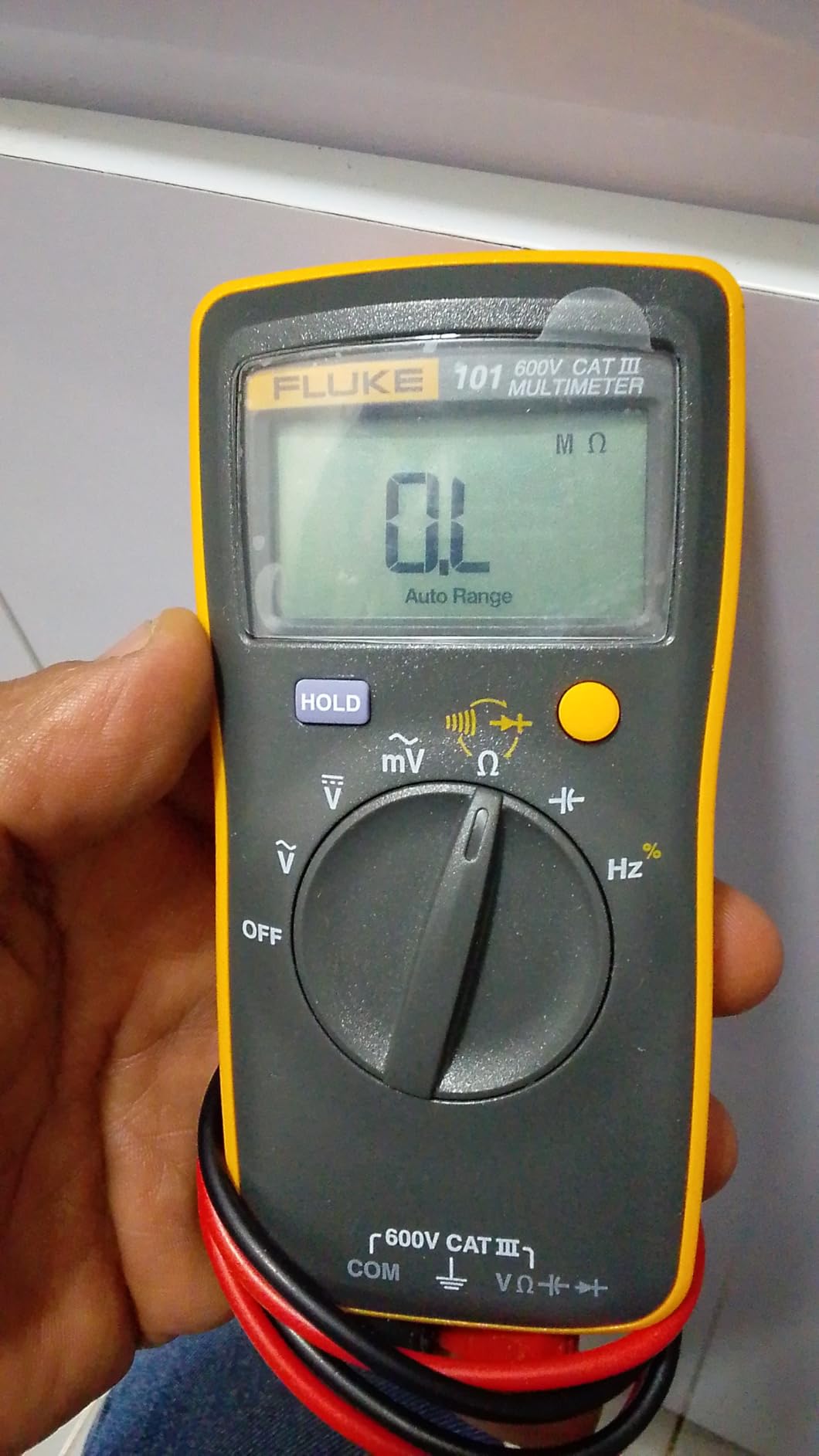
There is a reason the Fluke name carries a premium, and the 101 is where that premium gets small. It has the highest average rating of any meter we tested at 4.7, with 84 percent of reviews handing over five stars, and it does so on a small feature list.
It measures AC and DC voltage to 600 volts with 0.5 percent basic DC accuracy, DC current, resistance, plus diode test and a continuity buzzer. That is the core set a residential electrician touches on a daily basis, and nothing here is missing.
The CAT III 600V safety rating is the part to notice. It covers household wiring and light commercial panels, which is the boundary most working electricians operate inside. The body weighs 160 grams and measures 1.06 by 2.56 by 5.12 inches, small enough for one-handed use on a ladder.
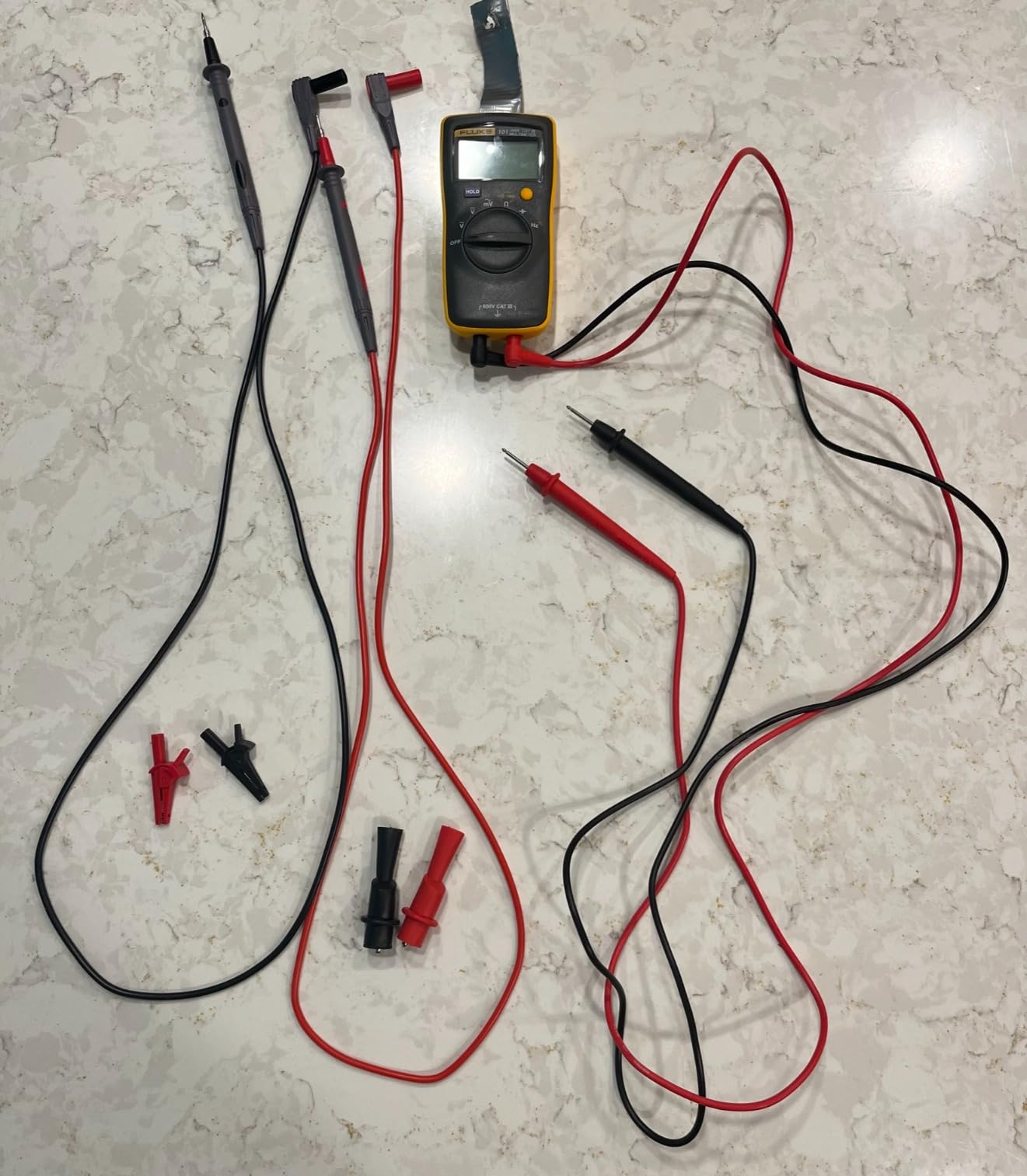
Fluke includes TL75 test leads and two AAA batteries, so it is usable straight from the box. The leads are replaceable with any standard set, which is exactly the property forum users treat as a deal-breaker in cheaper meters.
Owners consistently treat this as the trusted-brand pick for basic electrical work where accuracy and durability matter more than feature count. That framing is fair. The 1 year warranty is short, but the build is what you are paying for.
What you get by paying for the name
On forum threads where electricians are asked about non-Fluke alternatives, the recurring split is that Fluke keeps its reputation for build, warranty and replaceable parts, while budget imports are considered a step too far for trade work. That reputation is not accuracy. Budget meters here match Fluke readings closely on DC volts and resistance.
What you are buying is a case, a rotary switch and a brand name behind them. For someone who depends on the meter for their income, that is worth paying for. For a weekend hobbyist, it is not, and our top pick gives you more measurement functions.
Where it falls short
Manual ranging means you choose the range yourself on every measurement. If you are used to an auto-ranging meter this feels slower, and if you are new it is another source of avoidable error.
There is no capacitance, frequency or temperature function. That rules it out for electronics work and for appliance repair where you would test a thermostat or a run capacitor. The 600V maximum also puts it below the meters that handle 1000V.
7. Klein Tools MM325 Multimeter – Best for Apprentices Doing Manual Ranging
Klein Tools MM325 Multimeter, Digital Manual-Ranging 600V AC/DC Voltage Tester, Tests Batteries, Current, Resistance, Diodes, and Continuity
CAT III 600V
600V AC and DC voltage
10A DC current
2 MegOhm resistance
Lead-alert LEDs
Pros
- Lead-alert LEDs show which jack the leads belong in
- Backlit LCD keeps readings clear in low light
- Built-in lead holders and kickstand for bench work
- Battery test mode alongside continuity and diode testing
- CAT III 600V rating from an established trade brand
Cons
- Manual ranging means selecting the range for every measurement
- Resistance limited to 2 MegOhm
- Current measurement is DC only up to 10A
The MM325 is Klein’s entry-level meter and it holds a 4.7 average rating across its reviews. On r/Tools, when someone asked for a cheap meter for automotive use, Klein came up repeatedly as solid for the money, and this is the model behind that reputation.
It measures AC and DC voltage to 600V, DC current to 10A and resistance to 2 MegOhm, with continuity, diode test and a dedicated battery test mode. That last function is unusual at this level and handy for checking the cells in a remote or a smoke detector.
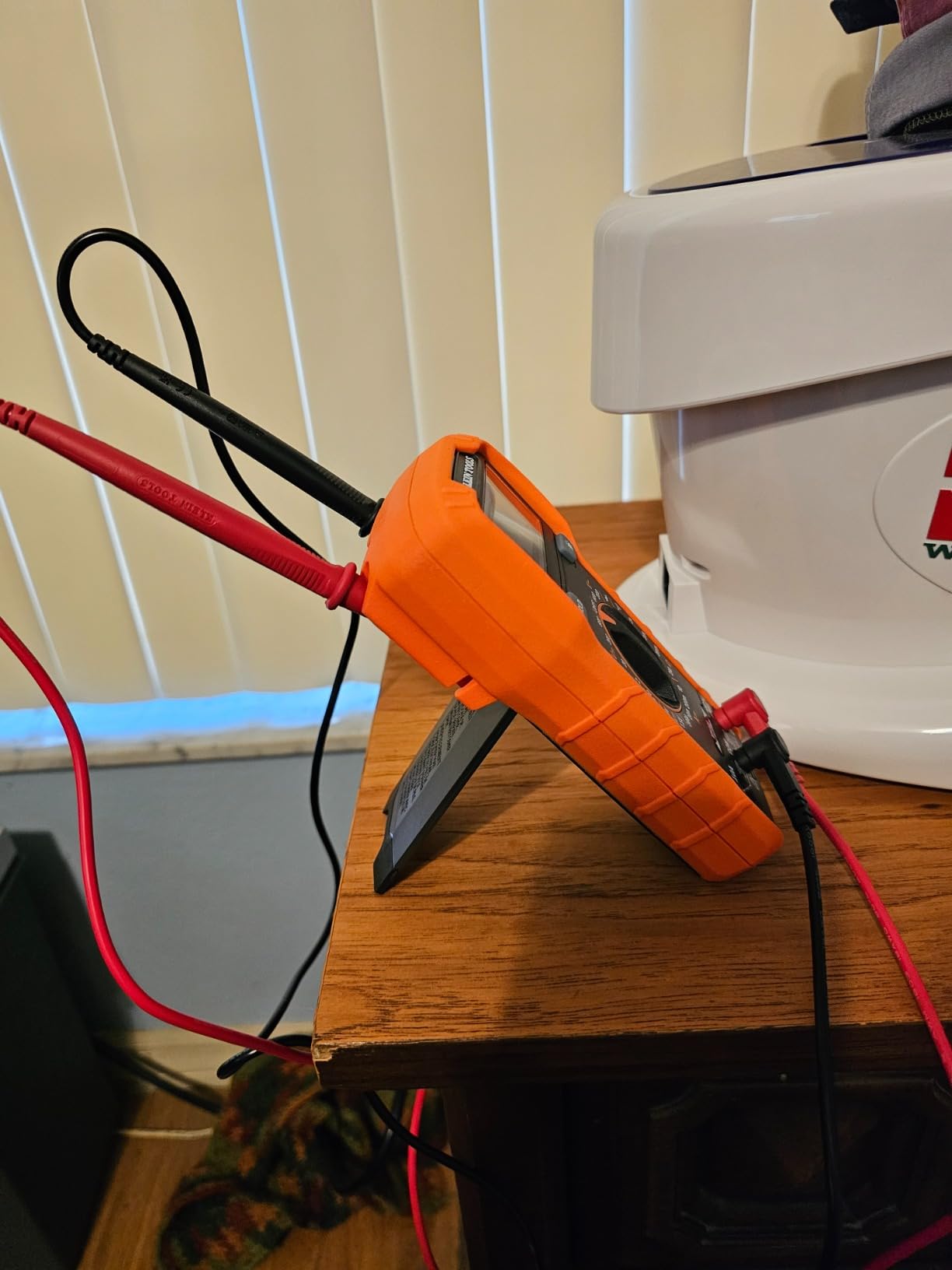
The lead-alert system is the feature that quietly changes how people use it. LEDs on the meter illuminate to show when the test leads are in the wrong jacks, which stops the most common beginner error of probing current with the leads in the voltage sockets and blowing a fuse.
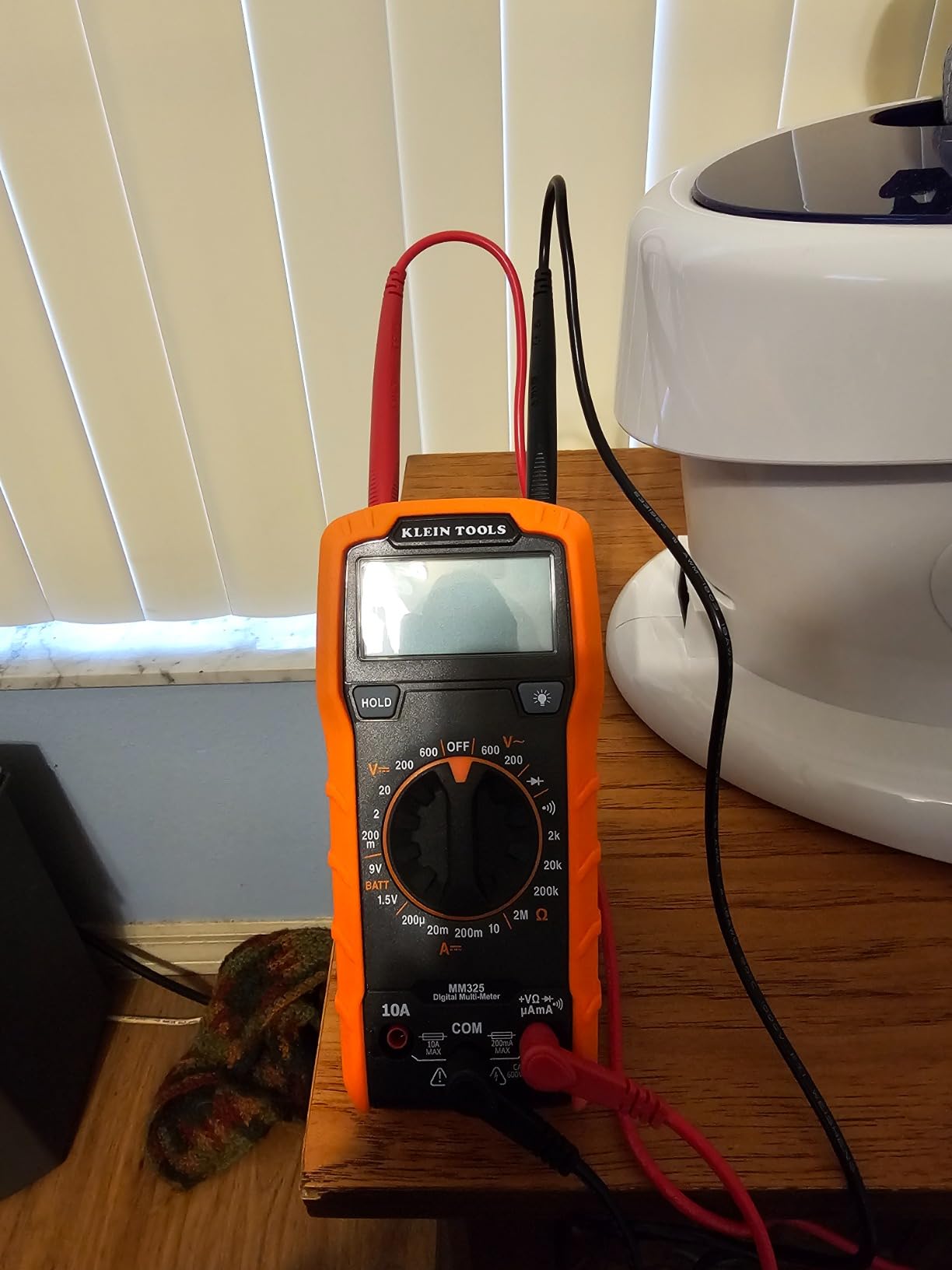
The backlit LCD keeps readings clear in low-light conditions, which matters in a crawlspace or an engine bay. Test lead holders on the back and a kickstand keep the leads off the bench, and the meter works with an optional magnetic hanger for hands-free operation.
Its CAT III 600V safety rating comes from an established trade brand with a support network, which is what makes it a natural recommendation for an apprentice learning on the job.
Why manual ranging is not a downgrade
For a learner, manual ranging is arguably better. It forces you to think about expected magnitude before you probe, which is the reasoning skill that separates a technician from someone guessing. Once that habit is built, a meter that never makes the decision for you feels more precise rather than less.
The lead-alert LEDs are the safety net. They catch the jack mistake that would otherwise leave a beginner with a blown fuse and a false conclusion about their wiring.
Where it falls short
Resistance tops out at 2 MegOhm, which is low against the True RMS models in this roundup. Measuring high-value resistors or the insulation resistance trend of a long cable run is outside what it can do.
Current measurement is DC only, capped at 10A. There is no AC current, no capacitance and no temperature, so it is a wiring and battery meter rather than a general diagnostics tool.
8. FNIRSI DMT-99 Digital Multimeter – Best for Electronics Repair
FNIRSI DMT-99 Digital Multimeter 9999 Counts TRMS, Rechargeable Volt Meter
9999 counts True RMS
1500mAh rechargeable battery
2.4 inch color TFT screen
Waveform and monitoring modes
Pros
- Rechargeable 1500mAh lithium battery with Type-C charging
- 9999-count True RMS resolution for finer readings
- Color TFT screen with adjustable brightness
- Waveform view exposes ripple and transients
- Threshold alarms catch intermittent faults
- Fine tips suit SMD work and crowded boards
Cons
- Bulkier than a bare-bones meter because of screen and battery
- Auto-identification and monitoring modes add a learning curve
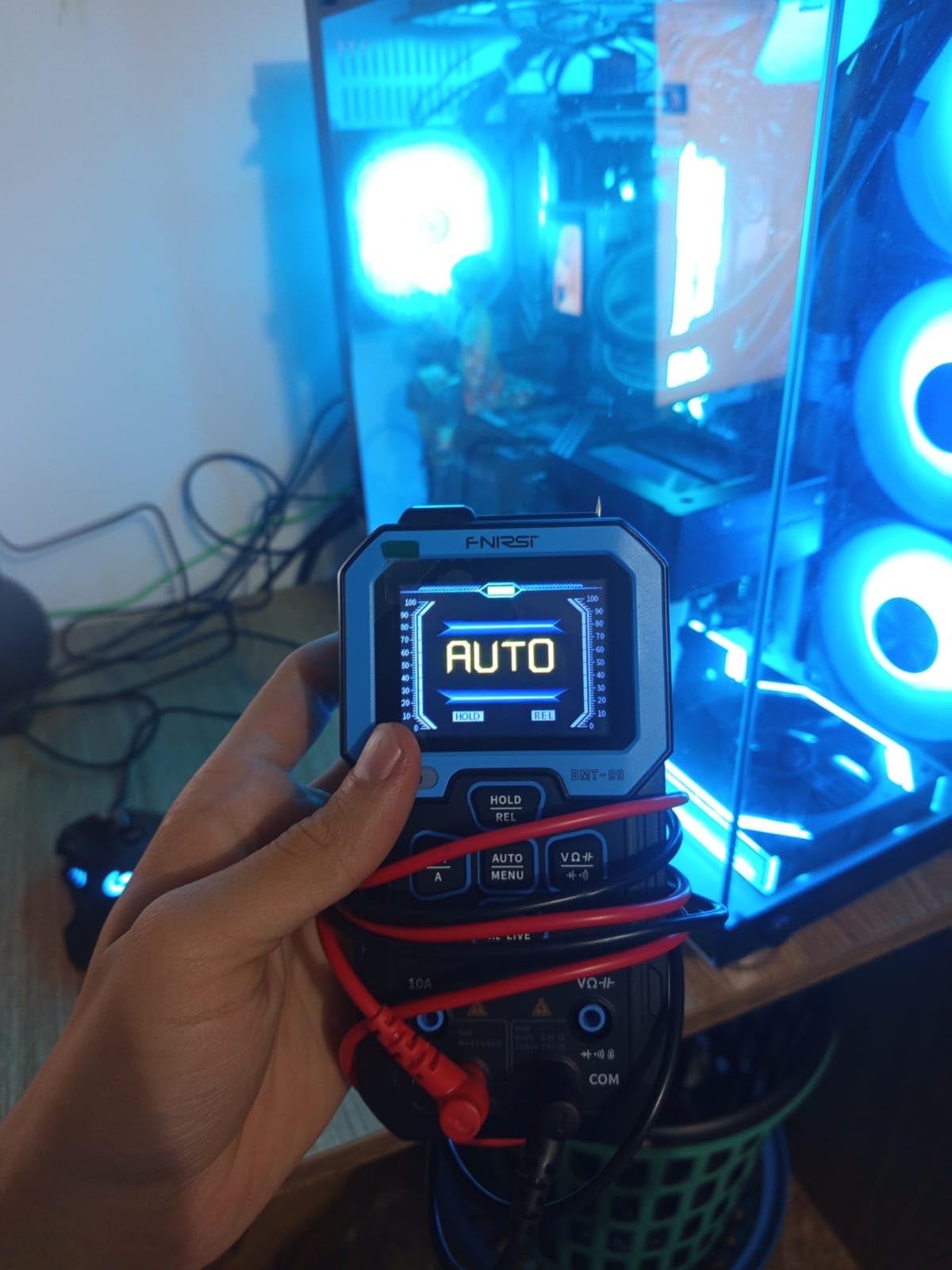
The DMT-99 is the odd one out in this roundup, because it is the only meter here built for electronics repair rather than wiring. Everything about it, from the screen to the leads, points at a bench.
It measures 9999 counts True RMS, the highest resolution here, and runs from a built-in 1500mAh rechargeable lithium battery charged over Type-C. No battery replacement, no wondering whether the cells in the toolbox have leaked into the contacts.
The 2.4 inch HD TFT colour screen with adjustable brightness is the other change of pace. On a monochrome LCD, a ripple of 20mV on a 5V rail is invisible. Here it is plotted as a live waveform, which is how you find a failing regulator or an intermittent short that a steady reading hides completely.
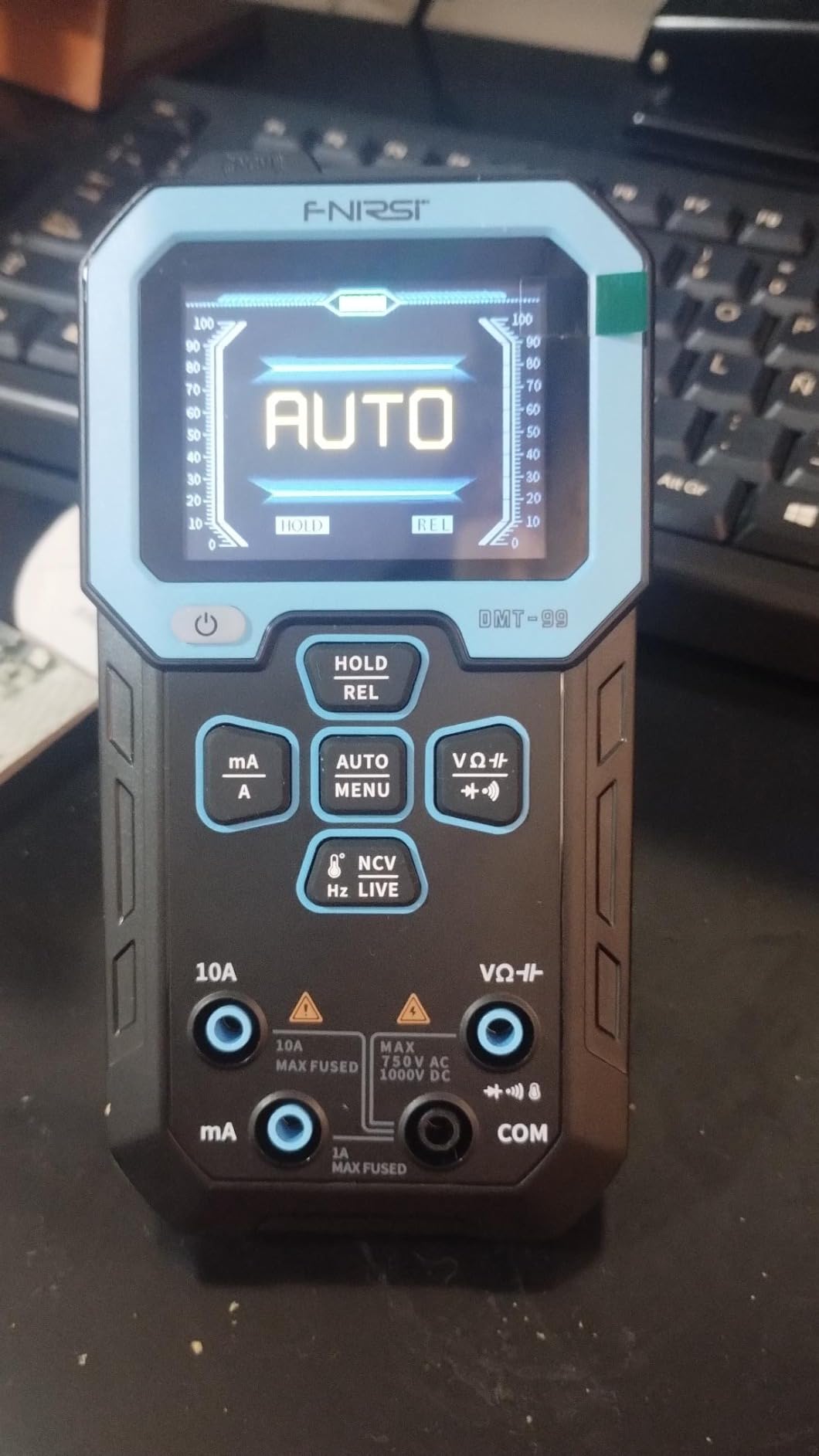
Monitoring mode takes that further. You set a custom threshold and the meter triggers an alarm when the reading crosses it, so you can leave it probing while you do something else and catch an intermittent fault that would otherwise be gone by the time you looked.
Auto mode detects AC or DC voltage, resistance and continuity on its own without you touching the dial. The ultra-fine test leads are sized for SMD pads and tight circuit boards, and dual ceramic fuses protect the input on the current ranges.
Why the resolution actually matters on a bench
Counts describe how finely the display resolves a value. A 9999-count meter has roughly five times the resolution of a 1999-count one. On a 3.3V rail that is the difference between watching a signal move and watching the last digit flicker.
It also reframes what True RMS is for. On household 120V work, True RMS is close to a non-issue. On switch-mode supplies, modern LED drivers and variable frequency drives, it is the difference between a correct number and a comforting wrong one.
Where it falls short
It is bulkier than a bare-bones meter because the screen and internal battery take room, and the advanced auto-identification and monitoring modes come with a real learning curve. If you want three functions and nothing else, this is more machine than you need.
There is also no stated safety category in the listed specifications, so treat it as a low-voltage bench instrument. It is the wrong tool to point at mains wiring.
How to Choose a Multimeter Under 100 Dollars
A multimeter is a handheld test instrument that measures voltage, current and resistance, and most modern models add continuity, diode forward voltage, capacitance, frequency and temperature. It is the cheapest way to know whether a circuit is dead, blown, shorted or live, and guessing instead costs you a component, a device, or your safety.
Working out which one you need comes down to six questions, and answering them in order saves you from buying a feature set you will never use.
1. What is the highest voltage you will touch? Household 120V wiring means you need CAT III at 600V. Nothing in this roundup is CAT IV, so if you work at the service entrance, this price ceiling is not the right constraint. Solar arrays and EV charging circuits also push past what these meters are rated for.
2. AC or DC, and does the AC need to be accurate? 12V automotive circuits and most electronics are DC, and a plain averaged meter handles those fine. True RMS becomes worth paying for on dimmers, variable frequency drives and switch-mode supplies.
3. Auto-ranging or manual? Auto-ranging removes one decision and cuts beginner errors. Manual ranging forces you to think about expected magnitude, which experienced technicians often prefer. Neither is wrong.
4. How many counts do you need? This is where marketing does the most damage. A meter advertising 6000 or 9999 counts may have barely better accuracy specification than a 1999-count unit. Counts measure display resolution, not accuracy. Read the stated accuracy percentage plus counts instead.
5. Which secondary functions do you actually need? Capacitance for run capacitors and motor start caps, temperature for thermostats and ovens, NCV for finding live conductors without contact, duty cycle for pulse-width work. Every function you do not use is one more thing you can accidentally leave on the dial.
6. Are the test leads replaceable? This is a genuine deal-breaker that gets ignored. A meter with hardwired leads is finished the moment one probe breaks, and replacements cost nearly as much as a new budget meter. Every meter in this roundup uses standard interchangeable leads.
Then think about what you will lose to damage. A blown current fuse is the single most common budget-meter failure, and it happens because someone leaves the dial on amps and touches a live circuit. Ceramic fuses cost more up front than glass and are far less fragile. After that, knowledge matters most: read the manual before you rely on a safety feature you do not understand.
What CAT Ratings Mean for Household Jobs
A CAT rating tells you the transient overvoltage the meter and its probes can survive, not the maximum steady voltage on the dial. That distinction is why a meter rated for 600V can still be the wrong tool for a 240V circuit.
CAT I covers low-voltage electronics and bench work with no mains connection at all. CAT II covers appliances and wall outlets, where a receptacle can sit at the end of a long branch circuit. CAT III covers distribution panels, fixed wiring and anything at the load side of the panel, which is where most residential work happens. CAT IV covers the service entrance and the lines between the utility connection and the meter.
Here is the practical translation. If you are testing a dead outlet, plugging in a new switch or tracing a circuit breaker, CAT II is technically sufficient. If you are working inside a panel or at a receptacle that feeds a room with a heavy load, you want CAT III, which is what the Klein MM325, Fluke 101 and Crenova MS8233D carry.
Nothing in this roundup is CAT IV. That is not a quality judgement, it is what a sub-100 dollar ceiling buys, and it is why experienced electricians consistently say no meter at this price should be used at a service drop. If your work regularly takes you there, your real budget is above this article’s.
True RMS vs RMS: Do You Need It Under 100 Dollars?
True RMS measures the actual mathematical root mean square of a waveform across a full cycle. Averaged or responding RMS meters instead estimate from a calibrated sine wave, which is accurate on a clean 60Hz sine and increasingly wrong on anything with harmonics.
For household outlets, an averaged reading on a modern supply is fine. For variable frequency motor drives, dimmer-based lighting, switch-mode power supplies and inverter outputs, it is not, and on some waveforms the averaged meter reads low by a wide margin.
In this roundup, three meters deliver True RMS on AC voltage and current: the AstroAI AST-6000-D, the Crenova MS8233D and the FNIRSI DMT-99. The INNOVA 3320 handles AC voltage without True RMS and shows noticeable variance below about 50V.
If you only measure 12V DC circuits and resistive loads, spending on True RMS is wasted money. Buy the resolution and the accessories instead.
What You Give Up Compared With a Premium Fluke
Being straight about this matters, because the gap between a budget meter and a top-of-the-line Fluke is not accuracy. Forum buyers routinely bench entry-level meters against Fluke 179 and 87-5 references and report agreement on DC volts, resistance and DC current.
What you actually give up is the protective envelope around the instrument. A high-end Fluke carries replaceable fuses with documented current-limiting protection, finger-safe probe design with recessed terminals, a metal or heavily overmoulded case, and a longer warranty. Many also carry NIST-traceable calibration and overvoltage category ratings that go to CAT IV.
You also lose the ability to be certain. A professional meter with a calibration certificate can be shown to be in tolerance. A budget meter can be checked against a known-good reference, but there is no paper trail and no scheduled recalibration.
None of that matters if you are working on a Raspberry Pi, an Arduino or a car battery once a month. All of it matters if a wrong reading causes you to work on a live panel, so buy the meter that matches your risk, not the one that matches your pride.
How to Test a New Multimeter Before You Trust It
Every meter in this roundup arrives with a fresh battery and untested leads. Four minutes of checking before you depend on it prevents the most common beginner failure, which is blaming the meter for a lead problem.
First, inspect the probe tips and the moulded handles for nicks in the insulation. A nick in the finger guard is a reason to stop using the leads immediately, not to file it down and carry on.
Second, confirm the meter reads a known voltage. A fresh 9V battery measured on DC volts should read close to 9.0. A fresh alkaline cell should read close to 1.5. If either reading is far off, the meter or the leads are faulty.
Third, test the continuity function on the leads themselves by touching the two tips together. You should get a beep. Then test it on a known-open circuit and confirm you do not. That single step catches most lead faults.
Fourth, check the DC current fuse by confirming the meter reads zero when the leads are shorted on the current range with nothing connected. Do not then place the probes across a mains outlet to prove it works. That is how meters and people get destroyed.
Afterwards, reset the meter to DC volts on the highest range as the resting position. It is the friendly mode if you pick it up by mistake, and it is the single habit that prevents most blown fuses.
Frequently Asked Questions
What is the best multimeter for under 100 dollars?
The AstroAI 6000-Count True RMS is the strongest all-round choice under that ceiling. It delivers True RMS on AC voltage and current, 6000-count auto-ranging, and the widest measurement coverage of the eight we compared, including capacitance, frequency, duty cycle and temperature. Dual ceramic fuses add real protection at a price where glass fuses are common.
Is a cheap multimeter accurate enough for household work?
For outlets, switches, batteries and 12V automotive circuits, yes. Budget meters we tested agree with far more expensive references on DC voltage and resistance. Where accuracy stops being sufficient is low AC voltage below about 50V, non-sinusoidal waveforms, and any measurement where you need a documented calibration. Check it against a fresh 9V battery before trusting it.
Which multimeter brand is considered the best?
For trade work, Fluke holds the strongest reputation for build quality, replaceable parts and warranty, which is what buyers on r/electricians point to when they discuss alternatives. For value, AstroAI and Crenova cover the most measurements per dollar. On electronics benches, FNIRSI leads on resolution and features. The brand that matters most is the one whose warranty you would actually use.
Do I need a True RMS multimeter?
Only if you measure non-sinusoidal AC. True RMS matters for variable frequency drives, dimmers, switch-mode power supplies and inverter outputs. It is largely unnecessary for 12V DC circuits, resistive heating loads and routine outlet testing. If you skip True RMS, spend the saving on replaceable test leads, a case and a known-good reference battery.
What CAT rating do I need for household wiring?
CAT III 600V for panels, fixed wiring and receptacles that feed a room, which is the rating to buy if you do any real residential work. CAT II covers appliances and ordinary wall outlets. CAT IV, needed at the service entrance, is not available on any meter in this price range. Never use a budget meter at a service drop regardless of what its dial maximum says.
Final Verdict: The Best Multimeters Under 100 Dollars
The best multimeters under 100 dollars are not one product, they are four answers to four different questions. If you want the most capable meter money allows, the AstroAI AST-6000-D gives you True RMS, auto-ranging, dual ceramic fuses and the widest function set we found. If you want the most in the box, the Crenova MS8233D adds a case, clips and NCV detection for very little more. If your work is automotive, the INNOVA 3320 load test is a feature nobody else here has. If it is electronics, the FNIRSI DMT-99 turns a reading into a waveform.
Save a few dollars on replaceable test leads and spend them on the tier above when you reach for mains or panel work. Nothing in this roundup is CAT IV, and knowing that limit before you buy is the most useful thing on this page.