
The best cameras for beginners are the ones that make the first weeks feel inviting: dependable autofocus, a clear screen, sensible automatic modes, and enough manual control to grow into. For most new photographers, an APS-C mirrorless camera with a kit lens is the sensible place to begin because it balances image quality, portability, and the freedom to change lenses later.
A phone is fast and always nearby, but a dedicated beginner camera gives you a larger sensor, a physical grip, and direct control of shutter speed, aperture, and ISO. Those controls are not a test you have to pass on day one; start in Auto or a scene mode, then change one setting at a time when you want a specific result.
We selected eight cameras that cover two very different starting points: interchangeable-lens models for learning photography in depth, and compact point-and-shoot cameras for casual snapshots, simple video, and a self-contained kit. The distinction matters more than a headline megapixel figure, because lens flexibility, autofocus behavior, and the screen you will actually use shape the experience every time you shoot.
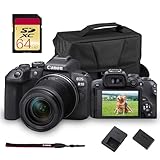
The Canon EOS R50 is our broad recommendation for a first interchangeable-lens camera, while the Sony ZV-E10 makes more sense when talking-to-camera video is the main job. The Canon EOS R100 is the stripped-back route into Canon’s EOS R system, and the Canon EOS R10 adds a long 18-150mm lens and fast burst shooting for people who expect to photograph action or travel.
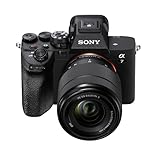
At the other end, the Sony Alpha 7 IV is a full-frame camera with advanced stills and video tools that can be more camera than a complete newcomer needs, yet it offers substantial headroom for a committed learner. The three compact cameras here have fixed lenses and digital stabilization, so they fit simple day-to-day shooting better than a plan to master interchangeable-lens photography.
Table of Contents
The top three beginner-camera picks are the Canon EOS R50, Canon EOS R100, and Sony ZV-E10 in 2026
Choose the R50 when you want one camera to learn photos and 4K video with a vari-angle touchscreen. Choose the R100 when compact EOS R access and straightforward stills matter most, or choose the ZV-E10 when a side-opening screen, built-in directional microphone, and creator-first controls are the priority.

Here is the short version for common genres. The R10 is the flexible travel and moving-subject choice because its included 18-150mm zoom covers a broad range; the Alpha 7 IV is for the beginner already certain that full-frame stills and advanced video tools will be put to work; and the compact picks suit a lighter, simpler routine.
The best cameras for beginners in 2026 cover every learning path
The comparison below keeps the decision focused on sensor format, autofocus, video, screen design, and the supplied lens or compact design. Ratings and review counts are the reported marketplace figures in the supplied product data, rather than our own score.
| Product | Specifications | Action |
|---|---|---|
| Canon EOS R50 |
|
Check Latest Price |
 Canon EOS R100 Canon EOS R100 |
|
Check Latest Price |
 Sony ZV-E10 Sony ZV-E10 |
|
Check Latest Price |
 Canon EOS R10 Canon EOS R10 |
|
Check Latest Price |
 Sony Alpha 7 IV Sony Alpha 7 IV |
|
Check Latest Price |
 TEFTYMON DC101 TEFTYMON DC101 |
|
Check Latest Price |
 Duluvulu DC101 Duluvulu DC101 |
|
Check Latest Price |
 VJIANGER W08 VJIANGER W08 |
|
Check Latest Price |
1. The Canon EOS R50 is the best all-around first interchangeable-lens camera
Canon EOS R50 Mirrorless Camera with 18-45mm Lens (5811C012) Bundle
24.2MP APS-C
Dual Pixel AF II
4K video
Vari-angle screen
Pros
- Lightweight body
- Face and eye detection
- 4K video
- Vertical video support
- Bundle accessories
Cons
- No in-body stabilization
- Plastic construction
- Limited RF beginner lens range
The EOS R50 hits the center of what a first camera should do without turning every shoot into a menu exercise. Its 24.2MP APS-C sensor is large enough to give photos a meaningful step beyond a phone in many situations, and the included 18-45mm zoom begins at a useful wide view for everyday scenes.
Canon’s Dual Pixel AF II, face and eye detection, and a vari-angle touchscreen remove friction when you are framing a person, pet, or yourself. The screen is especially useful for low-angle shots, overhead framing, and video, while vertical-video support speaks directly to creators who share clips on phone-first platforms.
Reported buyer feedback is strong: the listing has a 4.7 rating across 205 reviews, with 90% of ratings at five stars. That does not make it flawless, but it does match the product’s clear purpose as a compact photo-and-video starter camera.
The R50 is easiest to learn when you want guided control and a screen that moves
Use the R50’s automatic settings when the moment is moving, then work through shutter priority or aperture priority as curiosity grows. Creative Assist is a friendly bridge because it lets a new photographer experiment with the look of an image without requiring exposure terminology at the start.
The 18-45mm lens is a practical beginning range for family pictures, walk-around travel, and indoor scenes with room to step back. Later, the EOS R mount gives you a route to more specialized lenses, so the body does not force you to abandon the system when your interests sharpen.
The R50 needs a steady hand or stabilized lens when light becomes scarce
This body has no in-body image stabilization, so slow shutter speeds demand careful technique or a lens with stabilization. That is not a reason to avoid it, but it is a reason to learn how shutter speed relates to blurry hands and moving subjects.
The body construction is plastic, and the data flags a limited beginner lens selection for the RF mount. Consider the available lenses you would realistically add in the next year, rather than assuming a camera body alone determines the long-term fit.
2. The Canon EOS R100 is the simplest route into Canon mirrorless photography
Canon EOS R100 Mirrorless Camera with RF-S18-45mm F4.5-6.3 IS STM Lens Kit, 24.1 Megapixel CMOS (APS-C) Sensor, 4K Video, RF Mount | Black Bundled with 64GB Memory Card & Camera Shoulder Bag (3 Items)
24.1MP APS-C
Dual Pixel AF
4K 24p
18-45mm lens
Pros
- Compact EOS R body
- Built-in flash
- Face and eye detection
- 4K capability
- Memory card and bag included
Cons
- 4K limited to 24fps
- No in-body stabilization
- Single card slot
The EOS R100 is the less complicated Canon choice for someone who wants to start taking better photographs rather than chase advanced features. Its 24.1MP APS-C sensor, DIGIC 8 processor, and 18-45mm kit lens cover the basic photo lessons well: composition, light direction, focus placement, and exposure.
Dual Pixel CMOS AF includes face and eye detection, which is useful when portraits are your first goal. The compact EOS R body also has a built-in flash, a practical advantage for a first camera when you need a small fill of light rather than a separate accessory.
The data reports a 4.7 rating from 66 reviews, with 83% five-star ratings. For a beginner who wants a compact camera that can grow into an interchangeable-lens setup, that feedback lines up with the modest, direct feature set.
The R100 makes sense when still photography matters more than advanced video
The R100 records 4K at 24 frames per second, Full HD at 60, and HD at 120. That gives you choices for basic video and slow motion, but it is not the model to pick when smooth 4K 60p is non-negotiable.
Its 6.5-frame-per-second continuous shooting is enough for casual moments, portraits, and everyday scenes. A person planning to photograph fast sports often will be happier with the R10’s substantially quicker shooting modes.
The R100 asks you to accept a fixed screen position and a leaner body specification
The 3-inch LCD tilts, but it does not offer the flexible positioning of the R50’s vari-angle touchscreen. For self-recording and unusual angles, that difference is felt every time you frame rather than only on a specification sheet.
There is no in-body stabilization and only one memory-card slot. New photographers rarely need a second card slot, yet it is helpful to understand that this is intentionally a pared-down model rather than an all-purpose production tool.
3. The Sony ZV-E10 is the clearest beginner choice for self-shot video
Sony ZV-E10 Mirrorless Camera with 16-50mm Lens, 128GB Extreem Speed Memory,.43 Wide Angle & 2X Lenses, Case. Tripod, Filters, Hood, Grip,Spare Battery & Charger, Editing Software Kit -Deluxe Bundle
24.2MP APS-C
425-point AF
4K 30p
Side flip touchscreen
Pros
- Creator-focused screen
- Directional microphone
- Eye AF tracking
- Full HD slow motion
- Compact body
Cons
- No viewfinder
- 4K limited to 30p
- 4K crop factor
The ZV-E10 is designed around a different beginner routine: facing the camera, recording yourself, and getting a usable voice track without building a rig first. Its 3-inch side flip-out touchscreen lets you see framing from in front of the lens, while the directional three-capsule microphone and supplied windscreen address a problem many first videos reveal immediately.
The 24.2MP APS-C Exmor CMOS sensor and 425-point Fast Hybrid AF bring serious focus coverage to a compact body. Real-Time Eye AF and tracking are useful for a walking presentation, a family clip, or a subject that will not stay centered.
This listing has a reported 4.6 rating from 121 reviews, and 78% of its ratings are five stars. The product data consistently points to its flip screen, microphone, and creator bundle as the reasons to choose it.
The ZV-E10 suits a creator who values framing and sound above a viewfinder
There is no electronic viewfinder, which means composition happens on the rear screen. That is natural for vlogging and phone-trained creators, but a photographer who enjoys holding a camera to the eye in bright light may prefer the R50, R100, R10, or Alpha 7 IV.
Background Defocus and Face Priority AE are practical video aids, not substitutes for learning light. They can help a first talking-head clip look more intentional while you learn why subject distance and background distance affect the result.
The ZV-E10 is limited if 4K 60p is part of your video plan
It records 4K at 30p and Full HD at 120p, so it can produce 4K footage and slow-motion Full HD clips. It does not provide 4K 60p, and the supplied data notes a crop factor in 4K video.
The included 16-50mm lens is a reasonable starting lens, but lens choice changes video framing quickly on APS-C. Before committing, think about whether you need a wider view for indoor self-recording or a longer perspective for distant subjects.
4. The Canon EOS R10 is the beginner camera for travel range and fast action
Canon EOS R10 Mirrorless Camera with RF-S 18-150mm Lens (5331C016) Bundle
24.2MP APS-C
4K 60p
23 FPS electronic
18-150mm lens
Pros
- Versatile 18-150mm lens
- Fast burst shooting
- 4K 60p
- Dual Pixel AF II
- Travel-ready range
Cons
- No built-in flash
- Larger body
- More capability than casual users need
The EOS R10 changes the starting experience by pairing its 24.2MP APS-C sensor with an 18-150mm lens. That single lens begins wide for buildings and group photos, then reaches far enough for details, distant scenes, and tighter travel compositions without stopping to swap glass.
It also shoots at up to 15 frames per second mechanically or 23 electronically, with Dual Pixel AF II. Those figures make the R10 a more comfortable choice for active children, pets, amateur sport, and anything where one carefully timed frame is not realistic.
The listing reports a 4.7 rating across 31 reviews, including 89% five-star ratings. Review feedback emphasizes the all-in-one lens, quick shooting, and video performance, which are the exact areas separating it from a basic starter body.
The R10 is a strong fit when you want one lens for a varied trip
For travel photography, a broad zoom range reduces decisions and reduces the chance that an important moment happens while another lens is in a bag. The optical image stabilization in the supplied 18-150mm lens is also a helpful companion when handholding at slower shutter speeds.
Its 4K 60p mode is a meaningful step for creators who want smoother motion or the option to slow footage in an editing timeline. Wi-Fi and Bluetooth support make it easier to move selected files after shooting, although large video files still reward a deliberate transfer routine.
The R10 is less suitable when a tiny, minimal kit is your real goal
The data identifies this model as larger than entry-level options, and the long zoom adds to what you carry. That versatility is useful only if you will use the range; a smaller body and short kit zoom may be the better companion for a person who values a light bag above all else.
There is no built-in flash. Learn to look for window light, shade, and clean backgrounds first, then decide whether an external flash belongs in your kit later.
5. The Sony Alpha 7 IV is the advanced full-frame option for committed beginners
Sony Alpha a7 IV Mirrorless Camera with 28-70mm Lens Black
33MP full-frame
759-point AF
4K 60p 10-bit
Dual card slots
Pros
- 33MP full-frame sensor
- Real-time Eye AF
- 4K 60p 10-bit
- Dual card slots
- Advanced video profiles
Cons
- Heavier body
- No built-in flash
- Advanced controls can overwhelm
The Alpha 7 IV is not the default first-camera recommendation because its capability goes far past a basic learning setup. It is a compelling choice only when you know you will pursue photography or video seriously and would rather learn one deeper system than replace an entry-level body soon.
Its 33MP full-frame back-illuminated Exmor R sensor, BIONZ XR processor, and 759-point phase-detection autofocus system are a substantial package. Real-time Eye AF can identify humans, animals, and birds, giving a new photographer a powerful ally when keeping a subject sharp is more important than mastering every focus mode.
The reported 4.8 rating from 18 reviews is the highest among the interchangeable-lens models in this group, with 85% five-star ratings. The small review count still calls for perspective: it is useful feedback, not a guarantee that this demanding body suits every beginner.
The Alpha 7 IV is best when advanced video and full-frame files have a defined purpose
It records up to 4K 60p in 10-bit 4:2:2 and includes Focus Map, Breathing Compensation, S-Cinetone, S-Log3, and HLG. These are serious movie tools, but a newcomer should treat them as future options rather than reasons to delay taking ordinary photos.
Two memory-card slots are helpful for people who shoot events or projects where duplicate recording matters. The vari-angle 3-inch LCD, Wi-Fi, and Bluetooth make the camera adaptable, though the body is far more rewarding when paired with a considered lens plan.
The Alpha 7 IV demands comfort with a larger and more involved system
The supplied data lists its weight at 1.51 kilograms and notes no built-in flash. Carry comfort, lens size, and a willingness to learn a fuller menu system should be part of the decision, not an afterthought.
Start with simple exposure settings even on an advanced body. A camera’s sensor and autofocus help, but the memorable part of a photo remains the light, timing, and framing you choose.
6. The TEFTYMON DC101 is the compact option for casual vlogging and simple sharing
4K Digital Camera for Photography Autofocus, Upgraded 64MP WiFi Vlog Camera
64MP compact
4K video
180-degree flip screen
Wi-Fi
Pros
- Flip screen
- Wi-Fi sharing
- Autofocus
- Two batteries included
- Webcam mode
Cons
- Digital stabilization only
- Fixed lens
- Small 1/3-inch sensor
The TEFTYMON DC101 is a compact, fixed-lens alternative for a novice who wants a self-contained camera with a flip screen, autofocus, and Wi-Fi. It records 4K video, captures 64MP images, has a 3-inch 180-degree flip screen, and includes a 32GB card plus two rechargeable batteries.
It is simple to understand because the lens stays put and the included modes cover Automatic, Landscape, Portrait, and Sports. That convenience can be appealing for travel, a teenager’s first camera, webcam use, or casual YouTube clips where carrying multiple lenses holds no appeal.
The reported rating is 4.4 across 513 reviews, with 74% five-star ratings. Users highlighted the flip screen and bundle, while the listing itself makes the limits clear: it has digital rather than optical stabilization and a fixed lens.
The TEFTYMON works when portability and a complete out-of-box kit come first
Wi-Fi, USB, time-lapse, slow motion, webcam mode, face detection, and a built-in flash make this camera flexible for casual experimentation. Its 16X zoom is digital, so it should not be confused with the reach and image behavior of a long optical zoom lens.
The 180-degree screen supports selfies and direct-to-camera clips, and two included batteries are useful when charging access is limited. Its stated 1/3-inch sensor size is far smaller than the APS-C sensors in the Canon and Sony interchangeable-lens models above.
The TEFTYMON is not the right tool for lens-based photography growth
You cannot change the fixed lens, so there is no route to a dedicated portrait lens, ultra-wide lens, or true telephoto lens. That does not reduce its usefulness as a compact, but it sets a clear boundary on what kind of photography practice it supports.
Digital stabilization can help with modest movement, yet it is not the same as optical or sensor-shift stabilization. Hold the camera carefully, use available light, and keep expectations grounded for dim scenes and moving subjects.
7. The Duluvulu DC101 is the no-frills compact pick for teens and casual clips
Duluvulu 4K Digital Camera for Photography Autofocus, 2026 Latest 48MP Vlogging Camera for YouTube with SD Card, 2 Batteries, 3" 180°Flip Screen Compact Travel Camera for Teens with 16X Zoom,Black
48MP compact
4K video
180-degree flip screen
16X digital zoom
Pros
- Flip screen
- Autofocus
- Webcam mode
- Two batteries included
- Simple shooting modes
Cons
- One autofocus point
- Digital stabilization only
- Fixed lens
The Duluvulu DC101 is another compact camera built around simple operation and an all-in-one bundle. It has a 48MP CMOS sensor, 4K video, 3-inch 180-degree flip screen, 16X digital zoom, a 32GB SD card, and two lithium-ion batteries in the supplied package.
Its mode list includes Auto, Night, Portrait, Landscape, Sports, Party, Beach, Backlight, and High Sensitivity. For a first-time user who wants a camera that explains itself through familiar scene choices, that menu can feel less intimidating than a system camera’s broader array of controls.
The product reports a 4.3 rating from 2,509 reviews, which is a large feedback pool relative to the other compact choices here. The review summary credits its bundle and flip screen, while the specification identifies one autofocus point and digital-only stabilization as real constraints.
The Duluvulu is useful when simple modes matter more than manual depth
Its compact form factor, built-in flash, self-timer, video pause, playback, time-lapse, and slow motion make it a workable casual companion. Webcam capability also gives it a second job for basic live streaming or computer video use.
The flip screen is the practical feature to focus on if self-portraits and vlog framing are your main activities. The 16X figure refers to digital zoom, which enlarges a portion of the image rather than bringing a distant subject closer through optical lens movement.
The Duluvulu has limited focus and stabilization for demanding subjects
A single autofocus point is a basic approach compared with the many-point systems in the interchangeable-lens options. Recompose thoughtfully, leave a little room around a moving subject, and do not expect the same tracking confidence for fast action.
Its 1/3-inch sensor and fixed lens define it as a casual compact, not a substitute for an APS-C system if low-light photography, blurred-background portraits, or interchangeable lenses are goals. Those goals point back to the R50, R100, R10, or ZV-E10.
8. The VJIANGER W08 is a compact camera for light travel and webcam use
VJIANGER 4K Digital Camera, Vlogging Camera with 180° Flip Screen
64MP compact
4K video
18X digital zoom
Wi-Fi sharing
Pros
- Wi-Fi transfer
- 18X digital zoom
- Flip screen
- Webcam function
- Tripod mount
Cons
- Digital stabilization only
- Fixed F8 lens
- Lower reported rating
The VJIANGER W08 adds Wi-Fi, a 180-degree flip screen, webcam functionality, an 18X digital zoom claim, and a standard 1/4-inch tripod mount to the compact-camera formula. It records 4K UHD video and 64MP photos, includes a 32GB microSD card and two batteries, and is listed at 0.4 kilograms.
The tripod mount is worth calling out for stationary selfies, desktop video, or time-lapse work because it gives a new user a way to improve stability without holding the camera. Wi-Fi is also convenient for sending selected stills to a phone after a short outing.
Reported feedback is more mixed than for the other compact cameras: it has a 4.1 rating from 2,157 reviews, with 63% five-star and 12% one-star ratings. The review summary praises the zoom, fill light, and Wi-Fi but advises a more careful read of the trade-offs.
The VJIANGER is practical when a tripod mount and Wi-Fi are high on your list
The 3-inch flip screen, built-in fill light, and webcam connection can make basic creator work approachable. Its light 9.8-ounce figure in the product details also supports a small-bag or day-trip role.
Use the tripod mount for the kind of steady shot that digital stabilization cannot fully create. A stationary camera, good window light, and a clear background will usually improve a beginner video more than changing a resolution setting.
The VJIANGER needs realistic expectations in dim light and close inspection of feedback
The listed maximum aperture is F8.0, and its stabilization is digital. Those specifications suggest giving it plenty of light and treating the fill light as a small helper, not a cure for a dark room.
This is the lowest-rated compact in the group, so read current owner feedback carefully if it is the one that catches your eye. A fixed lens and small 1/2.5-inch sensor make it a convenience-oriented camera, rather than the better choice for learning lens selection or serious low-light work.
The right beginner camera depends on your learning goal, not the biggest specification
Start by deciding whether you want to learn interchangeable-lens photography or simply want a compact device for casual images and short videos. That one answer eliminates much of the overwhelm that camera forums repeatedly describe, and it prevents comparing a small fixed-lens compact with an APS-C mirrorless camera as if they were built for the same task.
Mirrorless is the better starting point when you want a modern system and live screen feedback
Mirrorless cameras such as the Canon R50, R100, R10, Sony ZV-E10, and Sony Alpha 7 IV show a live view on the rear screen and, on most models here, a viewfinder. They offer interchangeable lenses, autofocus systems designed for subject detection, and a clearer upgrade path as your interests turn toward portraits, wildlife, travel, or video.
A DSLR uses an optical viewfinder and a mirror mechanism. There are no DSLRs in this eight-camera selection, but a used DSLR can still be a sensible learning tool if it is in good condition, comes with a usable lens, and gives you access to controls you will practice; mirrorless is simply the more forward-looking system choice in this group.
Sensor size matters most for low light and creative control, not for bragging rights
The Canon and Sony system cameras here use APS-C sensors, except the Alpha 7 IV, which uses a 33MP full-frame sensor. A larger sensor can help with image quality in lower light and gives more flexibility with depth of field, yet the photo still depends on the lens, exposure, and scene.
The compact cameras list 1/3-inch or 1/2.5-inch sensors. Their high megapixel claims do not make them equivalent to an APS-C or full-frame camera, so place sensor format and lens flexibility ahead of resolution when selecting a camera for photography beginners.
Autofocus and screen design matter every time you take a photo or record a clip
For portraits, pets, and family scenes, face and eye detection reduce missed shots. The R50’s Dual Pixel AF II, R100’s Dual Pixel AF, R10’s Dual Pixel AF II, ZV-E10’s 425-point Fast Hybrid AF, and Alpha 7 IV’s 759-point phase-detection AF all offer much more support than the one-point or contrast-detection arrangements listed on the compact products.
For vlogging, a screen that opens toward you matters more than it may seem. The R50’s vari-angle screen and ZV-E10’s side flip-out screen make self-framing easy, while the Alpha 7 IV also has a vari-angle LCD; match screen design to how you genuinely plan to shoot.
Lenses are the long-term decision when you choose a system camera
A kit lens is not a throwaway lens. The Canon 18-45mm lenses supplied with the R50 and R100 are a good way to learn wide, normal, and short-telephoto framing, while the R10’s 18-150mm goes much farther without a lens change.
Once you know what you photograph, a dedicated lens can make a bigger difference than chasing a new body. If portraits become the focus, look for a lens suited to that use; if travel is the focus, think about weight and focal range; and if indoor video is the focus, consider how wide the lens needs to be.
A used camera can be smart when you inspect the essential items first
Forum contributors often recommend used gear to stretch a first-camera setup, and that advice can be reasonable. Check that the shutter works, autofocus locks as expected, the sensor and lens glass are clean, the screen functions, the battery and charger are present, and the mount does not show damage.
Buy a model you can hold comfortably and that has a lens you will use immediately. A camera that stays in a drawer is less helpful than a modest one you bring outside, practice with weekly, and learn to trust.
The answers to beginner camera questions are simpler than the marketing
What camera is best for beginner photography?
The Canon EOS R50 is the broadest pick for beginner photography because it combines a 24.2MP APS-C sensor, face and eye detection, a vari-angle touchscreen, 4K video, and an 18-45mm kit lens. Choose it if you want to learn stills and video in one interchangeable-lens system.
Which camera is easy to use for beginners?
The Canon EOS R100 is an easy first mirrorless camera when you want straightforward still photography, a compact body, face and eye detection, and a built-in flash. For self-shot video, the Sony ZV-E10 is easier to frame because its screen flips out to the side.
What is the best video camera for a beginner?
The Sony ZV-E10 is the best match for a beginner whose main goal is talking-to-camera video because it has a side flip-out touchscreen, a directional three-capsule microphone, 425-point autofocus, Real-Time Eye AF, and 4K at 30p. Choose the Canon EOS R10 if 4K at 60p is more important.
What camera should a beginner start with?
Start with an APS-C mirrorless camera and kit lens if you want to learn photography and change lenses later; the Canon EOS R50 is a balanced example. Start with a compact fixed-lens camera only if easy carrying, a flip screen, and simple casual shooting matter more than lens flexibility and low-light performance.
The Canon EOS R50 is the best starting point for most new photographers
The Canon EOS R50 is our first recommendation because its APS-C sensor, face and eye detection, vari-angle touchscreen, 4K video, and 18-45mm kit lens create a forgiving place to learn. Pick the Sony ZV-E10 instead if your first priority is self-shot video, the R10 if you need its long zoom and fast bursts, or the Alpha 7 IV only if advanced full-frame work is already a firm goal.
The best cameras for beginners in 2026 are not the ones with the longest feature list; they are the cameras you will take out often enough to understand light, timing, and composition. Choose the system and screen style that match your actual subjects, then spend the first month making photographs instead of second-guessing the decision.