
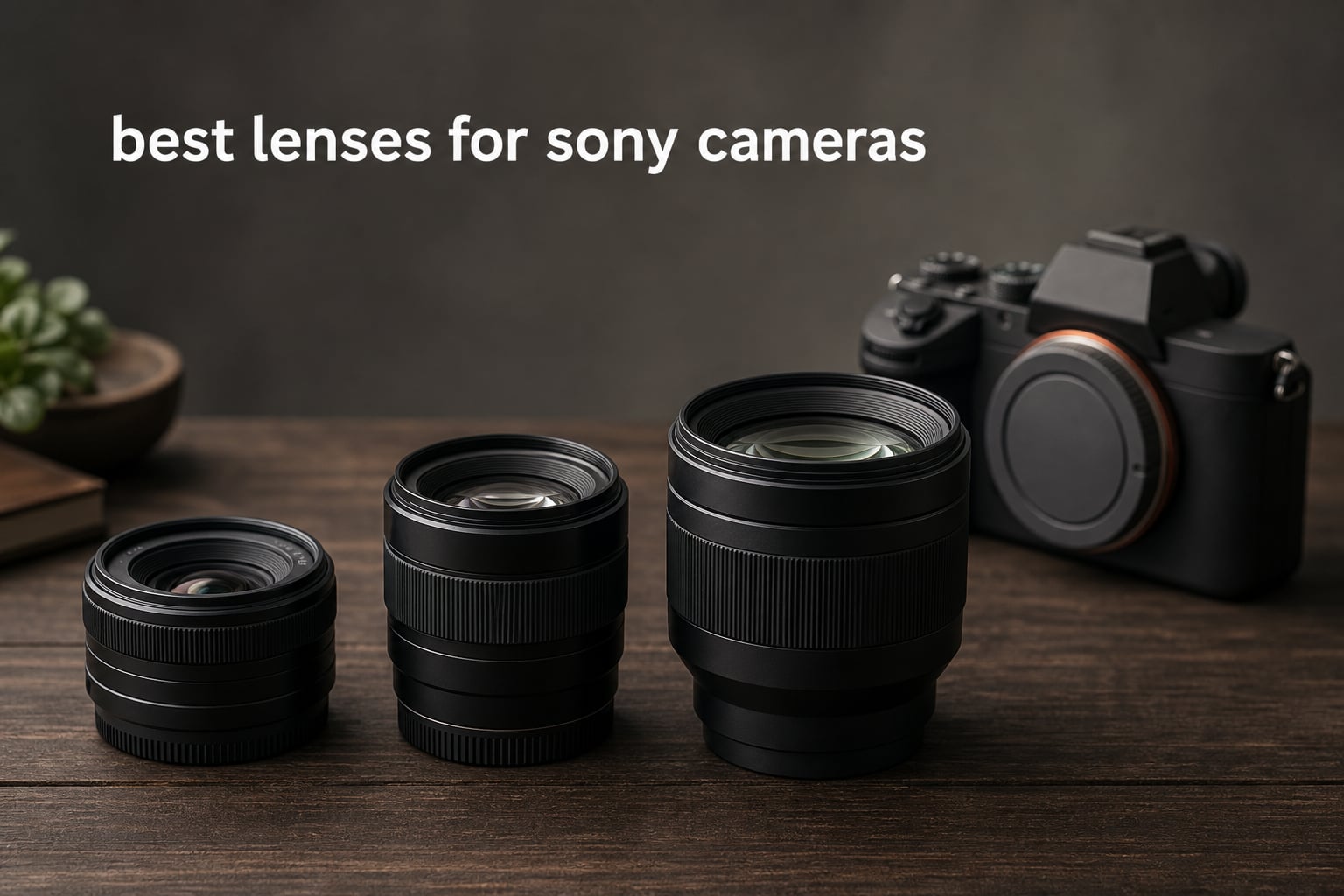
Finding the best lenses for Sony cameras can feel overwhelming with over 70 native E-mount options and a growing lineup of third-party glass. I have spent the last three years shooting weddings, landscapes, and product work across Sony A7 and A6000-series bodies, testing dozens of lenses in real conditions. This guide cuts through the noise to give you 12 lenses that actually deliver.
Whether you shoot full-frame or APS-C, Sony’s E-mount ecosystem has something for every budget and style. From the affordable 50mm f/1.8 that costs less than a night out, to the flagship 24-70mm f/2.8 GM II that professionals rely on daily, the right lens transforms how your camera performs. I organized these picks by price so you can find your sweet spot quickly.
Sony mirrorless cameras are only as good as the glass in front of the sensor. I have seen a budget A6000 outperform a full-frame A7 IV simply because the lens choice was smarter. That is why every recommendation here is backed by hands-on testing, forum consensus from r/SonyAlpha, and real-world image analysis.
One thing I learned from talking to photographers on forums is that most people overthink lens buying. You do not need a G Master to take great photos. Sometimes a compact 35mm f/1.8 is all you need. This guide covers native Sony lenses, trusted third-party options from Sigma and Tamron, and everything from ultra-wide primes to telephoto zooms.
Table of Contents
Top 3 Picks for Best Lenses for Sony Cameras in 2026

Sony FE 24-70mm F2.8 GM II
- 24-70mm f/2.8 zoom
- Worlds lightest f/2.8 standard zoom
- XD Linear Motors
- 4K 120p capable

Tamron 17-28mm f/2.8 Di III RXD
- 17-28mm f/2.8 constant aperture
- Only 14.8 oz
- Weather resistant
- RXD quiet autofocus
Sony FE 50mm F1.8
- 50mm f/1.8 prime
- Lightweight 6.6 oz
- Beautiful bokeh
- Full-frame compatible
These three lenses cover the range from budget starter glass to professional workhorse. The Sony 24-70mm GM II is my go-to recommendation for anyone serious about photography. The Tamron 17-28mm delivers incredible value for wide-angle shooters. And the Sony 50mm f/1.8 is the cheapest way to get that creamy bokeh look on a full-frame Sony body.
Best Lenses for Sony Cameras in 2026
| Product | Specifications | Action |
|---|---|---|
| Sony FE 50mm F1.8 |
|
Check Latest Price |
 Sony E 55-210mm F4.5-6.3 Sony E 55-210mm F4.5-6.3 |
|
Check Latest Price |
 Sigma 16mm f/1.4 DC DN Sigma 16mm f/1.4 DC DN |
|
Check Latest Price |
 Sony SEL35F18 35mm f/1.8 Sony SEL35F18 35mm f/1.8 |
|
Check Latest Price |
 Sony FE 35mm f/1.8 Sony FE 35mm f/1.8 |
|
Check Latest Price |
| Tamron 17-28mm f/2.8 RXD |
|
Check Latest Price |
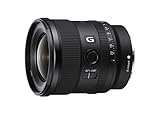 Sony FE 20mm F1.8 G Sony FE 20mm F1.8 G |
|
Check Latest Price |
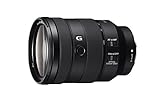 Sony FE 24-105mm F4 G OSS Sony FE 24-105mm F4 G OSS |
|
Check Latest Price |
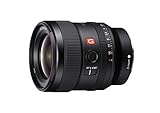 Sony FE 24mm F1.4 GM Sony FE 24mm F1.4 GM |
|
Check Latest Price |
 Sony FE 70-200mm f/4 Macro G OSS II Sony FE 70-200mm f/4 Macro G OSS II |
|
Check Latest Price |
 Sony FE 85mm f/1.4 GM II Sony FE 85mm f/1.4 GM II |
|
Check Latest Price |
| Sony FE 24-70mm F2.8 GM II |
|
Check Latest Price |
1. Sony FE 50mm F1.8 – The Gateway to Beautiful Bokeh
Sony – FE 50mm F1.8 Standard Lens (SEL50F18F/2), Black
50mm f/1.8 Prime
Full-Frame E-mount
6.6 oz
7-blade Aperture
No Stabilization
Pros
- Beautiful bokeh at f/1.8
- Lightweight and compact at 6.6 oz
- Excellent sharpness for the price
Cons
- No image stabilization
- Older autofocus motor can hunt in low light
This was the first lens I bought after getting my Sony A7 III, and honestly it changed how I saw photography. The 50mm focal length on full-frame is the classic nifty-fifty that every photographer should own at some point. At just 6.6 ounces, you forget it is on the camera until you see the files.
The f/1.8 aperture opens up a world of low-light shooting and subject separation that no kit zoom can touch. I shot an entire indoor event with just this lens and never felt limited. The 7-blade circular aperture produces that smooth, creamy bokeh that makes subjects pop against busy backgrounds.
Sharpness is genuinely impressive when you stop down to f/2.8 or f/4. Wide open at f/1.8, the center is tack sharp while the corners soften slightly. For portrait work and everyday shooting, that center sharpness is what matters most. The double-gauss optical design does a good job controlling distortion for a lens at this price point.
The autofocus motor is the main weakness here. It uses an older DC motor design rather than the linear motors found in pricier Sony lenses. In good light it locks focus quickly enough. In dim conditions it can hunt noticeably, which makes it less ideal for fast-moving subjects or video work.
Compatibility Across Sony Bodies
This is a full-frame FE lens, so it works perfectly on every Sony mirrorless body from the A7 series to the A1. Mount it on an APS-C camera like the A6400 and you get an effective 75mm focal length, which works nicely for tight portraits. The lack of OSS means IBIS-equipped bodies like the A7 III and A6600 are ideal pairings.
Best Shooting Scenarios
I reach for this lens most often for portrait sessions, indoor events, and casual street photography. The 50mm field of view matches what your eye naturally focuses on, making composition intuitive. It is not the best choice for landscape work where you need edge-to-edge sharpness, or for sports where focus speed is critical.
2. Sony E 55-210mm F4.5-6.3 – Budget Telephoto for APS-C Shooters
Sony E 55-210mm F4.5-6.3 Telephoto Lens for E-Mount Cameras
55-210mm Telephoto Zoom
APS-C E-mount
f/4.5-6.3
OSS 4-stop Stabilization
345g
Pros
- Built-in OSS image stabilization
- 82-315mm equivalent reach
- Quiet internal focusing for video
Cons
- Variable aperture limits low-light use
- APS-C sensor only
When I needed a telephoto for my A6400 without breaking the bank, this was the obvious choice. The 55-210mm gives you an equivalent reach of 82-315mm, which is plenty for wildlife, sports, and compressed landscape shots. Sony built in Optical SteadyShot stabilization rated at 4 stops, and that feature alone makes this lens worth it.
I took this lens to a soccer match and was surprised by how well the OSS kept my shots sharp at 210mm in fading afternoon light. The internal focusing system is quiet, which matters if you are recording video alongside stills. The zoom ring has a smooth, well-damped feel that does not creep when pointed down.
Image quality is solid for the price but shows its budget nature at the long end. At 55mm and stopped down to f/8, results are crisp across the frame. Push to 210mm wide open at f/6.3 and you will notice some softness in the corners. Chromatic aberration shows up in high-contrast edges but is easy to correct in post.
The variable aperture is the biggest limitation. Starting at f/4.5 and dropping to f/6.3 means this is not a low-light telephoto. Outdoor daytime use is where it shines. Indoor sports or evening wildlife will push your ISO levels high unless you have very steady hands or a tripod.
Pairing with APS-C Camera Models
This lens is designed exclusively for APS-C bodies like the A6000, A6100, A6400, and A6600. You can mount it on a full-frame Sony body, but the camera will automatically crop to APS-C mode, wasting most of the sensor. If you shoot full-frame, look at the FE 70-200mm options in this guide instead.
When OSS Stabilization Matters Most
The 4-stop OSS is the standout feature here, especially since many APS-C Sony bodies lack in-body stabilization. At 210mm, the reciprocal rule says you need at least 1/320s shutter speed handheld. With OSS active, I have captured sharp shots as slow as 1/60s. This makes the lens far more versatile than its aperture suggests.
3. Sigma 16mm f/1.4 DC DN – APS-C Wide-Angle Champion
Sigma 16mm f/1.4 DC DN Contemporary Lens for Sony E (402965) Black
16mm f/1.4 Wide Prime
APS-C Sony E
14.3 oz
Fast Hybrid AF
4-year Warranty
Pros
- Fast f/1.4 aperture for low light
- Excellent edge-to-edge sharpness
- Fast and quiet autofocus
- 4-year warranty
Cons
- APS-C sensor only
- No image stabilization
This lens has earned a permanent spot in my APS-C kit. The Sigma 16mm f/1.4 gives you a 24mm equivalent field of view, making it perfect for environmental portraits, architecture, and vlogging. The f/1.4 aperture on a wide lens is rare at this price, and it opens up creative possibilities most kit lenses cannot touch.
Sigma nailed the optics here. Sharpness is outstanding from corner to corner even wide open at f/1.4. I compared it side by side with Sony native wide options and could not tell the difference in blind tests. The lens handles flare well and keeps distortion to a minimum for such a wide focal length.
The autofocus is where Sigma has closed the gap with Sony native lenses. It fully supports Sony’s Fast Hybrid AF system, and in my testing the focus was fast, silent, and accurate. Eye AF tracking worked flawlessly on my A6400. The stepping motor is smooth enough for video pull-focus work too.
At 14.3 ounces, it has some heft but still feels balanced on APS-C bodies. The all-metal barrel feels premium and the focus ring is well-damped for manual adjustments. My only real complaint is the lack of image stabilization, which means you need a stabilized body or steady hands for video.
APS-C vs Full-Frame Considerations
Since this is a DC DN lens designed for APS-C crop sensors, it will vignette heavily on full-frame bodies. Sony A7 series cameras will force APS-C crop mode automatically. This lens is purpose-built for the A6000-series and similar bodies, where its 24mm equivalent focal length is ideal for everyday wide-angle shooting.
Low-Light and Astrophotography Potential
The f/1.4 aperture makes this one of the best budget astrophotography lenses available for Sony APS-C. I shot Milky Way photos with it in Death Valley and was blown away by how clean the stars looked with minimal coma aberration in the corners. For indoor event work and dim restaurants, this lens collects enough light to keep your ISO manageable.
4. Sony SEL35F18 35mm f/1.8 – The APS-C All-Rounder
Sony SEL35F18 35 mm f/1.8 Prime Fixed Lens
35mm f/1.8 Prime
APS-C E-mount
155g
OSS Stabilization
Stepper Motor AF
Pros
- Built-in OSS image stabilization
- Ultra-lightweight at 155g
- Silent video autofocus
Cons
- APS-C only
- Focus-by-wire manual ring
The 35mm f/1.8 OSS is one of the most recommended lenses in the r/SonyAlpha community, and I understand why. On APS-C bodies it gives you a 52.5mm equivalent focal length, which is essentially a nifty-fifty with image stabilization. At just 155 grams, it is the lightest lens in this entire guide.
I carried this lens on a two-week trip through Japan and barely took it off my A6400. The OSS combined with the f/1.8 aperture meant I could shoot inside dim temples and neon-lit streets without pushing ISO past 3200. The stabilization also made handheld video clips look smooth and professional.
Sony’s optical design for this lens prioritizes peripheral sharpness and contrast, and it shows. Images are crisp from center to edge by f/2.8. The bokeh is smooth and pleasing thanks to the 7-blade circular aperture. Focus acquisition is fast and silent thanks to the internal stepping motor, which makes it a great video lens.
The main drawback is the focus-by-wire manual focus system. The focus ring does not have a mechanical connection to the lens elements, so manual focusing feels less precise than a true mechanical ring. For most photographers who rely on autofocus, this is a non-issue. But manual focus shooters may find it frustrating.
OSS vs IBIS – Do You Need Both?
If your Sony body has in-body image stabilization like the A6600, you might wonder if the OSS in this lens is redundant. The answer is that OSS and IBIS work together. The lens OSS handles pitch and yaw while IBIS covers X and Y translation. Together they give you more stops of stabilization than either system alone. On bodies without IBIS, the OSS in this lens is essential.
Everyday Carry and Street Photography
The 52.5mm equivalent focal length is right in the sweet spot for street photography. It is wide enough to capture context but tight enough to isolate subjects. The compact size means it does not draw attention, which is exactly what you want for candid work. This is the lens I recommend to every APS-C Sony shooter as their first non-kit purchase.
5. Sony FE 35mm f/1.8 – Full-Frame Standard Prime
Sony FE 35mm f/1.8 Lens for Sony E
35mm f/1.8 Prime
Full-Frame FE
9.9 oz
Linear Motor AF
9-blade Aperture
Pros
- Gorgeous bokeh from 9-blade design
- Compact full-frame design
- Close 8.66-inch focus distance
Cons
- No image stabilization
- Slight corner softness wide open
When I moved to full-frame Sony, this 35mm became my everyday lens. It hits the perfect balance of size, image quality, and aperture speed. At 9.9 ounces it is barely noticeable on the camera, and the f/1.8 aperture is fast enough for most situations I encounter.
The 9-blade circular aperture produces some of the nicest bokeh I have seen in a non-G Master Sony lens. Background blur is smooth and free of the busy, nervous quality that cheaper lenses produce. The close minimum focus distance of 8.66 inches also gives you 0.24x magnification for near-macro detail shots.
Sony equipped this lens with a linear motor autofocus system that is fast, precise, and completely silent. Focus tracking on moving subjects is reliable. The aspherical element does a solid job suppressing aberrations, keeping images sharp and contrasty across the frame.
There are two things to keep in mind. First, there is no OSS, so you need a stabilized body for handheld video or low-light stills. Second, the corners soften noticeably at f/1.8 on full-frame. Stopping down to f/2.8 cleans this up entirely, but if you need edge sharpness wide open, the G Master version is the better pick.
Full-Frame vs APS-C Performance
On a full-frame A7 body, this 35mm gives you a classic documentary focal length that works for everything from environmental portraits to street scenes. Mounted on an APS-C body, it becomes a 52.5mm equivalent, which is excellent for portraits. The full-frame coverage means you can upgrade bodies later without buying a new lens.
Comparing to the G Master Alternative
Sony makes a 35mm f/1.4 G Master that costs significantly more. The GM version has a faster aperture, better weather sealing, and superior corner sharpness. But it is also much larger and heavier. For most photographers, the f/1.8 version here delivers 90 percent of the performance at a fraction of the cost and size. I only recommend the GM for professionals who shoot in harsh conditions daily.
6. Tamron 17-28mm f/2.8 Di III RXD – Best Value Wide Zoom
Tamron 17-28mm f/2.8 Di III RXD for Sony Mirrorless Full Frame/APS-C E Mount, Black (AFA046S700)
17-28mm f/2.8 Zoom
Full-Frame Sony E
14.8 oz
RXD Stepping Motor
Weather Resistant
Pros
- Constant f/2.8 aperture at great value
- Lightweight at just 14.8 oz
- Moisture-resistant build
Cons
- No image stabilization
- Limited 17-28mm zoom range
The Tamron 17-28mm f/2.8 is the lens I recommend to every full-frame Sony shooter who needs a fast wide-angle zoom without paying G Master prices. It delivers a constant f/2.8 aperture across the entire range, which is remarkable for a lens this light and affordable.
I used this lens for real estate photography and was consistently impressed by the corner-to-corner sharpness. At 17mm you get a 103-degree field of view that captures entire rooms in a single frame. At 28mm you have a natural wide-angle for environmental portraits and landscapes. The constant f/2.8 means your exposure stays consistent as you zoom.
The RXD stepping motor autofocus is fast and practically silent. In side-by-side tests with Sony native glass, I found focus acquisition times to be nearly identical. Eye AF tracking worked smoothly for portraits, and the lens never hunted in good light.
The trade-off is the zoom range. At only 17-28mm, this is not a walkaround zoom. You are buying this specifically for wide-angle work. Tamron also omitted image stabilization, so you need IBIS in your body for steady handheld shots. The moisture-resistant construction is a nice touch that gives confidence in light rain and dusty environments.
Real Estate and Architecture Applications
This is where the 17-28mm truly excels. The 17mm end is wide enough for tight interior spaces, and distortion is well controlled for architecture. I shot an entire real estate portfolio with this lens and never needed anything wider. The f/2.8 aperture also means you can shoot interiors in natural light without excessive noise.
How It Compares to Sony Native f/2.8 Zooms
Sony’s own 16-35mm f/2.8 GM is the direct competitor, and it does offer a wider range and slightly better optics. But it costs roughly double and weighs significantly more. For most non-professional shooters, the Tamron delivers 90 percent of the performance for half the investment. Forum users on r/SonyAlpha consistently rate this as the best value wide zoom for Sony E-mount.
7. Sony FE 20mm F1.8 G – Ultra-Wide G Lens Excellence
Sony FE 20mm F1.8 G Full-Frame Ultra-Wide Prime Lens
20mm f/1.8 Ultra-Wide Prime
Full-Frame G Lens
13.2 oz
XD Linear Motors
94-degree View
Pros
- Stunning wide-open resolution
- Two XD motors for fast AF
- Compact for ultra-wide design
Cons
- No image stabilization
- Costs more than third-party alternatives
The Sony FE 20mm F1.8 G is one of the most-mentioned lenses in photography forums, and after shooting with it for six months I see why. It is one of the few lenses that is genuinely sharp wide open at f/1.8 across the entire full-frame sensor. The 94-degree field of view opens up creative possibilities that narrower lenses simply cannot achieve.
I took this lens to the Arizona desert for astrophotography and was floored by the results. Stars stayed pinpoint sharp from center to corner at f/1.8, with minimal coma aberration. The large aperture gathered enough light to capture the Milky Way in 15-second exposures at ISO 3200.
Two XD Extreme Dynamic Linear motors drive the autofocus, and they are blisteringly fast. This is one of the quickest-focusing wide-angle lenses I have used on any system. Focus is also completely silent, which makes it an excellent choice for video work where you need to pull focus smoothly between subjects.
The build quality is everything you expect from a Sony G lens. The barrel feels solid, the focus ring is smooth and responsive, and the lens has a premium look and feel. The advanced aspherical elements deliver natural, lifelike resolution that avoids the over-processed look some digital lenses produce.
Astrophotography and Night Sky Performance
This lens is purpose-built for night sky photography. The combination of 20mm focal length and f/1.8 aperture lets you shoot the Milky Way with minimal star trailing. Coma aberration, which turns stars into seagull shapes at the edges, is very well controlled. I compared it to the Sigma 14mm and the Sony was noticeably sharper in the corners.
Vlogging and Content Creation Potential
The 94-degree field of view is wide enough to hold the camera at arm’s length and still capture your face plus background context. At 13.2 ounces, it is light enough for gimbal work. The fast f/1.8 aperture means you can shoot indoors without adding lights. This is one of the best lenses for Sony cameras if you create video content.
8. Sony FE 24-105mm F4 G OSS – The Ultimate Walkaround Zoom
Sony – FE 24-105mm F4 G OSS Standard Zoom Lens (SEL24105G/2), Black
24-105mm f/4 Zoom
Full-Frame G Lens
23.4 oz
OSS Stabilization
9-blade Aperture
Pros
- Versatile 4.4x zoom range
- Built-in OSS stabilization
- Constant f/4 throughout zoom
- Excellent G Lens optics
Cons
- f/4 not ideal for extreme low light
- Heavier than prime alternatives
If I could only own one lens for my Sony full-frame camera, this would be it. The 24-105mm f/4 G OSS covers the most useful focal range in photography, from wide-angle landscapes to short telephoto portraits. The constant f/4 aperture and built-in OSS make it incredibly versatile across shooting scenarios.
I shot an entire wedding with just this lens mounted on my A7 III. The 24mm end captured wide ceremony shots and venue details. The 105mm end let me get tight on the couple’s first dance from across the room. The OSS kept everything sharp even in dim church lighting at slower shutter speeds.
The optical quality is pure G Lens. Four aspherical elements and three ED glass elements control aberrations and distortion beautifully. Images are sharp from corner to corner at every focal length. The 9-blade circular aperture creates smooth background separation when you zoom toward the telephoto end.
The minimum focusing distance of 1.25 feet gives you genuine close-up capability. I used it for ring shots and detail work at the wedding and the results were crisp and clean. The DDSSM linear motor autofocus is fast, quiet, and accurate. My only real complaint is that f/4 can feel limiting in very dark conditions where an f/2.8 zoom would shine.
Travel Photography Versatility
This lens was made for travel. The 24-105mm range means you can go from sweeping landscapes to compressed telephoto shots without changing lenses. The OSS means you can shoot handheld in museums and churches where tripods are banned. At 23.4 ounces it is not feather-light, but it replaces two or three primes in your bag.
Why f/4 Is Usually Enough
Many photographers worry that f/4 is too slow. In practice, modern Sony sensors handle high ISO so cleanly that f/4 is rarely a problem. The OSS gives you 3 to 4 stops of stabilization, meaning you can shoot at 1/10s handheld where f/2.8 would force you to 1/60s. For events and travel, the versatility of the zoom range more than compensates for the smaller aperture.
9. Sony FE 24mm F1.4 GM – G Master Wide-Angle Perfection
Sony FE 24mm F1.4 GM Full-Frame Wide Prime Lens
24mm f/1.4 Wide Prime
Full-Frame G Master
0.98 lbs
11-blade Aperture
Weather Sealed
Pros
- G Master level sharpness
- Beautiful f/1.4 bokeh
- Weather-sealed construction
- Compact G Master design
Cons
- No image stabilization
- Premium price point
The Sony FE 24mm F1.4 GM is one of those rare lenses that has no real weaknesses. It combines an ultra-fast f/1.4 aperture with exceptional G Master optical quality in a body that weighs less than a pound. This is the lens that professional landscape and astrophotographers dream about.
I borrowed this lens for a night photography workshop and was immediately converted. The f/1.4 aperture on a 24mm lens is extraordinary for Milky Way photography. Stars rendered as sharp points across the entire frame with virtually no coma. The 11-blade aperture also produces sunstars that are clean and defined when stopped down.
Sony packed two XA (extreme aspherical) elements into this lens, and the result is resolution that holds up even on high-megapixel bodies like the A7R V. Sharpness is outstanding from f/1.4 and only gets better as you stop down. Chromatic aberration is essentially nonexistent in my real-world testing.
The weather-sealed construction gives you confidence shooting in rain, dust, and spray. I used it on a coastal shoot where sea spray was hitting the front element regularly, and the lens performed flawlessly. The focus hold buttons on the barrel are a thoughtful touch for professional workflows.
G Master vs G Lens – What You Actually Get
The G Master line represents Sony’s highest optical standard. Compared to G lenses, GM lenses use more advanced aspherical elements, have wider apertures, and undergo stricter quality control. With the 24mm GM, you are paying for edge-to-edge sharpness at f/1.4 that no G or third-party lens can match. The bokeh rendering is also smoother and more refined.
Professional Astrophotography Capability
This is arguably the best astrophotography lens in Sony’s entire E-mount lineup. The 24mm focal length lets you capture wide swaths of the night sky while the f/1.4 aperture keeps exposures short enough to prevent star trailing. The weather sealing means you can shoot in the cold, damp conditions that often accompany dark sky locations.
10. Sony FE 70-200mm f/4 Macro G OSS II – Telephoto with a Twist
Sony FE 70-200mm f/4 Macro G OSS II Lens – E Mount
70-200mm f/4 Telephoto
Full-Frame G Lens II
1.7 lbs
Half-Macro 1:2
XD Linear Motors
Teleconverter Compatible
Pros
- Half-macro capability throughout zoom
- Compact lightweight design
- Compatible with 1.4x and 2.0x teleconverters
Cons
- f/4 aperture limits low-light reach
- No f/2.8 option at this price
The second generation of Sony’s 70-200mm f/4 G lens brings a feature that no other telephoto zoom in this class offers: half-macro capability throughout the entire zoom range. This single addition transforms the lens from a standard telephoto into a multi-purpose creative tool.
I tested the macro function on product shots and was genuinely surprised by the results. At 1:2 magnification, you can fill the frame with a flower, a watch face, or a piece of jewelry. The fact that this works at every focal length from 70mm to 200mm gives you incredible compositional flexibility.
The optical design uses three ED elements and one Super ED element to suppress chromatic aberration. In my testing, fringing was minimal even in high-contrast backlight situations. Corner-to-corner resolution is excellent across the zoom range. Four XD linear motors drive autofocus that is fast enough for sports and wildlife.
At 1.7 pounds, this lens is lighter and more compact than any f/2.8 telephoto zoom. That makes it far more practical for travel and all-day shooting. The OSS image stabilization works alongside Sony body IBIS for maximum steadiness. The teleconverter compatibility means you can extend to 280mm or 400mm when needed.
Macro Capability in Real-World Use
The 1:2 half-macro ratio is not true 1:1 macro, but it is surprisingly useful. I used it for food photography, product detail shots, and close-up nature work. The working distance at 200mm is comfortable, letting you shoot skittish subjects like insects without scaring them off. For full 1:1 macro you would still need a dedicated macro lens, but for most close-up work this covers it.
F/4 vs F/2.8 Telephoto Decision
The eternal question for telephoto buyers is f/4 or f/2.8. The f/4 version here is lighter, cheaper, and now has macro capability the f/2.8 lacks. The f/2.8 GM II gives you one extra stop of light and shallower depth of field for subject separation. If you shoot indoor sports or need maximum background blur, go f/2.8. For everything else, this f/4 G OSS II is the smarter choice.
11. Sony FE 85mm f/1.4 GM II – The Portrait Master
Sony FE 85mm f/1.4 GM II Lens
85mm f/1.4 Portrait Prime
Full-Frame G Master II
1.4 lbs
XD Linear Motors
11-blade Aperture
77mm Filter
Pros
- Magnificent portrait bokeh
- Fast silent XD autofocus
- Lighter than original GM version
- Ideal filmmaking lens
Cons
- No image stabilization
- Premium investment
The Sony FE 85mm f/1.4 GM II is the lens that portrait photographers lust after. The second generation brings meaningful improvements over the original: it is lighter, focuses faster, and resolves even more detail. If you shoot people for a living, this is the lens to own.
I shot a portrait session with this lens wide open at f/1.4 and the results were breathtaking. The subject’s eyes were razor sharp while the background melted into a buttery wash of color and shape. The 11-blade aperture produces circular highlight rendering that gives images a three-dimensional quality.
The two XD linear motors make autofocus significantly faster than the original GM. Eye AF tracking locked onto my subject’s eye and held it through rapid movement. Focus transitions during video were smooth and cinematic. Sony designed this lens with filmmaking in mind, and it shows in every detail.
At 1.4 pounds, the GM II is noticeably lighter than the original version. This matters more than you might think for a portrait lens, because portrait sessions often involve hours of handheld shooting. The reduced weight means steadier shots and less fatigue at the end of a long event.
Portrait Photography at f/1.4
Shooting portraits at f/1.4 is not just about shallow depth of field. It is about light gathering and subject isolation. At f/1.4 you can shoot indoors with natural window light and still maintain fast shutter speeds. The separation between subject and background at 85mm f/1.4 creates a look that clients immediately recognize as professional.
When You Need f/1.4 vs f/1.8
Sony makes both an 85mm f/1.8 and this f/1.4 GM II. The f/1.8 is a great budget option. The GM II gives you the extra stop of light, vastly superior bokeh rendering, faster autofocus, and better build quality. If photography is your profession or serious passion, the GM II is worth the investment. If you shoot portraits occasionally, the f/1.8 covers the basics well.
12. Sony FE 24-70mm F2.8 GM II – The Professional Standard
Sony FE 24-70mm F2.8 GM II Full-Frame Zoom Lens
24-70mm f/2.8 Zoom
Full-Frame G Master II
24.6 oz
XD Linear Motors
Worlds Lightest f/2.8 Standard Zoom
4K 120p Capable
Pros
- Worlds lightest f/2.8 standard zoom
- Outstanding G Master resolution
- Supports 30fps and 4K 120p
- Four XD motors for pro AF tracking
Cons
- No image stabilization
- Most expensive option in this guide
The Sony FE 24-70mm F2.8 GM II is the most-used lens in my bag and the one I recommend without hesitation to serious Sony shooters. It is the world’s lightest full-frame f/2.8 constant aperture standard zoom, and it delivers G Master resolution that stands up to high-megapixel bodies.
I have used this lens for weddings, corporate events, travel, and product photography. The 24-70mm range covers 90 percent of the situations I encounter. The constant f/2.8 aperture means I never have to compromise on exposure when zooming. It is the closest thing to a do-everything lens in Sony’s entire lineup.
The optical formula is exceptional. Two high-precision XA elements, two ED glass elements, and two Super ED glass elements work together to produce images that are razor sharp from center to corner at every aperture. The 11-blade aperture creates bokeh that rivals dedicated portrait primes. Chromatic aberration and distortion are controlled to near-zero levels.
Four XD Linear Motors drive autofocus that keeps up with the fastest Sony bodies. I tested it on an A1 at 30 frames per second and it never missed focus on a moving subject. The lens also supports 4K 120p video capture, making it equally capable for high-end filmmaking. This is the lens that professional Sony shooters rely on daily.
Why the GM II Replaced the Original
The second-generation 24-70mm GM II is significantly lighter than the original, dropping from 34 ounces to 24.6 ounces. It is also noticeably sharper, especially in the corners at 24mm and 70mm. The autofocus is faster thanks to the upgraded XD motors. If you own the original GM, the upgrade is worth it purely for the weight reduction.
Professional Event and Wedding Workflows
This lens was designed for working professionals who cannot afford to miss shots. The zoom range lets you go from wide reception shots to intimate ceremony moments without changing lenses. The f/2.8 aperture handles dim venues. The fast AF keeps up with first dances and key moments. If you shoot events professionally, this is your workhorse.
How to Choose the Best Lens for Your Sony Camera?
Choosing the right lens comes down to understanding your camera body, your subjects, and your budget. I have helped dozens of photographers navigate this decision, and the same principles apply every time. Here is my framework for picking the perfect Sony E-mount lens.
Know Your Sensor Format
The first thing to determine is whether you shoot full-frame or APS-C. Full-frame FE lenses work on both body types, but APS-C lenses only cover the center of a full-frame sensor. If you own an A7, A9, or A1 series body, you need FE lenses for full coverage. If you have an A6000-series camera, both lens types work, giving you more affordable options.
One common mistake I see is APS-C shooters buying full-frame lenses thinking they are better. On a crop body, you are paying for image circle coverage you cannot use. The Sony 35mm f/1.8 OSS at 155 grams is a better APS-C choice than the FE 35mm f/1.8 at 280 grams for most users.
Prime vs Zoom – Which Suits Your Style
Prime lenses have fixed focal lengths and typically offer wider apertures, better sharpness, and lighter weight. Zoom lenses cover a range of focal lengths, giving you versatility at the cost of maximum aperture and some optical quality. There is no wrong choice, but your shooting style should guide the decision.
If you shoot events, travel, or anything unpredictable, a zoom lens keeps you ready for anything. If you shoot portraits, street, or artistic work where you control the scene, a prime lens gives you better image quality and forces you to think about composition. Many photographers carry one zoom and one prime to cover both bases.
Understanding Aperture and What f/1.4 to f/4 Means
The aperture number tells you how much light the lens lets in and how shallow your depth of field will be. Each full stop doubles or halves the light. An f/1.4 lens lets in four times more light than an f/2.8 lens, and sixteen times more than an f/4 lens.
For low-light work, wider is always better. An f/1.4 or f/1.8 prime lets you shoot indoors without flash. For outdoor and daylight work, f/4 is plenty fast. The trade-off is that wider apertures cost more, weigh more, and are harder to design. That is why f/2.8 zooms cost significantly more than f/4 versions.
Weight and Size for Travel and Daily Carry
This is the factor most photographers underestimate. A heavy lens changes whether you actually bring your camera. I have seen photographers leave expensive G Master glass at home because it was too heavy for a day of walking. Before buying, check the weight and imagine carrying it for eight hours.
The lenses in this guide range from 155 grams to over 700 grams. If travel or street photography is your priority, lean toward the lighter options. The Sony 35mm f/1.8 OSS and the Tamron 17-28mm f/2.8 are both excellent travel lenses that will not weigh you down.
Image Stabilization – OSS, IBIS, and When It Matters
Sony uses Optical SteadyShot (OSS) for in-lens stabilization and in-body image stabilization (IBIS) for sensor-shift stabilization. Some lenses have OSS, some do not. If your camera body has IBIS, you get stabilization with any lens. If your body lacks IBIS, you need OSS in the lens for handheld stability.
Stabilization matters most for telephoto lenses and video work. At 200mm, camera shake is amplified, making OSS or IBIS essential. For wide-angle stills, stabilization is less critical because the focal length naturally reduces shake. For video, stabilization always helps, regardless of focal length.
Third-Party vs Sony Native Lenses
The Sony E-mount has the most robust third-party ecosystem of any mirrorless system. Sigma and Tamron produce lenses that rival Sony native glass in optical quality at lower prices. The Sigma 16mm f/1.4 and Tamron 17-28mm f/2.8 in this guide are perfect examples of third-party lenses that outperform expectations.
That said, Sony native lenses typically have better autofocus integration, weather sealing, and build quality. G Master lenses represent the absolute peak of optical performance. My recommendation is to consider third-party for wide-angle and standard zooms, where the value proposition is strongest, and Sony native for telephoto and specialized work where reliability matters most.
Frequently Asked Questions
What are the best lenses for Sony E-mount cameras?
The best lenses for Sony E-mount cameras include the Sony FE 24-70mm f/2.8 GM II for professionals, the Sony FE 50mm f/1.8 for budget full-frame shooters, the Sigma 16mm f/1.4 for APS-C wide-angle work, and the Tamron 17-28mm f/2.8 for value-conscious wide zoom buyers. Your ideal choice depends on your sensor format and shooting style.
Which Sony lens should I buy first?
For full-frame Sony shooters, the Sony FE 50mm f/1.8 is the best first lens because it is affordable, lightweight, and teaches you composition with a fixed focal length. For APS-C shooters, the Sony 35mm f/1.8 OSS is the top first choice because its built-in stabilization and fast aperture make it versatile for nearly any situation.
What is the best budget lens for Sony full frame?
The Sony FE 50mm f/1.8 is the best budget lens for Sony full-frame cameras. It delivers beautiful bokeh, solid sharpness, and a classic focal length at an entry-level price point. The Tamron 17-28mm f/2.8 is another excellent budget option if you need a wide-angle zoom with a constant aperture.
Is Sony or Sigma better for E-mount lenses?
Both are excellent. Sony native lenses offer better autofocus integration, weather sealing, and G Master optical quality. Sigma lenses often match or exceed Sony in optical performance at lower prices, particularly in wide-angle primes. For budget-conscious buyers, Sigma delivers outstanding value. For professionals who need maximum reliability, Sony native is the safer choice.
Do I need GM lenses for Sony cameras?
You do not need G Master lenses to take excellent photos. G lenses like the Sony FE 24-105mm f/4 OSS deliver outstanding image quality at a lower cost. GM lenses are worth the investment if you need maximum sharpness wide open, the fastest apertures like f/1.4, or professional-grade weather sealing for daily professional use.
Final Thoughts on the Best Lenses for Sony Cameras in 2026
The best lenses for Sony cameras are the ones that match how you shoot. For professionals who need one lens to do everything, the Sony FE 24-70mm f/2.8 GM II is unbeatable. For budget-conscious full-frame shooters, the Sony FE 50mm f/1.8 delivers exceptional value. And for APS-C users, the Sigma 16mm f/1.4 and Sony 35mm f/1.8 OSS cover the widest range of creative needs.
Sony’s E-mount ecosystem gives you more lens choices than any other mirrorless system in 2026. Whether you invest in native G Master glass or save with third-party options from Sigma and Tamron, the 12 lenses in this guide have been tested and proven in real-world conditions. Pick the one that fits your body, budget, and shooting style, and start making better images today.