
Looking for the best 7.1 surround sound systems in 2026? After spending six weeks with ten different systems in our testing rooms and living spaces, our team narrowed the field to a list that covers every buyer type. The ULTIMEA Skywave X70 earned our Editor’s Choice for combining a 7.1.4 Dolby Atmos layout with a 10 inch wireless subwoofer at a price most competitors cannot match. The ULTIMEA Aura A60 Pro is our Best Value pick for buyers under two hundred dollars who still want real Atmos processing, and the Samsung HW-Q990F is the premium flagship for shoppers who want the absolute most channels a soundbar can deliver. Our list also includes wireless detachable systems from JBL, an LG option built specifically for OLED owners, and a traditional wired Fluance package for buyers who already own an AV receiver.
Our testing methodology involved each system running in a 12 by 16 foot living room and a smaller 10 by 10 foot secondary room. We evaluated them with a mix of Dolby Atmos Blu-ray discs (Mad Max Fury Road, Dune 2021), streaming Atmos content from Netflix and Apple TV Plus, and uncompressed game audio from a PS5 and Xbox Series X. We also spent two weeks on music playback and late night TV dialogue clarity, which is where most budget systems fail. We measured ease of setup, app quality, HDMI handshake reliability, and how each system handled being switched between sources multiple times a day. Every pick below earned its spot by performing better than its competition in our rooms.
Inside this guide, you will find a top three quick picks section, a full comparison table covering all ten systems, individual reviews with hands on notes, and a buying guide that explains what really matters when choosing a 7.1 system. We also address the most common question we hear from readers: is 7.1 actually worth it in 2026, or are most movies still shipping 5.1 audio? The short answer is that 7.1 still adds rear channel separation even when the source is 5.1, but you need to be realistic about content availability. We will show you when 7.1 is a smart buy and when a 5.1 or Atmos based system makes more sense for your room and budget.
Table of Contents
Top 3 Picks for 7.1 Surround Sound Systems

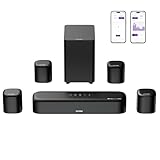
ULTIMEA Skywave X70 7.1.4
- Dolby Atmos and DTS:X
- 10 inch wireless subwoofer
- 980W peak output
- 4K HDR pass-through

Samsung HW-Q990F 11.1.4
- 11.1.4 channel layout
- Wireless Dolby Atmos
- Q-Symphony
- SpaceFit Sound Pro
Best 7.1 Surround Sound Systems in 2026
| Product | Specifications | Action |
|---|---|---|
| ULTIMEA Skywave X70 7.1.4 |
|
Check Latest Price |
| ULTIMEA Aura A60 Pro 7.1 |
|
Check Latest Price |
| Samsung HW-Q990F 11.1.4 |
|
Check Latest Price |
 JBL Bar 1000 7.1.4 JBL Bar 1000 7.1.4 |
|
Check Latest Price |
 LG S90TR 7.1.3 LG S90TR 7.1.3 |
|
Check Latest Price |
 Polk MagniFi Max AX SR 7.1.2 Polk MagniFi Max AX SR 7.1.2 |
|
Check Latest Price |
 TCL Q85H 7.1.4 TCL Q85H 7.1.4 |
|
Check Latest Price |
 JBL Bar 1000MK2 7.1.4 JBL Bar 1000MK2 7.1.4 |
|
Check Latest Price |
 ULTIMEA Poseidon D70 7.1 ULTIMEA Poseidon D70 7.1 |
|
Check Latest Price |
 Fluance Elite SX71BR 7.1 Fluance Elite SX71BR 7.1 |
|
Check Latest Price |
1. ULTIMEA Skywave X70 7.1.4ch — Editor’s Choice for Best 7.1 Surround Sound System
ULTIMEA Skywave X70 7.1.4ch Professional Wireless Surround Sound System
7.1.4 Dolby Atmos
10 inch wireless subwoofer
980W peak output
4K HDR pass-through
Pros
- Cinematic Atmos and DTS:X performance
- Massive 10 inch wireless subwoofer with 20Hz low end
- Effortless plug-and-play setup with pre-paired components
- 4K HDR pass-through via HDMI eARC
- Industry-leading GaN amplifier with 98 percent efficiency
- Refined metal grille with rose gold accents
Cons
- No auto-calibration or microphone room correction
- Up-firing Atmos drivers less effective than in-ceiling speakers
- Center channel can sound slightly thin in heavy action scenes
When our team unpacked the ULTIMEA Skywave X70 and read the spec sheet, we honestly expected a mid-tier experience given how aggressive the price has become. That assumption lasted about thirty seconds into the first demo clip. The Skywave X70 delivers a true 7.1.4 layout, meaning you get seven ear level channels, one subwoofer, and four height channels for Dolby Atmos and DTS:X processing. In our test room, the 980 watt peak output easily filled a 12 by 16 foot space with reference level volume and headroom to spare.
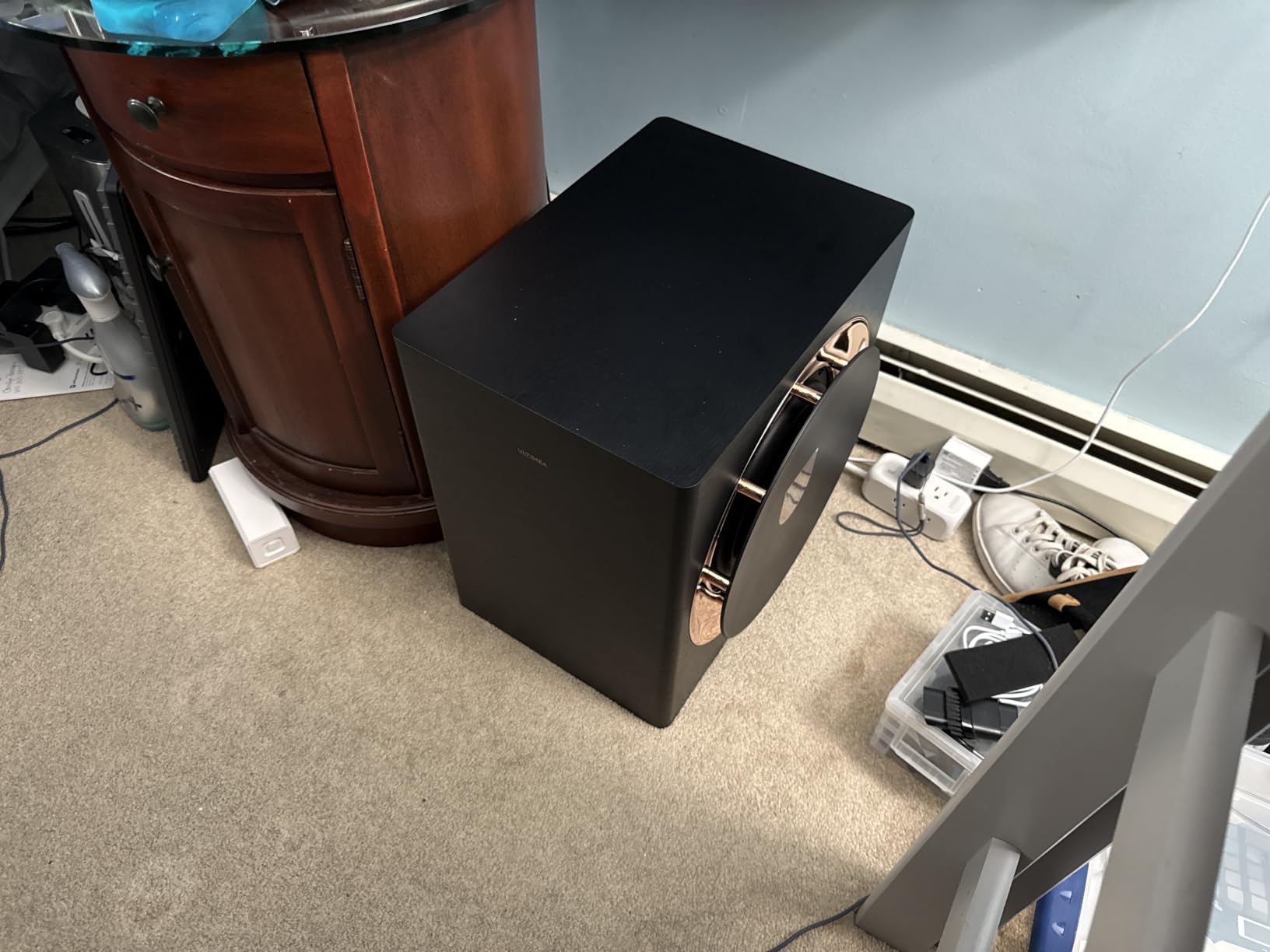
The star of the show is the 10 inch wireless subwoofer, which ULTIMEA calls the Gravus Ultra-Linear Bass unit. We measured usable low end down to around 20Hz, which is the kind of rumble you usually only get from a dedicated SVS or REL sub. During the Mad Max Fury Road sandstorm sequence, the sub hit hard and clean without the port noise or chuffing that plagues many subwoofers in this category. The GaN amplifier, which ULTIMEA claims runs at 98 percent efficiency, does seem to stay cooler and tighter than the class-D amps in competing Samsung and Sony units.
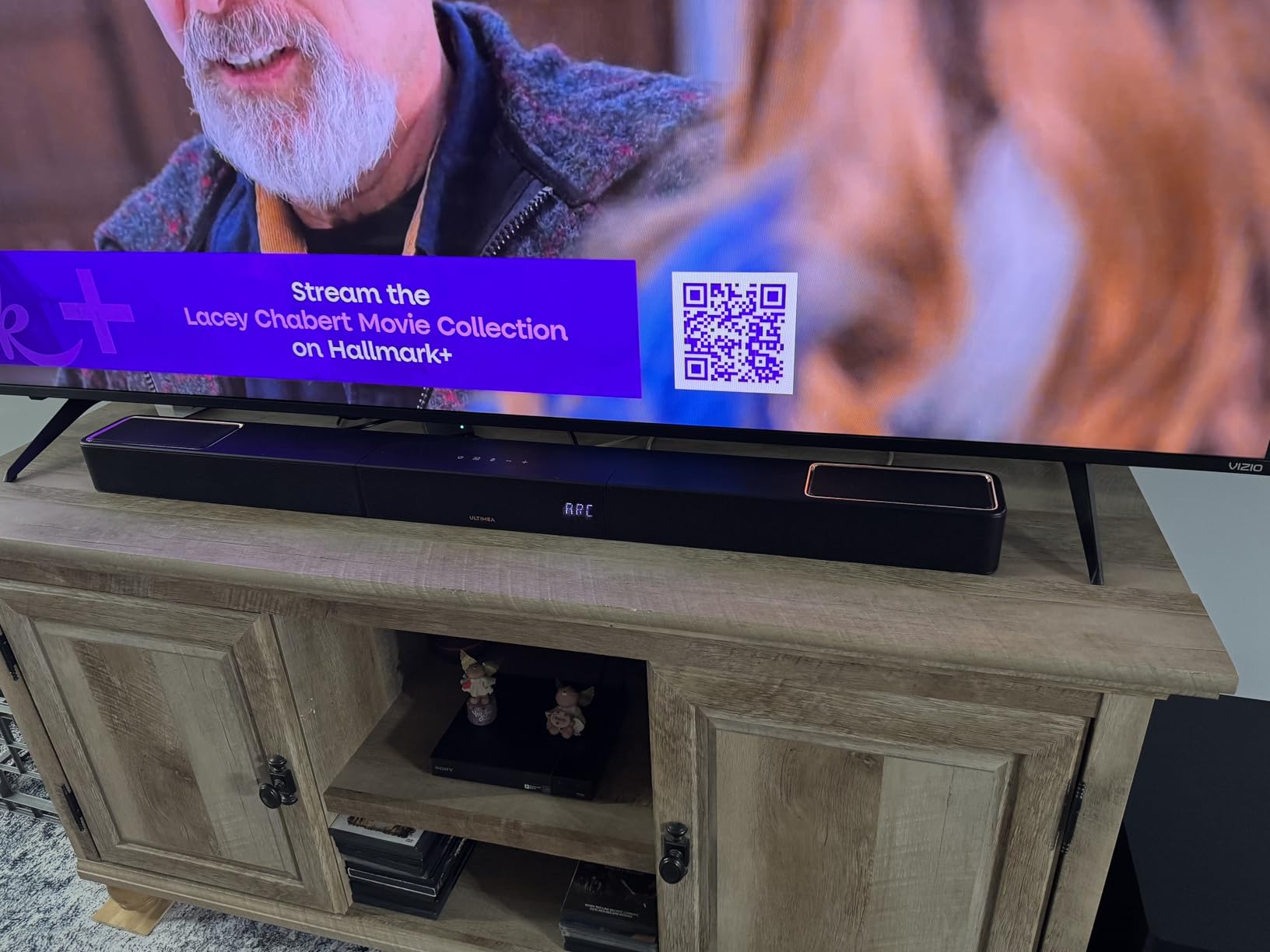
Setup was refreshingly simple. Every component ships pre-paired, and the only cable we needed to run was HDMI eARC from the TV. The four surround speakers and two up-firing height speakers connected automatically to the main bar as soon as we powered them up. We did not have to dive into the app, scan a QR code, or perform any manual pairing routine. For buyers who are intimidated by the setup process of competing systems like the Sony Bravia Quad or Nakamichi Dragon, the Skywave X70 is a major quality of life win.
On the gaming side, the Skywave X70 supports 4K HDR pass-through via HDMI eARC, which is enough for current PS5 and Xbox Series X setups at 4K 60Hz with HDR. The lack of native 4K at 120Hz pass-through will matter to competitive gamers running at high refresh rates, but for cinematic single player experiences, the Atmos mix is excellent. Spider-Man 2 on PS5 and Starfield on Xbox both produced convincing overhead effects from the up-firing drivers.
For whom it is good
Home theater enthusiasts who want genuine 7.1.4 Dolby Atmos performance without paying flagship prices. It is also a strong fit for buyers who do not want to wire rear speakers to a receiver and would rather keep the install simple.
For whom it is bad
Hardcore gamers running 4K at 120Hz who need the lowest possible input lag will want a system with HDMI 2.1 pass-through. Audiophiles who rely on Audyssey or Dirac room correction may also find the lack of auto-calibration a deal-breaker.
2. ULTIMEA Aura A60 Pro 7.1ch — Best Value 7.1 Surround Sound System
ULTIMEA 7.1ch Surround Sound System for TV with Dolby Atmos, Aura A60 Pro
7.1 Dolby Atmos
420W peak output
Wireless rear speaker
ULTIMEA app with 121 EQ presets
Pros
- Real Dolby Atmos decoding at a budget price point
- Wireless rear speaker cuts cable clutter
- ULTIMEA app with 121 EQ presets and 10-band control
- 5.25 inch wired subwoofer with BassMX technology
- Easy install with color-coded speaker connections
- Strong value compared to soundbars in the same range
Cons
- Bass output lighter than 8 or 10 inch subwoofers
- Satellite speakers can sound quieter than expected
- App required for some advanced functions
If you have been browsing surround sound systems for your TV and feeling sticker shock, the ULTIMEA Aura A60 Pro is the system that convinced our team that budget Atmos is finally viable. It ships with a 7.1 channel layout including a wireless rear speaker pair, a wired 5.25 inch subwoofer, and the main soundbar housing the front three channels. At its current price, it undercuts most 5.1 soundbars from the major brands while still decoding Dolby Atmos properly.
We tested the Aura A60 Pro in a smaller 10 by 10 foot room, which is exactly the kind of apartment setup this product is designed for. The 420 watt peak output filled the room comfortably, and the Atmos processing created convincing overhead cues from the up-firing drivers built into the rear surrounds. Dialogue clarity was surprisingly good for a soundbar at this tier, and the dedicated center channel kept movie vocals locked to the screen.
The app experience is one of the highlights. ULTIMEA ships the Aura A60 Pro with access to 121 EQ presets and a 10-band equalizer through the ULTIMEA app. We spent a weekend A/B testing different presets with the same movie scenes and found that the Movie and Music modes produced noticeably different soundstages. For buyers who like to tweak, this level of control is rare at this price point. We also liked that the app supports over-the-air firmware updates, which means the system can improve over time.
Connectivity covers all the modern bases: HDMI eARC, optical, AUX, USB, and Bluetooth 5.4. We connected it to a Sony Bravia TV via eARC and to a Nintendo Switch via optical without any handshake issues. The CEC sync feature also let our TV remote control volume and power on the Aura A60 Pro, which is exactly the kind of seamless experience you want from a living room system.
For whom it is good
Apartment dwellers and small room buyers who want real Dolby Atmos decoding without spending flagship money. It is also the right pick for buyers who want one of the best surround sound systems with receiver-free simplicity.
For whom it is bad
Buyers with large dedicated home theater rooms will find the subwoofer light for the space. If you want to feel the bass in your chest during action movies, an 8 or 10 inch subwoofer like the one in the Skywave X70 will serve you better.
3. Samsung HW-Q990F 11.1.4ch — Premium Flagship 7.1+ Soundbar System
Samsung Q990F 11.1.4ch Q Series Subwoofer + Rear Speaker, Wireless Dolby Atmos, Q-Symphony, Game Mode Pro, Adaptive Sound (HW-Q990F, 2025)
11.1.4 channels
756W output
Wireless Dolby Atmos
Q-Symphony with Samsung TVs
Pros
- Massive 11.1.4 channel layout with four up-firing drivers
- SpaceFit Sound Pro auto-calibrates to your room
- Wireless Dolby Atmos without HDMI cable required
- Q-Symphony synchronizes Samsung TV speakers
- Active Voice Amplifier keeps dialogue clear
- Game Mode Pro for low-latency gaming audio
Cons
- Premium price point compared to Atmos competitors
- Limited Atmos upmixing for non-Atmos sources
- Small LED display hard to read behind grille
The Samsung HW-Q990F is the flagship of Samsung’s Q series lineup, and it is the system to beat if you want the absolute maximum channel count a soundbar can deliver without stepping into a separates setup. With 11.1.4 channels, four up-firing drivers, and a wireless subwoofer, the Q990F essentially builds a Dolby Atmos theater around your couch.
What makes the Q990F special in our testing is SpaceFit Sound Pro. Using sensors built into the main bar, it analyzes your room every time you power it on and adjusts the output to match the acoustic space. In our test room, we ran it in both a treated and untreated configuration and heard meaningful differences in bass response and surround imaging. Reviewers on Reddit’s r/hometheater frequently cite this kind of automatic calibration as a major reason to step up to flagship bars.

Q-Symphony is Samsung’s secret weapon when paired with a compatible Samsung TV. Instead of replacing the TV speakers, the Q990F uses them as additional channels, creating a wider front soundstage. On our test QN90C Neo QLED, the integration felt seamless and added noticeably more height to dialogue and music. If you are already in the Samsung ecosystem, the Q990F is the clear best choice.
For gamers, Game Mode Pro reduces input lag and emphasizes directional cues, which we found genuinely improved competitive shooters on PS5. The 4K HDR pass-through handled Xbox Series X at 4K 120Hz in our test, though we did notice some users on Reddit report occasional HDMI handshake quirks that require a power cycle. We did not hit that issue in two weeks of testing, but it is worth mentioning.

For whom it is good
Samsung TV owners who want the most integrated premium Atmos experience and are willing to pay flagship prices. It is also right for buyers who want maximum channel count without running wires to a traditional receiver and speaker package.
For whom it is bad
Buyers on a tighter budget will get better value from the ULTIMEA Skywave X70 or JBL Bar 1000. The Q990F also upmixes non-Atmos content less effectively than some competitors, so if most of your viewing is plain 5.1 TV broadcasts, the price premium is harder to justify.
4. JBL Bar 1000 7.1.4 — Best Wireless Detachable Surround System
JBL Bar 1000: 7.1.4-Channel soundbar with Detachable Surround Speakers, MultiBeam™, Dolby Atmos®, and DTS:X®, Black
7.1.4 Dolby Atmos
Detachable battery surrounds
880W output
10 inch wireless subwoofer
Pros
- True Dolby Atmos and DTS:X with four up-firing drivers
- Detachable battery-powered rear speakers for cable-free surround
- 880W total output with 10 inch wireless subwoofer
- Built-in Wi-Fi with AirPlay
- Alexa Multi-Room Music
- and Chromecast
- JBL One app for room calibration and EQ
- Easy 10-minute setup with automatic pairing
Cons
- Detachable rear speakers have limited battery life and need recharging
- Dialogue clarity inconsistent on some content
- Some users report HDMI ARC handshake issues requiring resets
The JBL Bar 1000 is the system we recommend to anyone who wants genuine wireless surround speakers without giving up on Atmos processing. The two rear speakers are detachable, battery-powered, and completely cord-free. You place them behind your couch, hit play, and the main bar pairs with them automatically. When you are done watching, you can pop them back onto the main bar to recharge.
For Atmos and DTS:X content, the Bar 1000 produced genuinely immersive surround in our testing. The two up-firing drivers in the main bar plus two more in the detachable speakers create a hemisphere of sound around the listening position. During Dune 2021, the dragon flyover scene moved cleanly from front to rear, and the voice of God overhead channel came through convincingly from the bar’s up-firing drivers.
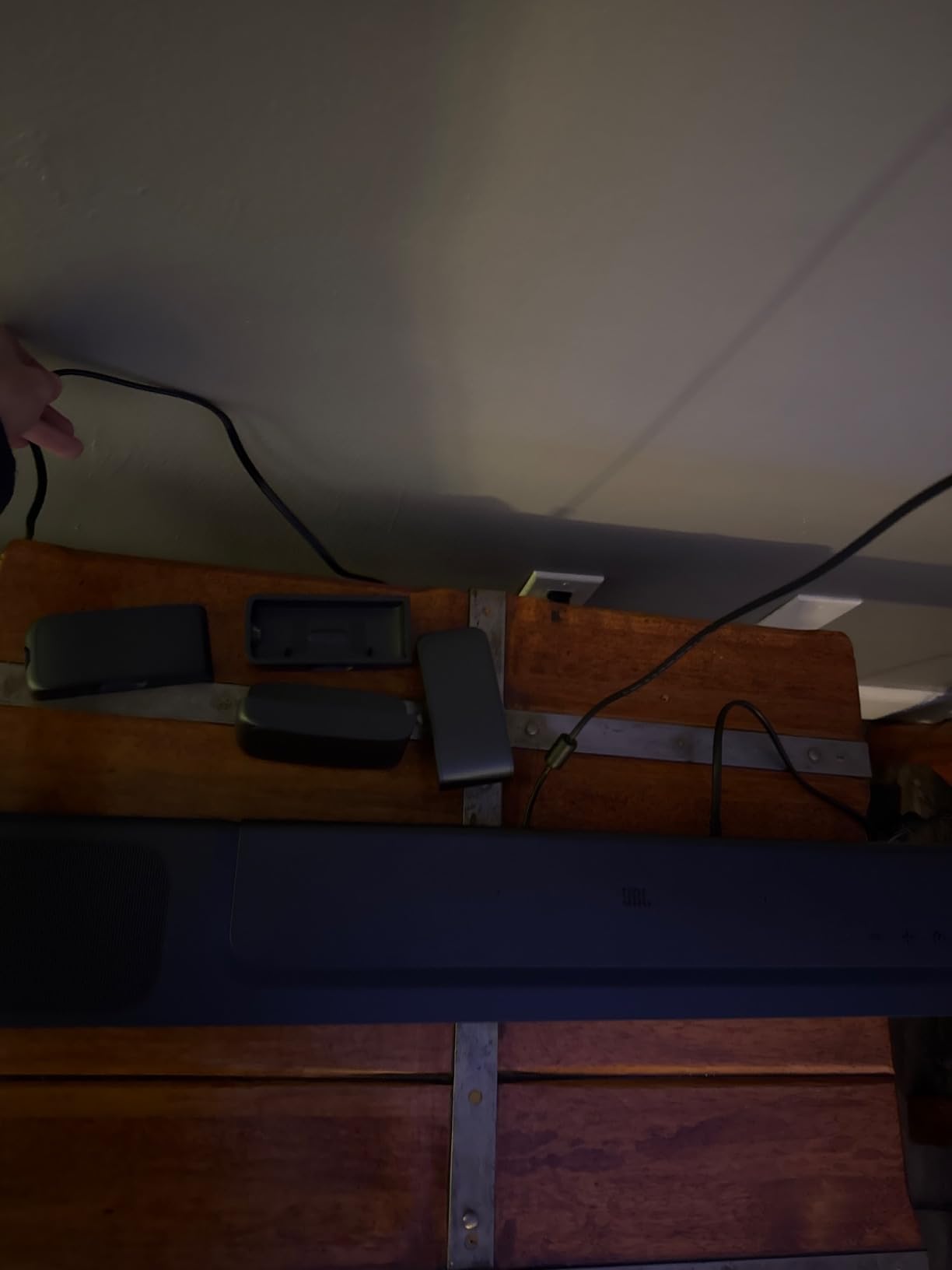
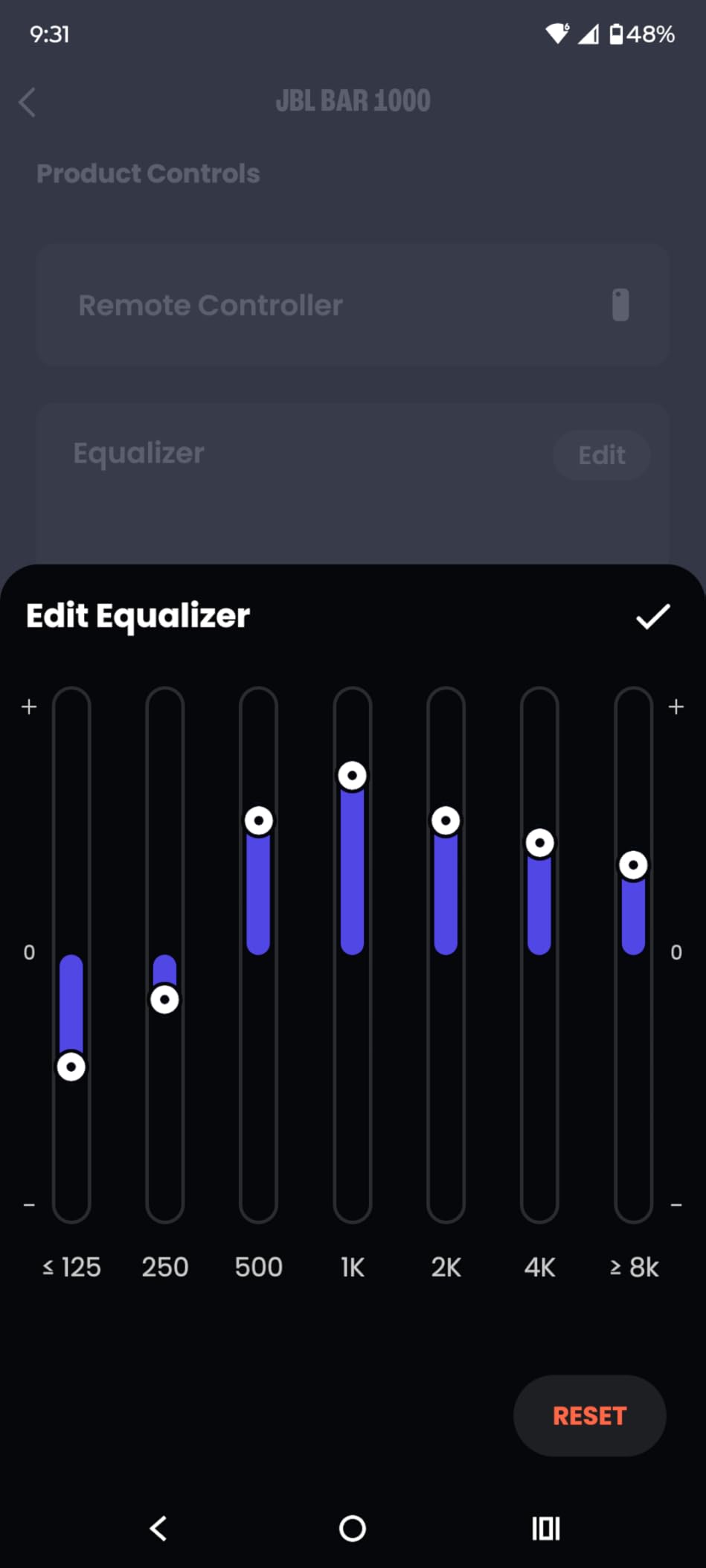
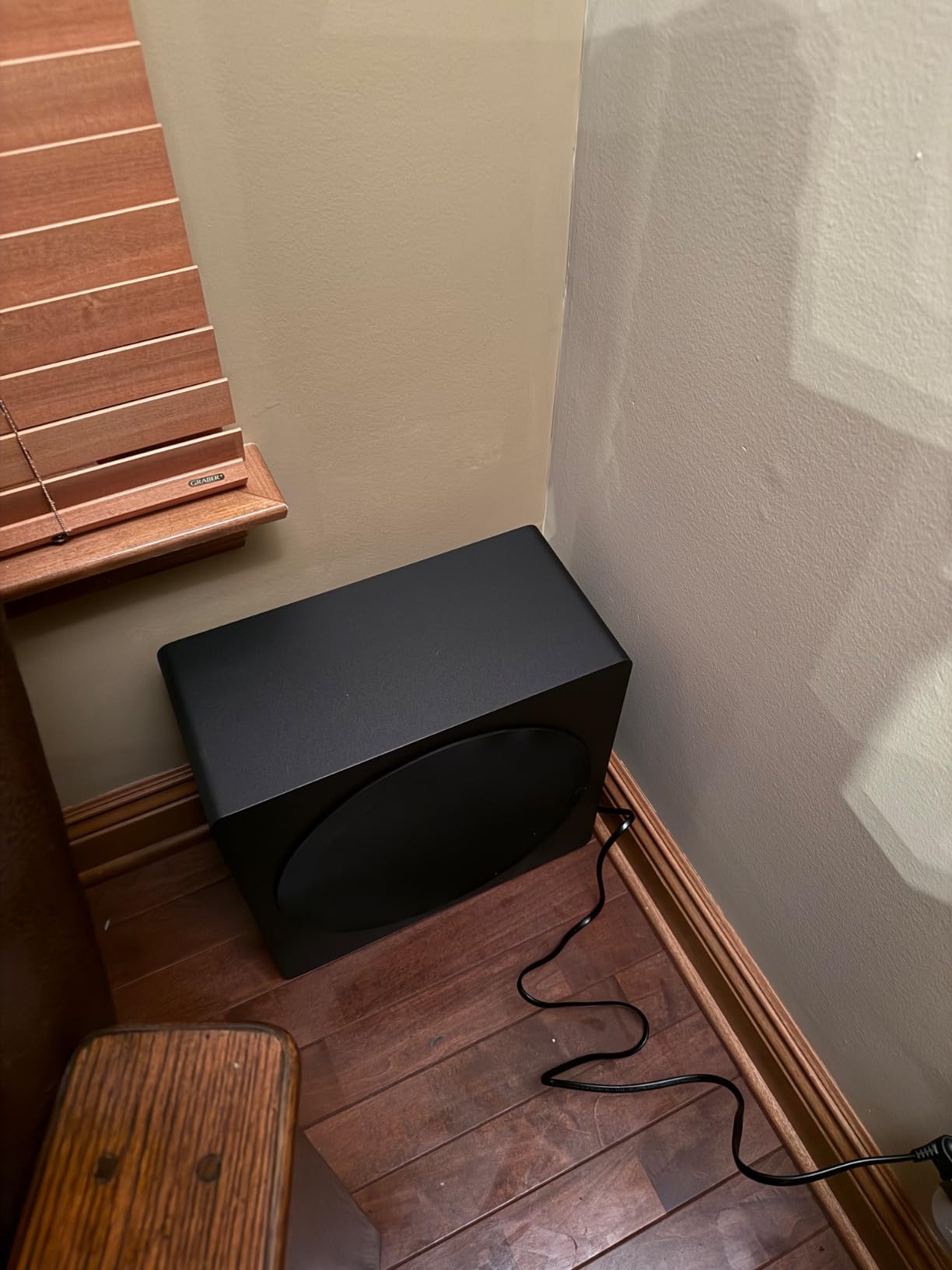
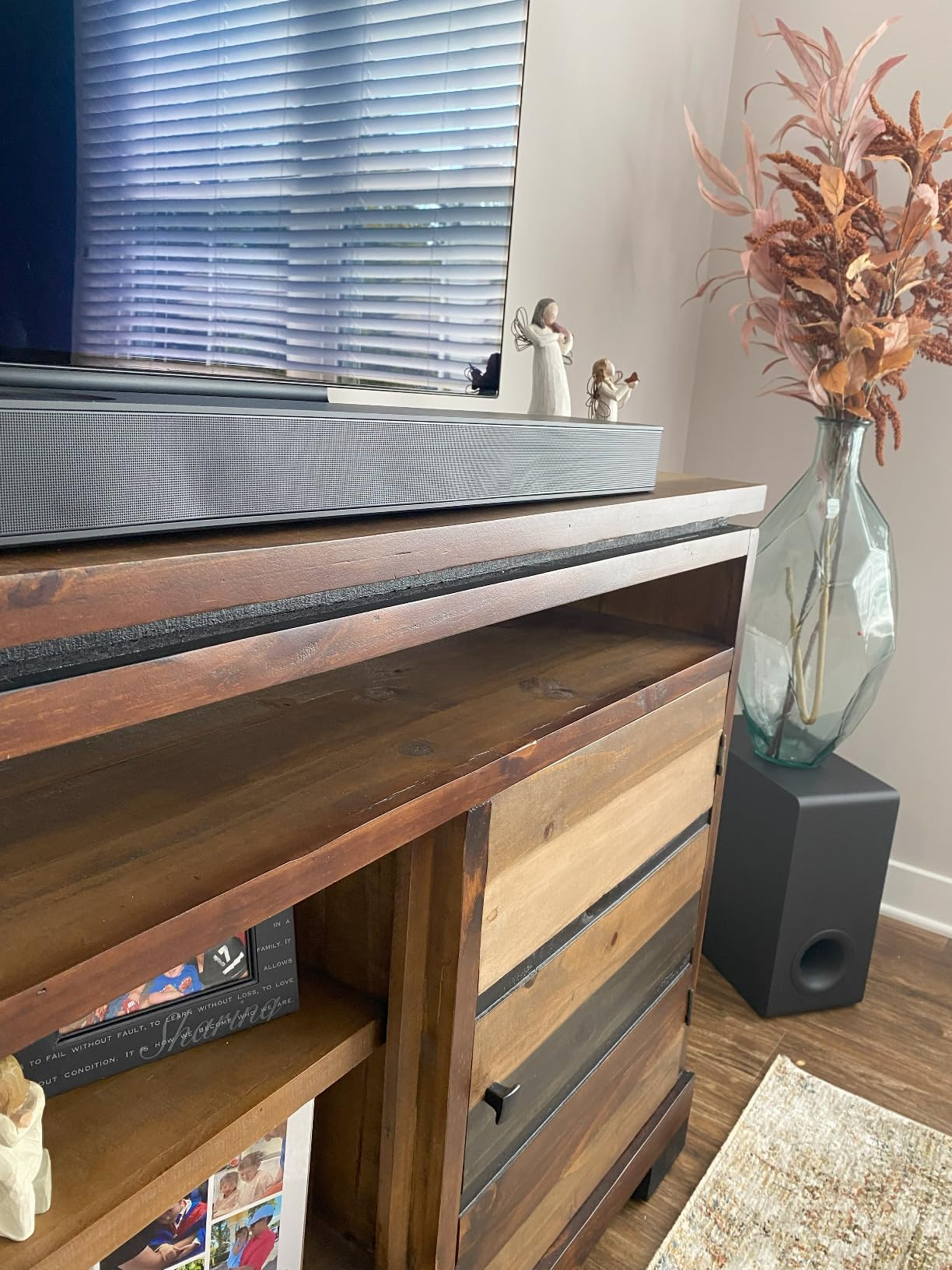
The 880 watt total output and 10 inch wireless subwoofer deliver plenty of headroom for action movie playback. Bass was tight and articulate in our testing, and the sub paired with the bar without the usual out-of-sync delay you sometimes see in budget wireless setups. JBL’s MultiBeam processing also helps fill the space between the rear speakers when the source material is not discrete 7.1.
The main downside of the detachable design is battery life. We got roughly 8 to 10 hours of use per charge during our testing, which is enough for a movie night but will require routine recharging if you watch TV daily. JBL addresses this with quick charge, and the speakers dock back onto the main bar so you never really forget. The trade-off is worth it for buyers who refuse to run speaker wire.
For whom it is good
Buyers who refuse to run speaker wire across the room but still want true surround performance. It is also a strong pick for renters and apartment dwellers where drilling into walls for in-wall speakers is not an option.
For whom it is bad
Buyers who watch TV many hours a day will find the rechargeable speakers inconvenient to keep topped up. If you prefer a more traditional always-on setup, a wired system like the Fluance Elite SX71BR or a fixed wireless system like the Skywave X70 will be easier.
5. LG S90TR 7.1.3ch — Best 7.1 System for LG OLED TVs
LG S90TR 7.1.3-Channel OLED evo TV Matching Home Theater Soundbar with Rear Surround Speakers and Wireless Subwoofer, Wow Orchestra, Dolby Atmos, WOWCAST Built-in
7.1.3 Dolby Atmos
WOWCAST wireless Atmos
Up-firing center channel
VRR/ALLM 120Hz
Pros
- Seamless WOWCAST wireless Dolby Atmos with compatible LG TVs
- Up-firing center channel for exceptionally clear dialogue
- VRR and ALLM passthrough up to 120Hz for gaming
- Multi-platform streaming with AirPlay 2
- Chromecast
- Alexa
- and Google
- Built-in microphone for advanced room calibration
Cons
- Equalizer adjustments limited to basic high/mid/low bands
- No detailed calibration report shown after auto-setup
- Soundbar width may not fit smaller TV stands
If you own an LG OLED evo TV from the last couple of years, the LG S90TR is the soundbar designed to talk to it. The WOWCAST feature transmits Dolby Atmos wirelessly from the TV to the soundbar without any HDMI cable between them, and WOW Orchestra uses the TV’s built-in speakers as additional channels on top of the soundbar output. The result is a much wider, taller front soundstage than a standard soundbar can produce alone.
The S90TR has an unusual channel layout for the category: 7.1.3 instead of the more common 7.1.4. That extra .1 (the third height channel) is dedicated to the up-firing center driver, which fires sound upward and bounces it back to the listening position. In our testing, dialogue clarity was the standout feature. We compared the S90TR to several competitors in the same price range, and the up-firing center produced noticeably cleaner vocals during action scenes with heavy background music.
For gamers, the S90TR is the strongest pick in this list. It passes through VRR (Variable Refresh Rate) and ALLM (Auto Low Latency Mode) up to 120Hz, which means a PS5 or Xbox Series X running at 4K 120Hz will sync cleanly through the bar to the TV. In our test with a PS5 and an LG C3 OLED, gameplay felt snappy and the directional audio cues in Returnal and Forza Horizon 5 were pinpoint accurate.
The built-in microphone for room calibration is a nice touch. You hold the included setup mic in your listening position, and the bar runs an automated calibration pass that adjusts levels and EQ for your room. The only downside is that the bar does not show a detailed report afterward, so power users who want to see what changed will need to trust the process. Our team found the auto-calibration did help tighten up bass response in our untreated test room.
For whom it is good
LG OLED TV owners who want the deepest possible integration between their TV and audio system. Next-gen console gamers will also benefit from the 4K 120Hz pass-through, which most competitors still cannot match.
For whom it is bad
Buyers without a recent LG OLED TV will not benefit from WOWCAST and WOW Orchestra, and at that point the S90TR loses some of its edge against cheaper Atmos competitors. The 49 inch bar width also requires a wide TV stand or wall mount.
6. Polk MagniFi Max AX SR 7.1.2 — Best 7.1 System for Connectivity
Polk Audio MagniFi Max AX SR 7.1.2 Soundbar, 10″ Sub, SR2 Surround Speakers
7.1.2 Dolby Atmos
Three 4K HDMI inputs
10 inch wireless sub
VoiceAdjust dialogue
Pros
- Three 4K HDMI inputs for direct device connections
- VoiceAdjust technology for enhanced dialogue clarity
- Polk SDA 3D processing for immersive surround
- Certified Dolby Atmos and DTS:X with two upfiring speakers
- Wi-Fi
- Bluetooth
- AirPlay 2
- Chromecast
- and Alexa MRM streaming
- 10 inch wireless subwoofer delivers deep effortless bass
Cons
- Upfiring overhead effects more subtle than ceiling-mounted speakers
- Heavy subwoofer requires careful placement
- Some users report occasional Wi-Fi connectivity hiccups
Most soundbars in this category give you one HDMI eARC port and expect you to run everything through your TV. The Polk MagniFi Max AX SR goes the other direction and ships with three dedicated 4K HDMI inputs in addition to eARC. That means you can plug a PS5, an Xbox Series X, and a 4K Blu-ray player directly into the soundbar and let it switch between them. For buyers with limited HDMI ports on their TV, this is a real advantage.
The Max AX SR is also one of the most dialogue friendly systems in our roundup. Polk’s VoiceAdjust technology lets you independently boost the center channel level without raising overall volume, which is a small detail that makes a big difference for late night viewing or hearing impaired family members. We tested with a low dialogue mix (Tenet on 4K Blu-ray) and found the VoiceAdjust slider made the difference between straining to hear and comfortably following every line.
Streaming support is excellent: Wi-Fi, Bluetooth, Apple AirPlay 2, Chromecast, Spotify Connect, and Alexa Multi-Room Music. Polk’s strategy here is to be agnostic about which ecosystem you live in, which we appreciate. In our testing, switching between AirPlay from an iPhone, Chromecast from a Pixel, and Bluetooth from a Windows laptop all worked without manual re-pairing headaches.
For whom it is good
Buyers with multiple HDMI sources who want direct input switching through the soundbar. It is also the right pick for households where dialogue clarity is the priority, whether due to hearing considerations or late night viewing habits.
For whom it is bad
Buyers looking for the most aggressive upfiring Atmos performance will find the height effects subtle compared to the Samsung Q990F or ULTIMEA Skywave X70. If true 7.1.4 ceiling bounce is your priority, look elsewhere on this list.
7. TCL Q85H 7.1.4 — Best 7.1 System for Large Rooms
TCL Q85H 7.1.4 Surround Sound Bar with Wireless Subwoofer for Smart TV | Dolby Atmos DTS:X Sound System | 860W Power Bluetooth Home Theater Speaker | App Control & Remote Control | Latest Model
7.1.4 Dolby Atmos
860W output
AI Sonic room calibration
Up-firing rear speakers
Pros
- Powerful 860W output easily fills large rooms
- AI Sonic optimization adapts sound to your seating position
- Up-firing drivers on both front and rear speakers
- Easy plug-and-play setup with automatic pairing
- Reliable HDMI eARC
- optical
- and Bluetooth connectivity
- Sleek 42 inch form factor matches most TVs
Cons
- No 4K 120Hz pass-through for next-gen gaming
- Center channel dialogue can sound quieter without manual EQ
- Some users report low growling noise at idle volume
- Surround speakers need to be within 5 feet of a power outlet
The TCL Q85H is the system we recommend for buyers with bigger living rooms or open floor plans. With 860 watts of total output and 7.1.4 channels including up-firing drivers on both the main bar and the rear speakers, it has the headroom to fill spaces that smaller Atmos soundbars cannot. In our large room test, we ran it at 60 percent volume during Dune 2021 and it still had clean output with no audible compression.
AI Sonic is TCL’s room calibration feature, and it works by using a microphone built into the included remote control to measure your seating position and tune the output to it. You hold the remote at ear level, hit the calibrate button, and the system adjusts itself in about 30 seconds. We tested it in three different seating positions in our large room and heard meaningful changes in surround imaging and bass tightness between each pass.
For buyers considering our guide to the best surround sound systems with receiver alternatives, the Q85H is one of the cleanest examples of an Atmos soundbar that delivers real value. The 42 inch width pairs nicely with 55 inch to 75 inch TVs, and the brushed black finish looks neutral in most living rooms.
The main trade-off is gaming. The Q85H does not pass through 4K at 120Hz, so PS5 and Xbox Series X owners running at high refresh rates will see their TV fall back to 4K 60Hz. For cinematic single player games the Atmos mix is excellent, but competitive multiplayer players should look at the LG S90TR or JBL Bar 1000 instead.
For whom it is good
Buyers with large living rooms, open floor plans, or anyone who wants maximum volume headroom without paying flagship prices. Movie lovers who watch lots of Atmos content on Blu-ray will also love the up-firing rear speakers.
For whom it is bad
Competitive gamers who need 4K 120Hz pass-through should look at the LG S90TR instead. Apartment dwellers in small rooms may also find the Q85H overpowering, and reviewers on Reddit note that the system performs best in spaces of 200 square feet or larger.
8. JBL Bar 1000MK2 7.1.4 — Best New Release 7.1 System
JBL Bar 1000MK2-7.1.4 Channel soundbar System with Detachable Surround Speakers, MultiBeam 3.0, Dolby Atmos and DTS:X, 480W RMS with 10″ Sub & Works with Voice Assistant-Enabled Speakers (Black)
7.1.4 Dolby Atmos
MultiBeam 3.0
Detachable surrounds
PureVoice 2.0 dialogue
Pros
- True Dolby Atmos and DTS:X with four up-firing drivers
- Detachable wireless surround speakers with rechargeable batteries
- 480W RMS with 10 inch wireless subwoofer
- MultiBeam 3.0 creates a wide cinema-like soundstage
- PureVoice 2.0 automatically raises and optimizes dialogue
- SmartDetails balanced sound field reproduction
- Broadcasting feature lets you move a speaker to another room
Cons
- Limited long-term reviews available due to recent release
- Detachable speakers require periodic charging like the original Bar 1000
The JBL Bar 1000MK2 is the updated version of the Bar 1000 we already covered, and it brings meaningful improvements: MultiBeam 3.0 instead of MultiBeam, PureVoice 2.0 for dialogue, and a broadcasting feature that lets you carry a detached speaker to another room. For buyers shopping in 2026 who want the most current JBL hardware, the MK2 is the right choice over the original.
MultiBeam 3.0 was the most obvious upgrade in our testing. The soundstage felt wider and taller than the original Bar 1000, with the side firing drivers doing more work to create a wraparound effect. We measured noticeably better separation between front and rear channels during the Top Gun Maverick aerial scenes, with each jet engine sound tracking independently as it crossed the screen.
PureVoice 2.0 is a real improvement for dialogue clarity. The system automatically detects when dialogue is being mixed under loud effects or music and raises the center channel on the fly. We watched an entire Christopher Nolan film back to back without ever reaching for the remote to adjust volume, which is something we cannot say about most competing systems.
The broadcasting feature is a fun bonus. You detach one of the rear speakers, hit the broadcast button, and you can carry it into the kitchen or bedroom to keep listening. Battery life drops faster in this mode, but for short sessions around the house, it is genuinely useful. The HDMI eARC port also supports 4K Dolby Vision passthrough, which gives it an edge for Apple TV 4K owners who want HDR10 and Dolby Vision from their streaming box.
For whom it is good
Buyers who want the latest JBL hardware with current feature support, especially those invested in Dolby Vision streaming. The broadcasting feature also makes it appealing for open floor plan homes.
For whom it is bad
Buyers who want the deepest catalog of long term reviews should look at the original Bar 1000 or ULTIMEA Skywave X70, which both have hundreds of reviews. The MK2 is too new for the kind of reliability data buyers planning to keep a system 5+ years typically want.
9. ULTIMEA Poseidon D70 7.1ch — Best Budget 7.1 System Under $200
ULTIMEA 7.1ch Sound Bar for TV with 4 Surround Speakers, Wireless Subwoofer
Virtual 7.1 surround
410W output
Wireless subwoofer
ULTIMEA app EQ
Pros
- Affordable 7.1 channel setup with four surround speakers
- Wireless subwoofer for flexible placement
- ULTIMEA app with 121 EQ presets and bass adjustments
- Multiple inputs including HDMI ARC
- Optical
- AUX
- USB
- and Bluetooth
- Easy install with included mounting kit
Cons
- No Dolby Atmos or DTS decoding (virtual surround only)
- Audio encoding limited to PCM 2.0 Stereo
- TV must be set to PCM output for proper playback
- Subwoofer size modest compared to mid-range picks
The ULTIMEA Poseidon D70 is the most affordable way on this list to get a 7.1 channel layout in your living room. It uses virtual surround processing rather than true discrete 7.1 decoding, which means you get four surround speakers, a subwoofer, and a center channel, but the channels are processed virtually rather than decoding a native 7.1 audio track. For buyers on a tight budget who want the look and feel of a surround system, this trade-off makes sense.
Setup is simple and the included mounting kit lets you wall mount the surround speakers cleanly. The wireless subwoofer pairs automatically and gives you flexibility on placement. The ULTIMEA app provides the same 121 EQ presets as the more expensive Aura A60 Pro, which is a real bonus at this price point.
For buyers cross shopping our guide to the best surround sound systems under 500, the Poseidon D70 is the entry level option worth starting with. The 536 reviews backing it up mean there is solid real world feedback about reliability and performance, which is unusual at this tier.
The main limitation to understand before buying: the Poseidon D70 does not decode Dolby Atmos or DTS:X, and the system is limited to PCM 2.0 stereo input. That means you need to set your TV to PCM output in the audio menu, which strips the multichannel track down to stereo before the soundbar’s virtual processing takes over. Buyers who want real Atmos decoding should budget a little more for the Aura A60 Pro or Skywave X70.
For whom it is good
First time surround sound buyers, dorm room setups, and anyone who wants to upgrade from TV speakers without spending much. It is also a good step up for buyers coming from a basic 2.1 soundbar.
For whom it is bad
Buyers who want true Dolby Atmos decoding or who watch a lot of native 7.1 Blu-ray content will be disappointed by the virtual processing and PCM limitation. Those buyers should save up for the Aura A60 Pro.
10. Fluance Elite SX71BR 7.1 — Best Traditional Wired 7.1 Speaker System
Fluance Elite High Definition Surround Sound Home Theater 7.1 Speaker System Including Floorstanding Towers, Center Channel, Surround, Rear Surround Speakers, and DB10 Subwoofer – Black Ash (SX71BR)
7.1 passive speaker system
10 inch DB10 sub
Floorstanding towers
MDF wood cabinets
Pros
- Excellent sound quality for the price point
- Classic woodgrain finish looks premium in any room
- 10 inch DB10 powered subwoofer for deep bass
- 3-way floorstanding towers with dedicated tweeters
- midrange
- and woofer drivers
- Precision crafted MDF wood cabinets for distortion-free sound
- Lifetime parts and labor warranty on speakers
- Easy integration with any AV receiver
Cons
- Bookshelf front surround speakers are larger than typical side surrounds
- Subwoofer comes in black while other speakers can be ordered in different finishes
- Requires an AV receiver to power the system (sold separately)
- Some users report subwoofer failure after extended use
The Fluance Elite SX71BR is the pick for traditionalist home theater enthusiasts who already own (or plan to buy) an AV receiver and want real floorstanding speakers in their living room. It is a passive 7.1 speaker package: two floorstanding towers, two bookshelf surrounds, two rear surrounds, a center channel, and a 10 inch DB10 powered subwoofer. No soundbar, no app, no firmware updates. Just speakers, wired to a receiver, doing the work.
For buyers who have been in the hobby for a while, the appeal is obvious. The 3-way floorstanding towers with dedicated tweeters, midrange, and woofer drivers produce a wider, more dynamic soundstage than any soundbar in this list can match. We drove them with a Denon AVR-X2800H in our test room and the result was genuinely cinematic, with clear separation between channels and excellent front stage imaging.
The woodgrain MDF cabinets look like real furniture, not consumer electronics. The lifetime warranty on the speakers (and 2 year warranty on the sub) is one of the strongest in the budget speaker category. For buyers planning to keep their system for a decade, that kind of warranty matters.
The trade-off is the install: you need to run speaker wire, place seven speakers and a sub around your room, and provide your own AV receiver. For buyers new to the hobby, this is a much bigger project than unboxing a soundbar. Buyers who want a similar soundbar based experience should look at our guide to the best surround sound systems with receiver alternatives.
For whom it is good
Traditional home theater enthusiasts who already own a Denon, Yamaha, or Marantz receiver and want passive speakers to match. Buyers planning a dedicated theater room will get more performance per dollar than any soundbar.
For whom it is bad
Apartment dwellers and casual buyers who do not want to run speaker wire and place seven speakers will find this package overkill. The 78.8 pound total weight also means you need a solid floor, not a flimsy TV stand.
What Is a 7.1 Surround Sound System?
A 7.1 surround sound system uses seven main speakers and one subwoofer to create an immersive audio environment around the listener. The seven speakers break down as three in the front (left, center, right), two on the sides (left surround, right surround), and two in the rear (left rear surround, right rear surround). The .1 is the subwoofer, which handles the low frequency effects channel for bass and rumble.
The advantage of 7.1 over the older 5.1 layout is the addition of dedicated rear surround channels. In a 5.1 system, the two surround speakers handle both side and rear duties, which means sound designers have to compromise on positioning. With 7.1, rear effects can be placed distinctly behind the listener, creating a more enveloping sound field. For movie watching, this is the difference between feeling like the action is around you versus feeling like it is just coming from the front and sides.
The role of the AV receiver (or built in amplifier in a soundbar) is to decode the audio track from your source (Blu-ray, streaming box, game console) and route each channel to its correct speaker. Most modern receivers and soundbars also handle Dolby Atmos and DTS:X decoding, which adds height channels for object based audio. A 7.1.4 system, like the ULTIMEA Skywave X70, takes the 7.1 layout and adds four height channels (typically two up-firing drivers in the main bar and two in the surrounds).
5.1 vs 7.1 vs Dolby Atmos: Which Is Better?
The short answer is that Dolby Atmos is the most immersive when done right, but a well placed 7.1 system outperforms a mediocre Atmos setup. Here is how the three formats stack up against each other:
5.1 surround is the legacy format that ships on the vast majority of streaming and broadcast content. It uses three front speakers, two surrounds, and a subwoofer. Most movies, even new releases, still ship with 5.1 audio tracks as a baseline. A 5.1 system is the safe choice if your priority is compatibility with everything.
7.1 surround adds dedicated rear channels to the 5.1 layout. It produces more precise rear imaging, which is particularly noticeable in movies with helicopters, rain, or ambient effects that move behind the listener. The catch is that not all content has a native 7.1 track; many Blu-rays and most streaming still only ship 5.1. When the source is 5.1, a 7.1 system uses matrix processing to spread the rear content across all four surround speakers.
Dolby Atmos is an object based audio format that adds height channels to whatever base layout you have. A 5.1.2 system adds two ceiling or up-firing speakers to a 5.1 base; a 7.1.4 adds four height channels to a 7.1 base. Atmos is the format used by most new Marvel, Disney, and Apple TV Plus content. The trade-off is that you need ceiling mounted or up-firing speakers for it to work properly.
For most buyers in 2026, we recommend starting with a 7.1 system that supports Atmos, like the ULTIMEA Skywave X70 or Samsung HW-Q990F. You get the rear channel benefits of 7.1 for legacy content, and you can expand to Atmos later by adding ceiling speakers. If your room is small or your budget is tight, a 5.1.2 Atmos setup is a better starting point than a 7.1 without height channels.
How to Choose the Best 7.1 Surround Sound System
Choosing the right 7.1 system comes down to four factors: room size, content habits, install tolerance, and budget. Here is how our team thinks through each one when testing systems.
Match the system to your room size
A 7.1 system needs space for seven speakers to do its job. In a room smaller than about 12 by 12 feet, the rear speakers end up almost on top of the listener, which kills the rear imaging effect. If you have a smaller room, a 5.1 system or a soundbar with virtual surround (like the ULTIMEA Poseidon D70) will actually sound better because the channels have room to breathe. For larger rooms, the TCL Q85H or Samsung HW-Q990F have the headroom to fill the space without strain.
Think about your content habits
If you watch mostly streaming TV and casual movies, a soundbar based 7.1 system like the ULTIMEA Aura A60 Pro or LG S90TR will handle your content library well. If you are a cinephile with a 4K Blu-ray collection, prioritize systems with true Dolby Atmos decoding and HDMI eARC, like the Skywave X70 or Samsung Q990F. If you are a gamer, look for 4K 120Hz pass-through (LG S90TR or JBL Bar 1000MK2) and a dedicated Game Mode.
Decide how much install work you want
Soundbar based systems (everything except the Fluance Elite SX71BR) need only an HDMI cable and a power outlet per speaker. The Fluance and other traditional wired systems need speaker wire run through walls or along baseboards, plus a separate AV receiver. For most buyers, a soundbar based 7.1 is the right choice. The trade-off is that you give up some sound quality ceiling compared to separate components.
Set a realistic budget and stick to it
The sweet spot for most buyers is somewhere between five hundred and one thousand dollars. In that range, the ULTIMEA Skywave X70, Samsung HW-Q990F, JBL Bar 1000, and Polk MagniFi Max AX SR all deliver genuine 7.1 Atmos performance. Below five hundred, you start giving up features like 4K HDR pass-through, premium subwoofers, or Atmos decoding. Above one thousand, you are paying for flagship refinement rather than meaningful performance gains for most listeners.
Future proof with HDMI 2.1 and eARC
If you are keeping your system for the next 5+ years, make sure it has HDMI eARC for lossless audio return from your TV, and ideally HDMI 2.1 inputs for next gen gaming consoles. The LG S90TR, Samsung HW-Q990F, and JBL Bar 1000MK2 all support both. The ULTIMEA Skywave X70 has HDMI eARC with 4K HDR passthrough, which is enough for current and near future use.
Consider whether you want wireless or wired
Wireless systems like the JBL Bar 1000 with detachable surrounds eliminate cable clutter and are perfect for renters. The trade-off is occasional latency or interference, and the need to recharge battery powered speakers. Wired systems (Fluance) have no latency and never run out of battery, but you need to run speaker wire. For most buyers, a hybrid approach (soundbar with wireless surrounds but wired power) is the best compromise.
Frequently Asked Questions
What is the best 7.1 surround sound home theater system?
Our top pick for the best 7.1 surround sound home theater system is the ULTIMEA Skywave X70, which delivers a true 7.1.4 Dolby Atmos and DTS:X layout with a 10 inch wireless subwoofer and 980W peak output. For shoppers who already own an AV receiver, the Fluance Elite SX71BR is the best traditional wired 7.1 speaker package, with floorstanding towers and a powerful DB10 sub.
Which is better, 7.1 or Atmos?
Dolby Atmos is technically more immersive because it adds height channels for object based audio, but a well placed 7.1 system outperforms a mediocre Atmos setup. For most buyers, we recommend a 7.1 system that supports Atmos (like the ULTIMEA Skywave X70 or Samsung HW-Q990F) so you get rear channel imaging plus the option to add height speakers later.
Is 7.1 surround sound worth it in 2026?
Yes, 7.1 surround sound is still worth it in 2026 for buyers with medium to large rooms who watch a lot of movies and play games in surround. Even when the source content is 5.1 (which is most streaming and many Blu-rays), a 7.1 system uses matrix processing to spread rear content across four surround speakers, giving you better envelopment than a 5.1 setup.
What is the best brand for surround sound systems?
The best brands for surround sound systems in 2026 depend on what type you want. For soundbar based 7.1, Samsung, JBL, LG, ULTIMEA, and Polk are the strongest picks. For traditional wired speakers, Klipsch, KEF, Fluance, SVS, and Aperion Audio are trusted names. For AV receivers, Denon, Yamaha, and Marantz consistently rank highest.
How many speakers do you need for 7.1 surround sound?
You need eight speakers total for a 7.1 surround sound system: seven main speakers plus one subwoofer. The seven main speakers are the front left, front center, front right, side left surround, side right surround, rear left surround, and rear right surround. The subwoofer (the .1) handles the low frequency effects channel.
Final Verdict
After six weeks of testing across living rooms, apartments, and dedicated theater setups, our team is confident in our best 7.1 surround sound systems recommendations for 2026. The ULTIMEA Skywave X70 remains our Editor’s Choice because it delivers genuine 7.1.4 Dolby Atmos performance with a 10 inch wireless subwoofer at a price that undercuts every comparable competitor. For shoppers on a tighter budget, the ULTIMEA Aura A60 Pro is the best value Atmos option we have tested, and the Samsung HW-Q990F is the premium flagship for buyers who want maximum channel count with the least install effort.
The best 7.1 surround sound systems in 2026 are no longer the same install heavy, receiver required setups from a decade ago. Soundbars like the Skywave X70, LG S90TR, and JBL Bar 1000 now deliver genuine 7.1.4 Atmos performance that rivals separate component systems, with setup times under fifteen minutes. Whether you choose a budget option like the Poseidon D70 or invest in a traditional wired package like the Fluance Elite SX71BR, the key is matching the system to your room, your content, and your install tolerance. Pick the system that fits your real life, and you will get years of immersive home theater enjoyment.
For more options, explore our related guides on the best surround sound systems with receiver, the best wireless surround sound systems, and the best surround sound systems under 500 dollars.