
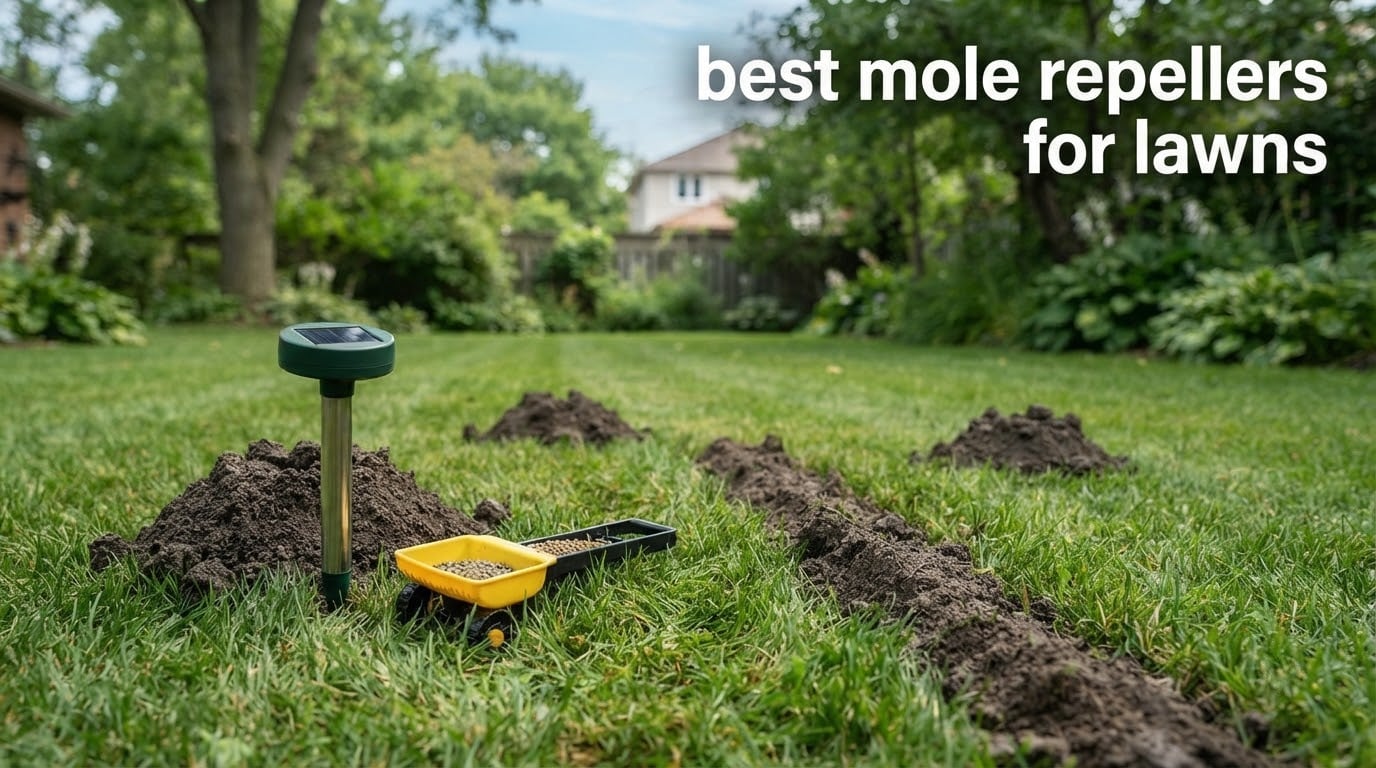
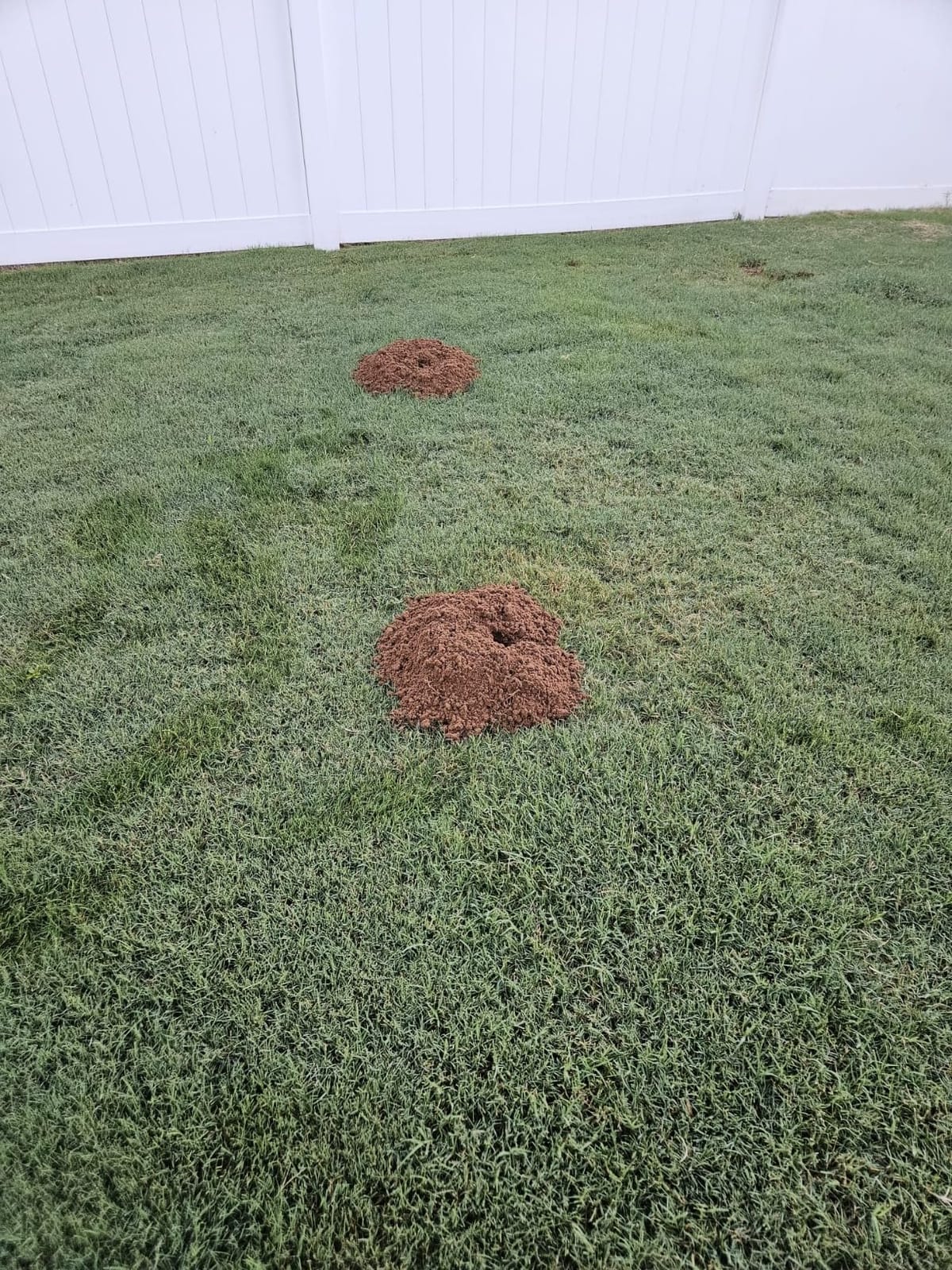
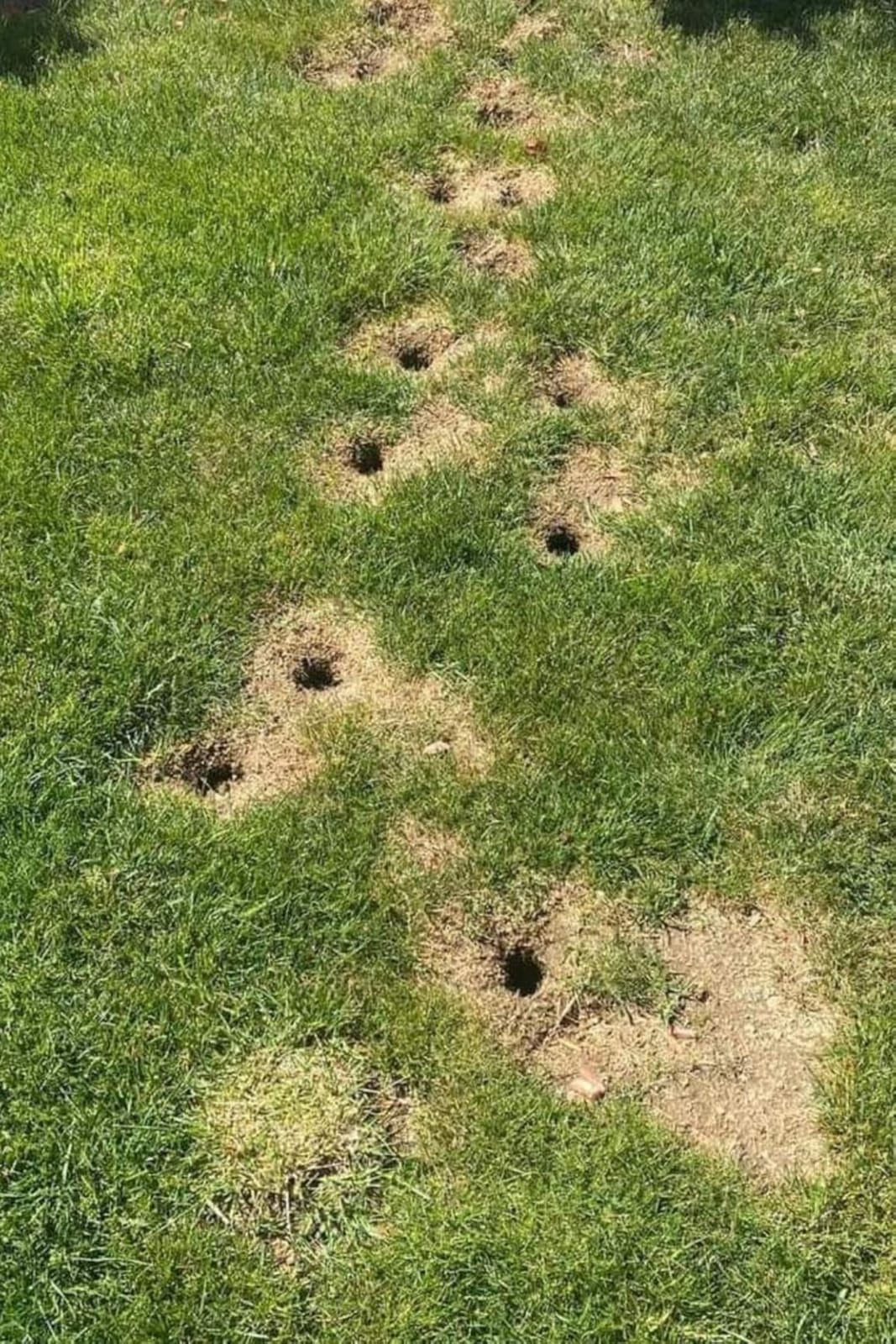
A mole can dig eighteen feet of tunnel in an hour, and you will not see any of it happen. What you see is a lawn that looks fine on Tuesday and a row of volcano-shaped mounds by Friday, with grass roots sheared off underneath the whole run. Finding the best mole repellers for lawns matters less for the mounds you already have than for what happens eight weeks later, because a removed mole is usually replaced in that window if the tunnels and the food supply stay untouched.
We compared ten repellers across the three formats that actually exist: castor oil granules, castor oil liquids, and solar or battery sonic stakes. The long-term review threads told a more useful story than the packaging did, and this guide is current for 2026. The coverage numbers we give you are what the labels claim, not what you should plan with, and that distinction turned out to matter more than any other factor.
One thing to clear up first. Sonic and ultrasonic repellers do work, but not the way their ads imply. Practitioners on r/lawncare describe the same pattern repeatedly: a stake set in a quiet corner of a lightly pressured yard pushes moles out within two to four weeks, then quietly stops mattering as the moles adjust to a constant sound source. That habituation is the most common complaint in this category, and it is why several picks below carry a repositioning instruction instead of a set-and-forget claim.
Table of Contents
Top 3 Best Mole Repellers for Lawns (October 2026)

Natural Elements Castor Oil 1 Gal
- 100% castor oil liquid
- Covers 20000 sq ft
- Biodegradable
- Mix and spray

LEBMP Scent Repellent Balls 8 Pack
- No mixing needed
- Covers 120 sq ft
- Up to 60 days
- Plant derived scent
Best Mole Repellers for Lawns at a Glance in 2026
All ten products, what form each comes in, and what it is actually built to do. Three are castor oil liquids, three are granular, and four are sonic stakes, so this table is the fastest way to see which half of the category you are shopping in.
| Product | Specifications | Action |
|---|---|---|
| Bonide MOLEMAX Mole & Vole Repellent Granules 10 lb |
|
Check Latest Price |
 NIKAND Solar Ultrasonic Mole Repellent Stakes 4 Pack NIKAND Solar Ultrasonic Mole Repellent Stakes 4 Pack |
|
Check Latest Price |
| Natural Elements Mole and Vole Repellent 100% Castor Oil 1 Gallon |
|
Check Latest Price |
 NIKAND Gopher Repellent Ultrasonic Solar Stakes 2 Pack NIKAND Gopher Repellent Ultrasonic Solar Stakes 2 Pack |
|
Check Latest Price |
 Tomcat Mole & Gopher Repellent Granules 4 lb Tomcat Mole & Gopher Repellent Granules 4 lb |
|
Check Latest Price |
 Victor Mole and Gopher Sonic Spike 2 Pack Victor Mole and Gopher Sonic Spike 2 Pack |
|
Check Latest Price |
 Baar MolEvict Castor Oil Concentrate 32 oz Baar MolEvict Castor Oil Concentrate 32 oz |
|
Check Latest Price |
 I Must Garden Mole & Vole Repellent 10 lb Granular I Must Garden Mole & Vole Repellent 10 lb Granular |
|
Check Latest Price |
| LEBMP Mole Repellent Scent Balls 8 Pack |
|
Check Latest Price |
 Tirgo Solar Mole Repellent Stakes 10 Pack Tirgo Solar Mole Repellent Stakes 10 Pack |
|
Check Latest Price |
1. Bonide MOLEMAX Mole & Vole Repellent Granules 10 lb – Best Overall Granular for Most Lawns
Bonide MOLEMAX Mole & Vole Repellent Granules, 10 lbs. Ready-to-Use, Outdoor Lawn & Garden Mole Control, People & Pet Safe
10 lb ready-to-use granules
Castor oil active
Up to 5000 sq ft
3.7 stars from 6244 reviews
Pros
- No mixing or equipment needed
- Straightforward spreader application
- Safe for people pets and desirable plants
- Watered in it reaches working depth
Cons
- Reapplication every 4 to 6 weeks
- Long-term testers report muted results
- Strong odor for a few days after spreading
Out of everything we reviewed, this is the one we kept returning to, and it is the only granular here with both a rating and a review count in the range buyers trust. The 3.7 average is not exciting, but 6244 reviews behind it is a dataset, and the pattern is consistent enough to plan around.
Application method decides the result. Reviewers who broadcast the whole lawn at once report disappointment. Reviewers who work in roughly 20-foot sections from the edge of the damage inward, and water each section after spreading, report moles clearing within a week or two. The castor oil has to reach the depth where the tunnels are, and a dry topdressing does not get there.
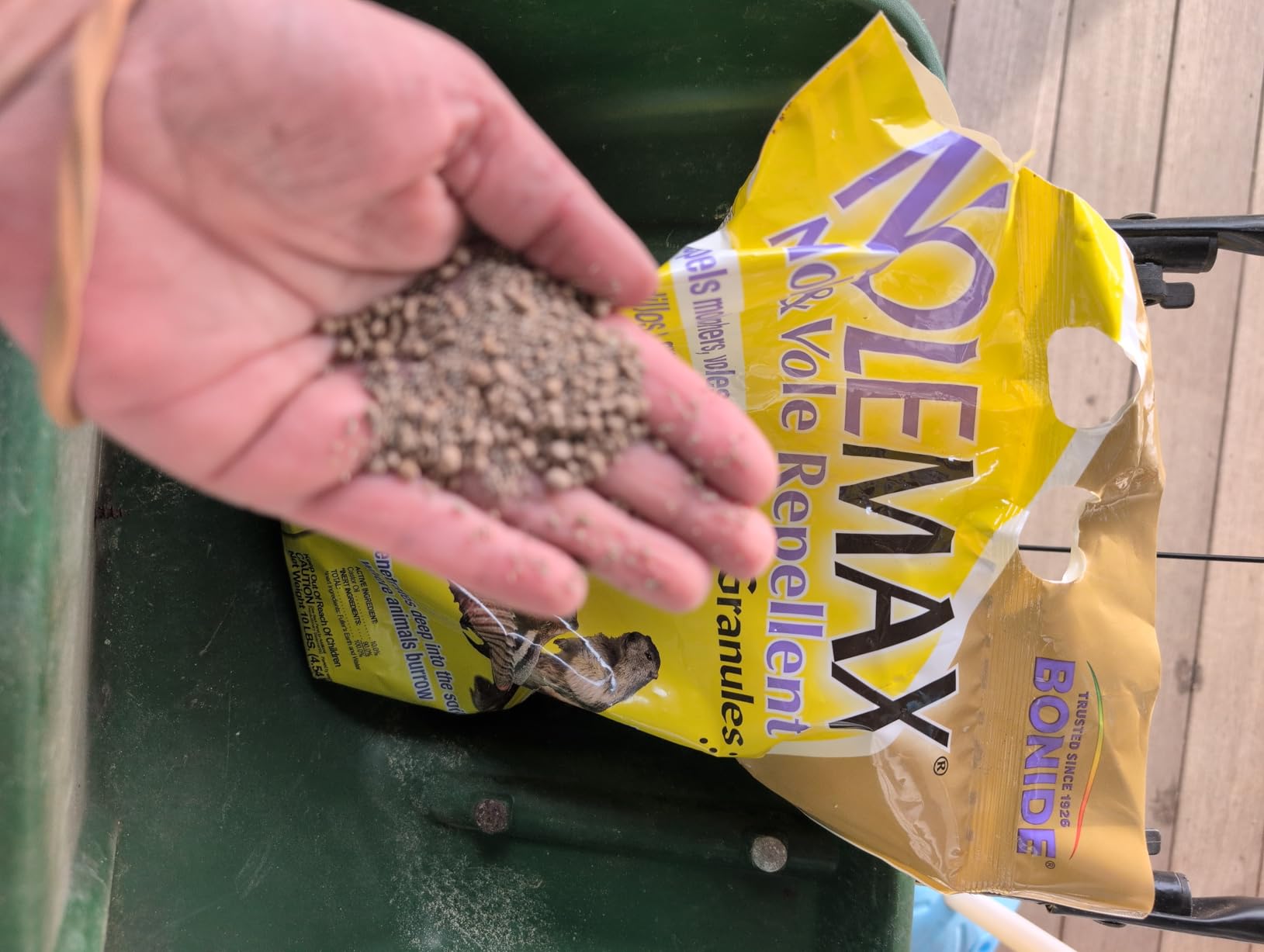
The honest drawback is the maintenance cycle. The label claims control up to three months, and plenty of buyers say that holds in a dry climate. Most say the practical interval is closer to four to six weeks, and faster after heavy rain, so plan on two or three bags a season rather than one.
A smaller concern worth naming: some long-term testers report no discernible difference between treated and untreated ground after multiple seasons, and a few saw activity worsen. That minority is real. If your yard is saturated with moles from next door, a repellent can hold a line but rarely clears the whole map. Improving the soil profile alongside treatment helps too, and our lawn aerator guide covers that.
Where This One Earns Its Spot
This suits a typical suburban lawn with a handful of fresh mounds, and households with small children or pets who want to avoid poison baits. Buyers working around ornamental beds and flowering plants report no damage to desirable growth at the labeled rate. For edible beds it is one of the safer formats here, though keep pets off treated ground until it is watered in fully.
Where It Falls Short
It will not carry a heavy infestation alone, and the annual spend is the number that catches people. Because it needs repeat applications, a full season costs a multiple of what the bag suggests. It also does nothing for voles working the surface layer, which is a different animal with a different product.
2. NIKAND Solar Ultrasonic Mole Repellent Stakes 4 Pack – Best Solar Stake Set for Mid-Sized Lawns
NIKAND Solar Mole Repellent Ultrasonic 4 Pack Outdoor Powered Sonic Deterrent – Mole Stopper Scare Vole for Lawn Garden Yard Home – Groundhog Repeller Snake Rodent Gopher Spikes Chaser Pest (4 Pack)
4 solar stakes
3-4 second pulses every 30 seconds
One stake per 96 feet
3.6 stars from 3752 reviews
Pros
- Chemical free and humane
- Waterproof and corrosion proof
- No batteries to replace
- Low ambient hum most people stop noticing
Cons
- Moles often tunnel up to active stakes
- Fragile tops that mowing gear can destroy
- Audible buzzing near open windows
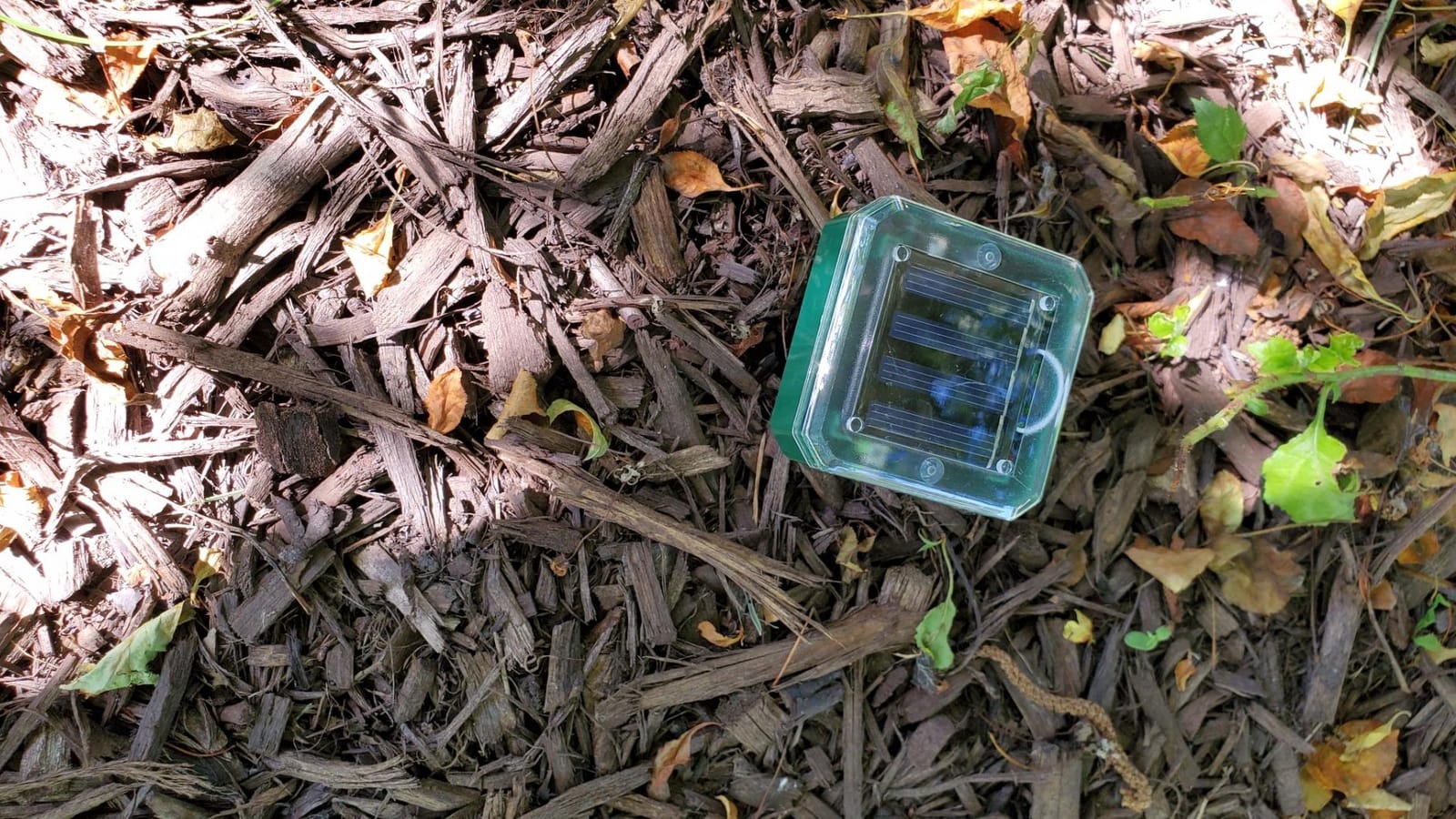
This 4-pack sits in the middle of the solar stake category: enough units to cover a real lawn rather than a token corner. Each stake emits three to four seconds of sonic pulse every thirty seconds, with recommended spacing of one stake every 96 feet. Listed targets are moles, voles, shrews, gophers and groundhogs, so it is broader than a mole-only unit.
Reviews split by pressure level. Buyers with light or moderate activity report vacancies within two to four weeks. Buyers with heavy infestations report new tunnels appearing a few feet from stakes that are audibly running. That is the habituation problem in its clearest form, and it is why this sits second for us despite strong review volume.
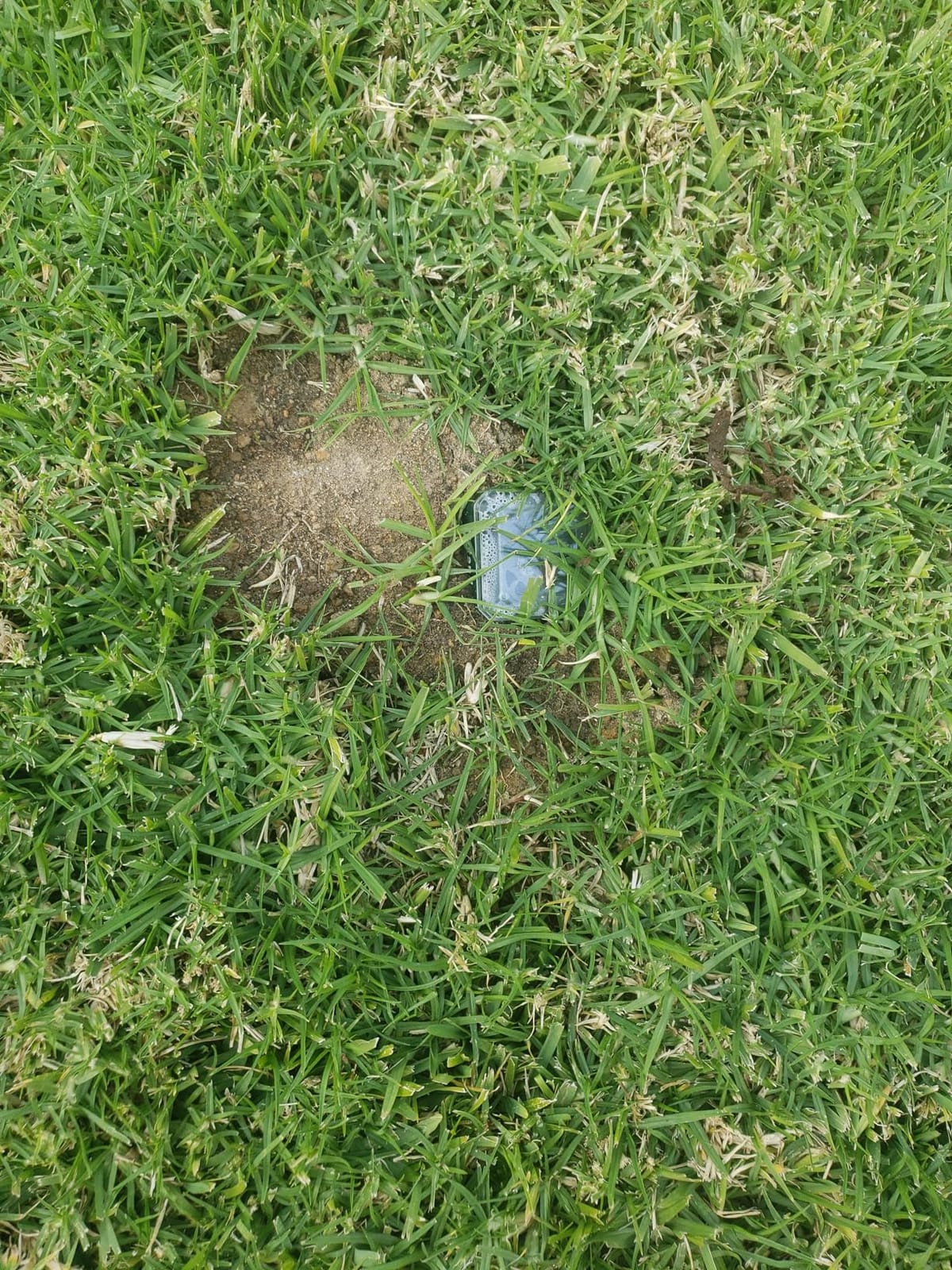
Hardware is the reliability question. Multiple buyers report units going silent within weeks or months, and the tops are fragile enough that mower decks and string trimmers destroy them. Install them out of mower reach. The body is rated waterproof and corrosion proof, so failures are impact failures rather than weather failures, which is at least predictable.
Sound is the factor people underestimate. The pulse is audible near an open window, and a few buyers mention neighbor friction. At 96-foot spacing, a quarter-acre lawn takes about three stakes, so this pack suits a moderate property. If you irrigate regularly, site the stakes between sprinkler heads, since constant wetting loosens tips in soft soil.
What You Get With This Set
Four stakes is a sensible first trial for anyone who refuses poison baits on a lawn of roughly a quarter acre or less. Installation is the whole job: switch each unit on, place it in a sunny spot, push it into the ground. It pairs well with a planned irrigation layout, and our sprinkler guide helps you get even coverage without adding many heads.
Where It Will Not Deliver
It is not a solution for saturated yards and will not survive careless mowing. Buyers who placed stakes directly in or beside active runs saw better results than those spacing them on the label recommendation across open turf, so remember that before blaming the product. Two well-placed stakes beat eight on a grid.
3. Natural Elements Mole and Vole Repellent 100% Castor Oil 1 Gallon – Best Value for Large Properties
Natural Elements Mole and Vole Repellent – 100% Castor Oil Formula – Lawn and Yard Treatment – Covers Large Areas – 128 oz (1 Gallon)
1 gallon liquid concentrate
100% castor oil
Up to 20000 sq ft
4 stars from 3460 reviews
Pros
- Highest 5 star share among the liquids
- Pure castor oil and biodegradable
- Enormous coverage per container
- No chemical odor reported
Cons
- Spraying the lawn leaves grass slick
- Targeted application is labor intensive
- Whack a mole effect as activity shifts
A single gallon covering up to 20,000 square feet makes this the best coverage-per-container in the roundup, and for an acre or more that is the deciding factor. It is a 100% castor oil concentrate with no synthetic additives, and at 4.0 across 3460 reviews it holds the highest five-star share of any liquid we looked at.
Method matters more here than with granules. The successful approach is to start at the outer edge of the infestation, work inward, pour or spray directly into active tunnel entrances, and reseal the openings. Buyers who followed that sequence report sustained results. Buyers who sprayed the lawn surface report reduced but incomplete control, and they discover that oversprayed turf goes slick for a while.
Expect a one to three week ramp rather than an instant fix, and reapplication every four to six weeks and after heavy rain. Several buyers mention the manufacturer’s customer service helping them tune the soap-to-oil ratio for their sprayer, which tells you the dilution is flexible but worth getting right.
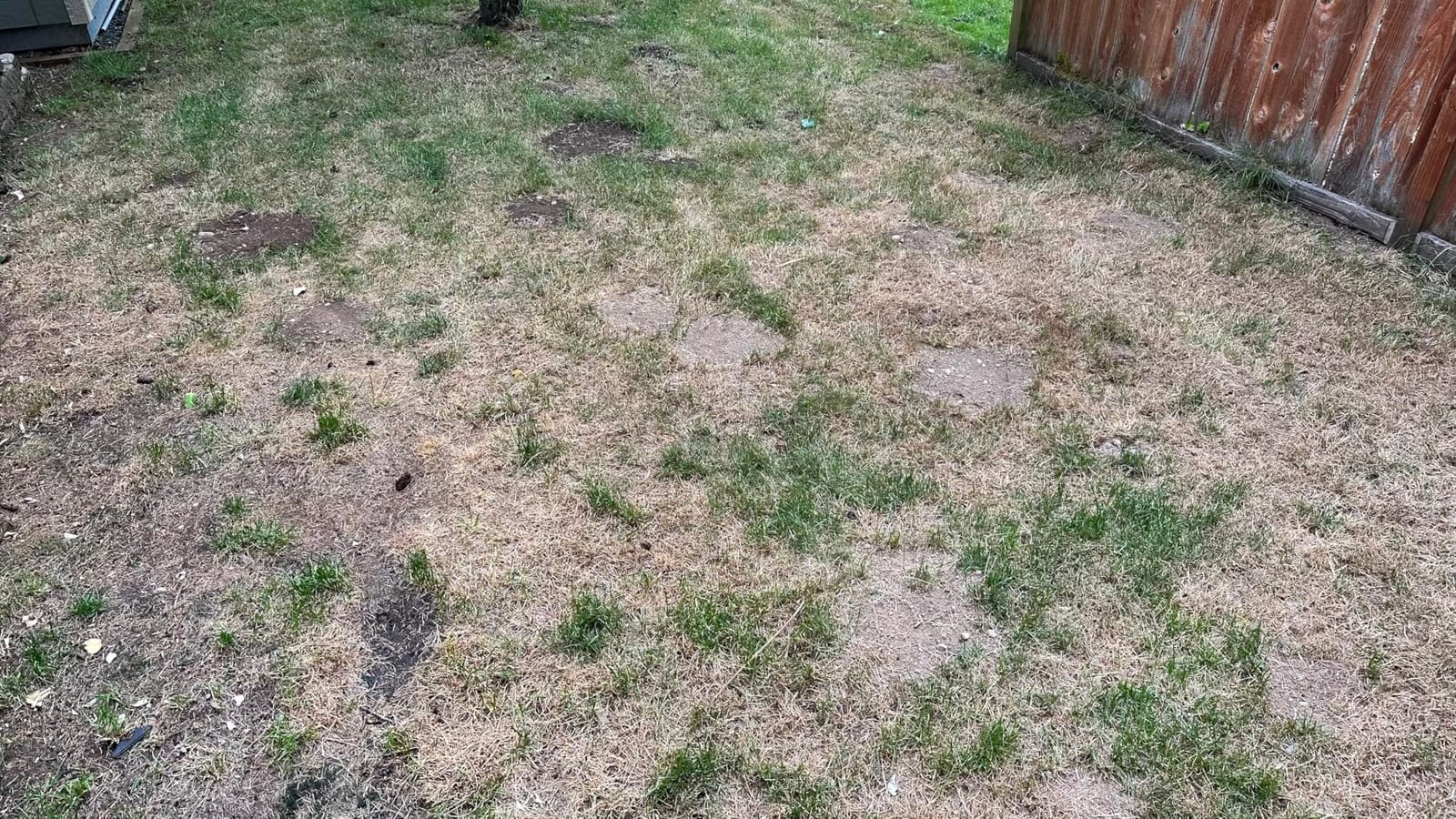
The whack-a-mole effect deserves emphasis. Treated zones clear, then activity reappears elsewhere, because you pushed the population rather than removing it. Liquids do best when you are clearing a defined front and holding it, especially along garden beds and foundation edges where moles travel shallow.
Who Should Pick This
Large lots and small farms should look here first, because 20,000 square feet means one container covers ground that would take four or five bags of granular. It is also the safest bet for edible beds, since the active ingredient is castor oil and the formula is explicitly biodegradable and non-toxic to plants. Buyers using a hose-end sprayer are the most satisfied group in the review set.
What to Watch For
Labor is the dealbreaker for large areas with sparse damage. Finding every active tunnel on a third of an acre and treating each one is a weekend project. Because it is sold as a concentrate, you also need a sprayer, a measuring routine, and enough soap to hold the oil in suspension. Skip that prep and coverage comes out uneven, which is the fastest route to a low rating.
4. NIKAND Gopher Repellent Ultrasonic Solar Stakes 2 Pack – Best Budget Solar Starter Pack
Gopher Repellent Ultrasonic Solar Powered – Mole Repellent Stakes Outdoor Pet Safe – Groundhog Repeller Snake Rodent Gopher Spikes Chaser – Sonic Mole Deterrent Devices (2)
2 solar stakes
3-4 second pulses every 30 seconds
Waterproof and corrosion proof
3.5 stars from 3254 reviews
Pros
- Lowest entry cost in the solar category
- Humane and chemical free
- Reusable across seasons
- Works when set in active runs
Cons
- Audible buzz every 30 seconds
- Units sometimes fail within days
- Spikes get pushed out or snapped
- Real radius well under 96 feet
This two-pack is the cheapest way to find out whether sonic stakes suit your yard at all, and that is genuinely useful. At 2.56 by 2.76 by 11 inches and about 6.7 ounces, the stakes are small, light, easy to install, and the same holes can be reused each season. The pulse pattern matches the larger NIKAND set.
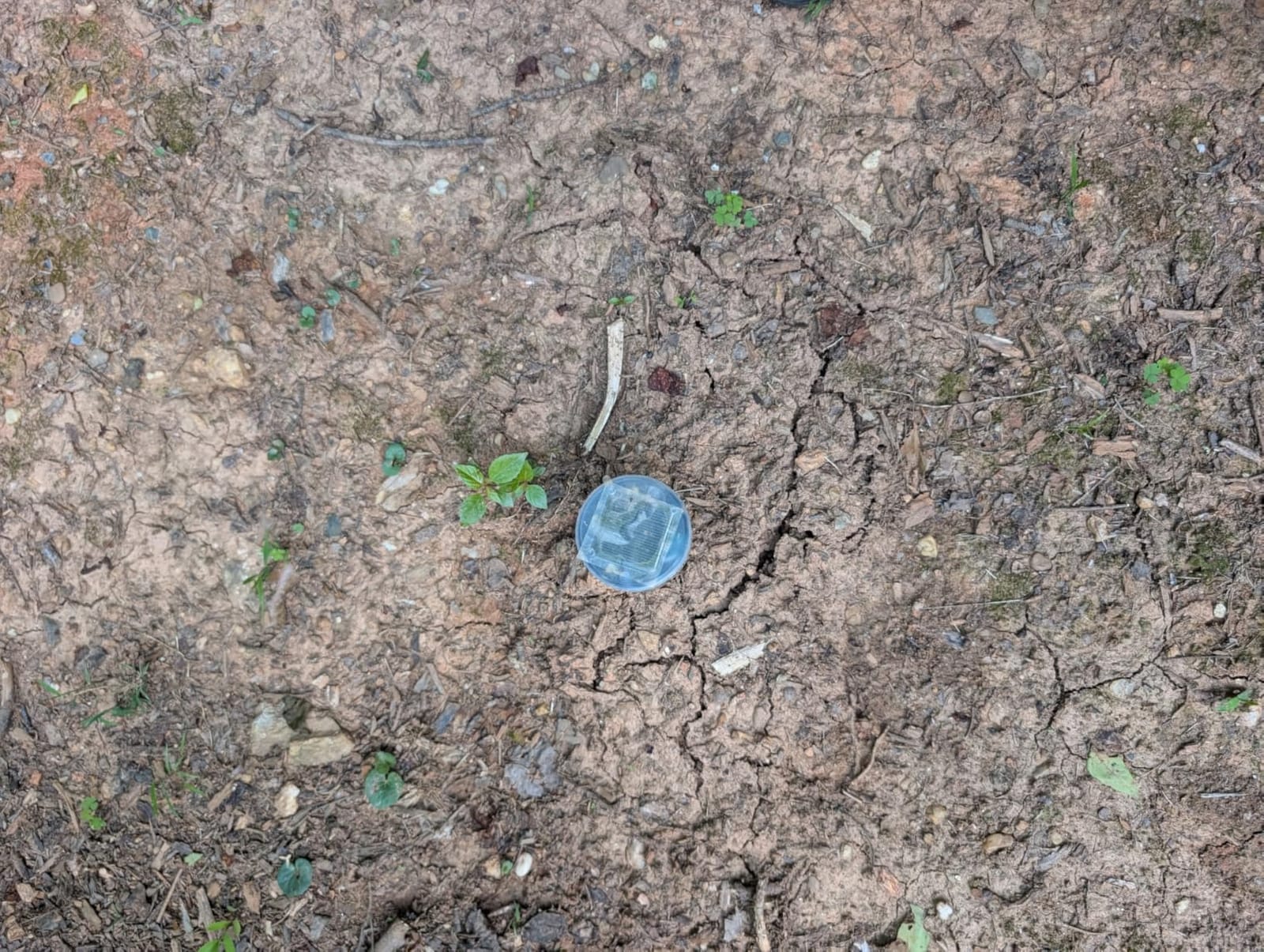
Buyers who set these directly in or beside active runs saw activity stop within weeks. That is the placement lesson that applies to every stake here: put them where the moles already are, not on a tidy grid. Spikes buried too deep for mowing also lose most of their effect, so set them proud of the turf line.
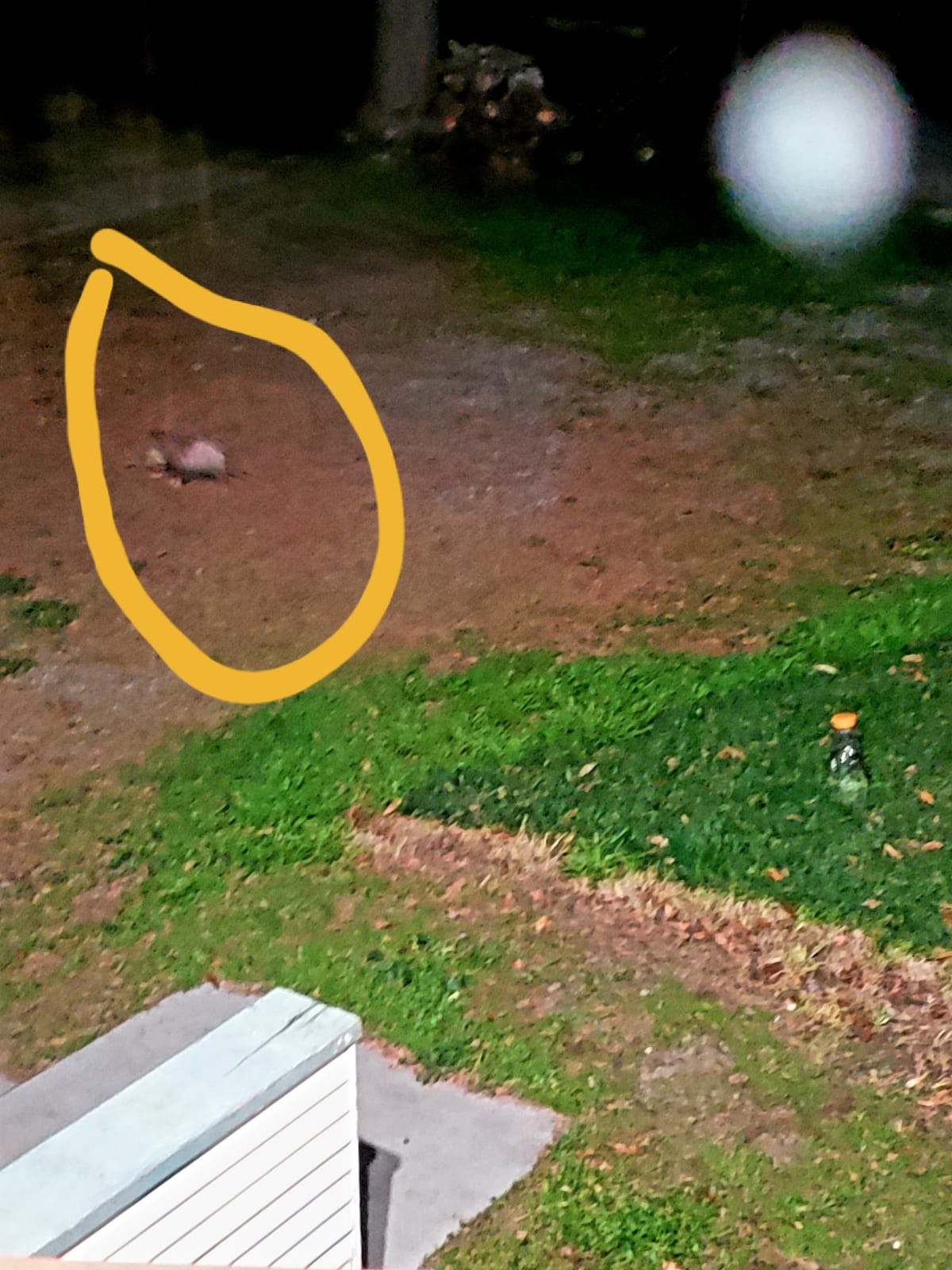
The 3.5 average is the lowest in the roundup, and the reasons are consistent. Several buyers had all units die within days or weeks. Spikes get pushed out of the ground or chewed and broken by moles, more likely in soft soil after rain. And the claimed 96-foot radius shows up far smaller in a number of real yards, so do not plan a large property around this pack size.
Sound complaints are common. The buzz every thirty seconds carries indoors through open windows. If your lawn sits close to a wall you sit at, test one stake near the house for a week before committing to a layout. It is chemical free and non-lethal, which is the appeal for households that refuse baits.
Best Use for This Pair
Treat this as a trial, not a treatment. Two stakes at the two ends of an active run on a small lawn will tell you in three or four weeks whether the sound approach works for your soil and your pressure, and that answer saves you from buying ten units of the same mechanism. It also pairs well with castor oil granules: push moles out, then discourage the return.
Where It Falls Down
Two stakes are not enough for anything but a small lawn, and failures cluster near visible turf where you will notice them most. Units going silent give no warning. If you already know your yard responds to sound and want volume, the 10-pack later in this roundup is the same idea done properly. On a large property, the coverage math here will not get you there.
5. Tomcat Mole & Gopher Repellent Granules 4 lb – Best for Spreader Workflows
Tomcat Mole & Gopher Repellent Granules, 4 lbs.
4 lb granules
Castor oil with Ground Penetrating Technology
Up to 4000 sq ft
3.7 stars from 3458 reviews
Pros
- Broadcasts cleanly with a spreader
- Staged application protects untreated lawn
- Covers up to 4000 sq ft
- Built by a long-established turf brand
Cons
- Needs several bags before the ground saturates
- Zero response reported after multiple bags
- Does not deter squirrels
- Effect fades fast in heavy rain
Tomcat is the name most people picture when they think mole granules, and that recognition is earned. The active ingredient is castor oil paired with a Ground Penetrating Technology additive that helps the material mix with water and move down to working depth. One 4 lb bag covers up to 4000 square feet, a better fit for anyone already running a broadcast or drop spreader.
Reviewers are genuinely split. One camp reports complete mole and gopher clearance after a few bags with steady reapplication every six to eight weeks. Another reports no improvement after multiple bags. The recurring advice from people who succeed is patience: the product needs repeated applications to build in the soil, and a single pass rarely shows results.
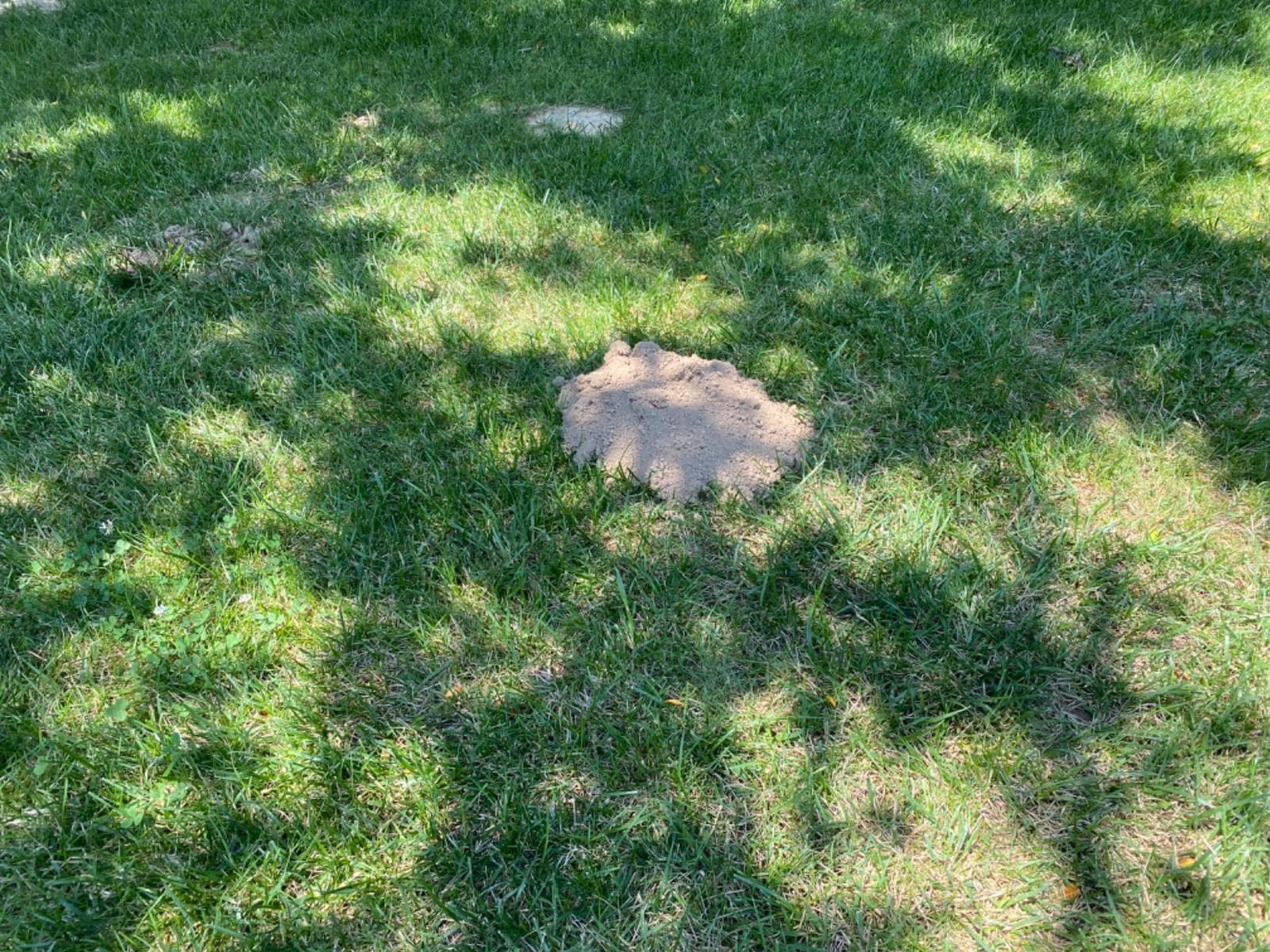
The staging technique is the useful part. Working in bands from the damaged area outward, and watering in after each one, moves moles toward untreated ground and keeps the good part of your lawn intact. That is smarter on a lawn where some areas matter more than others, and easier with a spreader than with a hose.
Two limits. It does not deter squirrels despite occasional claims in listings. And ground saturation fades fast in heavy rain, so your real reapplication interval is weather-driven. If you have a fixed irrigation schedule, time applications ahead of a planned watering day. Our sprinkler guide covers setting that schedule out.
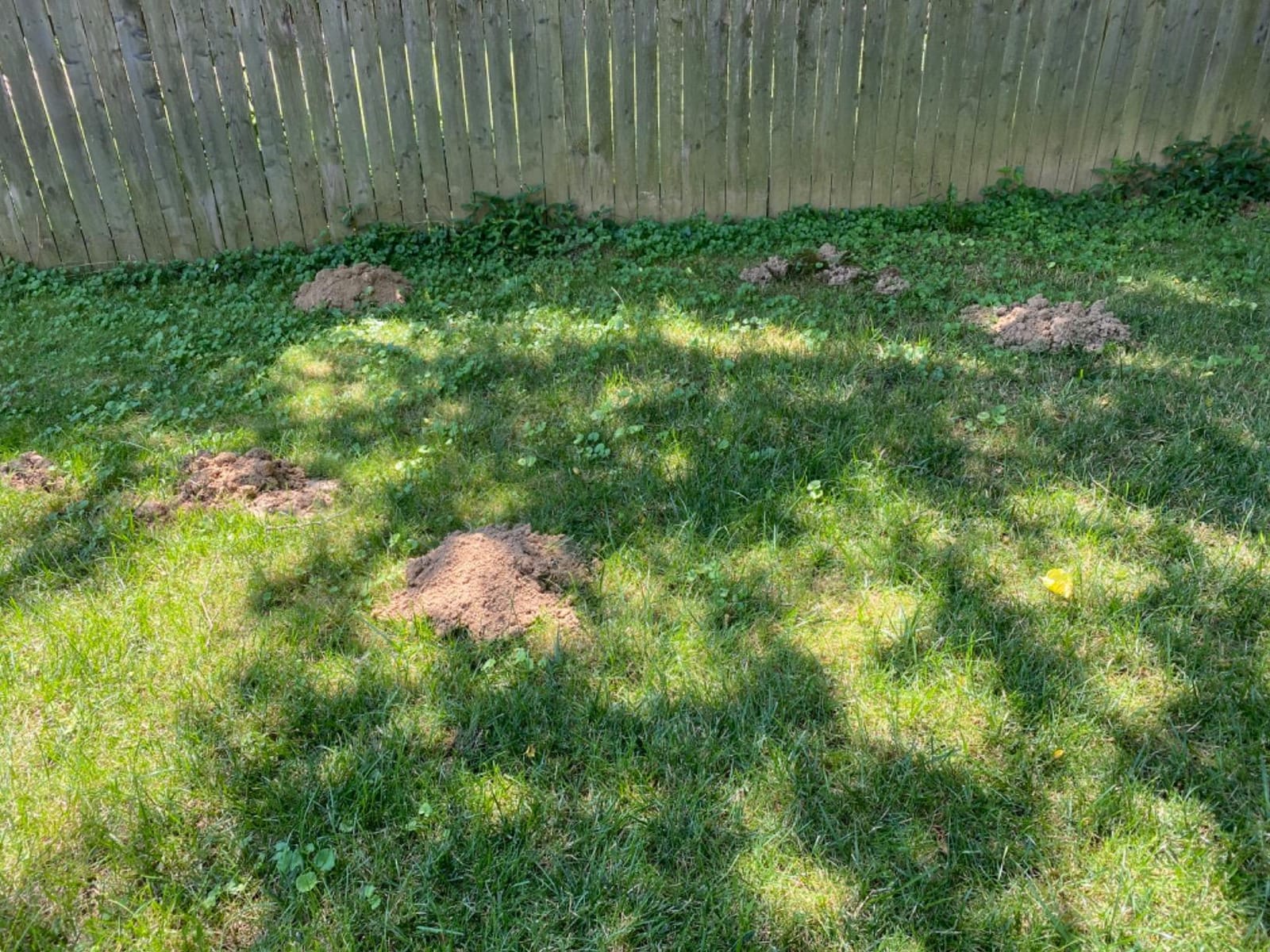
Where This One Fits
If you already own a broadcast spreader and rotate products seasonally, this drops into an existing workflow with no learning curve. It suits yards with a defined damage front where you want to work outward from good turf, and households treating large areas of plain lawn where precise tunnel-pouring is impractical.
Where It Falls Short
The zero-response group is large enough that you should plan for the possibility. On a saturated property, the reapplication cadence makes this an expensive way to lose the argument. The 4000 square foot coverage per bag also means more bags than the Bonide option for the same area, so the per-treatment math works against you beyond a large suburban lot.
6. Victor Mole and Gopher Sonic Spike 2 Pack – Best Flush-Mount Spike for Trimmed Lawns
Victor Mole and Gopher Sonic Spike, 2-Pack
2 sonic spikes
About 95 ft diameter per spike
Pulse every 30 seconds
3.7 stars from 2780 reviews
Pros
- Longest-standing name in the spike category
- Strongest 5 star share among stakes
- Mow over and walk over design
- Runs 4-6 months on 3 D batteries
Cons
- Coverage claims do not hold in large yards
- Needs battery changes every 4-6 months
- Frequent repositioning as moles adapt
Victor is the established name here, with a metal spike body and a claimed circular pattern of about 95 feet in diameter, up to 7500 square feet per unit. It holds the strongest five-star share of any stake-style deterrent here, which matters in a category crowded with thin-review marketplace listings. The spike installs flush so you can mow and walk over it.
What separates it from the solar stakes is power. These run four to six months on three D batteries, not included, and rechargeable cells are explicitly not recommended. That is more maintenance than a solar panel, but it removes a real failure mode, because a stake is never silent just because its panel sat in shade all week.
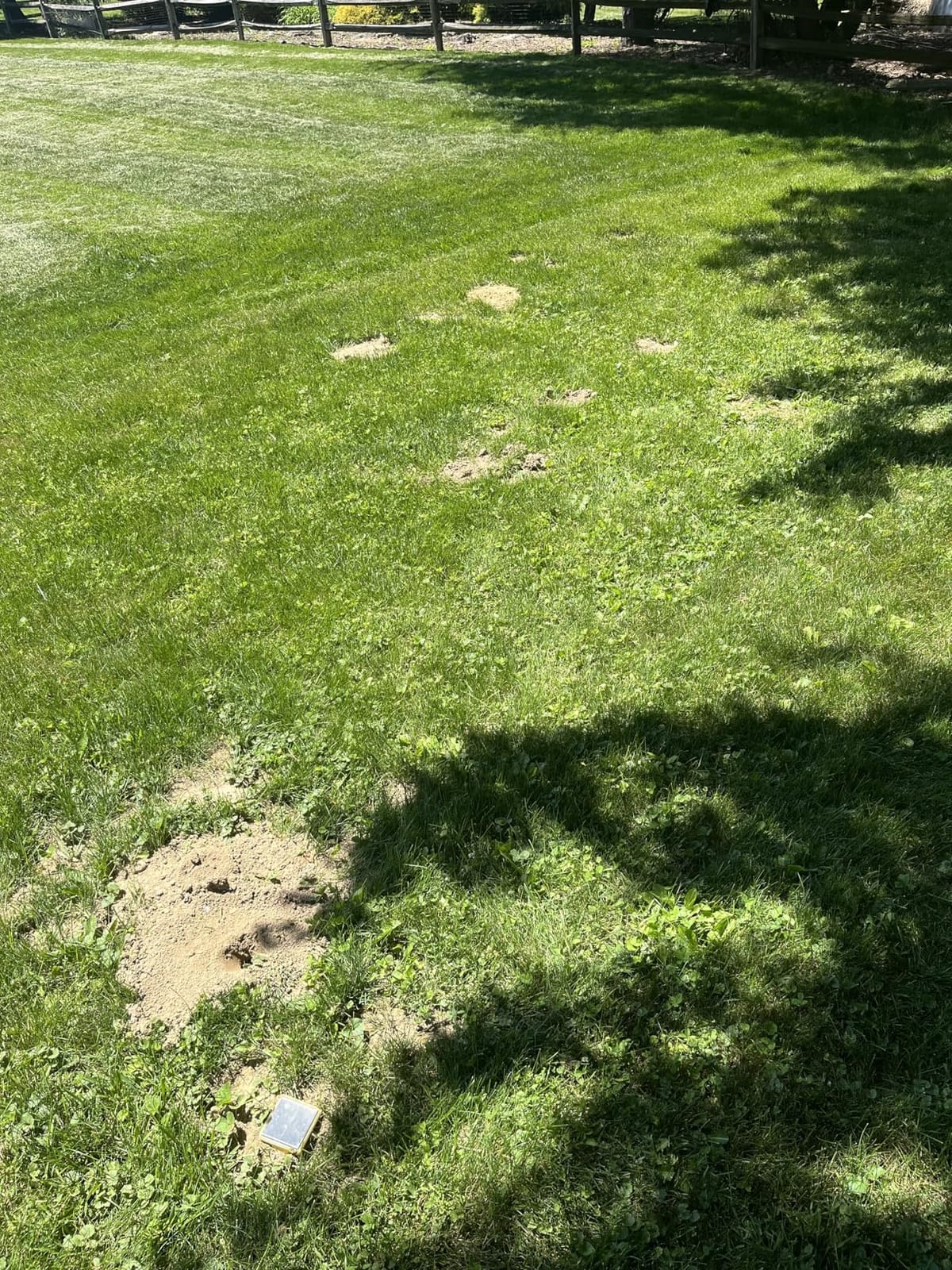
The coverage figure is where buyers and reality part company. A reported 7500 square feet per spike sounds generous, and on a large yard the common experience is needing more units than expected. Plan on roughly half the stated figure, the same adjustment we would apply to the 96-foot claims on solar stakes. The visible profile is also worth weighing against a mower-friendly finish.
Repositioning is not optional. Reviews describe moles pushing new tunnels nearby and spikes needing to be moved as the animals adapt, which is a twice-monthly walk around the yard rather than a once-a-year install. That is an acceptable trade if you enjoy a short maintenance walk and your soil is firm enough to hold a metal spike.
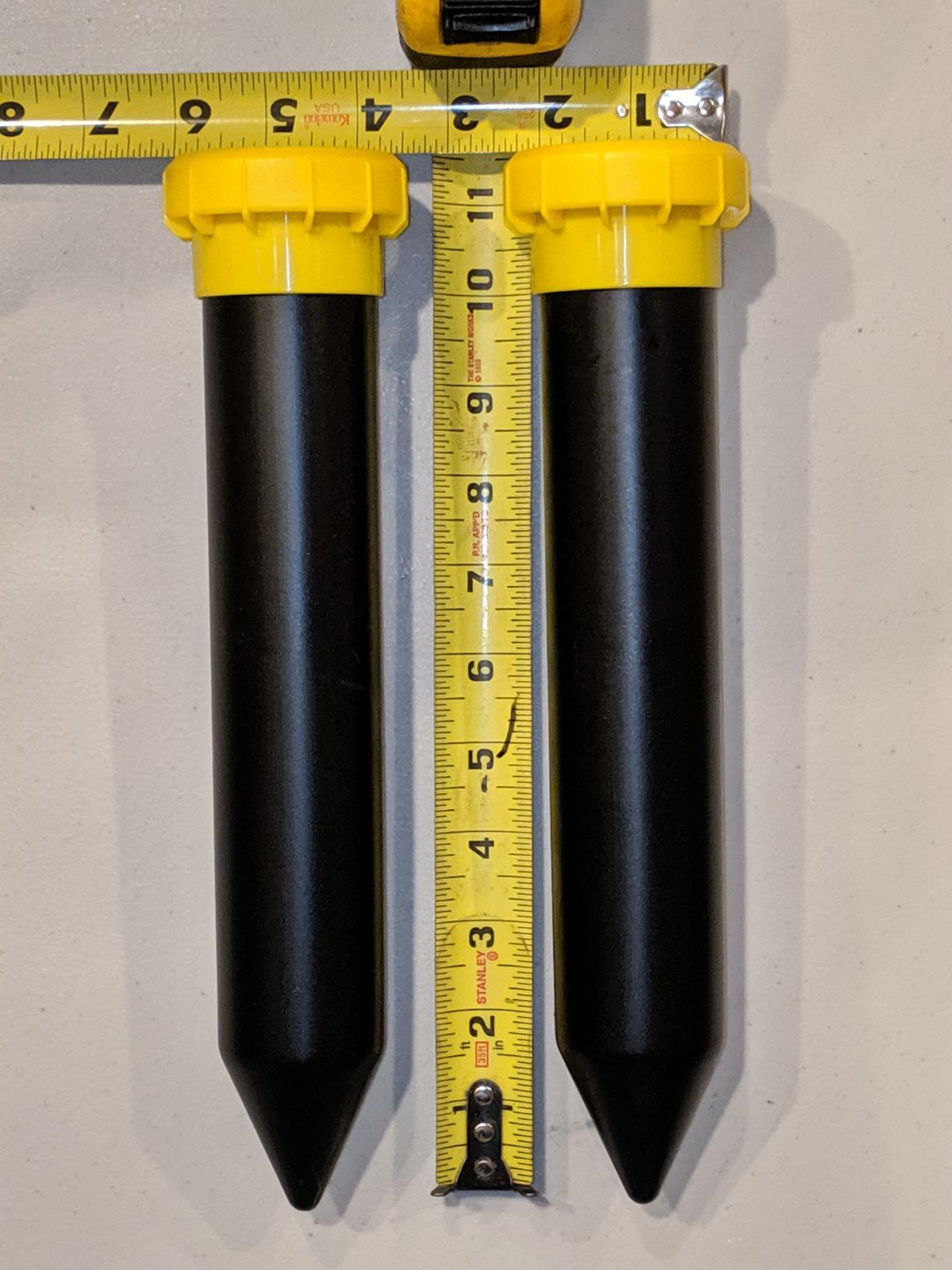
Best Suited to
Maintained ornamental and front lawns where a spike must sit flush, and buyers who want a brand with a deep review history rather than a marketplace listing. Two units cover a normal suburban lawn at the labeled spacing, and the metal body resists the mower and trimmer damage that kills plastic stakes. It is also the pick for yards with limited direct sun, where a solar panel in shade is a dead panel.
Where It Falls Short
It is the most hands-on option in the roundup. Batteries twice a year, repositioning every couple of weeks, and a coverage claim that needs halving make both the true cost and the effort higher than the pack suggests. On a saturated property, sonic units hold only lightly pressured areas, so do not deploy it as the only control on a yard that has had moles every week for a year.
7. Baar MolEvict Castor Oil Concentrate 32 oz – Best Concentrate for Repeated Dosing
Baar MolEvict Castor Oil for Lawns, 32 oz, Covers 5,000 Sq Ft
32 oz concentrate
100% natural castor oil
Covers 5000 sq ft
Hose and sprayer application
Pros
- 100% natural formula with no synthetics
- Lowest one star share among liquids
- Three sizes up to 100000 sq ft
- Flexible routine that fits any yard
Cons
- Needs reapplication about twice a month
- Concentrate must be diluted per label
- Takes several cycles before activity drops
Baar is a 100% natural castor oil concentrate with no synthetic chemicals, and at 4.0 across 2459 reviews it has the lowest one-star share of any granular or liquid here. Buyers single out the consistency of the scent deterrent rather than any dramatic effect, which is a fair description of what a castor oil product can promise.
The label schedule is twice per month, then as needed, applied with a garden hose and sprayer following the dilution formula. That is more frequent than any granular here, and the tradeoff for a product that covers 5000 square feet per 32 ounce bottle. The same line comes in one gallon and five gallon sizes reaching 100,000 square feet, so scale up only after the routine proves itself.
It covers moles, voles, gophers and armadillos, the broadest pest list among the concentrates. The distinct castor oil scent and texture is what the animals object to, so the effect is eviction rather than elimination. Buyers describe moles vacating treated areas quickly once the product is in place, and equally describe multiple cycles before activity visibly drops.
The twice-monthly commitment is real, and rain moves the schedule for you. Anyone who travels regularly or has an irrigation controller they cannot sync will find the cadence hard to hold, and a missed month on a large property means starting over. If hose access is an issue, the maintenance story is heavier than the label suggests.
Where This Concentrate Works Best
Medium to large residential lots where you want a routine you control rather than a fixed reapplication window, and households that want a natural active ingredient with nothing synthetic behind it. It is safe for people, pets and desirable plants when used as directed, which makes it straightforward for households with animals digging in the lawn.
Where It Falls Down
Frequency is the flaw. Twice a month plus after rain is a habit, and habits get missed. Buyers who treated it as a one-and-done application report the least success of anyone. It also does nothing for voles working the surface of flower beds, where a concentrate poured underground simply misses the animal.
8. I Must Garden Mole & Vole Repellent 10 lb Granular – Best for New Seed and Any Growth Stage
I Must Garden Mole & Vole Repellent: Professional Strength – Natural – 10lb
10 lb granular
Botanical oil based
Biodegradable
3.8 stars from 1948 reviews
Pros
- Safe on grass at any growth stage
- Works with fertilizer programs
- Pleasant peppermint scent
- Usable year round including under snow
Cons
- Real coverage is well below label
- Needs many applications over weeks
- Costly for large yards
This is the one to buy if you have just seeded or laid new sod, because the most valuable claim on the label is that it will not harm grass at any growth stage and does not interfere with a fertilizer program. The formula is granular, botanical oil based, biodegradable, and safe for pets, people, wildlife and the environment. A peppermint scent is a nice touch.
Buyers who bait heavily and progressively, working outward from the house and timing applications with rain, report the strongest and longest-lasting results of anyone using it. The pattern that works is not a single pass but a staged campaign that matches how moles move, pushing them from treated ground toward untreated ground.
The recurring caution is that labeled coverage is optimistic. Real coverage is reported closer to a third of the printed figure, so expect to use more product than the bag suggests. On a large property that becomes the deciding factor, and complaints concentrate on flower beds where voles tunnel through soil treated days earlier.
Year-round usability is genuinely useful. This is one of the few products here buyers confirm keeps working under winter snow, which matters because moles keep working in winter too. Treating only in spring wastes a season.
Best Use for This Granular
Newly seeded lawns, new sod, topsoil deliveries, and root zones you are protecting while they establish. It also fits yards with a light, evenly spread mole population rather than a single deep incursion. Organic properties and households avoiding synthetic pesticides will find the safety profile the main event.
Where It Falls Short
Cost per treated area is the drawback, since real coverage is a fraction of the label. Failure reports cluster on heavy infestations that overwhelm it, and on voles working the surface of beds. If you are chasing moles along one defined run, they leave the treated zone and re-enter from the edges, and this is not strong enough to hold that line alone.
9. LEBMP Mole Repellent Scent Balls 8 Pack – Best for Targeted Spot Work
LEBMP Mole Repellent, Gopher Repellent, Groundhogs Repellant Outdoor-8Pcs
8 scent balls at 1.2 oz each
Up to 120 sq ft
Up to 60 days per placement
4.6 stars from 1152 reviews
Pros
- Highest rated product in the roundup
- No mixing measuring or equipment
- Relocatable as activity shifts
- Scent holds in damp weather
Cons
- Only 120 sq ft of coverage per pack
- Scent fades in prolonged wet weather
- Some buyers see no effect at all
At 4.6 stars from 1152 reviews with 85 percent five-star ratings, this is the highest-rated product we reviewed, and it works differently from everything else here. These are scented repellent balls, 1.2 ounces each, made with natural plant-derived ingredients. You place them in or near active tunnels and they discourage further excavation for up to 60 days per application.
Zero equipment is the real appeal. No mixing, no measuring, no dilution ratios, no spreader, no sprayer. Buyers report fewer new tunnels within about two weeks of placement, and relocating the balls as activity shifts means you can follow the damage instead of redoing a full application. The scent also holds in damp weather better than the granules here.
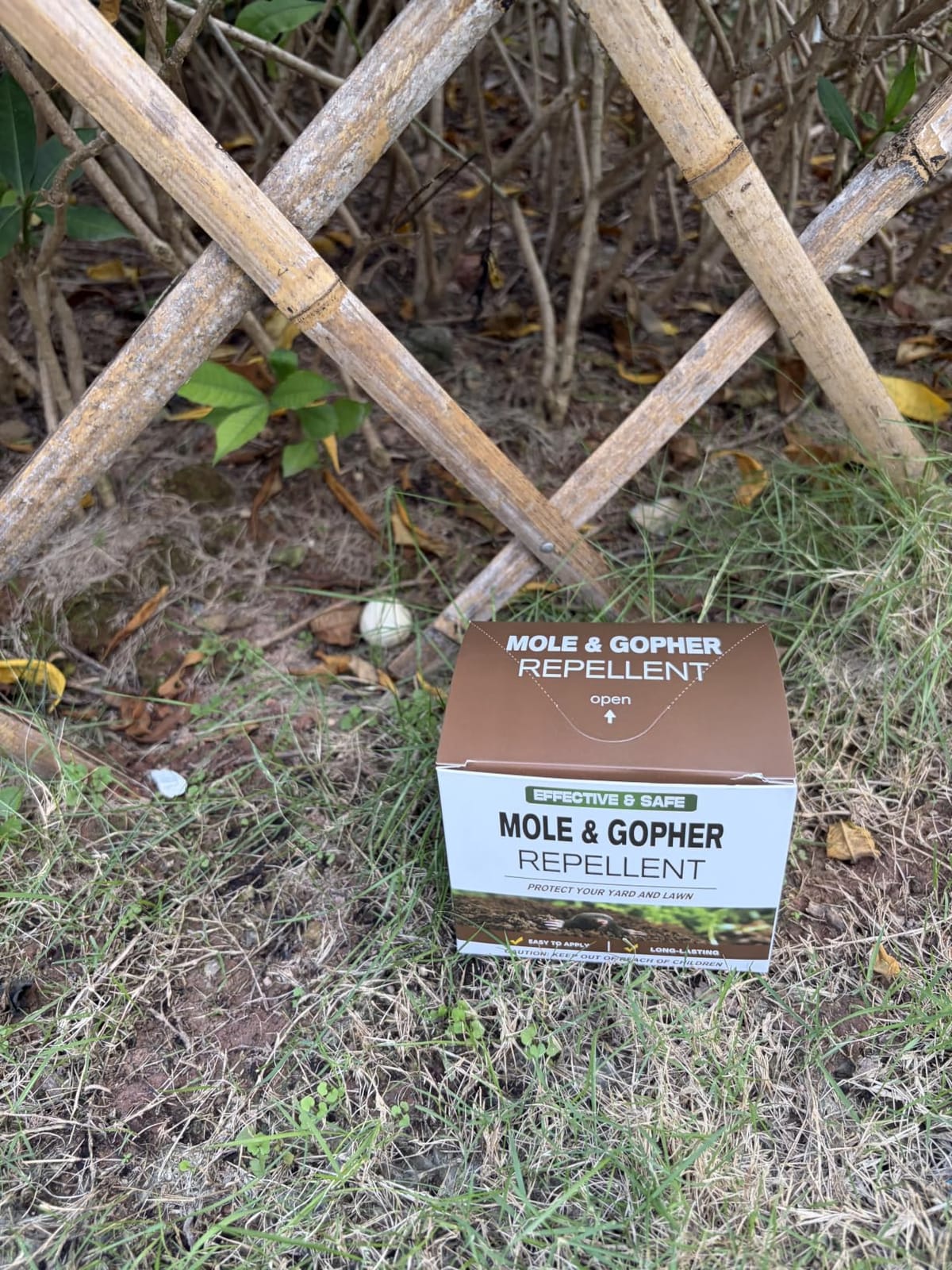
Coverage is the constraint, and it is severe. 120 square feet per eight-ball pack is tiny, so multiple packs are needed for anything beyond a garden bed. The other recurring criticism is the scent fading after long stretches of wet weather, which shortens the 60-day figure in a rainy climate. A minority of buyers report no deterrent effect at all.
This is a targeted tool, not a lawn treatment. Think of it as putting a door on the entry points where moles are coming in, and it works well for that. Think of it as covering a quarter acre and it fails on arithmetic. The plant-derived ingredient list also makes it a comfortable choice near edible beds.
Where It Belongs
Garden beds, foundation edges, raised beds, and small islands of damage where you can identify actual tunnel entrances. It is the easiest product here to use correctly because there is no rate, no dilution and no coverage calculation to get wrong. The most satisfying pattern is placing a set at the leading edge of fresh damage, watching new tunnels stop, then relocating.
Where It Falls Down
It will not cover a lawn, and buyers who expected it to report disappointment about how small the protected area feels. Prolonged wet weather shortens the effective life of each placement. It also does not address voles, which are surface feeders and respond to a different approach entirely.
10. Tirgo Solar Mole Repellent Stakes 10 Pack – Best Full-Lawn Solar Coverage
Mole Repellent Solar Powered 10 Pack Snake Repellent Ultrasonic, Groundhog Repeller,Gopher Repeller Sonic Mole Deterrent Spikes, Snake Gopher Mole Vole Repellent Outdoor for Lawn Garden & Yard
10 solar stakes
Waterproof ABS and PC housing
One stake per 96 feet
3.8 stars from 708 reviews
Pros
- Largest pack in the roundup at 10 stakes
- No batteries to service
- Handles rain snow frost and heat
- FCC CE and RoHS certified
Cons
- Needs two days of charging before install
- Panels need periodic wiping
- Same sonic mechanism as lower rated stakes
Ten stakes is the largest pack here, and at one stake per 96 feet that is enough to surround roughly three quarters of an acre without doubling up. The stakes are waterproof ABS and PC, rated for rain, snow, frost and heat, and at nine by one by ten inches they are slimmer than the NIKAND units. Output is three to four seconds of sound every thirty seconds.
At 3.8 from 708 reviews, this sits mid-pack on rating but well ahead on the axis that matters for a big lawn, which is how much ground one order covers. Buyers like the absence of battery maintenance. The mechanism is the same class of sonic stake seen throughout this roundup, so results track the category pattern: moderate pressure and good placement.
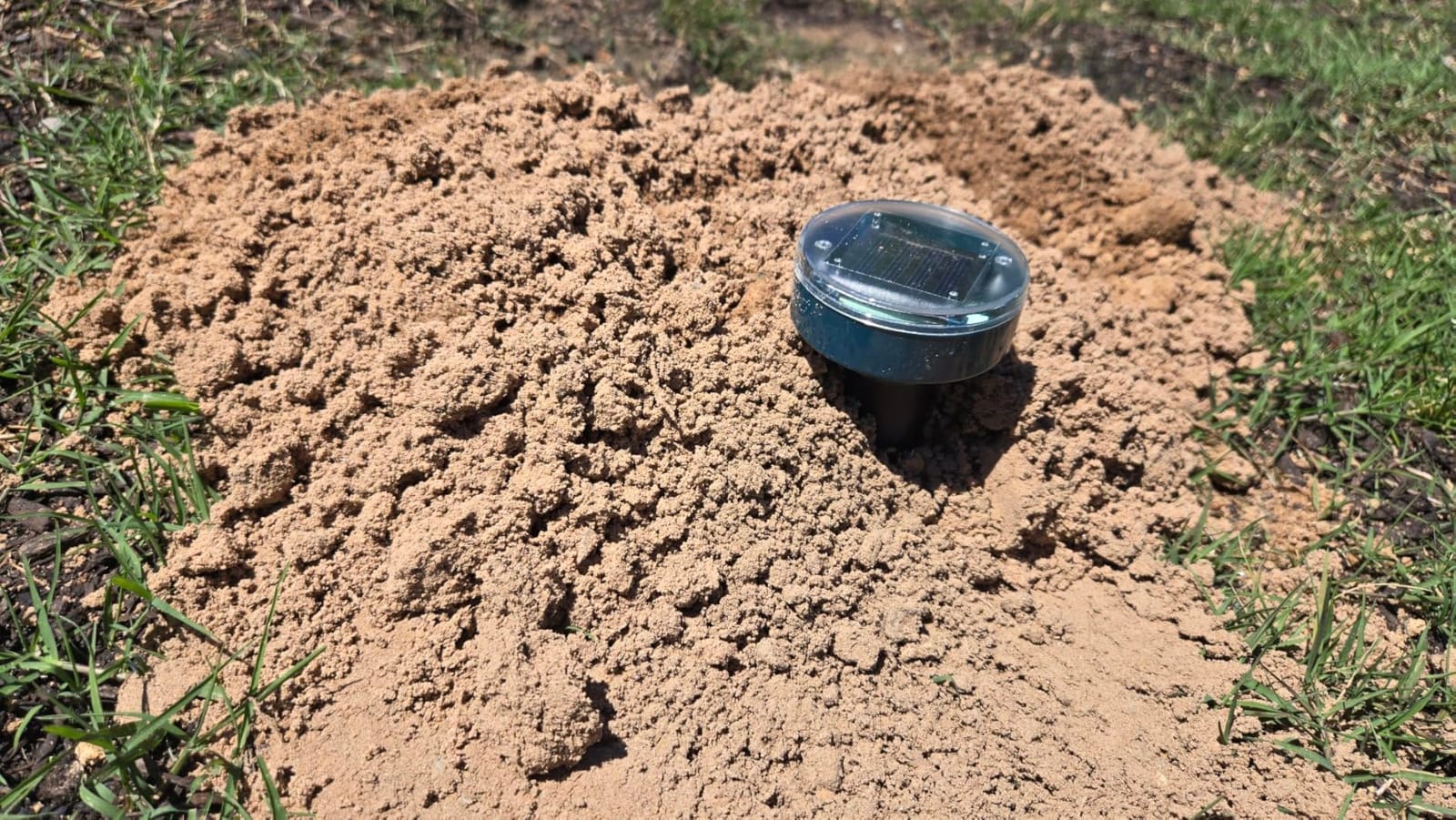
Two installation details are easy to miss and both matter. The panel needs at least two full days of charging before you install it, or it runs weak and you wrongly conclude it does not work. And dirty panels charge poorly, so expect to wipe them periodically near trees, dust or pollen. A shaded stake is a silent stake.
Performance remains placement-dependent, and 96 feet is a starting point rather than a guarantee. Buyers who spread these evenly rather than concentrating them along active runs and travel corridors report mixed outcomes. The buzz is quiet enough to ignore outdoors, but units do add up across a large property.
What This Pack Suits
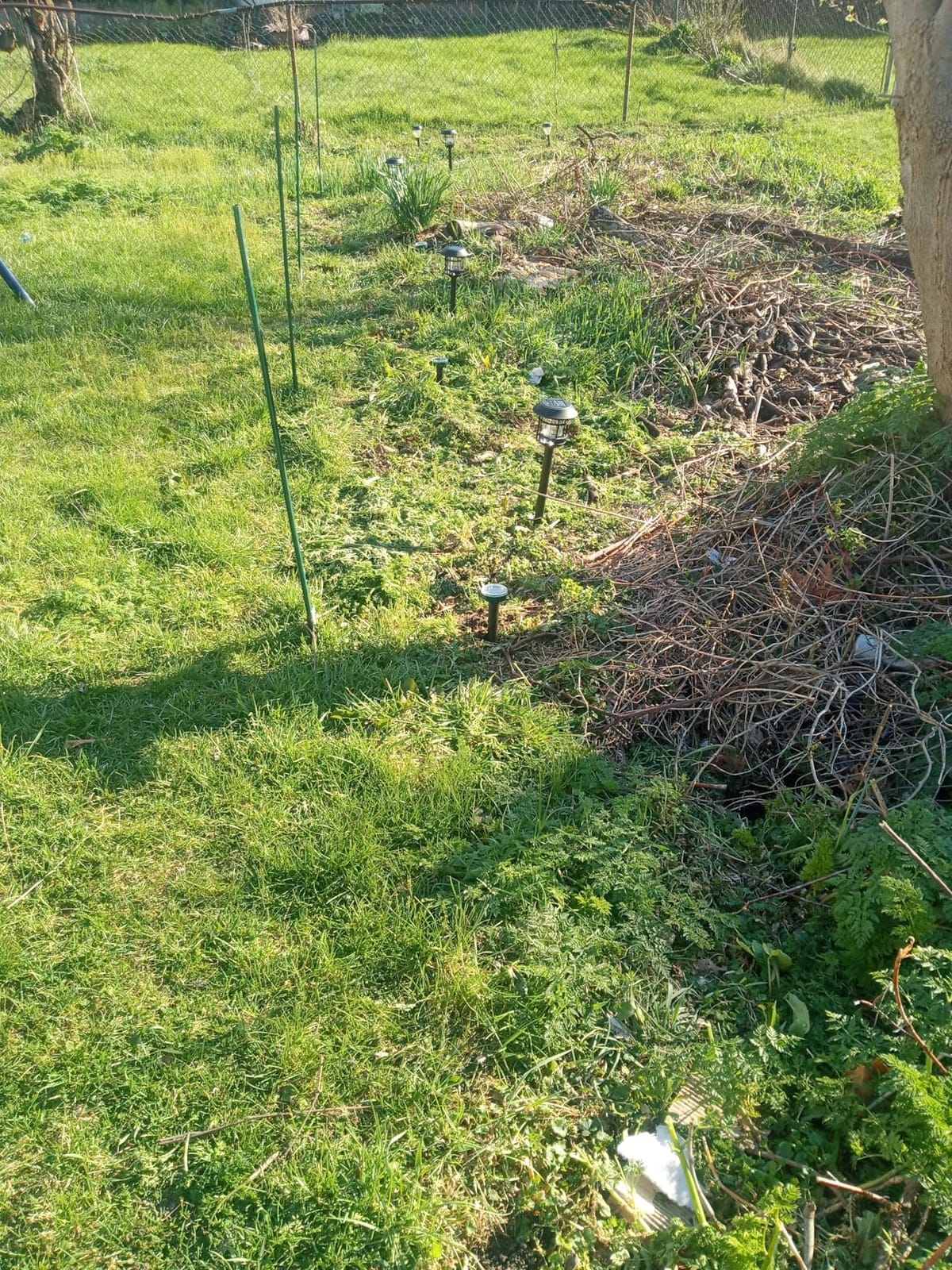
Anyone covering a full lawn or small property with one order, and households that would rather not service batteries at all. Ten units is enough to build a barrier along a property line, the most reliable layout for a perimeter strategy, rather than scattering single units across open turf. The weather rating suits a region with hard winters or standing water.
Where It Falls Short
It shares every weakness of the solar stake category, and 708 reviews is thin enough that you are trusting the mechanism more than the brand. Eighteen percent one-star reviews point at the same consistency gap that shows up across cheaper stakes. Heavy infestations need something that evicts, not just discourages.
How to Choose a Mole Repeller for Your Lawn
Every product here falls into one of three formats, and the format decision matters more than the brand. Here is how they differ in the field, plus the coverage math and placement detail that determine whether any of them work for you.
Granules, Liquid or Sonic Spikes: Which Format Fits Your Yard
Granular castor oil is the most forgiving format. You spread it, water it in, and it needs no equipment beyond a spreader. It suits broad, even damage across open lawn and is the easiest option to stage band by band. Its weakness is the reapplication clock, since most buyers land between four and eight weeks, and faster after rain.
Liquid castor oil concentrate covers far more ground per container and lets you treat specific tunnels rather than whole areas, which is why it performs best on defined fronts and garden beds. It costs labor instead of money. Direct application into active entrances, resealing them, and repeating on a schedule is what separates results from partial results.
Sonic and solar stakes require the least ongoing effort. You place them and they run, with no mixing and no reapplication, and they are the only format here that is purely mechanical and completely chemical free. They are also the only format where habituation is a documented limit, and the only one where your soil and moisture can undermine the mechanism.
Coverage Math: How Many Spikes or Bags You Actually Need
Manufacturers quote optimistic coverage, and the honest planning number is roughly half the stated figure. That adjustment came up repeatedly in reviews, and it is why we would never size a stake layout from the box claim alone.
For stakes, divide your lawn’s square footage by about 4,600, which is half of a 96-foot square. A 4,000 square foot lawn takes one stake, a 9,000 square foot lawn takes two, and a 20,000 square foot lot takes five, concentrated along the property line and the active front rather than scattered evenly.
For granules, divide by the labeled coverage per bag and round up. The Bonide 10 lb bag covers up to 5000 square feet, so a 4,000 square foot lawn needs one bag and a 12,000 square foot lawn needs three. For liquids, one gallon of Natural Elements covers up to 20,000 square feet, so most residential lawns need a single container and the constraint becomes your schedule, not your supply.
Placement and Spacing Strategy for Sonic Stakes
The most useful thing we learned from the stake reviews is that proximity beats spread. Buyers who set units directly in or beside active runs see results; buyers who follow the label grid across open lawn do not. Concentrate stakes on the damage front, along foundation edges, around garden beds, and along the property line where new moles enter.
Second, set them proud of the soil rather than buried for mow clearance, since a deeply buried stake loses most of its soil contact. Third, avoid placing them where mower decks and string trimmers pass, the leading cause of hardware failure here. Fourth, if you are building a barrier, overlap the coverage rather than leaving gaps, because moles route around dead zones and an incomplete ring is a gap with extra steps.
What Your Soil Type Changes
Heavy clay keeps moles shallow and close to the surface, because they do not have to dig through loose material to find food. That is good news for castor oil applications, which move with water through the profile, and it is why staged banding works well in clay. It is also where soil vibration from a stake travels furthest, so sonic devices are more viable in clay than in any other ground.
Loose or sandy soil is harder on every method. Moles tunnel deeper there, often one to two feet down, which puts their main runs below the reach of shallow application. Vibration transmits poorly through dry loose material, so a stake in parched sandy ground will do very little. If your soil is loose and dry, granular castor oil watered in heavily is the more reliable choice, and expect to reapply sooner.
How Long Each Type Takes to Work and How Long It Lasts
Nothing here works the same day. The fastest performers are the scent balls, with buyers reporting fewer new tunnels within about two weeks of placement, followed by liquid castor oil at one to three weeks for visible improvement, and granules at roughly one to two weeks when applied in sections and watered in. Sonic stakes are slowest at two to four weeks, which is also when habituation starts.
For duration, plan on four to six weeks for granules in average conditions, six to eight weeks for the staged granular approach, twice monthly for a routine liquid concentrate, and 60 days per placement for scent balls in dry weather. Sonic stakes have no reapplication schedule at all, which is their genuine advantage, and no protection against the moles adjusting to them.
Pet and Child Safety
Every product in this roundup is non-lethal, and none are poison baits, which is the main reason buyers gravitate here. The castor oil products are biodegradable and safe for people, pets and desirable plants when used as directed, though keep animals off granular-treated ground until it is watered in. Liquid concentrates are safe once dry, but oversprayed turf goes slick, a slip hazard on wet grass.
The stakes affect animals only through sound, so the concern is noise rather than toxicity. Keep them away from an open window or quiet patio if that matters to you. The honest caveat: no repellent is labeled for edible crops in every case, so check the label before spraying a bed you plan to harvest, and keep children off treated turf until it is watered in or dry.
What Does Not Work
Moth balls, tea tree oil, cayenne pepper and grapefruit peel are the folk remedies we hear about most, and Home Depot explicitly warns against the first three as mole controls. They are not effective, and moth balls introduce a toxic chemical into soil that pets and children can reach.
Grub killer products are not mole deterrents either, despite the marketing. Moles eat soil insects, so a lawn full of grubs is an excellent buffet, but killing the grubs removes the food without removing the animal. If you want a physical barrier instead, wire mesh buried three feet with an above-grade section is the most reliable exclusion, and it demands real installation effort.
How to Make Castor Oil Repellent at Home
For a small area or a targeted tunnel treatment, a homemade version works nearly as well as the concentrates. Mix three parts castor oil to one part dish soap, then add four tablespoons of that mixture per gallon of water in your sprayer. The soap holds the oil in suspension so it does not separate in the tank.
Apply it to active tunnel entrances rather than broadcasting the lawn, work from the outer edge of the damage inward, reseal the openings, and repeat every four to six weeks and after heavy rain. This suits a bed or a small front lawn. It does not scale, because finding and treating every active tunnel by hand is what makes the labor real.
Frequently Asked Questions
Do electronic mole repellers work?
They work on light to moderate pressure, and they stop working sooner than most ads claim. A stake set near active runs often pushes moles out in two to four weeks, but moles habituate to a constant sound source, so a station that helped in month one can be ignored by month two. Move your stakes every two to three weeks and concentrate them on the damage front rather than spreading them on a grid.
What gets rid of moles permanently?
No repellent gets rid of moles permanently on its own. What works is a combination: evict with castor oil granules or concentrate, then hold the line with stakes or a physical barrier. Remove the food source, improve the soil so it is less attractive, and expect a replacement mole in roughly eight weeks if entry routes stay open. Repellents buy you a season, not a decade.
How can I make castor oil mole repellent?
Mix three parts castor oil with one part dish soap, then add four tablespoons of that blend per gallon of water. The soap keeps the oil suspended so it does not separate in the sprayer. Pour or spray it directly into active tunnel entrances, work from the outer edge of the damage inward, reseal the openings, and repeat every four to six weeks and after heavy rain.
How many mole repellent stakes do I need for my yard?
Plan on roughly half the advertised coverage. Divide your lawn’s square footage by about 4,600 to get a starting count, so a 4,000 square foot lawn needs one stake and a 20,000 square foot lot needs about five. Concentrate those stakes along active runs, foundation edges and the property line rather than spreading them evenly, and overlap zones so moles cannot route around a gap.
How long does it take mole repellent to work?
Allow one to four weeks depending on the format. Scent balls show results fastest, with buyers reporting fewer new tunnels within about two weeks. Liquid castor oil takes one to three weeks, granular castor oil about one to two weeks when applied in sections and watered in, and sonic stakes two to four weeks. Nothing in this category works the same day you apply it.
Are ultrasonic mole repellers safe for dogs and children?
Yes. The stakes use sound and vibration only, with no chemicals, so they are safe for people, pets and wildlife. The one real concern is noise. The pulse repeats every 30 seconds and carries indoors through open windows, so place stakes away from a patio, bedroom or quiet room if noise is an issue. For castor oil products, keep pets off treated ground until you have watered the granules in or the spray has fully dried.
Do mole repellents wash away in the rain?
Castor oil products move with water, which is how they reach the tunnels, so heavy rain and irrigation both shorten how long a treatment lasts. Granular buyers typically reapply every four to six weeks and after heavy rain, and a routine liquid concentrate is applied about twice monthly. Scent balls lose effectiveness after prolonged wet weather. Properly seated stakes are far less affected by rain.
What repels moles the most?
For eviction, castor oil is the most consistently effective active ingredient across the products we reviewed, and it is safe for pets, people and plants. For holding the line after they leave, a combination works best: castor oil to push moles out of the treated zone and sonic stakes to discourage the return. No single product handles a saturated property, and any approach fails when moles keep arriving from untreated neighbors.
Final Verdict: Best Mole Repellers for Lawns in 2026
For most people with a typical suburban lawn, the Bonide MOLEMAX granules are the right starting point, because the review base is deep, the application is simple, and the pet-safe castor oil formula does not require holding your breath over your grass. Budget for two or three bags across a season, apply in sections, and water it in.
On a large property, the Natural Elements one-gallon concentrate covers ground nothing else here can match, and it is the safest pick for edible beds and households with animals on the lawn. If your damage is a handful of defined tunnels rather than a broad front, the LEBMP scent balls need no equipment at all and are the easiest thing in this roundup to use correctly.
Stakes fit one specific job: holding a line after the moles are gone, or testing whether sound works on your soil before you invest in a full layout. Use the Tirgo 10-pack for perimeter coverage on a bigger lot and the Victor 2-pack when you need a flush-mount spike on closely trimmed turf. Plan to move them every couple of weeks, because habituation is the most predictable failure in this category. If you are reseeding or rolling this season, our roller picks and mower guide cover the rest of the job.
Whatever you choose, treat it as part of a program rather than a purchase. A mole removed without follow-up is typically replaced in about eight weeks, and the yards that stay mole-free are the ones where food source, entry routes and deterrent all get attention. That is the honest version of getting rid of moles, and it starts here.