
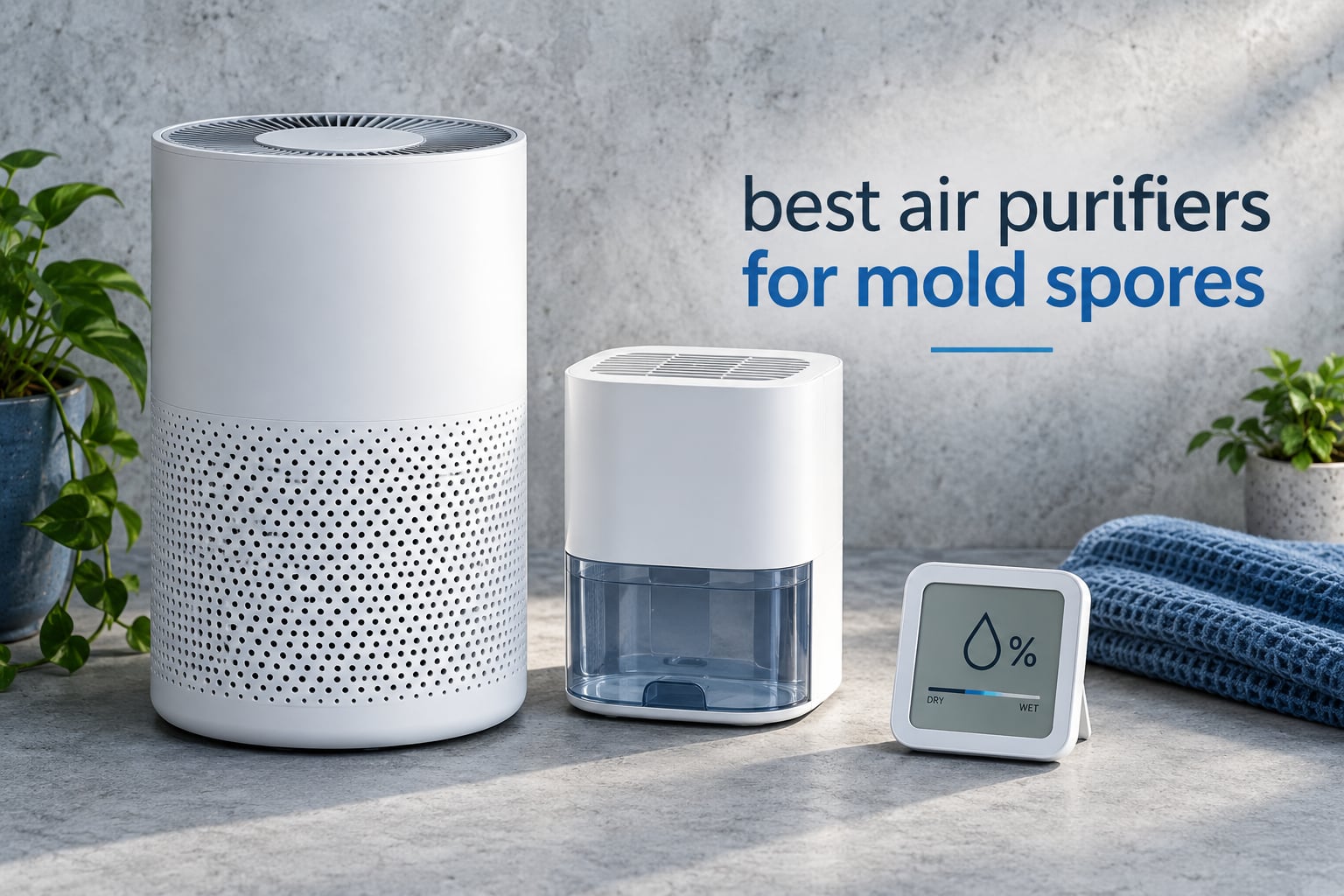
The short answer to the question everybody asks first: yes, air purifiers do capture mold spores. Mold spores are roughly 2 to 5 microns across, so a fine particle filter traps them on contact as air passes through. What a purifier cannot do is remove the water or food source feeding the colony, so humidity control is not optional.
That distinction matters more than any model on this list. Mycologists generally see mold growth begin when relative humidity stays near 60% or above, which is why the best air purifiers for mold spores are only half of a working plan. The other half is a dehumidifier or a fixed HVAC dehumidification stage holding the room under 50% RH.
We spent weeks comparing ten units on published CADR figures, filter grade, noise ratings, replacement filter cost and what happens to the machine itself in a damp room. Our picks cover every realistic situation: a small bedroom, a finished basement, an open-plan main floor, and temporary protection while you wait for professional remediation to be scheduled.
Table of Contents
Top 3 Best Air Purifiers for Mold Spores (October 2026)

Coway Airmega Mighty2
- Cleans up to 1800 ft2 in 60 minutes
- IEST-certified HEPA plus active carbon
- MegaScan PM1/PM2.5/PM10 display
- 19 dB sleep mode


Winix 5510
- 99.99% capture to 0.01 um
- Carbon odor filter
- Auto mode with air quality LED
- 23.5 dB lowest speed
The Coway Airmega Mighty2 takes the overall slot because it pairs genuine IEST-certified HEPA with the largest published coverage in this group alongside the Airmega 400, and it shows you a live particle reading so you can tell whether the room is actually clearing.
The Levoit Core 300-P has the highest rating and the deepest review base of any unit here, which makes it the safest small-room bet. The Winix 5510 is the automatic choice if you want a unit that adjusts itself and still delivers fine capture.
All 10 Air Purifiers Compared in 2026
| Product | Specifications | Action |
|---|---|---|
| Coway Airmega Mighty2 |
|
Check Latest Price |
| Levoit Core 300-P |
|
Check Latest Price |
 GermGuardian AC4825E GermGuardian AC4825E |
|
Check Latest Price |
| Winix 5510 |
|
Check Latest Price |
 Honeywell HPA104WMP Honeywell HPA104WMP |
|
Check Latest Price |
 Levoit Vital 200S-P Levoit Vital 200S-P |
|
Check Latest Price |
 Medify MA-112 Medify MA-112 |
|
Check Latest Price |
 GermGuardian AC5900WCA GermGuardian AC5900WCA |
|
Check Latest Price |
 Coway Airmega 400 Coway Airmega 400 |
|
Check Latest Price |
 Honeywell HPA5300B Honeywell HPA5300B |
|
Check Latest Price |
1. Coway Airmega Mighty2 for Overall Mold Control
COWAY Airmega Mighty2 Air Purifier, Next Gen of AP-1512HH, for Large Room & Home Cleans up to 1,800 ft², IEST certified HEPA and Active Carbon for Allergies, Smoke, Dust, Pets & Mold, AP-1512N(W)
Up to 1800 ft2 in 60 min
IEST-certified HEPA plus carbon
242 CFM dust CADR
19 dB sleep mode
Pros
- IEST-RP-CC007 certified HEPA with active carbon layer
- MegaScan laser sensor shows live PM1 PM2.5 and PM10 readings
- Washable pre-filter slides out without opening the front cover
- 19 dB light-triggered sleep mode
- Carbon stage helps with musty damp-room odor
Cons
- Replacement Max2 filter is sold separately
- Bulky footprint compared with slim towers
- Needs clearance from walls for circulation
This is the unit we keep coming back to for a mold-affected room. The Mighty2 runs a washable pre-filter ahead of a two-in-one HEPA and active carbon cartridge, and the carbon layer is the part people skip when they buy a cheap unit. Mold in a damp space always comes with a musty, wet-cardboard smell, and carbon is what pulls that odor out of the air.
The published CADR figures are solid: 242 CFM for dust, 240 for smoke and 249 for pollen. That works out to strong single-pass performance in a room up to 900 square feet, and Coway rates the unit at 1,800 square feet cleaned in 60 minutes.
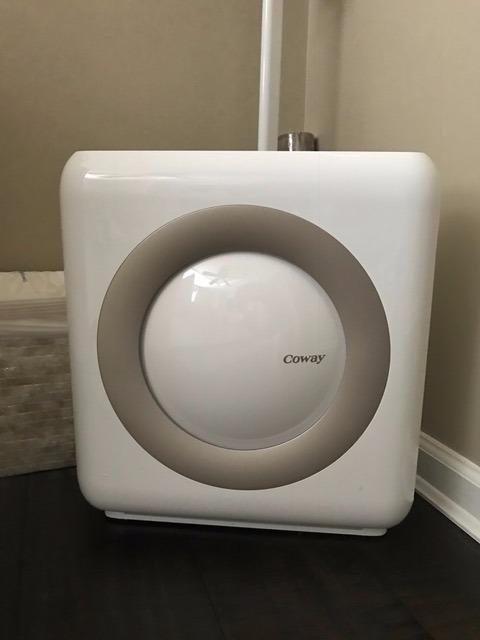
What sold us is the MegaScan laser particle sensor with a numeric display. In a mold situation you are guessing otherwise. With the readout on the cabinet you can watch the number fall after remediation and you know the air is actually changing rather than just feeling different.
It draws up to 56 watts, which is among the lower maximums in this group despite the coverage claim. The sleep mode drops to 19 dB when the room darkens, and a digital filter life indicator tracks both the pre-filter and the Max2 cartridge.
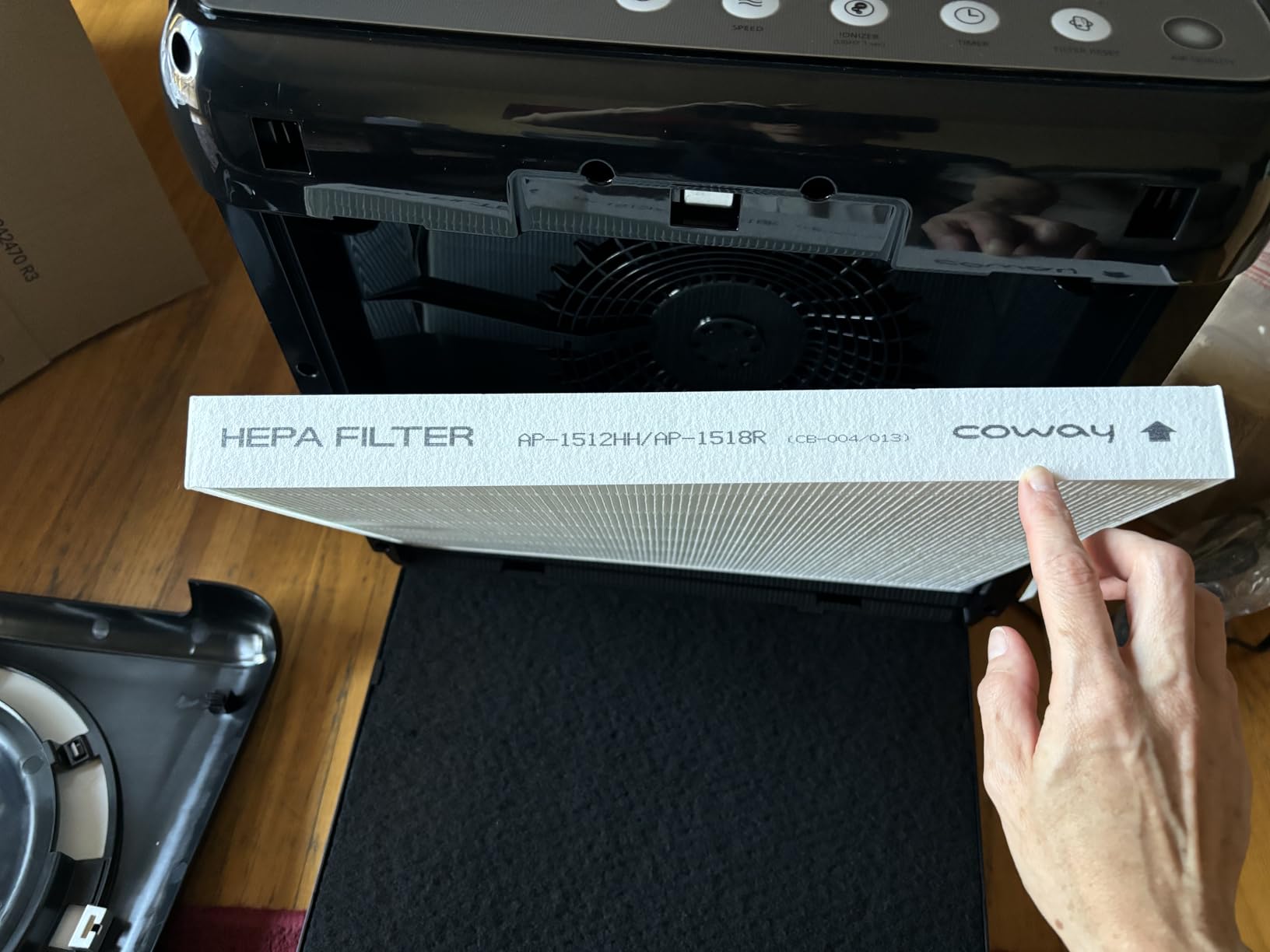
What to check before you buy
Measure the footprint first. The unit is 9.3 by 16.9 by 17.9 inches and 15.2 pounds, which is fine in a basement rec room but tight in a small bedroom. The front grille also needs open air, so pushing it flat against a wall reduces the airflow you just paid for.
Budget for the Max2 replacement filter as a standing annual cost rather than a one-off. It is the single most common complaint in the review set, along with the size. Neither is a filtration problem, just a planning one.
Where it falls short
There is no published carbon bed depth the way premium brands list theirs, so for an apartment where the odor itself is the main complaint a heavy-carbon unit is a better fit. And while the HEPA capture claim is 99.97% of particles down to 0.3 microns, that figure says nothing about spores already embedded in drywall.
2. Levoit Core 300-P for Bedrooms and Small Rooms
Levoit Air Purifier for Home Pets Hair Allergens in Bedroom Quiet Purifiers
143 CFM smoke CADR
99.97% at 0.1-0.3 um
24 dB sleep mode
Up to 1073 ft2
Pros
- Highest rating and review volume of any unit in this group
- AHAM VERIFIDE certified with published CADR
- Compact 8.7 inch footprint suits bedrooms and offices
- 24 dB sleep mode with display lights off
- Quiet operation for overnight bedroom duty
Cons
- Coverage tops out at 1073 sq ft
- No air quality sensor or automatic mode
- Genuine Levoit filters needed for rated performance
- Less effective when pushed against a wall
The Core 300-P carries the highest average rating of the ten units we looked at and the largest review base by a wide margin. For a mold-adjacent bedroom, a home office, or a small apartment where the dampness is marginal rather than severe, that combination of rating and track record is worth a lot.
Levoit publishes AHAM VERIFIDE numbers rather than marketing claims: 143 CFM smoke, 153 CFM dust and 167 CFM pollen. The filter is rated 99.97% efficient for particles between 0.1 and 0.3 microns, which comfortably covers the 2 to 5 micron mold spore range.
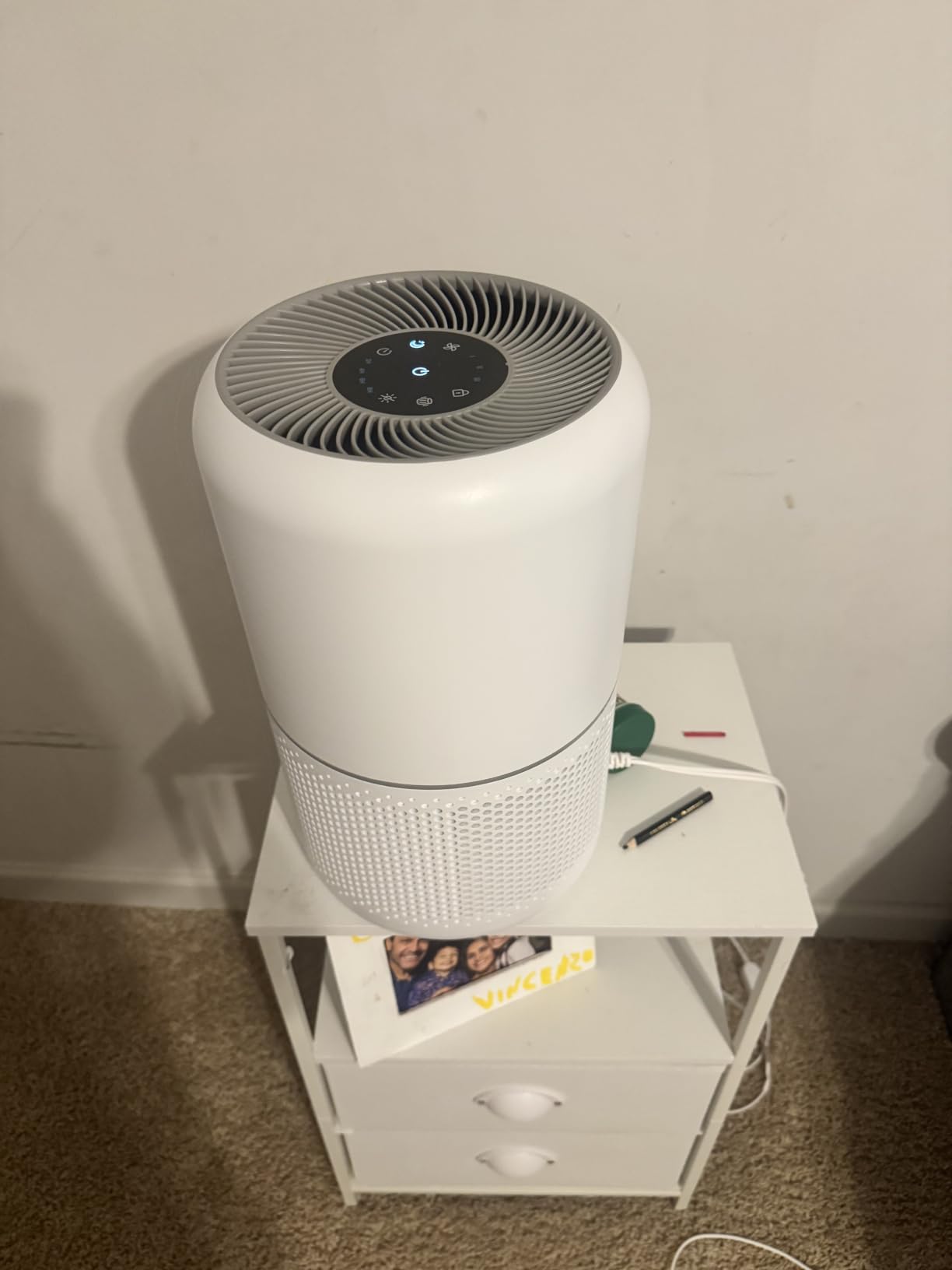
The reason we call it a bedroom pick is the 24 dB sleep mode through Levoit QuietKEAP technology. Run it overnight on low in the room where you sleep and you get continuous air changes without the fan noise competing with a sleeping space.
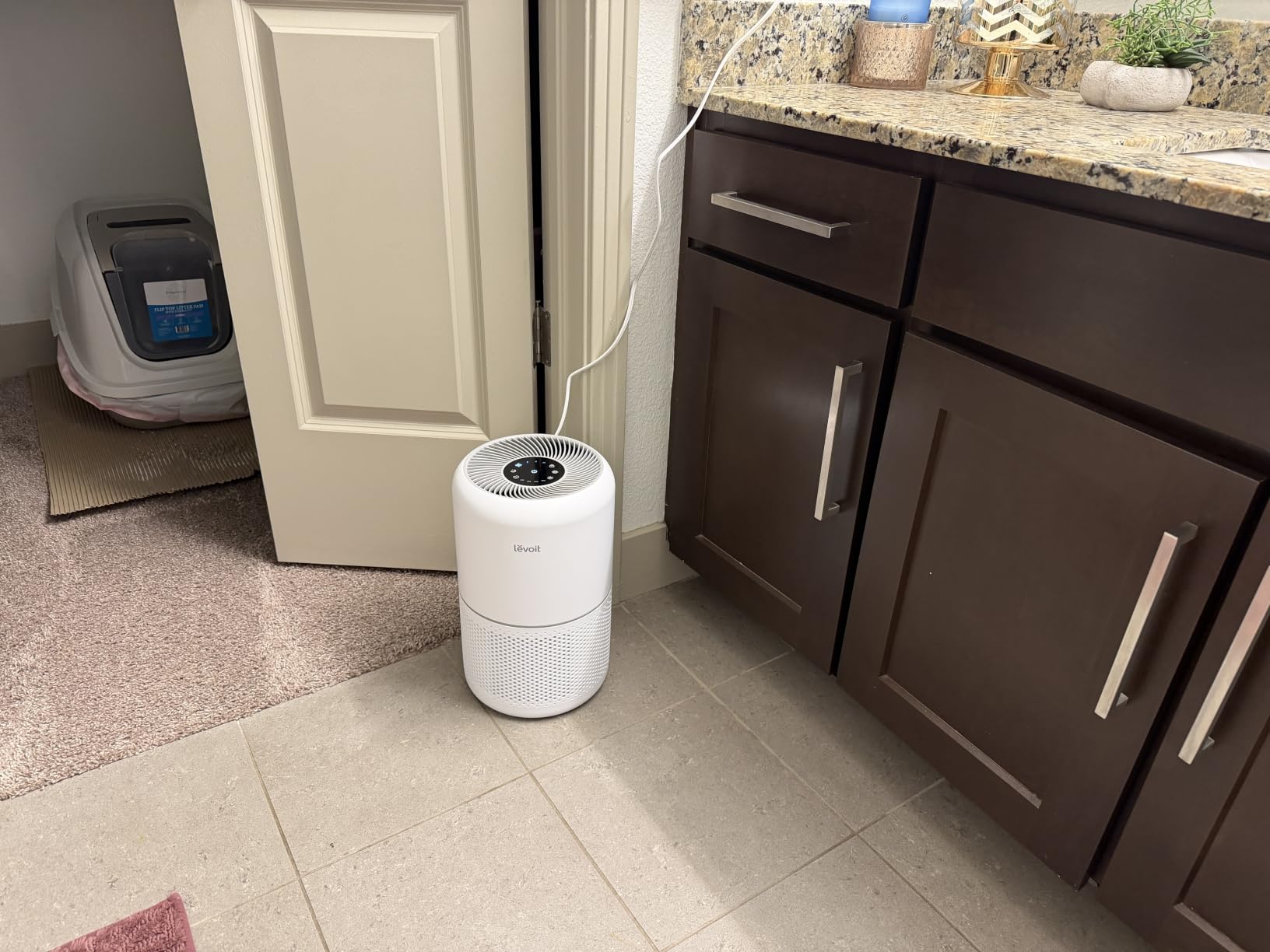
The 56 watt motor and two, four, six and eight hour timer make scheduling simple. At 7.9 pounds and 8.7 inches square, it is also the easiest unit here to move from a bedroom to a closet to a home office as the seasons shift.
What to check before you buy
Levoit rates it for rooms up to 1,073 square feet, and that figure assumes high-speed continuous operation. In a genuinely moldy basement you will want a much larger unit, and running this one on low overnight gives you far fewer air changes than the headline number suggests.
There is no sensor and no automatic mode on this model, so it runs at whatever setting you dial in and stays there. You lose the live readout that makes the Coway and Winix models easier to judge.
Where it falls short
The vertical cylindrical outlet means placement matters more than with a rectangular unit. Push it tight against a wall and the intake restriction reduces effective airflow. And while reviewers praise the value, they repeatedly note that genuine Levoit filters are needed to keep the rated performance, which is a recurring cost.
3. GermGuardian AC4825E for Odor and UV-C Control
GermGuardian HEPA Air Purifier Tower – 22″ – Gray – AC4825E
99.97% at 0.1 microns
Activated carbon layer
Optional UV-C light
743 sq ft per hour
Pros
- HEPA PURE filter plus activated carbon for odor control
- Optional UV-C lamp adds another layer against spores
- Zero Ozone Verified for asthma and pet households
- Lightweight 8.55 pound tower is easy to reposition
- Units reported still running after a decade
Cons
- Blue UV-C indicator light is bright enough to disturb sleepers
- Settings 2 and 3 are too loud for sleeping
- Thin pre-filter tears easily and needs rinsing often
- Outlet blows sideways so it needs wall clearance
This tower is the oldest design in the group and it still makes the case for itself. Owners report units running for ten years or more, and the review set is deep enough that the failure pattern is well documented: light, plastic, serviceable, replaceable filters.
GermGuardian rates the HEPA PURE filter at 99.97% capture of allergens down to 0.1 microns. That is finer than the 2 to 5 micron spore size, so filtration efficiency is not the limiting factor here. The activated carbon stage handles cooking and pet scents, which is what makes it a reasonable choice when the smell is the main complaint.
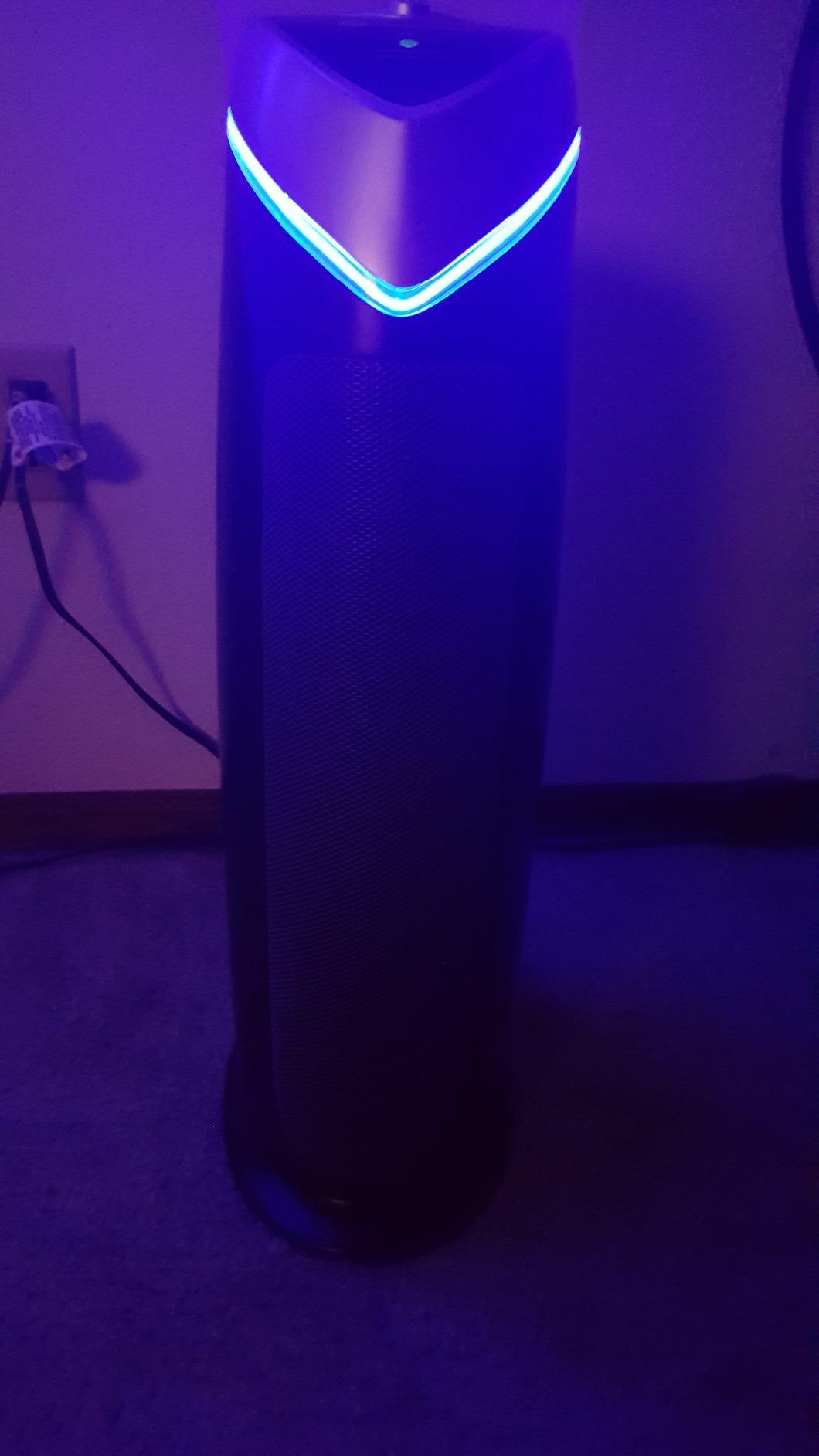
The optional UV-C lamp is the feature people ask about most in mold situations. Reviewers describe handling mold better when UV-C mode is used, and the practical framing is that the lamp inactivates what collects on the filter rather than filtering more particles. It is an addition, not a substitute.
Airflow is 153 square feet every 12.5 minutes, which works out to 743 square feet refreshed each hour. Three speed settings include a quiet sleep mode, and the unit is CARB Certified, ETL Certified and Zero Ozone Verified.
What to check before you buy
This is a narrow tower, 6.75 by 10.25 by 22 inches, and the outlet blows sideways. That means wall clearance on at least one side, which is a real constraint in a finished basement where outlets often sit tight against a stud wall.
The pre-filter is thin plastic mesh. Rinse it roughly every two weeks in a damp environment and do not vacuum it, because owners who vacuum it tear it. It is also the piece most likely to grow biofilm first in a humid room.
Where it falls short
The blue UV-C indicator is genuinely bright, and several reviewers note that settings 2 and 3 are too loud for a bedroom. The 743 square foot hourly figure also suits bedrooms and offices, not the open main floor of a house where mold has spread upstairs from a basement.
4. Winix 5510 for Automated Air Quality Monitoring
WINIX 5510 Air Purifier (New Generation of 5500-2 with App Support) for Home Large Room Up to 1881 Ft² in 1 Hr, True HEPA, High Deodorization Carbon Filter and Auto Mode, Captures Pet Allergies, Smoke
99.99% capture to 0.01 um
AHAM Verifide at 392 sq ft
23.5 dB low speed
App control
Pros
- Highest published particulate capture in the group at 99.99%
- Auto mode with real-time air quality LED readout
- Winix Smart App for remote monitoring
- Carbon filter designed to extend HEPA life
- 23.5 dB on lowest speed with light-activated sleep mode
Cons
- Replacement HEPA and carbon filters sold separately
- Tall 25.2 inch body needs airflow clearance
- Limited smart-home integration
- Performance depends on keeping the pre-filter clean
The Winix 5510 is the successor to the 5500-2, a model that shows up constantly in mold conversations on forums like r/AirPurifiers because it hits the middle ground between airflow and cost. The new generation keeps that formula and adds app support.
Winix publishes 99.99% capture of airborne allergens down to 0.01 microns, which is the finest particle figure any unit in this roundup claims. Read the CADR alongside it: AHAM Verifide at 392 square feet, with the manufacturer claiming 1,882 square feet cleaned in one hour.
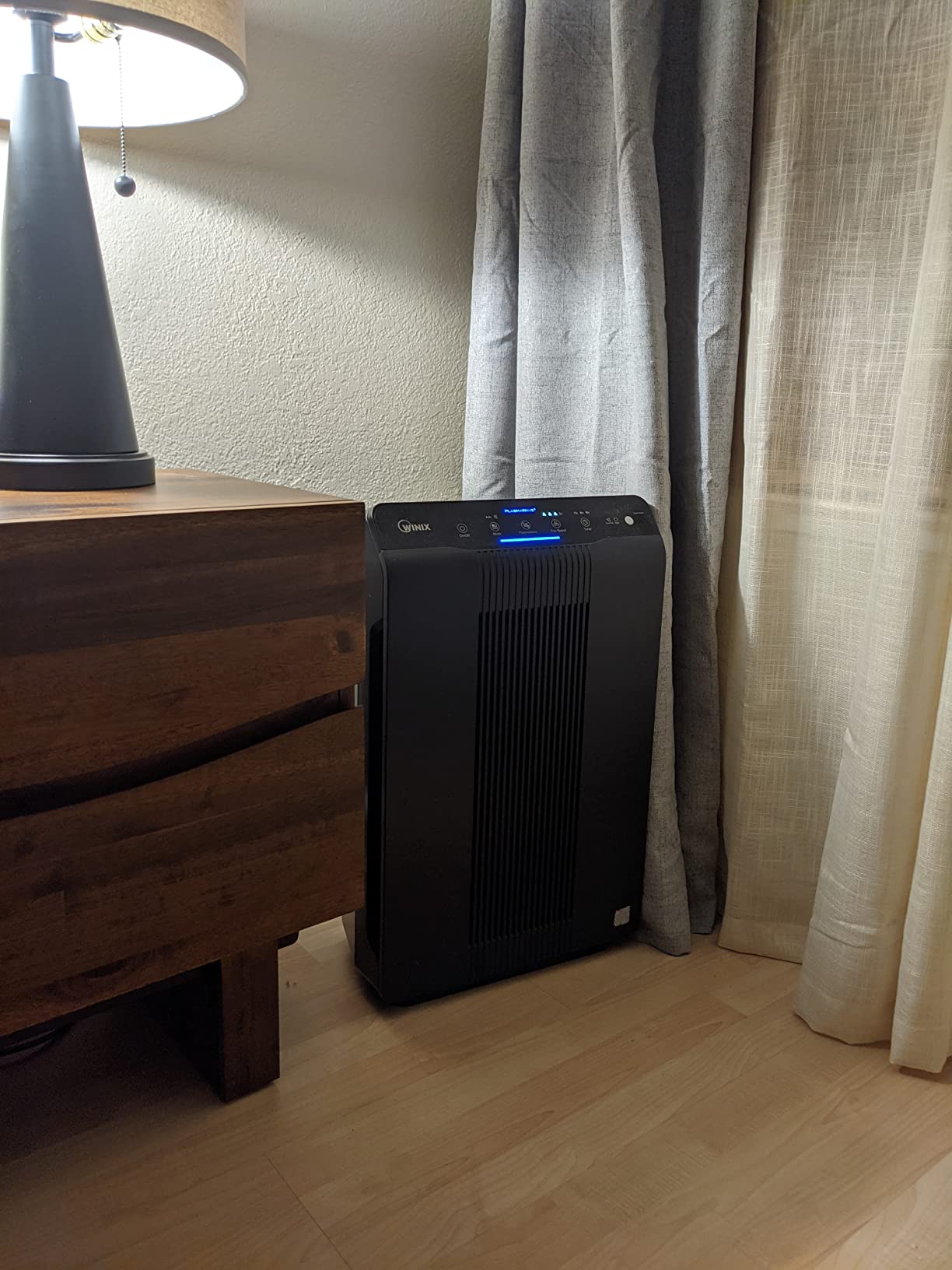
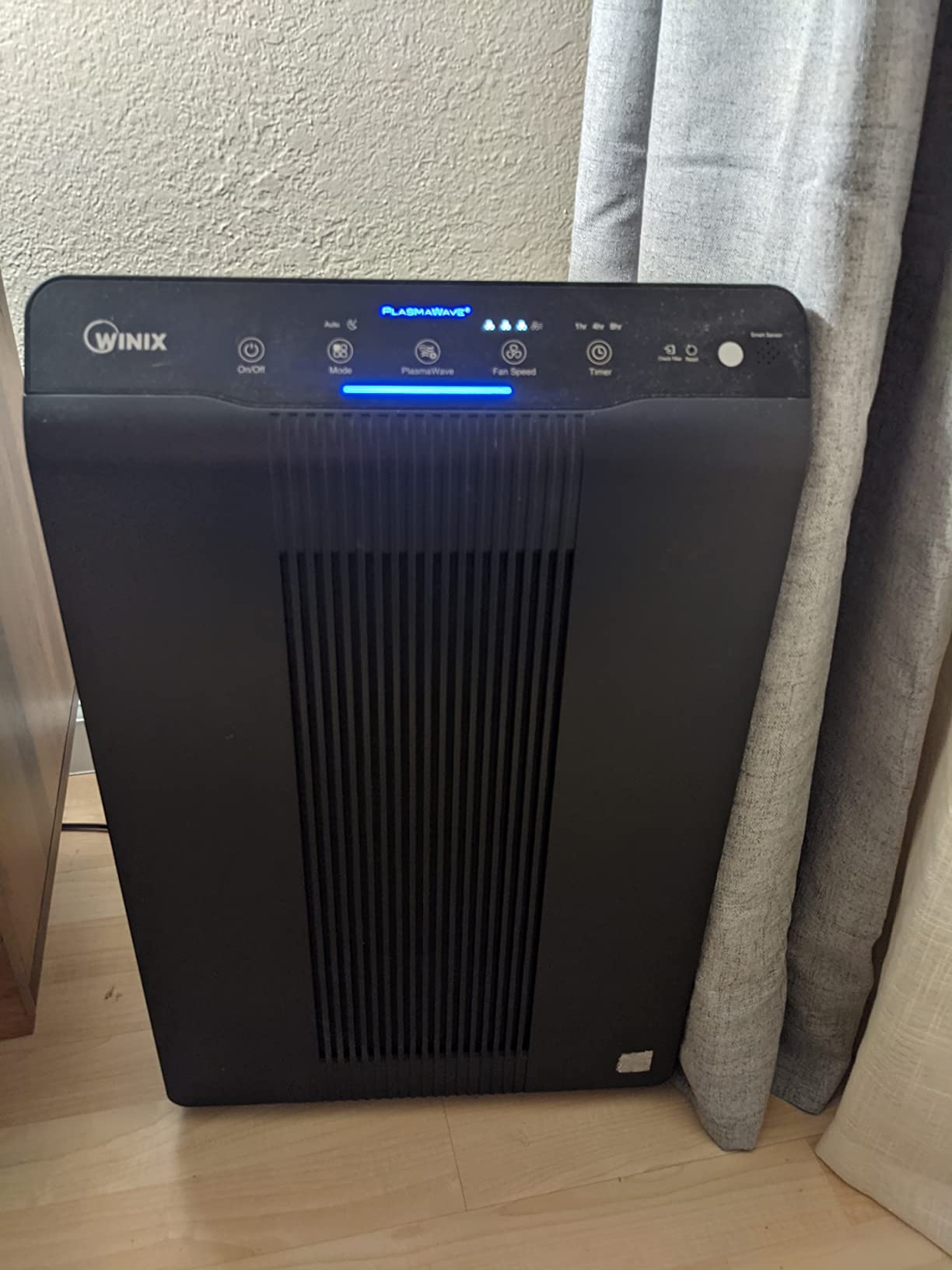
Auto mode is the reason this lands high on a mold list. The sensor reads room air quality and the LED display shows it, so the fan ramps up on its own when spore levels or particulate rise and settles back down once the room clears. In a remediation situation that removes the guesswork of whether the unit is actually doing anything.
At 23.5 dB on the lowest speed it is quiet enough for a bedroom, and a light-automated sleep mode handles the overnight window without you touching a dial. The Winix Smart App adds remote control for when you are not in the room.
What to check before you buy
Plan the filter budget up front. The True HEPA cartridge and the advanced odor control carbon filter are both sold separately and both need replacement, and reviewers flag that cost as the main recurring complaint on this model.
Check the height. At 25.2 inches tall and 13.3 pounds, this is a floor-tower footprint rather than a compact one, and it needs clearance on the intake side for the airflow to be worth anything.
Where it falls short
App connectivity is the main feature added over the previous generation, and reviewers note limited smart-home integration compared with broader ecosystems. Capture percentage also drops if the washable fine mesh pre-filter is allowed to clog, so the maintenance schedule is not optional.
5. Honeywell HPA104WMP for Long-Term Durability
Honeywell AllergenPlus HEPA Air Purifier for Home, 2250 Ft² Rooms in 1 hour, Reduces Allergens, Dust, Pollen, Smoke, Pet Dander, Odors, White, HPA304
Up to 2250 sq ft per hour
99.97% particle capture
4.8 ACH in 465 sq ft
Wall-placeable
Pros
- Owners report units lasting 7 to 10 years without degradation
- Rectangular body can sit flat against a wall
- HEPA filters change roughly yearly and pre-filter every three months
- Lowest setting is nearly silent and works as bedroom white noise
- Activated carbon pre-filter handles odors
Cons
- Requires three separate HEPA filters per change
- Turbo and higher levels are too loud for sleeping
- Pre-filter fills fast with pet hair and dust
- Timer has no clock-based schedule
- Two-stage rather than three-stage filtration
Durability is the reason this Honeywell keeps appearing in long-term households. Owners describe units running seven to ten years with no measurable performance loss, and in a mold home where you want a machine that stays in service for years rather than one you replace annually, that matters.
Honeywell rates it at 2,250 square feet cleaned in 60 minutes, with 465 square feet getting filtered and circulated up to 4.8 times per hour. That 4.8 ACH figure in a mid-size room is closer to what a mold-affected space needs than most headline coverage numbers on this list.
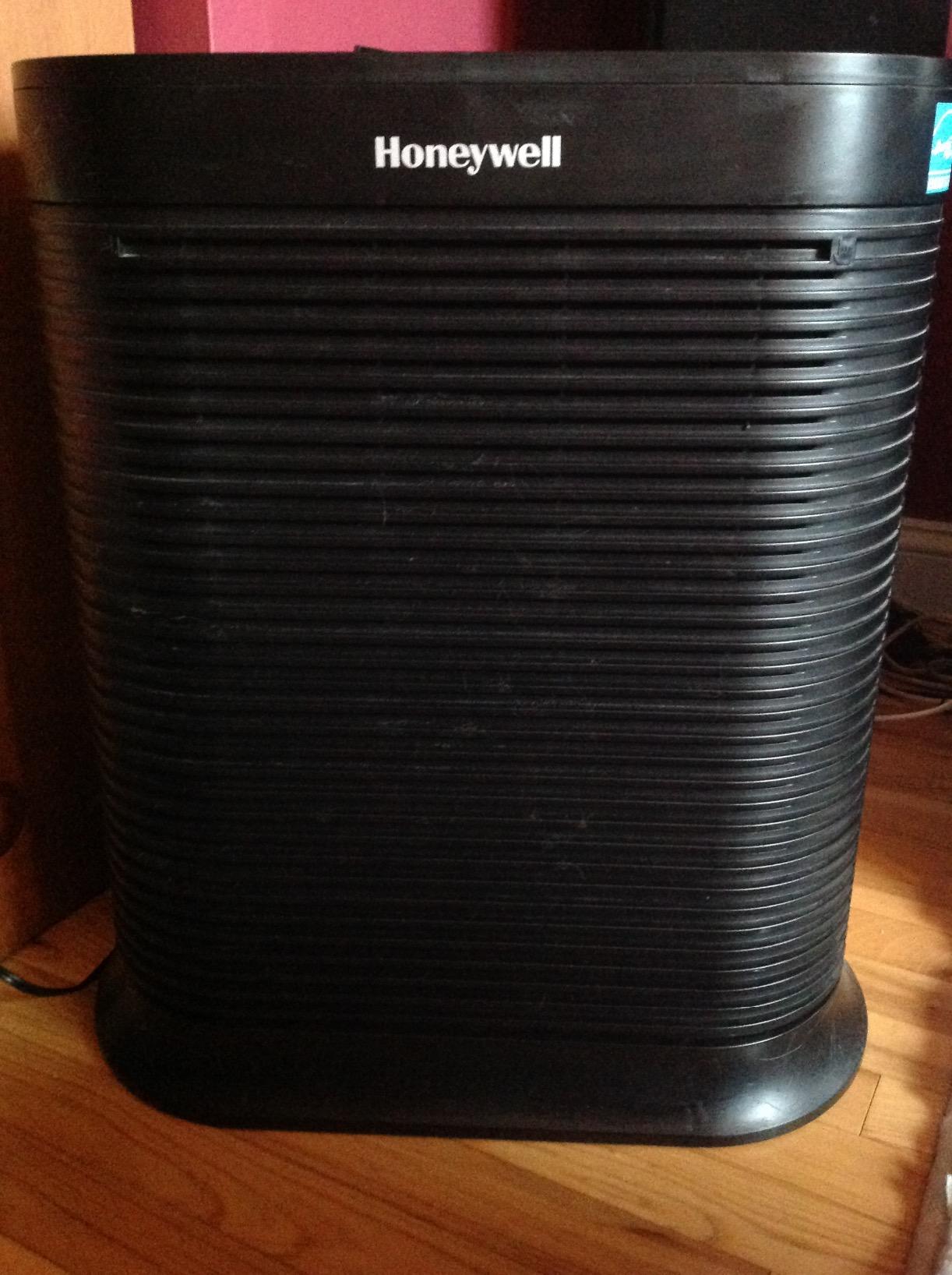
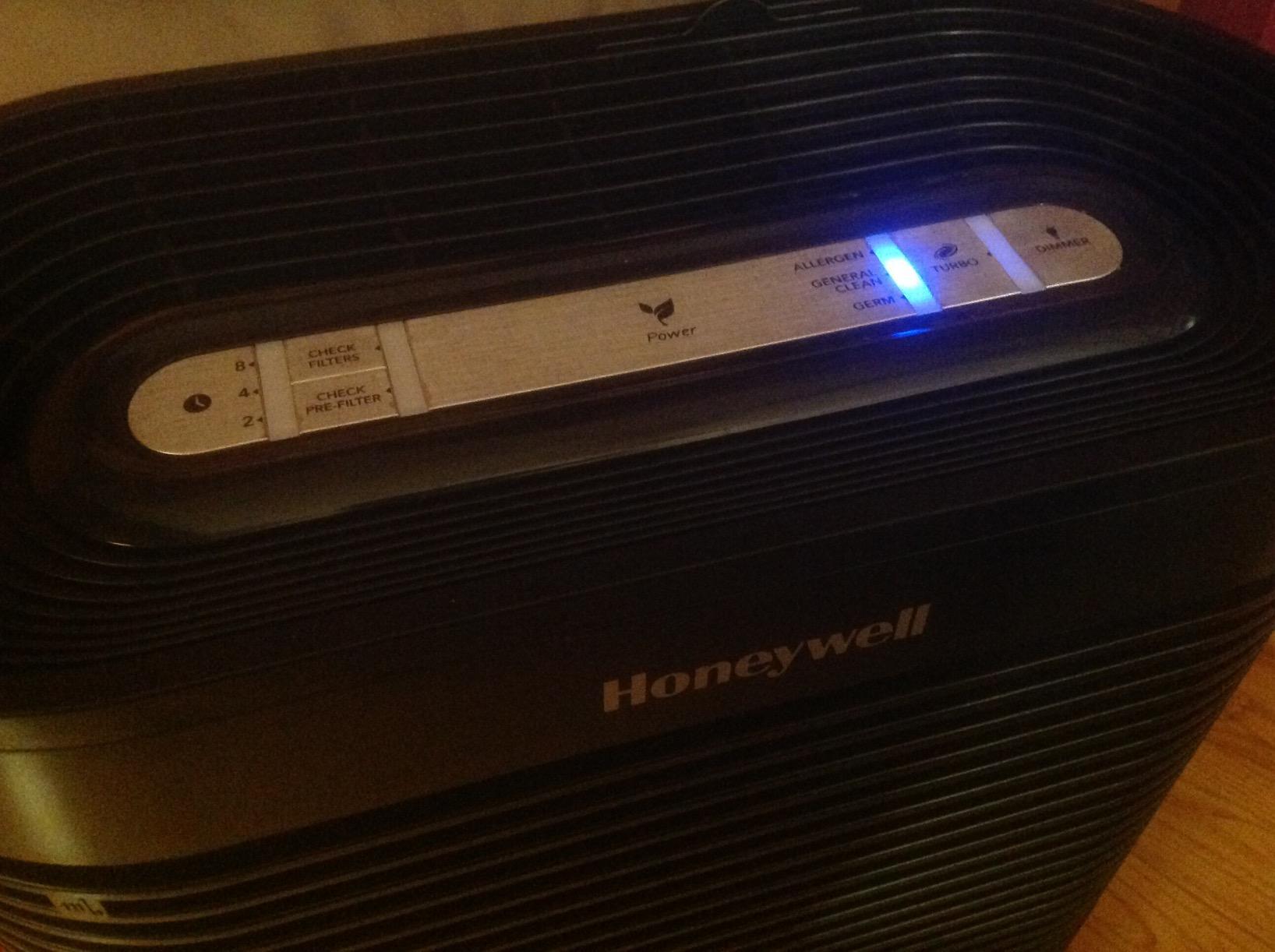
The rectangular form is genuinely useful in real rooms. Unlike the cylindrical towers, this one can sit flat against a wall, which in a finished basement with narrow aisles is the difference between finding a spot and not finding one.
Filtration is two-stage HEPA rated at up to 99.97% capture of airborne allergens and particles. It handles dust, pollen, pet dander, dust mite debris and smoke, plus an activated carbon pre-filter for odors, with three cleaning levels and a Turbo mode.
What to check before you buy
Read the filter requirement carefully. This unit uses three separate HEPA cartridges per change, and reviewers note that some multi-packs include only two, which turns a single annual purchase into two. The pre-filter wants vacuuming or compressed air roughly every three months.
The 17 pound weight is manageable but not light, and the 20.08 by 10.83 by 22.32 inch body takes real floor space in a smaller basement room.
Where it falls short
Turbo and the higher levels are loud enough to rule out overnight use in a quiet bedroom, and airflow on low is somewhat localized, so a large room needs repositioning. The two-stage layout also does less with specialty gases and VOCs than the three-stage models above it.
6. Levoit Vital 200S-P for Large Rooms and Open Plans
LEVOIT Smart Air Purifier for Home Large Room up to 1875 Ft² Vital 200S-P
250 CFM smoke CADR
Up to 1875 sq ft
U-shaped pet hair inlet
AHAM verified
Pros
- AHAM VERIFIDE certified with the highest published CADR among the Levoit units here
- 85 percent five-star share across more than 15000 ratings
- Second U-shaped air inlet traps pet hair and odors
- Coverage up to 1875 sq ft suits basements and open plans
- Independently tested for performance safety and energy efficiency
Cons
- Replacement filters are not included beyond the installed set
- Heavier and bulkier than the Core 300-P
- Limited smart features compared with app-driven models
- Needs extra clearance around the U-shaped intake
The Vital 200S-P is the Levoit to buy when one unit has to cover a whole floor. AHAM VERIFIDE certification comes with real figures: 250 CFM smoke, 254 CFM dust and 289 CFM pollen, which is the highest published CADR of any Levoit model in this roundup.
Coverage is rated at up to 1,875 square feet, and Levoit positions it explicitly for living rooms, bedrooms, basements and open-concept homes. That basement positioning is relevant here, because it is one of the few units on this list whose manufacturer names that room type.
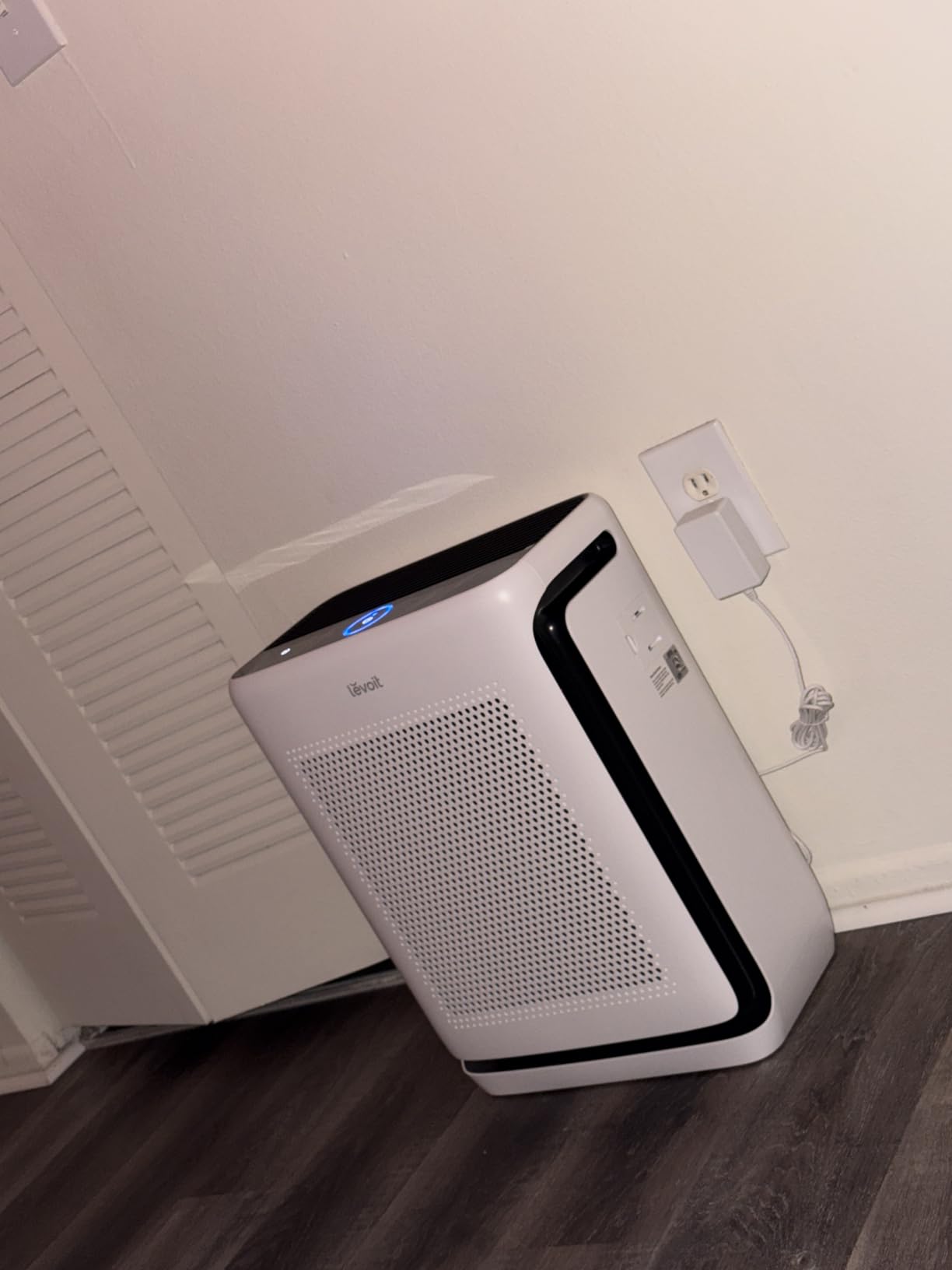
The second U-shaped air inlet is a pet-hair feature, not a mold feature, but it does something useful in practice: it catches larger debris before the main filter so the primary cartridge stays open longer. Reviewers with pet households rate it highly for that reason.
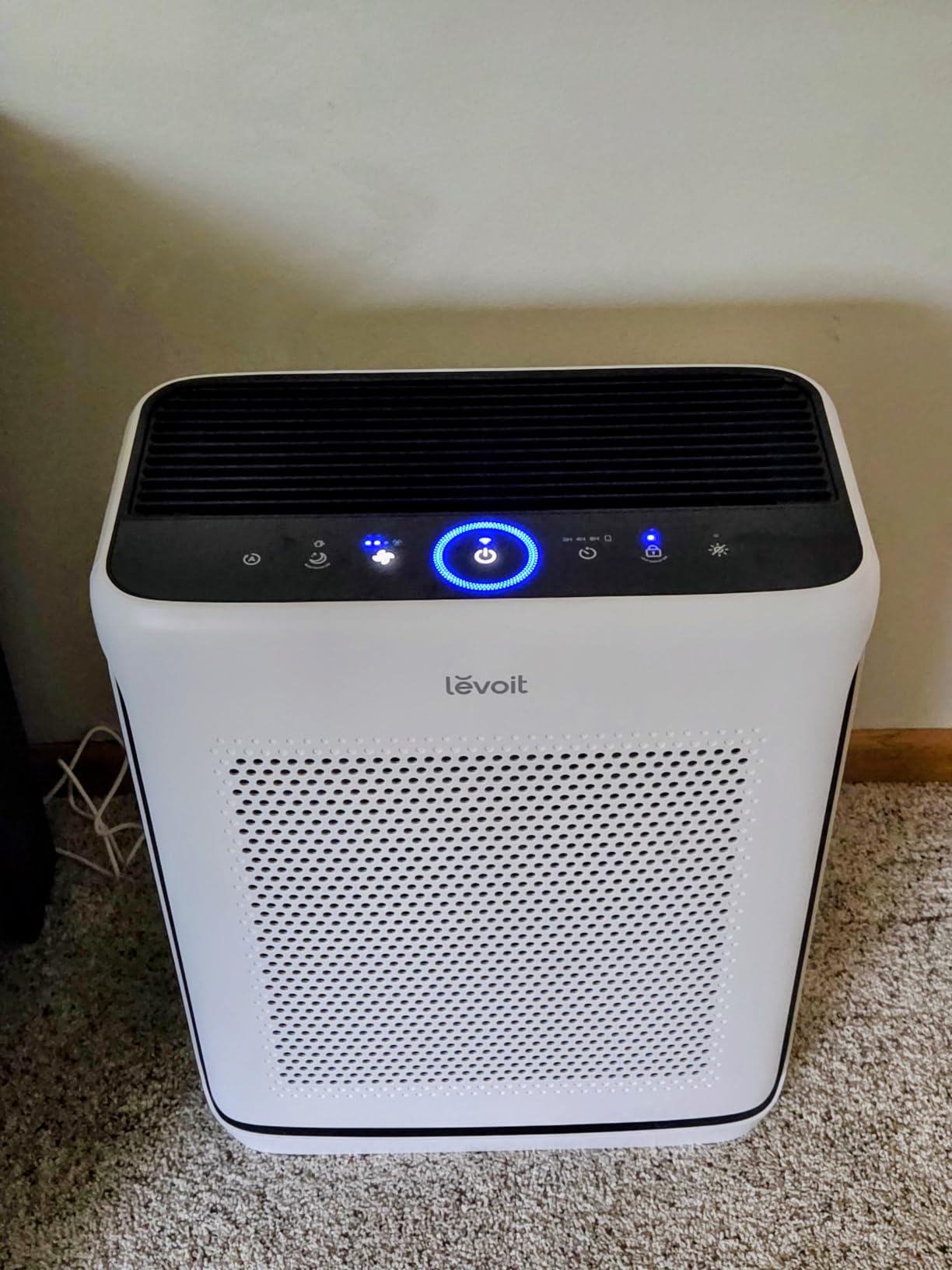
Buyers consistently highlight the rating distribution, with 85 percent five-star share. At 13.2 pounds and 14.96 by 8.66 by 19.69 inches it is a floor unit rather than a compact one, so give it floor space and intake clearance.
What to check before you buy
The U-shaped intake needs clearance around the unit, and some buyers report needing more space than expected. If you are planning to run it continuously against a musty odor rather than just particulates, check the carbon stage sizing first.
Only the installed filter set is included, so have your replacement order figured out before the unit reaches the end of its first interval. Continuous basement duty cycles burn filters faster than intermittent bedroom use.
Where it falls short
It is heavier and bulkier than the Core 300-P for a similar room, and its smart features are limited next to the Winix model with full app control. Buyers who want a live air quality reading rather than a fixed fan speed will not find one here.
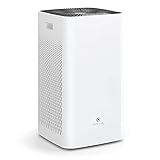
7. Medify MA-112 for Maximum Airflow
Medify MA-112 Air Purifier V3.0 with HEPA Filter | 5,948 ft² Coverage in 1hr for Smoke, Wildfires, Odors, Pollen, Pets | Quiet Removal to 0.3 Microns | White, 1-Pack
1009 CADR
4455 sq ft per hour
Dual H13 True HEPA
Child lock
Pros
- Highest airflow figure of any unit in this group at 1009 CADR
- Dual True HEPA H13 rated to 0.1 microns
- Users tracking outdoor AQI report indoor readings near 20 to 40 percent of outdoor levels
- Child lock and PM2.5 indicator useful in family spaces
- Sleep mode dims the panel for bedroom use
Cons
- Replacement filters are costly and needed roughly twice a year
- New filters can be sealed in plastic that must be removed
- Level 4 reaches 70 dB and is unsuitable for bedrooms
- Heavy at 32 pounds
- Some buyers report coverage below the stated square footage
If you have one large affected space and want the fastest possible clearance, the Medify MA-112 delivers the most air of anything we tested. The 1009 CADR figure is roughly four times what a bedroom tower moves, and Medify rates it at 4,455 square feet cleaned in one hour.
Filtration is dual True HEPA H13, rated to remove 99.9% of particles down to 0.1 microns. That is a genuinely fine grade, and the practical effect is that even at high fan speeds the filter media is not the bottleneck.
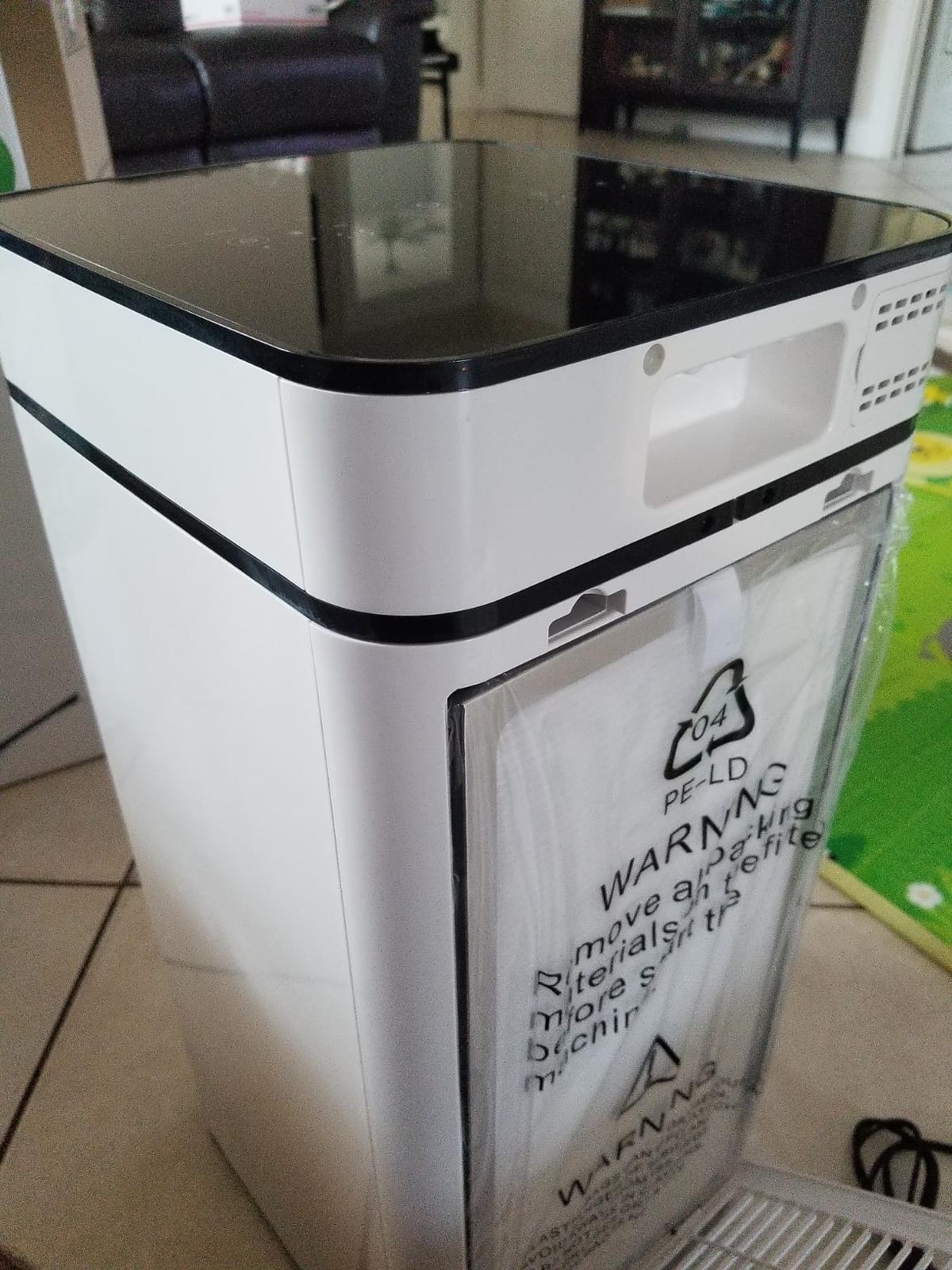
The touch panel gives you a timer up to eight hours, an ionizer, a dust sensor, a PM2.5 indicator, auto mode, a filter indicator and a child lock. That combination is more instrumentation than any other unit here, which is useful when you are tracking clearance in a room that was just remediated.
Users monitoring outdoor air quality during smoke events report indoor readings dropping to roughly 20 to 40 percent of outdoor levels. It runs on 110V at 95 watts with four fan speeds, and sleep mode dims the panel lights.
What to check before you buy
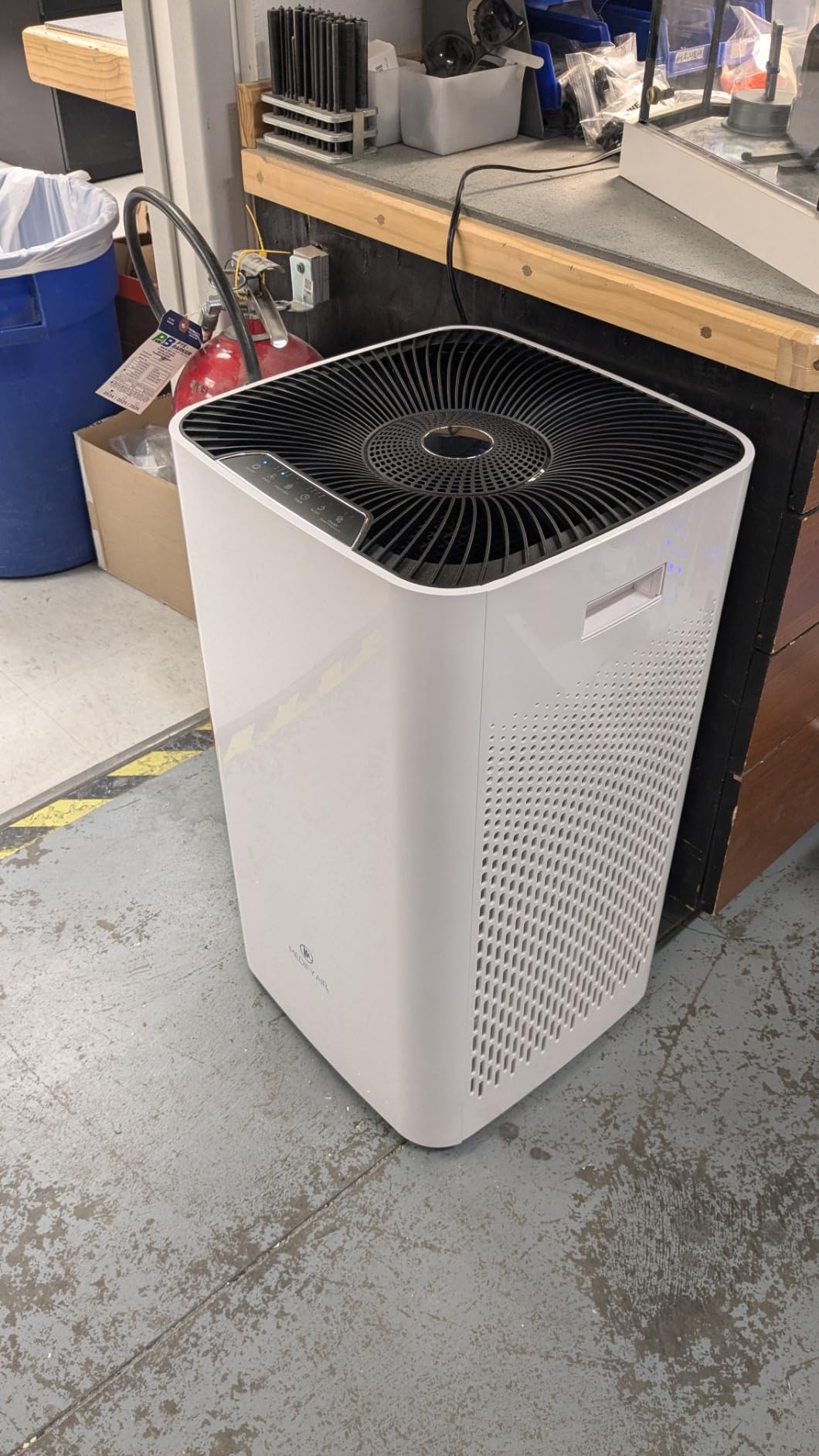
Know your floor before you order. At 20 by 15.2 by 11 inches and 32 pounds, this is the heaviest unit in the roundup and needs wheels or two people to move. That matters in a basement where you might reposition it as the affected area changes.
Check every new filter for the sealed plastic bag before installing it. Buyers have received filters still packed, and a sealed replacement means you get nothing but redistributed room air.
Where it falls short
The top speed reaches 70 dB, so it cannot run at high output overnight in a bedroom. Replacement filters are the most expensive line item among these units and are needed about twice a year, and some buyers felt real coverage fell short of the stated square footage.
8. GermGuardian AC5900WCA for Large Rooms with UV-C
GermGuardian HEPA Air Purifier for Home, Large Rooms up to 1760 Sq. Ft. with HEPA Air Filter & UV-C Light, Zero Ozone Verified, AC5900WCA, White
True HEPA to 0.1 microns
UV-C light
Zero Ozone Verified
Up to 1760 sq ft
Pros
- UV-C light adds a layer against airborne mold spores and organisms
- Zero Ozone Verified
- which matters in asthma households
- 1760 sq ft coverage for this tier
- Filter change indicator and night light make overnight running easy
- CARB and ETL certified with independent US testing
Cons
- Smallest review base of the ten units at roughly 2200 ratings
- 8-hour timer with no longer scheduling
- Replacement HEPA filters and UV-C bulbs bought separately
- Higher speed settings are noticeably loud
This is the unit to look at when mold is the specific concern rather than general particulates. It combines a True HEPA filter rated at 99.97% for particles down to 0.1 microns with a UV-C lamp, and buyers consistently point to that pairing as the reason to buy it.
Zero Ozone Verified certification is the other headline. In a household with asthma or an allergy to mold, avoiding an ozone-emitting mode is not a minor detail, and this design is explicitly verified for it.
Coverage figures are 365 square feet cleaned 4.8 times per hour and large rooms up to 1,760 square feet every hour. That 4.8 ACH number is the honest one to size against, since it describes the actual air changes in a defined room rather than a one-hour maximum.
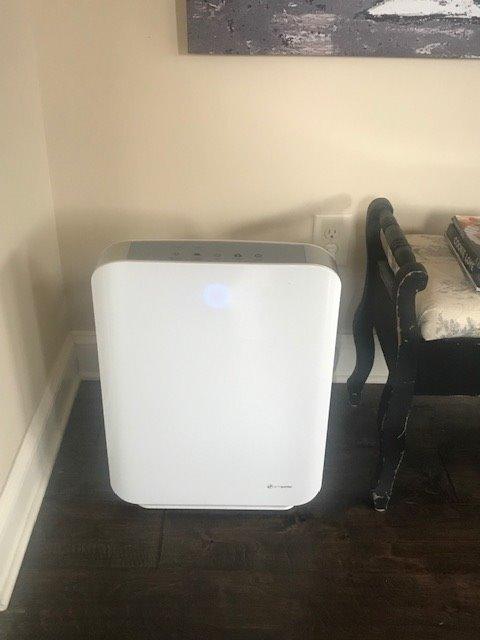
Three speed settings, an 8-hour auto-off timer, a night light and a filter change indicator round out the controls. At 13 pounds and 9.65 by 15.95 by 20.87 inches it is a manageable floor unit.
What to check before you buy
Buy both the HEPA filters and the UV-C bulbs at the same time. They are separate purchases, and the bulb is the part people forget until the lamp is glowing dimly and quietly filtering less than they think.
The 8-hour timer is the only scheduling available, so if you want the unit running around the clock you will want it on a smart plug or set to a continuous speed rather than a timed cycle.
Where it falls short
This has the smallest review base of the ten units, at roughly 2,200 ratings with a 4.5 average, so the long-term feedback pool is thinner. Higher speed settings are loud, and the UV-C adds a component with its own replacement cycle on top of the filters.
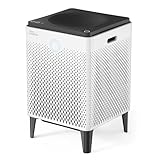
9. Coway Airmega 400 for Whole-Home Coverage
COWAY Air Purifier for Home Up to 3,120ft², Washable Pre-Filter and HEPA Filter for Smoke, Allergies, Pet Dander, Odor, AQI, Auto & Sleep Mode, Timer, 5yr Warranty, Airmega 400 White, AP-2015F
Up to 3120 sq ft
HyperCaptive three-stage filtration
22 dB sleep mode
5-year warranty
Pros
- Largest coverage area of any unit in this roundout at 3120 sq ft
- Washable pre-filter plus carbon and HEPA in one stack
- 5-year manufacturer warranty is the longest here
- Smart Eco and Sleep modes tune noise and energy automatically
- Energy Star certified alongside CARB and ETL
- Filter life indicator tracks replacement timing
Cons
- Highest cost of the ten units
- Replacement filter sets add significant running cost
- 24.7 pounds is difficult to move between rooms
- Smaller review base than the Levoit Winix and Honeywell models
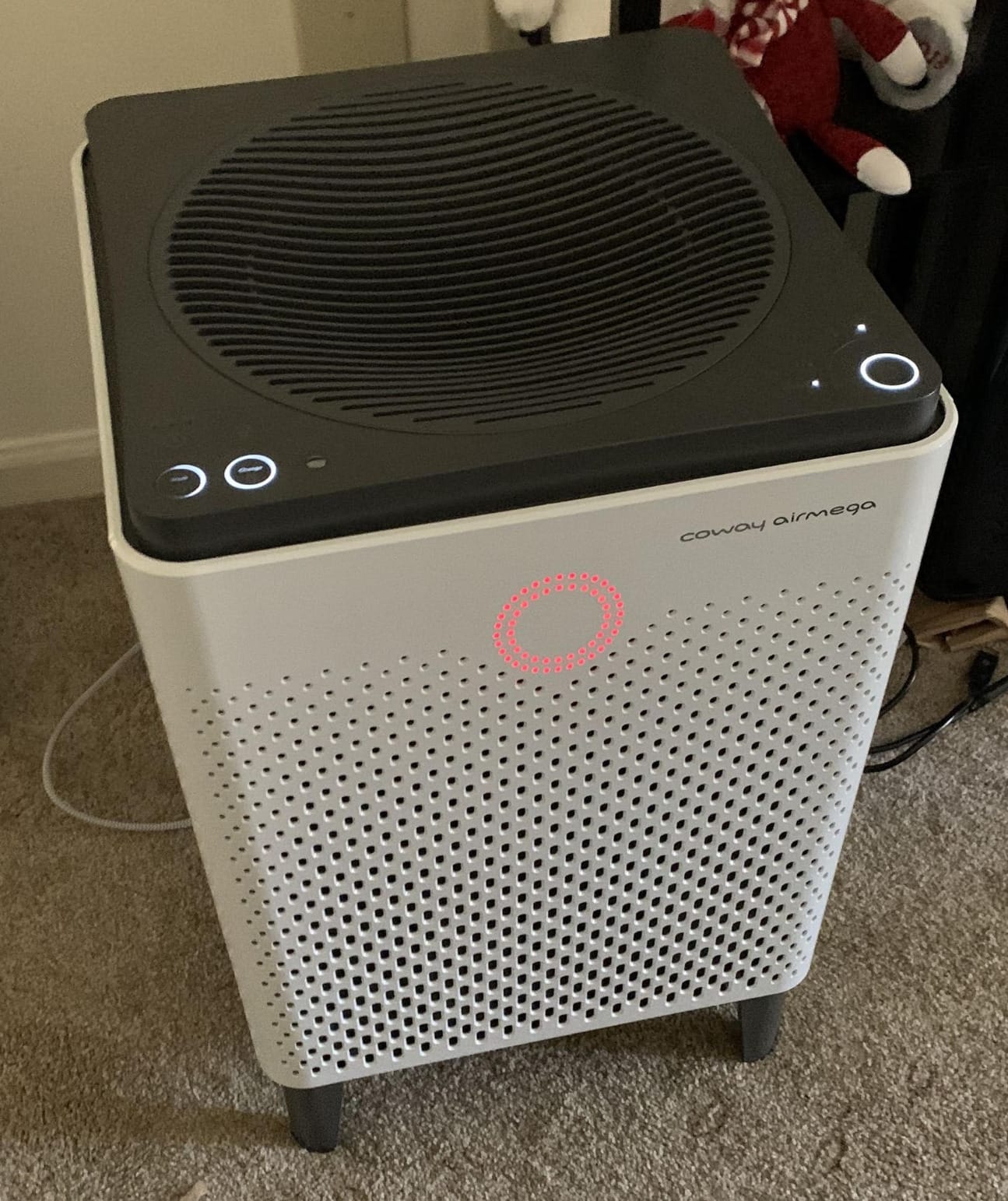
The Airmega 400 is the unit to consider when mold has moved through a whole floor rather than sitting in one room. At up to 3,120 square feet in 60 minutes it has the largest coverage figure of anything on this list, and Coway supports it with a five-year manufacturer warranty.
The HyperCaptive system stacks a washable pre-filter, an active carbon filter and a HEPA filter in one housing. That three-stage layout handles particles down to 0.3 microns at 99.97% plus volatile organic compounds and odor, which is the combination you want when the problem is a large damp area with a smell attached to it.
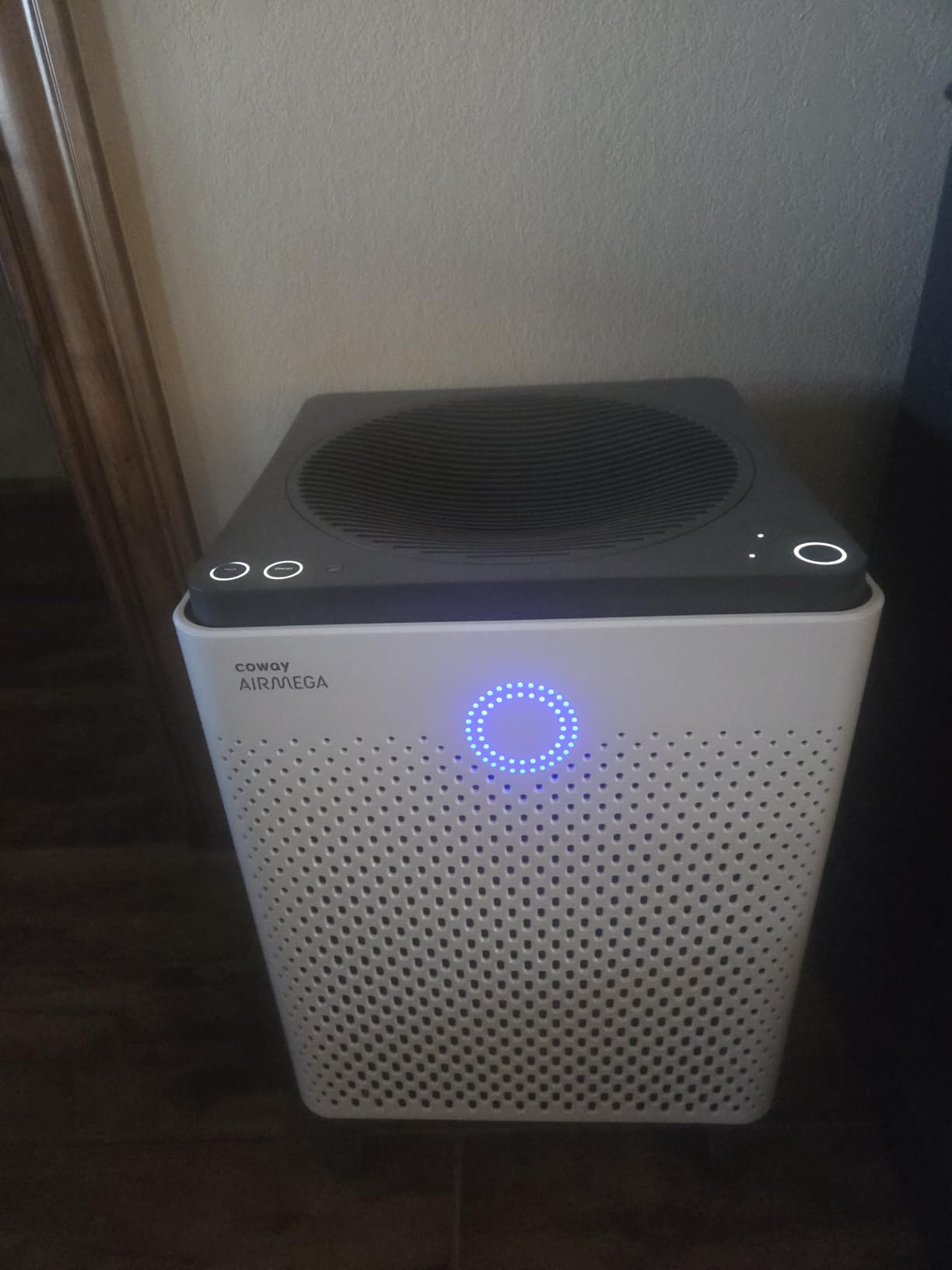
Smart Mode adjusts fan speed to measured room air quality. Eco Mode shuts the fan off after 30 minutes of clean air, which is the one behavior to override in a mold situation where you want continuous cycling rather than an automatic rest period.
Sleep Mode drops to 22 dB when the room is dark and the air reads clean, and the whole unit draws 66 watts. The air quality monitor and filter life indicator handle the running and maintenance side without guesswork.
What to check before you buy
Consider running two smaller units instead of one large one. Air in a basement does not mix evenly across 3,000 square feet, and owners on forums like r/HomeImprovement frequently place units in more than one room rather than relying on a single central machine.
At 24.7 pounds and 14.8 by 14.8 by 22.8 inches, moving it between floors is a two-person job. Plan where it lives before it arrives.
Where it falls short
The replacement filter sets are a substantial recurring line item on a machine this size, and this unit carries the highest cost of the ten. With a review base of roughly 2,200 ratings, there is also less long-term feedback than the Levoit, Winix and Honeywell models attract.
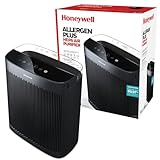
10. Honeywell HPA5300B for Set-and-Forget Auto Mode
Honeywell HEPA Air Purifier for Home, 2423 Ft² Rooms in 1 Hour, Air Quality Monitor, Auto Mode, Reduces Allergens, Dust, Pollen, Pet Dander, Odors, Smoke, Black, HPA5300B
99.99% particle capture
4.8 ACH up to 500 sq ft
Carbon pre-filter
Auto mode with air quality indicator
Pros
- Auto mode with an air quality indicator adjusts output without manual tuning
- Zero-ozone design recommended by owners with asthma and birds
- Users measuring PM2.5 report it holds low speed up to an outdoor AQI near 125
- Carbon pre-filter handles odors and wildfire smoke
- Integrated top handle helps with the 20.5 pound weight
Cons
- Low-level hum about 5 dB louder than the previous generation
- VOC filter sold separately
- Turbo setting has no one-hour timer option
- Heavier and bulkier than the model it replaces
- One isolated motor failure report
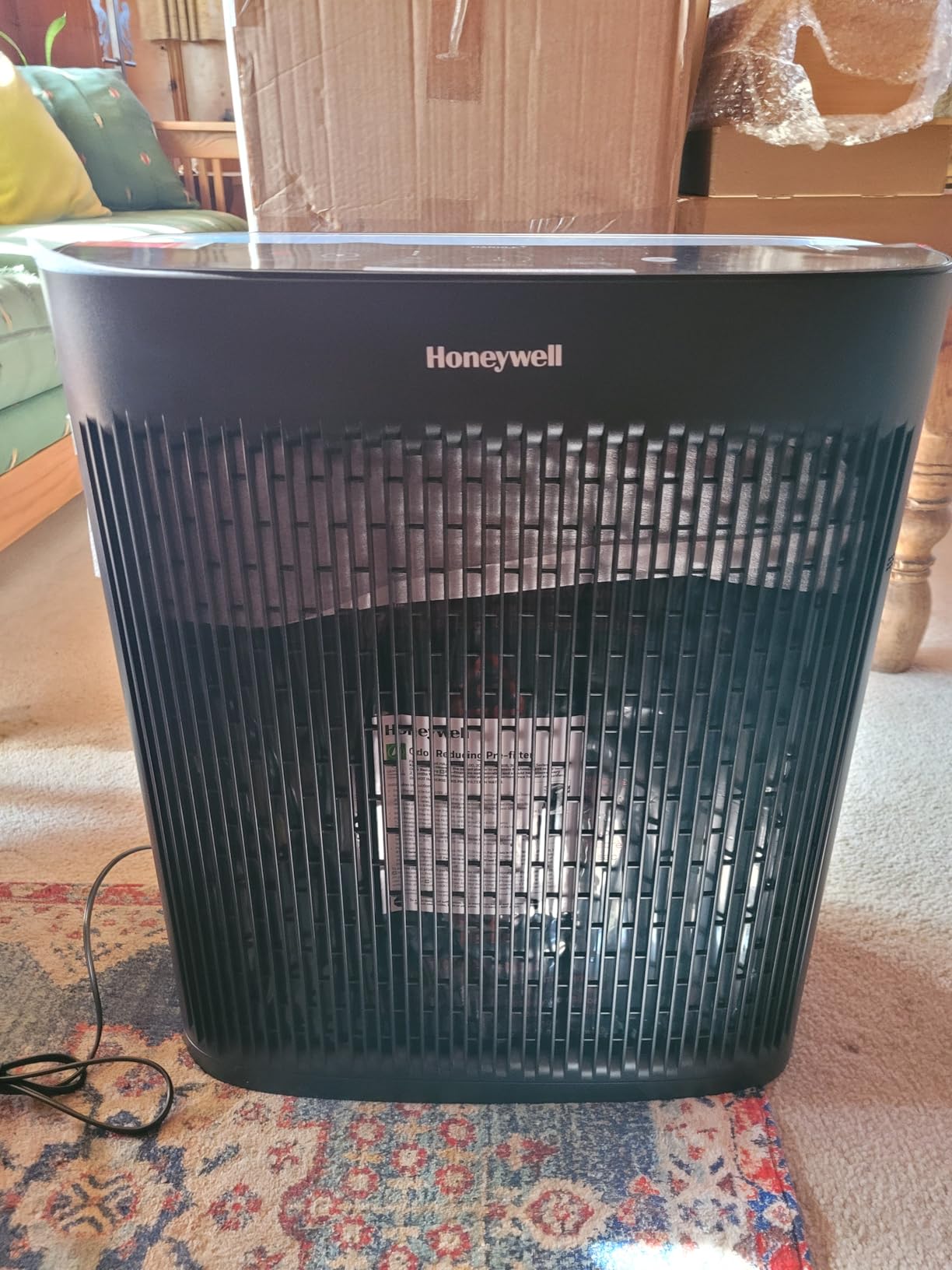
This Honeywell is the pick for anyone who does not want to manage a purifier. The air quality indicator and auto mode monitor the room and adjust output on their own, which in a damp basement means the unit keeps cycling without you checking whether it is still running high.
Filtration is advanced HEPA capturing over 99.99% of airborne dust, pollen, pet dander and smoke, backed by a carbon pre-filter. AHAM Verifide, it filters and recirculates air 4.8 times per hour in rooms up to 500 square feet and refreshes rooms up to 2,400 square feet at least once an hour.
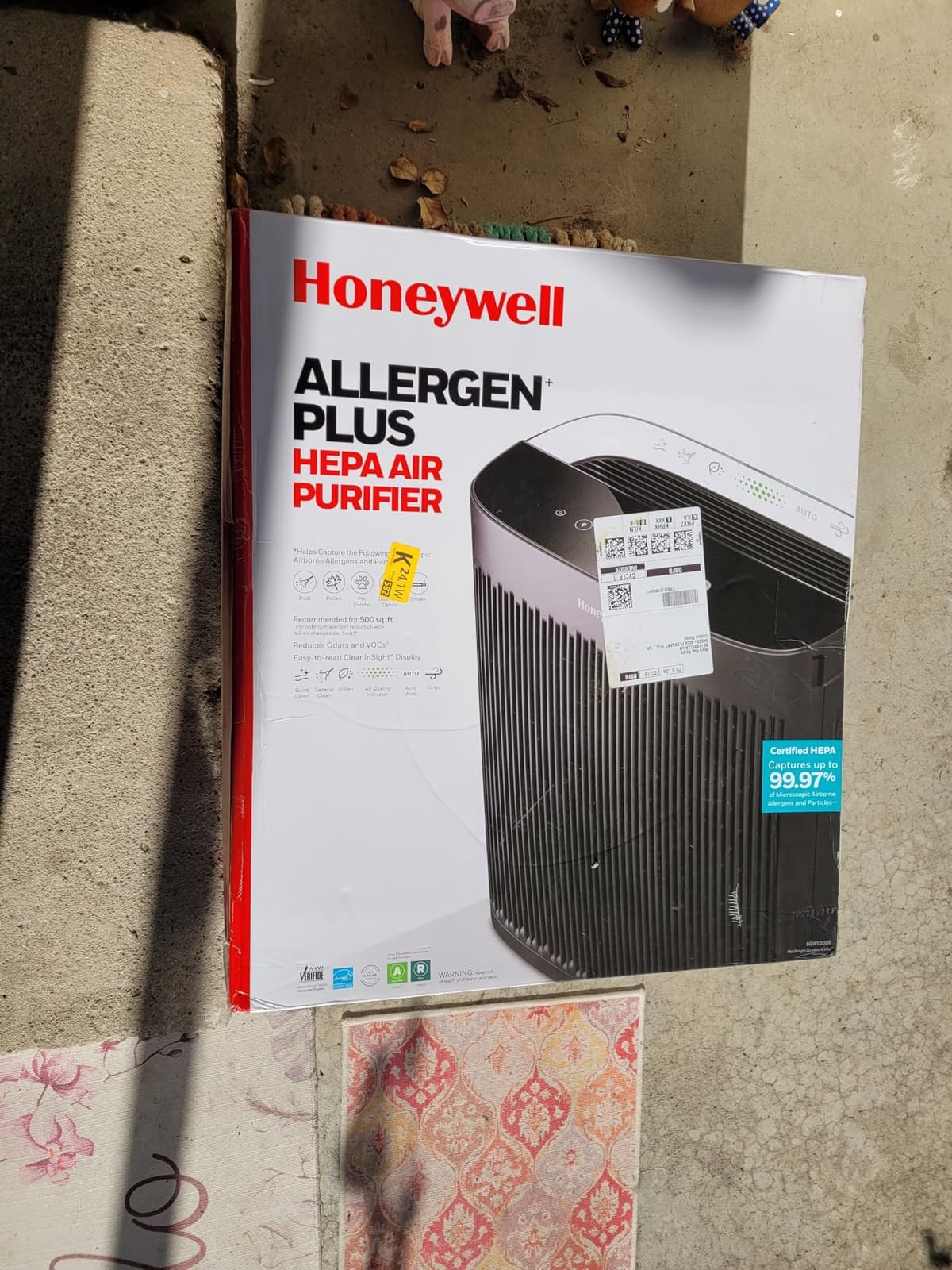
Owners with asthma and with pet birds point to the zero-ozone design as the deciding factor. Users measuring PM2.5 report it effectively holds a low speed through outdoor air quality readings around 125, which is a reasonable bench test for how hard it works.
The design is inherited from earlier Honeywell models that owners report still running after 12 to 15 years. That service history matters for a machine you intend to keep on continuously during a remediation.
What to check before you buy
Listen for the hum in the room before you commit. The most repeated criticism is a low-frequency hum measured about 5 dB louder than the previous generation, and one owner returned the unit over it. In a bedroom that difference is audible.
The optional VOC filter is a separate purchase and matters more here than on units with larger carbon beds, so include it if odor is part of your problem rather than an afterthought.
Where it falls short
At 20.5 pounds and 10.8 by 19.1 by 22.3 inches it is bulkier than the model it replaces, and Turbo mode has no one-hour timer option. The pre-filter is not rated for vacuum cleaning per the manual, though owners do it anyway and report no lasting issue.
How to Size a Mold Air Purifier with CADR and ACH
Headline square footage is the least useful number on a product page. A manufacturer quoting 1,800 square feet cleaned in 60 minutes is describing a maximum burst, not the air changes you get at the speed you would actually run overnight. Size on air changes per hour instead. Our general air purifier buying guide covers the baseline specs to compare first.
The formula is straightforward. Multiply the room’s floor area by the ceiling height to get the volume in cubic feet, multiply that by your target ACH, then divide by 60 to get the clean air delivery rate in CFM you need. A 500 square foot basement with an 8 foot ceiling is 4,000 cubic feet, and at 5 air changes per hour that requires roughly 333 CFM.
For mold work we would treat 4 ACH as the practical floor and 5 to 6 ACH as the target, because spore counts spike whenever a door opens, a fan runs or someone walks through the room. Below 4 ACH you are filtering but not clearing.
Look at the ACH figures in this roundup rather than the maximum coverage claims. The Levoit Core 300-P is documented at 4.8 air changes per hour in a 222 square foot room, the Honeywell HPA104WMP at 4.8 times per hour in 465 square feet, and the GermGuardian AC5900WCA at 4.8 times per hour in 365 square feet. Those are comparable, verifiable numbers.
Why HEPA Grade Matters Less Than Airflow
Mold spores sit in the 2 to 5 micron range, and every True HEPA filter on this list captures well below that, down to 0.1 or 0.3 microns. Some units claim 0.01 micron capture. Once you are at 0.1 micron, adding another decimal place does not change what happens in your basement.
What does change outcomes is how much air moves through the filter. This is the point that comes up repeatedly in r/AirPurifiers and r/ToxicMoldExposure threads: a unit with a dense filter and a weak fan cleans a large room more slowly than a modest filter with real airflow.
One practical implication is placement. Every manufacturer publishes CADR at a specific speed, and mold duty is continuous duty. If you are running the unit overnight in a bedroom you need the quieter speed, and the air changes you achieve there are much lower than the headline figure suggests.
Carbon Filters, Musty Odor and the Dehumidifier Question
A damp room does not smell like mold so much as it smells like wet paper and old carpet, and that odor comes from volatile compounds the HEPA stage cannot touch. Only an activated carbon layer adsorbs them. That is why the units with a real carbon stage, the Coway Mighty2 and the Airmega 400, tend to win in musty basements.
But the honest answer to whether a purifier fixes a musty basement smell is no. Owners on forums are consistent on this: the odor returns as soon as humidity climbs again, because you removed the smell from the air rather than the water that caused it. A dehumidifier holding relative humidity under 50% is what stops the smell recurring.
Run both together. Purifier on continuous medium or high speed for air changes, dehumidifier holding the room dry for the source. For a basement in a home with chronic damp, that pairing is standard advice rather than an optional upgrade.
Ionizers, Ozone and UV-C: What to Run and What to Turn Off
Turn the ionizer off. This is the most consistent piece of advice in every mold forum thread we read, and it is also what the manuals themselves push you toward, since ionizer modes often run at reduced fan speed to generate ions. Lower airflow means fewer real air changes, which defeats the purpose. If you want a unit that manages itself, our smart air purifier roundup covers the app-driven models in more depth.
Ozone is the second reason. Ionization can generate ozone as a byproduct, and ozone irritates the airways of exactly the people most likely to be running a purifier because of mold sensitivity. GermGuardian units here are Zero Ozone Verified, and that certification is worth more than an ionizer feature.
UV-C is a different category and carries no ozone concern. The GermGuardian models use it to inactivate what collects on the filter, and reviewers report better results in mold situations with the lamp running. Treat it as an addition to filtration, not a replacement for it.
Filter Replacement and Cleaning Schedules for Damp Rooms
Replace filters sooner than the rated interval in a humid room. A filter rated for six months in a conditioned bedroom is not a six-month filter in a basement sitting above 60% RH, because the media stays damp and collects biofilm rather than just loading with particles.
Rinse or vacuum the washable pre-filters monthly in a damp space. Every washable pre-filter in this roundup is there to protect the HEPA cartridge, and a clogged pre-filter cuts airflow before it damages anything, which is why filter performance depends on keeping it clean.
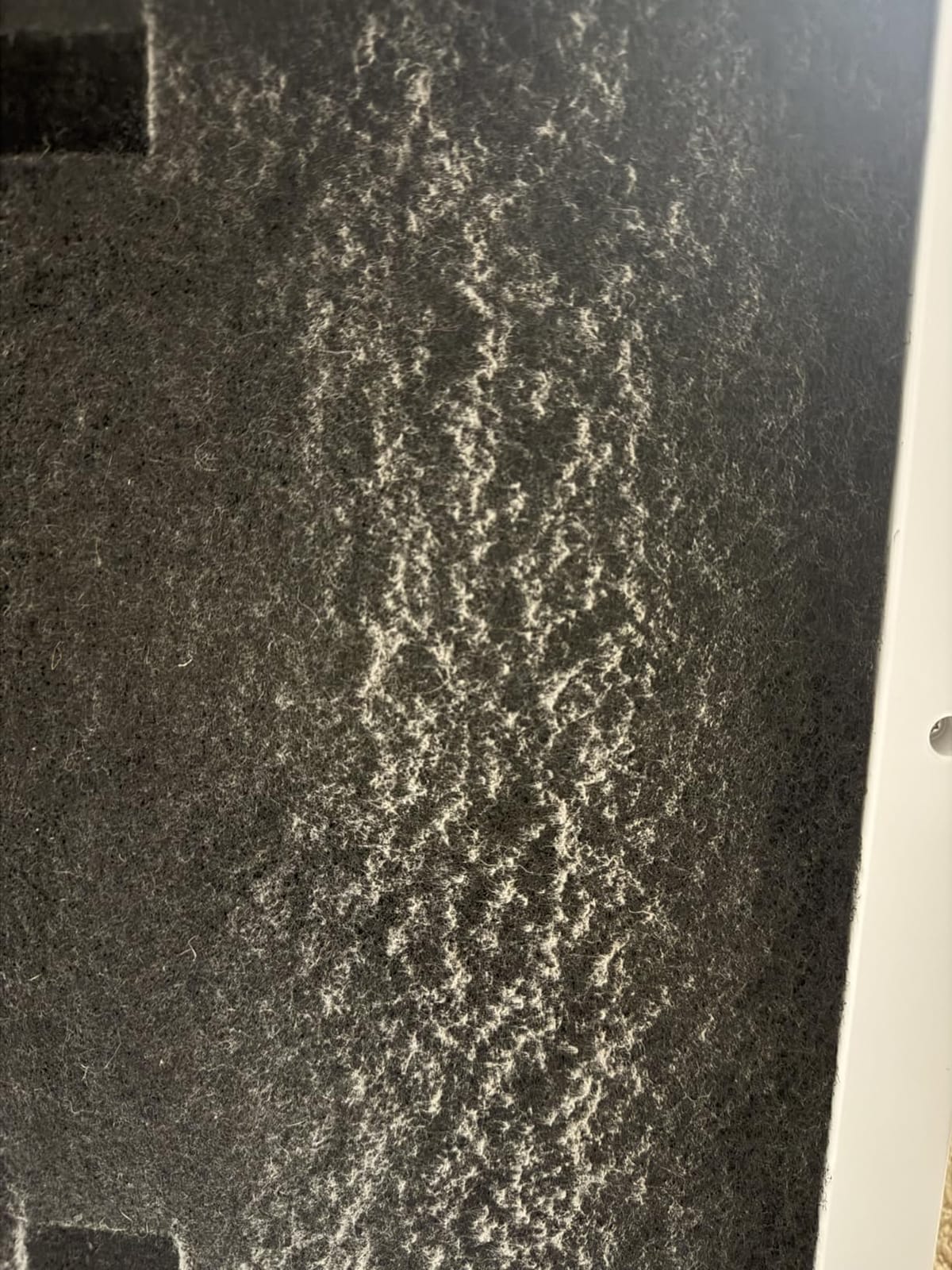
Wipe the housing down. Choosing a model with a wipeable plastic shell and a slide-out pre-filter, like the Coway Mighty2, makes a real difference when spores land on the cabinet. A wood-grain finish traps them in the grain and is a poor choice in a room you are trying to clean.
Our broader guide to air purifier picks covers the general buying criteria, and if you want automation specifically, the smart air purifier roundup covers the app-control models in more depth.
Frequently Asked Questions
Which air purifier is best for removing mold spores?
For most homes, the Coway Airmega Mighty2 is the strongest all-round choice because it combines IEST-certified HEPA with an active carbon layer, 242 CFM of dust CADR and a live particle display. In a small bedroom the Levoit Core 300-P is quieter and simpler, and for a large open space the Medify MA-112 moves by far the most air. Pair whichever you choose with humidity control below 50% RH.
Do air purifiers capture mold spores?
Yes. Mold spores are roughly 2 to 5 microns across, and every True HEPA filter in this roundup is rated to capture particles between 0.1 and 0.3 microns, so spores are trapped on contact as air passes through the media. A carbon layer handles the musty odor that comes with damp conditions. What no purifier can do is remove the moisture source feeding the colony.
What is the best way to kill mold spores in the air?
Three steps. First, stop the source by fixing the leak or removing the wet material. Second, hold relative humidity under 50% with a dehumidifier or HVAC dehumidification. Third, run a high-airflow purifier on continuous medium or high speed so the room reaches four to six air changes per hour. UV-C lamps add a final layer by inactivating what collects on the filter.
Do ionizers in air purifiers make mold worse?
We would not run one in a mold situation. Ionizer modes often drop the fan to a lower speed to generate ions, which cuts the real air changes per hour the room receives, and that is the variable that actually clears spores. Ionization can also produce ozone as a byproduct, which irritates airways in the people most likely to need a purifier. Choose a Zero Ozone Verified unit instead.
Can a moldy basement affect upstairs?
Yes, and it regularly does. Spores become airborne whenever the mold is disturbed, and warm air rises, so a basement problem often shows up as musty upstairs bedrooms, and particles travel with the HVAC system through ductwork. That is why r/HomeImprovement threads about upstairs symptoms almost always trace back downstairs, and why whole-home units or multiple smaller units placed per floor work better than one central machine.
What is the 2/3 rule for air purifiers?
It is a placement heuristic rather than a spec: aim for two to three times the filter’s rated air changes per hour in a heavily affected room, or more practically, keep roughly two to three units running in the space rather than one at maximum. Mold duty is continuous duty, so a single quiet unit rarely delivers the air changes its headline coverage implies.
Do air purifiers remove mycotoxins?
Partly, and it is worth being precise. Mycotoxins are the chemical compounds mold releases, and they can become aerosolized alongside spores. Activated carbon adsorbs a meaningful share of VOCs and odor compounds, and HEPA filtration removes spores and any particles they are attached to, but neither stage neutralizes toxins already settled on surfaces or absorbed into porous materials. Source removal is the only complete answer.
Is there a downside to using an air purifier?
Several. Filter replacement is a recurring cost that most buyers underestimate, and in a humid room the rated interval shortens. Higher fan speeds are loud enough to disturb sleep, so overnight runs mean fewer air changes than the headline figure. Ozone-emitting ionizers can irritate airways. And a plastic cabinet sitting in a damp room will collect spores on its surfaces unless you wipe it down.
Final Verdict: Pair Every Purifier With Humidity Control
After working through all ten, the picture is consistent. Any of these units will capture airborne mold spores effectively, because 2 to 5 micron particles fall far inside the range every one of these filters is rated for. The differences that matter are airflow, carbon bed sizing for odor, noise for overnight running and how much care the unit needs in a damp room.
Our best air purifiers for mold spores pick is the Coway Airmega Mighty2 for the balance of certified HEPA, carbon, coverage and a live particle readout. The Levoit Core 300-P is the quiet bedroom choice, the Winix 5510 is the one that manages itself, and the Medify MA-112 moves more air than anything else we looked at.
None of them fix the water. Buy the purifier, run the dehumidifier, keep relative humidity under 50% and the air problem stays solved once the moisture does. Turn the ionizer off, replace filters sooner in damp rooms, and do not expect a purifier to reach mold growing inside a wall cavity, behind a closed duct register or deep in a soaked subfloor.
We may earn a commission when you buy through links on this page, which does not change how we rank these units. Our wider air purifier buying guide covers the specs that do not change with the mold question.