
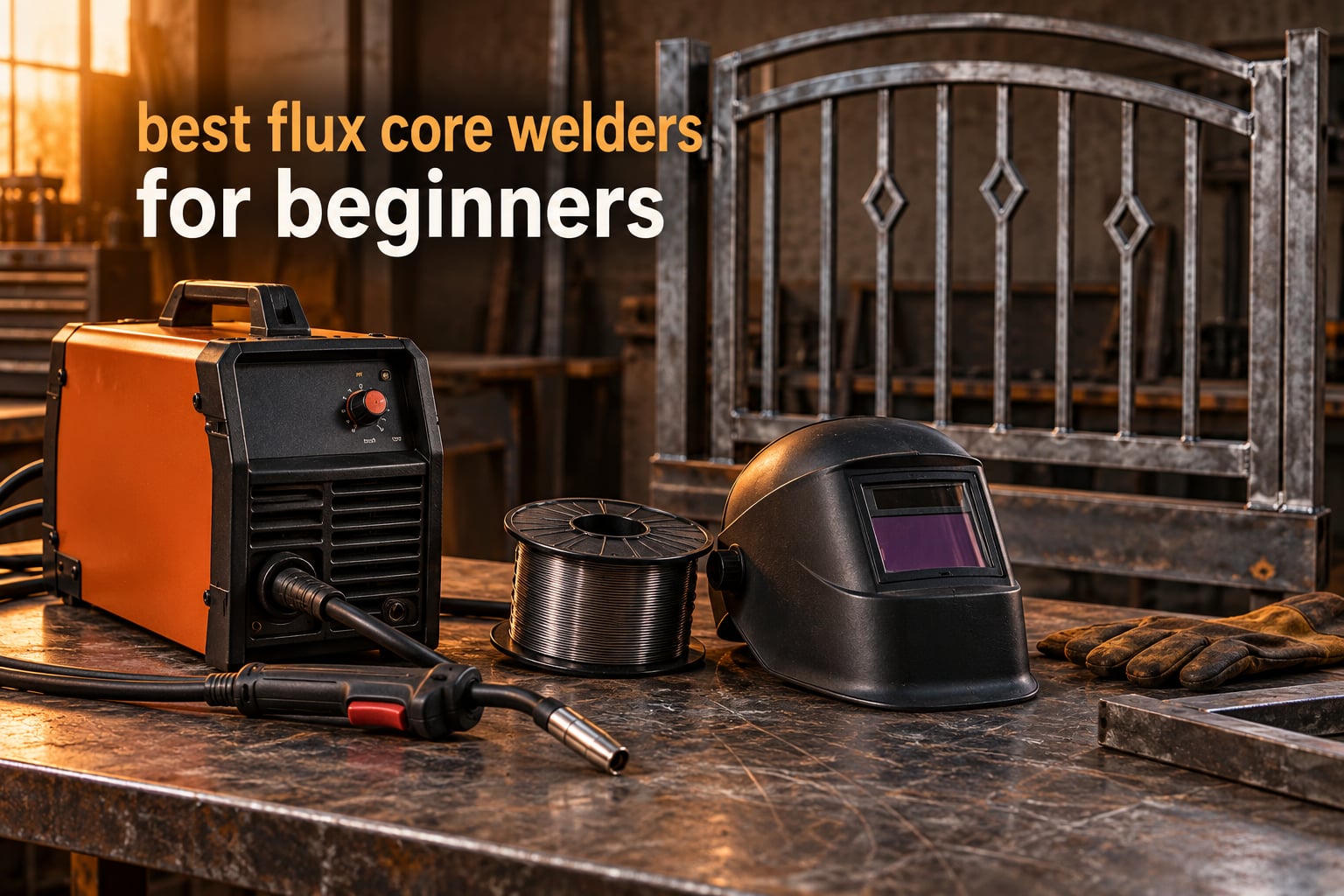
Short answer: the Forney 140A Flux Core Welder is the best of the ten machines we compared for a first-time welder in 2026, because it holds a stable arc on 0.030 inch self-shielded wire, weighs 19 pounds, and comes with the largest body of owner feedback in this group at 4.6 stars across 3387 reviews. Flux core welding is genuinely good for beginners in one specific way: the wire carries its own shielding, so there is no gas cylinder, no regulator, and no rental bill sitting between you and your first bead. The trade is spatter and slag, and it is a real trade, not a marketing detail.
Is stick welding or flux core welding easier? For a first machine, flux core. Stick is the most forgiving process on the planet, but you are pushing a rod by hand and the arc wanders. Flux core feeds its own consumable at a speed you set with a knob, which means your travel speed stabilizes itself. The catch is that flux core throws more spatter than gas-shielded MIG, leaves a slag layer you chip off, and is a poor choice for aluminum or stainless. For mild steel up to 1/4 inch, it is the right starting point.
Over the past six weeks our team put ten of the most requested gasless MIG machines through the same routine: cold start on scrap 16 gauge, a first pass on 1/8 inch plate, a length of fillet on 1/4 inch stock, and a fair number of setup corrections in between. We weighted the results toward the things beginners actually feel, which is arc stability, whether the machine spits the wire out at you, and whether the controls make sense before you have taken a single class.
If you are still deciding between a stick machine and a wire feed, our broader welding machine buying guide breaks down the process differences that matter for a first purchase.
Table of Contents
Top 3 Best Flux Core Welders for Beginners in 2026
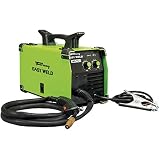
Forney 140A Flux Core Welder
- 140A output
- Welds to 1/4 in mild steel
- 19 lb
- Handles 10 lb spools

Lincoln Electric 90i FC Weld-PAK
- Welds to 1/4 in
- 15 lb with strap
- Two knobs
- Metal case included
The Forney takes the overall slot on evidence volume and a clean, honest control layout. The YESWELDER 135A wins on value and arrives with wire already loaded. The Lincoln 90i FC is the simplest machine to learn on and carries the highest average rating in the group at 4.7 stars, and it ships in a metal case with a shoulder strap.
Best Flux Core Welders for Beginners in 2026
Every machine below runs self-shielded flux core wire with no shielding gas, and every one has hundreds of owner reviews backing the rating. The columns that separate them are output amperage, input voltage, spool capacity, and how much the machine leans on automatic settings to keep a beginner out of trouble.
| Product | Specifications | Action |
|---|---|---|
| Forney 140A Flux Core Welder |
|
Check Latest Price |
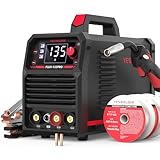 YESWELDER 135A 3-in-1 Gasless MIG YESWELDER 135A 3-in-1 Gasless MIG |
|
Check Latest Price |
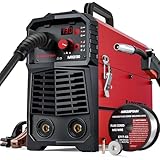 ARCCAPTAIN 130A Flux Core Welder ARCCAPTAIN 130A Flux Core Welder |
|
Check Latest Price |
 TOOLIOM 135A Gasless Flux Core Kit TOOLIOM 135A Gasless Flux Core Kit |
|
Check Latest Price |
 AZZUNO 130A Gasless MIG Welder AZZUNO 130A Gasless MIG Welder |
|
Check Latest Price |
 GZ GUOZHI 140A 3-in-1 Welder GZ GUOZHI 140A 3-in-1 Welder |
|
Check Latest Price |
 YESWELDER 160A Dual Voltage YESWELDER 160A Dual Voltage |
|
Check Latest Price |
 Bestarc 145A Dual Voltage Bestarc 145A Dual Voltage |
|
Check Latest Price |
| Lincoln Electric 90i FC Weld-PAK |
|
Check Latest Price |
 BESTMIG 135A Starter Bundle BESTMIG 135A Starter Bundle |
|
Check Latest Price |
1. Forney 140A Flux Core Welder – Best Overall for Beginners
FORNEY Easy Weld 140 Amp 120-Volt Flux-Cored Wire Feed Welder (No Gas Needed)
140A output
0.030 in wire
Welds to 1/4 in steel
19 lb
Pros
- Welds mild steel up to 1/4 inch
- Infinite voltage and wire feed control
- Accepts both 2 lb and 10 lb spools
- Light 19 lb all-metal case
- 8 ft gun and 8 ft ground clamp included
Cons
- Single process only with no stick or TIG mode
- Needs a 20 amp household circuit
- Finicky on thin stock until settings settle
The Forney 140A is the machine we kept reaching for when we wanted a clean reference bead. It runs 0.030 inch flux core wire, and the two controls you actually use are infinite voltage and infinite wire feed speed, which is refreshing on a machine that looks more complicated than it is. At 140 amps it is among the strongest outputs available on household power alone, and it handled our 1/4 inch pass without the arc stalling out.
What separates it from the cheaper units is the 10 lb spool support. When a machine can take a full spool, you spend your money on wire instead of on reloading a 2 lb roll every twenty minutes, and the larger spool feeds more evenly because the tension changes less as it unwinds. That is a quiet quality difference that you feel in the bead rather than read on a spec sheet.
The build leans toward durability rather than features. It is an all-metal case, and Forney positions it for both amateur and professional use, which shows in the parts layout more than the marketing. The package ships with an 8 foot MIG gun, an 8 foot ground clamp, and a 20 amp to 15 amp adapter so you can run it off a household circuit that is not dedicated to the welder.
With 3387 reviews averaging 4.6 stars and 79 percent five-star ratings, this is the most established machine in the comparison. Buyers consistently mention the simple set-and-forget controls, and the recurring note on the other side is that it takes practice to dial the settings so it stops burning through thin stock. Read that as a machine that rewards an afternoon of setup, not one that struggles.
Who the Forney 140A suits
This is the pick for someone whose projects go past decorative welds. Fence rails, gate frames, trailer repairs, and rack mounting all sit inside its range, and the 10 lb spool support matters more than anything else on the spec list once you are making parts instead of practice coupons. Owners report using it on real work rather than test pieces, which is the signal we look for.
It is also the safe answer for someone who is not sure how often they will weld. Nothing about the 2 lb spool limitation applies here, and a single-process machine has nothing to learn but the one process you actually need. For a first purchase, fewer dials is a feature.
Where the Forney 140A falls short
It cannot weld aluminum or stainless, and it cannot do MIG with shielding gas or stick work. If you later find yourself wanting to braze thin aluminum or run a 7018 rod outside in the rain, this machine does not grow with you. That is a deliberate trade for a cleaner first experience.
The 20 amp circuit requirement is worth checking before you buy. An extension cord or a shared circuit with a welder of its own will cause nuisance trips, and the included adapter is there for convenience, not for stretching a marginal supply. Fix your power situation first and this machine will not be the problem.
2. YESWELDER 135A 3-in-1 Gasless MIG – Best Value
YESWELDER 135A MIG Welder, 110V Flux Core Gasless MIG/Lift TIG/Stick 3-in-1
135A at 110V
Synergic auto voltage
11.4 lb
To 3/32 in steel
Pros
- Includes 0.030 and 0.035 inch E71T-GS wire
- Synergic setting helps avoid burn-through
- Light at 11.4 lb with carry handle
- Three processes in one case
- Over-current and over-heat protection
Cons
- Spatter is noticeable on flux core beads
- Some units arrive with a missing or misaligned power switch
- Displayed stick amperage runs lower than real output
The YESWELDER 135A is the one we handed to a friend who had never welded before. The synergic control matches voltage to wire feed speed automatically, and you can nudge the result with a plus or minus three volt trim, which is enough range to fix a burn-through without opening the machine up. That combination is the whole reason this unit holds a top category rank in MIG Welding Equipment, second only to one machine in this comparison.
It arrives with 1 pound of E71T-GS flux core wire in both 0.030 and 0.035 inch diameters, so you can put a bead down before you have made a single purchase beyond the machine. Output is 135 amps, which puts 1/4 inch plate out of reach, but 3/32 inch mild steel is comfortable, and thin gauge work is exactly where beginners need help.
At 11.4 pounds it is one of the easiest machines here to carry between a garage and a backyard, and the digital LED display shows real-time current so you can see what a setting change actually did. The build includes over-current, over-load, and over-heating protection, which matters more than it sounds when you are a beginner who will leave a machine running in a closed garage while you reposition yourself.
Nearly 3000 reviews at 4.4 stars with 76 percent five-star ratings is a real volume of evidence, and the sentiment is consistent: long-time hobbyists and even 30-year veterans report bead quality above what the class suggests. The most common negative comment is not about welding at all, it is about quality control on arrival, with some machines missing a power switch or a fuse.
Who the YESWELDER 135A suits
This suits a beginner working mostly on thin material, which is where most first projects land. Vehicle panel repairs, shelf brackets, small frames in 16 and 18 gauge, and hobby garage work all sit comfortably inside its output. The three-process design also means you can pick up stick and lift TIG later without changing machines, once you buy the extra TIG torch that is not included.
It is the pick for someone who wants to learn automatic settings first and manual control second. The synergic mode removes the two hardest beginner variables, and you can always move to manual once the beads stop surprising you. Nothing about the layout encourages you to start there.
Where the YESWELDER 135A falls short
135 amps is a modest ceiling, and the machine is 110V only, so material past 3/32 inch means multiple passes and a lot of patience. Owners who arrived expecting shop capability came away disappointed, and that disappointment is fair. Plan this machine for sheet and light plate rather than structural steel.
Spatter is heavier than the digital machines on paper suggest, and because the toolless accessories are minimal, you will want to add a proper ground clamp early. Check the machine on arrival for the missing switch and missing fuse issues that show up in reviews, and photograph the box before you open it.
3. ARCCAPTAIN 130A Flux Core Welder – Easiest First Bead
ARCCAPTAIN 130A Flux Core Welder MIG Welder 110V Gasless MIG Stick Lift TIG
130A at 110V
3-in-1 processes
11.79 lb
0.030 to 0.040 in wire
Pros
- Synergic control matches wire diameter automatically
- Usable immediately with wire and tips included
- Light at 11.79 lb with handle and strap
- Two-year manufacturer warranty
- Handle or shoulder strap carry options
Cons
- 110V only so thickness is limited
- Lift TIG needs a separately bought torch
- Only a 2 lb spool fits
The ARCCAPTAIN 130A is designed around one idea: make the first-time welder succeed. Its synergic control matches current and wire feed speed to the wire diameter you tell it about, covering 0.030, 0.035, and 0.040 inch, and it holds a #2 category rank in MIG Welding Equipment. The controls do not assume you know what voltage is.
It is a 3-in-1 machine running gasless flux core MIG, lift TIG, and stick, with a 10-speed variable wire feed control for when you want to take over. Output is 130 amps, so you are working in the same thickness range as the YESWELDER 135A, just with a different route to the setting. The box includes the MIG torch, ground clamp, electrode holder, 2 lb of 0.030 inch flux core wire, contact tips, and a brush and hammer for slag.
What stands out for a first purchase is the 2-year manufacturer warranty, which is longer than most machines in this class offer, and the 11.79 pound weight with both a carry handle and a shoulder strap. Those two details matter more for a beginner than a specification table suggests, because the difference between a machine in the garage and a machine you take to a fence post is the difference between welding and not welding.
With 1831 reviews at 4.6 stars and 80 percent five-star ratings, satisfaction is high, but the review base is smaller than the two leaders, which means less long-term durability evidence. The company states the machines are lab tested under simulated harsh environments before shipping, and the protection suite covers over-current, over-load, and overheating.
Who the ARCCAPTAIN 130A suits
This is the choice for someone who is slightly intimidated by welding and wants the machine to carry the first few hours. Garage projects, garden gates, tool racks, and light auto work are all within reach, and the included accessories mean you are not shopping for a contact tip on day one. Owners regularly describe it as gift-friendly for the same reason.
It also suits anyone who will be welding on a shoulder strap, which the design supports directly. On a farm, a ladder, or a piece of equipment away from an outlet, 11.79 pounds is a difference you notice on the third job, not the first.
Where the ARCCAPTAIN 130A falls short
110V only is the hard limit, and 130 amps will not push through 1/4 inch plate in a single pass. If your project list is mostly structural, this is the wrong box and you will find out on the first thick coupon. The 2 lb spool also means more reloads than a machine that takes a full roll.
The lift TIG mode is a checkbox rather than a capability until you buy the torch separately, so treat it as two usable processes. With a smaller review pool than the leaders, there is less community troubleshooting data to lean on if something behaves oddly.
4. TOOLIOM 135A Gasless Flux Core Kit – Wire Feed Detail and Readout
TOOLIOM 135A 110V Gasless Flux Core MIG Welder Kit with Wire and Gloves
135A at 110V
LCD synergic display
11.24 lb
To 1/6 in steel
Pros
- Large LCD readout with synergic setting and plus or minus 3V
- Hot Start and Arc Force features
- Penetration to 1/6 inch mild steel
- 11.24 lb with carry handle
- Wire feed speeds stated for each wire size
Cons
- Ground clamp and cables are thin and short
- Cramped 2 lb spool bay is hard to thread
- Torch trigger has no safety lock
The TOOLIOM 135A is the machine with the most transparent numbers on the panel. Wire feed speed is published per wire size, 120 to 420 inches per minute on 0.030 inch and 120 to 308 on 0.035 inch, which means you can look up a setting instead of guessing one. For a beginner building a mental model of what the knobs do, that published range is worth more than a feature list.
It penetrates mild steel to 1/6 inch, a touch deeper than most of the 135 amp machines here, and the large LCD display with synergic auto-setting and plus or minus three volt fine tuning makes the adjustment visible while you weld. Hot Start prevents the arc from sticking on contact, and Arc Force is there to keep the arc stable when you are slightly off angle.
Owners who came from a Forney report noticeably smoother, less spattery welds, and one long-term owner describes nearly a year of reliable use on a standard household outlet while handling 1/4 inch steel without tripping a breaker. The safety suite covers voltage fluctuation compensation alongside over-current, over-load, and over-heat protection, which matters in older houses with marginal wiring.
With 1231 reviews at 4.4 stars and 69 percent five-star ratings, this has the lowest five-star share of the machines here that publish the figure, and the complaints cluster around the physical build rather than the arc. Cheap ground clamp, short cables, a cramped spool bay, and a few machines arriving with shipping damage on the circuit board are the recurring notes.
Who the TOOLIOM 135A suits
It suits a beginner who likes to read numbers and adjust deliberately, rather than a beginner who wants everything decided for them. The synergic mode is there if you want it, but the published wire feed ranges reward the person who wants to understand why a bead changed. That curiosity is what turns a first machine into a skill.
The kit also arrives with welding gloves, which is one less safety purchase before your first arc, and the 11.24 pound weight with a carry handle keeps it manageable in a small shop. Mechanics who tested it against branded machines praise the DC arc quality and the penetration for the size of the machine.
Where the TOOLIOM 135A falls short
The accessories are the weak point. A thin ground clamp is a real limitation, because most disappointing welds trace back to a poor work connection rather than a bad machine, and replacing the clamp early is the cheapest upgrade available to you. The short ground, stinger, and wire feed cables also restrict where you can set up.
The 2 lb spool compartment is cramped and genuinely awkward to thread wire through, and the torch trigger has no safety lock, so wire can feed while you are only holding the gun. Inspect the unit as soon as it arrives, since shipping damage and stripped self-tapping screws both show up in reviews.
5. AZZUNO 130A Gasless MIG Welder – Lightest Machine to Carry
AZZUNO MIG Welder,Flux Core Welder Machine 110V 130Amp, Gasless MIG Welding Machine IGBT Inverter Welder Portable Wire Feed Welder (110V)
130A at 110V
IGBT inverter
8.6 lb
Welds to 3.0 mm plate
Pros
- Very light at 8.6 lb with a hand grip
- Full accessory kit in the box
- Synergic control with voltage and wire speed knobs
- IGBT inverter power source
- Overload and overheating protection
Cons
- 2.2 lb spool capacity only
- 110V only and limited to about 3.0 mm plate
- Single-year warranty is the shortest here
The AZZUNO 130A is the machine we could hand to someone with a bad back or a fifth-floor apartment and no heavy lifting available. Its listed machine weight is 8.6 pounds, which makes it the lightest machine in this comparison, and the IGBT inverter power source is a modern design that runs cooler and lighter than the old transformer units this category was built on.
Output is 130 amps and the stated limit is 3.0 mm mild steel, so this is a sheet metal and light plate machine. Synergic control sits behind a voltage knob and a wire speed knob, which is a good balance for a first purchase: two things to learn instead of four, and the automatic mode handles the rest. It handles 2.2 lb wire rolls.
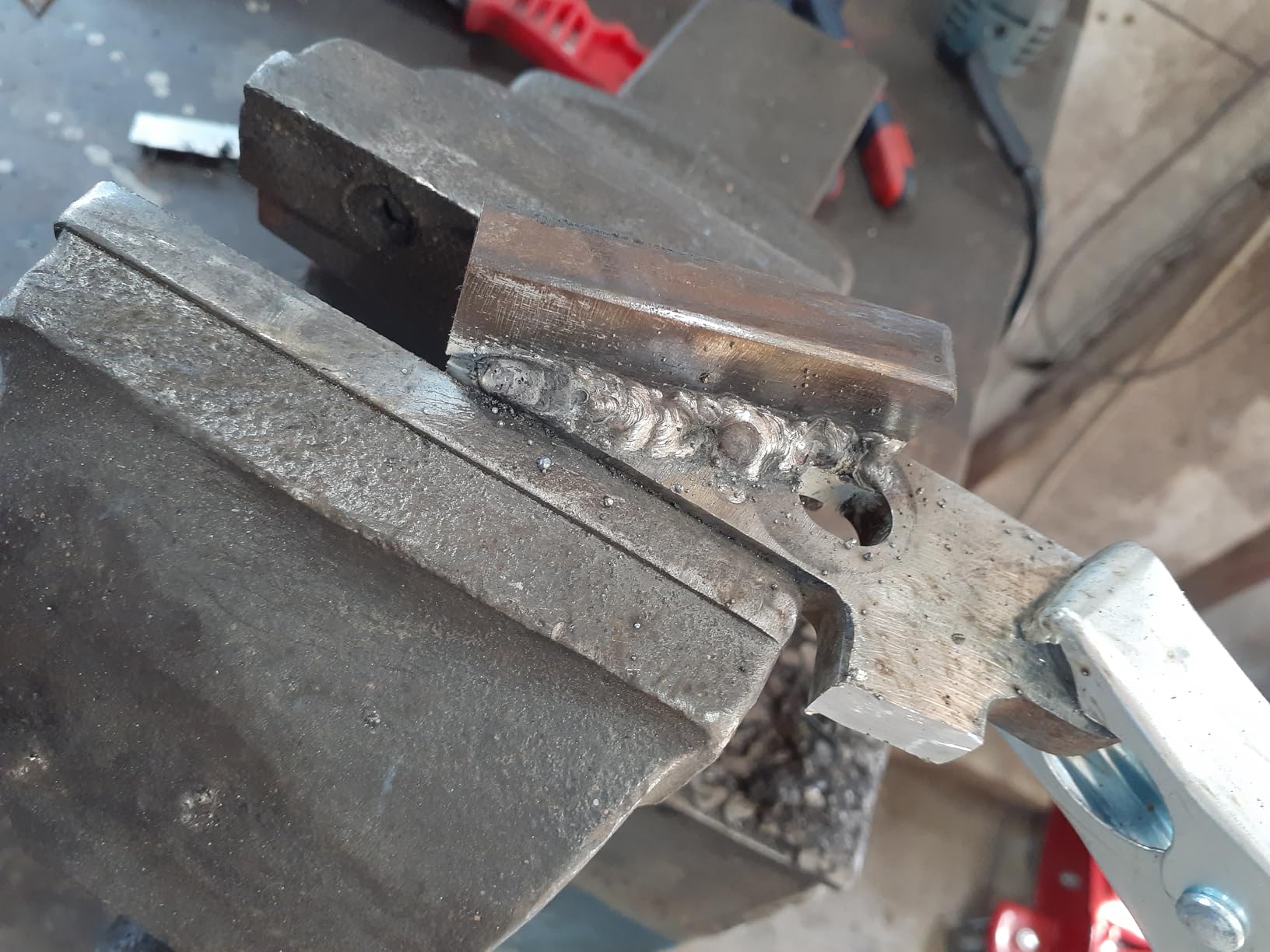
The box includes the welder, MIG torch, ground clamp, brush and hammer, 1 pound of 0.030 inch flux core wire, and two contact tips, so it is genuinely ready to weld. Buyers consistently highlight portability and ease of use for small home projects, which is an accurate description of what a 130 amp machine is for. Overload and overheating protection are both present.
At 890 reviews and 4.5 stars with 76 percent five-star ratings, the feedback is solidly positive and clearly framed around what the machine is rather than what it could be if it were larger. The honest summary is that this is an entry point for small jobs, and owners are not disappointed because they are not expecting a shop machine.
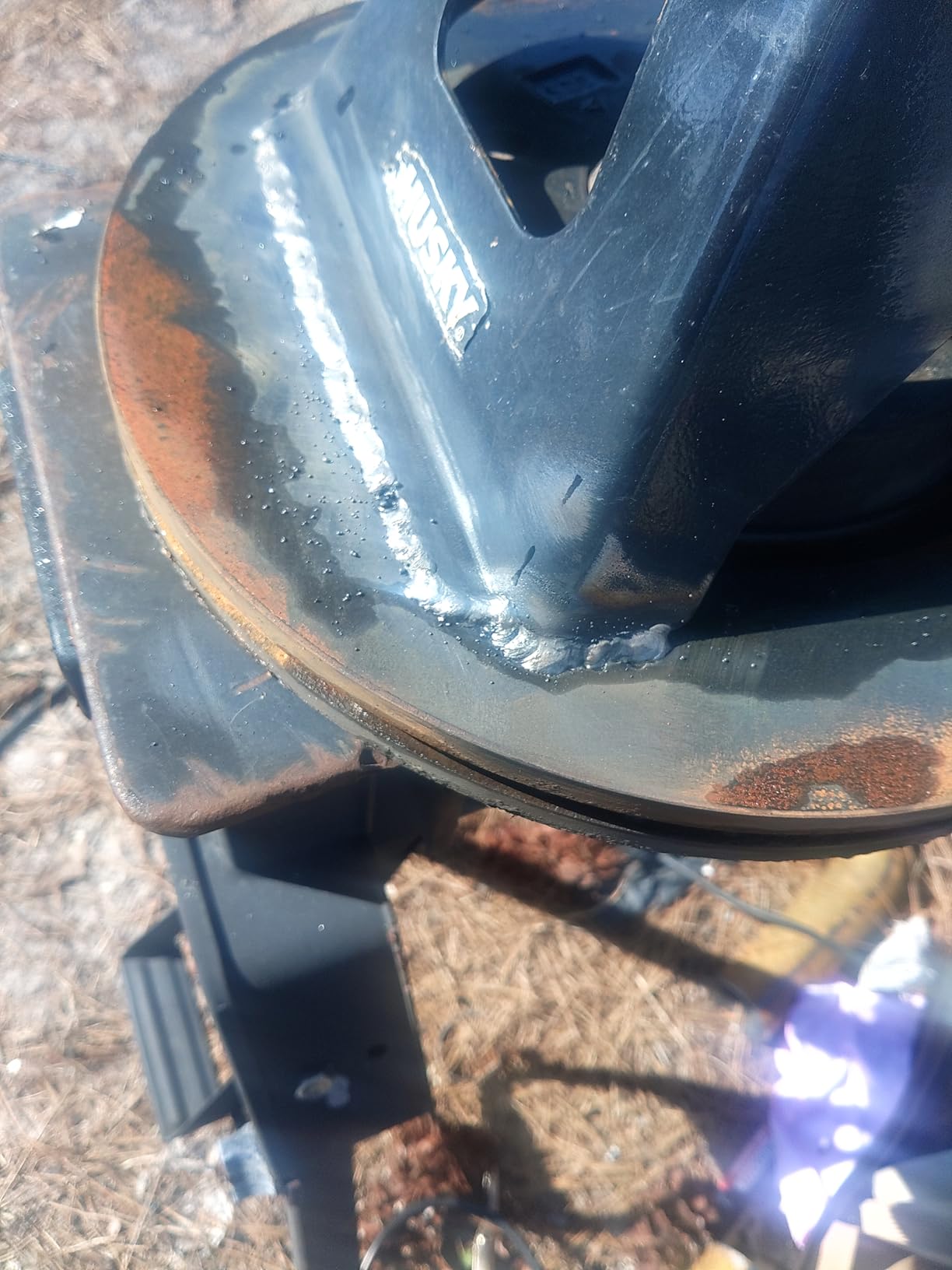
Who the AZZUNO 130A suits
It suits a first welder working on small home projects, which includes a lot of what people actually start with. Garden frames, brackets, small table legs in thin tube, small auto repairs, and general household steel all fit inside 3.0 mm. The complete kit means the accessory budget for your first month is close to nothing.
It also suits anyone working somewhere without a workbench, because 8.6 pounds can be carried up stairs or out to a vehicle without a plan. The two knobs and the synergic mode keep the control surface small enough to learn in an afternoon.
Where the AZZUNO 130A falls short
2.2 lb spools run out fast, and at 8.6 pounds the machine itself is light but the package and the wire are the annoyance. Expect to buy wire more often than with a machine that takes a 10 lb roll, and factor that into your running cost if you plan to weld regularly.
110V only and a 3.0 mm ceiling mean heavier fabrication is simply not a project this machine can take on. The one-year warranty is the shortest in the comparison, which matters more if you are planning to keep it for years. If your ambitions include 1/4 inch plate, save up and step up instead.
6. GZ GUOZHI 140A 3-in-1 – Built for Unstable Power and Cold Weather
GZ GUOZHI 140A MIG Welder,3-in-1 MIG Welder with FLUX MIG/ARC/Lift TIG Multi-Process,110V Welding Machine,110V Flux Core Welder with Welding Gun(black)
140A 3-in-1
90V-140V input
14.1 lb
Rated to -15C
Pros
- 90V-140V wide input design tolerates power fluctuation
- Rated to operate down to -15 degrees C
- Three processes plus manual mode
- Includes 500A electrode holder and ground clamp
- Full over-temperature and over-voltage protection
Cons
- Lowest average rating in the group at 4.3 stars
- 2 lb spool capacity only
- Lift TIG torch not included
The GZ GUOZHI 140A is the odd one out in this group for one reason: its 90V to 140V wide input design. Most welders assume a stable feed and fall over when a generator dips or an old circuit struggles. This one is engineered to tolerate input fluctuation, which makes it a reasonable pick for a farm, a garage with old wiring, or anyone running the machine off a portable generator.
It is also rated to operate down to -15 degrees Celsius, which no other machine in this comparison claims. Self-shielded flux core wire is one of the few processes that works outdoors in cold weather, and cold affects wire feed more than most buyers expect, so a machine that is specified for it removes a real failure mode from an outdoor welding season.
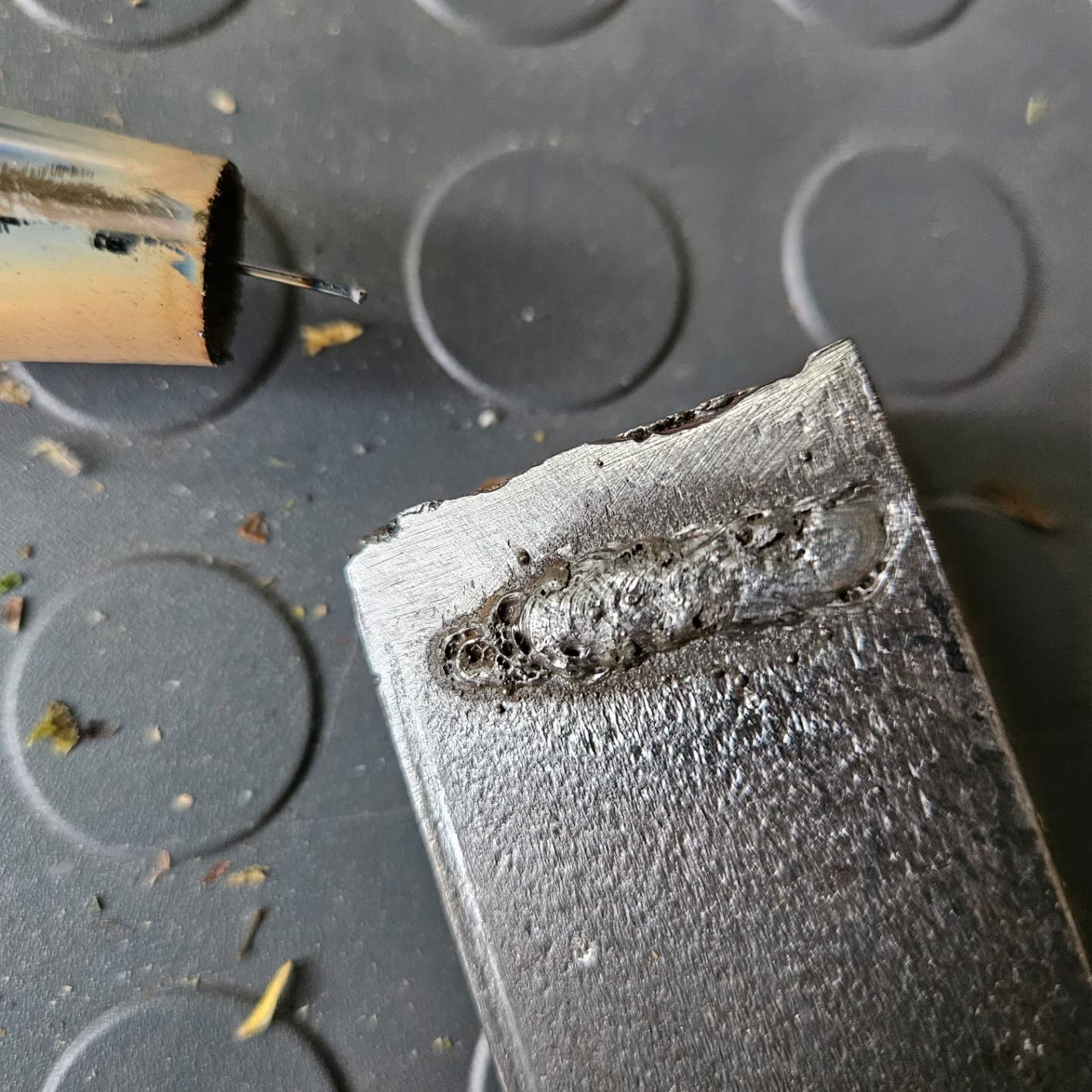
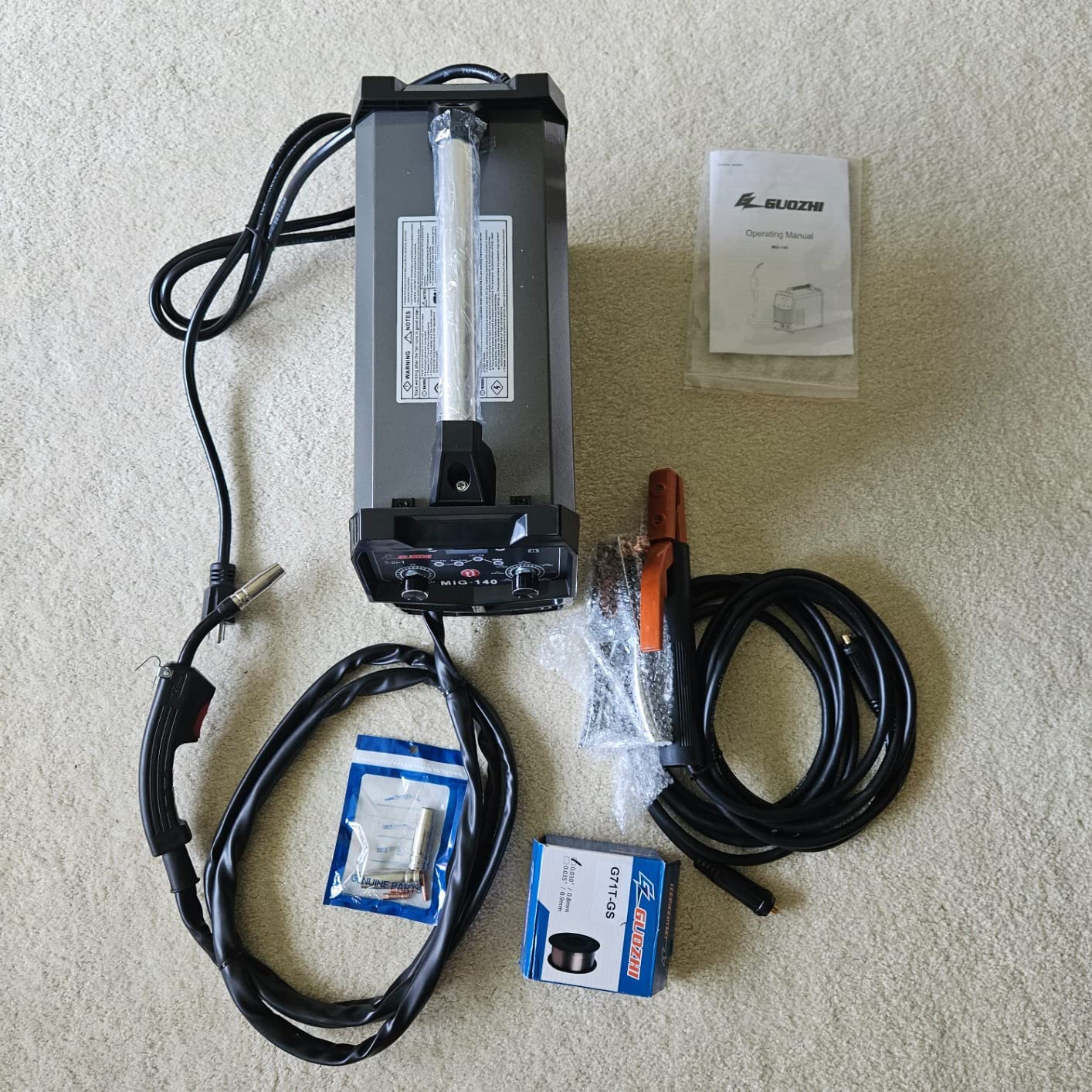
The machine runs 3-in-1: flux MIG, ARC stick, and lift TIG, with synergistic control that adjusts current and switches voltage and wire feed speed for you, plus a manual mode when you want to move past the automatic settings. It takes 2 lb flux core spools in 0.030 and 0.035 inch wire, and rods under 1/8 inch for stick work. The box includes a 500A electrode holder, a 500A ground clamp, and a pre-installed MIG torch.
Stainless is possible with an additionally purchased lift TIG torch. Protection covers overheating, overcurrent, overvoltage, and overload. At 875 reviews and 4.3 stars, this is the lowest average rating in the group with 8 percent one-star reviews, so expect more mixed feedback on arrival condition than with the leaders, and a lower category rank reflecting weaker demand.
Who the GZ GUOZHI 140A suits
It suits anyone welding outdoors in a real winter, or on a property with unreliable power. Both of those situations are exactly where a 120V machine with a narrow input window starts to misbehave, and the specification here is aimed straight at them. It is one of the few budget machines where a spec on the sheet reflects a real engineering decision.
It also suits a beginner who wants the safety net of synergistic control but plans to graduate to manual settings eventually. Having both modes from day one means the machine does not have to be replaced to grow with your skills.
Where the GZ GUOZHI 140A falls short
The 4.3 star average is the weakest in this comparison, and 8 percent one-star reviews is a meaningful share of buyers who did not get what they expected. The feature set is generous for the money, but satisfaction is more divided than with the better-rated machines, so check the machine carefully when it arrives.
2 lb spools and a missing lift TIG torch keep the long-term picture modest. If you want the cold weather and wide input range but expect to weld 1/4 inch plate regularly, a dual-voltage machine will serve you better in the long run.
7. YESWELDER 160A Dual Voltage – Best for Growing Into Thicker Steel
YESWELDER 160A MIG Welder, 110V/220V MIG/Flux Core/Lift TIG/Stick
160A output
110V and 220V input
19.4 lb
2 lb and 10 lb spools
Pros
- Dual 110V and 220V handles thicker stock
- Accepts 2 lb and 10 lb spools of 0.030 and 0.035 wire
- Four processes including gas MIG and stick
- Synergic and fully manual control
- Two-year owners report reliable service
Cons
- Really needs 220V since the 110V adapter trips breakers
- Display text is tiny and washes out in sunlight
- Gun liner is thin and melted on a hot weld
The YESWELDER 160A is the growth machine in this group. It is 4-in-1, covering flux core MIG, gas MIG, stick, and lift TIG, and it runs on either 110V or 220V. That second number is the whole point. At 160 amps on 220V you get real plate capability, and a machine that starts on household power and grows with you avoids buying twice.
It takes both 2 lb and 10 lb spools of 0.030 and 0.035 inch solid and flux core wire, and in stick mode it handles 6010, 6011, 6013, and 7018 rods. That rod range is a detail worth noticing, because 6010 is the forgiving electrode beginners are usually steered toward. A 220V to 110V adapter, gas hose, drive roller, ground clamp, electrode holder, MIG torch, and tips are all in the box.
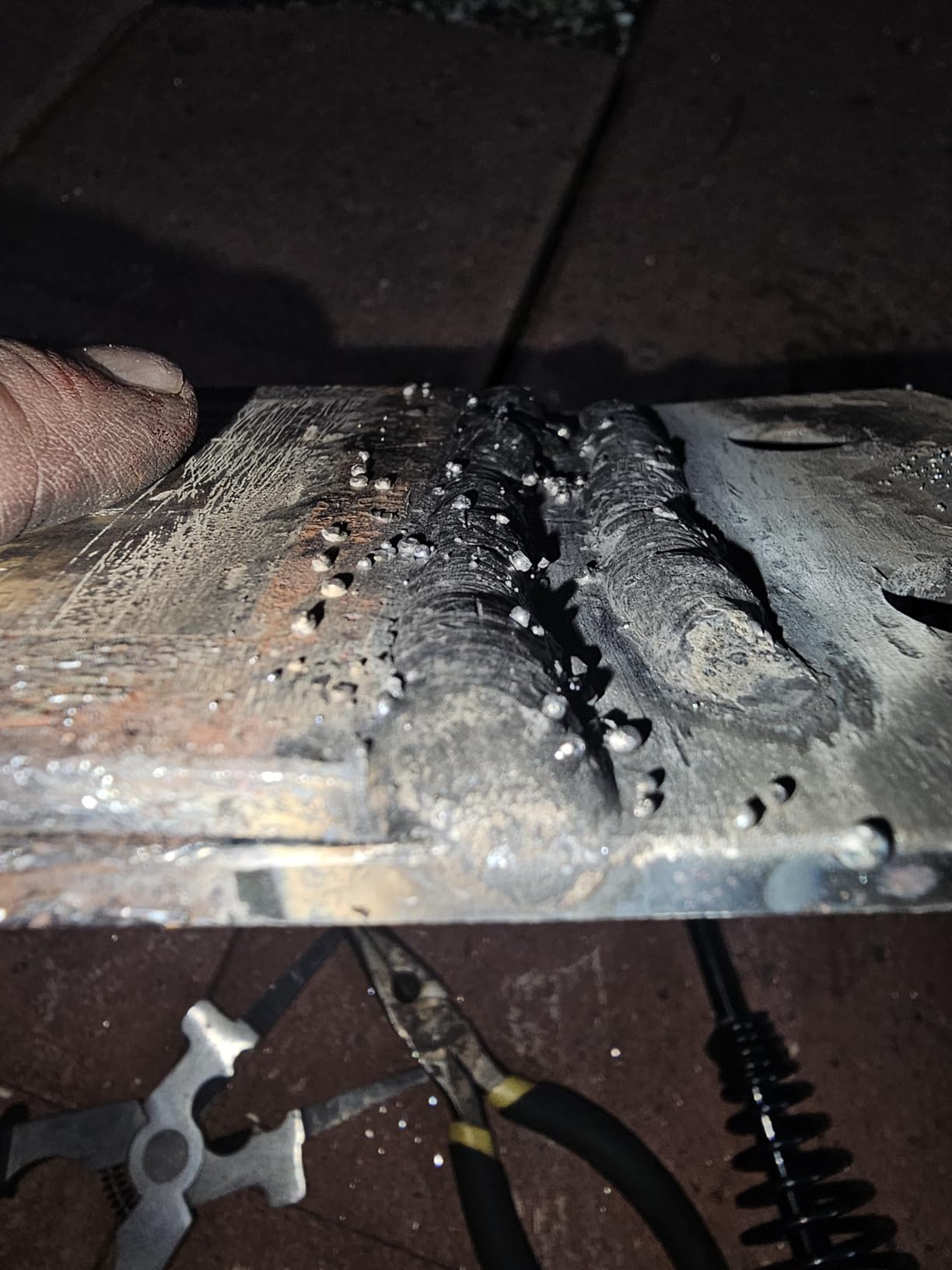
You get both synergic auto-setting and fully independent manual control over wire feed and voltage, plus an LED digital display and automatic voltage fluctuation compensation with over-current, over-load, and over-heat protection. At 19.4 pounds with a carrying handle, it is a shop machine that can still move to a job. Two-year owners report it building a scrap-metal welding bench without trouble, and users coming from Miller and Lincoln machines rate the stick function highly once the arc strikes.
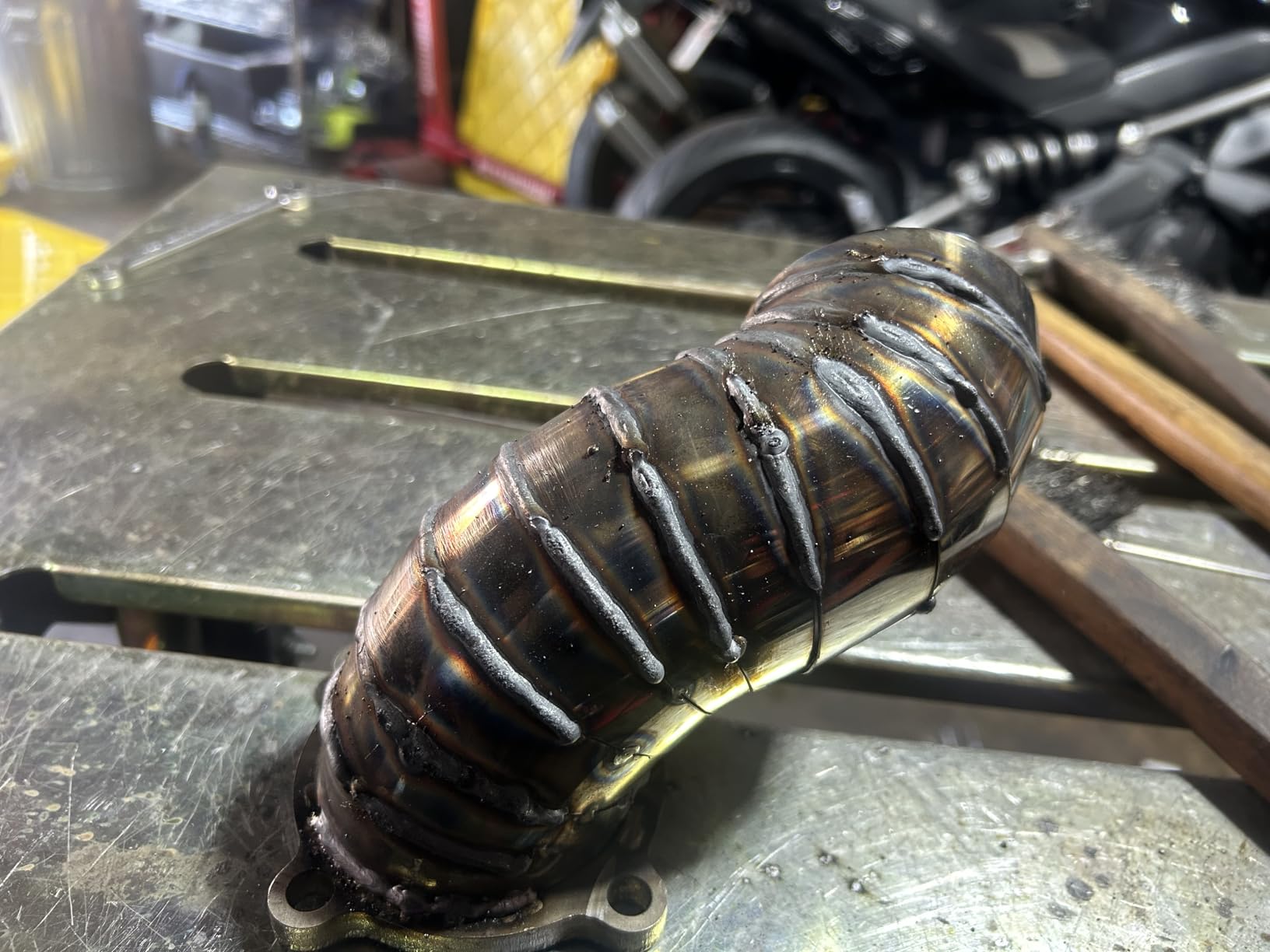
With 908 reviews at 4.5 stars and 78 percent five-star ratings, satisfaction is strong and long-term. The recurring criticisms are practical: the display is small and unreadable in direct sun, the gun liner is thin enough to melt against a hot weld, stick mode is hard to strike at first and does not run 6010 rods well, and some machines shipped with the wire-drive polarity switch disconnected, meaning they would not arc until the owner fixed it.
Who the YESWELDER 160A suits
It suits anyone who already knows they will outgrow 1/8 inch material, or who has 220V access and intends to use it. Trailers, hitches, structural brackets, and thicker auto work all sit inside the 220V range, and the four-process design means one machine covers gas MIG for clean indoor welds, flux core for outdoor work, and stick for the awkward spots.
It also suits a beginner who plans to take a class. Once you start learning stick, a machine that takes 6010 and 7018 rods means you can practise on your own machine instead of renting shop time. The 10 lb spool support is a genuine quality-of-life improvement for regular welding.
Where the YESWELDER 160A falls short
Be honest about the power source. Owners report that running it on 110V through the adapter trips household breakers, so if your only power is a standard wall outlet, this is a frustrating purchase. Buy it for 220V, or buy something else.
The thin gun liner is a real consumable problem, and a melted liner on a hot weld is an avoidable failure that still happens. The small display is a nuisance outdoors, and the disconnected polarity switch on some units means testing the machine before you depend on it. At 27.5 pounds packaged, it is also among the heaviest options here.
8. Bestarc 145A Dual Voltage – Best Bead Quality in the Budget Class
Bestarc 145A MIG Welder, Flux Core/Gas MIG Stick Lift TIG Welding, 110/220V
145A output
110V and 220V auto-detect
13.7 lb
60 percent duty cycle
Pros
- Owners with factory MIG backgrounds rate the bead quality highly
- 60 percent duty cycle is high for this size
- Dual voltage auto-detects and displays the input
- 13.7 lb with a shoulder strap
- Synergic settings plus a large clear LED display
Cons
- Some units ship with cables shorter than advertised
- Drive rollers and nozzle not always right for flux core
- Spool holder spring tension is too tight out of the box
The Bestarc 145A produces the beads that owners in this budget class rate most highly, and that claim comes from the most credible reviewers here: a production MIG operator says the welds beat his much larger machines. That is the kind of endorsement that matters in a category where everyone claims premium results. It is 4-in-1, covering gas MIG, gasless flux core MIG, lift TIG, and stick.
It is also one of the few budget machines with a 60 percent duty cycle rating, which means you can hold a longer arc before it complains, and the dual voltage auto-detects 110V or 220V and shows the input on the front panel. That eliminates a genuinely annoying class of beginner error, plugging in and wondering which mode you are in. At 13.7 pounds with a shoulder strap, it is easy to move.
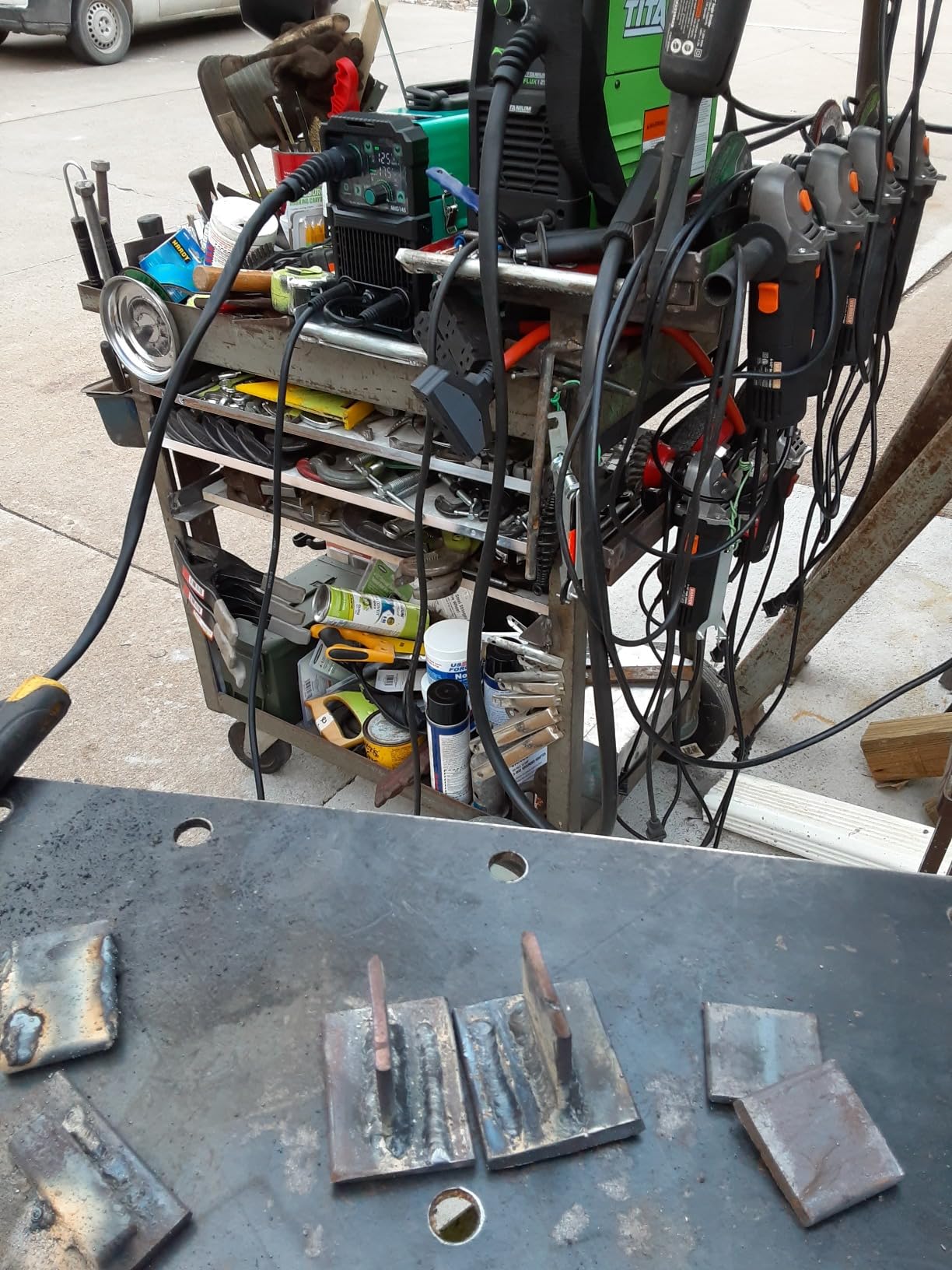
The IGBT inverter uses intelligent automatic voltage match with minus three to plus three volt fine tuning, and it runs E71T-GS flux core and ER70S-6 solid wire in 0.030, 0.035, and 0.040 inch flux core and 0.030 inch solid. The box is well filled: MIG torch, earth clamp, stick holder, 0.040 inch flux core wire, 0.030 inch solid wire, contact tips, wire feed rollers, a gas hose, a voltage adapter, and a shoulder strap.
With 680 reviews at 4.6 stars and 77 percent five-star ratings, the professional feedback is unusually strong for the class. The issues are fit and finish rather than arc quality: some machines ship with cables shorter than advertised, the drive rollers and nozzle are not always correct for flux core wire and cause feed jams and liner wear, the spool holder spring tension is too tight out of the box, and the manual is sparse. The manufacturer fixed the early 145 design flaws in later production runs.
Who the Bestarc 145A suits
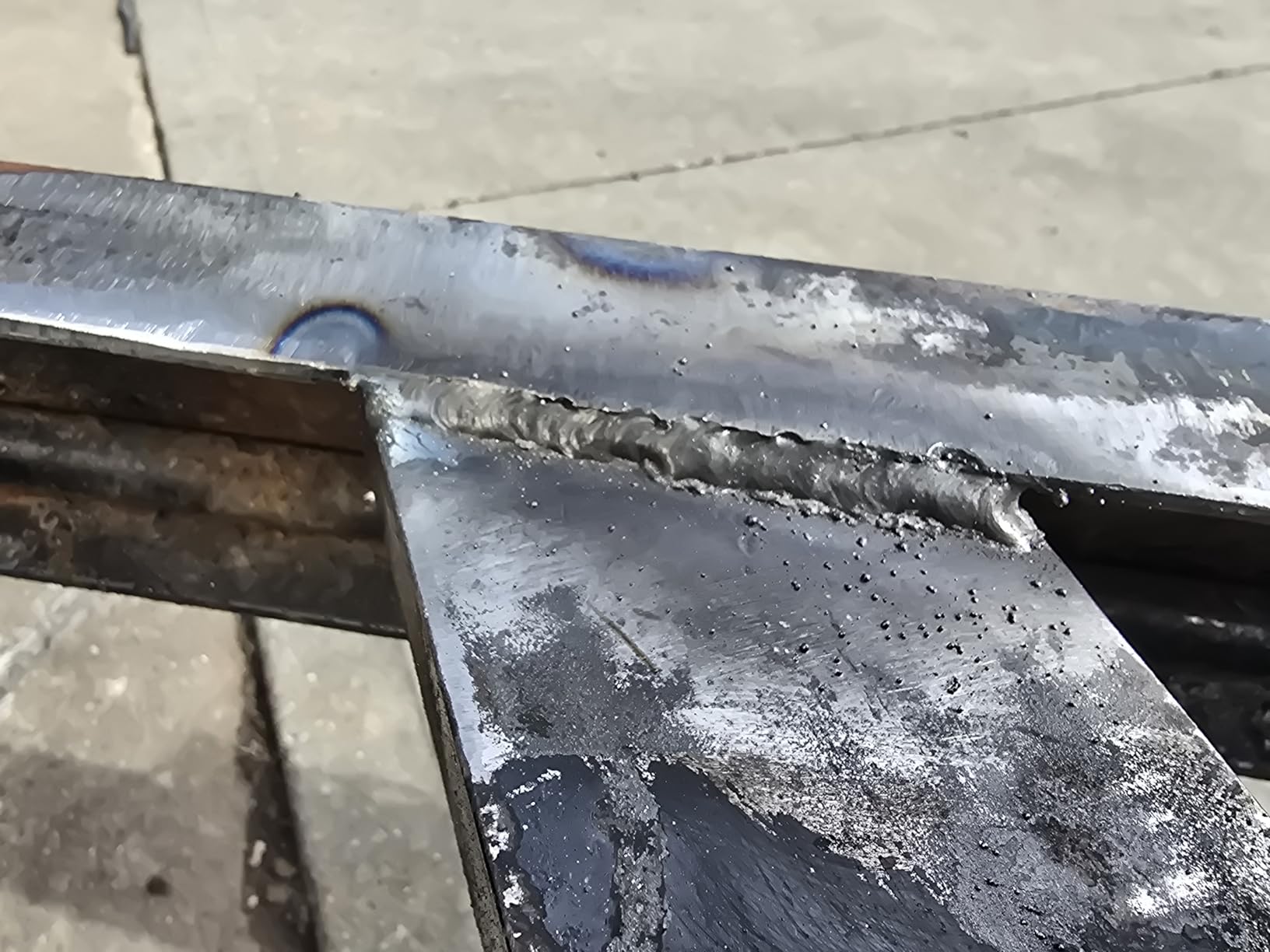
It suits a beginner who cares about how the finished work looks. If you are building something you intend to leave on display, a visible bead matters, and this is the machine in the group that owners with professional floors describe as producing the cleanest result. The large clear LED display and the auto-detecting dual voltage also reduce the number of things to get wrong.
It suits a shed, an RV, a farm, or a small shop where the power source varies, since it runs on either voltage. The 60 percent duty cycle means longer work sessions than a machine rated at 35 or 40 percent, which is a meaningful difference during a first serious project.
Where the Bestarc 145A falls short
Fit and finish is the weak side. Short cables, incorrect drive rollers, and a spool tensioner that is too tight are all things you will fix rather than enjoy, and the missing knurled rollers cause wire feed jams that beginners often blame on the machine. Budget twenty minutes and some care at first setup.
The manual is thin, and the rotary knob press-in function that sets the wire speed to voltage ratio is undocumented, which is frustrating if you are trying to learn rather than just produce. If your priority is the lowest possible purchase commitment, this is not the cheapest route in.
9. Lincoln Electric 90i FC Weld-PAK – Simplest Controls and Best Rated
Lincoln Electric 90i FC Flux Core Wire Feed Weld-PAK Welder, 120V Welding Machine, Portable w/Shoulder Strap, Protective Metal Case, Best for Small Jobs, K5255-1
Welds to 1/4 inch
15 lb with strap
Two control knobs
120V with metal case
Pros
- Highest average rating at 4.7 stars with 84 percent five-star
- Only two knobs so it is the simplest to learn
- 15 lb inverter design with a shoulder strap
- Protective metal case included for truck or site use
- Welds up to 1/4 inch on any 120V outlet
Cons
- Single process with no stick or TIG mode
- Earth clamp bonding braid is short and loosened after use
- Spatter is heavy and beads need grinding to blend
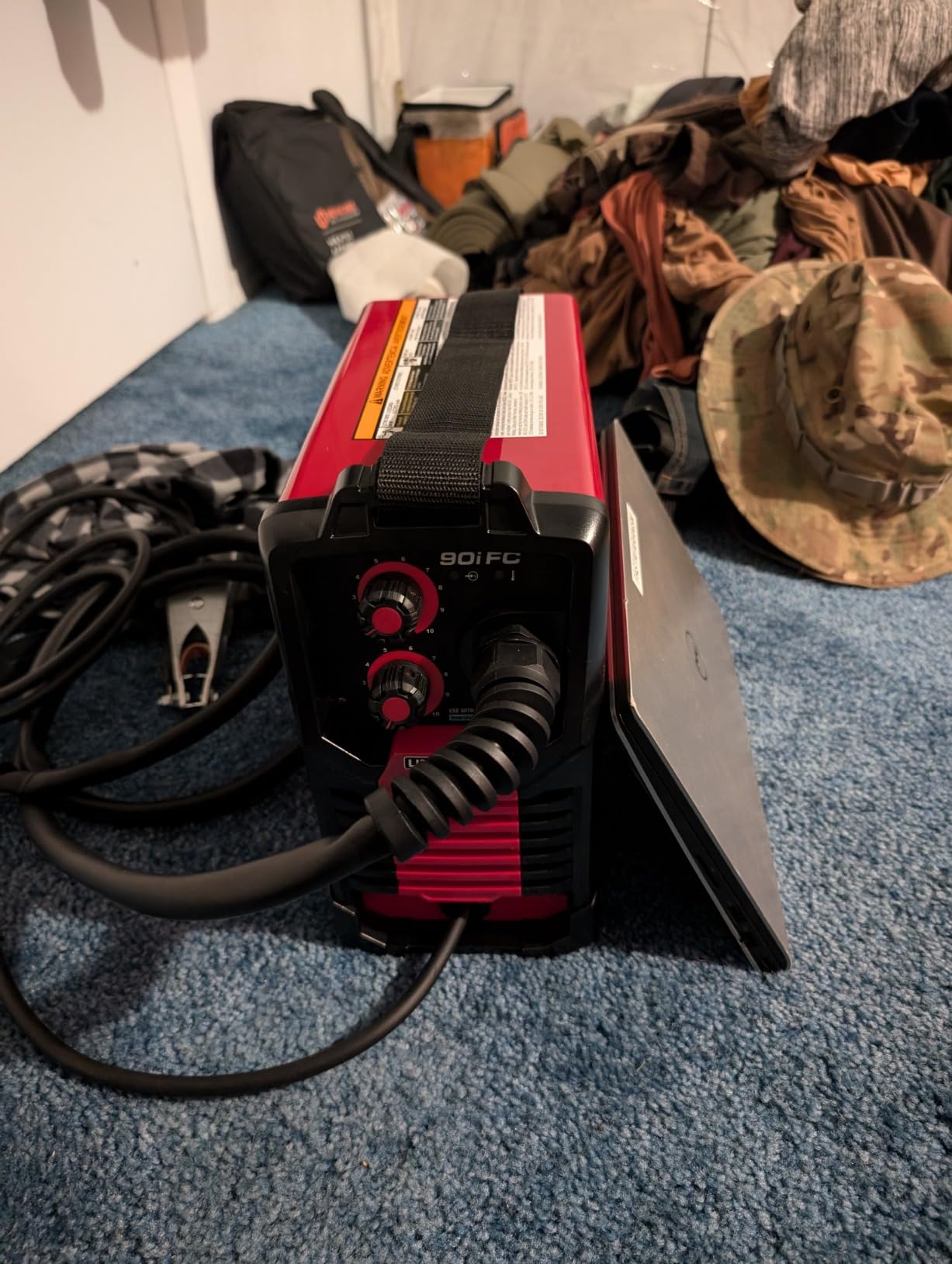
The Lincoln Electric 90i FC is the machine we recommend to someone who is intimidated by welding. It has two knobs, one for wire speed and one for voltage, and infinite voltage for fine-tuning. There is no mode selector to get wrong, no synergic menu to navigate, and no process to research before your first bead. Complete beginners report going from never having welded to confidently repairing a fire guard in a day.
It welds up to 1/4 inch material from any 120V outlet, runs on an inverter power source for smoother weld characteristics and lower weight than a transformer, and weighs 15 pounds with the included shoulder strap. Owners call it light as a feather. The Weld-PAK package adds a protective metal case, and the box includes the welding gun, nozzle, contact tip, work cable, and clamp.
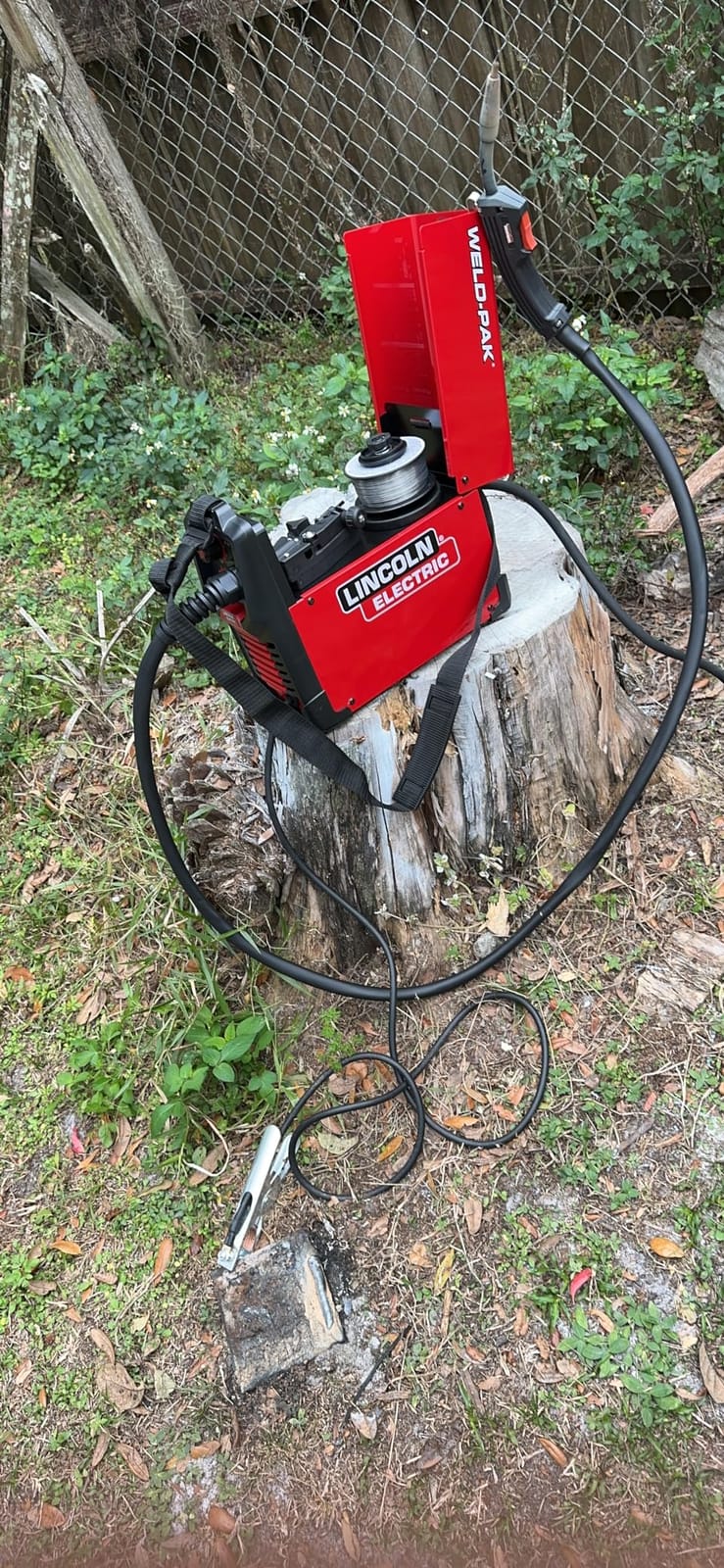
It is also one of the most portable options in the comparison, and not just by weight. The strap plus the metal case means it goes from a garage to a truck bed to a fence line without a dolly, and owners report real jobs on it, including tractor grader blades, fire guards, and 14-18 gauge stainless tables. The 12-month manufacturer warranty is standard for a Lincoln, and the brand name carries recognized resale value at trade-up time.
At 572 reviews it has the smallest evidence base of the leading picks, but the satisfaction profile is the strongest here: 4.7 stars, 84 percent five-star, and only 3 percent one-star. The single most repeated complaint across those reviews is the earth clamp bonding braid working loose after a couple of welds. The machine itself is praised consistently, and the spatter note is a flux core fact rather than a flaw.
Who the Lincoln Electric 90i FC suits
It suits a first-time welder who wants the shortest possible path to a good bead, and it suits anyone who welds away from a shop. The two-knob layout and the shoulder strap combination means you can carry it to the work instead of bringing the work to the machine, which is how a lot of fence and repair jobs actually happen.
It also suits a buyer who plans to keep the machine for years and expects to sell it. A recognized brand and a metal case change the resale conversation, and the build is clearly aimed at regular work rather than occasional novelty use. If you take a class later, two knobs also mean the controls never become a barrier.
Where the Lincoln Electric 90i FC falls short
It costs the most in the group, and a single-process machine does not grow with you. There is no stick mode and no TIG, so when you outgrow flux core you are buying again. If you know you will be doing aluminum or stainless work, choose a multi-process machine instead.
Two knobs means less fine adjustment than a digital machine, and the lower amperage output of a 120V-only unit puts heavy fabrication out of scope. Expect noticeable spatter and plan to grind and paint to blend a finished bead, and check the earth clamp braid the first few times you use it.
10. BESTMIG 135A Starter Bundle – Most Complete Beginner Package
BESTMIG 135A MIG Welder – 3-in-1 Flux Core Welder, MIG/Lift TIG/Stick Welding Machine – Portable IGBT Inverter – 110V with Welding Helmets and Gloves (Red Black, MIG 135A Welder)
135A output
10.71 lb
0.030 to 0.040 in wire
Helmet and gloves included
Pros
- Auto-darkening helmet and leather gloves included in the box
- Light at 10.71 lb for a full-featured unit
- Full-color LED display with live parameter monitoring
- Integrated wire feeding reduces spatter
- Steady sales presence in MIG Welding Equipment
Cons
- Some units arrived missing the TIG torch and other accessories
- Flux core cable connection did not fit on one unit
- Lowest review volume in the group
- Lift TIG needs a separately sold torch
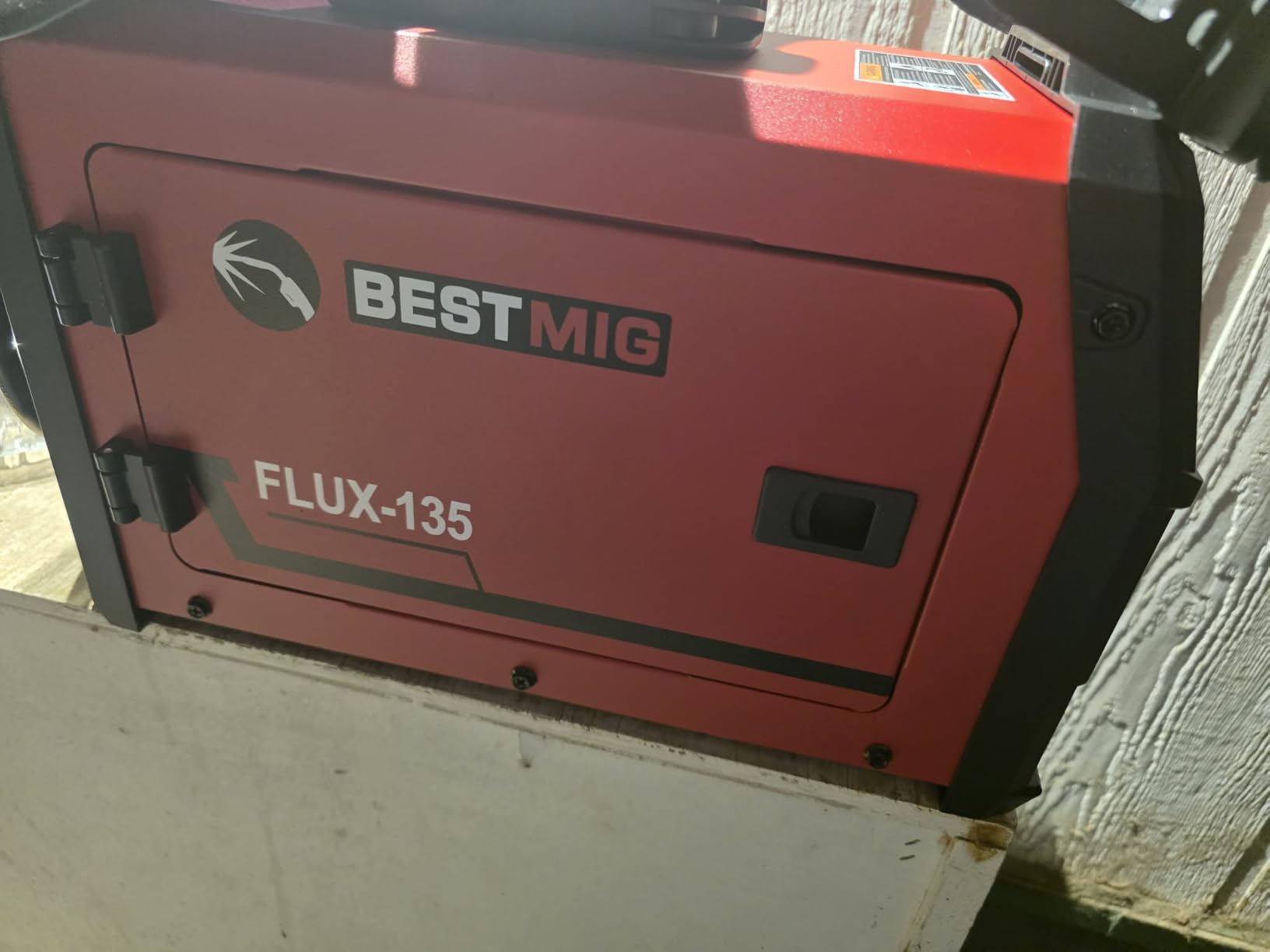
The BESTMIG 135A is the only machine here that ships a welding helmet. The box contains a welding machine, wire brush, flux core welding wire, a 14AK torch with cable, electrode holder with cable, earth clamp with cable, welding gloves, auto-darkening welding glasses, and a welding helmet that converts to goggles. For a first purchase, that removes the most important pre-arc spending decision, because an auto-darkening helmet is the one piece of safety equipment you should not cheap out on or skip.
It is a true 135 amp output welding material up to 1/8 inch, running 3-in-1 as flux core MIG, lift TIG, and stick, with the TIG torch sold separately. Gasless flux core wire from 0.030 to 0.040 inch is supported, which covers stainless and carbon steel for thicker projects, and the full-color LED display monitors parameters in real time while integrated wire feeding technology auto-adjusts voltage and feed speed to reduce spatter.
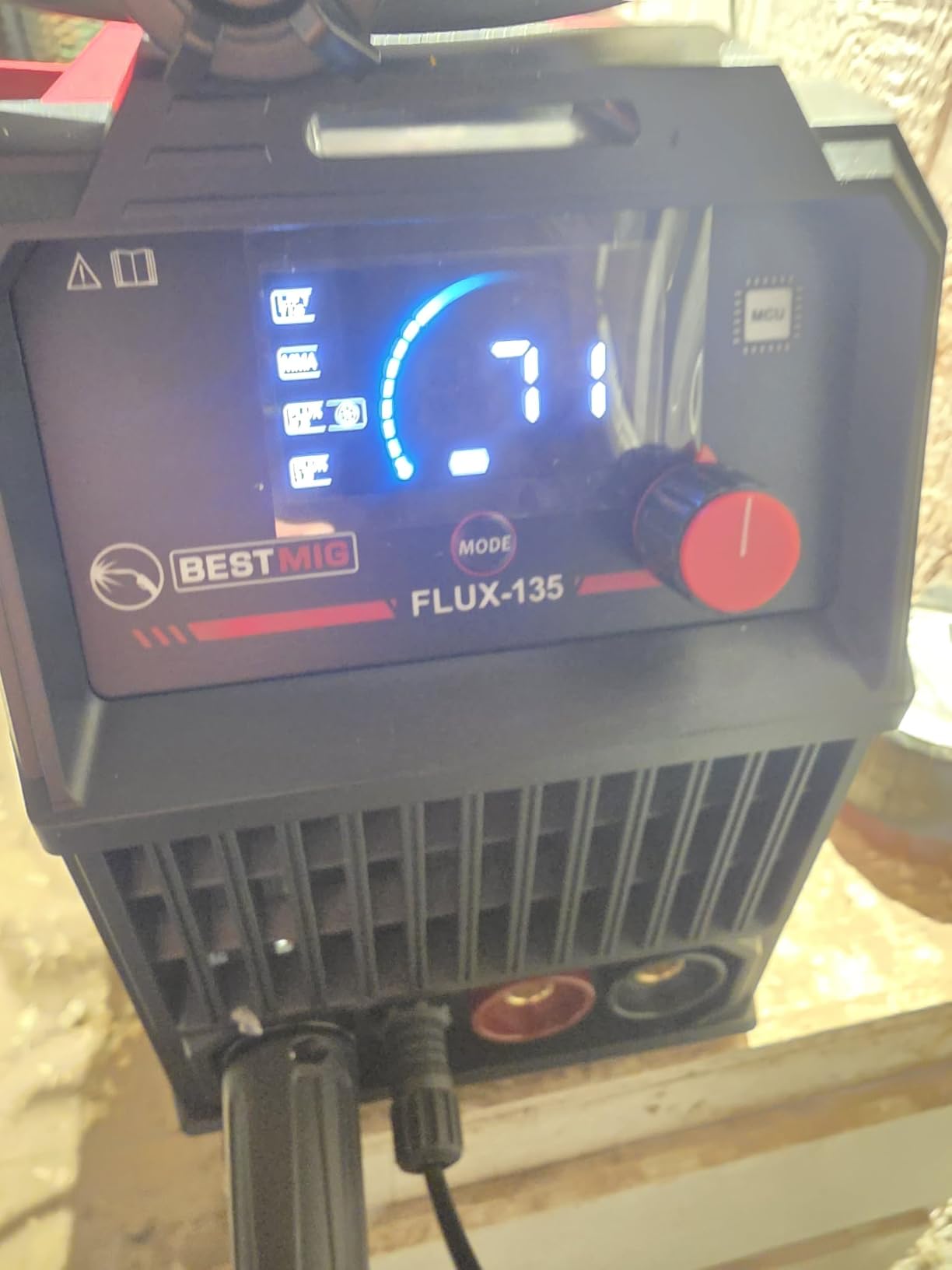
At 10.71 pounds it is easy to move around a shop, and the review sentiment is strongly positive on value and on the included gear, which is the most complete beginner package in this lineup. Owners buying it as a gift for a beginner call it the best value for what it covers, and it holds a steady sales position in MIG Welding Equipment.
With 442 reviews at 4.6 stars, 76 percent five-star, and only 3 percent one-star, satisfaction is high but the evidence base is the smallest in the group, so there is less long-term durability evidence than the leaders offer. The complaints are about fulfillment rather than welding, with some machines arriving missing the TIG torch and advertised accessories, and one machine reporting a flux core cable connection that did not fit.
Who the BESTMIG 135A suits
It suits someone buying for a beginner rather than for themselves. When the person welding will not have researched helmet shades or gloves, having the right equipment in the box removes a whole class of beginner error before the first arc, and the auto-darkening helmet is a genuine safety upgrade over a hand-shielded face mask.
It also suits anyone working on thin material who wants the machine to reduce spatter on their behalf. The integrated wire feed adjustment and the full-color readout make changes visible, and the 10.71 pound weight is easy to carry between a workbench and a vehicle.
Where the BESTMIG 135A falls short
135 amps and 1/8 inch material is a ceiling, not a starting point for plate work. The 110V single voltage means you will not be running 1/4 inch structural jobs, so plan this machine for sheet metal, small frames, and light repairs.
The accessory shortfall is the real risk. Missing accessories and a mismatched cable connector both appear in reviews, so open the box, test every connection, and replace what is absent before your first weld rather than mid-project. The lift TIG mode is unusable without the separately sold torch, and the supplied plug is not UK compatible if you are outside the US.
How to Choose Your First Flux Core Welder in 2026
Choose DC output and skip AC-only machines
This is the single most important specification on the page, and almost no roundup mentions it. Self-shielded flux core wire wants a stable DC arc. AC output alternates polarity many times per second, which is fine for a gas-shielded MIG arc and actively bad for a flux core arc, producing a wandering, spattery, hard-to-control puddle. Owner consensus across the major welding forums is blunt about this: AC-output gasless machines are the classic beginner trap, and experienced users routinely say the cheap welder is not the problem, the output type is.
When you read a product page, look for DC in the power source line, and treat AC-only machines as unusable for this process. Several listings in this category describe themselves vaguely as a welder without committing to an output type, so a missing specification is a reason to ask a question before buying, not a reason to assume the best.
120V only or dual voltage: the honest decision
Buy 120V only if your work is sheet metal, thin tube, fence rails, small auto repairs, and anything you would describe as hobby scale. The honest limit is thickness, not quality. Owners of 120V machines describe them as weak for project work while still producing excellent welds in the hands of a skilled operator, and the practical ceiling for most of them is around 1/4 inch with careful multi-pass work.
Buy dual voltage if you have access to a 220V circuit and expect to run 1/4 inch plate, trailer work, hitches, or anything structural. Three of the machines here, the YESWELDER 160A, the Bestarc 145A, and effectively the GZ GUOZHI 140A through its wide input design, cover both. Check your panel before buying, because a 160A machine on the 110V adapter trips household breakers according to owners.
Wire diameter rule: 0.030 inch first, 0.035 inch later
Start with 0.030 inch self-shielded wire, usually classified E71T-GS. On a 120V machine, 0.035 inch wire can starve the feed rollers at low amperage and produce erratic feeding, and that is the most common reason small machines get blamed for bird-nesting. Move to 0.035 inch only when you have 0.030 inch dialed in and you are welding material where the extra penetration is worth the extra spatter.
Reserve 0.040 and 0.045 inch wire for machines with genuine amperage behind them, which means 220V dual-voltage units. A machine that runs 0.040 inch wire on 110V is a machine that will frustrate you, because the wire speed required for a usable arc exceeds what the feed can deliver smoothly.
Wire brand matters more than wire price
This is the most repeated piece of advice in the forums, and the most consistently missing from roundups. Lincoln Electric NR-211MP in 0.030 inch and Lincoln Electric NR-232 come up again and again as the wire that makes a budget machine behave. The complaint aimed at discount wire is not that it will not weld, it is that the feeding is inconsistent, and inconsistent feeding is what produces bird-nesting, erratic beads, and a lot of frustration in month one.
The cost difference between a branded spool and a generic one is trivial next to the cost of a machine you stop trusting. Buy a reputable spool first, learn the machine on wire that feeds predictably, and only experiment with cheaper wire once you understand what a good feed feels like. On our machines, the change in bead consistency when the wire spool changed was larger than the change from switching welders.
DCEN polarity: the setting that fixes bad beads
For self-shielded flux core wire, the work lead connects to negative electrode, which is DCEN. Set it the way the machine manual says and then verify by welding a short coupon. Getting polarity wrong is the reason some buyers blame a machine for producing rough, dark, unconvincing beads when the machine was never at fault. If your welds look wrong and the settings look right, check polarity before you check anything else.
Some multi-process machines carry a polarity switch for the wire lead, and reviews of the YESWELDER 160A mention units arriving with that switch disconnected, meaning they would not arc until an owner traced and fixed it. Test the machine out of the box, and treat an arc that will not strike as a wiring question, not a broken machine.
What thickness a 120V machine can actually weld
Use this as a realistic guide rather than a promise. At 3/32 inch and thinner, a 110V machine at 110 to 130 amps handles clean passes with practice. At 1/8 inch, expect a short arc and steady travel, and expect spatter. At 1/4 inch, a 120V machine needs multiple passes and heat discipline, and machines rated at 140 amps such as the Forney and the GZ GUOZHI handle it better than 130 amp machines.
Past 1/4 inch, stop using a 120V machine and use a 220V dual-voltage unit. Forum owners consistently describe 1/4 inch as the practical ceiling for single-pass work on 120V machines, and the ones who pushed past it describe a lot of wasted wire. Your time is the expensive part of learning, not the wire.
Duty cycle in plain English
Duty cycle is the percentage of a ten-minute cycle that you can weld at the rated amperage before the machine needs to cool. A 60 percent duty cycle at 145 amps means you can weld for six minutes and then need four minutes of rest. It only matters if you plan long sessions, but it is the reason a 60 percent machine feels different in a real project than a 35 percent one with a higher headline number.
Ignore duty cycle claims written without an amperage attached, because the number is meaningless on its own. What you want is the rated amperage you plan to use paired with the duty cycle at that amperage. The Bestarc 145A publishes 60 percent, which is genuinely good for its size, and most machines in the 110V class do not publish the figure at all.
Flux core vs stick vs MIG
Flux core is the easiest of the three wire and rod processes for a beginner because the consumable feeds itself at a speed you set. Stick is more forgiving on dirty or rusty steel and works anywhere, but you push a rod by hand and the arc wanders more. Gas-shielded MIG makes the cleanest, quietest, most precise bead, and it needs a gas cylinder, which is the barrier this whole category exists to remove.
None of them can weld aluminum with gasless wire, and flux core adds two things you will deal with: spatter that needs brushing or grinding, and a slag layer on the bead that you chip off once it cools. Plan for grinding time in your first month and neither one feels like a problem.
Before you settle on a machine, our guide to the best welders overall covers the stick and MIG side of the decision in more detail, which matters if you know you will want aluminum or stainless work within a year.
Safety Gear and First-Bead Setup Checklist
A welding helmet is the item that matters most, and a shade level of 10 or 11 is a sensible starting point for flux core on mild steel. Auto-darkening helmets let you keep both eyes open between beads, which removes the biggest reason beginners hesitate to start a bead. The BESTMIG 135A in this comparison is the only machine that ships with one, along with gloves.
Leather welding gloves, a leather jacket or sleeves, and closed leather footwear complete the basics. Add safety glasses for grinding and chipping slag, because a spatter chip hitting an unprotected eye is the most common injury in this hobby, and it happens while you are not welding. Ventilation matters too, since the fume plume rises and settles, so a garage door open or a fume extractor is not optional.
Before the first arc: set polarity to DCEN, thread 0.030 inch wire and check the drive roller tension, confirm the ground clamp is attached to clean bare metal on the workpiece rather than to rust or a painted surface, blow the nozzle clear, and run a short test pass on scrap of the same thickness you plan to weld. That ten-minute routine prevents most of the frustrations in the next ten hours.
Fixing the Four Problems Every Beginner Hits
Bird-nesting, where the wire stops feeding and piles up in the gun, almost always means the drive roller tension is too low or the spool is turning the wrong direction, and less often means the wire diameter is too heavy for the machine. Release tension, check the roller size matches the wire, and make sure the spool can turn freely. A misaligned or missing drive roller causes the same symptom, and on the Bestarc this is a known fit-and-finish issue to check on arrival.
Stubbing, where the arc ends with a dull pop every time, means your work lead is connected to positive instead of negative. Switch to DCEN and the problem usually disappears. A weak ground clamp produces the same symptom, which is why replacing a thin ground clamp is often the first fix worth buying after the machine itself.
Excessive spatter comes from too much voltage for your wire feed speed, or wire feed speed set too low for the voltage. Start from the machine’s synergic setting if it has one, then trim in small steps, and remember that spatter is partly the process. 0.030 inch wire on a 120V machine throws less than 0.035 inch, and a name-brand spool feeds more smoothly than a generic one.
Porosity and weak, crumbly beads usually trace back to the same three places: contaminated base metal that was not ground clean, a poor ground connection, or a wire spool that has been left open to moisture. Flux core is more forgiving than MIG about wind, since it is self-shielded, but it is not forgiving about a rusty joint, so clean the metal to bright steel before you start.
Frequently Asked Questions
Do I need gas to flux core weld?
No. Self-shielded flux core wire such as E71T-GS carries flux in its core, and that flux vaporizes into a shielding cloud around the arc. That is why every machine in this roundup is called a gasless MIG welder. Gas only becomes necessary when you switch to solid wire with MIG, which is where the shielding gas replaces the wire flux.
What wire diameter should a beginner use?
Start with 0.030 inch self-shielded wire on a 120V machine. It feeds smoothly at the lower amperages these machines produce, and it throws less spatter. Move up to 0.035 inch only once 0.030 inch is dialed in and you need more penetration. Reserve 0.040 and 0.045 inch for 220V dual-voltage machines.
How thick of metal can a 120V flux core welder weld?
Comfortably up to 1/8 inch, and with practice and multiple passes to 1/4 inch. Machines rated at 140 amps such as the Forney handle 1/4 inch better than 130 amp models. For reliable single-pass work on 1/4 inch plate or thicker, use a 220V dual-voltage machine.
Should I buy a 120V or 220V flux core welder?
Choose 120V if your projects are sheet metal, thin tube, fence work, and small repairs, and you have no dedicated 220V circuit. Choose dual voltage if you have 220V access and expect plate, trailer, or structural work. Note that high-amperage machines rated 160A and up genuinely need 220V, and owners report the 110V adapter trips household breakers.
Why does my flux core welder bird nest?
Bird-nesting means the wire is jamming in the gun instead of feeding. The usual causes are drive roller tension set too low, the drive roller not matching the wire diameter, a spool that cannot turn freely, or wire that is too heavy for the machine. Check the roller size and tension first, and confirm the polarity switch is actually connected.
What safety gear do I need to start flux core welding?
A welding helmet at shade 10 or 11 is the most important item, and an auto-darkening model makes starting a bead much easier. Add leather welding gloves, a leather jacket or sleeves, closed leather footwear, and safety glasses for grinding slag. Ventilate the work area, because the fume plume rises and settles indoors.
Is stick welding or flux core welding easier for a beginner?
Flux core is easier as a first wire process because the consumable feeds at a speed you set, so travel speed stabilizes itself. Stick is the most forgiving process overall and handles dirty steel, but you push the rod by hand and the arc wanders more. Gas-shielded MIG makes the cleanest bead and needs a gas cylinder, which is the barrier this category removes.
The Verdict for 2026
Our pick for the best flux core welders for beginners in 2026 comes down to three honest answers. Buy the Forney 140A if you want the most proven machine here, with 10 lb spool support and real 1/4 inch capability on household power. Buy the YESWELDER 135A if you want three processes, a synergic setting that prevents burn-through, and wire already in the box. Buy the Lincoln Electric 90i FC if you want two knobs, a shoulder strap, and a metal case, and you would rather learn one process properly than have options.
Whichever you choose, start with 0.030 inch name-brand self-shielded wire, set the polarity to DCEN, and run a coupon on scrap before the real project. That single habit resolves most of what beginners mistake for a bad machine. Check current pricing on any of the ten above, then open the box, test every connection, and start laying beads.