

Is a 100Ah lithium battery enough for camping? A single 12V 100Ah LiFePO4 pack stores about 1.28 kWh, which covers roughly two nights of typical weekend van use — a compressor fridge, LED lights, USB charging and a water pump. Full-time van dwellers running an inverter or a diesel heater usually want 200Ah to 300Ah instead. This roundup covers the best lithium house batteries for camper vans across that whole range, from a 100Ah Group 24 drop-in to a 330Ah pack that swallows six lead-acid batteries.
A house battery is the deep-cycle bank that runs your living loads. It is not the battery that starts the engine, and swapping one for the other is the most common wiring mistake we see described in camper build communities. We cover that distinction further down, along with the full parts list you need when you move from AGM to lithium.
We looked at twelve 12V LiFePO4 house batteries sold in the US, weighing every published spec against the reviews behind it. If you want the wider category covered, our general lithium battery guide covers chemistry choices beyond van installs, and our solar battery picks go deeper on charge controllers and array sizing.
Table of Contents
Top 3 Best Lithium House Batteries for Camper Vans in 2026

LiTime 12V 100Ah Group 24
- 1.28kWh in a Group 24 case
- 21 lbs
- Bluetooth 5.0 app monitoring
- 4000+ deep cycles
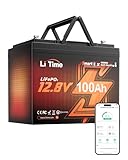
LiTime 12V 100Ah Self-Heating
- Two-stage self-heating below 41F
- Bluetooth 5.0 monitoring
- IP65 rated
- Group 24 drop-in

LiTime 12V 200Ah Group 31+
- 2.56kWh capacity
- 6000 cycles at full depth
- 200A BMS
- Bluetooth amp draw data
Quick Overview: 12 Lithium House Batteries Compared
| Product | Specifications | Action |
|---|---|---|
| LiTime 12V 100Ah Group 24 |
|
Check Latest Price |
| LiTime 12V 100Ah Self-Heating |
|
Check Latest Price |
| LiTime 12V 200Ah Group 31+ |
|
Check Latest Price |
 ECO-WORTHY EnergyRock 12V 280Ah ECO-WORTHY EnergyRock 12V 280Ah |
|
Check Latest Price |
 dumfume 12V 100Ah Group 31 dumfume 12V 100Ah Group 31 |
|
Check Latest Price |
 Rvpozwer 12V 200Ah Rvpozwer 12V 200Ah |
|
Check Latest Price |
 PUPVWMHB 12V 300Ah PUPVWMHB 12V 300Ah |
|
Check Latest Price |
 NewtiPower 12V 330Ah NewtiPower 12V 330Ah |
|
Check Latest Price |
 MARSENERGY 12V 100Ah Self-Heating MARSENERGY 12V 100Ah Self-Heating |
|
Check Latest Price |
 power queen 12V 100Ah Group 31 power queen 12V 100Ah Group 31 |
|
Check Latest Price |
 SUPER EMPOWER 12V 100Ah Group 24 SUPER EMPOWER 12V 100Ah Group 24 |
|
Check Latest Price |
 DC HOUSE 12V 100Ah Bluetooth DC HOUSE 12V 100Ah Bluetooth |
|
Check Latest Price |
How We Picked: What We Checked and What We Did Not Test
We did not bench-test these twelve packs. Every figure in this roundup comes from published manufacturer specifications and from the review data attached to each listing. Where a manufacturer and a reviewer disagree, we say so rather than picking a side.
What we did check: usable capacity in watt-hours rather than amp-hours alone, continuous and peak discharge limits, published low-temperature charge behaviour, physical dimensions against standard Group 24 and Group 31 footprints, warranty length, and the size and consistency of the review record. Cycle-life claims are shown but not scored, because brands quote them at wildly different depths of discharge and charge rates.
Two more filters mattered. First, we excluded packs without a stated BMS protection list, because an undocumented battery management system is the one component you cannot inspect later. Second, we flagged any listing whose capacity fields contradict its own model name, since that is often the first sign of a copy-pasted page.
Disclosure: we earn a commission when you buy through the links on this page, at no extra cost to you. It does not change which products appear here or the order they appear in.
1. LiTime 12V 100Ah Group 24 — The Most Reviewed Drop-In Here
Litime 12V 100Ah LiFePO4 Battery, Group 24 Lithium Batteries for RV, Camper
12.8V 100Ah / 1280Wh
21 lbs
10.24 x 6.61 x 8.3 inch
5 year warranty
Pros
- True Group 24 drop-in fit
- Bluetooth range reported beyond 50 ft
- 4000+ deep cycles
- Five year warranty
- Two in parallel ran a camper a full week
Cons
- iOS app stops updating while charging
- App requires sign-in and location access
- Sleeping packs need a LiFePO4 charger to wake
- This variant is not self-heating
This is the pack I would put in most weekend vans without hesitating. It measures 10.24 x 6.61 x 8.3 inches and weighs 21 pounds, which puts it squarely inside a standard Group 24 tray with no cutting, no rewiring and no new box. The 100A BMS carries 20+ listed protections and the cells are rated for 4000+ deep cycles.
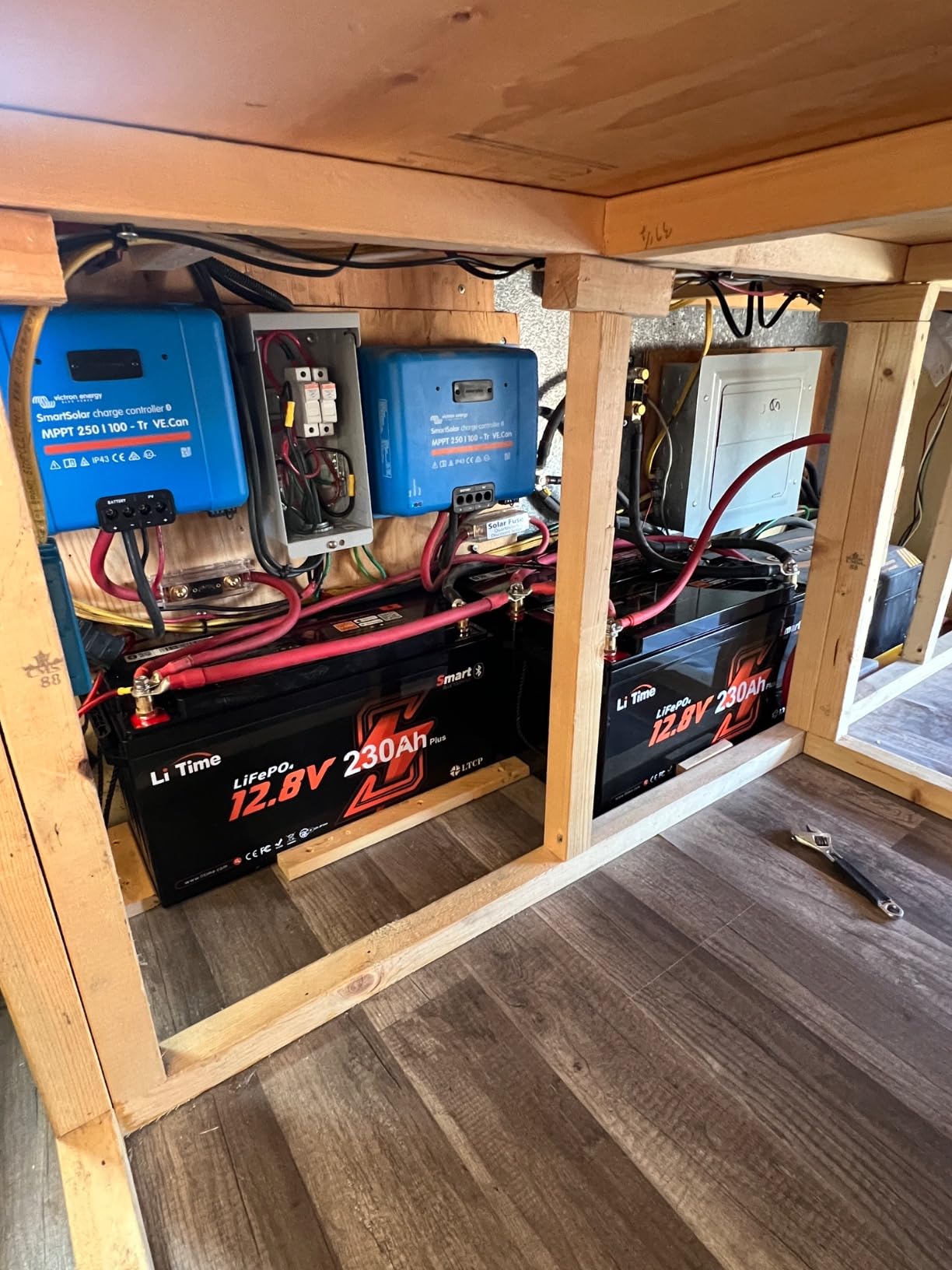
The Bluetooth 5.0 link is what separates it from cheaper 100Ah packs. Reviewers report a usable range past 50 feet, and the app shows voltage, current, state of charge, temperature and per-battery charge or discharge rate. One camper owner running two in parallel reported a full week off-grid before a recharge.
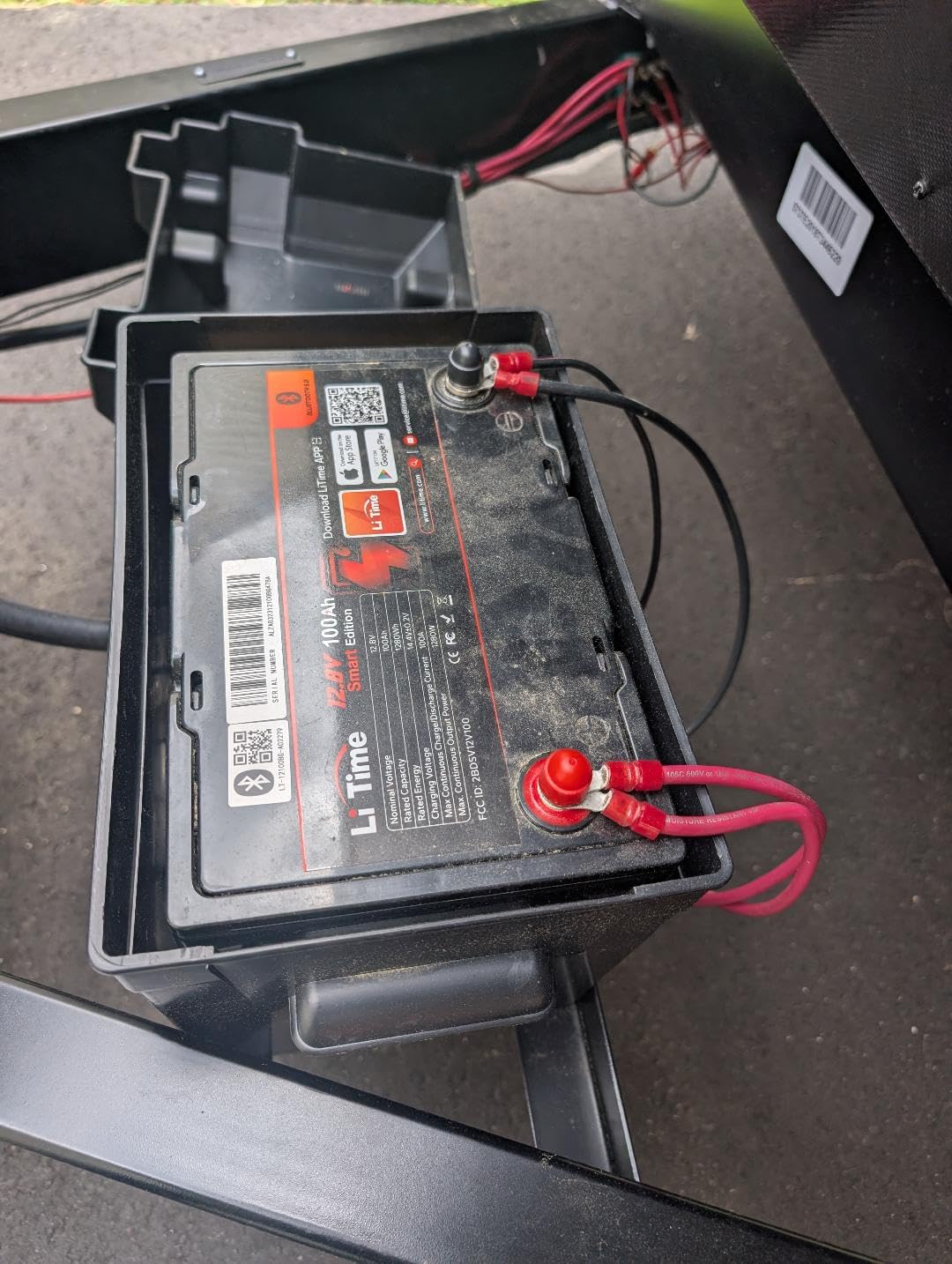
The honest weakness is the app, not the battery. A recurring complaint across reviews is that the iOS app stops updating status while the pack is charging until you reconnect, and the sign-in flow asks for location access to register the warranty. That is friction, not failure, but it shows up in your daily routine.
One more practical note: this variant uses a low-temperature charging cutoff rather than a heater. Below freezing it will stop accepting charge until it warms. If your van sleeps outside in winter, look at the self-heating options further down. For a milder climate and a 100Ah budget, the RV battery picks cover the case sizes in more detail.
What you give up choosing this over a heated pack
Cold-weather charging is the whole trade. A cutoff pack protects your cells by refusing charge, which means your solar gain on a January morning is zero until the pack warms. If you are charging from panels only, that delay eats your usable solar window every clear day.
Bluetooth range is the second thing. Past 50 feet is generous for a van, but it is still Bluetooth. If you run a shunt monitor on a Cer GX or a smart display in the cab, the app becomes a backup rather than your primary gauge.
Who should skip it
Skip it if you regularly charge below freezing and do not have shore power or engine charging as a fallback. Also skip it if your existing box is a Group 31 tray with a tight hold-down and you would rather not resize brackets for the shorter Group 24 case.
For everyone else, the combination of 735 reviews at 4.6 stars, a five-year warranty and a genuine Group 24 footprint is the most proven package in this roundup.
2. LiTime 12V 100Ah RV Self-Heating — Best Pick for Winter Vans
Litime 12v 100Ah RV Self-Heating LiFePO4 Lithium Battery for Marine, Camper
12.8V 100Ah self-heating
21.8 lbs
Group 24 footprint
IP65 rated
5 year warranty
Pros
- Two-stage self-heating below 41F
- Recovers and resumes charging automatically
- Bluetooth state of charge accurate
- Terminal hardware and wrench included
- 20+ protections with 30 second auto-recovery
Cons
- App needs repeated sign-ins to reconnect
- Some packs arrive asleep and need support to wake
- Bluetooth connection drops occasionally
- Heating must be armed by a lithium or MPPT charger
The heating is the reason to buy this one over the standard Group 24. It runs two modes: regular heating starts below 41F and stops at 50F before charging resumes. That band matters because a pack sitting at 36F gets warmed to 50F, charged, and only then drops out of the heating cycle, which stops you burning heater power through the whole bulk stage.
At 21.8 pounds it weighs essentially the same as the non-heated model, and the case is a Group 24 footprint that fits standard RV battery boxes. The IP65 rating also means a splash in a wet battery bay is not the event it would be with an unsealed case.
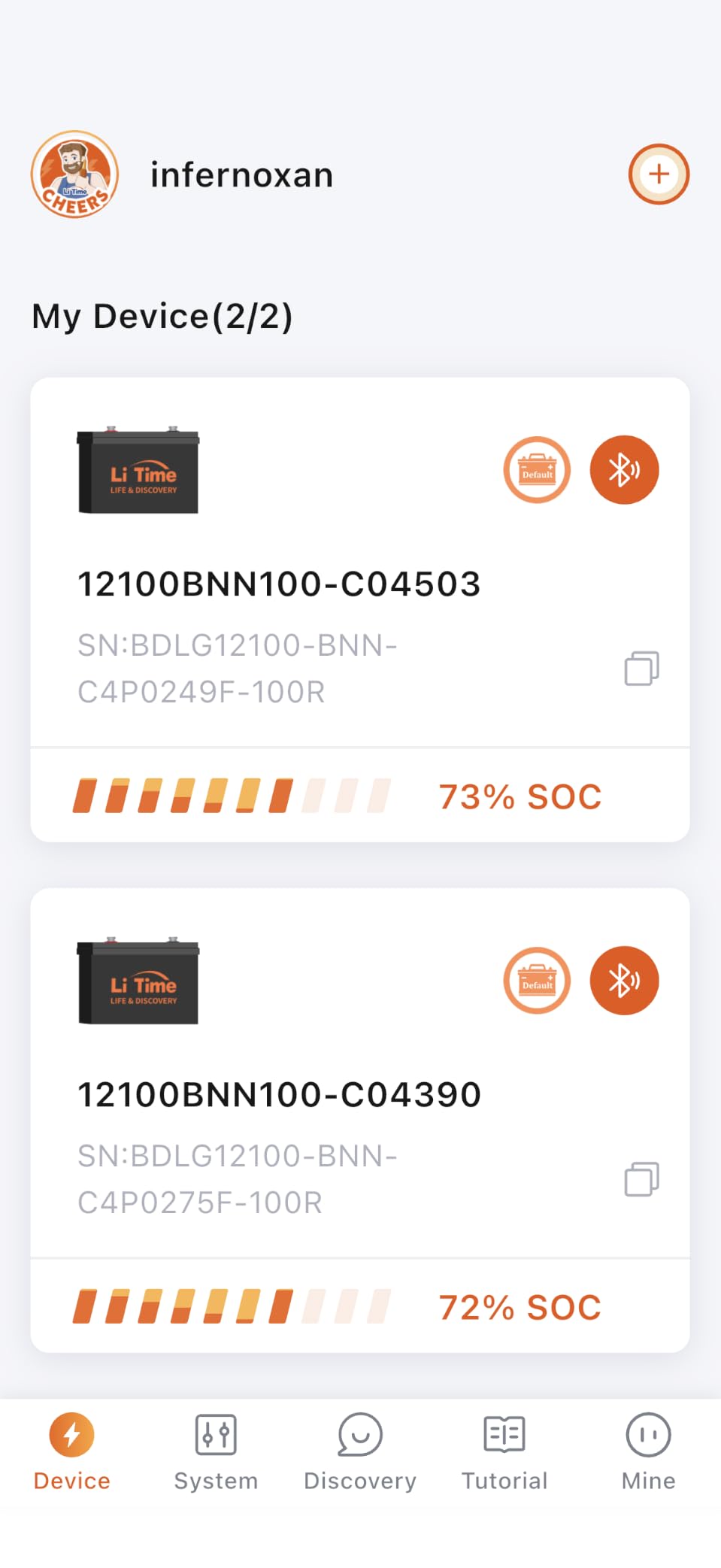
Reviews from RV and marine owners consistently report roughly double the usable capacity of the AGM they replaced at about half the weight. Bluetooth 5.0 monitoring gives state of charge, and 89% of reviews are five star, which is a strong signal for a battery that has to be trusted in the dark on a cold night.
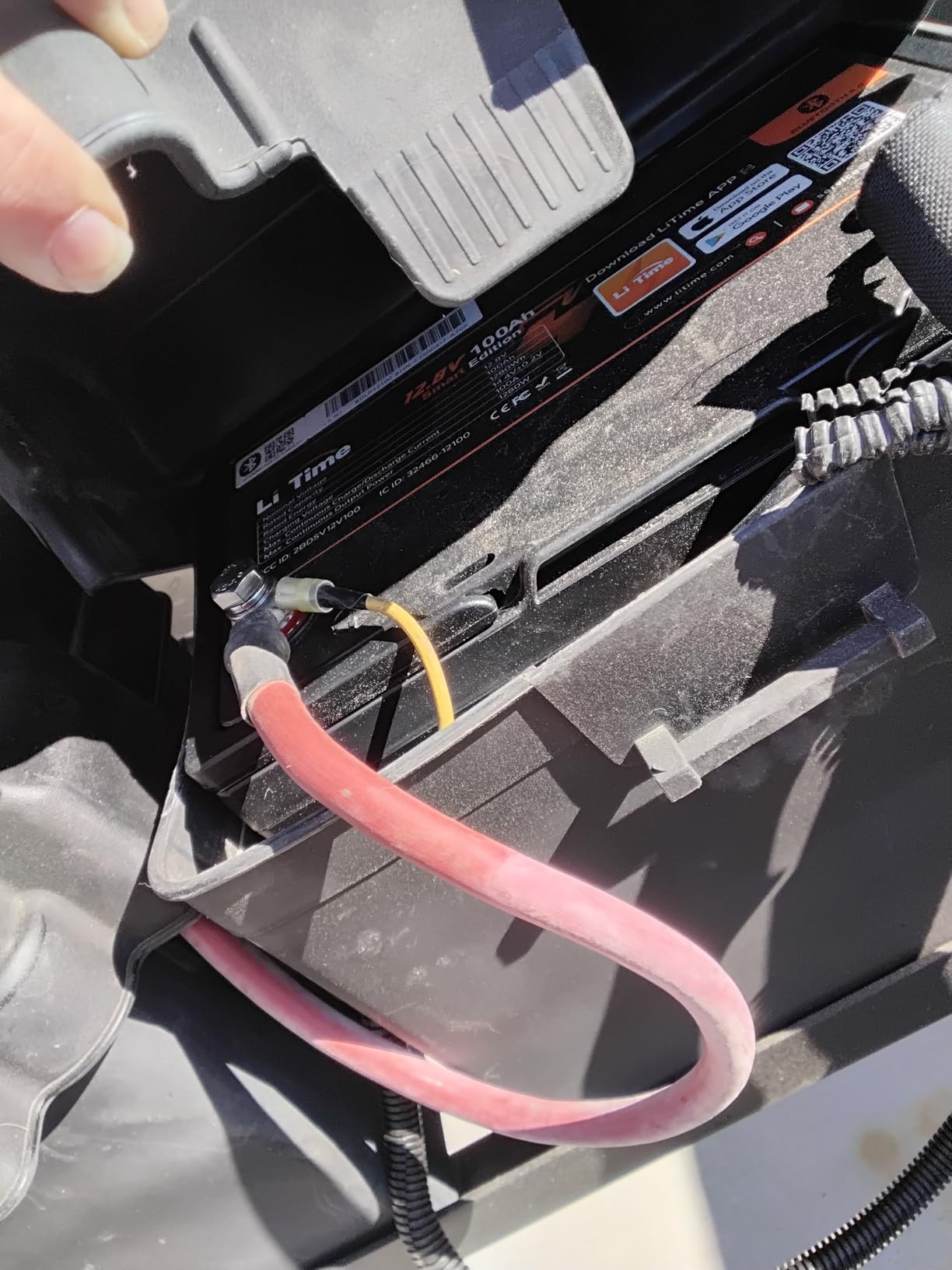
The recurring complaint is app friction rather than hardware. Owners mention repeated sign-ins, occasional dropped connections, and a small number of packs that arrived in sleep mode and needed customer service to wake. There is a real fix for the sleep issue: self-heating has to be armed by a lithium-profile or MPPT charger after first use, so give the pack one proper absorption cycle on the bench before it goes into the van.
How the heater behaves in real cold
Published figures describe a pack that charges down to far colder conditions than any cutoff-only unit here. That matters if your battery lives under the van floor or behind a wheel arch in a northern winter, where a cutoff pack can go weeks without accepting a meaningful charge.
Two things to plan for. Heating consumes power from the charger, so a cold morning charge takes longer. And the heater only runs while a charger is pushing current, so it does not rescue a pack that is being run down in the cold — it rescues a pack you are charging.
Who should skip it
Skip it if you only camp above freezing. You pay for a heating system that never activates. Also weigh the fact that this unit expands to 16 batteries, which is generous, but check the review record on app stability if you plan to rely on phone monitoring as your main gauge.
If your van carries a boat, a trolling motor or any high-draw load, skip this and go up one size to the 200Ah version below.
3. LiTime 12V 200Ah Group 31+ — Best Pick for Inverter Loads
Litime 12V 200Ah Lithium LiFePO4 Battery for Trolling Motor, Marine, Boat
12.8V 200Ah / 2560Wh
44.5 lbs
200A BMS
6000 cycles at full depth
5 year warranty
Pros
- 6000 rated cycles at full depth
- 200Ah in a Group 31 plus case
- 200A BMS handles inverter surge
- App shows live amp draw for sizing
- ABYC E-13 marine protection
Cons
- Not for engine starting or golf carts
- Bluetooth needs a lithium activation charge first
- Heavy at 44.5 lbs for a single unit
If your van runs a 2000W inverter for a cooktop, a microwave or a power tool, this is the capacity class where things stop being marginal. At 12.8V 200Ah you get 2.56 kWh, and the 200A BMS gives you far more headroom on surge than a 100A pack can. An induction cooktop can pull well over 100A on its own.
The surprising part is the footprint. It is a Group 31+ case at 13.11 x 6.93 x 9.45 inches and 44.5 pounds, so you get double the capacity without jumping to a footprint that no standard tray will accept. That is the difference between this and most 200Ah packs on the market.
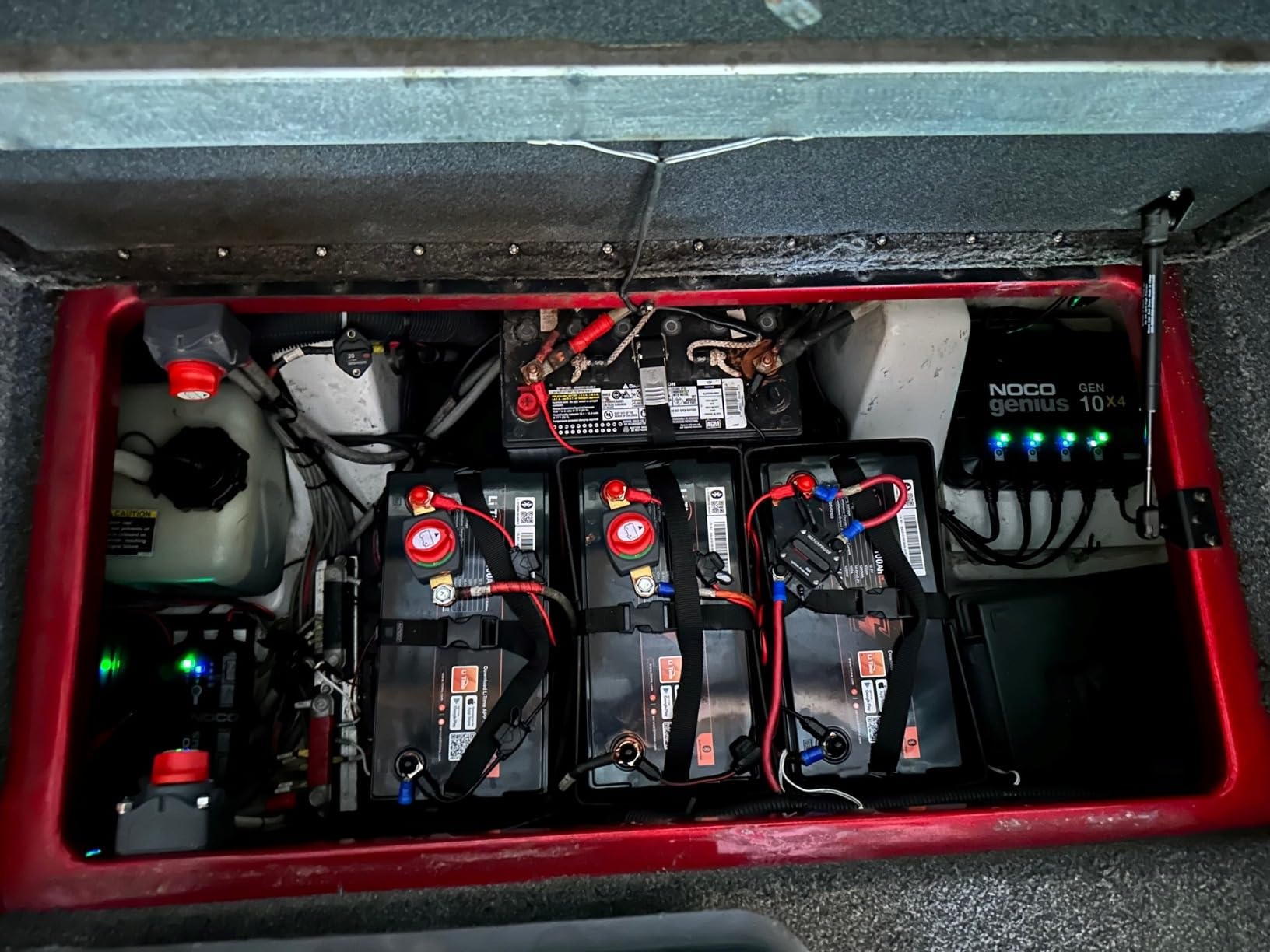
Two numbers stand out in the specs. First, 6000 deep cycles at 100% depth of discharge, which is the highest published full-depth cycle figure among the packs in this roundup. Second, a low-temperature profile that stops charging below 32F and stops discharging below -4F. There is no heater here, so cold charging stops entirely below freezing.
Marine and trolling motor owners report the pack still sitting above 70% state of charge after multi-hour runs, with recharge times of a few hours rather than the many hours a lead-acid bank needs. The Bluetooth amp draw readout is singled out repeatedly as the feature that helps people size their system properly.
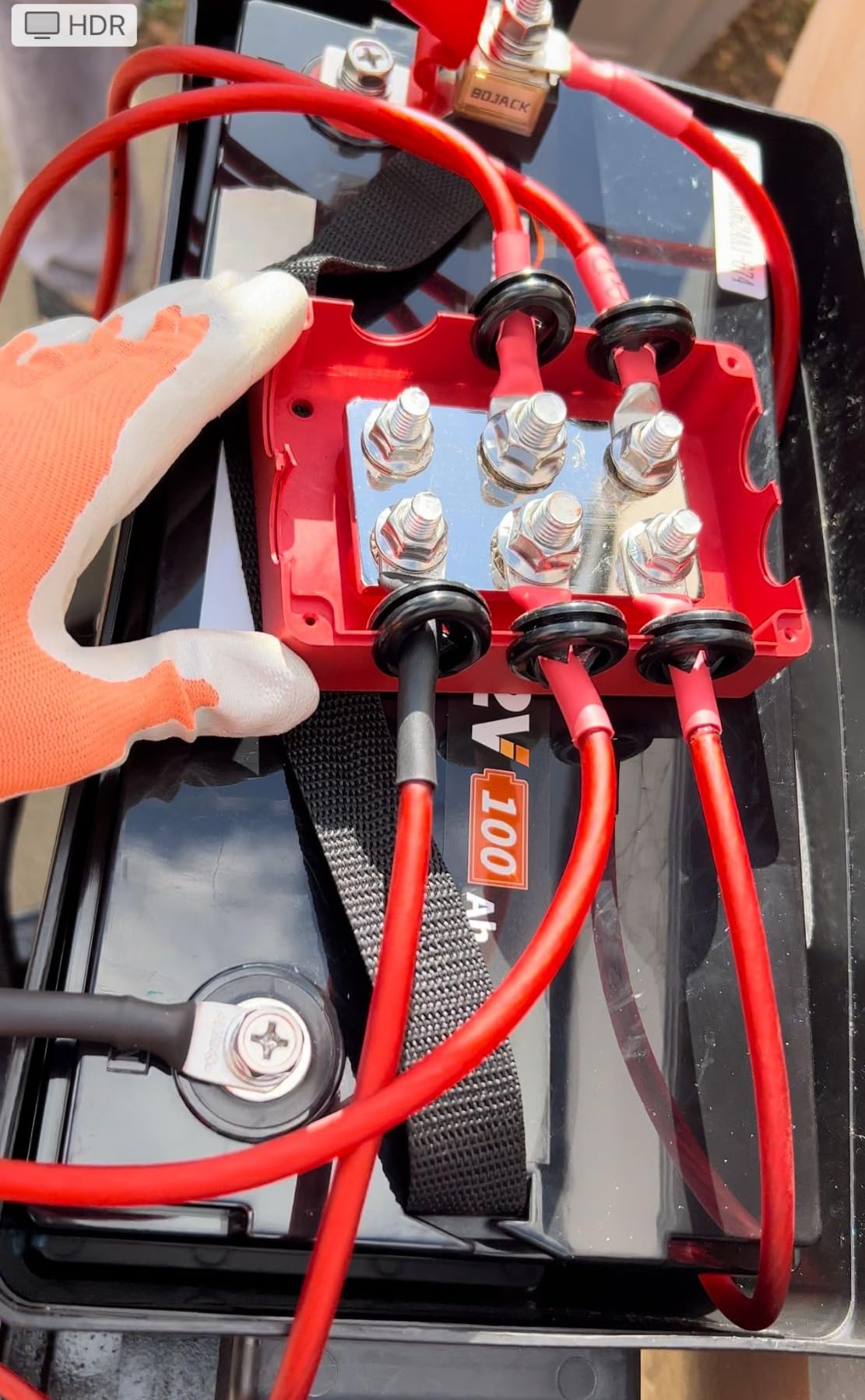
What 200Ah actually buys you
Roughly double the usable energy of a 100Ah pack, and the extra 100A of BMS capacity is the part people underestimate. A 100A BMS will happily trip on an inverter surge that a 200A BMS absorbs without complaint, and repeated tripping is how you end up with a van that browns out every time the kettle boils.
The 200A figure also sets your charge ceiling. If your DC-DC charger is a 30A unit, you are not pushing the pack hard either way. If you run a 50A DC-DC, this battery can take the full output without becoming the limiting component.
Who should skip it
Skip it if you are strictly a weekend camper running only a fridge and lights — a 100Ah pack already covers that, and 44.5 pounds is real payload. Also skip it if your build is a low-roof van with no room for a Group 31+ tray.
It is also not a starter battery, golf cart battery or jack battery. Anyone needing cranking current needs a separate starter pack, which we cover in the house battery section below.
4. ECO-WORTHY EnergyRock 12V 280Ah Metal Case — Built for a Hot Battery Bay
ECO-WORTHY EnergyRock 12V 280Ah Metal Case LiFePO4 Lithium Battery
12.8V 280Ah / 3584Wh
about 60 to 68 lbs
metal case
200A BMS
Bluetooth
Pros
- Metal case resists heat and fire
- Two units give roughly 560Ah
- Four mounting feet remove the need for a box
- Front terminals and safety switch tidy up wiring
- Low-temp cutoff worked on snowy trips
Cons
- Larger than a Group 31M AGM case
- A touch wider than typical batteries
- Heavy enough that one owner returned it
- No documented IP rating
This is the one to look at if your battery bay sits behind a rear wheel in summer sun. The reinforced metal enclosure handles heat far better than the ABS and plastic cases used almost everywhere else in this roundup, and internal cell holders resist road shock and vibration.
Capacity is 280Ah at 12.8V, which works out to 3584Wh. Owner reports put the weight at roughly 60 to 68 pounds, so this is one of the heavier single units here. Reviewers consistently describe gaining that capacity without a meaningful weight penalty compared with the multi-battery lead-acid setups it replaces.
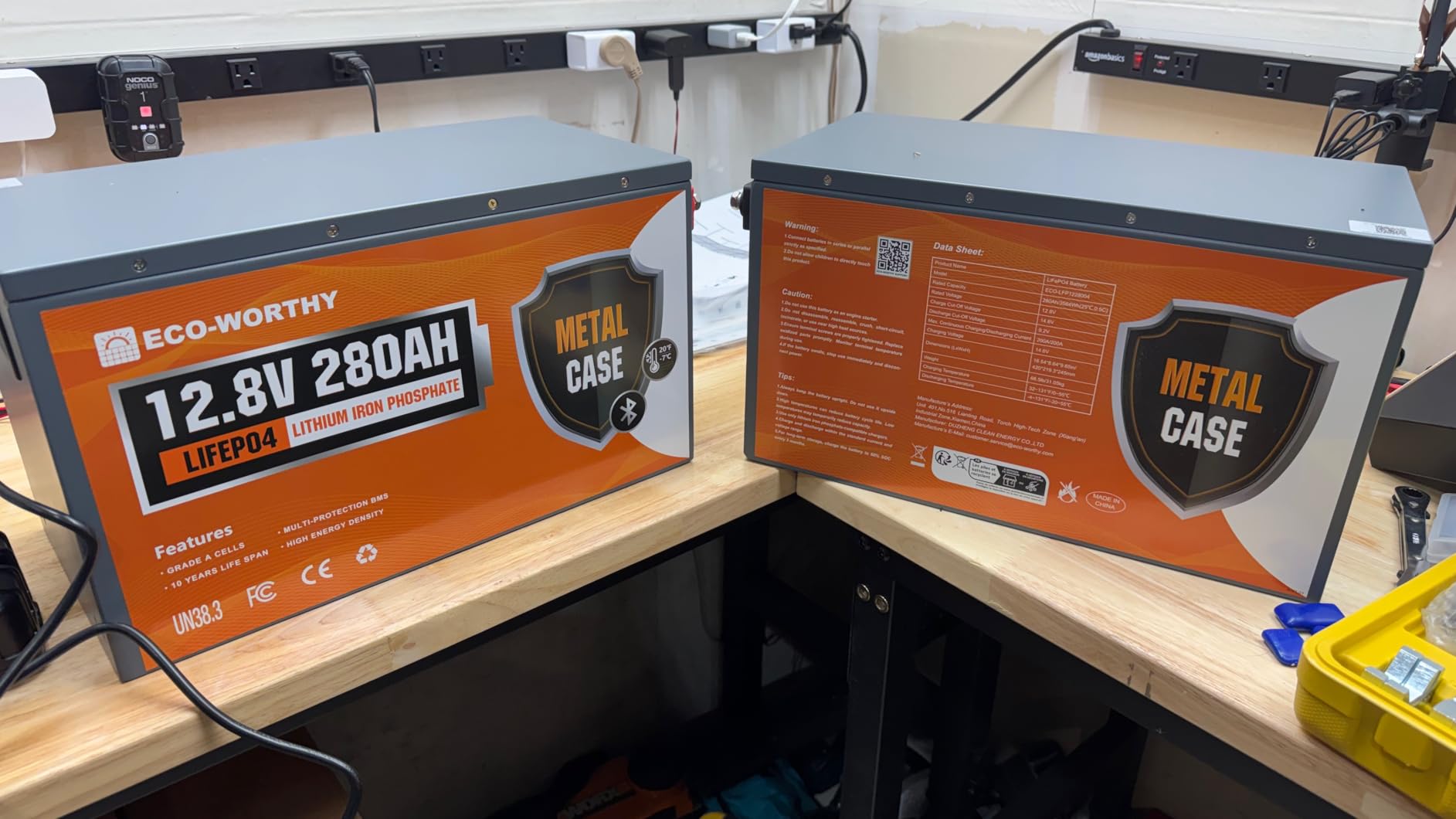
The one-touch safety switch is a genuinely useful install feature. It disconnects the discharge circuit so you can wire the battery without the arc risk of working on a live terminal. Four mounting feet let it sit directly in an RV or camper compartment with no separate battery box, and the flat top lets an inverter sit on the lid.
Front terminals keep the wiring facing you instead of requiring you to reach over the case. Bluetooth monitoring reports voltage, current and charge status from about 12 feet, and the low-temperature cutoff near 20F worked without issue according to owners who tested it on snowy trips.
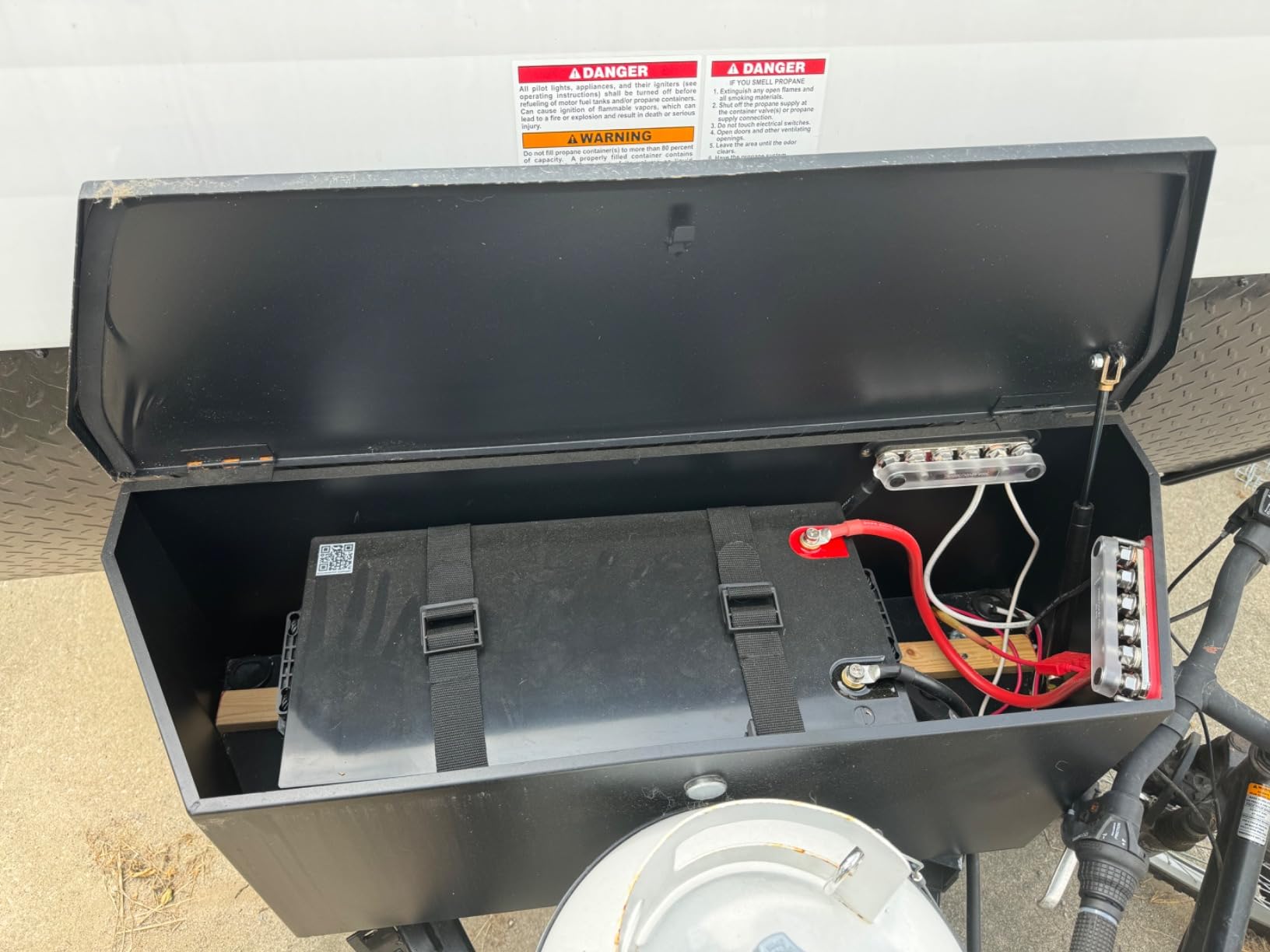
Measuring your bay before you order
Buyers of this pack warn more than once to measure the battery bay first. At roughly 16.54 x 8.64 x 9.65 inches it is noticeably larger than a standard Group 31M AGM case and a touch wider than typical batteries. In a camper conversion that difference decides whether the install takes an afternoon or a weekend of fabricating a new tray.
Check terminal clearance against your cable lugs too, and check whether your hold-down bar spans the width of this case or a narrower one.
Who should skip it
Skip it if bay space is tight, if every pound of payload matters more than thermal margin, or if you need documented ingress protection for an exposed install. It is also worth confirming you are buying the metal-case variant, since the listing family includes several case types.
If your build already has a Victron ecosystem and you want the bank to show up in the same interface as your controllers, read the monitoring section below before choosing any Bluetooth pack.
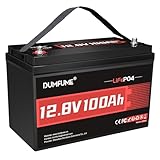
5. dumfume 12V 100Ah Group 31 — Budget Pick Drop-In
Dumfume 12.8V 100Ah LiFePO4 Lithium Battery Group 31 Rechargeable Battery
12.8V 100Ah / 1280Wh
21.6 lbs
13 x 6.69 x 8.62 inch
4S4P capable
5 year warranty
Pros
- Group 31 footprint at low weight
- 1.28kWh with full depth of discharge
- 100A BMS with full protection list
- Supports 4S4P expansion
- Grade A cell claim
Cons
- Needs 5C or warmer for proper operation
- Not for starting or golf cart use
- ABS case is weather resistant but not waterproof
- Needs a charge or discharge every 6 months when stored
The Group 31 footprint is the reason to consider this one. It measures 13 x 6.69 x 8.62 inches and weighs 21.6 pounds, so it drops into the tray most existing camper and RV battery boxes already have. Marketing claims a 25% size reduction and 40% higher energy density against a comparable lead-acid pack, and reviewers back up the weight claim at roughly two-thirds of a 100Ah AGM.
Under the lid it is a 100A BMS with overcharge, over-discharge, short circuit, overheat and overcurrent protection, built around Grade A lithium iron phosphate cells. The published cycle figures are 4000 cycles at 100% depth of discharge, 6000 at 80% and 15000 at 60%.
The 4S4P expansion rating is unusually useful. You can grow this into a 51.2V 400Ah bank without changing chemistry, which means if you start with one and grow to two in parallel later, they will behave as a matched pair.
At 795 reviews this is the most reviewed pack in the roundup, and 79% of those reviews are five star. The 12% one-star cluster is not random either: it clusters around units that will not charge in cold conditions or that arrived unable to wake from sleep mode.
The cold-weather specification to read twice
The stated operating requirement is 5 degrees C or higher for proper performance. That is a higher floor than most competitors here publish, and it lines up with the one-star complaints about cold charging. If you camp in shoulder seasons where nights drop below 5C, this pack will protect itself by not charging.
The storage rule matters too: a charge or discharge cycle every six months when the van is parked. A Bluetooth app pack tells you when it is needed; this one does not, so put it on a calendar.
Who should skip it
Skip it for winter use, for a marine install where water ingress matters, or if you want remote state-of-charge visibility. It is also the wrong choice for engine starting, golf carts or jack applications, which the listing states explicitly.
For a van that never sees sub-zero nights and where you check voltage manually, it is a lot of usable watt-hours in a case that fits.
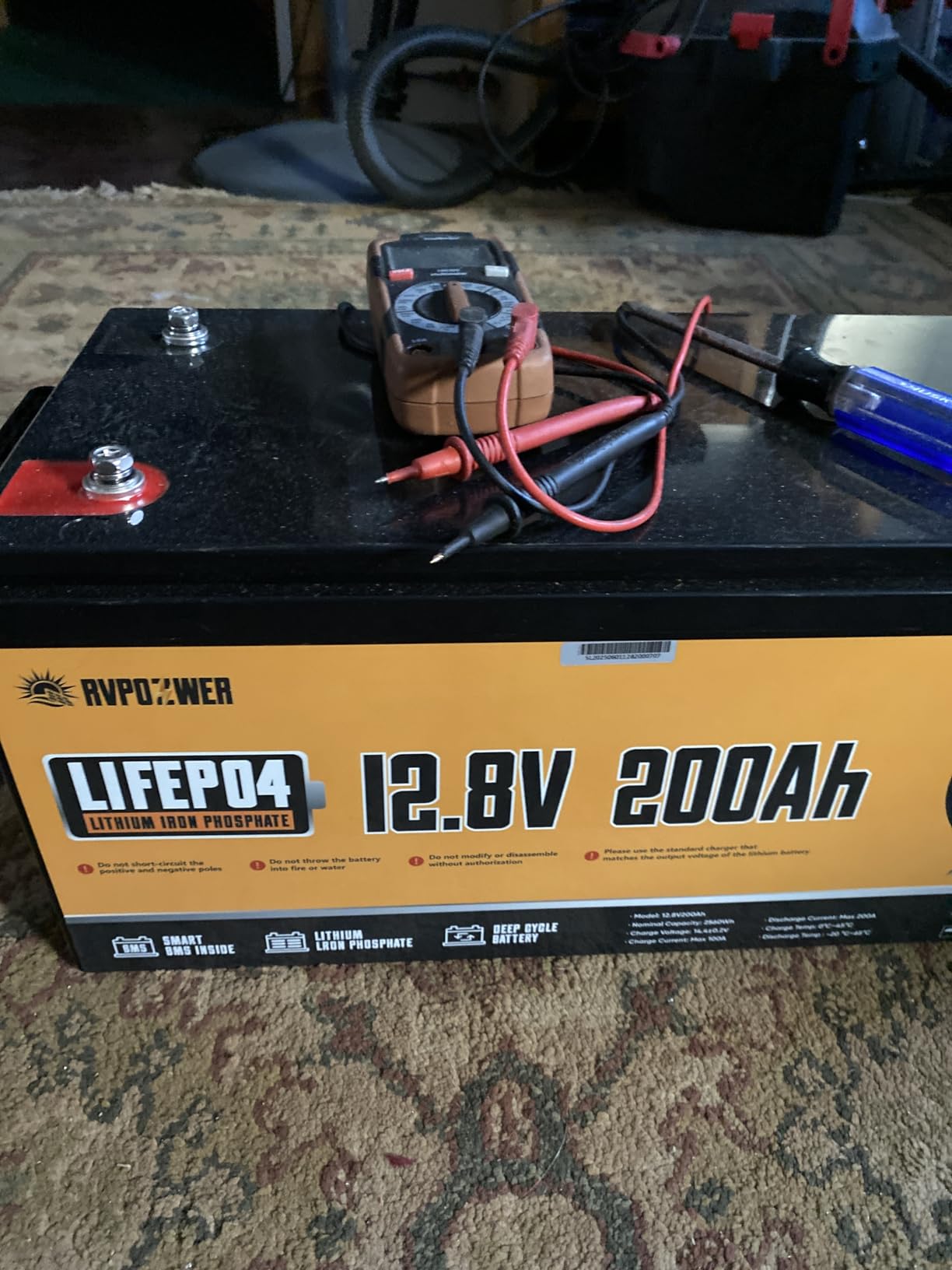
6. Rvpozwer 12V 200Ah — Budget Route to a Big Bank
12V 200Ah LiFePO4 Lithium Battery, Max. 2560Wh, 15000 Deep Cycle Battery
12.8V 200Ah / 2560Wh
45.2 lbs
200A smart BMS
Grade A cells
5 year warranty
Pros
- 200Ah at a lower cost than tier-one packs
- 200A smart BMS with full protection list
- Grade A cells with 15000 cycle claim at 60 percent
- Rated to operate from -20C to 65C
- Nylon carry handle eases install
Cons
- Lowest average rating in the group at 4.0
- No Bluetooth or app monitoring
- Listing names a generic third-party manufacturer
- Some buyers report capacity below claims
This is the value route to a 200Ah bank, and the arithmetic behind it is straightforward: 2560Wh in a Group 31 footprint at 45.2 pounds, with a 200A smart BMS covering overcharge, over-discharge, overcurrent, overvoltage and short circuits. On paper the specification list is as complete as packs costing considerably more.
The operating range is unusually wide, rated from -20C to 65C. That is a broad claim, and it is worth separating what it means from what a heater means: this pack will function across that range, but charging below freezing still depends on the low-temperature protection built into the BMS.
Published cycle figures follow the same pattern as several competitors here — 4000 cycles at 100% depth of discharge, 6000 at 80% and 15000 at 60%. Treat the 60% figure as the honest one and the others as a bonus you may never collect.
The rating spread is the thing to weigh here. At 4.0 across 427 reviews this is the lowest average in the roundup, with a 20% one-star cluster, the largest negative share in the group. That points to a wide quality spread across production batches rather than a single design flaw. Owners who received good units praise the capacity for the cost; the negative reviews cluster around delivered capacity and durability claims.
What you trade away for the lower cost
No Bluetooth or app monitoring means no phone-based state of charge. You will be reading voltage at the terminals or fitting a shunt monitor, and voltage alone is a poor gauge on lithium because the curve is flat across most of the range.
The listing also names a generic third-party manufacturer rather than a clearly identified brand entity, which makes warranty service the open question. Check that a replacement policy is written down before you build around it.
Who should skip it
Skip it if this battery has to live inside the van you depend on, or if you cannot monitor state of charge remotely. People running a residential-scale off-grid system often care more about the badge than we do, but inside a vehicle the failure mode matters more.
Buy it if you are building a weekend trailer rig, a shop or a backup bank where the lowest cost per usable watt-hour is the deciding factor.
7. PUPVWMHB 12V 300Ah — Best for Any-Orientation Mounts
PUPVWMHB 12V 300Ah LiFePO4 Lithium Battery, Bluetooth LifePO4 Battery, Upgraded 200A BMS, 3840Wh Rechargeable Lithium Battery with Low Temp Cut off, Perfect for RV Solar Marine Solar Panel Camping
12.8V 300Ah / 3840Wh
59 lbs
200A BMS
Bluetooth app
5 year warranty
Pros
- 300Ah in a compact 13.58 inch case
- Acid-free design mounts in any orientation
- App reports current voltage temperature and cycles
- Cell capacity above 80 percent after 2000 cycles
- UL test certificate for the cells
Cons
- Unrecognised brand with thin long-term data
- App reliability less documented than tier-one brands
- Heaviest single unit relative to capacity here
The acid-free, any-orientation design is the detail that matters most in a van. Lead-acid batteries are typically installed upright because electrolyte sloshing is a real problem on their side. A lithium pack that can be mounted on its side or laid flat removes a constraint that has shaped a lot of conversion layouts, particularly in the tight space under a bench seat.
At 12.8V 300Ah you get 3840Wh in a 13.58 x 7.48 x 9.64 inch case, which is compact for the capacity. The 200A BMS and the Bluetooth app report current, voltage, temperature and cycle count — temperature reporting is the useful one, since it is how you confirm a low-temperature cutoff is working rather than guessing.
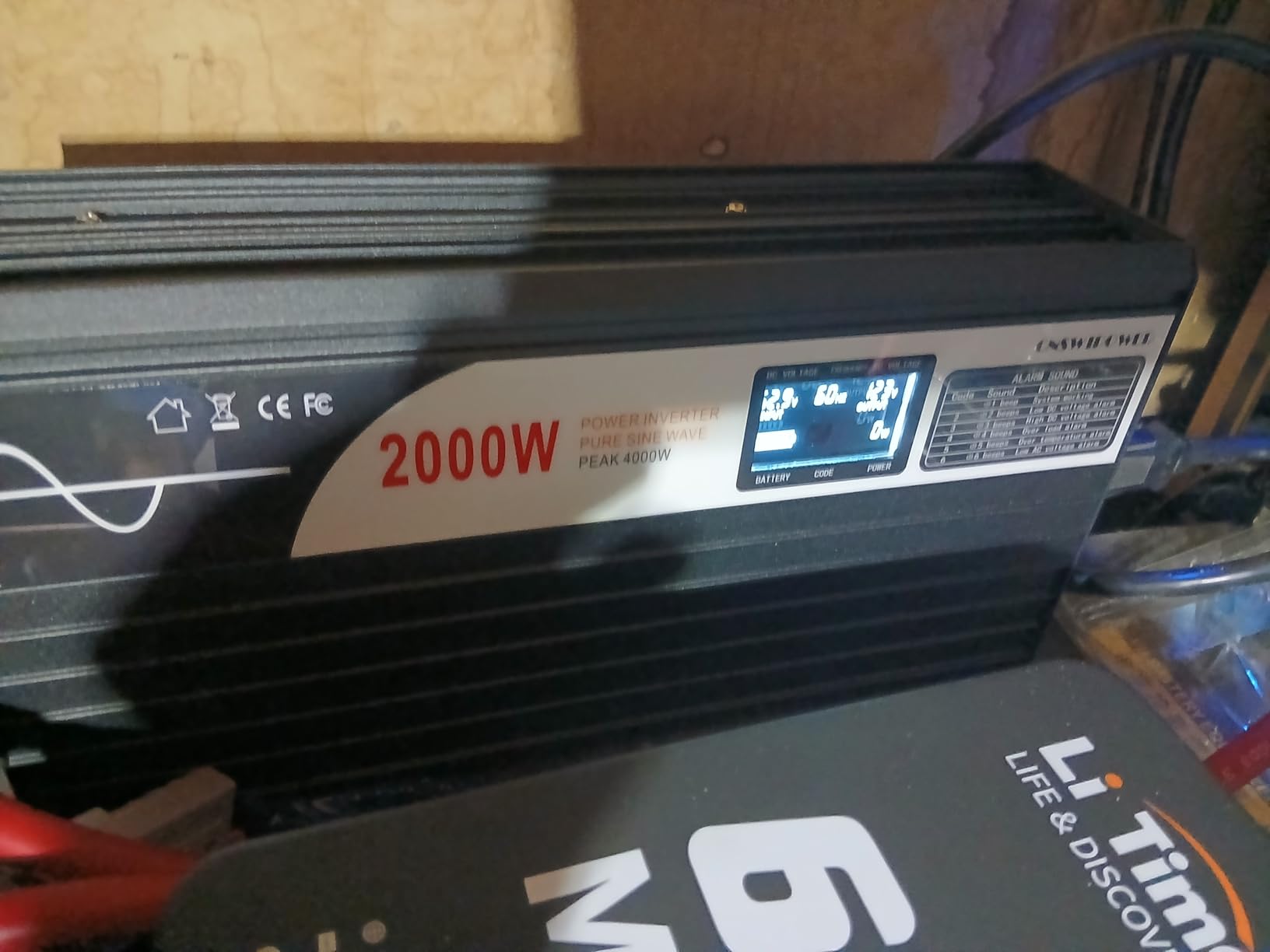
Expansion figures are generous, allowing series and parallel builds up to 51.2V at 1200Ah and 61.44kWh with a stated 40.96kW maximum load. The cells carry a UL test certificate, and the warranty runs five years with support offered around the clock.
At 251 reviews this is a thinner data set than the tier-one brands carry. Buyers rate the capacity-to-size ratio highly, and 78% of reviews are five star, but long-term durability evidence is limited simply because fewer people have owned one for years.
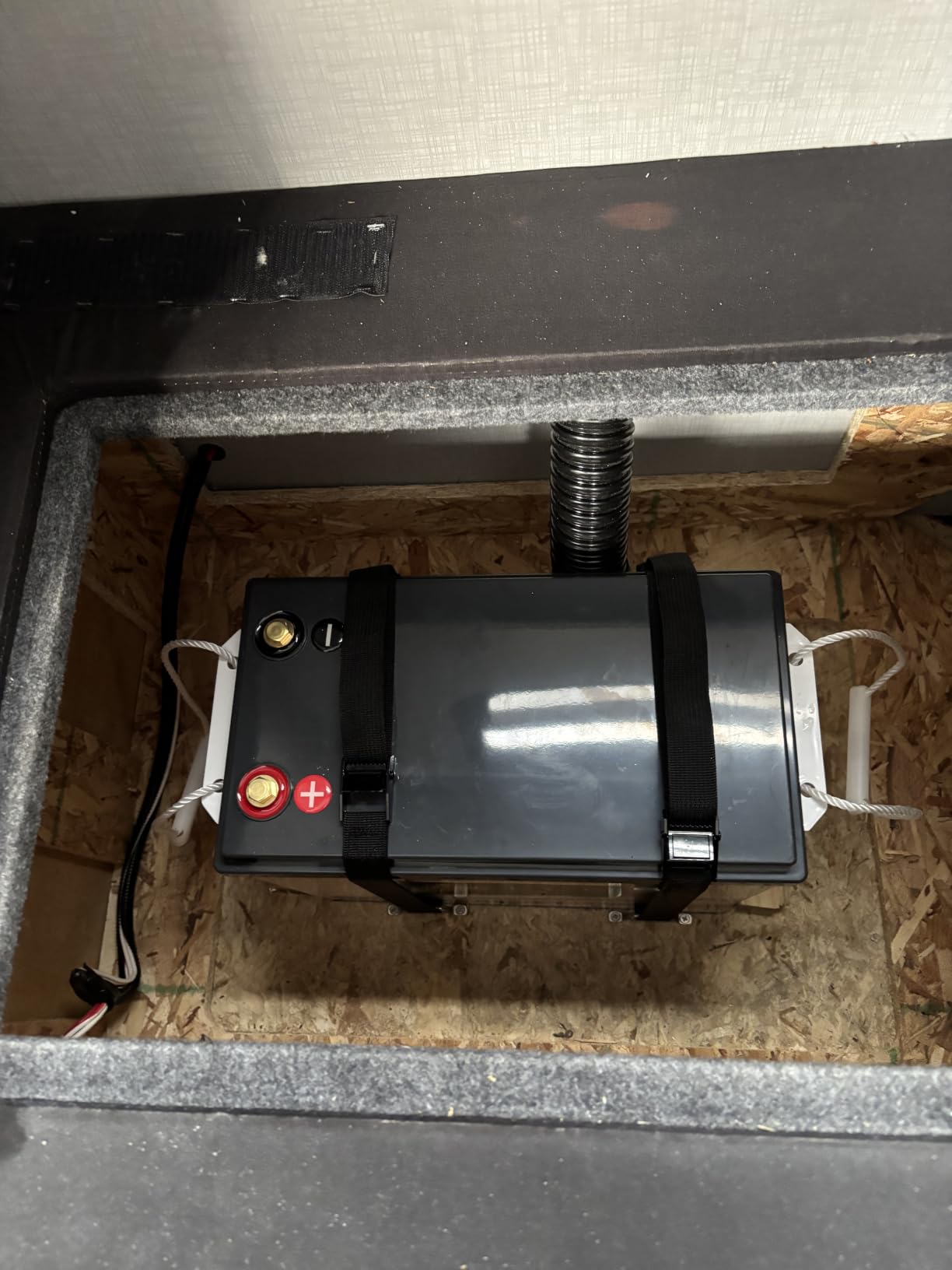
Orientation flexibility versus brand support
Mounting on its side is only sensible if your hold-down actually clamps the case in that position and you have not blocked the vents or the Bluetooth signal. Verify the mounting orientation guidance for your specific installation rather than assuming any orientation is fine.
The trade against a known brand is support depth. A smaller company may not publish long-term field data, and warranty terms may be harder to enforce cross-border. Read the warranty document before wiring it in.
Who should skip it
Skip it if your install needs bank-level monitoring through an existing Victron setup, since a standalone app does not feed a Cer GX. Also skip it if 59 pounds in one lift is more than your floor structure wants to carry in a single box.
It fits the profile of a full-time van dweller running a 2000W inverter and a fridge, and who values usable capacity over brand recognition.
8. NewtiPower 12V 330Ah — Longest Warranty in the Group
12V 330Ah LiFePO4 Battery Small Size, 4224Wh Lithium Battery with 200A BMS, Up to 10000+ Rechargeable Cycles, Perfect for RV Camping, Trolling Motor, Solar Power Storage
12.8V 330Ah / 4224Wh
56 lbs
200A BMS
10 year warranty
Grade A cells
Pros
- 330Ah replaced six GC2 lead-acid batteries
- Ten year warranty with free repair or replacement
- Charges near 90A against about 30A for lead-acid
- Series expansion to 72V
- Factory capacity inspection on each unit
Cons
- Larger than the GC2 batteries it replaces
- No Bluetooth on the base variant
- Listing capacity fields conflict with the model name
- App reliability reported as inconsistent
At 4224Wh this is the largest pack in the roundup, and it is the only one carrying a ten-year warranty. The warranty includes free repair or replacement for failures that are not user-caused, which is a meaningfully stronger commitment than the five years most competitors offer here.
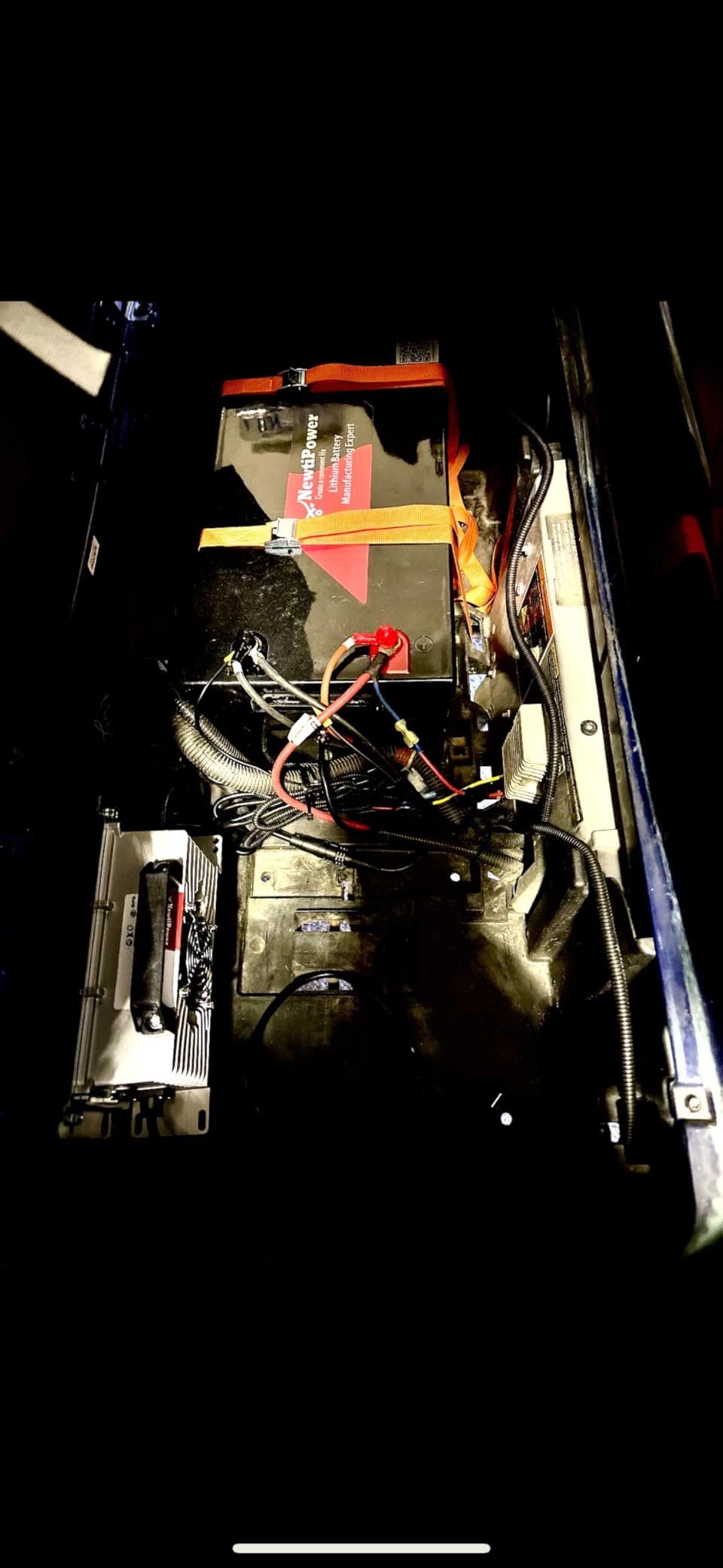
One motorhome owner replaced six GC2 lead-acid batteries with a single unit, reported charging at nearly 90A against about 30A for the old bank, and estimated 30+ hours of inverter runtime against 4 to 6 hours before. That is the shape of the improvement lithium delivers on a bank that was deeply undersized.
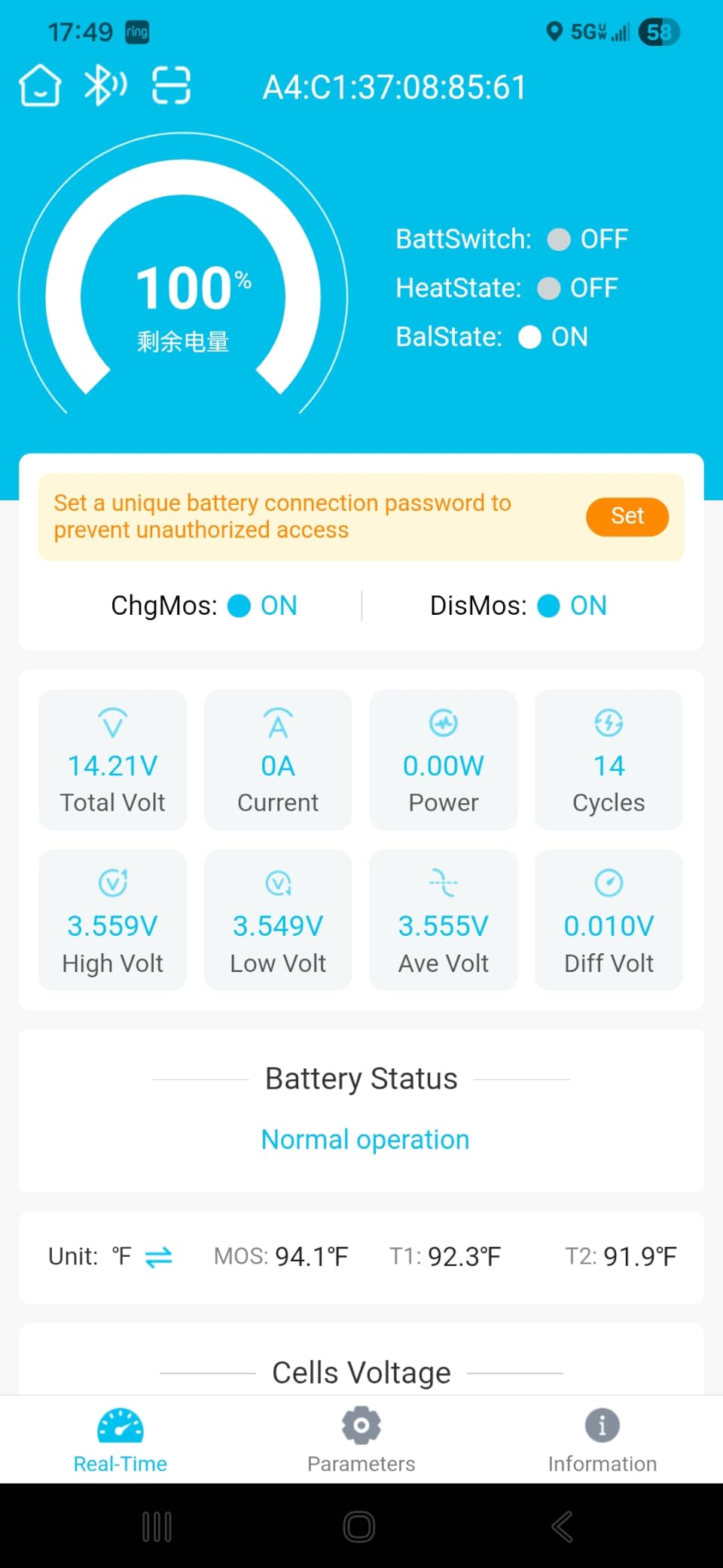
The technical story is solid. Grade A cells, a 200A intelligent BMS with overcharge, over-discharge, overcurrent and short circuit protection, and a published cycle life of 10000+ under normal conditions. Series expansion goes to 72V with a recommendation not to exceed 80V system voltage, which is unusual headroom for a consumer pack.
Two things to note before ordering. The case measures 7.64 x 13.74 x 9.84 inches, so it is physically larger than the GC2 batteries it replaces even though it holds far more energy. And the listing itself is inconsistent, showing 300 amp-hours in the product details against a 330Ah model name.
What the temperature protection does
Built-in temperature protection cuts charging at 32F. There is no heater on this unit, so in deep cold it protects by stopping. If you are combining it with engine charging or a heated bay, it will resume normally once the pack warms.
The factory capacity inspection is a quiet trust signal. Units that come in under capacity are rejected before shipping, which is exactly the failure mode buyers of lesser-known brands complain about.
Who should skip it
Skip it if tray space is the constraint, because it will not fit where six small GC2 cases did without a redraw. Also skip it if you expect Bluetooth monitoring, since the base 12V 330Ah variant does not include it.
It suits a full-time van or a small trailer build where you want maximum capacity in one box and you intend to keep the van for a decade.
9. MARSENERGY 12V 100Ah Self-Heating — Coldest Rated 100Ah Pack
MARSENERGY Self-Heating 12V 100Ah LiFePO4 Lithium Battery with Bluetooth
12.8V 100Ah with 60W heater
21 lbs
Group 24 footprint
4S4P capable
5 year warranty
Pros
- 60W self-heating active from -4F to 32F
- Lightest 100Ah unit here at 21 lbs
- App reports voltage current SOC and temperature
- Group 24 case also fits Group 27 and 31 boxes
- 4500 cycles at 100 percent depth
Cons
- Heating draws 5A and slows charging in cold
- Pack must be activated out of sleep mode first
- Limited variants at packs of 1 and 2
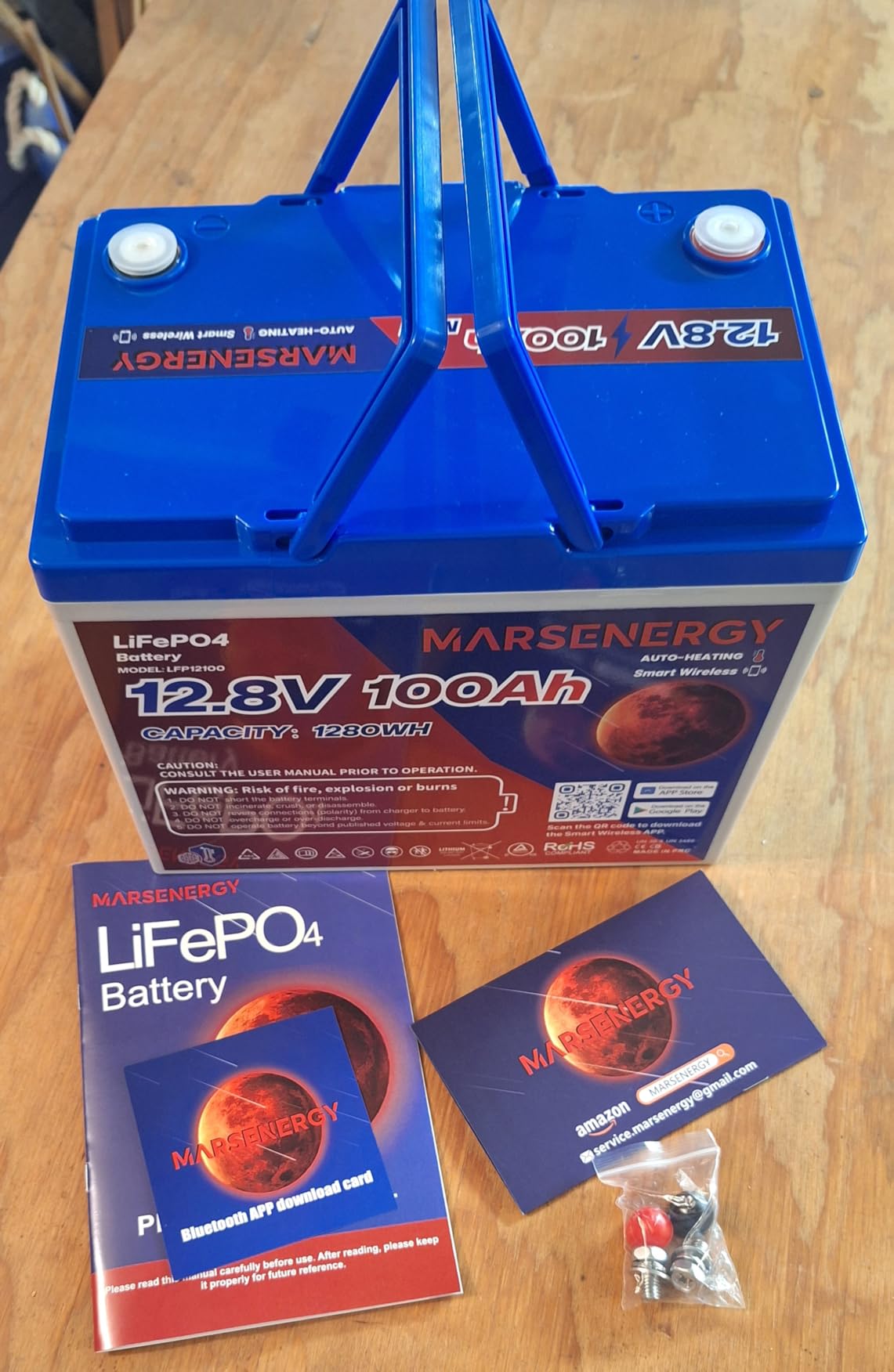
This pack has the lowest published cold-charge floor of any 100Ah unit here. The 60W heating system activates between -4F and 32F, and the BMS charging cutoff sits below -4F. That is roughly twenty degrees colder than the cutoff-only alternatives, and it is the number to compare if you camp in genuine winter conditions.
It is also the lightest 100Ah pack in the roundup at 21 pounds, and the case is a true BCI Group 24 footprint at 10.16 x 8.46 x 6.54 inches that also drops into Group 27 and Group 31 boxes. That gives you fit flexibility most competitors do not offer.
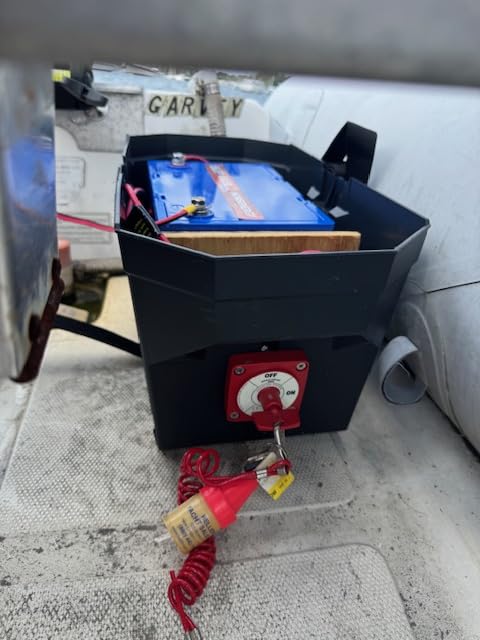
Cycle ratings are strong: 4500 cycles at 100% depth of discharge, 8000 at 80% and 15000 at 60%. Cells are A+ grade with cold-weather additives, and Bluetooth monitoring covers voltage, current, state of charge and temperature over QR code app pairing. Expansion goes to 4S4P for a 51.2V 400Ah bank.
Cold-weather users treat the integrated heater as the decisive feature over cheaper non-heated 100Ah packs. The rating split is the most consistent here — 88% of reviews are five star and only 2% are one star, with 198 reviews behind it.
The charge-speed trade-off you should plan around
Heating draws 5A from the charger while it runs. On a small solar controller or a 30A DC-DC charger that is a real fraction of your input, and it means a cold morning charge takes longer to finish. On a 50A DC-DC unit or a 200W panel array it is a rounding error.
Owners also report that the pack must be woken from sleep mode before use, which means giving it one proper lithium-profile charge after unpacking, before it goes into the van.
Who should skip it
Skip it if you never camp below freezing, because you would be paying for a heater that never switches on. It is also only available in packs of one and two, so it does not suit a builder planning a four-pack installation from day one.
For four-season van life where charging happens in genuinely cold conditions, the colder rated floor is worth more than the extra capacity a 200Ah pack would give you.
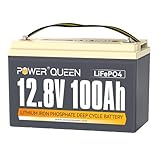
10. power queen 12V 100Ah Group 31 — Most Consistent Ratings
power queen 12V 100Ah LiFePO4 Battery Group 31 Lithium Battery for RV Solar
12.8V 100Ah / 1280Wh
24.25 lbs
6.77 x 12.99 x 8.5 inch
4P4S capable
5 year warranty
Pros
- Most consistent rating spread in the group
- Group 31 drop-in footprint
- Full 100Ah usable rather than half
- Fast charging and low self-discharge
- Five year warranty with responsive support
Cons
- No Bluetooth on this variant
- BMS cuts off near 14.2V with higher-voltage chargers
- No charger included
- 6 AWG cable minimum recommended to an inverter
This is the pack with the tightest rating distribution here: 4.8 stars across 223 reviews, with 86% five star and only 2% one star. Owners describe the Group 31 footprint as fitting most RV and marine battery trays, and 24.25 pounds as roughly a third the weight of an equivalent lead-acid battery.
The functional point that gets repeated is usable capacity. Where a 100Ah AGM gives you about 50Ah in practice, this gives you effectively the full 100Ah, because the BMS allows deep discharge without the same degradation penalty. The smart BMS carries 20+ protections covering overcharge, over-discharge, overcurrent and short circuit.
Expansion to 4P4S gives a 51.2V 400Ah system if you ever outgrow a single unit. Terminal hardware, insulating caps and M8 bolts are included, so the install does not wait on a delivery of separate lugs.
There is one technical complaint that appears again and again, and it is worth understanding rather than ignoring: the BMS cuts off around 14.2V, so a charger set to 14.4V or 14.6V never reaches constant voltage and the pack does not fully charge. That matters on mains or engine charging. Check your charger’s lithium profile against this cutoff before you commit.
Reading the charge voltage spec correctly
The published charge voltage is 14.4V plus or minus 0.2V. If your BMS ceiling is 14.2V, the pack sits in absorption indefinitely without topping off. The practical effect is a slightly undercharged bank rather than a damaged one, but it costs you usable capacity on every cycle.
A lithium-aware charger with a lower absorption set point solves it. If you are also replacing other hardware as part of the upgrade, that setting is one reason to plan the whole system at once rather than swapping batteries only.
Who should skip it
Skip it if you rely on phone-based monitoring, because this variant has no Bluetooth. Also skip it if you plan to charge it from a fixed 14.6V profile charger and will not adjust the absorption setting.
A charger is not included, and owners recommend at least 6 AWG cable from battery to inverter, so budget for that as part of the install.
11. SUPER EMPOWER 12V 100Ah Group 24 — Cleanest Documentation on Cold Limits
12V 100Ah LiFePO4 Battery, Group 24 Deep Cycle for RVs & Trolling Motors
12.8V 100Ah / 1280Wh
21.6 lbs
100A BMS
4S4P with balancing
5 year warranty
Pros
- Exact Group 24 drop-in with M8 terminals
- Low 21.6 lb weight
- Cold cutoffs published with recovery thresholds
- 4S4P expansion with cell balancing
- Works with MPPT and PWM controllers in lithium mode
Cons
- No Bluetooth or app monitoring
- Non-lithium chargers not recommended
- Seven percent of reviews are one star
What sets this one apart is that it publishes its temperature thresholds with recovery values, not just a cut-off. Charging pauses below 32F and discharge stops at -4F, then charging resumes above 41F. Knowing the recovery point matters, because it tells you whether a pack will come back on its own on a sunny morning or sit dead until you warm it.
It is a true Group 24 drop-in at 6.49 x 10.24 x 8.98 inches with M8 terminals and no modifications, weighing 21.6 pounds. The 4S4P expansion rating includes cell balancing across banks, which is the correct behaviour when you grow a system later.
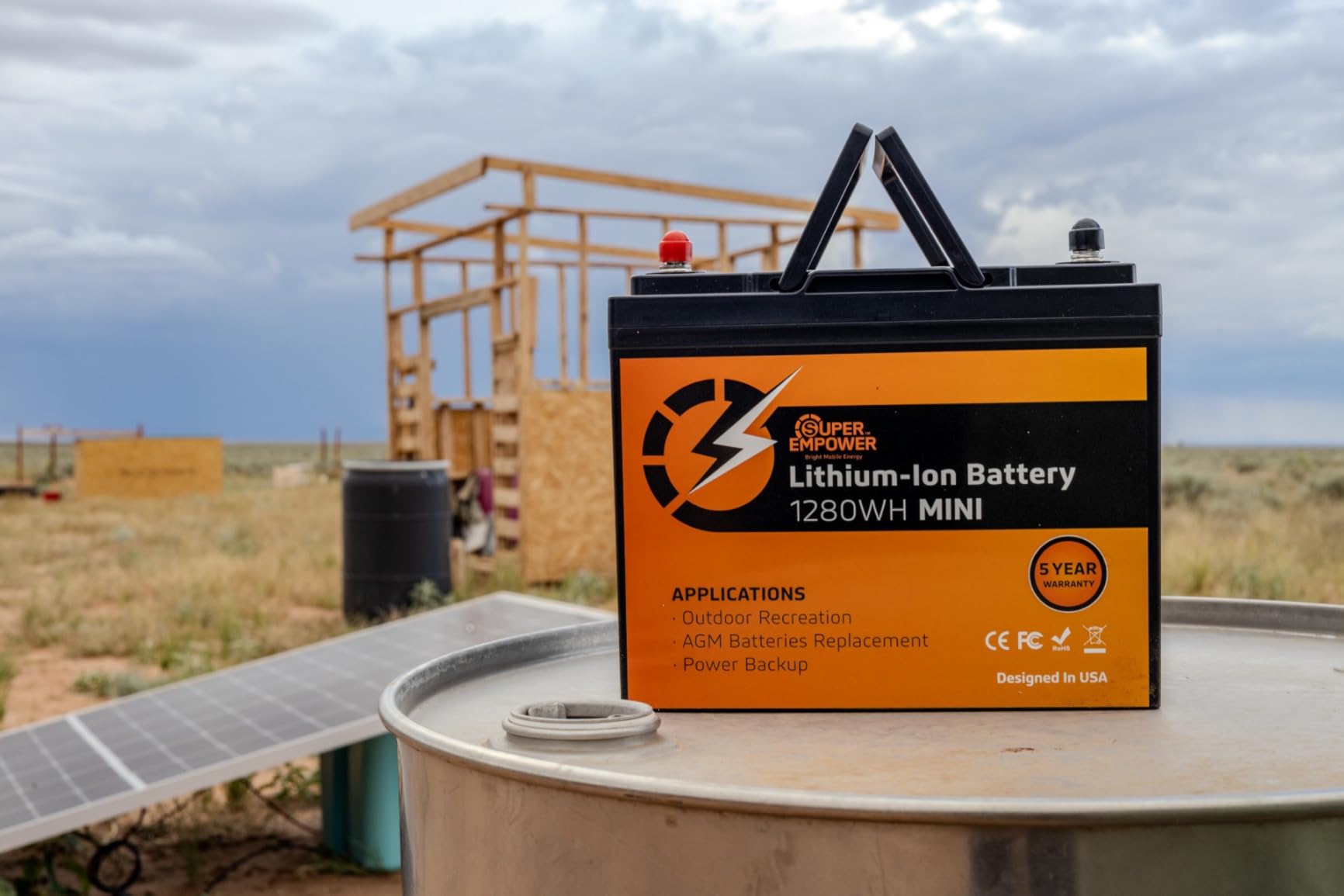
Charging compatibility is spelled out in a way most listings skip. It works with dedicated LiFePO4 chargers, with MPPT and PWM solar controllers set to lithium mode, and with DC-DC charging from a generator. That third path is the one camper builders with generators care about, and it is not something every pack lists.
Owners in RV, marine and solar use praise the exact Group 24 sizing, the low weight and the clearly documented low-temperature thresholds. 84% of reviews are five star, and the main reservation buyers mention is the absence of Bluetooth monitoring on this model.
Why charger compatibility belongs in the buying decision
A lithium pack and a lead-acid charger are a mismatch. The charge profile differs enough that an old PWM controller or a fixed-voltage shore converter can leave a lithium bank chronically undercharged or exposed to overcharge. The listing is explicit that non-lithium chargers are not recommended, which is a better position than silence.
Because it works with both MPPT and PWM controllers in lithium mode, it suits a build where you want to start with a cheap PWM controller and upgrade later.
Who should skip it
Skip it if you want to see state of charge on your phone, or if your van relies on monitoring from a remote display rather than a shunt. The seven percent one-star share also reflects some early quality variance, so keep the box if you buy it and check capacity on arrival.
It suits a builder who has already planned the charging hardware and wants a battery whose limits are documented rather than implied.
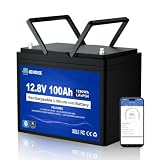
12. DC HOUSE 12V 100Ah Bluetooth — Best for Fault Diagnostics
DC HOUSE 12V 100Ah Bluetooth LiFePO4 Trolling Motor Lithium Battery
12.8V 100Ah / 1280Wh
23.8 lbs
Bluetooth 5.1
UL and UN38.3 cells
3 year warranty
Pros
- Bluetooth 5.1 with cell-level accuracy
- Fault display page and anomaly push notifications
- Aggressive low-temp cutoffs with auto recovery
- UL and UN38.3 certified Class A cells
- Close to standard Group 24 dimensions
Cons
- Three year warranty is shorter than most
- Only 5 to 10 meter Bluetooth range
- 4P4S expansion not permitted
- Case runs about 0.32 inch taller than Group 24
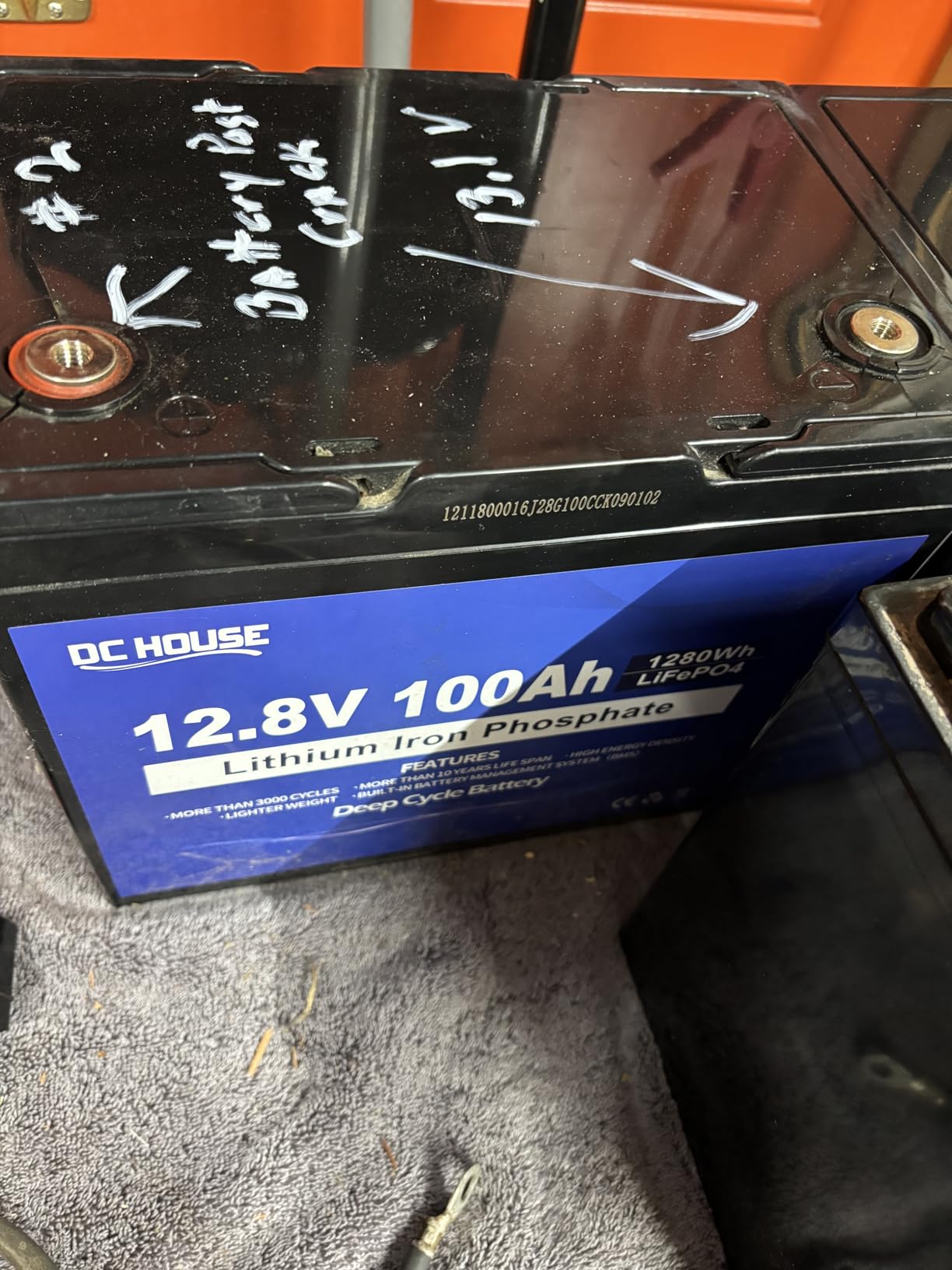
The diagnostic tooling is the reason this one is worth a look. The Bluetooth 5.1 link reports at cell level, and the app includes a fault display page plus push notifications for detected anomalies. In a battery that lives under a seat or behind a panel, knowing which cell has drifted is genuinely useful rather than decorative.
Cells are UL and UN38.3 certified, and the low-temperature protection is aggressive: charging cuts below 19.4F, discharge stops below -4F, and both recover automatically at 32F. That is one of the more conservative charging cut-offs here, and it is the safer side to err on.
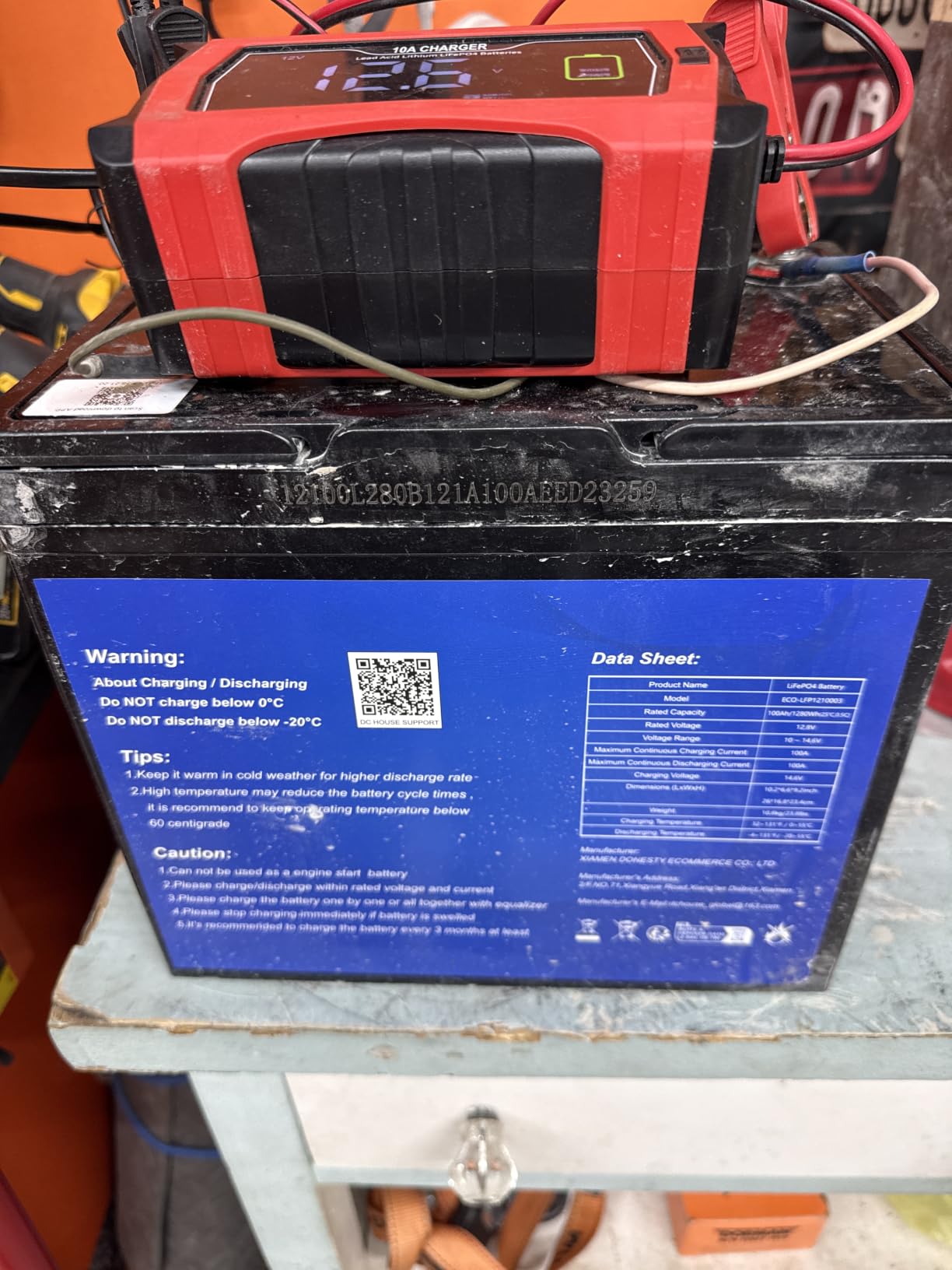
The dimensions are 6.6 x 10.2 x 9.2 inches, which sits about 0.32 inches taller than a true Group 24 footprint. That is small enough to fit most boxes with a taller lid clearance, and it is the first thing to measure if your hold-down bar is tight.
At 201 reviews with 81% five star, the record is solid for a smaller brand. Trolling motor and marine owners single out the built-in fault diagnostics and the cost of getting a Bluetooth-equipped 100Ah pack, both of which are the reservations this pack is built around.
Two limits to check before you commit
First, expansion. This pack supports 4 in series or 4 in parallel, 8 total, and explicitly does not permit a 4P4S bank. If your growth plan is a large parallel array of matching packs, that is the constraint that rules it out. Our marine battery guide covers packs where parallel scaling matters more.
Second, Bluetooth range of 5 to 10 meters is short. That is fine if the app is read from the open barn door, and frustrating if you want the pack to appear in a display mounted at the cab.
Who should skip it
Skip it if you plan to run more than eight batteries, if you want the longest warranty available, or if the three-year term is too short for a build you intend to keep for a decade. Otherwise it is a well-equipped 100Ah pack with unusually good fault reporting.
How Much House Battery a Camper Van Needs
Start with watt-hours, not amp-hours. Add up what your 12V loads draw over a typical day: a compressor fridge averaging 40 to 50Ah per day, LED lighting at 2 to 5Ah, a water pump at roughly 2Ah per cycle, phone and laptop charging at 3 to 6Ah, and a diesel heater fan drawing 5 to 10Ah when it runs.
A weekend van with a fridge, lights and USB lands around 60 to 80Ah per day. Multiply by 12 volts and you get roughly 750 to 1000Wh of daily draw. Apply an 80% depth-of-discharge target, which is realistic for LiFePO4, and add a 25% margin for cloudy stretches. That works out to about 1.5kWh of bank, or a 100Ah unit giving you a comfortable night.
Add the inverter and the maths changes character. A 2000W inverter running a microwave for ten minutes draws more energy in those ten minutes than your fridge uses all day. Full-time van life with an inverter and a heater typically lands in the 200Ah to 300Ah range, which is why that class carries two entries here.
Swapping AGM for Lithium: The Hardware Checklist
Replacing the batteries is the cheapest part of this upgrade. Forum conversations about the cost shock that follows are the most consistent theme in camper build communities, and they all name the same missing pieces.
You need a DC-DC charger. This is the item builders warn about most often: charging a lithium pack straight off a factory-original alternator overdrives it, because the factory voltage profile is built for lead-acid. Without a proper DC-DC unit, the lithium swap shortens battery life instead of extending it.
You also need a lithium-profile shore power converter. The converter fitted during most van conversions is almost always set to an AGM or flooded charge profile, and that is the single most commonly missed part of the whole upgrade. Our solar and charging guide covers how these interact with an array.
The rest of the list: an MPPT charge controller set to lithium mode rather than PWM, a battery temperature probe so the controller and charger know the pack is cold, correctly sized cable with lugs that match M8 terminals, and a torque specification for those lugs rather than a guess. If you are adding Bluetooth monitoring, budget for the fact that a standalone app does not feed an existing monitor.
Cold-Weather Charging: Cut-Off Against Self-Heating
Charging a lithium cell below freezing causes lithium plating, where lithium metal deposits inside the cell instead of intercalating properly. Plated cells lose capacity permanently and can fail. Every battery here manages this differently, and the difference is the whole decision.
A cut-off pack refuses charge below its published threshold and waits for the sun or the cabin heat. Four packs here use that approach, with thresholds from 5C up to 32F. A heater pack spends energy warming itself to 50F before charging resumes, which works at far colder temperatures and draws 5A from your charger while it does it.
Two self-heating options appear here, with published activation points of 41F and -4F. If you charge below freezing regularly and mostly from solar, the heater is the safer buy. If you have engine charging as a warm fallback or you only camp in shoulder seasons, a cut-off pack with a documented threshold is cheaper and lighter.
House Battery Against Starter Battery: What Each One Does
This distinction confuses more first-time builders than anything else in the category. The house bank runs living loads: fridge, lights, water pump, USB, fans and anything behind an inverter. It is a deep-cycle battery, repeatedly discharged and recharged.
A starter battery exists to deliver a very high current for a few seconds and then sit unused. Several packs in this roundup state explicitly that they are not for engine starting, golf carts or jack applications. Wiring a house pack to the starter terminals gives you a battery that struggles in cold weather and a starter circuit with no reserve.
A separate starter pack is cheap, small and light, and it keeps your lithium bank free to be tuned for deep cycling. If your van has a dual-charger setup, the DC-DC charger is what links the two.
Weight, Payload and Where the Bank Goes
Normalising by weight makes the capacity classes easy to compare. The 100Ah packs here run 21 to 24.25 pounds for 1280Wh. The 200Ah packs run 44.5 to 45.2 pounds for 2560Wh. The larger 280Ah to 330Ah packs run 56 pounds to roughly 68 pounds for 3584Wh to 4224Wh.
A heavier battery is not automatically a better one. Two 100Ah packs in parallel give you the same capacity as one 200Ah pack at similar weight, and redundancy has value when a single failure ends your trip. What you give up is the higher BMS current limit of a single 200A unit, which matters when an inverter is involved.
Placement is a weight-distribution problem, not just a packing problem. Keep the bank low and forward of the rear axle, on the opposite side from the water tank, so adding battery mass does not push the rear suspension closer to its limit. Restrain it properly and route cables away from sharp edges, since a 300Ah pack in an unrestrained box is a serious projectile in a collision. Our vehicle battery guide covers charging and starting systems if your starter setup is also being replaced.
Series and Parallel Expansion Rules by Model
Expansion is where listings differ most and where people get caught. Six products here support 4S4P, giving a maximum of 51.2V at 400Ah. Two support 4P4S at higher capacity, with the 200Ah pack reaching 800Ah and the 300Ah pack reaching 1200Ah at 51.2V.
The exceptions matter. The DC HOUSE 100Ah pack supports 4 in series or 4 in parallel, eight total, and explicitly does not permit 4P4S. The NewtiPower 330Ah supports series to 72V with a recommendation not to exceed 80V system voltage. Check the expansion limit on the exact variant before you plan a four-pack build.
Monitoring: Bluetooth App, Shunt or Victron
Voltage alone is a poor state-of-charge gauge on lithium, because the discharge curve is flat across most of the range. That pushes you toward either a shunt monitor or an app, and the choice comes down to ecosystem lock-in.
A shunt monitor such as a BMV-712 feeds a Victron Cer GX and shows up alongside your controllers, inverters and solar charge controllers in one interface. If your van already runs Victron hardware, that integration is worth more than any phone app. Several builders have deliberately chosen non-Victron Bluetooth packs while keeping their Victron MPPT and GX precisely so they retain that monitoring path.
App monitoring is simpler and cheaper. Documented ranges vary widely: one pack here reports Bluetooth past 50 feet, one reports 12 feet, and the budget Bluetooth pack manages 5 to 10 meters. Cell-level accuracy and fault reporting are more valuable than range in most vans, because the battery is usually a few steps away from wherever you are reading from.
Our RV battery guide goes deeper on the comparison between shunt-based and app-based monitoring.
Frequently Asked Questions
Is a 100Ah lithium battery enough for camping?
A 12V 100Ah LiFePO4 battery stores about 1.28 kWh, which covers roughly two nights of typical weekend van use: a compressor fridge, LED lights, USB charging and a water pump. Full-time van dwellers running an inverter or a heater usually want 200Ah to 300Ah instead.
Can LiFePO4 batteries be charged below freezing?
Not without protection. Charging a lithium cell below freezing can cause lithium plating, which permanently reduces capacity. Cut-off packs refuse charge below their published threshold, commonly 0 to 5C. Self-heating packs use a built-in heater to warm the cell, with activation points published from -4F to 41F, before charging resumes.
What is better, LiFePO4 or other lithium battery chemistry?
LiFePO4 is the practical default for camper vans. It tolerates deep discharge to roughly 80 to 90 percent depth, runs thousands of cycles and carries a far lower thermal runaway risk in a confined vehicle interior. NMC chemistries hold more energy per pound but are widely avoided for van house banks because of cycle life and safety.
Do I need a DC-DC charger for lithium batteries?
Yes. A stock alternator voltage profile is built for lead-acid and will overdrive a lithium pack. A properly specced DC-DC charger regulates alternator output to the lithium charge profile. You also need a lithium-profile shore power converter, since the unit fitted during most van conversions is set to an AGM or flooded profile.
How heavy is a 100Ah lithium camper van battery?
The 100Ah packs in this roundup weigh between 21 and 24.25 pounds. A comparable 100Ah AGM typically runs 60 to 65 pounds, so a lithium house bank saves roughly 40 pounds per battery. That difference is what pays for water, insulation or gear elsewhere in a conversion.
Which 100Ah LiFePO4 battery is the best?
For most builds the LiTime 12V 100Ah Group 24 is the strongest overall choice, with a true Group 24 footprint, Bluetooth monitoring beyond 50 feet and 4000+ published deep cycles. For winter charging pick a self-heating model such as the MARSENERGY 60W unit, which activates from -4F to 32F.
Final Verdict: Which Lithium House Battery to Buy
For most camper vans, the LiTime 12V 100Ah Group 24 is the best lithium house battery to start with. It is a true drop-in at 21 pounds, it has the largest review record in this roundup at 4.6 stars across 735 reviews, and its Bluetooth range means you can actually read state of charge from outside the van.
Match the pick to the build instead: add the self-heating LiTime 100Ah if you charge below freezing, step up to the 200Ah pack if an inverter is on your list, and choose the metal-case ECO-WORTHY if your battery bay runs hot. Whatever you order, budget the DC-DC charger, the lithium-profile shore converter and the temperature probe at the same time, because the batteries are the cheap part of this upgrade.
Measure your bay before you click anything, confirm the expansion limits match your growth plan, and give any new pack one full lithium-profile charge before it goes into the van.