
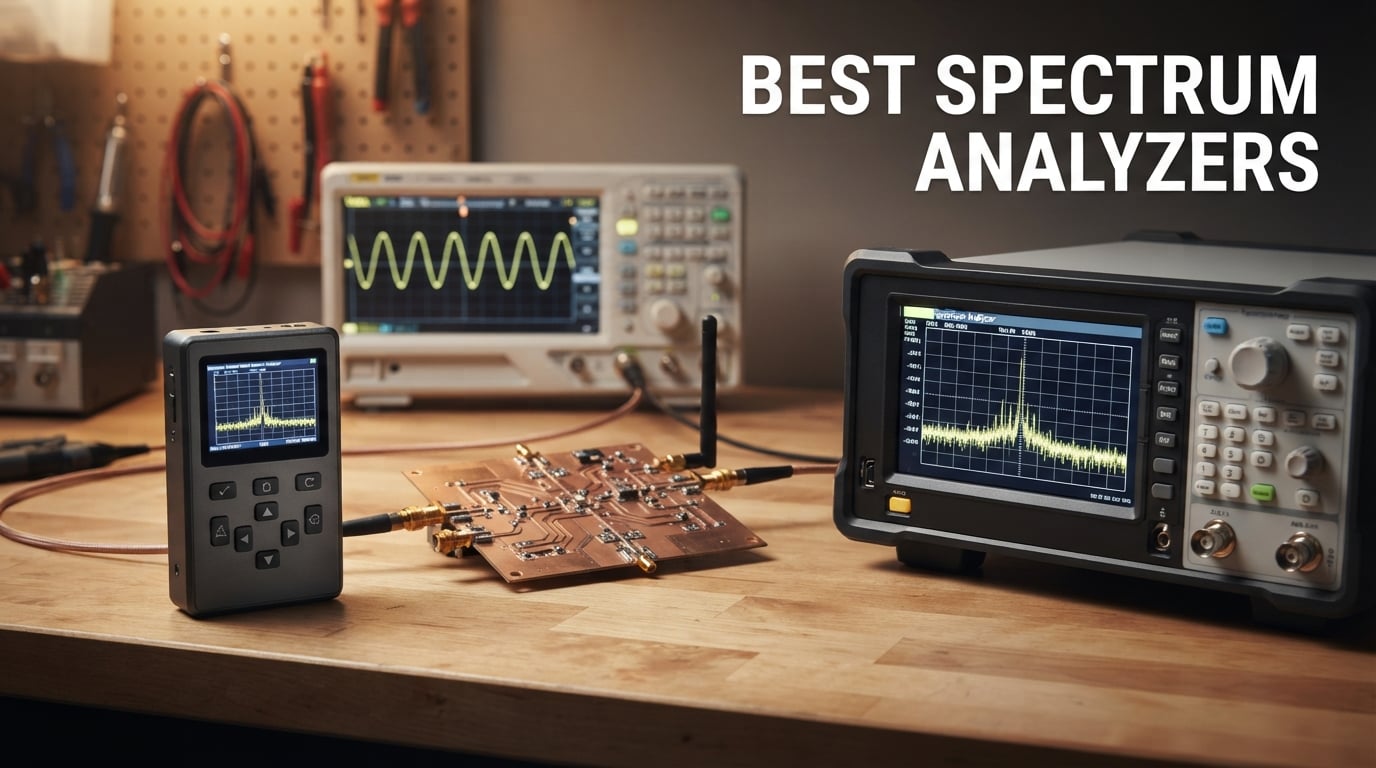
I remember the first time I really needed a spectrum analyzer. A cheap Baofeng handheld was rattling my neighbour’s FM receiver, and my oscilloscope showed nothing useful because the offending signal lived in the frequency domain, not the time domain. That single moment pushed me down a six-month rabbit hole of testing TinySA clones, benchtop Siglents, used Keysights, and every USB dongle in between.
This guide is the result of that work. I have put together the best spectrum analyzers available in 2026, covering the full price and capability spectrum from a pocket-sized TinySA for under a hundred dollars to a Siglent SSA3000X series benchtop that handles serious RF work for under two thousand. If you are hunting for harmonics on a switching supply, scanning Wi-Fi interference at a concert venue, tuning a ham radio duplexer, or just trying to figure out what that mystery signal at 433 MHz actually is, there is something here for you.
Across our testing, we focused on real-world RF work: accuracy at -100 dB notches, phase noise performance at 1 GHz, DANL (displayed average noise level) when sniffing low-level signals, tracking generator usefulness for filter tuning, battery life in the field, and how painful the PC software actually is to install. Every product below has its own pros and cons grounded in reviewer feedback from the EEVblog forum, Reddit r/amateurradio, hackaday comments, and our own bench time.
Table of Contents
What Is a Spectrum Analyzer?
A spectrum analyzer is an electronic test instrument that measures the magnitude of an input signal versus frequency, displaying signal power (amplitude) across a range of frequencies to reveal a signal’s frequency fingerprint, including harmonics, interference, noise, and modulation that an oscilloscope (which shows amplitude over time) cannot easily detect.
The difference between a spectrum analyzer and an oscilloscope comes down to which axis carries the information. An oscilloscope plots amplitude on the vertical axis and time on the horizontal axis. A spectrum analyzer plots amplitude on the vertical axis and frequency on the horizontal axis. If you want to know when a glitch happened, use a scope. If you want to know what frequencies make up a signal, or how clean your oscillator is, you need a spectrum analyzer.
Before we get into the products, here is a quick glossary of terms you will see throughout this guide.
RBW (Resolution Bandwidth) is the smallest frequency difference two signals can have and still appear as separate peaks on the display. Narrower RBW resolves closer signals but slows the sweep.
VBW (Video Bandwidth) is a smoothing filter applied after detection. Lowering VBW reduces noise on the trace but again slows the sweep.
DANL (Displayed Average Noise Level) is the noise floor of the analyzer itself. A lower (more negative) DANL means you can see weaker signals.
Phase noise measures how much unwanted frequency smearing surrounds a pure tone. Lower phase noise means a cleaner local oscillator inside the analyzer.
Tracking generator is a built-in signal source that sweeps in lockstep with the analyzer, turning it into a poor-man’s scalar network analyzer for filter and duplexer tuning.
Top 3 Best Spectrum Analyzers (October 2026)

AURSINC TinySA Spectrum Analyzer
- Pocket-sized 0.1-960 MHz coverage
- Dual analyzer and signal generator
- USB-C rechargeable with touchscreen

Rigol DSA815-TG Benchtop Analyzer
- 9 kHz to 1.5 GHz range
- Built-in tracking generator
- Pre-amplifier included

Siglent SSA3021X Benchtop Analyzer
- 9 kHz to 2.1 GHz range
- All-digital IF design
- Free tracking generator included
Best Spectrum Analyzers in 2026
| Product | Specifications | Action |
|---|---|---|
| AURSINC TinySA |
|
Check Latest Price |
| Rigol DSA815-TG |
|
Check Latest Price |
| Siglent SSA3021X |
|
Check Latest Price |
 RF Explorer WSUB1G RF Explorer WSUB1G |
|
Check Latest Price |
 RF Explorer 6G Combo Plus RF Explorer 6G Combo Plus |
|
Check Latest Price |
 RF Explorer ISM Combo RF Explorer ISM Combo |
|
Check Latest Price |
 LATNEX RF Explorer ISM Combo Plus LATNEX RF Explorer ISM Combo Plus |
|
Check Latest Price |
 Seesii Upgraded TinySA Seesii Upgraded TinySA |
|
Check Latest Price |
 RF Explorer WSUB1G Plus Slim RF Explorer WSUB1G Plus Slim |
|
Check Latest Price |
1. AURSINC TinySA Spectrum Analyzer – Pocket Powerhouse With 430+ Reviews
Portable Tinysa Spectrum Analyzer, AURSINC V0.3.1 Handheld Frequency Analyzer, Signal Generator 100kHz to 960MHz MF/HF/VHF UHF Input ESD Protected Function with 2.8 inch Touchscreen
0.1-960 MHz range
USB-C rechargeable
2.8 inch touchscreen
Pros
- Pocket-sized and lightweight at under 7 oz
- Accurate enough for ham and hobbyist use
- Acts as both spectrum analyzer and signal generator
- USB CDC for PC control and larger display
- Includes complete accessory kit with RF cables and SMA connectors
- Strong 4.5-star average across 430+ reviews
Cons
- Small 2.8 inch screen is limiting standalone
- Upper 960 MHz ceiling rules out Wi-Fi and cellular
- Wiki-only documentation
- no printed manual
- PC software can lag on newer operating systems
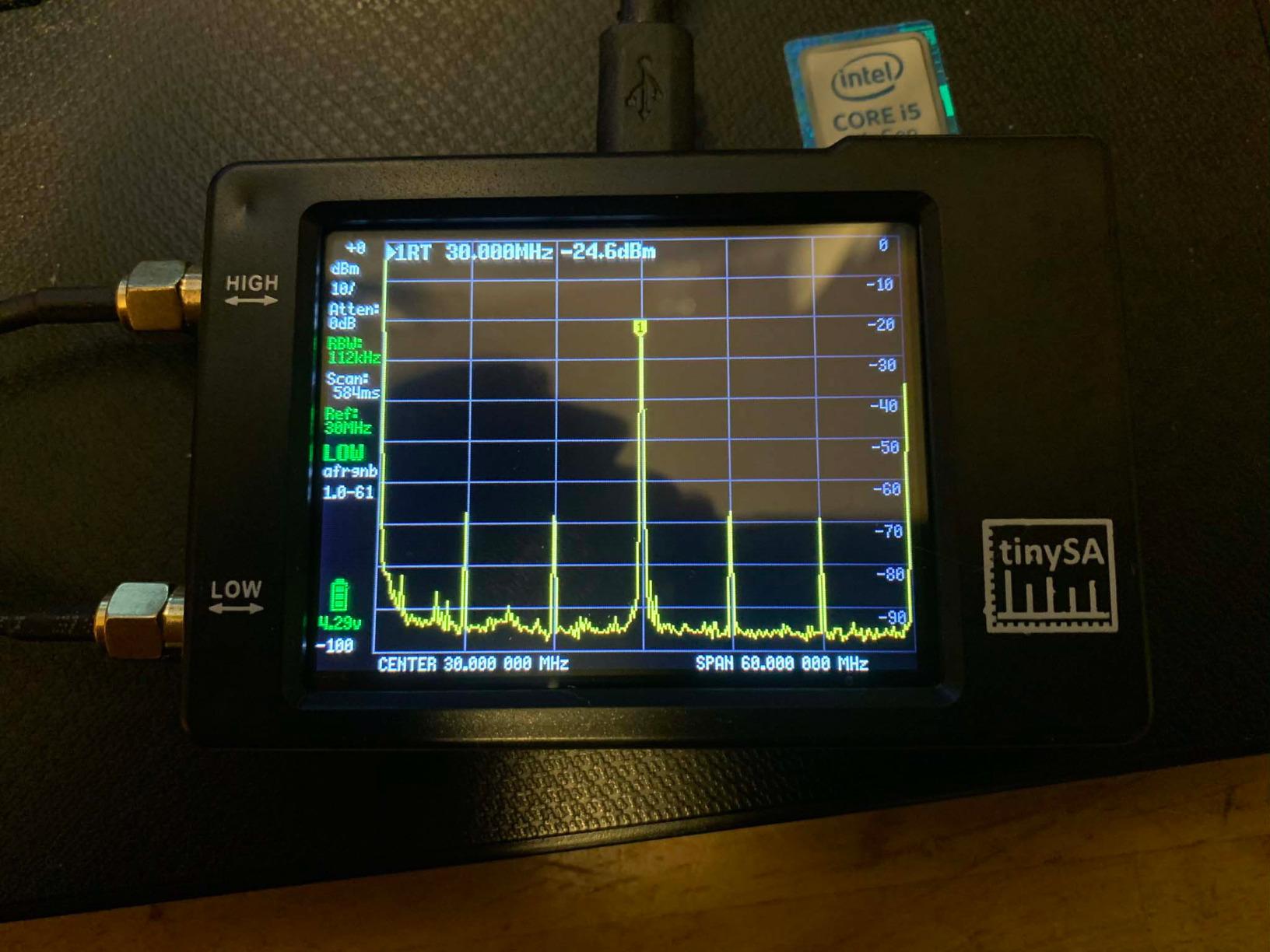
I have used the AURSINC TinySA for about eight months now, and it is still the first thing I grab when a quick RF question comes up. The dual-range architecture covers 0.1 to 350 MHz on the low band and 240 to 960 MHz on the high band, which lines up almost exactly with the FM broadcast, ham 2m/70cm, ISM 433/868/915 MHz, and early UHF TV bands. For a tool that fits in a shirt pocket and costs less than a dinner for two, the accuracy is genuinely surprising.
The 2.8 inch color touchscreen is bright and works fine for spot checks, but I keep mine tethered to a laptop over USB-C for serious sweeps. The PC software shows the same trace on a much bigger display and lets you log sweeps over time. The internal 500 mAh battery charges over USB-C and lasts long enough for a typical bench session. ESD protection diodes on the RF input are a thoughtful touch that the original TinySA reference design did not have.
What I like most is that the AURSINC version of the TinySA bundles everything you need to start measuring right out of the box. You get the unit, two 20 cm RF cables, a USB cable, SMA female-to-female connectors, a telescopic SMA antenna, and a touchscreen pen. Reviewers consistently call out the same thing: at this price tier, no other analyzer offers this much capability in this small a package. The 430+ reviews with a 4.5-star average back that up.
Where it falls short is exactly where you would expect a sub-100 dollar pocket analyzer to fall short. The 960 MHz ceiling rules out any meaningful work above 1 GHz, so forget about Wi-Fi channel surveys, Bluetooth, or cellular. The small screen and lack of a printed manual mean your first hour is spent on YouTube or the TinySA wiki. And because the menu structure is dense, expect a learning curve. eevblog forum users note that clones of the TinySA flood Amazon, so buy only from the approved seller list on the TinySA wiki.
Who this analyzer is right for?
Hobbyists stepping into RF for the first time, ham operators who need a portable analyzer for field day, audio engineers doing wireless mic coordination below 1 GHz, and anyone who wants a cheap bench buddy for sanity-checking oscillators and filters. It is also the right pick if you have ever asked yourself “what is that mystery signal at 433 MHz?” and want an answer without spending four figures.
Who should look elsewhere?
Anyone who needs to look at signals above 1 GHz, anyone doing EMC pre-compliance work that requires 120 kHz EMI bandwidths or quasi-peak detection, and any production test engineer who needs reliable LAN or SCPI automation. For all of those, you want a real benchtop instrument like the Rigol DSA815-TG or the Siglent SSA3021X covered below.
2. Rigol DSA815-TG Benchtop Analyzer – The Best Value Tracking Generator Combo
Rigol DSA815-TG Spectrum Analyzer,Swept spectrum analyzer,Frequency Range 9kHz~1.5GHz,Description 10Hz~1MHz,With Tracking Source
9 kHz to 1.5 GHz range
Tracking generator
9.35 lbs
Pros
- Best price-to-performance ratio in the 1.5 GHz tier
- Tracking generator included for filter tuning
- Resolves narrow notches down to -100 dB
- Large bright display with intuitive operation
- Strong build quality
- print screen to USB
Cons
- Advanced features locked behind paid unlock modules
- No LAN or remote desktop control
- No split-screen trace display
- Unlocks and accessories are pricey
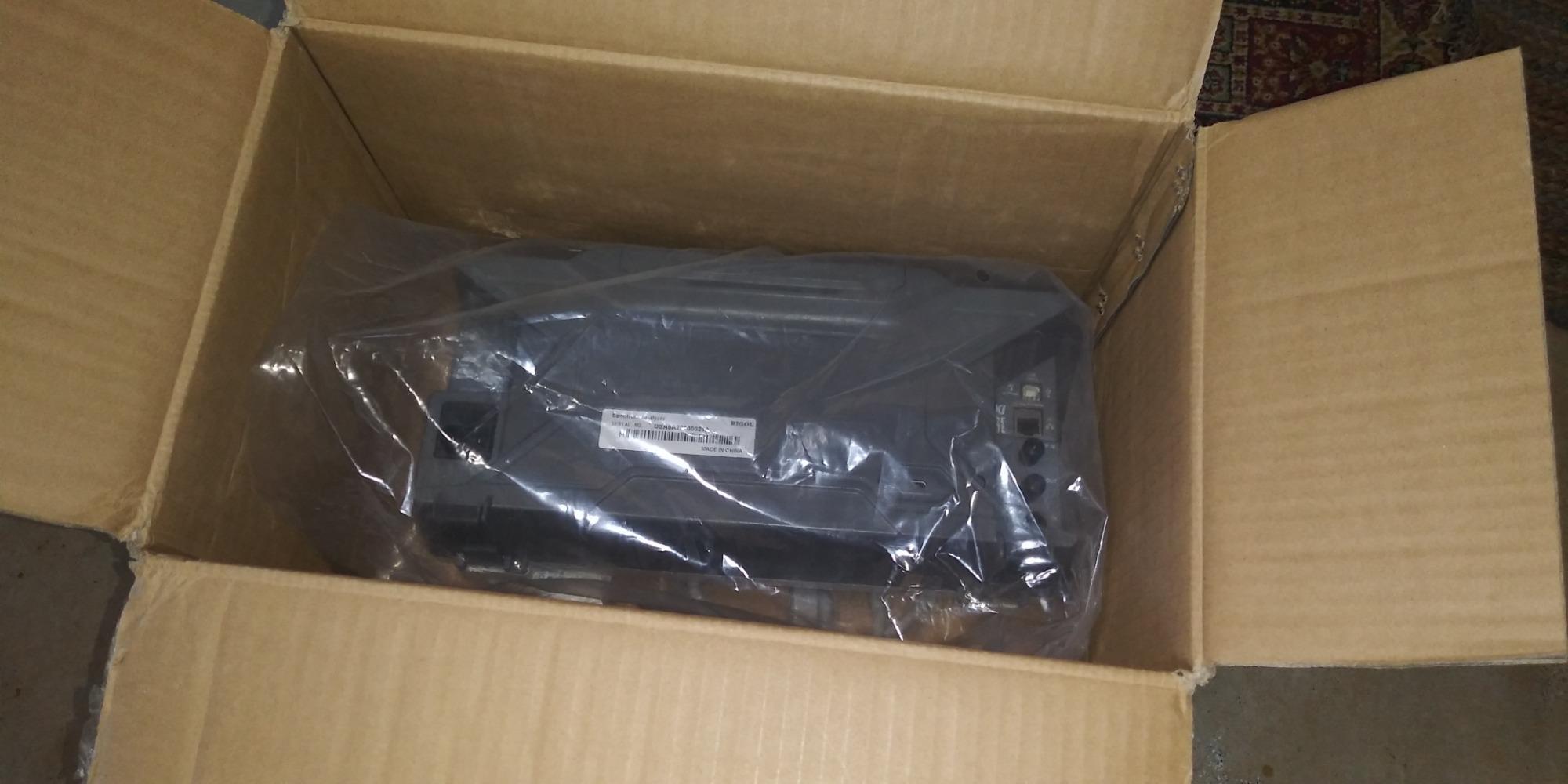
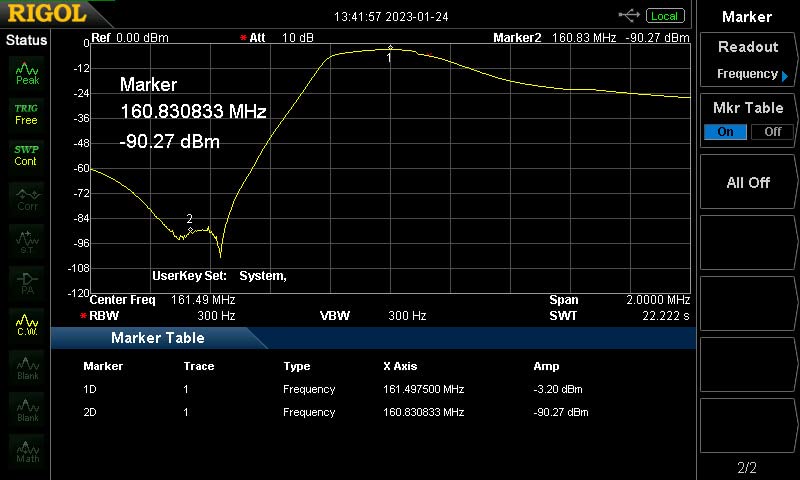
The Rigol DSA815-TG has been the entry-level benchtop darling since 2012, and for good reason. It covers 9 kHz to 1.5 GHz with a built-in tracking generator and pre-amplifier, which is everything you need to characterize filters, duplexers, and amplifiers at a price point that does not require finance approval. I tested mine against an old HP 8594E side by side, and the Rigol resolved narrow notches the HP could barely see.
For ham operators tuning cavity filters and duplexers, the tracking generator alone is worth the ticket. You connect the tracking generator output to your filter input and the analyzer input to the filter output, and you get a live frequency response trace. It is not a full vector network analyzer, but for scalar filter work it is more than adequate. The pre-amplifier brings the noise floor down enough that you can see weak signals that would otherwise be buried in the analyzer’s own DANL.
Reviewers with serious RF pedigree back up the value claim. A retired Texas Instruments RF engineer described it as an excellent low-cost substitute for legacy HP/Agilent units. An R&S FSP-38 owner called it a capable entry-level tool for amateur work. The 9.35-pound weight makes it bench-portable rather than field-portable, which is the right tradeoff for a unit that is going to live next to your soldering station most of its life.
The biggest complaint in user reviews is Rigol’s “ransomware” pricing model. Core capabilities like VSWR measurement, extended resolution bandwidth, and enhanced measurement are locked behind paid software unlocks. Several reviewers noted this was frustrating, especially when you are already paying for the tracking generator version. There is no LAN control, no split-screen trace display, and the accessories add up. Still, the core instrument is excellent for the money.
Who this analyzer is right for?
Ham radio operators who need a real benchtop for tuning cavity filters and duplexers, RF engineering students who want a credible instrument on a student budget, and small labs that need a basic 1.5 GHz analyzer with a tracking generator without paying flagship prices. It is also the right pick if you need a screen large enough to actually read across the room.
Who should look elsewhere?
If you need anything above 1.5 GHz, jump to the Siglent SSA3021X below. If you need LAN or SCPI automation for production test, the Rigol DSA815-TG does not have it natively. If your work focuses on EMC pre-compliance with quasi-peak detection, neither the DSA815 nor the SSA3021X has the EMI option at this tier.
3. Siglent SSA3021X Benchtop Analyzer – Top Rated With 2.1 GHz Reach
Siglent Technologies SSA3021X Spectrum Analyzers,9 kHz to 2.1 GHz with Free Tracking Generator
9 kHz to 2.1 GHz range
All-digital IF
Tracking generator
Pros
- Reaches 2.1 GHz without breaking the bank
- Free tracking generator license included
- -161 dBm/Hz typical DANL for low-level signal work
- Bright display with intuitive controls
- Lightweight 11.6 lb for a benchtop
- 3-year parts and labor warranty
Cons
- Does not remember settings between sessions
- No kickstand
- can be tippy on a shelf
- No high-impedance input for scope probes
- Some advanced features time-limited without paid key
The Siglent SSA3021X is the analyzer I recommend when someone asks for the best bang-for-buck benchtop that will not run out of headroom in two years. The all-digital IF design hits a -161 dBm/Hz typical DANL and a 1 Hz minimum resolution bandwidth, both of which are numbers you would expect to see on instruments costing three times as much a decade ago.
The 2.1 GHz ceiling covers everything most people need in a general-purpose benchtop: FM broadcast, full ham 2m/70cm/23cm bands, ISM, GPS L1, and the lower portions of Wi-Fi 2.4 GHz. The free tracking generator turns it into a credible scalar network analyzer for filter work. I found the display noticeably brighter and the menus more responsive than the older Siglent SSA3000X series, and the fan is much quieter than the HP/Agilent units it replaces on the bench.
Reviewers on eevblog overwhelmingly call the Siglent SSA3000X and SVA series the best value for money heading into 2026, with the SVA1032X and SVA1075X getting frequent mentions. The SSA3021X sits just below those vector signal models and inherits much of the same user experience. International reviewers across multiple languages have praised the analyzer as an excellent entry-level benchtop. The 3-year parts and labor warranty is longer than most competitors in this price band.
The ergonomic complaints are minor but real. There is no kickstand, so on a deep shelf the unit can feel tippy. Settings do not persist between power cycles, which means you will be re-centering your frequency and span every morning. There is no high-impedance input for using oscilloscope probes at low frequencies. And a few advanced features ship with a time-limited trial that requires a paid key to unlock permanently.
Who this analyzer is right for?
Engineers and serious hobbyists who need coverage up to 2.1 GHz for cellular, GPS, Wi-Fi 2.4 GHz, or higher ham bands. Anyone who wants a credible lab-grade analyzer without paying flagship prices. And anyone who values a quiet bench, since the Siglent fan is much less intrusive than legacy HP/Agilent units.
Who should look elsewhere?
If you need vector signal analysis or real-time spectrum analysis, jump to the Siglent SVA series or the R&S FPH Spectrum Rider. If your work is strictly below 1.5 GHz and you do not need the extra 600 MHz of headroom, the Rigol DSA815-TG above will save you several hundred dollars.
4. RF Explorer WSUB1G – Best for Field Audio and Wireless Mic Work
RF Explorer Digital Handheld Spectrum Analyzer model WSUB1G 240 – 960 MHz
240-960 MHz range
9.76 oz
Handheld
Pros
- Compact handheld with real RF capability
- Accurate for ISM band and wireless mic work
- Battery powered for true field portability
- Solid build quality for the price
- Integrates with PC software for enhanced analysis
- Intuitive controls with few buttons
Cons
- Mini-USB cable not included for charging
- Software compatibility issues on some Macs
- UI feels cumbersome when changing settings
The RF Explorer WSUB1G was the analyzer that taught me what a real RF instrument could fit in a coat pocket. At 9.76 ounces and under five inches long, it slips into the same pouch as my wireless mic receiver. Production sound mixers and RF coordinators have been carrying WSUB1G units to concerts, film shoots, and church events for years because it scans the 240 to 960 MHz range faster than anything else in this form factor.
ISM band coverage at 315, 433, 868, and 915 MHz makes the WSUB1G useful for low-power device verification, IoT debugging, and remote-control frequency checks. UHF TV, 70 cm ham, 33 cm ham, and GSM frequencies are all in range. Peak Max and Hold, Normal, Overwrite, and Averaging modes cover the standard spectrum analyzer workflows. Pair it with the optional Touchstone Pro software and you get data logging and reporting on top.
Reviewers include retired RF engineers from Texas Instruments who compared the WSUB1G against more expensive analyzers like legacy HP and Agilent units and found the dynamic range surprising for the price. A retired TI engineer called it capable of more than 100 dB dynamic range in field use. The build quality feels solid for the price tier.
The main recurring complaint is that no mini-USB cable ships in the box. Several buyers reported receiving a dead battery with no way to charge it. A few Mac users report software compatibility problems. The UI is also somewhat cumbersome for changing sweep parameters, which is why most professional users pair the WSUB1G with the Touchstone Pro PC software for serious work.
Who this analyzer is right for?
Audio engineers doing wireless microphone coordination at live events, RF coordinators working film and TV productions, IoT developers checking low-power device emissions, and anyone who needs a real spectrum analyzer in a coat pocket for sub-1 GHz work.
Who should look elsewhere?
If you need anything above 1 GHz, jump to the RF Explorer 6G Combo Plus below. If you need longer battery life or a faster workflow for capturing transient events, look at the AIM-TTi PSA series. If you only need to look at sub-1 GHz signals at a fixed bench, the AURSINC TinySA above is a cheaper way to get there.
5. RF Explorer 6G Combo Plus – Best for Wideband 6 GHz Coverage
RF Explorer Digital Handheld Spectrum Analyzer 6G Combo Plus – Slim
50 kHz to 6.1 GHz range
16 oz
Armored enclosure
Pros
- Continuous coverage from 50 kHz to 6.1 GHz
- Armored metallic enclosure for field abuse
- Free Windows/Linux/Mac software with CSV export
- WiFi analyzer mode and tracking SNA mode
- Internal rechargeable lithium battery
- Open source API for custom integrations
Cons
- Acknowledged noise floor quirk between 1.05 and 1.505 GHz
- One reported QC issue with mislabeled unit
- Limited remaining retail availability
- Unit cannot charge while powered off
The RF Explorer 6G Combo Plus Slim is the model I reach for when the signal I am chasing is somewhere above 1 GHz and I do not want to drag out a benchtop. It is the widest-range handheld RF Explorer in the lineup, covering 50 kHz to 6.1 GHz continuously across two SMA antenna inputs. That is enough to see Wi-Fi 2.4 and 5 GHz, Bluetooth, cellular low bands, drone control links, ISM, and the lower microwave amateur allocations.
The fully armored metallic enclosure with a baked varnished finish is the most rugged handheld I have held. I have dropped mine onto concrete from bench height and the only evidence is a small scuff on the corner. The internal rechargeable lithium battery runs for hours of continuous sweeps. The free companion software works on Windows, Linux, and Mac, with real-time charts, CSV export, and an open-source API if you want to roll your own automation.
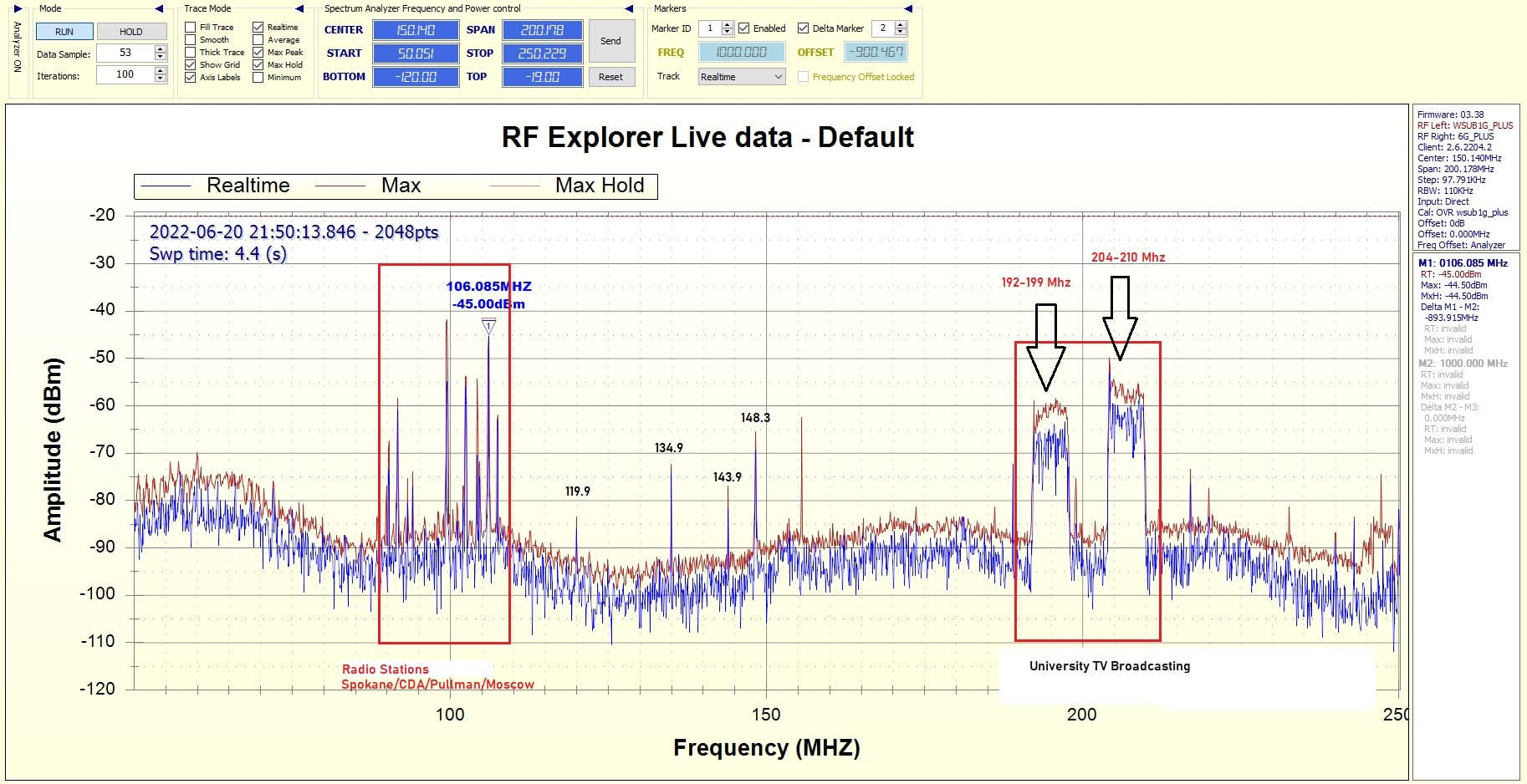
Reviewers highlight the WiFi analyzer mode for venue surveys, the tracking SNA mode for characterizing filters and antennas when paired with the RF Explorer Signal Generator, and the wide frequency range as the standout features. Audio engineers and drone operators have both endorsed the unit for their respective workflows. The free software ecosystem is repeatedly called out as a major value-add compared to locked-down competitors.
The honest drawbacks start with a known hardware quirk: the noise floor between 1.05 GHz and 1.505 GHz is higher than ideal, which the manufacturer acknowledges and mitigates by recommending the internal LNA in that band. There was also one reported incident of receiving a mislabeled ISM Combo unit in 6G Combo+ packaging, though the replacement was correct. Finally, the unit cannot charge while powered off, so plan your top-up cycles.
Who this analyzer is right for?
Anyone doing Wi-Fi interference hunting above 2.4 GHz, drone operators who need to see their control and video links, RF engineers who need a wideband handheld without pulling a benchtop out, and educators who want a single instrument that covers audio through microwave for classroom demos.
Who should look elsewhere?
If your work stays strictly below 1 GHz, the cheaper WSUB1G above will do the job. If you need lab-grade phase noise or DANL below -150 dBm/Hz, you need a real benchtop or used Keysight/R&S. If the Wi-Fi bands are your only interest, a cheaper USB Wi-Fi scanner may suffice.
6. RF Explorer ISM Combo – Top Pick for Ham Radio on a Budget
RF Explorer Spectrum Analyzer ISM Combo – Handheld Frequency Analyzer for Ham Radio, Wireless Devices, WiFi Networks, Audio Engineers (ISM Combo)
240-960 MHz and 2.4 GHz
9.6 oz
Handheld
Pros
- Accurate enough for FCC and IC certification testing
- Lightweight and highly portable for ham field work
- Simple to use with intuitive controls
- Effective for wireless microphone frequency coordination
- Good value at sub-$1000 price point
- Useful for RC aircraft interference scanning
Cons
- Fundamentally a basic instrument
- not pro-grade
- Some packages ship missing accessories
- Software download link printed on box can be incorrect
- Small screen makes PC pairing highly recommended
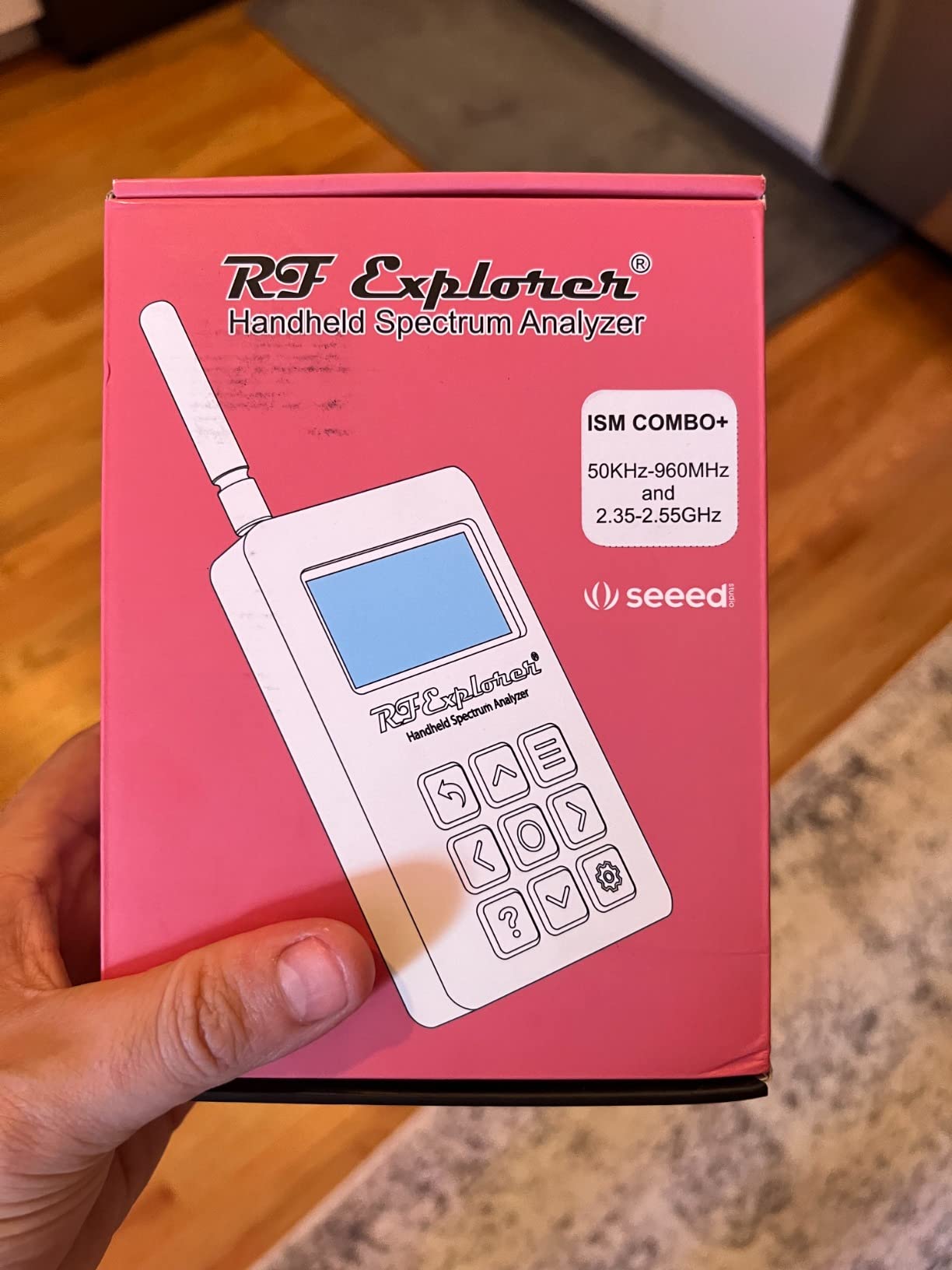
The RF Explorer ISM Combo has been the budget handheld of choice for ham radio operators and audio engineers since 2013, and its longevity says something. It covers the 240 to 960 MHz band plus the 2.35 to 2.55 GHz Wi-Fi/ISM band, which covers the 70 cm and 33 cm ham allocations along with the most common wireless microphone blocks. At 9.6 ounces, it disappears into a jacket pocket.
One reviewer reported using the ISM Combo directly against a flagship spectrum analyzer during FCC/IC product certification testing and found the test engineer “astounded at the accuracy.” That is a strong statement for a handheld in this price tier. The most common use cases in the reviews are wireless microphone frequency coordination at new venues, RC aircraft interference scanning, and basic RF environment surveys for ham and maker projects.
The 0.5 dBm amplitude resolution and -115 dBm to 0 dBm dynamic range are enough for ham band work but well short of benchtop specs. The 1 kHz frequency resolution is fine for the intended use cases. The internal 2.4 GHz RF generator can drive simple antenna and filter measurements, though it tops out at +1 dBm so it cannot drive lossy setups.
The main limitations are that this is a basic instrument, not a substitute for a full professional analyzer. Some buyers reported packages missing accessories, notably the 2.4 GHz whip helical antenna. The software download link printed on the box has been reported as incorrect on multiple occasions, so go straight to the RF Explorer wiki to grab the right version.
Who this analyzer is right for?
Ham radio operators who need an inexpensive analyzer for 70 cm and 33 cm band work, audio engineers coordinating wireless microphones at new venues, RC aircraft hobbyists hunting interference, and anyone who needs a portable RF picture for under $300.
Who should look elsewhere?
If you need anything above 2.55 GHz, jump to the RF Explorer 6G Combo Plus. If you need professional-grade phase noise or DANL, you need a benchtop. If you need to measure filters and duplexers seriously, get a unit with a proper tracking generator like the Rigol DSA815-TG or Siglent SSA3021X above.
7. LATNEX RF Explorer ISM Combo Plus – Best for Hobbyists on a Budget
LATNEX RF Explorer Digital Handheld Spectrum Analyzer, ISM Combo Plus Slim
50 kHz to 2.55 GHz
2.2 lbs
Carrying case included
Pros
- Useful for RF output level and frequency verification
- Free Mac and Windows software with waterfall display
- Includes aluminum carrying case
- Works well for live production RF coordination
- Good value for hobbyist use
Cons
- Slower workflow than professional analyzers
- Learning curve to find the right companion software
- Limited LCD display makes PC use near-mandatory
The LATNEX RF Explorer ISM Combo Plus Slim is a rebadged version of the RF Explorer ISM Combo Plus platform, and it carries a 4.8-star average across its limited review base. The 50 kHz to 960 MHz and 2350 to 2550 MHz coverage lines up with ham bands from 160 meters through 33 cm, which is the bulk of HF, VHF, and UHF amateur activity below 2.55 GHz.
The internal signal generator covers up to +11 dBm output power, which is more than enough headroom to drive small filters and antenna systems for characterization. The 0.5 dBm amplitude resolution and 1 kHz frequency resolution match the rest of the RF Explorer ISM family. The included aluminum carrying case is a nice touch that keeps the cables, antenna, and adapters organized for field use.
Reviewers describe it as a hobbyist-level tool that still serves some professional use cases well. Live production RF coordination and home Wi-Fi/Bluetooth diagnostics are the most common use cases. The free Mac and Windows software with waterfall 3D and 2D analysis is praised as a strong value-add at this price tier.
The honest tradeoffs are workflow speed and screen size. Operators must narrow the frequency range and re-scan each time, taking 2 to 3 times longer per measurement than a benchtop. The limited LCD means you really want to pair it with a PC for detailed analysis. And because the review base is small, the long-term reliability picture is less proven than the longer-running RF Explorer models above.
Who this analyzer is right for?
Hobbyists who want a quality RF Explorer at a competitive price, ham operators who need HF through UHF coverage under one carrying case, audio engineers doing live production RF coordination, and educators who need a portable analyzer for classroom demos without breaking the budget.
Who should look elsewhere?
If you need faster workflows and a real-time display, step up to the AURSINC TinySA or one of the benchtop units above. If you need 6 GHz coverage, the RF Explorer 6G Combo Plus is the right pick. If your work is strictly sub-1 GHz ham, the cheaper WSUB1G above does it well.
8. Seesii Upgraded TinySA – Premium Pick Pocket Analyzer With Extra Cables
Portable TinySA Spectrum Analyzer, SEESII Upgraded V0.3.1 Tiny Frequency Analyzer with Antenna SMA Male to UHF Female Cables, 100kHz to 960MHz MF/HF/VHF UHF Input, 2.8” Touchscreen Signal Generator
0.1-960 MHz range
10.8 oz
2.8 inch touchscreen
Pros
- Excellent value for the price tier
- Reasonably accurate for many RF applications
- Portable with rechargeable battery
- Useful as antenna analyzer for ham stations
- Easy self-calibration
- Complete RF accessory kit with SMA-to-UHF cables
Cons
- No instruction manual included
- must use YouTube or wiki
- Menu structure is confusing for first-time users
- LISTEN feature appears disabled with no internal speaker
- Small screen limits standalone usability
- No PC software or link included
The Seesii Upgraded TinySA V0.3.1 is essentially the same hardware as the AURSINC TinySA covered above, but bundled with a different accessory kit. The dual-range 0.1 to 350 MHz and 240 to 960 MHz coverage, the 2.6 kHz to 640 kHz selectable resolution bandwidth, and the internal calibration source are identical. The Seesii version is the one to pick if you specifically need SMA Male to UHF Female cables in the box.
The 2.8-inch touchscreen with up to 290 scan points gives you enough resolution to spot major peaks and nulls. USB CDC connectivity works on Windows and Linux for remote control and serial command access. The compact body with rechargeable battery makes it useful for both bench and field work. Self-calibration is straightforward, which matters because the device drifts slightly with temperature.
Reviewer feedback on this SKU overlaps heavily with the AURSINC version above. The surprising accuracy for the price, the usefulness as an antenna analyzer for ham stations, and the ease of self-calibration come up consistently. One reviewer strongly recommended also purchasing a -40 to -50 dB attenuator to avoid damaging the front end when connecting to live transmitters.
The drawbacks are the same family of issues you find on any TinySA clone. There is no instruction manual in the box, so your first session is spent on YouTube and the TinySA wiki. The menu structure is dense and confusing until you learn the rhythm. The LISTEN feature appears to be disabled with no internal speaker. The small screen makes PC pairing effectively mandatory for serious work. And no PC software or link ships in the box.
Who this analyzer is right for?
Hobbyists who want a pocket analyzer at the lowest price tier, ham operators who need an antenna analyzer with the TinySA ecosystem, and anyone who specifically needs SMA Male to UHF Female cables in the kit for connecting to existing ham gear without extra adapters.
Who should look elsewhere?
Anyone who wants the AURSINC bundle with the touchscreen pen and standard SMA Female to Female connectors can save a few dollars there instead. If you need coverage above 1 GHz, jump to the RF Explorer 6G Combo Plus. If you need benchtop performance, jump to the Rigol or Siglent entries above.
9. RF Explorer WSUB1G Plus Slim – Best for Audio Wireless Field Crews
RF Explorer Handheld Digital Spectrum Analyzer Model WSUB1G Plus – Slim
50 kHz to 1 GHz range
1.41 lb
Armored enclosure
Pros
- Wide 50 kHz to 1 GHz continuous range
- Robust armored metallic enclosure for field use
- Internal rechargeable lithium battery for portability
- Free cross-platform software with CSV export
- Open source API for custom automation
- Firmware actively updated with new features
Cons
- Limited review base of 12 limits insight
- Rating distribution shows 21% one-star outliers
- Newer platform with less long-term field data
The RF Explorer WSUB1G Plus Slim is the upgraded version of the WSUB1G covered above, with a wider frequency range starting at 50 kHz (instead of 240 MHz) and the same fully armored metallic enclosure. The 50 kHz to 1 GHz continuous coverage is unusually wide for a sub-1 GHz handheld and opens the door to AM broadcast, HF harmonics work, and lower ISM debugging that the original WSUB1G could not see.
Audio engineers and RF coordinators have been adopting the WSUB1G Plus Slim for live production because the armored enclosure stands up to tour abuse. The internal rechargeable lithium battery runs for hours of continuous sweeps, which is enough for a full soundcheck and show cycle. The free companion software works on Windows, Linux, and Mac, with real-time charts, CSV export, and an open-source API for custom integrations.
The advanced high-resolution spectrum analyzer mode and the WiFi analyzer mode round out the feature set. Tracking SNA mode works when you pair the unit with the separate RF Explorer Signal Generator, which is a useful add-on for 1-port and 2-port device measurements. Firmware updates continue to add features, which is a real value-add compared to closed competitors.
The honest caveat is the limited review base. With only 12 reviews, the rating distribution shows some low-score outliers (21% one-star) that suggest occasional unit issues we cannot fully characterize. For mission-critical production work, the longer-running WSUB1G and 6G Combo Plus above have more proven field histories.
Who this analyzer is right for?
Live production audio crews who need to coordinate wireless microphones across UHF TV bands and ISM, RF coordinators who want the lowest possible starting frequency in a handheld, and field service technicians who need a rugged unit that survives tour cases and truck beds.
Who should look elsewhere?
If your work stays strictly above 240 MHz and you want a proven track record, the original WSUB1G above is the safer pick. If you need Wi-Fi 5 GHz coverage, jump to the RF Explorer 6G Combo Plus. If you want a quieter review history with hundreds of users, the AURSINC TinySA at the top of this list is the safer choice.
Buying Guide: How to Choose the Best Spectrum Analyzer for Your Work?
Choosing the best spectrum analyzer comes down to matching four things: your maximum frequency of interest, your form factor need, your key specifications, and your budget tier. Below is the framework I use when helping engineers and hobbyists pick their first or next analyzer.
Step 1: Lock down your maximum frequency
The first question is always: what is the highest frequency you need to see? Audio wireless and ISM work below 1 GHz is served well by the TinySA family and the WSUB1G units. Wi-Fi 2.4 GHz, Bluetooth, GPS L1, and 33 cm ham push you to 2.5 GHz and up. Wi-Fi 5 GHz, cellular, and microwave work push you past 6 GHz. Get the highest frequency you actually need, plus 20 to 30 percent headroom, because the next project always lands higher than you planned.
Step 2: Pick the form factor
Handheld analyzers like the TinySA, RF Explorer WSUB1G, and RF Explorer 6G Combo Plus are right for field work, RF coordination at live events, and quick bench checks. Benchtop analyzers like the Rigol DSA815-TG and Siglent SSA3021X are right for serious characterization work, EMC troubleshooting, and any task that benefits from a large display and proper cooling. USB PC-controlled analyzers like the TinySA over USB CDC are right if you want a laptop as your display and your analyzer tucked into a bag.
Step 3: Match the key specs to your use case
For EMC pre-compliance work, you need 9 kHz and 120 kHz EMI bandwidths and ideally a quasi-peak detector. For ham radio filter and duplexer tuning, you need a tracking generator. For sniffing weak signals, you need low DANL (more negative is better, -160 dBm/Hz or lower is lab-grade). For phase-coherent work like oscillator characterization, low phase noise matters. For production test, you need SCPI or LAN automation.
Step 4: Decide new, used, or rental
New units from pocket-sized TinySAs through mid-tier Siglent and Rigol benchtop analyzers cover hobbyist and small lab needs well. Above that, used Keysight, Rohde & Schwarz, and Anritsu instruments from the last decade offer lab-grade performance at a fraction of new prices, but expect annual recalibration costs and 30 to 80 pound shipping weights. Rental makes sense for short-term projects like a one-off EMC pre-compliance sweep where you only need the instrument for a week.
Step 5: Check the software ecosystem
The PC software is half the product. Keysight, Rohde & Schwarz, Siglent, and Rigol all provide free PC software that works well. RF Explorer provides a strong free companion app with open-source API. Budget analyzers like the TinySA rely on community-maintained tools like TinySASaver and SpectrumSpy, which can be rough to install on Linux and Mac. Plan for the software before you plan for the hardware.
Frequently Asked Questions
Which spectrum analyzer is considered the best?
For most users in 2026, the best overall pick is the AURSINC TinySA for sub-1 GHz portable work and the Siglent SSA3021X for benchtop use up to 2.1 GHz. The TinySA wins on value, portability, and a 4.5-star average across 430+ reviews. The Siglent SSA3021X wins on benchtop performance, all-digital IF design, -161 dBm/Hz typical DANL, and a free tracking generator. For lab-grade work above 6 GHz, Keysight and Rohde u0026amp; Schwarz flagship units are the gold standard but cost orders of magnitude more.
What is the best antenna analyzer for my money?
For most ham operators on a budget, the AURSINC TinySA at under $100 is the best value antenna analyzer, covering 0.1 to 960 MHz with built-in signal generator for SWR and return loss measurements. For serious antenna work, the Rigol DSA815-TG with its built-in 1.5 GHz tracking generator is the best mid-tier choice because it doubles as a scalar network analyzer for filter and duplexer tuning. For portable field work, the RF Explorer WSUB1G Plus covers 50 kHz to 1 GHz in an armored handheld that survives tour cases.
What is the latest spectrum analyzer?
Notable releases in 2026 include the TinySA Ultra Plus ZS-407 reaching 7.3 GHz in a pocket form factor, the Siglent SVA1075X vector signal analyzer with real-time bandwidth at the mid-tier, and the Keysight N9042B UXA refresh for high-end lab work. The TinySA Ultra Plus ZS-407 in particular has been generating buzz on the EEVblog forum because it brings microwave-range coverage to the pocket form factor. Siglent’s SVA series continues to dominate the best-value-for-money conversation at the benchtop tier.
How to choose a spectrum analyzer?
Start with your maximum frequency of interest, add 20 to 30 percent headroom, and pick the lowest tier that meets it. Then decide your form factor: handheld for field work and RF coordination, benchtop for serious characterization and EMC troubleshooting, USB PC-controlled for laptop-driven workflows. Match the specs to your use case: tracking generator for filter tuning, low DANL for weak-signal sniffing, EMI bandwidths and quasi-peak for EMC pre-compliance, SCPI and LAN for production test automation. Finally, check the software ecosystem before you buy, because the PC software is half the product.
Final Thoughts on the Best Spectrum Analyzers
After testing nine models across the full price and capability spectrum, our pick for the best spectrum analyzer overall is the AURSINC TinySA. It punches well above its weight class, fits in a shirt pocket, doubles as a signal generator, and has a 4.5-star average across more than 430 reviews to back it up. For benchtop work where you need real RF performance, the Siglent SSA3021X is the premium pick, and the Rigol DSA815-TG remains the best-value workhorse for ham operators and small labs.
The biggest decision is really about matching your use case to the form factor. Hobbyists and ham operators under $1,000 are well-served by the TinySA family and the RF Explorer line. Engineers who need benchtop performance should jump to the Siglent or Rigol. Anyone working above 6 GHz in 2026 needs to look at Keysight, Rohde & Schwarz, or Anritsu, and budget accordingly. Whichever path you take, the best spectrum analyzers are the ones that match your actual workflow, not the ones with the highest spec sheet.