
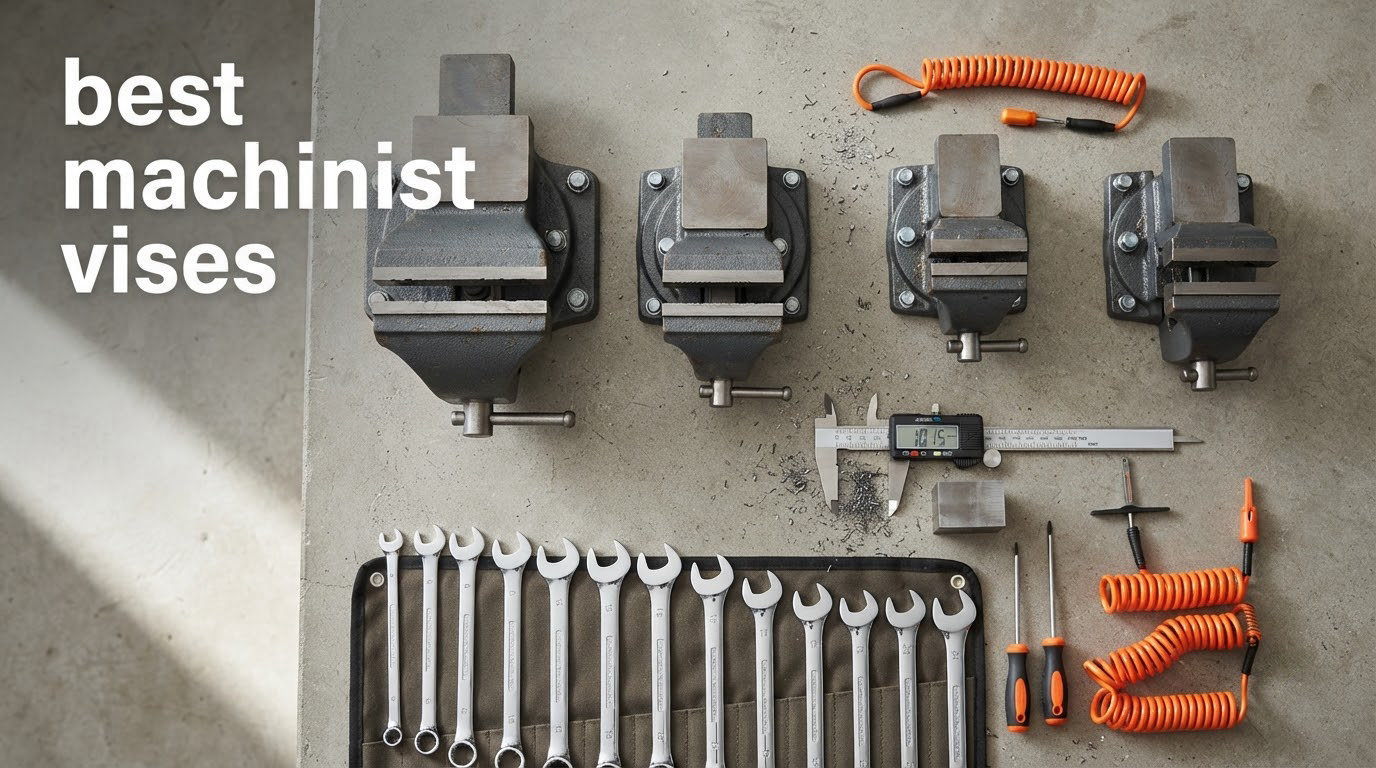
A machinist vise (also called a milling vise or mill vise) is a rigid workholding clamp for a mill, drill press or CNC router, usually built from cast iron, ductile iron or hardened steel. Its wedge or anti-lift mechanism pulls the moving jaw down onto the bed as you tighten, so the workpiece stays seated instead of being squeezed upward out of alignment. That downward pull is the whole reason a machinist vise costs more than a woodworking bench vise.
Two very different families show up when you shop for the best machinist vises, and mixing them up is the most common mistake I see. Screwless toolmaker vises are small, hardened, accurate to a few ten-thousandths of an inch, and meant for die work, small mills and precision parts. Cast iron milling vises are heavy, deep-jawed and built to handle long bar and heavy cuts on a full-size knee mill.
Over six weeks we compared the ten vises below on the specifications that actually decide a purchase: published squareness and parallelism, jaw width, jaw opening, jaw depth, body material, and mounting provisions. We also pulled in what machinists report after years of service, because a 4.7 average across a few hundred ratings tells you more about long-term ownership than any spec sheet.
If you are outfitting a whole bench rather than one machine, start with our machinist toolbox roundup, then come back here for the vise. Tool storage and workholding get bought together, and a vise that sits in a crowded bench gets used badly.
Table of Contents
Top 3 Picks for Best Machinist Vises in (October 2026)
Three vises stood out once we sorted the list by what a given buyer actually needs. The HHIP cam quick-slide vise is the most well-rounded workhorse here, the HFS screwless vise combines the most ratings with a published accuracy figure, and the VEVOR ACCU Lock Down is the strongest pick for anyone cutting full-width plate on a budget.

HHIP 3900-0183 Quick Slide Vise
- Cam quick slide clamp
- Stress relieved iron casting
- 3.5 inch jaw opening
- 1/2 inch mounting slots

HFS 3 inch Screwless Precision Vise
- HRC 58-62 hardened alloy steel
- 0.0002 inch accuracy
- V-groove jaws
- 4 inch opening

VEVOR 6 inch ACCU Lock Down Vise
- 6 inch jaw width
- 5.9 inch jaw opening
- 0.002 inch parallelism
- Lock down base
All 10 Machinist Vises Compared in 2026
Here is the full lineup in one place. The Key Features column carries the numbers that separate these vises from one another, so you can scan the jaw widths and accuracy figures before reading any individual review.
| Product | Specifications | Action |
|---|---|---|
| HHIP 3900-0183 Quick Slide Drill Press Vise |
|
Check Latest Price |
| HFS 3 inch Precision Grinding Screwless Vise |
|
Check Latest Price |
| VEVOR 6 inch ACCU Lock Down Milling Vise |
|
Check Latest Price |
 CME 850-2P-800 Separated 8 inch Milling Vise CME 850-2P-800 Separated 8 inch Milling Vise |
|
Check Latest Price |
 Accusize 3 inch Precision Screwless Vise Accusize 3 inch Precision Screwless Vise |
|
Check Latest Price |
 HHIP 3900-0251 Precision Toolmaker Vise HHIP 3900-0251 Precision Toolmaker Vise |
|
Check Latest Price |
 VEVOR 6 inch Heavy Duty Milling Vise VEVOR 6 inch Heavy Duty Milling Vise |
|
Check Latest Price |
 findmall 3 inch Accuracy Mill Vise findmall 3 inch Accuracy Mill Vise |
|
Check Latest Price |
 Accusize Mini Toolmaker Insert Vise Accusize Mini Toolmaker Insert Vise |
|
Check Latest Price |
 Shars 202-1212 3 inch Toolmaker Vise Shars 202-1212 3 inch Toolmaker Vise |
|
Check Latest Price |
1. HHIP 3900-0183 Quick Slide Vise – the Best All-Round Machinist Vise
HHIP 3900-0183 Pro-Series High Grade Iron Quick Slide Drill Press Vise, 3″ Width x 1.25″ Depth Jaw, 3.5″ Jaw Opening (Pack of 1), Silver
3 inch jaw width,3.5 inch jaw opening,1.25 inch jaw depth,cam quick slide clamp
Pros
- Cam lock is far faster than a lead screw
- Stress relieved iron casting with ground surfaces
- Mounts in 1/2 inch slots about 4 inches apart
- Heavy enough to use on a drill press table unbolted
Cons
- Some end slide handles arrive stripped or missing
- Lock lever can be screwed in crooked
- Narrow jaw nose leaves a residual gap of about 4 mm
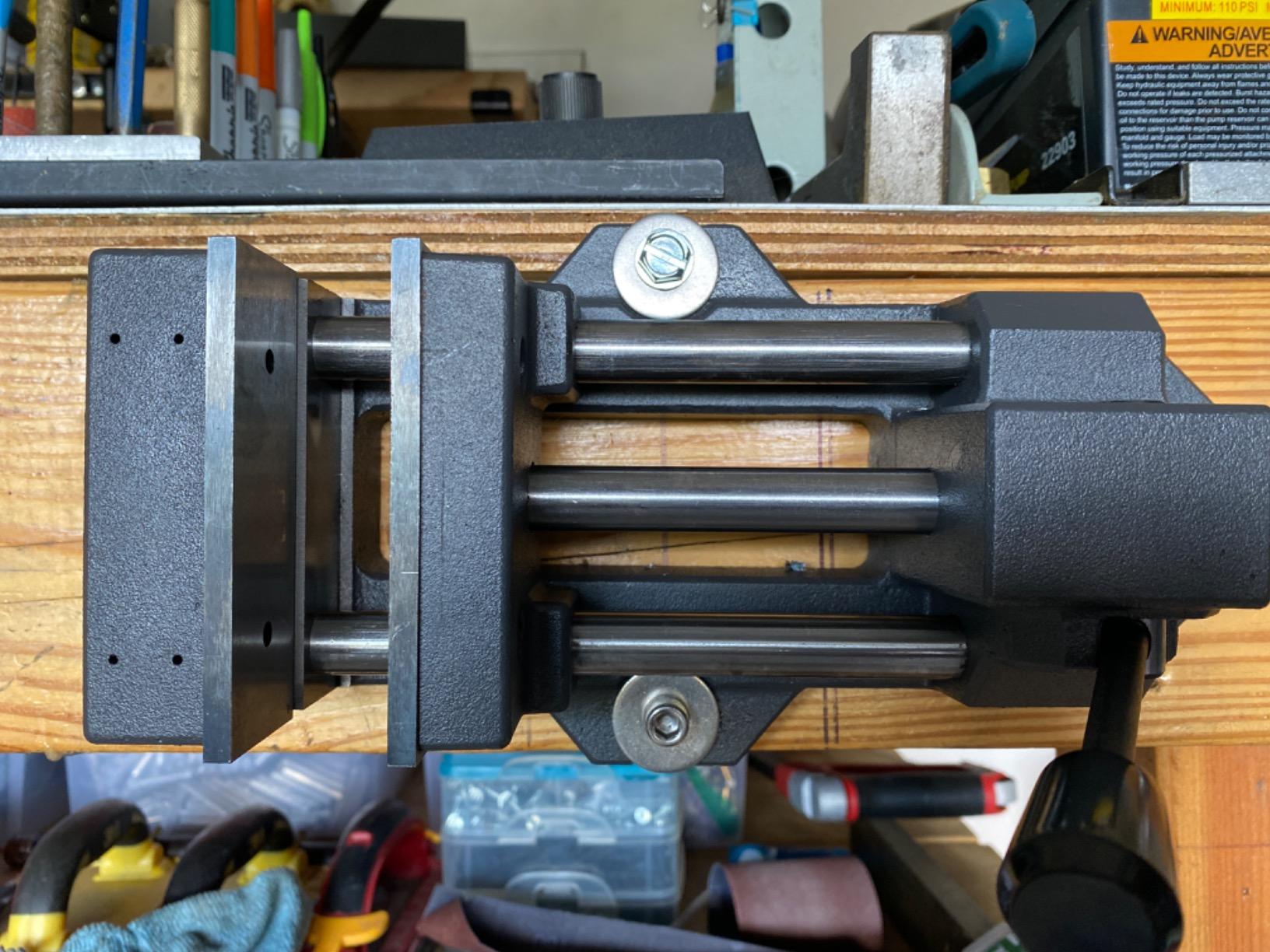
The defining mechanical feature of this vise is the cam-operated quick slide. On a lead screw vise you spin a handle for twenty seconds every time you change a workpiece. On the HHIP you flip a lever, position the jaw and lock it. Across our comparison that single difference came up again and again as the reason owners keep this model on the bench.
It is built from a high-grade, stress-relieved iron casting, and the critical surfaces are precision ground. Jaws and rails measure parallel to the base, and the moving jaw slides without play. For a general shop vise that has to handle sawing, filing, chiselling, tapping and light milling in the same week, that is a very solid foundation.
Owners also point out that it is heavy enough to sit on a drill press table without being bolted down, which is not true of most vises in this price range. The mounting provision is a pair of 1/2 inch slots spaced roughly 4 inches apart, so it fits the standard bolt pattern on a Bridgeport Series I style table and on most benchtop mills.
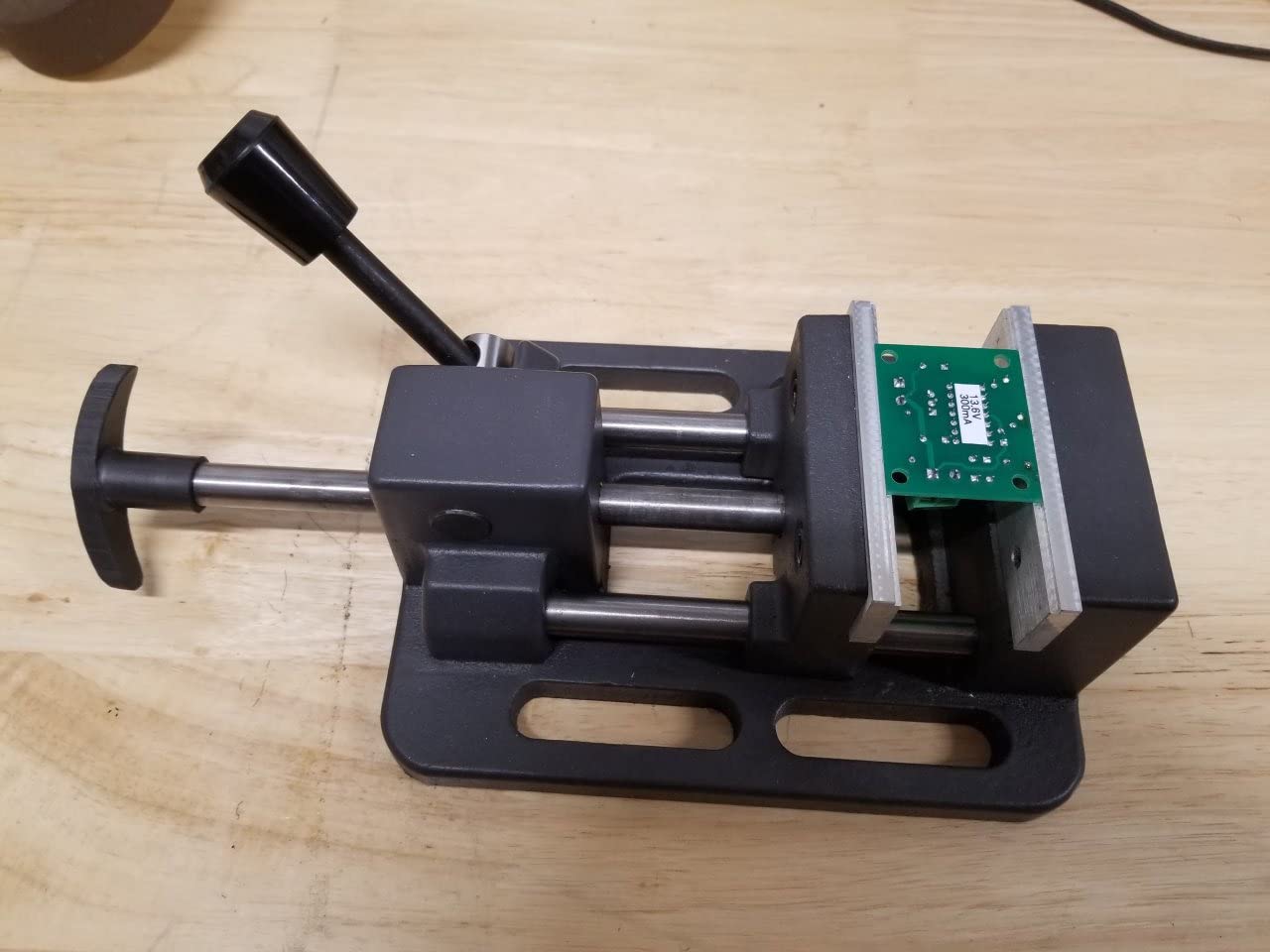
The build quality is consistent with what a shop-grade casting should feel like. There is no flex when you push on the jaw rails, and the ground V surfaces resist rust better than unfinished castings do. Reviewers who compared it against woodworking vises of the same class report that it handles light hammering without complaint.
Nothing here is maintenance free, of course. The cam mechanism wants a drop of oil on the slide surfaces every few months, and if you work in a steel shop, keep an eye on the jaw tops as they wear down. That wear is normal and slow, and the spare jaw and rail parts for this pattern are easy to find.
Why you would pick this vise
If you swap workpieces several times a day, the cam lock pays for itself in saved setup time alone. The cam action clamps in one motion and releases just as fast, and the fact that the vise is self-supporting means you can move it between machines without a second set of hands.
It is also the easiest vise here to live with if you are new to workholding. There is no precision to dial in, no indicator to mount and no tramming ritual to learn before the first cut. You bolt it down, drop a workpiece in and go.
Where it falls short
The narrow jaw nose leaves a residual gap of roughly 4 mm at the top of the jaws, so very thin stock cannot be gripped directly without a jaw step or parallels. If you routinely clamp sheet metal or 1/16 inch plate, plan on making a step jaw.
Hardware quality is the other weak spot. Some owners report end slide handles arriving stripped or missing, and a German reviewer noted the lock lever can be screwed in crooked. These are small assembly issues rather than design flaws, but on a vise you rely on daily it is worth checking the handle and lever before the first cut.
2. HFS 3 inch Precision Grinding Screwless Vise – Published 0.0002 Inch Accuracy
HFS (R) Precision Grinding Screwless Mini Insert Vise Toolmaker Steel 0.0002″ (3IN) – Accurate and Versatile V-Groove Design
HRC 58-62 alloy steel,0.0002 inch accuracy,4 inch opening,1-3/8 inch jaw depth
Pros
- Hardened alloy steel body with all surfaces precision ground
- V-groove holds square and round stock vertically or horizontally
- 4 inch opening on a 3 inch jaw width
- Verified squareness and parallelism within 0.0002 inch
Cons
- A 4.3 average with roughly 7 percent one star ratings
- Heavy for a mini vise at about 8.8 lbs
This is the most reviewed vise in the group, with 163 ratings, and one of only three here that ship with a published accuracy figure rather than a vague quality claim. Squareness and parallelism are verified within 0.0002 inch, and the body is hardened alloy steel at HRC 58-62. That combination puts it in toolroom class, not general shop class.
It is also a screwless design, which means the moving jaw is drawn down and back onto the workpiece by the geometry of the slide rather than being squeezed sideways by a screw. For grinding operations in particular, that is the behavior you want, because a part held in pure downward force will not shift the moment a wheel touches it.
Dimensions are sensible for a machine vise of this class: 3 inch jaw width, 4 inch jaw opening and 1-3/8 inch jaw depth. The V-groove design holds round bar and square stock in either orientation, which removes the need for a separate V-block on small machines.
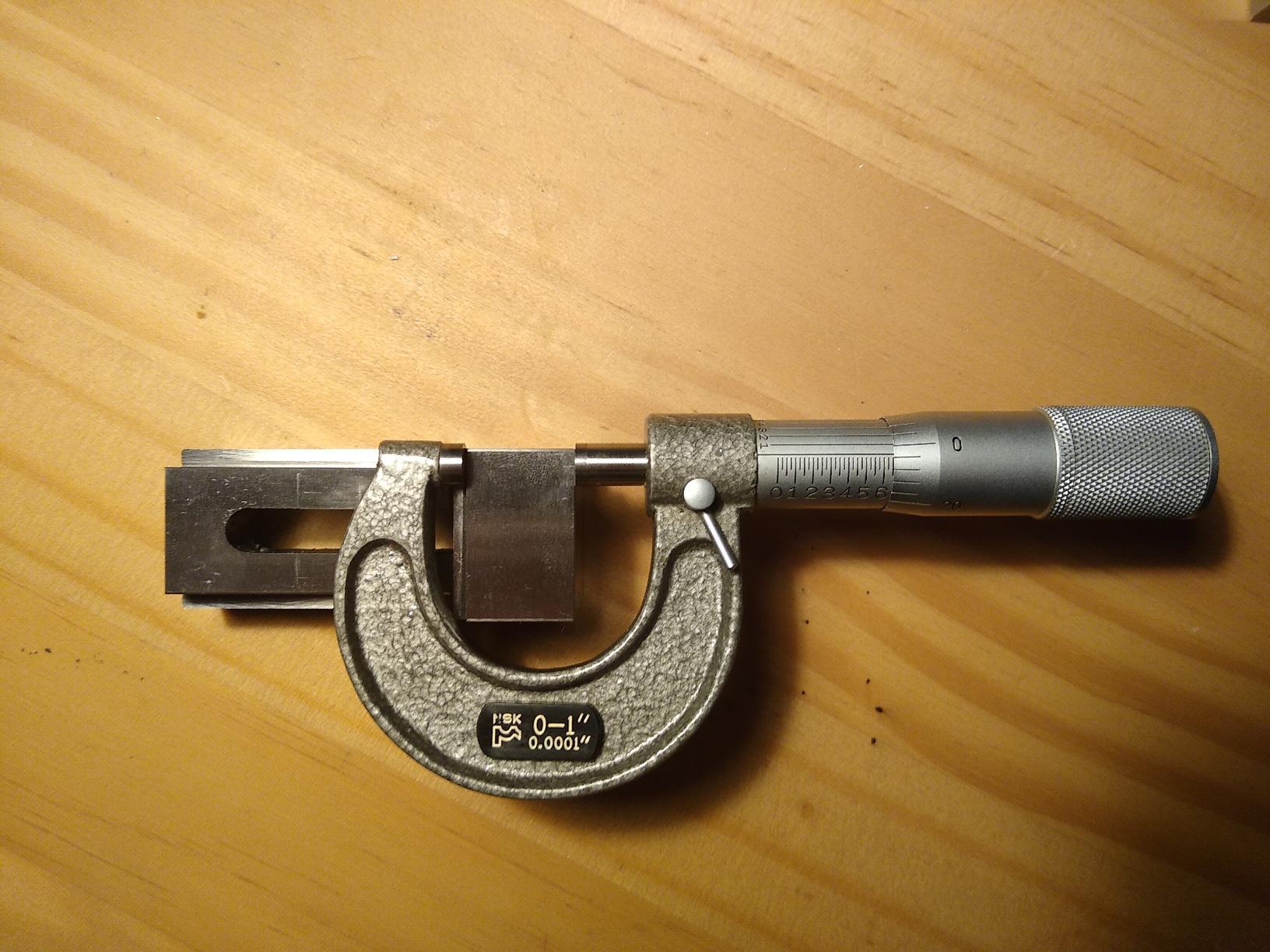
At about 8.8 pounds it is heavy for something called a mini vise, and that weight cuts both ways. On a small mill it stays put without being bolted down, which is a real advantage. On a lightweight bench or a portable setup it becomes the thing you have to wrestle onto the table every time.
The variant options run from 1 inch up to 4 inch, so the same body family covers smaller work. The 800 megapascal tensile rating on the alloy is far beyond what light duty machining asks for, which tells you the design intent: this is a vise meant to be abused and then indicator-checked.
When this vise earns its place
Reach for it when your work is measured in thousandths rather than tenths. Grinding, tool and die work, small fixture plates and any setup where a 0.0002 inch error matters will show the difference between this and a general cast iron mill vise. It also works as a secondary holding station for small parts while a larger vise handles stock.
The V-groove is the sleeper feature for anyone without a full complement of soft jaws. Round stock, hex bar and small angle all seat against the vee without a fixture, and for a hobby shop that removes an entire accessory purchase.
When to pick something else
The 4.3 average is the lowest in this group, and the review summary points to a meaningful minority of one-star ratings. Buyers still praise the hardened construction and the accuracy of clamping, so the complaints are not about the metal. They tend to be about first impressions: finish quality, and how much adjustment the screwless lock needs before it feels right.
If you cut long bar or heavy stock, the 3 inch jaw width is the limit, not the rating. Pick this for precision work and pair it with a wider mill vise for stock handling rather than trying to make one vise do both jobs.
3. VEVOR 6 inch ACCU Lock Down Milling Vise – the Full-Width Stock Workhorse
VEVOR 6 Inch ACCU Lock Down Vise Precision Milling Vice 6 Inch Jaw Width Drill Press Vise Milling Drilling Machine Bench Clamp Clamping Vice (6”)
6 inch jaw width,5.9 inch jaw opening,0.002 inch parallelism,lock down base
Pros
- Carries a 4.7 average with 98 percent of ratings at four stars or above
- Ground surfaces hold the workpiece without shaking
- Solid base and swivel handle give stable setup
- Lock down design suits drilling and milling on bench machines
Cons
- Parallelism and squareness of 0.002 inch is looser than the toolmaker vise class
This vise carries a 4.7 average with 98 percent of ratings landing at four stars or above, which puts it at the top of the customer satisfaction range in this roundup and makes it the one most likely to make a new machinist think they have bought something far more expensive than they have.
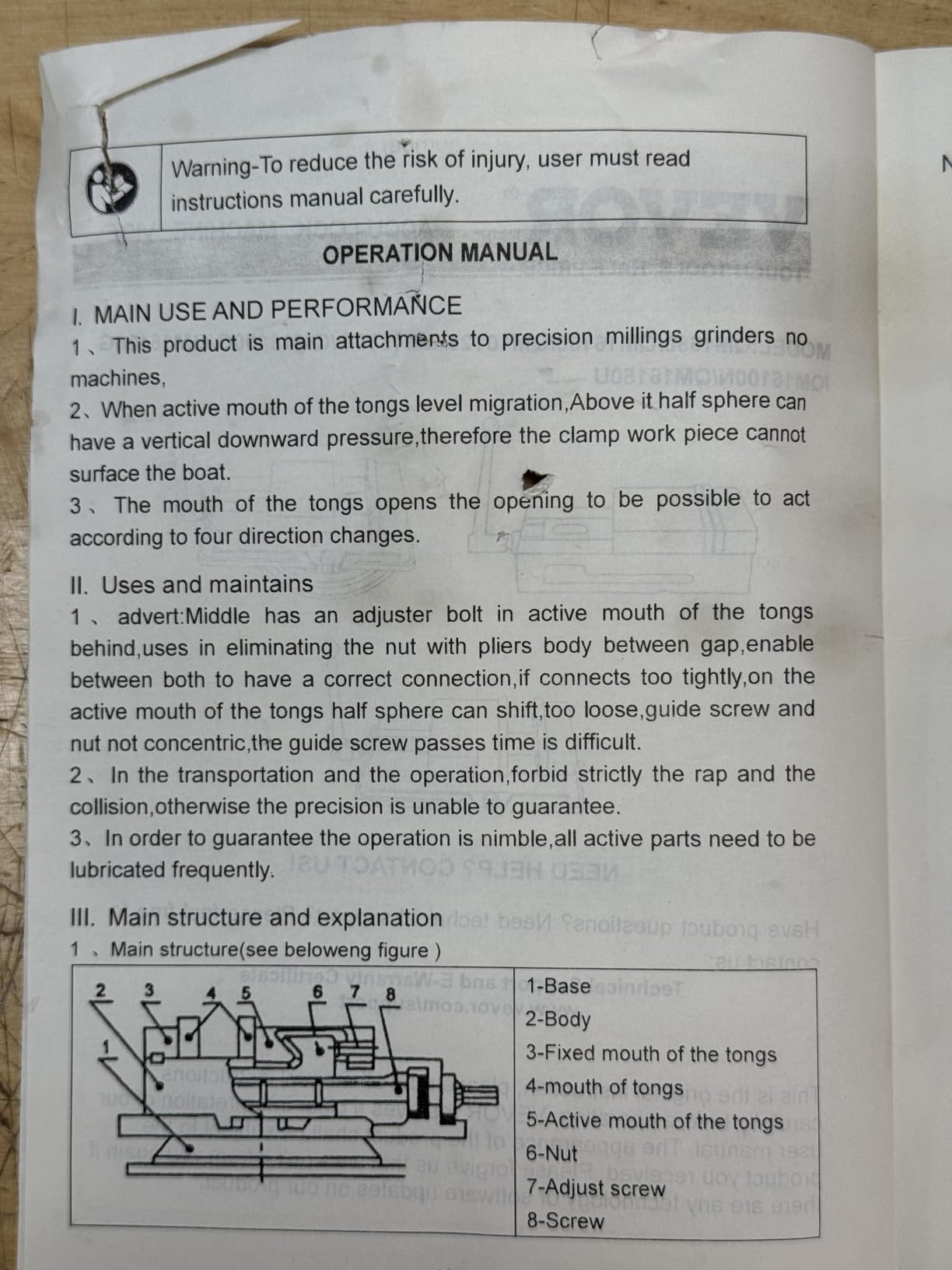
The 6 inch jaw width and 5.9 inch jaw opening cover the majority of the work most hobby mills ever see. A plate that is 5 inches wide fits flat against the jaws, and a length of bar up to nearly 6 inches can be gripped across its short dimension without any jaw gymnastics.
Clamping force comes from a lock-down screw assembly with a solid base and a swivel handle, and owners consistently report no workpiece shake during machining. That is a function of mass and base design rather than clever mechanism, and it is the reason this vise feels stable on a mid-size mill.
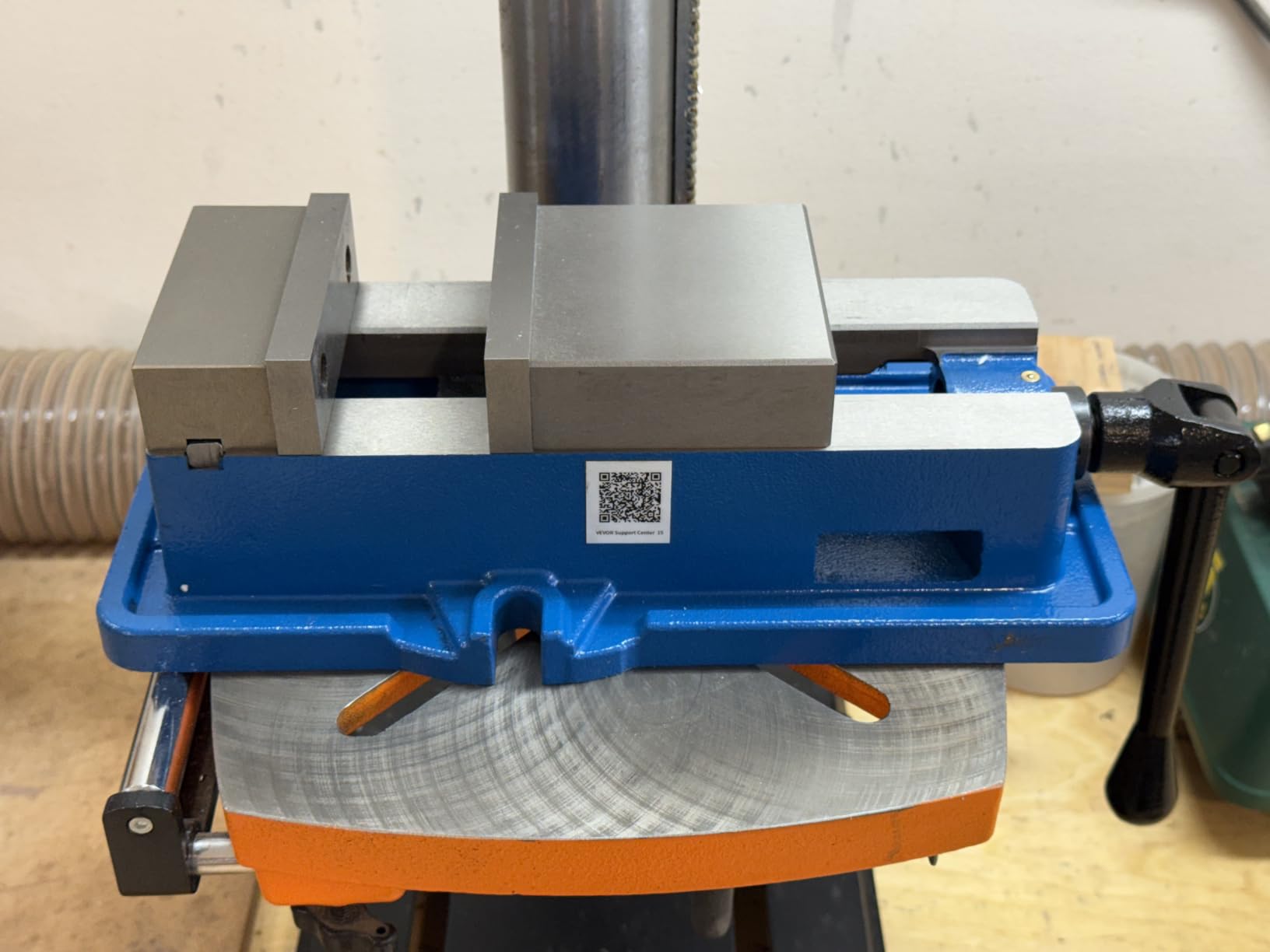
Be clear-eyed about the accuracy figure. The stated parallelism and squareness is 0.002 inch, which is roughly ten times looser than the 0.0002 inch class of vise in this roundup. That is completely fine for milling, drilling, sawing and general fit-up work. It is not fine for grinding to size or for holding a finished surface while you cut it.
If you need both, the practical answer is a two-station setup. Many machinists run one wide cast iron vise like this for stock and a small hardened vise for precision work on the same table, which is a topic we cover in our milling vise comparison.
Why this one makes sense for a budget shop
At 6 inch jaw width, this vise gives you a wide clamping face in the entry class it sits in. If your work involves plate, block or bar in the 3 to 5 inch range, moving up to a 4 inch vise later means re-buying the ecosystem around it.
The 4.7 average across 72 ratings sits at the top of the customer satisfaction range among the vises here, and there are no recurring complaints about wobble, chipped castings or stripped hardware. That is worth more than a longer spec sheet when you are buying sight unseen.
What you give up
Precision at the ten-thousandth level. If your parts need to hold a dimension tighter than a few thousandths across a clamping operation, indicator-tram this vise and compensate, or look at the toolmaker vises further down the list.
The lock-down base is also a fixed commitment. It is designed to be bolted or clamped firmly to a table, so it is less pleasant as a portable bench vise than the cam-slide model that opens at number one.
4. CME 850-2P-800 Separated 8 inch Milling Vise – the Long Material Specialist
CME Separated 2-Piece Milling Vise, 8″ Jaw Wd
8 inch jaw width,2-1/2 inch jaw height,18mm table keyway,Four mounting holes
Pros
- Two piece separated design holds extra long workpieces no single vise can
- Precision ground steel faces keep work seated firmly
- 18mm table keyway plus four mounting holes for rigid location
- 81 percent five star share across its review history
Cons
- Only 19 ratings
- the thinnest sample in this group
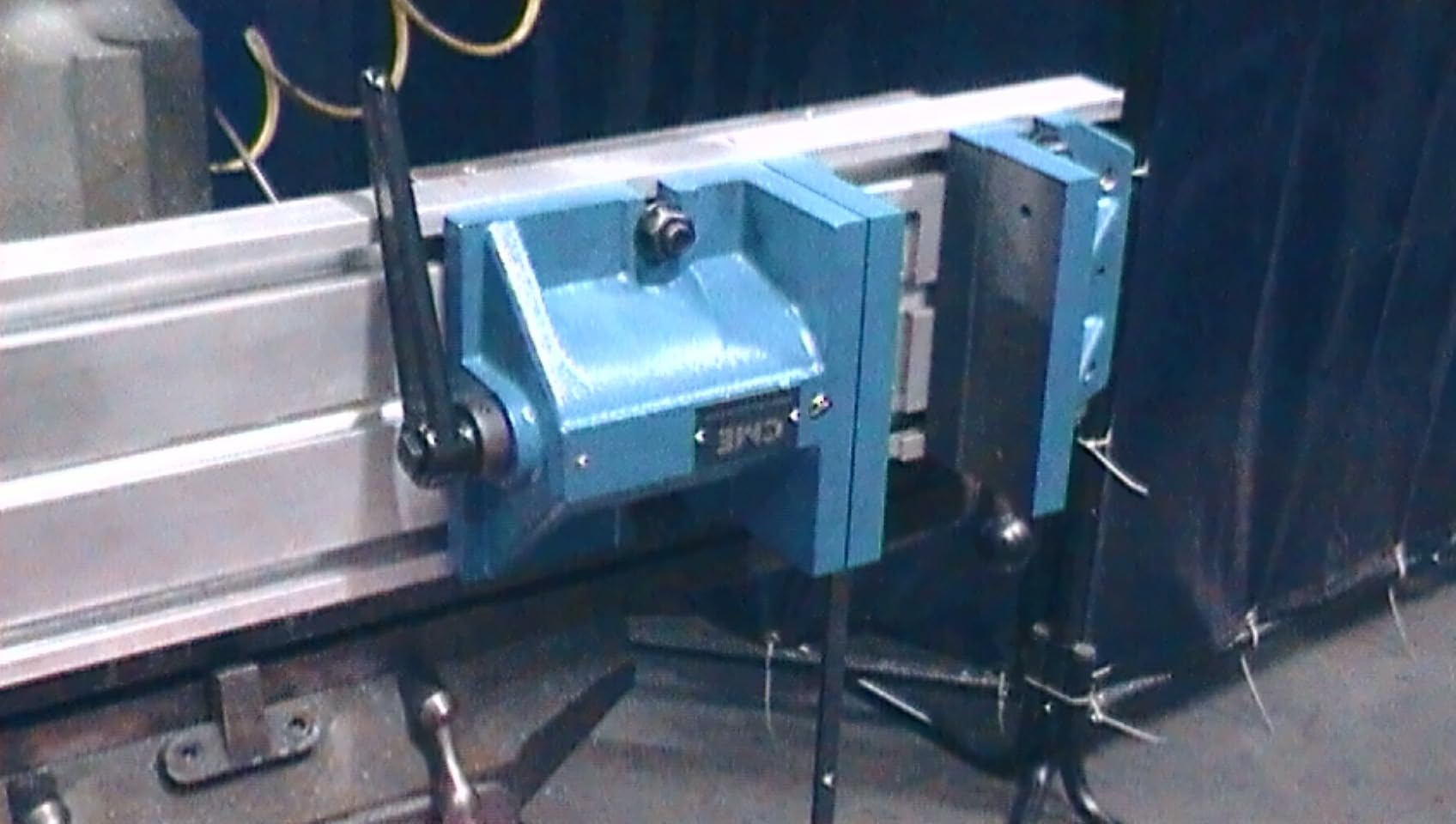
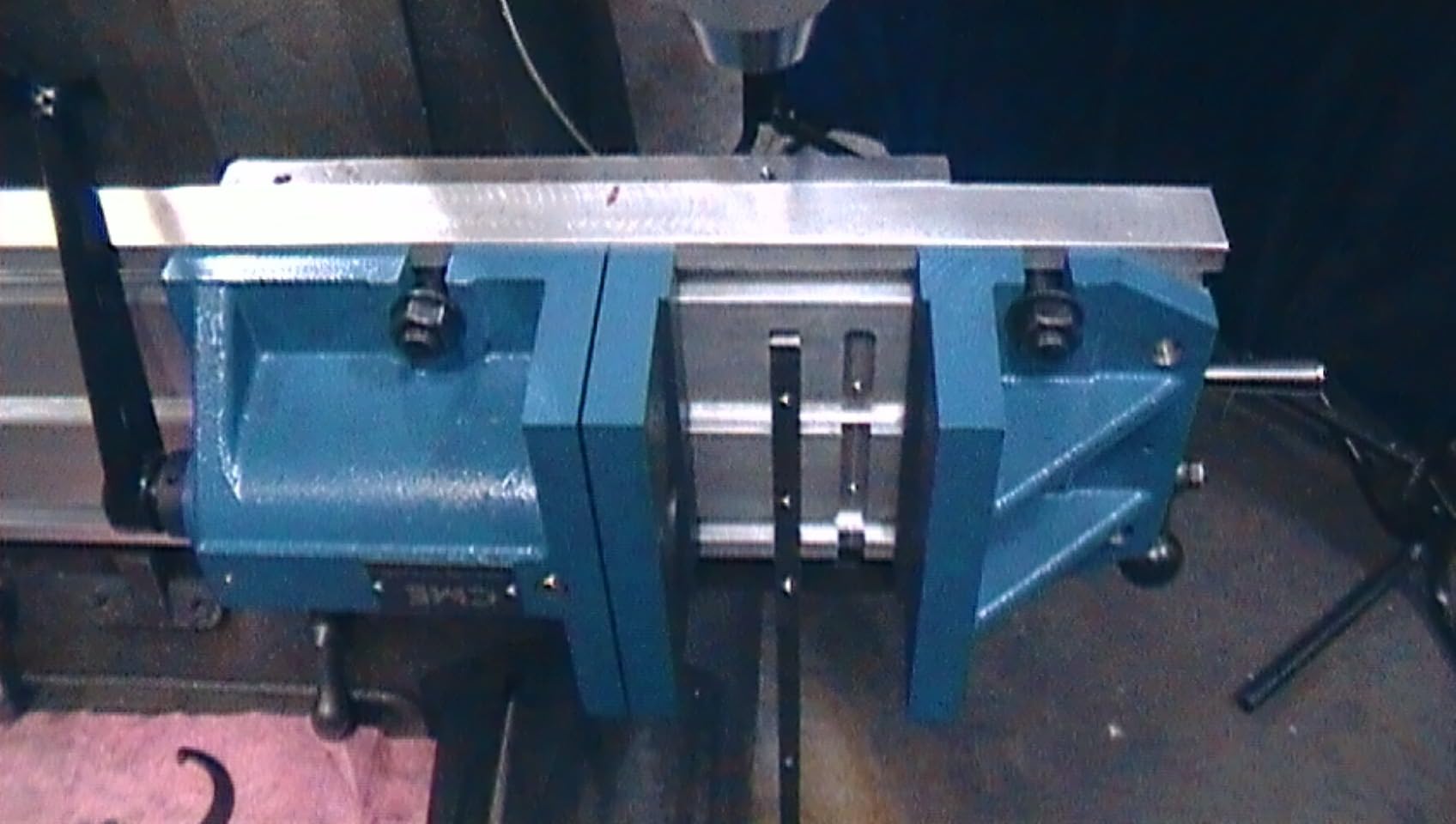
Most vises solve a length problem by giving you a bigger opening. This one solves it by splitting into two. The CME 850-2P-800 is a separated two-piece milling vise, and the two stations can be spaced far enough apart to hold a workpiece that no single-station vise could ever span.
At 8 inch jaw width with 2-1/2 inch jaw height, this vise grips more of a plate than a narrower model. The cast iron body carries smooth, precision ground steel faces that keep the work seated firmly, and the 81 percent five-star share in the reviews reflects owners who bought it for exactly one job and found it did that job well.
The locating provision is the detail that separates this from a generic heavy vise. An 18mm keyway matches the table keyway on a Bridgeport style machine, and four mounting holes of 11/16 inch diameter at 5-7/16 inch centers let you bolt the body down without hunting for a pattern. On a 9×48 table that alignment is the difference between a vise that stays put and one that walks under load.
At 61 pounds, this vise is among the two heaviest in the group and it is not shy about it. You will want help lifting it onto the table, and you will want to confirm that it fits inside your enclosure with clearance for the handle before you commit.
Sizing regret is a real risk at this jaw width. On a smaller knee mill or a mill with a table cover, an 8 inch vise can physically foul the cover or require drilling access holes for the mounting bolts. Measure the enclosure before you order.
Where this design earns its keep
Long bar, long plate, and structural sections are the use case. When the workpiece is longer than a single vise is wide, a separated two-station design clamps both ends and resists the twisting that makes long bar chatter. It is also a sensible way to run two independent setups off one table, which saves a second station on a small machine.
For shops that cut repetitive parts from long bar, the repeatability of a fixed span is the real value. You set the spacing once and stop measuring every part.
What to watch before buying
Nineteen ratings is a thin sample. It is a 4.7 average, and the review base has no complaints recorded against it, but a small pool tells you less about long-term durability than a hundred ratings across a wide user base would.
This is also a milling vise, not a bench vise. There is no swivel base and no general purpose handle position, so it wants a machine table with a keyway rather than a workbench corner.
5. Accusize 0235-0303 Precision Screwless Vise – the Best Screwless Design for Small Mills
Accusize Industrial Tools 3” Precision Screwless Vise, Hardened, 0.0002”, 0235-0303
0.0002 inch accuracy,3.94 inch jaw opening,0.24 inch jaw step,Hardened steel
Pros
- Low profile body fits under a small mill without raising the spindle line
- Measured flat and square within about 0.0002 inch
- Spring clip keeps the cross pin oriented
- Moving jaw slides with a medium friction fit and no play
Cons
- One buyer reports dead spots across roughly 30 percent of the clamp range
- Locking spring can feel weak
- Supplied cap screw threads arrived damaged
What sets this screwless vise apart is its height. At 2.76 inch tall and 2.87 inch wide, the body fits under a small manual mill without raising the spindle line into the work. On a compact machine with tight headroom, that single dimension decides whether a precision vise is even possible.
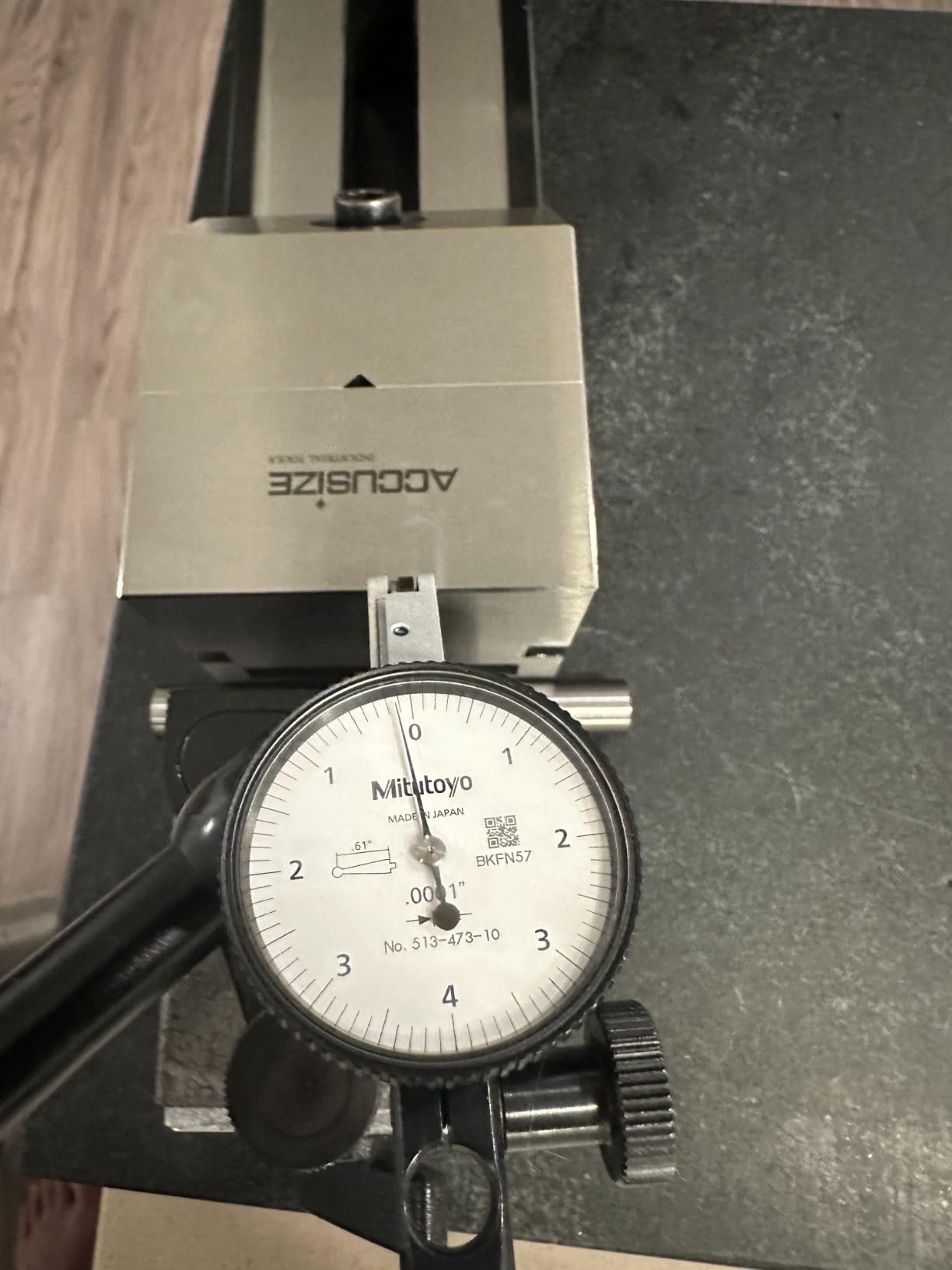
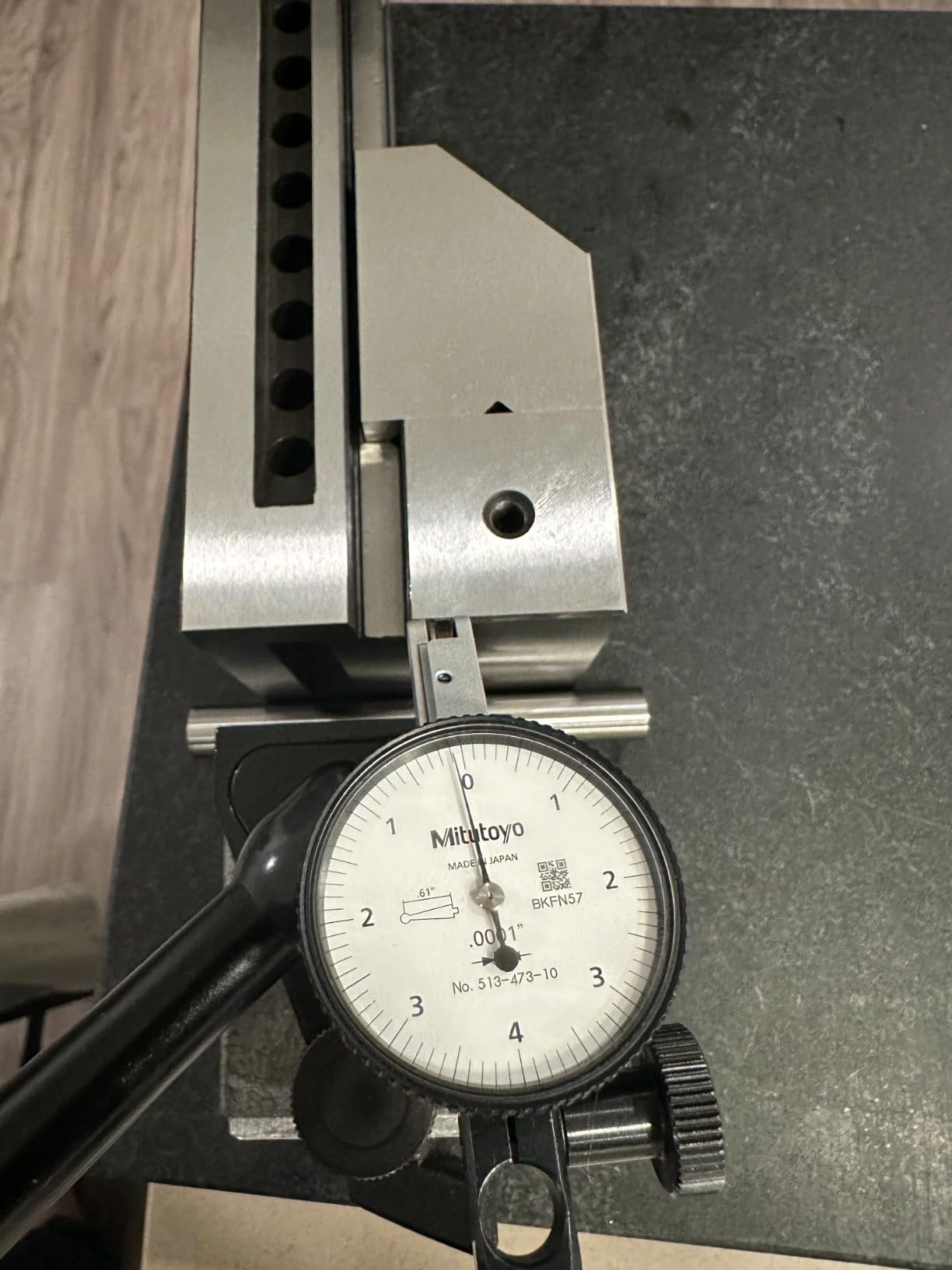
Accuracy is stated within 0.0002 inch, and one owner measured the vise flat and square to about that figure. The 0.24 inch jaw step is a genuine convenience because it gives you a built-in second clamping height, so a part can sit proud of the jaw face without a parallels set.
Jaw opening runs from zero to 3.94 inch, so it covers more than the width of the 3 inch jaws. The cross pin is held by a spring clip that keeps it oriented during clamping, which removes a small frustration that most screwless designs inflict on the user.
The finish is noticeably cleaner than a typical import of this type, and the moving jaw slides with a medium-friction feel and no perceptible play once seated. Owners describe the screwless lock as fast once the technique is learned, which is an honest way to put it: there is a short learning curve and then it is quicker than a screw.
It suits desktop CNC work particularly well, where a low profile reduces the Z travel you lose to the vise. The same geometry makes it useful on a manual mill when you are working close to the spindle with light cuts.
Why machinists like screwless designs
Screwless vises clamp by geometry, so closing speed is a design parameter rather than an accident. There is no Acme thread to wind down, nothing to strip, and no lubricant to get onto your part. On a CNC machine the fast, consistent clamp cycle matters more than it does by hand.
They also tend to be low profile and light, which makes them a better match for small mills and hobby routers than a cast iron mill vise that was designed for a 9×48 table.
What to check on arrival
The most serious review in this product’s history reports dead spots across roughly 30 percent of the clamp range, letting a fixture plate shift during a cut. That is a manufacturing variance issue, not a design one, and the practical response is to indicator-check the clamp at several positions before trusting it with finished work.
Two smaller complaints recur: the locking spring can feel weak, making setup finicky, and the supplied cap screw threads arrived damaged on at least one example. Check the spring and the hardware before your first job.
6. HHIP 3900-0251 Precision Toolmaker Vise – Shop Grade Accuracy with Replaceable Jaws
HHIP 3900-0251 Precision Toolmaker’s Vise, 3″ Width x 1.375″ Depth Jaw, 4″ Jaw Opening (Pack of 1)
3 inch jaw width,4 inch jaw opening,1.375 inch jaw depth,plus or minus 0.0002 inch
Pros
- All surfaces hardened and precision ground to plus or minus 0.0002 inch
- Replaceable jaws and clamping slots extend tool life
- Ground V-way secures cylindrical workpieces
- Perfect 70/30 five and four star split with no ratings below four stars
Cons
- 3 inch jaw width limits wide plate work
- Small review base of 28 ratings
The defining feature here is replaceable jaws. When the hardened jaw faces wear, you replace them instead of scrapping a precision vise, and the provided clamping slots let you mount custom jaw plates in the same body. Over a decade of service that single design decision recovers most of the original cost.
Accuracy is stated at plus or minus 0.0002 inch with all surfaces hardened and precision ground. At 3 inch jaw width, 4 inch jaw opening and 1.375 inch jaw depth, the sizing matches the other toolmaker class vises here, so parallels and soft jaws from that ecosystem generally fit.
The ground V-way is the detail that separates it from cheaper look-alikes. It is machined into the body rather than added as a loose accessory, so round stock sits in a repeatable position every time you clamp the same diameter.
The review profile is unusually clean: a 70/30 split between five and four stars with nothing below four. Twenty-eight ratings is a small base, and a small base is exactly what you get with precision shop-grade equipment, because few hobby buyers need what this offers.
For anyone building fixtures, gauges or cutting tools, that is the point. This is a vise for holding a part you already finished, not for chopping stock. Pair it with a wider mill vise for material prep.
Why replaceable jaws matter
Hardened jaw faces wear, and on a non-replaceable design that wear ends the useful life of the whole vise. Replaceable jaws turn consumable parts into a maintenance item. The clamping slots extend the idea further, letting you bolt in a soft jaw blank or an angle plate for a specific fixture.
That is what makes a toolmaker vise a system rather than a tool. The vise body is the investment, and the jaws are the parts you change to suit the job.
Where it does not fit
Three inch jaws mean wide plate is out of scope. A 4 inch or 6 inch plate will overhang, and an overhanging workpiece that you cannot support with parallels will deflect under the cutter.
There is also no swivel base and no general purpose handle here, so this is a machine vise. On a bench you want something with a rotating head and a hardened anvil behind the jaws, which is a different category of tool.
7. VEVOR 6 inch Heavy Duty Milling Vise – the Most Mass for the Money
VEVOR 6 Inch Heavy Duty Milling Vise Bench Clamp Vise High Precision Clamping Vise 6 Inch Jaw Width with 360 Degrees Swiveling Base CNC Vise
6 inch jaw width,29 KN clamping force,66.6 pound iron body,360 degree swivel base
Pros
- Very heavy iron build holds parts without being bolted down
- Owners report near zero tram out of the box
- 29 KN clamping force on ground flat surfaces
- Backed by responsive replacement service
Cons
- Swivel degree markings are barely readable with no index line
- Jaws are not standard width or hole spacing
- Swivel base is unusable without user made markings
At 66.6 pounds, this is the heaviest vise in the group, and mass is the feature. A vise that heavy does not need to be bolted to the table to stay put, which is a genuine convenience on a machine where swapping between a vise and a fixture plate is a normal part of the day.
Maximum clamping force is rated at 29 KN on ground, flat surfaces, which is a real number rather than a marketing adjective. Owners report near-zero tram out of the box, so you are not starting with an indicator session before the first cut.
The body is iron with a 360 degree rotating base, which lets you bring long bar in from the side rather than fighting the handle. The screw rod is made from a high strength material chosen for wear resistance and smooth rotation rather than maximum stiffness.
This is a general purpose vise. Sawing, filing, chiselling, drilling and milling all fall inside its comfort zone, and the accessory set in the box covers the basics. It suits a bench as much as a machine, which is more than most vises in this roundup can claim.
The 18 x 13 x 8 inch footprint is large. On a compact mill, check the table width and the enclosure clearance before committing, because this is a vise that wants room.
Where the weight pays off
On a manual mill, a vise that stays put under cutting load removes a whole category of problems. No bolt loosening mid-cut, no walking under a heavy cut, and far less sensitivity to the way the handle is positioned.
The mass also helps when you are working on soft materials like brass or aluminium, where a light vise lets the workpiece chatter and a heavy one just sits there. Owners using it for light filing and drilling report the same.
What the design gives away
The swivel base is the weak point. The degree markings are barely readable and there is no index line to align against, so owners mark their own positions. Treat the swivel as a rough adjustment rather than a repeatable angle.
More importantly, the jaws are not standard width and do not use standard hole spacing, which means the soft jaw accessories you buy for another vise will not bolt to this one. Budget for making your own jaw blanks, and read our post vise roundup if you prefer a vise mounted on a post rather than a table.
8. findmall 3 inch Accuracy Mill Vise – the Best Budget Milling Vise
findmall 3″ Accuracy Mill Vise Without Base for Milling Shaping and Drilling Machines
3.19 inch jaw width,3.03 inch opening,45 degree downward pressure,Dual through bolts
Pros
- Many owners report buying a matched pair for very little in total
- Tight tolerances with no workpiece movement for the money
- Dual through bolts spread lateral clamping force across the body
- Hemispherical screw applies stable 45 degree downward pressure
Cons
- One owner reports brittle jaws that cracked on first use
- Another warns the frame can crack if overtightened
- Some report mounting holes not parallel
This vise does something unusual for its class: it applies clamping force downward. The hemispherical pressure structure delivers stable pressure at 45 degrees into the workpiece, which is a scaled-down version of the wedge principle a full milling vise uses. In practice owners report no workpiece movement for the money.
Dual through-bolts at the top spread lateral force across the whole body rather than concentrating it at one point, which reduces the stress fractures that shorten the life of cheaper castings. The 3.19 inch jaw width and 3.03 inch opening cover most small-shop work.
Owners also report buying a matched pair for very little in total, which is a common way to set up a two-station bench: one vise for material prep and one for finished work.
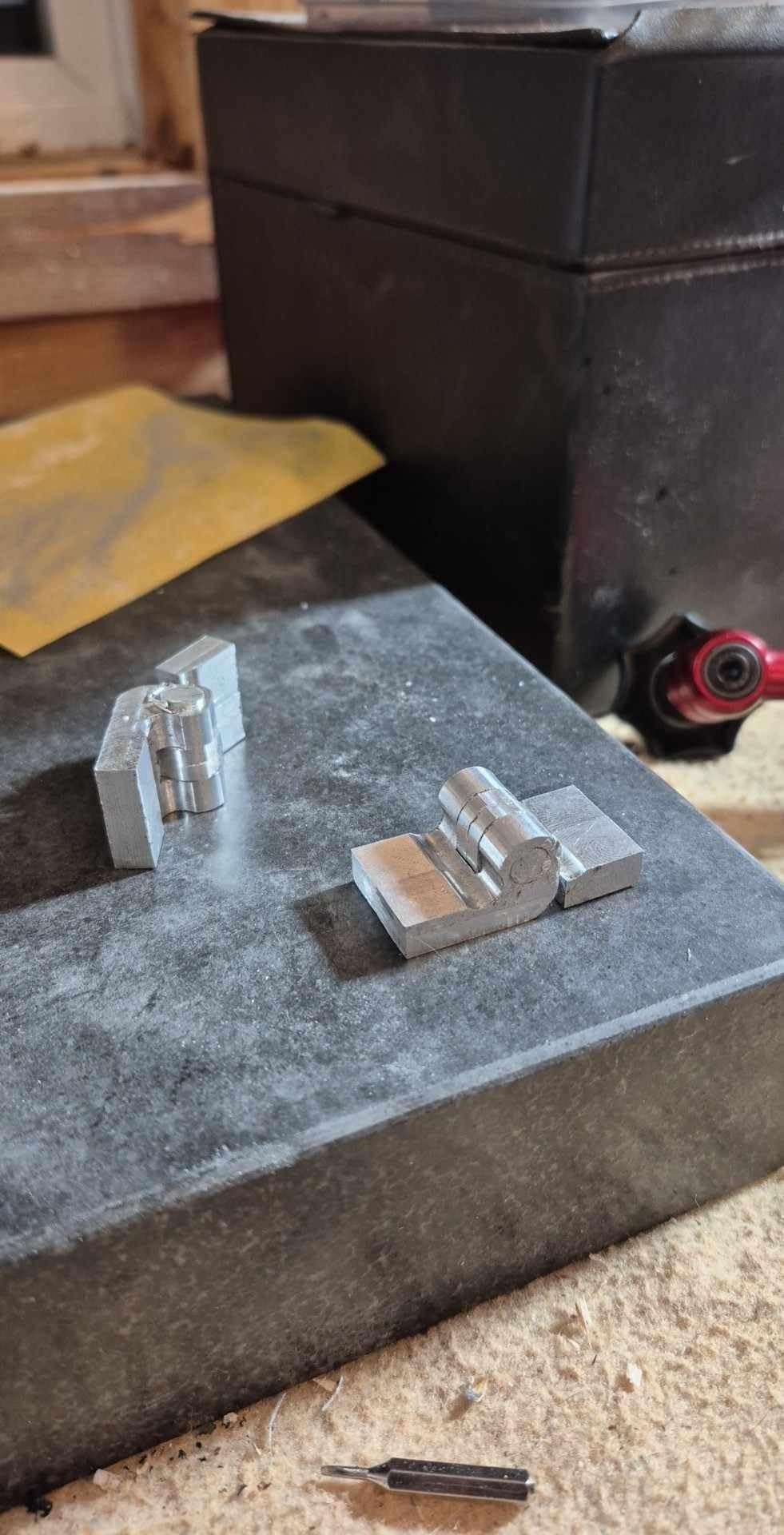
Sizing runs 9.84 inch long by 4.69 inch wide by 2.6 inch body height, and it is offered both with and without a swivel base. There is a long list of variants covering 3, 4, 5 and 6 inch sizes, so the same design covers a wider range than the 3 inch version suggests.
At just over 13 pounds it is also lighter than the cast iron vises above it, which makes it easier to move between machines but means it benefits more from being bolted down on a mill table.
Why buyers pair these up
Rough and finish are different jobs. A vise that has been used to saw and chisel is eventually a vise that is no longer square to the same standard, so separating prep from finish work keeps the precision station accurate. At this price, two vises cost less than one premium unit.
It is also a sensible first vise for a small mill or a manual machine where you are still deciding how much you will use it. The downward pressure principle means it behaves more like a mill vise than like a simple clamp.
What to inspect before you cut
Durability complaints are isolated but serious: one owner reported brittle jaws that cracked on first use, and another warns the frame can crack if it is overtightened. Treat the handle as if it will snap if you force it.
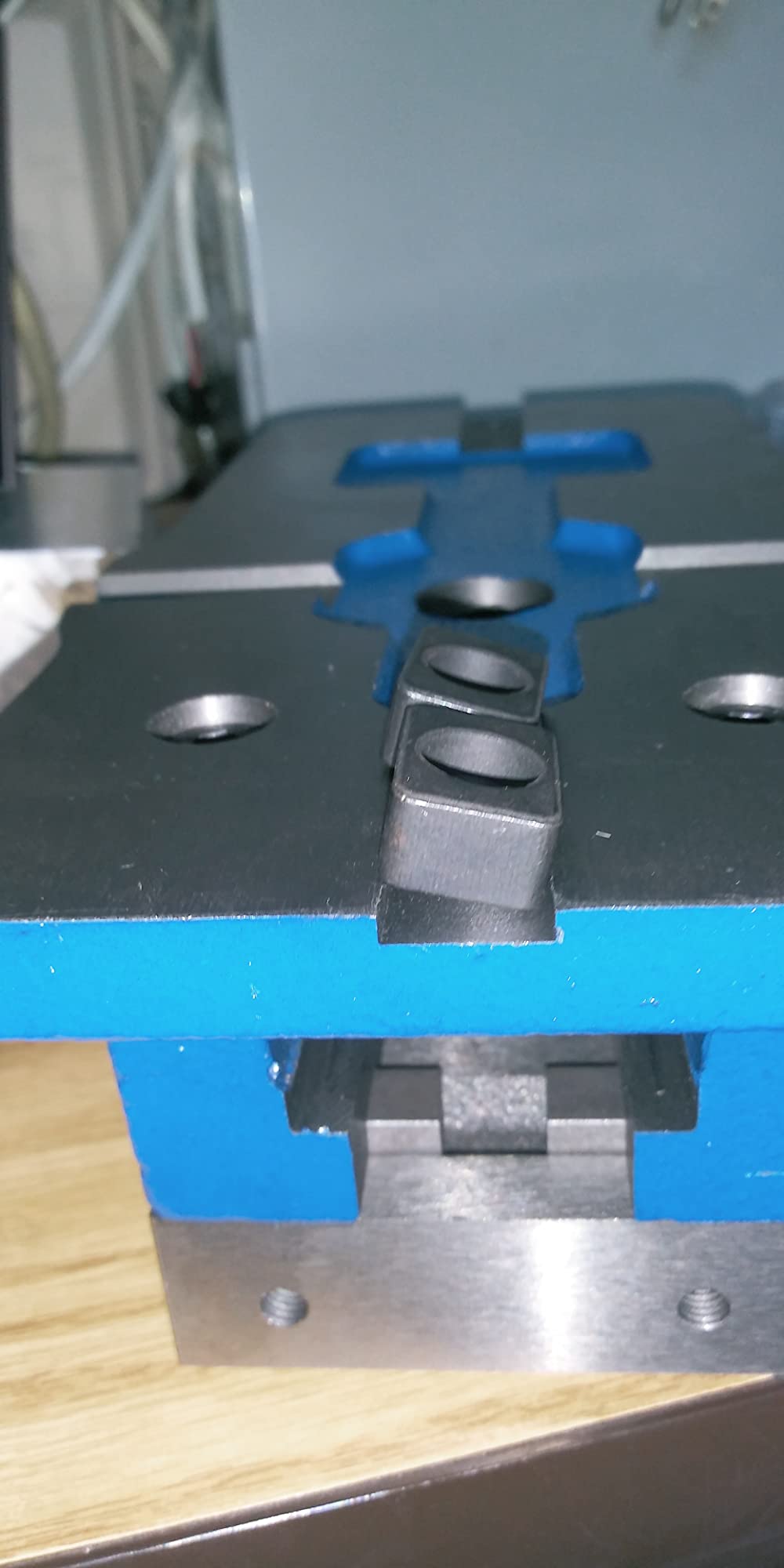
Some owners also report mounting holes that are not parallel, which means you should indicator-tram the vise on your table before trusting it with a tolerance. Inspect the jaw faces for chips and check the holes with a straightedge on the day it arrives.
9. Shars 202-1212 3 inch Toolmaker Vise – the No-Rise Jaw Design
Shars 3″ Precision Toolmaker Vise 202-1212 M[
3 inch jaw width,5 inch jaw opening,1-5/16 inch jaw depth,Rc 58-62 hardened
Pros
- One piece hardened steel body for rigidity and long service life
- No-rise jaw design keeps continual downward force on the workpiece
- Large 5 inch jaw opening on a compact 7.5 inch overall length
- Square and parallel to within 0.0002 inch
Cons
- 3 inch jaw width limits wider plate work
- Fixed body with no swivel base
The no-rise jaw is the reason to look at this vise. Most vises push the workpiece slightly upward as they clamp, which changes your setup height and can lift a part off its parallels. This design applies continual downward force and avoids that raise, so your Z position stays where you set it.
The body is one-piece hardened steel with body and jaws at Rc 58-62, ground square and parallel to within 0.0002 inch. One-piece construction means there is no bolted joint to flex, which is where most accuracy problems in a vise come from.
Proportions are unusual and useful: 3 inch jaw width with a 5 inch jaw opening, 1-5/16 inch jaw depth and an overall length of only 7.5 inch. You get a wide opening in a very short body, which saves table space in a direction most vises do not.
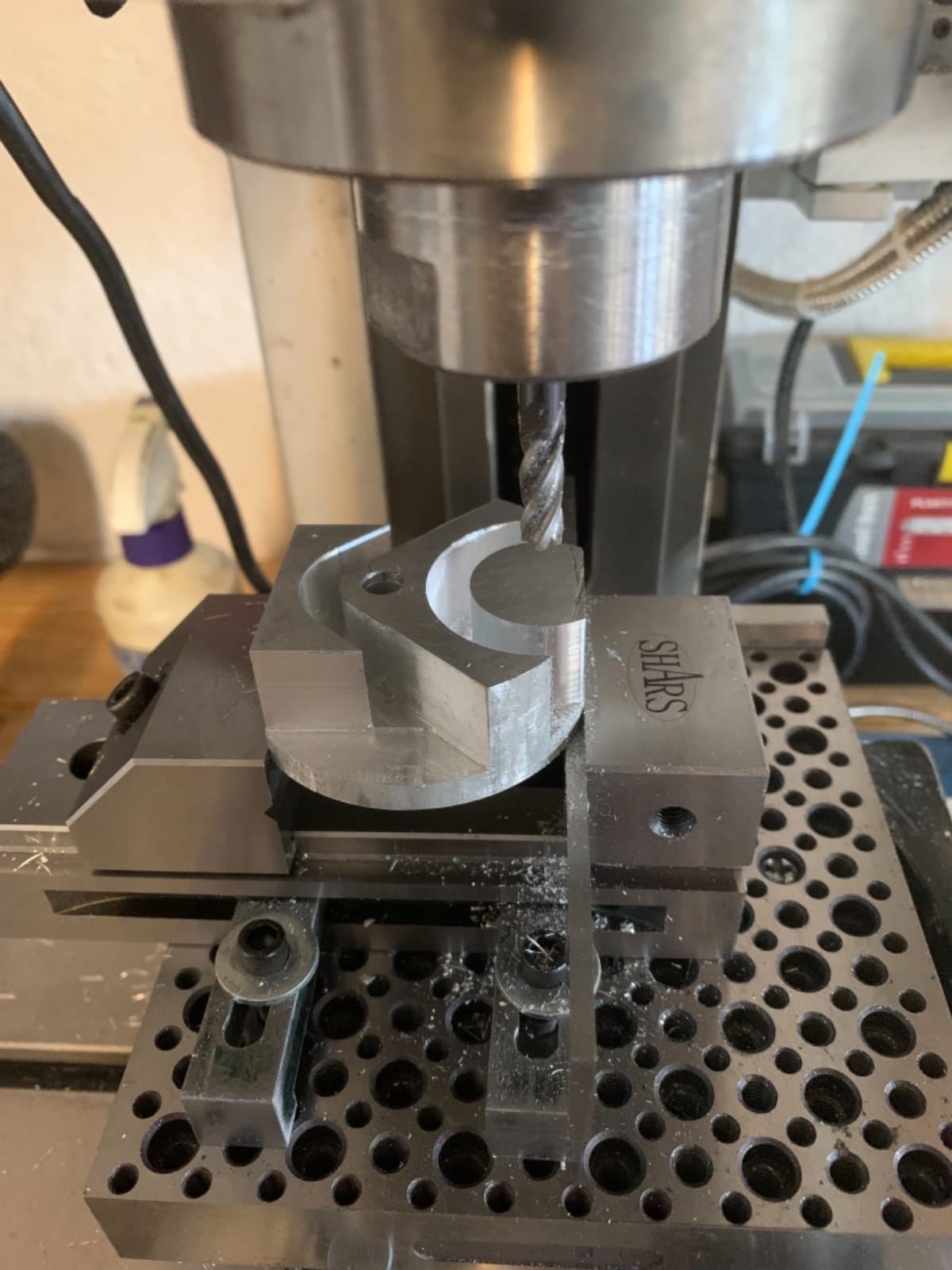
The review base is strong, with 86 ratings and a 71 percent five-star share, and few recorded complaints. The recurring praise is for the hardened one-piece construction and the no-rise jaws, which is what you would expect from a vise designed around a single mechanical idea.
It is a fixed body with no swivel base, so plan the orientation before you bolt it down. On a table with a keyway you get the same positive location benefit described earlier with the CME vise.
Why downward force changes your results
When a vise lifts a part as you tighten, everything above the part rises with it. Your first cut is then at a different height than your last, and if the part was sitting on soft tops, the relationship between part and jaw shifts too. A no-rise design removes that variable entirely.
For repeat work, especially short runs of duplicate parts, that consistency is worth more than a slightly higher clamp force. Set up once, then cut a full run, and the last part sits exactly where the first one did.
Where the compact body becomes a limit
A 5 inch opening in a 3 inch jaw is excellent for short, wide parts. For long bar you will be relying on overhang, and unsupported overhang deflects under a cutter. Keep cuts light far from the supported section or add a support post.
The fixed body also means no rotation for awkward angles. If your work regularly needs a vise at 45 or 90 degrees, either tilt the table or look at a model with a swivel base, such as the VEVOR heavy duty model earlier in this roundup.
10. Accusize 3541-0050 Mini Toolmaker Insert Vise – for Parts Measured in Hundredths
Accusize Industrial Tools Mini Precision Toolmaker Insert Vises, Ga41-0050
15/16 inch jaw width,1/2 inch jaw opening,4/10 inch jaw depth,0.4 kg body
Pros
- Compact sub 1 inch jaw width suits tiny die and model parts
- Precision ground with tight body to moving jaw tolerance
- Top notches accept round stock and built in parallels aid small part mounting
- Frequently praised as good value for die and tool work
Cons
- Tiny internal ratchet selector can rotate to a useless angle
- Some units arrived needing deburring and light rework
- 1/2 inch jaw opening limits work size
This is a palm-sized toolmaker insert vise, not a milling vise, and it earns its place by solving a problem the larger vises cannot. At 15/16 inch jaw width and just over 13 ounces, it holds a piece of watch gear, a die, a small model component or a broken cutting tool in a way that leaves both of your hands free.
Accuracy is 0.0002 inch squareness with parallelism of 0.005 mm per 100 mm, and the review summary repeatedly praises the finish, fit and precision of a vise this small. The overall length is 2.5 inch, so it fits on a crowded bench or inside a small fixture without dominating the space.
Two details make it more useful than the dimensions suggest. The top notches accept round stock, and the built-in parallels aid small part mounting, so you are not hunting for shims every time you change a job.
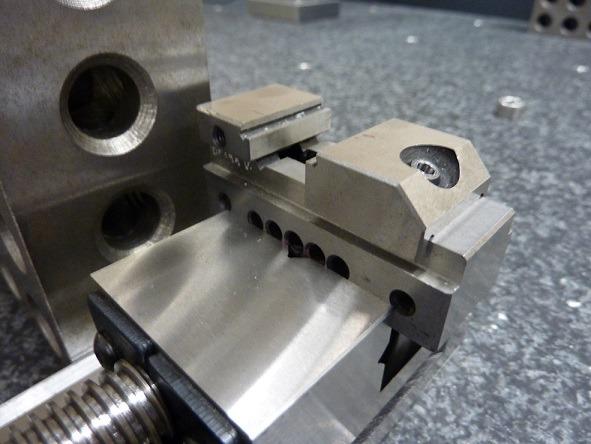
Jaw opening is 1/2 inch and jaw depth is 4/10 inch, which defines the envelope clearly. Anything larger than a small block is out of scope, and it is worth saying that plainly so nobody buys this expecting a bench vise.
There is also a larger 3 inch model from the same maker in this roundup, at number five, if you need more jaw depth and opening from a hardened screwless body.
What it is genuinely good for
Holding small work while you deburr, hand file, scribe or check with a gauge. Holding a broken tap or drill so you can work on it without your fingers nearby. Those jobs come up constantly in any shop and they are awkward in a big vise.
Model making and small tool work get the most out of it, because the accuracy and the notches handle both round and flat stock without a fixture.
The fiddly parts you should know about
The tiny internal ratchet selector is the most common complaint: it can rotate to an angle that is effectively useless while you are tightening, which is frustrating on a vise this small where the adjustment matters. Work the handle slowly until the ratchet engages cleanly.
Some units have also arrived needing deburring and light rework to hold 0.0002 inch, so check the jaw faces and the moving jaw fit with a feeler gauge before you trust the spec. For occasional small work that is a fair trade for the size.
How to Choose a Machinist Vise in 2026
Most disappointing vise purchases are not bad vises. They are correct vises bought for the wrong job, at the wrong size, installed without tramming, and then blamed for work that was never going to come out right. The sections below are the decisions that actually change the outcome.
Screwless toolmaker vise vs cast iron milling vise
These solve different problems. A screwless toolmaker vise is hardened steel, accurate to a few ten-thousandths of an inch, and clamps by geometry so nothing shifts as you tighten. It is built for precision work, low profile setups and small machines. The cast iron milling vises in this roundup are heavy, deep-jawed and built to hold wide plate and long bar under heavy cuts.
If your work is grinding, fixtures, gauges or small parts, a toolmaker vise is the right tool. If your work is plate, bar and blocks, you want jaw width and mass. Many shops end up running both, which is why a matched pair is such a common purchase.
Match jaw width to your mill table
The general rule is that jaw width should stay under about half the short dimension of your table, so the vise can be clamped far enough from the work to clear the cutter. A 6 inch vise needs a table at least 12 inches wide to work comfortably, and an 8 inch vise needs more room again. A 3 inch vise fits almost any machine, which is why it dominates the hobby market.
Jaw depth is the other measurement people forget. A 1-3/8 inch jaw depth suits plate and short blocks. Long bar and structural sections want at least 2 inch of jaw depth, and if you regularly clamp tall work, check the throat clearance as well as the height of the moving jaw.
What the anti-lift mechanism actually does
A standard screw vise generates clamping force in one direction only, so the workpiece can be pushed upward and away from the bed as you tighten. An anti-lift, Duke-style or wedge design adds a second force vector that drives the jaw down and back into the part. The workpiece ends up seated in two directions rather than one.
The benefit shows up in three places: your Z height does not change as you clamp, the part is less likely to shift under cutting load, and the contact patch against the bed stays put. Vises that describe downward pressure, a 45 degree pressure structure, a no-rise jaw, or a screwless lock are all variations on this idea.
Covered screw vs exposed screw and swarf
On a bench machinist vise, the single design detail experienced machinists argue about most is whether the screw is covered by the moving jaw slide arm. If the screw is exposed on top of the slide, swarf falls into the thread as you work, jams the handle, and accelerates wear on both the screw and the nut. A covered screw stays clean and stays smooth.
This is the kind of detail that separates lines within the same brand more reliably than the brand name does. Before you buy, look at whether the moving jaw arm passes over the screw completely. It is the cheapest accuracy and longevity check in this entire guide.
Made in USA vs imported: what actually changes
Country of manufacture is a weak signal on its own. What matters is whether the body is ductile or cast iron versus a stamped steel base plate, whether the moving jaw is a ground component, and whether replacement parts exist. Some lower lines from respected American brands have dropped from cast iron to stamped steel bases, so verify the material rather than trusting the label.
On the value side, imported vises in this roundup hold up well for general milling and drilling. The pattern to watch for is finish quality and tolerance on arrival. Budget time for an inspection, and consider our drill press vise roundup if your work is mostly tapping, reaming and light duty clamping.
What to buy alongside the vise
A vise on its own is a tool. A small accessory set turns it into a workholding system, and the pieces are inexpensive compared with the vise itself. You will want a matched set of hardened parallels in two sizes, a pair of soft jaw blanks in a material suited to your workpiece, a dial indicator with a magnetic base for tramming, and a soft bristle brush for chips.
If your vise has a non-standard jaw interface, as the heavy VEVOR model in this roundup does, add a mill or a file to that list so you can make your own jaws. Accessory availability is a legitimate reason to prefer one model over another, and it is worth checking before you buy rather than after.
Arrival inspection checklist for imports and clones
Unbox the vise over a clean surface and check it before you mount it. Run a straightedge along the jaw faces and the bed to look for obvious bows. Close and open the jaws fully and note any binding or play, especially at the extremes of travel. Check that the mounting holes line up with a straightedge across them. Run a feeler gauge between the moving jaw and the body to sense side play.
Then mount it and tram it with an indicator before the first cut. If the marketing accuracy figure does not survive a check on your own table, you have learned that before the job was ruined. Keep the original packaging for a week in case the vendor needs to replace a unit.
Frequently Asked Questions
Which machine vise is considered the best?
For most machinists, the best general-purpose choice is a cam quick-slide vise in a stress-relieved iron casting, because it clamps in one motion and needs no tramming. For precision work the answer changes: a hardened screwless toolmaker vise rated at 0.0002 inch accuracy holds work far more rigidly. The right pick depends on whether you cut stock or finished parts.
What is the best vise for the money?
The best vise for the money is a 4 inch or 6 inch cast iron milling vise with a stated parallelism figure, a ground bed and a base heavy enough to sit unbolted on a bench. In this roundup the 6 inch models rated at 4.5 and above deliver the most capability for the money spent. Spend the difference on parallels and an indicator rather than on brand name.
Should I buy a 4 inch or 6 inch mill vise?
Buy a 4 inch vise if your mill table is under 12 inches wide or you mostly machine small fixtures, because a wider vise will not clamp far enough from the work to clear the cutter. Buy a 6 inch vise if you cut plate or bar in the 3 to 5 inch range, since that is the width most shops reach for first. Size your jaw depth to the longest stock you clamp.
Is a machinist vise worth it versus a bench vise?
A machinist vise is worth it if you own a mill, because it clamps downward and keeps the workpiece seated in two directions, which a bench vise cannot do. A woodworking bench vise is built to clamp to a bench edge and absorb hammering, so it will lift parts off the bed on a mill table. Use a bench vise for assembly and a machinist vise for cutting.
How do I tell if a vise is out of tolerance?
Mount the vise, then sweep a dial indicator along the top of the moving jaw and across the jaw faces. The reading should stay within the stated parallelism and squareness across the full jaw width and the full travel. If the number changes as the jaws close, or the jaw faces are not parallel to the bed, the vise is out of tolerance and should be trammed or replaced.
The Bottom Line: Which Machinist Vise Should You Buy?
Our pick from these ten is the HHIP 3900-0183 cam quick-slide vise. It carries more ratings than any other 3 inch option here, sits on a heavy stress-relieved iron casting with ground surfaces, and its cam lock saves real time on every changeover. It is the vise we would put on a bench without hesitation, and it works just as well on a drill press or a small mill.
If precision is the point of your shop, the HFS 3 inch screwless vise at number two carries the most ratings in the group and one of the few published 0.0002 inch figures here, alongside a full V-groove. If your budget is the constraint, the VEVOR ACCU Lock Down at number three is the strongest pick for full-width plate and bar, and the findmall 3 inch at number eight covers small shops for very little.
Whichever of the best machinist vises you settle on in 2026, buy your parallels and an indicator at the same time, tram the vise on the day you install it, and check the screw cover before the first cut. Those three habits are worth more to the accuracy of your work than the difference between two brands.