
The best wood burning stoves for most people are the ones that match your square footage, your fuel supply and your tolerance for tending a fire. Our top pick is the US Stove Company 900 square foot cast iron log stove, a 54,000 BTU freestanding model with a limited lifetime firebox warranty and 897 owner reviews behind it, and it suits anyone heating a cabin, shop, garage or modest open-plan room. Below it we break down ten options from a 27,000 BTU budget cast iron box to a 62,745 BTU catalytic unit rated for 3,200 square feet, so you can find the right fit without guessing.
Before you read further, answer three questions. How many square feet are you actually heating, and how well is that space insulated? Do you want cast iron mass that stores heat for hours, or light steel plate that warms up in twenty minutes? And is this your primary heat source or a backup for a room you sit in most evenings? Those three answers eliminate about two thirds of the market before any brand name comes into it.
One honest note on method. Every specification in this roundup comes from manufacturer documentation and the owner review record attached to each listing, not from our own lab bench. A wood stove is an installed appliance with clearance, hearth pad and chimney requirements that vary by jurisdiction, so confirm EPA certification status, local code and clearances against the installation manual and your local building department before you buy. We also lean hard on burn time and real-world wood consumption in the verdicts below, because that is what owners on forums actually argue about, not BTU ratings.
Readers who want the wider category first can read our broader wood stove roundup before coming back to these ten.
Table of Contents
Top 3 Best Wood Burning Stoves (October 2026)

US Stove 900 Sq Ft Cast Iron Stove
- 54000 BTU cast iron
- Heats up to 900 sq ft
- Logs up to 19 inches
- Limited lifetime firebox warranty

Ashley Hearth 1200 Sq Ft Pedestal Stove
- 68000 BTU alloy steel
- Brick-lined firebox
- Logs up to 18 inches
- Integrated ash pan

Cleveland Iron Works Cast Iron Stove
- 27000 BTU cast iron
- Heats up to 900 sq ft
- Holds 18 inch logs
- 77 pounds
The editor’s choice is the US Stove cast iron unit because the review volume is in a different league from everything else here, and cast iron mass is the single feature that changes how a fire feels in a room. The best value pick is the Ashley Hearth 1,200 square foot pedestal stove, which owners report will keep a furnace from running once it is hot. The top rated pick, by average score rather than by volume, is the 77 pound Cleveland Iron Works, the easiest cast iron stove in the group to move into position.
Best Wood Burning Stoves at a Glance in 2026
Six standouts from the ten below, with the numbers that actually drive the decision.
Best overall for small spaces and cabins – US Stove Company 900 sq ft cast iron log stove. Highlights: 54,000 BTU, accepts logs up to 19 inches, 130 lb cast iron body, no electricity required.
Best value for mid-sized rooms – Ashley Hearth AW1120E-P 1,200 sq ft pedestal stove. Highlights: 68,000 BTU, brick-lined firebox, integrated ash pan and air wash, optional blower.
Best for an existing masonry fireplace – Ashley Hearth AW1820E insert. Highlights: 69,000 BTU, 1.2 cu ft firebox, 150 CFM blower included, 31 inch by 44 inch hearth surround.
Best for large homes – Ashley Hearth AW2520E-P 2,500 sq ft pedestal stove. Highlights: 112,800 BTU, 2.7 cu ft firebox taking 21 inch logs, mobile home approved with a fresh air kit.
Best for raw heat output – Buck Stove 91 catalytic freestanding. Highlights: 62,745 BTU, listed for 3,200 sq ft, heat activated blower, works freestanding or as an insert.
Best budget cast iron – Cleveland Iron Works single burn rate stove. Highlights: 27,000 BTU, 900 sq ft coverage, 77 lb body, 6 inch flue, one year warranty.
Coverage figures are manufacturer claims calculated under test conditions, and they assume a well insulated envelope. In a drafty rural house or a cold northern climate, treat a rating as a ceiling rather than a promise.
All 10 Wood Burning Stoves Compared
| Product | Specifications | Action |
|---|---|---|
| US Stove 900 Sq Ft Cast Iron Wood Stove |
|
Check Latest Price |
| Ashley Hearth AW1120E-P 1200 Sq Ft Pedestal Stove |
|
Check Latest Price |
 Ashley Hearth AW1820E 1200 Sq Ft Fireplace Insert Ashley Hearth AW1820E 1200 Sq Ft Fireplace Insert |
|
Check Latest Price |
| Cleveland Iron Works Single Burn Rate Cast Iron Stove |
|
Check Latest Price |
 US Stove Company US1261E 900 Sq Ft Cast Iron Stove US Stove Company US1261E 900 Sq Ft Cast Iron Stove |
|
Check Latest Price |
 Ashley Hearth AW2520E-P 2500 Sq Ft Pedestal Stove Ashley Hearth AW2520E-P 2500 Sq Ft Pedestal Stove |
|
Check Latest Price |
 Canyon Lodge Medium Wood Stove Canyon Lodge Medium Wood Stove |
|
Check Latest Price |
 US Stove Company US1800E 1200 Sq Ft Fireplace Insert US Stove Company US1800E 1200 Sq Ft Fireplace Insert |
|
Check Latest Price |
 Buck Stove 21NC 9 Inch Trim Kit Insert Buck Stove 21NC 9 Inch Trim Kit Insert |
|
Check Latest Price |
 Buck Stove 91 Catalytic Freestanding Stove Buck Stove 91 Catalytic Freestanding Stove |
|
Check Latest Price |
1. US Stove Company 900 Sq Ft Cast Iron Wood Stove – Best Overall
US Stove Company Cast Iron Wood Stove with Cool Touch Safety Handle, Heats up to 54,000 BTUs
Cast iron body
54,000 BTU output
Heats up to 900 sq ft
Accepts 19 inch logs
130 pounds
Pros
- Heats small cabins
- shops and garages effectively
- Cast iron holds heat long after the fire is out
- Two flat cooking plates on top
- Limited lifetime firebox warranty
Cons
- Fixed non-adjustable door air vent limits burn control
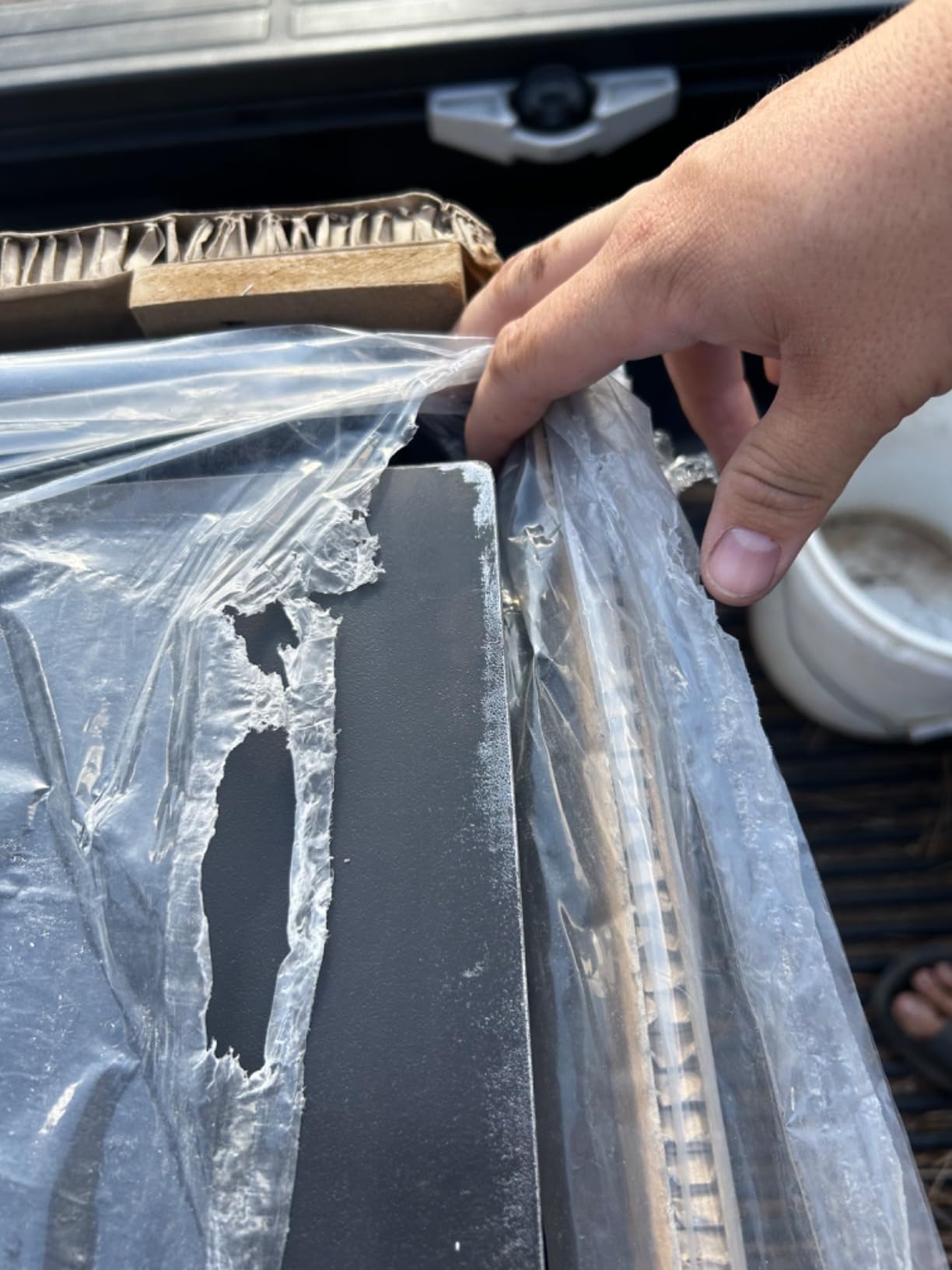
- Fragile freight packaging can chip castings
- 130 pounds makes it hard to reposition
This is the stove we come back to because the numbers behind it are the most proven in the group. It puts out up to 54,000 BTUs, is rated to heat areas up to 900 square feet, and its cast iron body keeps radiating after the last log is reduced to coals. The model has 897 owner reviews attached to it, which is a deeper record than anything else on this list.
Owners consistently describe the same thing: put it in a workshop, a garage or a small cabin and it does more than expected for its footprint. The firebox is sized for logs up to 19 inches long, which means fewer trips outside with the splitting axe and a longer burn per load. The two-piece safety handle stays cool to the touch even mid-burn, which matters more than it sounds when you are working in a small space.
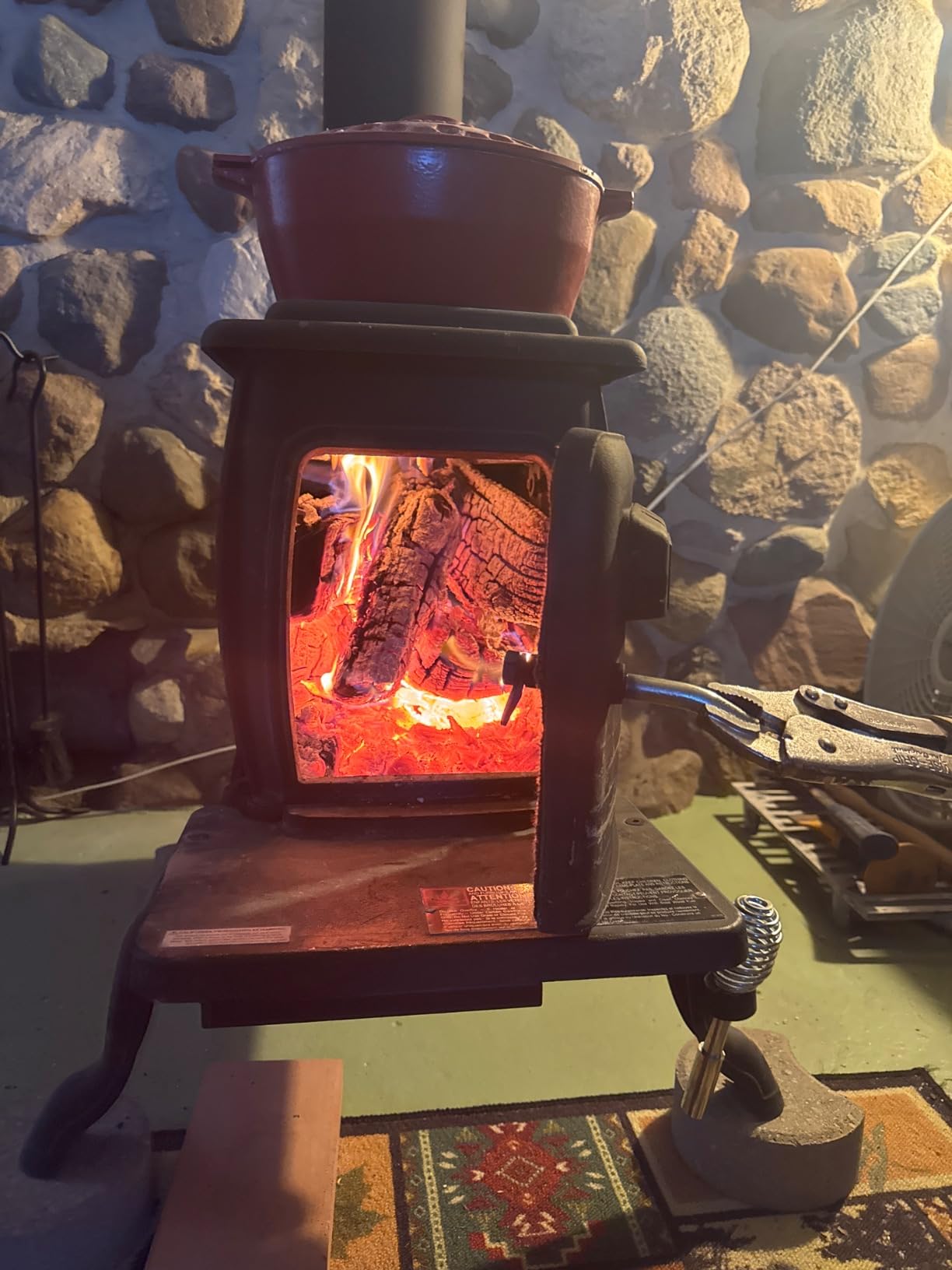
The honest weakness is burn control. The door carries a fixed air vent rather than an adjustable one, so you have less say over how fast the fire burns than you would on a stove with a proper primary air control. A minority of owners also report castings or legs arriving uneven or misaligned, and a flue collar that needed grinding to fit, so inspect the unit on arrival rather than assuming it is ready to connect.
Burn off the factory oils before your first real fire. Owners who skipped this step describe a few seasons of acrid smell that took the novelty out of the stove, and it is the single most common avoidable complaint in the record.
How it performs in a small cabin or workshop?
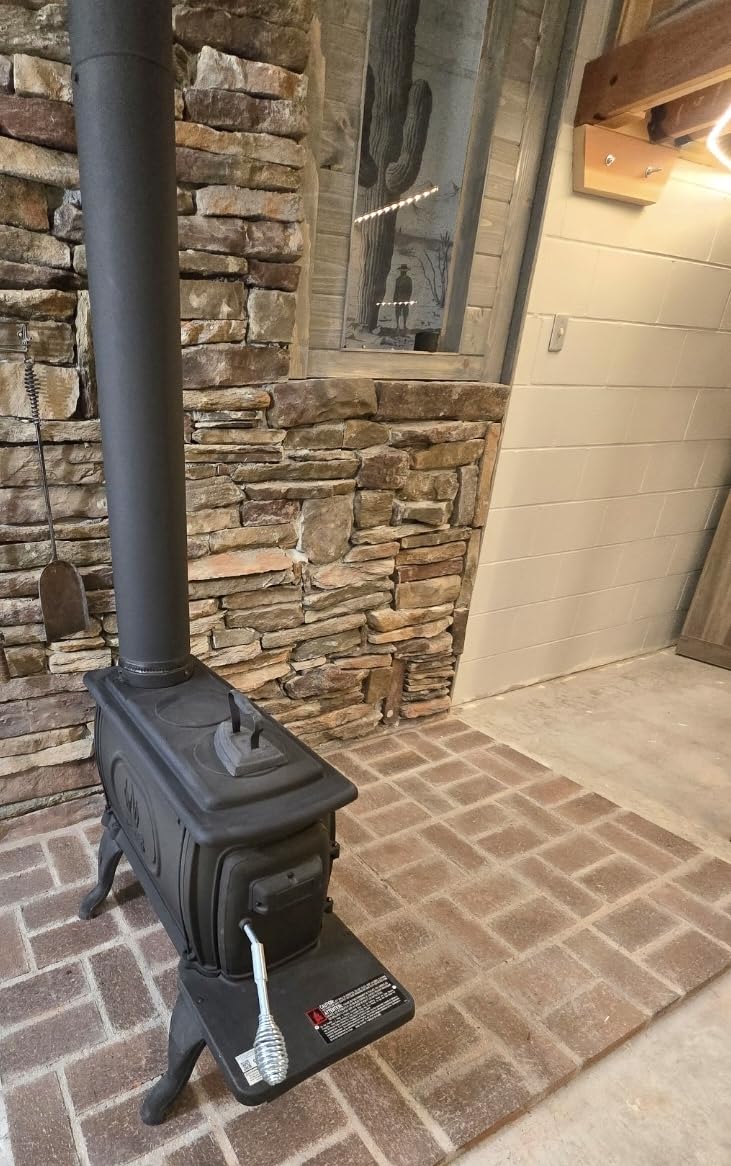
For a single room under 1,000 square feet with decent insulation, this is exactly the right size. The 900 square foot rating is honest for a tight space, and the cast iron mass smooths out the temperature swings that make a steel stove feel drafty in the morning. Owners heating shops and garages report the same pattern, and the two flat cooking plates on top add something a pure heat source cannot.
The 33 by 18.5 by 23 inch body is compact enough to place against a wall with normal clearance, and 130 pounds is heavy but manageable for two people at install time.
Who should skip this stove?
Skip it if you need variable burn control, because a fixed door vent means less throttle over the fire. If you live in a rental, or you plan to move the stove between buildings, 130 pounds of cast iron becomes a real problem. Anyone wanting a top-of-the-line catalytic unit with genuinely long unattended burns should look further up this list.
2. Ashley Hearth AW1120E-P 1,200 Sq Ft Pedestal Stove – Best Value
Ashley Hearth AW1120E-P 1,200 sqft Wood Stove with Legs and Pedestal
Alloy steel body
68,000 BTU output
Heats up to 1,200 sq ft
Logs up to 18 inches
Brick-lined
Pros
- Efficient once a bed of coals is established
- Compact footprint for small rooms and add-on rooms
- Large viewing window and attractive pedestal styling
- Uses noticeably less wood than larger previously owned stoves
Cons
- Small firebox takes one large split at a time
- Air valve does not operate smoothly
- Door seal needed replacing after a couple of seasons
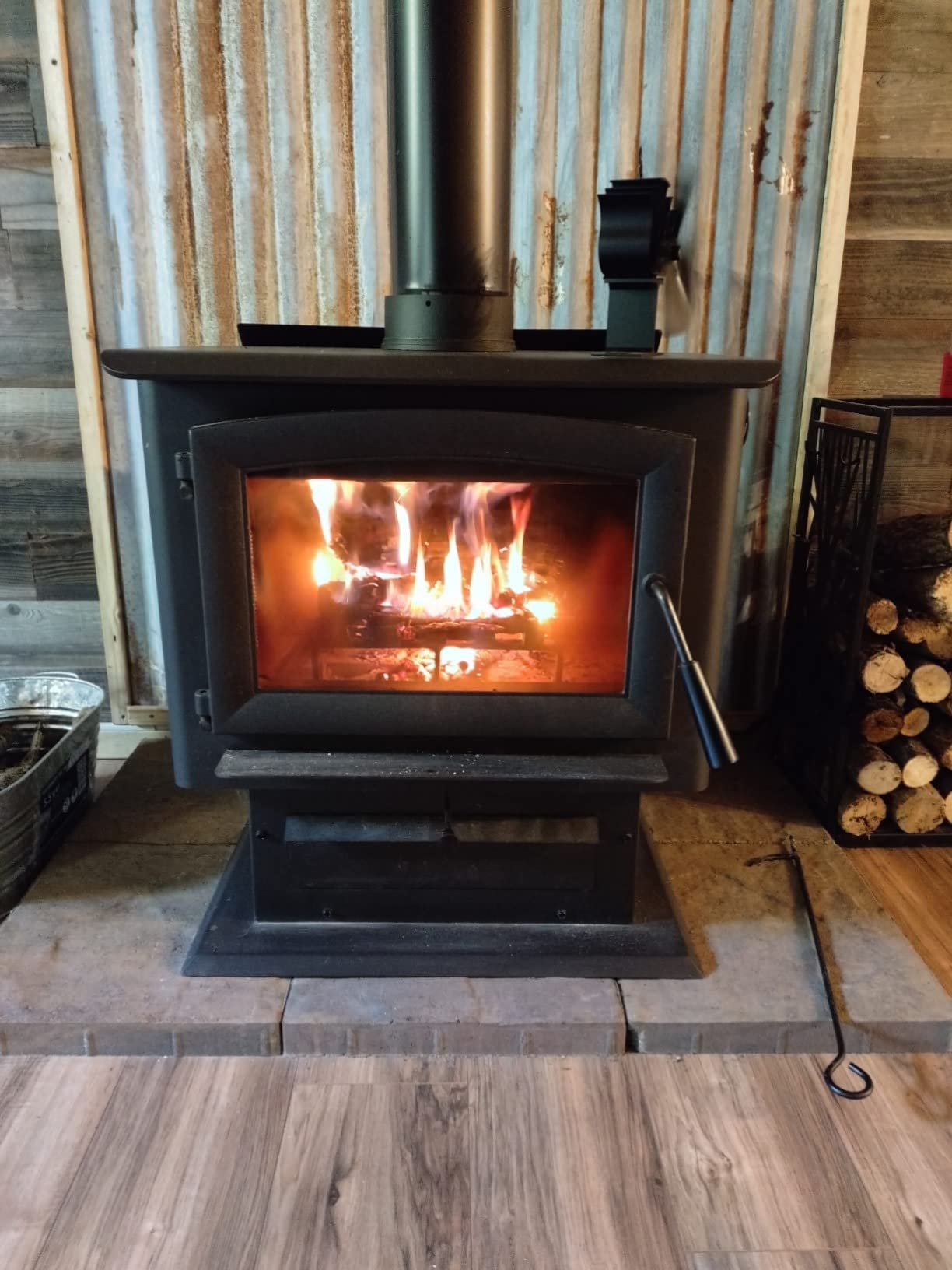
This is the one we recommend when the question is value rather than maximum heat. It is an alloy steel freestanding stove rated to 68,000 BTUs and 1,200 square feet, with a brick-lined interior, an integrated ash pan and an air wash system that helps keep the glass door clearer than most steel stoves manage. Owners report using it alongside a furnace and having the furnace stop cycling.
The efficiency story is the reason it earns its place. Once a good bed of coals is established, the air control can be turned down low and the stove holds heat without burning through the wood pile. Multiple owners note they consume noticeably less wood than larger stoves they previously owned, which is the metric that matters most in a cold season.
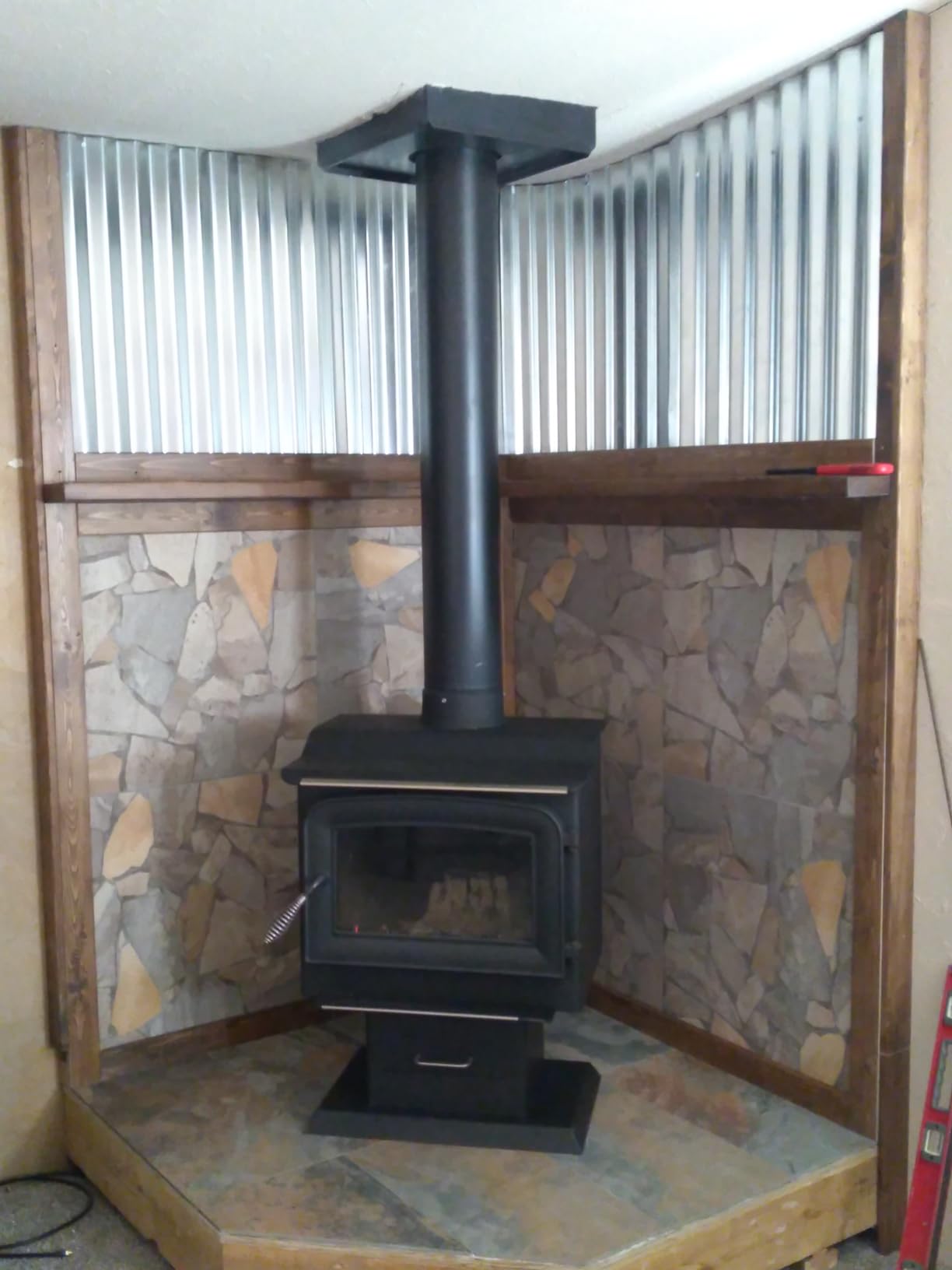
The recurring complaint is capacity, not quality. The firebox is small enough that owners typically fit one large split at a time and reload more often, and the air valve is reported to operate stiffly, with shorter burn times in deep cold. Smoke can roll back into the room when the door is opened, and the front door seal needed replacing after a couple of seasons in some cases. Install cost and flue pipe expense are frequently cited as a large share of the total project, which is true of every stove here.
One more practical note. The blower is sold separately as model CB36 or B36, and some owners report incomplete or mismatched hardware in the kit, so order it early and check the contents on arrival.
When it makes sense as a supplemental heat source?
This is a room heater first and a whole-home stove second. In a 900 to 1,200 square foot great room, a finished basement, or a small cabin where you spend evenings, it delivers real heat at a fraction of the fuel use of a larger unit. The pedestal base and adjustable legs let you set the height to match your hearth.
Its 21.5 by 22.5 by 29.5 inch footprint also makes it one of the easier freestanding stoves here to place in a tight room.
What you give up for the low wood consumption?
You give up burn time. If you want a stove you can load once before bed and leave through the night, this is the wrong pick, and the same goes for a home under a 900 square foot footprint that needs genuine whole-home heat. The missing blower is a real cost line too, and pairing it with a thermostat is what makes the low-consumption behaviour pay off.
3. Ashley Hearth AW1820E 1,200 Sq Ft Fireplace Insert – Best for an Existing Fireplace
Ashley Hearth AW1820E 1,200 Sq. Ft. Wood Stove Insert , Black
Steel insert
69,000 BTU output
1.2 cu ft firebox
150 CFM blower included
EPA compliant
Pros
- Large ceramic glass window gives a clear view of the fire
- Blower moves heat out of the fireplace opening effectively
- Secondary burn clears the chimney once up to temperature
- Typically arrives well packaged with no damage
Cons
- Small firebox means frequent refilling and no overnight burn
- Damper has failed for some owners within the first year
- 235 pounds makes the install a two-person job
If you already own a masonry fireplace, an insert is the efficient decision and this is the one we would look at first. It produces up to 69,000 BTUs for spaces up to 1,200 square feet, sits behind a 31 by 44 inch hearth surround with spring-loaded adjustment, and comes with an adjustable 150 CFM blower so the heat leaves the opening instead of stacking above it.
The build is more serious than a freestanding unit at the same output. It uses heavy 10-gauge reinforced plate steel with a firebrick-lined interior and a heavy cast iron door carrying 14.5 by 8 inch of air-washed ceramic glass. The secondary combustion system raises heat output and cuts wood use and emissions without a catalyst, and it is EPA compliant while burning cordwood.
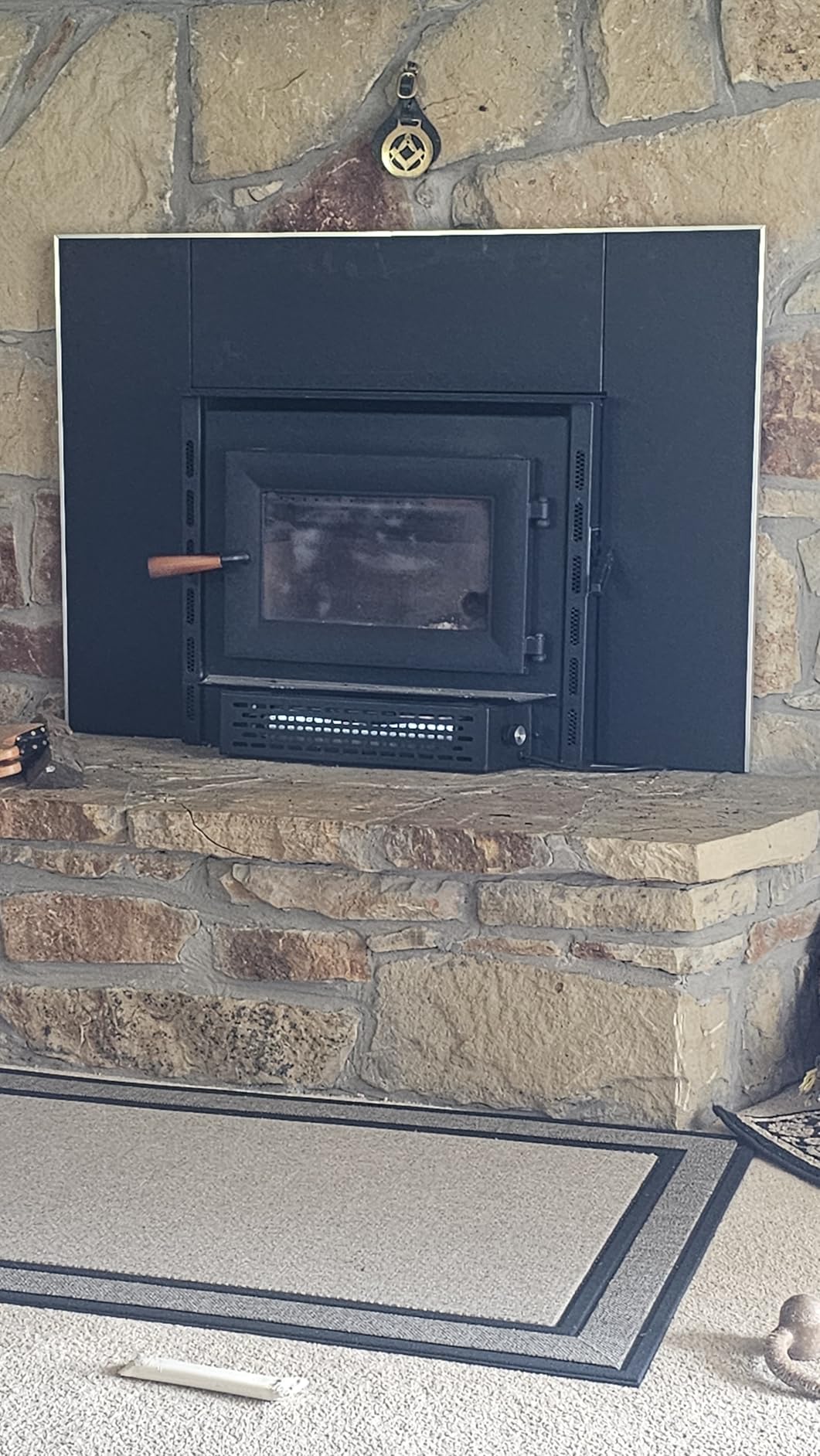
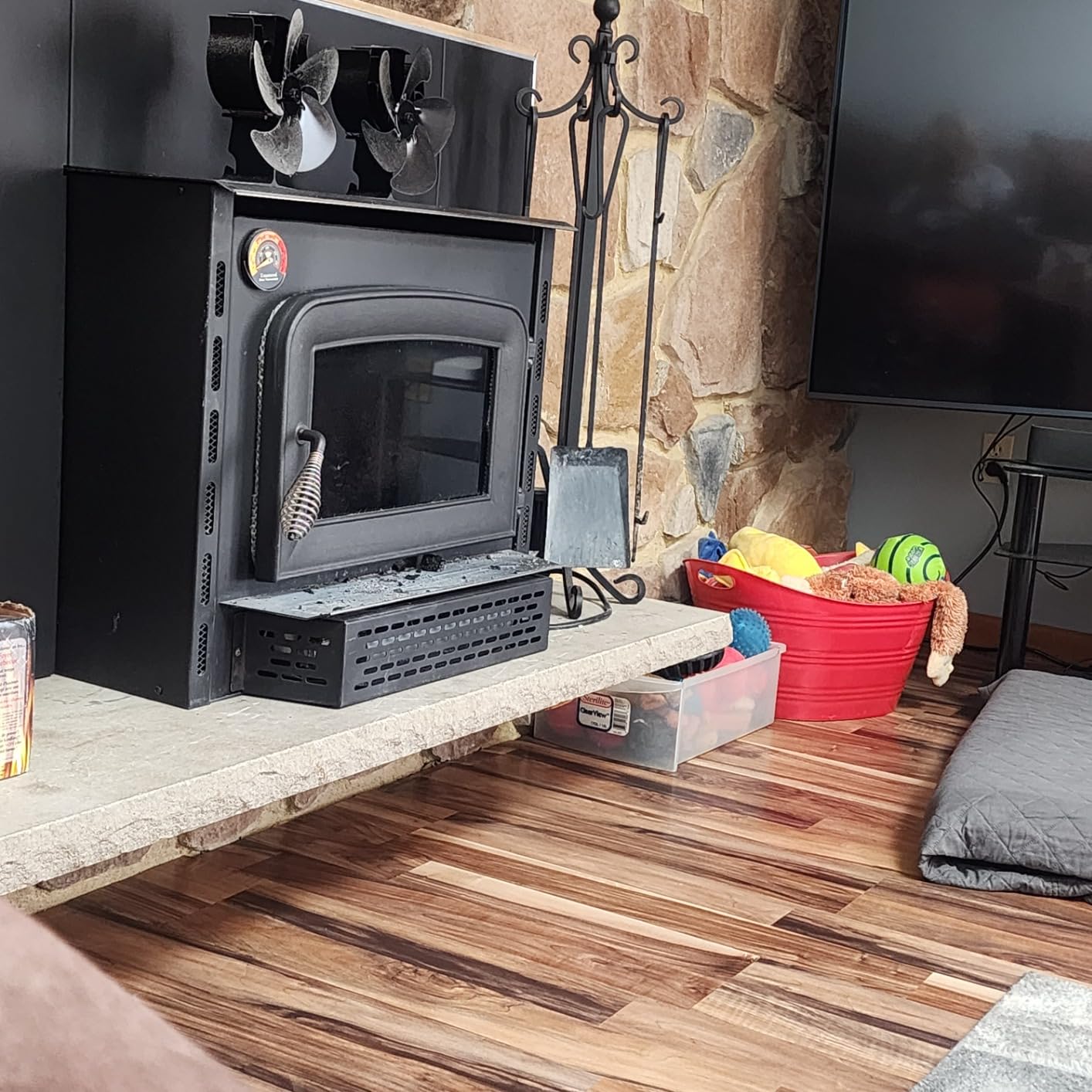
Owners who read the specs carefully and sized it to their firebox are happy. The 150 CFM blower is genuinely effective at pulling heat out into the room, and the secondary burn clears smoke from the chimney once the insert reaches temperature. The recurring limitation is again capacity: a 1.2 cubic foot firebox needs wood added frequently and will not burn all night.
Two durability items are worth knowing before you commit. The damper is a reported weak point, with some owners seeing failure inside the first year, and the body paint is reported peeling after several seasons. At 235 pounds, getting it into the opening is a two-person job or a professional call.
Why an insert beats a freestanding stove in a masonry fireplace?
You keep the existing hearth, the finished surround and the chimney you already paid for, which is the entire economic argument. Owners on stove forums consistently single out inserts when the question is how to get the most heat out of an existing Rumford-style fireplace rather than replacing it. The blower included here removes the usual objection, which is that inserts run hot and uneven.
It is designed for a standard 6 inch chimney liner and chimney system, which are not included, and it is not approved for mobile homes or transportable buildings.
Where the specification falls short?
The heat output rating and the coverage claim sit close together at 69,000 BTUs for 1,200 square feet, so this is an honest pairing rather than an optimistic one. The gaps are the small firebox, the audible blower on its highest setting, and smoke that some owners report escaping around the door even when it looks closed. If your primary goal is overnight burn time, keep looking.
4. Cleveland Iron Works Single Burn Rate Cast Iron Stove – Best Budget Cast Iron
Cleveland Iron Works Single Burn Rate Stove
Cast iron body
27,000 BTU output
Heats up to 900 sq ft
Holds 18 inch logs
77 pounds
Pros
- Lightest cast iron body in this group at 77 pounds
- Ceramic rope gasket on the cast iron door for a tight seal
- Quick and easy assembly
- EPA listed and approved
Cons
- 27000 BTU is the lowest output figure in this roundup
- Single burn rate with no secondary combustion
- One year warranty is shorter than rivals offer
At 77 pounds this is by a wide margin the easiest cast iron stove here to install, and that alone puts it in a category of its own. A single person can position it, and it carries a 6 inch flue exhaust, a cast iron door with a ceramic rope gasket for an air tight seal, a two-piece cool-touch safety handle and a high temperature matte black finish.
The 4.3 average across its 34 reviews is the highest mean score in this roundup, though the review base is small enough that I would not lean on it the way I lean on the 897-review record behind our top pick. Buyers who chose it generally wanted a straightforward 900 square foot cabin or workshop heater rather than long burn times.
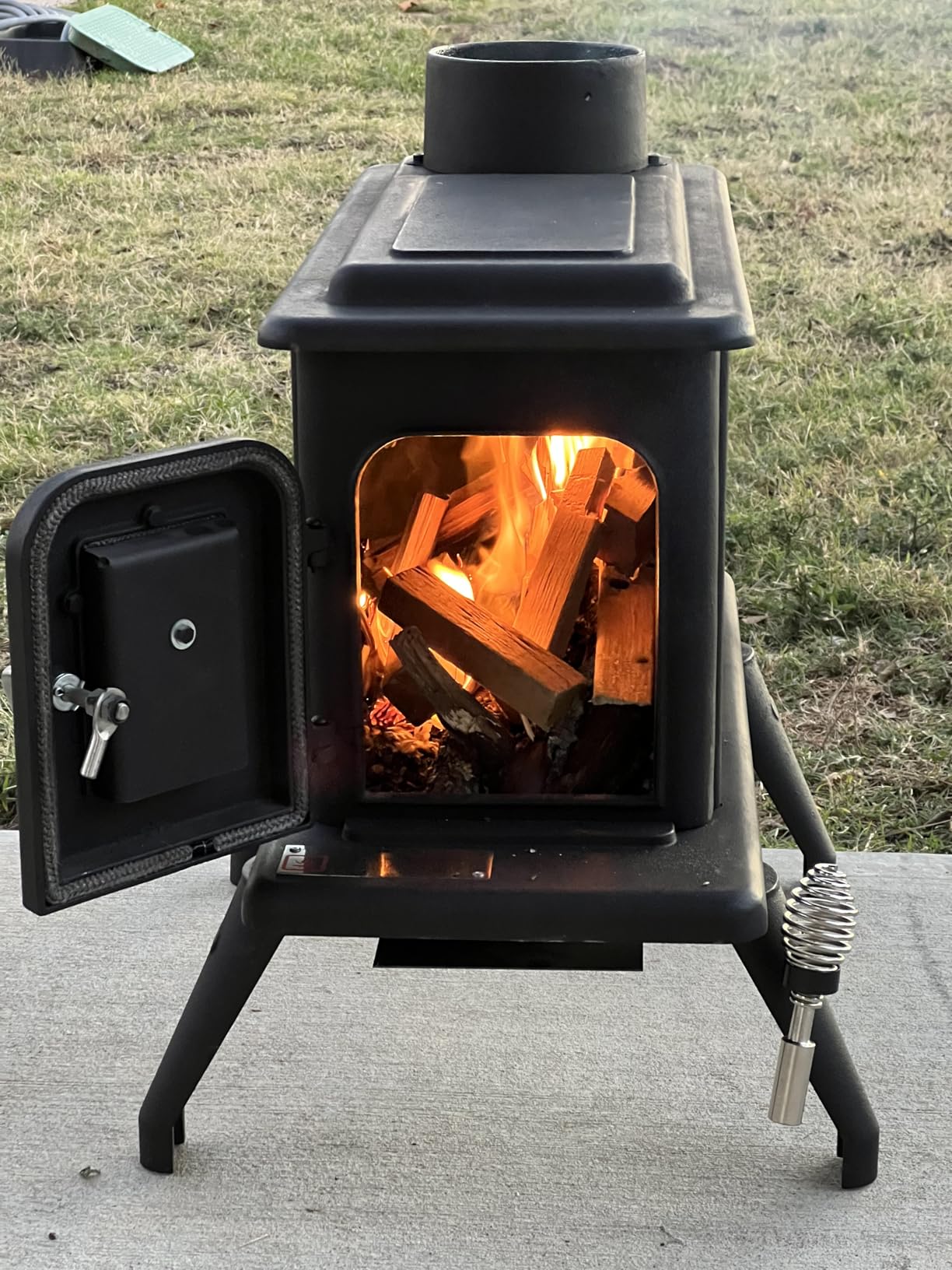
What you are trading away is output and flexibility. The listed 27,000 BTU figure is the lowest in the group, so the 900 square foot coverage claim leans heavily on manufacturer conditions. There is a single burn rate and no secondary combustion, which means shorter burns and a less forgiving stove when the temperature outside drops.
The one year limited warranty is also the shortest here, against limited lifetime firebox warranties from several other brands in this roundup.
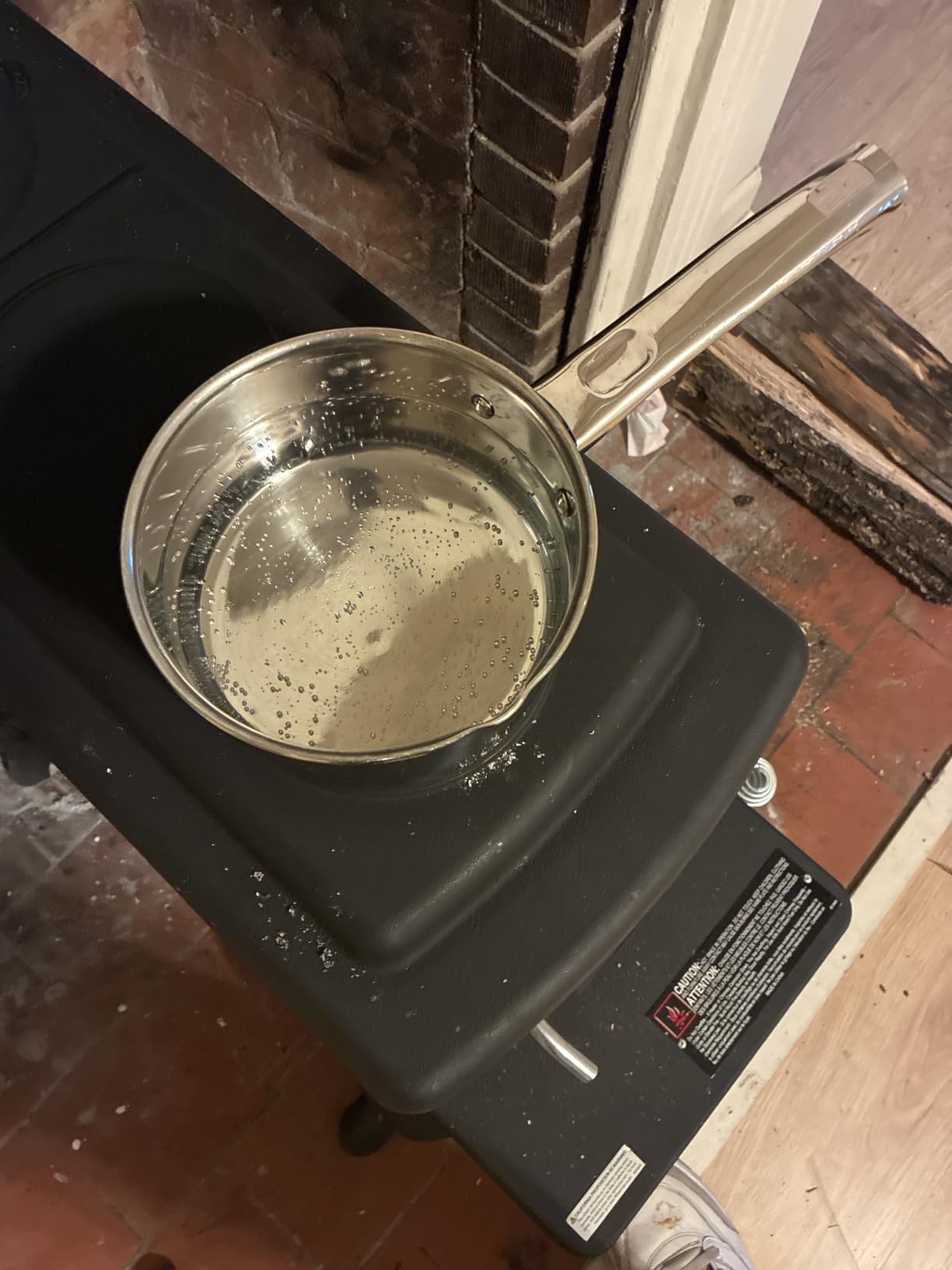
Best use for a first stove or a small outbuilding
This is the right appliance for a garden shed, a workshop, a small fishing cabin or a first wood stove in a home where you want to learn the craft without committing to a large unit. The light weight and quick assembly mean a single afternoon from unboxing to first fire, and the rope gasket door seal is a genuinely good detail at this level.
Where the single burn rate gets limiting?
Single burn rate means one fixed air setting rather than the primary and secondary controls that let a bigger firebox be throttled. In genuinely cold weather that matters, because you cannot slow a fire that is already burning hot. If you are heating a primary living space through a northern winter rather than warming an outbuilding, look at a firebox with secondary combustion instead.
5. US Stove Company US1261E 900 Sq Ft Cast Iron Stove – Best for Off-Grid and Backup Heat
US1261E 900 sq. ft. Cast Iron Log Wood Stove
Cast iron body
54,000 BTU output
1.2 cu ft firebox
Heats up to 900 sq ft
No electricity
Pros
- No electricity required so it runs through power outages
- Non-catalytic secondary combustion without a catalyst
- Compact 900 square foot footprint for cabins
Cons
- Small firebox means frequent loading
- Not suited to long unattended burn times
- Only 4 reviews recorded
The single most important line on this listing is that no electricity is required. On a rural property, a cabin off grid, or a house that loses power in an ice storm, that is the difference between having heat and not having heat. The blower kits sold with many steel stoves are useless in a blackout, and this stove simply does not care.
It also carries non-catalytic secondary combustion, which raises the burn efficiency of the gases leaving the firebox without the catalytic element that eventually degrades. At 54,000 BTUs and a 1.2 cubic foot firebox, it is a genuine 900 square foot appliance rather than a token output figure.
How it fits an off-grid or outage use case?
Owners describe it as a clean way to work through excess firewood around a property, and the number of detailed reviews is tiny, so judge it on the specification rather than the star rating. The 4.7 average comes from four reviews, which is worth saying plainly. What those reviews do support is that the fire burns well once loaded.
For anyone whose heat strategy has to survive a grid failure, that no-power requirement outweighs almost anything else on this list.
Who should choose a different unit?
Do not choose this one for overnight burn time. A 1.2 cubic foot firebox is small, owners reload more often than they would with a larger stove, and it is not intended for long unattended burns. If your property is grid connected and you want heat that carries through the night, the 2,500 square foot pedestal stove further down handles that far better.
6. Ashley Hearth AW2520E-P 2,500 Sq Ft Pedestal Stove – Best for Large Homes
Ashley Hearth AW2520E-P 2,500 sq ft Wood Stove with Legs and Pedestal
Alloy steel body
112,800 BTU output
Heats up to 2,500 sq ft
2.7 cu ft firebox
21 inch logs
Pros
- Large firebox accepts 21 inch logs so you refuel far less often
- Works without electricity for outages and off-grid use
- Fireside owners report a 900 sq ft floor held at 72 to 74 degrees in Wisconsin winters
- Legs and pedestal base both included
Cons
- Flat top lets smoke spill into the room when the door opens wide
- Ash pan hole is off-centre so ashes spill outside it
- 291 pounds makes placement a two-person job
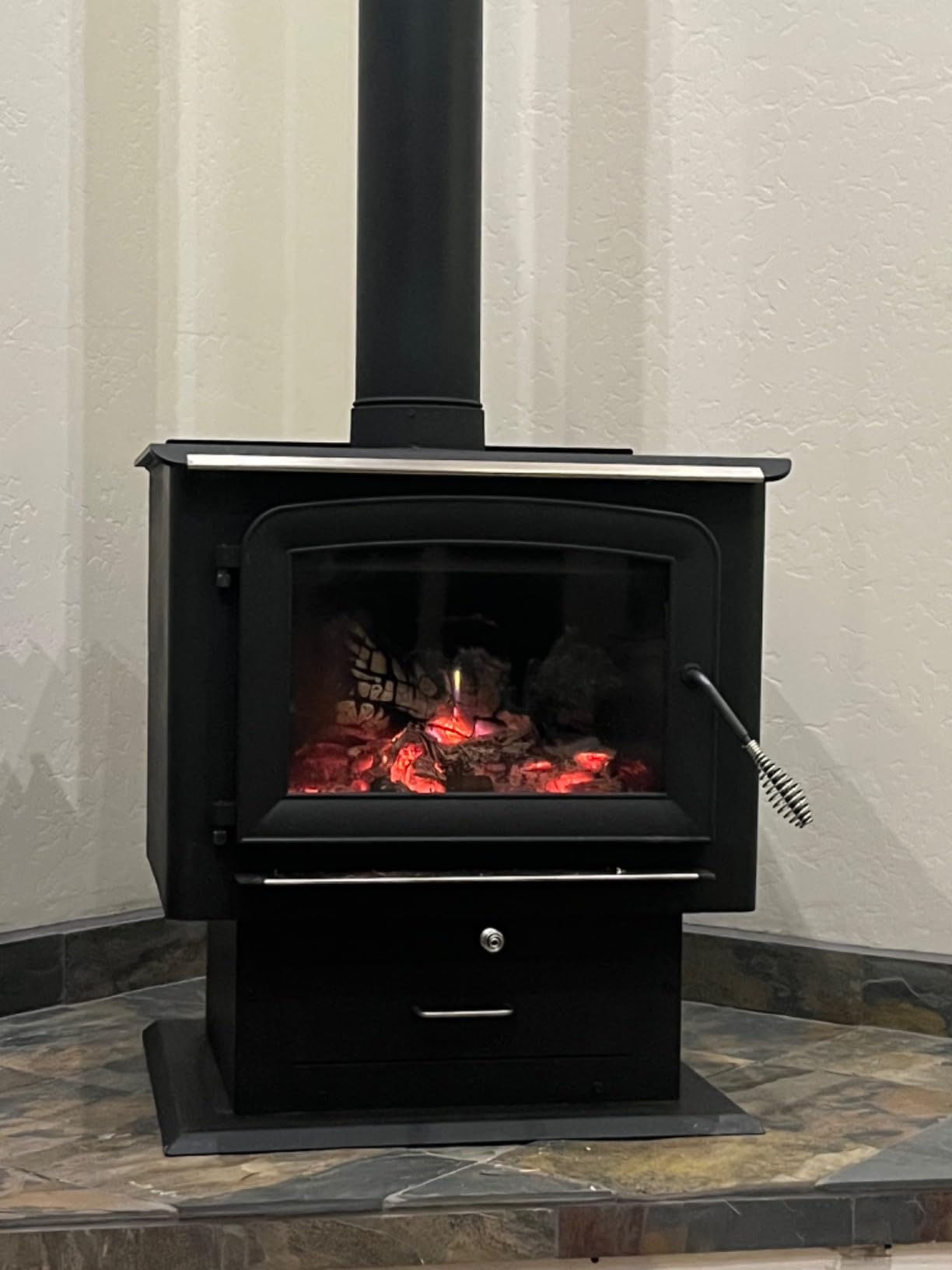
This is the largest freestanding stove in the roundup and the one that can plausibly carry a serious main floor. It produces up to 112,800 BTUs for spaces up to 2,500 square feet from a 2.7 cubic foot firebox that accepts logs up to 21 inches. That log length is the practical headline: you load fewer, bigger pieces and walk outside less often.
Owners in cold regions report holding a roughly 900 square foot main floor at 72 to 74 degrees through northern Wisconsin winters, and the stove runs without electricity, so it keeps working when the power does not. It is also mobile home and transportable building approved in the US and Canada when fitted with the 4FAK fresh air intake kit, sold separately.
There are three real drawbacks and all of them are design details rather than quality problems. The flat top means smoke rolls into the room if you open the door wide, which a sloped top would have fixed. The ash pan hole is not centrally aligned, so ash lands outside the pan and gets scooped by hand. And on the lowest air setting it can still run hot enough that owners add a circulator to spread the heat, with the CB36 blower sold separately at 100 CFM.
One owner also reported backdraft trouble in a tight house that needed an outside air pipe, a taller chimney and a chimney pipe fan to resolve. That is a common finding in well-sealed modern homes and worth raising with your installer.
What a 2,500 square foot claim actually means?
Treat the coverage figure as a hard ceiling. The reported 72 to 74 degree result came from roughly 900 square feet of conditioned main floor, not the full 2,500 square feet the specification allows. In an open plan house in a cold climate with high ceilings, 2,500 square feet is achievable. In a drafty farmhouse, plan on it heating the good part of the house rather than all of it.
Its secondary combustion system reduces wood consumption and emissions without a catalyst, and the firebrick-lined interior supports that over a long season.
When this one is too much stove?
It is too much stove for anything under roughly 1,200 square feet of conditioned space, and an oversized stove run on low burns inefficiently and produces more creosote. The 291 pound weight and the need to plan how it reaches its final position are also worth weighing if you are installing into a tight room. A smaller firebox you fill more often is a better buy than a large one you starve.
7. Canyon Lodge Medium Wood Stove – Best Warranty Cover
Canyon Lodge Medium Wood Stove
Brick-lined firebox
58,030 BTU output
Heats up to 2,500 sq ft
Logs up to 18 inches
5 year warranty
Pros
- Five year limited warranty is longer than most in this roundup
- Brick-lined firebox and airwash system support clean combustion
- Cast iron door with a viewing window
- Top-mounted 6 inch flue simplifies installation
Cons
- 372.6 pounds makes it the heaviest stove here to place
- 58030 BTU is modest against its 2500 sq ft claim
- Accepts only 18 inch logs
The Canyon Lodge sells on paper rather than on owner history, and the warranty is the reason to notice it. A five year limited warranty is longer than the one year terms attached to the Cleveland Iron Works and the Buck units here, and it sits alongside brick-lined combustion, an airwash system and a cast iron door with a viewing window.
Its listed coverage is 2,500 square feet from a body measuring 28.23 by 22.76 by 32.95 inches, and the 6 inch flue exhaust sits on top of the stove, which keeps the connector run vertical and simple. Firebrick is included in the box along with the ash plug, keypad and literature.
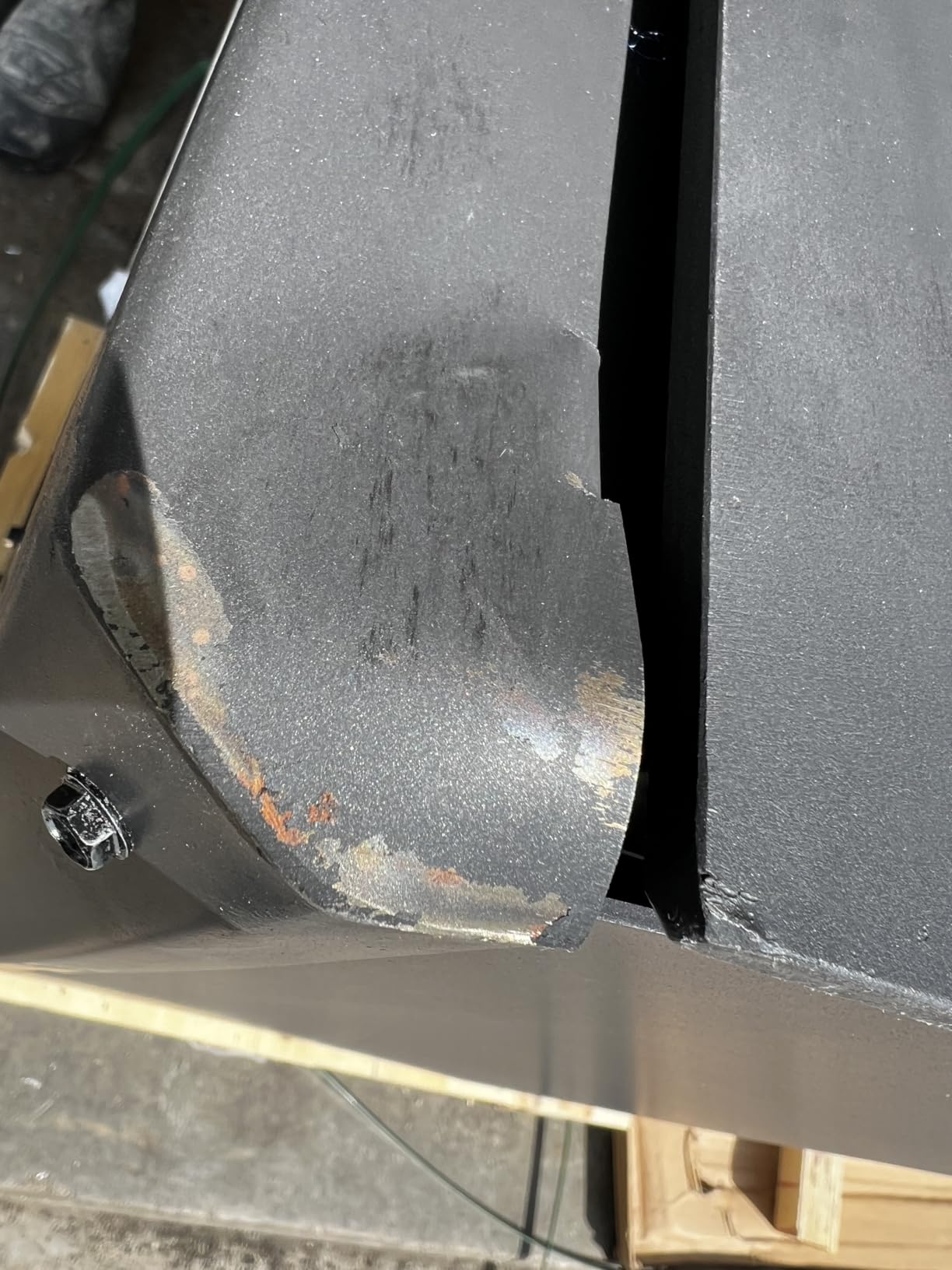
Be careful with the two headline figures. At 58,030 BTUs the output is modest next to a 112,800 BTU unit, and the 2,500 square foot claim asks you to accept a lot of coverage from a mid-sized body. It also takes logs only up to 18 inches, so you will be splitting more than with the 21 inch capacity model above.
The weight is the practical issue. At 372.6 pounds it is the heaviest stove in this roundup that publishes a weight, and that dictates your floor plan, your hearth pad specification and how many people you need on install day.
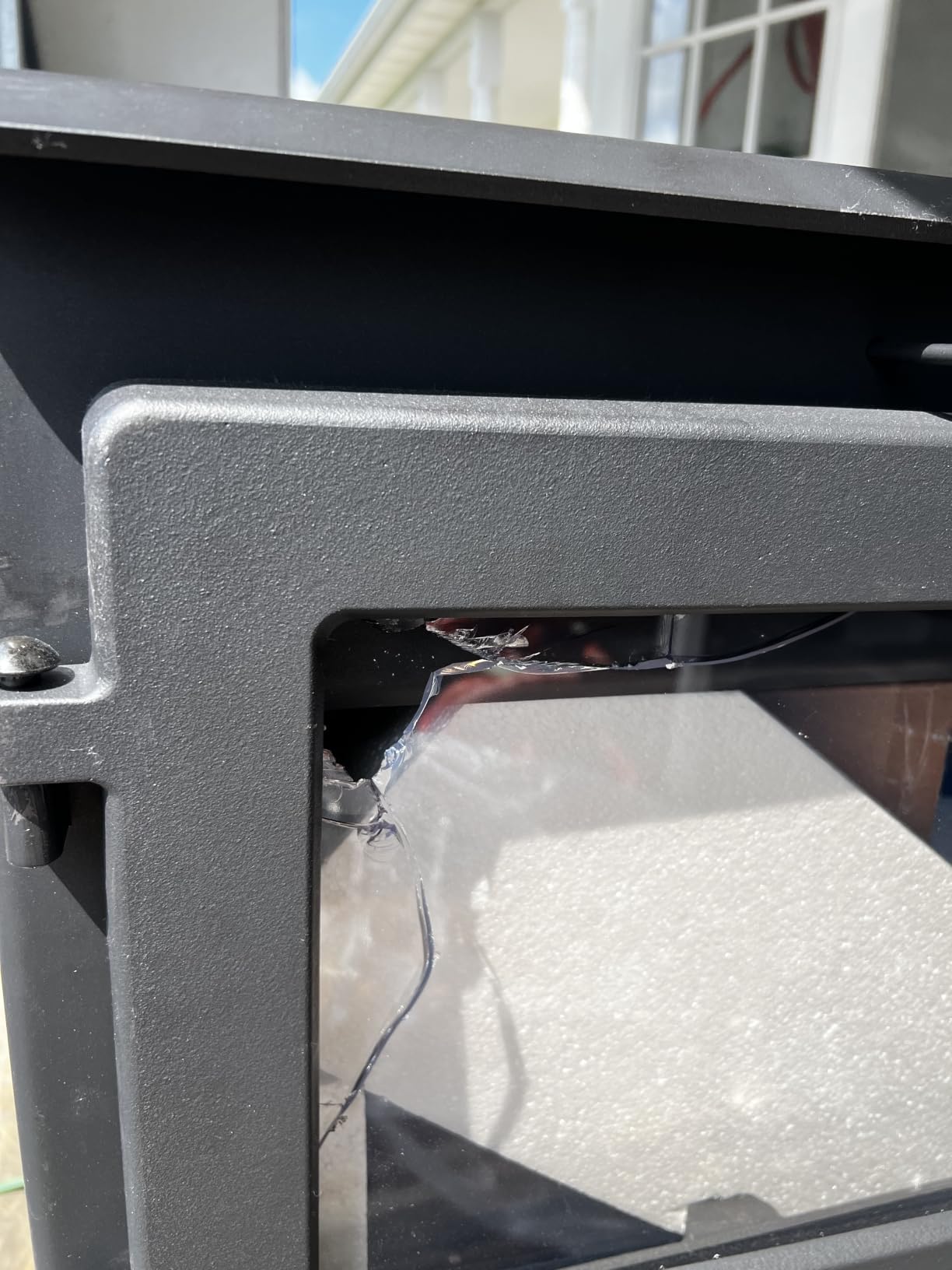
What the warranty actually buys you?
Firebrick, the airwash system and a five year term are a meaningful combination for a wood stove, because a stove that goes unseasoned or a firebrick that cracks are the failures that end an ownership early. For a buyer who expects to keep one stove for a decade or more, a longer warranty reduces the risk of that.
The brick-lined firebox also helps hold combustion temperature longer, which is the mechanism behind the secondary burn efficiencies the bigger units claim.
Where the spec and the claim pull apart?
The gap between 58,030 BTUs and a 2,500 square foot rating is the widest in this roundup, and there are only seven reviews attached to it, so there is little owner record to soften that. If you are heating a full main floor in a cold climate, this is a specification gamble compared with the larger-output pedestal stove.
8. US Stove Company US1800E 1,200 Sq Ft Fireplace Insert – Best for Clean Burning
US Stove US1800E 1,200 sqft Wood Fireplace Insert
69,000 BTU insert
1.2 cu ft firebox
150 CFM blower included
Firebrick lined steel firebox
Pros
- Burns long on a single load and keeps the chimney clean
- No visible chimney smoke once the insert reaches temperature
- Owners report it heats more than the 1200 sq ft rating
- Straightforward install and simple controls
Cons
- 300 pounds makes placement a two-person or freight job
- Only five reviews recorded so durability is unproven
All five reviews on this insert are five star, which is worth repeating as a caveat rather than a recommendation. What the owners do describe is consistent though: it burns long on a load, keeps the chimney clean, and produces no visible smoke from the stack once it is up to temperature.
The build specification is where the confidence comes from. It is a heavy 10-gauge reinforced plate steel firebox with a firebrick-lined interior, a heavy cast iron door with 14.5 by 8 inch of air-washed ceramic glass, and a 31 by 44 inch hearth surround with spring-loaded adjustment. The adjustable 150 CFM blower is included, and the secondary combustion system works without a catalyst.
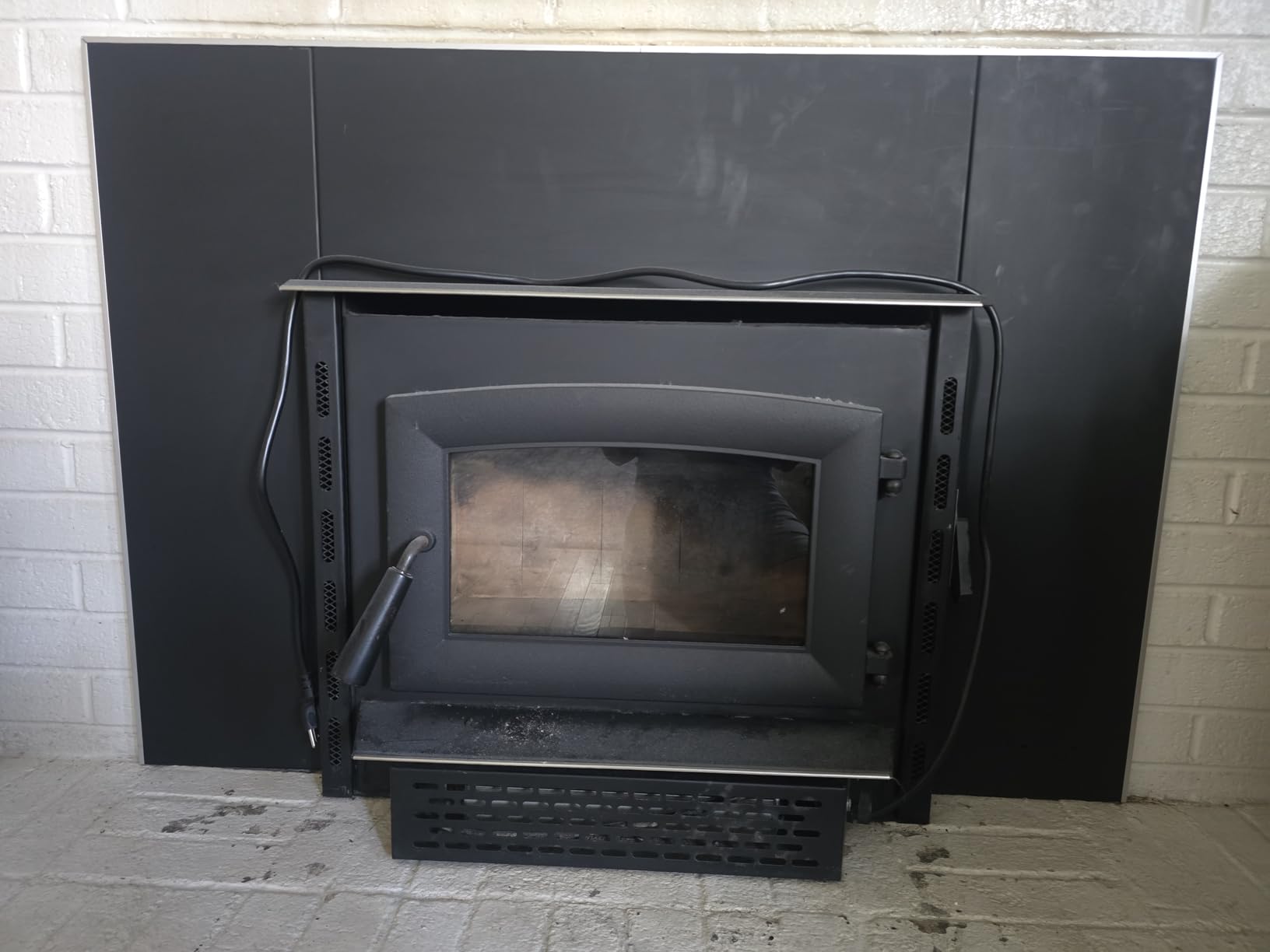
Two practical realities first. It weighs 300 pounds, so getting it into the fireplace opening is a two-person job or a professional call, and it is designed for residential masonry fireplaces only, with no approval for mobile homes or transportable buildings. It needs a standard 6 inch chimney liner and chimney system, neither of which is included.
Second, owners report it heating noticeably more than its 1,200 square foot rating, which is a good problem to have in a room with a high ceiling. The sample is simply too small to draw conclusions about long-term reliability, so treat the specification as the reason to buy rather than the review score.
Why clean burning matters for a chimney you already own?
Every insert sits on a masonry chimney that is also your fireplace, and creosote on that flue is the leading cause of chimney fires. The combination that reduces it is a firebrick-lined firebox, a secondary burn that superheats the exhaust gases, and enough mass to hold temperature rather than smouldering. Owners of this insert specifically report that the chimney stays clean over a season of use.
No visible smoke once the appliance reaches temperature is the practical signal that the secondary burn is doing its job, and it is the single most reassuring line in the review record here.
Who should pick a different insert?
Pick a different unit if you need a catalytic combustor, because this is a non-catalytic design and burn times will not match a catalytic model. The 1.2 cubic foot firebox also means frequent loading, so it is not an overnight-burn appliance. And if you cannot arrange a two-person install for a 300 pound appliance, pick the lighter freestanding route instead.
9. Buck Stove 21NC 9 Inch Trim Kit Insert – Best for Finish Options
Buck Stove 29K BTU Wood Burning Fireplace Insert, 9″ Black, Non Catalytic
Non-catalytic insert
28,901 BTU output
Listed for 1,800 sq ft
14.71 inch chamber
Blower included
Pros
- Trim kit frames can be cut to size to conceal installation gaps
- Door offered in black
- pewter or gold
- Large viewing area for the fire
- US-based manufacturer with a 1-year replacement and 5-year parts warranty
Cons
- 28901 BTU is low for a unit listed at 1800 sq ft
- Shallow 14.71 inch chamber limits log size and loading
- Non-catalytic burn means shorter burns than catalytic models
This is the one to look at when appearance is the deciding factor, because it is sold on finish rather than on headline output. The trim kit frames can be cut to size to hide installation gaps and give a traditional built-in look, and the door is available in black, pewter or gold. The electric blower is included, which is not always true on inserts.
It is a US-based manufacturer with a one year replacement and five year limited parts warranty, provided you register the product and the installation complies with local and state codes. That registration step is a genuine advantage over parts you have to chase down later.
Where the finish option earns its place?
An insert is visible from every seat in the room, and a badly fitted surround is the first thing anyone notices about a fireplace conversion. A cut-to-size trim kit solves the gap problem that most inserts leave behind, and the three door colours let you match an existing scheme rather than accept what arrived. The included blower removes the usual follow-on purchase.
What the specifications give away?
There are two real gaps. The 28,901 BTU output is low for a unit listed at 1,800 square feet of coverage, and the 14.71 inch chamber depth is shallow, which limits both log size and how much wood you can load at once. Being non-catalytic, it also burns shorter than a catalytic model of the same size. If raw heat is the priority, the catalytic freestanding model is the better match.
10. Buck Stove 91 Catalytic Freestanding Stove – Best for Raw Output
Buck Stove 62K BTU Wood Burning Freestanding, Catalytic, 7-¾” Steel Legs
62,745 BTU catalytic
Listed for 3,200 sq ft
Heat activated blower
7.75 inch steel legs
Pros
- Catalytic combustion for longer burns and lower emissions than non-catalytic
- Heat activated blower included with no separate fan purchase
- Usable freestanding on legs or fitted as an insert
- Large viewing area with three door colour options
Cons
- Only one review on record so almost no owner feedback exists
- Catalogue lists it as vent free which limits installation options
This is the only catalytic unit in the roundup, and that single specification changes the burn behaviour of everything else here. A catalytic combustor lets a fire burn at a low, steady output for far longer than a non-catalytic firebox of the same size, which is why owners who want overnight burn times and low emissions keep asking for this type by name on stove forums.
It is also flexible. It works freestanding on 7.75 inch steel legs or fitted as an insert, and the heat activated blower needs no separate fan purchase, since the heat itself drives it. Listed output is 62,745 BTUs for spaces up to 3,200 square feet.
Why catalytic combustion changes how you burn?
Non-catalytic combustion depends on a hot, clean fire, which is efficient at a high burn and smoky at a low one. A catalytic element holds combustion temperature at a lower output, so a slow burn stays clean and the stove holds temperature between loads. That is the mechanism behind the low emissions and long burns, and it is why the answer to the most efficient stove question is usually a catalytic or hybrid design.
The catch is that a catalytic element degrades with use and eventually needs replacing, and a catalytic stove is generally less tolerant of wet wood than a non-catalytic one.
Where the evidence is thin?
There is a single review on record, so the five star average carries no real signal and the judgement here rests on the specification sheet alone. The catalogue also lists the unit as vent free, which restricts where it can legally be installed in some jurisdictions, so confirm that with your local building department. With a five year parts warranty behind it, the manufacturer is clearly a serious one.
How to Choose a Wood Burning Stove: Sizing, EPA Rules and Materials?
Get these four things right and the brand barely matters. Get them wrong and no brand will save you.
The 3-2-10 rule, and why it is only a starting point
The 3-2-10 rule says that a wood stove should be able to heat 400 square feet per 1,000 BTUs of rated output in a well insulated home, 250 square feet per 1,000 BTUs in a typical home, and 150 square feet per 1,000 BTUs in a poorly insulated or drafty one. It is a useful first filter because it uses the output figure most manufacturers publish. It is not the final answer, because a stove rated for 2,500 square feet run on its lowest setting will burn dirty and deposit creosote. The right-sized stove is the one you run at a high, hot burn.
What EPA certification actually tells you?
Every stove sold legally in most US jurisdictions carries an EPA certification listing, which is expressed in grams per hour of particulate emissions. Lower is cleaner, and the number on the label is a legal requirement rather than a marketing claim. A secondary combustion system, a firebrick-lined firebox and an air wash system all exist to push that number down. Buy the certification figure and ignore adjectives like clean-burning.
It is also important to know that low emissions and high efficiency are different axes. A very clean non-catalytic stove is not automatically the most efficient stove, because efficiency is about how much of the energy in the wood ends up as heat in the room, while the emissions number is about what escapes the flue.
Cast iron against steel plate
Cast iron stores heat and radiates it slowly, so a fire that has been burning for two hours keeps warming the room after the flames die. That mass is why our top pick feels different from a steel stove in a small room. Steel plate heats up fast, holds far less heat, weighs less, costs less and is far easier to move. Most owners who regret a choice regret oversizing rather than material.
Firebrick lining is the third layer. It retains combustion temperature, which is what lets a non-catalytic stove achieve a secondary burn at all.
Non-catalytic, catalytic and hybrid combustion
Non-catalytic stoves are cheapest, simplest and hard to break, and they burn cleanest when you run them hot and full. Catalytic stoves add a catalyst that lets a slow, low-output burn stay clean, which produces the long burn times owners want. Hybrid stoves combine the two so you get a hot primary burn or a slow catalytic burn from the same firebox. A catalytic element is a consumable that eventually needs replacing, and that belongs in your long-term cost thinking.
Freestanding, insert and small-footprint
Freestanding stoves give you placement freedom and a visible appliance. Inserts go into a masonry fireplace you already own, which is usually the cheapest way to add efficient heat to a house with a fireplace, and the blower included with most of them here solves the usual insert complaint. Small-footprint stoves under 900 square feet suit cabins, shops and rooms with tight clearances rather than whole homes.
What a Wood Burning Stove Costs to Run?
Almost every buyer in the forums asks the same question, is this worth it, and the answer depends on your firewood, not your stove. Cordwood is generally the cheapest heat per unit of energy in most of the US, and it keeps working when the grid does not. Propane, natural gas and heat pumps all cost more per delivered unit of heat, though a heat pump is dramatically easier to run and needs no tending.
A useful way to think about it is cords rather than money. A cord of well seasoned hardwood holds roughly the energy content owners commonly compare against several hundred pounds of propane, and a well sized stove burning a full firebox at a high burn stretches a load much further than a small stove starved on low. The two levers you control are the size of the firebox and how often you reload it, which is why the 21 inch log capacity of the 2,500 square foot model matters more to running cost than its output number.
Then add the costs that are easy to forget. Flue pipe, a hearth pad, a chimney liner if yours needs one, a permit and professional installation can rival the price of a modest stove, and a dealer-set insert can run into four figures. A catalytic element replacement in year five or six is also real, and it is the strongest argument for buying from a brand with a serviceable parts ecosystem rather than the cheapest unit on the shelf.
Installation, Clearances and Chimney Safety
This is the part where the real total cost of a wood burning stove lives, and it is the part most first-time buyers underestimate.
Hearth pad and clearance to combustibles
Every stove requires a listed hearth pad sized to its own clearance requirements, and a non-combustible floor protection that extends beyond the appliance footprint. Clearances to combustibles vary with the model and the wall construction, so use the numbers in the installation manual rather than a rule of thumb. Skirting a clearance or placing the stove against an unlisted wall surface is the most common cause of both a failed inspection and a homeowner insurance question.
The chimney is a separate project
A freestanding stove needs a listed chimney connector running to a listed chimney, and a masonry fireplace that has been Rumfordized, as owners on stove forums recommend, can behave very differently for a clean burn. A chimney liner is often the least expensive improvement you can make to an existing flue. If your chimney is unsuitable, that is a hidden cost that belongs in your budget before you pick a stove, not after.
Dealer, big box or online
Most of the stoves on this list are freestanding or insert models that you can research and buy directly, while the premium cast iron and hybrid units are typically dealer-only. The practical consequence is that the online-visible products skew toward small steel-plate stoves, and the enthusiast picks that owners recommend on forums are often invisible from an online storefront. If you want a Blaze King, Woodstock, Jøtul or higher end Buck, plan on a dealer and an install quote from them.
Does your homeowner’s insurance go up with a wood stove?
A properly installed, EPA-certified stove on a listed chimney with the required hearth pad and clearances is generally acceptable to insurers, and most treat it like any other fixed heating appliance. Policies and underwriters vary, though, so the only reliable answer is to ask your own insurer in writing before installation. Keep the manual, the permit, the installer invoice and the annual chimney inspection certificate, because those are exactly the documents a claims adjuster will ask for.
What to Burn, What to Never Burn and First-Season Break-In?
Fuel choice does more for your chimney than most buyers realise. Seasoned hardwood is the base load you want, and it needs six to twelve months of drying, stacked with air gaps between courses, before it goes in the stove. If you are splitting and stacking this year for next winter, our wood burning kit roundup covers the tools that make that season of work manageable.
Never burn treated, painted or stained lumber, because the preservatives and lead in those products burn into the flue as toxic smoke. Construction debris, plywood, particle board and MDF are the same problem. Do not burn garbage, plastic, paper or cardboard, and never use a liquid accelerant to start a fire. Unseasoned or wet wood puts the most water vapour and the most unburnt carbon into your chimney, which is how creosote forms, and softwoods such as pine and fir are fine as an occasional hotter fire but make a poor base load.
For the first season, burn small hot fires rather than full loads. The goal is to drive off the manufacturing oils and any paint on the firebrick without shocking the metal, so light fires for the first few burns, then build up gradually. Some owners report an acrid smell for the first several fires regardless of what they do, and it always clears. If you notice smoke at the chimney after the appliance is fully hot, that is a combustion or draft problem, not a seasoning problem, and it needs investigating before you run the stove through a winter.
Frequently Asked Questions
What are the best wood burning stoves?
The best wood burning stoves depend on square footage and fuel style. For small spaces and cabins, the US Stove Company 900 sq ft cast iron stove at 54,000 BTUs is our top pick. For mid-sized rooms, the Ashley Hearth 1,200 sq ft pedestal stove at 68,000 BTUs is the best value. For an existing masonry fireplace, an insert with a blower included is the cheapest way to add efficient heat.
What is the 3-2-10 rule for wood stoves?
The 3-2-10 rule divides a stove’s rated BTU output by 1,000 and multiplies by a coverage figure: 400 square feet per 1,000 BTUs in a well insulated home, 250 in a typical home, and 150 in a drafty or poorly insulated one. It is a starting heuristic only, because a stove run at its lowest setting burns dirty. A correctly sized stove should run at a high, hot burn.
Which wood burning stove is the most efficient?
A catalytic or hybrid design is usually the most efficient per unit of wood, because a catalytic combustor holds combustion temperature at a low output, so a slow burn stays clean and long-lasting. But efficiency and emissions are different axes. A well sized non-catalytic stove with secondary combustion and a firebrick lining can beat an oversized hybrid, because a starved fire produces smoke and creosote regardless of its design.
What is the top of the line wood burning stove?
Top of the line usually means cast iron or soapstone mass, a catalytic combustor for long low burns, a large firebox that takes full-length logs, and a brand with a dealer network and a serviceable parts catalogue. The Buck Stove 91 catalytic freestanding model in this roundup, rated at 62,745 BTUs for up to 3,200 square feet with a heat activated blower, is the closest match at the accessible end of that tier.
Which brand of wood burning stove is considered the best?
Owner communities tend to name Woodstock, Blaze King, Jotul, Buck and Pacific Energy as the durable, serviceable brands, while retailer listings lean on Drolet, Englander, Ashley and Cleveland Iron Works. The owner hierarchy reflects cast iron mass, long burn times and parts availability. The retail tier wins on accessible heat output and low purchase outlay. Which tier is right depends on whether you want a decade-long appliance or a seasonal room heater.
Does your house insurance go up with a wood stove?
A properly installed EPA-certified stove on a listed chimney, with the required hearth pad and clearances, is generally acceptable to insurers and usually treated like any other fixed heating appliance. Policies and underwriters vary by company and region, so ask your own insurer in writing before installation. Keep the manual, permit, installer invoice and annual chimney inspection records, since those are the documents a claims adjuster will request.
What wood should not be burned in a wood stove?
Never burn treated, painted or stained lumber, construction debris, plywood, particle board, MDF, garbage, plastic, paper or cardboard, and never use liquid accelerant to start a fire. Preservatives and lead burn into the flue as toxic smoke. Avoid wet or unseasoned wood, which carries the most water vapour and unburnt carbon into the chimney. Use seasoned hardwood as your base load and high-softwood as an occasional hotter fire only.
Which Wood Burning Stove Should You Buy?
If you want one recommendation, take the US Stove Company 900 square foot cast iron stove. It has the deepest owner record of anything in this roundup at 897 reviews, a limited lifetime firebox warranty, a 54,000 BTU output that honestly matches its 900 square foot coverage claim, and cast iron mass that keeps a small room warm long after the flames are out. For a 900 to 1,200 square foot room rather than a cabin, the Ashley Hearth pedestal stove is the smarter buy on wood consumption, and for a house with a masonry fireplace the Ashley insert gives you the most heat for the least disruption to the room.
The one self-check to run before you order is simple. Write down the number of square feet you actually want warm, then check that the stove’s EPA certification, BTU output and hearth pad requirements in the installation manual fit that number and your local code. Everything else, including the trim colour and the door glass, is decoration. Verify the certification, clearances and chimney requirements against the manual and your local building department before installation, and this roundup of the best wood burning stoves is current as of 2026.