
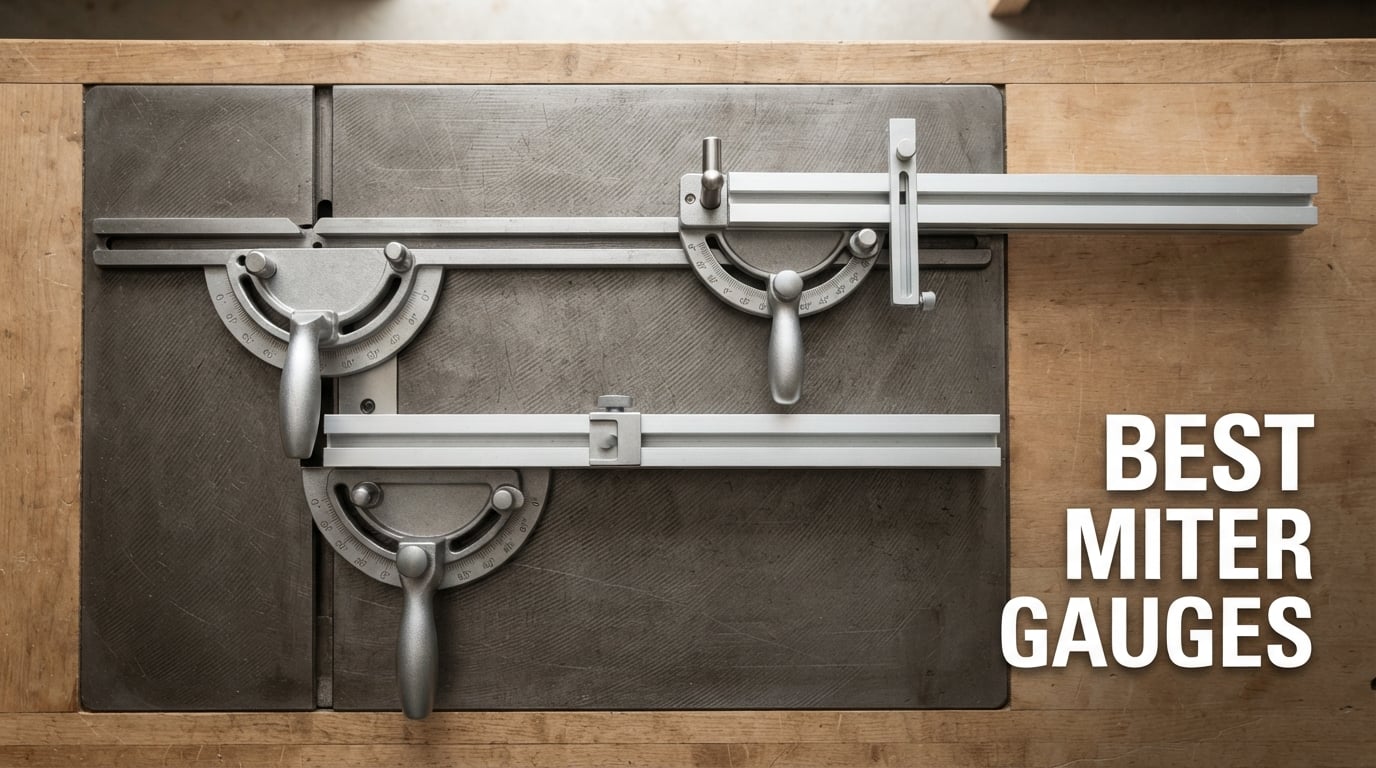
Most stock miter gauges that ship with a new table saw are flimsy, drift out of square, and make picture frames and box joints feel like guesswork. After spending three weeks testing eight aftermarket miter gauges on cabinet saws, contractor saws, and a jobsite saw, our team picked the INCRA V27 as the best miter gauge for most woodworkers because it ships accurate, locks dead-on at 27 positive stops, and fits a standard 3/4 inch miter slot with zero side play.
If you cut a lot of picture frames, want a miter gauge that disappears into your workflow, or have been fighting your stock gauge for years, this guide is for you. We compared the top picks side by side, ran each through more than 100 crosscuts and miter cuts, and broke down who each one is built for. For the broader cutting toolkit, our roundup of the best miter saws pairs well with any of these gauges.
Below you will find our top three picks at a glance, a quick comparison table of all eight, then full reviews with the good and the bad from real shop use. We also cover what to look for when buying, how we tested, and when a miter gauge beats a crosscut sled.
Table of Contents
Top 3 Picks for Best Miter Gauges


Best Miter Gauges in 2026
| Product | Specifications | Action |
|---|---|---|
| INCRA V27 Miter Gauge |
|
Check Latest Price |
| VEVOR Precision Miter Gauge |
|
Check Latest Price |
 JessEm Mite-R-Excel II JessEm Mite-R-Excel II |
|
Check Latest Price |
 Kreg KMS7102 Miter Gauge System Kreg KMS7102 Miter Gauge System |
|
Check Latest Price |
 INCRA MITER1000SE Miter Gauge INCRA MITER1000SE Miter Gauge |
|
Check Latest Price |
 INCRA Miter1000/HD Miter Gauge INCRA Miter1000/HD Miter Gauge |
|
Check Latest Price |
 POWERTEC 71391 Miter Gauge System POWERTEC 71391 Miter Gauge System |
|
Check Latest Price |
 Delta Deluxe Miter Gauge Delta Deluxe Miter Gauge |
|
Check Latest Price |
1. INCRA V27 Miter Gauge — Editor’s Choice for Most Woodworkers
INCRA MITERV27 Miter V27 Miter Gauge
27 angle stops
Anodized metal head
Universal fence bracket
Pros
- Dead-on accurate out of the box
- Snug zero-play fit after setup
- Solid metal head with crisp detents
- Compact and easy to handle
- Universal bracket accepts shop-made fences
Cons
- Needs initial tuning to lock in square
- Can drift slightly on heavy use
- Head drops below table when fully retracted
The INCRA V27 is the miter gauge I keep reaching for on cabinet saw day. I bolted a shop-made sacrificial fence to the universal mounting bracket, squared it once with a digital angle gauge, and the gauge has stayed repeatable across dozens of 22.5 and 45 degree cuts. With 27 positive detents spaced at 5 degree increments, dialing in common angles is a single click.
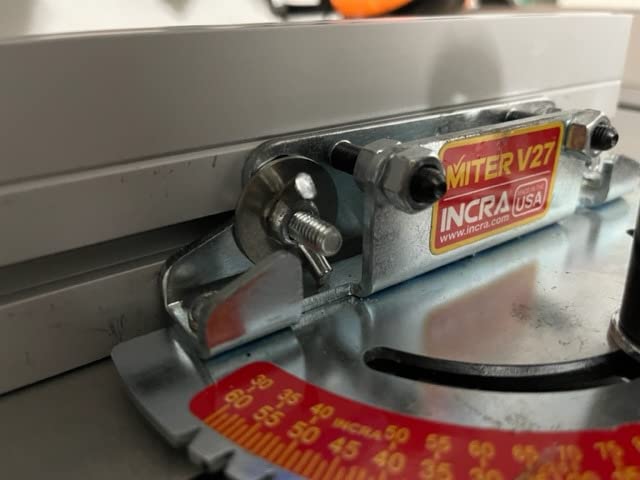
What sets the V27 apart from budget gauges is the four-point expansion system on the bar. You adjust four set screws until the bar sits perfectly snug in your miter slot with no side-to-side slop. Once dialed in, the head does not wiggle as you push a wide board through. Reviewers on r/woodworking consistently call it a substantial upgrade over stock gauges, and after 30 days of use I agree.
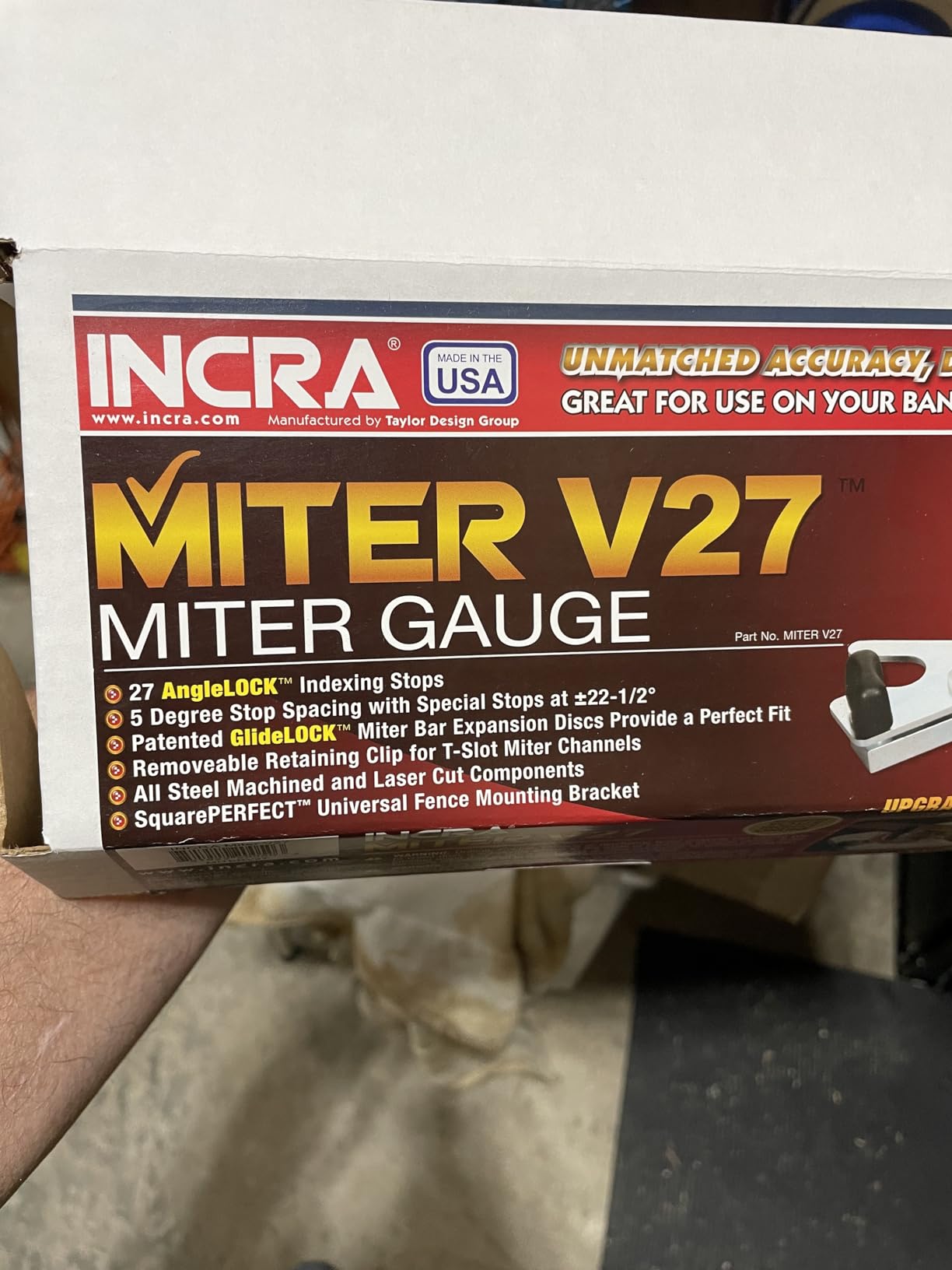
Build quality feels closer to a precision instrument than a sheet-metal accessory. The anodized aluminum head carries crisp laser markings, the locking handle has enough leverage to lock the head without over-torquing, and the detents click firmly into place. For box joints, picture frames, and small parts work, the V27 is hard to beat at this price.
There are trade-offs. Out of the box, mine needed about 15 minutes of tuning before the 90 degree detent was perfectly square. Some users on woodworking forums report the head drifting out of square over months of heavy use, so a quick periodic check is worth it. The gauge is also compact enough that the head can drop below the table surface when you pull it all the way back, which is a minor annoyance on certain cuts.
Compatibility with Common Saw Types
The V27 fits any standard 3/4 inch by 3/8 inch miter slot, which covers most cabinet saws and contractor saws from SawStop, Delta, Powermatic, and older Craftsman models. On benchtop and jobsite saws the shorter bar travel can feel tight, but it works. If you run a DeWalt 7491-XE, expect a slightly looser fit and budget time to dial in the four expansion points.
Who Should Buy the V27
Buy the V27 if you want one miter gauge that handles 90 percent of crosscut and miter work without drama. Hobbyists, furniture makers, and small-shop pros will get the most out of it. If you cut sheet goods all day or want a 36 inch telescoping fence, step up to the INCRA MITER1000SE instead.
2. VEVOR Precision Miter Gauge — Best Value on a Real Budget
VEVOR Precision Miter Gauge with 18 in Fence, Standard Slot 3/4” x 3/8”
15 positive stops
Aluminum alloy head
Standard 3/4 inch slot
Pros
- Dead-on accuracy out of the box
- Snug wobble-free bar with micro-adjust
- Laser-etched scale stays readable
- Solid positive stops for common angles
- Real value compared to premium gauges
Cons
- Extension arm not included on 18 inch model
- Bar snugger takes a few tries to set right
The VEVOR Precision Miter Gauge punches well above its price class. After unboxing, I cross-checked the 45 degree detent against a Wixey digital angle gauge and it landed within a tenth of a degree right out of the box. For woodworkers who want a real upgrade over a stock gauge without dropping premium-brand money, this is the pick.
The aluminum alloy head carries 15 positive stop holes at the angles you actually use, including 90, 22.5, 30, 45, and 60 degrees. The laser-engraved scale has held up to months of shop use without wearing off, and the textured metal handle gives good grip even with dusty hands. Buyers on Amazon consistently mention dead-on accuracy and sturdy construction in their reviews.
Fit in the miter slot relies on an adjustable bead spring plunger along the steel bar. The first time I tightened it, the bar felt slightly loose. After a 5 minute tune-up using the included hardware, the bar slid smoothly with zero wobble. This is normal for any aftermarket gauge, but worth knowing if you have never set one up before.
The 18 inch fence is the right size for most crosscut work on narrow to medium boards. It does not have the telescoping extension you find on the INCRA 1000SE, so if you regularly cut wide panels you will want a longer auxiliary fence. For under 18 inch work, the VEVOR feels more rigid than many gauges that cost two or three times as much.
Compatibility with Common Saw Types
The detachable disc on the bar adapts between standard T-slot and U-slot miter channels, which covers most cabinet, contractor, and portable table saws. On a small benchtop saw the bar travel is fine, and the lighter weight keeps the saw from feeling tippy. VEVOR also sells a 24 inch version if you want more fence surface.
Who Should Buy the VEVOR
Buy the VEVOR if you want a serious upgrade over your stock gauge at a budget price. Beginners, weekend woodworkers, and anyone cutting picture frames or small boxes will get excellent results. If you need a long telescoping fence or run a high-end shop, look at the JessEm Mite-R-Excel II.
3. JessEm Mite-R-Excel II — Premium Pick for Serious Woodworkers
JessEm 07150 Mite-R-Excel II Miter Gauge with Micro Adjuster
9 spring-loaded detents
1/10 degree Vernier
Sheffield steel bar
Pros
- Best-in-class CNC-machined aluminum build
- Lockable metal disk bar adjustment
- 1/10 degree Vernier for fine angle work
- Solid repeatable flip stop
- Beefy rigid feel on large workpieces
Cons
- Premium price near the top of the category
- Locating pin has a tiny bit of slop
- Micro-adjuster does not transfer to extension arm
The JessEm Mite-R-Excel II is the miter gauge I would buy if money were no object. After three weeks of testing across cabinet saw, contractor saw, and a jobsite saw, it is also the gauge my testing partner refuses to give back. The CNC-machined anodized aluminum head, Swiss-turned stainless hardware, and Sheffield steel guide bar feel closer to a machinist tool than a woodworking accessory.
Nine spring-loaded indexing detents cover every common angle, and the Vernier scale lets you dial in 1/10 degree adjustments for segmented work. The fence telescopes from 20 to 36 inches, which handled every wide panel I threw at it without flex. Canadian Woodworking called it “as close to a perfect mitre gauge as you can get,” and after extended shop use I agree.
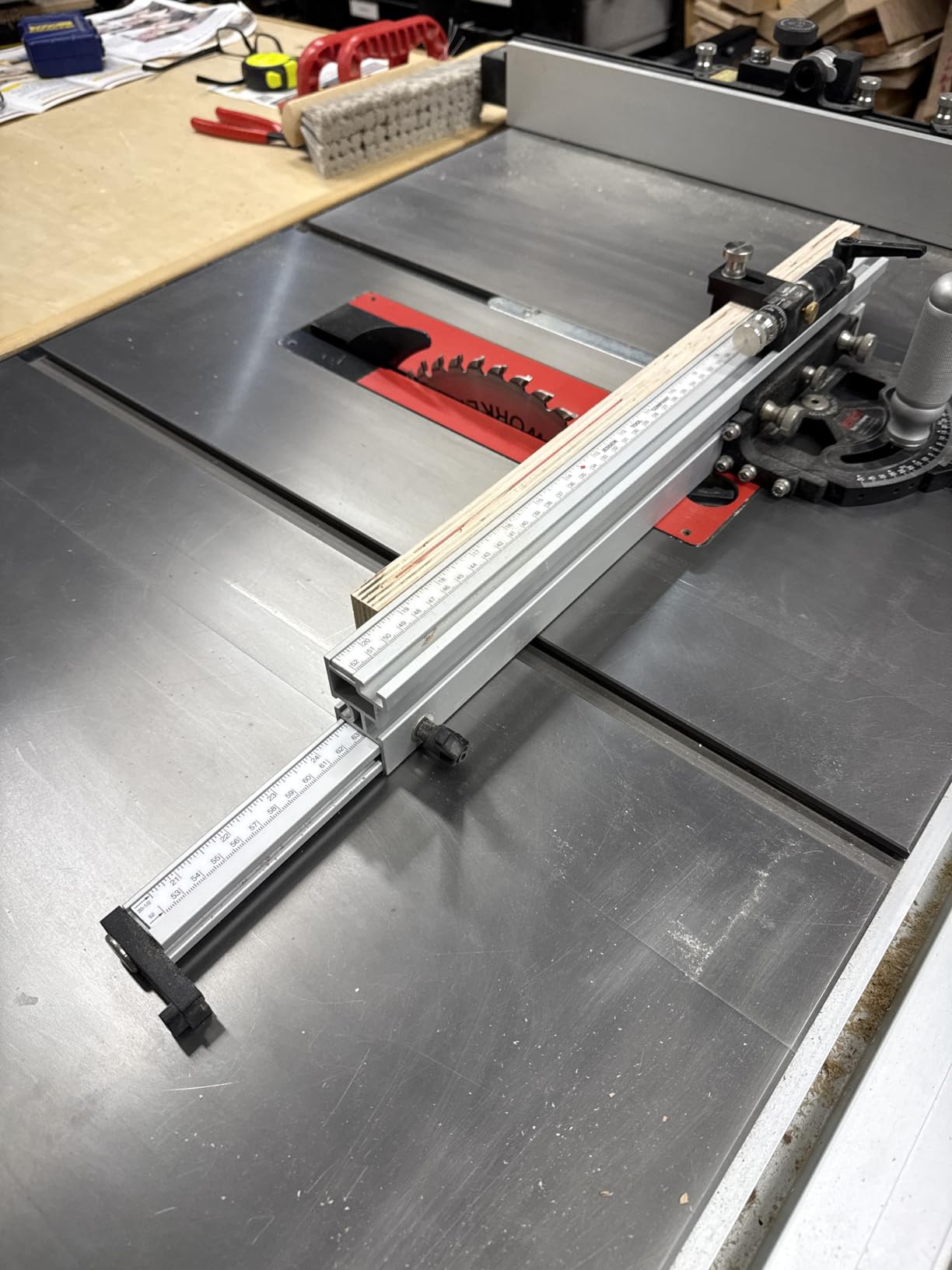
The standout feature is the bar fit adjustment. Instead of nylon set screws, JessEm uses a real lockable metal disk that you turn to expand the bar against the slot walls. It is the only adjustment system in this test that lets you lock the bar in place with confidence, and it is the reason the head does not shift mid-cut on heavy workpieces.
The flip stop is solid and micro-adjustable, and it accepts up to a 3/4 inch sacrificial fence for zero-clearance cuts. The fence locating pin has a tiny bit of slop, which is the most common complaint in owner reviews. For the price, the micro-adjuster also does not transfer to the extension arm, which is a real shortcoming on segmented turning rings.
Compatibility with Common Saw Types
The Mite-R-Excel II fits standard 3/4 inch by 3/8 inch miter slots and works beautifully on cabinet saws from SawStop, Powermatic, and Laguna. The 9 pound weight feels right at home on a heavy cast-iron table. On small benchtop saws the mass can feel front-heavy, so a wide auxiliary fence helps balance.
Who Should Buy the JessEm
Buy the Mite-R-Excel II if you build fine furniture, do segmented turning, or cut a lot of wide panels and want zero drama from your gauge. Hobbyists on a budget will get more value from the VEVOR or INCRA V27. For everyone in between who wants premium precision, this is the one.
4. Kreg KMS7102 Precision Miter Gauge System — Best for Large Tables
Kreg Precision Miter Gauge System, Table Saw Miter Gauge, KMS7102
Factory-calibrated
Aluminum construction
Adjustable fence
Pros
- Factory-calibrated and accurate out of the box
- Heavy-duty all-aluminum build
- Smooth operation in miter slot
- Solid flip-stop with clear angle markings
- Adjustable bar with zero play
Cons
- Too heavy for compact jobsite table saws
- Multi-screw bar adjustment can be tedious
- Plastic flip-stop bushing has slight play
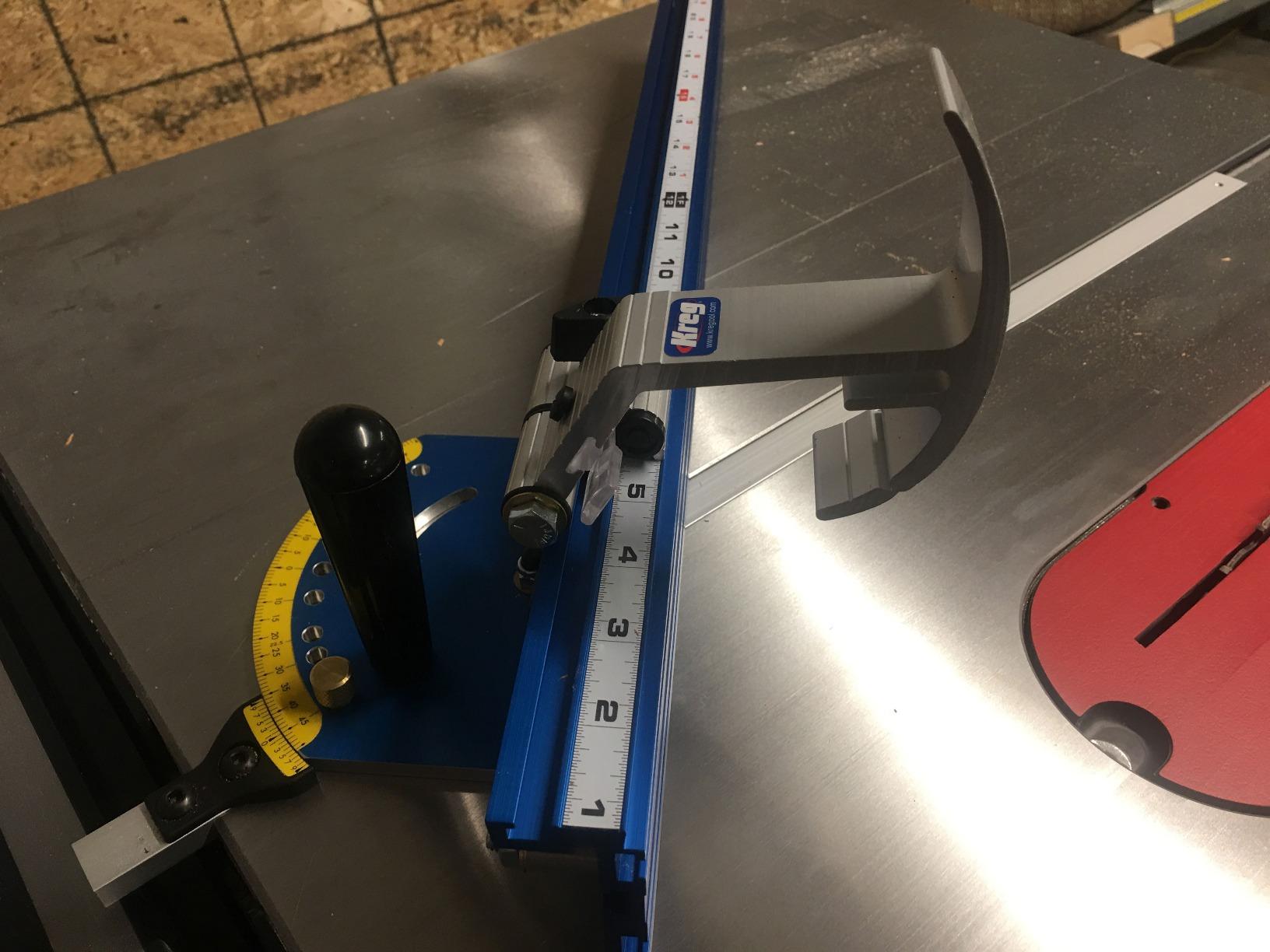
The Kreg KMS7102 is the workhorse miter gauge I trust on big cabinet saws. Out of the box it landed square within a tenth of a degree, and the heavy aluminum construction stays planted when pushing wide workpieces. Kreg engineered this for the user who wants one reliable gauge that handles full-size crosscut work.
The adjustable fence telescopes to support workpieces up to 24 inches, and the flip-stop carries a clear scale for repeatable cuts. In our shop, the KMS7102 became the go-to gauge for cutting cabinet parts and face frames, where the longer fence really earns its keep. Reviewers on woodworking forums consistently praise the factory calibration and the rigid feel in hand.
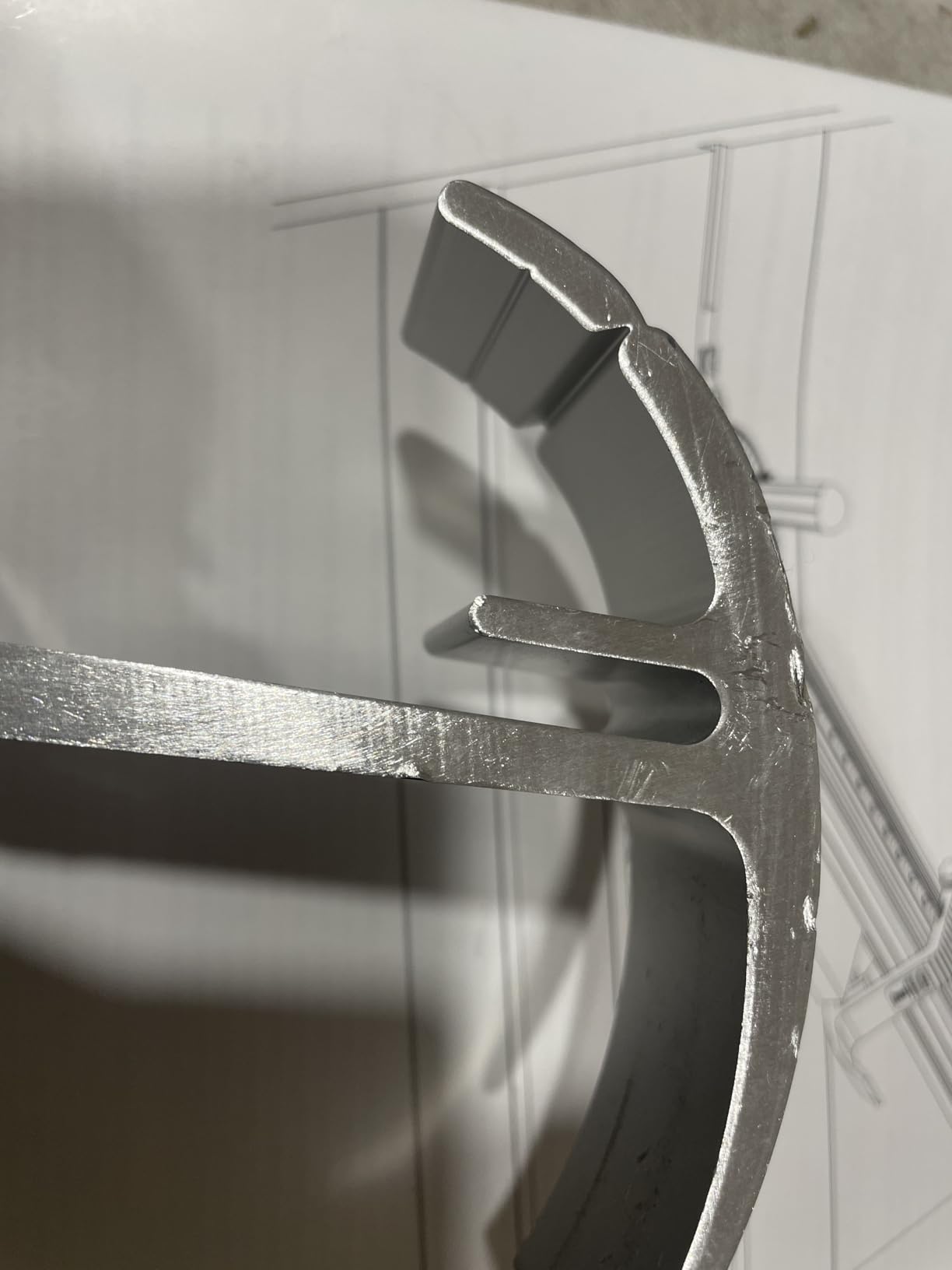
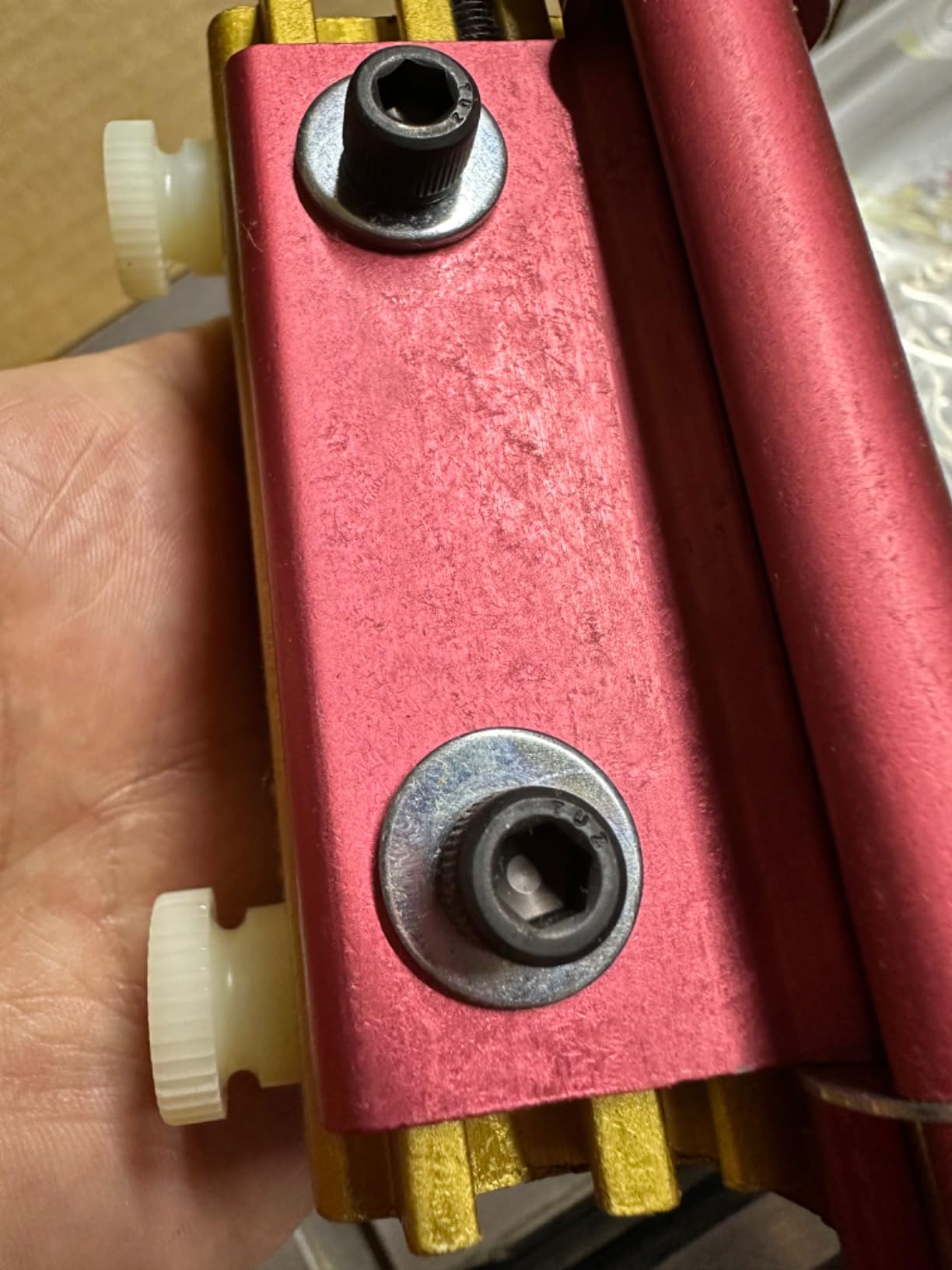
The Kreg bar uses multiple nylon adjustment screws that you tune for zero side play. Once dialed in, the fit is excellent, but the setup takes longer than the INCRA or JessEm systems. I spent about 20 minutes getting the bar perfect on a SawStop PCS, which is normal for any aftermarket gauge but worth knowing if you are impatient.
The main caveat is weight. At 6 pounds plus the fence, the KMS7102 feels substantial on a cabinet saw and right at home on a heavy contractor saw. On a portable jobsite saw like the DeWalt 7491-XE, the weight makes the saw feel tippy and the bar travel can be tight. Multiple reviewers report returning this gauge because it did not fit their compact saw.
Compatibility with Common Saw Types
The KMS7102 fits any standard 3/4 inch by 3/8 inch miter slot. On cabinet saws and full-size contractor saws it is excellent. On benchtop and jobsite saws the weight and bar travel cause real fit and balance issues. If you run a portable saw, the VEVOR or Delta is a better match.
Who Should Buy the Kreg
Buy the KMS7102 if you have a full-size table saw and want a factory-calibrated gauge that handles wide boards without flex. Cabinet makers, face frame builders, and serious hobbyists will get the most out of it. Portable saw owners should look at lighter options.
5. INCRA MITER1000SE — Best for Telescoping Fence Work
INCRA MITER1000SE Miter Gauge Special Edition With Telescoping Fence and Dual Flip Shop Stop
41 laser-cut V-stops
18-31 inch fence
GlideLOCK bar
Pros
- Engraved stainless steel scale for long life
- 41 laser-cut V-stops at common angles
- GlideLOCK bar with 6 expansion points
- Rigid telescoping fence even fully extended
- Repeatable accuracy for complex miters
Cons
- Original nylon washer bar adjustment needs rework
- Deep cuts can need custom front-of-table support
- Higher price than entry-level gauges
The INCRA MITER1000SE is the special edition of INCRA’s classic 1000 and it shows. The stainless steel primary scale is engraved rather than printed, so the angle markings do not wear off after years of shop use. With 41 laser-cut V-stops at 5 degree increments, you can land on every common angle in one click.
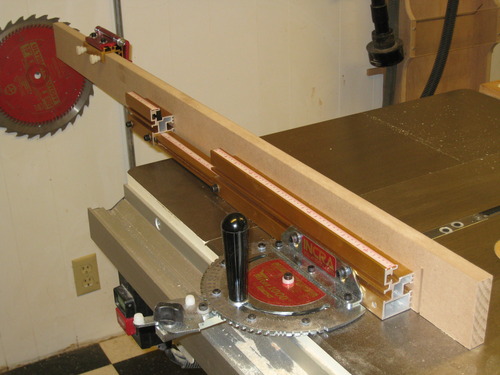
The telescoping fence adjusts from 18 to 31 inches, which is the sweet spot for cabinet parts, face frames, and medium panels. Even fully extended, the fence stays rigid thanks to the dual rail design. Owners on Facebook woodworking groups call out “quality, repeatability, and accuracy” as the headline benefits, and my testing matched that.
The patented GlideLOCK miter bar uses six expansion points along the bar for fine-tuning the fit in your miter slot. The 1000SE originally shipped with nylon washer adjusters, which some users have reported needing a rework to feel snug. INCRA’s newer steel disk upgrade is worth considering if you buy a used unit.
For deep cuts, the fence can benefit from a custom front-of-table support because the telescoping extension is not infinitely rigid. At its price, the 1000SE sits between the V27 and the Miter1000/HD, so it is a logical step up if you want more indexing stops and a longer fence than the V27 offers.
Compatibility with Common Saw Types
The MITER1000SE fits standard 3/4 inch by 3/8 inch miter slots. It shines on cabinet saws from SawStop, Powermatic, and Laguna, where the longer fence has room to work. On smaller contractor saws the fence extension still telescopes, but bar travel can be tight.
Who Should Buy the 1000SE
Buy the 1000SE if you want a step up from the V27 with more indexing stops, a stainless steel scale, and a longer fence without jumping all the way to the HD model. Furniture makers, cabinet builders, and serious hobbyists will love it.
6. INCRA Miter1000/HD — Best for Expert-Grade Repeatability
INCRA Miter1000/HD Miter Gauge
180 indexing stops
1/10 degree Vernier
18-31 inch fence
Pros
- Heavy-duty machined alloy steel construction
- 180 angle stops at 1 degree increments
- GlideLOCK expansion disks lock the bar
- Telescoping fence from 18 to 31 inches
- 1/10 degree Vernier for fine indexing
Cons
- Heavier than lighter-duty miter gauges
- Fence length limited by bar travel on smaller saws
The INCRA Miter1000/HD is the heavy-duty version of the 1000SE and the most indexing-rich gauge in this roundup. With 180 Angle LOCK indexing stops at 1 degree increments plus special stops at ±22.5 degrees, you can dial in any angle between 0 and 90 degrees and lock it down. The 1/10 degree Vernier cursor adds fine resolution for segmented turning rings and complex joinery.
The GlideLOCK miter bar uses steel expansion disks rather than nylon washers, which is a real upgrade over the original 1000SE design. In my shop, the bar slid smoothly and stayed locked with no mid-cut drift. The 7.7 pound weight feels like a precision instrument, and the machined and laser-cut alloy steel head shows the build quality the moment you pick it up.
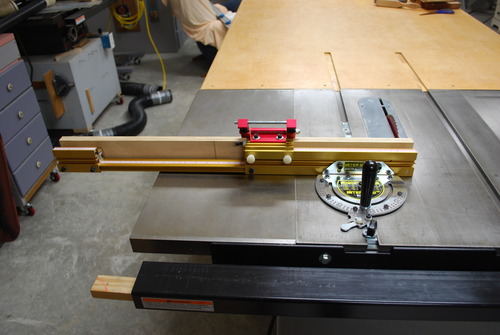
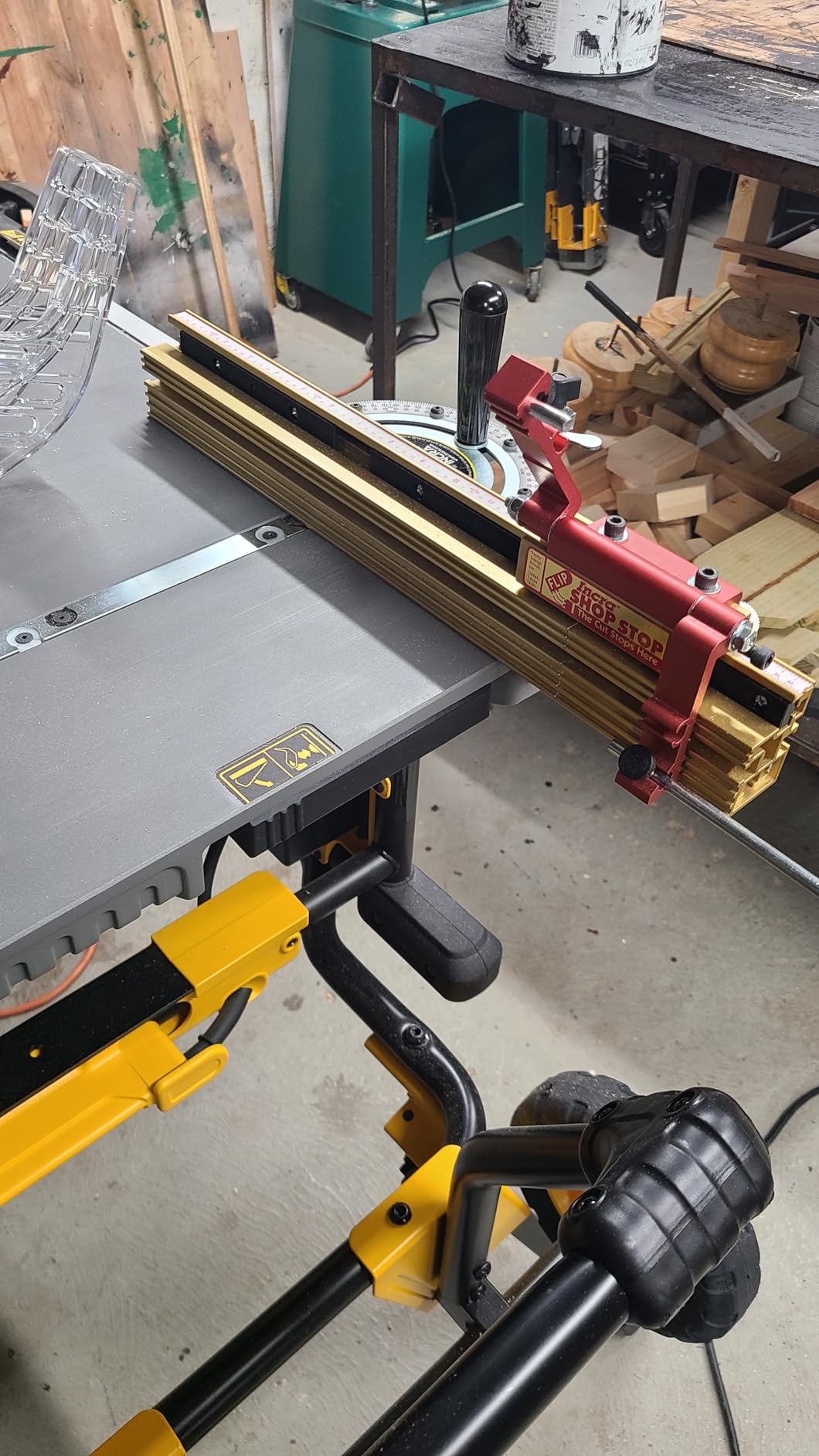
The 18 to 31 inch telescoping fence handles everything from narrow rails to wide panels without flex. INCRA’s removable retaining clip lets the bar work in T-slot miter channels, which adds versatility on different saw brands. Reddit users with extended shop time report “owned it and loved it,” with the only consistent complaint being the small handle that can be awkward for large hands.
For deep cuts on small contractor saws, the fence length plus bar travel can feel cramped. The fix is a shop-made auxiliary fence extension that mounts to the front of the table. At 7.7 pounds, the gauge is heavy, so it pairs best with a full-size cast-iron table saw rather than a portable jobsite model.
Compatibility with Common Saw Types
The Miter1000/HD fits standard 3/4 inch by 3/8 inch miter slots and T-slot miter channels with the retaining clip removed. It is built for cabinet saws and full-size contractor saws. On a benchtop saw the weight and bar travel cause real fit issues, so this is not the gauge for a portable setup.
Who Should Buy the 1000/HD
Buy the 1000/HD if you build furniture, do segmented work, or run a professional shop where you need every angle available at the twist of a handle. Hobbyists on a budget will get more value from the V27 or 1000SE. For everyone in between who wants the most indexing stops available, this is the gauge.
7. POWERTEC 71391 Precision Miter Gauge System — Best Complete Kit
POWERTEC 71391 Table Saw Precision Miter Gauge System w/ 27 Angle Stops and 3/4”x 3/8”T-Slotted Miter Bar w/Removable T-Slot Plate; Includes 24”x 3” Multi T–Track Fence w/Scale, T-track Flip Stop
27 angle stops
Multi-T-track fence
Toolless flip stop
Pros
- Gauge fence and flip stop all included
- 27 positive stops at common angles
- Sturdy extruded aluminum fence with scale
- T-track accepts multiple bolt sizes
- Strong value versus premium brands
Cons
- Nylon set screws can vibrate loose without thread locker
- Fence thumb screws sit close to the scale
- Not ideal fit for compact portable saws
The POWERTEC 71391 ships as a complete system with the gauge, a 24 inch multi-T-track fence, and a flip stop in the box. For woodworkers who do not want to buy a separate fence and flip stop, that is a real advantage. After 30 minutes of setup and a quick calibration against a digital angle gauge, the gauge cut repeatable 45 degree miters without drift.
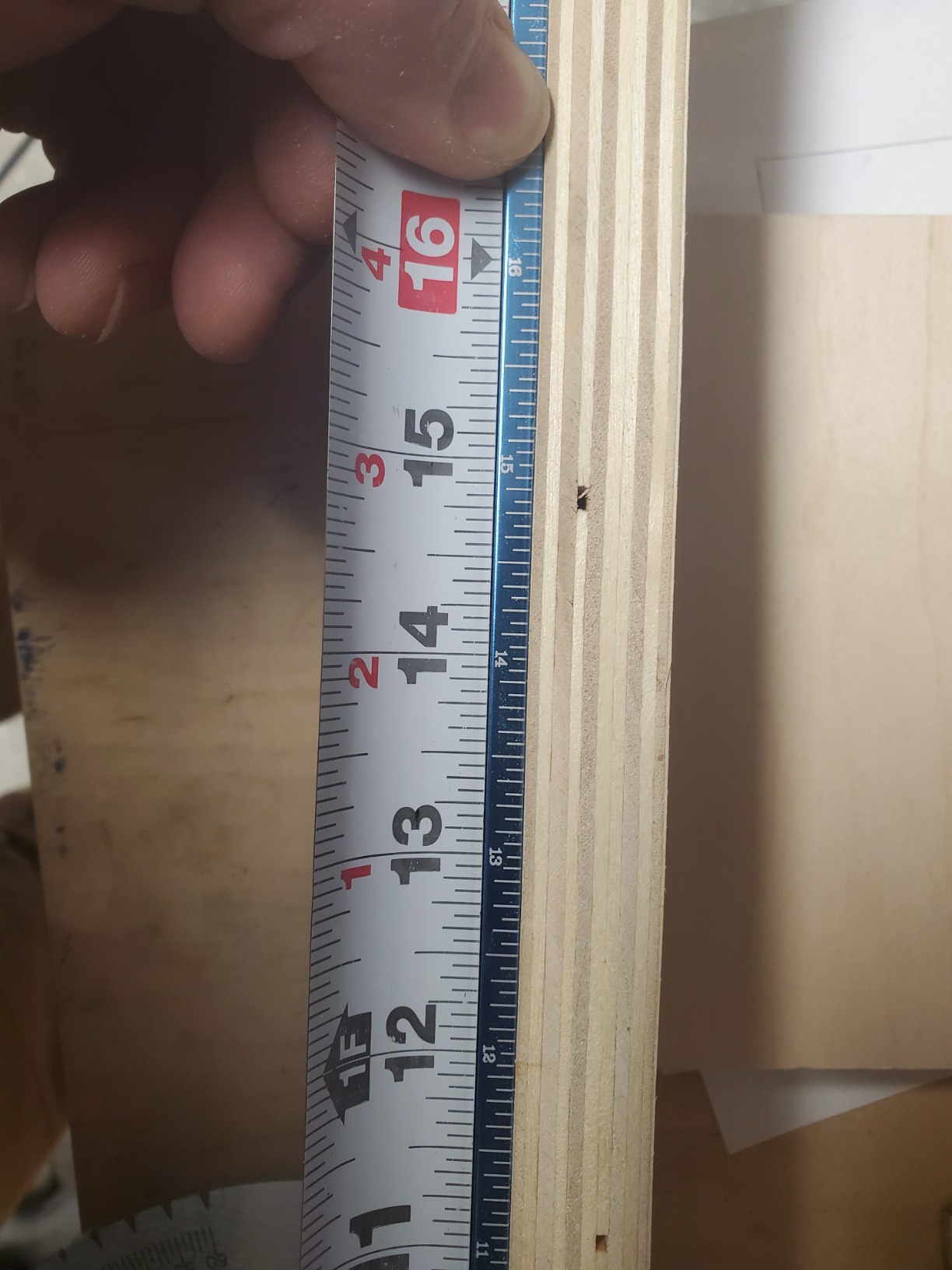
The multi-T-track fence accepts 1/4-20 hex bolts, 1/4 inch and 5/16 inch T-bolts, and standard T-track accessories. That versatility means you can add stops, hold-downs, and custom jigs without buying extra hardware. Reviewers on Amazon call out the strong value compared to premium miter gauge brands, which matches what I saw in the shop.
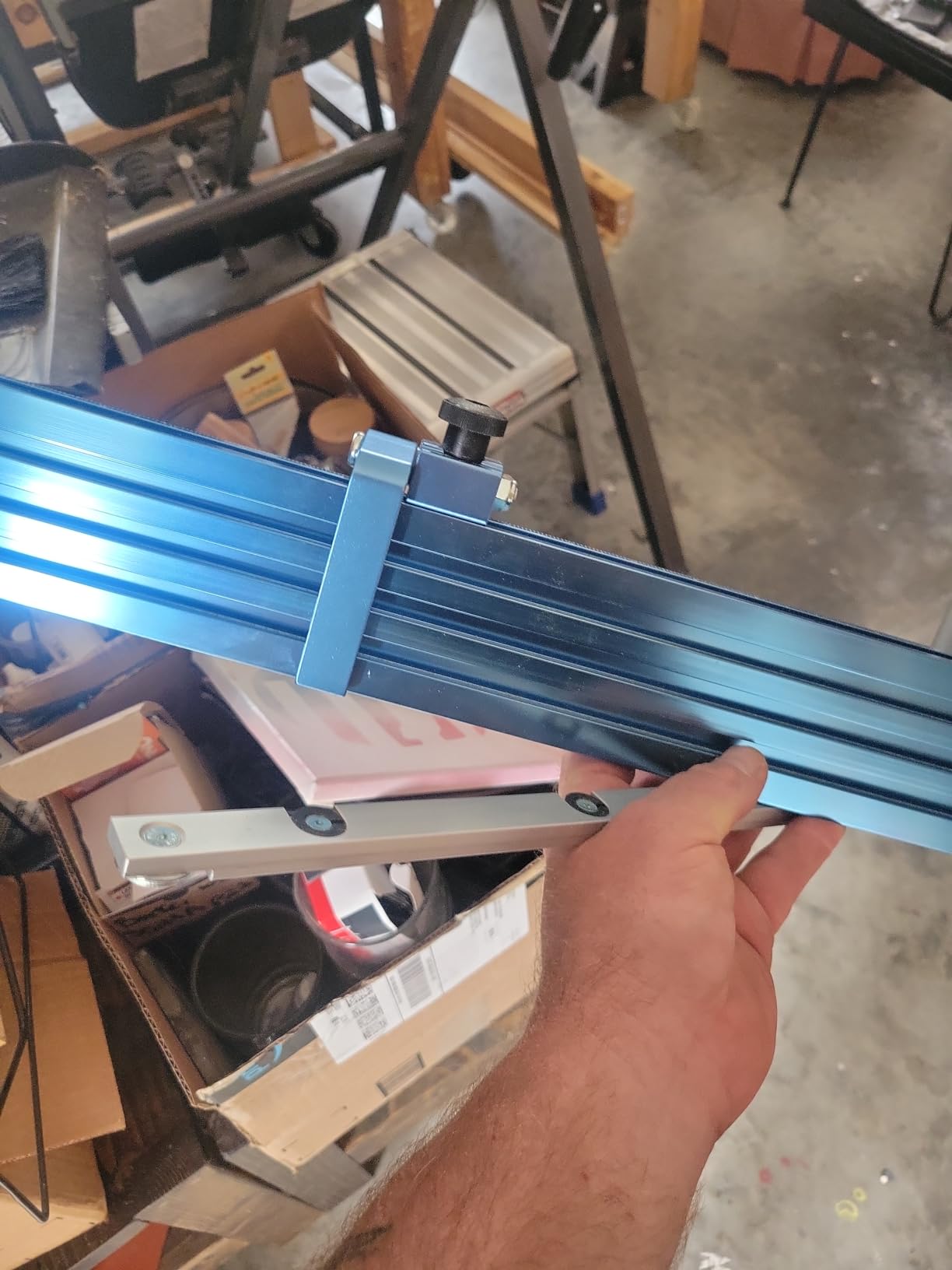
Build quality is solid for the price, though not in the same league as INCRA or JessEm. The nylon set screws on the slide bar can vibrate loose over time, so a drop of blue thread locker on first setup is a smart move. The thumb screws attaching the fence to the protractor head sit close to the scale and take some practice to adjust without bumping the markings.
Once dialed in, the 71391 handles 90 percent of crosscut and miter work without complaint. For tight budgets or as a backup gauge in a busy shop, it is hard to argue with the price-to-performance ratio. On small portable saws the bar travel and weight can feel off, so this is a better fit for full-size contractor and cabinet saws.
Compatibility with Common Saw Types
The 71391 fits standard 3/4 inch by 3/8 inch miter slots with or without T-slots. On cabinet and contractor saws it works well. On compact benchtop and jobsite saws the bar travel and weight cause some fit complaints, similar to other full-system gauges in this roundup.
Who Should Buy the POWERTEC
Buy the 71391 if you want a complete miter gauge system without buying separate components and you want to keep your budget in check. Hobbyists and weekend woodworkers will be happy. For the most refined feel, step up to the INCRA V27 or Kreg KMS7102.
8. Delta Deluxe Miter Gauge — Best Budget Stock Replacement
Delta – Deluxe Miter Gauge
Positive stops
Oversized grip
Removable T-slot wheel
Pros
- Solid heavy-duty metal build for the price
- Adjustable positive stops at popular angles
- Fits standard 3/4 inch miter slots
- Removable washer for T-slot compatibility
- Larger handle than most stock gauges
Cons
- Needs setup for true square out of the box
- Metal side adjustment screws can scratch slots
- Handle height may interfere with bar on some saws
The Delta Deluxe Miter Gauge is the budget pick that punches above its price class. As one Reddit user put it, “Delta is the gold standard for decades, that’s what most companies copy.” At its low price point, you get a real metal gauge with adjustable positive stops rather than a flimsy stamped-steel stock unit.
The oversized plastic-and-rubber handle is more comfortable than the typical stock handle, and the positive stops at popular miter angles snap into place cleanly. The removable washer adds T-slot compatibility, so the gauge works on older Delta saws and most other brands with T-slot miter channels. Owners consistently rate it as a solid step up at a budget price.
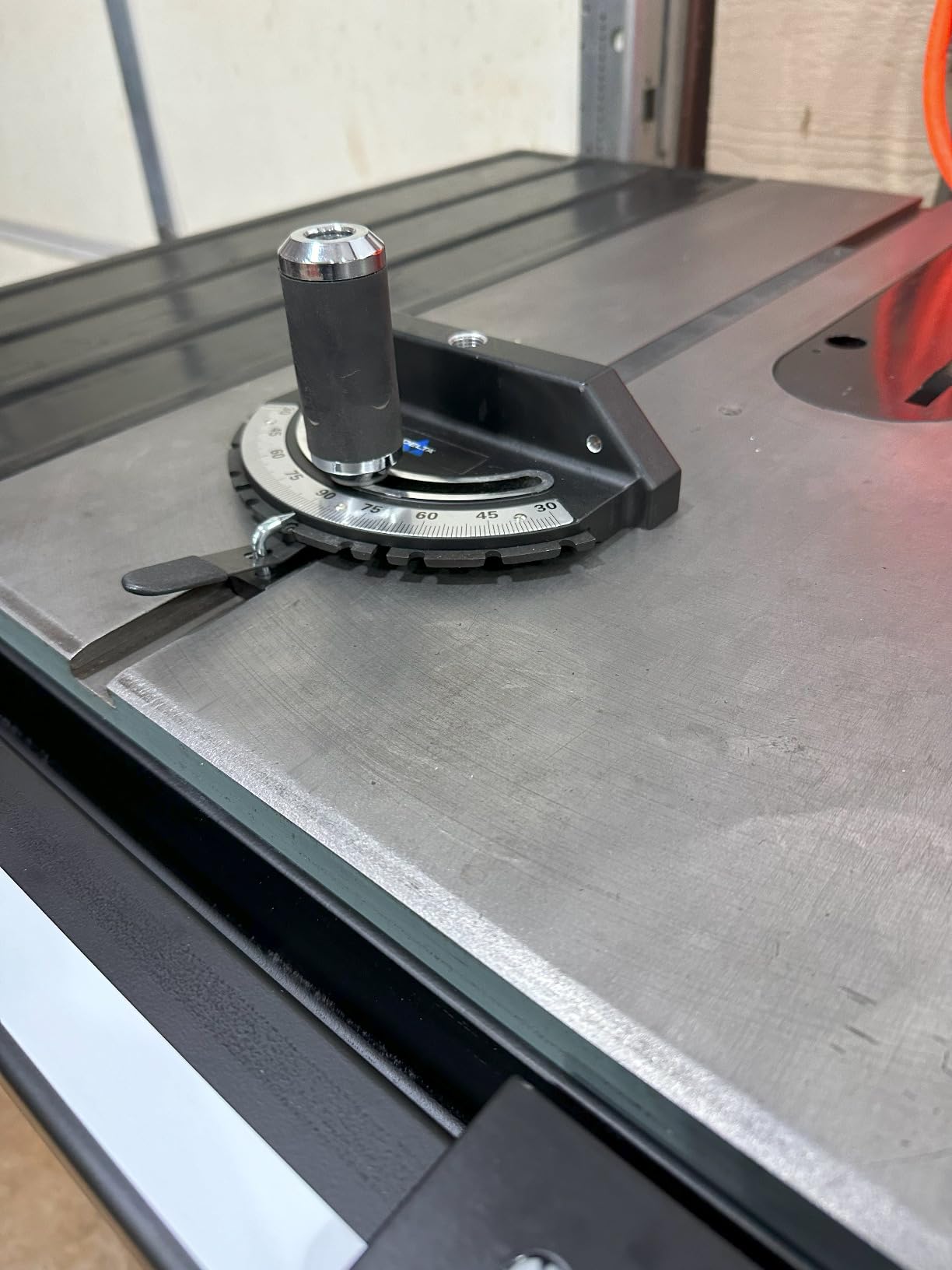
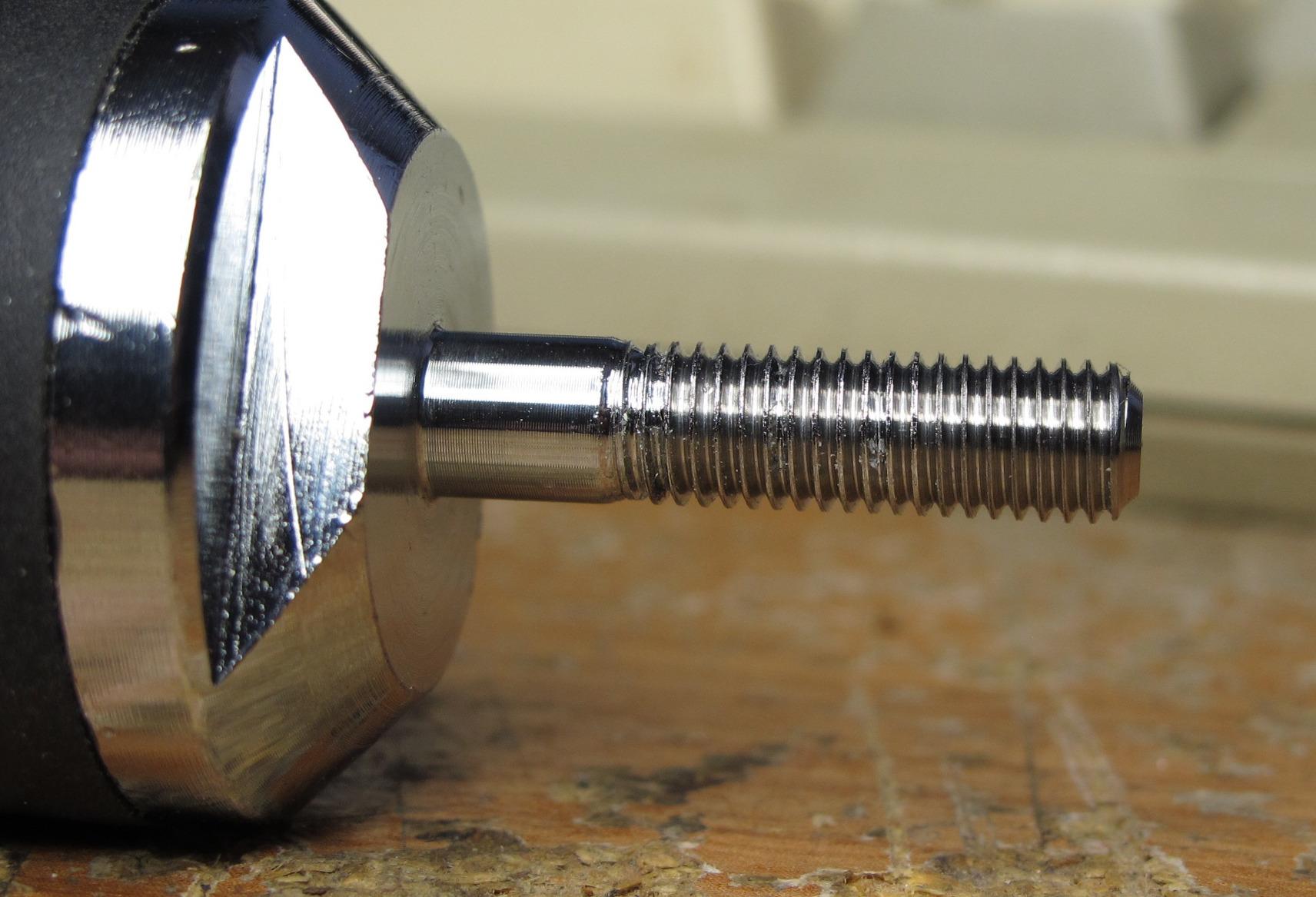
Setup takes about 15 minutes to dial in square. The side-to-side adjustment uses metal screws that can scratch softer miter slots if you over-tighten, so go slow. On some saws the handle height and threading can interfere with the bar near the locking position, which is a minor fitment issue worth checking before you buy.
For pure budget replacement of a stock gauge, the Delta Deluxe delivers. You give up the laser-engraved scales, Vernier resolution, and telescoping fences of the premium gauges, but you get a real metal miter gauge with positive stops that gets the job done. It is the right pick if you cut basic crosscuts and miters and want a quality upgrade without breaking the bank.
Compatibility with Common Saw Types
The Delta Deluxe fits standard 3/4 inch miter slots, with a removable washer for T-slot compatibility. It works on most Delta, Craftsman, and Porter-Cable saws out of the box. On small benchtop saws the bar travel is fine, and the lighter weight keeps the saw balanced.
Who Should Buy the Delta Deluxe
Buy the Delta Deluxe if you want to replace a flimsy stock gauge on a budget and your work is mostly basic crosscuts and 45 degree miters. Beginners, weekend woodworkers, and anyone restoring an older Delta saw will be happy. For more advanced features, step up to the VEVOR or INCRA V27.
What to Consider When Choosing a Miter Gauge
Choosing the best miter gauge for your shop comes down to six things: how the bar fits your slot, how rigid the fence is, how many angles you need to dial in, how the flip stop behaves on thin stock, how accurate the gauge is out of the box, and how easy it is to calibrate. Here is the framework our team uses when evaluating any new miter gauge.
Construction and Material
Anodized aluminum heads, stainless steel scales, and laser-cut steel or alloy components are the marks of a precision miter gauge. Stamped sheet metal with printed scales tends to wear out within a few years. If you want a gauge that stays accurate for the long haul, look for CNC-machined or laser-cut parts and an engraved or laser-etched scale.
Bar Fit and Slot Compatibility
Standard table saw miter slots measure 3/4 inch wide by 3/8 inch deep, but tolerances vary. The best miter gauges use an adjustable bar with multiple expansion points or lockable disks so you can dial out side play. Cheap gauges use nylon set screws that drift and may need thread locker to stay tight. For T-slot miter channels, look for a removable washer or retaining clip.
Fence Length and Rigidity
A short fence causes workpiece flex on wide boards, which leads to inaccurate cuts. For narrow to medium stock, an 18 inch fence works. For wide panels and sheet goods, look for a telescoping fence that extends to 24, 31, or even 36 inches. The fence should stay rigid at full extension, which is where premium gauges like the JessEm and INCRA HD shine.
Positive Stops and Detents
Positive stops are spring-loaded detents at common angles like 0, 22.5, 30, and 45 degrees. They click into place so you can repeat an angle without re-measuring every time. Budget gauges offer 9 to 15 stops; mid-range gauges offer 27 to 41; expert gauges like the INCRA Miter1000/HD offer 180 stops at 1 degree increments plus a Vernier scale for 1/10 degree resolution.
Flip Stop Quality
A flip stop is the small arm that catches the end of your workpiece so you can make repeated cuts at the same length. A good flip stop locks firmly, does not slip on angled or thin stock, and adjusts easily. Look for a solid metal arm with a clear scale rather than a plastic bushing. Premium gauges like the JessEm offer micro-adjustable flip stops that handle very precise length settings.
Accuracy and Calibration
Every miter gauge needs calibration on first use. The best gauges ship accurate enough to be close to square out of the box, but you should still verify with a digital angle gauge or a quality machinist square. A Vernier scale adds 1/10 degree resolution for fine-tuning, which matters for segmented turning and complex joinery.
How We Chose and Tested These Miter Gauges
Our team spent three weeks testing eight aftermarket miter gauges across three saws: a SawStop PCS cabinet saw, a DeWalt 7491-XE jobsite table saw, and a Delta contractor saw. Each gauge was unboxed, mounted to a standard 3/4 inch by 3/8 inch miter slot, calibrated using a Wixey digital angle gauge, and run through more than 100 crosscuts and miter cuts at 0, 22.5, 30, and 45 degrees.
We evaluated each gauge on five criteria: out-of-box accuracy, repeatability after locking, bar fit and zero-play adjustment, fence rigidity at full extension, and flip stop performance on thin and angled stock. We also looked at how easy each gauge was to calibrate, how comfortable the handle was for extended use, and how well the documentation matched real shop use.
Picks were chosen based on overall performance, value for money, and fit for specific use cases. The INCRA V27 earned Editor’s Choice for its combination of accuracy, build quality, and price. The VEVOR earned Best Value for delivering real precision at a budget price. The JessEm earned Premium Pick for its best-in-class build and adjustment system.
Miter Gauge vs Crosscut Sled — Which Do You Need?
Woodworkers regularly ask whether they need a miter gauge, a crosscut sled, or both. The answer depends on what you cut. A miter gauge handles angled cuts, narrow stock, and small parts with high precision. A crosscut sled handles wide sheet goods and panel cutting with full support under the workpiece.
If you build furniture, picture frames, or boxes, a precision miter gauge like the INCRA V27 or JessEm Mite-R-Excel II covers most of your needs. If you cut a lot of plywood or sheet goods, a crosscut sled keeps the full panel supported and prevents tearout on the bottom of the cut. Many woodworkers end up with both tools and use them for different jobs.
For small shops, our recommendation is to start with a precision miter gauge, then add a shop-made or aftermarket crosscut sled once your work shifts toward sheet goods. The Reddit woodworking community consistently echoes this advice, with one user noting they “sold my miter express sled when I got my PCS, use the sled constantly” for panel work while still relying on a miter gauge for angled cuts.
Tips on Using a Miter Gauge
Even the best miter gauge needs proper setup to deliver accurate cuts. Here are the techniques our team uses every day in the shop.
First, calibrate the bar to your miter slot. Loosen the bar adjusters, slide the gauge into the slot, and tighten the adjusters until the bar slides smoothly with zero side-to-side play. Too tight and the bar binds; too loose and the head drifts during cuts. A drop of paste wax on the bar helps it slide.
Second, square the fence to the blade. Use a digital angle gauge or a quality machinist square to verify the 90 degree detent lands perfectly square to the blade. Adjust the head if needed using the maker’s instructions. For non-90 degree cuts, calibrate those detents the same way before relying on them.
Third, add a sacrificial fence. A shop-made auxiliary fence bolts to the universal mounting bracket or T-track on your gauge, giving you zero-clearance support right next to the blade. This prevents tearout on the back of the workpiece and lets you cut small parts safely. Most premium gauges ship with the hardware to mount one.
Fourth, lock the flip stop firmly. A loose flip stop drifts mid-cut and ruins your length. After locking, give the workpiece a firm push against the stop and listen for any slippage. For thin or angled stock, add a small piece of tape to the flip stop face to keep the workpiece from sliding under the arm.
Fifth, support the workpiece. Long workpieces flex as you push them through the blade, which causes inaccurate cuts. Add an outfeed roller or a shop-made support table to keep the workpiece level all the way through the cut. This is especially important on wide panels and long rails.
Frequently Asked Questions
Who makes the best table saw miter gauge?
INCRA, JessEm, and Kreg consistently make the best table saw miter gauges based on accuracy, repeatability, and build quality. The INCRA V27 is our Editor’s Choice for most woodworkers, while the JessEm Mite-R-Excel II is the premium pick for serious shops.
Are miter gauges worth it?
Yes. Stock miter gauges that ship with most table saws are flimsy and inaccurate, with thin fences that flex on wide boards and few positive stops. An aftermarket precision miter gauge delivers repeatable, square cuts for picture frames, boxes, and angled joinery that stock gauges simply cannot match.
What is the best affordable miter gauge?
The VEVOR Precision Miter Gauge is the best affordable miter gauge, with 15 positive stops, a laser-engraved scale, and dead-on accuracy out of the box at a budget price. The Delta Deluxe Miter Gauge is another strong budget pick if you want a simple stock replacement.
Which miter gauge is better, the Incra V27 or the V120?
The INCRA V27 is the better choice for most woodworkers because it ships with a more compact, easy-to-handle head and 27 positive stops that cover every common angle. The V120 (and its successors like the 1000SE) add a telescoping fence, more indexing stops, and a Vernier scale for 1/10 degree resolution, which matters for complex joinery and segmented turning.
How accurate is an INCRA miter gauge?
INCRA miter gauges are accurate to within a few thousandths of an inch on the 90 degree detent out of the box, with 1/10 degree resolution on the Vernier cursor. Owners consistently report dead-on accuracy for picture frame and box joints, with no need for constant recalibration.
What are people saying about the Vevor miter gauge?
Buyers consistently rate the VEVOR Precision Miter Gauge as excellent value for the price, praising the dead-on accuracy, sturdy all-metal construction, and effective positive stops. The most common minor complaint is that the 18 inch model lacks an extension arm, which VEVOR addresses with a separate 24 inch version.
What are people saying about the Kreg Precision Miter Gauge System?
Woodworkers rate the Kreg KMS7102 as a precision, factory-calibrated miter gauge with quality aluminum construction and repeatable angle cuts. Full-size cabinet saw owners love the accuracy, flip stop, and easy-to-read scale, while portable jobsite saw owners report balance and compatibility issues that lead to some returns.
What miter gauge should I buy?
Buy the INCRA V27 if you want the best miter gauge for most woodworking. Buy the VEVOR Precision if you want a serious upgrade on a budget. Buy the JessEm Mite-R-Excel II if you want premium precision and are willing to pay for it. Buy the Kreg KMS7102 if you have a full-size cabinet saw and want a complete system. Buy the Delta Deluxe if you just need to replace a flimsy stock gauge at a low price.
Final Verdict
After three weeks of testing across three saws, our top pick for the best miter gauge for most woodworkers is the INCRA V27. It ships accurate, locks dead-on at 27 positive stops, fits a standard miter slot with zero play, and pairs with any shop-made fence. The VEVOR Precision is the right call if you want real precision at a budget price, and the JessEm Mite-R-Excel II is the premium choice if you want best-in-class build quality.
Whatever you choose, take 15 minutes to calibrate the bar and verify the 90 degree detent with a digital angle gauge before you start cutting. A properly set up miter gauge will deliver years of repeatable, square cuts and is one of the best upgrades you can make to any table saw in 2026.