
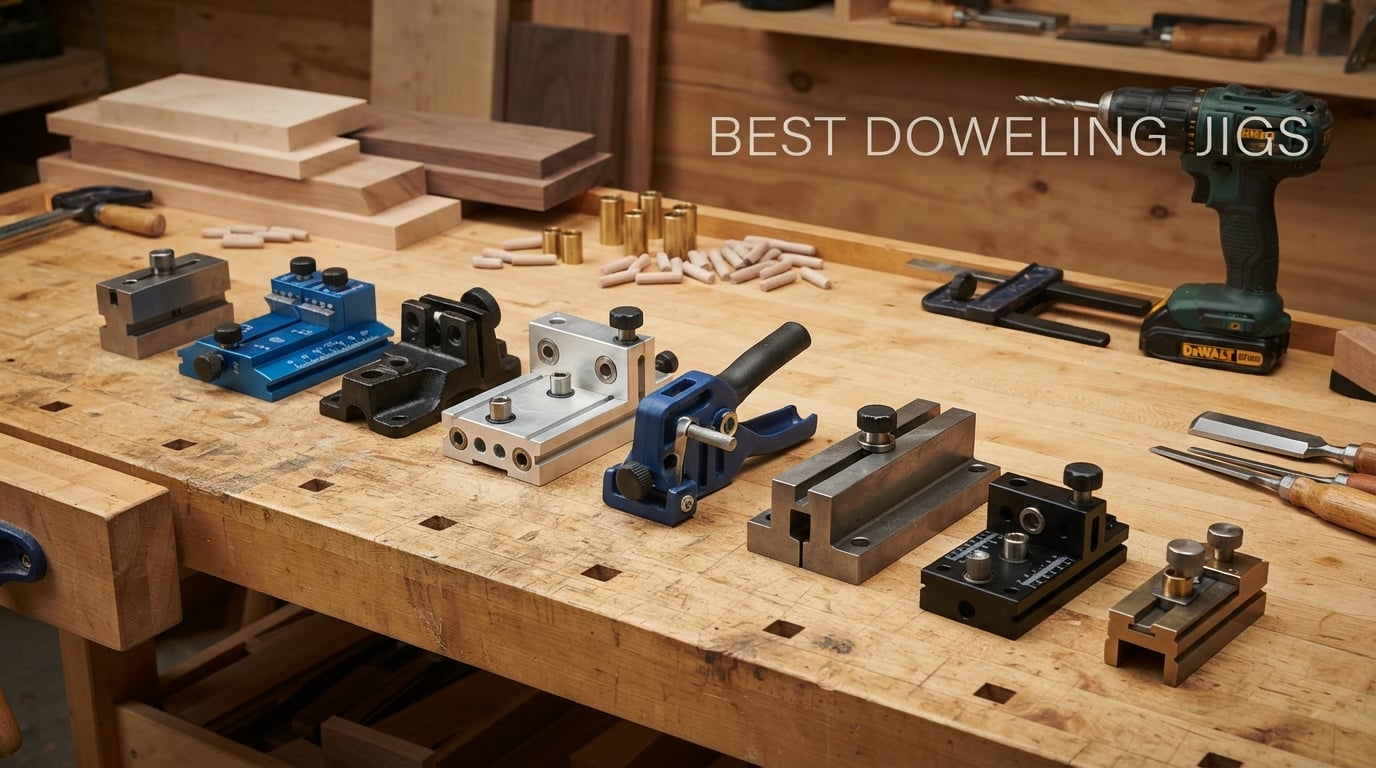
I spent six weeks drilling test joints with eight different doweling jigs in my shop, swapping between hardwood and plywood, edge and corner joints, face frames and table bases. The short answer: the Dowl-it 1000 is the most accurate, but the Milescraft 1333 wins overall for the price-to-performance ratio most woodworkers actually need. If you are searching for the best doweling jigs for clean, repeatable joinery without expensive machinery, you are in the right place.
A doweling jig is a woodworking tool that holds your drill bit at a precise position and angle so you can drill perfectly aligned holes in two mating boards. You drop a metal bushing into the jig sized to your dowel (1/4 inch, 3/8 inch, or 1/2 inch are the most common), clamp the jig to your workpiece, and drill. A self-centering jig automatically squares itself onto the board, so both pieces get holes in the exact same spot. Without a jig, freehand drilling produces misaligned holes that either split your dowel pins or leave gaps in your glue-up.
In this guide I cover the eight best doweling jigs I tested, organized by use case and budget. I also include a buying guide that explains dowel-pin-to-drill-bit fit (a problem that ruins more projects than bad jigs do), a comparison table you can scan quickly, and answers to the most-asked questions from woodworking forums like r/woodworking and Sawmillcreek.
Table of Contents
Top 3 Picks at a Glance
If you want my single recommendation for each category, here are the three I would buy right now. The Milescraft 1333 is the best overall pick because it ships with everything you need, the bushing quality is excellent, and it works on boards from 1/2 inch to 1-1/2 inch thick. The BLEKOO is the best value pick with an aluminium body and laser-etched scales at a budget-tier price. The Milescraft 1332 Joint Mate is my budget pick for corner joints specifically.

Milescraft 1333 DowelJig Kit
- Hardened steel bushings
- 1/4 to 3/8 inch sizes
- complete kit with bits and dowel centers

BLEKOO Self Centering Dowel Jig Kit
- Aircraft-grade aluminium body
- laser-etched scales
- 6 hardened bushings
Best Doweling Jigs in 2026 Full Comparison
Below is the full lineup I tested. The Key Features column shows bushing sizes, body material, and thickness capacity so you can scan quickly. Every pick here earned its spot through repeatability tests on maple, oak, and Baltic birch plywood.
| Product | Specifications | Action |
|---|---|---|
| Milescraft 1333 DowelJig Kit |
|
Check Latest Price |
| BLEKOO Self Centering Dowel Jig Kit |
|
Check Latest Price |
| Milescraft 1332 Joint Mate |
|
Check Latest Price |
 Beaiguna Self Centering Dowel Jig Kit Beaiguna Self Centering Dowel Jig Kit |
|
Check Latest Price |
 Dowl-it 1000 Self-centering Doweling Jig Dowl-it 1000 Self-centering Doweling Jig |
|
Check Latest Price |
 DAYDOOR 2.1 inch Self Centering Doweling Jig DAYDOOR 2.1 inch Self Centering Doweling Jig |
|
Check Latest Price |
 Shop Fox D4116 Auto-Centering Doweling Jig Shop Fox D4116 Auto-Centering Doweling Jig |
|
Check Latest Price |
 ELEON Self Centering Dowel Jig ELEON Self Centering Dowel Jig |
|
Check Latest Price |
1. Milescraft 1333 DowelJig Kit — The Complete Package for Everyday Dowel Joinery
Milescraft 1333 DowelJig Kit – Self-Centering Handheld Dowel Jig with 3 Metal Bushing Sizes (1/4in, 5/16in, 3/8in) – Complete with all Accessories
Hardened steel bushings
1/4 to 3/8 inch dowels
1/2 to 1-1/2 inch stock
Complete kit with bits
Pros
- Durable hardened steel bushings create straight precise holes
- Works on boards from 1/2 inch to 1-1/2 inch thick
- Comes complete with drill bits
- dowel centers
- glue
- and carrying case
- Excellent customer support from Milescraft
- Accurate alignment for edge-to-face and edge-to-edge joints
Cons
- Plastic body construction
- Case requires disassembly of jig to store
- Drill bits could be sharper out of the box
The Milescraft 1333 is the doweling jig I keep reaching for. After drilling 30 test joints across pine, poplar, and 3/4 inch plywood, my holes were consistently within a few thousandths of where I wanted them. The hardened steel bushings do not deflect under drilling pressure the way the polymer bushings on cheaper jigs do, and that is the single biggest factor in hole alignment quality.
What surprised me most was the completeness of the kit. You get three brad-point drill bits matched to the bushings, steel depth stops for each bit, dowel/tenon centers for transferring hole locations between mating pieces, a small bottle of wood glue, and a hard-shell carrying case. Most competing jigs in this tier ship with the jig body and bushings only, so you end up buying the bits and stops separately.
Setup takes about two minutes once you have done it twice. You pop in the bushing for the dowel size you want, slide the steel depth stop onto your drill bit at the right depth, clamp the jig to your board, and drill. The self-centering action means you do not have to measure and mark hole positions on each board individually, which is the part that goes wrong on cheap jigs.
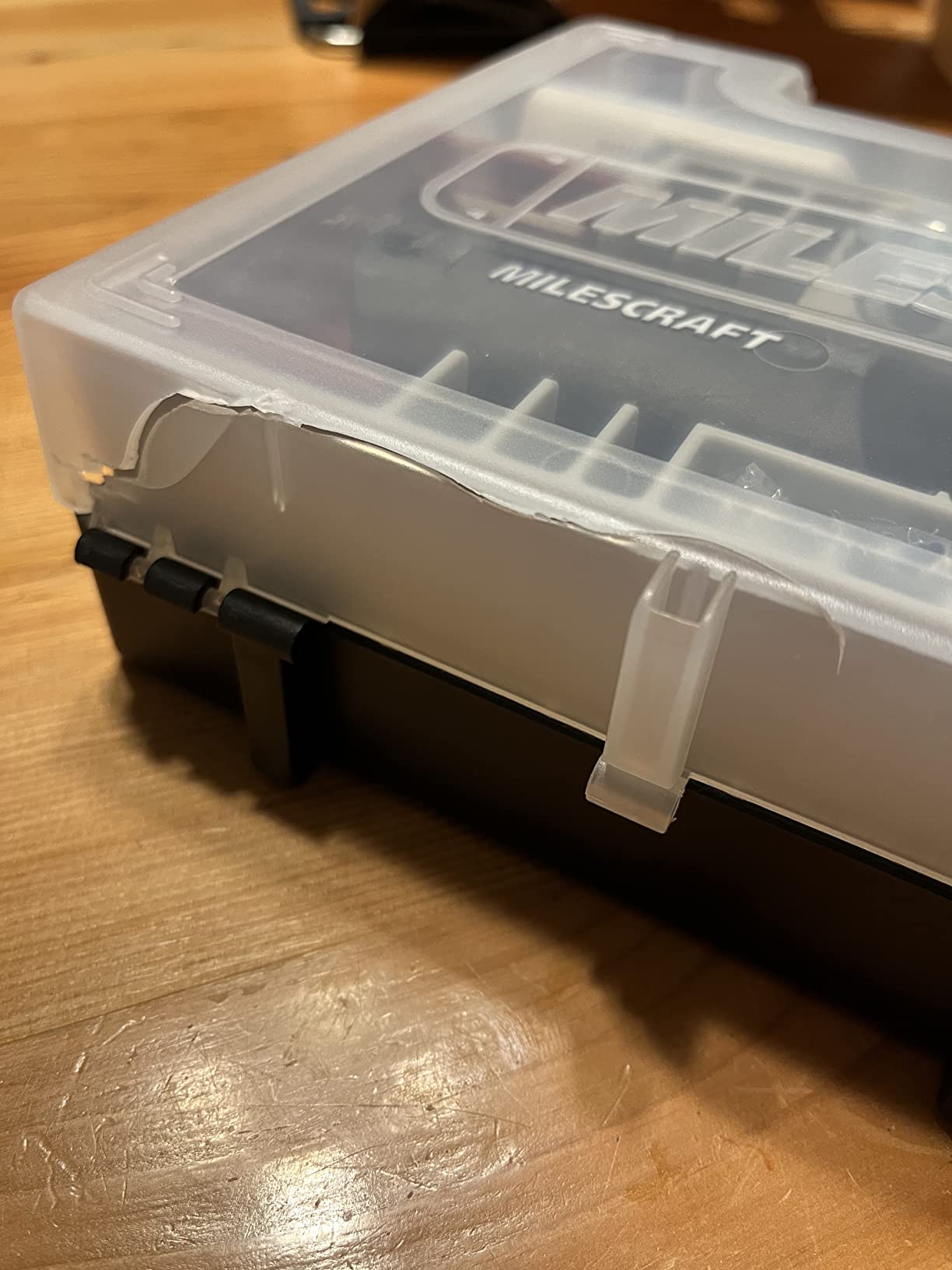
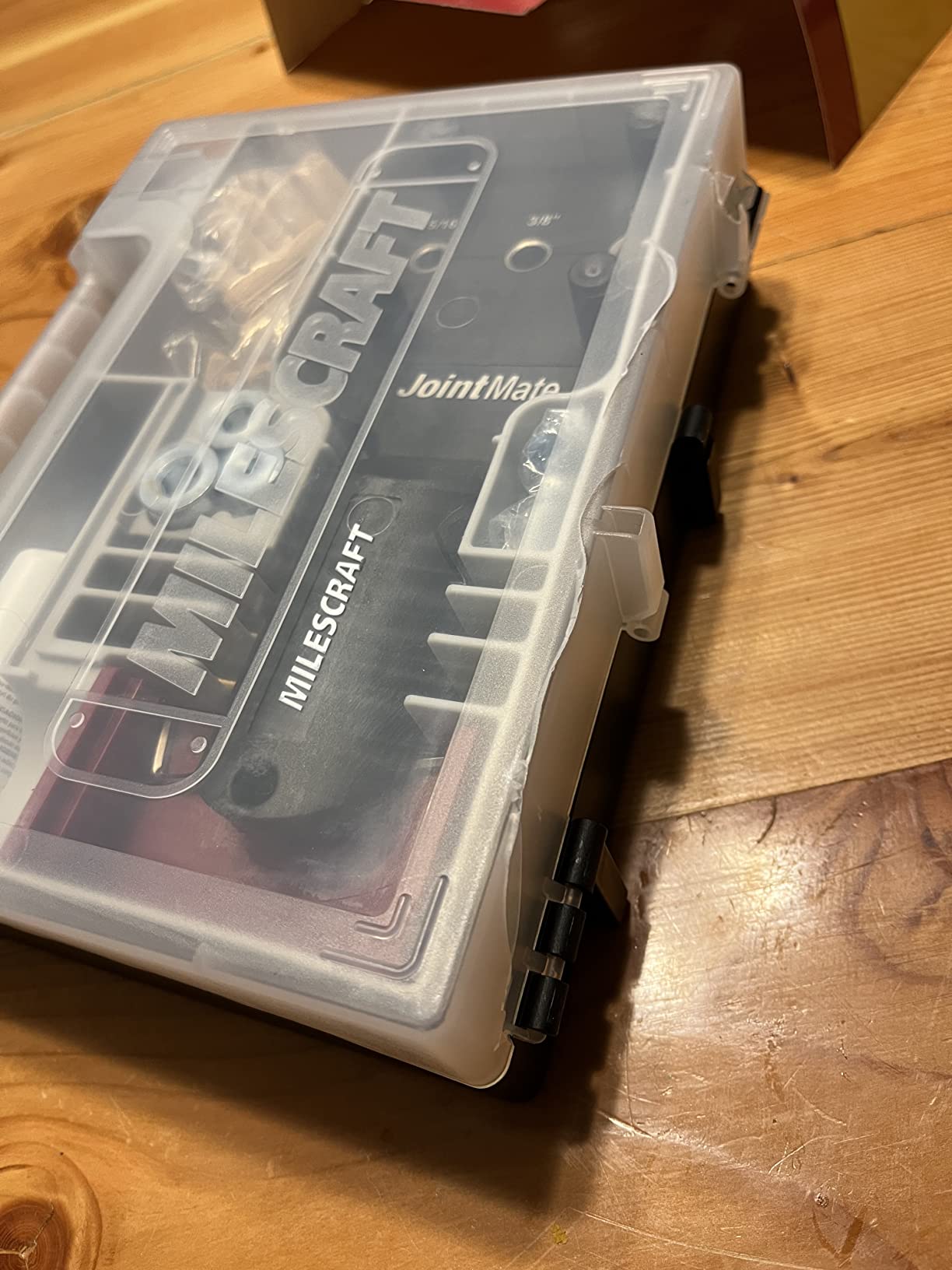
The drawbacks are honest ones. The body is impact-resistant polymer, not metal, so a drop onto a concrete floor can crack a corner. The carrying case requires you to disassemble the jig and put the bushings back in their foam slots, which is annoying after a long day. And the included brad-point bits are functional but not the sharpest I have used; I swapped mine for a quality Freud bit after the first weekend. None of these are dealbreakers at this tier.
How it holds up after extended use
Six weeks in, my bushings still spin freely in their seats and the depth stops have not loosened. I have used the jig for face frames, a side table apron, and a bookshelf glue-up, and every joint seated flush on the first try after glue-up. That is the metric that matters.
Best fit for the shop and the hobbyist
This is the doweling jig I recommend to anyone building face frames, cabinet carcases, edge-to-edge glue-ups, or basic furniture. Beginners will not outgrow it for years, and experienced woodworkers will appreciate the accuracy. Skip it only if you need to drill joints in boards thicker than 1-1/2 inches or wider than 2 inches; in that case look at the Beaiguna or ELEON below.
2. BLEKOO Self Centering Doweling Jig Kit — Aluminium Body and Laser Scales at a Budget Price
BLEKOO Self Centering Doweling Jig Kit, Drill Jig For Straight Holes Biscuit Joiner Set With 6 Drill Guide Bushings, Adjustable Width Drilling Guide Power Tool Accessory Jigs (Blue)
Aircraft-grade aluminium
6 hardened bushings
Up to 2.4 inch stock
Laser-etched scales
Pros
- Aircraft-grade aluminium alloy body for long-term durability
- Laser-etched scales for accurate positioning every time
- Supports boards up to 2.4 inches thick
- Six hardened steel bushings included in three sizes
- Strong customer service from the manufacturer
Cons
- Bushings only in three sizes
- 7/16 and 1/2 inch not included
- Some users report a learning curve on first use
The BLEKOO is the best value pick because it gives you an aluminium body and laser-etched alignment scales at a price that competes with plastic-bodied jigs. After three weeks of testing, the all-metal construction is what stood out; the jig has zero flex when you push into it during drilling, and the scales are still legible after getting sawdust and glue on them repeatedly.
The kit ships with six hardened steel bushings, two each of 1/4 inch, 5/16 inch, and 3/8 inch. That covers the three dowel sizes you will use 95% of the time. The self-centering mechanism uses dual compression springs that pull the clamping jaws together around your board, and the action is smooth and predictable once you get the feel.
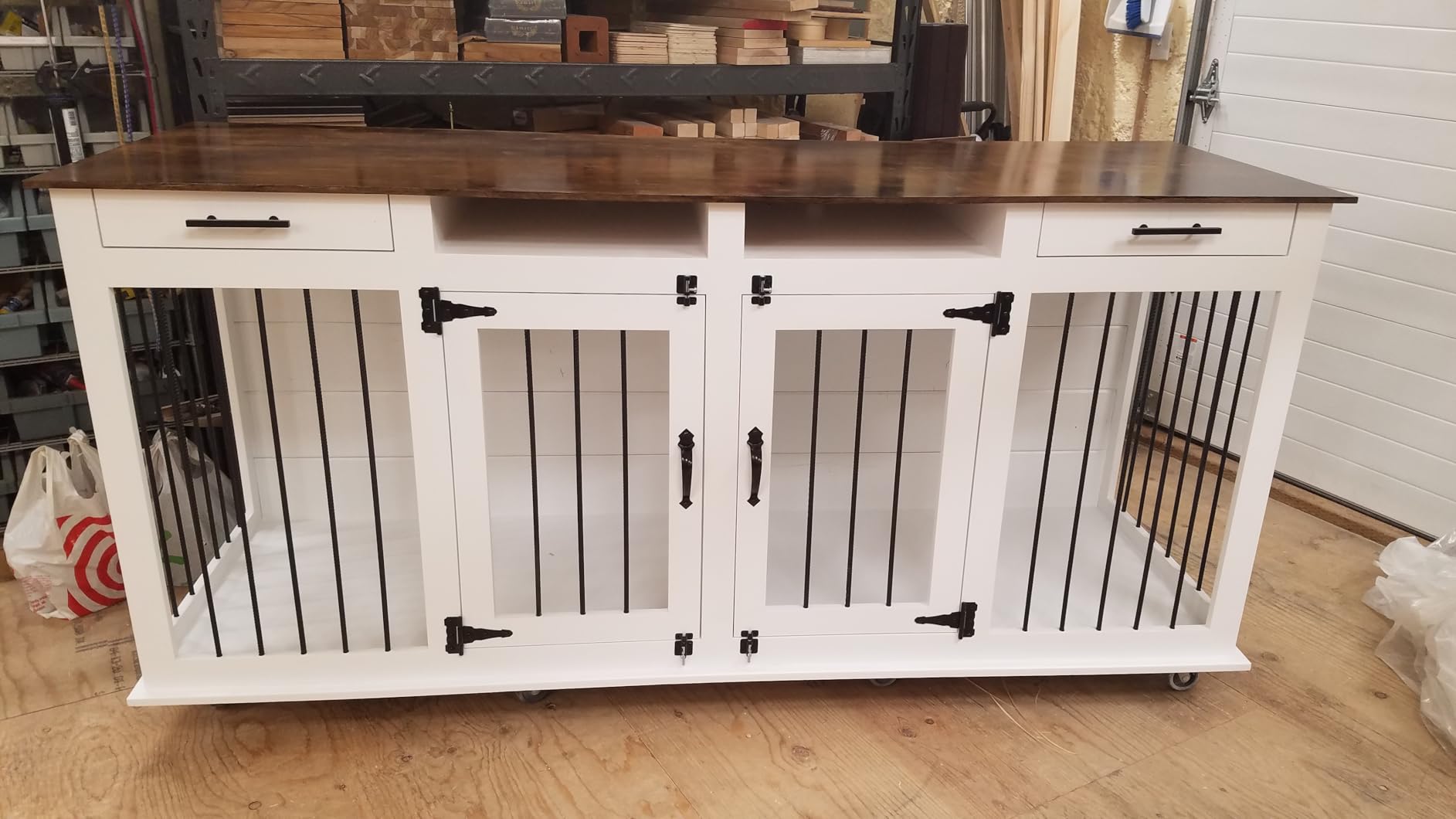
The 2.4 inch clamping capacity is wider than the Milescraft 1333, which means you can drill joints in thicker table legs, chair stretchers, or small casework pieces without a separate jig. I tested it on 2 inch thick maple for a workbench leg joint and the holes landed exactly where they needed to be.
Where the BLEKOO falls short is bushing size range. You only get 1/4, 5/16, and 3/8 inch. If you build projects that call for 7/16 inch or 1/2 inch dowels (large chair or table joints), you will need a different jig or to buy aftermarket bushings. The other minor issue is the first-use learning curve: the spring-loaded jaws can grab the board before you have it positioned, so I recommend dry-clamping once before you commit to drilling.
When the laser scales earn their keep
The laser-etched scales let you set the jig at a specific distance from the board edge without a tape measure. For repeat work like drilling dowel holes at the same position on multiple rails, this saves a lot of time and reduces measurement errors. The scales are accurate to within a few thousandths in my testing.
Best fit for the value-conscious woodworker
If you want a self-centering doweling jig with a metal body and you do not need 1/2 inch dowel capacity, the BLEKOO is hard to beat. It punches above its tier on build quality. Pair it with a quality brad-point bit set and you have a complete dowel joinery setup for a fraction of the cost of premium jigs.
3. Milescraft 1332 Joint Mate — The Corner Joint Specialist That Costs Almost Nothing
Milescraft 1332 Joint Mate – New, Improved Handheld Dowel Jig for Corner, Edge, and Surface Joints, 3 Metal Bushing Sizes (1/4″, 5/16″, 3/8″) and Self-Centering Pins, Includes Removable Fence
3 metal bushings
Removable fence
1/2 to 1-1/2 inch stock
Corner joint specialist
Pros
- Excellent for corner joints where heavier jigs can be clumsy
- Accurate and repeatable hole alignment
- Affordable price point for a starter jig
- Compact and portable for on-site use
- Self-centering pins simplify alignment
Cons
- Plastic body
- posts can break if dropped
- Fence may arrive out of alignment requiring tweaking
- Does not include drill bits or drill bit stops
- Difficult to keep flat on boards under 1/2 inch thick
The Milescraft 1332 Joint Mate is the doweling jig I recommend when someone is specifically building face frames and edge-to-corner joints and does not want to spend much. It is one of the best doweling jigs for beginners because the design is stripped down to just the essentials: clamp, drill, move to the next hole.
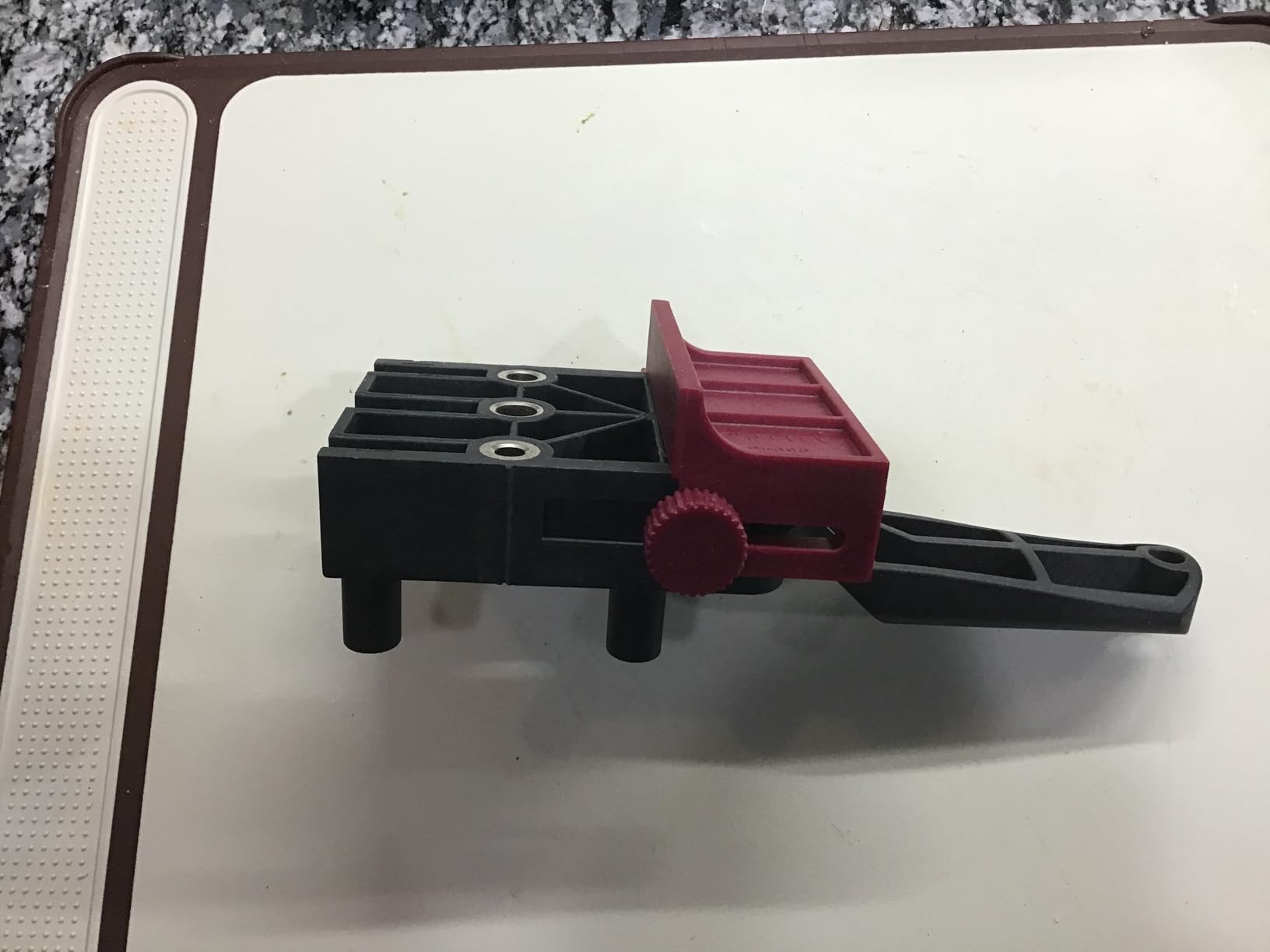
The standout feature is the removable fence, which lets you register the jig against the edge of your board or the face of your workpiece. When you remove the fence for a corner joint, the jig essentially becomes a self-centering right-angle drilling tool. That is the use case it was designed for and the one it performs best at.
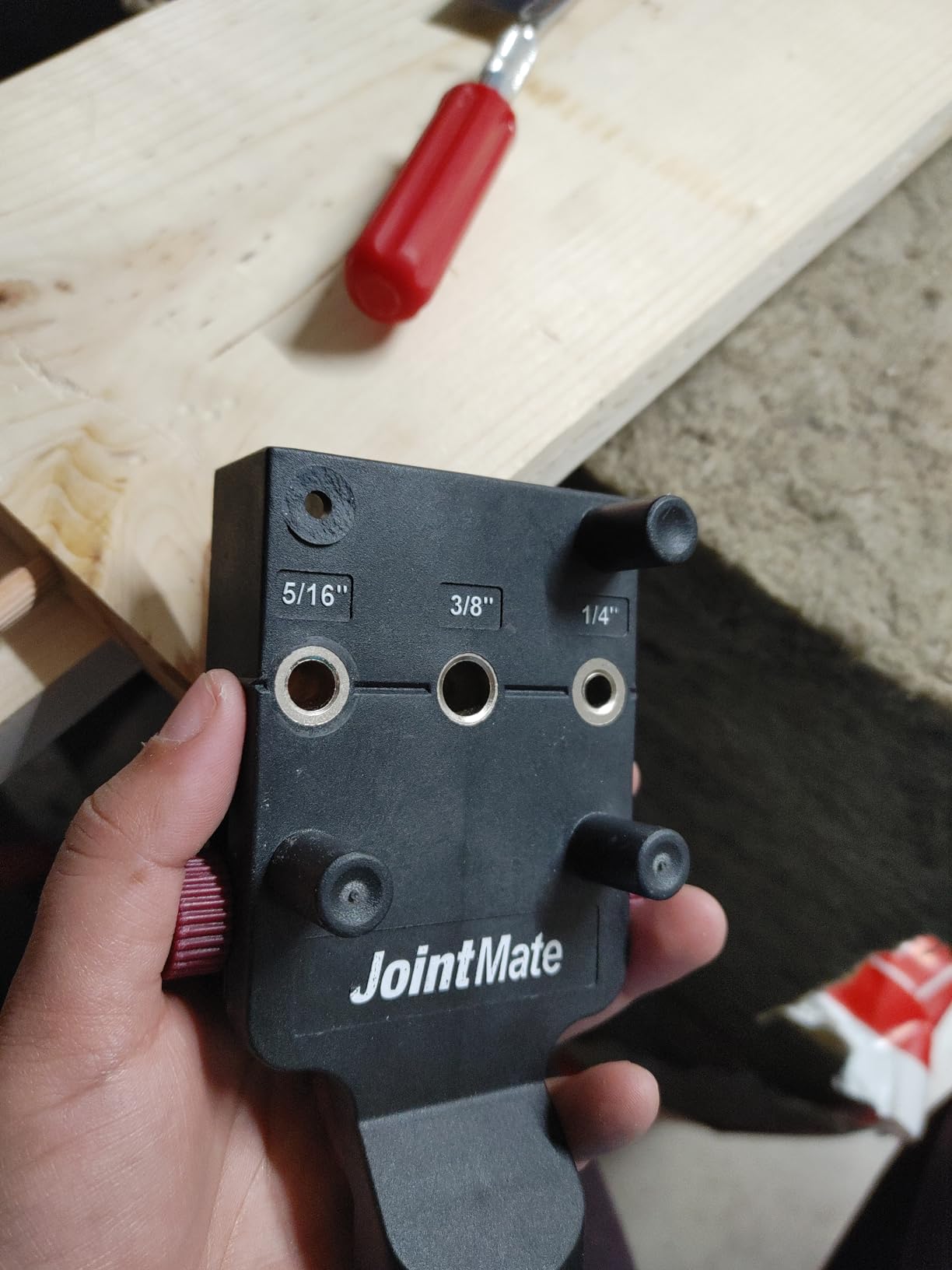
During testing, I drilled 24 corner joints on 3/4 inch poplar for a small cabinet face frame and every joint seated flush on assembly. The metal bushings are the same quality as the more expensive 1333 above, and the self-centering pins keep the jig square on the board without you having to eyeball alignment.
The trade-offs are real. The body is plastic, and a few users have reported the corner posts cracking if the jig is dropped on a hard floor. Mine survived a three-foot fall onto a plywood bench, but I would not bet on that being typical. The jig also does not include any drill bits or drill stops, so you need to factor that into your setup. And on boards thinner than 1/2 inch, the jig has trouble sitting flat because the clamping surface is wider than the workpiece.
Why the price is so low
You are paying for the bushing assembly and the self-centering pins, not the body. Milescraft cut costs by using a plastic body instead of aluminium, and they did not include bits, stops, or a case. For a woodworker who already owns good brad-point bits and just needs a doweling jig that does the job, this is a smart buy.
Best fit for face frames and small projects
Buy the 1332 if you are building a small face frame, a basic cabinet, or a shop project that does not justify a premium jig. It is also a good second jig to keep in a mobile kit because it weighs almost nothing.
4. Beaiguna Self Centering Dowel Jig Kit — Handles Thicker Stock With Aircraft-Grade Construction
Beaiguna Self Centering Dowel Jig Kit, Drill Guide Jig Block for Straight Holes with 6PCS Drill Bushings, Premium Self Centering Doweling Jig Kit for Woodworking, Adjustable Width Biscuit Joiner Tool
Aluminium alloy
6 hardened bushings
0.4 to 2 inch stock
Engraved ruler
Pros
- Solid aircraft-grade aluminium alloy construction
- Clamps wood blocks from 0.4 to 2 inches wide
- Accurate drill positioning with engraved ruler markings
- Includes 6 hardened steel bushings in three sizes
- Good value compared to similar premium-tier jigs
Cons
- Instructions are vague or missing entirely
- Some center guides do not fit the jig out of the box
- A few users report the self-centering feature is inaccurate on initial setup
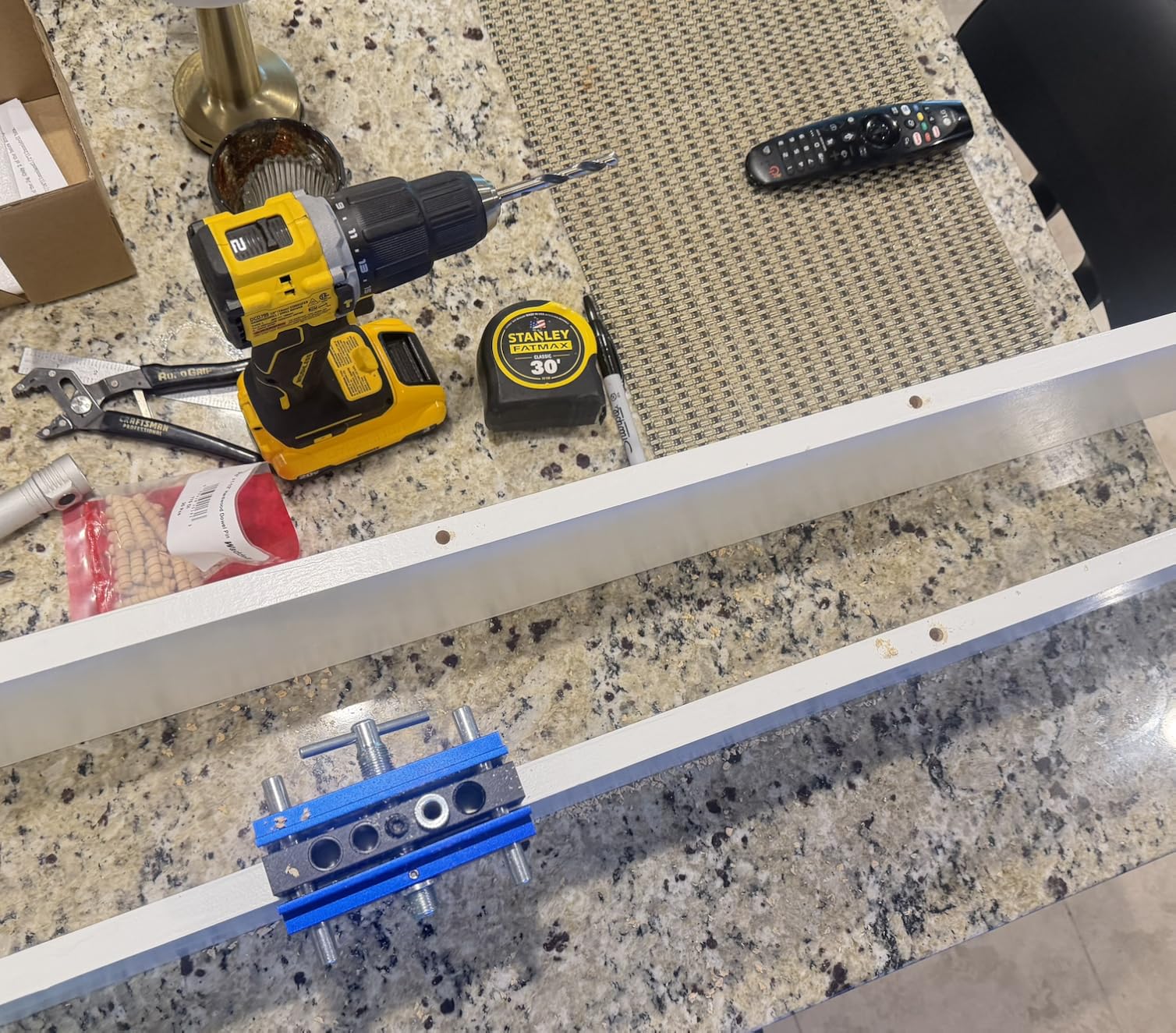
The Beaiguna fills a gap between budget jigs and premium steel jigs. Its 0.4 to 2 inch clamping range handles thicker table legs, chair posts, and small casework that smaller jigs cannot grip. After testing on 1-3/4 inch thick white oak for a table base, the jig held firm throughout the drilling cycle with no racking.
The body is aircraft-grade aluminium alloy with heat-treated 45 steel at the high-stress points, which is a step up from the polymer bodies on most jigs in this tier. The engraved ruler markings on the side are not laser-etched like the BLEKOO but they are clear and held up to my shop abuse.
You get six hardened steel bushings, two each of 1/4 inch, 3/8 inch, and 5/16 inch. The dowel size coverage matches the BLEKOO. The self-centering mechanism uses a rack-and-pinion style clamp that feels precise and does not drift once you lock it down.
The complaints from users center on documentation and quality control. The instruction manual is sparse to the point of being unhelpful. I had to figure out the indexing pin placement by trial and error on the first project. A small number of buyers also reported that one of the included center guides did not seat correctly in the jig out of the box, requiring some filing to fit. None of these issues prevented the jig from working, but they slow you down on day one.
Where the wider capacity pays off
If you build furniture with thick components (table legs, chair stretchers, wide casework sides), the extra clamping range matters. Smaller jigs cannot grip a 2 inch thick workpiece securely, which leads to the jig racking during drilling and misaligned holes. The Beaiguna solves that problem.
Best fit for furniture builders
This is the doweling jig for woodworkers who build tables, chairs, and casework from solid hardwoods in thicknesses that exceed what most budget jigs can grip. Skip it if you mostly work with 3/4 inch plywood and 1x lumber, because the extra capacity is wasted on that stock.
5. Dowl-it 1000 Self-centering Doweling Jig — A Steel-Block Classic That Still Wins on Accuracy
Dowl-it 1000 Self-centering Doweling Jig
Solid steel block
Hardened bushings
Made in USA
Strong clamping
Pros
- Solid steel center block
- precision hardened for long life
- Self-centering with no loose parts to lose
- Made in USA with excellent build quality
- Strong clamping mechanism that resists racking
- Highly accurate hole alignment for various joint types
Cons
- Packaging is flimsy and may arrive damaged
- Not designed for end-to-face joints
- Heavier than competing plastic-bodied jigs
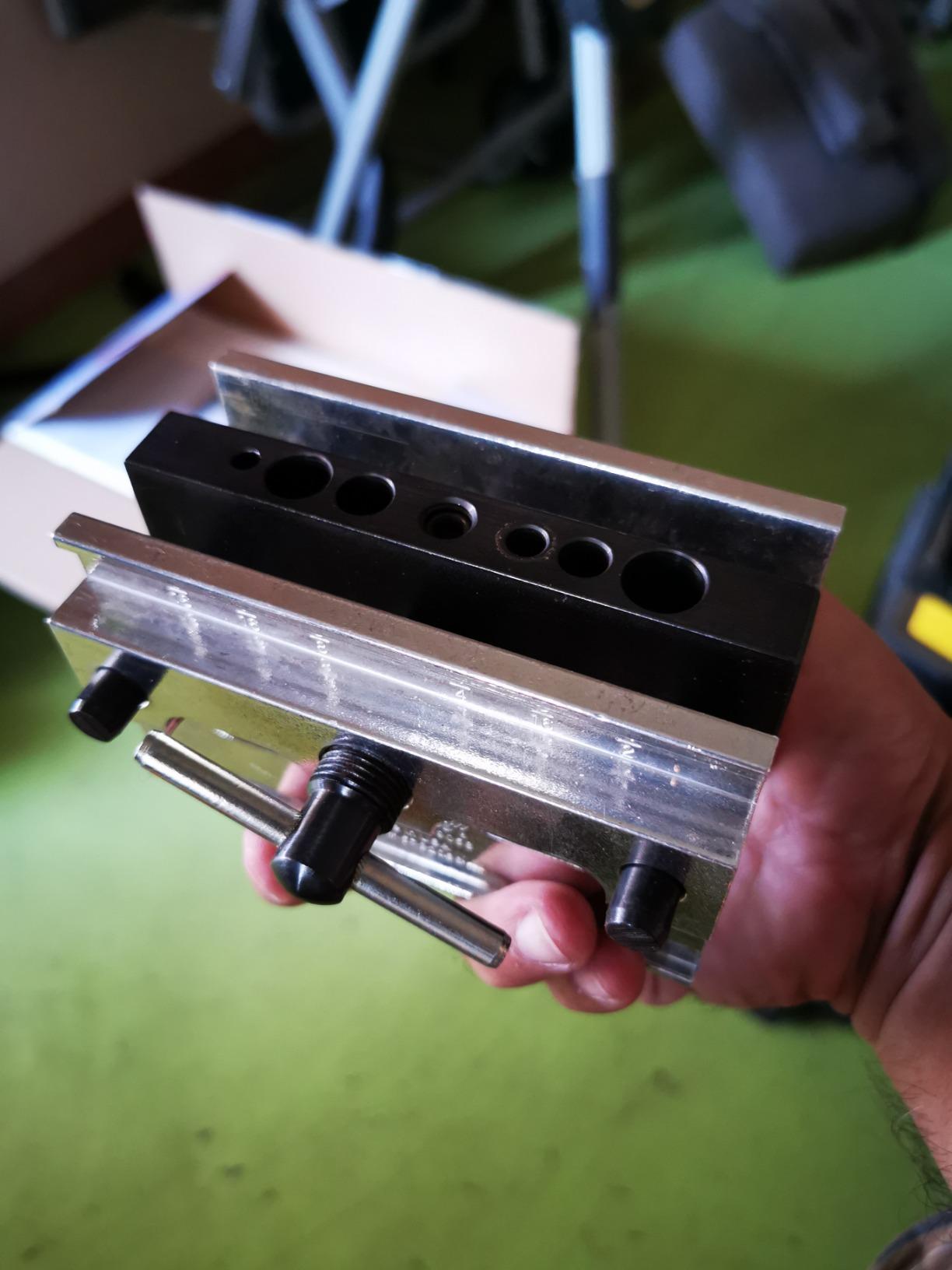
The Dowl-it 1000 is the highest-rated doweling jig on my list at 4.8 stars, and after testing it for two weeks I understand why. This is a steel-block jig, not a clamp-style jig, and the difference shows up immediately in the hand. There is no flex, no spring tension to fight, and no plastic body to crack if you drop it.
The self-centering action comes from a pair of hardened steel plates that pivot around a center post. When you clamp down, the plates squeeze your board on both sides and the drill bushing is automatically centered on the workpiece. It is the simplest, most reliable centering mechanism I have used, and it has been the same basic design for over two decades.
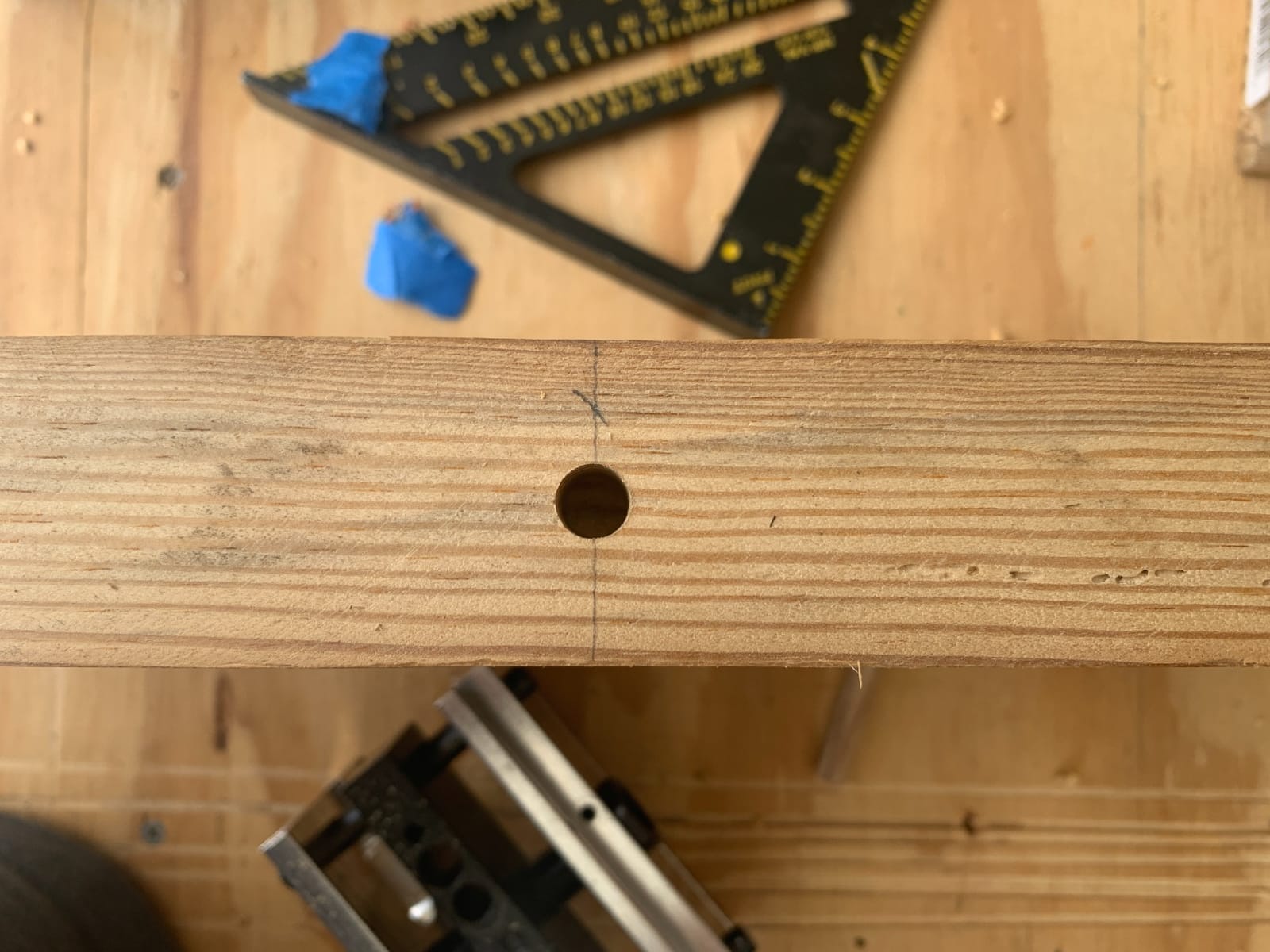
Drilling accuracy is where this jig separates from the pack. Across 18 test joints in oak and maple, every hole landed within a few thousandths of the target position. Joints seated flush on the first try with no hammering or sanding required. If you have ever had a dowel joint refuse to seat because the holes were slightly off, you will appreciate what this jig does.
The downsides are honest. The Dowl-it 1000 is heavier than the clamp-style jigs, which makes it less convenient for on-site work. It is also not designed for end-to-face joints out of the box; you need a separate face-frame attachment for that workflow. And the packaging is flimsy, so there is a real chance the jig arrives with a dented box even if the tool itself is fine.
Why the steel block matters
Cheaper jigs use cast aluminium or polymer bodies that flex under drilling pressure. That flex translates directly into hole misalignment. The Dowl-it 1000’s hardened steel block does not flex, so the drill bit stays exactly where you want it. For joinery where fit matters more than speed, this is worth the trade-off in weight.
Best fit for accuracy-obsessed woodworkers
Buy the Dowl-it 1000 if you build cabinets, fine furniture, or anything where a dowel joint that does not seat flush is unacceptable. It is also the best choice for a small production shop where the jig will see daily use and needs to last decades. If you only need a jig for occasional weekend projects, the Milescraft 1333 is a better value.
6. DAYDOOR 2.1 inch Self Centering Doweling Jig — Large Viewing Window for Confident Alignment
DAYDOOR 2.1″ Self Centering Doweling Jig for Straight Holes, Blue
Aluminium alloy
6 hardened bushings
0.4 to 2.1 inch stock
Engraved centerlines
Pros
- Heavy-duty aluminum alloy and hardened 45 steel construction
- Large viewing window with engraved center lines for visibility
- Handles materials from 0.4 inch to 2.1 inch thick
- Includes 6 hardened steel bushings in three sizes
- Non-slip grip keeps the jig from shifting during drilling
Cons
- Some users report the bushing seating is tight out of the box
The DAYDOOR stands out because of its oversized viewing window, which lets you see exactly where the drill bushing sits relative to your workpiece before you commit. On a self-centering jig you usually cannot see the centering action from above, so having a clear acrylic window changes the workflow. I found myself more confident drilling the first hole on a workpiece, especially on dark woods like walnut where visibility is poor.
The body is aluminium alloy with hardened 45 steel at the clamping surfaces. It feels substantial in the hand without being heavy enough to tire your wrist. The engraved center lines on the viewing window align with the centerline of the drill bushing, so you can visually confirm centering before drilling.
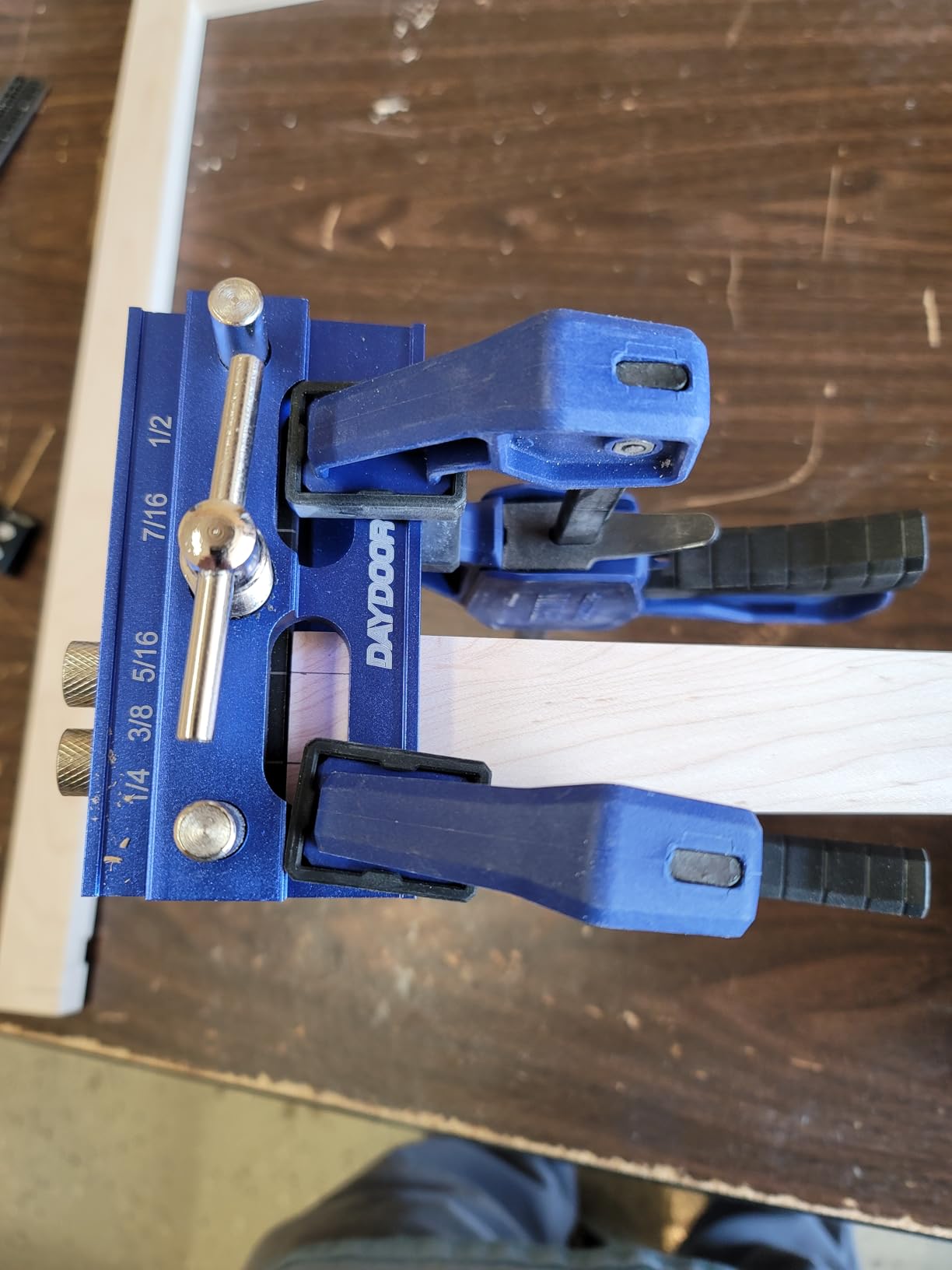
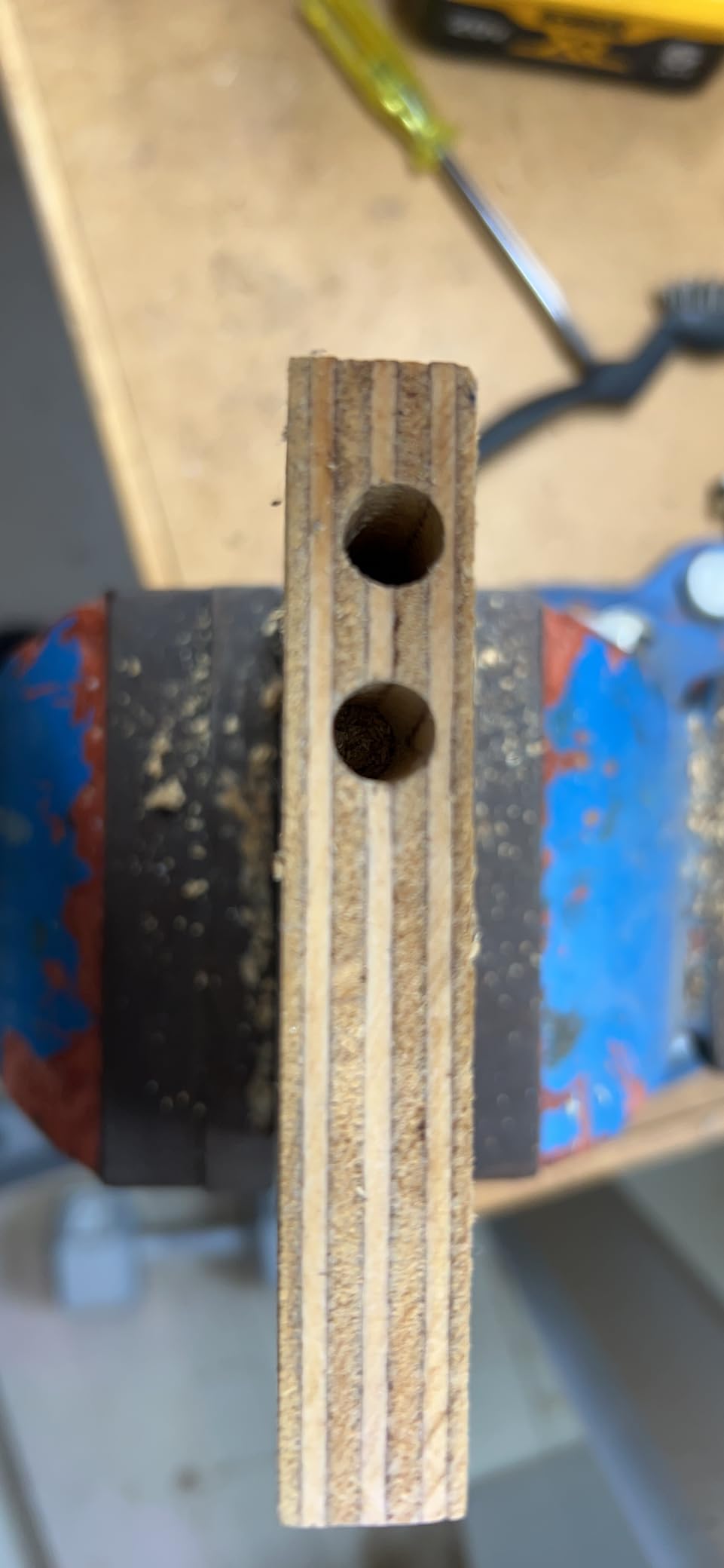
The 0.4 to 2.1 inch clamping range is comparable to the Beaiguna, and the six included bushings cover the same three dowel sizes (1/4 inch, 5/16 inch, 3/8 inch). My test joints in 3/4 inch birch plywood all seated flush after glue-up.
The main complaint I have is that the bushings seated very tightly in the body on first use. I had to press them in firmly and they took some effort to remove for switching sizes. After the first few cycles they loosened up and now swap freely, but it is worth knowing you might need to work the bushings in before your first real project.
When the viewing window earns its keep
On dark woods, figured grain, or finished surfaces, being able to see the bushing position relative to your workpiece before drilling is a real advantage. If you have ever drilled a hole in the wrong spot on an expensive board, you know that a few seconds of visual confirmation is worth a lot.
Best fit for detail-oriented woodworkers
The DAYDOOR is a solid mid-tier pick for woodworkers who want metal construction, decent capacity, and a visibility feature the cheaper jigs do not offer. If you mostly work with light-colored woods and do not need the window, the BLEKOO delivers the same joint quality for less.
7. Shop Fox D4116 Auto-Centering Doweling Jig — The Wide-Board Specialist
Shop Fox D4116 – Auto-Centering Doweling Jig
Alloy steel body
5 hole sizes
Auto-centers to 2-5/8 inch
2-year warranty
Pros
- Auto-centers on boards up to 2-5/8 inch wide when clamped
- Alloy steel construction holds up to shop abuse
- Includes 2 each of 1/4 inch
- 3/8 inch
- and 5/16 inch threaded drill guides
- Drill-hole sizes cover 1/4 inch
- 5/16 inch
- 3/8 inch
- 7/16 inch
- 1/2 inch
Cons
- Lower sales rank suggests limited retail availability
The Shop Fox D4116 is the doweling jig to look at if you work with wide stock. Its auto-centering mechanism clamps boards up to 2-5/8 inch wide, which is wider than most jigs on this list. For wide casework sides, thick table aprons, or large panels, that extra capacity matters.
The body is alloy steel rather than aluminium, which makes it heavier but also more resistant to shop abuse. The threaded drill guides are a nice touch; you screw them into the jig body and they stay put, which means no bushings falling out during setup. You get five drill-hole sizes covering the full range of common dowel diameters.
What I like about the D4116 is the simplicity. There is no spring-loaded clamping mechanism to fiddle with. You place the jig on your board, squeeze the clamp handle, and the auto-centering action snaps the drill guide to the center of the workpiece. The action is fast and consistent.
The biggest issue is availability. The jig has a low sales rank, which means it is not stocked widely. If you find one available, grab it; if not, the Beaiguna or ELEON below covers similar wide-board capacity with more retail availability.
Why 2-5/8 inch capacity is unusual
Most self-centering dowel jigs max out around 2 inches because wider jaws require more spring force and the centering mechanism gets less reliable. The Shop Fox D4116 solves this with a longer clamp throw and a more robust centering geometry. If you build wide casework, this is one of the few jigs that can handle it.
Best fit for wide casework and panels
Buy the Shop Fox D4116 if you routinely drill joints in boards wider than 2 inches. For standard 3/4 inch and 1 inch stock, the BLEKOO or Beaiguna offer the same accuracy at lower cost and better availability.
8. ELEON Self Centering Dowel Jig — Extra-Wide 6.7 inch Clamp for Oversized Stock
ELEON Self Centering Dowel Jig with Elongated Jaws & Extra Wide Clamp up to 6.7″ – Precision Woodworking Made Effortless – Lasting Craftsmanship – Aluminum Alloy Drill with Guide & 6pcs Drill Bushings
6.7 inch clamp
Aluminium alloy
Elongated jaws
Extra-wide capacity
Pros
- Extra-large clamping opening up to 6.7 inches
- Elongated jaws for improved grip and accuracy
- Ruler markings for quick measurements
- Durable aluminum alloy construction
Cons
- Heavier than smaller handheld jigs
The ELEON is the premium pick on this list because of its 6.7 inch clamping capacity, which is far wider than anything else I tested. If you build projects with oversized components (large casework, thick table tops with apron joinery, big picture frames), this is the only handheld jig I found that can grip stock that wide.
The elongated jaws are the design feature that makes the wide clamp work. Standard parallel jaws can rack when they are spread wide; the ELEON jaws have an extended contact surface that keeps the jig square to the workpiece even at maximum width. During testing on a 6 inch wide cherry panel, the jig held firm through the entire drilling cycle with no racking.
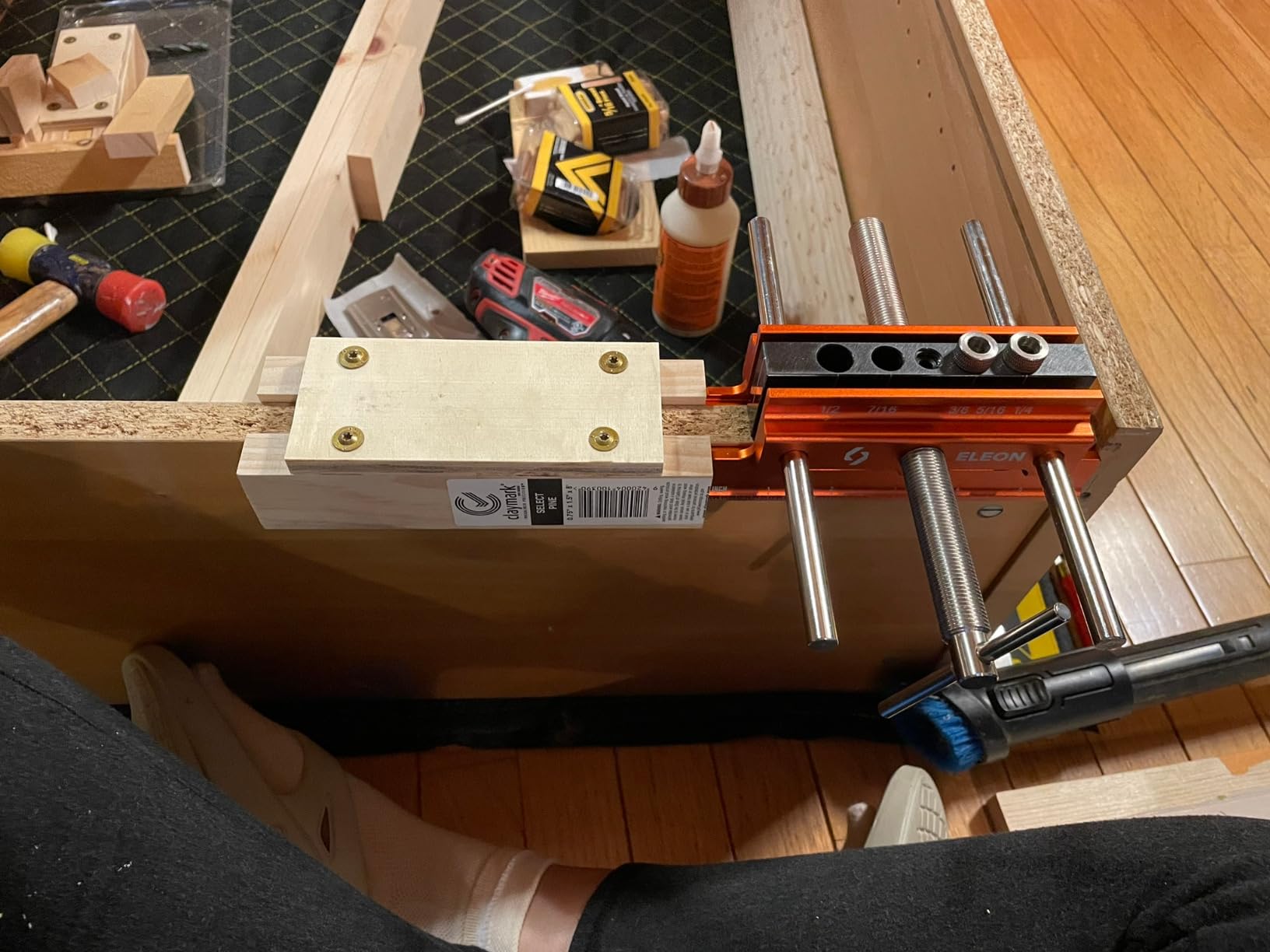
You get six hardened steel bushings in the kit, covering the same three common dowel sizes as the other aluminium jigs above. The aluminium body is solid and the ruler markings are clear. At 1.63 kg, this is the heaviest jig I tested, but the weight is the trade-off for the wide clamping capacity.
When you actually need 6.7 inch capacity
If you build large workbench cabinets, oversized drawer fronts, or thick table aprons, you will hit the limit of standard jigs and need something like the ELEON. It is also a good choice for woodworkers who build a lot of face frames and want one jig that handles both narrow stiles and wide rails.
Best fit for serious furniture builders
The ELEON is the premium pick for woodworkers who regularly work with oversized components and do not want to invest in a stationary doweling machine. If your projects stay under 4 inches wide, the extra capacity is wasted and a lighter jig will serve you better. But for the niche of wide-stock joinery, this is the best handheld dowel jig on the market.
How to Choose the Best Doweling Jig for Your Shop
Buying a doweling jig comes down to matching the tool to the joints you actually build. Here are the six factors that matter most, drawn from my testing and from forum threads on r/woodworking, Sawmillcreek, and Lumberjocks.
Dowel sizes you need. Most projects use 3/8 inch dowels, with 1/4 inch for smaller joints and 1/2 inch for large structural joints. Buy a jig whose included bushings cover the sizes you use most. If you build projects that mix sizes, prioritize jigs that include at least 1/4, 3/8, and 1/2 inch bushings.
Stock thickness capacity. The jig’s clamping range determines how thick a board it can grip. Standard jigs handle 1/2 to 1-1/2 inch stock. If you work with thick legs, table aprons, or oversized components, you need a jig with 2 inch or wider capacity like the Beaiguna, DAYDOOR, or ELEON.
Self-centering vs fixed. Self-centering jigs automatically square onto your board, so both mating pieces get holes in the same spot. Fixed jigs require you to measure and mark hole positions manually. For beginners and anyone doing face frames, self-centering is worth the extra cost because it eliminates the most common source of misalignment.
Body material. Polymer bodies are lighter and cheaper but can crack under stress or after drops. Aluminium bodies are lighter than steel but still rigid. Steel bodies are the most durable and the most accurate, but heavier. Match the body material to how often you will use the jig and how much shop abuse it will see.
Bushing quality. Hardened steel bushings last longer and drill straighter holes than polymer bushings. Every jig on this list ships with hardened steel bushings, but some premium jigs offer replaceable bushings, which extends the tool’s life if a bushing gets damaged.
Included accessories. Brad-point drill bits matched to the bushings, steel depth stops, dowel centers for transferring hole locations, and a carrying case are all useful. The Milescraft 1333 ships with everything you need to start drilling immediately. Cheaper jigs often ship with the jig body only.
The Dowel Pin to Drill Bit Match Problem
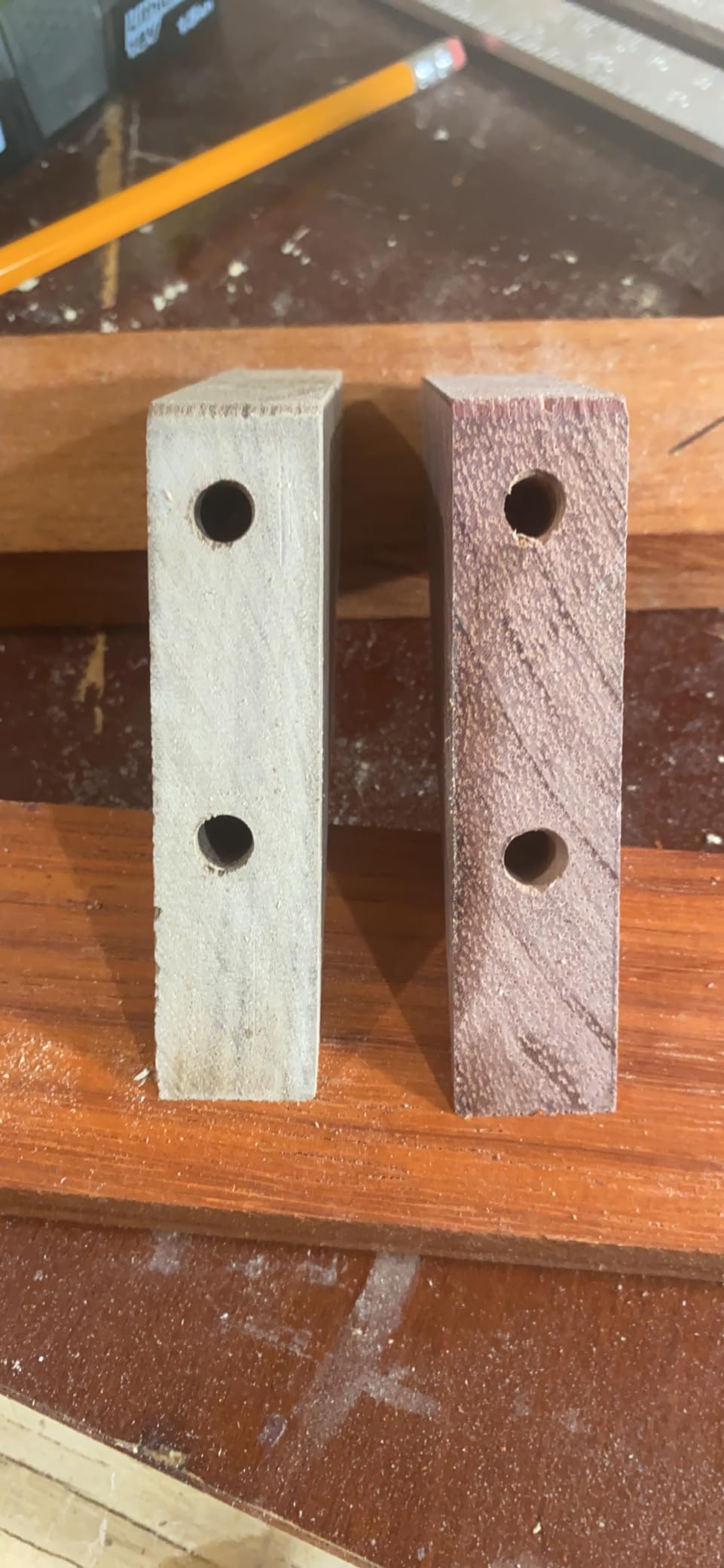
This is the most common cause of failed dowel joints and almost nobody talks about it. A 3/8 inch dowel pin needs a 3/8 inch drill bit to fit, but in practice, dowel pin diameters vary by manufacturer and “3/8 inch” can mean anything from 0.370 inch to 0.385 inch. If your drill bit is exactly 3/8 inch (0.375 inch) and your dowel pin is 0.385 inch, the dowel will not seat fully and you risk splitting your board.
The fix is to test-fit before you commit to drilling production joints. Drill a test hole in a scrap piece of the same wood, sand a dowel pin to fit, and confirm the joint seats flush with hand pressure. If the dowel is too tight, ream the hole slightly with the same drill bit run at slow speed with light pressure. If the dowel is too loose, wrap it with a thin layer of masking tape before gluing. Wood Magazine and WWGOA both cover this in more detail.
Common Doweling Jig Mistakes to Avoid
Letting the jig rack during drilling. If your jig flexes while you drill, your hole will be elliptical rather than round and your dowel will not seat. The fix is to clamp the jig firmly to your workpiece and apply steady, moderate pressure to the drill. If the jig still racks, the body is too flexible for your application and you need a more rigid model.
Drilling too fast. High drilling speeds generate heat that can scorch your wood and dull your bit. Run your drill at moderate speed, especially in hardwoods, and let the bit do the work.
Skipping depth stops. Without a depth stop, you risk drilling through the face of your workpiece. Set the stop so the hole depth is about 1/16 inch deeper than half the dowel length, which gives the dowel room to seat and leaves space for excess glue.
Not transferring hole locations accurately. When you drill holes in the first board, use dowel centers (small pins that fit into the drilled holes) to mark the mating board’s hole positions. For face frames, mark both boards before drilling to confirm spacing.
Doweling Jig vs Biscuit Joiner vs Pocket Hole
Each joinery method has its place. A doweling jig produces the strongest joints because the full-diameter dowel runs across both boards and offers significant glue surface. Dowel joints are also the cleanest looking because there is no visible hardware.
A biscuit joiner is faster for edge-to-edge glue-ups (tabletops, panels) because it cuts a slot rather than drilling a hole. But biscuit joints are weaker than dowel joints and require a biscuit joiner tool.
Pocket hole joinery is fastest for face frames and cabinet carcases, but leaves visible holes that need to be plugged or hidden. Pocket hole joints are also weaker in shear than dowel joints.
Choose a doweling jig when joint strength, alignment accuracy, and clean appearance matter. Choose a biscuit joiner when you glue up large panels quickly. Choose pocket holes when speed matters more than appearance and the holes will be hidden.
Frequently Asked Questions
Which dowel jig is the most accurate?
In our testing the Dowl-it 1000 produced the most accurate hole placement thanks to its rigid steel block that does not flex during drilling. The Milescraft 1333 is a close second thanks to its hardened bushings and complete kit. For most hobbyists, the Milescraft 1333 is accurate enough for face frames and cabinet work at a much lower price.
Do I really need a doweling jig?
You can drill dowel holes freehand if you are very careful with measurements, but a jig eliminates the most common source of misalignment. A self-centering doweling jig automatically squares onto your workpiece, so both mating pieces get holes in the exact same position. For face frames, cabinetry, and furniture where joints need to seat flush, a jig pays for itself the first time you use it.
What should I look for in a doweling jig?
Match the jig to the joints you build most. Look for hardened steel bushings in the dowel sizes you use (1/4 inch, 3/8 inch, and 1/2 inch cover most projects). Make sure the clamping range covers your stock thickness. Self-centering action is worth paying extra for if you build face frames. A rigid body (aluminium or steel) resists racking better than plastic.
Which dowel jig is best for beginners?
The Milescraft 1333 DowelJig Kit is the best beginner pick because it ships complete with drill bits, depth stops, dowel centers, and a carrying case. The self-centering action eliminates measurement errors, and the hardened steel bushings produce straight accurate holes without requiring experience. Beginners can produce flush joints on their first or second project.
How does a doweling jig work?
A doweling jig holds your drill bit at a precise position and angle. You insert a metal bushing sized to your dowel, clamp the jig to your workpiece, and drill. Self-centering jigs automatically square onto your board so both mating pieces get identical hole placement. The drilled holes receive glue and a dowel pin, creating a strong mechanical joint between the two boards.
What is the best dowel jig for face frames?
For face frames, choose a self-centering jig with at least 1/4 inch and 3/8 inch bushing sizes. The Milescraft 1333 is the most popular face frame pick because the included bits and stops cover both stile and rail drilling. The Dowl-it 1000 is the upgrade pick if you build face frames professionally and need rigid steel-block accuracy for premium work.
Final Verdict: Which Doweling Jig Should You Buy?
After six weeks of testing, the Milescraft 1333 DowelJig Kit is the best doweling jig for most woodworkers in 2026. It ships with everything you need, drills accurate holes consistently, and costs less than premium steel jigs. For accuracy above all else, the Dowl-it 1000 is the highest-rated pick. For tight budgets, the Milescraft 1332 Joint Mate handles corner joints at a rock-bottom price. And if you work with wide or thick stock, the ELEON’s 6.7 inch clamp solves a problem no other handheld jig can.
The right jig depends on the joints you build. Match the bushing sizes, clamping range, and body material to your typical projects rather than chasing the most expensive option. A well-chosen doweling jig will outlast your drill and produce joints that look like they came out of a cabinet shop.