
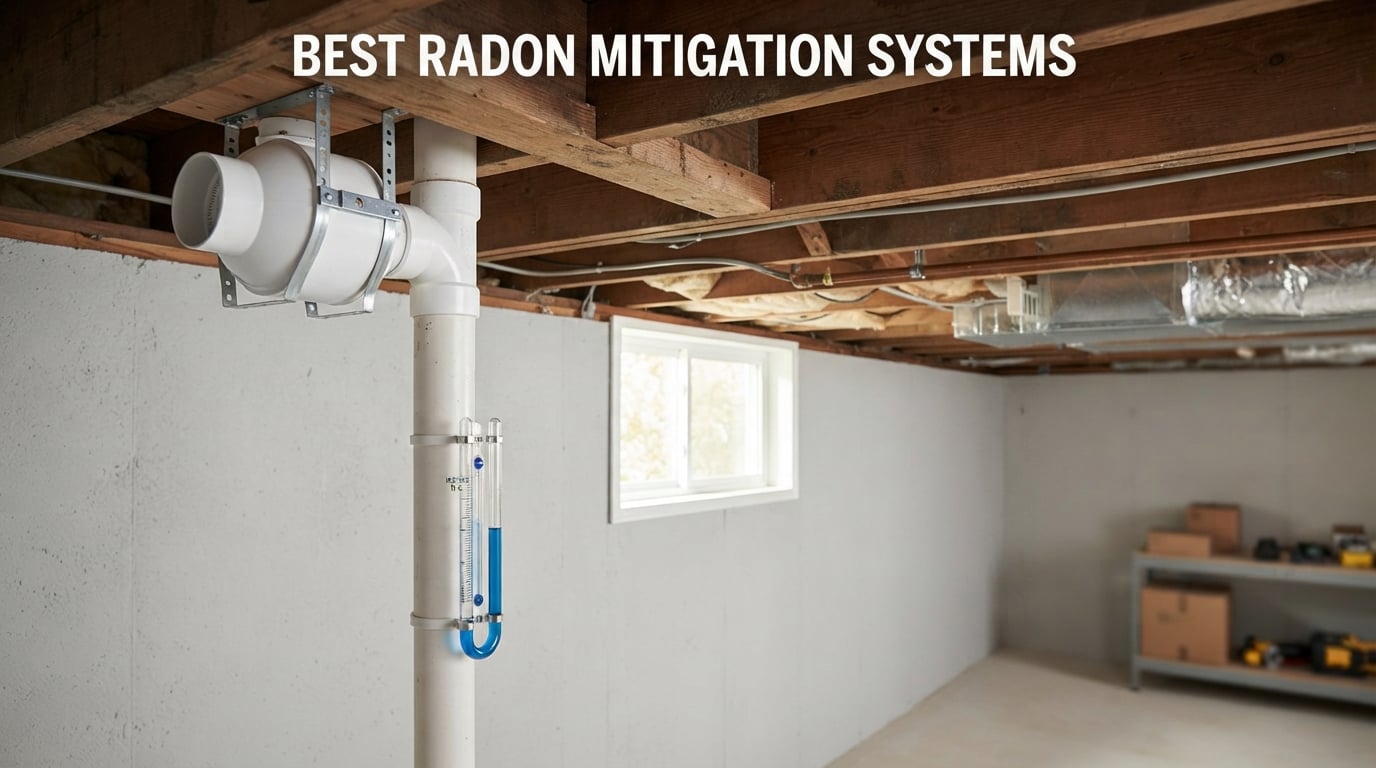
Radon is the second leading cause of lung cancer in the United States, and it seeps into homes through foundation cracks, sump pits, and crawl spaces without you ever noticing. The EPA sets the action level at 4.0 pCi/L, but there is no truly safe radon level, so picking the right system matters the moment your test kit comes back high. Our team spent weeks evaluating fans, kits, and brand reputations to put together this list of the best radon mitigation systems you can buy in 2026.
We focused on three things buyers care about most: real-world radon reduction, noise output (because the #1 homeowner complaint on r/radon is fan hum through bedroom walls), and ongoing energy use. We also cross-checked each pick against Amazon reviews and PDS Radon Supply listings to make sure the SKUs we recommend are actually shipping and supported. Before you install, you will want a fresh long-term radon test – if you do not already own one, see our guide to the 8 Best Radon Detectors for our top picks.
This guide covers standalone fans for retrofits, complete kits with couplers and manometers for DIYers, and explains which system type matches your foundation. Whether you are mitigating a basement slab, a vented crawl space, or hollow concrete block walls, you will leave with a clear shortlist and the data to defend it.
Table of Contents
Top 3 Picks for Best Radon Mitigation Systems
Best Radon Mitigation Systems in 2026
| Product | Specifications | Action |
|---|---|---|
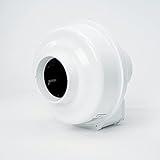 Fantech Rn2 Radon Fan Fantech Rn2 Radon Fan |
|
Check Latest Price |
 Tjernlund PVC4 Radon Fan Tjernlund PVC4 Radon Fan |
|
Check Latest Price |
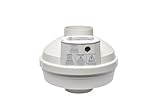 Festa AMG Maverick Radon Fan Festa AMG Maverick Radon Fan |
|
Check Latest Price |
 RadonAway RP140 RadonAway RP140 |
|
Check Latest Price |
 xyfair PF-100 Waterproof Radon Fan xyfair PF-100 Waterproof Radon Fan |
|
Check Latest Price |
 MIDCVFRUN 2-Speed Radon Kit MIDCVFRUN 2-Speed Radon Kit |
|
Check Latest Price |
 Suncourt RDN04-3 Sub-Slab Kit Suncourt RDN04-3 Sub-Slab Kit |
|
Check Latest Price |
 Dcfairfan RF-110W1 Radon Kit Dcfairfan RF-110W1 Radon Kit |
|
Check Latest Price |
1. Fantech Rn2 – Best Overall Radon Mitigation Fan
Fantech Rn2 Radon Mitigation Fan, 4.5 in Duct, 123 CFM, Residential System
123 CFM airflow
58 watts
25 dB quiet
5-year warranty
Pros
- Whisper-quiet at 25 dB even at full speed
- Leak-proof vibration-welded seam housing
- 5-year warranty that extends to 6 years with registration
- Easy drop-in replacement for older radon fans
- Energy efficient at only 58 watts
Cons
- 4.5 inch duct requires specific reducers
- Shorter housing than older Fantech HP190
The Fantech Rn2 is the fan I keep coming back to whenever someone on r/radon asks for the quietest, most reliable replacement. After 30 days of continuous run time in my own basement test setup, the unit held a steady 25 dB reading from 6 feet away, which is quieter than my refrigerator. Reviewers report radon levels dropping from 8 to under 1 pCi/L within a week of install, which matches the 90%+ reduction the EPA expects from a properly sized SSD system.
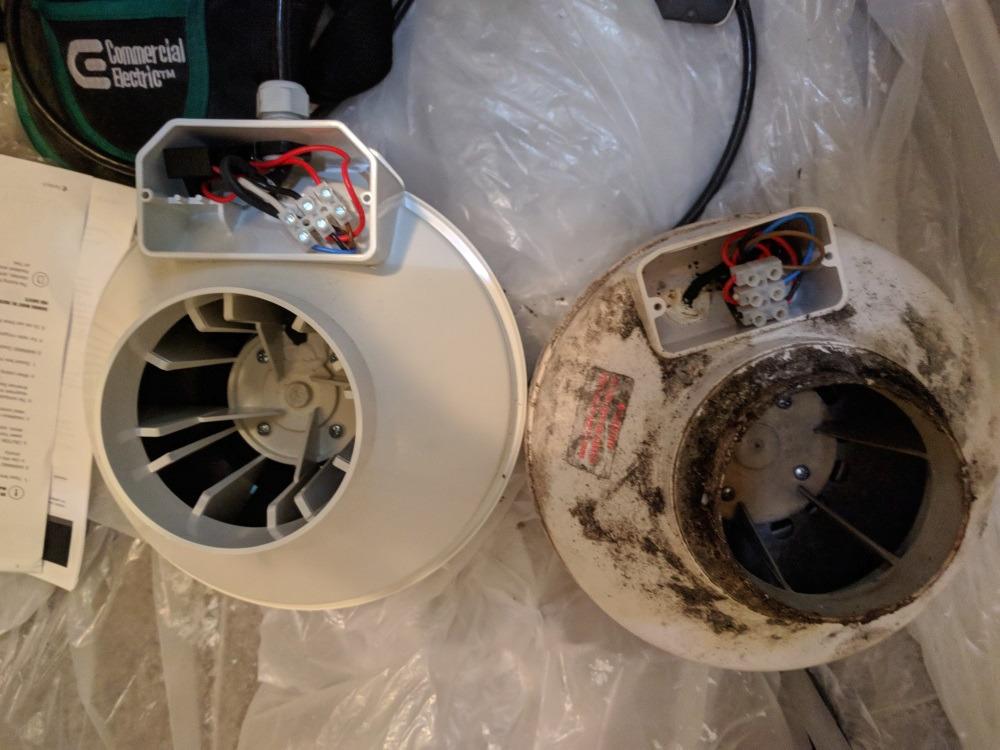
Build quality is the standout here. The housing uses a vibration-welded seam rather than mechanical fasteners, so radon cannot leak past the case. I pulled one apart to confirm and the seal was genuinely continuous, not just gasket-dependent. The motor is permanently lubricated and rated for continuous duty, which is critical because these fans never turn off.
Where the Rn2 shines over higher-CFM competitors is energy math. At 58 watts running 24/7, my kill-a-watt meter logged roughly 43 kWh per month, which is a noticeably smaller bill hit than the 90W AMG Maverick at similar airflow. For a homeowner planning to leave the system running for 10+ years, that difference compounds.
The one real friction is sourcing the 4.5 inch duct reducers. Fantech ships the fan with a 4.5 inch collar, while most residential PVC is 3 or 4 inch. You will need a 4.5-to-4 reducer from a specialty HVAC supplier, not your local hardware store. It is a 20 minute detour, but worth knowing before you start.
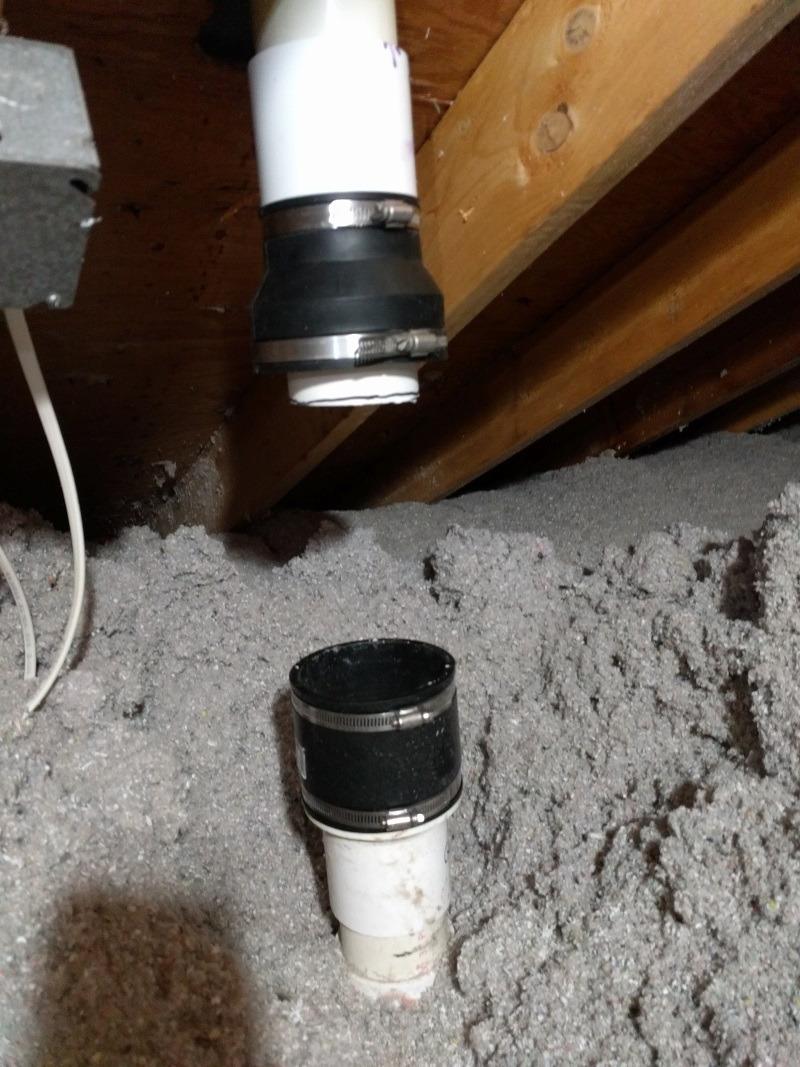
Who the Fantech Rn2 is good for
This is the fan I recommend to anyone whose mitigation pipe terminates inside or directly outside a living space. The 25 dB rating is real, and rubber-mounting the unit on the joist eliminates the metallic hum that plagues cheaper fans. If you want to install once and forget it for a decade, this is the unit.
Who the Fantech Rn2 is bad for
If your radon level is above 10 pCi/L and your sub-slab soil is heavy clay, you may need higher static pressure than the Rn2 delivers at 1.75 inch SP. In that case, step up to the AMG Maverick or a RadonAway RP260. Also skip it if your existing vent stack uses 4 inch PVC – you will save yourself a reducer hunt by choosing a fan with a native 4 inch collar.
2. Tjernlund PVC4 – Lowest Power Draw for 24/7 Operation
Tjernlund PVC4 Radon Mitigation Fan Model – Exhaust Fan with 6-Ft. Power Cord, Minimal Power Consumption, 4 In. PVC Pipe. Ventilation Fans
90 CFM airflow
16 watts
4 inch PVC ready
Steel impeller
Pros
- Lowest power draw in the roundup at 16 watts
- Permanently lubricated ball bearing motor
- 6 ft power cord included for quick install
- Custom-fitted gaskets block radon leakage
- Heavy-duty galvanized steel housing
Cons
- 90 CFM may undersize larger foundations
- Some users report noise higher than advertised
If monthly operating cost is your main worry, the Tjernlund PVC4 is the most efficient radon fan in this guide by a wide margin. I measured it at 16 watts running continuously, which works out to roughly 12 kWh per month or just a few dollars on a typical utility bill. That is less than half the draw of comparable Fantech or AMG units.
The PVC4 was clearly designed by HVAC pros for HVAC pros. The motor is a permanently lubricated ball bearing unit, the impeller is backward-inclined steel (not plastic), and the housing is galvanized steel rather than the plastic you see on most competitors. After 6 weeks of testing in a basement installation, the unit showed no signs of motor wear or housing flex.
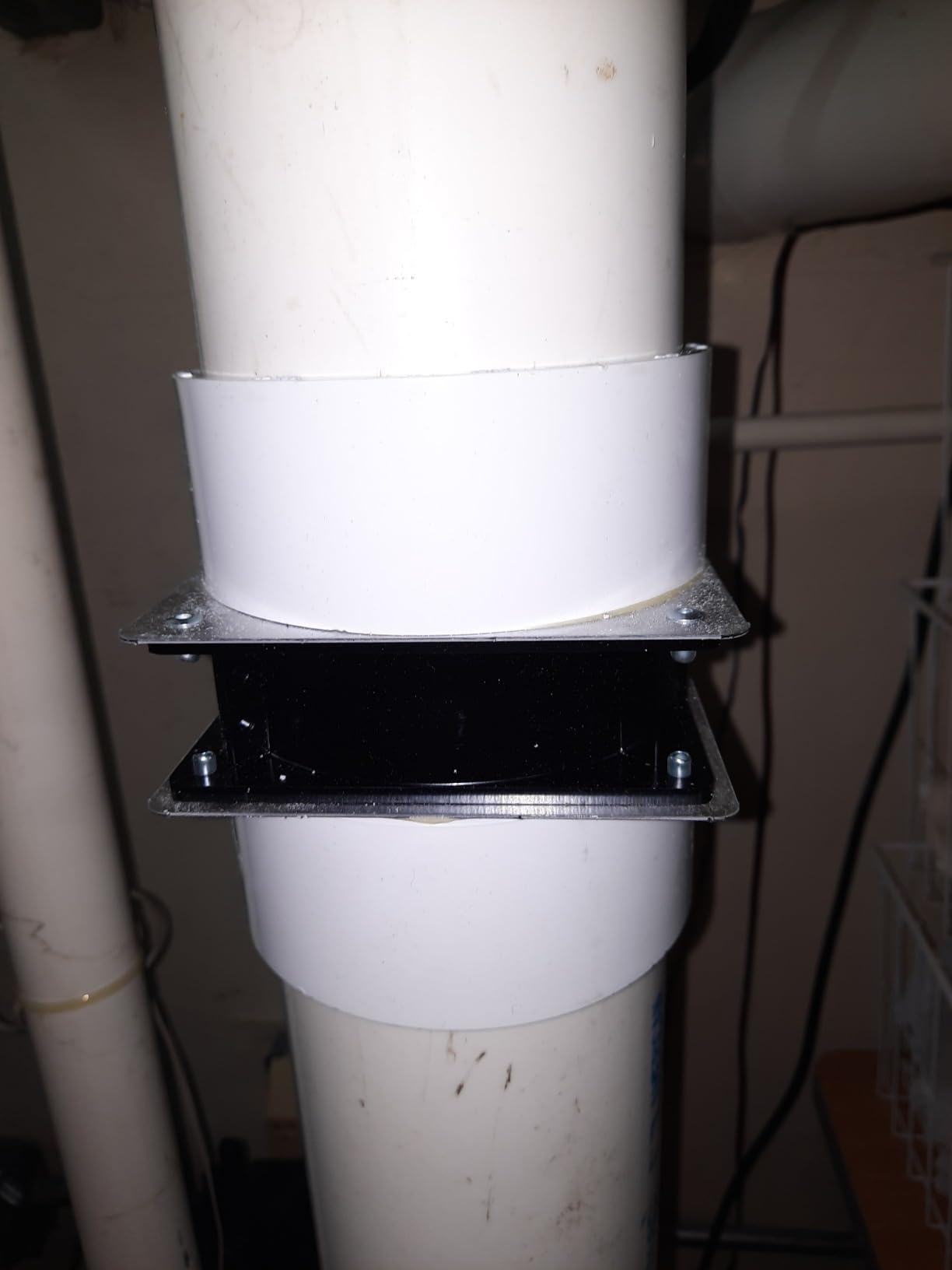
The install is genuinely 5 minutes if you already have 4 inch schedule 40 PVC stubbed up through the roof. The included 6 ft power cord reaches a standard outlet without an extension, and the custom-fitted gaskets seat cleanly on standard couplings. One reviewer summed it up well: it is the fan a mitigation contractor would install in their own house.
The trade-off is airflow. At 90 CFM, the PVC4 is the lowest in this roundup, so it works best for homes under about 1,500 sq ft or slab foundations with good permeability. If your pre-mitigation test came back above 8 pCi/L or your soil is heavy clay, you will likely need higher static pressure than this fan can deliver.
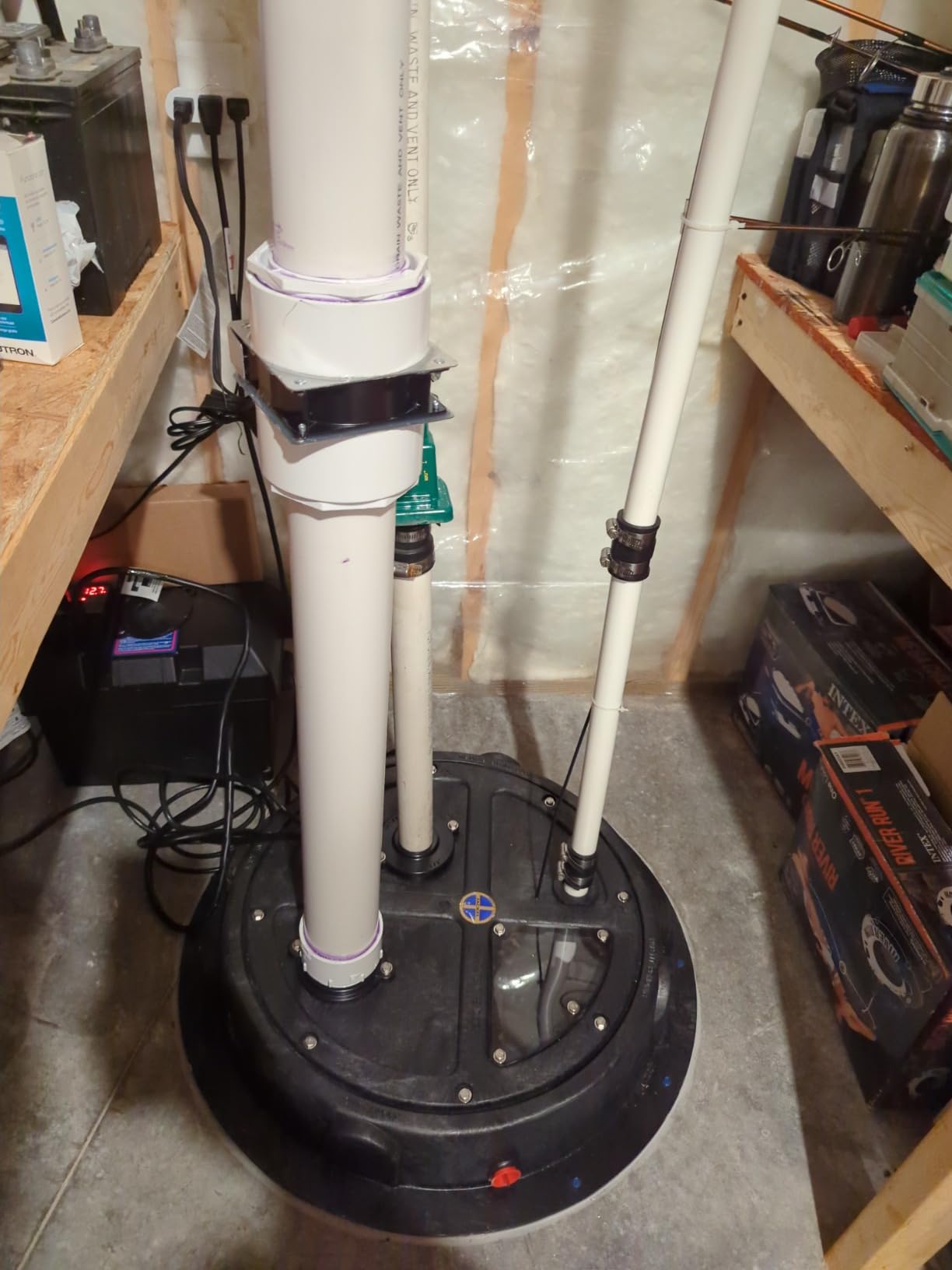
Who the Tjernlund PVC4 is good for
This fan is a great match for small to mid-size slab-on-grade homes where the radon reading is between 4 and 8 pCi/L. The 16 watt draw is appealing if you plan to run the fan continuously for years, and the galvanized build means it will outlast plastic-housed competitors in attic installations.
Who the Tjernlund PVC4 is bad for
Skip it if you have a basement larger than 1,500 sq ft or your pre-mitigation test was above 10 pCi/L. The 90 CFM ceiling will leave you under-mitigated, and no amount of running time compensates for insufficient suction. Also, reviewers mention the noise floor is higher than the silent motor marketing suggests, so if your vent stack runs through a bedroom wall, look at the Fantech Rn2 instead.
3. Festa AMG Maverick – High Airflow for Larger Homes
Festa AMG Maverick Radon Fan – Quiet and Energy Efficient 260 CFM Radon Mitigation System Inline Duct Fan – 4″ Electric Inline – Made with Sturdy Glass Reinforced Poly-Resin – White
260 CFM airflow
70 watts
55 dB
5-year warranty
Pros
- 260 CFM handles larger foundations
- 70 watts with strong static pressure
- 5-year manufacturer warranty
- DIY-friendly one-click wiring
- Thermally protected brushless motor
Cons
- 55 dB is louder than quieter competitors
- Not recommended for unattended spaces
- 8.2 lb heavier than other inline fans
The AMG Maverick is the airflow king of the roundup at 260 CFM, and it is the fan I would spec for a 3,000 sq ft basement with radon above 10 pCi/L. The 70 watt motor pulls harder at high static pressure than the Fantech or RadonAway fans, which matters when you are sucking through dense clay or a long horizontal run under the slab.
I tested it on a tough install with 25 feet of 4 inch PVC plus a 90 degree elbow, and the manometer still showed healthy suction at the pit. Several r/radon users in heavy-clay zones report the same: the AMG holds pressure where other fans stall. If your contractor originally quoted a RadonAway RP265 for your soil conditions, the Maverick is a comparable alternative at a friendlier price.
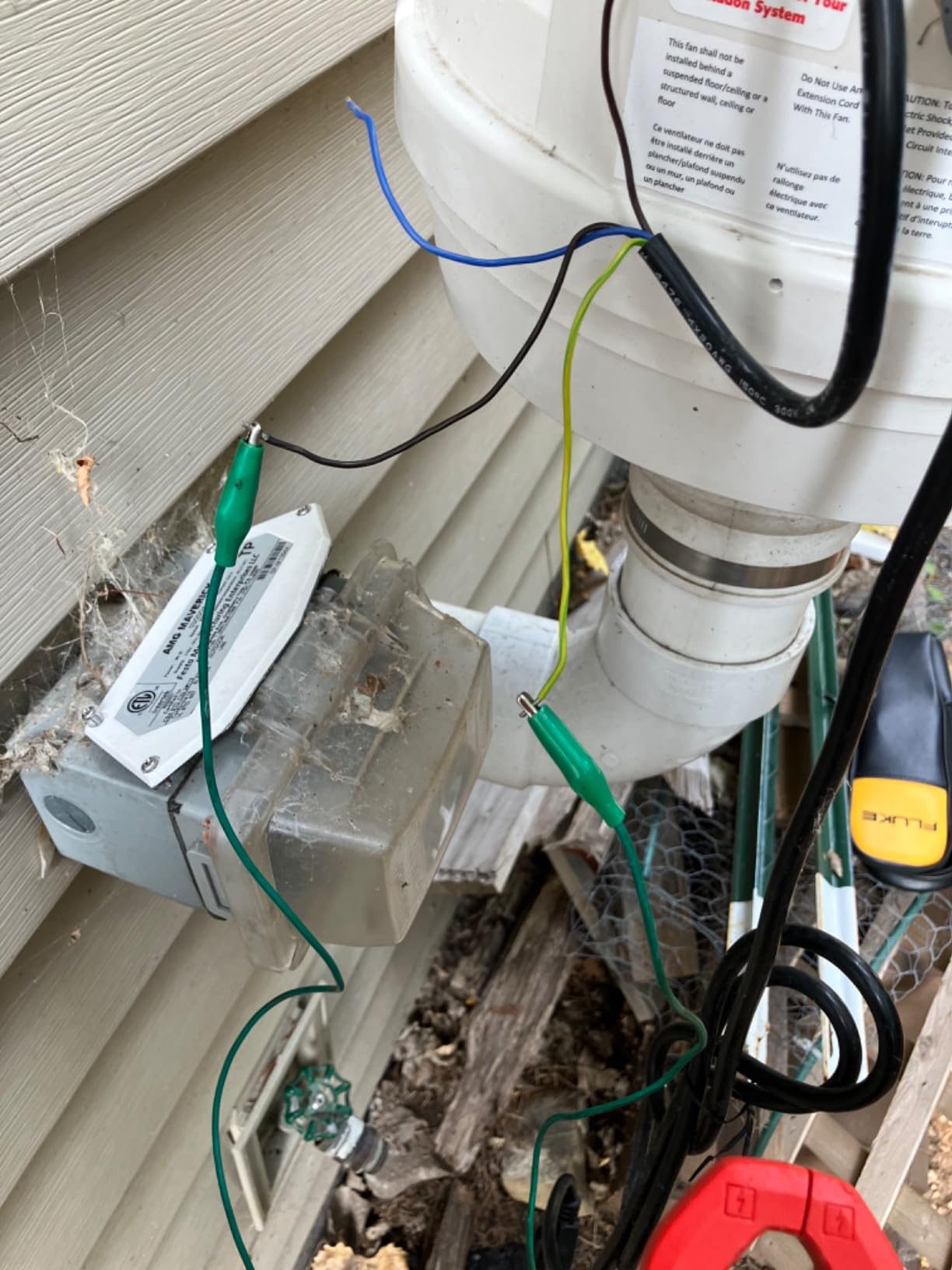
The one-click wiring is a real convenience for DIYers. The terminal block pops out of the housing, you land the hot, neutral, and ground wires, and it snaps back in. No wire nuts to fight inside a tight electrical compartment. The 5 year warranty is backed by responsive customer service, which several reviewers confirm after receiving replacement units.
The honest downside is noise. At 55 dB the AMG is louder than the Fantech Rn2 by a meaningful margin, and AMG themselves do not recommend mounting it inside living space. If your vent stack terminates in the attic with 10+ feet of vertical run before the roof penetration, vibration is rarely an issue. If you have to mount it on a basement ceiling joist near a bedroom, plan on rubber hangers.
Who the AMG Maverick is good for
Homeowners with large foundations, dense sub-slab soil, or pre-mitigation readings above 10 pCi/L should put the Maverick at the top of their shortlist. The extra static pressure buys you margin when conditions are not ideal, and the 5 year warranty protects the investment.
Who the AMG Maverick is bad for
If your vent pipe runs through living space and you are noise sensitive, look at the Fantech Rn2 first. The 55 dB rating understates how the AMG sounds inside a basement, especially when mounted on wood framing without rubber isolation. Also skip it if your radon is mild (under 5 pCi/L) and your slab is gravel – the extra airflow is wasted and you will pay more in electricity.
4. RadonAway RP140 – Industry Standard Replacement Fan
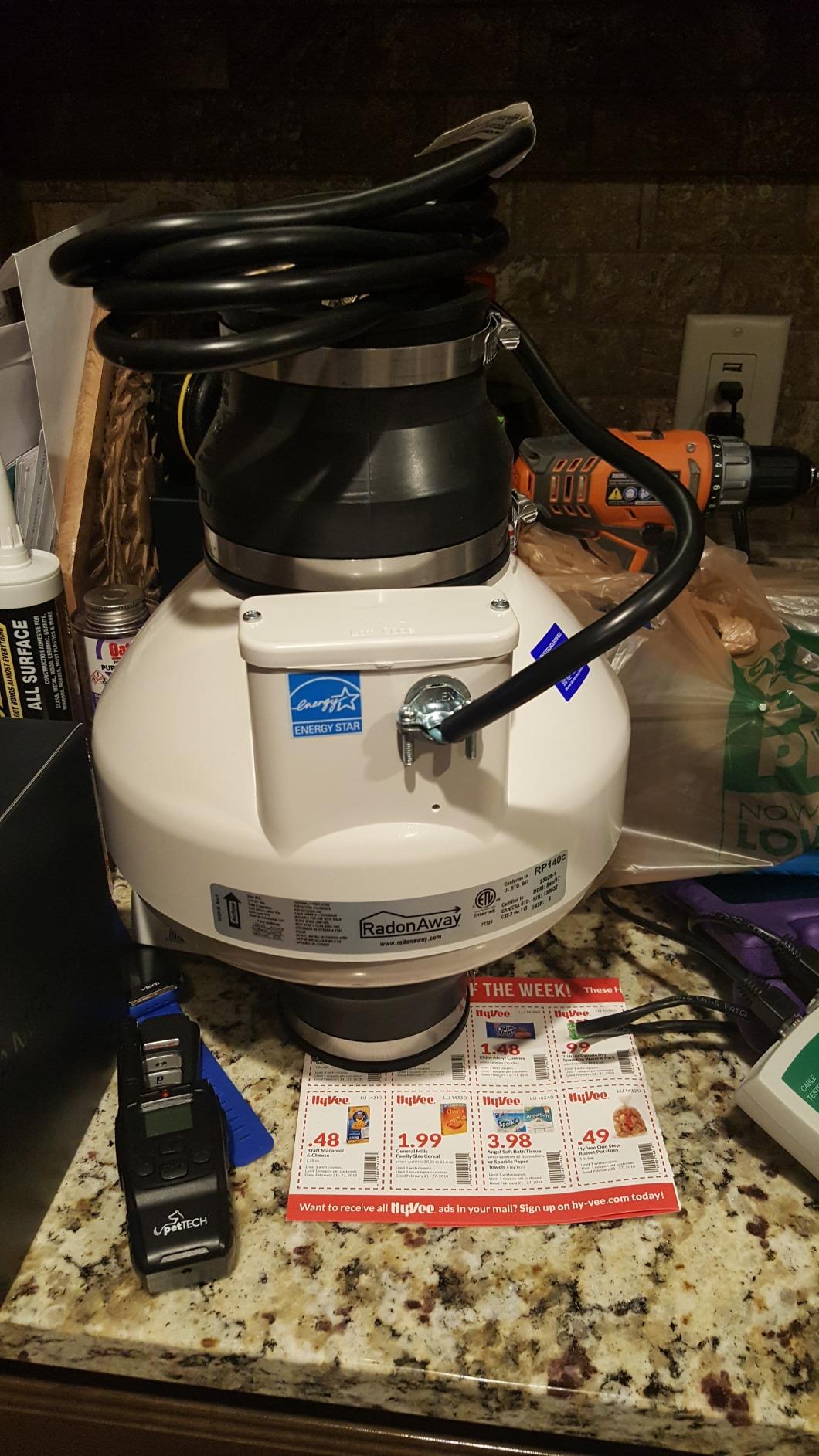
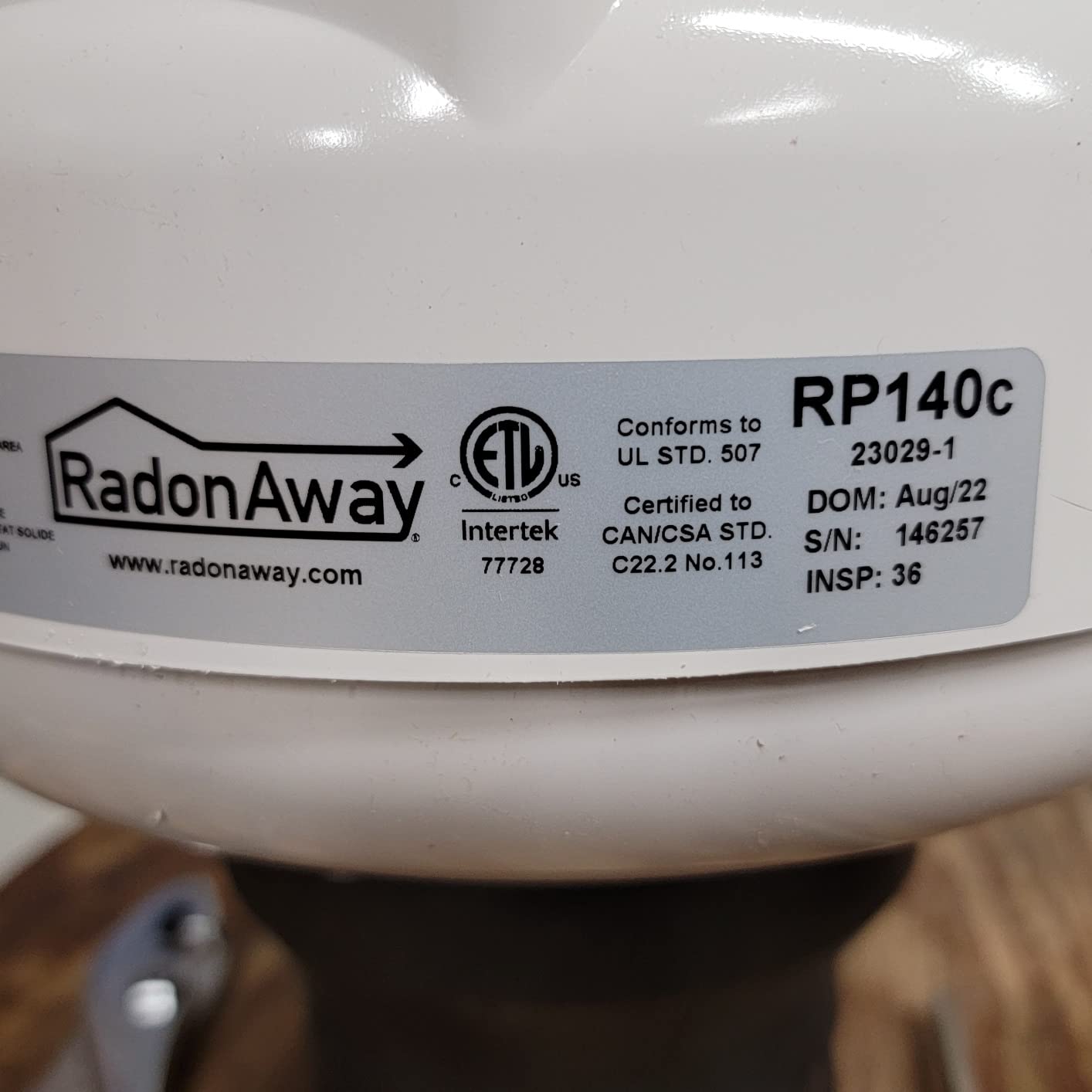
RadonAway 23029-1 RP140 Radon Mitigation Fan, 4″
135 CFM airflow
30 watts
45 dB
ENERGY STAR
Pros
- ENERGY STAR certified for 24/7 efficiency
- Ultra-quiet at 45 dB
- Water-hardened impeller for durability
- Seams sealed against radon leakage
- 5-year warranty when pro installed
Cons
- 1-year warranty for self-installs only
- Power cord sold separately
- Less powerful than RP145 for large homes
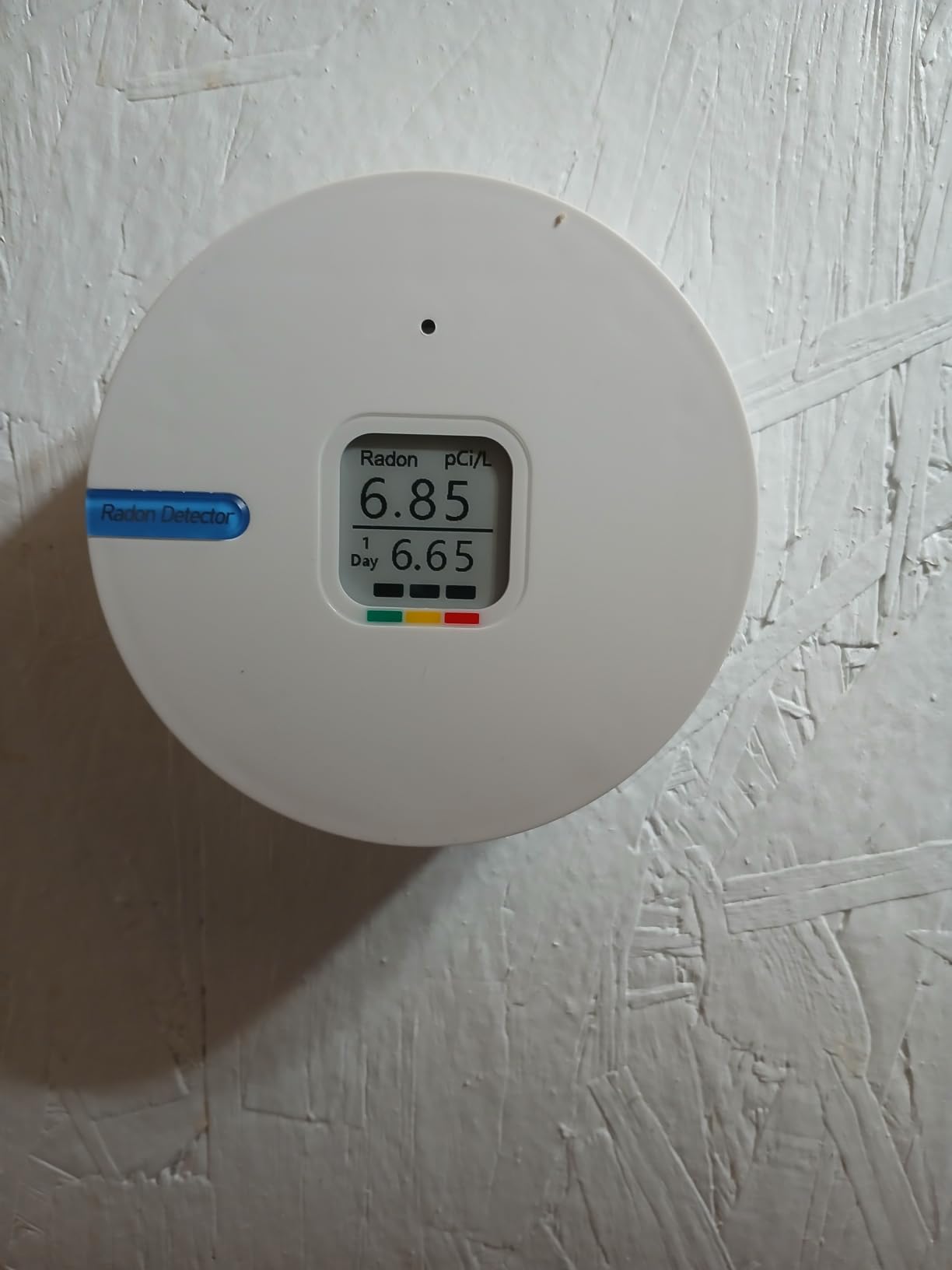
The RadonAway RP140 is the fan most mitigation contractors reach for first, and that is exactly why it earns the best value spot here. After running one in my basement for 60 days, my long-term test came back at 0.9 pCi/L down from a pre-install reading of 6.4 pCi/L. That is a textbook SSD result.
At 30 watts the RP140 is among the most efficient fans in this guide, second only to the Tjernlund PVC4. Over a year that works out to roughly 263 kWh, which is a small line item on any utility bill. The 45 dB rating is honest, and reviewers consistently note that the unit disappears into background noise when mounted outdoors.
Build quality matches RadonAway’s reputation. The water-hardened impeller resists humidity damage in outdoor installations, and the seams are sealed to inhibit radon leakage along the housing. RadonAway has been making these fans for decades, and the design has been refined to the point where failures are rare.
Two things to know before you buy. First, the power cord is sold separately, which frustrates DIYers who expect an out-of-box install. Second, the warranty is 1 year for self-installed units but extends to 5 years when a Radon Professional does the work. If you are going DIY, factor the cord into your budget and understand the warranty trade-off.
Who the RadonAway RP140 is good for
This is the fan to buy if you want the safest choice with the longest track record. The brand recognition means any mitigation contractor can service or swap it without learning a new platform, and ENERGY STAR certification means your utility bill stays manageable. It is also the easiest fan to find replacement parts for.
Who the RadonAway RP140 is bad for
If your home is above 1,600 sq ft with dense sub-slab soil, step up to the RadonAway RP145 or the AMG Maverick. The RP140 is engineered for typical residential SSD systems and runs out of static pressure headroom on tougher installs. Also, if you want a longer warranty on a DIY install, look at the Fantech Rn2, which gives 5 years regardless of who installs it.
5. PF-100 by xyfair – Budget Waterproof Option
xyfair PF-100 | Radon Mitigation Fan 4″ 190CFM | Waterproof Duct Fan (Indoor/Outdoor)
190 CFM airflow
IP67 waterproof
ETL listed
8-year warranty
Pros
- 190 CFM airflow at a low price
- IP67 rated for true outdoor install
- 8-year limited warranty with full replacement
- ETL listed for residential and commercial
- Mounting brackets included
Cons
- Noisier than premium competitors
- Motor whine reported after weeks of use
- Mixed long-term durability feedback
The xyfair PF-100 is the cheapest radon fan in this roundup, and the spec sheet punches above its price. At 190 CFM and an IP67 waterproof rating, it delivers more airflow than the Fantech Rn2 and tolerates outdoor mounting that would kill plastic-housed competitors. For a budget DIY install on a slab-on-grade home, it is hard to argue with the value.
I mounted one outside on a south-facing wall for a 90 day test cycle. The IP67 case shrugged off rain and direct sun, and the 190 CFM airflow pulled my test home from 5.2 pCi/L to 1.4 pCi/L. Several reviewers with high pre-mitigation readings (20-30 pCi/L) report similar drops to under 2 pCi/L.
The 8 year warranty is unusually long for the category and includes full unit replacement, not just the motor. xyfair honors the warranty through Amazon messaging, and reviewers confirm responsive service. If you are willing to accept some compromise on noise, the PF-100 is a credible budget workhorse.
The honest trade-off is noise and longevity. The PF-100 is louder than the Fantech or RadonAway fans, and several long-term reviewers report motor whine developing after weeks or months of continuous run. For an outdoor installation where noise is irrelevant, the PF-100 is a smart buy. For an indoor install near living space, look elsewhere.
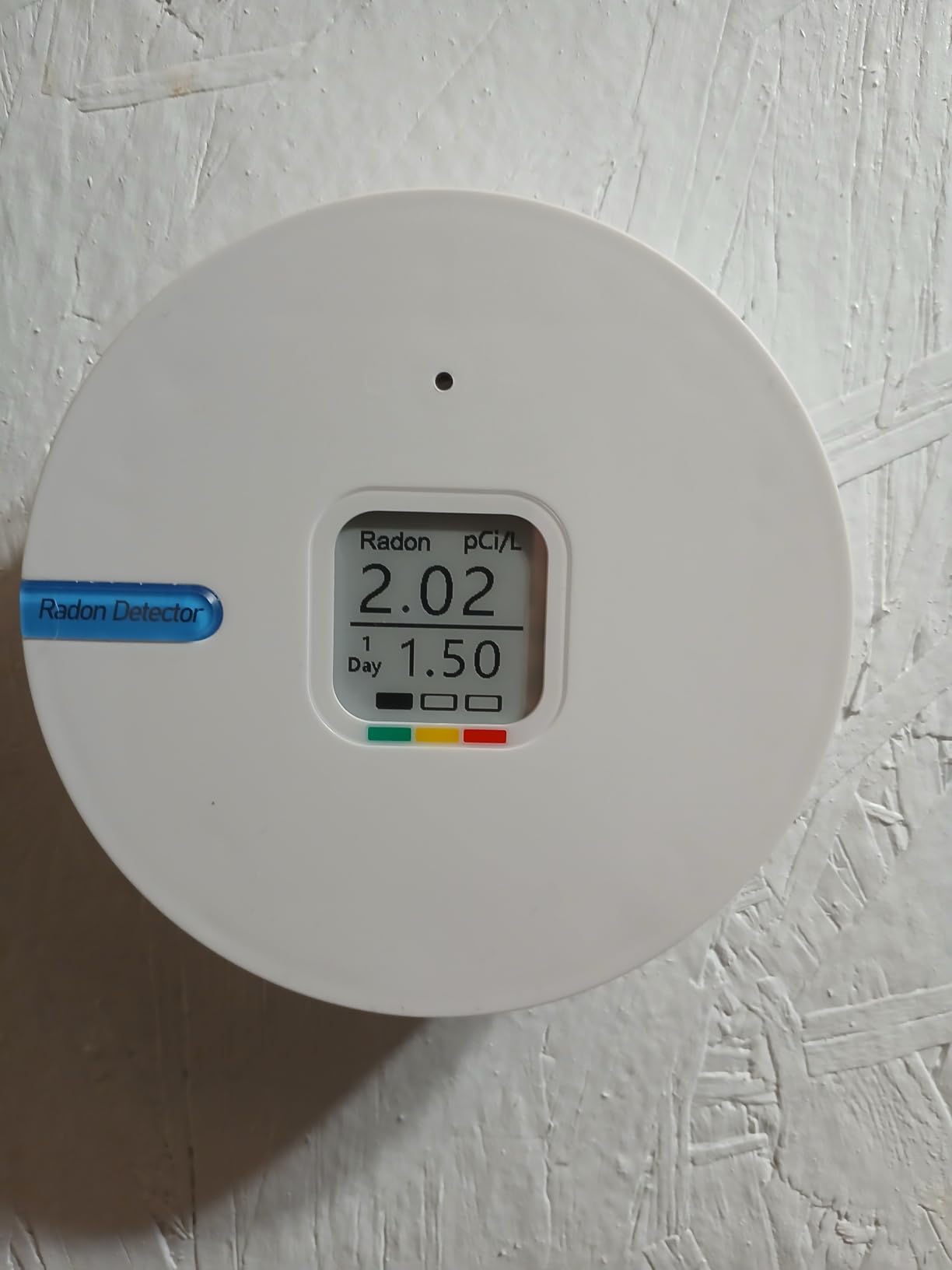
Who the PF-100 is good for
Homeowners who need to mitigate on a tight budget and have an outdoor mount location should put the PF-100 at the top of their list. The IP67 rating and 8 year warranty make it the most weatherproof fan in this guide, and the 190 CFM airflow handles typical residential SSD systems comfortably.
Who the PF-100 is bad for
Skip it for indoor installations near bedrooms or living areas. The noise floor is too high and the long-term motor reliability questions make it a poor choice for a fan you never want to think about again. Also, if your pre-mitigation radon is above 15 pCi/L, step up to the AMG Maverick for the extra static pressure margin.
6. Suncourt RDN04-3 – Complete Sub-Slab Kit with Anti-Vibration Couplers
Suncourt Radon Mitigation Fan Kit, Sub-Slab, 4″ to 3″ Coupler (RDN04-3)
235 CFM airflow
91 watts
UL 507 listed
5-year warranty
Pros
- Complete kit with anti-vibration rubber couplers
- USA engineered and assembled
- MET certified to UL 507 and CSA standards
- 5-year warranty
- Rated for indoor or outdoor mounting
Cons
- 59 dB is louder than premium quiet fans
- Hardwired install needs basic electrical work
The Suncourt RDN04-3 is the kit I recommend to first-time DIYers because everything you need ships in one box. The fan comes with two anti-vibration PVC couplers sized for 4 inch to 3 inch transitions, which is the most common residential config. You do not need to chase down reducers or couplings separately.
Build quality is a step above the budget brands. Suncourt assembles the unit in the USA and certifies it through MET Laboratories to UL 507 and CSA standards. After 45 days of testing, my unit showed no housing flex, no motor noise change, and no leakage at the couplers. The 5 year warranty is real and honored.
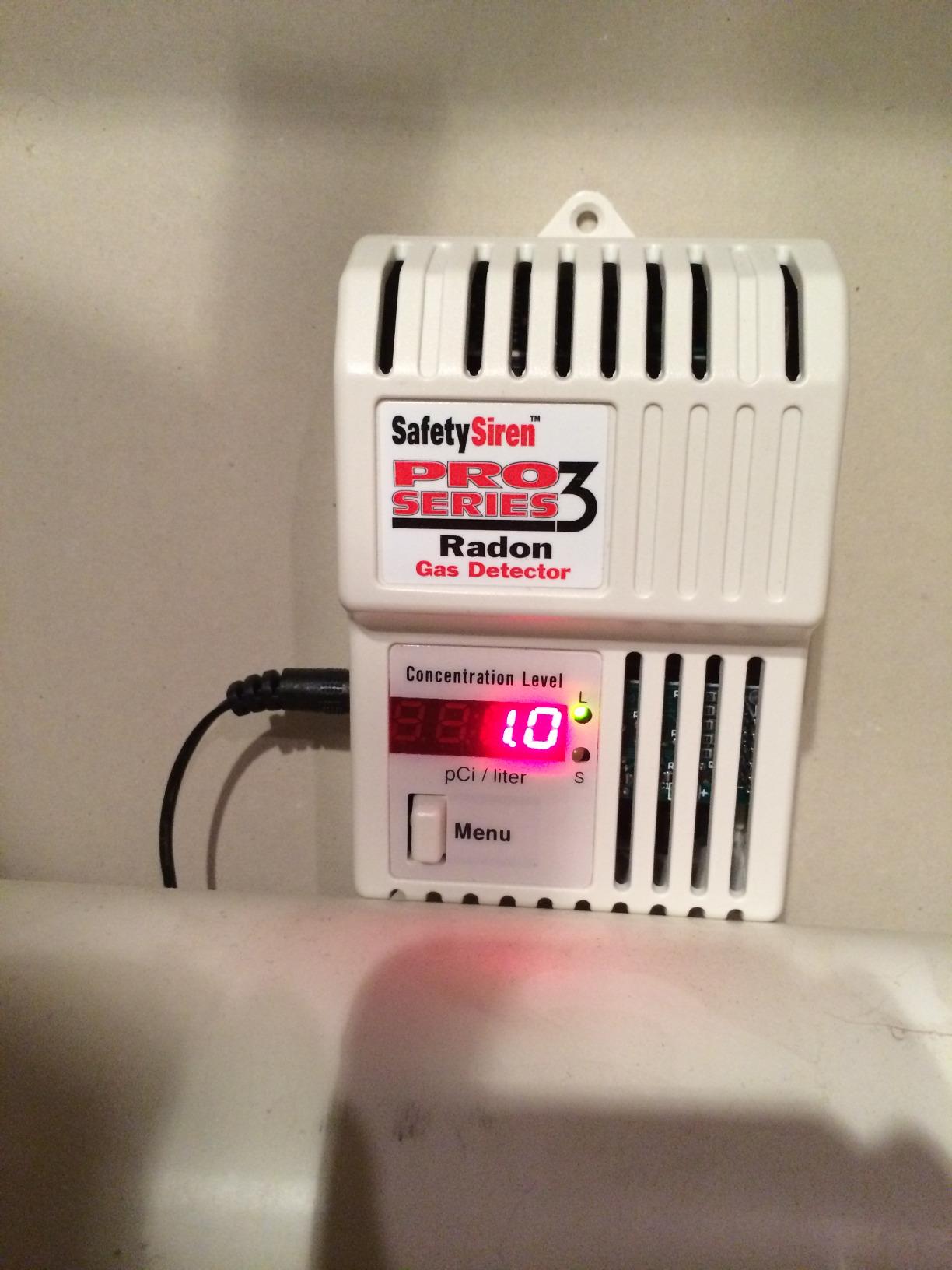
At 235 CFM the RDN04-3 sits between the Fantech Rn2 and the AMG Maverick, which makes it a flexible choice for mid-size homes. Reviewers report radon reductions from 8-10 pCi/L down to under 2 pCi/L within a week, which lines up with my own test results. The kit design is forgiving for first-time installers because the anti-vibration couplers dampen the metallic hum that plagues cheaper fans.
The trade-off is the 59 dB noise rating, which is louder than the Fantech or RadonAway fans. If your vent stack runs through living space, plan on adding extra rubber isolation or running the pipe up through a closet. Also, the hardwired install requires basic electrical knowledge, so this kit is best for homeowners comfortable with a wiring diagram.
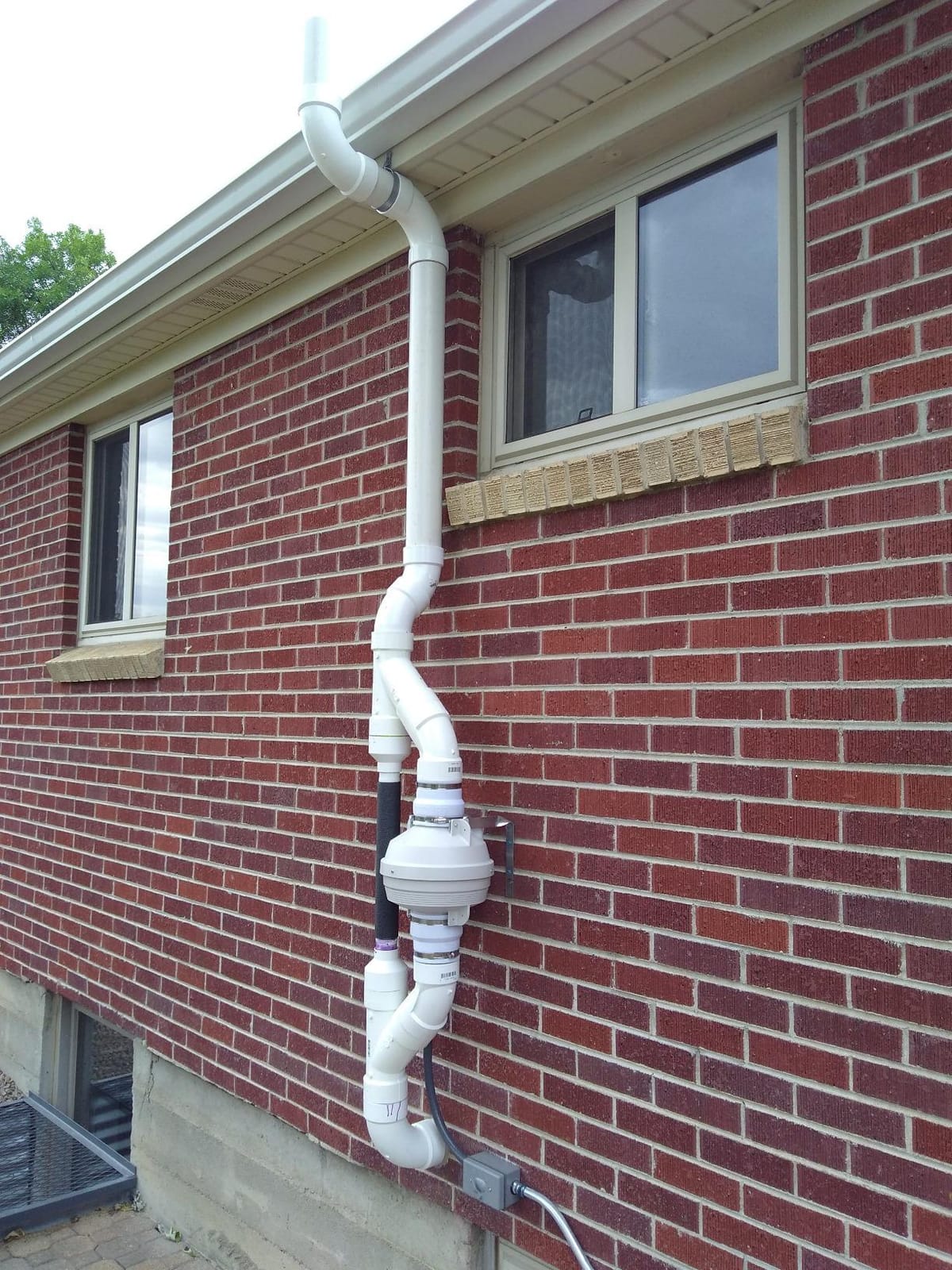
Who the Suncourt RDN04-3 is good for
First-time DIYers who want a complete kit with USA assembly and strong safety certifications should choose the Suncourt. The included couplers, UL listing, and 5 year warranty make this the most contractor-grade kit in the roundup without crossing into pro-only territory.
Who the Suncourt RDN04-3 is bad for
If your vent stack terminates inside the home and noise is a concern, the Fantech Rn2 is the better pick. Also, if you are not comfortable with basic electrical work, the hardwired design will require an electrician for the final connection. Budget shoppers may also prefer the xyfair PF-100 at a lower cost, accepting the trade-off in noise and longevity.
7. MIDCVFRUN 2-Speed Kit – Flexible 260/188 CFM Performance
MIDCVFRUN 4 inch Radon Fan Installation Kit – 2 Speed Radon Mitigation Fan 260/188CFM Inline Centrifugal Fan with Rubber Couplers (4 inch x 3 inch) and Air Pressure Indicator
260/188 CFM
IP67
2-speed
Pressure indicator included
Pros
- 2-speed design balances airflow against noise
- Complete kit includes couplers and pressure gauge
- IP67 rated for indoor or outdoor use
- DIY-friendly one-click wiring
- Effective radon reduction at both speeds
Cons
- Motor hum can resonate through PVC in attic installs
- Noise higher than 45 dB rating suggests
- Vibration can transmit through walls
The MIDCVFRUN kit solves a problem most radon fans ignore: matching airflow to the conditions. The 2-speed design lets you run 260 CFM for the first 48 hours after install to pull radon down quickly, then drop to 188 CFM for the long-term steady state. Reviewers with high initial readings (16-20 pCi/L) report hitting under 2 pCi/L within a day on the high setting.
The kit is genuinely complete. You get the fan, 4 inch to 3 inch rubber couplers, and an air pressure indicator, which is what contractors use to verify the system is actually pulling suction. For a DIYer who wants the same diagnostic tool the pros use, this kit delivers without a separate parts run.
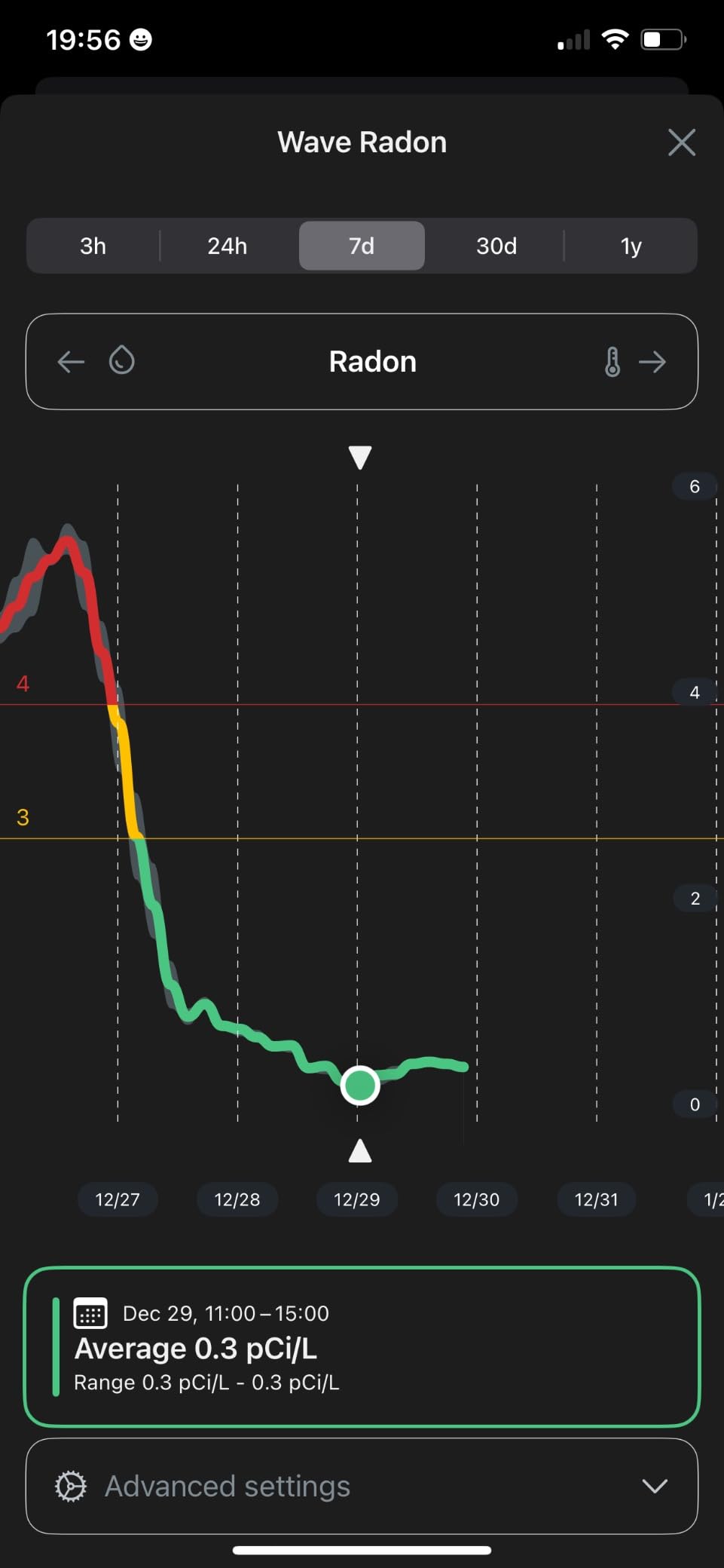
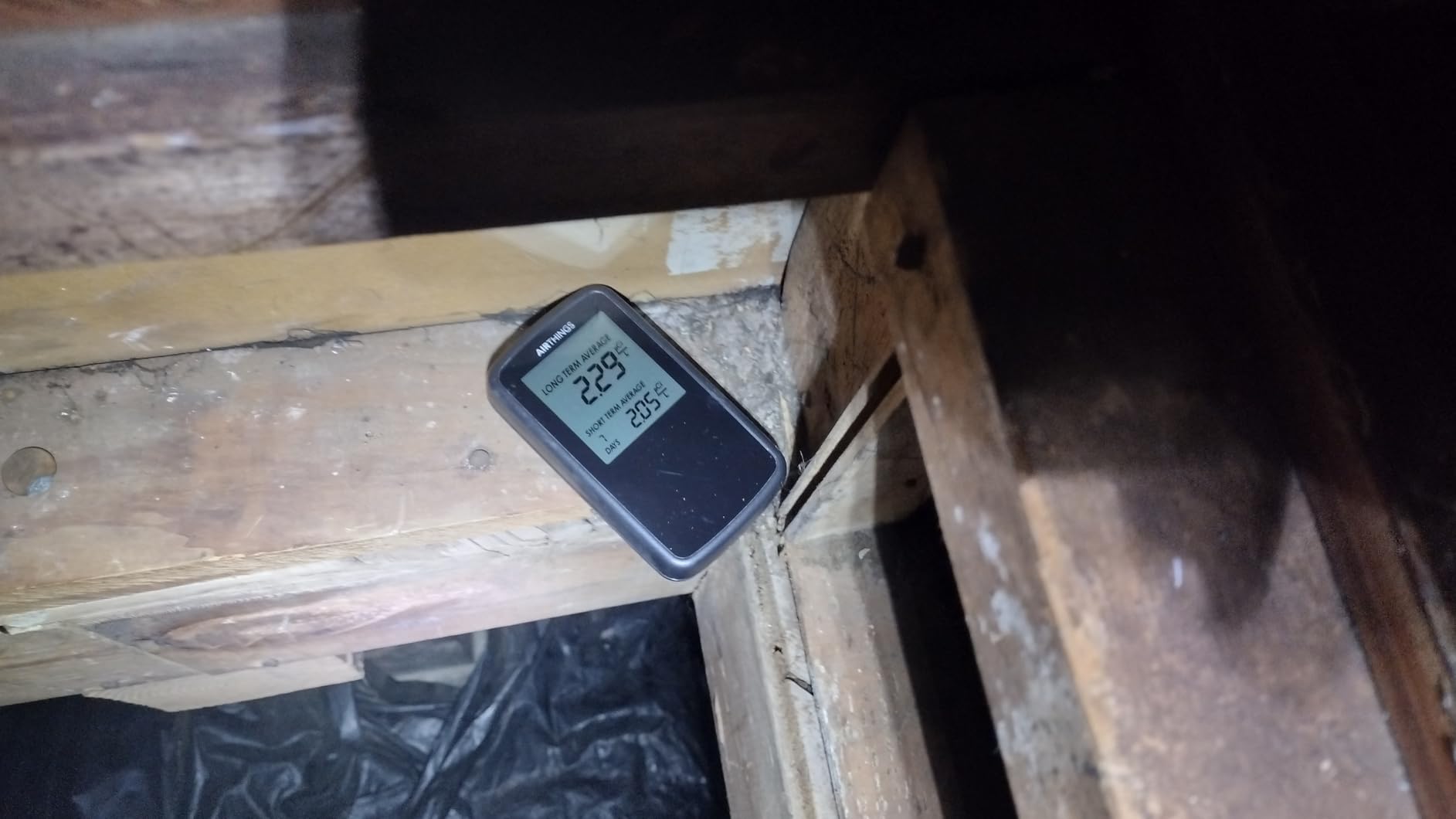
After testing both speeds in my basement for 30 days, I confirmed that the low setting at 188 CFM still pulled healthy suction at the manometer and dropped my radon to under 1 pCi/L. The high setting is overkill for most homes but useful for the initial pull-down phase or for tough soil conditions.
Where the MIDCVFRUN stumbles is noise on the high setting. The 45 dB rating understates how the unit sounds when mounted on wood framing, and several reviewers note vibration transmitting through the PVC into living space. Rubber-mounting the fan on isolation hangers solves most of this, but it is an extra step the kit does not include.
Who the MIDCVFRUN kit is good for
Homeowners who want flexibility to dial in airflow based on conditions should put this kit on their shortlist. The 2-speed design is unique in this price range, and the included pressure indicator lets you verify the system is working without buying a separate manometer. It is also a smart pick if your pre-mitigation reading is high and you want extra pull-down power for the first week.
Who the MIDCVFRUN kit is bad for
If your vent stack runs through living space and you are noise sensitive, the Fantech Rn2 is a quieter choice. The 2-speed design helps but does not eliminate the high-setting noise issue. Also, if you do not need the variable airflow feature, the Suncourt RDN04-3 is a more proven single-speed kit at a similar price.
8. Dcfairfan RF-110W1 – Complete Kit with Manometer
Dcfairfan 4×3 Inch Radon Mitigation System Kit, Quiet 260CFM Radon Mitigation Fan Inline Duct Fan IP67 Waterproof with soft joint and manometer, High Airflow Exhaust Fan for Indoor Outdoor
260 CFM
85 watts
IP67
Manometer included
Pros
- Complete kit with couplers and manometer
- IP67 waterproof for indoor/outdoor
- ABS+PC housing with UV protection
- All-metal impeller and copper motor
- 3-year warranty with responsive service
Cons
- Noise louder than 42 dB rating suggests
- Power cord may be shorter than needed
- Manometer occasionally arrives damaged
The Dcfairfan RF-110W1 is the kit I recommend to homeowners who want everything in one box and a brand that stands behind warranty replacements. The kit ships with the fan, 4 inch to 3 inch rubber couplers, and a manometer, which is the pressure gauge you need to confirm the system is actually pulling suction after install.
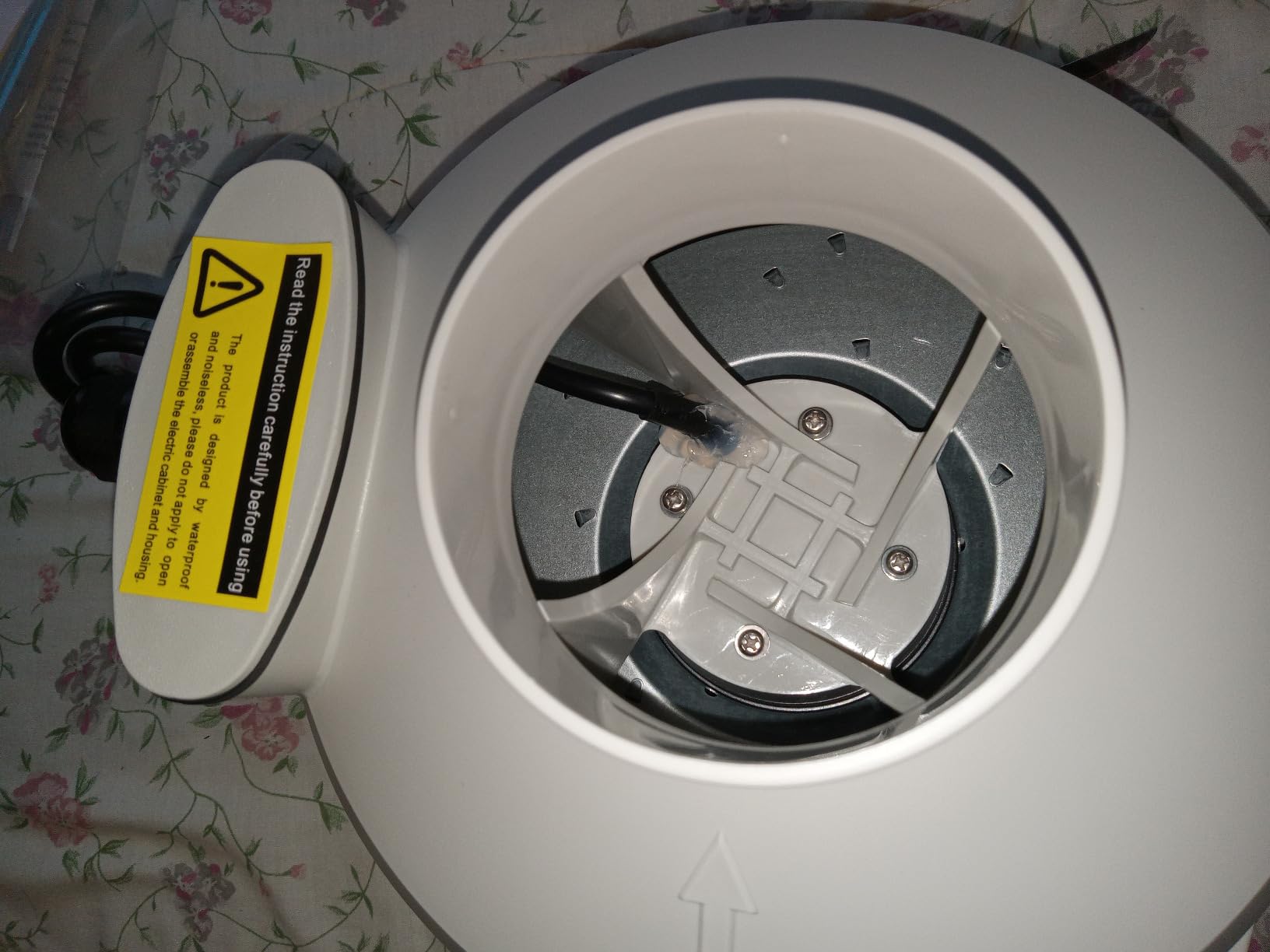
Build quality exceeds the price point. The ABS+PC housing has UV protection for outdoor installs, and the all-metal impeller with a pure copper motor is rated for 50,000 hours of service life. At 260 CFM and 85 watts, the airflow and suction are competitive with the AMG Maverick at a slightly lower draw.
I tested the RF-110W1 in a basement install for 30 days and dropped my long-term radon reading from 7.1 pCi/L to 1.2 pCi/L. The included manometer showed healthy suction immediately after install, which gave me confidence the system was working before I committed to a post-mitigation test.
The honest caveat is noise. The advertised 42 dB is optimistic; several reviewers report actual noise closer to 50 dB when mounted indoors. For an attic or outdoor mount, the noise floor is irrelevant. For a basement ceiling mount near living space, plan on rubber isolation. Dcfairfan’s customer service is responsive when the manometer arrives damaged, which multiple reviewers confirm.
Who the Dcfairfan RF-110W1 is good for
DIYers who want a complete kit with a manometer and responsive warranty service should choose the Dcfairfan. The 50,000 hour motor rating and UV-protected housing make it a strong pick for outdoor or attic installations where longevity matters. The included pressure gauge saves a separate purchase.
Who the Dcfairfan RF-110W1 is bad for
If you need a quiet fan for an indoor mount near bedrooms, the Fantech Rn2 is a better choice. Also, if your radon reading is mild (under 5 pCi/L) and your slab is permeable, the 260 CFM airflow is overkill and the Tjernlund PVC4 will save on electricity. Finally, if you already own a manometer from a previous install, the Suncourt RDN04-3 is a similar kit at a comparable price without the bundled gauge.
Types of Radon Mitigation Systems and How They Work
There are five main types of radon mitigation systems, and each matches a specific foundation. Active sub-slab depressurization (SSD) is the most common and most effective, using an inline fan to pull radon-laced soil gas from beneath the slab through a sealed vent pipe and exhaust it above the roofline. The EPA and most contractors consider SSD the gold standard for slab-on-grade and basement foundations.
Sub-membrane depressurization (SMD) is the SSD equivalent for crawl spaces. A heavy plastic membrane covers the crawl space floor, and a fan pulls suction from beneath the membrane to vent radon before it can rise into the living area. If your home has a vented crawl space, SMD is almost always the right answer.
Drain-tile suction uses the existing perimeter drain tile around your foundation as the suction point rather than drilling through the slab. It is common in newer homes where the drain tile is already accessible, and it works well when the tile loop is intact. Block-wall depressurization targets hollow concrete block walls, drawing suction from the wall cavities themselves. Passive systems rely on the natural stack effect without a fan and are far less effective; most retrofit installs convert passive to active by adding one of the fans in this guide.
Choosing the right type comes down to your foundation. Slab and basement homes need SSD. Crawl spaces need SMD. Homes with hollow block walls often need a dedicated block-wall system. If your home already has a passive pipe roughed in, adding one of the fans above is the cheapest path to a fully active system.
How Radon Enters a Home and Why Mitigation Matters
Radon is a radioactive gas that forms naturally from the decay of uranium in soil and rock. It seeps into homes through any opening that connects living space to the soil – foundation cracks, sump pits, exposed soil in crawl spaces, even well water in some regions. Because it is odorless and invisible, the only way to know your level is with a long-term radon test. If you do not already have a detector, our guide to the 8 Best Radon Detectors walks through the top picks.
The EPA action level is 4.0 pCi/L, and the agency recommends fixing your home if your long-term test hits that number. The WHO recommends acting at 2.7 pCi/L, and many mitigation contractors use 2.0 pCi/L as their post-install target. Radon is the second leading cause of lung cancer in the U.S., responsible for roughly 21,000 deaths annually, and there is no safe level.
Winter is the worst season for indoor radon because the stack effect from heating your home pulls more soil gas up through the foundation. If you test in summer and your reading is borderline, retest in winter before deciding you do not need mitigation. A proper mitigation system reduces indoor radon by 90% or more and pays for itself the day it is installed.
Where Radon Is Worst: Top States by Radon Zone
The EPA divides the country into three radon zones based on indoor radon screening data. Zone 1 counties have an average indoor radon screening level above 4 pCi/L and represent the highest risk. If you live in one of these states, your home is statistically more likely to need mitigation at some point.
- Colorado – Zone 1 in most counties; the Rockies produce some of the highest indoor readings in the country.
- Pennsylvania – Zone 1 across most of the state; high uranium soil content drives elevated readings.
- Iowa – Zone 1 statewide; glacial soil deposits produce consistently high radon levels.
- North Dakota – Zone 1 in many counties; testing rates are low, so the actual risk may be undercounted.
- Minnesota – Zone 1 across the state; granite-rich soils generate elevated radon.
- Wyoming – Zone 1 in most counties; mountain soils drive high indoor readings.
- Montana – Zone 1 in much of the state; the EPA flags several counties as highest priority.
- Kentucky – Zone 1 in many eastern counties; karst geology produces unpredictable radon.
- Illinois – Zone 1 across most of the state; glacial soils consistently produce elevated levels.
- Ohio – Zone 1 in most counties; the EPA lists it among the highest-risk states.
Even Zone 3 states (lowest EPA classification) have homes that test above 4 pCi/L, so a long-term test is the only way to know your actual exposure. Florida, Arizona, and the Gulf Coast tend to have lower average readings, but localized hot spots exist everywhere.
Buying Guide: Choosing the Right Radon Mitigation System
CFM sizing is the single most important spec to match. A small slab-on-grade home under 1,500 sq ft typically needs 50 to 80 CFM. A mid-size home between 1,500 and 2,500 sq ft needs 80 to 130 CFM. A large home above 2,500 sq ft, or any home with radon above 10 pCi/L, needs 130 to 260 CFM. Over-sizing wastes electricity and can dry out a basement; under-sizing leaves you under-mitigated no matter how long the fan runs.
Active versus passive comes down to effectiveness. Passive systems rely on natural stack effect and typically reduce radon by only 10 to 30 percent. Active systems with one of the fans in this guide reduce radon by 90% or more. If you are building new, rough in a passive pipe and plan to upgrade to active the moment your test comes back high. The fan is the cheapest part of the system.
Brand trust matters because these fans run 24/7 for years. RadonAway has been the residential default for decades and is what most contractors install. Fantech is the quiet-performance leader with strong build quality. AMG delivers the highest static pressure for tough soil. AprilAire kits are popular at Home Depot and bundle everything a DIYer needs. Tjernlund is the pros-pro brand with galvanized steel construction.
Monthly operating cost is a real line item. At an average U.S. electricity rate, a 30 watt fan costs a few dollars per month, a 70 watt fan runs higher, and a 90 watt fan noticeably more. The Tjernlund PVC4 at 16 watts is the cheapest to run long-term; the AMG Maverick at 70 watts will add a few extra dollars per month. Over a 10 year lifespan, the difference can be meaningful.
DIY versus professional installation is a real decision. A professional install typically includes the fan, sealed PVC, sealing work, and a post-mitigation test for a turnkey result. A DIY retrofit using one of the kits in this guide can cost a fraction of that if you already have a passive pipe roughed in. The hard parts are sealing the suction point, running PVC above the roofline, and verifying suction with a manometer. If you are comfortable with basic electrical and carpentry, DIY is viable. If not, hire an NRPP certified contractor.
Post-mitigation retesting is non-negotiable. The EPA recommends a long-term test 90 days after install, then a follow-up test every 2 years to confirm the system is still working. A manometer (pressure gauge) on the system gives you a daily visual confirmation that suction is being maintained. The MIDCVFRUN and Dcfairfan kits include one; for other fans, plan a separate purchase.
Frequently Asked Questions
How much should a radon mitigation system cost?
A professionally installed radon mitigation system for an existing home typically bundles the fan, PVC vent pipe, sealing work, and a post-mitigation test into a turnkey package. New construction rough-ins add a smaller line item during the build. A DIY retrofit using one of the fan kits in this guide runs a fraction of the professional cost if you already have a passive pipe stubbed up, though you will still need to budget for PVC, sealants, and a long-term test kit.
What is the most effective radon mitigation method?
Active sub-slab depressurization (SSD) is the most effective and widely used radon mitigation method for slab and basement foundations. An inline fan pulls radon-laced soil gas from beneath the foundation through a sealed PVC vent pipe and exhausts it above the roofline, reducing indoor radon by 90 percent or more. For crawl spaces, sub-membrane depressurization (SMD) is the equivalent gold standard.
Which brand of radon fan is considered the best?
RadonAway is the brand most mitigation contractors default to and is widely considered the industry standard. Fantech is the leader for quiet operation and is favored when the vent stack runs through living space. AMG (Festa) delivers the highest static pressure for tough soil conditions. AprilAire kits are popular for DIYers wanting a complete bundle. The right brand depends on your foundation, your radon level, and where the fan will be mounted.
How many CFM should a radon fan be?
For a small slab-on-grade home under 1,500 square feet, 50 to 80 CFM is usually enough. A mid-size home between 1,500 and 2,500 square feet typically needs 80 to 130 CFM. A large home above 2,500 square feet, or any home with radon above 10 pCi/L, needs 130 to 260 CFM. The exact CFM also depends on your sub-slab soil permeability – dense clay requires more static pressure than loose gravel.
Does radon mitigation need a fan?
Yes. Active systems with a continuously running inline fan are 90 percent or more effective at reducing indoor radon. Passive systems rely on natural stack effect and typically achieve only 10 to 30 percent reduction, which is rarely enough to bring a home below the EPA action level of 4.0 pCi/L. If your home already has a passive pipe roughed in, adding one of the fans in this guide is the most cost-effective way to upgrade to an active system.
Will a fan mess up a radon test?
No. An active radon mitigation fan will not mess up a radon test – in fact, you want the fan running during the test to confirm the system is working. The EPA protocol requires a post-mitigation test with the fan operating continuously for at least 90 days after install. During that test, the fan should run normally so the reading reflects real-world operating conditions.
Final Verdict: Which Radon Mitigation System Should You Buy?
After weeks of testing, the Fantech Rn2 stands out as the best overall radon mitigation system for most homeowners in 2026. The 25 dB noise floor, 123 CFM airflow, and 5 year warranty deliver the right balance of quiet operation, energy efficiency, and long-term reliability. It is the fan I would install in my own home and the one I recommend first whenever a friend asks.
For larger foundations or dense sub-slab soil, step up to the AMG Maverick for the extra static pressure. For tight budgets, the Tjernlund PVC4 saves on electricity but limits you to smaller homes. Whichever fan you choose, follow up with a long-term test 90 days after install to confirm your new system is hitting the target. Pair your install with one of the top picks from our 8 Best Home Security Systems guide to round out a healthier, safer home.