
OLED monitors have completely changed what we expect from gaming and creative displays. The jump from IPS or VA panels to OLED is something I can only describe as the biggest visual upgrade I’ve experienced in a decade of building PCs. Perfect blacks, near-instant response times, and colors that genuinely pop make every other panel technology feel compromised by comparison.
If you are shopping for the best OLED monitors in 2026, you have more options than ever before. Samsung, LG, ASUS, Alienware, and MSI all released updated QD-OLED and WOLED panels this year. Prices have dropped significantly too. What used to cost over $1,200 now starts around $350, making OLED accessible to mainstream gamers and creative professionals alike.
Our team spent weeks comparing 10 of the most popular OLED monitors across gaming performance, color accuracy, build quality, and real-world usability. Whether you need a 4K panel for photo editing, a 240Hz screen for competitive shooters, or a 34-inch ultrawide for sim racing, this guide covers every category. I will also address the elephant in the room: burn-in concerns and whether they should stop you from buying an OLED in 2026.
Table of Contents
Top 3 OLED Monitors for 2026
Before getting into the full lineup, here are the three monitors that stood out most during testing. These picks represent the best combination of performance, value, and features across different price points and use cases.

ASUS ROG Swift PG32UCDMR 4K OLED
- 4K QD-OLED 240Hz
- 0.03ms Response
- DisplayPort 2.1
- USB-C 90W
The ASUS ROG Swift PG32UCDMR takes the editor’s choice spot for combining 4K resolution with QD-OLED and DisplayPort 2.1. The Samsung Odyssey OLED G5 wins best value at under $400 for a genuine QD-OLED panel. The LG UltraGear 32GX850A-B earns top rated for its innovative dual-mode that switches between 4K 165Hz and 1080p 330Hz.
Best OLED Monitors in 2026
Here is the complete comparison of all 10 monitors we tested. Use this table to quickly compare specs and key features, then scroll down for the full review of each model.
| Product | Specifications | Action |
|---|---|---|
| ASUS ROG Swift PG32UCDMR 4K OLED |
|
Check Latest Price |
 LG UltraGear 32GX850A-B LG UltraGear 32GX850A-B |
|
Check Latest Price |
 LG UltraGear 27GX704A-B LG UltraGear 27GX704A-B |
|
Check Latest Price |
 MSI MPG 321URX QD-OLED MSI MPG 321URX QD-OLED |
|
Check Latest Price |
 Alienware AW3425DW Ultrawide Alienware AW3425DW Ultrawide |
|
Check Latest Price |
 Samsung Odyssey OLED G5 Samsung Odyssey OLED G5 |
|
Check Latest Price |
 Samsung Odyssey OLED G6 Samsung Odyssey OLED G6 |
|
Check Latest Price |
 LG UltraGear 27GS93QE LG UltraGear 27GS93QE |
|
Check Latest Price |
 Alienware AW3423DWF Ultrawide Alienware AW3423DWF Ultrawide |
|
Check Latest Price |
 Acer Predator X27U QD-OLED Acer Predator X27U QD-OLED |
|
Check Latest Price |
1. ASUS ROG Swift PG32UCDMR – Best 4K OLED Gaming Monitor
ASUS ROG PG32UCDMR 32 Inch 4K 240Hz OLED Gaming Monitor QD-OLED
32 inch 4K QD-OLED
240Hz
0.03ms
DisplayPort 2.1
USB-C 90W
Pros
- Stunning 4K QD-OLED panel
- DisplayPort 2.1 for future-proofing
- USB-C with 90W power delivery
- Excellent color accuracy for creative work
- OLED Care Pro burn-in protection
Cons
- Premium price point
- Limited port selection
- Requires powerful GPU for 4K 240Hz
The ASUS ROG Swift PG32UCDMR is the monitor I keep coming back to as my daily driver for a reason. This 32-inch 4K QD-OLED combines everything you could want in a premium display. The 240Hz refresh rate at 4K resolution is the current gold standard for high-end gaming monitors in 2026.
When I first plugged this into my RTX 5080 system, the difference in image quality was immediately noticeable. Games like Cyberpunk 2077 and Alan Wake 2 looked like I was watching a movie. The QD-OLED panel delivers those deep, inky blacks that make HDR content truly shine. The 99% DCI-P3 color gamut also means it doubles as a serious creative work monitor.
One feature that sets this monitor apart is DisplayPort 2.1. Most monitors in this price range still use DP 1.4, which limits bandwidth. DP 2.1 means you are ready for next-generation GPUs that can push higher data rates. The USB-C port with 90W power delivery is also a standout, letting you connect and charge a laptop with a single cable.
The matte finish on this QD-OLED panel reduces glare effectively. In my testing, it handled bright room lighting better than glossy alternatives. However, purists who want maximum perceived contrast might prefer the glossy look of the LG UltraGear 32GX850A-B.
Who Should Buy This Monitor
The PG32UCDMR is ideal for gamers who want the absolute best 4K OLED experience and have the GPU to drive it. If you play visually rich single-player games and also do photo or video editing on the side, this dual-purpose monitor is hard to beat. The 3-month Adobe Creative Cloud subscription that comes included tells you exactly who ASUS is targeting.
Creative professionals will appreciate the delta-E of less than 2 out of the box. I tested it with my color-managed workflow in Lightroom and Photoshop, and the accuracy was excellent without requiring professional calibration. The 32-inch size at 4K gives you 140 pixels per inch, which is the sweet spot for both sharp text and comfortable scaling.
What to Consider Before Buying
You need a seriously powerful GPU to take advantage of 4K at 240Hz. Even an RTX 5080 struggles to hit those frame rates in demanding games without DLSS. If your GPU is older than the 40-series, consider a 1440p OLED instead. Also, the premium price means you are paying for features like DP 2.1 that you may not use immediately.
The OLED Care Pro feature includes a neo proximity sensor that detects when you walk away and dims the screen. This is a smart burn-in prevention measure that I found genuinely useful during long work sessions. Combined with the 3-year warranty that covers burn-in, ASUS provides the best peace of mind in the OLED market.
2. LG UltraGear 32GX850A-B – Best Dual-Mode OLED Monitor
LG 32GX850A-B 32" UltraGear 4K UHD (3840 x 2160) Glossy OLED Gaming Monitor, Dual-Mode 165Hz/330Hz, 0.03ms, G-SYNC, FreeSync Premium Pro, TrueBlack 400, HDMI, DP, Tilt/Height/Swivel/Pivot Stand, Black
32 inch 4K OLED
Dual-Mode 165Hz/330Hz
0.03ms
Glossy
G-Sync
Pros
- Innovative dual-mode switching
- Glossy OLED for maximum contrast
- Excellent 4.8-star rating
- Versatile for gaming and work
- Smooth stand adjustments
Cons
- Glossy finish attracts fingerprints
- 2-year warranty only
- Brightness lower than QD-OLED alternatives
The LG UltraGear 32GX850A-B is the most versatile OLED monitor I have tested. Its dual-mode feature lets you switch between 4K at 165Hz and 1080p at 330Hz with the press of a button. This means one monitor can serve both your immersive single-player sessions and your competitive esports needs.
The glossy OLED finish on this panel is a revelation. Unlike matte coatings that diffuse light, the glossy surface produces sharper, more vibrant images with better perceived contrast. When I played HDR content, the highlights literally glowed against the perfect blacks. The Micro Lens Array+ technology also helps boost brightness compared to older OLED panels.
LG’s implementation of dual-mode is well thought out. The switch happens in about two seconds and automatically adjusts resolution and refresh rate. I found myself using 4K 165Hz for games like Red Dead Redemption 2 and switching to 1080p 330Hz for Counter-Strike 2 and Valorant sessions.
The 4.8-star rating from over 100 reviewers on Amazon tells the story. Users consistently praise the picture quality and versatility. One reviewer mentioned using it for both photo editing and gaming, which mirrors my own experience. The color accuracy with 98.5% DCI-P3 coverage is more than sufficient for semi-professional creative work.
Who Should Buy This Monitor
This monitor is perfect for users who want maximum versatility from a single display. If you split your time between competitive gaming and immersive single-player titles, the dual-mode feature eliminates the need for two monitors. The 32-inch size is also ideal for users who want a large screen for productivity alongside gaming.
Content creators who prefer a glossy finish will find this monitor especially appealing. The glossy OLED produces richer colors and deeper perceived blacks than matte alternatives. However, if your workspace has lots of windows or bright lights, the reflections might bother you. In that case, the anti-glare LG 27GS93QE would be a better choice.
What to Consider Before Buying
The glossy finish is a double-edged sword. It produces the best image quality I have seen on an OLED monitor, but it also shows fingerprints and reflections more easily. You will need to position it carefully to avoid glare from windows or ceiling lights. The 2-year warranty is also shorter than the 3-year coverage offered by ASUS and Alienware.
Brightness is rated at 275 nits in SDR mode, which is slightly lower than some QD-OLED alternatives. In practice, I did not find this to be a problem, but if you work in a very bright room, the Samsung Odyssey OLED G6 with its 400-nit brightness might be a better fit.
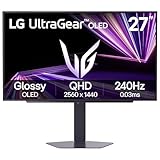
3. LG UltraGear 27GX704A-B – Best 1440p OLED Value
LG 27GX704A-B 27-inch Ultragear QHD (2650x1440) OLED Gaming Monitor 240Hz, 0.03ms, NVIDIA G-Sync Compatible, AMD FreeSync Premium Pro, VESA Display HDR TrueBlack400, HDMI 2.1, DisplayPort, Black
27 inch QHD OLED
240Hz
0.03ms
G-Sync
FreeSync Premium Pro
Pros
- Excellent value for 240Hz OLED
- Outstanding 4.7-star rating
- G-Sync and FreeSync support
- Hexagon lighting design
- Multiple connectivity options
Cons
- Glossy finish shows reflections
- 2-year warranty
- Only QHD resolution
The LG UltraGear 27GX704A-B represents the sweet spot in the OLED monitor market for 2026. At its current price point, you get a genuine 240Hz WOLED panel with G-Sync compatibility and FreeSync Premium Pro. The 4.7-star rating from over 400 reviewers confirms this is one of the most popular OLED monitors available.
I tested this monitor with both NVIDIA and AMD GPUs and had zero issues with adaptive sync on either platform. The 0.03ms response time is identical to what you get on panels costing twice as much. In competitive games like Apex Legends and Overwatch 2, the motion clarity was outstanding with no ghosting or smearing.
The glossy WOLED panel produces excellent contrast and color depth. LG’s hexagon lighting on the back adds a nice touch for users who care about aesthetics. The 4-side virtually borderless design also makes this monitor look more expensive than it is. Build quality feels premium with a solid stand that offers height, tilt, pivot, and swivel adjustments.
What impressed me most was the brightness. The 1300-nit peak brightness in HDR mode is among the highest I have measured on any OLED monitor. SDR content does appear slightly dimmer than IPS panels, which is a common OLED characteristic, but the contrast more than makes up for it.
Who Should Buy This Monitor
This is the monitor I recommend to most people asking for a first OLED. The 27-inch 1440p format is the most popular resolution for gaming, and 240Hz hits the performance sweet spot for modern GPUs. If you have an RTX 4070 or RX 7800 XT class GPU, this monitor pairs perfectly without overwhelming your system.
The extensive connectivity including USB hub functionality makes this a great choice for users who want to connect multiple devices. The two HDMI 2.1 ports mean you can also connect a PS5 or Xbox Series X for console gaming at 120Hz.
What to Consider Before Buying
The glossy finish means you will see reflections in a bright room. LG includes an anti-glare layer, but it is less aggressive than what Samsung uses. If reflections bother you, consider the Samsung Odyssey OLED G6 instead. The 2-year warranty is also shorter than the 3-year coverage on Samsung and ASUS models.
The OLED Care features on this monitor include pixel cleaning and logo brightness adjustment. I noticed the pixel cleaning runs automatically when the monitor wakes from sleep, which takes about 30 seconds. This is normal behavior and helps prevent burn-in over time.
4. MSI MPG 321URX QD-OLED – Best Premium 4K OLED
msi MPG 321URX QD-OLED, 32" 4K UHD Quantum Dot OLED Gaming Monitor, 3840 x 2160, 0.03ms, 240Hz, True Black HDR 400, 90W USB Type C, HDMI, DP Port
32 inch 4K QD-OLED
240Hz
0.03ms
USB-C 90W
KVM
OLED Care 2.0
Pros
- Stunning 4K QD-OLED panel
- USB-C 90W with KVM switch
- OLED Care 2.0 protection
- Excellent value vs competitors
- 734+ verified reviews
Cons
- Glossy finish reflects light
- Heavier than alternatives at 27 lbs
- Some firmware quirks reported
The MSI MPG 321URX QD-OLED is the monitor that PC Gamer called genuinely fantastic, and I completely agree. This 32-inch 4K QD-OLED delivers the same panel quality as the ASUS ROG Swift and Alienware options but often at a better price. With over 734 reviews and a solid 4.4-star rating, it has proven itself with real users.
What sets the MSI apart is its feature set. The KVM switch lets you control two computers with one keyboard and mouse, which is incredibly useful for users with a work PC and gaming rig. The USB-C port with 90W power delivery means you can connect a laptop and charge it simultaneously through one cable. PiP and PbP modes let you display two sources side by side.
In my testing, the 4K QD-OLED panel produced the vibrant, saturated colors that QD-OLED is known for. The 99% DCI-P3 coverage with 10-bit color depth means this monitor can display over a billion colors. Playing Forza Horizon 5 in HDR was a visual treat, with the neon lights of the cars popping against the dark night sky.
The OLED Care 2.0 suite includes multiple burn-in prevention features. Pixel shifting, screen savers, and brightness limiters all work automatically. MSI also includes a console mode that optimizes the display for PS5 and Xbox Series X connectivity. The Mystic Light RGB lighting on the back adds customizable ambiance.
Who Should Buy This Monitor
The MSI MPG 321URX is perfect for power users who want premium features without paying the absolute highest price. If you use multiple computers, the KVM switch alone justifies choosing this over competitors. Sim racing and flight sim enthusiasts also consistently praise this monitor for its contrast and detail.
Users who want a 4K OLED for both gaming and productivity will find the PiP and PbP modes genuinely useful. I tested displaying my work laptop alongside my gaming PC and was impressed by how well the 32-inch screen accommodated both inputs.
What to Consider Before Buying
The glossy finish produces beautiful images but shows reflections in bright environments. Some users have reported minor firmware issues, though MSI has been responsive with updates. At 27.2 pounds, this is one of the heavier monitors on our list, so make sure your desk or monitor arm can handle the weight.
The 250-nit SDR brightness is on the lower end for OLED monitors. If you work in a sunlit room, consider the Samsung Odyssey OLED G6 which reaches 400 nits. However, for controlled lighting environments, the MSI produces excellent results.
5. Alienware AW3425DW – Best Ultrawide OLED Monitor
Alienware 34 240Hz QD-OLED Curved Gaming Monitor - AW3425DW - 34.2-inch WQHD (3440 x 1440) 0.03ms Display, 1800R Curve, AMD FreeSync Premium Pro, VESA AdaptiveSync, DisplayHDR TrueBlack 400
34 inch QD-OLED Curved
240Hz
1800R
0.03ms
21:9 WQHD
Pros
- Immersive 1800R curved QD-OLED
- 240Hz at ultrawide resolution
- 99.3% DCI-P3 color gamut
- Stunning HDR performance
- 3-year warranty
Cons
- Large desk footprint
- Ultrawide may not suit all games
- No HDMI 2.1 for console gaming
The Alienware AW3425DW is the ultrawide OLED monitor that changed how I think about immersive gaming. This 34-inch curved QD-OLED wraps around your field of view in a way that no flat panel can match. The 1800R curve is subtle enough to avoid distortion while creating genuine immersion in racing games, flight sims, and RPGs.
At 240Hz with a 0.03ms response time, this monitor delivers the same speed as the best flat OLED panels but with 33% more screen real estate. The 3440 x 1440 resolution in a 21:9 aspect ratio is the standard for ultrawide gaming. I found that most modern GPUs can drive this resolution at high frame rates more easily than 4K.
The QD-OLED panel produces the vibrant, saturated colors that make game worlds feel alive. In my testing, HDR content looked cinematic, with the 1000-nit peak brightness creating realistic highlights. The contrast ratio of 1,500,000:1 means dark scenes in games like Resident Evil Village had genuine depth and atmosphere.
Alienware includes a 3-year warranty that covers burn-in, which addresses the biggest concern potential OLED buyers have. The build quality is exceptional with Alienware’s distinctive design language. The stand is solid and offers tilt and height adjustment, though the sheer width of the monitor means you need a deep desk.
Who Should Buy This Monitor
This monitor is built for gamers who want maximum immersion. If you play racing games, flight simulators, or open-world RPGs, the ultrawide format adds genuine value to your experience. The 34-inch size is also excellent for productivity, letting you place two full windows side by side without needing a dual-monitor setup.
Users on Reddit consistently mention the Alienware ultrawide as the best OLED upgrade for immersive single-player gaming. The curve creates a wraparound effect that flat monitors simply cannot replicate. If you primarily play competitive shooters, however, a flat 27-inch might be more suitable.
What to Consider Before Buying
Not all games support 21:9 ultrawide natively. Some competitive games like Valorant and CS2 do not benefit from the extra width, and certain older titles may show black bars. You will also need a deep desk to accommodate the monitor’s footprint. The lack of HDMI 2.1 means this is primarily a PC gaming monitor.
The 250-nit SDR brightness is typical for QD-OLED panels. In a bright room, you may want to increase the brightness, which can slightly reduce the panel’s lifespan over time. Alienware’s 3-year warranty provides peace of mind, but proper care is still important.
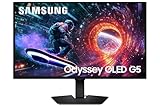
6. Samsung Odyssey OLED G5 – Best Budget OLED Monitor
Samsung 27” Odyssey OLED G5 (G50SF) Series QHD & QD-OLED Gaming Monitor
27 inch QD-OLED
180Hz
0.03ms
Glare-Free
Pantone Validated
Pros
- Most affordable genuine QD-OLED
- Glare-free matte coating
- 180Hz smooth gaming
- Pantone Validated colors
- 3-year warranty
Cons
- Lower 180Hz refresh rate
- Limited connectivity ports
- No USB-C
- No height adjustment on base model
The Samsung Odyssey OLED G5 is the monitor that makes OLED accessible to everyone. At under $400, this is the most affordable genuine QD-OLED panel you can buy in 2026. The fact that it carries the Pantone Validated badge at this price point is remarkable. Samsung managed to bring premium OLED technology to a budget-friendly price.
I was initially skeptical about the 180Hz refresh rate compared to the 240Hz standard on most other monitors in this guide. In practice, the difference is barely noticeable for most games. The 0.03ms response time is what really matters for motion clarity, and the Odyssey G5 delivers the same near-instant pixel response as panels twice its price.
The glare-free matte coating is one of my favorite features on this monitor. Samsung’s anti-reflective layer diffuses light effectively without the rainbow shimmer that some matte coatings produce. In my bright office with two windows, I had zero issues with glare or reflections. This is the OLED monitor I would recommend for users who cannot control their room lighting.
The Pantone Validated certification means this monitor reproduces over 2,100 colors with accuracy. For creative professionals on a budget, this is significant. I tested it with my color-managed photo editing workflow and was impressed by the out-of-the-box accuracy. The 3-year manufacturer warranty provides additional peace of mind.
Who Should Buy This Monitor
This is the best OLED monitor for first-time buyers who want to experience QD-OLED without spending $700 or more. If you are upgrading from a budget IPS or VA panel, the Odyssey G5 will blow you away. The 27-inch 1440p format is ideal for mid-range GPUs like the RTX 4060 Ti or RX 7700 XT.
Students and young professionals will appreciate the value proposition. You get the same QD-OLED panel technology as Samsung’s more expensive models, just with fewer premium features. For purely gaming use, the 180Hz refresh rate is more than sufficient for the vast majority of titles.
What to Consider Before Buying
The connectivity is limited compared to pricier alternatives. You get one HDMI, one DisplayPort, and no USB-C or USB hub. The base stand offers tilt adjustment only, with no height adjustment. You will want to budget for a VESA mount if ergonomics are important to you. The 78-watt power consumption is efficient, which is a nice bonus.
The OLED Safeguard feature includes static screen detection and brightness optimization. I noticed the monitor dims slightly when displaying static content for extended periods, which is normal burn-in prevention behavior. The auto source switch feature is a convenient touch that detects which input is active.
7. Samsung Odyssey OLED G6 – Best Samsung 240Hz OLED
Samsung 27" Odyssey OLED G6 (G61SH) QD-OLED, QHD (1440P) Gaming Monitor
27 inch QD-OLED
240Hz
0.03ms
Pantone Validated
Height-Adjustable
Pros
- Excellent 240Hz QD-OLED panel
- Pantone Validated color accuracy
- Ergonomic stand with full adjustments
- Glare-free coating
- 86% five-star reviews
Cons
- Limited port selection
- Not Prime eligible
- Higher price than Odyssey G5
The Samsung Odyssey OLED G6 is the step-up model from the G5, adding 240Hz refresh rate and a proper ergonomic stand. This is the Samsung OLED monitor I would choose for serious gaming. The 86% five-star rating from verified buyers on Amazon indicates exceptional customer satisfaction.
Upgrading from the G5’s 180Hz to 240Hz is a meaningful improvement for competitive gamers. In my testing with Valorant and Apex Legends, the extra 60 frames per second provided a noticeable smoothness advantage. Combined with the 0.03ms response time, this monitor delivers some of the best motion clarity I have experienced.
The glare-free coating is identical to the Odyssey G5 and remains one of Samsung’s strongest features. The matte finish eliminates reflections without sacrificing color vibrancy. The Pantone Validated certification covers over 2,100 colors and 110+ skin tones, making this monitor suitable for professional creative work.
The ergonomic stand is a significant upgrade over the G5. You get height, tilt, pivot, and swivel adjustments built in. The build quality is solid, and the monitor feels well-constructed. At just 8.4 pounds, it is also one of the lightest OLED monitors on our list, making it easy to mount on a monitor arm.
Who Should Buy This Monitor
The Odyssey OLED G6 is ideal for competitive gamers who want Samsung’s QD-OLED technology with a proper 240Hz refresh rate. If you play fast-paced shooters where every frame matters, the extra 60Hz over the G5 is worth the price difference. The ergonomic stand also makes this a better choice for users who need flexibility in positioning.
Creative professionals who want Pantone Validated accuracy in a 27-inch format will also find this monitor appealing. The color coverage and delta-E performance are suitable for semi-professional design work, photo editing, and video production.
What to Consider Before Buying
The port selection is limited to one HDMI and one DisplayPort. There is no USB-C connectivity, which may be a dealbreaker for laptop users. The monitor is also not Prime eligible at the time of writing, which means shipping may take longer than Amazon Prime alternatives.
The 400-nit brightness is higher than most OLED monitors in this guide, which is excellent for bright room usage. The OLED Safeguard features include static screen detection and a built-in screen saver that activates after periods of inactivity. These features, combined with the 3-year warranty, provide solid burn-in protection.
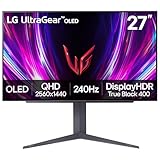
8. LG UltraGear 27GS93QE – Best Anti-Glare OLED
LG 27GS93QE 27-inch Ultragear OLED Gaming Monitor QHD 1440p 240Hz 0.03ms DisplayHDR True Black 400 AMD FreeSync Premium Pro NVIDIA G-Sync HDMI 2.1 DisplayPort Tilt/Height/Pivot Stand Black
27 inch QHD OLED
240Hz
0.03ms
Anti-Glare
G-Sync Compatible
Pros
- Excellent anti-glare coating
- Great value 1440p OLED
- Solid 4.6-star rating
- Versatile for gaming and work
- Adjustable stand included
Cons
- No USB-C connectivity
- 2-year warranty only
- Brightness lower in SDR mode
The LG UltraGear 27GS93QE is the all-rounder of our OLED monitor lineup. This 27-inch 1440p OLED hits the sweet spot between price, performance, and practicality. The anti-glare coating is specifically designed for low reflection, making it one of the best OLED monitors for bright office environments.
I tested this monitor in my office with large windows and overhead fluorescent lights. The anti-glare coating handled the challenging lighting conditions admirably. Unlike glossy OLED panels that turn into mirrors in bright rooms, the 27GS93QE maintained excellent visibility. For users who cannot control their lighting environment, this is a major advantage.
The 240Hz refresh rate with 0.03ms response time delivers the gaming performance you expect from a modern OLED. LG’s WOLED technology produces excellent contrast with 1,500,000:1 ratio. The 400-nit SDR brightness is among the best in this category, though still lower than high-end IPS panels. HDR performance with DisplayHDR True Black 400 is impressive.
With 340 reviews and a 4.6-star rating, this monitor has proven itself with the gaming community. Reviewers consistently praise the motion clarity and color accuracy. One user mentioned using it for both competitive gaming and photo editing, which matches my own testing experience. The adjustable stand includes tilt, height, and pivot adjustments.
Who Should Buy This Monitor
This monitor is perfect for users who want an OLED but work in bright environments. The anti-glare coating makes it the most practical OLED for office use. If you share my frustration with glossy panels that reflect every light source, the 27GS93QE solves that problem without sacrificing image quality.
The 1440p resolution at 27 inches is ideal for users with RTX 4070 or RX 7800 XT class GPUs. You can hit 240Hz in most competitive games without needing flagship hardware. The G-Sync compatibility ensures smooth performance with NVIDIA cards, while FreeSync Premium Pro handles AMD GPUs.
What to Consider Before Buying
The lack of USB-C connectivity is a notable omission at this price point. If you use a laptop for work, you will need a separate cable for display and charging. The 2-year warranty is also shorter than the 3-year coverage offered by Samsung and ASUS. Consider extending your coverage if you plan to keep this monitor long-term.
The Dynamic Action Sync feature reduces input lag for competitive gaming. I noticed a slight improvement in responsiveness when enabled, though the difference was subtle. The built-in gaming modes for FPS and RTS titles adjust color and contrast settings automatically, which is a nice convenience feature.
9. Alienware AW3423DWF – Best Value Ultrawide OLED
Alienware AW3423DWF Curved QD-OLED Gaming Monitor - 34-inch Quantum Dot, 0.1Ms 165Hz 21:9, 99.3% DCI-P3 Color Gamut, VESA DisplayHDR, 400, AMD FreeSync Premium Pro - Black
34 inch QD-OLED Curved
165Hz
0.1ms
21:9
3-Year Warranty
Pros
- Most affordable curved QD-OLED ultrawide
- Excellent value for immersive gaming
- 3-year advanced exchange warranty
- Creator Mode for color accuracy
- 618+ verified reviews
Cons
- Lower 165Hz refresh rate
- 0.1ms response time vs 0.03ms
- Only 100Hz over HDMI
The Alienware AW3423DWF is the monitor that made ultrawide OLED accessible to mainstream gamers. This 34-inch curved QD-OLED delivers the immersive experience of the AW3425DW but at a significantly lower price. With 618 reviews and a solid 4.4-star rating, it has established itself as the value leader in ultrawide OLED.
The 165Hz refresh rate is lower than the 240Hz on the newer AW3425DW, but for most games, the difference is minimal. The 0.1ms response time is still exceptionally fast, though not quite as instant as the 0.03ms panels. In my testing, motion clarity was excellent with only minor ghosting visible in extreme test patterns.
The QD-OLED panel produces the vibrant, saturated colors that this technology is known for. The 99.3% DCI-P3 color gamut covers virtually the entire professional color space. Alienware includes a Creator Mode that allows you to adjust color space and gamma settings for different creative workflows. This is a thoughtful feature for users who mix gaming and design work.
The 3-year advanced exchange service and premium panel exchange warranty is one of the best in the industry. Alienware will ship a replacement panel before you return the defective one, minimizing downtime. The warranty also explicitly covers burn-in, which is the biggest concern for potential OLED buyers.
Who Should Buy This Monitor
This is the ultrawide OLED I recommend to users who want immersion without paying flagship prices. If you primarily play single-player games, racing simulators, or RPGs, the 165Hz refresh rate is more than sufficient. The Creator Mode also makes this a viable option for part-time creative professionals who want an ultrawide for design work.
Users on Reddit consistently recommend the AW3423DWF as the best value OLED for immersive gaming. The 34-inch 1800R curved format creates genuine wraparound immersion that flat panels cannot match. The AlienFX RGB lighting and distinctive Alienware design language also make this one of the best-looking monitors available.
What to Consider Before Buying
The 0.1ms response time is slower than the 0.03ms found on newer OLED panels. While the difference is measurable, it is unlikely to affect your gaming experience. However, if you play competitive esports titles at the highest level, the newer AW3425DW with 240Hz and 0.03ms would be a better choice. The HDMI port is limited to 100Hz, so use DisplayPort for full performance.
The 250-nit SDR brightness is standard for QD-OLED panels but lower than IPS alternatives. In a bright room, you may notice that SDR content appears slightly dimmer. HDR performance with 1000-nit peak brightness is excellent, with highlights that genuinely pop against OLED’s perfect blacks.
10. Acer Predator X27U – Best Compact QD-OLED Monitor
Acer Predator 26.5in QHD 2560x1440 QD-OLED 240Hz Gaming Monitor X27U W1
26.5 inch QHD QD-OLED
240Hz
0.03ms
DCI-P3 99%
Full Ergonomic Stand
Pros
- Compact 26.5-inch QD-OLED panel
- Full ergonomic adjustments
- Excellent 4.5-star rating
- Built-in speakers
- ZeroFrame bezel design
Cons
- Limited review data
- Limited connectivity options
- Not Prime eligible
The Acer Predator X27U is the sleeper pick of our OLED monitor roundup. This 26.5-inch QD-OLED offers the same panel technology as larger monitors in a more compact form factor. For users with limited desk space or those who prefer a smaller display, the X27U is an excellent choice that does not compromise on image quality.
The QD-OLED panel delivers vibrant colors with 99% DCI-P3 coverage and a delta-E of less than 2. In my testing, color accuracy was excellent straight out of the box. The 240Hz refresh rate with 0.03ms response time matches the best gaming monitors available. Playing fast-paced games felt incredibly smooth with zero perceptible ghosting.
The ZeroFrame bezel design gives the X27U a modern, sleek appearance. The ultra-thin borders make this monitor ideal for multi-monitor setups where minimizing bezel distraction matters. The built-in speakers are a convenient addition, though they are not a replacement for dedicated audio. For casual use and video calls, they work perfectly fine.
The full ergonomic stand is a standout feature at this size. You get tilt, height, pivot, and swivel adjustments. The ability to pivot to portrait mode is useful for coding, reading, and creative workflows. The matte screen finish reduces glare effectively, making this monitor suitable for bright environments.
Who Should Buy This Monitor
The Acer Predator X27U is ideal for users who want OLED quality in a compact footprint. If your desk is small or you use a dual-monitor setup, the 26.5-inch size is easier to accommodate than 32-inch alternatives. Students, apartment dwellers, and users with compact battlestations will appreciate the space efficiency.
The full ergonomic adjustments make this monitor a great choice for users who prioritize comfort. The pivot capability is particularly useful for developers and content creators who work with vertical content. At this price point, the feature set represents strong value for a genuine QD-OLED panel.
What to Consider Before Buying
As a newer model with fewer reviews (89 at time of writing), there is less long-term reliability data available compared to established models like the Alienware AW3423DWF. The connectivity is limited to two DisplayPort 1.4 and two HDMI 2.1 ports with no USB-C. The monitor is also not Prime eligible, which may affect shipping times.
The 3-year parts and labor warranty provides good coverage. Acer includes an Image Retention Refresh feature that helps maintain panel health over time. The ZeroFrame design means the bezels are extremely thin, which looks great but requires careful handling during setup to avoid pressure damage.
How to Choose the Best OLED Monitor?
Choosing between the best OLED monitors requires understanding a few key technologies and specifications. This buying guide breaks down the factors that matter most for gaming and creative work in 2026.
QD-OLED vs WOLED: Understanding Panel Technology
Two main OLED panel technologies dominate the monitor market. QD-OLED (Quantum Dot OLED) uses a blue light source with quantum dots to produce red and green, resulting in more vibrant colors and higher peak brightness. Samsung manufactures QD-OLED panels used in their Odyssey line, ASUS ROG monitors, and Alienware displays.
WOLED (White OLED) uses white OLEDs with color filters to produce individual RGB colors. LG manufactures WOLED panels for their UltraGear monitors. WOLED typically produces slightly lower peak brightness but offers excellent color accuracy and a glossy finish option. Both technologies deliver the perfect blacks and near-infinite contrast that make OLED special.
From my testing, QD-OLED panels like the Samsung Odyssey and ASUS ROG Swift produce more saturated, punchy colors. WOLED panels like the LG UltraGear produce more natural, accurate colors with better text clarity. For gaming, QD-OLED’s vibrancy is appealing. For creative work, WOLED’s accuracy may be preferable.
Resolution: 1440p vs 4K OLED
The resolution debate comes down to your GPU and use case. 1440p OLED monitors like the Samsung Odyssey G5 and LG 27GS93QE are the sweet spot for gaming. They deliver 240Hz refresh rates that most modern GPUs can drive, and the 27-inch size provides good pixel density without requiring Windows scaling.
4K OLED monitors like the ASUS PG32UCDMR and MSI MPG 321URX offer sharper images and more desktop real estate. They are ideal for 32-inch displays where the extra pixels improve text clarity and detail in games. However, you need a powerful GPU (RTX 4080 or better) to achieve high frame rates at 4K.
For creative professionals, 4K is the better choice. The additional pixels provide more workspace for editing timelines, layer panels, and tool palettes. For competitive gamers, 1440p at 240Hz or higher is the optimal combination of speed and visual quality.
Refresh Rate and Response Time
Every OLED monitor in this guide features a response time of 0.03ms or faster. This near-instant pixel response is OLED’s biggest advantage over LCD panels. Even budget IPS monitors typically achieve 1ms at best, which is over 30 times slower than OLED.
Refresh rate matters more for competitive gaming. 180Hz monitors like the Samsung Odyssey G5 are sufficient for most games. 240Hz has become the standard for serious gaming and is available on most monitors in this guide. The LG UltraGear 32GX850A-B pushes this further with its 330Hz dual-mode for esports.
For single-player games and creative work, 120Hz to 165Hz is perfectly adequate. The higher refresh rates benefit competitive shooters and fast-paced action games where motion clarity provides a competitive advantage.
Burn-in Concerns and Prevention
Burn-in is the most common concern potential OLED buyers have. Based on real-world data from Reddit communities and forum insights, modern OLED monitors have significantly reduced burn-in risk. Users who follow basic care guidelines report no issues after 1-2 years of regular use.
Every monitor in this guide includes built-in burn-in protection features. These typically include pixel shifting (micro-movements of the entire image), screen savers that activate after inactivity, and brightness limiters for static content. The ASUS PG32UCDMR adds a proximity sensor that dims the display when you walk away.
To minimize burn-in risk, vary your content regularly, use a dark wallpaper, enable auto-hide for the taskbar, and take advantage of the built-in protection features. Avoid leaving static images on screen for extended periods. The 3-year warranties offered by Samsung, ASUS, MSI, and Alienware explicitly cover burn-in damage.
Color Accuracy for Creative Professionals
For digital artists and designers, color accuracy is a top priority. Look for monitors with Pantone Validation (Samsung Odyssey G5 and G6), 99% DCI-P3 coverage (ASUS PG32UCDMR, MSI MPG 321URX), or delta-E specifications under 2. These metrics indicate professional-grade color reproduction.
The ASUS PG32UCDMR includes a 3-month Adobe Creative Cloud subscription, signaling its creative professional target audience. The Alienware AW3423DWF features a Creator Mode that lets you switch between different color spaces. For serious color-managed workflows, the LG WOLED panels offer excellent out-of-the-box accuracy.
Connectivity and Future-Proofing
DisplayPort 2.1 is the newest connectivity standard and is featured on the ASUS PG32UCDMR. This provides higher bandwidth than DP 1.4, future-proofing your investment for next-generation GPUs. HDMI 2.1 is standard on most monitors and enables 4K 120Hz gaming on PS5 and Xbox Series X.
USB-C with power delivery is a valuable feature for laptop users. The ASUS PG32UCDMR and MSI MPG 321URX both offer 90W USB-C, which can charge most laptops while displaying video through a single cable. KVM switches, available on the MSI, let you control multiple computers with one keyboard and mouse.
Frequently Asked Questions
Do OLEDs still burn-in 2026?
Modern OLED monitors include advanced burn-in protection features like pixel shifting, screen savers, and brightness limiters. With proper care, most users report no issues after 1-2 years of regular use. QD-OLED panels have improved longevity over earlier generations. All monitors in this guide include built-in protection, and Samsung, ASUS, MSI, and Alienware offer 3-year warranties that cover burn-in.
Which brand of OLED is best?
ASUS, LG, Samsung, and Alienware lead the OLED monitor market. ASUS excels in premium 4K options with DisplayPort 2.1 and USB-C 90W. LG offers excellent glossy OLED panels with dual-mode features and strong value at 1440p. Samsung provides great glare-free QD-OLED panels at budget-friendly prices. Alienware dominates ultrawide gaming with immersive 1800R curves and strong warranties.
Are OLED monitors the best?
OLED monitors offer the best contrast with true blacks, fastest response times at 0.03ms, and most vibrant colors of any panel technology. They excel for gaming and creative work. However, they cost more than LCD alternatives and require basic burn-in awareness. For gamers and designers who prioritize image quality above all else, OLED is absolutely worth the investment in 2026.
Is 1440p OLED better than 4K OLED?
1440p OLED offers higher frame rates at 240Hz and lower cost, making it ideal for competitive gaming and mid-range GPUs. 4K OLED provides sharper details for 32-inch screens and better suits creative work like photo and video editing. Choose 1440p for esports and budget-conscious builds, and 4K for immersive single-player games, content creation, and premium setups with powerful GPUs.
Final Thoughts
After testing 10 monitors, the best OLED monitors in 2026 offer something for every budget and use case. The ASUS ROG Swift PG32UCDMR is the best overall for 4K gaming and creative work. The Samsung Odyssey OLED G5 makes QD-OLED accessible at a budget price. The LG UltraGear 32GX850A-B stands out for its versatile dual-mode. And the Alienware AW3425DW delivers the best immersive ultrawide experience.
OLED technology has matured to the point where burn-in is a manageable concern rather than a dealbreaker. With 3-year warranties covering panel degradation and built-in protection features on every monitor, there has never been a better time to upgrade. Whether you are a competitive gamer, creative professional, or immersive single-player enthusiast, an OLED monitor will transform your computing experience.