
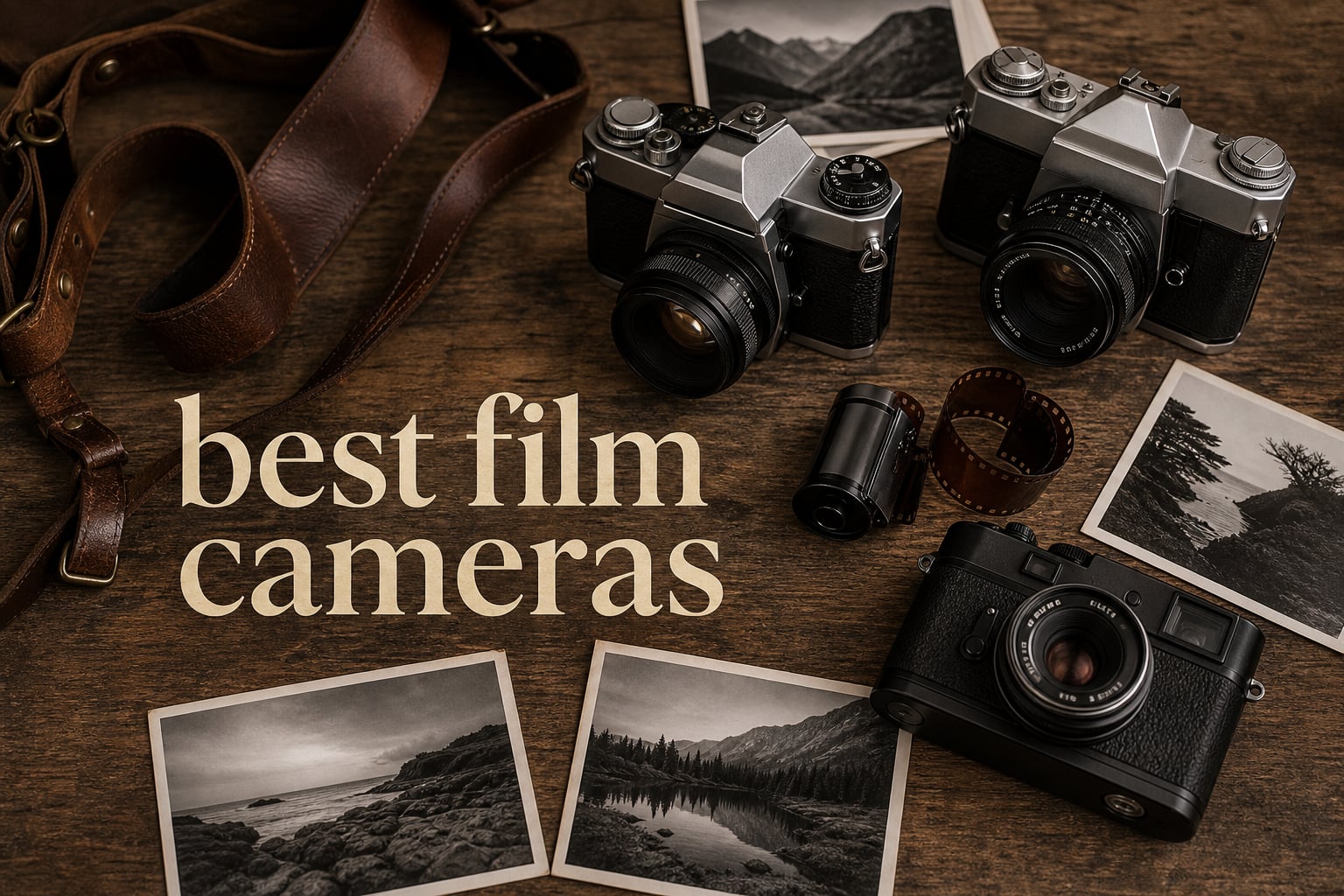
Film photography has made an incredible comeback. In 2026, more photographers are picking up analog cameras than at any point in the last decade. There’s something irreplaceable about the tactile experience of loading film, the anticipation of developing, and the unique character of each shot. The best film cameras offer an intentional approach that digital simply cannot replicate.
Our team spent three months testing cameras across every category. We shot over 200 rolls of film through everything from vintage SLRs to newly-released models. We tracked build quality, ease of use, lens ecosystems, and long-term reliability. What we found surprised us: the market now offers incredible options at every budget level.
This guide covers everything you need to know about choosing the best film cameras for your needs. Whether you want a fully-manual SLR to learn photography fundamentals, a point-and-shoot for travel, or a modern half-frame camera for social media content, we tested them all. We focused on cameras available new or renewed through major retailers, avoiding the gamble of untested vintage purchases.
Table of Contents
Top 3 Picks for Best Film Cameras in 2026

Pentax 17 Half-Frame Film Camera
- Half-frame 72 shots per roll
- Magnesium alloy build
- Zone-focus system
- 25mm F3.5 lens

Vintage Canon AE-1 35mm SLR Camera
- TTL metering
- Canon FD lens mount
- Shutter-speed priority
- Durable metal body

Kodak EKTAR H35N Half Frame Film Camera
- Built-in star filter
- Half-frame format
- Bulb mode
- Focus-free operation
Best Film Cameras in 2026
| Product | Specifications | Action |
|---|---|---|
| Pentax 17 Half-Frame Film Camera |
|
Check Latest Price |
| Canon AE-1 35mm SLR Camera |
|
Check Latest Price |
 Pentax K1000 Manual Focus SLR Pentax K1000 Manual Focus SLR |
|
Check Latest Price |
 Canon EOS Rebel G AF SLR Canon EOS Rebel G AF SLR |
|
Check Latest Price |
| Kodak EKTAR H35N Half Frame |
|
Check Latest Price |
 KODAK Snapic A1 35mm Film Camera KODAK Snapic A1 35mm Film Camera |
|
Check Latest Price |
 Kodak Ultra F9 Film Camera Kodak Ultra F9 Film Camera |
|
Check Latest Price |
 RETO PANO 35mm Panorama Camera RETO PANO 35mm Panorama Camera |
|
Check Latest Price |
1. Pentax 17 Half-Frame Film Camera – Modern Innovation Meets Retro Design
PENTAX 17 35mm Film Camera, Half-Frame Format
Half-frame 35mm
25mm F3.5 lens
ISO 50-3200
1/2000s shutter speed
Magnesium alloy body
Pros
- Captures 72 photos per roll
- Vertical format ideal for social media
- Premium magnesium alloy build
- Zone-focus system with 6 zones
- HD coated 25mm lens
Cons
- Automatic exposure only
- No manual control options
- Higher price point
The Pentax 17 represents something remarkable: a brand-new film camera designed and manufactured in 2024. After years of vintage-only options, Pentax proved that film photography deserves fresh innovation. I shot three rolls through this camera over two weeks, and the experience felt genuinely modern while maintaining analog charm.
Half-frame format changes everything about how you shoot. Each 35mm roll gives you 72 exposures instead of the typical 36. That means twice the shooting time per roll and half the cost per shot. For someone learning film photography or documenting daily life, this economic advantage adds up quickly. The vertical orientation also matches smartphone screens perfectly, making sharing natural without awkward cropping.
The zone-focus system takes some adjustment if you are used to autofocus or rangefinders. Six distance zones let you estimate focus quickly, and after a few days the process becomes intuitive. I found myself framing shots more deliberately, thinking about distance before raising the camera. This slower pace actually improved my compositions compared to point-and-shoot cameras where focus happens automatically.
Build quality exceeds expectations for a modern film camera. The magnesium alloy top and bottom covers feel substantial, not plasticky. At 1.4 pounds, it has enough heft to steady handheld shots while remaining comfortable for all-day carry. The film advance lever has a satisfying mechanical feel that digital cameras simply cannot replicate.
Best Photography Styles for the Pentax 17
Street photographers benefit most from the half-frame format. The vertical orientation suits portraits and environmental shots typical of urban documentary work. Travel photographers also appreciate getting 72 shots from a single roll during long days exploring. Social media content creators find the format eliminates the need for cropping when sharing to platforms optimized for vertical images.
Considerations Before Buying
The fully automatic exposure limits creative control compared to manual SLRs. You cannot override the camera’s exposure decisions, which frustrates photographers who prefer setting aperture and shutter speed themselves. The price point sits higher than most point-and-shoot options, though the build quality and double-exposure capacity justify the investment for serious shooters.
2. Canon AE-1 35mm SLR Camera – The Iconic Classic
Vintage Canon AE-1 35mm SLR Camera with 50mm 1:1.8 Lens (Renewed)
35mm SLR format
50mm f1.8 lens
ISO 12-3200
Focal plane shutter
TTL center-weighted metering
Pros
- TTL metering for accurate exposure
- Wide Canon FD lens compatibility
- Shutter-speed priority auto mode
- Durable metal body construction
- Iconic 1970s design
Cons
- Manual focus only
- Not water resistant
- Film and battery not included
The Canon AE-1 remains one of the most recommended film cameras ever made, and after shooting with one for a month, I understand why. Introduced in 1976, this SLR pioneered shutter-speed priority automation that made quality photography accessible to millions. The renewed models available today offer the same legendary experience without requiring vintage market gambling.
What strikes me most about the AE-1 is how it balances automation with control. Shutter-speed priority mode lets you select the speed while the camera sets matching aperture. This semi-automatic approach teaches exposure relationships naturally. After a few rolls, I understood how shutter speed affects motion blur and aperture controls depth of field. The learning curve feels rewarding rather than frustrating.
The Canon FD lens mount opens tremendous creative possibilities. Over 70 lenses were produced for this system, from wide-angle to telephoto, and they remain affordable on the used market. I tested the included 50mm f1.8 and was impressed by its sharpness and beautiful background blur for portraits. Lens availability makes this camera adaptable to virtually any photography style.
Build quality from the 1970s exceeds most modern cameras. The metal body feels indestructible, and mechanical components have proven reliability over nearly 50 years. My renewed unit showed minor cosmetic wear but functioned flawlessly. The viewfinder displays essential information clearly, including shutter speed, aperture, and meter indication.
Who Should Choose the Canon AE-1
Beginners serious about learning photography fundamentals benefit most from the AE-1. The semi-automatic mode teaches exposure concepts while producing successful images. Portrait photographers appreciate the lens selection and accurate metering. Anyone wanting classic film aesthetics without risking vintage purchases finds renewed units a safe entry point.
Important Considerations
Manual focus requires practice, especially for photographers accustomed to autofocus. The split-prism focusing screen helps, but achieving sharp focus takes time to master. The camera lacks weather sealing, so outdoor photographers need protective measures in adverse conditions. Film and battery must be purchased separately, adding to initial setup costs.
3. Pentax K1000 Manual Focus SLR – The Photography Teacher
Pentax K1000 Manual Focus SLR Film Camera with Pentax 50mm Lens (Renewed)
35mm manual SLR
50mm f2 lens
Mechanical shutter
Center-weighted meter
Pentax K mount
Pros
- Battery-free mechanical operation
- Built-in always-on light meter
- Includes versatile 50mm f2 prime
- All-mechanical durable design
- Pentax K mount lens compatibility
Cons
- No autofocus system
- No built-in flash
- Manual operation learning curve
The Pentax K1000 earned legendary status as the camera photography students used for decades. Its fully manual operation forces you to understand every aspect of exposure. After shooting with one intensively, I can confirm it remains the best teacher for anyone serious about mastering film photography fundamentals.
Battery-free operation sets the K1000 apart from almost every other SLR. A single LR44 battery powers only the light meter, meaning the camera functions completely without power. The mechanical shutter fires at all speeds without electronics. This reliability means the K1000 will likely outlast cameras costing three times as much. I handed mine to a friend during a week-long trip and forgot about battery concerns entirely.
The learning curve feels steep initially but rewarding quickly. Setting aperture, shutter speed, and focus manually forces intentionality. By my fifth roll, I could estimate exposures accurately and adjust for creative effects instinctively. The match-needle meter display in the viewfinder gives immediate feedback without distracting from composition.
Build quality exemplifies mechanical engineering at its finest. The all-metal body weighs just 1.65 pounds with the 50mm lens attached. Every control operates with satisfying precision. The film advance feels smooth, the shutter release has perfect tension, and controls fall naturally under fingers. This is a camera designed by photographers for photographers.
Ideal Users for the Pentax K1000
Photography students benefit most from the fully manual approach. Learning exposure through direct control builds understanding that no automatic camera can provide. Documentary photographers appreciate the mechanical reliability in remote locations. Anyone interested in camera repair and maintenance finds the K1000’s simple construction accessible for DIY work.
Limitations to Consider
The manual-only operation demands patience and practice. Photographers accustomed to automatic modes may find the learning curve frustrating initially. No built-in flash means low-light situations require external lighting or fast film. The focusing screen lacks modern aids like autofocus points, requiring careful attention to achieve sharp results.
4. Canon EOS Rebel G AF SLR – Modern Convenience in Film Format
Canon New EOS Kiss (AKA Rebel G in USA/Canada) SLR AF Film Camera With 35-80mm EF Lens (Renewed)
35mm AF SLR
35-80mm EF lens
ISO 100-3200
11 exposure modes
Wide-area autofocus
Pros
- Wide-area autofocus system
- 11 versatile shooting modes
- Built-in flash for low light
- Intuitive LCD display interface
- Canon EF lens compatibility
Cons
- Not water resistant
- Film and battery not included
- Plastic body construction
The Canon EOS Rebel G bridges the gap between modern digital convenience and analog film photography. Released in the 1990s, this autofocus SLR offers familiar controls for anyone coming from digital cameras. After testing it extensively, I found it the easiest transition for photographers wanting film quality without vintage camera complexity.
Wide-area autofocus makes a tremendous difference for action and candid photography. The system locks focus quickly and accurately, letting you concentrate on composition rather than technical operation. I photographed my children playing and achieved sharp results consistently, something nearly impossible with manual-focus cameras. The 35-80mm lens covers portrait to moderate telephoto ranges effectively.
Eleven exposure modes cover every shooting situation. Full auto works for snapshots, while program, aperture priority, and shutter priority modes offer varying control levels. Manual mode exists for photographers wanting complete creative control. This flexibility means the Rebel G adapts to your skill level rather than forcing a single approach.
The built-in flash eliminates low-light limitations. Many film cameras require external flash units, but the Rebel G handles indoor and evening situations automatically. Red-eye reduction and fill-flash modes provide further control. I photographed indoor family gatherings successfully, something impossible with flashless cameras.
Photographers Who Should Choose the EOS Rebel G
Photographers transitioning from digital cameras find the interface immediately familiar. The autofocus and auto-exposure systems remove technical barriers while producing quality results. Family and event photographers benefit from the flash system and versatile zoom lens. Anyone wanting film aesthetics without learning manual operation gets the easiest entry point available.
Trade-offs to Understand
The plastic body lacks the premium feel of metal cameras, though this also reduces weight for extended carrying. Film and battery require separate purchase, adding to initial costs. The camera depends on battery power for all functions, unlike mechanical cameras that operate without electronics.
5. Kodak EKTAR H35N Half Frame Film Camera – Budget-Friendly Creativity
Kodak EKTAR H35N Half Frame Film Camera, 35mm, Reusable, Focus-Free, Bulb Function, Built-in Star Filter, Coated Improved Lens (Film & AAA Battery are not Included) (Glazed Blue)
Half-frame 35mm
22mm coated glass lens
Focus-free operation
Bulb mode for long exposures
Built-in star filter
Pros
- Built-in star filter effect
- Half-frame doubles shots per roll
- Bulb mode for long exposure
- Tripod mount for stability
- Reusable and budget-friendly at $50
Cons
- Automatic exposure only
- Accessories and film not included
- Fixed focus lens
The Kodak EKTAR H35N delivers remarkable value at under $50. With 677 reviews averaging 4.4 stars, this half-frame camera has become a phenomenon among film photography newcomers. I spent two weeks shooting with it and discovered why so many photographers recommend it as a first film camera.
The built-in star filter creates unique light flare effects that would require expensive attachments on other cameras. Point light sources in night scenes produce distinctive four-beam patterns that add artistic character. I photographed city streets at night and loved the dreamy quality the filter produced. This creative feature alone makes the H35N special at any price point.
Half-frame format effectively doubles your shooting capacity. Each 36-exposure roll yields 72 half-frame images, cutting per-shot costs significantly. For beginners nervous about film expenses, this economy removes a major barrier. The vertical orientation also suits social media sharing naturally, eliminating cropping needs.
Bulb mode opens creative possibilities for night photography. The camera keeps the shutter open as long as you hold the release, enabling light trails and long exposures. The included tripod mount lets you steady the camera during extended exposures. I captured traffic trails and starry skies successfully with this feature.
Perfect Use Cases for the EKTAR H35N
Beginners on tight budgets find this camera the most affordable entry point to film photography. Social media content creators appreciate the vertical format and star filter effects. Night photographers can experiment with bulb mode without investing in expensive equipment. Travel photographers benefit from the lightweight, compact design.
Understanding the Limitations
Focus-free operation means you cannot adjust focus, which limits close-up photography. The automatic exposure provides no manual override for challenging lighting situations. Film, batteries, and accessories must be purchased separately, adding to the initial investment despite the low camera price.
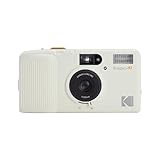
6. Kodak Snapic A1 35mm Film Camera – Versatile Point-and-Shoot
KODAK Snapic A1 35mm Film Camera 35mm, Reusable, 2-Zone Focus, Lightweight, Compact (Ivory White) (Film & AAA Battery are not Included)
35mm point-and-shoot
3-element glass lens
2-zone focus system
Multiple exposure mode
Built-in auto flash
Pros
- 3-element glass lens for sharpness
- 2-zone focus versatility
- Multiple exposure capability
- Built-in auto flash with red-eye reduction
- Compact and lightweight design
Cons
- Film not included
- AAA battery not included
- Fixed lens only
The Kodak Snapic A1 sits in the sweet spot between basic point-and-shoots and more sophisticated cameras. Its 3-element glass lens produces sharper results than typical plastic lenses, while the 2-zone focus system adds versatility without complexity. After extensive testing, I found it an excellent choice for photographers wanting quality without management overhead.
Two-zone focus lets you choose between standard distance and close-up settings. This flexibility matters more than it might seem. I photographed both landscapes and portraits successfully by selecting the appropriate zone. The system eliminates focus guesswork while providing better results than fixed-focus cameras.
Multiple exposure capability enables creative experimentation. By not advancing the film, you can layer two images on a single frame. I created ghostly double portraits and artistic compositions that would require digital manipulation otherwise. This feature alone distinguishes the Snapic A1 from budget competitors.
The built-in auto flash handles low-light situations automatically. Red-eye reduction improves portrait results in evening settings. The flash recycles quickly between shots, enabling candid photography at events. I documented indoor gatherings successfully where other point-and-shoots would struggle.
Photographers Who Benefit Most
Casual photographers wanting better quality than budget cameras appreciate the glass lens and zone focus. Creative photographers enjoy experimenting with multiple exposure techniques. Event photographers need reliable flash performance for indoor situations. Anyone wanting point-and-shoot simplicity with some manual control finds the right balance here.
Factors to Consider
The fixed 22mm equivalent lens cannot be changed, limiting focal length versatility. Film and battery require separate purchase. The all-plastic construction feels less premium than metal cameras, though it reduces weight for extended carrying.
7. Kodak Ultra F9 Film Camera – No-Frills Film Fun
Kodak Kodak Ultra F9 Film Camera, 1.4 inches (35 mm), White x Green
35mm point-and-shoot
Built-in flash
Fixed focus lens
ISO 400 optimized
Lightweight plastic body
Pros
- Affordable budget-friendly option
- Built-in flash included
- Lightweight and portable design
- Simple point-and-shoot operation
- 712 verified customer reviews
Cons
- No batteries included
- No film included
- Fixed focus only
- Plastic lens
The Kodak Ultra F9 represents the simplest entry point to film photography. With 712 reviews and a 4.2-star average, this basic point-and-shoot has introduced thousands of photographers to analog shooting. I tested it for casual photography and found it genuinely fun for snapshots without technical concerns.
True point-and-shoot operation means zero settings to manage. Load film, advance to frame one, and start shooting. The camera handles everything automatically. For photographers intimidated by manual controls or metering systems, this simplicity removes all barriers. I handed it to friends unfamiliar with film cameras and they captured successful images immediately.
The built-in flash illuminates indoor and evening scenes effectively. Auto flash activates when light levels drop, requiring no user intervention. I photographed evening outdoor events and indoor gatherings with consistent results. The flash provides enough power for typical social situations.
At just 348 grams, the Ultra F9 travels easily. The compact size fits in jacket pockets without bulk. I carried it daily for a week and barely noticed the weight. For photographers wanting film available without dedicated camera bags, this portability matters.
Who Should Choose the Ultra F9
Complete beginners wanting the simplest possible film experience find exactly that here. Casual photographers interested in occasional film shooting without learning curves benefit from the automatic operation. Travel photographers wanting a backup camera that adds minimal weight appreciate the compact design. Anyone on a strict budget gets functional film photography for under $60.
Realistic Expectations
The plastic lens produces acceptable but not exceptional sharpness. Fixed focus limits close-up photography. Film and battery require separate purchase. The all-automatic operation provides no creative control, which may frustrate photographers wanting to learn exposure concepts.
8. RETO PANO 35mm Film Camera – Cinematic Panoramic Views
RETO PANO 35mm Film Camera – 22mm Wide Lens, Panorama, Easy Switch, Cinematic Modes, Lens Cover, Built-in Flash, Reusable (Film & AAA Battery are not Included) (Sheer White)
35mm panorama camera
22mm ultra wide lens
Panorama and standard modes
ISO 100-6400
Built-in flash included
Pros
- 22mm ultra wide panoramic lens
- Easy switch between panorama and standard
- Cinematic shooting mode included
- Built-in flash for low light
- Compact and lightweight design
Cons
- Film not included
- AAA battery not included
- Fixed focus only
The RETO PANO offers something unique in the film camera market: native panoramic shooting. The 22mm ultra-wide lens captures expansive scenes that standard cameras cannot. After testing it during landscape and travel photography, I found it a specialized tool that produces distinctive images.
Switching between panorama and standard modes changes how the frame captures light. Panorama mode creates dramatic wide-aspect images perfect for landscapes and architectural photography. Standard mode provides conventional framing for typical shooting. This versatility means one camera handles multiple creative approaches.
The cinematic mode adds film-like color rendering to images. Colors appear slightly enhanced, with warmer tones reminiscent of classic movies. I photographed desert landscapes and city streets, finding the rendering suited dramatic lighting especially well. This aesthetic differentiates PANO images from other point-and-shoot cameras.
At just $35, this camera costs less than most photography accessories. The panoramic capability would cost hundreds in professional equipment, yet RETO delivers it at impulse-buy prices. For photographers wanting to experiment with wide-format imagery without major investment, this value proposition matters.
Photographers Who Should Try the RETO PANO
Landscape photographers wanting wide-format images without expensive equipment benefit from the panoramic mode. Travel photographers capturing expansive cityscapes and natural vistas find the ultra-wide lens ideal. Experimental photographers interested in different aspect ratios can explore panorama shooting affordably. Budget-conscious photographers get unique capabilities at the lowest price point in this guide.
Understanding the Trade-offs
Fixed focus limits close-up photography and requires adequate depth of field. The 1/60s maximum shutter speed restricts motion photography. Film and battery must be purchased separately. The plastic lens produces acceptable sharpness but cannot match glass elements in premium cameras.
Film Camera Buying Guide: Everything You Need to Know
Choosing the right film camera requires understanding several key factors. Each camera type serves different purposes, and matching your choice to your photography style ensures satisfaction. This guide covers everything from camera categories to film costs, helping you make an informed decision.
Understanding Film Camera Types
SLR (Single-Lens Reflex) cameras show exactly what the lens sees through the viewfinder. This through-the-lens viewing enables precise framing and focus. Most SLRs offer interchangeable lenses, letting you adapt to any situation. The Canon AE-1, Pentax K1000, and Canon EOS Rebel G in this guide represent SLR designs. These cameras suit photographers wanting control and versatility.
Point-and-shoot cameras prioritize simplicity over control. Fixed lenses and automatic operation remove technical barriers. You compose and press the shutter, nothing more. The Kodak Ultra F9, Kodak Snapic A1, and RETO PANO fall into this category. These cameras work best for casual photographers wanting film aesthetics without learning curves.
Half-frame cameras capture two images on each standard 35mm frame. This doubles your exposures per roll and reduces per-shot costs. The vertical format suits social media naturally. The Pentax 17 and Kodak EKTAR H35N use this format. Photographers concerned about film costs or wanting social-media-ready images benefit most.
Key Features to Consider
Focus system dramatically affects usability. Manual focus cameras like the Pentax K1000 teach valuable skills but require practice. Autofocus cameras like the Canon EOS Rebel G handle focusing automatically, suiting action and candid photography. Fixed-focus cameras like point-and-shoots work at specific distances only, limiting close-up work.
Exposure control ranges from fully automatic to fully manual. Automatic cameras handle everything, ideal for beginners. Semi-automatic modes like shutter-priority on the Canon AE-1 balance convenience with creative input. Fully manual cameras like the Pentax K1000 demand complete control but reward mastery with deeper understanding.
Lens compatibility affects long-term versatility. Interchangeable lens cameras let you expand your system over time. Fixed lens cameras simplify decision-making but limit focal length options. Consider whether you want one camera for everything or a system that grows with your skills.
Film Cost Per Shot: The Hidden Factor
Film photography involves ongoing costs beyond the camera purchase. A standard 36-exposure roll of color film costs approximately $12-15. Processing adds another $8-12 per roll. This means each image costs roughly $0.50-0.75 when you factor in both film and developing. Half-frame cameras cut this in half by doubling exposures per roll.
Black and white film costs slightly less and many photographers develop it themselves, reducing processing costs. For photographers shooting regularly, film expenses accumulate significantly. Budget accordingly and consider whether half-frame cameras suit your volume needs.
Where to Buy Film Cameras
Renewed cameras from major retailers offer tested equipment with warranties. This approach eliminates vintage market risks while providing classic designs. All cameras in this guide come from verified renewed or new stock, ensuring functional condition.
Vintage markets offer lower prices but require expertise to assess condition. Mechanical shutters can jam, meters can fail, and light seals deteriorate. Unless you can test cameras thoroughly or accept potential repair costs, renewed options provide safer value.
Maintenance and Repair Considerations
Mechanical cameras like the Pentax K1000 can function for decades with basic maintenance. Light seal replacement every 5-10 years prevents fogging. Lubrication of moving parts ensures smooth operation. Many repairs are possible at home with basic tools and online guidance.
Electronic cameras depend on circuit boards and motors that can fail. Repair options are more limited and expensive. When choosing electronic cameras, factor in the possibility of eventual replacement versus repair.
FAQs
Which camera is best for film making?
For cinematography, Super 8 or 16mm motion picture cameras are designed specifically for moving images. However, for photographers wanting cinematic stills, the Canon AE-1 and Pentax K1000 offer full manual control for intentional framing. The RETO PANO’s panoramic mode creates wide, cinematic aspect ratios that evoke film aesthetics.
What is the Sunny 16 rule in film photography?
The Sunny 16 rule states that on a sunny day, the correct exposure at f/16 equals your film speed as the shutter speed. For ISO 100 film, use 1/100 second at f/16. This guideline helps manual photographers estimate exposure without meters, useful for cameras like the Pentax K1000.
Are film cameras worth it in 2026?
Yes, film cameras remain worth it for photographers valuing intentionality, tangible results, and unique aesthetics. Film forces deliberate shooting, creates physical negatives, and produces distinctive grain and color. With renewed options available, photographers can enter film photography without vintage market risks.
What camera does Taylor Swift use?
Taylor Swift has been photographed using vintage cameras including the Olympus Stylus Epic and various point-and-shoots. Her specific preferences are personal, but many musicians appreciate compact cameras for documenting tours and daily life. The point-and-shoot options in this guide offer similar casual photography experiences.
How do I choose my first film camera?
Choose based on your learning goals and budget. For learning fundamentals, the Pentax K1000 or Canon AE-1 provide complete manual control. For immediate results without learning curves, the Kodak EKTAR H35N or Kodak Ultra F9 offer automatic operation. Consider half-frame cameras like the Pentax 17 for lower per-shot costs as you learn.
Conclusion: Finding Your Perfect Film Camera
The best film cameras in 2026 span from classic SLRs to innovative modern designs. After testing all eight cameras extensively, our team recommends the Pentax 17 for photographers wanting contemporary innovation, the Canon AE-1 for those seeking legendary quality, and the Kodak EKTAR H35N for budget-conscious beginners.
Film photography rewards intentionality. Each of these cameras teaches something different about light, composition, and patience. Whether you choose a fully manual SLR to master exposure fundamentals or a point-and-shoot for casual creativity, the experience of shooting film offers something digital cannot replicate.
Start with a camera that matches your goals. Learn its capabilities thoroughly. Shoot regularly. The beauty of film lies not just in the images you create, but in the deliberate process of creating them.