
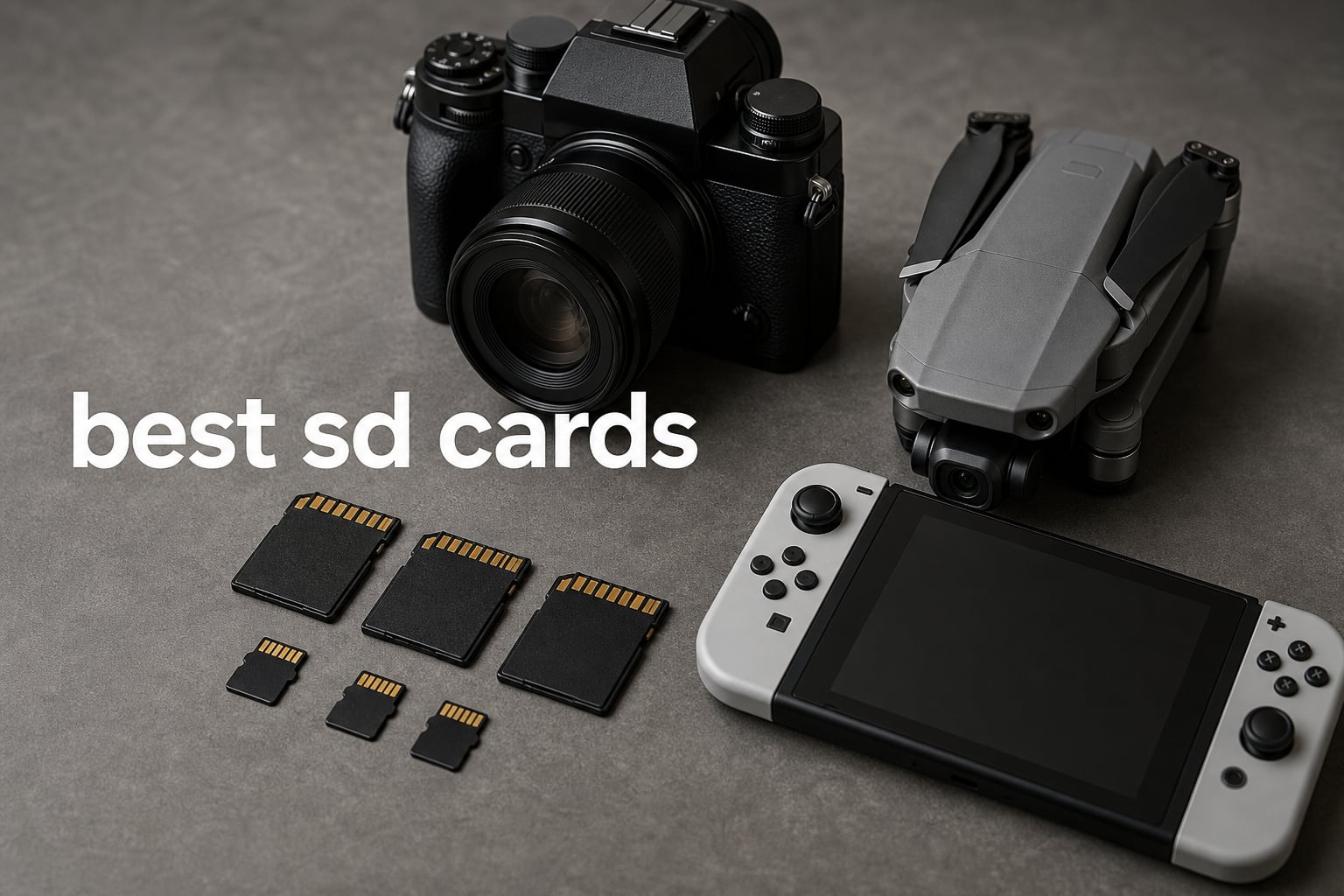
The best SD cards are not automatically the cards with the biggest read number on the label. The right one matches your device’s slot, its recording mode, and the kind of work you cannot afford to lose, whether that is a mirrorless-camera shoot, a long dash-cam drive, drone footage, or downloaded games.
For a full-size camera card, I would start with the SanDisk 256GB Extreme PRO SDXC UHS-II V60. Its 280 MB/s read speed, 150 MB/s write speed, V60 rating, 256GB capacity, and extensive environmental protections make its purpose very clear: demanding stills and 4K or 6K capture in compatible cameras.
There is no single best format for every device. Full-size SDXC cards belong in many cameras, while microSD cards fit action cameras, drones, phones, handhelds, dash cams, and monitoring hardware; an included adapter can let a microSD card work in a full-size SD slot, but it does not turn it into a faster card.
This guide compares ten real products by their stated capacity, format, bus interface, read and write figures, video class, warranty, durability claims, and intended device. I also explain UHS-I, UHS-II, V30, V60, and V90 in plain language, because the label alphabet soup should not decide a shoot or a storage upgrade for you.
Reliability deserves the same attention as speed. Community discussions repeatedly point to counterfeits, card failure, and unclear UHS-II benefits as recurring problems, so I would buy important media from a trusted retailer, format it in the device that will use it, and keep more than one card for work that matters.
Table of Contents
Top 3 Picks – Best SD Cards in 2026
These three picks answer three different needs rather than pretending that one card fits every slot. The SanDisk Extreme PRO is the strongest all-round full-size V60 choice here, the Lexar SILVER PRO brings UHS-II and V60 specifications with a lifetime limited warranty, and the SanDisk Extreme microSD is the compact card to consider for action cameras, drones, and Android devices.
Best full-size camera pick: SanDisk 256GB Extreme PRO SDXC UHS-II V60 — 280 MB/s read, 150 MB/s write, and stated 6K and 4K UHD support.
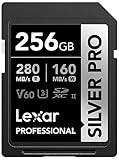
Best UHS-II alternative: Lexar 256GB Professional SILVER PRO — 280 MB/s read, 160 MB/s write, V60, and backward compatibility at UHS-I speeds.
Best drone and action-camera microSD: SanDisk 128GB Extreme microSD — 245 MB/s read, 120 MB/s write, V30, and stated 5.3K and 4K UHD support.
Best continuous-recording card: SanDisk 512GB High Endurance microSDXC — V30 with a stated design target of up to 40,000 recording hours for dash-cam and monitoring use.
Best next-generation handheld card: SanDisk 256GB microSD Express — up to 880 MB/s read, up to 650 MB/s peak write, and stated Nintendo Switch 2 compatibility.
Read figures help most when copying files to a computer through a suitable reader. Write figures and the V rating matter more when your camera is trying to keep recording, so a card with a very high advertised read speed is not automatically the right video card.
Best SD Cards in 2026
| Product | Specifications | Action |
|---|---|---|
 SanDisk Extreme PRO 256GB SanDisk Extreme PRO 256GB |
|
Check Latest Price |
 SanDisk microSD Express 256GB SanDisk microSD Express 256GB |
|
Check Latest Price |
 Lexar SILVER PRO 256GB Lexar SILVER PRO 256GB |
|
Check Latest Price |
 SanDisk Extreme microSD 128GB SanDisk Extreme microSD 128GB |
|
Check Latest Price |
 Lexar GOLD 512GB Lexar GOLD 512GB |
|
Check Latest Price |
 SanDisk High Endurance 512GB SanDisk High Endurance 512GB |
|
Check Latest Price |
 Lexar Blue microSD 256GB Lexar Blue microSD 256GB |
|
Check Latest Price |
 PNY EliteX-PRO60 256GB PNY EliteX-PRO60 256GB |
|
Check Latest Price |
 SanDisk Ultra microSD 256GB SanDisk Ultra microSD 256GB |
|
Check Latest Price |
 Lexar SILVER 128GB Lexar SILVER 128GB |
|
Check Latest Price |
Use this overview to narrow the field before reading the longer reviews. SDXC describes the card family and capacity support, microSD describes the smaller physical format, UHS-I or UHS-II describes the connection bus, and V30 or V60 describes a minimum sustained video write level.
There is one special case in the list: microSD Express. The SanDisk microSD Express card uses a PCIe-NVMe interface and lists much higher peak transfer figures, but those figures depend on a device and reader that support that newer interface. In an older microSD device, compatibility and speed are determined by that device.
SD card speed classes tell you both the bus connection and the minimum video write rate
UHS-I and UHS-II describe the card’s bus interface, not a video guarantee. UHS-I is common in cameras and microSD devices, while UHS-II full-size SD cards add a second row of contacts and can move data faster when both the device and reader support the interface.
A UHS-II card can still work in a UHS-I device when the maker states backward compatibility, but it will operate at UHS-I speeds. That distinction is where many buyers waste capability: the faster card can be a sound choice for a future camera, yet it will not make an older UHS-I slot deliver UHS-II transfer performance.
V30, V60, and V90 are minimum sustained-write labels for video
The number after V is the minimum sustained write speed in MB/s. V30 means at least 30 MB/s, V60 means at least 60 MB/s, and V90 means at least 90 MB/s under the Video Speed Class standard; those are more useful for recording decisions than a card’s bursty peak read claim.
For many 4K jobs, V30 is the sensible baseline if the camera maker calls for it. V60 gives more headroom for demanding 4K modes and supports the 6K and 4K claims on the SanDisk Extreme PRO reviewed here, while V90 is aimed at the most data-heavy recording modes and is not represented among these ten supplied products.
U3, Class 10, A1, and A2 answer different questions
Class 10 is the familiar basic speed class, and U3 denotes the UHS speed class commonly associated with a 30 MB/s minimum write rate. A1 and A2 are application performance classes for running apps from microSD storage, so they matter more to a phone or handheld operating system than to a dedicated camera.
The Lexar Blue microSD carries A2 and V30, making it a strong fit when both app responsiveness and 4K-oriented video storage matter. The SanDisk Ultra carries A1 and U1/V10-level video classification, which suits general storage and Full HD use but is not the card I would select for a device that specifically asks for V30 4K media.
SDXC and microSD are physical and capacity choices before they are speed choices
Full-size SDXC is the normal card shape for many mirrorless cameras and DSLRs. MicroSDXC is physically smaller and is common in drones, action cameras, Android hardware, dash cams, home cameras, and gaming handhelds; a microSD-to-SD adapter changes the shape, not the underlying bus or endurance behavior.
Always check your manual for supported capacity as well as format. A 512GB card gives a longer runway for high-resolution files or continuous recording, but two smaller cards can reduce the amount of work held on a single piece of media during an important day.
A capable card reader is part of the transfer-speed result
Fast cards can only offload at their listed peak figures through a reader and computer connection that can keep up. A UHS-II full-size SD card needs a UHS-II reader to expose the benefit, and the microSD Express card needs compatible Express hardware for its PCIe-NVMe performance path.
I would treat the reader as a workflow decision rather than an afterthought. If offload time is not a concern, a standard reader may be fine; if you routinely copy large photo sets or video files, matching the reader to the card’s interface is the straightforward way to avoid a needless bottleneck.
1. The SanDisk Extreme PRO is the best all-round V60 card for compatible cameras
SANDISK 256GB Extreme PRO SD Memory Card, Up to 280MB/s Read Speeds, UHS-II
256GB SDXC
UHS-II V60
280 read, 150 write
Pros
- V60 for 6K and 4K
- 150 MB/s write
- 280 MB/s read
- Lifetime limited warranty
- Five protection claims
Cons
- Needs UHS-II gear for full speed
- Made for demanding camera work
The SanDisk 256GB Extreme PRO is the clearest recommendation for a photographer or filmmaker with a UHS-II full-size SD slot and a need for sustained capture. It combines a 256GB SDXC capacity with up to 280 MB/s read speed, up to 150 MB/s write speed, and V60 classification, which is a meaningful collection of specifications rather than one headline number.
SanDisk positions this card for cinema and MIL cameras, professional DSLR bodies, and full-frame mirrorless cameras. Its stated support for 6K and 4K UHD, continuous burst capture, and time-lapse work makes the 150 MB/s write specification the figure I would focus on when comparing it with ordinary UHS-I media.
The card has a 4.9 rating from 3.3k+ reviews in the supplied data and a lifetime limited manufacturer warranty. Its stated protection list includes drop, magnetic, temperature, water, and X-ray resistance, useful traits for a card that may travel between bags, locations, and weather conditions.
It fits best in a UHS-II camera used for serious stills or video
Choose this card when your camera manual supports UHS-II and your recording mode calls for V60-class media or benefits from a strong write rate. The capacity is also a practical middle ground for photographers who want room for RAW files without placing every file from a long assignment on one card.
It is among the best SD cards for creators who want one full-size card for high-resolution photography, 4K work, and stated 6K support. Pair it with a UHS-II reader if fast offloads are part of why you are buying it.
Its main limitation is that old UHS-I hardware cannot expose its full transfer potential
A UHS-I camera or reader is not a reason to expect the listed UHS-II peak transfer behavior. If your device only records modest data rates and your workflow does not need quick copying, a V30 UHS-I card can be a more proportionate match.
This is also not a microSD card, so it cannot go directly into a drone, dash cam, or most handhelds. Check the full-size SD slot and the manufacturer’s required class before making it your primary card.
2. The SanDisk microSD Express is the right pick for Nintendo Switch 2 storage
SANDISK 256GB microSD Express Card
256GB microSD
Express interface
880 read, 650 write
Pros
- Works with Nintendo Switch 2
- 880 MB/s read
- 210 MB/s sustained write
- ThermAdapt management
- Limited lifetime warranty
Cons
- Full speed needs Express support
- MicroSD format only
The SanDisk 256GB microSD Express card is built around a different performance path from ordinary microSD. It uses a PCIe-NVMe interface, lists up to 880 MB/s read speed and up to 650 MB/s peak write speed, and also specifies 210 MB/s sustained write performance.
Its stated Nintendo Switch 2 compatibility makes the intended use unusually direct. For someone expanding that handheld, the question is less about a generic V rating and more about buying the microSD Express format the console is designed to accept.
The supplied specifications also list ThermAdapt dynamic thermal management plus drop, magnetic, water, wearout, and X-ray protection. It holds a 4.8 rating from 1.9k+ reviews and carries a limited lifetime warranty, though it is still wise to keep saved data and irreplaceable files backed up outside removable media.
It is best when the device explicitly supports microSD Express
MicroSD Express is the reason to choose this card, not simply its capacity. A compatible handheld and compatible reader are the setting in which its PCIe-NVMe design and stated high transfer figures matter most.
It can also appeal to users who want a compact card with very fast stated transfers for supported hardware. Before treating it as a camera upgrade, confirm that the camera has microSD Express support and that its recording requirements match the card’s listed classes.
It is not a universal replacement for every ordinary microSD card
Older microSD devices do not automatically gain next-generation storage performance. Device compatibility sets both what the card can do and whether an upgrade makes practical sense, so the manual has the final word.
A full-size SD camera slot also requires an adapter for physical fit, and the adapter does not create Express support. For a conventional drone or action camera that asks for V30, the SanDisk Extreme microSD below is the more targeted option.
3. The Lexar Professional SILVER PRO is a strong UHS-II V60 alternative for hybrid creators
Lexar 256GB Silver PRO SD Memory Card, 280MB/s Read, 4K, V60, U3, UHS-II
256GB SDXC
UHS-II V60
280 read, 160 write
Pros
- 160 MB/s write
- UHS-II V60
- 4K support
- UHS-I backward compatibility
- Lifetime limited warranty
Cons
- Full speed requires UHS-II gear
- Stock can vary
The Lexar 256GB Professional SILVER PRO is a full-size SDXC UHS-II card with a V60 rating, up to 280 MB/s read, and up to 160 MB/s write. The 160 MB/s write figure is slightly above the supplied SanDisk Extreme PRO figure, while both cards list the same 280 MB/s read ceiling and V60 class.
Lexar states support for Full HD and 4K recording and says the card is backward compatible at the highest UHS-I speeds. That makes it a sensible card to consider if you have a UHS-II camera now but may still need to use a UHS-I body or reader during a transition.
The supplied listing records a 4.8 rating from 1.3k+ reviews, a lifetime limited warranty, and performance, quality, compatibility, and reliability testing claims. Those are useful confidence signals, though no removable card should be the only home for a finished shoot.
It works best for photographers who need V60 performance and 256GB capacity
The SILVER PRO suits hybrid photo-and-video users whose camera takes full-size SD cards and whose selected modes make V60 appropriate. Its write speed is particularly relevant for a camera that must clear a burst buffer while you keep shooting.
Because this is an SDXC card rather than microSD, it belongs in compatible camera slots. Its 256GB capacity is enough space for many sessions, yet still encourages a routine of offloading and verifying work rather than carrying a card indefinitely.
It makes less sense for basic UHS-I-only capture
UHS-I compatibility is convenient, but it does not change the hardware limits of a UHS-I slot. If your camera only needs V30 and your reader is UHS-I, the Lexar Professional SILVER UHS-I reviewed later provides a closer specification match.
Review the recording modes in your camera manual before deciding between V30 and V60. A card does not make an unsupported codec or frame rate available, and a faster interface does not replace capacity planning.
4. The SanDisk Extreme microSD is the best compact V30 card for drones and action cameras
SANDISK 128GB Extreme microSD Card + Adapter, Up to 245MB/s Read Speeds
128GB microSDXC
UHS-I V30
245 read, 120 write
Pros
- 5.3K and 4K support
- V30 rating
- 120 MB/s write
- Action and drone focus
- Lifetime limited warranty
Cons
- 128GB has lower write than larger sizes
- UHS-I bus
The SanDisk 128GB Extreme microSD is the compact card I would examine first for action cameras, drones, Android devices, and handheld gaming hardware that call for a V30 microSD card. It lists up to 245 MB/s read speed, up to 120 MB/s write speed at this 128GB capacity, UHS-I, U3, C10, and V30 ratings.
SanDisk states that it supports 5.3K and 4K UHD video, and the device list specifically includes action cameras and drones. That alignment between format, V30 class, write figure, and intended devices is more persuasive for this use than comparing it with full-size UHS-II camera cards.
The supplied data shows a 4.8 rating from 147k+ reviews and a number-two category rank. Its durability claims cover dust, magnetic fields, temperature, water, and X-rays, while the lifetime limited warranty adds another useful point for a card likely to see outdoor use.
It is the practical choice for action-camera and drone footage that needs V30
Check your drone or action camera manual, then match this card when it specifies microSD and a V30 or U3 level. Its 128GB capacity makes sense for a user who wants to rotate cards and offload footage after flights rather than leaving a whole trip on one card.
The supplied product information says larger capacities in the line can reach up to 170 MB/s write, so do not assume every capacity has the same write figure as this exact 128GB card. Capacity variants are separate product decisions.
Its UHS-I interface is the trade-off for broad compact-device compatibility
UHS-I is normal for the devices this card targets, yet it is not the same bus as a UHS-II full-size card or the Express interface in the Switch 2 card. A compatible card reader helps with offloads, but the device’s own slot governs capture behavior.
For a dash cam or home camera that overwrites files all day, choose an endurance-focused card instead. The SanDisk High Endurance is built for that repeated-recording role and belongs in the next part of the comparison.
5. The Lexar GOLD 512GB is the capacity-first UHS-II choice for long camera sessions
Lexar Gold Series 1800x 512GB SDXC Memory Card
512GB SDXC
UHS-II
270 read, 205 write
Pros
- 512GB capacity
- 205 MB/s write
- UHS-II interface
- Temperature proof
- X-ray proof
Cons
- Only 33 supplied reviews
- No V rating listed
The Lexar GOLD Series Professional 1800x shifts the emphasis from V-class labeling to storage capacity and a high listed write speed. This exact card is a 512GB SDXC model with a UHS-II interface, up to 270 MB/s read, and up to 205 MB/s write, the highest stated write figure among the full-size SD cards in this roundup.
That 512GB capacity can make a real workflow difference for long events, large RAW sequences, or a travel day with limited access to a backup drive. It is still a good habit to split work across cards when possible, because more capacity also means more files concentrated in one place.
The product has a 4.8 rating in the supplied data, but it is based on only 33 reviews. Lexar lists temperature-proof and X-ray-proof protection and a limited warranty; the smaller review pool means I would put more weight on verified compatibility and a backup routine than on the average rating alone.
It is best for photographers who genuinely need 512GB on a UHS-II card
Select this Lexar when capacity is the deciding constraint and your camera accepts full-size UHS-II SDXC cards. The stated 205 MB/s write speed is also attractive for bursts, although your camera’s buffer, file type, and recording settings remain part of the actual result.
Long-form shooting is where 512GB is most useful: event stills, extensive RAW sessions, and repeated sequences where swapping cards would interrupt the work. Confirm your camera supports SDXC at this capacity before relying on it.
Its missing V-class listing requires a closer look at your camera’s video requirement
Unlike the V60 cards above, the supplied data for this exact GOLD card does not list a V30, V60, or V90 video class. A high stated maximum write speed is not a substitute for selecting the minimum video class your camera manual requires.
If your priority is a published V60 label for 4K-oriented work, the SanDisk Extreme PRO, Lexar SILVER PRO, or PNY EliteX-PRO60 gives a clearer on-label match. The GOLD card is strongest as a capacity-and-write-speed camera option.
6. The SanDisk High Endurance is the right SD card for dash cams and monitoring systems
SANDISK 512GB High Endurance microSD Card + Adapter
512GB microSDXC
U3 V30
Up to 40k hours
Pros
- Designed for 40k recording hours
- V30 for 4K
- 512GB capacity
- Includes adapter
- Five protection claims
Cons
- 100 MB/s read speed
- Two-year limited warranty
The SanDisk 512GB High Endurance microSDXC is not trying to win a peak-transfer contest. It is designed for the job that ordinary camera cards are often poorly suited to: repeated, continuous video recording in a dash cam or home monitoring system, with a stated target of up to 40,000 hours of recording.
It has 512GB of capacity, C10, U3, and V30 ratings, and a listed read speed of up to 100 MB/s. The V30 class supports the card’s Full HD and 4K UHD positioning, while the included adapter gives it a physical path to devices with a full-size SD slot.
The environmental claims include temperature, water, shock, humidity, and magnet protection. The 4.7 rating from 74k+ reviews is substantial, although the warranty is a two-year limited manufacturer warranty rather than the lifetime-limited coverage found on several camera cards here.
It is made for hardware that records and overwrites footage every day
Dash cams and monitoring cameras write data repeatedly for long periods, so endurance is more relevant than headline read speed. The stated 40,000-hour design goal directly addresses that workload and is why this card is my specific recommendation for continuous recording.
The 512GB capacity can extend the recording window before the device begins overwriting older material, subject to its bitrate and settings. Check the manufacturer’s maximum supported capacity and required class before installing it.
It is not the specialist choice for rapid professional-media offloads
A 100 MB/s stated read speed is adequate for its intended role, but it is not comparable to the 270 MB/s or 280 MB/s listed on the UHS-II full-size camera cards. If fast offloading and burst photography are central, select a card designed around those requirements.
Do not overlook maintenance because the card is endurance-focused. Periodically review dash-cam footage, confirm the device is recording, and replace media if the camera reports errors or the card reaches the end of its service life.
7. The Lexar Blue microSD is a versatile A2 and V30 card for phones and compact cameras
Lexar 256GB Blue Micro SD Card Up to 160MB/s microSDXC UHS-I Memory Card
256GB microSDXC
UHS-I A2 V30
160 MB/s read
Pros
- A2 app performance
- V30 4K support
- SD adapter included
- 10-year warranty
- Recovery Tool access
Cons
- Write speed not listed
- Small card needs careful handling
The Lexar 256GB Blue microSD is the all-purpose compact option when a device needs more than passive file storage. It combines UHS-I, C10, U3, A2, and V30 classifications with a stated read speed of up to 160 MB/s, a 256GB capacity, and an included full-size SD adapter.
A2 is its key differentiator for a phone or compatible handheld because it relates to app performance, while V30 makes it suitable for stated Full HD and 4K UHD capture. That pairing makes more sense for a smartphone, action camera, drone, or app-heavy device than a faster full-size UHS-II camera card that cannot physically fit.
Lexar lists IPX7 water resistance, X-ray, vibration, magnetic, shock, and 1.5m drop protection. It also includes a 10-year limited warranty for the card, a one-year limited warranty for the adapter, and lifetime access to the Lexar Recovery Tool.
It is best when app performance and V30 video support are both useful
The A2 label gives this card a role beyond photos and clips: expandable storage in compatible smartphones and devices that run apps from microSD. The V30 class keeps it relevant for compact cameras and drones whose manuals specify a 30 MB/s video class.
The supplied data does not state a maximum write speed, so the V30 minimum is the responsible figure to use for video expectations. Avoid substituting the 160 MB/s read claim for a confirmed write-speed claim.
Its microSD size is an advantage in devices that accept it and a handling concern elsewhere
The small format saves space in compact hardware but is easy to misplace. I would label cases, keep a spare adapter if you move media between devices, and avoid leaving cards loose in pockets or camera bags.
Use the included adapter only when a full-size SD slot accepts microSD media. The adapter aids fit and does not add UHS-II capability, V60 classification, or a higher sustained write rate.
8. The PNY EliteX-PRO60 is a fast V60 card for 4K-focused creators
PNY 256GB EliteX-PRO60 U3 V60 UHS-II SDXC Flash Memory Card, 4K Ultra HD
256GB SDXC
UHS-II V60
280 read, 180 write
Pros
- 180 MB/s write
- V60 for 4K
- UHS-II performance
- Limited lifetime warranty
- Four protection claims
Cons
- Needs UHS-II slot
- Full-size SD only
The PNY 256GB EliteX-PRO60 is the performance-oriented full-size SDXC choice with up to 280 MB/s read and up to 180 MB/s write. It is UHS-II, C10, U3, and V60 rated, so the product’s stated purpose—professional photography, 4K UHD video, and creator work—has a consistent on-card specification story.
Among the V60 full-size cards in this guide, its stated 180 MB/s write speed sits above the SanDisk Extreme PRO at 150 MB/s and the Lexar SILVER PRO at 160 MB/s. Those figures do not promise an identical camera result, but they are useful when comparing published capabilities for burst-oriented and video-oriented workflows.
PNY lists backward compatibility with UHS-I devices at UHS-I speeds, plus magnet, shock, temperature, and water protection. The supplied data records a 4.7 rating from 1.3k+ reviews and a limited lifetime warranty.
It is best for a UHS-II camera where V60 and write speed are priorities
This card fits a creator who records 4K Ultra HD video or shoots high-resolution stills in a compatible DSLR, mirrorless camera, or video camera. Its 256GB capacity offers meaningful working room while remaining manageable for regular backups.
V60 is a stated minimum video-speed class rather than a loose marketing description. If your camera calls for V60, that label is the direct compatibility item to look for alongside the correct full-size SD form factor.
It is excessive for devices limited to modest UHS-I workloads
Running a UHS-II V60 card in a UHS-I slot is permitted when stated, but full UHS-II behavior requires matching hardware. A basic camera that only needs V30 will not turn into a higher-throughput system because the card can do more.
For drones, action cameras, and phones, the physical format also eliminates this option in most cases. Choose a V30 microSD instead, and reserve the EliteX-PRO60 for a full-size camera with a UHS-II slot.
9. The SanDisk Ultra microSD is the simple A1 choice for everyday phone and tablet storage
SANDISK 256GB Ultra microSD UHS-I Card – Up to 195MB/s Read Speed, Full HD Video, V10, U1, C10, A4 – SDSQUJQ-256G-GZ6MA
256GB microSDXC
UHS-I A1
195 MB/s read
Pros
- A1 app performance
- 256GB capacity
- 195 MB/s read
- 10-year warranty
- Broad Android compatibility
Cons
- U1 V10 video class
- Write speed not listed
The SanDisk 256GB Ultra microSD is the straightforward storage-expansion choice for Android smartphones, tablets, digital cameras, and laptops that accept microSDXC. It lists UHS-I, C10, U1, A1, a 256GB capacity, and read speed up to 195 MB/s.
The A1 designation is useful for app-launch performance, and the supplied data says the broader line is available up to 1.5TB. For someone downloading media, carrying documents, or adding space to a compatible Android device, these are more relevant features than UHS-II transfer numbers that the device cannot use.
The card carries a 4.7 rating from 729 reviews in the supplied listing and has a 10-year limited warranty. SanDisk also states magnetic, temperature, water, and X-ray protection, which helps make it a sensible general-storage card to keep in daily-use hardware.
It is best for general files, apps, and Full HD-oriented microSD devices
Choose the Ultra when your main goal is capacity for a phone or tablet, and when your device’s manual does not require V30 for the video modes you plan to use. The A1 label is the relevant performance cue for supported app-storage behavior.
It can also be a useful secondary card for documents and media, especially when a full-size SD adapter is not needed. Verify that your device accepts microSDXC and supports 256GB before formatting it.
Its U1 and V10-level video classification limits it for demanding video capture
The supplied listing calls out Full HD video and uses U1 rather than V30. That makes it a poor match for a device manual that specifically requires a V30 card for 4K, even though the card’s listed read number looks fast.
For 4K action-camera, drone, or compact-camera recording, step up to the SanDisk Extreme microSD or Lexar Blue microSD. Those two cards carry V30, which is a direct minimum sustained-write class for that kind of requirement.
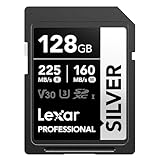
10. The Lexar Professional SILVER UHS-I is the fast V30 choice for many camera owners
Lexar 128GB Silver SD Memory Card, 225MB/s Read, 4K, V30, U3, UHS-I
128GB SDXC
UHS-I V30
225 read, 160 write
Pros
- 160 MB/s write
- V30 for 4K 60FPS
- UHS-I camera fit
- Lifetime warranty
- Recovery Tool included
Cons
- 128GB capacity
- UHS-I rather than UHS-II
The Lexar 128GB Professional SILVER SDXC is the concise answer for a camera owner who has a UHS-I full-size SD slot and wants a card with a published V30 class and strong stated write speed. It lists up to 225 MB/s read, up to 160 MB/s write, C10, U3, V30, and UHS-I specifications.
Lexar says this card supports 4K 60FPS video recording and has broad compatibility with Canon, Sony, Nikon, and other camera brands. It also includes a lifetime limited warranty and access to the Lexar Recovery Tool, which are worthwhile extras for a card intended to hold work rather than merely move files.
The 128GB capacity is smaller than several cards above, but that can be a benefit for photographers who prefer changing cards and backing up more often. The supplied data also lists wear, drop, temperature, X-ray, magnetic, and vibration resistance.
It is best for UHS-I camera users who need a clearly labeled V30 card
For a compatible camera recording 4K 60FPS or shooting bursts that call for V30, this card presents an uncomplicated specification fit. Its 160 MB/s stated write speed is especially notable among the UHS-I-oriented options in this guide.
This is a full-size SDXC card, so it is the correct shape for many cameras without an adapter. Check your camera’s capacity support and its recommendation for UHS speed and Video Speed Class before relying on it for a major recording mode.
Its 128GB capacity and UHS-I bus set the boundaries of the decision
Choose more capacity if your file sizes, long events, or video bitrate make 128GB restrictive. The Lexar GOLD and SanDisk High Endurance each provide 512GB in their respective full-size-camera and continuous-recording roles.
Choose UHS-II V60 if your camera and reader support it and your work needs that higher class. The Lexar SILVER UHS-I remains a strong fit when V30 is enough and matching the device matters more than chasing a higher bus rating.
The right card by use case starts with the device manual and the recording mode
Photography: Use a full-size SDXC card that matches the camera slot. For a UHS-II camera doing demanding bursts or V60-required work, the SanDisk Extreme PRO, Lexar SILVER PRO, or PNY EliteX-PRO60 are the direct candidates; for a UHS-I camera that needs V30, the Lexar Professional SILVER is the closer match.
Videography: Start with the camera maker’s stated minimum Video Speed Class, then choose the capacity that supports your file sizes and backup pattern. V30 is a common baseline for compatible 4K modes, V60 provides a higher sustained-write floor, and V90 is for modes that explicitly call for it; never infer a video class solely from a large peak read number.
Gaming: Match the physical standard first. The SanDisk microSD Express is the purpose-built choice in this list for Nintendo Switch 2, while a device that accepts ordinary microSD should be paired with a card whose format and application class match its own requirements rather than with an Express card it cannot fully use.
Drones and action cameras: The SanDisk Extreme microSD has the most targeted supplied specification set here: microSDXC, UHS-I, V30, up to 120 MB/s write at 128GB, plus stated 5.3K and 4K UHD support. The Lexar Blue is a second V30 microSD option when A2 app behavior and its included adapter are also useful.
Dash cams and security cameras: Pick endurance over transfer bragging rights. The SanDisk High Endurance is designed for up to 40,000 recording hours and has V30 classification, 512GB capacity, and an included adapter; confirm your camera’s maximum capacity and format guidance before installation.
The capacity you need depends on bitrate, file type, and how often you back up
128GB works well for users who routinely offload footage or rotate cards, and it keeps a smaller amount of media on each card. 256GB is a flexible middle option for camera and microSD use, while 512GB is most appealing for long shoots, continuous recording, and users who have verified device support.
There is no universal number of photos or minutes of video because RAW file size, codec, resolution, frame rate, and camera settings vary. Calculate capacity from your own device’s expected file size, then leave room for a safe offload interval rather than filling a card to the edge.
The safest buying and handling habits reduce counterfeit and failure risk
Forum conversations repeatedly raise counterfeit cards as a genuine concern, especially where an unfamiliar listing promises unrealistic capacity or speed. Buy from established sellers, retain order information, test a new card before important work, and be skeptical of labels that do not align with the product’s stated class or intended use.
Format the card in the device after copying off any files, avoid removing it while the access light is active, and keep at least one separate copy of important media. A lifetime warranty can help with a failed product, but it cannot recreate an unbacked-up shoot.
The card reader should match the card interface when transfer time matters
A UHS-II full-size card needs a UHS-II reader to take advantage of its interface during offload. The same principle applies to microSD Express: its PCIe-NVMe performance depends on compatible Express hardware, not just the card itself.
For casual transfers, the reader bundled with a computer or a basic adapter can be enough. For a high-volume photo or video workflow, using the correct reader and copying to a verified backup before formatting the card is the more dependable routine.
The most common SD card questions have simple answers once format and class are separated
Which brand of SD card is the best?
There is no single best brand for every device. In this comparison, SanDisk, Lexar, and PNY each have a strong fit: SanDisk Extreme PRO for a full-size UHS-II V60 camera card, Lexar SILVER PRO as a UHS-II V60 alternative, and PNY EliteX-PRO60 for a V60 4K workflow. Choose by your device format, required video class, warranty, and verified seller rather than brand alone.
Which is the best SD card to buy?
For a compatible UHS-II camera, the SanDisk 256GB Extreme PRO SDXC UHS-II V60 is the leading all-round pick because it lists 280 MB/s read, 150 MB/s write, V60, and stated 6K and 4K UHD support. For drones and action cameras, choose the SanDisk 128GB Extreme microSD V30. For a dash cam, choose the SanDisk 512GB High Endurance microSDXC.
What is the most reliable brand of SD card?
Reliability is a product-and-workflow decision, not a permanent brand ranking. Look for a card built for the workload, a clear warranty, a history of reviews, and stated durability or endurance features. The supplied cards include lifetime limited coverage on several SanDisk, Lexar, and PNY models, while the SanDisk High Endurance is designed for up to 40,000 hours of repeated recording. Back up important files because no card is failure-proof.
What is the best SD card right now?
The best full-size SD card here is the SanDisk 256GB Extreme PRO UHS-II V60 for compatible camera work. The best answer changes by device: SanDisk microSD Express for Nintendo Switch 2, SanDisk Extreme microSD V30 for drones and action cameras, and SanDisk High Endurance microSDXC for dash cams or monitoring systems. Match the format, required class, capacity, and reader to your hardware.
The best SD card is the one that meets your device’s actual write and format requirement
For a compatible UHS-II camera, the SanDisk 256GB Extreme PRO V60 is my leading all-round recommendation, with the Lexar SILVER PRO and PNY EliteX-PRO60 as serious alternatives. The SanDisk Extreme microSD is the more natural match for drones and action cameras, the High Endurance is purpose-built for continuous recording, and the microSD Express card is the specialized Nintendo Switch 2 option.
Before choosing among the best SD cards in 2026, check the slot shape, maximum capacity, required Video Speed Class, and whether your reader supports the card’s interface. That short check is more useful than chasing the highest read number, and it gives your photos, footage, apps, and saved games the storage they actually need.