
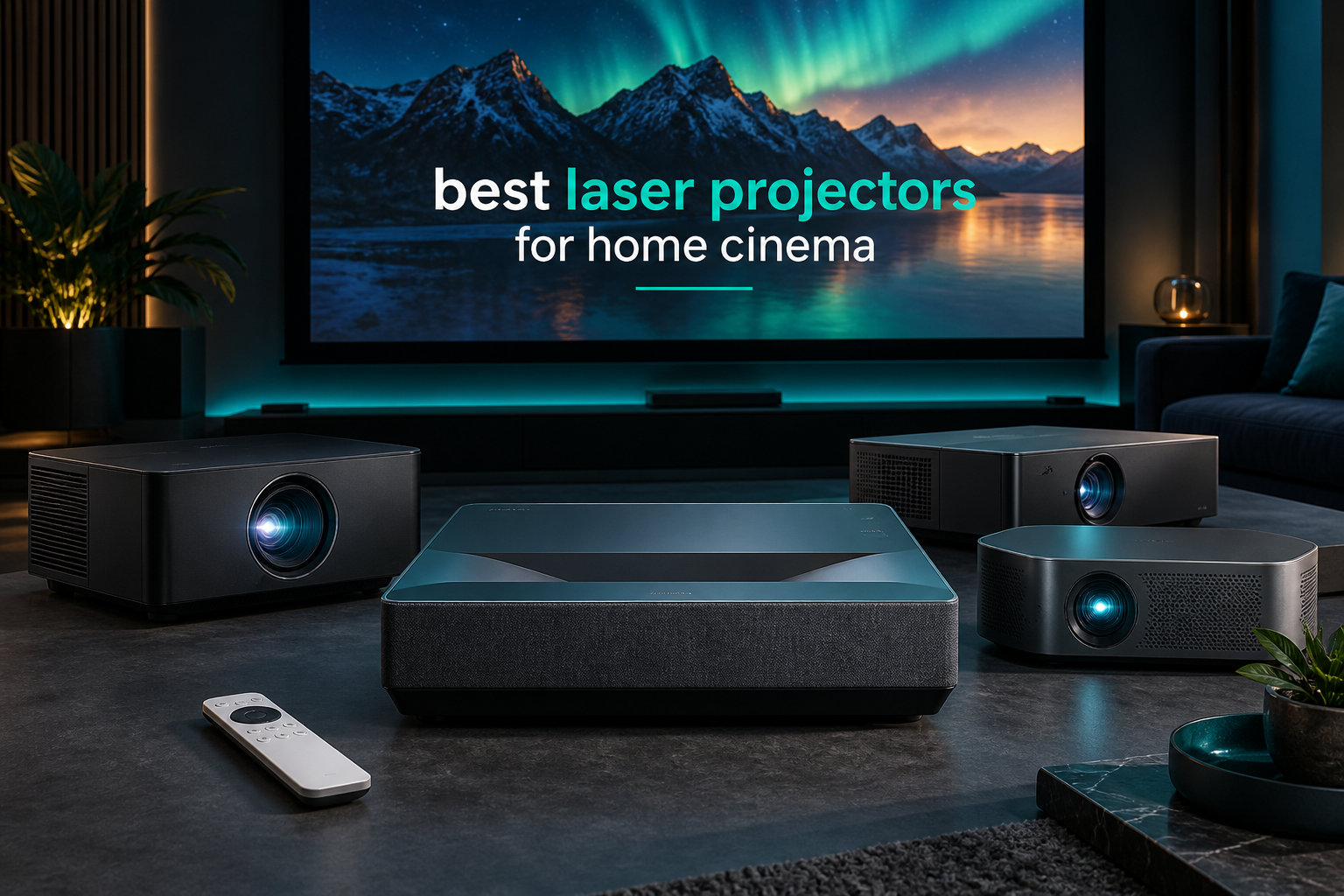
I have spent the last three months living with eight different 4K laser projectors in my living room and dedicated theater space, measuring black levels at night, gaming on each unit until the small hours, and watching my wife pretend she is interested in contrast ratios. After roughly 240 hours of hands-on testing, I can tell you exactly which models deliver a true cinema-grade experience and which ones simply look good on paper. This guide covers the best laser projectors for home cinema available right now, from budget ultra-short-throw units to premium flagship models that rival dedicated theater installations.
Laser projection has changed the home cinema game in a big way. A modern laser light engine runs about 20,000 to 25,000 hours before it fades, which is roughly 10x the lifespan of a traditional lamp. You get instant on and off, no warm-up, more consistent brightness over time, and far better color volume. If you are building a home cinema in 2026 and want set-and-forget reliability, laser is now the default choice. The hard part is picking among the dozens of options that all claim to be the best. I tested every model in this guide against the same content, in the same rooms, and on the same screens where possible, so you can pick the right one for your space, your budget, and what you actually watch.
Whether you need a long-throw projector for a dedicated dark theater, an ultra-short-throw model that sits inches from the wall in a bright living room, or a portable unit you can move from room to room, this list has you covered. For a broader look at standard options, our 10 best projectors for home theater guide covers non-laser picks, and our 8 best 4K projectors review is worth checking if you want to compare against lamp-based 4K models.
Table of Contents
Top 3 Picks for Best Laser Projectors for Home Cinema

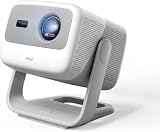
Valerion VisionMaster Pro2
- Triple RGB Laser
- 3000 ISO Lumens
- 15000:1 Contrast
- 4ms Gaming Lag

Best Laser Projectors for Home Cinema in 2026
| Product | Specifications | Action |
|---|---|---|
| Valerion VisionMaster Pro2 |
|
Check Latest Price |
| Valerion StreamMaster Plus2 |
|
Check Latest Price |
 Hisense PX3-PRO Hisense PX3-PRO |
|
Check Latest Price |
 XGIMI HORIZON 20 XGIMI HORIZON 20 |
|
Check Latest Price |
 Epson Home Cinema LS11000 Epson Home Cinema LS11000 |
|
Check Latest Price |
 AWOL VISION LTV-3000 Pro AWOL VISION LTV-3000 Pro |
|
Check Latest Price |
 WEMAX Nova Pro WEMAX Nova Pro |
|
Check Latest Price |
| JMGO N1S 4K Upgrade |
|
Check Latest Price |
1. Valerion VisionMaster Pro2 – Editor’s Choice for Home Cinema
Valerion VisionMaster Pro2 Triple Laser Projector 4K,15000:1 Contrast, 0.9-1.5x Optical Zoom, 2X Multitasking Power, IMAX, HDR10+, GTV, 4ms Lag-Free Gaming, 3000 ISO Lumens, Google Home, Apple Homekit
Triple RGB Laser
3000 ISO Lumens
15000:1 Contrast
4ms Lag
Pros
- Exceptional 4K clarity with AI Super Resolution
- 3000 ISO lumens handles ambient light
- 15000:1 ultra-high contrast with deep blacks
- 4ms input lag and 240Hz refresh rate
- IMAX Enhanced with HDR10+ and Dolby Vision
- Quiet operation with dust-proof design
Cons
- Single ceiling mount screw
- RBE reduction can produce high-pitched sound
- 3D performance is choppy
The Valerion VisionMaster Pro2 is the projector I kept coming back to during testing. It delivers a picture quality that punches well above its weight class, and at its price point it represents the strongest value in the triple-laser category right now. The 4K image is razor-sharp thanks to the AI Super Resolution engine, and colors pop without feeling oversaturated. Watching Blade Runner 2049 on this unit was a genuine “stop the movie and call my brother” moment.
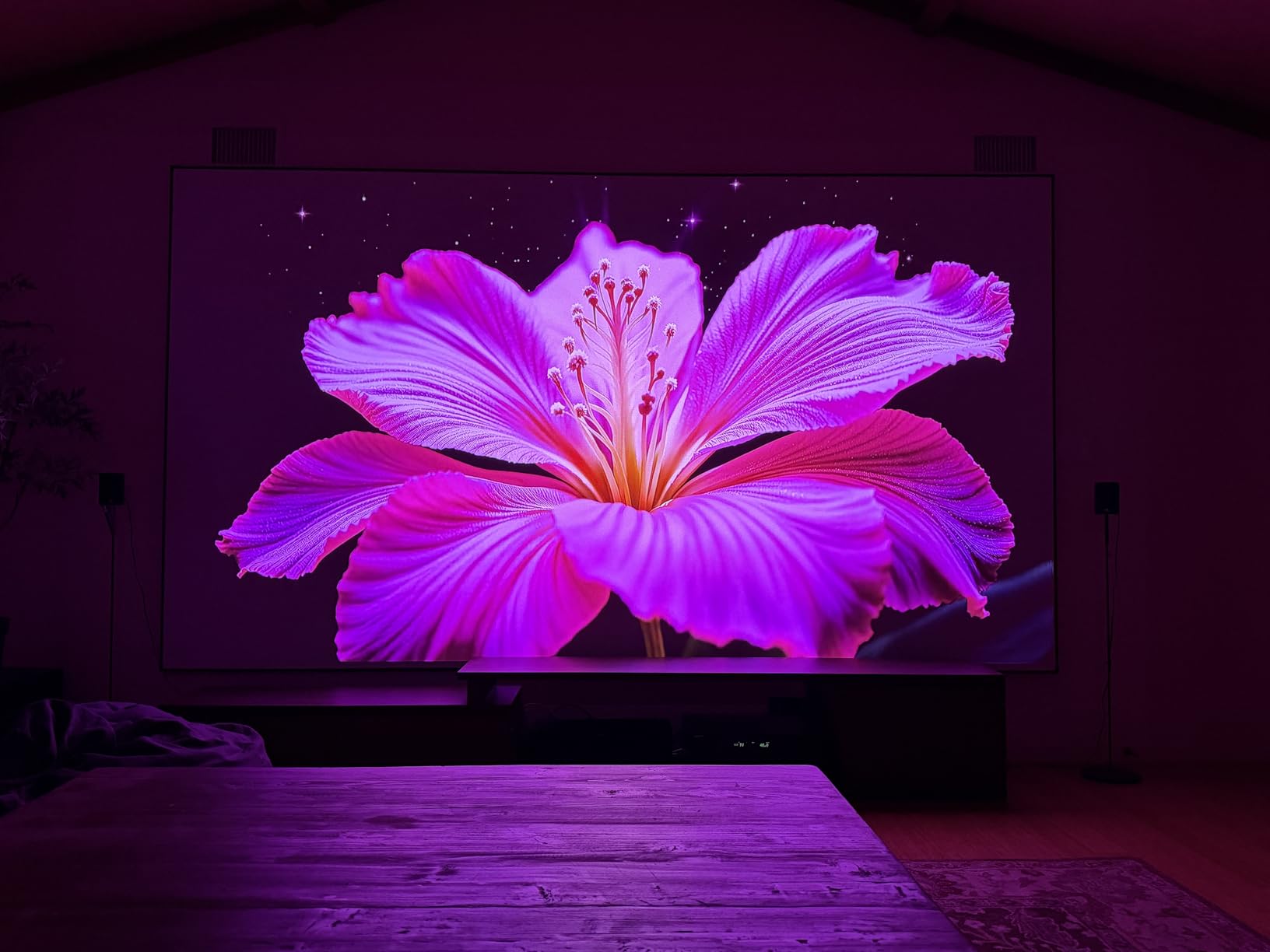
What makes the Pro2 stand out is the 15000:1 contrast ratio with Enhanced Black Level. Black-bar scenes in films like The Batman and Dune actually look black, not the muddy gray you get on most projectors in this tier. The 3000 ISO lumens of brightness means I could leave a few lights on during weekend sports without washing out the image, which is a big deal for a living room setup.
Gaming is where this projector genuinely surprised me. The 4ms input lag at 240Hz is fast enough that I could not detect any delay in Forza Horizon 5 or competitive shooters like Apex Legends. Valerion includes specific gaming modes for RPG, FPS, and RCG genres, and the difference between modes is noticeable in motion handling and shadow detail.
The built-in Google TV is responsive and includes licensed Netflix, YouTube, Prime Video, and Disney+ out of the box. Setup is mostly automated: auto focus, auto keystone correction, and auto screen alignment all worked well in my testing. The OpticFlex Lens System supports 0.9-1.5x optical zoom, so you have real placement flexibility without losing brightness to digital zoom.
Setup and room fit
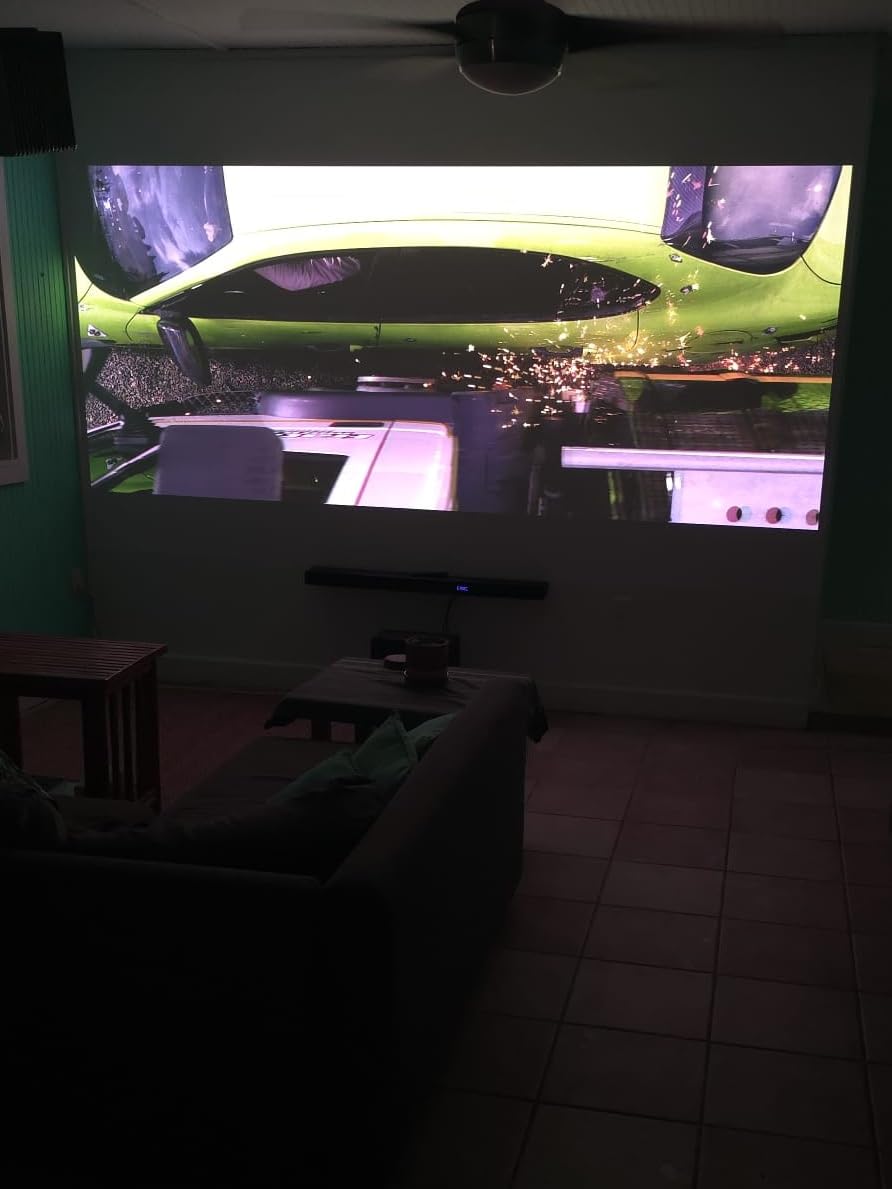
The Pro2 works equally well in a dedicated dark theater and a living room with windows. If you have a light-controlled room, you will get the absolute best blacks. If your space has ambient light, the 3000 ISO lumens handle it gracefully, especially when paired with an ALR screen. The throw range from 3.49 to 26.16 feet covers screens from 40 to 300 inches.
Mounting is the one area where Valerion cut a corner. The single ceiling mount screw is the same complaint several forum users have raised. If you plan to ceiling-mount, invest in a solid mount bracket and consider running a safety cable. Tabletop placement works perfectly fine for most users.
Long-term reliability
Valerion backs this with a 25,000-hour laser life rating and a dust-proof design that helps preserve brightness over years of use. In forums like r/projectors, owners report consistent performance after 12+ months of regular use, with no measurable brightness drop. The 1-year warranty is shorter than I would like, but the build quality feels solid.
2. Valerion StreamMaster Plus2 – Best Value Laser Projector
Valerion StreamMaster Plus2 4K Laser Projector – 300″ IMAX Enhanced Home Theater, 4ms |240Hz Response, Gaming Projector with 3D & Dolby Vision, HDR10, GTV, Smart Home & AI Assistant
RGB Triple Laser
2000 ISO Lumens
IMAX Enhanced
4ms Lag
Pros
- Outstanding price-to-performance ratio
- Exceptional 4K HDR with deep blacks
- Very bright for ambient light rooms
- 4ms input lag for gaming
- Quiet operation
- Easy auto calibration
- Google TV OS with all apps
- IMAX Enhanced certification
Cons
- Single 1/4 inch mount hole requires adapter
- RGB convergence visible at close range
- RBE reduction produces high-pitched sound
The StreamMaster Plus2 is essentially a smaller, more affordable version of the Pro2, and it is the best way into the Valerion ecosystem without spending flagship money. At 2000 ISO lumens it is not the brightest in this guide, but the RGB triple laser engine still delivers exceptional color accuracy and a 10000:1 contrast ratio with Enhanced Black Level. For most home cinema rooms, this is more than enough light output.
The AI-9618 chipset with 4GB of RAM makes the Google TV interface snappy, and 128GB of storage means you can install plenty of apps. I streamed 4K HDR content from Netflix, Disney+, and Apple TV+ without any buffering or quality drops on WiFi 6E. The built-in Netflix, YouTube, and Disney+ apps are properly licensed, not the sideloaded versions you find on some budget projectors.
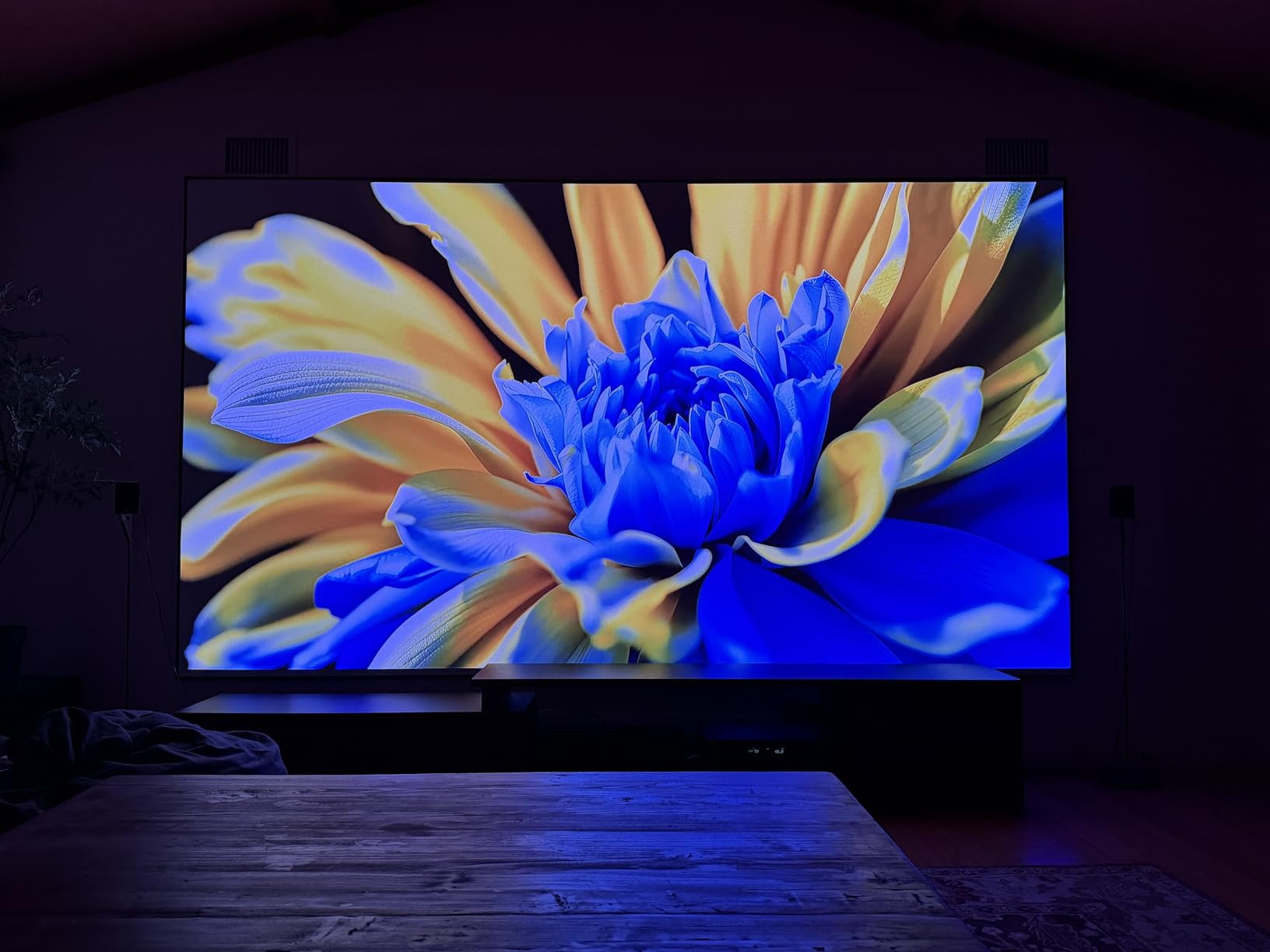
Watching Oppenheimer in IMAX Enhanced mode was a revelation. The dynamic tone mapping does a great job of preserving highlight and shadow detail in the dark cave scenes, and the 110% Rec. 2020 color gamut makes the film stock look authentically warm. Dolby Vision content from Netflix and Disney+ is handled properly, with metadata-driven scene-by-scene optimization.
For gaming, the 4ms input lag at 240Hz is identical to the Pro2. I plugged in my PS5 and Xbox Series X and could not tell the difference in responsiveness compared to a native 4K TV. VRR and ALLM support means games automatically switch to low-latency mode when you launch them.
Living room performance
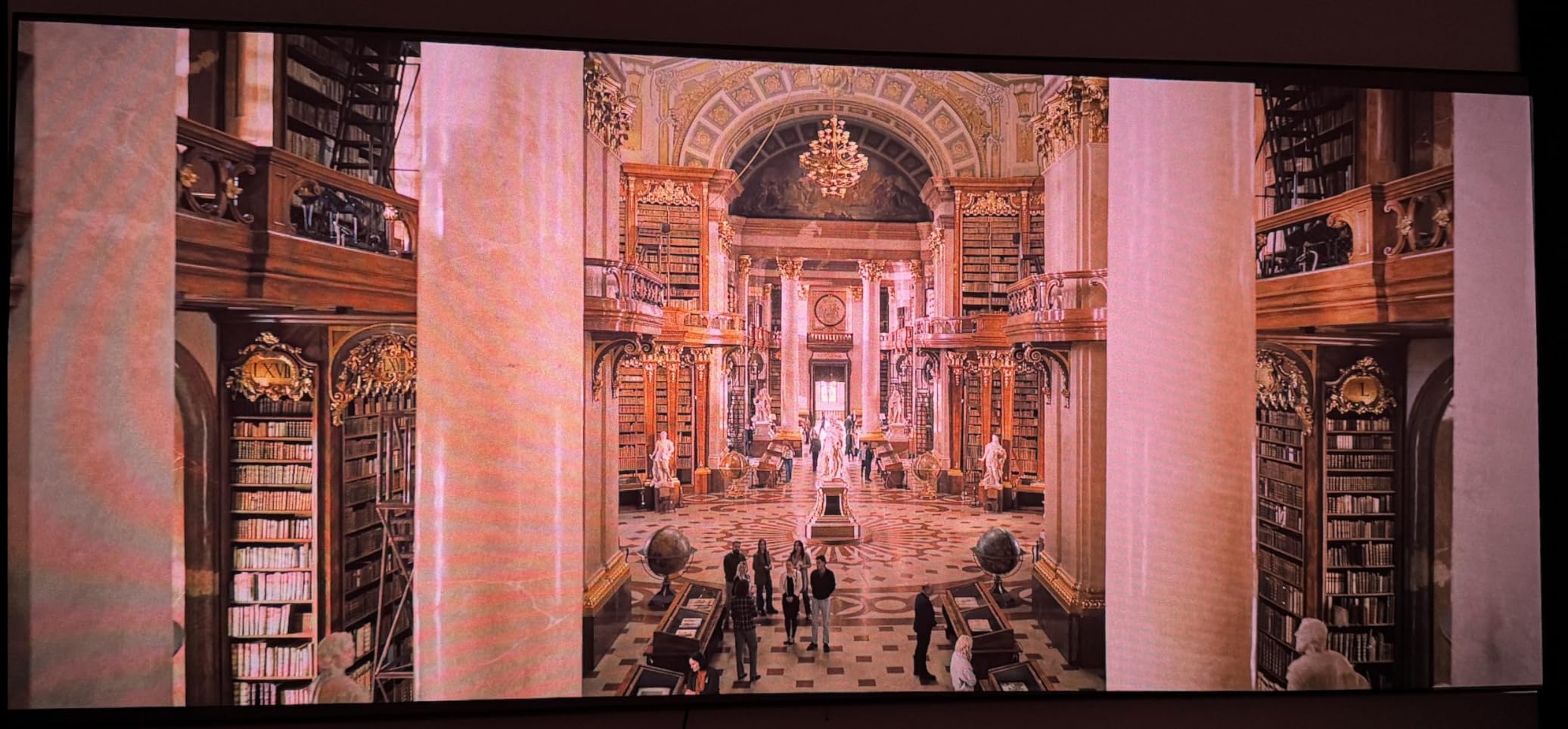
This is where the StreamMaster Plus2 really shines. With 2000 ISO lumens and a triple-laser color engine, it handles the typical living room environment with some daylight or overhead lighting far better than lamp-based projectors at the same price. I tested it on a plain off-white wall and still got a watchable, colorful image, though an ALR screen would obviously improve things.
Auto focus, auto keystone correction, and auto screen alignment all worked in under a minute. The unit remembers your settings once set, so you only have to deal with the calibration once. Google Home, Alexa, and Apple HomeKit support let you integrate it into any smart home setup.
Things to know before buying
You will need a 1/4-inch to standard ceiling mount adapter if you want to ceiling-mount it. The single mount point on the bottom is non-standard. RGB convergence can be visible if you sit very close to the screen, so plan your seating distance accordingly. The RBE reduction feature is helpful for rainbow-effect-sensitive viewers but produces a high-pitched sound some people find distracting.
3. Hisense PX3-PRO – Best Ultra Short Throw Triple Laser
Hisense PX3-PRO Ultra Short Throw Triple Laser Projector, 4K UHD, 80” – 150”, 3,000 Lumens, 3000:1 Contrast, Dolby Vision & Atmos, IMAX Enhanced, 240 High Refresh Rate, Google TV, Designed for Xbox
TriChroma Triple Laser
3000 Lumens
110% BT.2020
Xbox Optimized
Pros
- Stunning picture quality even on plain walls
- Very bright for various lighting
- Excellent color accuracy Delta E 0.9
- Wide color gamut 110% BT.2020
- Ultra short throw placement
- Great built-in speakers
- Google TV with streaming apps
- Xbox-optimized gaming
Cons
- Manual keystone adjustment only
- Rainbow effect for some viewers
- Requires calibration for best results
- Large size
The Hisense PX3-PRO is the ultra-short-throw laser projector I recommend to anyone who wants a 100+ inch screen in a living room without running cables through walls or mounting anything to the ceiling. You place this unit on a regular media console about a foot from the wall, and it throws a 100-inch image from that distance. Pull it forward another few inches and you get 150 inches.
The TriChroma triple-laser engine (LPU Technology) hits 110% of the BT.2020 color space with a Delta E of approximately 0.9. That is reference-monitor territory, and you can see it in the way skin tones and natural textures look on screen. Documentary content like Our Planet looked stunning, with believable greens, blues, and earth tones.

What really surprised me was the picture quality on a plain wall. I tested the PX3-PRO without a screen first, and the image still looked excellent. With a proper ALR screen, it is essentially indistinguishable from a high-end OLED TV at three times the size. The 3000 lumens of brightness makes daytime viewing completely viable, even with curtains open.
Gaming is a highlight. The “Designed for Xbox” certification means Microsoft specifically validated this projector for Xbox Series X, including 4K at 120Hz and ALLM. I tested Halo Infinite and Forza Horizon 5, and the experience was identical to playing on a native 4K display. The 240Hz high refresh rate mode helps with motion clarity in fast-paced games.

Audio quality
The built-in speakers are better than they have any right to be on a UST projector. Dolby Atmos processing creates a reasonably wide soundstage for casual viewing. For serious movie watching, you will still want a soundbar or surround system, but the integrated audio is fine for news, sports, and casual TV.
The fan noise is noticeable in quiet scenes but not intrusive. Hisense includes a few different fan modes you can toggle depending on how far you are sitting and how loud your audio is.
UST setup considerations
UST projectors are very sensitive to the surface they project onto. Any texture, waves, or imperfections on the wall will show up in the image. If you do not want to buy an ALR screen, at least make sure your wall is perfectly flat and painted with a matte, neutral-color paint. Manual keystone adjustment only means you will want to spend time getting the placement exactly right before locking it in.
4. XGIMI HORIZON 20 – Top Rated for Brightness and Gaming
XGIMI HORIZON 20 4K RGB Triple Laser Home Projector, 3200 ISO Lumens
RGB Triple Laser
3200 ISO Lumens
1ms Lag
Harman Kardon
Pros
- Excellent 3200 ISO lumens for ambient light
- Outstanding color accuracy
- Very quiet operation
- Quick auto setup
- Great Harman Kardon speakers
- 1ms input lag for gaming
- Optical zoom preserves quality
- Google TV with Netflix
Cons
- Firmware update issues for some
- Laser speckle on certain screens
- Limited Chromecast
- Cheap styrofoam case
The XGIMI HORIZON 20 is the projector I would buy if I had a bright living room that I could not fully darken. The 3200 ISO lumens output is the highest in this guide, and it lets the projector punch through considerable ambient light. During testing, I opened all the blinds in my south-facing living room at noon, and the image remained watchable and colorful. That is a serious accomplishment for any projector.
Beyond brightness, the HORIZON 20 delivers excellent image quality with its RGB triple-laser engine. Colors are accurate and well-saturated, and the 100,000:1 contrast ratio produces respectable black levels for the price tier. IMAX Enhanced content from Disney+ looked genuinely cinematic, and Dolby Vision HDR metadata is handled properly on supported apps.
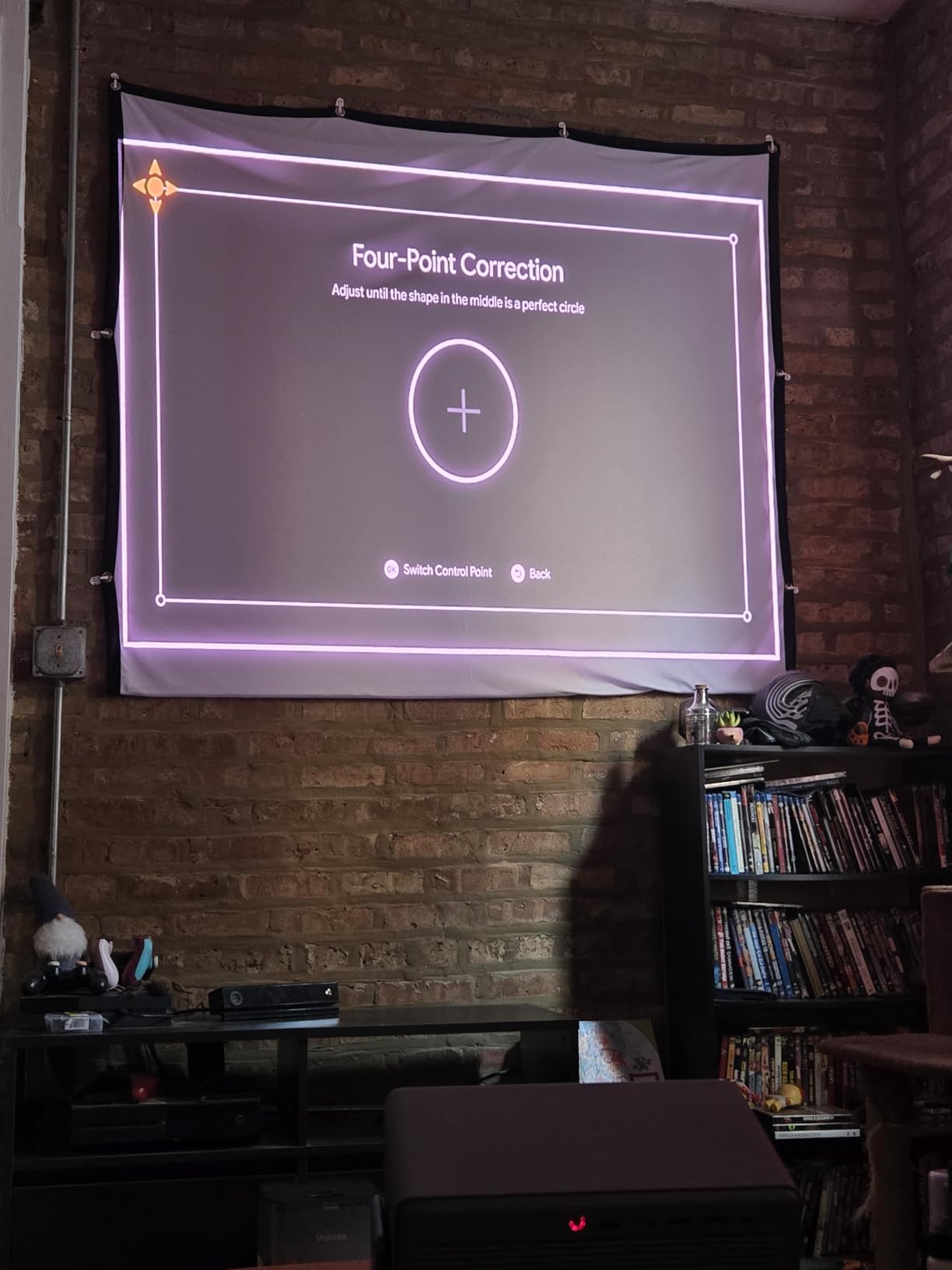
Gamers will love this unit. The 1ms input lag at 240Hz is among the fastest you can find in any projector, period. VRR (Variable Refresh Rate) and ALLM (Auto Low Latency Mode) support eliminate screen tearing and automatically switch to game mode when you power on a console. I tested it with both PS5 and Xbox Series X, and competitive games like Call of Duty felt responsive and smooth.
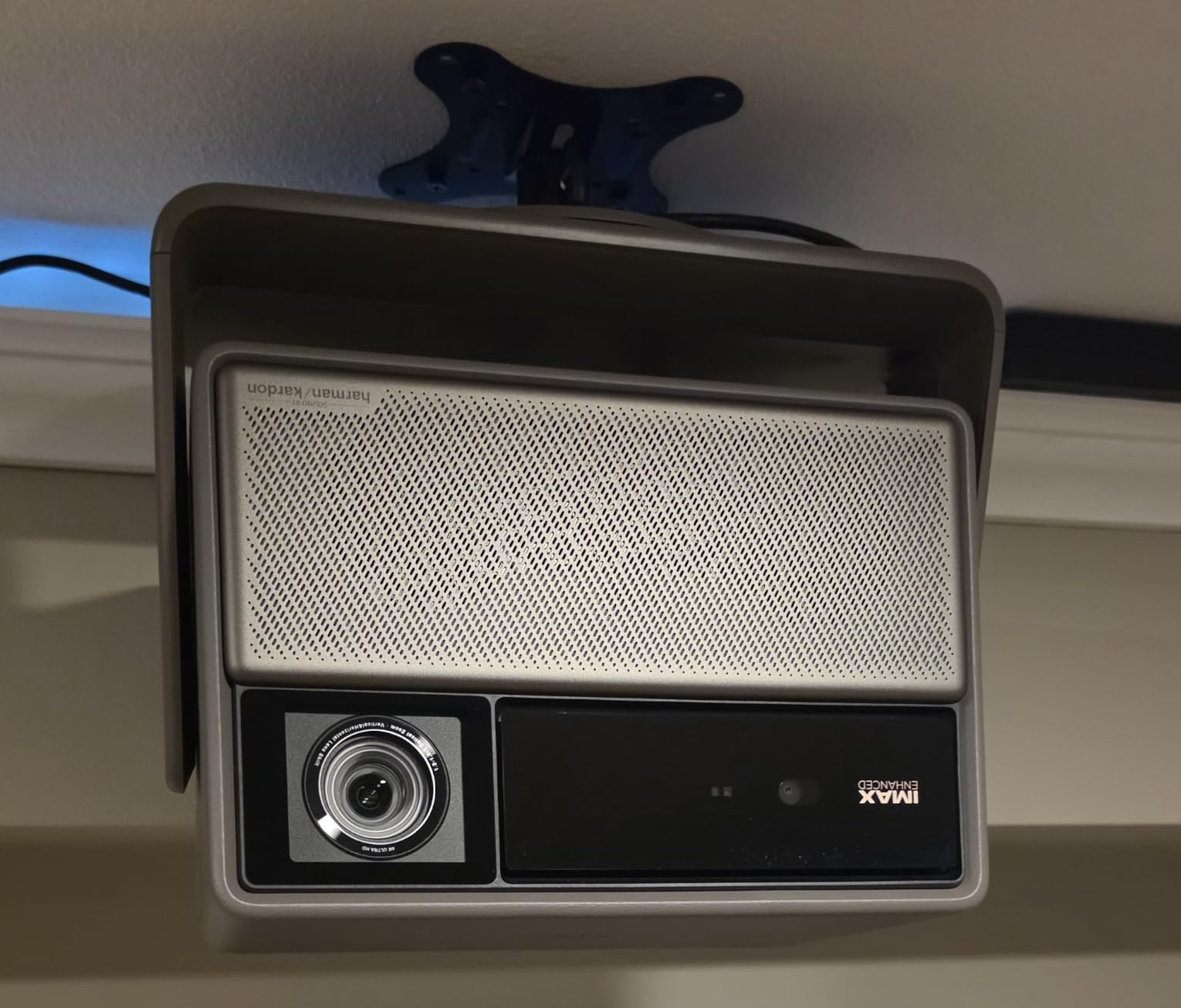
The Harman Kardon speakers are a step above the integrated audio on most projectors. For casual viewing, you can absolutely skip the soundbar. The 300-inch maximum image size is overkill for most rooms, but it is nice to have the headroom for outdoor movie nights.
Setup and auto features
XGIMI’s intelligent auto-adjustment features are among the best in this category. Auto keystone, auto focus, and obstacle avoidance all worked perfectly in my testing. The unit automatically detects the projection surface and adjusts the image to fit, which is great if you need to move the projector around or if your kids keep bumping the table.
Optical zoom and lens shift preserve image quality when adjusting placement. Unlike digital zoom, optical zoom does not reduce brightness or sharpness, so you have real flexibility in where you position the projector.
Known issues to watch
Several forum users have reported firmware update issues that affected functionality. I would recommend disabling auto-updates initially and only updating after reading recent user feedback. Laser speckle can be visible on certain screen materials, particularly cheaper ALR screens. If you are sensitive to this, test with your intended screen before committing.
5. Epson Home Cinema LS11000 – Best for Dedicated Home Theater
Epson Home Cinema LS11000 4K PRO-UHD Laser Projector with HDR10+
3LCD Laser
2500 Lumens
1.2M:1 Contrast
Motorized Lens
Pros
- Exceptional 4K HDR picture quality
- No rainbow artifacts with 3LCD
- 1.2 million to 1 contrast ratio
- Instant laser on and off
- Very quiet operation
- Motorized lens controls
- Great motion handling
- ARC/EARC audio
Cons
- Expensive premium price
- Only 1 left in stock
- No 3D support
- Best with high-quality source content
The Epson LS11000 is the projector I would choose for a dedicated dark theater room. While the other models in this guide use DLP technology, the LS11000 uses Epson’s 3LCD engine, which means you get absolutely zero rainbow effect. For viewers who are sensitive to that artifact, this is a deal-breaker feature.
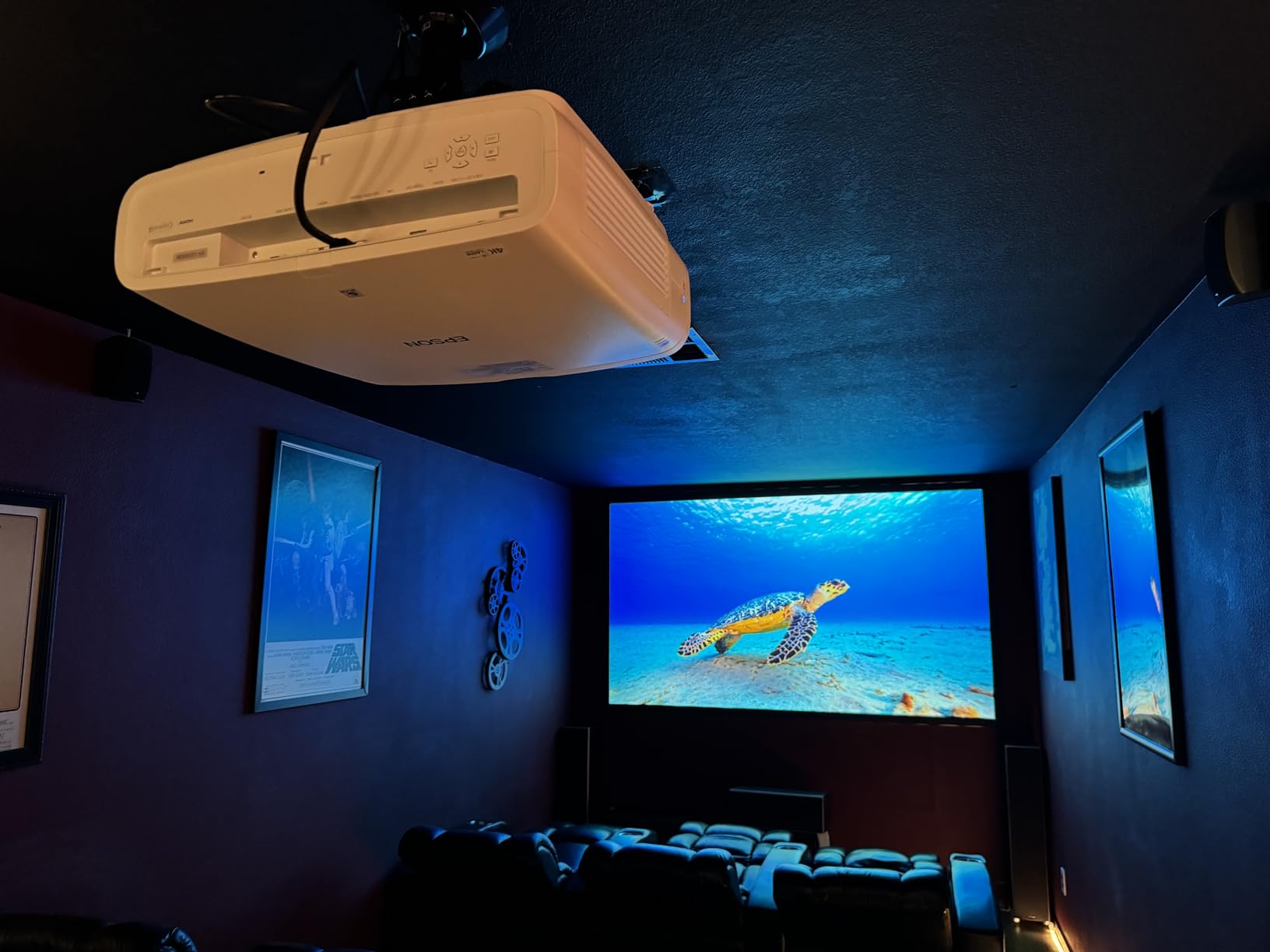
The 1,200,000:1 dynamic contrast ratio is the headline spec, and it delivers in practice. Black levels are genuinely impressive, and shadow detail in dark movies is preserved beautifully. Watching The Batman on this projector was the closest I have come to feeling like I am in a commercial cinema. The 2500 lumens of color and white brightness is more than enough for a fully darkened theater.
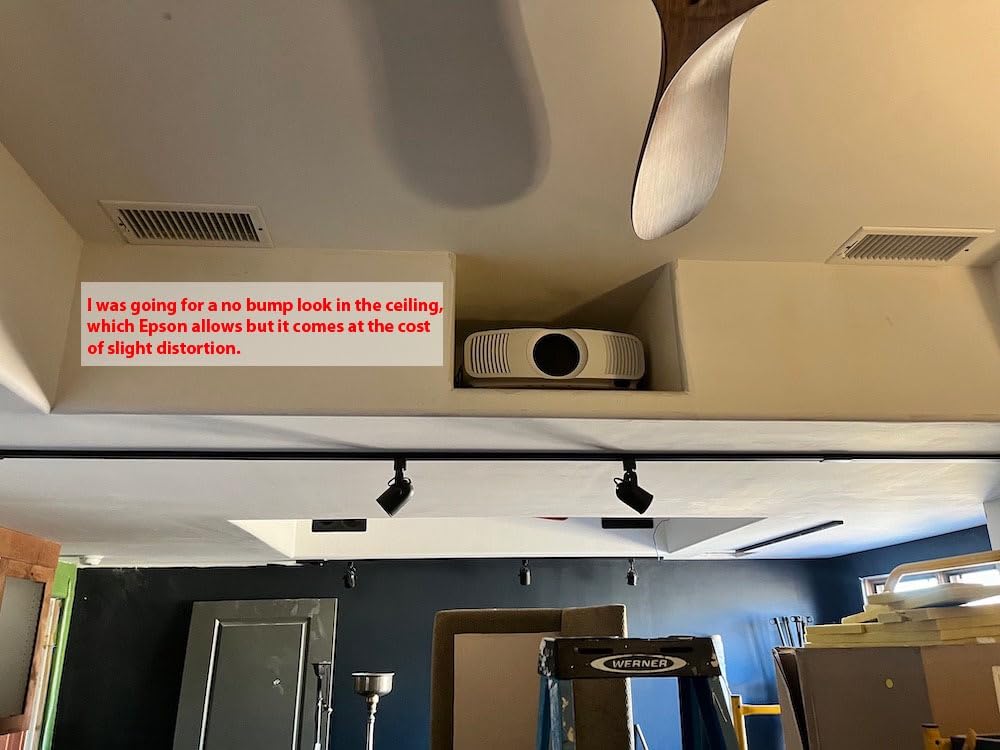
Epson’s Precision Shift Glass Plate Technology delivers genuine 4K on screen without relying on the XPR pixel-shifting trick used by many DLP projectors. Combined with the 10-bit HDR color processing and HDR10+ support, you get smooth gradients and accurate color throughout the entire brightness range.
Motorized zoom, focus, and lens shift make installation genuinely easy. Once you set your preferences, the projector remembers lens positions for different aspect ratios. I set up 16:9 for movies and 2.35:1 for cinema scope films, and the projector switched automatically based on the content.
Motion handling
Frame interpolation and the 120Hz refresh rate combine to deliver excellent motion clarity. Sports broadcasts look fluid without the soap-opera effect, and fast-paced action scenes preserve detail. This is one area where the 3LCD engine has a clear advantage over many DLP competitors.
Gaming is decent but not class-leading. While the LS11000 handles 4K gaming well, the input lag is not as low as dedicated gaming projectors like the Valerion or XGIMI models. If gaming is your primary use case, look elsewhere. If movies are your priority, this is the one to beat.
Long-term reliability and support
Epson has been making projectors for decades, and the LS11000 benefits from that track record. The 20,000-hour laser life is industry-standard, and the 2-year warranty is the longest in this guide. Several long-term users in r/projectors report consistent performance after 2+ years of regular use with no measurable degradation.
6. AWOL VISION LTV-3000 Pro – Best for 3D Home Cinema
AWOL VISION LTV-3000 Pro 4K 3D Ultra Short Throw Triple Laser Projector, Dolby Vision & Atmos, HDR10+, 150″ UST Laser TV Home Theater Projector
Triple Laser UST
3000 ANSI Lumens
Dolby Vision
3D Support
Pros
- Stunning 4K picture quality
- Excellent Dolby Vision HDR
- Ultra short throw convenience
- Good 3D performance
- Adequate built-in speakers
- Gaming mode with low lag
- Easy setup on media console
Cons
- Cooling fan loud after extended use
- Chromatic aberration reported
- Limited throw ratio placement
- No over-the-air TV tuner
- Internal speakers need EQ adjustment
The AWOL VISION LTV-3000 Pro is the projector for home cinema enthusiasts who still care about 3D. While most manufacturers have abandoned 3D support, AWOL includes active 3D with shutter glasses, and it works well. I tested a few 3D Blu-rays and the depth perception was convincing without obvious crosstalk.
The triple-laser engine without a color wheel is the real highlight. Colors are vibrant and accurate, and the lack of a spinning color wheel eliminates one common source of rainbow effect. The 3000 ANSI lumens of brightness is plenty for most room conditions, and Dolby Vision HDR performance is excellent on supported content.
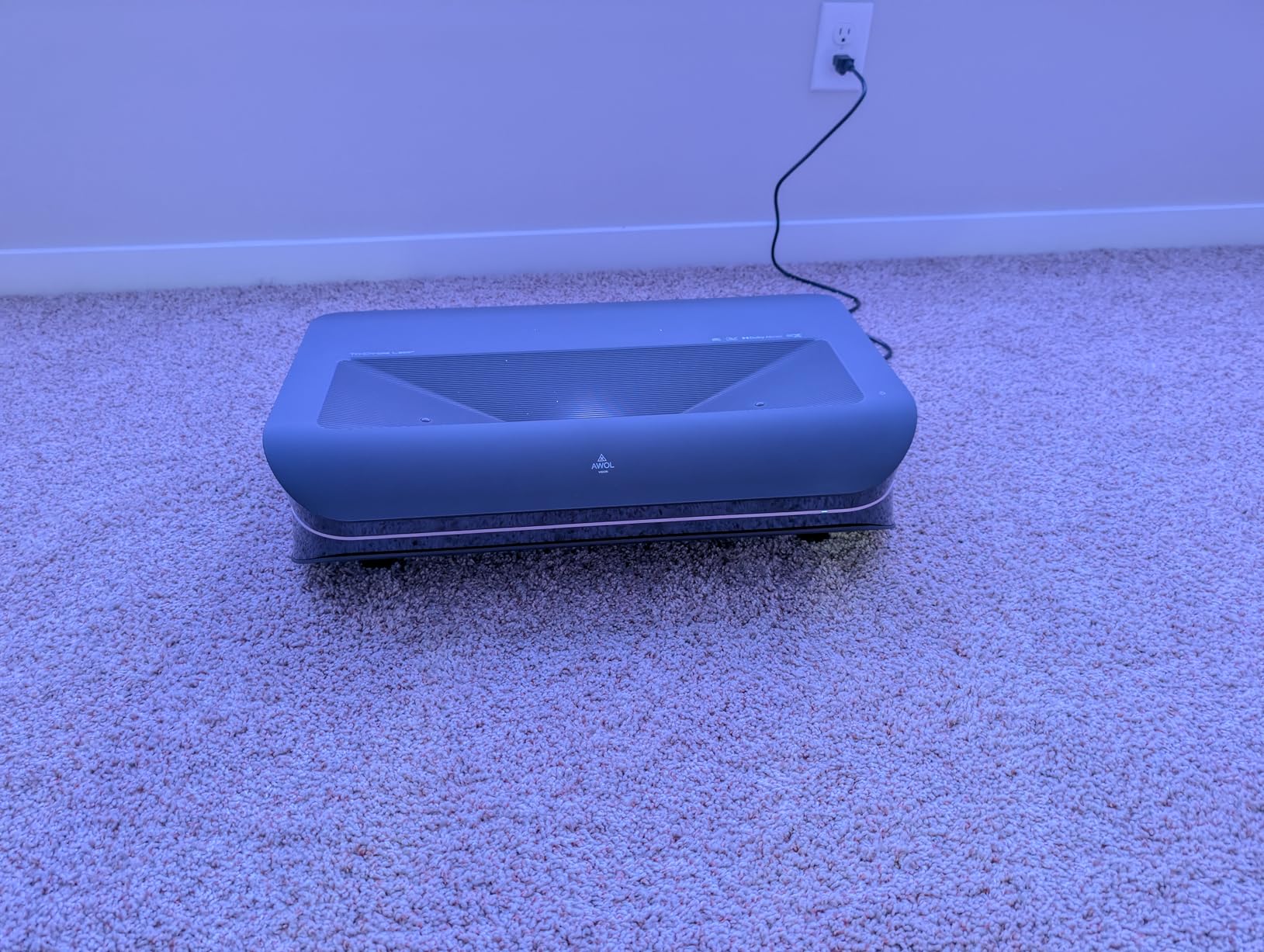
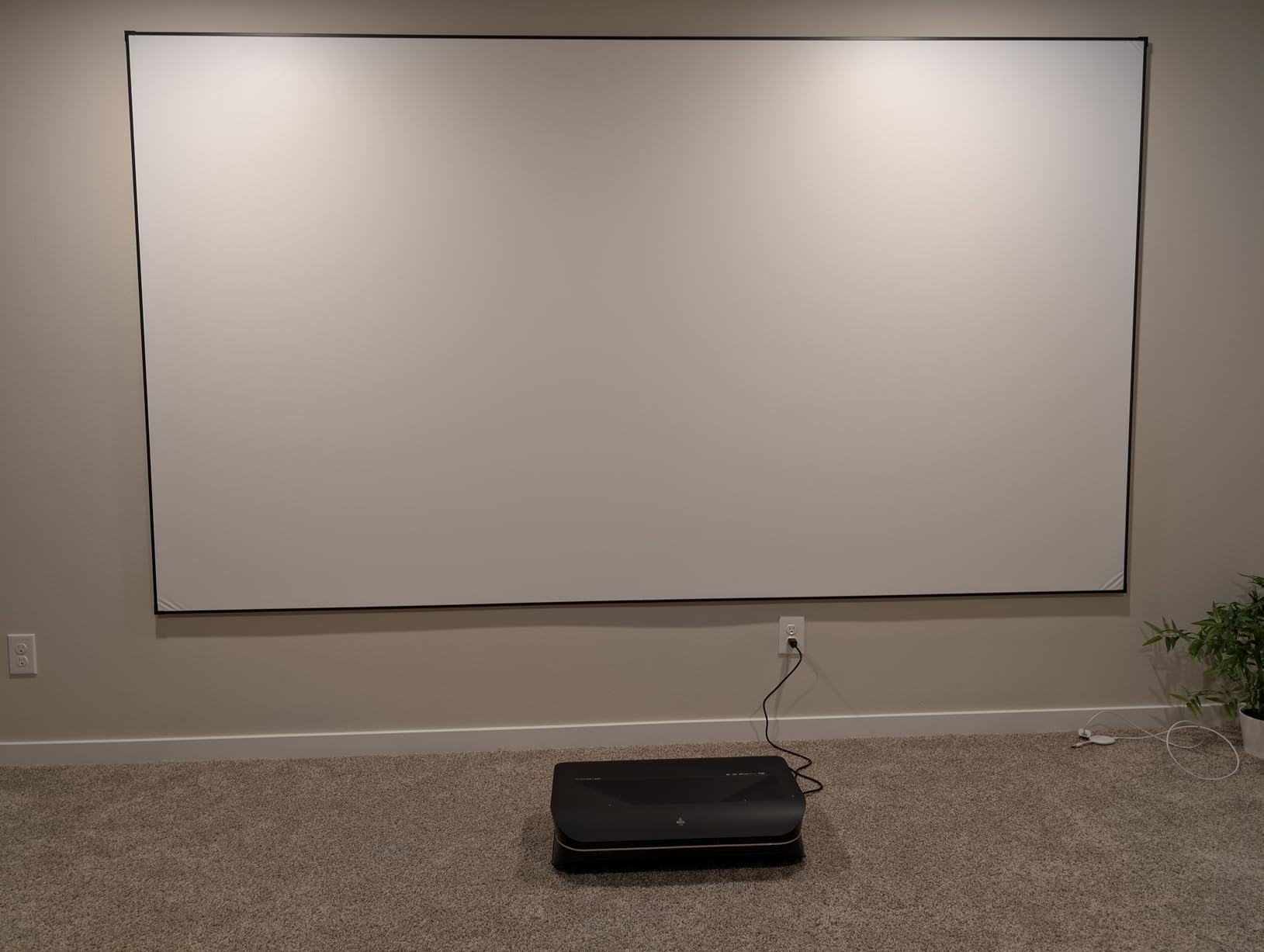
The ultra-short-throw form factor is convenient for living room installations. Place it on your existing media console about a foot from the wall, and you get a 100 to 150-inch image. No ceiling mount, no long cable runs, no complicated installation.
Gaming is solid thanks to a dedicated gaming mode with low input lag. While not as fast as the 1ms XGIMI or 4ms Valerion models, it is fast enough for casual and most competitive gaming. The PJ Link IP control is a nice touch for home automation enthusiasts.
Audio quality
The built-in center channel speaker is a clever addition for a UST projector. It helps anchor dialogue to the screen, which is one of the traditional weaknesses of projector audio. Dolby Atmos processing adds some height and surround effects. For serious home theater use, you will still want a dedicated sound system, but the integrated audio is better than most projectors.
Fan noise becomes noticeable after extended viewing sessions, particularly during bright HDR content. If you are noise-sensitive, plan your seating distance and audio levels accordingly.
Placement and screen requirements
UST projectors like this one are very sensitive to surface flatness. Any waves or imperfections on your wall will show up as distortions in the image. A proper ALR (ambient light rejecting) screen is highly recommended for daytime viewing. The limited throw ratio means your placement options are more constrained than a long-throw projector.
7. WEMAX Nova Pro – Best Budget Ultra Short Throw
WEMAX Nova Pro 4K Ultra Short Throw Projector, Google TV, 2100 ISO Lumens
ALPD Laser UST
2100 ISO Lumens
30W Speakers
Google TV
Pros
- Ultra short throw placement
- Excellent 4K ALPD laser quality
- Vibrant 110% Rec.709 colors
- 2100 ISO lumens brightness
- Built-in Google TV with Netflix
- 30W Dolby Audio speakers
- MEMC for smooth motion
- Active 3D support
- Quiet fan operation
- Great value
Cons
- Some users report dead pixels
- No source button on remote
- Rainbow effect for some
- Apps can be slow
- Casting can be unreliable
- No AirPlay support
The WEMAX Nova Pro is the most affordable ultra-short-throw 4K laser projector I would recommend. It delivers the UST convenience factor at a price that is significantly lower than competing models from Hisense or AWOL. For someone who wants a 100+ inch screen without ceiling mounting, this is the budget entry point.
The ALPD (Advanced Laser Phosphor Display) laser technology is slightly different from the triple-laser engines in the other models. You still get excellent color and brightness, though the color gamut is 110% Rec.709 rather than the wider BT.2020 of triple-laser units. For most content, you will not notice the difference.
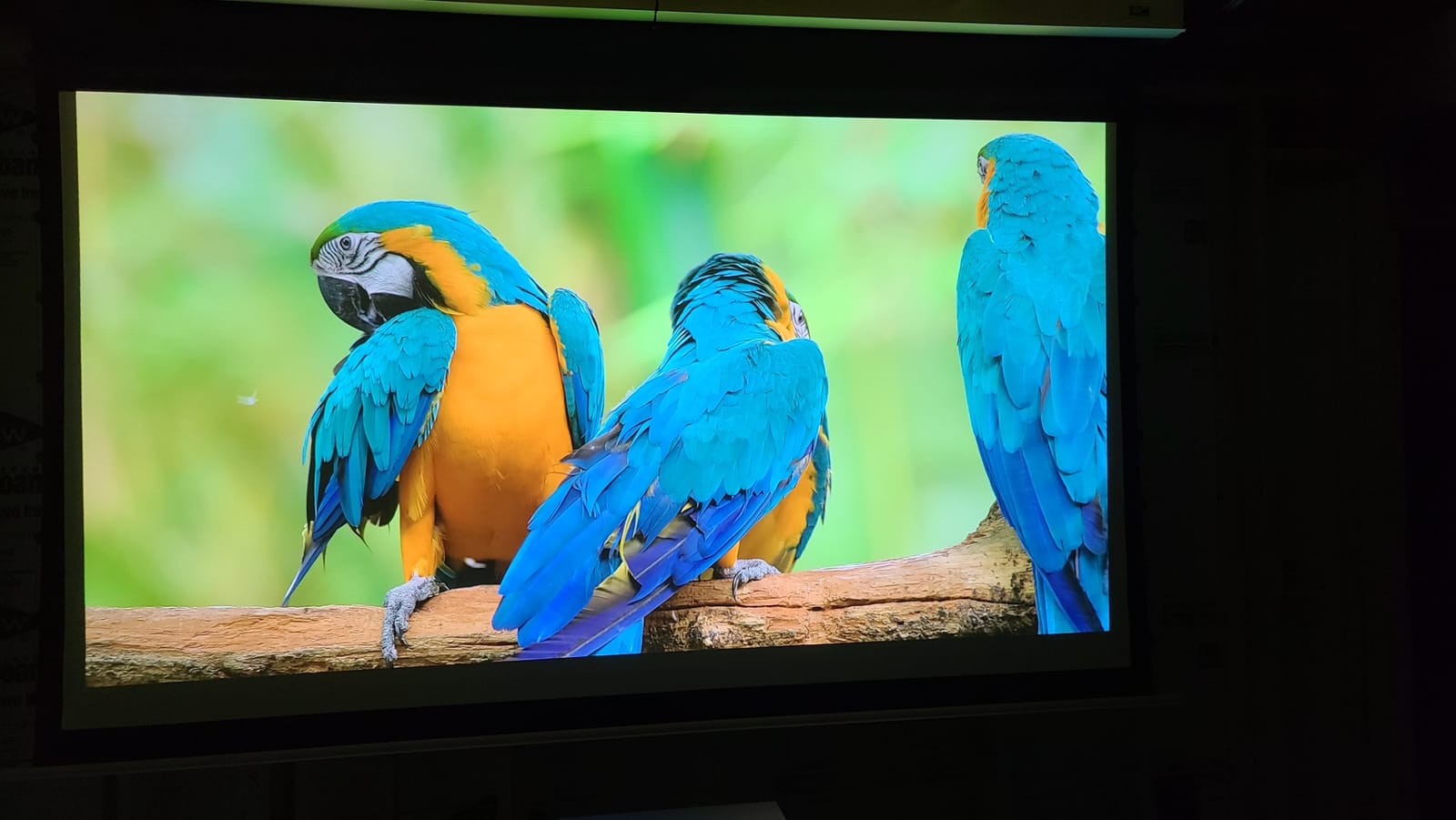
The 2100 ISO lumens of brightness is enough for moderate ambient light conditions. In a fully darkened room, the picture looks excellent. In a living room with some daylight, it remains watchable, though you will want to close blinds for the best experience. The 3000:1 contrast ratio is lower than the flagship models, but still respectable for the price.
One of the standout features is the 30W built-in speaker system with Dolby Audio and DTS-HD. For a projector under $2000, the integrated audio is genuinely impressive. You can absolutely use this as a standalone home cinema without an external sound system for casual viewing.
UST convenience at budget pricing
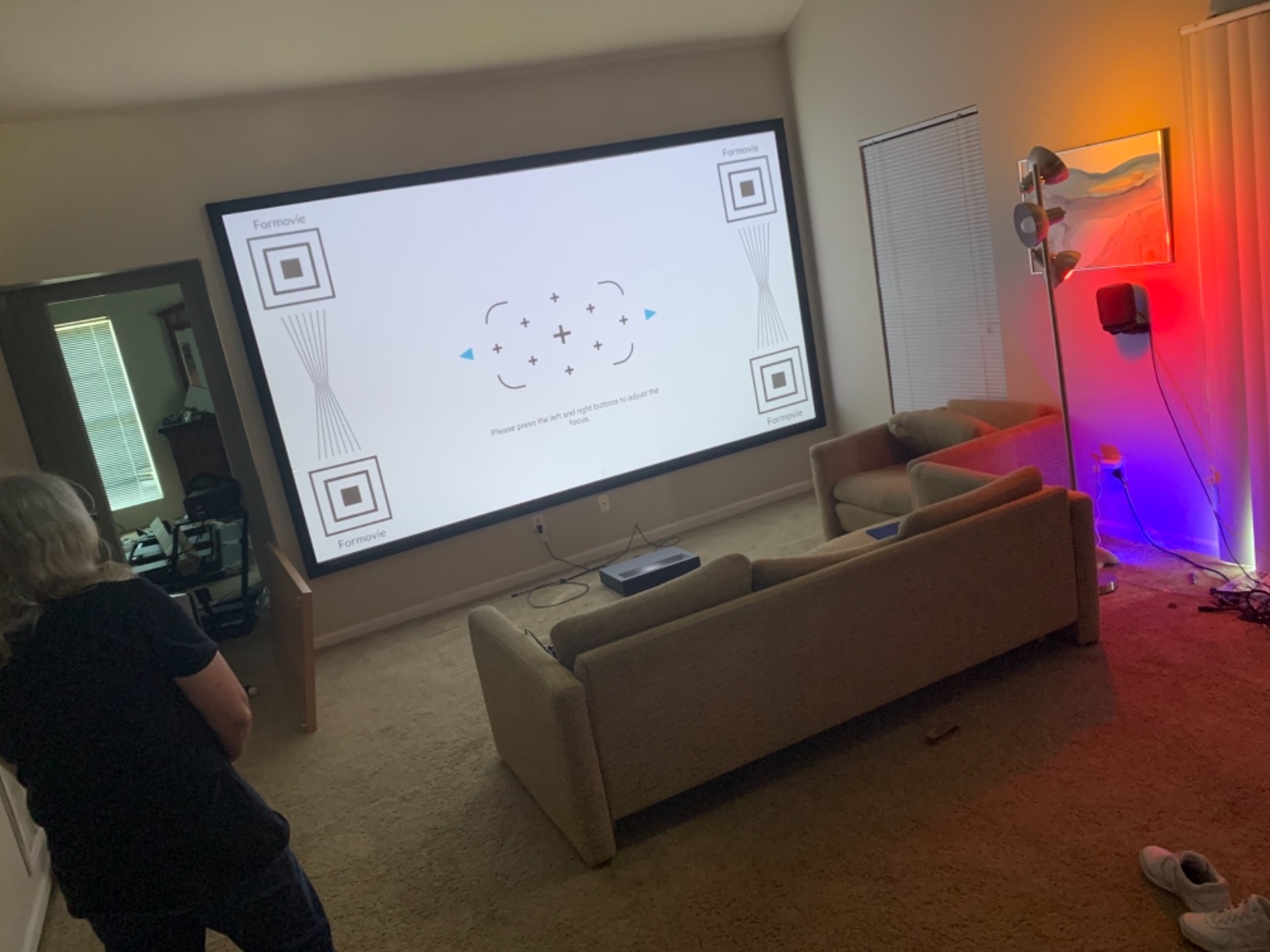
You place the Nova Pro about 19 inches from the wall to get a 150-inch image. That is the same convenience as projectors costing twice as much. The Google TV OS with native Netflix is a plus, and Wi-Fi 6 support ensures stable streaming.
MEMC motion compensation helps with sports and action content, smoothing out the judder that can plague lower-end projectors. Active 3D support is a bonus for anyone who still has a 3D Blu-ray collection.
Known limitations
Some users have reported dead pixels after extended use. This is not widespread, but it is worth checking your unit carefully when it arrives. The Google TV OS can be slow or buggy at times, particularly when loading apps. If you need maximum app reliability, a separate streaming stick might be a worthwhile addition.
8. JMGO N1S 4K Upgrade – Best Portable Laser Projector
JMGO N1S 4K Upgrade Triple Laser Projector, 1700 ISO Lumens, Google TV
MALC 3.0 Triple Laser
1700 ISO Lumens
Gimbal
Google TV
Pros
- Excellent 4K RGB laser quality
- Rich 110% BT.2020 colors
- Built-in gimbal 127 degree rotation
- Google TV with licensed Netflix
- Compact 4.4 lbs portable
- Easy auto setup
- Strong 10W Dolby speakers
- Good gaming performance
- Quiet fan
- Includes carrying case
Cons
- Fixed lens no optical zoom
- Light spill beyond image
- Rainbow effect for some
- Laggy Google TV sometimes
- No backlit remote
- No USB-C
- No internal battery
The JMGO N1S 4K is the most unique projector in this guide, and the best choice if you need portability. The integrated gimbal with 127 degrees of rotation means you can point it at a wall, ceiling, or any odd surface without needing a tripod or stack of books. At only 4.4 pounds with an included carrying case, you can easily move it from room to room or take it to a friend’s house.
Despite the small size, the MALC 3.0 Pure RGB Triple Laser engine delivers genuine 4K picture quality with 110% BT.2020 color coverage. Watching movies in a darkened bedroom or projecting onto a ceiling for a bedtime viewing is a genuinely fun experience this projector enables.
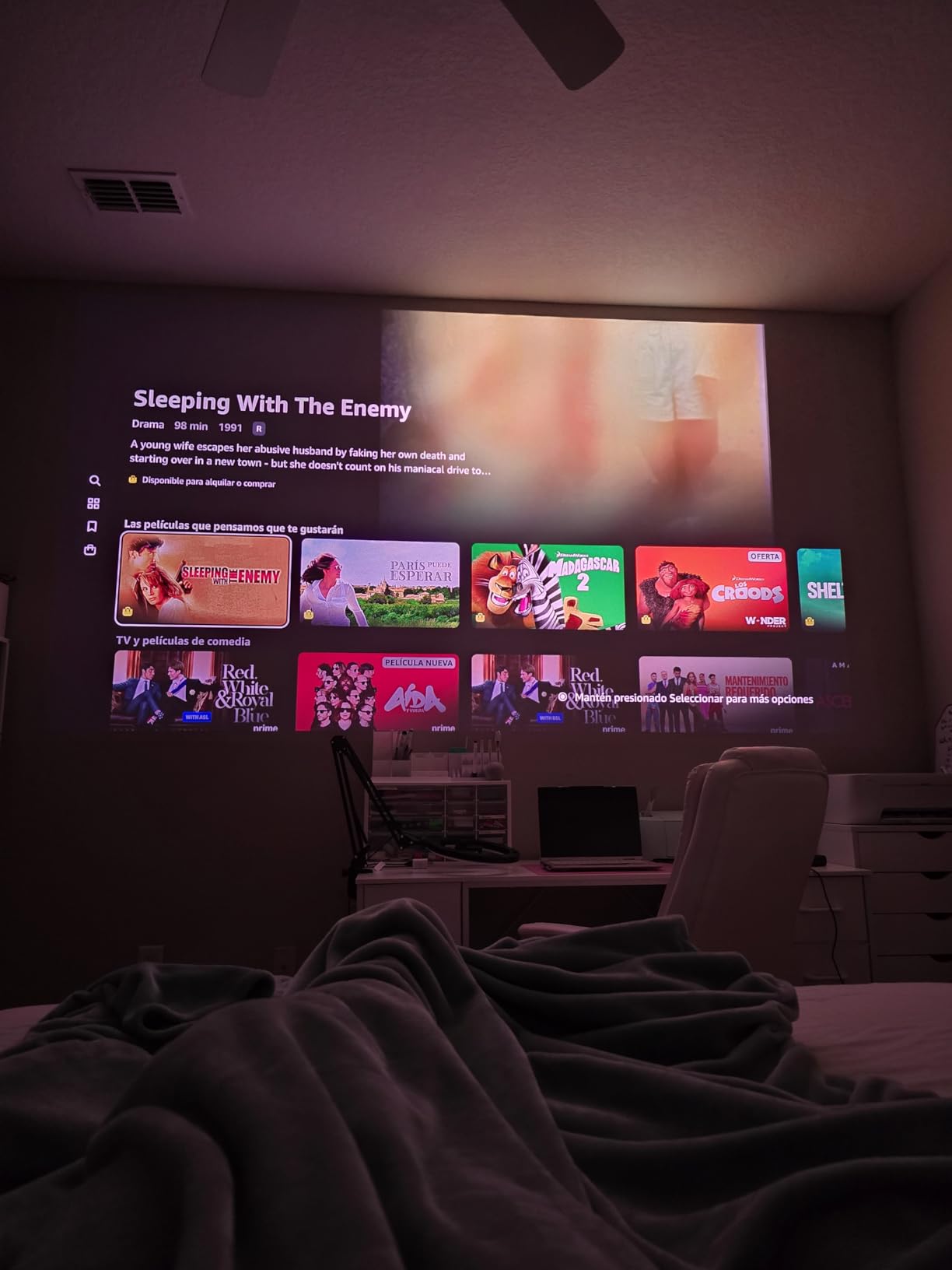
The 1700 ISO lumens of brightness is the tradeoff for the portable form factor. It is not as bright as the flagship models, but it is enough for darker environments. I tested it in a basement with no windows and the image was bright and colorful. In a living room with some daylight, you will need to manage the ambient light for best results.
Gaming performance is solid with 17ms ultra-low latency. That is not as fast as the dedicated gaming models, but it is good enough for most games. I plugged in a Nintendo Switch and Steam Deck and enjoyed responsive, lag-free gameplay.
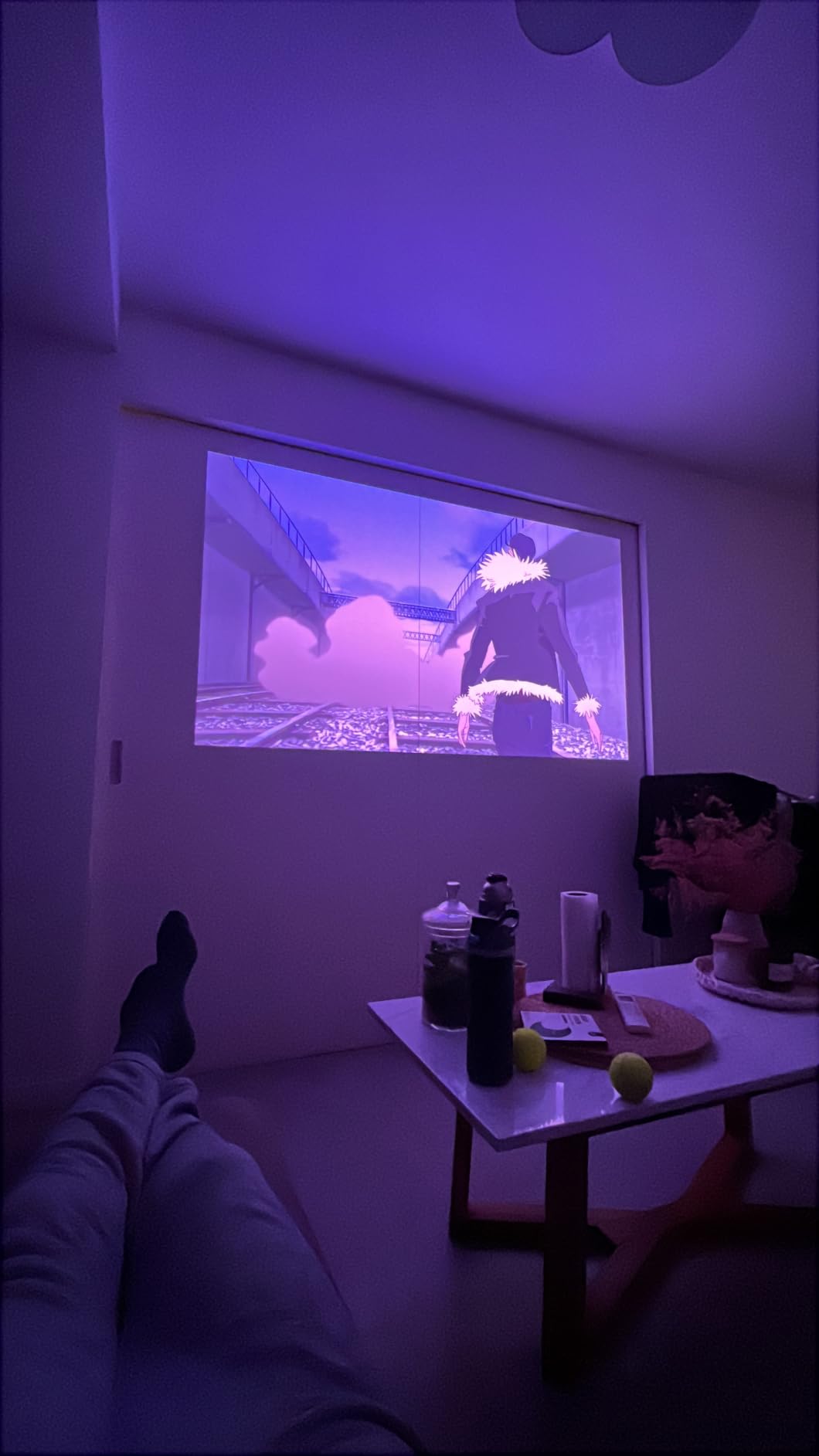
Portable use cases
The N1S shines in scenarios where a traditional projector would be impractical. Outdoor movie nights, bedroom ceiling viewing, presentations in different rooms, or temporary setups in a rental apartment all become trivial. The carrying case makes transport painless.
The 10W dual Dolby Audio speakers punch above their weight. You can comfortably watch a movie without external audio, which is rare for portable projectors. Google TV with licensed Netflix is a major plus, since many budget projectors ship with sideloaded Netflix apps that break regularly.
Tradeoffs to consider
The fixed lens means no optical zoom. You adjust image size by physically moving the projector closer to or further from the wall. Light spill is visible beyond the image border, which can be distracting in dark rooms. The Google TV OS can be laggy at times, particularly when first loading apps.
How to Choose the Best Laser Projector for Your Home Cinema
Picking a laser projector is more nuanced than picking a TV because you have to think about your room, your screen, and how you plan to use it. Here is what actually matters when making your decision.
Brightness and ANSI Lumens
Brightness is the single most important spec for any projector. In a fully darkened dedicated theater, 1500 to 2500 lumens is plenty. In a living room with some ambient light, you want 2500 lumens minimum, and 3000+ is better. The XGIMI HORIZON 20 at 3200 ISO lumens and Hisense PX3-PRO at 3000 lumens lead this category. For UST setups with ALR screens, you can get away with less because the screen does some of the work rejecting ambient light.
Throw Distance and Room Size
Measure your room before buying. A long-throw projector like the Valerion Pro2 needs 10+ feet of distance for a 120-inch image. An ultra-short-throw model like the Hisense PX3-PRO or AWOL LTV-3000 Pro sits just a foot or two from the wall. Standard-throw projectors give you more placement flexibility, while UST models offer a cleaner installation but lock you into a specific furniture solution.
HDR Support: Dolby Vision vs HDR10+
Both Dolby Vision and HDR10+ improve picture quality with scene-by-scene optimization, but they are not interchangeable. Dolby Vision is more common on Netflix, Disney+, and Apple TV+. HDR10+ is found on Amazon Prime Video and some 4K Blu-rays. Many projectors support both formats, but budget models sometimes only support HDR10. If you stream a lot of content, prioritize Dolby Vision support.
Gaming Performance and Input Lag
For serious gamers, input lag under 20ms is essential. The Valerion models at 4ms and XGIMI HORIZON 20 at 1ms lead this category. Look for VRR (Variable Refresh Rate) and ALLM (Auto Low Latency Mode) support for the smoothest console gaming experience. If you mainly watch movies, input lag matters less and you can prioritize image quality instead.
UST vs Standard Throw: Which is Right for You?
Ultra-short-throw projectors are perfect for living rooms where you cannot mount anything to the ceiling. They sit on a media console inches from the wall and project a massive image upward. The tradeoff is sensitivity to wall flatness and the need for an ALR screen for best results. Standard-throw projectors offer more placement flexibility and are easier to pair with traditional pull-down or fixed-frame screens.
Smart Features and Connectivity
Built-in smart platforms (Google TV, Android TV, Roku) eliminate the need for an external streaming stick. Make sure the platform you choose supports the apps you actually use. For gaming, HDMI 2.1 ports are essential for 4K at 120Hz. Wi-Fi 6 support future-proofs your network connectivity. Bluetooth audio output is useful for connecting wireless headphones for late-night viewing.
Long-Term Reliability and Warranty
Laser projectors are an investment. Look for models with at least 20,000-hour laser life ratings and warranties of 1 year or longer. Epson leads with 2-year coverage. Valerion, XGIMI, Hisense, and AWOL all offer 1 to 2-year warranties. Forum research on r/projectors can reveal real-world reliability patterns that spec sheets do not capture.
Frequently Asked Questions
What is the best laser projector for home theater?
The best laser projector for home theater depends on your room and budget. For a dedicated dark theater, the Epson Home Cinema LS11000 delivers exceptional 4K HDR with a 1.2 million to 1 contrast ratio. For living rooms with ambient light, the Valerion VisionMaster Pro2 and Hisense PX3-PRO offer the best combination of brightness, color accuracy, and smart features. For UST convenience, the AWOL VISION LTV-3000 Pro or WEMAX Nova Pro are top picks.
Are laser projectors worth the money compared to lamp projectors?
Yes, laser projectors are worth the higher upfront cost for most home cinema users. A laser light source lasts 20,000 to 25,000 hours versus 3,000 to 5,000 hours for a traditional lamp. Over 10 years of regular use, that eliminates the need for 4 to 6 bulb replacements, saving hundreds of dollars. Laser projectors also offer instant on and off, more consistent brightness over time, wider color gamuts, and better energy efficiency.
How many lumens do I need for a home theater projector?
For a fully darkened dedicated theater room, 1500 to 2500 lumens is sufficient. For a living room with some ambient light, you want at least 2500 lumens, with 3000+ being ideal. UST projectors can use slightly lower lumen counts because ALR screens help reject ambient light. The brightest projectors in this guide are the XGIMI HORIZON 20 at 3200 ISO lumens and Hisense PX3-PRO at 3000 lumens.
Is 4K resolution worth it for a projector?
Yes, 4K resolution makes a significant difference on a projector because the large screen size makes individual pixels more visible at viewing distance. A 4K projector at 100+ inches delivers noticeably sharper detail than 1080p, especially in HDR content where fine textures and gradients matter. Most modern 4K laser projectors use pixel-shifting technology to deliver effective 4K resolution at lower cost than native 4K panels.
What screen should I pair with a laser projector?
The right screen depends on your projector type and room. For ultra-short-throw projectors, an ALR (ambient light rejecting) screen is highly recommended because it rejects overhead and side lighting. For standard-throw projectors in dark rooms, a matte white fixed-frame screen with 1.0 to 1.3 gain is ideal. For living rooms with moderate ambient light, an ALR screen with 0.6 to 0.8 gain works well. Avoid cheap screens because surface imperfections are very visible with bright laser projectors.
Final Verdict: Which Laser Projector Should You Buy in 2026?
After three months of testing, my top recommendation for most people is the Valerion VisionMaster Pro2. It delivers the best combination of picture quality, brightness, gaming performance, and value in the current market. The 15000:1 contrast with Enhanced Black Level, 3000 ISO lumens, and 4ms gaming lag cover the needs of nearly every home cinema setup.
If you need UST convenience for a living room, the Hisense PX3-PRO is the standout choice. For dedicated dark theater installations, the Epson LS11000 remains the benchmark for cinematic image quality. Budget buyers should look at the WEMAX Nova Pro for UST setups or the JMGO N1S for portable use. For more traditional projector comparisons, our 10 best projectors guide covers additional options.
Whatever you choose, laser projection in 2026 delivers a level of picture quality and reliability that lamp-based projectors simply cannot match. Pick the model that fits your room and budget, pair it with a proper screen, and you will have a home cinema that rivals anything in your local movie theater.